Flight 19: Five Navy Bombers Vanished in 1945. Then the Rescue Plane Vanished Too
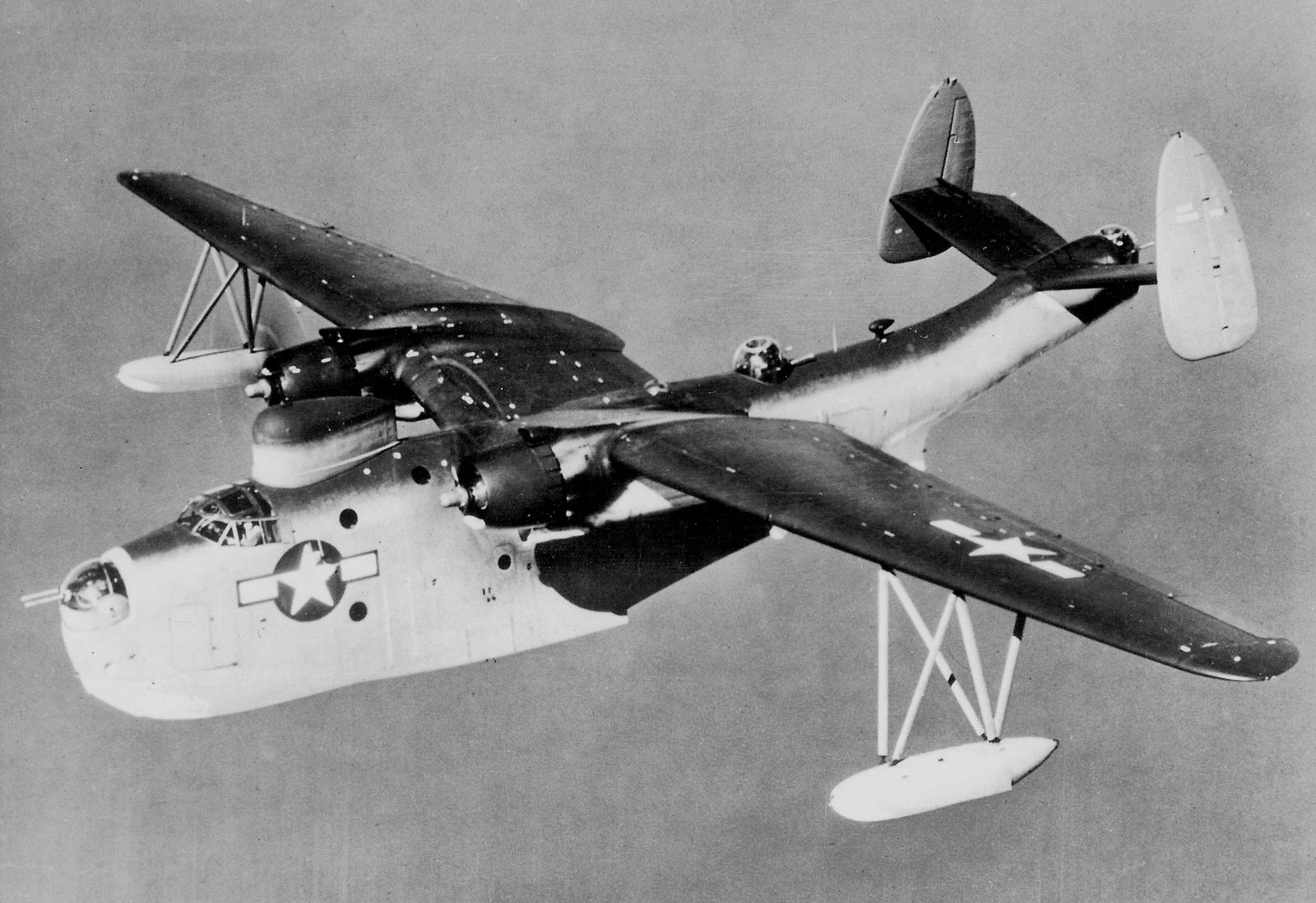
Fort Lauderdale, Florida, 5 December 1945. Five TBM Avengers on a routine training flight lost their way over the Atlantic and were never found. A PBM Mariner flying boat sent out to search for them disappeared the same night. No wreckage from either has ever been confirmed.


Narrated Mystery: press play and hear the whole case read aloud, like a true crime podcast episode, or an audiobook for a long drive (about 15 minutes). The narrator is an AI voice.
What the record shows
- Who: Fourteen men in five TBM Avengers of Flight 19, and thirteen in the PBM-5 Mariner sent to find them
- When: 5 December 1945, after take-off from Naval Air Station Fort Lauderdale, Florida
- Status: No confirmed wreckage found; official finding “reasons or causes unknown”
Still uncertain
- Where the five Avengers came down.
- Whether the fire a tanker crew saw was the Mariner. The site was never dived.
- Why the flight leader asked to be replaced that afternoon.
Fourteen men, five bombers, and a position nobody sent
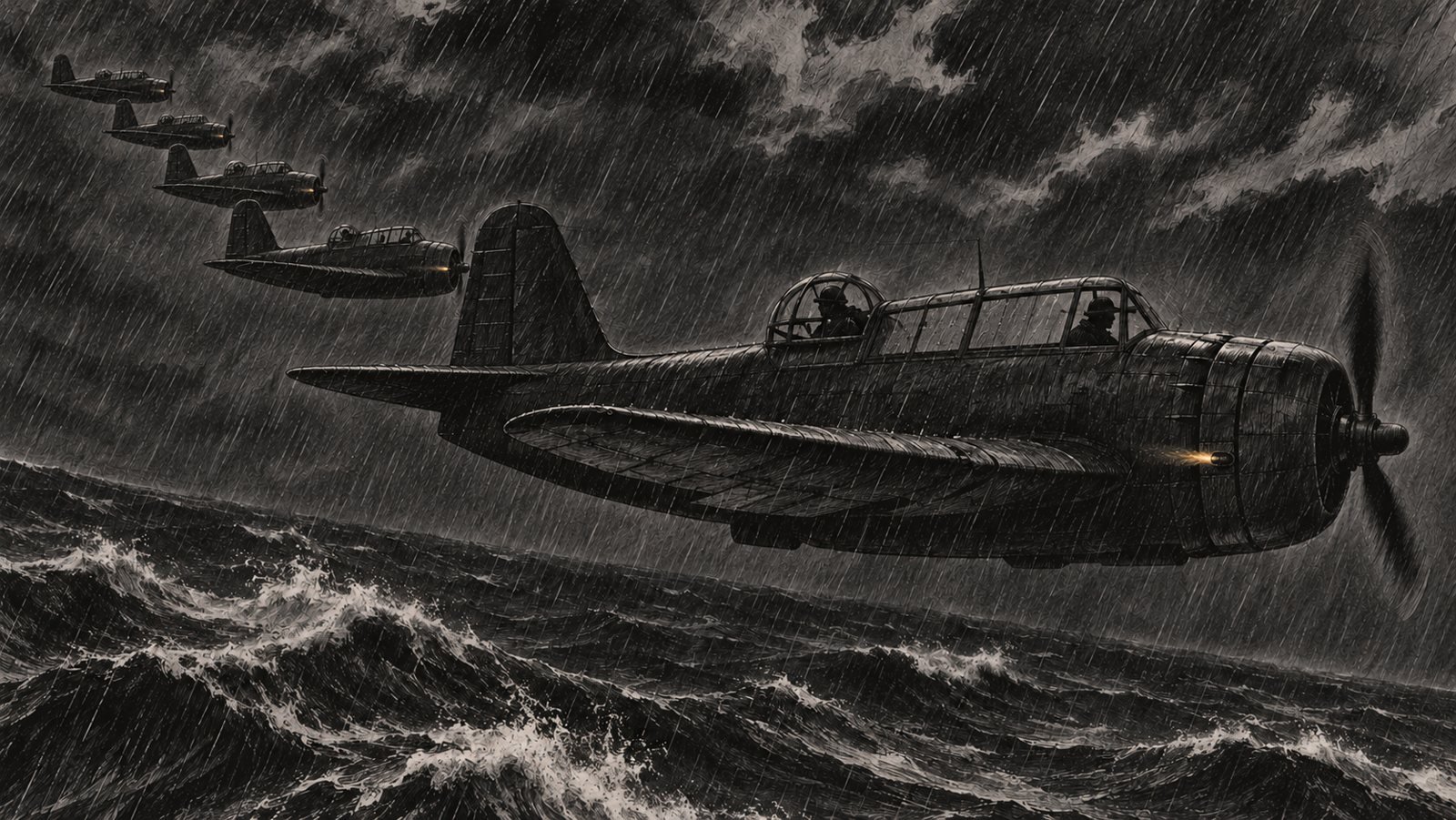
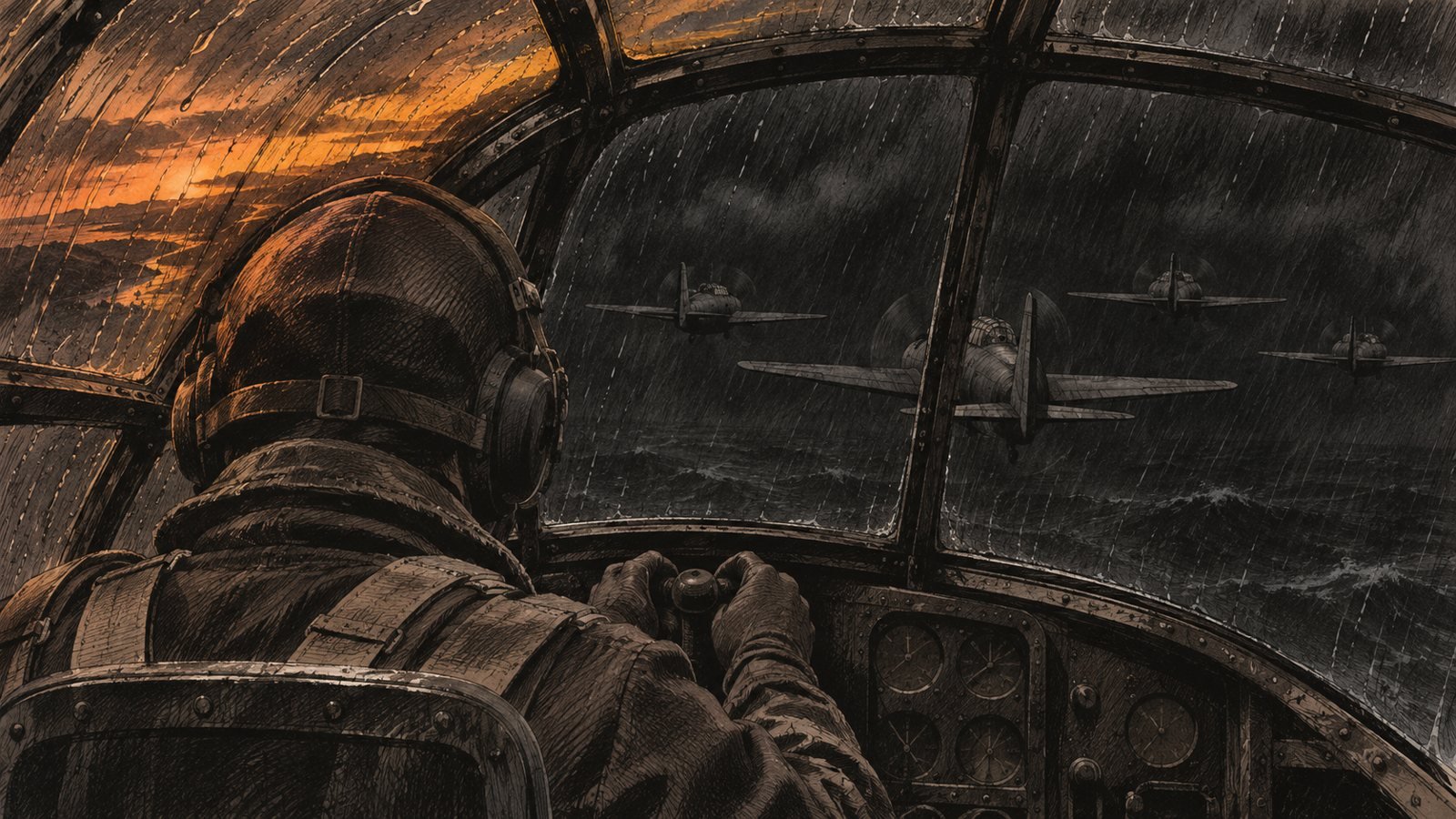
After six in the evening, 5 December 1945, somewhere over the Atlantic. Five US Navy Avenger bombers fly wing to wing through rain and darkness. Fourteen men aboard. Fuel almost gone.
Their leader’s last known order is simple: when the first plane runs low on fuel, they will all go down into the sea together. (MCDONELL) (BOARD)
On shore, the Navy has already worked out roughly where they are. Nobody has told the pilots.
Within the hour, one of the planes sent to find them will vanish too.
So this is the question that runs through the whole file: how do fourteen airmen get lost within radio range of home, and stay lost for hours while people on the ground listen? To see how, go back to that afternoon, and to a flight leader who did not want to go.
The instructor who asked to be replaced
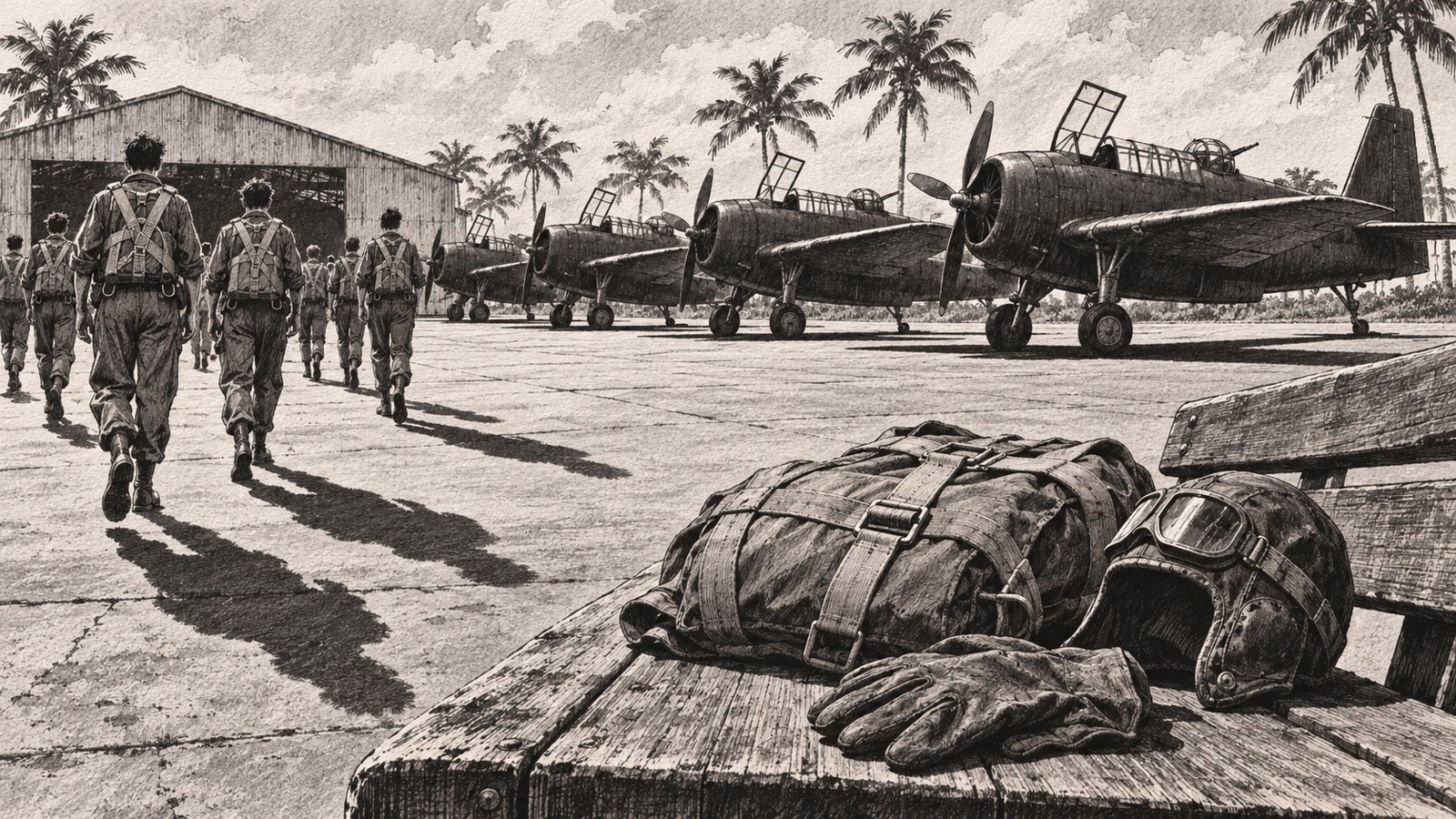
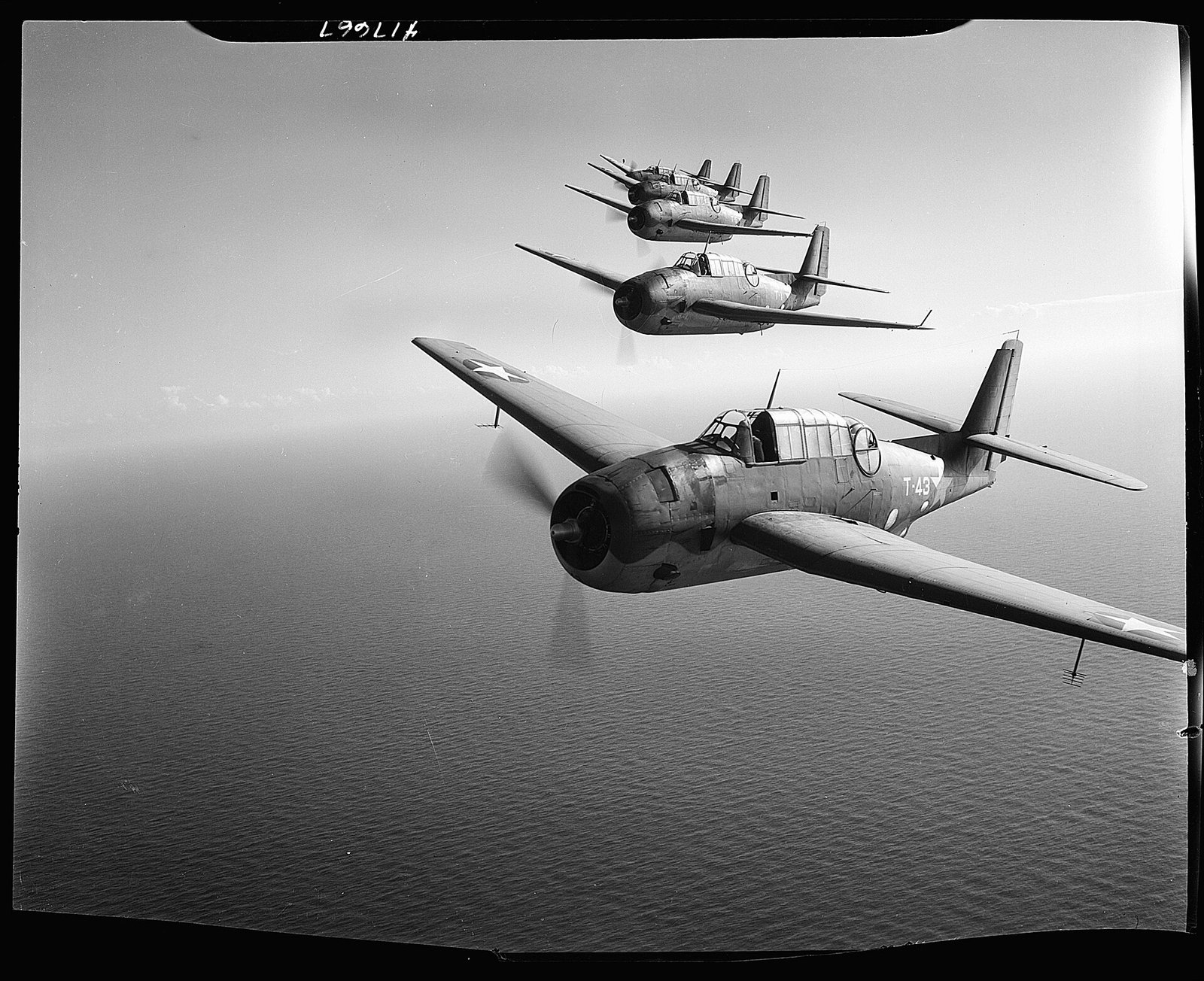
The flight left Naval Air Station Fort Lauderdale, Florida, at about 2:10 that afternoon. It was not a patrol. It was a navigation exercise for student pilots. (NHHC)
Five TBM Avenger torpedo bombers. Fourteen men: six from the Navy, eight Marines. One instructor, Lieutenant Charles Taylor, with more than 2,500 flying hours, and four students with a few hundred hours each. (MCDONELL)
It should have been fifteen. One Marine corporal was excused from the flight. Legend says he had a bad feeling. The base museum gives a duller reason: he had already completed his required flying time. (EXHIBIT)
One of the gunners was flying under a name that was not his. He had joined up at 15 with another boy’s birth certificate. He was 17 when he disappeared. On the flight leader’s accident card, shown at the top of this page, a typed name is crossed out and his real one is written over it by hand. (CARDS) (DEVLIN)
Taylor had doubts of his own. He arrived at 1:15 and asked the duty officer to find another instructor to take his place. He gave no reason. Nobody was available, so he flew.
A mechanic noticed one more thing. None of the five aircraft had a clock. (NHHC)
Then they took off. For ninety minutes, nothing was wrong.
Ninety minutes of an ordinary afternoon

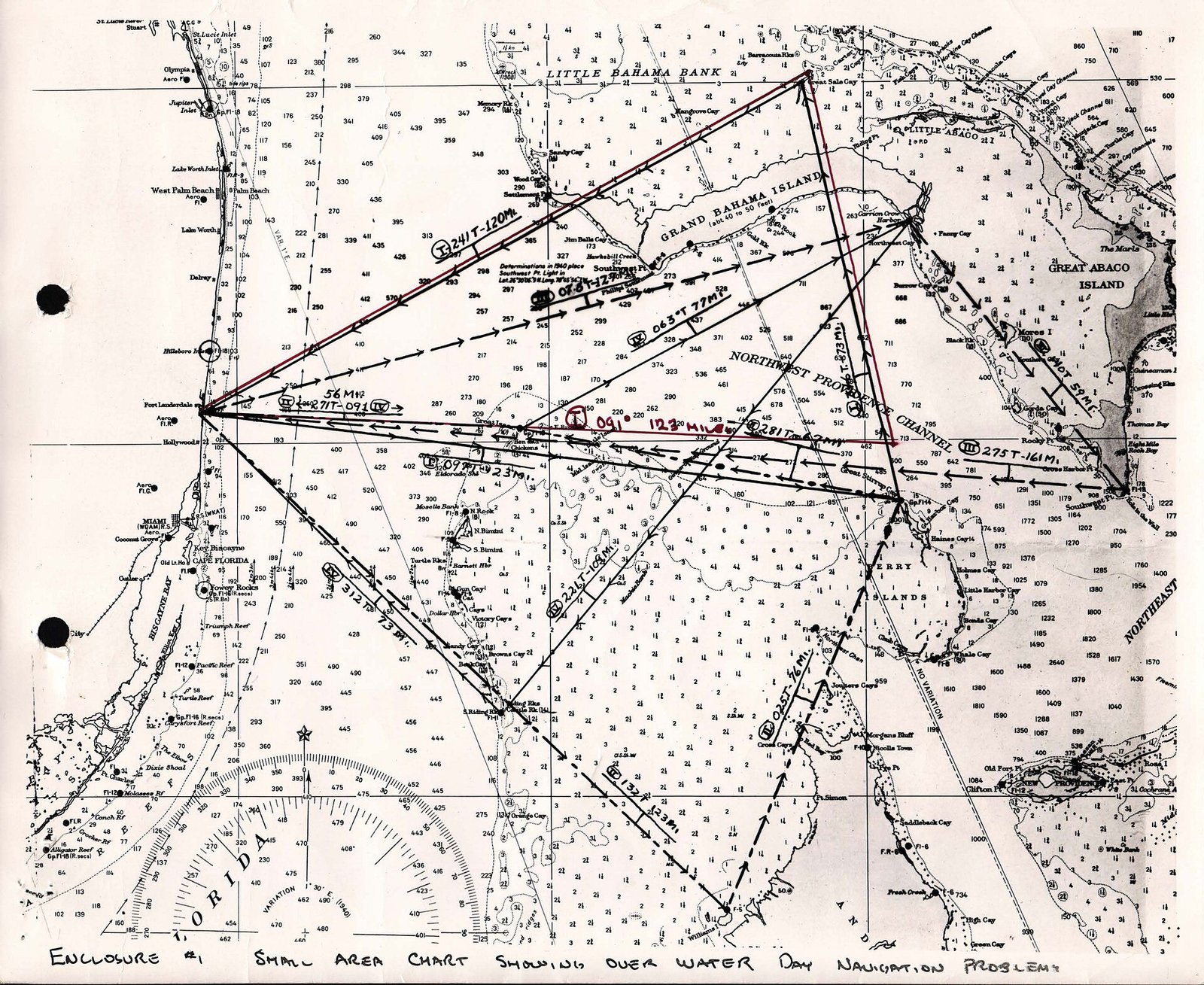
The plan was a triangle: east to a shoal in the Bahamas for low-level practice bombing, further east, then north across Grand Bahama, then south-west for home. (BOARD)
The first part went as planned. Then, about an hour and a half after take-off, a voice on the training frequency said something no instructor should have to say. (NHHC)
Why did Flight 19 get lost?
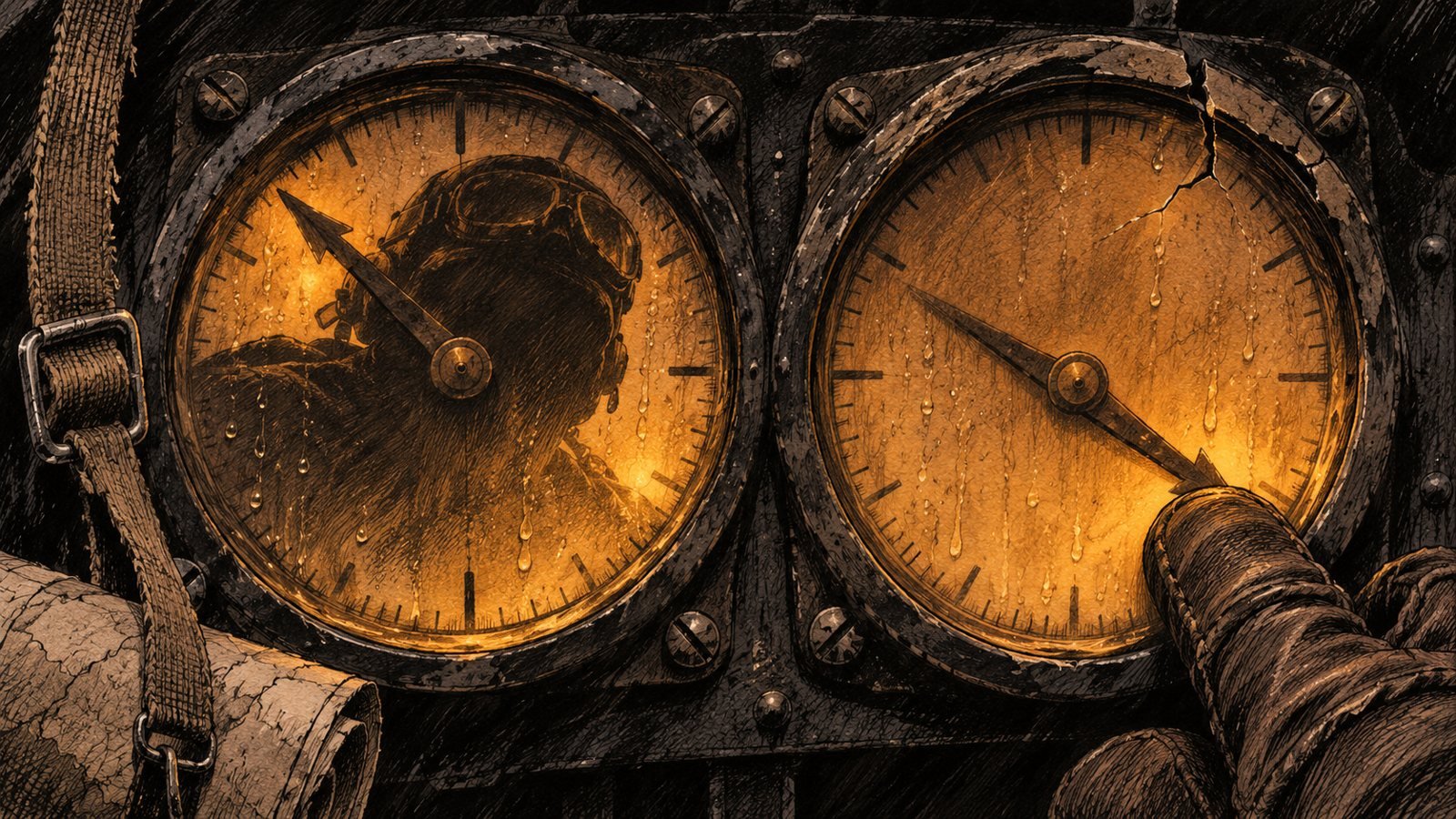
At about 3:40 pm a senior flight instructor who was in the air forming up his own flight, Lieutenant Robert Cox, overheard voices on the training frequency. Someone was saying he did not know where they were. (MCDONELL)
Cox called in. Taylor answered: “Both my compasses are out and I am trying to find Fort Lauderdale.”
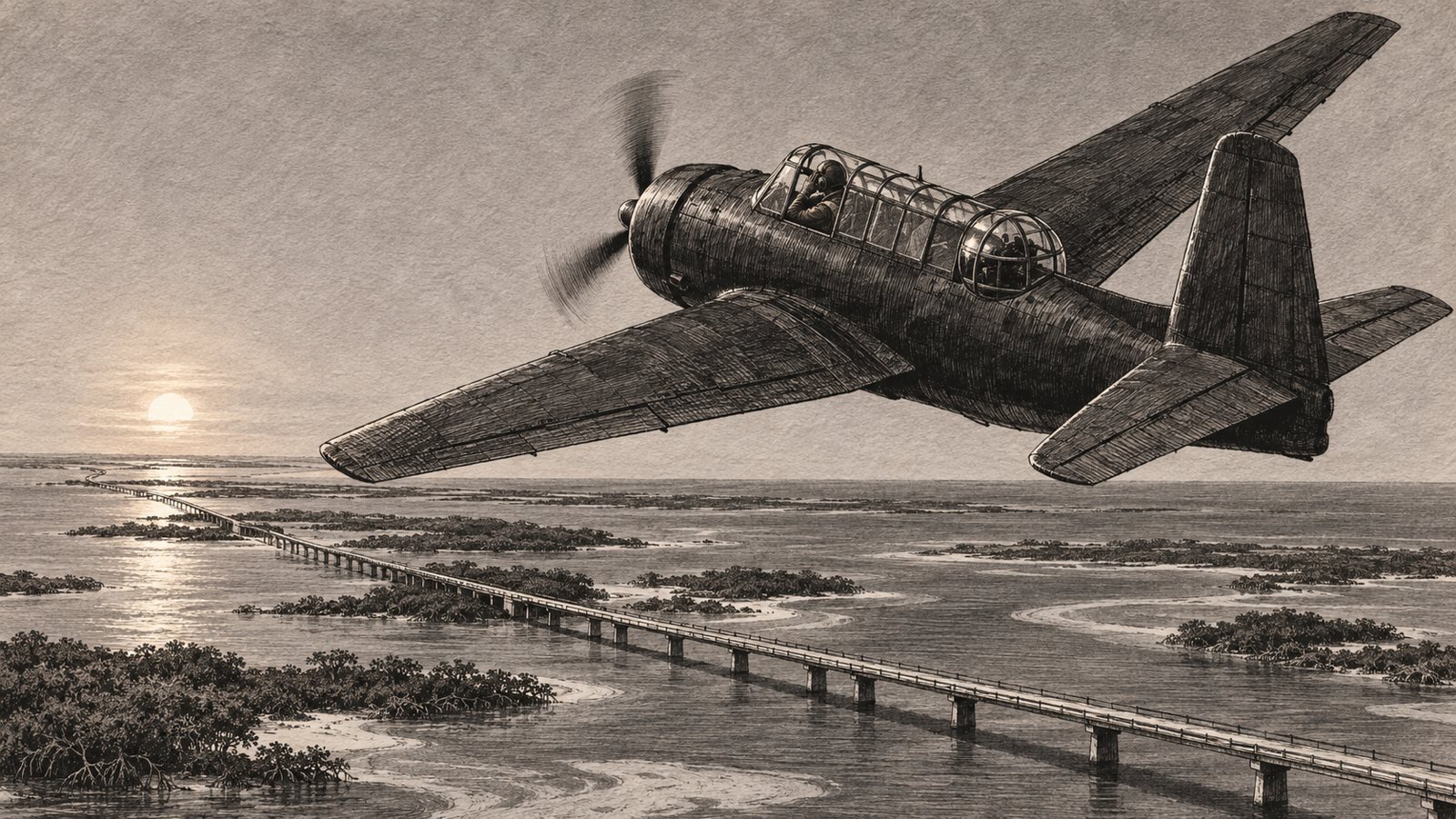
Taylor also said where he thought he was: over the Florida Keys, the chain of islands that trails off the southern tip of Florida.
He was almost certainly wrong. The flight had been over the Bahamas, far to the east. From the Keys, home lies to the north-east. From the Bahamas, home lies to the west. (NHHC)
So the man leading fourteen people was sure of his position, and each turn he ordered from that point risked taking them further from land.
And then he told the one man who could have helped him to stay away.
“Don’t come after me”, and the words that were added later
Cox offered to fly south and meet him. Taylor’s answer became the most famous line of the whole affair: “I’m at 2300 feet. Don’t come after me.” (MCDONELL)
You may have read a longer version, in which he adds that “they look like they are from outer space.” That ending was added in a best-selling 1974 book about the Bermuda Triangle. It is not in the Navy’s record.
The real meaning was plainer. Taylor believed he now knew where he was and did not need an escort.
Cox headed south anyway. At about 4:28 his own transmitter failed.
One more myth fell apart on the record. A 1950 news story claimed the flight vanished in complete radio silence. In fact the planes were heard on and off for more than three hours. (SMITHSONIAN)
And inside the flight, somebody had already worked out the way home.
The students were right. The instructor overruled them.
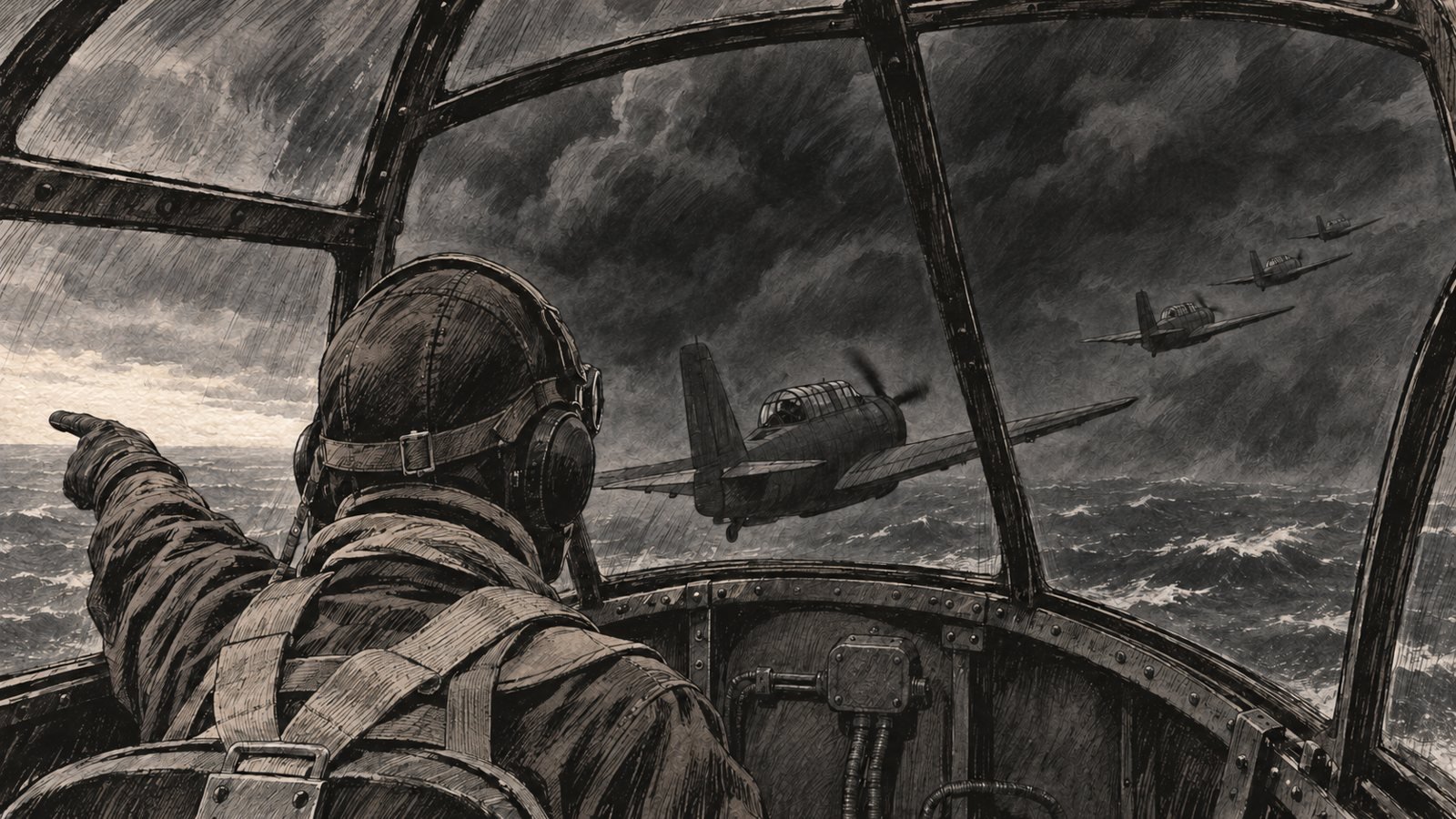
Not everyone in the flight agreed with their leader. On the radio, two of the students were heard saying: “Dammit, if we could just fly west we could get home.” (NHHC)
They were right. At 5:16 Taylor did turn west, saying he would fly that way until they hit the beach or ran out of gas. For a while, the flight was pointed at Florida.
At 6:04 he changed his mind. He decided they had not gone far enough east, and turned the flight around again. By then the sun had set. (MCDONELL) (SMITHSONIAN)
On shore, meanwhile, there was a simple way to hear them better. It was turned down.
The frequency he would not switch to
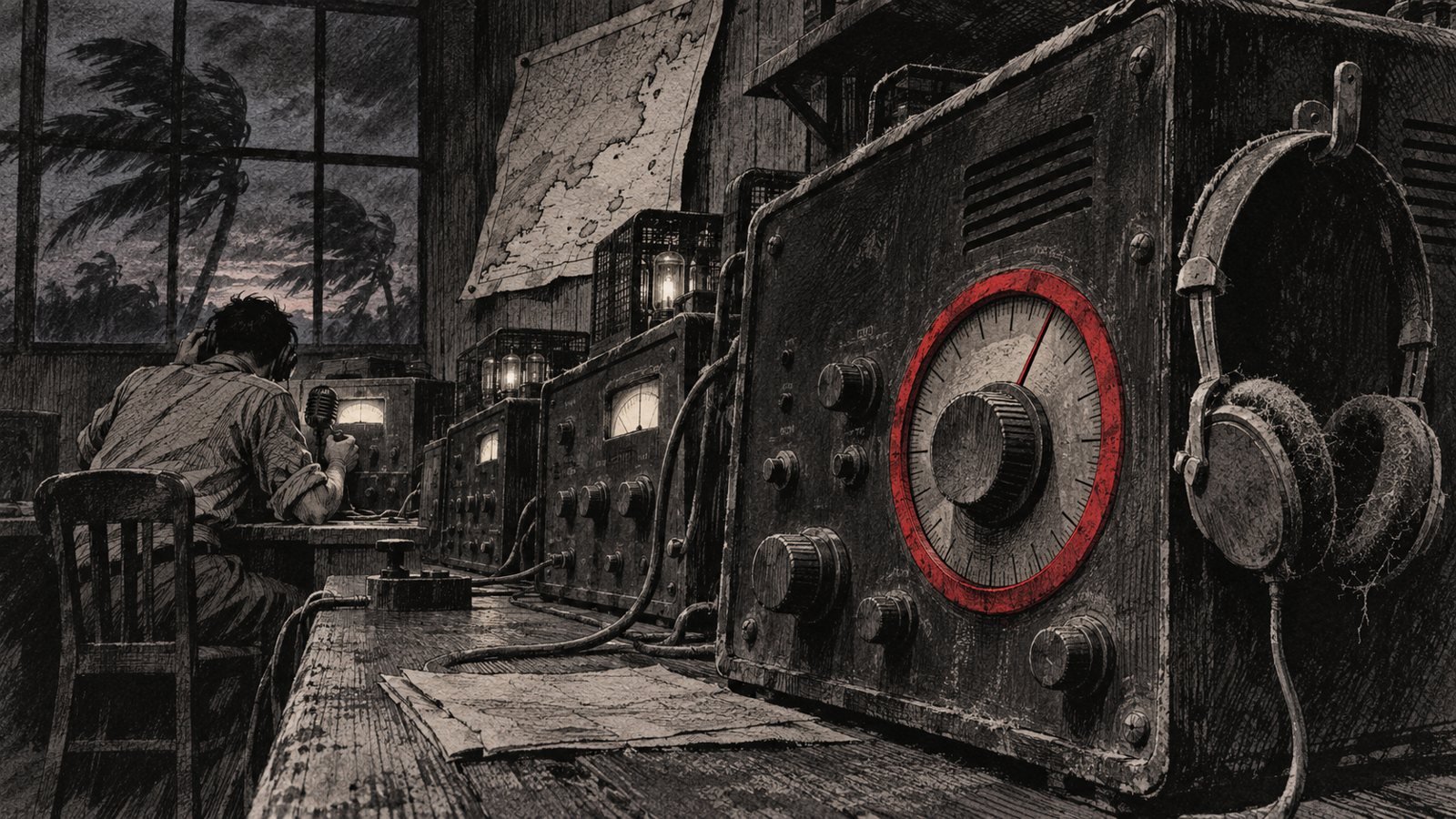
By about 4:30 pm, the men on shore believed the flight was over the Bahamas, not the Keys. Taylor was asked to shift to the emergency frequency, 3,000 kilocycles. (MCDONELL)
He refused: “I cannot switch frequencies. I must keep my planes intact.”
So five aircraft stayed together on the channel they already had, while the weather closed in. By four o’clock the sea below was already very rough and covered with whitecaps. (NHHC)
The strangest part is that by then the Navy did not need to hear him clearly. It already knew where he was.
A fix good enough to save them, phoned to the wrong room

Here is the part that is hardest to read.
Six radio stations along the coast took bearings on the flight’s transmissions. By 5:50 pm they had a position: north of the Bahamas and well east of the Florida coast, inside a circle about 100 miles in radius. (BOARD)
That fix was good enough to tell the pilots one thing: turn west. The Navy’s own accident cards say so. Shore stations tried to tell the flight to fly 270 degrees, or into the sun. “If these directions had been heard & carried out,” each card reads, “we are certain this flight would have returned to base safely.” (CARDS)
It was phoned to the Fort Lauderdale tower at about 6:10 and sent out by teletype at about 6:36. It was never broadcast to the aircraft. In the words of the Navy’s own history, “no one thought to transmit the fix information in the blind.” (NHHC)
There was a second chance. Cox, back on the ground, asked to take the ready plane and fly out toward the flight’s likely position. The flight officer said no. By 5:36 the decision was made: the ready plane would stay where it was. (MCDONELL) (SMITHSONIAN)
Out over the water, the fuel gauges were dropping.
Ten gallons
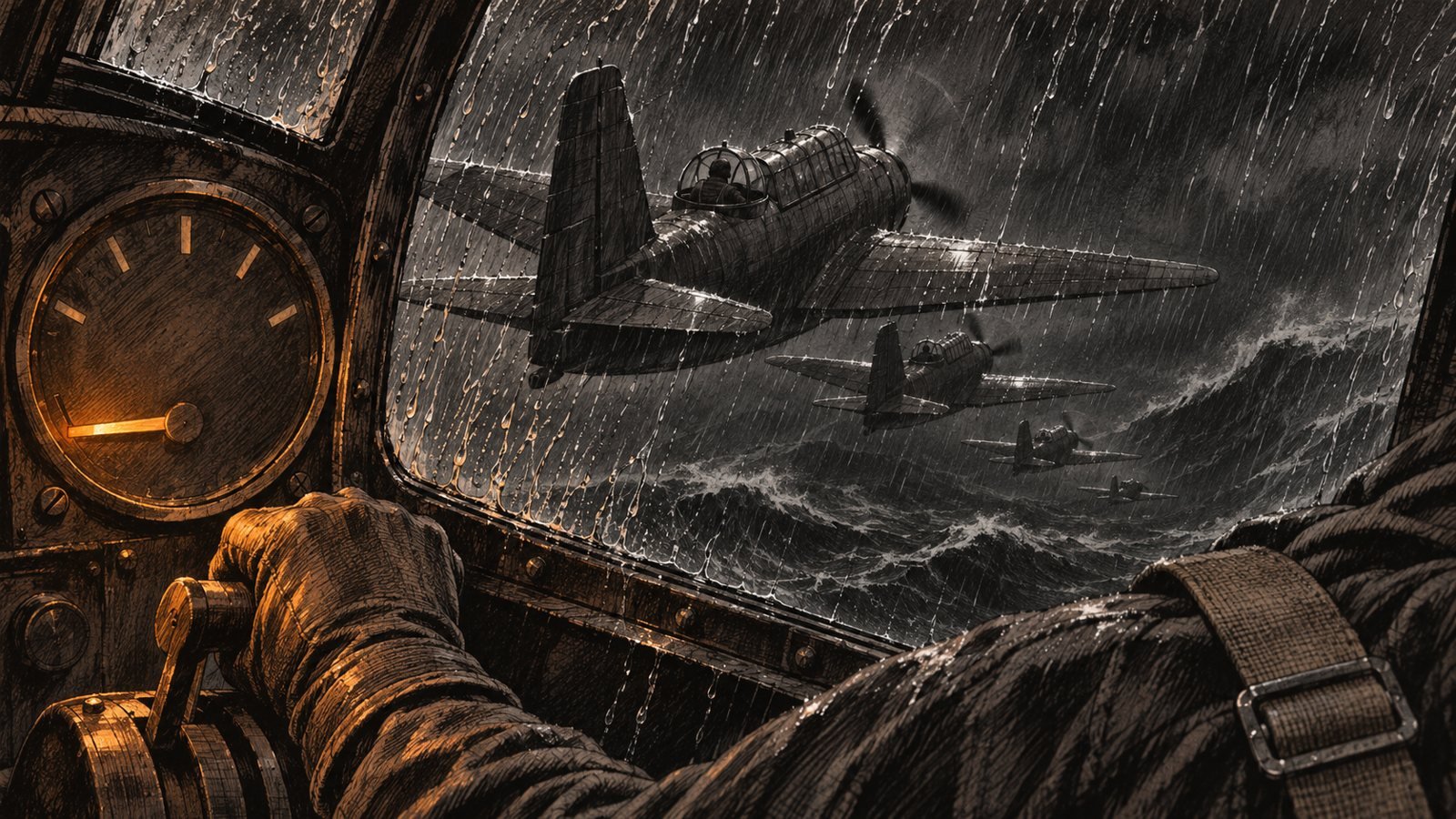
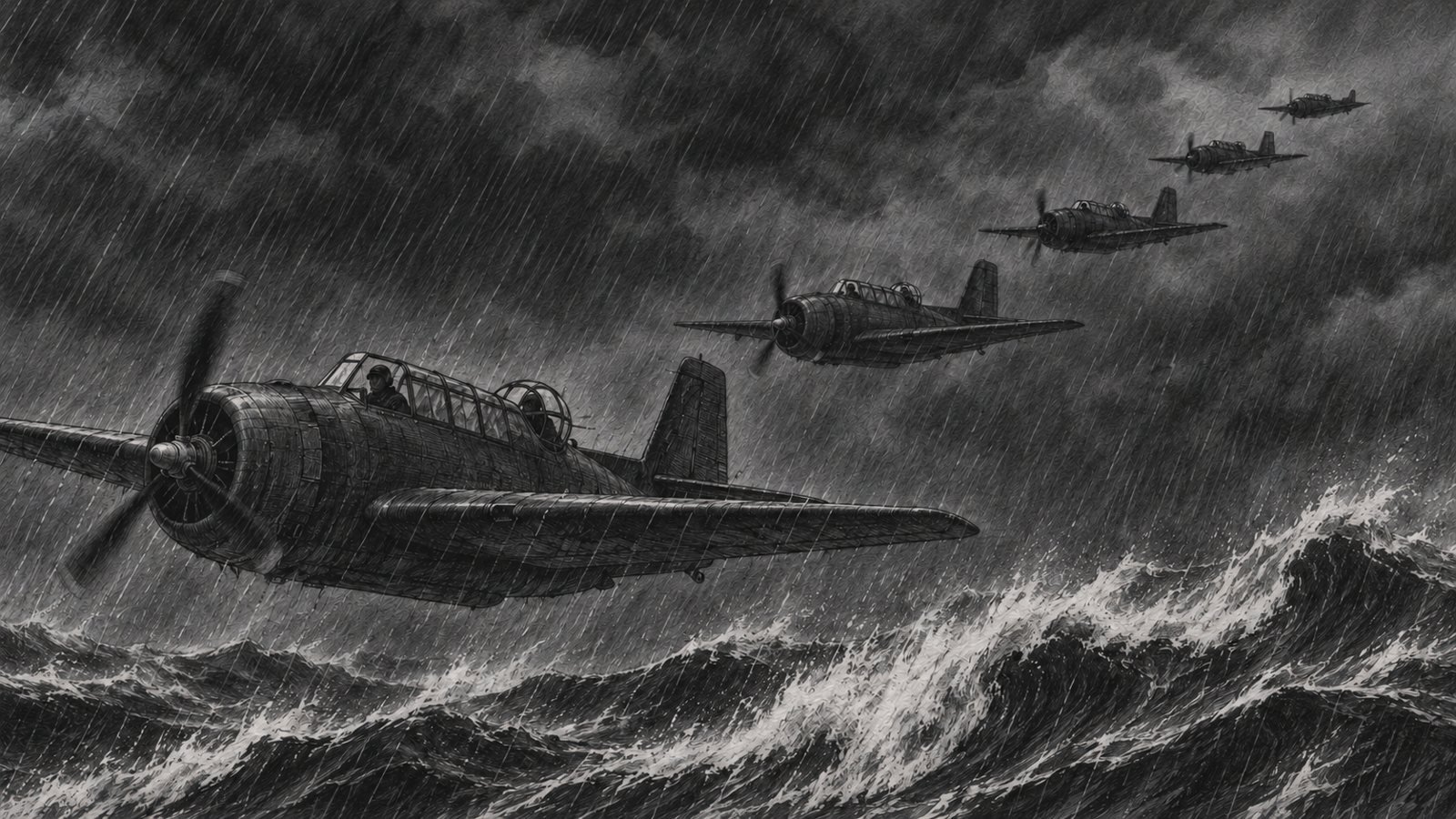
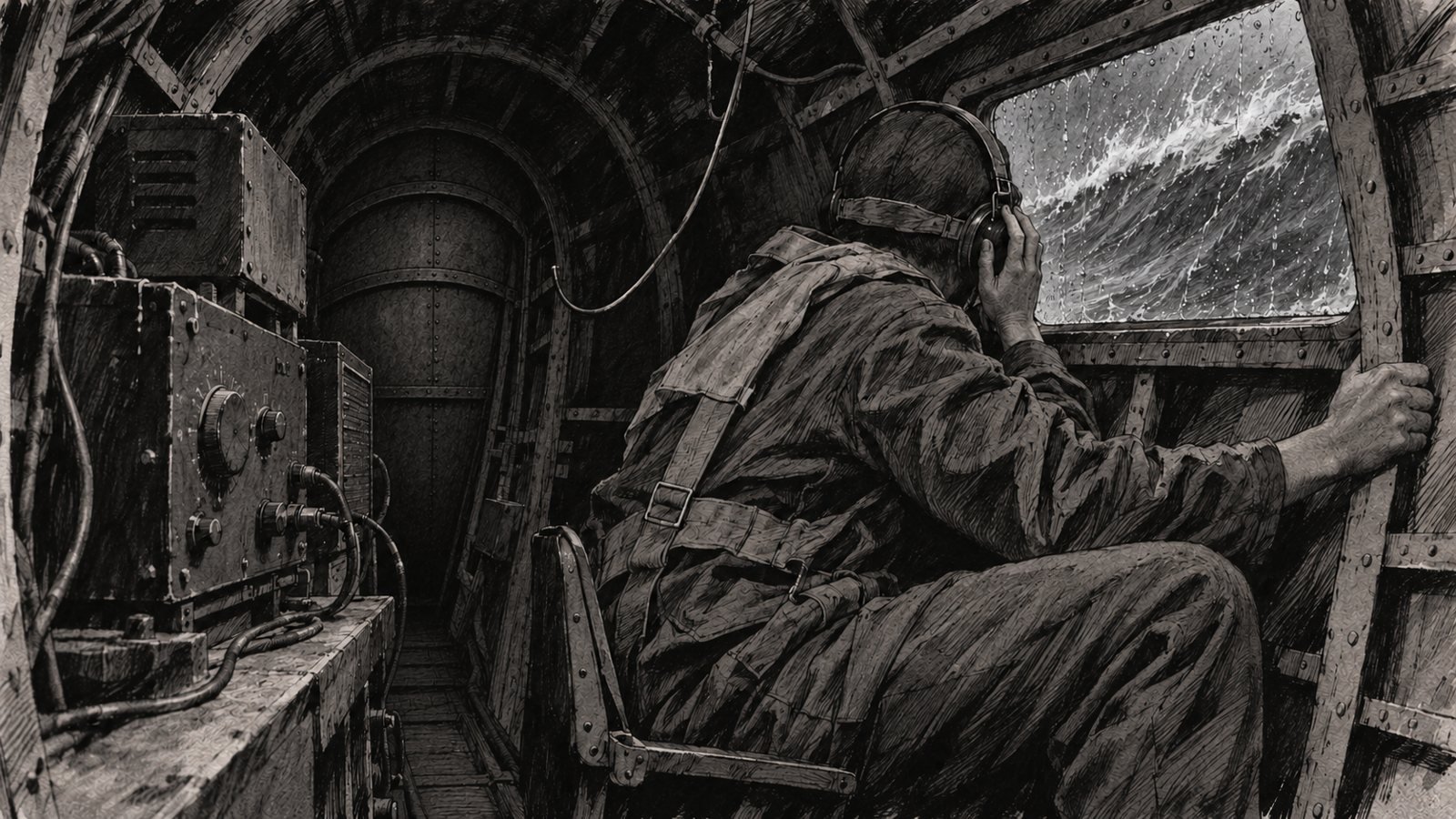
Night fell. The air was turbulent and the sea very rough.
At about 6:20 pm, through heavy static, pieces of Taylor’s voice came through. All planes were to close up tight. And then: “When the first plane drops below ten gallons, we all go down together.” (MCDONELL)
At 7:04 pm one of the student pilots was heard calling Taylor. Nobody answered. That is the last known transmission from Flight 19. (SMITHSONIAN)
The two images above are reconstructions. Nobody saw the planes come down, and no confirmed wreckage has ever been found. The Navy’s accident cards list the cause as fuel exhaustion and poor navigation: five bombers out of fuel, ditching after dark in a sea the board called unfavourable for a water landing. (CARDS)


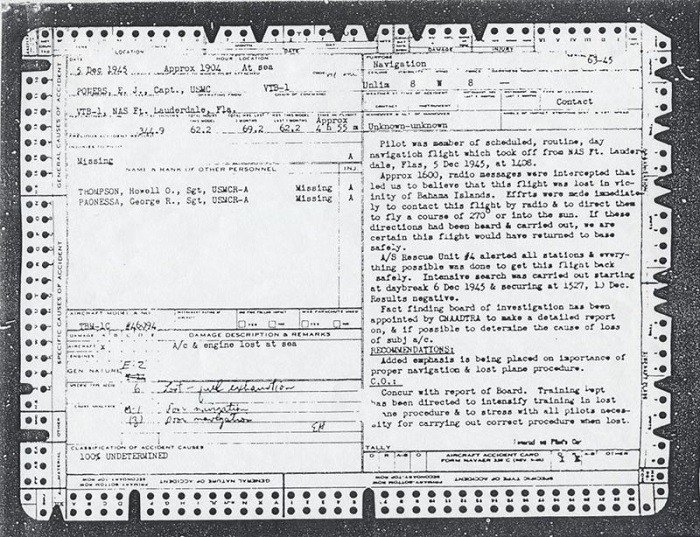

The cards for the four student pilots. Each ends the same way: cause, lost, fuel exhaustion; analysis, poor navigation; classification, 100% undetermined. Source: US Navy, Naval History and Heritage Command.
That should be the end of the story. It is not.
What happened to the rescue plane?


At about 7:27 pm a PBM-5 Mariner flying boat, call sign Training 49, took off from Banana River to search. Thirteen men were aboard. Its pilot had volunteered. Its last call came at about 7:30. (BOARD)
Mariners carried so much fuel that crews had a nickname for the type: the flying gas tank.
At 7:50 pm the crew of a passing tanker, the SS Gaines Mills, saw a burst of flames at sea. They reported that it rose about 100 feet and burned for ten minutes. An aircraft carrier in the area watched a plane drop off its radar at the same time and place. (MCDONELL)
The tanker steered through a large pool of oil with its searchlight on, looking for survivors. There were none.
The water there was only 78 feet deep. The spot was not marked with a buoy because of the heavy seas, and no dive or salvage was ever carried out. (NHHC)
By midnight, six aircraft and twenty-seven men were missing. At dawn the Navy went looking with everything it had.
Five days, 200,000 square miles, nothing


The search began at first light on 6 December and ran until the afternoon of 10 December. (CARDS)
More than 200 aircraft flew each day. The base museum counts 248 Navy planes and 18 surface ships, and the Navy’s own magazine puts the area at well over 200,000 square miles of the Atlantic and the Gulf of Mexico. (MUSEUM) (MCDONELL)
They found no bodies, no life rafts and no wreckage that could be tied to the five bombers. Twenty-seven men were gone: fourteen in Flight 19 and thirteen in the plane sent to save them. (SMITHSONIAN)
With nothing to examine, the Navy still needed an answer. It chose a man.
The Navy blamed a dead pilot. His mother blamed the Navy.


The Navy convened a board of investigation two days after the loss. The first verdict put the blame on the dead flight leader. Taylor, the Navy wrote, “became so hopelessly confused as to have suffered something akin to a mental aberration.” (BOARD)
His mother, Katherine Taylor, refused to accept it. With his aunt she wrote more than 200 letters and carried out dozens of interviews of her own. In March 1946 she travelled to Florida to question the people involved. (CALLER)
In 1947 she won. The Board for Correction of Naval Records cleared her son, and the finding was changed: the flight had disappeared for “reasons or causes unknown.” (SMITHSONIAN) (NHHC)
The first image above is symbolic. It stands for the challenge she made, not a documented moment in a hearing room.
That verdict stood for forty-four years. Then somebody found five Avengers.
Were the five Avengers found in 1991 Flight 19?
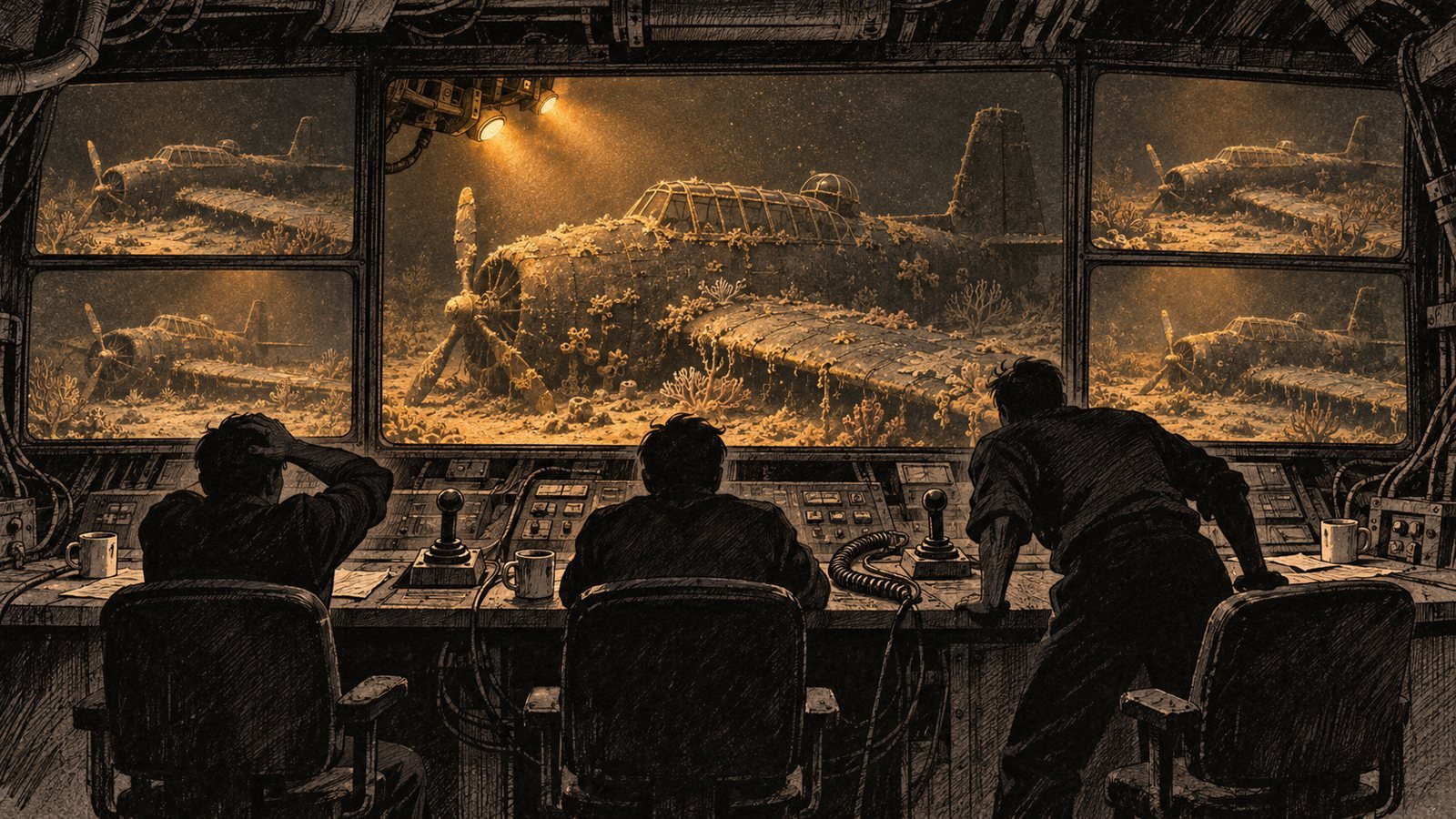
For forty-five years there was nothing. Then, in May 1991, it looked as if the mystery was over.
A deep-sea expedition hunting for Spanish treasure galleons found five Avengers lying on the sea bed, about 600 feet down and roughly ten miles north-east of Fort Lauderdale. Five Avengers, close together, off the very coast they had left. It seemed impossible that this could be anything else. (DESERET)
It was something else. The numbers on the aircraft did not match. They were five different Avengers that had crashed separately on training flights and happened to lie within about a mile and a half of each other. Flight 19 was still missing. (TIME)
So what, in the end, is actually left?
The story you may have heard, and what the file says
| What gets repeated | What the record says |
|---|---|
| Taylor’s last words were “they look like they are from outer space” | The Navy’s record has “I’m at 2300 feet. Don’t come after me.” The outer-space line first appears in a 1974 Bermuda Triangle best-seller. (MCDONELL) (SMITHSONIAN) |
| The flight vanished in total radio silence | The planes were heard on and off for more than three hours. The last known call was at 7:04 pm, a student trying to raise Taylor. (SMITHSONIAN) (NHHC) |
| The sea was calm and the weather clear | By four o’clock the sea was very rough and covered with whitecaps. The board called it unfavourable for a water landing, and the cards give the cause as fuel exhaustion after dark. (BOARD) (CARDS) |
| Nobody ever knew where they were | Six shore stations fixed the flight’s position by 5:50 pm. The fix was phoned and teletyped, and never broadcast to the aircraft. The cards say the flight would have returned safely if it had been heard. (CARDS) (NHHC) |
| Flight 19 was found in 1991 | The five Avengers found off Fort Lauderdale carried different numbers. They were separate training crashes lying near each other. No confirmed wreckage of Flight 19 has ever been identified. (DESERET) (TIME) |
Why the record is stranger than the legend: the legend needs the sea to swallow five planes without warning. The record shows the opposite. The Navy knew roughly where the flight was, two students in the flight knew which way home lay, and a ready plane sat on the ground with a pilot asking to fly it. Nothing supernatural was required. Fourteen men were lost with the answer written down on shore, and that is harder to sit with than any triangle.
What is left
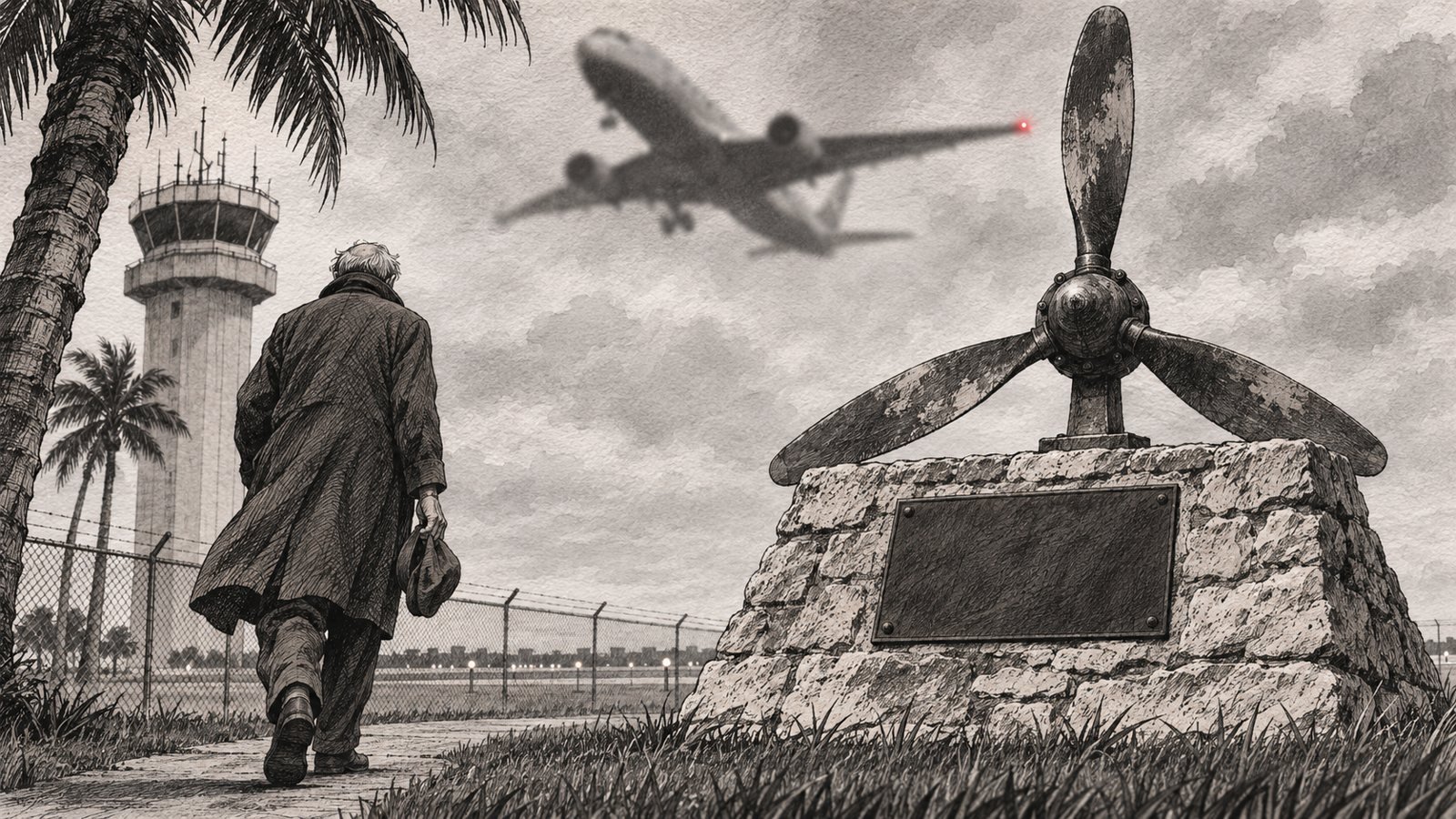
Today a memorial stands at Fort Lauderdale’s airport, east of the control tower, with a plaque and a wartime propeller mounted on top. Every year on 5 December the lost men are remembered there. (NASFL)
Here is what we know. Five bombers and a rescue plane disappeared in one night. The Navy fixed the bombers’ position and did not pass it on. Two students pointed the right way home and were overruled.
How sure is each part? The times, the position fix and the radio calls come from the Navy’s own investigation. The fire at sea was seen by a tanker crew and tracked on a carrier’s radar. Everything about the bombers’ last minutes is inference: nobody saw them go down. (BOARD)
Here is what we do not know: where any of those six aircraft are.
If the coast was that close, why did fourteen men never find it?
Related cases: the hunt for Amelia Earhart’s plane; the D.B. Cooper hijacking; KAL 007, the jumbo jet that drifted five hours off course.
The evidence file
The records this case rests on, and what each one supports.
The photographic record
Real photographs and primary records only.
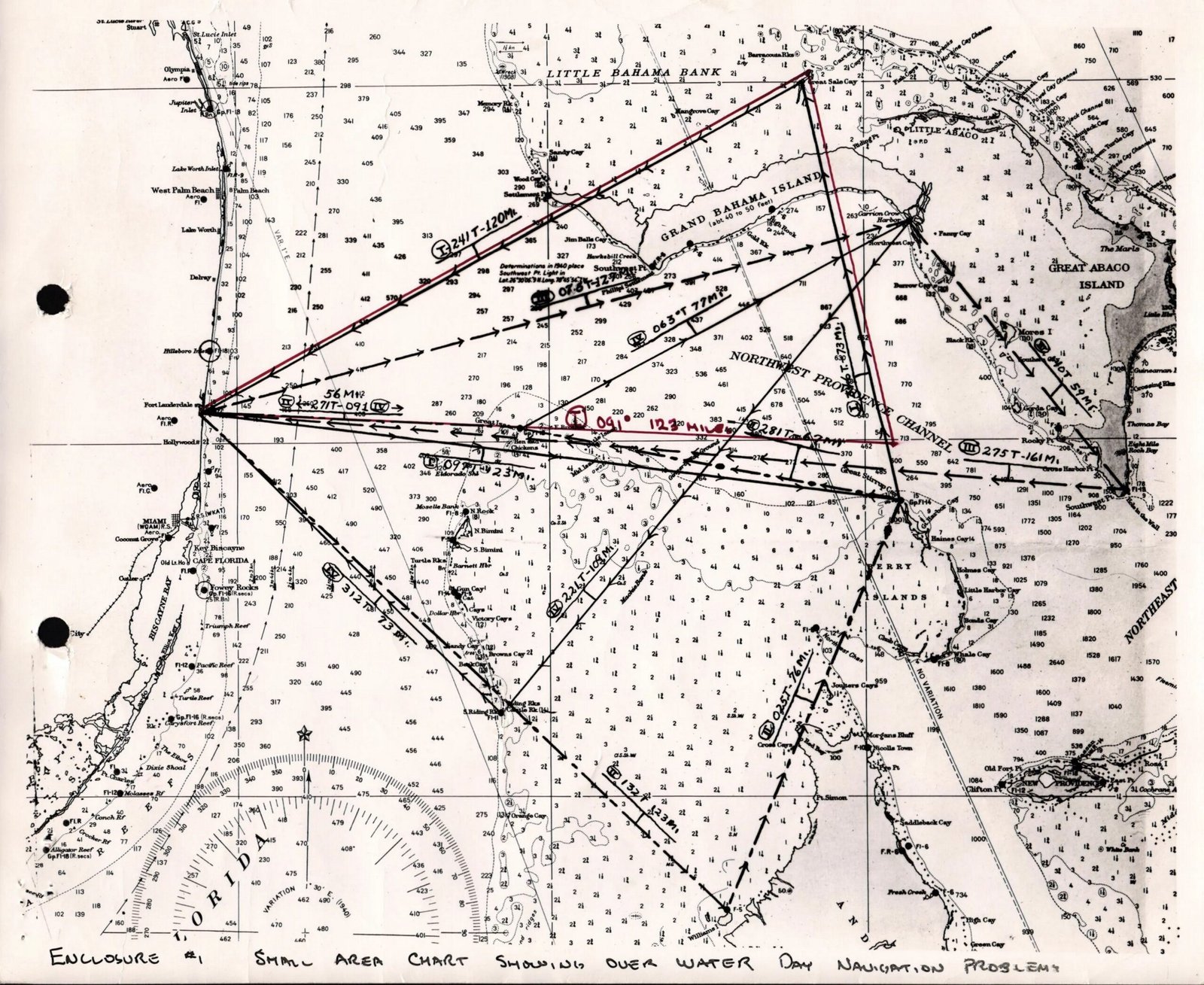 EXHIBIT P1
 EXHIBIT P2
 EXHIBIT P3
 EXHIBIT P4EXHIBIT P5
Exhibits
- Exhibit A: The Board of Investigation’s findings of fact. Fifty-six numbered findings: the aircraft and crews, the planned route, when each shore station learned the flight was lost, the radio fix at 5:50 pm and when it was passed on, the Mariner’s mission and crew, the tanker’s message and the carrier’s radar report. Limit: this transcription holds the findings only, not the testimony or the radio log. (HyperWar)
- Exhibit B: The Navy’s accident cards. One card per aircraft. Cause: lost, fuel exhaustion. Analysis: poor navigation. The Mariner: exploded at sea, cause unknown. End of the search on 10 December. (Naval History and Heritage Command)
- Exhibit C: “Lost Patrol”, Naval Aviation News, June 1973. The Navy’s own article written from the investigation record, with the radio exchanges in order: the failed compasses, “Don’t come after me”, the refusal to change frequency, the ten-gallon order, the ready plane that was not sent, and the 78 feet of water where nobody dived. (US Navy)
- Exhibit D: The Navy’s modern summary. H-Gram 057-4: the timetable, the missing clocks, the man excused, the fix that was not broadcast, and the corrected finding. (NHHC)
- Exhibit E: The 1991 false alarm. Deseret News, 19 May 1991, on the find; TIME, 17 June 1991, on why it was not Flight 19. (Deseret News, TIME)
Limits: the full testimony and radio log are held by the US National Archives and are not online. No confirmed wreckage of Flight 19 or the Mariner has ever been found, so every account of the final minutes is a reconstruction.
Where the argument is, and where we come down
The argument runs along three seams whose communities barely overlap. In general unsolved-mysteries and sceptic subreddits the split is between people who treat the loss as settled navigational failure in worsening weather and people who think the surviving file is too thin to settle anything, since the leader’s track was never fixed and no aircraft was recovered. On Bermuda Triangle researcher websites the position is that “the instructor got lost” is a tidy story imposed on an incomplete record. In Florida wreck-hunting and warbird-recovery circles the dispute is narrower: whether all five Avengers went into the Atlantic, as the radio bearings imply, or whether one came down inland over the Everglades, which recovery researchers have argued for decades. The separate loss of the PBM-5 Mariner, BuNo 59225, with thirteen crew, is barely contested; the tanker SS Gaines Mills reported seeing it explode in flight.
The stronger case is documentary and primary. The Navy board produced roughly 500 pages including the radio transcripts, which record the leader convinced he was over the Florida Keys, declining assistance and refusing to shift to the search-and-rescue frequency. Lawrence Kusche’s 1975 record-by-record reconstruction then showed that several dramatic messages in popular accounts appear nowhere in the files and were introduced by later writers, Charles Berlitz among them. Meanwhile every claim to have found Flight 19 has failed on bureau numbers: the five Avengers reported off Fort Lauderdale in 1991 were identified as unrelated training losses, and the TBM filmed in the Everglades in 1989 and long argued to be the leader’s FT-28 was eventually identified by the researcher promoting that theory as BuNo 53118, who then marked his own case debunked.
The argument exists because of a gap in the record and a reversal inside it. With no wreckage, no bodies and no confirmed position, the file cannot be closed physically. More importantly, the board’s original finding of pilot error was formally amended to “causes or reasons unknown” after the leader’s mother objected that her son was blamed with no aircraft and no bodies in evidence. That amendment is read two incompatible ways: an administrative courtesy to a grieving family, or the Navy conceding it did not know. Popular writing from the 1970s built a genre on the second reading.
On the record as it stands, we put more weight on the navigational-failure account than on any alternative. First, the radio transcripts are contemporaneous evidence of a leader convinced he was somewhere he was not, and they were not written to defend a conclusion. Second, the competing claims rest either on messages Kusche showed were invented or on wreck identifications that bureau numbers have overturned every time. We could be wrong if a verified Flight 19 airframe were recovered well inland or far outside the search area, which would break the reconstructed track rather than add to it. If that happens, or further board material is released, we will rewrite this section.
Sources for this section: prologue.blogs.archives.gov · liquisearch.com · skeptoid.com · aeroquest.org · aeroquest.org · upi.com
Quick answers: Flight 19
What happened to Flight 19?
Five US Navy TBM Avenger bombers with fourteen men disappeared on a navigation training flight from Fort Lauderdale, Florida, on 5 December 1945. The flight leader believed his compasses had failed and that he was over the Florida Keys. The Navy’s accident cards give the cause as fuel exhaustion and poor navigation. No confirmed wreckage has been found.
Was Flight 19 ever found?
No. Five Avengers found off Fort Lauderdale in 1991 turned out to be different aircraft from separate training crashes.
What happened to the rescue plane?
A PBM-5 Mariner flying boat with thirteen men took off at about 7:27 pm and made its last call at about 7:30. Twenty minutes later a tanker saw flames about 100 feet high at sea and passed through a pool of oil. A carrier’s radar lost a plane at the same time and place. No wreckage was recovered.
Did the pilot really say “they look like they are from outer space”?
No. The real line in the Navy record is “Don’t come after me.” The outer-space ending was added in a 1974 book about the Bermuda Triangle.
Is Flight 19 part of the Bermuda Triangle story?
Yes. The loss of six aircraft in one night became the best-known case in the Bermuda Triangle legend. The Navy’s own record points to ordinary causes: a navigation error, bad weather, darkness and empty fuel tanks.
What is a little-known fact about Flight 19?
Shore stations worked out the flight’s approximate position by radio bearings while the planes were still in the air. It was passed to the base tower by phone and teletype, but never broadcast to the pilots.
Case notes: the flight that was found on the chart and lost at sea
On 5 December 1945 five US Navy Avenger bombers with fourteen men disappeared off Florida, followed by a rescue flying boat with thirteen more. Shore stations fixed the bombers’ position but never broadcast it (BOARD) (NHHC).
Where the case stands (as of November 2026)
Unsolved. No confirmed wreckage of the five Avengers or the Mariner has been found (BOARD) (CARDS).
The Navy’s corrected finding is that the flight disappeared for reasons or causes unknown (SMITHSONIAN).
Timeline
| When | What happened |
|---|---|
| 1:15 pm | The flight leader arrives and asks to be replaced; no one is available (MCDONELL) |
| About 2:10 pm | Flight 19 takes off from NAS Fort Lauderdale: five Avengers, fourteen men (BOARD) |
| About 3:40 pm | An instructor in the air overhears that the flight is lost; the leader reports both compasses out (MCDONELL) |
| About 4:30 pm | Shore stations judge the flight to be over the Bahamas; the leader declines to switch to the emergency frequency (NHHC) (MCDONELL) |
| 5:16 pm | The leader turns west (MCDONELL) |
| 5:36 pm | Decision not to launch the ready plane (MCDONELL) |
| 5:50 pm | Radio bearings from six stations fix the flight north of the Bahamas, within a 100-mile radius (BOARD) |
| 6:04 pm | The leader turns back east (MCDONELL) |
| About 6:10 and 6:36 pm | The fix reaches the base tower by phone, then goes out by teletype; it is not broadcast to the flight (BOARD) |
| About 6:20 pm | The ten-gallon order is heard through static (MCDONELL) |
| 7:04 pm | Last known transmission: a student pilot calls the leader and gets no answer (SMITHSONIAN) |
| About 7:27 to 7:30 pm | The PBM-5 Mariner Training 49 takes off with thirteen men and makes its last call (BOARD) |
| 7:50 pm | The tanker SS Gaines Mills sees flames about 100 feet high, burning for ten minutes (BOARD) |
| 6 to 10 Dec 1945 | Air and sea search; nothing found (CARDS) |
| 1947 | The finding against the flight leader is changed to reasons or causes unknown (SMITHSONIAN) (MUSEUM) |
| May to June 1991 | Five Avengers are found off Fort Lauderdale, then ruled out (DESERET) (TIME) |
Where the records disagree
| Detail | What sources say |
|---|---|
| Where the flight was when it got lost | The leader said the Florida Keys; shore stations and the radio fix put it near the Bahamas (NHHC) (BOARD) |
| Who wrote the “mental aberration” line | The Navy’s modern summary gives it as the board’s finding; Smithsonian attributes it to the chief of naval air training (NHHC) (SMITHSONIAN) |
| When the finding was changed | The Navy summary gives no date; the museum, Smithsonian and the Caller-Times say 1947 (NHHC) (MUSEUM) (SMITHSONIAN) (CALLER) |
| The size of the search | 248 planes and 18 ships (museum); more than 200 planes a day (Smithsonian); over 200,000 or almost 250,000 square miles (Navy magazine); more than 300 ships and aircraft and 300,000 square miles (History.com) (MUSEUM) (SMITHSONIAN) (MCDONELL) (HISTORY) |
| The student’s words | “…we could get home” (Navy summary); “…we would get home” (Navy magazine) (NHHC) (MCDONELL) |
| Who found the 1991 wrecks | A salvage firm hunting Spanish galleons (Deseret News, 1991); later accounts name a deep-sea expedition (DESERET) (TIME) |

What we still don’t know
- Where the five Avengers came down.
- Whether the fire seen by the tanker was the Mariner. The Navy believes so, but the site was never dived.
- Why both of the leader’s compasses failed, or whether they failed at all.
- Why he asked to be replaced that afternoon. He gave no reason.
- What the full testimony says. It is held by the US National Archives and is not online.
What happened after
A memorial to the men stands at Fort Lauderdale’s airport, and a ceremony is held every 5 December (NASFL).
In April 2017 a plaque for the Mariner’s crew was placed at the old seaplane ramp at Banana River (NHHC).
Editor’s note
The part that frightens me most is that they could talk. For hours, radio stations on the coast could hear the flight, and the flight could sometimes hear them. Someone out there knew their voices. In that situation you would assume help was coming, because surely a voice is enough to find you. Instead the fuel went down, the light went, nobody in the formation could agree which way was home, and the minutes kept passing over open water. The helplessness of being heard and still not found is hard to sit with.
I find myself more interested in the people on the ground than in the sea. The Navy’s board needed a cause and chose a man, Lieutenant Taylor. Then his mother fought the finding, and I understand her completely. She had lost her son with no wreckage, no last word, nothing to hold, and was being asked to accept that the blame was his. The Navy changed the finding to “cause unknown.” It is often said that this change is where the Bermuda Triangle legend begins, and perhaps it is, but reducing a grieving mother’s protest to the origin of a myth feels unfair to her.
The question I would most like answered is a small one. In the last minutes before the radio went quiet, did Charles Taylor finally work out which sea he was flying over?
— Strange World Files
Case file summary
- What: Five Navy bombers and a flying boat sent to find them disappeared in one night
- Where: The Atlantic east of Florida, after take-off from NAS Fort Lauderdale
- When: 5 December 1945
- Toll: 27 men missing: 14 in Flight 19, 13 in the PBM-5 Mariner
- Status: Unsolved; official finding “reasons or causes unknown”
Illustrations are AI-generated artistic interpretations, not photos. No real person is depicted with a recognizable face. Read how we research and illustrate these files.
Sources
- Naval History and Heritage Command, H-Gram 057-4: “The Disappearance of Flight 19 and Training 49”
- Findings of the Board of Investigation into the loss of Flight 19 (HyperWar transcription)
- Michael McDonell, “Lost Patrol”, Naval Aviation News, June 1973 (US Navy)
- US Navy: Flight 19 official accident reports (aircraft accident cards)
- Smithsonian Magazine: “How the Disappearance of Flight 19 Fueled the Legend of the Bermuda Triangle”
- Naval Air Station Fort Lauderdale Museum: Flight 19
- Naval Air Station Fort Lauderdale Museum: Flight 19 visual exhibit
- Naval Air Station Fort Lauderdale Museum: George F. Devlin
- Naval Air Station Fort Lauderdale Museum: Flight 19 memorial
- Corpus Christi Caller-Times, 12 January 2023 (via Yahoo News)
- TIME, 17 June 1991: “It’s Still the Lost Squadron”
- Deseret News: “Navy to sue salvors who found Lost Squadron” (19 May 1991)
- History.com: “The Mysterious Disappearance of Flight 19”