Martha Moxley: Killed on Mischief Night With a Golf Club From the Kennedy Cousins’ House
She went out for Mischief Night. She never came home

October 30, 1975. The night before Halloween.
In many towns in the northeastern United States, this night has a name: Mischief Night. Kids go out after dark and play pranks. In Martha’s neighborhood, that meant roaming the streets and throwing toilet paper into the trees.
In Greenwich, Connecticut, a 15-year-old girl named Martha Moxley went out with her friends to join in.
She was out on her own street, among the houses of neighbors.
She did not come home that night.
The next day, she was found under a tree on her own family’s property. She had been beaten to death.
It would become one of the most famous unsolved murders in America. It would bring a Kennedy cousin to trial, send him to prison, and then set him free.
And it started with a golf club. (CBS News)
The golf club came from the house across the street

The weapon was a golf club, a Toney Penna six-iron. Toney Penna was a well-known golf club brand of the era. A six-iron is a mid-range club with a metal head on a long shaft.
Pieces of it lay near Martha’s body.
Police traced it to a set owned by the family who lived directly across the street from the Moxleys: the Skakels. A club from the same set was later found on the Skakel property.
The Skakels were rich, and they had a famous connection. They were related by marriage to the Kennedys. Ethel Kennedy, the widow of Senator Robert F. Kennedy, was a Skakel by birth.
So the murder weapon, in a case that would go on for nearly half a century, led straight to the home of one of the most powerful extended families in the country.
That did not make the case easier to solve. In many ways, it made it harder.
Because a golf club can be picked up by anyone who can reach it. (NBC Connecticut)
Convicted, freed, and now no one stands convicted
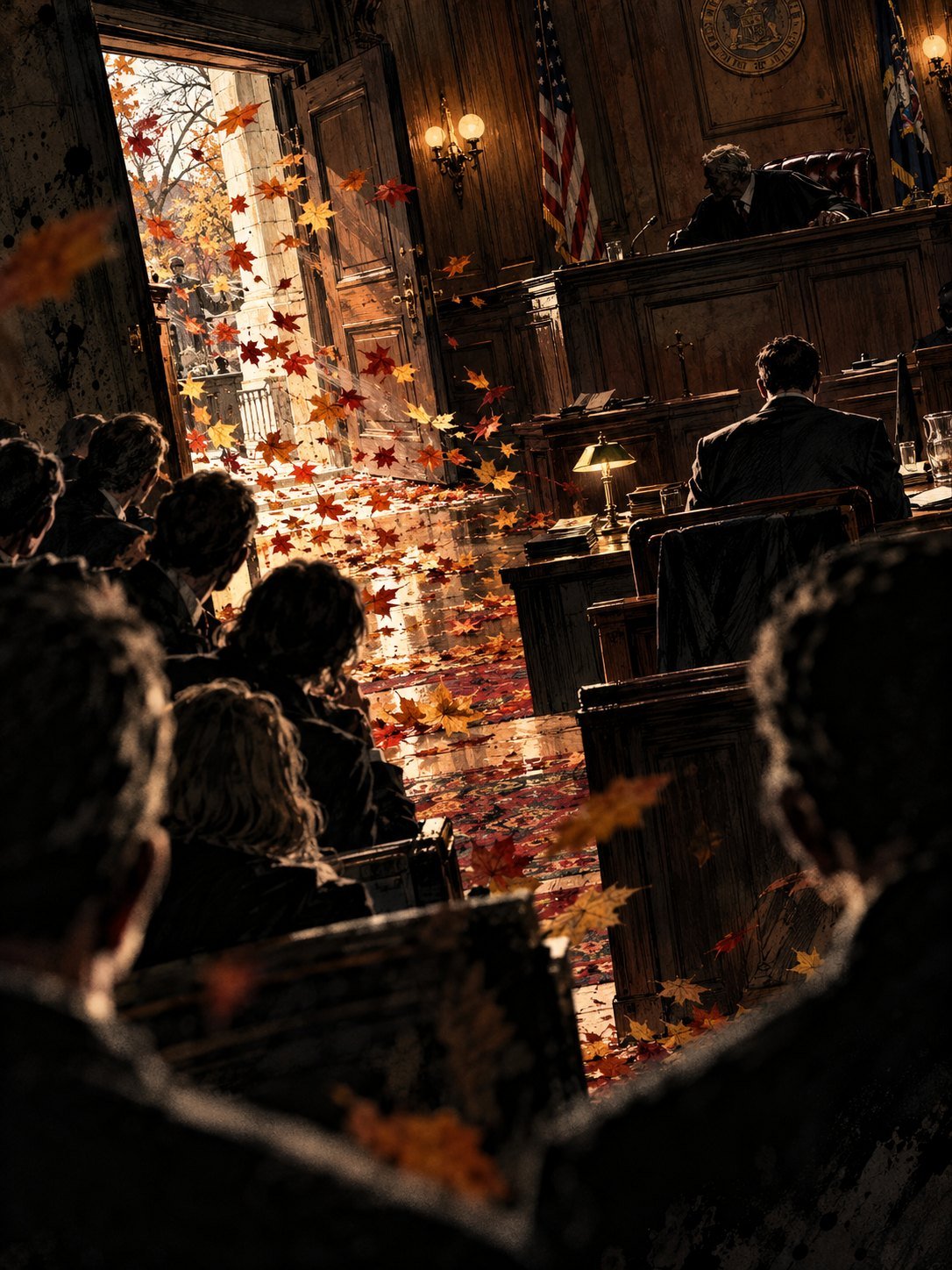
In 2002, a jury convicted Michael Skakel, a nephew of Ethel Kennedy, of Martha’s murder.
He had been 15 years old in 1975, the same age as Martha. He was sentenced to 20 years to life. He spent more than 11 years in prison.
Then the case came apart.
Courts went back and forth on whether his trial had been fair. One judge ordered a new trial. The state’s highest court put the conviction back. Then the same court, with a new justice on the bench, threw it out for good.
In 2020, prosecutors announced they would not try him again.
Michael Skakel has said from the beginning that he is innocent. Today, he stands convicted of nothing in this case. Two other men were once treated as suspects. Neither was ever charged.
Officially, no one has been held responsible for killing Martha Moxley.
To understand how that happened, you have to start with the place where she lived. (AP via WBUR)
A gated world where everyone knew everyone

Martha lived in Belle Haven, a private section of Greenwich, Connecticut.
Greenwich is a town on the coast, close to New York City, famous for its wealth. And Belle Haven was one of its most exclusive corners. It was a gated neighborhood with its own private security force. A guard booth stood at the entrance.
Inside were big houses on large lots, long lawns and old trees. The families had money, and many of them had had it for generations.
In a place like that, a crime like this was almost unthinkable. The gate was supposed to keep danger out.
But on October 30, 1975, whatever happened to Martha happened inside the gate.
And the weapon itself came from a house on her own street.
The gate had not helped her. (Newsweek)
Toilet paper in the trees, and one girl missing

On the evening of October 30, local kids went out to do what kids did on Mischief Night. They threw toilet paper into the trees and roamed the dark streets.
Martha Moxley went out with her friends.
Mischief Night is mostly an East Coast tradition. In some places it goes by other names, like Cabbage Night or Devil’s Night. For teenagers, it was a night to be out late with friends, with a little permission to make trouble.
She was 15. She was never far from her own front door. The streets of Belle Haven belonged to the neighborhood kids that night.
That evening, Martha ended up at the Skakel house, directly across the street from her own.
Over the next hours, the night would split into different versions. Different people would remember different times and different movements.
Nearly 50 years later, those versions still have not been fully reconciled. (CBS News)
The last hours at the Skakel house

Later that evening, Martha was at the Skakel house, across the street from her own.
Two of the Skakel sons were there: Thomas, known as Tommy, who was 17, and Michael, who was 15.
Michael has said that around 9:30 p.m. he left to drive a cousin, Jimmy Terrien, home. He says he came back around 11:30 p.m. and went straight to bed.
Tommy stayed. He was the last person known to have been seen with Martha. He has said she went home shortly after Michael left.
Investigators believe she was killed between 9:30 and 10 p.m. But that estimate is not settled. Other estimates run from about 9:50 p.m. to midnight. The state’s medical examiner put it anywhere from 9:30 p.m. to 1 a.m., probably closer to 9:30.
Those few hours would become the center of the whole case.
Because whoever was where at 9:30 would matter for decades. (CBS News)
Her bed stayed empty all night

Martha never came home that night.
Her bedroom stayed empty.
On a night of pranks, a teenager being late could seem like nothing. Kids lost track of time. They ended up at a friend’s house.
But the hours passed, and Martha did not appear.
The next day was Halloween. Around midday, a friend found her. She was lying beneath a pine tree near the back of her family’s property. Some accounts say the next morning; most say around noon.
She had been only steps from her own home. The gate at the entrance and the private security force had not protected her.
By most estimates, she had died the night before, within hours of being at the Skakel house.
All night, she had been there, on her own family’s land, under a tree. (AP via Boston.com)
Pieces of a broken six-iron lay near her

She had been beaten with a golf club.
The club was broken. Pieces of the six-iron lay near her body.
Investigators recovered the head of the club and part of the shaft. But one piece was missing: the handle, the grip at the top of the club.
That mattered enormously. The grip is the part a person holds tightly. It is the piece most likely to carry fingerprints.
The handle has never been found.
There were other problems too. Fingerprints on the pieces that were recovered turned out to be unusable. And the forensic examination of the scene was delayed by nearly a day.
Today, a crime scene like this would be sealed off and examined within hours. In 1975, things moved much more slowly.
The most important clue had a missing piece from the very first day. (Newsweek)
A Toney Penna club, and a matching set
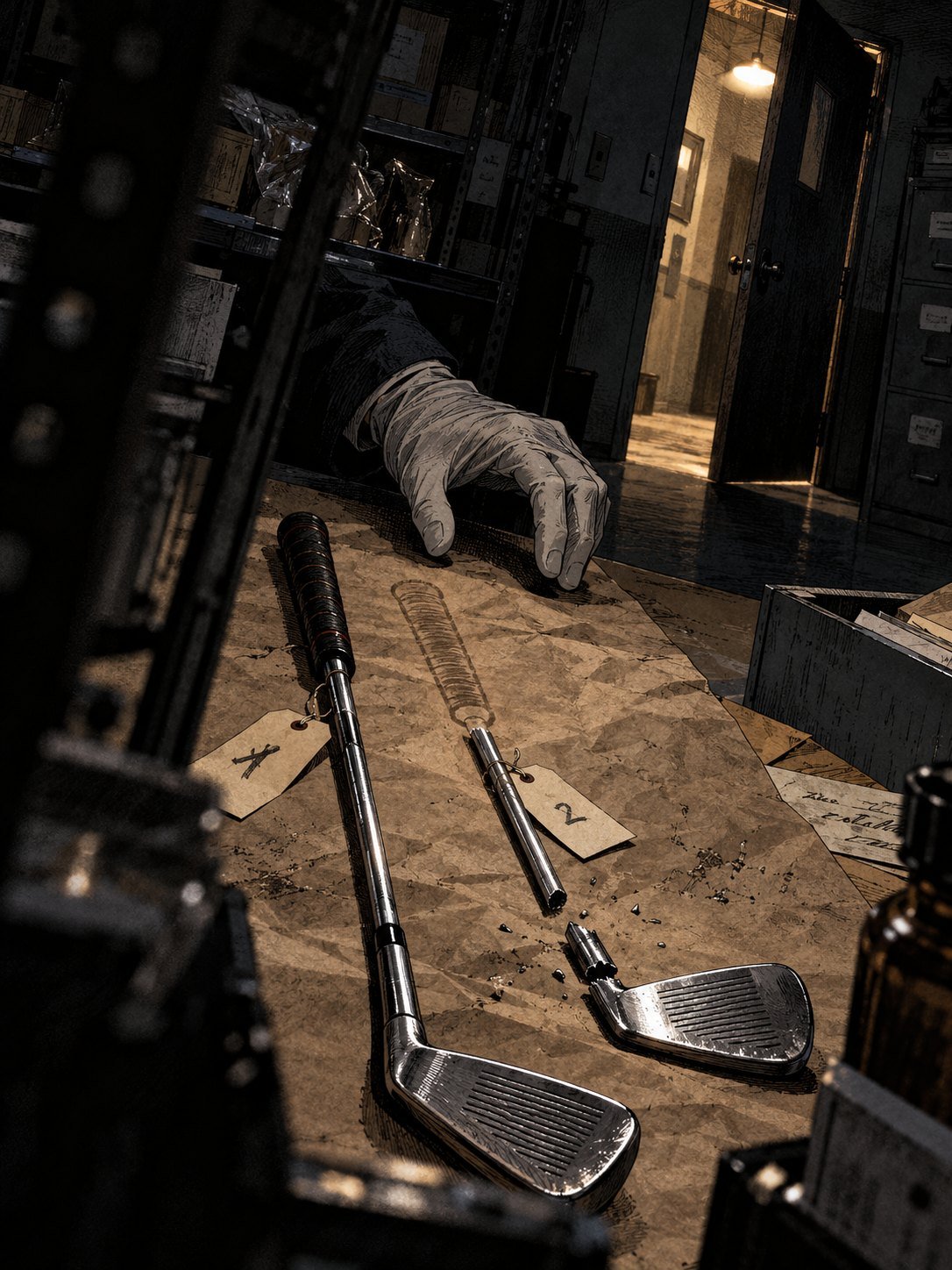
It was a Toney Penna six-iron.
Investigators were able to trace it to a set owned by the Skakel family.
A club from the same set was later found at the Skakel house.
So the weapon came from a house directly across the street, where Martha had been that very evening.
But knowing where a weapon came from is not the same as knowing who used it. A golf club is not like a gun that is registered to one person. Anyone at the house, or anyone who could reach the clubs, could in theory have picked one up.
For police, it pointed the investigation toward that house and the people in and around it.
Which meant the investigation was about to run straight into one of the most powerful families in America. (CBS News)
Police could search. They never got a warrant

The Skakels were a wealthy family related by marriage to the Kennedys.
The father was Rushton Skakel. His sister Ethel had married Robert F. Kennedy, the former U.S. attorney general and senator who was killed in 1968.
After the murder, Rushton Skakel gave police permission to search his home.
That sounds helpful. But accounts differ on what police actually did with it. One source says police had permission to search the house but never got a warrant. Another says they didn’t search the family residence at all.
A warrant matters. It is a court order that lets police search properly and seize evidence in a way that holds up in court. Permission from a homeowner can be withdrawn at any time.
In this case, it would be.
Whether police fully searched the Skakel house in 1975 is still unclear.
Meanwhile, they had a suspect. (Newsweek)
The last person seen with her
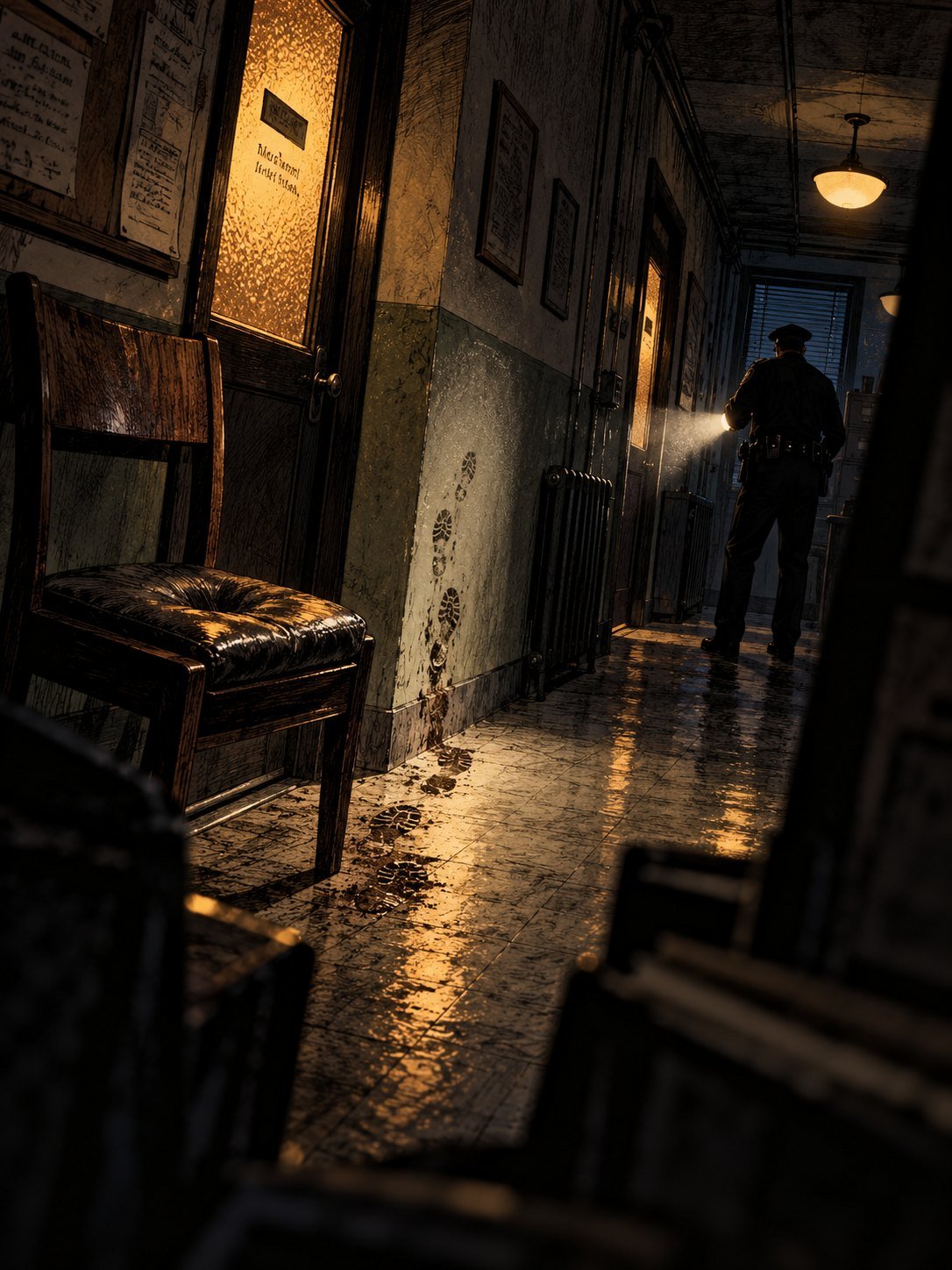
The last person seen with Martha was a Skakel son: Tommy, then 17.
He became the prime suspect.
Police focused on him for years. In 1976, investigators sought an arrest warrant for Thomas Skakel, but the state’s attorney declined to approve it.
The family’s tutor, Kenneth Littleton, was also treated as a prime suspect at one point. Littleton has said Tommy was watching TV with him around 10 p.m. that night. According to the Connecticut Supreme Court, Littleton was later cleared after considerable investigation.
Thomas Skakel has denied any role in Martha’s death.
Neither man was ever charged.
It is important to be clear about this. Being a suspect is not the same as being guilty. Police suspected several people over the years, and none of those early suspects was ever charged with anything.
And then the family stopped talking. (Connecticut Supreme Court)
The family stopped cooperating. The case went cold

On January 22, 1976, less than three months after the murder, Rushton Skakel ended his family’s cooperation with investigators.
From then on, police could not count on the Skakel family to answer questions or open doors.
Without that, the investigation stalled. There was no arrest. There was no charge. The broken golf club and the missing handle sat as unanswered questions.
The case went cold.
In a murder investigation, the people who were around the victim in her last hours are usually the most important witnesses. Here, several of them lived in that one house. Without the family’s cooperation, investigators had few places left to go.
For the Moxleys, it was a bitter turn. Martha had been killed with a club from that family’s set, after an evening at that family’s house.
Years passed. The case faded from the headlines.
One person never let it go. (CBS News)
Her mother never stopped pushing

Her mother, Dorthy Moxley, never stopped pushing for answers.
For years, nothing moved. But she kept the case in the public eye. She spoke to reporters. She kept her daughter’s name alive when it would have been easy for everyone else to let it fade.
Her son John later called her a “crusader” for justice who was “never vindictive.”
Over the years, she spoke at police and victims’ advocacy conferences. Police departments in other states asked her to meet with families of victims who were uncomfortable talking to police.
She once described herself this way: “I’m not tough. I’m just strong.”
Her son said she was “the most glass-half-full person I’ve ever known.”
For almost two decades, there was no breakthrough. Then, in the 1990s, a document surfaced that nobody outside a small circle was ever supposed to see.
And it came from the Skakel family itself. (AP via Boston.com)
A private report leaked, and it named a different son

In the 1990s, a private report leaked.
Rushton Skakel had ordered his own private investigation into the case. The result became known as the Sutton report.
It was never meant to be public. But in 1995, a Newsday story leaked details from it.
The report pointed to a different son: Michael.
According to the leaked material, Michael reportedly told the investigators that after returning home, he went back out and climbed a tree outside Martha’s room. That put him near the scene that night.
Michael has always denied killing Martha. Being near a place is not the same as committing a crime there.
It was an extraordinary twist. The family’s own investigation had produced the document that pointed at one of its sons.
But the report reopened the case. For the first time in years, prosecutors had a new direction.
In 1998, the state convened a special grand jury. (Newsweek)
A Kennedy nephew on trial
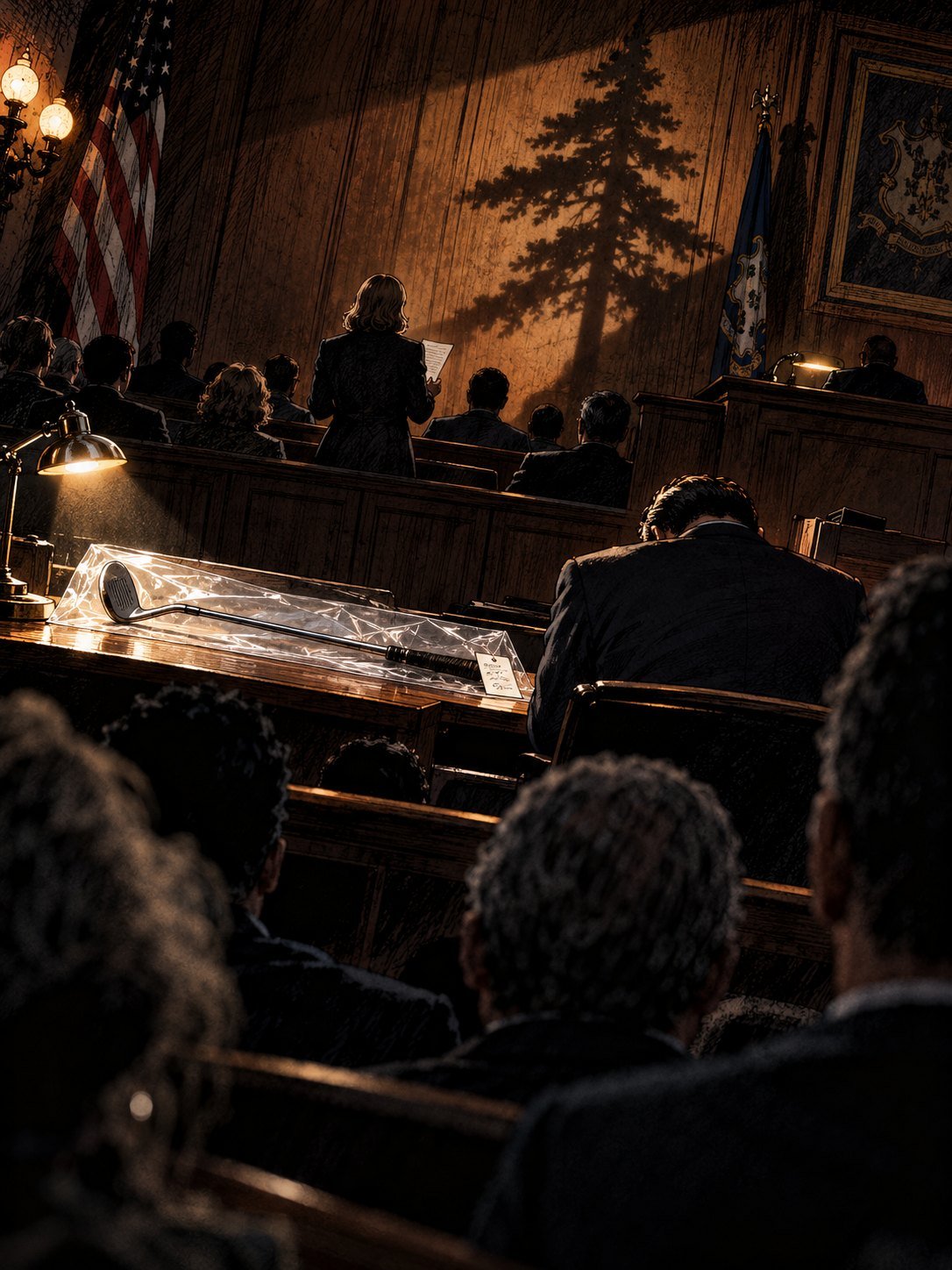
In 1998, Connecticut used an unusual tool: a one-person grand jury, in which a judge hears evidence in secret and decides whether charges are justified. It ran for about 18 months.
On January 19, 2000, Michael Skakel surrendered and was charged with Martha’s murder.
The case went to trial in Norwalk, Connecticut, in 2002. It drew national attention. The defendant was a nephew of Ethel Kennedy, on trial for a killing that had happened when he was 15.
Part of the prosecution’s case was testimony from a man who said Skakel had confessed to him at a school in 1978. Skakel has always maintained his innocence.
On June 7, 2002, the jury convicted him of murder.
In August 2002, he was sentenced to 20 years to life in prison. He was 41.
After almost 27 years, it looked like the case was over.
It wasn’t. (History.com)
A judge ordered a new trial. He walked out

In 2013, a judge ordered a new trial.
On October 23, 2013, Judge Thomas Bishop ruled that Michael Skakel’s trial lawyer, Mickey Sherman, had not represented him effectively.
In the American system, every defendant has a constitutional right to a competent lawyer. If a lawyer’s mistakes are serious enough that they could have changed the outcome, a court can throw out the result.
That is what Judge Bishop did.
On November 21, 2013, Michael Skakel walked out of prison, freed on $1.2 million bail. He had spent more than 11 years behind bars. His lawyer put it at 11 and a half.
He was not declared innocent. He was simply no longer convicted, while the state appealed.
The fight now moved to the Connecticut Supreme Court.
And that court would change its mind. (AP via WBUR)
The highest court said yes. Then it said no

In 2016, the state’s highest court reinstated his conviction.
On December 30, 2016, the Connecticut Supreme Court ruled 4-3 that his trial lawyer had been competent. The conviction was back.
Then something changed on the court itself. The justice who had written the 2016 majority opinion retired. A newly seated justice joined the case.
On May 4, 2018, the same court ruled again, also 4-3. This time, it threw the conviction out.
Same case. Same court. Same evidence. A different result, by a single vote.
In a 4-3 decision, one seat on the bench can decide everything. Here, one change on the court changed the outcome for a man who had already spent more than 11 years in prison.
In 2019, the U.S. Supreme Court declined to hear the state’s appeal. The 2018 ruling stood.
So why did the court change its answer? It came down to one witness who never testified. (NBC Connecticut)
The witness who was never called

The court said his trial lawyer had failed to call an important alibi witness.
An alibi witness is someone who can say a defendant was somewhere else when the crime happened. Michael Skakel’s defense was that he had been at his cousin’s house that night.
Skakel’s trial lawyer did call alibi witnesses. But they were Skakel relatives. A jury might easily doubt family members.
The 2018 majority focused on a man named Denis Ossorio. He was not a relative. The court said he would have placed Michael at his cousin’s home and called his testimony “essential to the defense.”
He was never called to testify.
Because of that, the court said, Skakel had not received a fair trial.
The conviction was gone. Prosecutors now had to decide whether to try him all over again, more than 40 years after the murder. (Connecticut Supreme Court)
Exactly 45 years later: no retrial
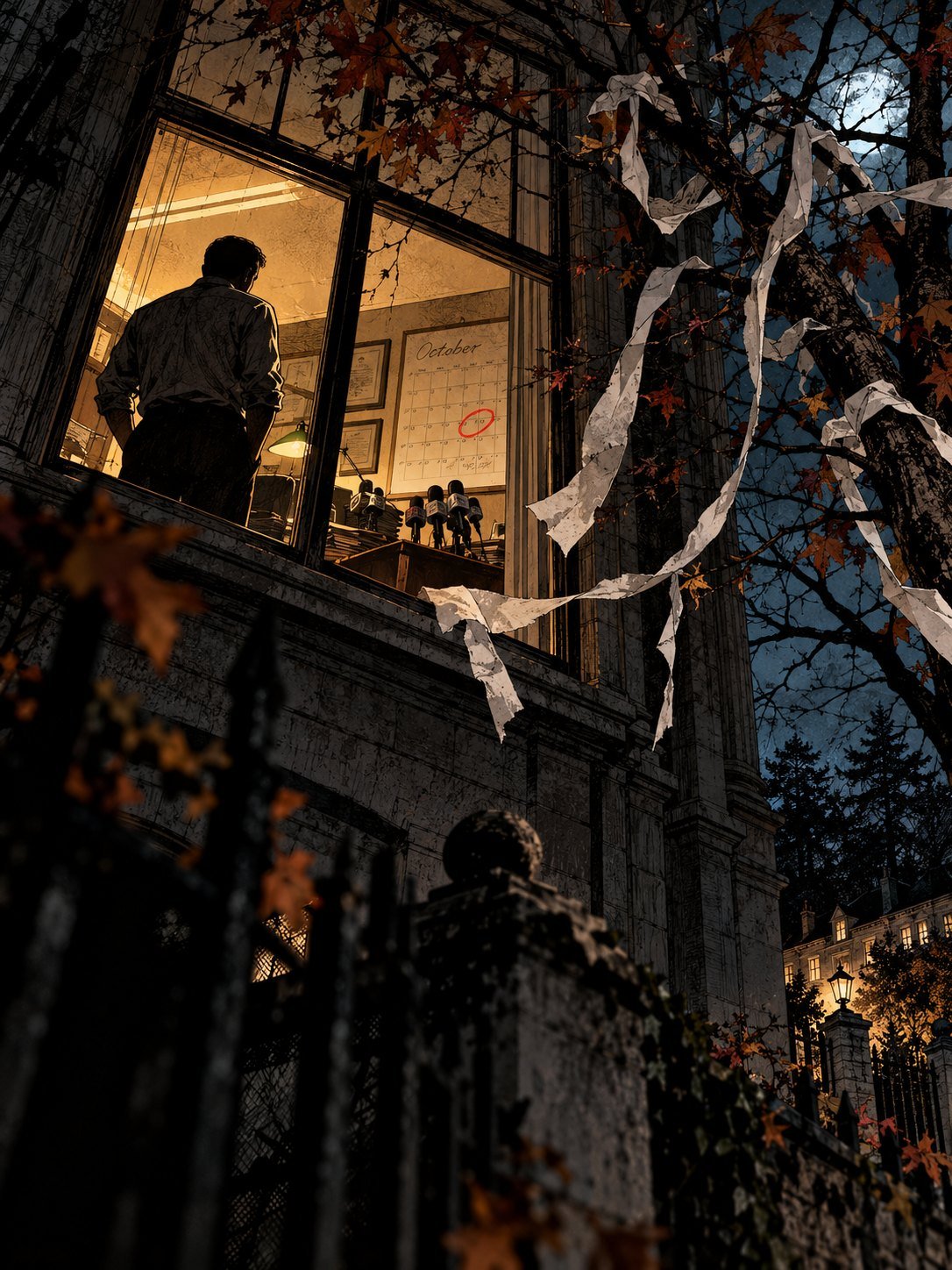
On October 30, 2020, exactly 45 years after the murder, the state said it would not retry him.
A second trial was not pursued, partly because so many potential witnesses had died and there was not enough evidence for a retrial. Time had thinned the witness list. Of more than 50 witnesses, 17 had died. Among them was the man who had testified that Skakel confessed.
Evidence from 1975 was also limited from the start. The handle of the golf club had never been found. The fingerprints had been unusable.
In 2020, Martha’s brother, John Moxley, told the AP that the family accepted there would be no second trial.
Michael Skakel continues to say he is innocent. In late 2023 he sued the lead investigator, Frank Garr, and the town of Greenwich, alleging malicious prosecution and withheld evidence about other suspects. Those are allegations, not findings. A trial date in that civil case was set for November 2026.
The criminal case, though, was over.
Nobody stood convicted. (AP via NBC Boston)
Dorthy Moxley died at 92

Dorthy Moxley died in December 2024, at 92.
She died at her home in Summit, New Jersey, of complications from the flu and possibly pneumonia, according to her son John.
She had spent almost half a century fighting for her daughter. She watched the case go cold, then come back to life. She saw a conviction, and then watched courts take it apart again.
Her son said she focused less on the law and more on the support people gave the family. “She always said she believed in angels and the angels really came out to support her, to support us,” he said.
She died with her daughter’s case still officially open.
Martha had been 15. Her mother outlived her by 49 years.
In all that time, no court gave her a final answer. (AP via Boston.com)
The night before Halloween, Belle Haven goes quiet

Every Mischief Night, Belle Haven goes quiet again.
Fifty-one years have passed since Martha Moxley went out with her friends on October 30, 1975. In late 2025, Michael Skakel spoke publicly for the first time about the case, on an NBC podcast called “Dead Certain.” He still says he is innocent.
So many questions remain. Who killed Martha Moxley? Where did the missing handle of the six-iron go? What time did she actually die? Did police ever fully search the house across the street?
No new charges have been filed. No one stands convicted. The early suspects were never charged. The one man who was convicted had that conviction thrown out.
Officially, the murder of Martha Moxley is still unsolved.
A 15-year-old girl was found under a tree on her family’s land on Halloween in 1975.
Her family never stopped asking who put her there. (Fox News)
Case notes: a missing handle, three suspects, and no conviction
Martha Moxley was 15 when she was beaten with a golf club on Oct. 30, 1975, in Belle Haven, a gated Greenwich neighborhood with its own security force (Newsweek). She was found the next day under a pine tree at the back of her family’s property, across the street from the Skakel home (CBS News).
Michael Skakel, a nephew of Ethel Kennedy, was convicted in 2002. That conviction was vacated in 2018, and in 2020 the state said it would not retry him (AP). He is not convicted of any crime in this case and has maintained his innocence from the start (People).
Two other men were once treated as suspects. His older brother Thomas was the last person seen with Martha and was the prime suspect for years. Tutor Kenneth Littleton was also a prime suspect and was later cleared after considerable investigation, according to the Connecticut Supreme Court (Conn. Supreme Court). Neither was ever charged (Fox News). Thomas has denied any role (AP).
Timeline
| Date | What happened |
|---|---|
| Oct. 30, 1975 | Mischief Night. Martha visits the Skakel house; Michael leaves around 9:30 p.m. to drive a cousin home (CBS News) |
| Oct. 31, 1975 | A friend finds her around noon; a matching club is found on the Skakel property (CBS News) |
| Jan. 22, 1976 | Rushton Skakel ends the family’s cooperation with investigators (CBS News) |
| 1995 | A Newsday story leaks details of the private Sutton report, placing Michael at the scene (Newsweek) |
| Jan. 19, 2000 | Michael Skakel surrenders and is charged (NBC Connecticut) |
| June 7, 2002 | Norwalk jury convicts him; sentenced in August to 20 years to life (NBC Connecticut) |
| Oct. 23, 2013 | Judge Thomas Bishop orders a new trial (NBC Connecticut) (AP) |
| Nov. 21, 2013 | Freed on $1.2 million bail (AP) |
| Dec. 30, 2016 | State Supreme Court reinstates the conviction, 4-3 (NBC Connecticut) |
| May 4, 2018 | Same court vacates it, 4-3 (Conn. Supreme Court) |
| Oct. 30, 2020 | State announces no retrial (AP) |
| December 2024 | Dorthy Moxley dies at 92 (AP) |
What the sources agree on, and where they don’t
| Detail | Source A says | Source B says |
|---|---|---|
| Time of death | Between 9:30 and 10 p.m. (CBS News) | Between 9:50 p.m. and midnight (Newsweek); the state’s medical examiner said 9:30 p.m. to 1 a.m., probably closer to 9:30 (Conn. Supreme Court) |
| When she was found | Around noon on Halloween (CBS News) (A&E) | “The next morning” (People) |
| Search of the Skakel home | Rushton Skakel let police search his home (CBS News) | Police had permission but never got a warrant (Newsweek); police “didn’t search the family residence” (A&E) |
| Time in prison | “More than 11 years” (AP) | “11 and a half years,” per his lawyer (AP) |
| The 2020 date | 45 years after the murder (CBS News) | “45 years to the day” after her body was found (AP), though she was found on Oct. 31 |
Details most coverage missed
The handle was never found. The club’s head and shaft were near Martha, but the grip, the part most likely to carry prints, never turned up. Prints on the recovered pieces were unusable, and the forensic exam was delayed nearly a day (Newsweek).
The alibi witness was an outsider. The 2018 majority said Denis Ossorio would have placed Michael at his cousin’s home, and called his testimony “essential to the defense” (Conn. Supreme Court). The trial lawyer did call alibi witnesses, but they were Skakel relatives. The court flipped after the author of the 2016 majority retired (AP).
Time had thinned the witness list. By 2020, 17 of more than 50 witnesses had died, including the man who said Skakel confessed (NBC News). In 1976, the state’s attorney had declined to approve an arrest warrant for Thomas Skakel (Conn. Supreme Court).
The case is back in court, as a civil suit. In late 2023, Skakel sued lead investigator Frank Garr and the town of Greenwich, alleging malicious prosecution and withheld evidence about other suspects. These are allegations, not findings (AP). In April 2026, a judge consolidated his two suits and set a November trial date (Law360). In November 2025, he spoke publicly for the first time, on NBC’s podcast “Dead Certain” (People).
What we still don’t know
- Who killed Martha Moxley. No one stands convicted, and no new charges have been filed (Fox News).
- Where the missing handle of the six-iron went (Newsweek).
- The exact time of death, which estimates still place anywhere from 9:30 p.m. to about 1 a.m. (Conn. Supreme Court).
- Whether police fully searched the Skakel house in 1975; accounts differ (Newsweek).
- What the civil trial over the investigation will show, if it goes ahead as scheduled (Law360).
Case file summary
- Victim: Martha Moxley, 15
- Date: Oct. 30, 1975 (Mischief Night); found Oct. 31
- Place: Belle Haven, Greenwich, Connecticut
- Weapon: A Toney Penna six-iron from a set owned by the Skakel family
- Early suspects: Thomas Skakel and tutor Kenneth Littleton; neither was charged
- Prosecution: Michael Skakel convicted in 2002; conviction vacated in 2018; state declined to retry him in 2020
- Ongoing: Skakel’s civil suits against the lead investigator and Greenwich, with a trial date set for November
- Status: Unsolved; no one stands convicted
Illustrations are artistic interpretations, not crime-scene or court photos. No real person has a recognizable face.
Sources
- CBS News: Martha Moxley murder case timeline
- CBS News 48 Hours: Who killed Martha Moxley?
- A&E: Martha Moxley’s Halloween murder 50 years ago and its Kennedy connection
- Connecticut Supreme Court: Skakel v. Commissioner of Correction, SC 19251 (May 4, 2018)
- AP via NBC Boston: Kennedy cousin Skakel will not be retried in 1975 killing of Martha Moxley
- AP via Boston Globe: Kennedy cousin Michael Skakel will not be retried in 1975 killing
- NBC News: Kennedy cousin Michael Skakel won’t face retrial in 1975 killing
- NBC Connecticut: Timeline in the case of Kennedy cousin Michael Skakel
- AP via WBUR: Skakel granted bail
- AP via WBUR: Kennedy cousin whose murder conviction was overturned sues former cop, Connecticut town
- AP via Boston.com: Dorthy Moxley, mother who fought for justice in daughter’s murder case, has died
- Newsweek: Reckoning in Greenwich
- History.com: Michael Skakel convicted of 1975 murder in Greenwich
- People via AOL: Michael Skakel speaks out for first time after conviction was overturned
- Fox News: Kennedy cousin tied to Martha Moxley case breaks silence 50 years later
- Law360: Skakel gets Nov. trial date in suits over Moxley murder probe