Tsutomu Yamaguchi: The Man Who Survived Hiroshima and Nagasaki
Narrated Mystery: press play and hear the whole case read aloud, like a true crime podcast episode, or an audiobook for a long drive (about 11 minutes). The narrator is an AI voice.
Listen to the narration above first, then read along. The key words are underlined in the story.
- draughtsmana person who draws technical plans for building things
- terminusthe last stop at the end of a transport line
- dormitorya building where workers or students sleep
- hypocentrethe point on the ground directly below an explosion
- scorchedburned slightly on the surface
- compensationmoney paid to someone for harm or loss
- batona stick passed on in a relay; here, a duty
- destinywhat is meant to happen in someone’s life
1. What was his job at the Nagasaki Shipyard?
He was a draughtsman who designed oil tankers for Mitsubishi.
2. What official recognition did he receive 64 years after the bombings?
He became the first person officially recognised as a survivor of both atomic bombings.
3. When and where did he die?
At 5:38 a.m. on Monday 4 January 2010, in Nagasaki, aged 93.
What the record shows
- Who: Tsutomu Yamaguchi (1916-2010), a Mitsubishi ship designer from Nagasaki
- When: 6 and 9 August 1945; officially recognised on 24 March 2009
- Status: The first person officially recognised as a survivor of both
Still uncertain
- How many double survivors there really were, since many were never recorded.
- Exactly how far he was from the Hiroshima hypocentre.
- How much of the later illness in his family was caused by the bombs.
Eleven o’clock, sixth floor
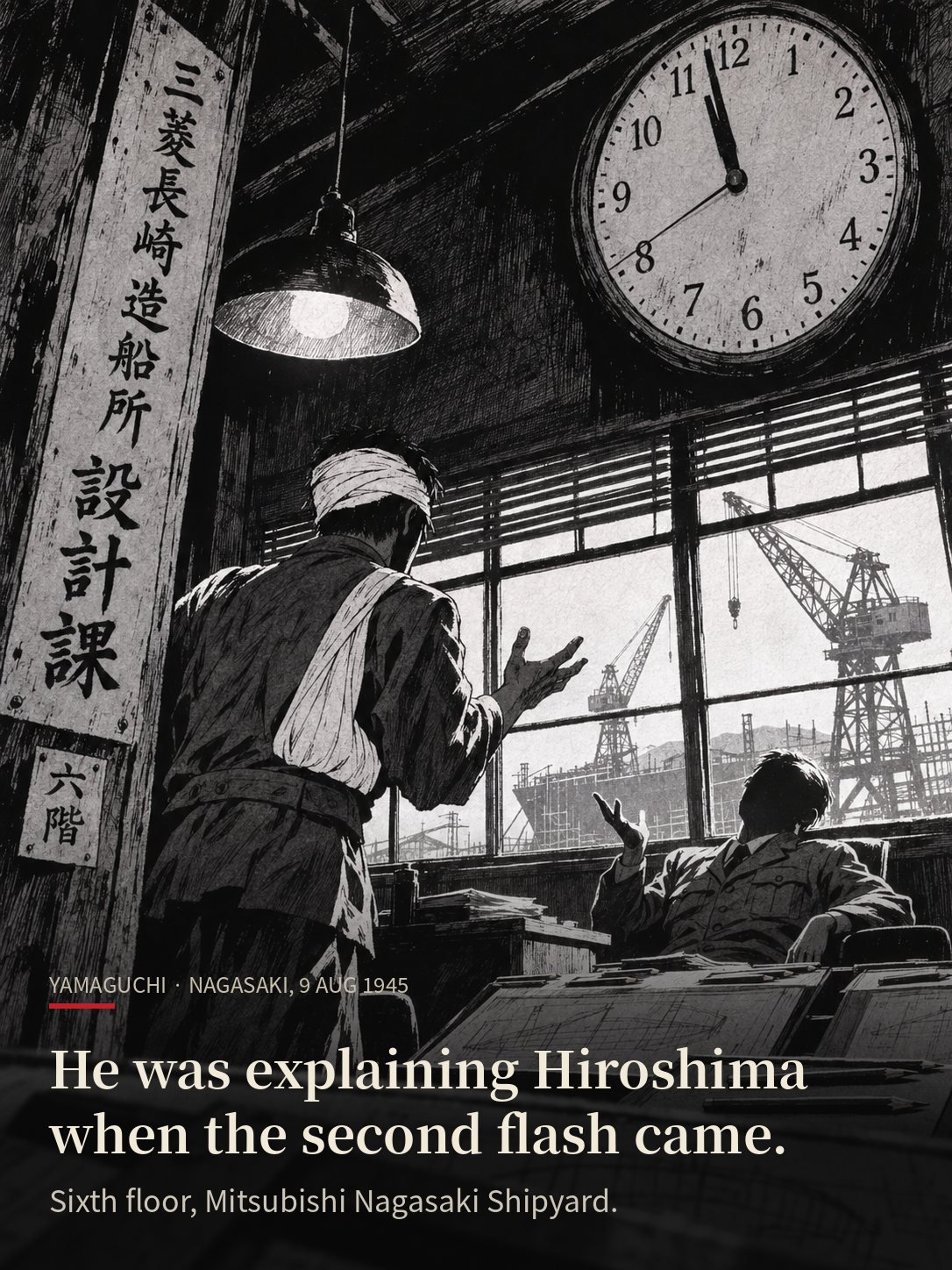
On the morning of 9 August 1945, a ship designer with a bandaged face stood in a drawing office on the sixth floor of the Mitsubishi shipyard in Nagasaki.
He was trying to explain to his section manager what he had seen three days earlier, in Hiroshima: one bomb, one city gone.
The manager said he could not believe it.
A few minutes later, the room filled with the same white light.
His name was Tsutomu Yamaguchi. Sixty-four years later, he became the first person officially recognised as a survivor of both atomic bombings. (MEMOIR-2006) (JT-2009)
August 1945. A ship designer survived the first atomic bomb, took the train home, and three days later the second one fell.
Three months in Hiroshima
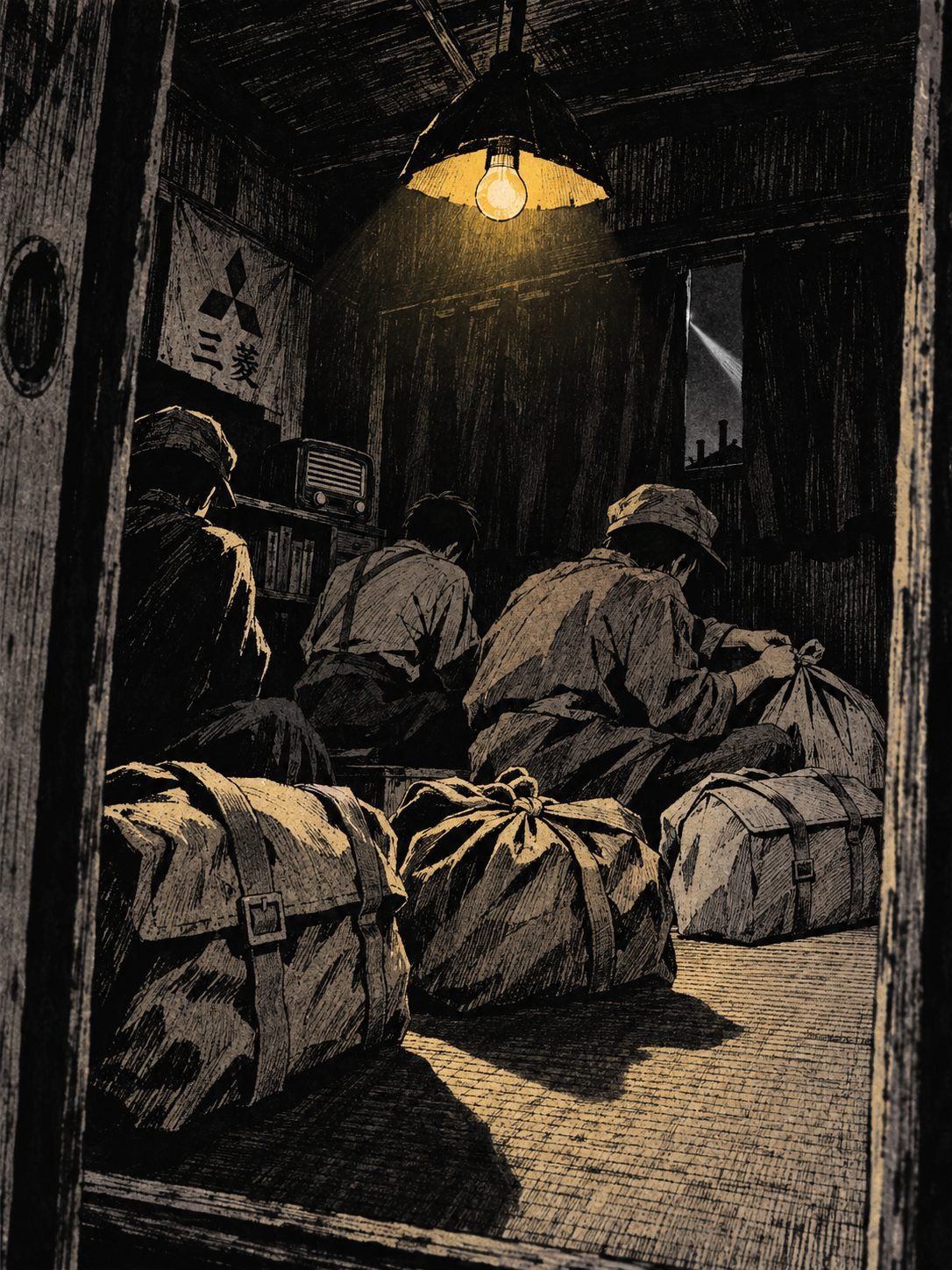
Yamaguchi was 29, born in Nagasaki in 1916. He was a draughtsman who designed oil tankers at Mitsubishi’s Nagasaki Shipyard.
At the beginning of May 1945 the company sent him to Hiroshima for about three months, with two younger colleagues, Akira Iwanaga and Kuniyoshi Sato.
At home in Nagasaki he had left his wife, Hisako, and a baby son, Katsutoshi, born that May.
The three men were due to go home on 7 August. The 6th was their last day. (MEMOIR-2006) (TIMES-2005) (NPR-KRULWICH-2012)
The seal in the drawer

That morning, Yamaguchi realised he had left his company seal in his desk drawer at the dormitory.
In Japan a hanko is a small name stamp, used in place of a signature. He needed it for the company paperwork before he could leave.
So he went back for it, and then set off again toward the shipyard, a walk of about half an hour from the last stop.
A small errand had put him on one particular road at one particular time. (MEMOIR-2006) (TIMES-2005)
Two small parachutes
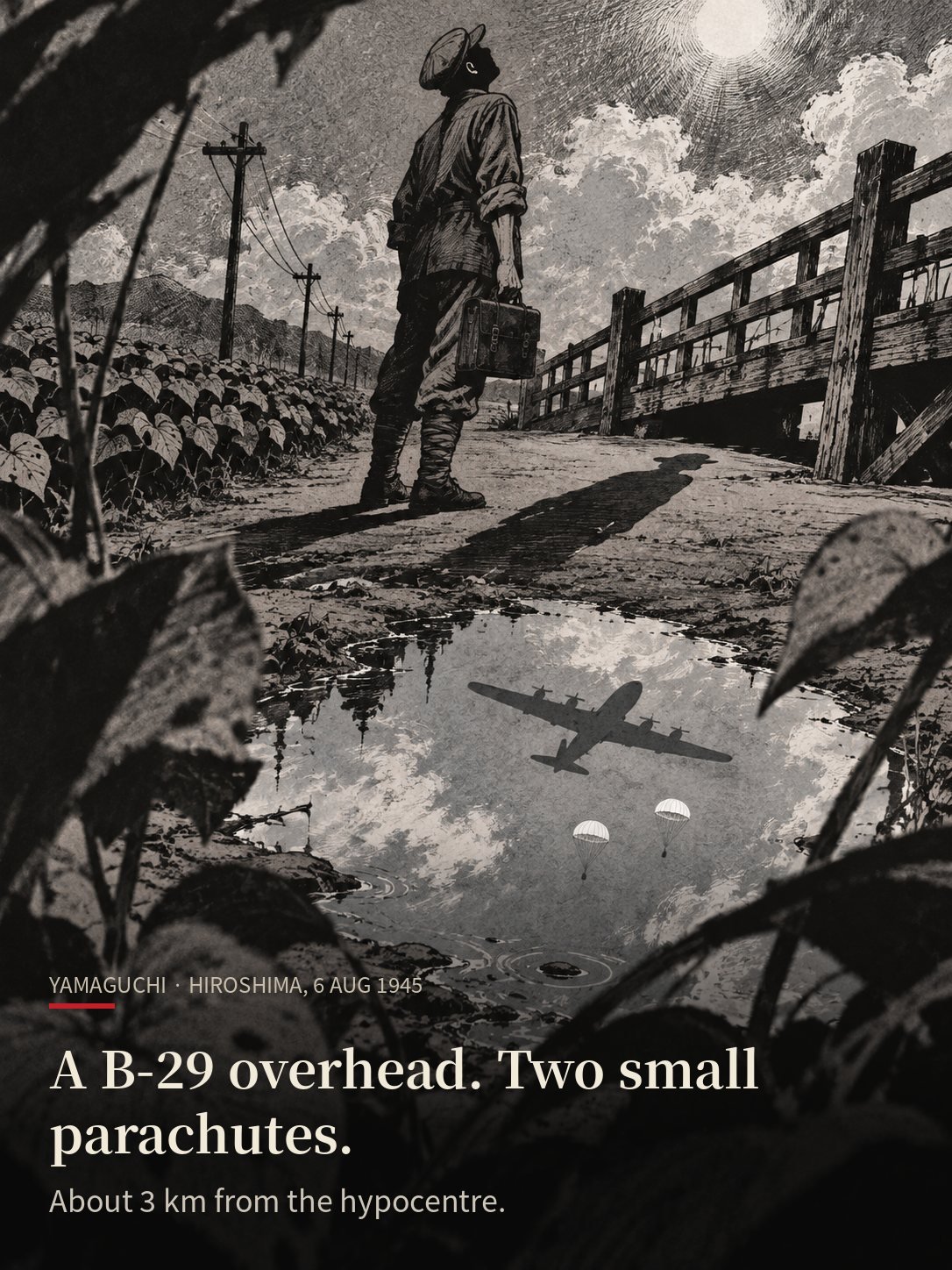
He was walking along a straight road near the tram terminus. He had just crossed a wooden bridge. On one side was an army shooting range, on the other, sweet-potato fields.
He heard a plane and looked up. A B-29 was crossing the sky, and two small parachutes were drifting down beneath it.
It was about a quarter past eight in the morning. (MEMOIR-2006) (TIMES-2005) (HISTORY-2015)
The flash
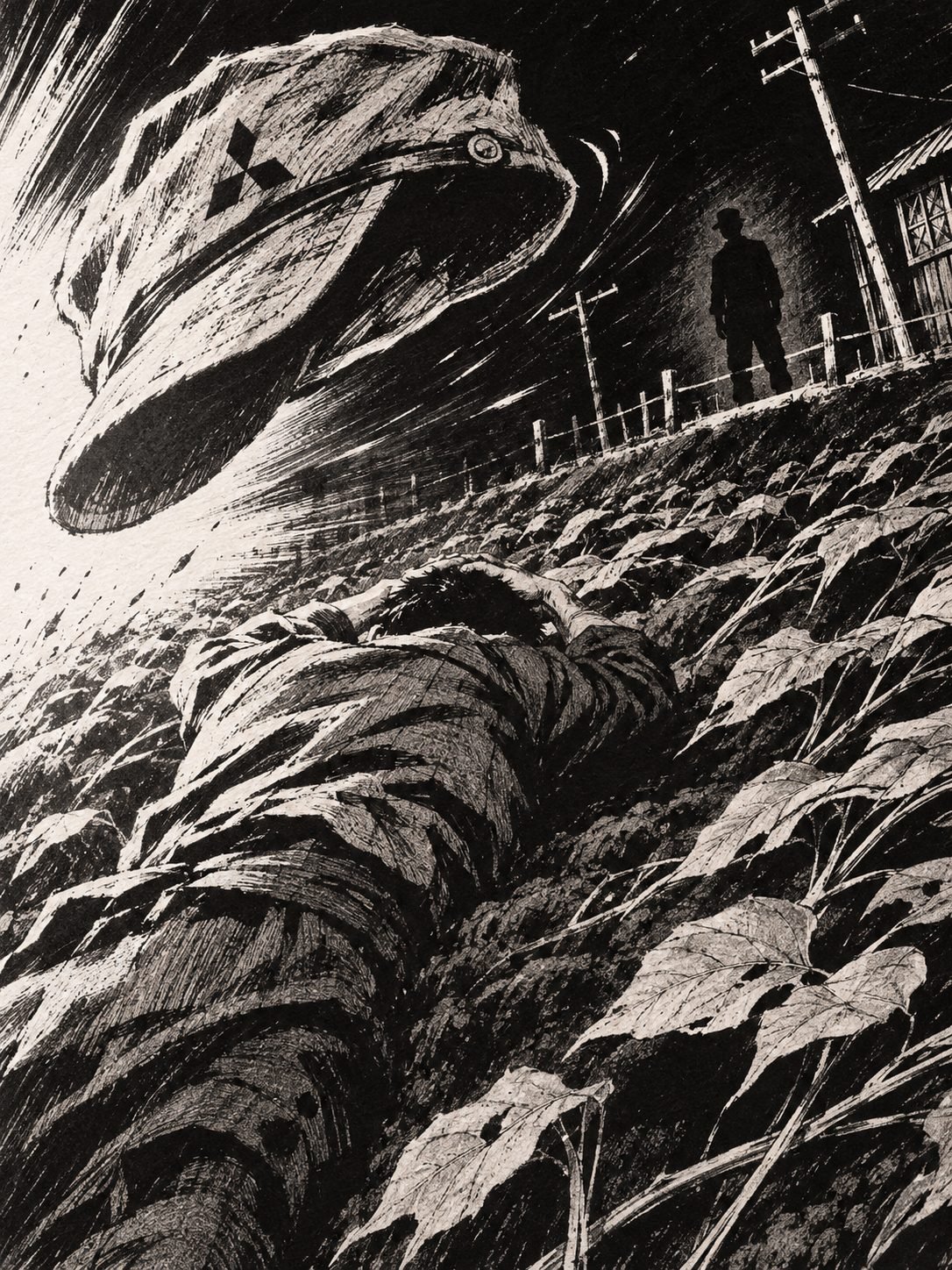
Then the flash.
He dropped into the potato field, was thrown over by the blast and blacked out for a moment. He was about 3 kilometres from the hypocentre.
When he came to, the left side of his face, his left arm and his neck were burned, and his hair was scorched. His left eardrum had burst.
“I realised I had a bad burn on half my face,” he told The Times, sixty years later. (MEMOIR-2006) (TIMES-2005) (GIZMODO-JP-2009) (GUINNESS-2009)
A night of watching the fires

He made his way back toward the company dormitory near Miyuki Bridge, through a city he no longer recognised.
That night the men took turns watching the fires and sleeping in the grounds of the technical school behind the dormitory.
Both of his colleagues had survived. Tomorrow was still the day they were supposed to go home. (MEMOIR-2006) (TIMES-2005)
The 1 p.m. train
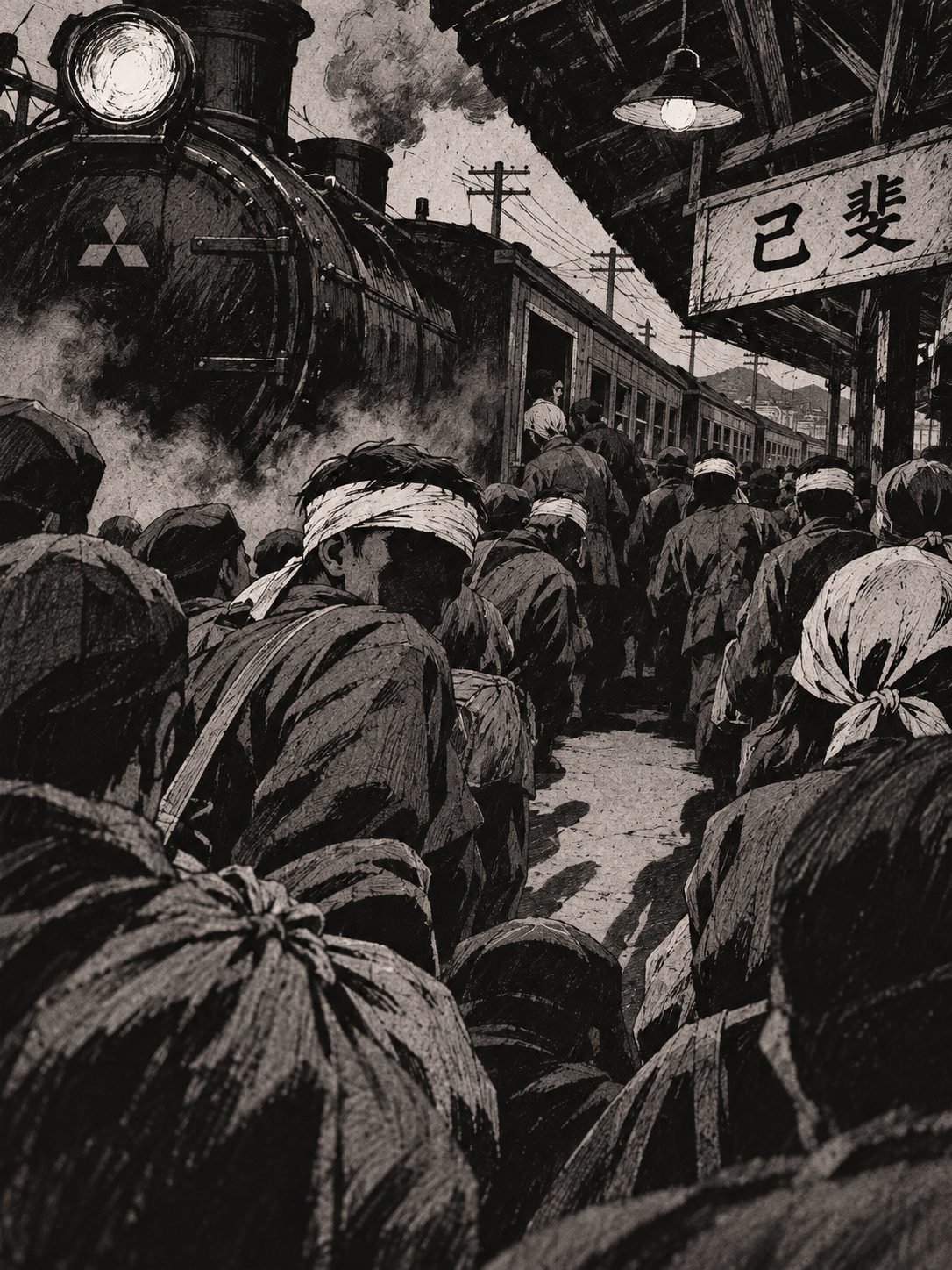
On 7 August, Yamaguchi walked across the river to Koi Station and boarded an evacuation train at one o’clock in the afternoon.
Sato was not at the station. Iwanaga rode the same train and got off at Isahaya, close to Nagasaki.
The train was crowded with injured passengers. It ran through the night, almost 300 kilometres, and reached Nagasaki in the late morning of 8 August. (MEMOIR-2006) (HISTORY-2015) (GUARDIAN-2009) Before 1945, the biggest blast people had ever caused was the Halifax Explosion of 1917, when a burning munitions ship exploded in the harbour and killed nearly 2,000 people.
A doctor from school
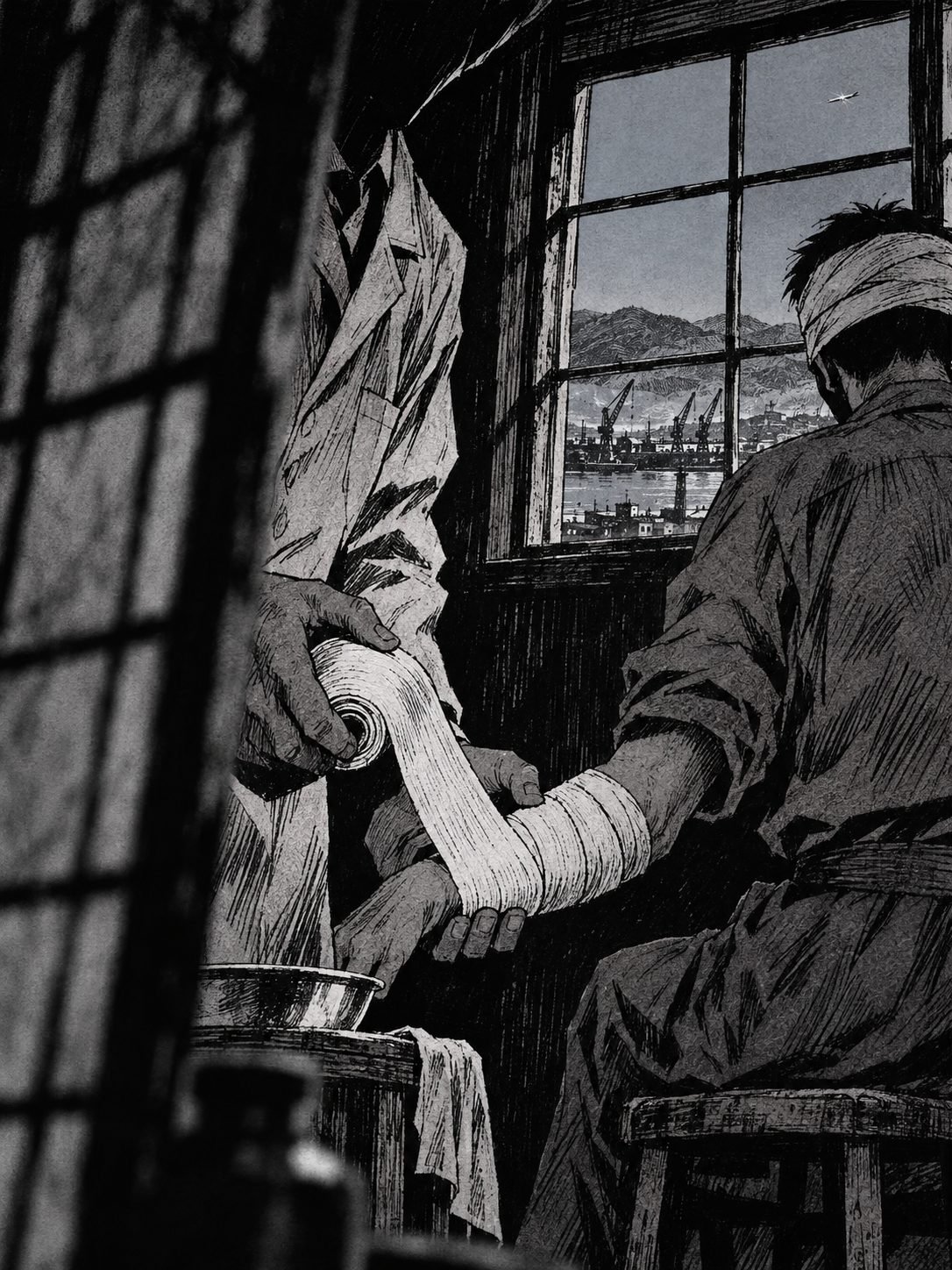
In Nagasaki he went to the Mitsubishi hospital. The eye doctor who treated his burns had been at school with him. Surviving against impossible odds is also the story of the teenager who fell about 3,000 metres into the Amazon after LANSA Flight 508 broke up, then walked out alone.
His wife and baby son were only slightly hurt.
The next morning, with his face and arm in bandages, he went to work. (MEMOIR-2006) (TIMES-2005)
It followed me

Back on the sixth floor, he reported to Section Manager Nomura. Iwanaga was home safe. Sato was alive, but missing. And one bomb had destroyed Hiroshima.
In his own memoir, Nomura simply said he could not believe that a single bomb could wipe out a whole city. Later press accounts said his boss thought he had gone mad.
At 11:02 a.m., about 3 kilometres from the second hypocentre, it happened again. “I saw another flash and the whole office, everything in it, was blown over,” he told The Times.
“I thought the mushroom cloud had followed me from Hiroshima,” he said in 2009. (MEMOIR-2006) (TIMES-2005) (GUARDIAN-2009) (HISTORY-2015) (RTE-2010)
Three alive

Six days later, sick with a high fever in a shelter, he heard the Emperor’s surrender broadcast. “I had no feeling about it,” he said.
The fever lasted for days. A blister on his arm had to be lanced.
And then the thing that sounds made up: Iwanaga and Sato had survived Nagasaki too. “Mysteriously, we three double victims are still alive,” he wrote. (TIMES-2005) (MEMOIR-2006)
Back to the drawing board
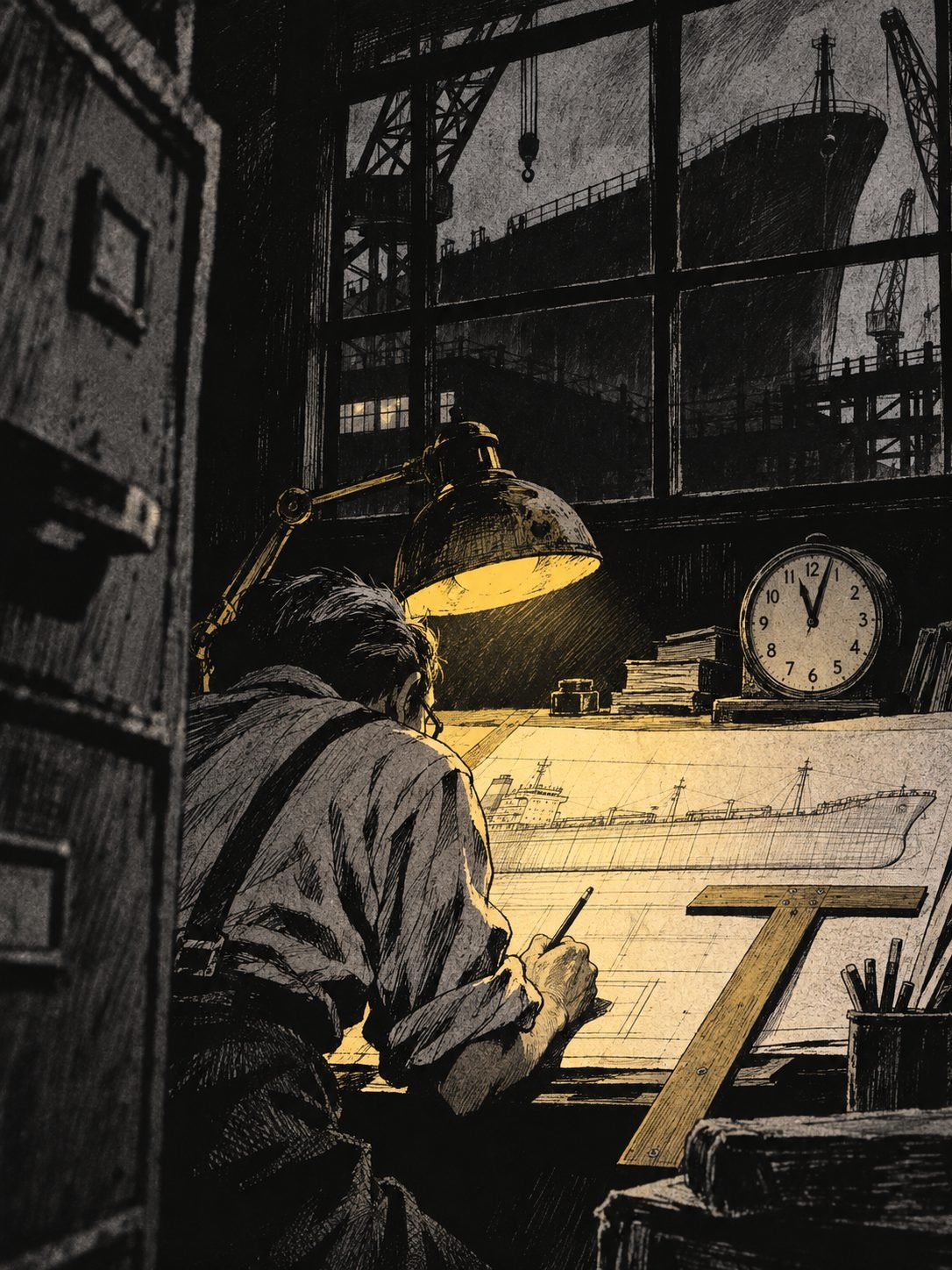
After the war he lost his job. He worked as a translator for the occupation forces, and from 1948 taught English at junior high schools.
In January 1956 he went back to the Nagasaki shipyard and designed tankers again until he retired. He and Hisako had two daughters, Toshiko and Naoko.
For decades he stayed away from anti-nuclear protests. He was healthy, he said, and it would be unfair to people who were truly ill. He wrote tanka poetry instead. (MEMOIR-2006) (NYT-2010) (NPR-KRULWICH-2012)
A passport at 90
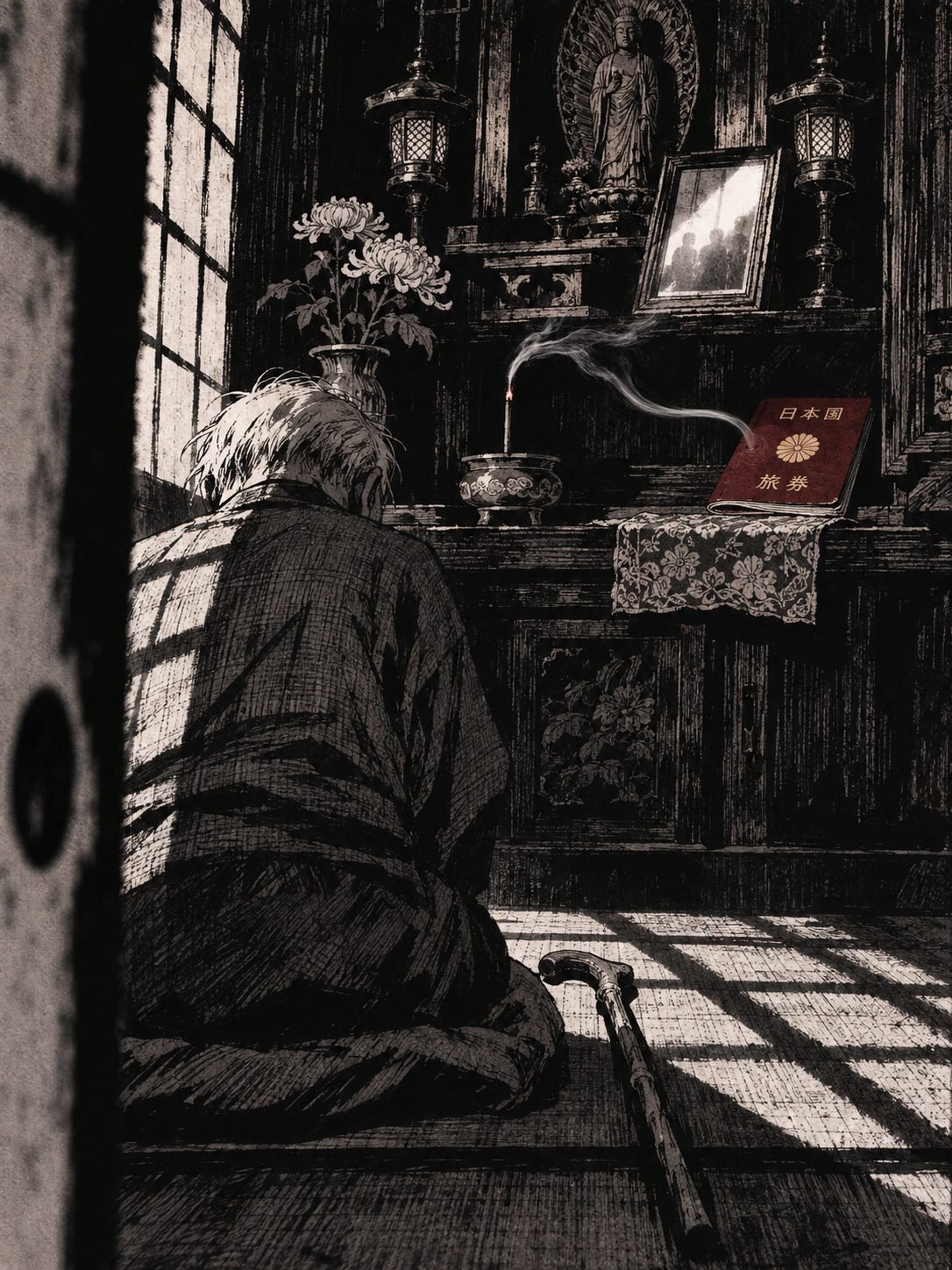
In 2005 his son Katsutoshi died of cancer. Hisako died in 2008. The family believed both deaths were linked to the bombs.
After his son’s death, Yamaguchi began to speak in public. In 2006, at the age of 90, he got his first passport and flew to United Nations headquarters in New York, where a documentary about double survivors was being screened.
“Having experienced atomic bombings twice and survived, it is my destiny to talk about it,” he said. (RTE-2010) (HPM-2010) (JCAST-2011) (NPR-KRULWICH-2012)
One line on a certificate

He had long been a certified Nagasaki survivor. But his survivor’s certificate named only Nagasaki, so he asked for Hiroshima to be added.
On 24 March 2009, Nagasaki city officials announced that his Hiroshima exposure had been recorded. “As far as we know, he is the first to be officially recognized as a survivor of the atomic bombings of both Hiroshima and Nagasaki,” said city official Toshiro Miyamoto.
His compensation did not increase.
“My double radiation exposure is now an official government record,” he told the Mainichi newspaper. It could tell the young the history of the bombs “even after I die.”
He was not the only one. About 165 people are believed to have been in both cities. He was the first to be officially recognised. (GIZMODO-JP-2009) (AP-2009-SPOKESMAN) (JT-2009) (HPM-2010)
Pass the baton
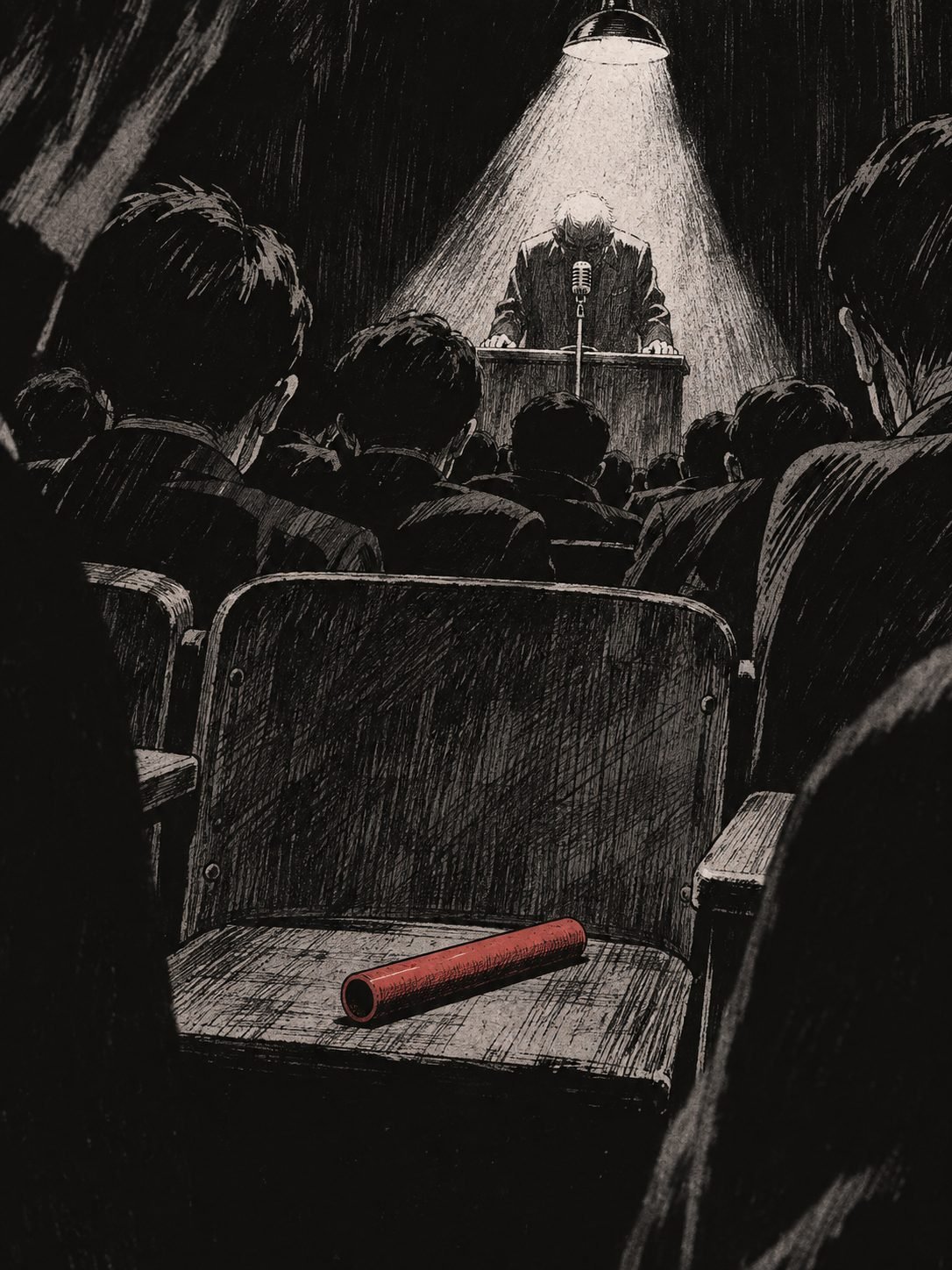
Moved by President Obama’s 2009 speech in Prague, he wrote to him about abolishing nuclear weapons.
In June 2009 he spoke in Nagasaki and said it would probably be his last public appeal.
“I hope the baton will be passed to other people,” he said. (HPM-2010) (NYT-2010) (RTE-2010)
My mission is over

By then he had stomach cancer, and he had been in hospital since the summer.
On 22 December 2009, the film director James Cameron visited him in hospital in Nagasaki to talk about a film. “Please pass on my experience to future generations,” Yamaguchi told him.
His daughter said he seemed stronger after the visit. He was heard saying, “My mission is over.” (RTE-2010) (NWJ-2010) (WEEK-2010)
5:38 a.m.
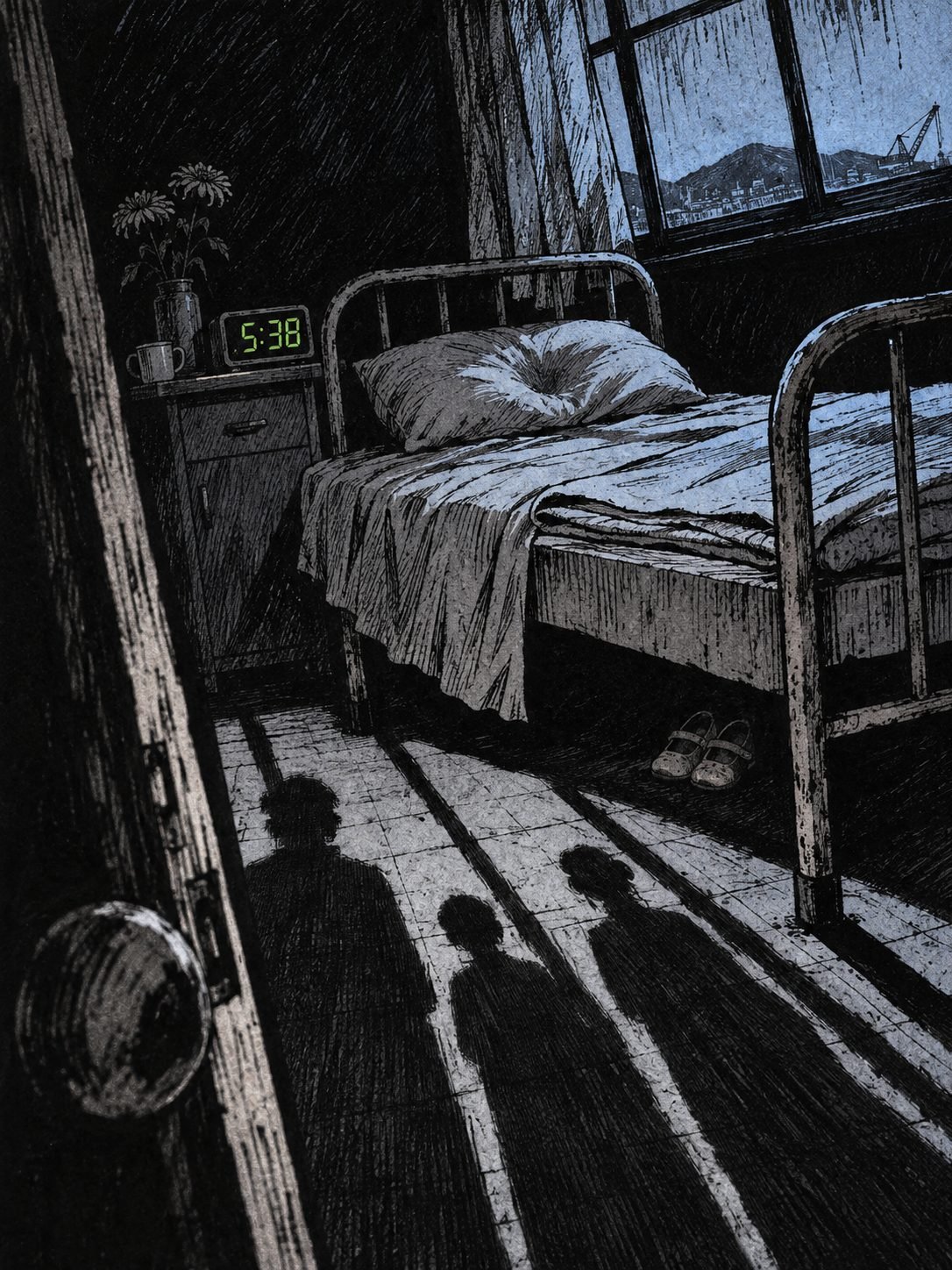
Tsutomu Yamaguchi died at 5:38 a.m. on Monday 4 January 2010, in Nagasaki. He was 93. His last request was that his family take good care of his great-grandchildren.
“I’m very sorry that we have lost one of the very valuable witnesses of the atomic bomb experience,” said Nagasaki’s mayor, Tomihisa Taue.
A year later, a British comedy quiz show called him “the unluckiest man in the world,” and the audience laughed. The Japanese Embassy in London protested, and a producer apologised.
“I cannot forgive (the quiz show) as it looked down on my father’s experiences,” said his daughter Toshiko. (HPM-2010) (ABC-2010) (HPM-2011) (JT-2011)
The granddaughter’s slides

His granddaughter, Kosuzu Harada, first learned that he had survived both bombs when she interviewed him for an elementary-school assignment.
Today she tells his story around Japan with picture-story slides.
Since 2013 she has worked with Ari Beser, the grandson of Jacob Beser, the radar specialist who flew on both bombing missions.
The grandchild of the man on the road, and the grandchild of the man in the plane, telling the same story together. (AP-2025) (HOKKAIDO-2022) (JT-2024)
The evidence file
The records, testimony and films this case rests on, and where they are now.
Exhibits
- Exhibit A — Yamaguchi’s memoir, “Double A-bomb Victim”. His own account in English translation, with an epilogue dated 15 October 2006: the forgotten seal, the 1 p.m. train from Koi Station, the report to his section manager, the second flash at 11:02 a.m. Held in Nagasaki University’s online repository. (Nagasaki University)
- Exhibit B — The company seal. A small name stamp he had left in his desk drawer at the dormitory on 6 August 1945; going back for it put him on the road at 8:15. Where it is now is not recorded. Summary based on his memoir. (Nagasaki University)
- Exhibit C — The survivor’s certificate. It had named only Nagasaki. At his request, Nagasaki city recorded his Hiroshima exposure on it, announced in March 2009; his compensation did not change. City official Toshiro Miyamoto: “As far as we know, he is the first to be officially recognized as a survivor of the atomic bombings of both Hiroshima and Nagasaki.” Summary based on the Associated Press and The Japan Times. (Associated Press, via Spokesman-Review; The Japan Times)
- Exhibit D — The Guinness World Records entry, 26 March 2009. Listed as the first confirmed person to survive two nuclear attacks. About 165 people are believed to have been in both cities. (Guinness World Records; Hiroshima Peace Media Center)
- Exhibit E — Ikasareteiru inochi (“A life kept alive”), 2007. His book of testimony, published by Kodansha in July 2007, 237 pages. Catalogued by Japan’s National Diet Library. (National Diet Library)
- Exhibit F — The 2006 documentary. A 59-minute film interviewing seven double survivors, with Yamaguchi, then 90, at its centre; he spoke at the United Nations when it was screened there. Japanese listings credit director Aoki Ryō; English sources give the title Twice Bombed, Twice Survived and credit Hideo Nakamura. (Jorudan; Japanese American National Museum)
- Exhibit G — The embassy’s letter to the BBC, 7 January 2011. After a comedy quiz show called him “the unluckiest man in the world”, the Japanese Embassy in London wrote calling it “inappropriate and insensitive”, and a producer apologised. Summary based on Kyodo and The Japan Times. (Hiroshima Peace Media Center; The Japan Times)
Evidence locker
Real archival images. Illustrations elsewhere in this file are AI-generated.
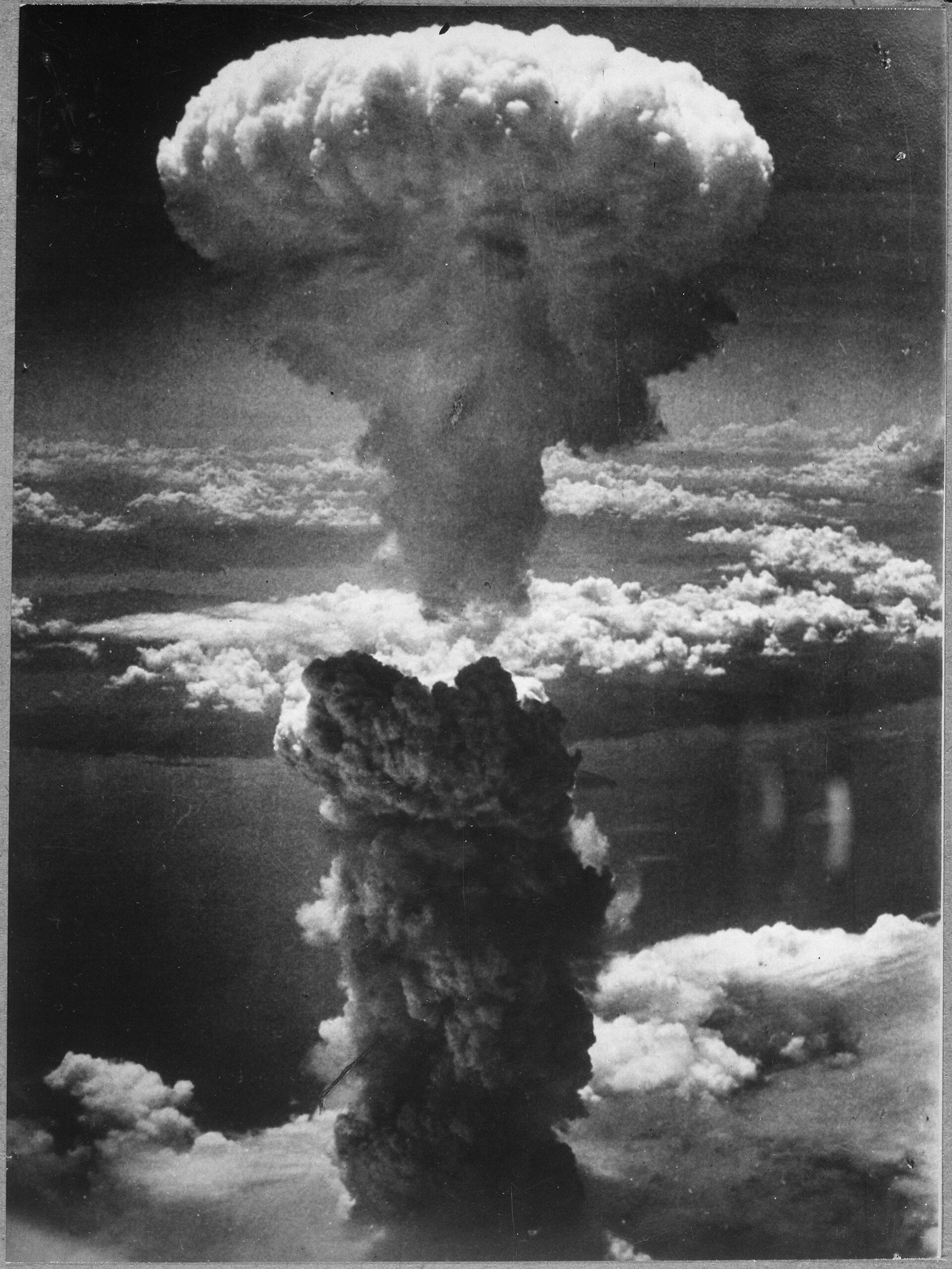 EXHIBIT A · TAP TO ENLARGE
In the papers: “NAGASAKI BLOW TOO GIGANTIC TO BELIEVE” — Shelby Star, 10 August 1945.
Quick answers: Tsutomu Yamaguchi, survivor of two atomic bombs
Who was Tsutomu Yamaguchi?
Tsutomu Yamaguchi was a Mitsubishi ship designer from Nagasaki who survived both atomic bombings in August 1945. In March 2009 he became the first person officially recognised as a survivor of both the Hiroshima and Nagasaki bombs.
How did Tsutomu Yamaguchi survive both atomic bombs?
He was on a work trip to Hiroshima on 6 August 1945 and was about 3 kilometres from the hypocentre when the bomb exploded, and he was injured but survived. He took a train home to Nagasaki, and on 9 August, while telling his manager about Hiroshima, the second bomb exploded, again about 3 kilometres away.
Was Yamaguchi the only person to survive both bombs?
No. About 165 people are believed to have been in both cities, including his two colleagues from the Hiroshima trip, Akira Iwanaga and Kuniyoshi Sato, who also survived Nagasaki. Yamaguchi was the first to be officially recognised.
When did Tsutomu Yamaguchi die?
He died of stomach cancer at 5:38 a.m. on 4 January 2010 in Nagasaki, aged 93.
What did Tsutomu Yamaguchi do after the war?
He worked as a translator for the occupation forces and taught English, then returned to the Nagasaki shipyard in 1956 to design tankers until he retired. After his son died in 2005 he began speaking publicly against nuclear weapons, and at 90 he flew to the United Nations in New York.
Who carries on Tsutomu Yamaguchi’s story?
His granddaughter, Kosuzu Harada, tells his story around Japan with picture-story slides. Since 2013 she has worked with Ari Beser, grandson of Jacob Beser, the radar specialist who flew on both bombing missions.
Case notes: two cities, three days, one man
Tsutomu Yamaguchi was a Mitsubishi ship designer caught in the Hiroshima bombing on 6 August 1945. He went home to Nagasaki and was caught again on 9 August. In 2009 he became the first person officially recognised as a survivor of both (MEMOIR-2006) (JT-2009).
Where the case stands (as of November 2026)
Closed. Yamaguchi died in 2010. In 2009 he became the first person officially recognised as a survivor of both atomic bombings (JT-2009) (HPM-2010).
He was not the only person in both cities. About 165 people are believed to have been, including both of his travelling colleagues (HPM-2010) (MEMOIR-2006).
Tsutomu Yamaguchi was the only person to survive both atomic bombs.
PROVENEXAMINED
Timeline
| When | What happened |
|---|---|
| 16 Mar 1916 | Tsutomu Yamaguchi is born in Nagasaki (GUINNESS-2009) (MEMOIR-2006) |
| May 1945 | Sent to Hiroshima for about three months with colleagues Akira Iwanaga and Kuniyoshi Sato (MEMOIR-2006) (TIMES-2005) |
| 6 Aug 1945, about 8:15 a.m. | Caught in the Hiroshima bombing about 3 km from the hypocentre after going back for his seal (MEMOIR-2006) (GUINNESS-2009) |
| 7 Aug 1945, 1 p.m. | Boards an evacuation train at Koi Station (MEMOIR-2006) |
| 8 Aug 1945 | Arrives in Nagasaki and is treated at the Mitsubishi hospital (MEMOIR-2006) |
| 9 Aug 1945, 11:02 a.m. | Caught in the Nagasaki bombing about 3 km from the hypocentre while reporting on Hiroshima (MEMOIR-2006) (RTE-2010) |
| Jan 1956 | Returns to the Nagasaki shipyard to design tankers (MEMOIR-2006) |
| 2005 | His son Katsutoshi dies of cancer; he begins to speak in public (RTE-2010) (HPM-2010) |
| 2006 | At 90, gets his first passport and speaks at UN headquarters (JCAST-2011) (HPM-2010) |
| 24 Mar 2009 | Nagasaki records his Hiroshima exposure: the first official double survivor (AP-2009-SPOKESMAN) (JT-2009) |
| 22 Dec 2009 | James Cameron visits him in hospital (RTE-2010) (NWJ-2010) |
| 4 Jan 2010 | Dies in Nagasaki, aged 93 (HPM-2010) (RTE-2010) |
| Jan 2011 | Japan protests to the BBC over a comedy segment about him (HPM-2011) (JT-2011) |
Where the records disagree
| Detail | What sources say |
|---|---|
| Distance from the Hiroshima hypocentre | About 3 km in most reports; about 2 km in one; “less than 2 miles” in others (GUINNESS-2009) (RTE-2010) (NYT-2010) |
| What his boss said | His memoir: the section manager could not believe one bomb destroyed a city. Press retellings: his boss thought he had gone mad (MEMOIR-2006) (GUARDIAN-2009) (WEEK-2010) |
| When he got back to Nagasaki | 8 August in his memoir; some reports say “three days later”, which is wrong (MEMOIR-2006) (ABC-2010) |
| His son’s age in 1945 | A baby born that May in his memoir and The Times; about two years old in another account (MEMOIR-2006) (TIMES-2005) (NPR-KRULWICH-2012) |
| How many people were in both cities | About 165 in most reports; about 200 or at least 160 in others (HPM-2010) (HISTORY-2015) (JANM-2012) |
What we still don’t know
- How many double survivors there really were, since many were never recorded.
- Exactly how far he was from the Hiroshima hypocentre.
- How much of the later illness in his family was caused by the bombs.
What happened after
His granddaughter Kosuzu Harada still tells his story around Japan (AP-2025) (JT-2024).
Editor’s note
The moment that stays with me is the second flash, while he was explaining to his section manager. He had finally made it back to the city where his home was, and he was standing there asking someone to believe what he had been through, when the same thing happened again. I keep wondering where, in that moment, he could possibly have felt safe.
I can’t easily call it luck, good or bad. Going back for a forgotten stamp is something anyone would do. What weighs on me first is that such an ordinary morning had to end in that much pain.
It is one thing for a man to joke about his own life, and another for strangers to turn his suffering into a laugh line. When we focus only on the fact that he survived twice, it becomes too easy to forget what he had to see and live through, twice.
I want to respect his silence too. For someone who lived through it, even telling the story again can hurt. I can’t know what he felt when he finally spoke after losing his son, but I hope people really listen to testimony that came so late.
I understand why he asked for that line to be added. Compensation aside, anyone could want what happened to them to be recorded properly. To others it is one line on a form. To him it was something his body and memory carried for the rest of his life.
I hope he isn’t remembered only as the remarkable man who survived twice. He was also a man who went home injured, went back to work, and tried to build a life with his family. I want to give a little more thought to the long years after he survived.
— Strange World Files
Case file summary
- Who: Tsutomu Yamaguchi (1916-2010), a Mitsubishi ship designer from Nagasaki
- What: Caught in both atomic bombings, three days apart
- Where: About 3 km from the hypocentre in Hiroshima, then about 3 km in Nagasaki
- When: 6 and 9 August 1945; officially recognised on 24 March 2009
- Status: The first person officially recognised as a survivor of both
Illustrations are AI-generated artistic interpretations, not photos. No real person is depicted with a recognizable face. Read how we research and illustrate these files.
Sources
- Tsutomu Yamaguchi, “Double A-bomb Victim: My Life beneath the Atomic Clouds”, trans. Matsuo Mari, Sakaoka Naomi and Anthony Brown, pp. 87–110, epilogue dated 15 Oct 2006 (Nagasaki University repository)
- Richard Lloyd Parry, *The Times*, interview (text says “60 years ago this morning”, so 6 Aug 2005), reposted on a forum
- Justin McCurry, Guardian News & Media, 25 Mar 2009, syndicated as “Nuclear survivor tells of two blasts”, *Canberra Times*
- Mari Yamaguchi, Associated Press, 25 Mar 2009, via *Spokesman-Review*
- AP via NBC News, “Japanese man is a double A-bomb survivor”, 25 Mar 2009
- AP via *Irish Times*, “Man (93) survived both US A-bombs”, 25 Mar 2009
- *Japan Times*, “Man, 93, officially declared survivor of both bombs”, 26 Mar 2009
- Gizmodo Japan, 28 Mar 2009
- Guinness World Records, “First confirmed person to survive two nuclear attacks” (record dated 26 Mar 2009)
- Kyodo via Hiroshima Peace Media Center, “Double A-bomb survivor Tsutomu Yamaguchi dies at 93”, Jan 2010
- RTÉ News (Kyodo-based), 6 Jan 2010
- *New York Times* obituary (nytimes.com/2010/01/07/world/asia/07yamaguchi.html), as reprinted by History News Network, 6 Jan 2010
- Margaret Conley, ABC News (US), 6 Jan 2010
- PA via *Irish Times*, “Survivor of two atomic bombs dies”, 6 Jan 2010
- NPR, “Survivor of two atom bombings dies”, 9 Jan 2010 (transcript)
- *The Week*, “Tsutomu Yamaguchi” obituary digest (cites the Telegraph), Jan 2010
- *Daily Telegraph* obituary, 6 Jan 2010 (not opened)
- Newsweek Japan, 「キャメロン監督が描く『ヒロシマ』とは」, 23 Feb 2010
- National Diet Library record, 山口彊『生かされている命』, Kodansha, 2007
- Jorudan film listing, 『二重被爆』 (2006, dir. Aoki Ryō)
- J-Cast News, 「人類は滅亡に近づいていく」, 19 Jul 2011
- Japanese American National Museum press release, 18 Jan 2012
- Kyodo via Hiroshima Peace Media Center, “Japan protests to BBC over treatment of ‘double A-bomb survivor'”, 21 Jan 2011
- *Japan Times*, “BBC ‘unluckiest’ take on double hibakusha hit”, 22 Jan 2011
- Robert Krulwich (NPR, with Sam Kean), “If You Are Hit By Two Atomic Bombs, Should You Have Kids?”, 18 Jul 2012, via KUNC
- Evan Andrews, History.com, “The Man Who Survived Two Atomic Bombs”, 2015 (updated 2025)
- Hokkaido Shimbun, on Kosuzu Harada, 18 Aug 2022
- *Japan Times*, on Kosuzu Harada and the Hidankyo Nobel, 10 Dec 2024
- Mari Yamaguchi, AP, “The grandchildren of 2 men who experienced both A-bomb attacks…”, 7 Aug 2025, via WSLS
- James Oaten, ABC (Australia) via RNZ, 9 Aug 2025