World’s Oldest Shipwreck? The Kekova Jars Were Logged as Ottoman Until a Book Moved Them 4,500 Years

Narrated Mystery: press play and hear the whole case read aloud, like a true crime podcast episode, or an audiobook for a long drive (about 11 minutes). The narrator is an AI voice.
A page in the wrong book
The jars had already been filed.
A team from Akdeniz University had dived the slope off Kekova Island, photographed more than thirty clay storage jars lying among the rocks, and written them up. By their own account, the working assumption was that the pottery was a few centuries old at most. Possibly Ottoman.

Then Hakan Öniz, the underwater archaeologist leading the survey, opened a publication on Egyptian archaeology and saw his jars looking back at him.
Not the same objects. The same shape. Two side handles. A flat base. A ridge running round the widest part of the body. The jars on that page came from the age of the Giza pyramids.

A filing error of a few centuries had just become a gap of four and a half thousand years. The team went back down with ministry permission. “We were incredibly excited,” Öniz said.
If the shape was telling the truth, this was not an old wreck. It was the oldest one anyone had ever found.
That is the part of the story that went around the world. The part that matters more is simpler, and stranger.
There is no ship.
The short answer. The Kekova wreck is a cluster of more than thirty Early Bronze Age-type jars and three stone anchors on the seabed off Kekova Island, Antalya, Türkiye. Its excavators propose a date of about 2700 to 2400 BC, and Guinness listed it as the world’s oldest shipwreck in November 2026. No hull survives, so that date comes from the shape of the jars, not from a laboratory clock.
CASE FILE AT A GLANCE
What: 30+ amphorae and 3 stone anchors on a rocky slope; no hull
Where: Near Kekova Island, Demre district, Antalya, Türkiye
Proposed date: c. 2700–2400 BC (pottery comparison only)
Found: Documented by Akdeniz University in 2024; announced 14 October 2026
Record: Guinness World Records, early November 2026
Status: Preliminary report; formal excavation under way since 2026
Kekova, Türkiye. Thirty clay jars, a date pushed back by 4,500 years, and not a single plank of the boat.




Thirty jars on a slope, and nothing else
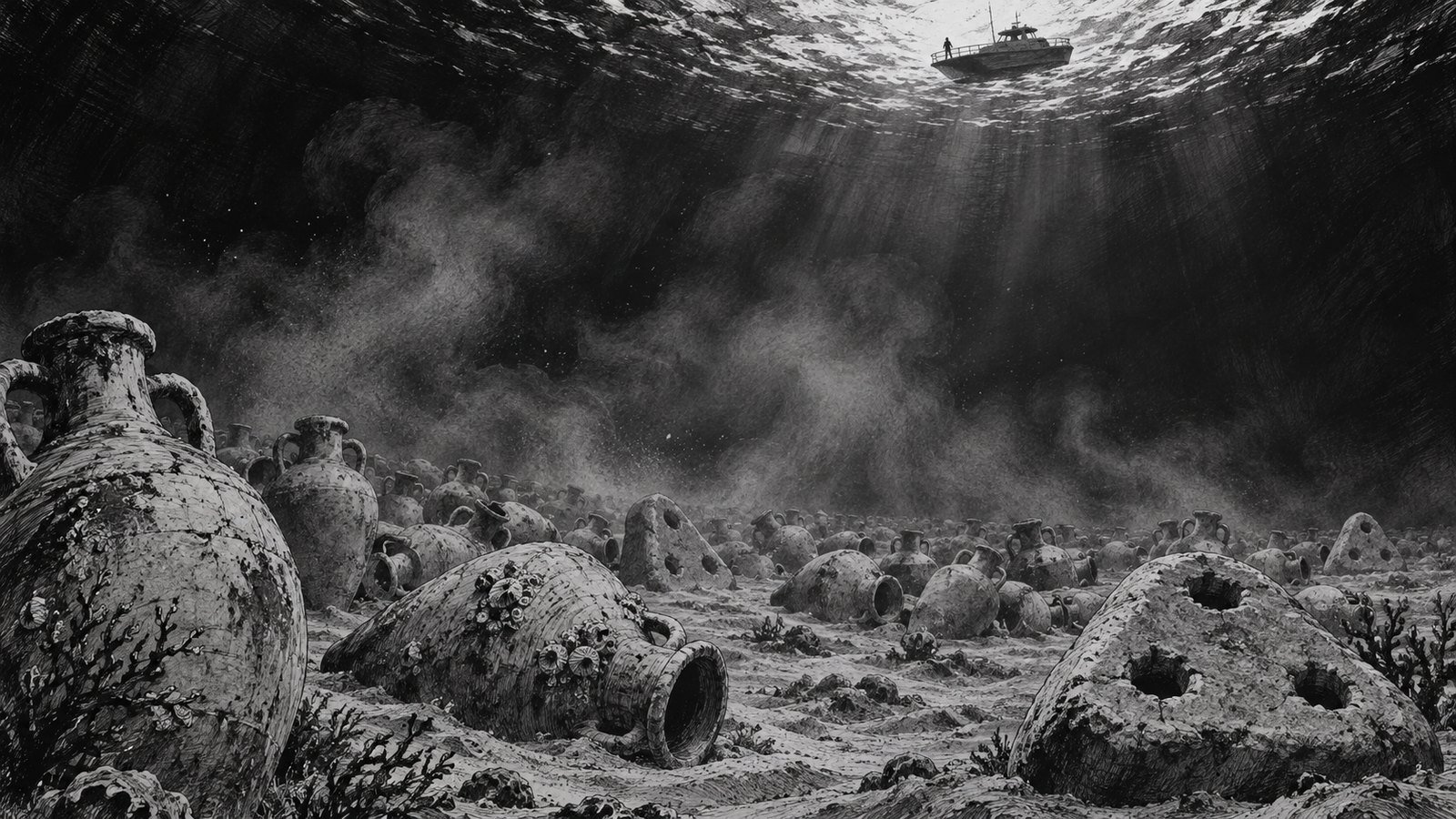
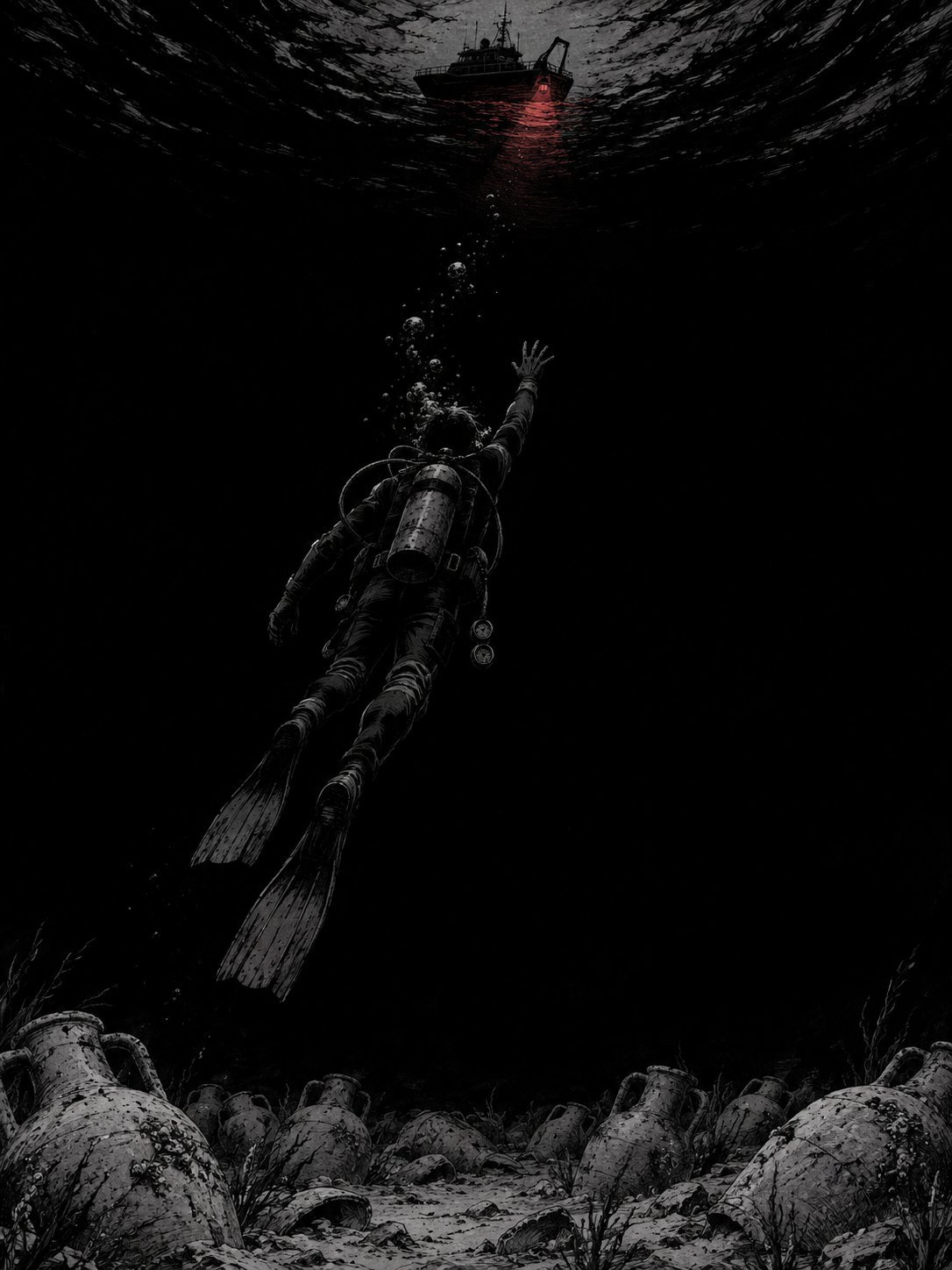
The site lies near Kekova Island, off the Demre district of Antalya province, on Türkiye’s Mediterranean coast. On the seabed there are more than thirty large ceramic amphorae scattered down a rocky incline, some whole, some broken. Three stone anchors lie at different distances from them.
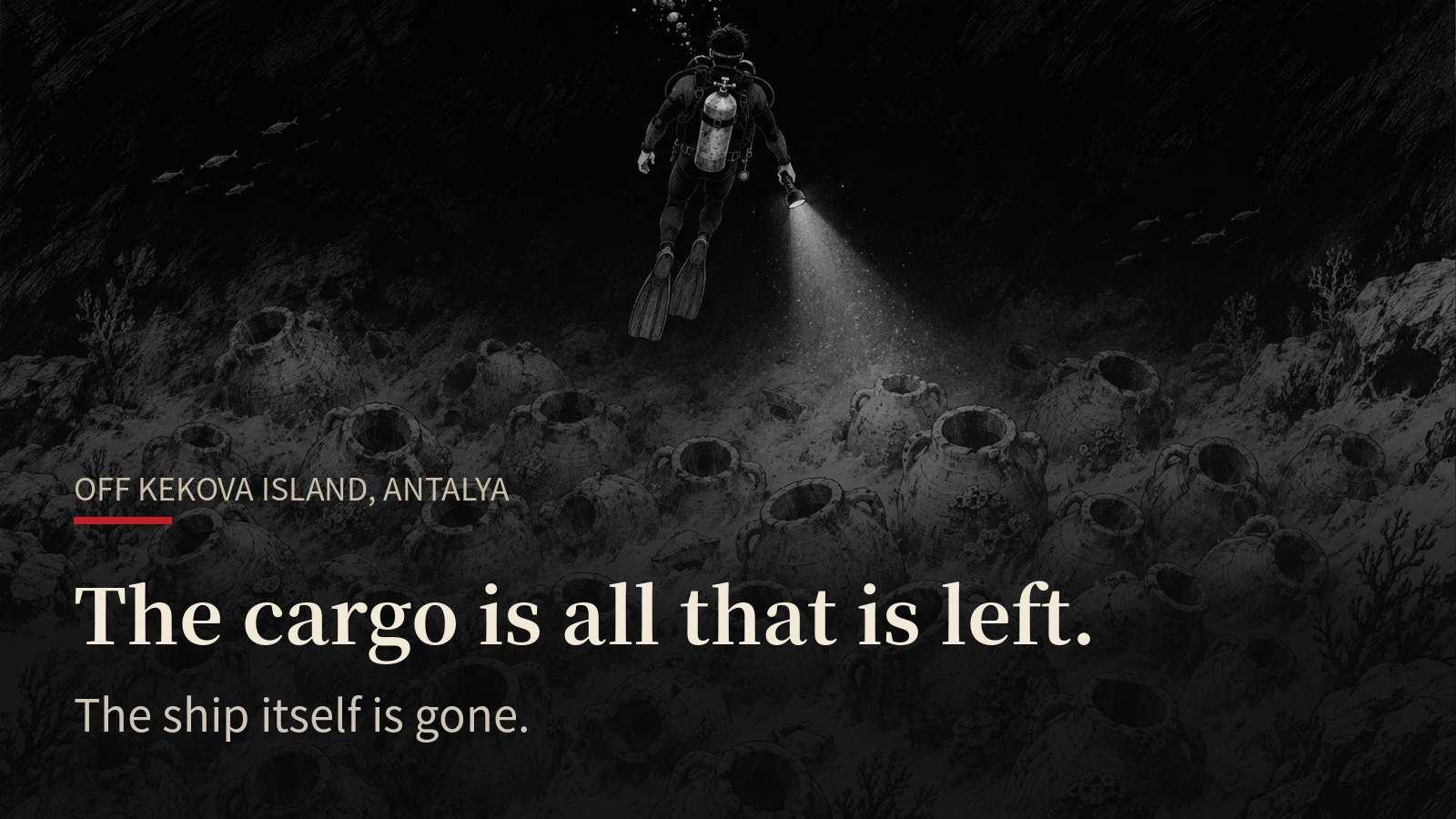
And that is the entire wreck.

No planking. No ribs. No keel. No mast step. The timber was eaten and dissolved long ago, and what is left is the cargo, lying on the bottom in the rough outline of a vessel that is no longer there.
The usual way to date a wreck is to date its wood. A sliver of hull, a dowel, a fragment of keel: anything organic can be radiocarbon dated, and the answer comes back as a number with an error bar. Here there is nothing to send to the laboratory.

So the whole case rests on one question, and every section of this file is an attempt to answer it: how do you prove the age of a ship nobody can see?
The case for: what a jar can tell you
Start with the strongest version of the claim, because it is stronger than the skeptics sometimes allow.
Pottery changes over time the way handwriting does. Archaeologists have built long sequences of jar shapes from dated sites in the Levant and Egypt, and the Kekova jars match a form from the Early Bronze Age. That is where the team’s date comes from: roughly 2700 to 2400 BC, about 4,700 years ago. Öniz has said it more boldly out loud: “It is a vessel that is nearly 5,000 years old.”
The form is not obscure. Amphorae of this type have turned up near the pyramid complexes at Giza, Saqqara and Abusir, at Troy, and on Crete.

Then there is the clay itself, and this is the one result that comes from a laboratory rather than an eye. Analysis points to workshops in the Central Jordan Valley. These pots were made far inland, in another country, carried overland to a port, loaded aboard and sailed west.
On 14 October 2026, Türkiye’s Ministry of Culture and Tourism announced the find, and Minister Mehmet Nuri Ersoy called it the world’s oldest shipwreck. A few weeks later Guinness World Records listed it under exactly that title.
The scientific paper chose a different word. Its title calls it a preliminary report.
That is the case for. A matching shape, a matching clay source, and an expert eye. What it does not have yet is a second, independent witness. So the obvious next step is to go looking for one.
Can the Kekova wreck be dated another way?
A wreck site usually offers several clocks besides its pottery. Kekova should have three. One by one, they fail.
The anchors. Two of the stone anchors have three holes through them; one has a single hole. Three-holed anchors turn up at Minoan, Cypriot, Anatolian and Levantine sites, and the single-holed type is known from Bronze Age Anatolian and Levantine coasts. They sound like proof. The report says plainly that they are not: it has not been established whether any of the three belong to this wreck. They lie at different distances from the cargo, on a stretch of sea that has been a shipping lane for five thousand years, and their designs ran unchanged for centuries.

What is inside the jars. Some are not empty. Several still hold thick, glossy residue that never dried out under thirty metres or more of seawater. The contents are thought to have been olive oil, wine and tree resins. It feels like the closest thing to touching the voyage itself.

But Karin Sowada of Macquarie University, the specialist who helped place the pottery, has pointed out that jars like these were often reused for years. What is inside them now may belong to a later life of the jar, not to its first journey.

The hull. The only evidence that a wooden ship existed at all is indirect: shipworm tubes at the site, the chalky traces left by molluscs that bore into submerged timber. The creatures that destroyed the ship are the last witnesses that it was ever there.
Three clocks, and none of them gives a reading the team can rely on. Which leaves the jars standing alone. And once they are alone, a more unsettling question follows.
Was there ever a wreck here at all?
Sean Kingsley, a marine archaeologist, has raised the most basic doubt of all. With no hull to carbon date, he has asked whether this might be a jettison site: cargo thrown overboard to lighten a ship in trouble, a ship that then sailed on. If so, there may never have been a wreck here.
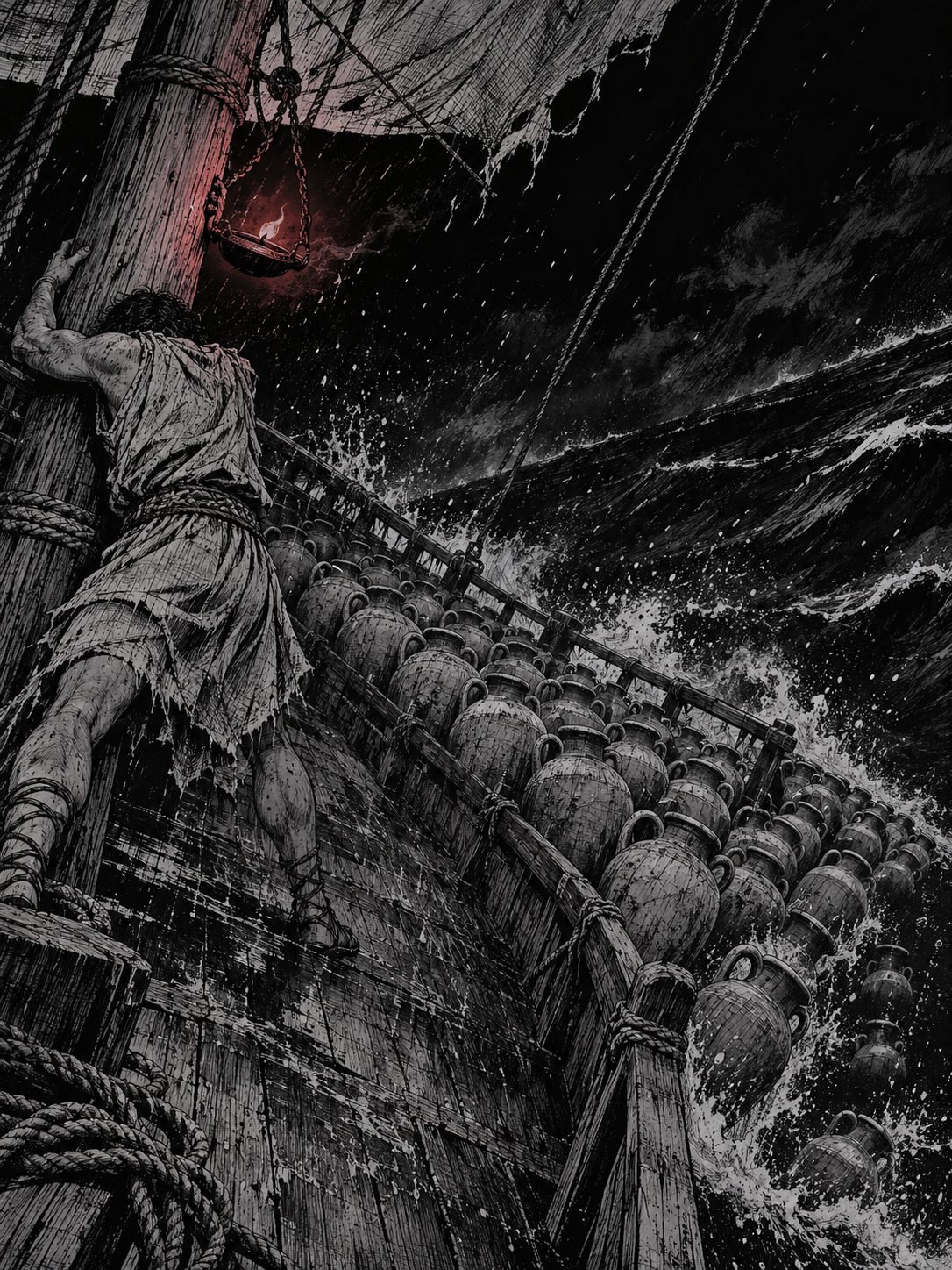
The team reads the same seabed differently. They describe a small merchant vessel of roughly ten metres, about the length of a bus, that went down with everything she carried.

Justin Leidwanger of Stanford is reported as confident that the site genuinely is a wreck. He still set the bar high: “the burden of proof is pretty high archaeologically.” On where the cargo came from, he said that until more work is done, “we’re somewhat in the realm of guesstimation.”
Grant the team the wreck. Grant them the ship. Even then, the headline has a second test to pass, and it is the one the record actually depends on.
SIDE FILE: THREE DETAILS THE HEADLINES LOVED
The jar with nine marks. One amphora carries nine distinct markings and two holes bored through its body. Nobody knows what the marks mean.
The cheese-making crew. Hakan Öniz, who leads the survey, told The Art Newspaper the ship may have carried a handful of goats, to make butter or cheese on the long voyage and later to be eaten. The holed jar has been suggested as the churn. That is an idea about the voyage, not a finding from the seabed.
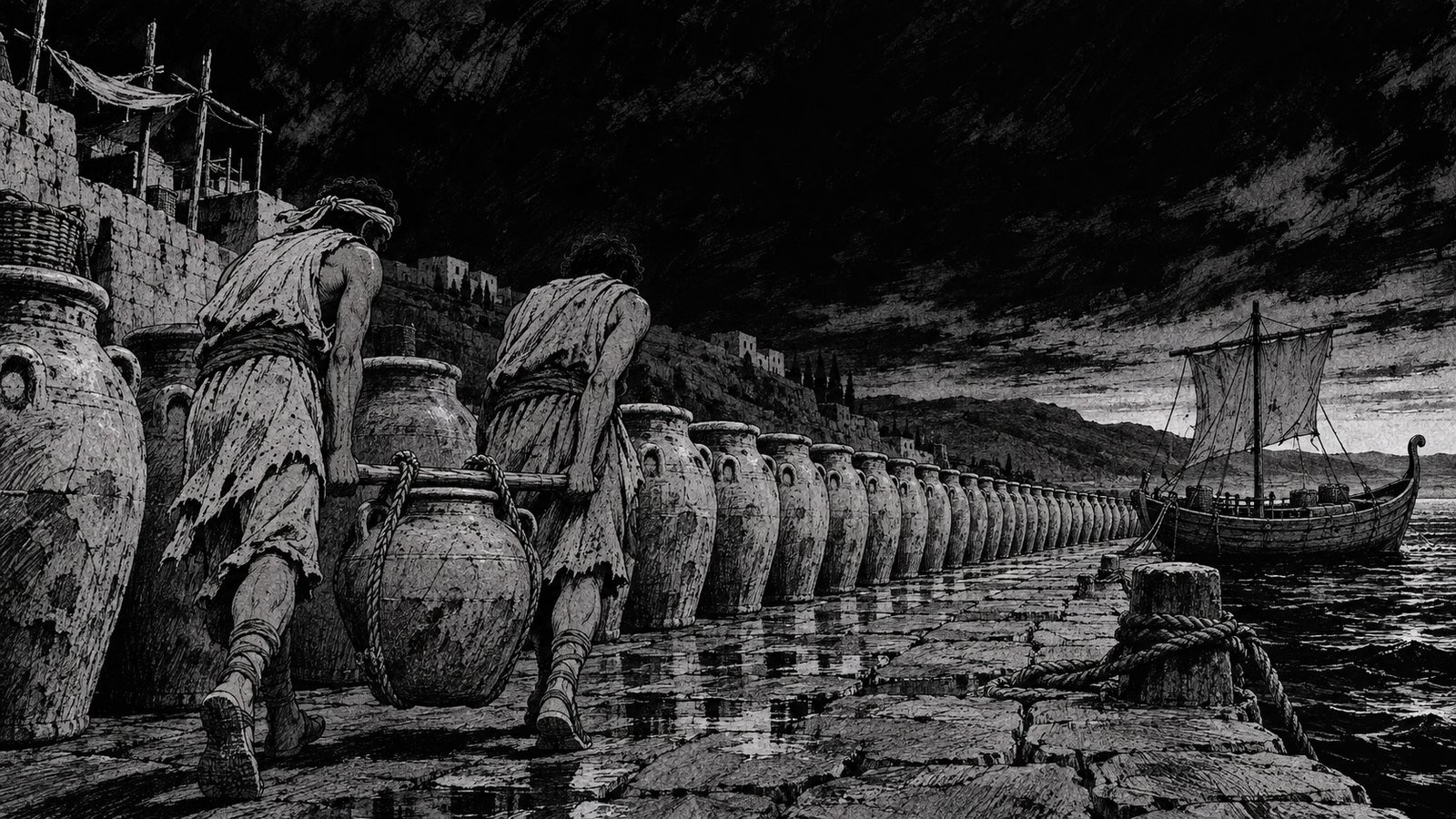
The voyage. The team’s proposed route runs west from a Levantine port along the southern coast of Anatolia, toward Hisarlik, the site of Troy, or Crete. Her real destination is unknown, and so is why she went down. One suggestion is that the crew ran for shelter among the islands in a storm.
Even if it is a wreck, is it the oldest?
The date rests on comparing the jars with pottery from dated sites. Pottery forms and decoration can persist for very long stretches of time, which makes dating by comparison unreliable on its own. The team’s first results, published in the Journal of Maritime Archaeology in July 2026, are preliminary.
Two details reported in coverage sharpen the point. Two wrecks excavated in the 1980s held similar amphorae and were dated to the 12th to 15th centuries BC, more than a thousand years later. And one specialist noted that the Kekova jars closely resemble pots from a medieval Byzantine-era wreck.
Sowada’s own framing is measured. The date is set tentatively, she has said, and “the precise dating is still under consideration,” with earlier or later ages possible.
Now bring in the wreck Kekova is supposed to have beaten.
Until October 2026, the oldest known shipwreck was the Dokos wreck, found in the Aegean off the Greek island of Dokos by the American archaeologist Peter Throckmorton on 23 August 1975. It is a closer twin than the headlines suggest. Dokos also lost its hull entirely, leaving only a cargo site, and it also lies in shallow water, 15 to 30 metres down. But it was properly excavated, by the Hellenic Institute of Marine Archaeology between 1989 and 1992, producing more than 15,000 sherds and artefacts, including over 500 clay vessels. Its date is given as 2700 to 2200 BC.

Put the two ranges side by side, as the chart at the top of this file does. Kekova: 2700 to 2400 BC. Dokos: 2700 to 2200 BC.
Kekova’s whole range sits inside the Dokos range. If Dokos belongs at the early end of its window and Kekova at the late end of its own, Dokos is older. On the dates published so far, the two could simply be contemporary.
This is where the word in the paper’s title stops being modest and starts being decisive. Preliminary was the archaeologists’ word for an estimate still being tested. Between the paper and the press release, that estimate became a world record. A records body does not run its own excavation or commission its own dating; the age Guinness certified is the age the team proposed, the very thing still being argued over.
The record, in other words, depends on which end of two overlapping guesses you choose to believe.
What would prove the Kekova wreck’s age?
The answer is not more argument. It is more material, and some of it is already out of the water.
Two amphorae have been raised, one in 2024 and one in 2025. They are being conserved and studied at a regional laboratory and at Akdeniz University’s underwater archaeology laboratory in Kemer.
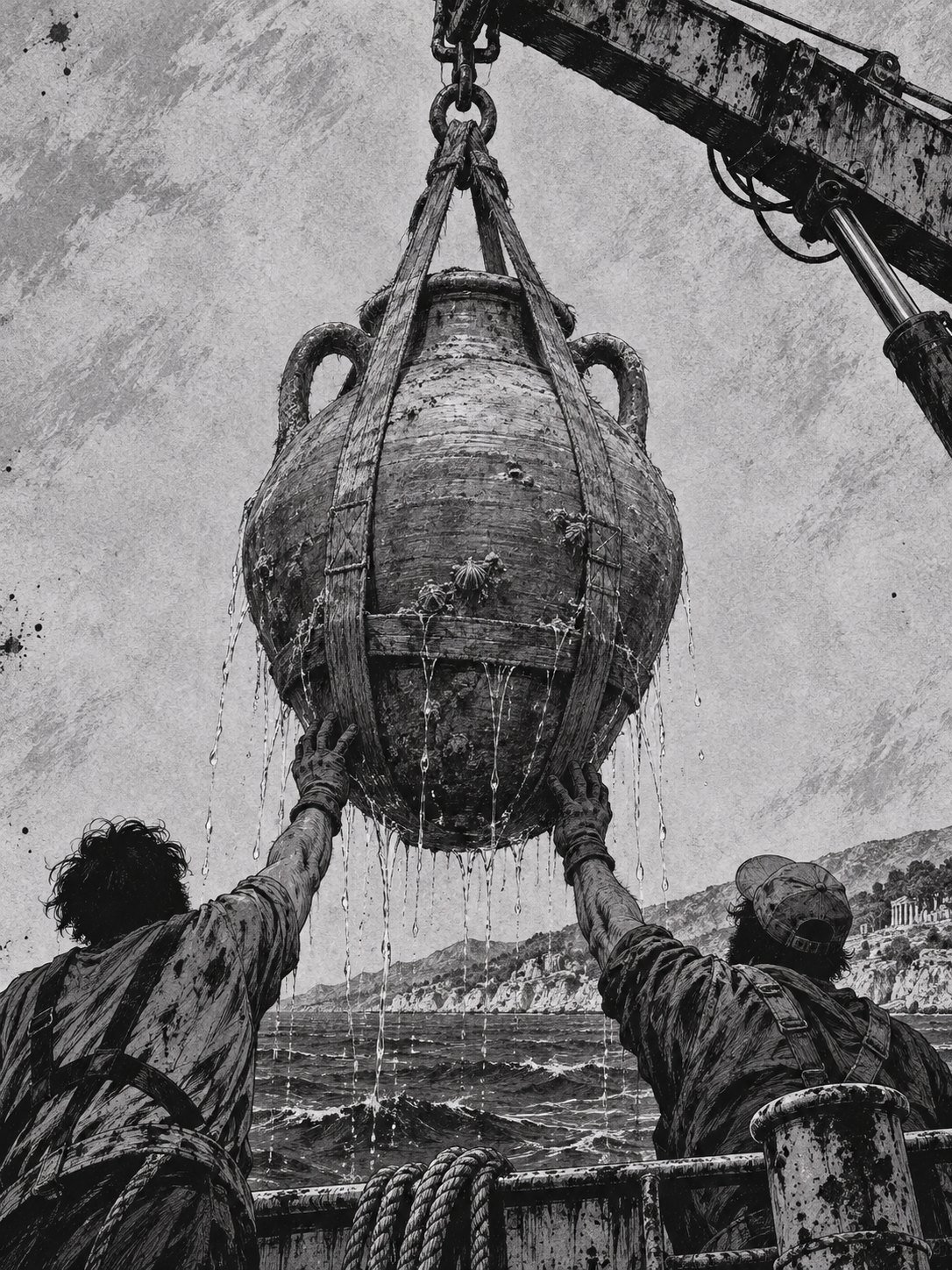
Formal excavation began in 2026 under the Antalya Museum Directorate, with the Mediterranean Archaeology Association doing the underwater work. Most of the cargo is still on the slope, and so is the sediment beneath it, where anything organic might still be found.
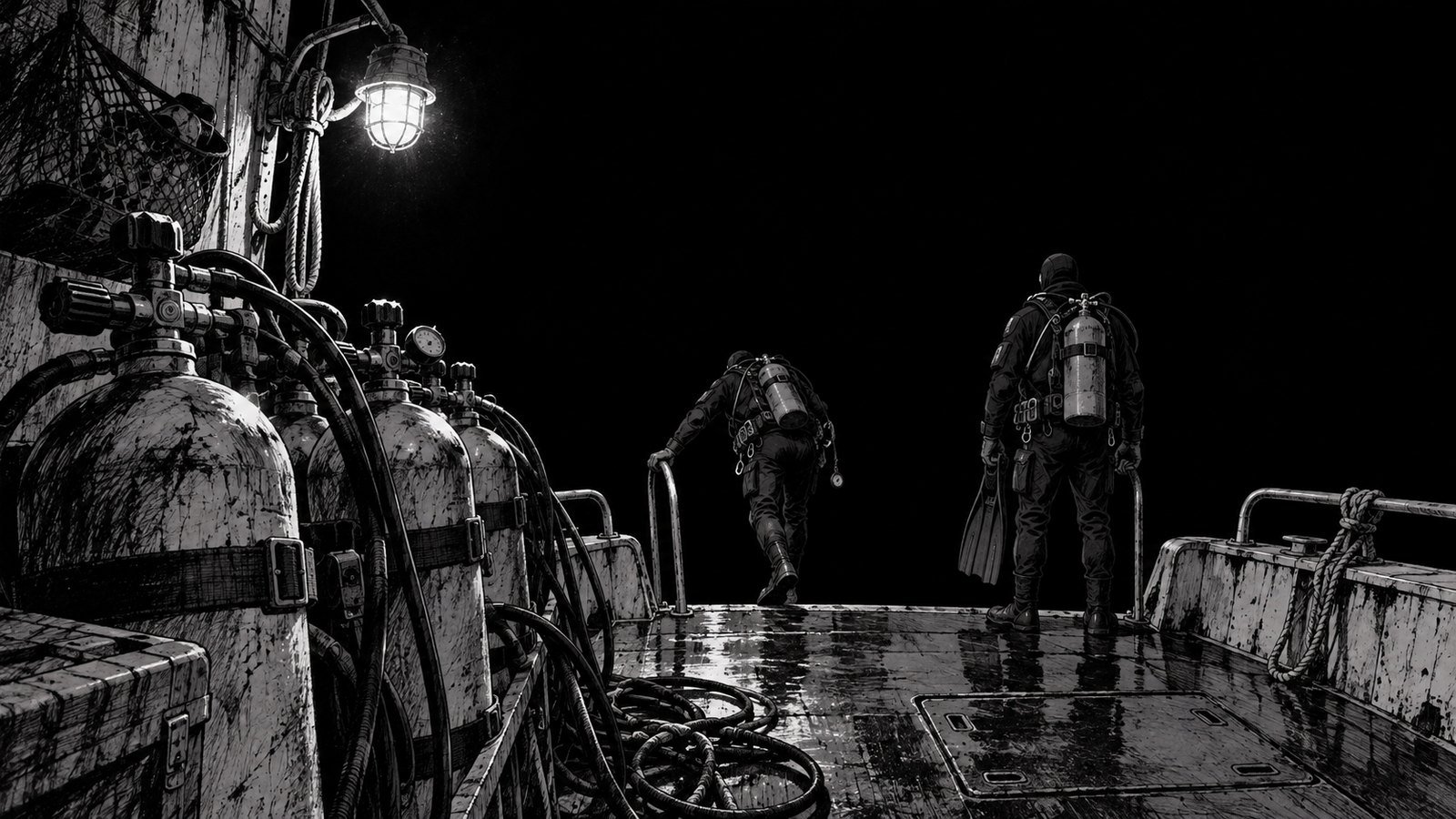
That is the scenario that would end the debate. If a single fragment of wood, rope or seed comes up from under those jars, a laboratory could put a number on it in a few weeks. If the number lands before 2400 BC, the record stands on firmer ground than pottery alone can give it. If it lands later, the record falls.
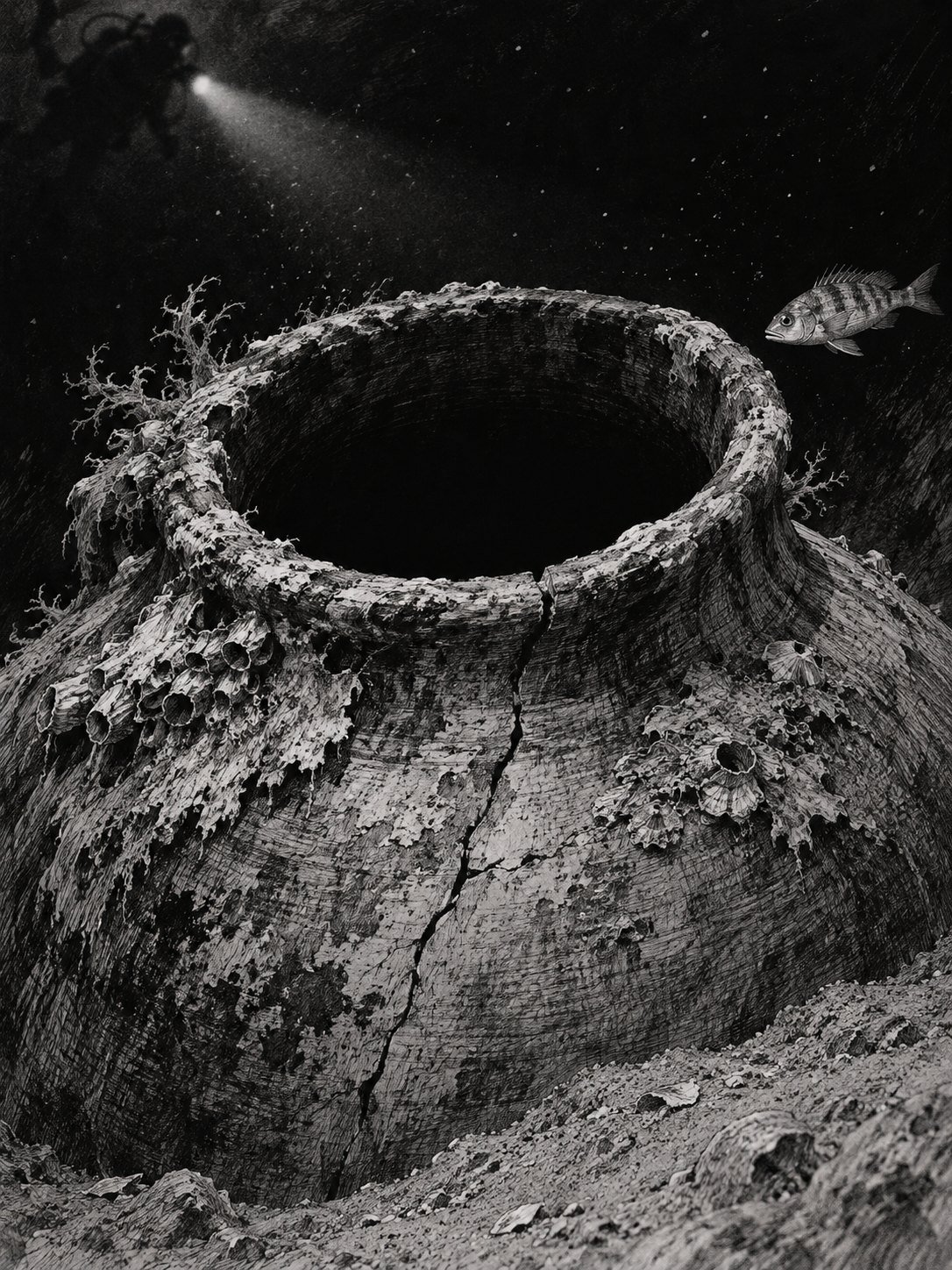
Some of the material is due to go on show at the “Four Seas, One Museum” exhibition in Istanbul’s Haydarpaşa district, and some at the Mediterranean Underwater Archaeology Museum in Kemer. Visitors will be looking at the evidence before the verdict is in.
Here is what is solid, and what is not
It is worth separating the layers, because the headlines did not.
Seen and recorded by divers: more than thirty jars of an Early Bronze Age type, three stone anchors, residue in some jars, shipworm traces, and no hull. Two jars have been lifted and are in a laboratory.
Supported by laboratory work: the clay came from the Central Jordan Valley.
A proposal, not a measurement: the date of 2700 to 2400 BC, the ten-metre ship, the route toward Troy or Crete, the cheese churn.
Unknown: whether this was a sinking or a jettison, whether the anchors belong to it, and whether it is older than Dokos at all.
Back on the slope
Somewhere off Kekova, thirty-odd jars lie on a rock slope in the outline of a ship that, by the team’s estimate, sailed in the age of the pyramids. They were filed once as a few centuries old. A page in a book moved them back four and a half thousand years.

Everything since has been an argument about a shape. The shape may well be right. But a shape is a resemblance, and this case will not be closed by a resemblance. It will be closed by whatever is lying under the jars.
So the real question about the world’s oldest shipwreck is no longer what you believe. It is what the first piece of wood will say when it finally comes up.
When it does, will the oldest shipwreck in the world still be the oldest?
Related case: the Plain of Jars in Laos.
The story you may have heard, and what the file says
| What gets repeated | What the record says |
|---|---|
debunked “The wreck was carbon dated to 4,700 years” | No hull survives, so nothing has been radiocarbon dated. The age comes from the shape of the jars, compared with dated pottery elsewhere. |
debunked “Guinness confirmed the date” | The entry registers the researchers’ estimate. It is not an independent test, and Guinness ran none. |
unverified “It is definitely older than the Dokos wreck” | The formal proposal is 2700–2400 BC. The two proposed date ranges overlap, so neither wreck can yet be called older with certainty. |
unverified “The crew made cheese at sea” | That is the survey leader’s suggestion, built on one jar with two holes. It is an idea, not a finding. |
disputed “Divers found a shipwreck” | Divers found a scatter of jars on a rocky slope. The preliminary report gives no depth, and at least one archaeologist has asked whether this is a wreck at all, or cargo thrown overboard. |
Why the record is stranger than the legend: the legend is a tidy one, a ship, a date, a world record. The file is a pile of pots on a slope that a trained team first wrote down as a few hundred years old, until a page in an Egyptian pottery book moved them by more than four thousand years. Nothing was tested; something was recognised. That is how most archaeology works, and it is also why the title “oldest shipwreck in the world” currently rests on the eye of the people who looked at the jars, and on nothing else. Misread cargo is a recurring hazard in wreck archaeology: the corroded lump divers hauled off Antikythera in 1901 sat in a museum for decades before anyone realised it was a geared astronomical computer.
What is documented, and what isn’t
Documented
- A cluster of more than thirty Early Bronze Age-type amphorae and three stone anchors lies near Kekova Island, Antalya province.
- Akdeniz University surveyed and documented the site in 2024; two jars were recovered, in 2024 and 2025.
- No hull timber survives, so no radiocarbon date has been obtained.
- A preliminary report by Öniz and Öztosun was published in the Journal of Maritime Archaeology in 2026.
- Türkiye’s Ministry of Culture and Tourism announced the find on 14 October 2026; Guinness World Records entered it in early November 2026.
- Clay analysis points to Central Jordan Valley workshops.
Interpretation
- That the ship sank between 2700 and 2400 BC.
- That it was sailing from the Levant toward Troy or Crete.
- That it was a merchant vessel of about ten metres.
- That the marked jar was a churn.
Not confirmed
- The precise date, by any method independent of pottery style.
- Whether any of the three anchors belongs to this vessel.
- Whether the site is a wreck rather than jettisoned cargo.
- What the jars originally held, given that they may have been reused.
- The destination, and the cause of the sinking.
Timeline
- c. 2700–2400 BC: Proposed date of the sinking.
- c. 2700–2200 BC: Date range of the Dokos wreck, the previous record holder.
- 23 Aug 1975: Peter Throckmorton finds the Dokos wreck.
- 1989–1992: Dokos excavated by the Hellenic Institute of Marine Archaeology.
- 2024: Akdeniz University survey documents the Kekova site; first amphora recovered.
- 2025: Second amphora recovered.
- July 2026: Preliminary report published in the Journal of Maritime Archaeology.
- 2026: Formal excavation begins under the Antalya Museum Directorate.
- 14 Oct 2026: Ministry of Culture and Tourism announces the find.
- Early Nov 2026: Guinness World Records enters it as the world’s oldest shipwreck.
Evidence locker
The published report, museum pieces of the same broad era for comparison, and the place itself. None of the museum objects come from this wreck.
Access: Direct original (paywalled; the abstract is open).
Supports: That the find was documented and published by the excavators.
Limits: The title itself says “preliminary”. No hull survives, so the date rests on pottery comparison, which other archaeologists have questioned.
 EXHIBIT B · MUSEUM COMPARISONEXHIBIT C · MUSEUM COMPARISON
 EXHIBIT D · MUSEUM COMPARISON
 EXHIBIT E · THE BENCHMARK WRECK
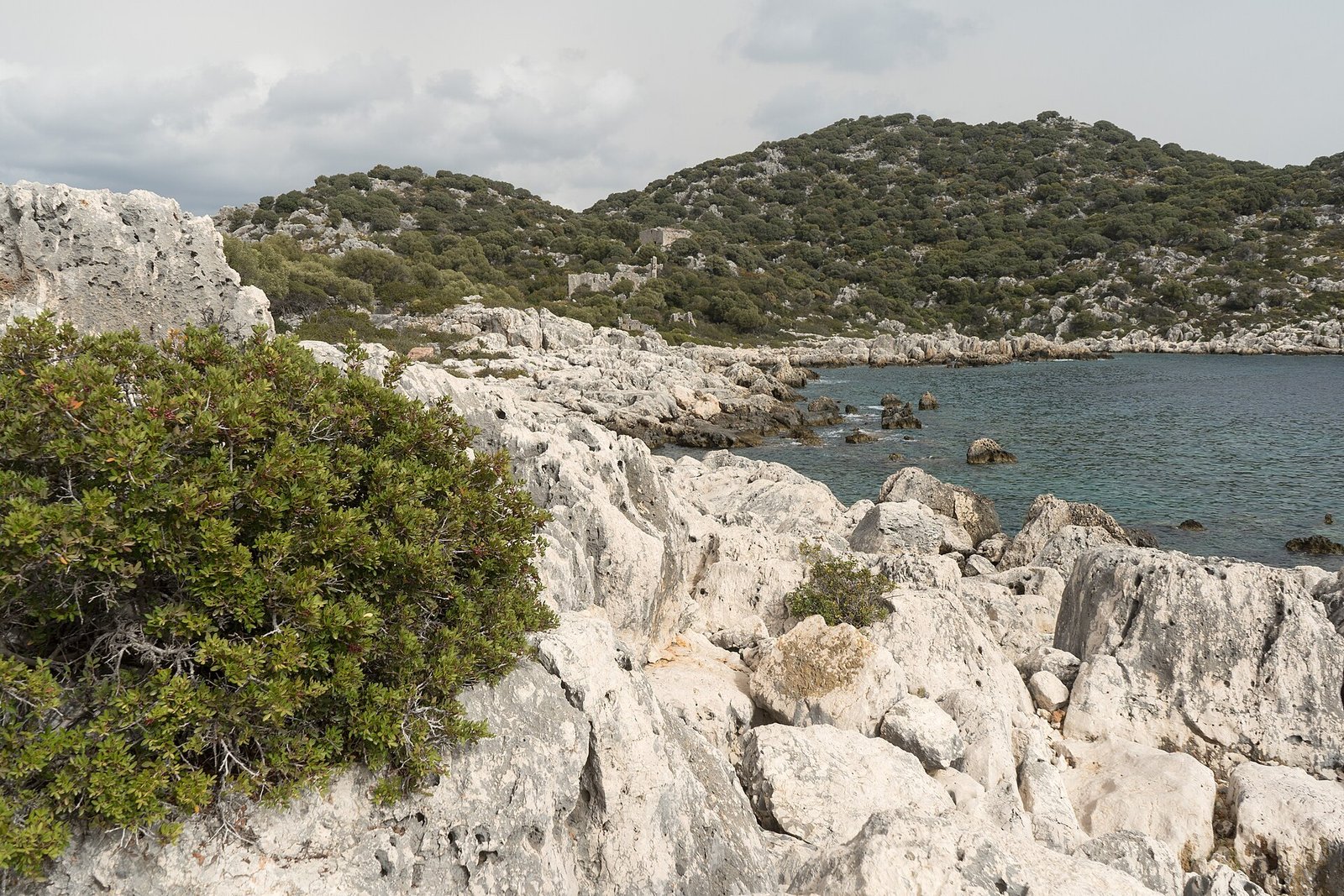 EXHIBIT F · THE PLACE
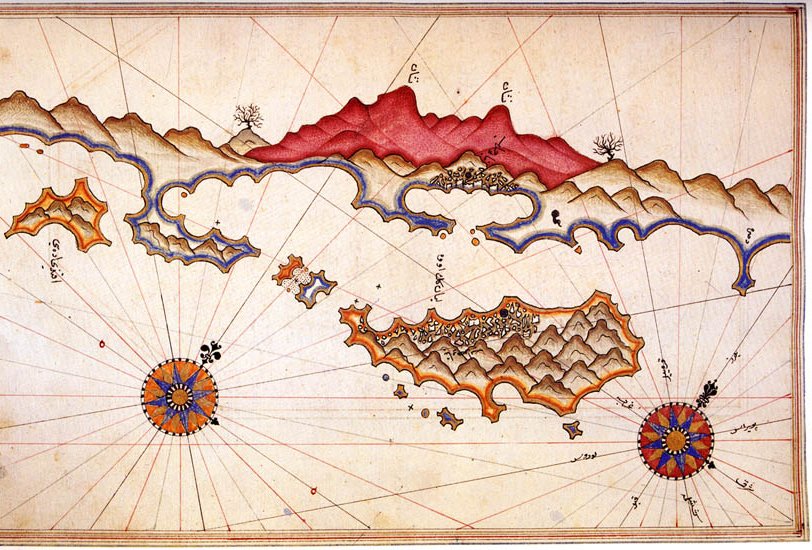 EXHIBIT G · OLD CHART
Where the records disagree
- The depth. DIVE Magazine reports most of the remains at about 30 metres; Daily Sabah and Türkiye Today give 35 to 40 metres. The preliminary report gives no figure at all, describing only a partly sandy, partly rocky bottom.
- When it was found. The academic report and most coverage give 2024. CBS News reported that the team first found the wreck four years before the announcement.
- How wrong the first guess was. Daily Sabah reports the team initially put the jars at 100 to 400 years old, possibly Ottoman; CBS and Al Jazeera report an initial estimate of a century or two.
- The age given out loud. The formal proposal is 2700–2400 BC and “about 4,700 years”; Öniz has also said publicly that the ship is nearly 5,000 years old.
- Whose idea the churn was. The Art Newspaper attributes the goats-and-butter idea to Hakan Öniz, who leads the survey. Other coverage, such as Al Jazeera, reports the churn reading without naming anyone.
What we still don’t know
- Whether the wreck is older than Dokos, or the same age, or younger.
- Whether anything at the site can ever be dated independently of pottery style.
- Whether the three anchors have anything to do with it.
- What the ship was actually carrying, as opposed to what its containers were originally designed for.
- Where she was going, and why she went down within sight of shelter.
Where the argument is, and where we come down
This argument is narrow, recent and conducted almost entirely by named archaeologists in the press, not on forums. It turns on three questions. Is it a wreck at all? Sean Kingsley, a marine archaeologist, raised the possibility that the jars are cargo thrown overboard, or the trace of a ship that simply capsized in a wave. Is the date safe? Specialists quoted by the New York Times without being named pointed to two wrecks found in the 1980s with similar jars dated to the 12th–15th centuries BC, and one saw a resemblance to medieval Byzantine-era amphorae. Does “oldest” survive the comparison with Dokos? The same report noted that some archaeologists doubt Dokos is a shipwreck at all. Between the poles, Justin Leidwanger of Stanford called the claim plausible but unproven and the burden of proof high: “we’re all excited by ‘maybe’.” Karin Sowada of Macquarie University, who examined the jars, is “reasonably confident” they are Early Bronze Age; the lead archaeologist, Hakan Öniz, told the same newspaper “This is the oldest, definitely.” Turkish coverage presented it as a national record; we found no Greek institutional response.
The cautious position is the stronger one, because of how the date was reached. With no hull and no timber, there is nothing to radiocarbon-date; the age comes from comparing jar shapes with pottery dated elsewhere, and pottery forms can persist for centuries. The team’s own preliminary report says the three anchors have not been conclusively linked to the vessel, and Öniz told Guinness World Records that dating a wreck with no surviving ship “is not an exact science.” The proponents’ evidence is real but typological: the jars resemble Levantine imports found in Egypt and at sites linked to Troy and Minoan Crete, and clay analysis points to the Jordan Valley. The Guinness listing records the researchers’ estimate; it is not an independent test, and Dokos itself was dated the same way.
The argument exists because a superlative arrived before the evidence could carry it. The claim went from a preliminary report in July to a ministerial announcement in October and a world record in November, before formal excavation had produced results. “Oldest” is a single number that invites challenge, and with no organic material either side can only argue from comparison. The team’s own revision, from Ottoman jars to Bronze Age ones after spotting a parallel in an Egyptian publication, shows how much rides on one match.
On the record as it stands, we put more weight on “an Early Bronze Age cargo of Levantine jars, probably lost from a ship, age not independently fixed” than on “the world’s oldest shipwreck” as an established fact. First, the date rests on typology alone, and specialists have named later wrecks carrying jars of similar form. Second, the wreck interpretation has not yet been separated from jettisoned cargo, which would date a jar scatter, not a sinking. We could be wrong in the team’s favour if residue or shipworm traces yield a direct radiocarbon date in the proposed range. If excavation produces one, this section changes.
Sources for this section: dnyuz.com · guinnessworldrecords.com · theartnewspaper.com · thenationalnews.com · bairdmaritime.com · haber7.com · en.wikipedia.org · exploringgreece.tv · greekreporter.com · divein.com
Quick answers: the Kekova shipwreck
What is the world’s oldest shipwreck?
A cluster of Early Bronze Age amphorae and stone anchors found near Kekova Island, Antalya, Türkiye. Researchers propose about 4,700 years.
How was the Kekova wreck dated?
By the shape of its jars, compared with Levantine and Egyptian pottery. No hull timber survives, so there is no radiocarbon date.
Is the Kekova wreck definitely older than the Dokos wreck?
No. The proposed ranges overlap, and at least one archaeologist has said the two could be contemporary.
Does the Guinness record prove the date?
No. The entry registers the researchers’ estimate; a records body does not carry out independent dating.
What is a little-known fact about the world’s oldest shipwreck?
The team first logged it as a few centuries old, possibly Ottoman. The date changed only when the lead archaeologist recognised the jar shape in a book on Egyptian archaeology.
Editor’s note
What catches my eye in this file is that somebody went back and looked again. The team had already classified those jars, and the first call, a few hundred years old, Ottoman perhaps, had its own logic. Then a page in a pottery catalogue did not fit, and instead of leaving a finished job alone they got ministry permission and dived down to check. Most of us find it tiresome to reopen something we have already filed. The moment of recognition in the book is a good story; the second dive is the part I like.
I would have been impressed by “the oldest shipwreck in the world” too, and I would probably have believed it on the spot. But deciding that the jars are old and deciding that a ship sank on that spot are two different jobs, and they need different kinds of proof. I find it interesting that those questions are still open. If this was cargo, someone loaded a vessel and left a harbour with a plan for the day, and something about that plan changed until only the jars were left on the sea floor.
So the question I would most like answered is this. Are those jars lying where a ship went down, or are they a load that somebody threw overboard to save one?
— Strange World Files
Case file summary
In 2024, divers off Kekova Island recorded a scatter of storage jars on a rocky slope and filed them as a few hundred years old. A page in an Egyptian pottery publication moved them to the age of the Giza pyramids. Türkiye announced the wreck in October 2026; Guinness listed it as the oldest in the world a few weeks later. But nothing the ship was built from survives, so there is no radiocarbon date — only the shape of the pots. The range that shape gives overlaps with the range of the wreck it supposedly beat, and at least one archaeologist has asked whether this is a wreck at all, or just cargo thrown overboard.
Related files
- Stonehenge’s 6-Tonne Altar Stone Was Traced to Scotland. Now No Outcrop Matches It
- Gunung Padang: The “Oldest Pyramid” Paper That Was Retracted
- Yonaguni: The Underwater Formation Nobody Can Agree On
Sources
- H. Öniz & C. Öztosun, “Preliminary Report on the Early Bronze Age Shipwreck in the Kekova Region of Antalya,” *Journal of Maritime Archaeology* 21(3), 2026, DOI 10.1007/s11457-026-09532-3: https://link.springer.com/article/10.1007/s11457-026-09532-3 — record page: https://avesis.akdeniz.edu.tr/yayin/a64debbb-dc64-471b-9d6f-740ca395b19b/preliminary-report-on-the-early-bronze-age-shipwreck-in-the-kekova-region-of-antalya
- CBS News, “World’s oldest shipwreck found off Turkey, archaeologists say,” 14 October 2026: https://www.cbsnews.com/news/worlds-oldest-shipwreck-found-turkey-archaeologists/
- Al Jazeera, “World’s oldest shipwreck found off coast of Turkiye,” 14 October 2026: https://www.aljazeera.com/news/2026/10/14/worlds-oldest-shipwreck-found-off-coast-of-turkiye
- DIVE Magazine, “Ancient shipwreck discovered off Turkey could be world’s oldest,” 2026: https://divemagazine.com/scuba-diving-news/ancient-worlds-oldest-shipwreck-found-off-turkey
- Daily Sabah, “Guinness names Türkiye’s 4,700-year-old shipwreck world’s oldest,” 5 November 2026: https://www.dailysabah.com/life/history/guinness-names-turkiyes-4700-year-old-shipwreck-worlds-oldest
- Türkiye Today, “Guinness recognizes Türkiye shipwreck as world’s oldest, at about 4,700 years,” 4 November 2026: https://www.turkiyetoday.com/lifestyle/guinness-recognizes-turkiye-shipwreck-as-worlds-oldest-at-about-4700-years-3231715
- Arkeonews, “A 4,700-Year-Old Shipwreck, Nine Mysterious Marks, and an Unexpected Clue to Life at Sea,” 2026: https://arkeonews.net/a-4700-year-old-shipwreck-nine-mysterious-marks-and-an-unexpected-clue-to-life-at-sea/
- The Ancient Sky, “Turkish Archaeologists Claim Kekova Wreck Is World’s Oldest Shipwreck; Age Rests on Pottery,” 2026 (collects expert comment originally in New Scientist, The New York Times and The Conversation): https://www.theancientsky.com/ancient-civilization/kekova-shipwreck/
- Karin Sowada, “World’s oldest shipwreck discovered off coast of Turkey,” *The Conversation*, 15 October 2026: https://theconversation.com/worlds-oldest-shipwreck-discovered-off-coast-of-turkey-294248
- Wikipedia, “Dokos shipwreck”: https://en.wikipedia.org/wiki/Dokos_shipwreck
- CNN, “World’s oldest shipwreck found off coast of Turkey,” 14 October 2026: https://www.cnn.com/2026/10/14/science/worlds-oldest-shipwreck-turkey-scli-intl
- The Metropolitan Museum of Art, “Jar with ledge handles and punctate decoration,” Early Bronze Age IA, acc. 1978.134.3: https://www.metmuseum.org/art/collection/search/326492
- The Metropolitan Museum of Art, “Spouted jar with eagle incised in high relief,” Early Bronze Age Syria, acc. 2000.75: https://www.metmuseum.org/art/collection/search/327833
- The Metropolitan Museum of Art, “Jar,” Early Bronze Age IA, acc. 1978.134.9: https://www.metmuseum.org/art/collection/search/326498
—
Evidence photos
Real photographs and published figures, kept separate from our illustrations. Each one says what it shows, and what it cannot prove.