A Diver Came Up Screaming About Corpses. The Lump They Hauled Up Was a Computer
Antikythera, 1900. Sponge divers found bronze statues on the seabed. Two years later a corroded lump cracked open in a museum in Athens, and there was a hand-cut gear inside. The experts put it back on the shelf for fifty years.




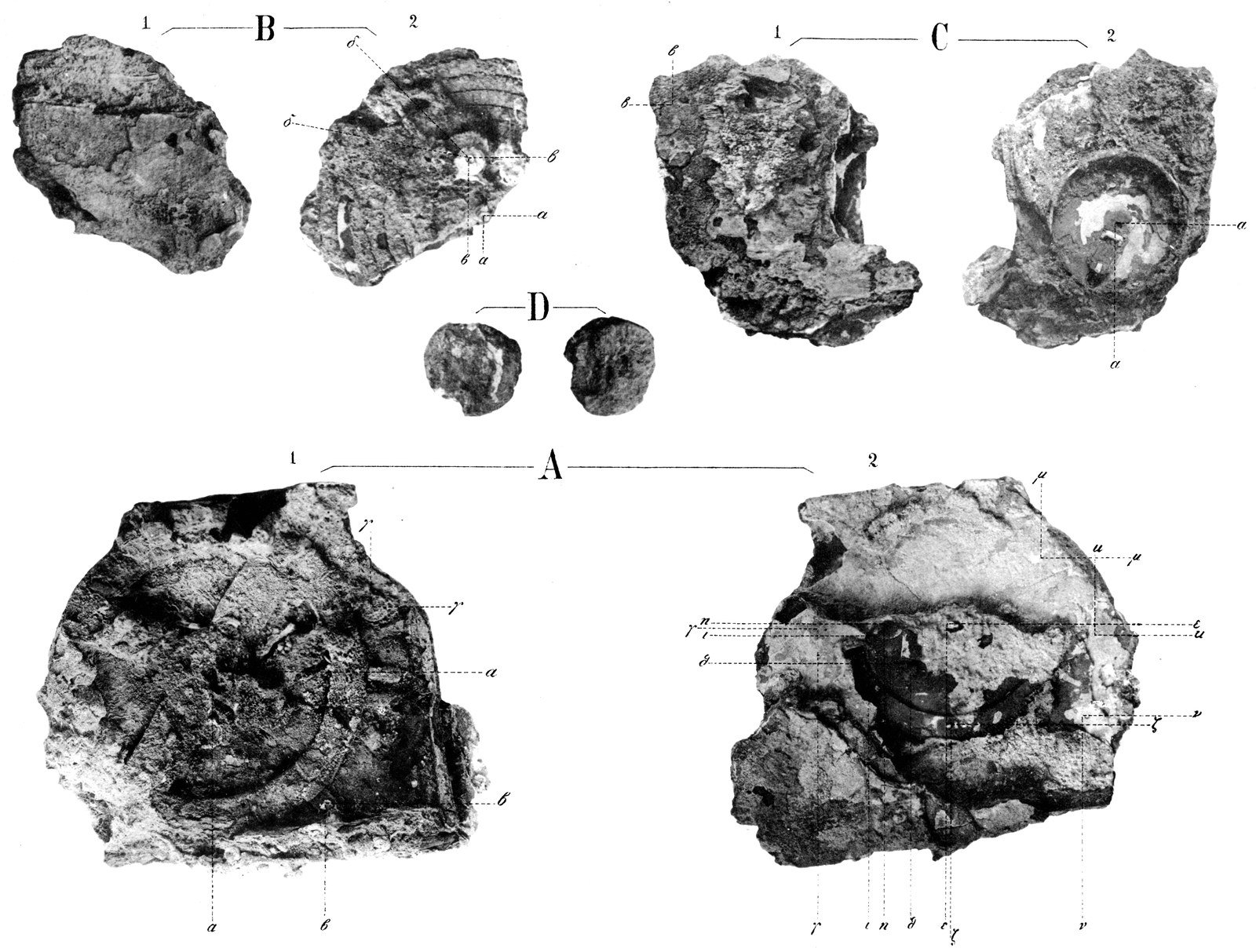
Fragments A, B, C and D. The gear that started the argument is the disc filling the lower-left fragment. The men holding this photograph decided it could not be Greek, and shelved it for about fifty years.
Photograph: Ioannis N. Svoronos, 1902–03 (Svoronos 1903, Plate X). National Archaeological Museum, Athens, inv. X 15087. Public domain, via NYU Faculty Digital Archive.

They were bronze, and the most important thing down there with them was a lump nobody looked at for two years.
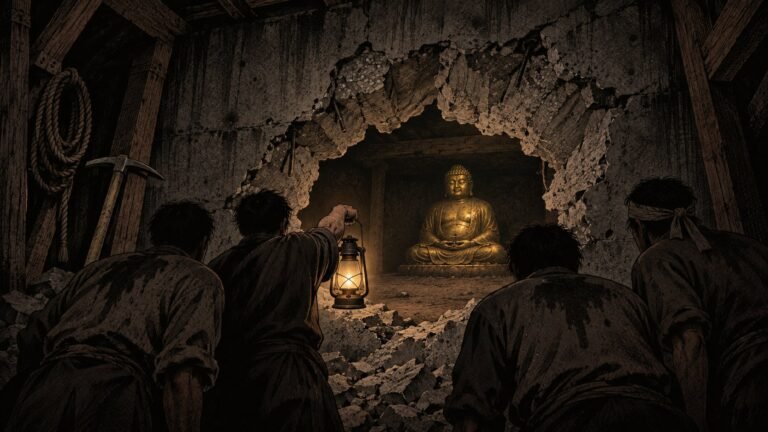
At Easter 1900 a sponge diver went down 45 metres off a Greek island and came up shouting about a heap of dead bodies on the sea floor.
They were bronze statues. Among them was a lump of corroded metal the size of a shoebox that nobody looked at for two years.
Stranger still, when it finally cracked open there were gears inside, with teeth a millimetre and a half across, and nothing like it was built again anywhere on earth for more than a thousand years.
If people could build this in the second century BC, how do you lose it so completely that the men holding it refused to believe it was real?
A diver surfaced screaming, and the captain went down to check

Easter 1900, off Antikythera, a rock of an island between the Peloponnese and Crete. A boat of sponge divers from Symi, under Captain Dimitrios Kondos, had put in to wait out a storm.
A diver named Elias Stadiatis went down in canvas and a brass helmet. The sea floor was 45 metres below. He was there minutes before he signalled to be hauled up, and when the helmet came off he was terrified: he had seen a heap of rotting bodies and horses lying in the sand.
Kondos did not believe him either. He went down to look for himself.

He came back up holding a human arm made of bronze.
What Stadiatis had seen was a cargo: statues half buried in the sand, their limbs tangled, shipped two thousand years ago and never delivered. The question that starts this story is not what they were. It is what else was down there with them.
One diver died and two were paralysed for a crate nobody opened

From November 1900 the Greek navy supplied ships, and the Symi divers worked the wreck through the following summer. They had no decompression tables. They went down to 45 metres in canvas suits, stayed as long as they could stand, and came up.
They brought up a life-size bronze youth cast around 340 BC, the bearded head now called the Philosopher, 36 marble statues, glassware, a bronze lyre, lead pipes.

One diver, Giorgos Kritikos, died. Two more came up paralysed. In the summer of 1901 the work stopped.
The sea had charged a price for that cargo, and the thing it was really protecting was still in a box nobody had opened.
Everything went on display except the leftovers

Everything went to the National Archaeological Museum in Athens. The statues were cleaned and put on show. The rest went into crates: potsherds, fittings, and several shapeless pieces of green bronze with rotted wood stuck to them.
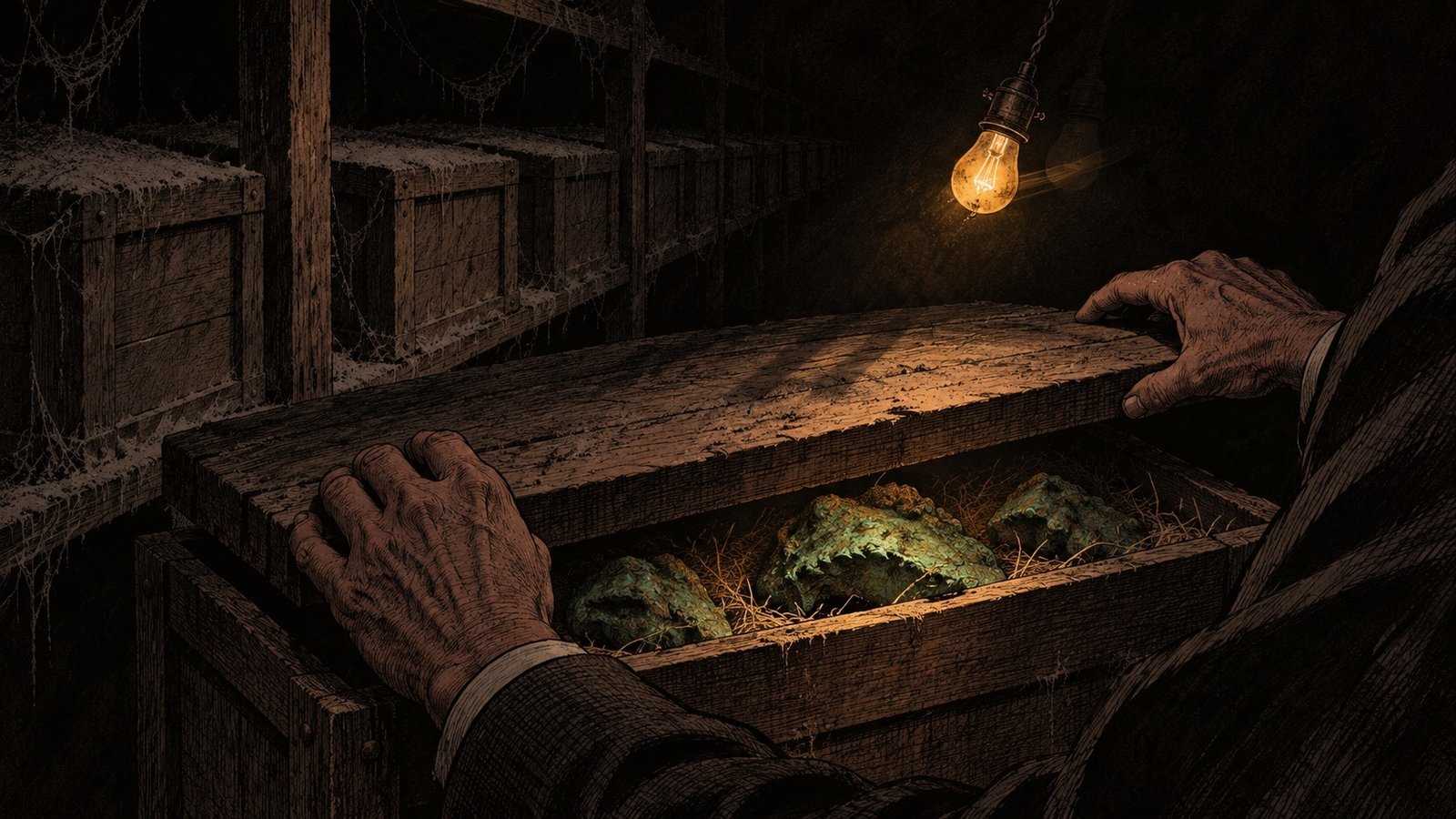
Nobody catalogued them as anything. They were the leftovers.
And bronze that has spent two thousand years in seawater does one thing reliably when you let it dry. It cracks.
A gear turned up in the wrong century

The teeth are 1.6 millimetres apart and were cut one at a time, by hand.
On 17 May 1902 the archaeologist Valerios Stais was looking through those pieces when he saw, in the split face of one lump, a toothed wheel. A gear. Next to it, under the crust, were Greek letters.
The teeth are triangular, cut by hand, with an average pitch of 1.6 millimetres.
Stais said out loud what it looked like: an astronomical clock.
Here is the first turn. You would expect that to be the moment the world changed. It was the moment the object was buried a second time.
They could see the gear. They decided it could not be Greek

Most of Stais’s colleagues decided a gear that fine could not be Greek. The simplest explanation, they said, was that the thing had fallen into the wreck centuries later and did not belong with the statues at all.
So it was shelved. Not hidden, not suppressed. Shelved, by people who could see it, because it did not fit what they already knew.

In 1951 a historian of science at Yale, Derek de Solla Price, became interested. In 1971 he and the Greek physicist Charalampos Karakalos finally put the fragments in front of an X-ray source.

The film showed gears behind gears behind gears.
In 1974 Price published his conclusion: a calendar computer built around 87 BC, modelling the Sun and Moon through the zodiac. He counted 223 teeth on the largest wheel, and 223 is the number of lunar months in the Saros, the cycle on which eclipses repeat.
He had the principle right. He had no idea how far short he was.
Eight tonnes of scanner, flown in for one scrap of bronze

The fragments are not allowed to leave the building, so the machine had to come to them.
The fragments cannot leave the museum, so in 2005 the equipment came to them: a microfocus X-ray CT scanner built by the British firm X-Tek, nicknamed Bladerunner, and a surface-imaging dome from Hewlett-Packard that could read letters too faint to see.


The results, published in Nature in November 2006 by Tony Freeth, Mike Edmunds, Yanis Bitsakis, Xenophon Moussas and others: 82 fragments, 30 surviving gears, 27 of them inside Fragment A, which is 180 by 150 millimetres and weighs 369 grams.
The scans also doubled the readable text. The machine carried its own instructions, engraved on its covers.
And in the gear train was something nobody had predicted.
A pin in a slot, because the Moon does not keep time

The Moon does not cross the sky at a constant speed. It runs faster at one end of its orbit and slower at the other, a fact the Greek astronomer Hipparchos worked out between about 146 and 128 BC.
The mechanism reproduces it mechanically. Two gears, k1 and k2, sit one on top of the other on axes that deliberately do not line up, joined by a pin riding in a slot. As they turn, the pin slides along the slot, and the output speeds up and slows down exactly as the Moon does.
The sidereal month it produces is 27.321 days. The modern value is 27.321661.
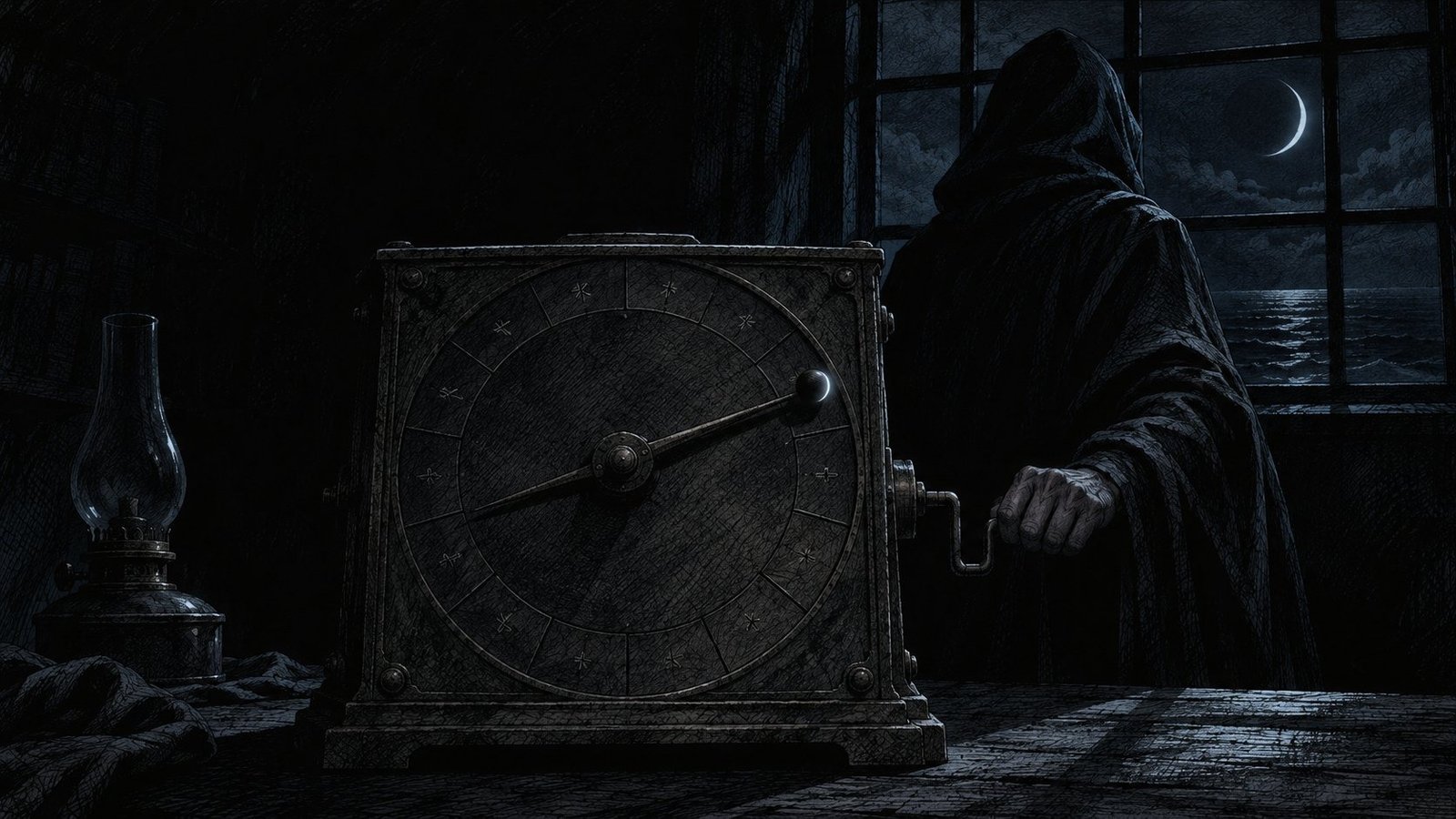
On the front, a little ball, half white and half black, turned to show the phase of the Moon.
A calendar is one thing. The back of the machine was a prediction engine.
The dial that tells you when the sky goes out
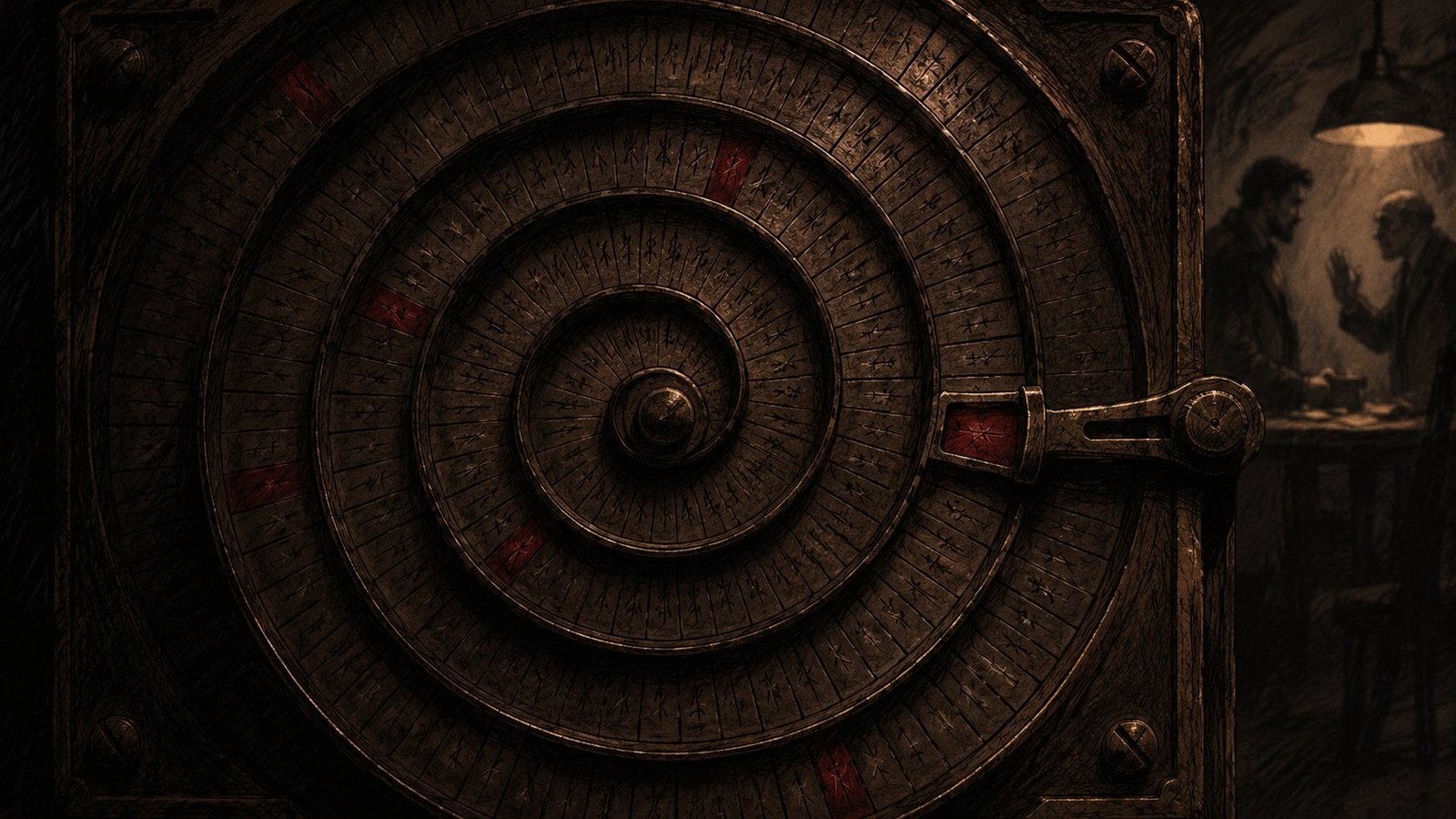
The lower back dial is a spiral of four turns divided into 223 months: the Saros. Fifty-one glyphs mark the months when an eclipse falls, 38 lunar and 27 solar. A small subsidiary dial, the Exeligmos, tells the user how many hours to add, 0, 8 or 16, on the second and third repeats of the cycle.
The upper dial is a five-turn spiral of 235 months: the Metonic cycle, 19 years. The machine’s version works out to 6,939.5 days against a modern 6,939.69.
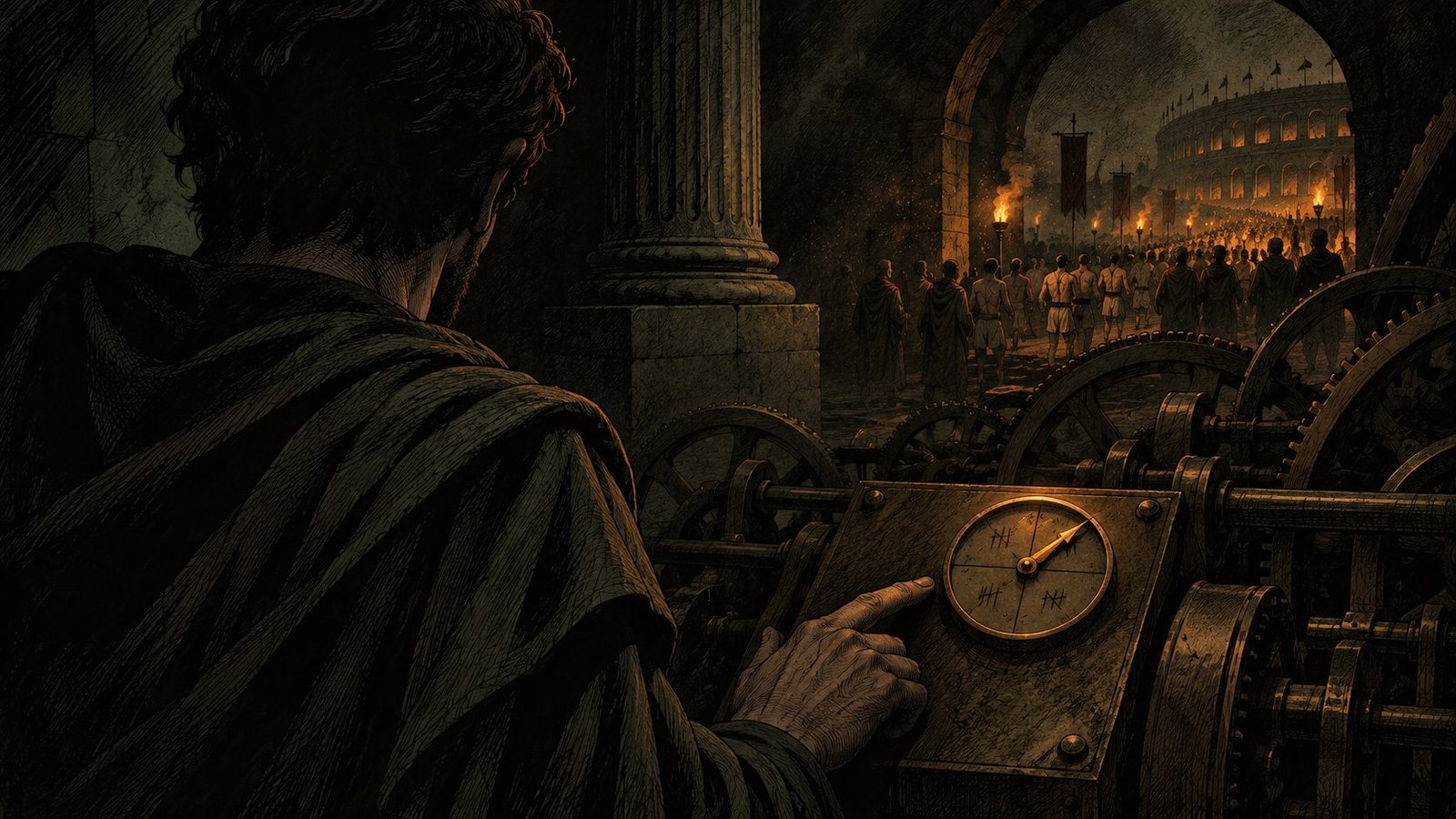
In 2008 a second Nature paper read a small dial nobody had understood. It counts four years and names athletic festivals: Olympia, Nemea, Isthmia, Pythia and two smaller games. Its pointer is the only one in the machine that turns backwards.
The month names on the Metonic dial turned out to be Corinthian.
That one detail pointed away from Rhodes, where everyone had assumed it was made, and toward Corinth or its colonies. And the most famous Corinthian colony in the Greek world was Syracuse.
Somebody cut every one of those teeth by hand

Stop and picture the work. Every tooth on thirty-odd wheels was cut by hand, one at a time, to a pitch of about a millimetre and a half, in bronze, by someone working by lamplight with a file.
The teeth are not perfectly even, because hands are not. The machine still worked well enough that its designer thought it was worth engraving an instruction manual onto it.
Nobody knows that person’s name. Nobody has found the workshop.

What we do have is a Roman witness. Cicero, writing between 54 and 51 BC, describes two machines made by Archimedes and carried to Rome after Syracuse fell in 212 BC; one of them showed the motions of the Sun, Moon and planets. He mentions a third, made by his own teacher Posidonius on Rhodes.
Here is the second turn. The Antikythera mechanism is not a one-off genius object that appeared from nowhere. It is the only survivor of a family of machines, and the rest were carried off as loot and lost.
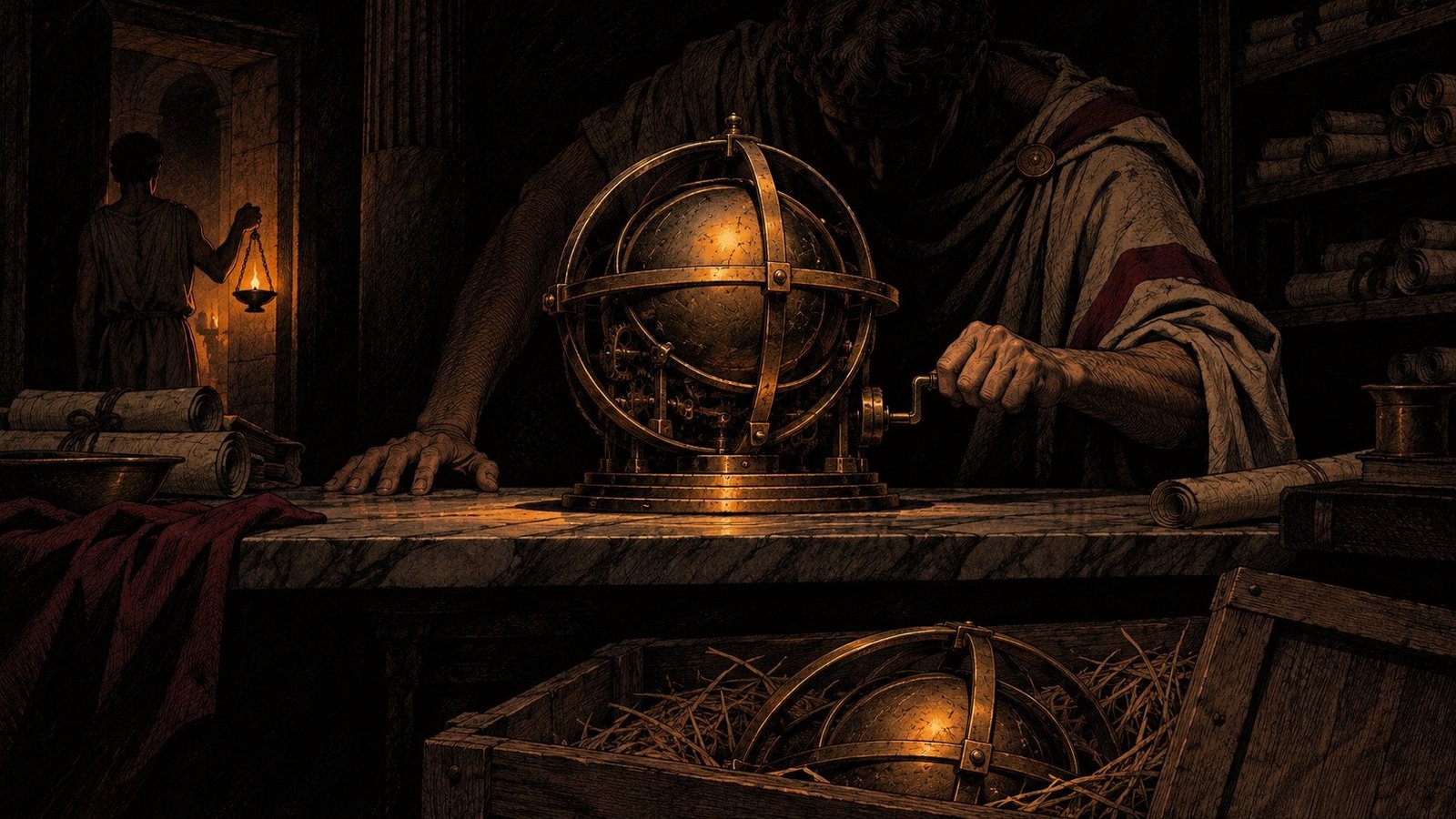
Archimedes had been dead a century when ours was built; the lettering dates it to between about 150 and 100 BC. Whether the design descends from his workshop is an inference, not a finding.
The ship was carrying it west, and never arrived

The ship was not going to Greece. It was heading west, loaded with Greek statues for Roman buyers, when it went down around 70 to 60 BC. The coins aboard were struck between 76 and 67 BC.

Somebody was shipping a computer to Italy. It never arrived, and the sea kept it for two thousand years, which is the only reason we have it at all.
Every other machine like it went to people who wanted it. Those are the ones that are gone.
The part everyone would have looked at is the part that is missing
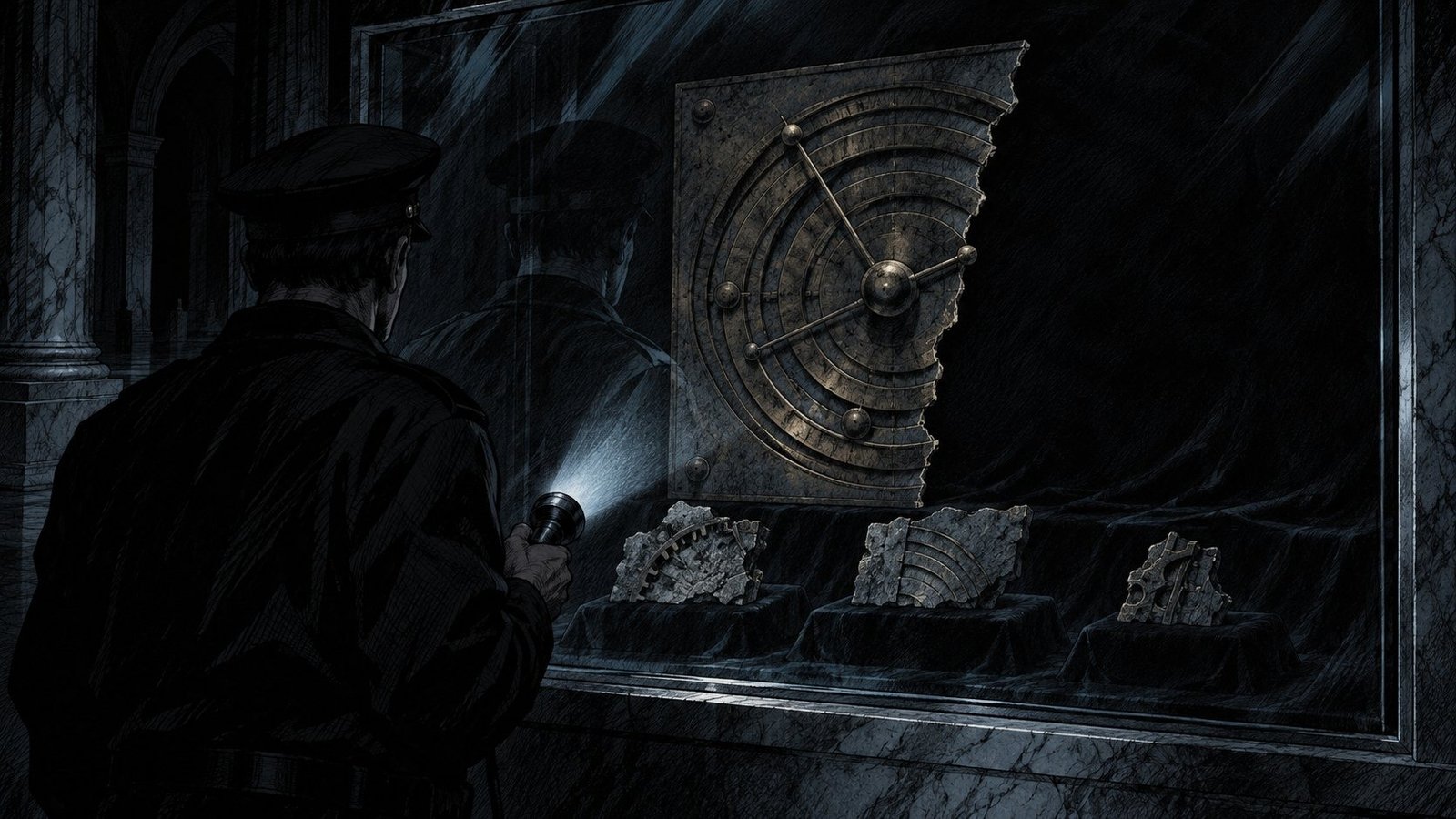
The front of the machine, the part anyone would actually look at, is almost entirely lost. What survives is a description of it, engraved on the back cover: the planets riding on rings, each marked with a small bead.
In 2016, when the full inscriptions were published, two numbers came out of the scans that nobody had read before: 462 and 442. They are the periods in years over which Venus and Saturn repeat their cycles against the stars, including the loops where a planet appears to stop and reverse.
Greek astronomy, as it survives in the texts, does not contain those numbers.

In March 2021 Tony Freeth’s team at UCL published a reconstruction of the entire front display, built around a 63-tooth gear in Fragment D that had never been explained. Sixty-three is what you need to generate the 462-year Venus cycle.
Freeth said it was the first model that conforms to all the physical evidence. His team added their own caveat: it now has to be built with ancient tools to prove that it could have been.
Which raises the question that has been following this object since 1902.
Did it actually turn, or was it a show piece?

In 2025 two engineers at the National University of Mar del Plata in Argentina, Esteban Szigety and Gustavo Arenas, modelled the gear train using the measured errors in the surviving teeth. Their result: with errors that size, the train would jam or the teeth would slip out of mesh after the equivalent of about four months of cranking.
It was reported as proof that the ancient computer had been a mechanical disaster.
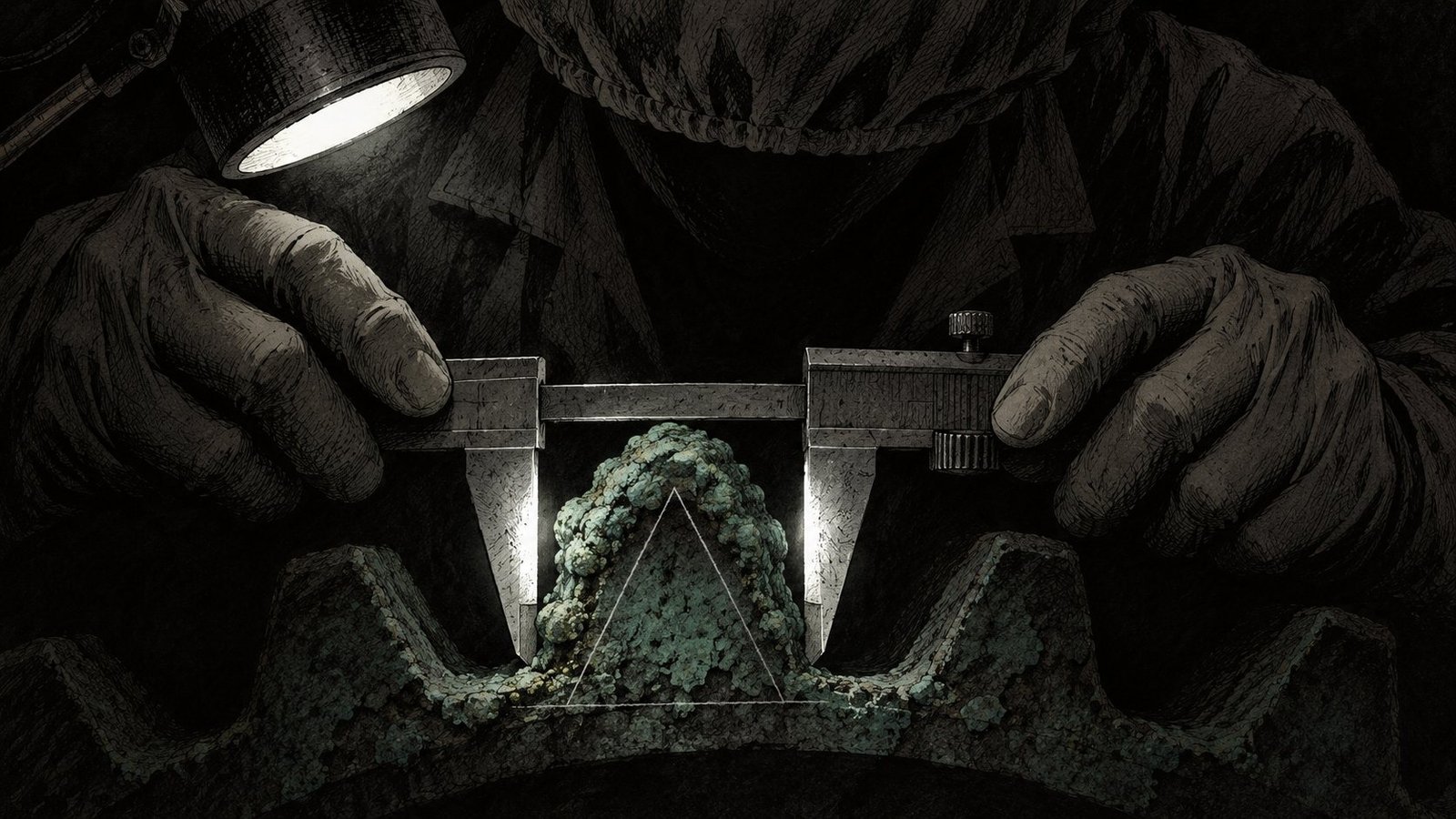
That is not what the authors said. Szigety himself doubts the device never moved, and the reason is in the metal: two thousand years in seawater have turned the bronze into atacamite, a copper mineral that swells. Every tooth a scanner measures today is fatter and rougher than the tooth that was cut. Measuring corrosion, as the Thessaloniki researcher Aristeidis Voulgaris pointed out, cannot tell you what the uncorroded gear did.
Edmunds has held a narrower position since 2006: the lunar pointer was never very accurate, and the machine may have been built to show how the heavens work rather than to compute them. Alexander Jones, who read the inscriptions, thinks much the same, probably an educational device.
So the argument is not that it worked against that it was junk. It is calculator against demonstration. Both require somebody to have designed it.
Three hundred and fifty-four holes, counted with black-hole mathematics

That is smaller than the width of a human hair, drilled by hand.
The front calendar ring is broken, and the number of holes drilled around its rim decides what calendar the machine ran on. 365 means the Egyptian solar year. 354 means the Moon.
In 2020 a researcher, Chris Budiselic, estimated from X-rays that there had been somewhere between 347 and 367. In June 2024 two astronomers at the University of Glasgow, Graham Woan and Joseph Bayley, took the problem on using the statistics they use to pull gravitational-wave signals out of noise at LIGO.
Their answer: 354 or 355. A 365-hole ring is hundreds of times less likely. The ring’s radius comes out at 77.1 millimetres, and the holes deviate from a perfect circle by an average of 0.028 millimetres.

Methods built to hear black holes collide were used to count holes a Greek craftsman drilled by hand. His error was smaller than the width of a human hair.
The wreck is still handing things back

Jacques Cousteau visited the site in 1953 and returned in 1976, bringing up nearly 300 objects including the coins that date the sinking. In 2012 Brendan Foley and Theotokis Theodoulou relocated the wreck with rebreathers and found a second one nearby.

From 2014 the Greek Ephorate of Underwater Antiquities dug again: lead anchor stocks, a 100-kilogram lead dolphin used as a weapon, and on 31 August 2016 a human skeleton two thousand years old, nicknamed Pamphilos, someone who went down with the ship. In 2017, a bronze arm. In 2022, after three boulders of 8.5 tonnes each were lifted, human teeth and a marble head that may be Hercules.
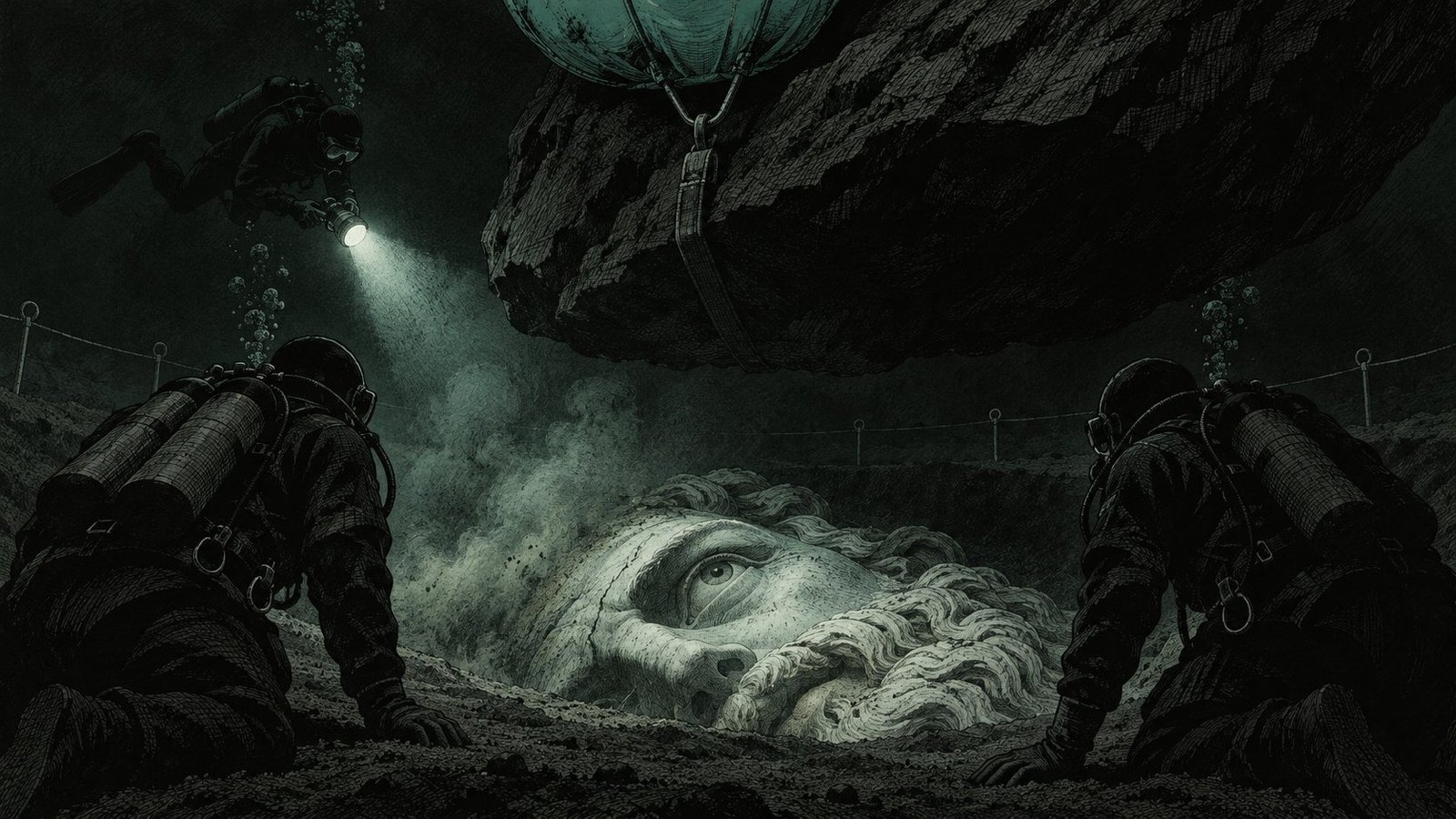
No second mechanism. Not yet.
The story you may have heard, and what the file says
Almost everything that circulates about this object is a version of one of five claims. Here is what the record actually supports.
| What gets repeated | What the record says |
|---|---|
| Aliens or a lost civilisation built it | The inscriptions are Greek, the month names Corinthian, the astronomy Babylonian and Greek. Cicero describes similar machines made by Archimedes and by his own teacher Posidonius. |
| It was recognised as a computer the moment it was found | A gear was noticed on 17 May 1902, two years after the salvage. Most scholars decided it was too advanced to be Greek and assumed it had fallen into the wreck later. It sat unstudied for about fifty years. |
| It was a perfect precision instrument | Thirty gears survive across 82 fragments, every tooth cut by hand and uneven. A 2025 simulation argues the measured errors would jam it; the authors and others answer that corrosion makes those measurements unreliable. |
| Archimedes built it | He died in 212 BC. The lettering dates the machine to about 150 to 100 BC. Corinthian month names allow a Syracuse connection; they do not prove one. |
| It is the only one that ever existed | It is the only one that survives. Cicero saw at least three others, and a design this mature is not a first attempt. |
Why the record is stranger than the legend
The legend needs the machine to be impossible. The record says it was ordinary enough that a Roman politician could name three more like it without expecting anyone to be surprised.
What is genuinely impossible to explain is the silence afterwards. Nothing of comparable complexity appears anywhere on earth for more than a thousand years, until the astronomical clocks of the medieval cathedrals. The knowledge was not hidden and it was not destroyed. It was simply dropped, and nobody noticed it was gone.
What is left
What we know: somebody in the Greek world, around 150 to 100 BC, built a bronze machine with at least thirty hand-cut gears that tracked the Sun and Moon, predicted eclipses, counted the Olympics and carried numbers for Venus and Saturn that survive in no Greek text. It sank with a Roman cargo ship. A diver found it by accident in 1900. The people holding it in 1902 decided it could not be what it was.
What we do not know: who made it, where, for whom, how accurately it turned, and what happened to the others.

One survived because a ship sank. How many were built on purpose, and where are they now?
Where the argument is, and where we come down
The live argument is not whether the mechanism is genuine but what it did and whether it worked. The sharpest dispute, among horologists, physicists and historians of astronomy, concerns the calendar ring: the long-standing reconstruction assumed a 365-day Egyptian civil year, while a 2024 re-measurement of the surviving hole positions, published in the Horological Journal by a clockmaking-and-metrology team, concluded the ring carried about 354 holes — a lunar year. Graham Woan and Joseph Bayley of the University of Glasgow applied statistical methods developed for gravitational-wave analysis to the same X-ray data and independently found 354 or 355 most likely, with 360 strongly disfavoured. A second dispute opened in 2025, when Esteban Szigety and Gustavo Arenas argued in a preprint that the measured gear errors combined with triangular tooth profiles would make the train jam, so either the device never worked or the published error figures overstate the original tolerances. Running alongside, in popular-archaeology and pseudo-history forums, is a louder argument about lost advanced knowledge, which classicists answer from the textual record.
The better-supported positions are anchored in measurement and ancient text rather than repetition. The 354-hole result rests on physical metrology of Fragment A plus two independent statistical treatments agreeing — a stronger footing than an inherited assumption. On “lost knowledge”, the decisive evidence predates the wreck’s discovery entirely: Cicero, De Re Publica 1.14, describes a geared sphere taken from Syracuse and attributed to Archimedes showing sun, moon and planets, and Pappos reports that Archimedes wrote a treatise on building such devices. The mechanism is the only surviving example, not the only one that existed. The jamming argument is weaker, and its authors say so: it depends on how much measured error is original and how much is two millennia of corrosion.
The argument exists because the object is roughly a third present. The planetary gearing in the familiar front-dial reconstructions is inference, not recovered metal; the 2021 model’s own authors concede the evidence for the sun and planets is missing. Add a headline framing — “the world’s first computer” — that became the thing people argue about, and the public and scholarly disputes end up being about different questions.
On the record as it stands, we put more weight on the lunar 354-hole reading and on the mechanism being a rare but not unprecedented Greek instrument. First, two independent analyses of the same physical hole positions converged on 354, while 365 was always an assumption carried forward. Second, Cicero and Pappos describe comparable devices in writing, so the artefact fits a documented tradition. We could be wrong if new fragments or better tomography showed a ring consistent with 365 positions, which would restore the Egyptian-calendar reading at a stroke. If that evidence appears, this section changes.
Sources for this section: arxiv.org · arxiv.org · bhi.co.uk · bhi.co.uk · wildhunt.org · ancient-origins.net · talesoftimesforgotten.com · archaeology.org
Quick answers: the Antikythera mechanism
What is the Antikythera mechanism?
A bronze geared device built in the Greek world around 150 to 100 BC, recovered from a shipwreck off the island of Antikythera in 1900 and 1901. It modelled the Sun and Moon, predicted eclipses and tracked a four-year cycle of athletic festivals. Thirty gears survive across 82 fragments.
Who found the Antikythera mechanism?
Sponge divers from the island of Symi, under Captain Dimitrios Kondos, found the wreck at Easter 1900 while sheltering from a storm. The diver who first went down, Elias Stadiatis, surfaced convinced he had seen bodies on the sea floor. They were bronze statues.
How old is it and who made it?
The lettering dates it to roughly 150 to 100 BC. Nobody knows who made it. The Corinthian month names on one dial point away from Rhodes and toward Corinth or its colonies, of which Syracuse is the most famous, but that is a lead rather than a finding.
Did the Antikythera mechanism actually work?
That is still argued. A 2025 simulation using the measured errors in the surviving teeth concluded the gear train would jam within months. Other researchers point out that two thousand years in seawater turned the bronze to atacamite, which swells, so every tooth measured today is fatter than the tooth that was cut. Some scholars have long argued it was built to demonstrate the heavens rather than to compute them.
Why did it take fifty years to study?
Because the people who saw the gear in 1902 decided a device that fine could not be Greek, and assumed it had fallen into the wreck centuries later. It was shelved, in plain sight, until Derek de Solla Price became interested in 1951 and X-rayed it in 1971.
What is a little-known fact about the Antikythera mechanism?
One of its pointers runs backwards. The small dial that counts a four-year cycle of athletic festivals, read for the first time in 2008, is the only indicator in the whole machine whose hand turns anticlockwise.
Case notes: why the silence is the real mystery
The object itself is remarkable, but it is explainable. Greek astronomy had the theory, Babylonian records had the cycles, and Greek workshops had the metalworking. Put those three together and a geared sky model is difficult, not impossible.
What has never been explained is what happened next.
Cicero, writing about a century and a half before Christ had been born, names three such machines casually, as things an educated Roman might have seen. Then they vanish from the record. No surviving machine, no surviving workshop, no surviving manual. Nothing of comparable mechanical complexity appears anywhere until the astronomical clocks of the medieval cathedrals, more than a thousand years later.
The usual explanations are unsatisfying. Bronze gets melted down and reused, which accounts for the objects but not the knowledge. Workshops die with their masters, which accounts for a generation but not a millennium. Rome valued the machines enough to carry them home as loot, which is the opposite of indifference.
The uncomfortable possibility is that this is simply what happens. A capability can exist, be admired, be written about by famous men, and still disappear completely, because nobody whose job it was to copy things thought it was worth copying.
The one we have survived because it was lost at sea on its way to a buyer. Every machine that reached its owner is gone.
Related cases: the Stonehenge Altar Stone traced to Scotland; Gunung Padang, the “world’s oldest pyramid” claim that was retracted; Qin Shi Huang’s tomb, which has never been opened.
Evidence locker
The photographic record
Real photographs and primary records only.
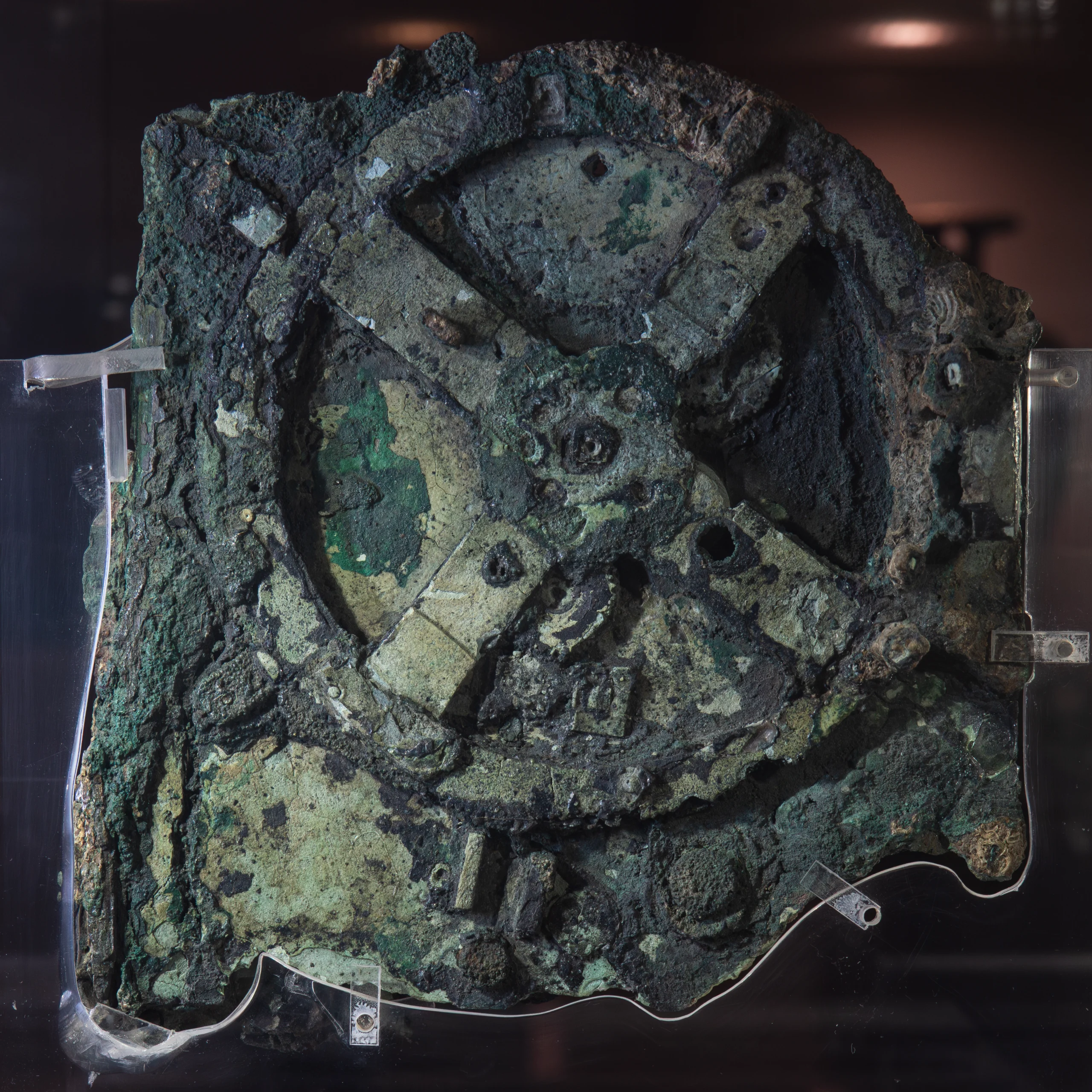 EXHIBIT P1
 EXHIBIT P2
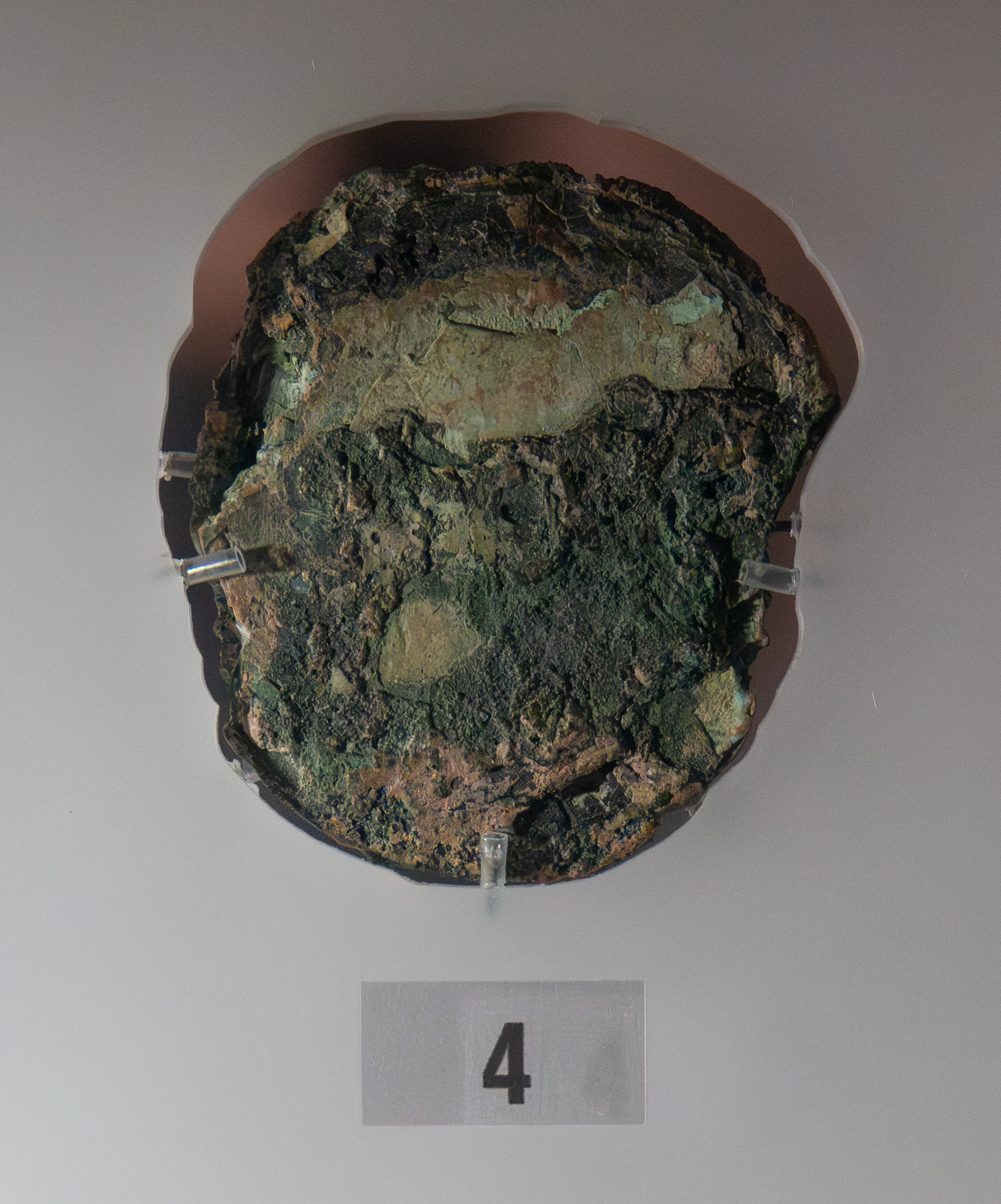 EXHIBIT P3
 EXHIBIT P4
Exhibit A
Nature, 30 November 2006. Freeth, Bitsakis, Moussas, Seiradakis, Tselikas, Edmunds and colleagues, “Decoding the ancient Greek astronomical calculator known as the Antikythera Mechanism.” Source for the 82 fragments, the 30 surviving gears, the 1.6 millimetre tooth pitch, the 223-month Saros dial, the pin-and-slot k1 and k2 pair reproducing the Moon’s varying speed, and the dating to roughly 150 to 100 BC.
Exhibit B
Nature, 31 July 2008. Freeth, Jones, Steele and Bitsakis, on the back dials. Source for the Olympiad dial, its backward-turning pointer, and the identification of the Metonic month names as Corinthian.
Exhibit C
Scientific Reports, 12 March 2021. Freeth, Higgon, Dacanalis, MacDonald, Georgakopoulou and Wojcik, “A Model of the Cosmos in the ancient Greek Antikythera Mechanism.” Source for the 462-year Venus and 442-year Saturn periods read from the inscriptions, the 63-tooth gear in Fragment D, and the reconstruction of the lost front display.
Exhibit D
University of Glasgow, June 2024. Woan and Bayley applied gravitational-wave statistics to the broken calendar ring and concluded it carried 354 or 355 holes rather than 365, with a radius of 77.1 millimetres and an average deviation from a true circle of 0.028 millimetres.
Exhibit E
Cicero, De re publica, written between 54 and 51 BC. The only surviving contemporary witness to machines of this kind: two attributed to Archimedes and taken from Syracuse after 212 BC, and a third made by Posidonius on Rhodes.
Exhibit F
Reports of the Return to Antikythera project and the Greek Ephorate of Underwater Antiquities, 2014 onward. Source for the human skeleton found on 31 August 2016 and nicknamed Pamphilos, the bronze arm recovered in 2017, and the human teeth and marble head found in 2022 after three 8.5-tonne boulders were lifted.
Related files
- Yonaguni Monument: Is Japan’s Underwater Pyramid Man-Made?
- World’s Oldest Shipwreck? The Kekova Jars Were Logged as Ottoman Until a Book Moved Them 4,500 Years
Editor’s note
The part of this case I cannot get past is 1902.
A man is holding a bronze gear with teeth a millimetre and a half apart, pulled out of a Greek shipwreck, with Greek letters next to it. He says out loud that it looks like an astronomical clock. And the response of the people around him is that it cannot be, because things like that did not exist yet, so it must have fallen in later.
That is not stupidity. It is the correct application of everything they knew. The object was genuinely without parallel, and extraordinary claims genuinely do need extraordinary evidence. They were being careful, and being careful cost fifty years.
What stays with me is that nothing was hidden. The gear sat in a museum the whole time, visible to anyone who wanted to look. The thing that kept it invisible was not secrecy. It was a sentence everybody agreed on.
I would like to think we are better at this now. I am not sure we are. The 2025 story that the mechanism “could not have worked” went around the world in a day, and the correction, that the measurements were taken on two thousand years of corrosion rather than on the original metal, did not travel nearly as far.
What are we currently looking straight at and explaining away?