Stonehenge’s 6-Tonne Altar Stone Was Traced to Scotland. Now No Outcrop Matches It

Narrated Mystery: press play and hear the whole case read aloud, like a true crime podcast episode, or an audiobook for a long drive (about 9 minutes). The narrator is an AI voice.
What the record shows
- What: The six-tonne Altar Stone, thought for about a century to be Welsh
- When: In 2024, mineral grains traced it some 700 km to north-east Scotland
- Status: A November 2026 study found no place that matches it
Still uncertain
- The exact outcrop the stone came from.
- How it was moved, by sea, by land, partly by ice, or some mix.
- Whether it once stood upright before the sarsens fell on it.
Before sunrise, after the rain
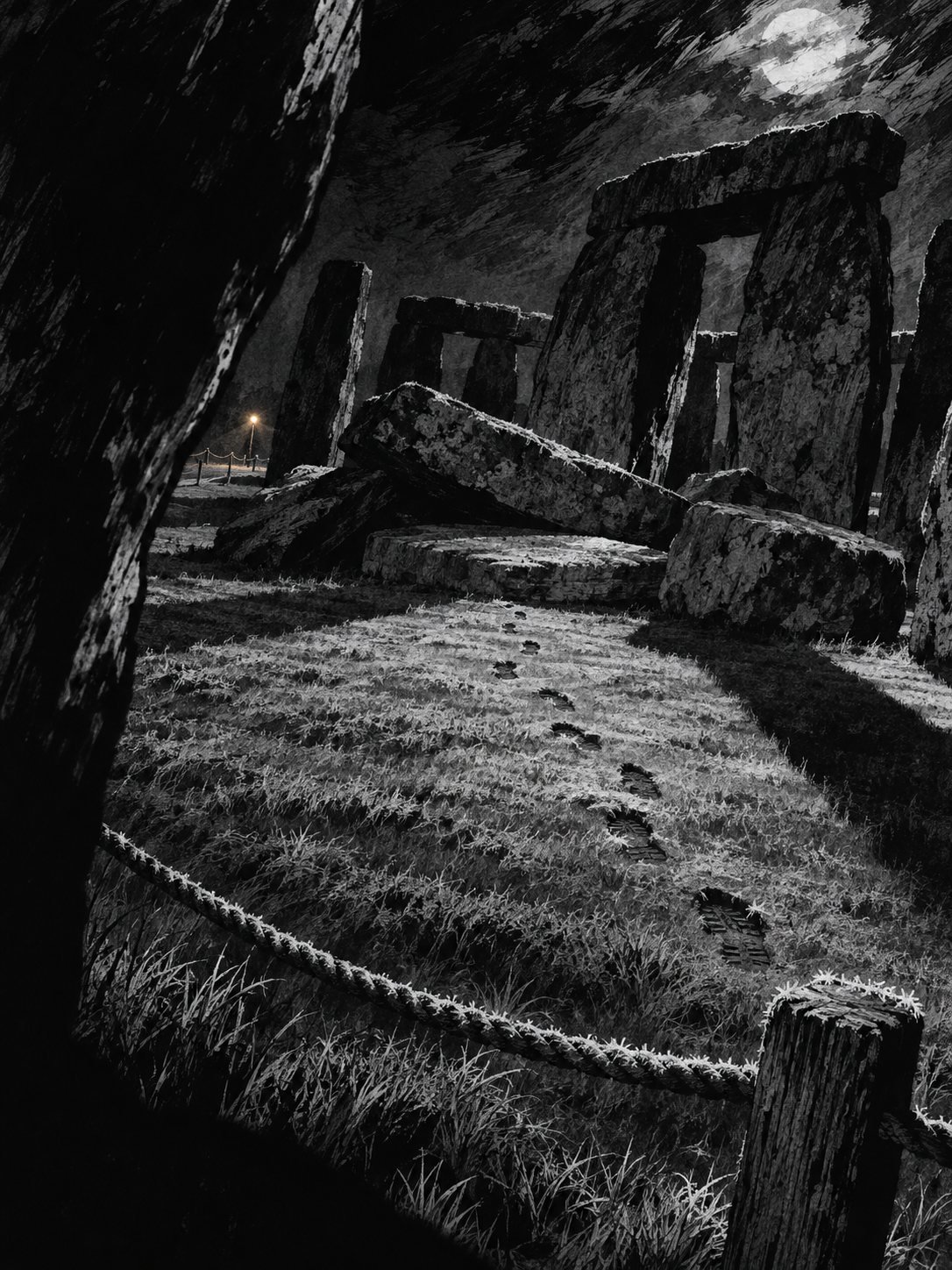
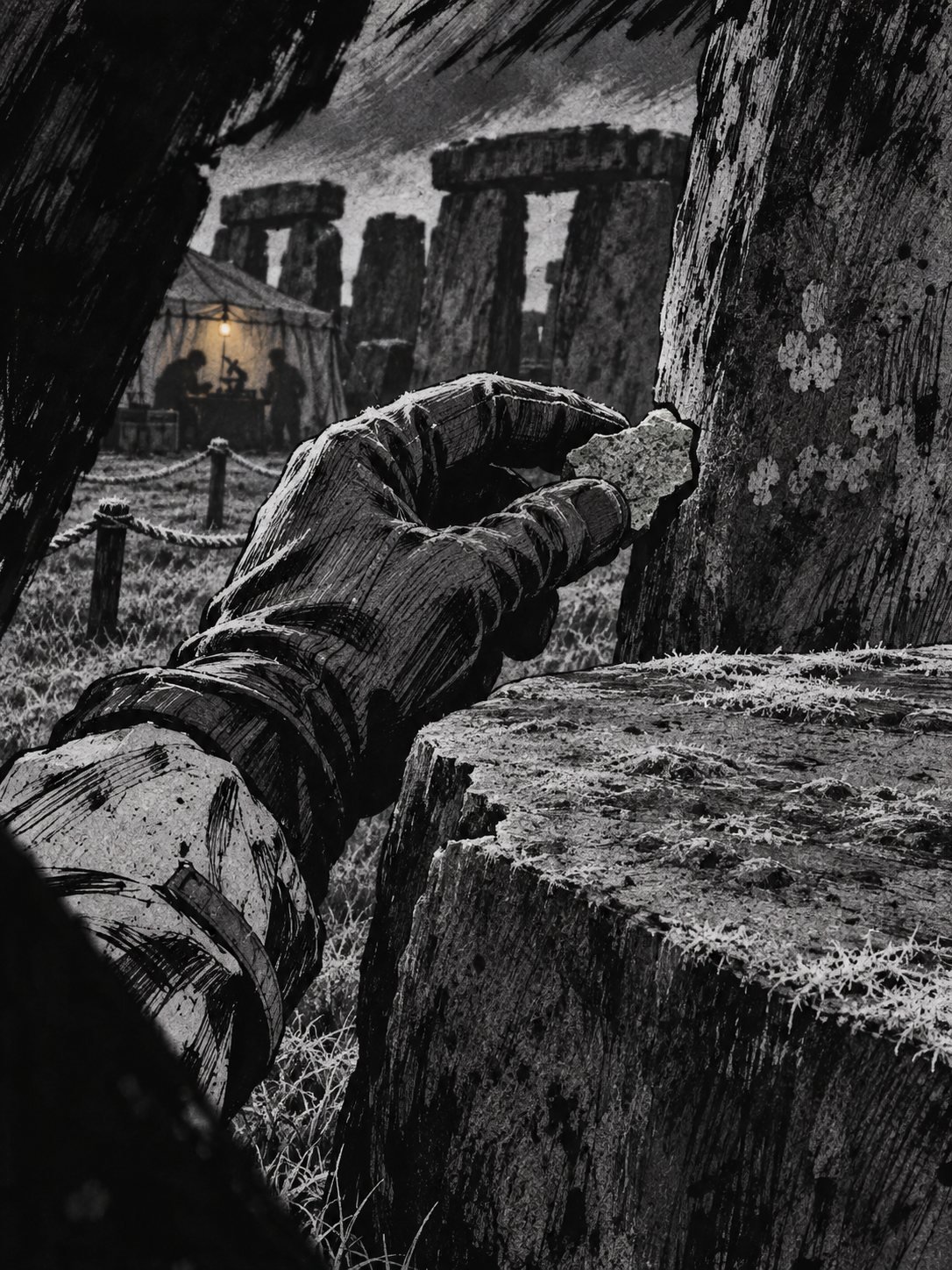
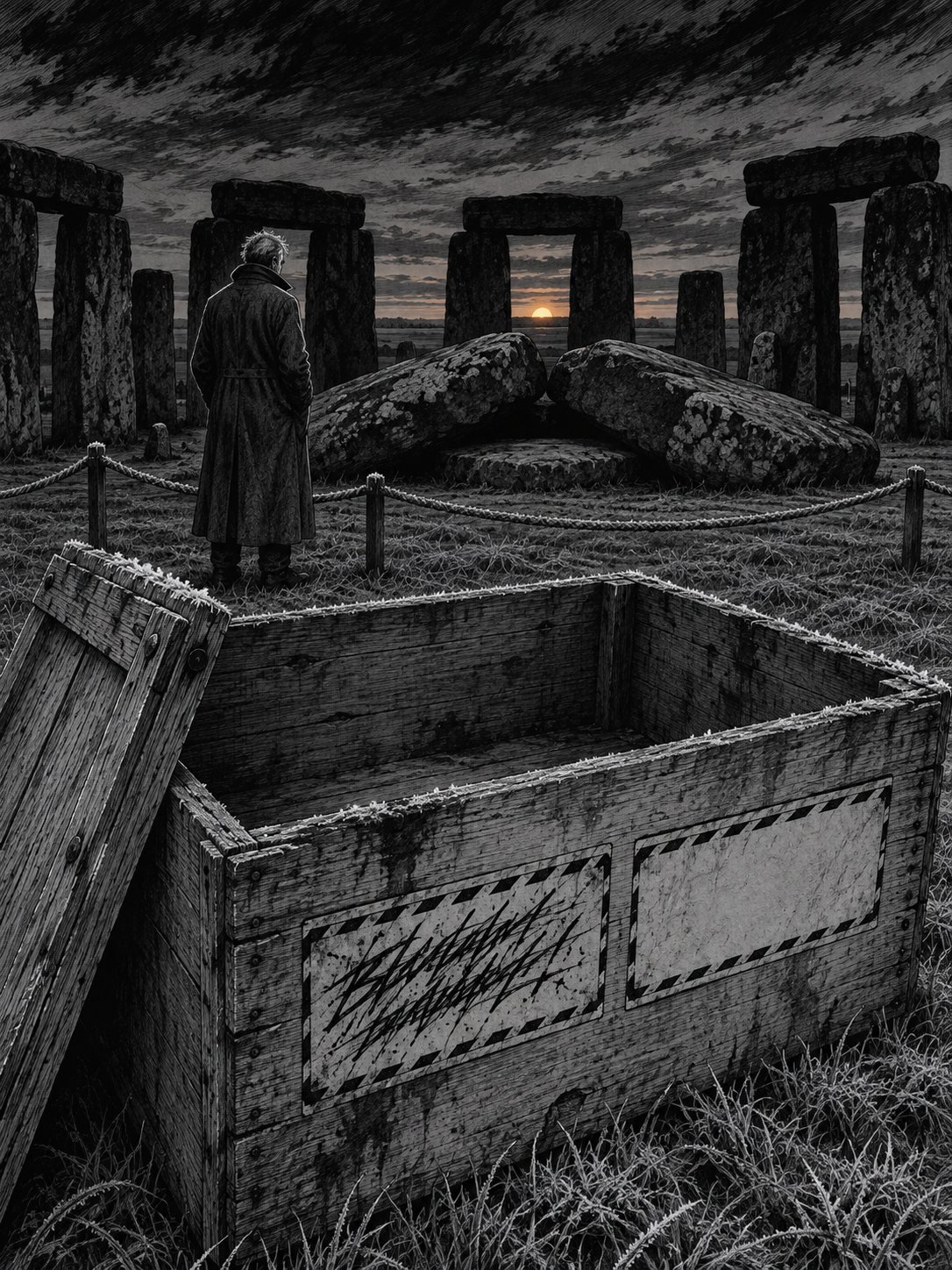
On the morning of 6 July 2021, between 5 and 9 a.m., a small team of geologists stood inside the stone circle at Stonehenge. It had rained heavily. They were there for one stone, and they were not allowed to take a single chip of it. (AO)
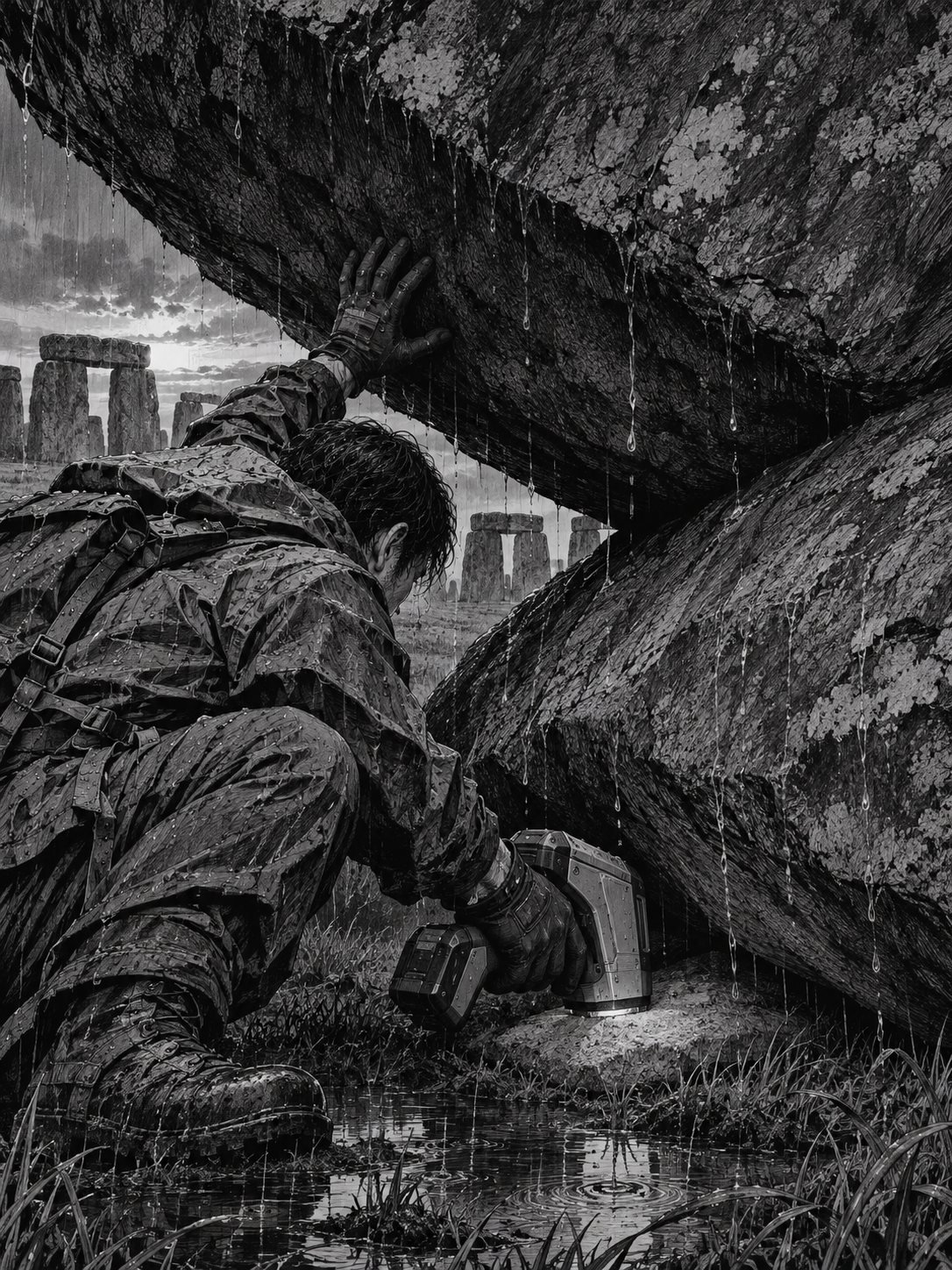
They pointed a handheld X-ray instrument at the few bare patches of rock they could reach. A year later, on 19 July 2022, they came back at the same early hour, this time after three weeks of hot, dry weather, and did it again. (AO)
The stone they were measuring has been at Stonehenge for about 4,600 years. Nobody knows exactly where it came from. (EOS) (SCI)
The stone under the stones
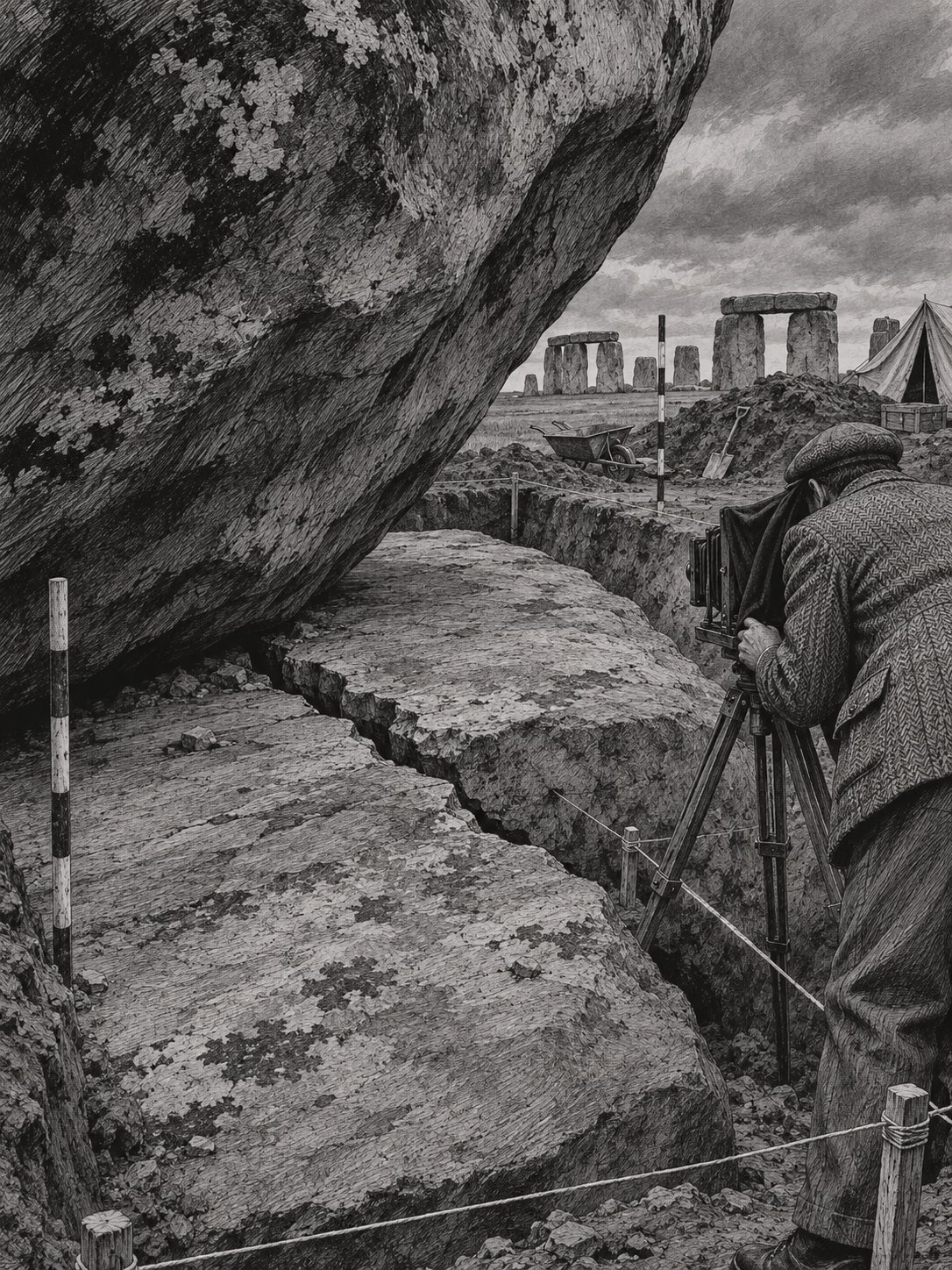
It is called the Altar Stone, also known as Stone 80. It is a slab of grey-green sandstone about 4.9 metres long, 1 metre wide and half a metre thick, and it weighs roughly six tonnes. (AO) (SA)

It lies flat at the centre of the monument, sunk flush into the ground, on the line the monument shares with the midsummer and midwinter sun. (SA)
Two huge fallen sarsens lie across it. Photographs from Richard Atkinson’s 1958 excavation show the Altar Stone broken in half, most likely when sarsen Stone 55b fell onto it. (CA) (SA)
So almost all of it is hidden. Only three small patches show. (SCI)
Why did scientists think the Altar Stone came from Wales?
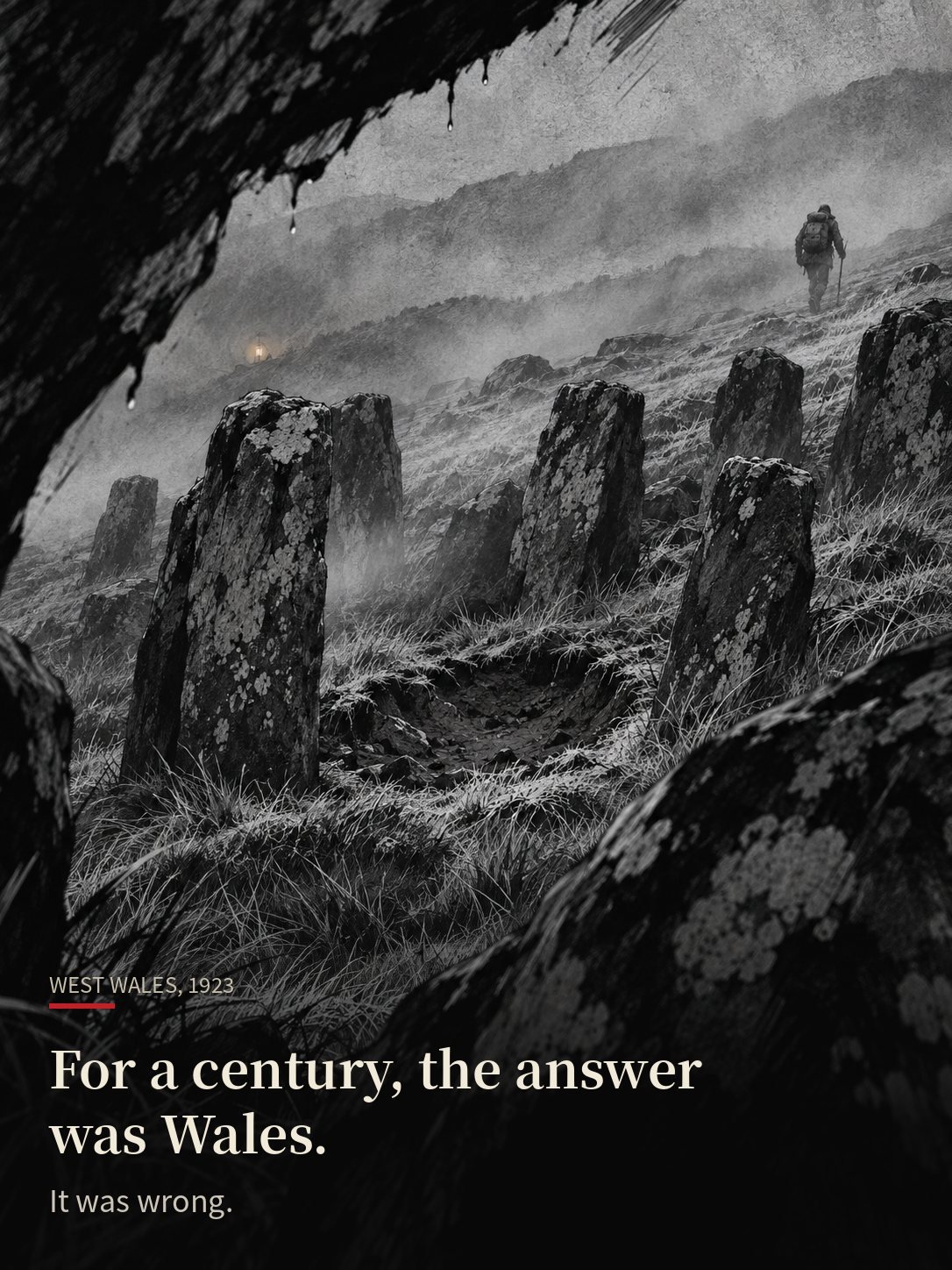
For most of the 20th century, the answer seemed settled. In 1923 the geologist Herbert Thomas proposed that the Altar Stone came from Old Red Sandstone in west Wales, near Milford Haven or in the Senni Beds. (CA) (AO)
It made sense. The smaller bluestones of the inner ring had been traced to the Preseli hills of west Wales. The Altar Stone was counted among them. (CA) (SA)
That idea went unchallenged for close to a hundred years. Then, in 2020, Richard Bevins and colleagues showed the stone could not have come from west Wales. Later work ruled out the wider Anglo-Welsh Basin as well. (AO) (CA)
In 2023 Bevins and his team proposed that the Altar Stone should no longer be called a bluestone at all. (AO)
Grains from an ancient continent
The breakthrough came from grains smaller than sand. (NAT) (EOS)
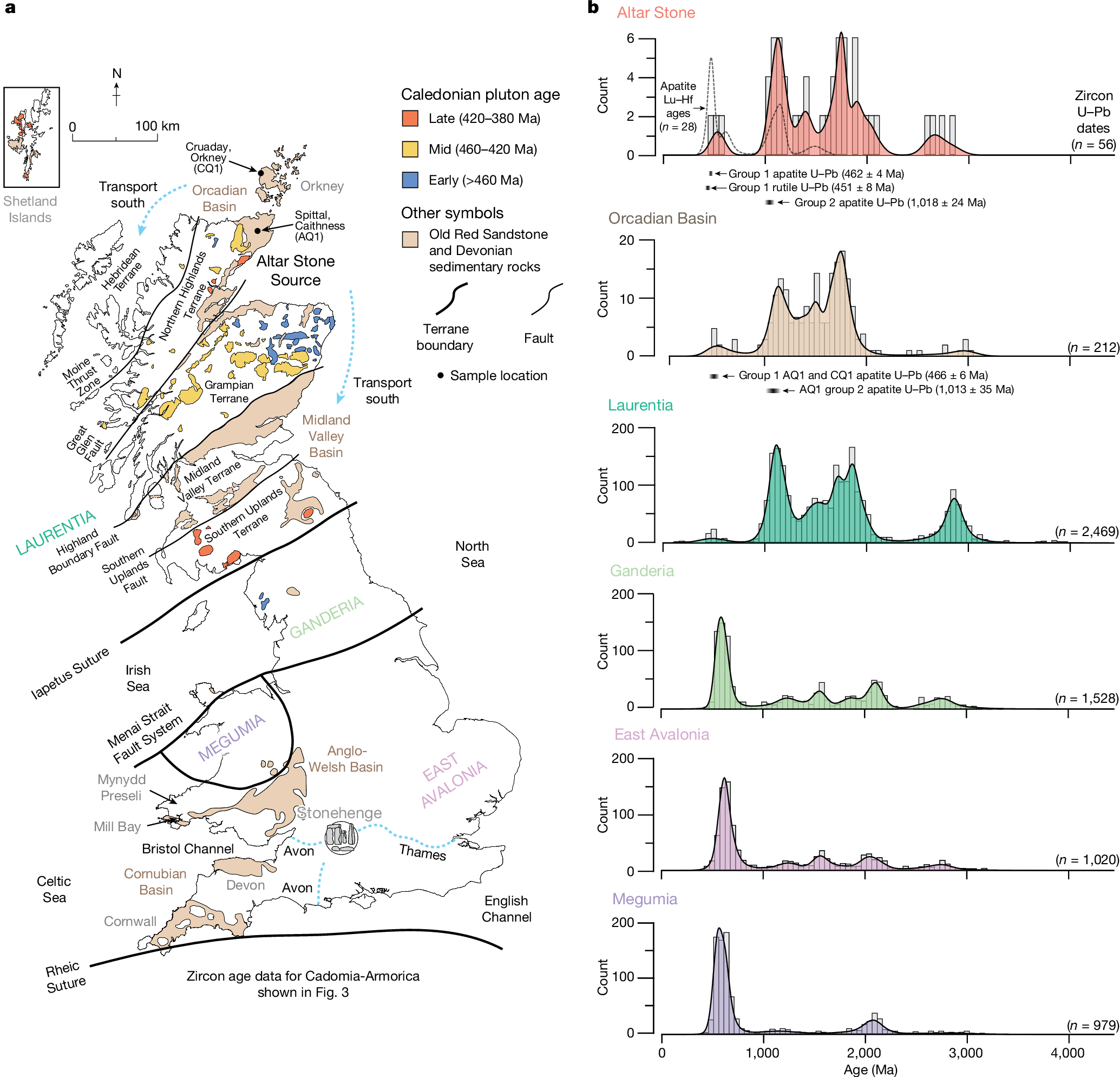
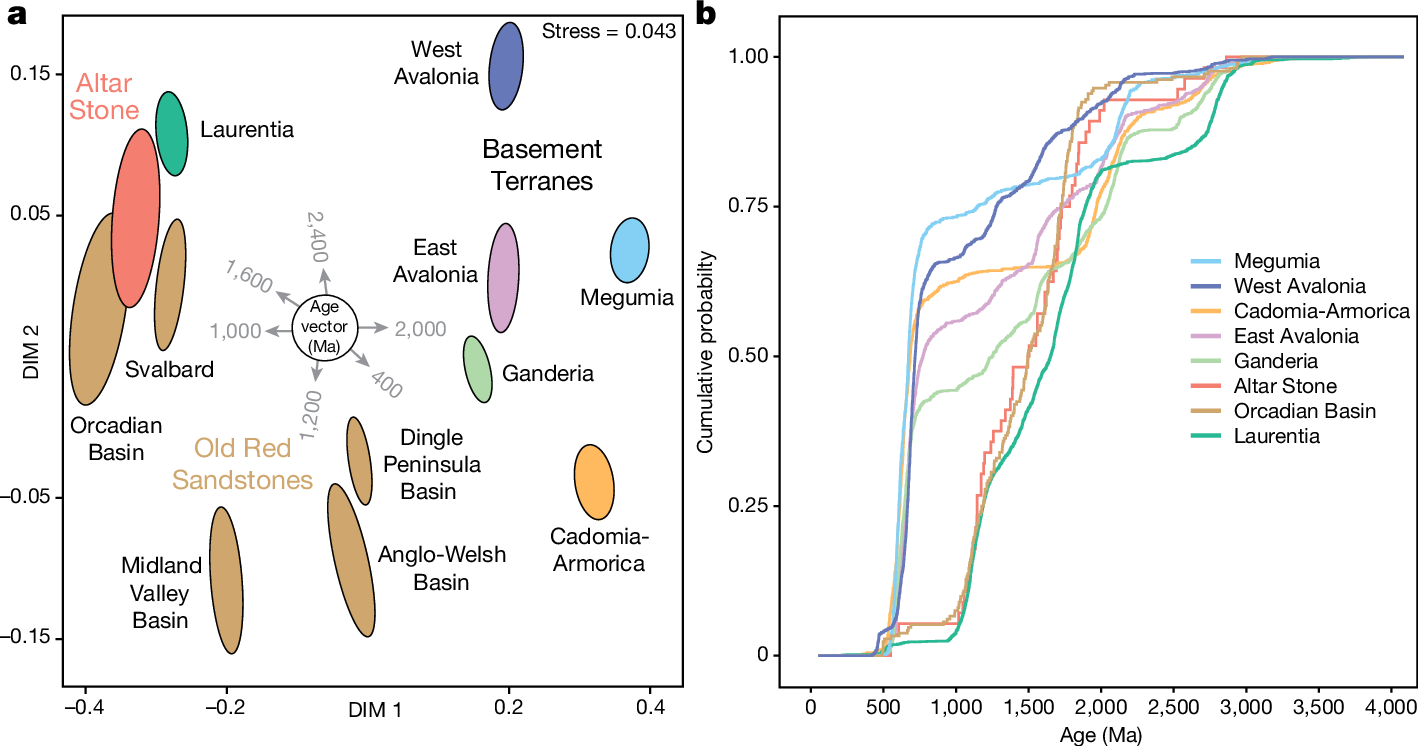
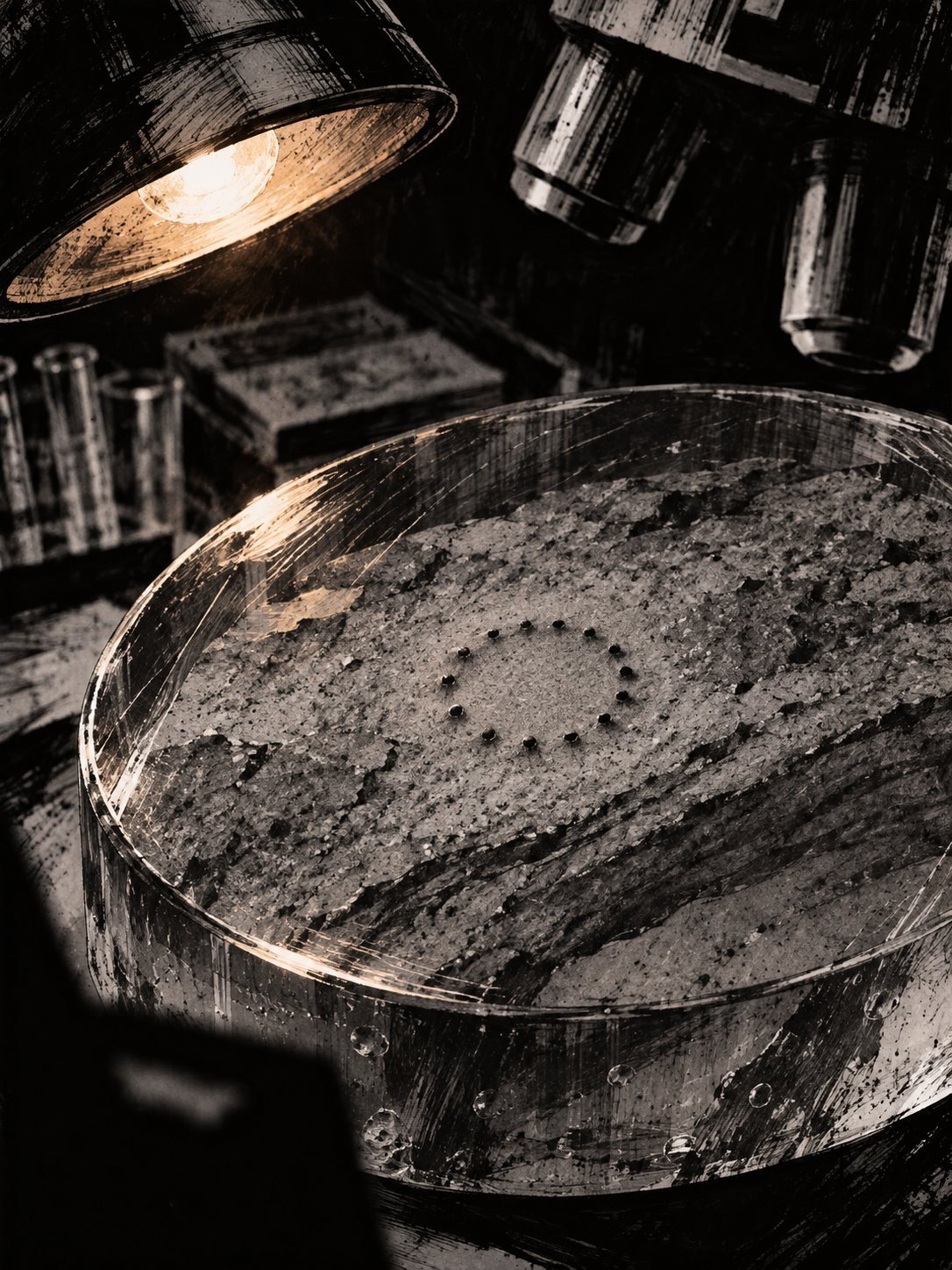
A team led by Anthony Clarke, then a PhD student at Curtin University in Australia, dated tiny crystals of zircon, apatite and rutile from two fragments of the stone. One was a scrap left over from an excavation. The other was a small block taken from the stone’s underside in the 19th century. (EOS) (CA) (SA)
Some of the grains were 1 to 2 billion years old. Others were about 450 million years old. (EOS)
That pattern of ages matched the Old Red Sandstone of the Orcadian Basin in north-east Scotland. The study appeared in Nature in August 2024. (NAT) (SA)
“These findings are truly remarkable,” said Bevins, a co-author. They “overturn what had been thought for the past century.” (SA)
The distance was the shock. The Orcadian Basin is roughly 700 to 750 km from Salisbury Plain. The Welsh bluestones had travelled about 230 km. (EOS) (SD) (SA)
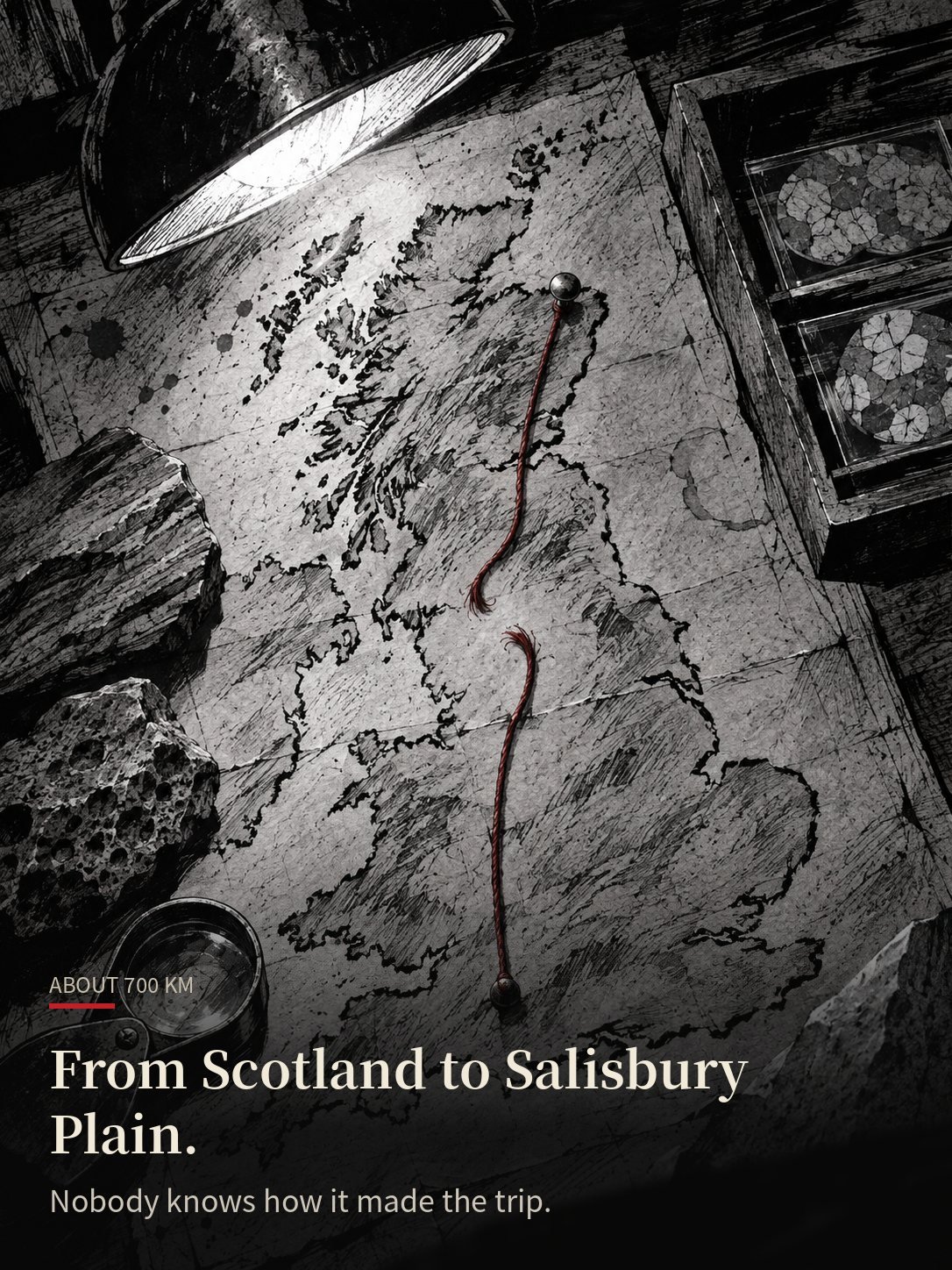
“Seven hundred and fifty is ridiculous,” the archaeologist Susan Greaney told Eos. She was not part of the study. (EOS)
Not Orkney
Orkney looked like the obvious place to look next. It sits in the Orcadian Basin and is packed with Neolithic monuments. (ABER)
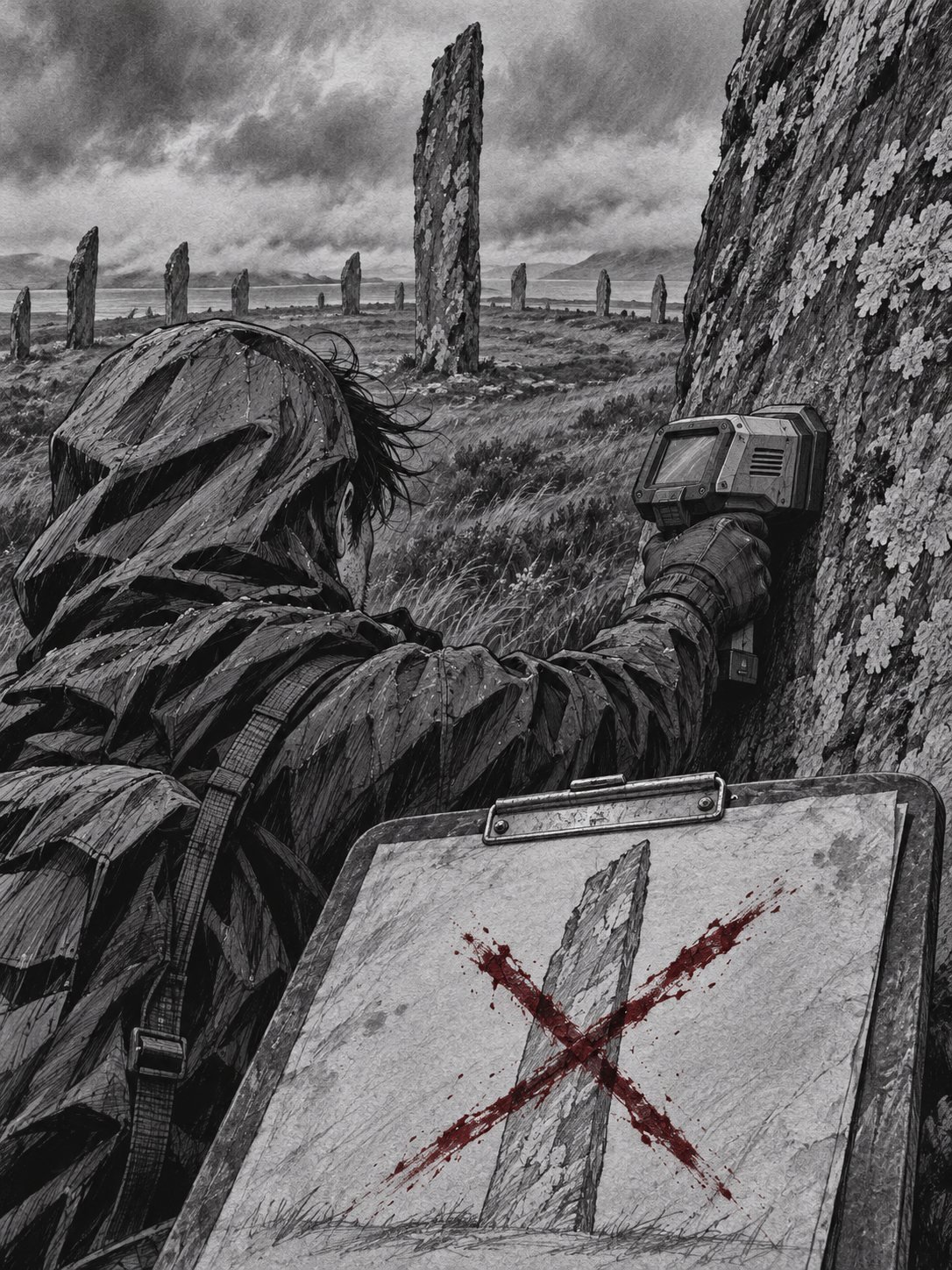
Researchers from Aberystwyth University checked five exposed stones at the Stones of Stenness and seven at the Ring of Brodgar, all similar in size and rock type to the Altar Stone. None matched. Orkney was ruled out in 2024. (ABER)
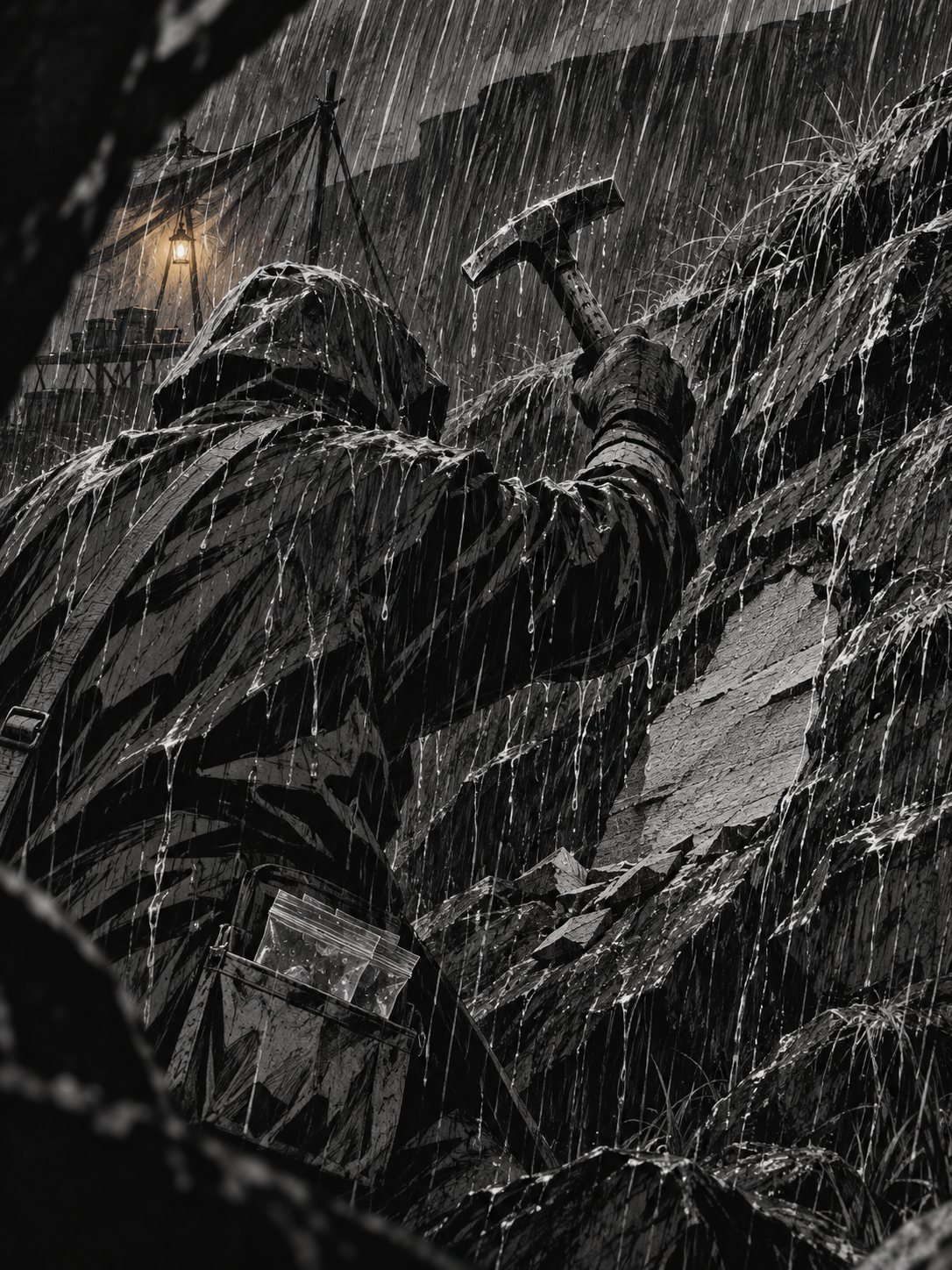
The search moved to the Scottish mainland. A later study by Clarke’s team named Caithness, at the far north-east tip of Scotland, as the closest match on zircon ages. (AO)
How do you move six tonnes 700 km?
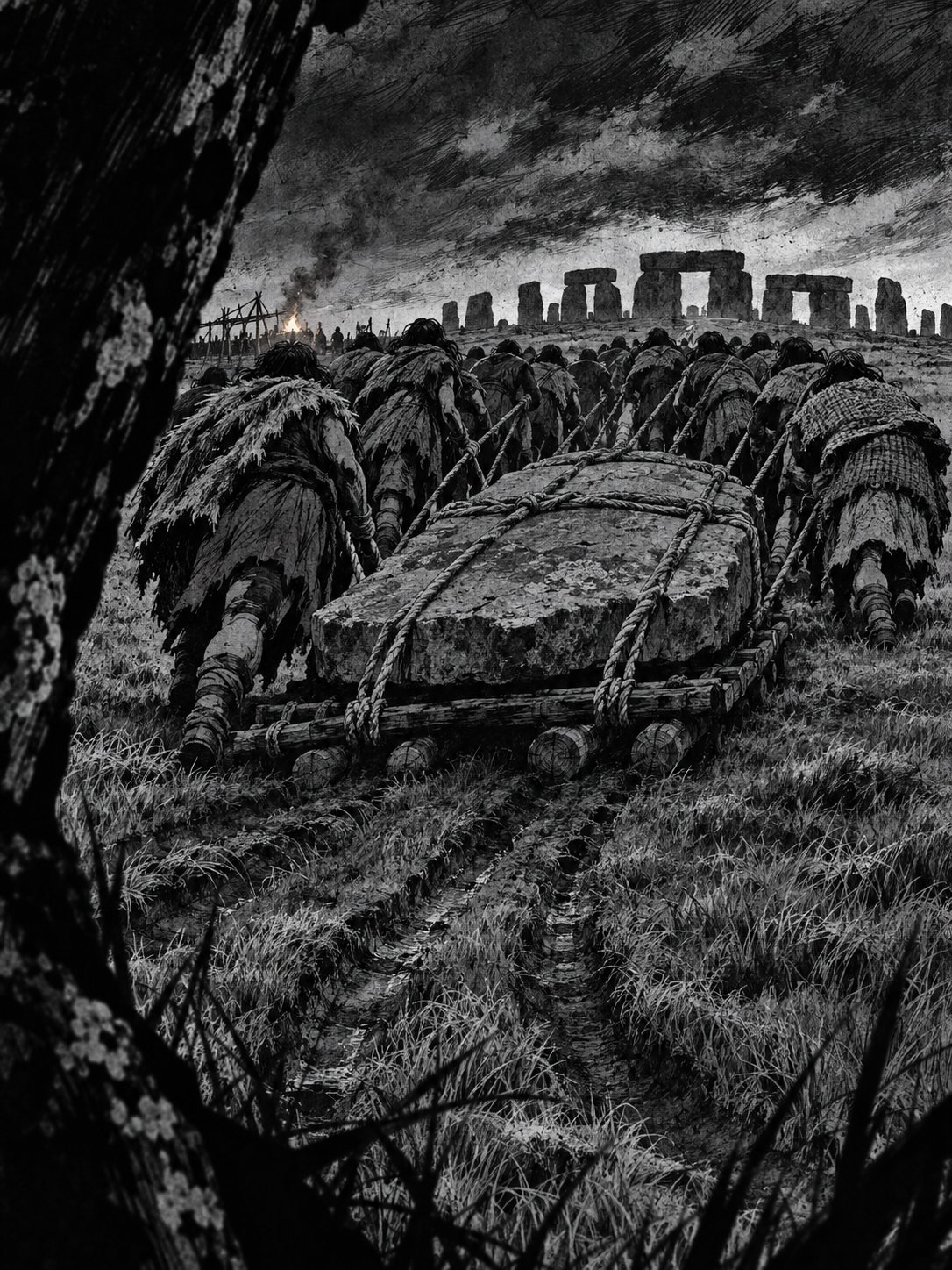
Nobody knows how the stone reached Salisbury Plain, around 2600 BC. (EOS)
Clarke and Kirkland suggested it most likely went by sea, because the overland route crosses hilly, boggy and forested country. (EOS)
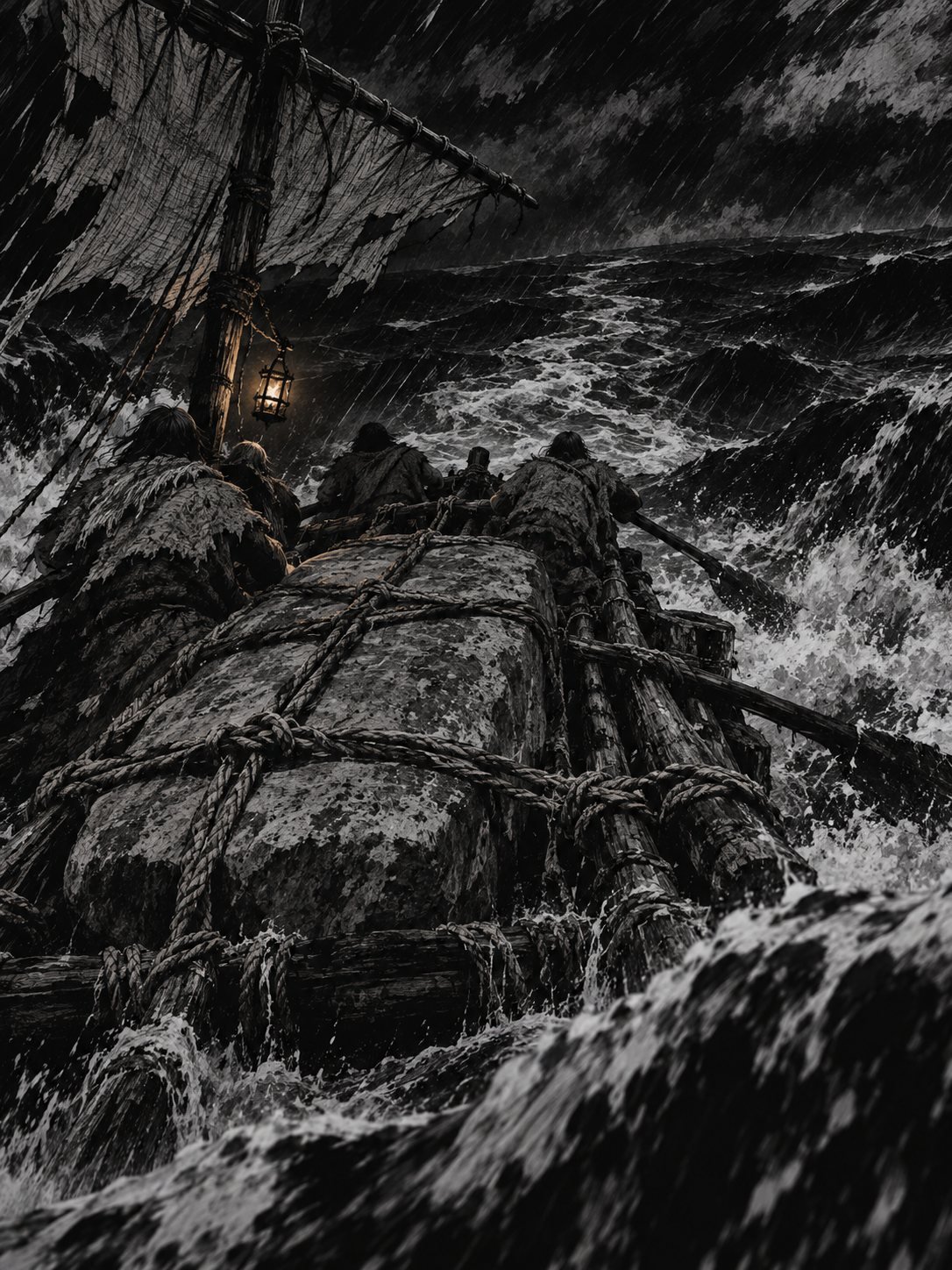
In September 2026 the same research group offered another idea in the Journal of Quaternary Science. Ice-age glaciers may have carried the stone from Scotland as far as Dogger Bank, now under the North Sea. People could then have moved it the rest of the way. (SD)
They found no glacier route that ran all the way to Stonehenge. Glaciers alone cannot explain how the stone got there. People still had to haul it a very long way. (SD) (AO)
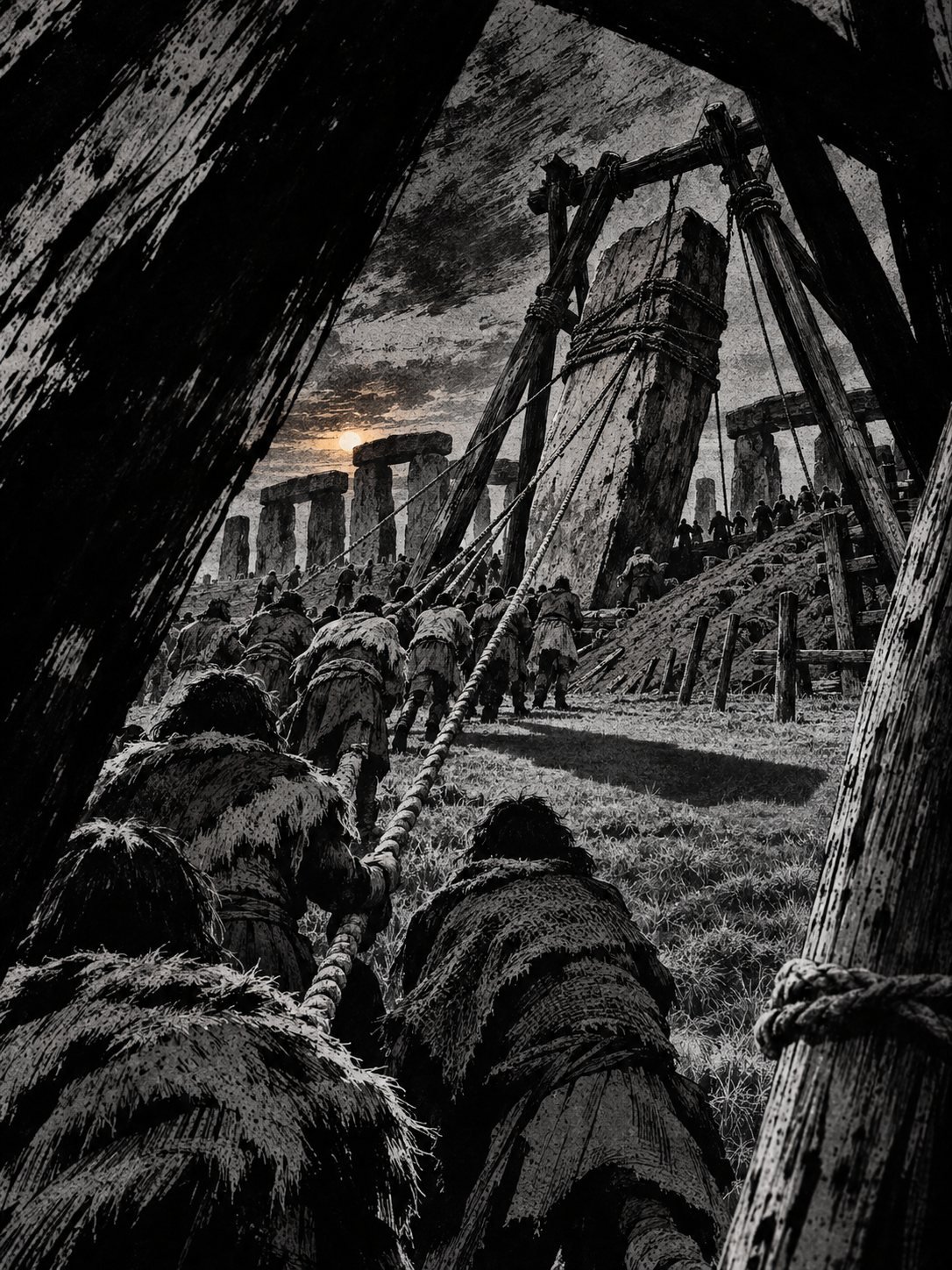
The authors suggested it might have crossed Doggerland, a lost landscape now under the sea, and followed the Berkshire Ridgeway. They present those routes as possibilities, not findings. (SD)
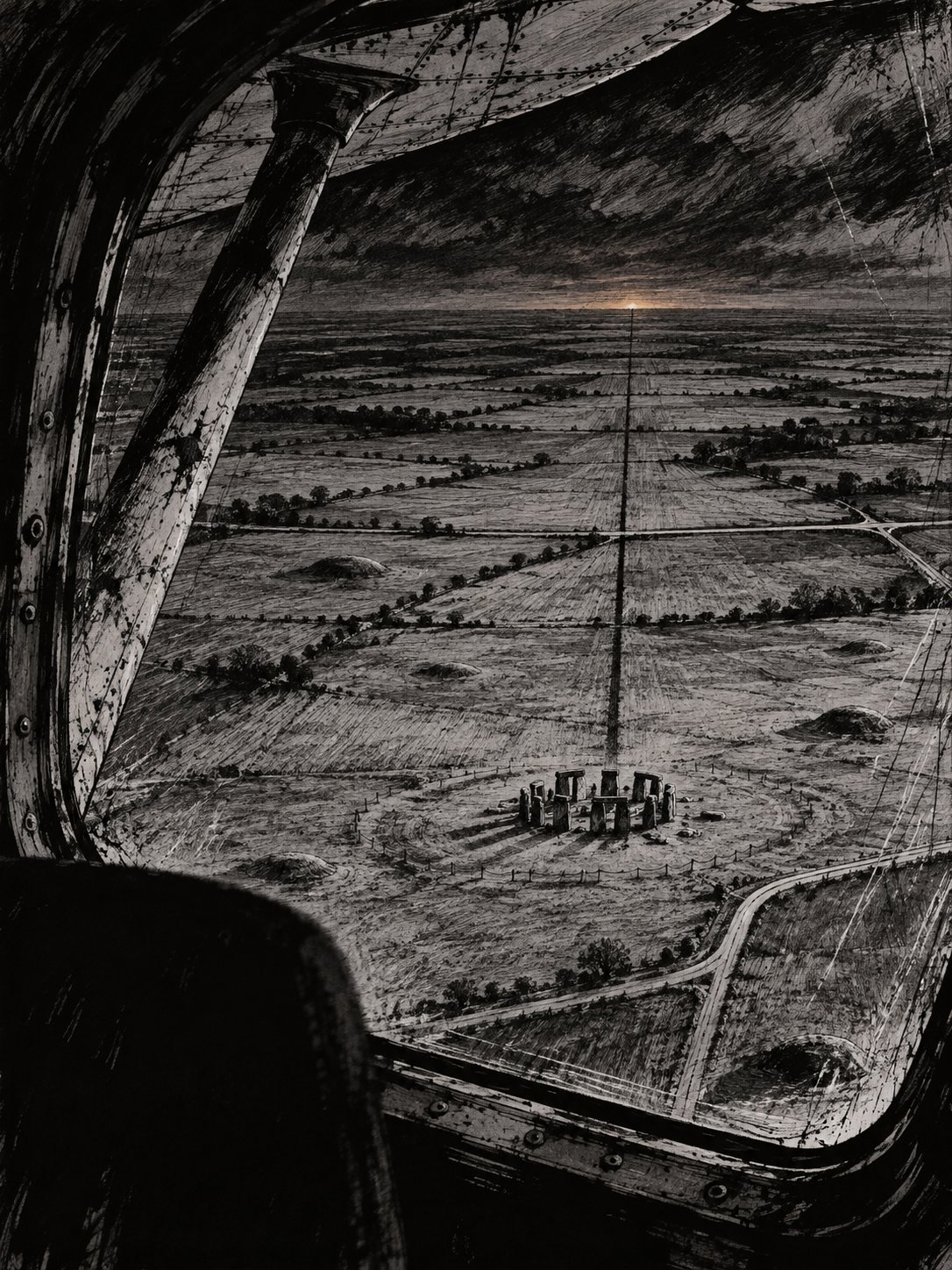
Why doesn’t the Scottish match hold?
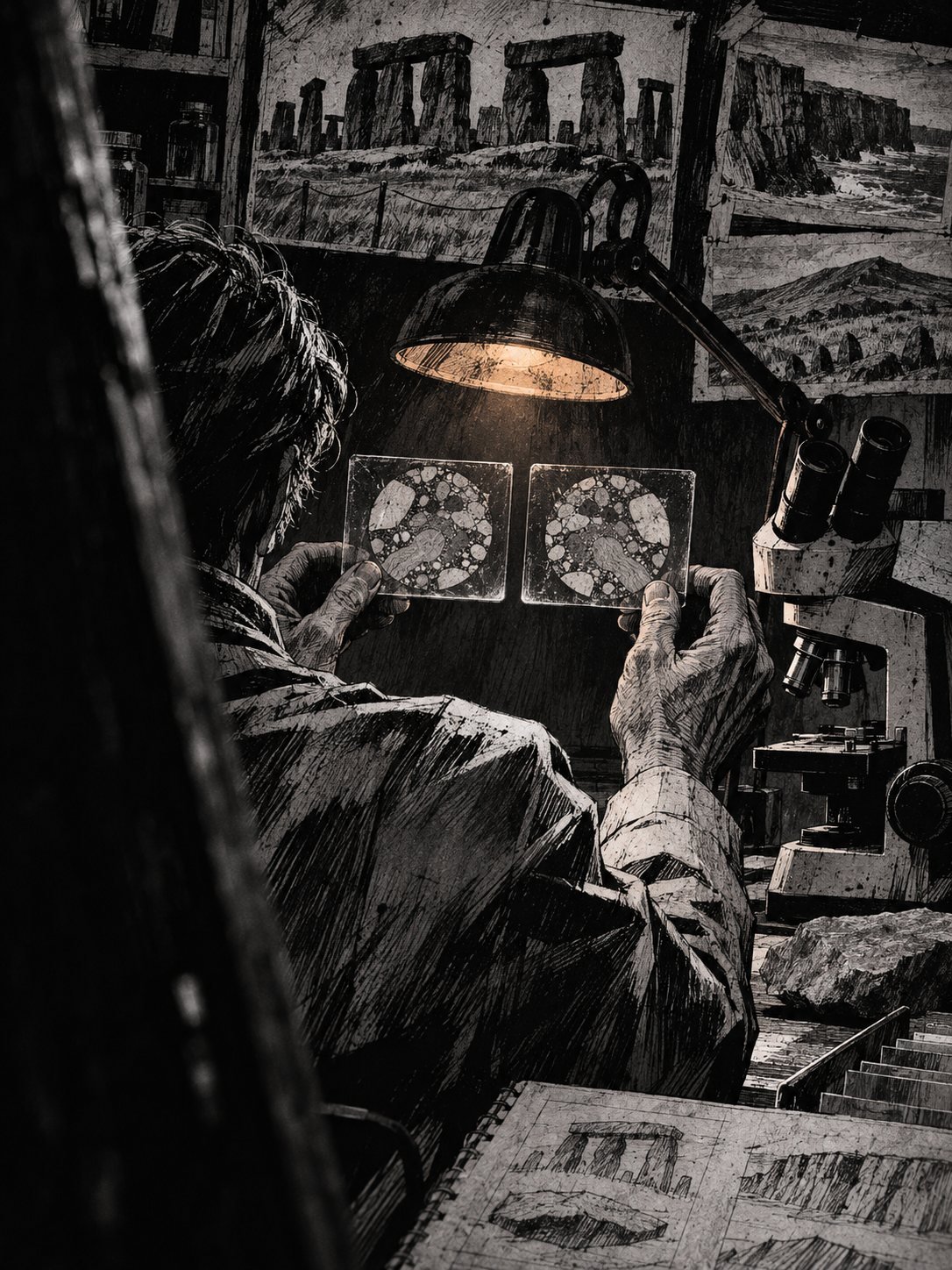
Then came the study that turned the story around. (SCI) (AO)
Led by Duncan Pirrie of the University of South Wales, with Bevins and Nick Pearce of Aberystwyth, it was reported on 5 November 2026 in the Journal of the Geological Society. (SCI) (AO)
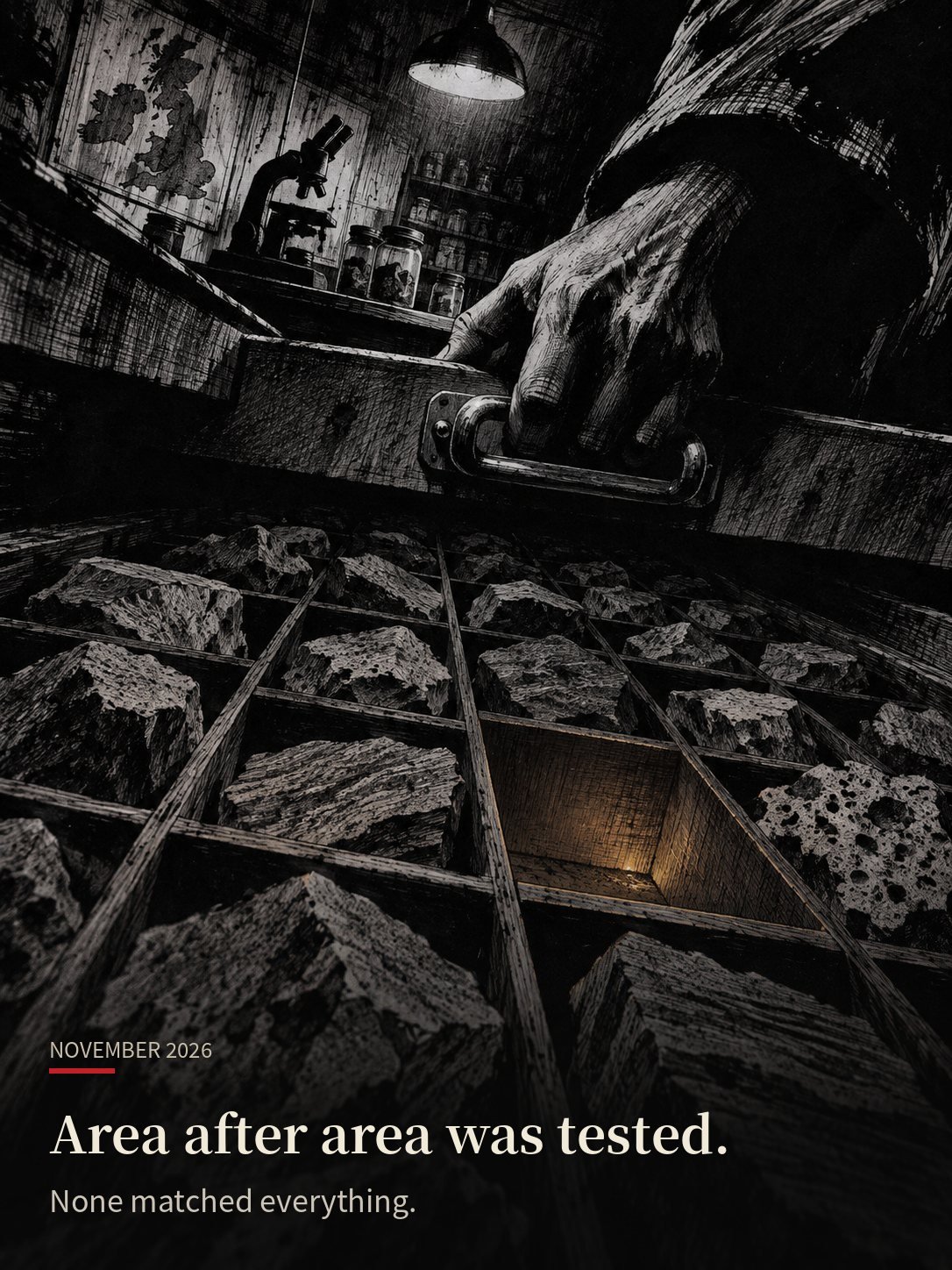
The team found eight museum fragments that they could link to the Altar Stone with confidence. One came from the stone’s base in an 1844 excavation. Others came from an 1884 collection, William Hawley’s 1920 dig and a 2008 excavation. They added the X-ray readings taken on those early mornings at Stonehenge. (AO)
Then they built the most detailed profile of the stone ever made. (AO)
The stone is held together by a fine cement of baryte, a barium mineral, giving unusually high barium readings, an average of 2,758 parts per million. It contains chrome spinel, a mineral that is scarce in the Old Red Sandstone across much of the Orcadian Basin. And it contains a rare clay mineral, tosudite. (SCI) (AO)
The clay was the problem. In the Altar Stone, about 20% of the clay layers can still expand, a sign the rock was never buried deep or heated much. In Caithness and Orkney rocks, the figure is below 10%. (SCI) (AO)
So the zircon grains pointed to Caithness, and the clay ruled Caithness out. (AO)
The paper warns that “utilizing one characteristic alone may lead to an incorrect interpretation.” (AO)
None of the places they examined matched the stone’s full set of characteristics. (SCI)
Still no address
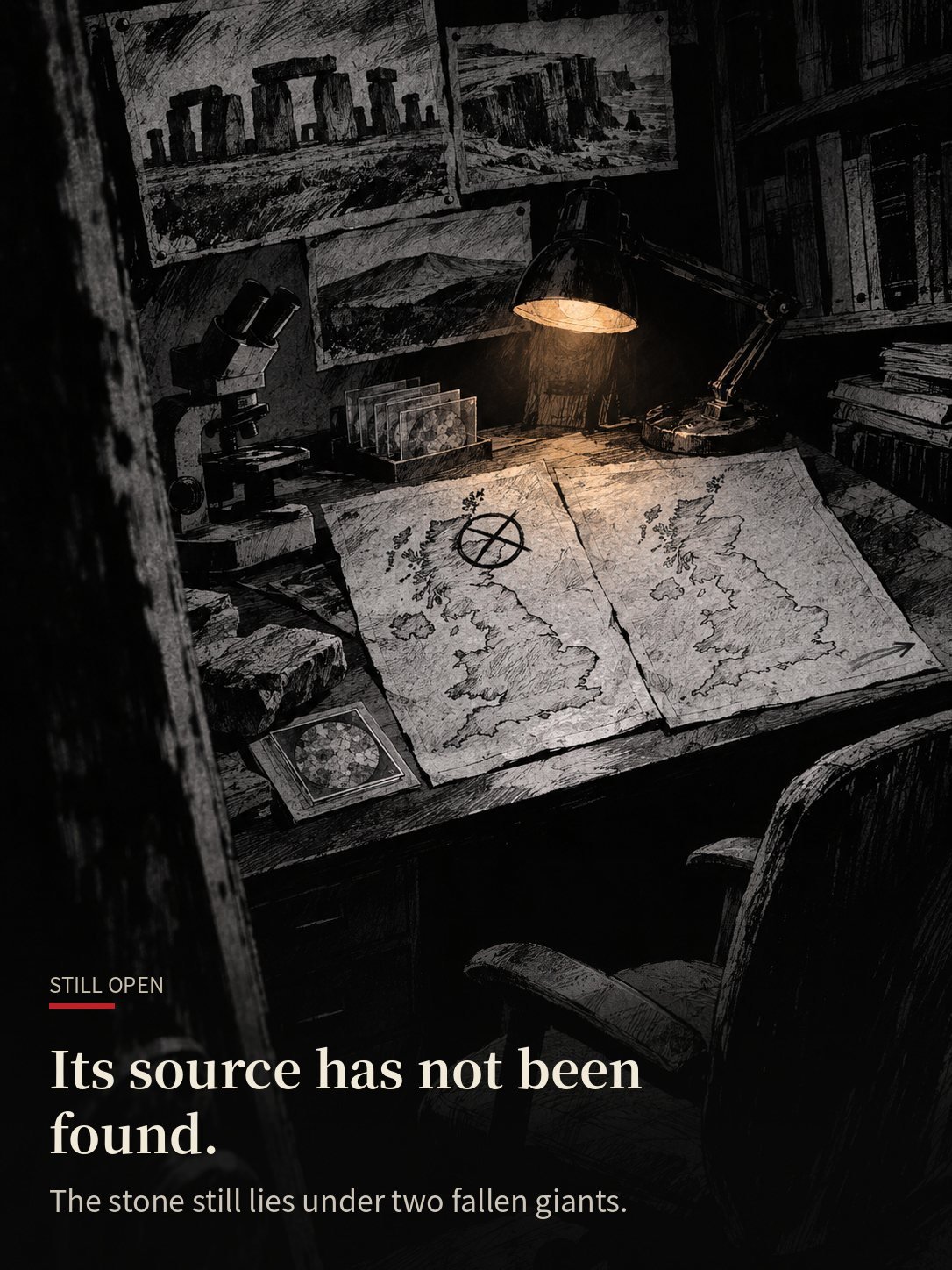
The new study does not say the stone is Welsh again. It does not throw out the Scottish link either. The ancient grain ages still point to a source from the old continent of Laurentia, and an Old Red Sandstone origin is still judged more likely than a younger one. (SCI) (AO)
What it says is that the exact place has not been found. In the paper’s words, the provenance “has yet to be determined with confidence.” (AO)
Old Red Sandstone areas from Scotland’s Midland Valley down to the Welsh borderland stay on the list, because modern mineral data there are thin. (AO)
“Ruling out potential source areas is just as important as identifying new ones,” Pearce said. (AO)
Somewhere in Britain there may be a cliff or hillside with a six-tonne gap where this stone was cut. For now, the stone still lies at the centre of Stonehenge, under two fallen sarsens, and nobody can say where that place is. (SCI)
Related cases: Sutton Hoo’s sand body and Gunung Padang, the retracted “oldest pyramid”.
Evidence box: documented vs. claimed
| Point | Status | Source |
|---|---|---|
| The Altar Stone is about 4.9 m long and about 6 tonnes | Documented | (AO) (SA) |
| It is not from west Wales | Documented (2020 and later studies) | (AO) (CA) |
| Its zircon, apatite and rutile ages match the Orcadian Basin | Documented (Nature, 2024) | (NAT) (EOS) |
| It is not from Mainland Orkney | Documented (2024) | (ABER) |
| Its clay rules out Caithness and Orkney | Documented (2026) | (SCI) (AO) |
| It travelled by sea | Hypothesis | (EOS) |
| Glaciers carried it partway, to Dogger Bank | Hypothesis | (SD) |
| Its exact source outcrop | Unknown | (SCI) (AO) |
Timeline
- About 2600 BC: The Altar Stone is likely brought to Salisbury Plain. (EOS)
- 1844: A fragment is taken from the stone’s base during an excavation. (AO)
- 1923: Herbert Thomas proposes a source in west Wales. (CA) (AO)
- 1958: Richard Atkinson’s excavation photographs the stone broken in half. (CA)
- 2020: Bevins and colleagues show it cannot be from west Wales. (AO)
- 2023: Bevins’s team proposes it should no longer be counted as a bluestone. (AO)
- Aug 2024: Clarke and colleagues in Nature match its grains to north-east Scotland. (NAT) (SA)
- Sep 2024: Orkney’s Stenness and Brodgar stones are ruled out. (ABER)
- Sep 2026: A Journal of Quaternary Science study proposes glacier transport to Dogger Bank, then people. (SD)
- 5 Nov 2026: Pirrie and colleagues report that no examined area matches every test. (SCI) (AO)
Evidence locker
Primary records and real photographs only. Each caption says what the item shows and where it comes from.
Access: Direct original (journal).
Supports: The Scottish mineral fingerprint.
Limits: It does not identify a single outcrop.
Access: Direct original (university).
Supports: That Orkney is excluded.
Limits: It does not say where the stone does come from.
Access: Via press.
Supports: The 2026 test results and the open question.
Limits: The full paper sits behind the journal.
Access: Direct original.
Supports: The claim that no matching outcrop has been found.
Limits: It still accepts the Scottish (Laurentian) signal in the mineral grains. It narrows the search but names no new source.
Access: Direct original.
Supports: The glacier and Dogger Bank idea.
Limits: The authors say ice cannot explain the whole trip. Dogger Bank flooded before the stone likely reached Stonehenge, so people still had to move it a long way.
Access: Secondary history (official site summary).
Supports: The 2024 Scottish result and the Orkney exclusion.
Limits: Undated. It does not yet reflect the 2026 papers.
EXHIBIT G · THE STONE ITSELF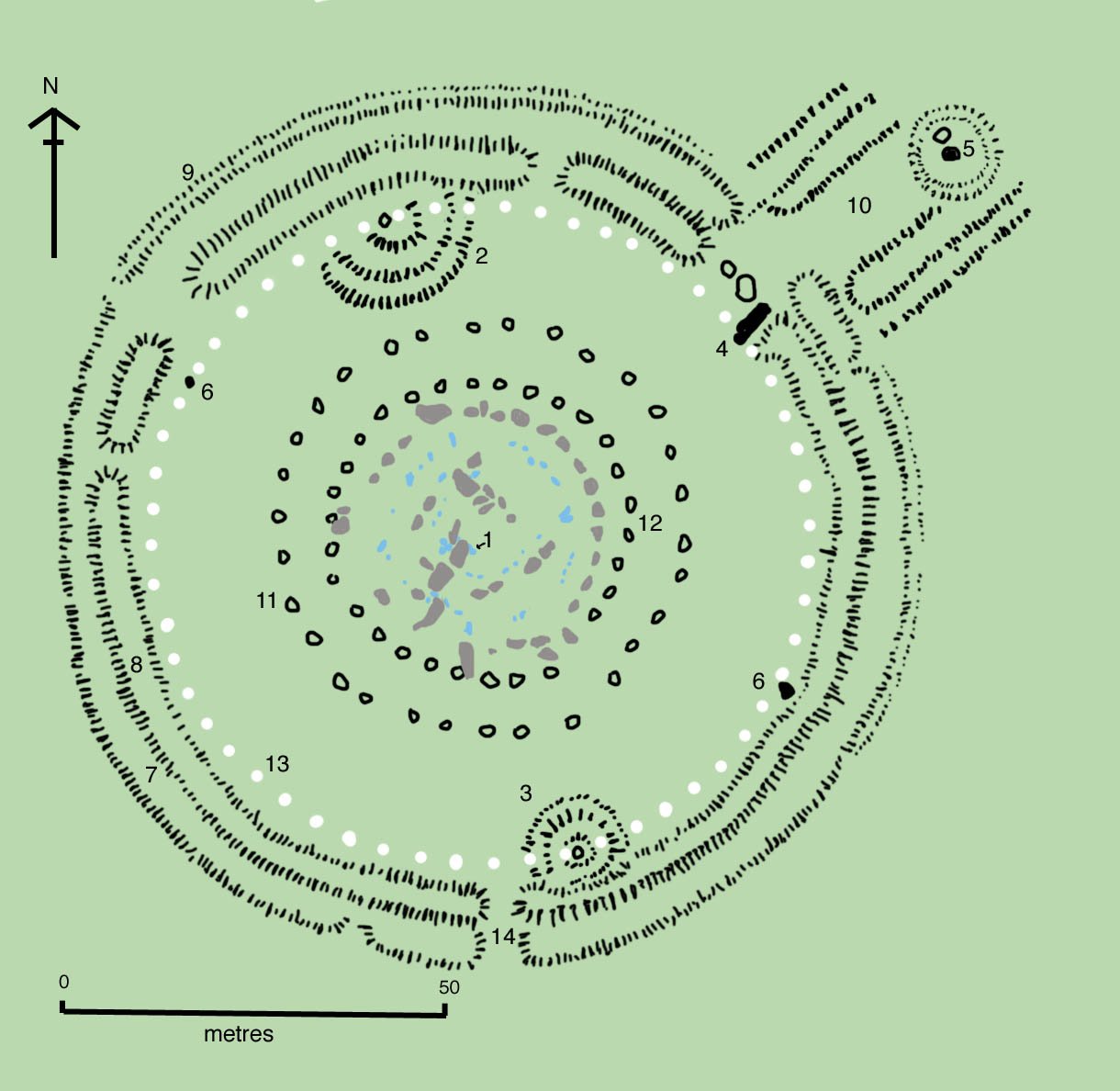 EXHIBIT H · PHOTOGRAPH
The story you may have heard, and what the file says
| The popular version | What the record shows |
|---|---|
debunked “The Altar Stone came from Wales.” | A Welsh source was proposed in 1923 and accepted for about a century. Studies from 2020 onward ruled out west Wales and the wider Anglo-Welsh Basin. |
debunked “It came from Orkney.” | A 2024 study matched its grains to the Orcadian Basin in north-east Scotland, but later work ruled out Orkney itself. |
debunked “Scientists have found the exact place it came from.” | A November 2026 study found no area examined so far that matches all of its features. The exact outcrop is still unknown. |
confirmed “It travelled about 700 km.” | Roughly 700 to 750 km, if it came from north-east Scotland. |
unverified “It was moved by sea.” | Sea, land, partly by ice, or a mix have all been proposed. Nothing settles it. |
Why the record is stranger than the legend. The legend is a mystery solved in 2024. The record is a six-tonne stone that left Wales on paper after a century, landed in Scotland in a headline, and still has no address on any geological map.
Where the records disagree
- The distance. Eos gives about 750 km; ScienceDaily and Sci.News give about 700 km. Both depend on where in north-east Scotland the stone is placed. (EOS) (SD) (SCI)
- How long the Welsh idea lasted. Ancient Origins notes that write-ups variously say “over 90 years,” “almost a century” and “more than a century.” (AO)
- When Orkney was ruled out. Aberystwyth University announced it in September 2024; Current Archaeology lists the study under 2023. (ABER) (CA)
What we still don’t know
- The exact outcrop the stone came from.
- How it was moved, by sea, by land, partly by ice, or some mix.
- Whether it once stood upright before the sarsens fell on it.
Quick answers: Stonehenge Altar Stone
Where does the Stonehenge Altar Stone come from?
A 2024 study matched its mineral grains to the Orcadian Basin in north-east Scotland. A November 2026 study found that no area examined so far matches all of its features, so the exact source is still unknown. (NAT) (SCI)
How heavy is the Altar Stone?
About six tonnes. It is about 4.9 metres long. (AO) (SA)
Is the Altar Stone from Wales?
No. A Welsh source was proposed in 1923, but studies from 2020 onward ruled out west Wales and the wider Anglo-Welsh Basin. (AO) (CA)
How far did the Altar Stone travel?
Roughly 700 to 750 km, if it came from north-east Scotland. (EOS) (SD)
What is a little-known fact about the Stonehenge Altar Stone?
Scientists cannot cut it, so the 2026 study relied on eight old museum fragments, one taken from the stone’s base in 1844, plus handheld X-ray readings taken at Stonehenge between 5 and 9 a.m. (AO)
Editor’s note
What I find most interesting is watching researchers correct an explanation that stood for a century. The newest study does not throw out the Scottish origin; it narrows down where in Scotland the stone could have come from, and admits nobody has found the exact outcrop yet. It made me ask myself how easily I would let go of a story I had known for years if new evidence stopped fitting it.
If I had to bet, I would bet on a journey that was mostly by sea with some stretches overland. Saying it came by boat sounds simple, but every moment of loading and unloading a six-tonne stone would have been dangerous. Moving it took more than technique. Someone had to gather people, feed them and get them to trust each other’s judgement.
The explanation I am drawn to is that the stone was a token of an alliance. If people far to the north sent a stone from their own land and others received it and raised it together, the effort itself may have been the promise. If that is right, I have been imagining the world of that time as a few small villages, far smaller than it really was.
— Strange World Files
Case file summary
For about a century, Stonehenge’s six-tonne Altar Stone was thought to be Welsh. In 2024 tiny mineral grains traced it some 700 km to north-east Scotland. Orkney was ruled out, then Caithness. In November 2026 a new study tested the stone more thoroughly than ever and found no place that matches it. Its source is still unknown.
Illustrations are AI-generated artistic interpretations, not photos. No real person is depicted with a recognizable face. Read how we research and illustrate these files.
Sources
- Clarke, A. J. I. et al., “A Scottish provenance for the Altar Stone of Stonehenge,” Nature 632, 2024
- Eos, “From Sandstone Basin to Stonehenge Altar,” 16 September 2024
- ScienceAlert, “Stonehenge’s Altar Stone May Have Journeyed Nearly 500 Miles,” 15 August 2024
- Aberystwyth University, “Stonehenge origins search heats up as Orkney ruled out,” 5 September 2024
- Current Archaeology 417, “Seeking a Scottish source: Updating the story of Stonehenge’s Altar Stone”
- ScienceDaily, Journal of Quaternary Science study on the Altar Stone’s transport, 23 September 2026
- Sci.News, “Stonehenge’s Altar Stone Still Has No Home, Geologists Say,” November 2026
- Ancient Origins, “Stonehenge Altar Stone source search not over,” 7 November 2026