Agatha Christie Vanished for 11 Days. She Was Found at a Hotel Under Her Husband’s Lover’s Name
What the record shows
- When: 3 to 14 December 1926
- Who: Agatha Christie, 36
- Status: Found alive after eleven days; she never fully explained it
Still uncertain
- Whether she truly lost her memory, or planned the whole thing.
- How she got from Surrey to Harrogate.
- What was in the note Archie said he destroyed.
Narrated Mystery: press play and hear the whole case read aloud, like a true crime podcast episode, or an audiobook for a long drive (about 10 minutes). The narrator is an AI voice.
Listen to the narration above first, then read along. The key words are underlined in the story.
- vanisheddisappeared suddenly and completely
- quarrya large pit where stone or chalk is dug
- bonnetthe cover over a car’s engine (British English)
- inclementcold, wet or stormy (of weather)
- hoaxa trick meant to make people believe something false
- fuguea mental state of losing memory and identity for a time
- amnesialoss of memory
- reprisalan act of revenge against someone
1. Where was her car found?
Halfway down the hill above a chalk quarry at Newlands Corner.
2. How many people set off to search the hills on Sunday 12 December?
More than 2,000, according to local press.
3. Who recognised her at the hotel, according to the article?
Bob Tappin, a banjo player in the hotel band, who called the police.
A car with its headlights still on

Saturday morning, 4 December 1926. On a grassy slope at Newlands Corner, near Guildford in Surrey, a Morris Cowley sat halfway down the hill above a chalk quarry.
Its bonnet was pushed into the bushes. Its headlights were still on.
Inside, police found a fur coat, a dressing case of women’s clothes and a driving licence in the name of Mrs Agatha Christie of Sunningdale, Berkshire.
The most famous mystery writer in Britain had vanished. For eleven days, nobody knew where she was. (TNA-REC) (TNA-BLOG) (SURREY-PCC)
Her car was found with its lights still on. She was found at a hotel, under her husband’s lover’s name.



A year that came apart
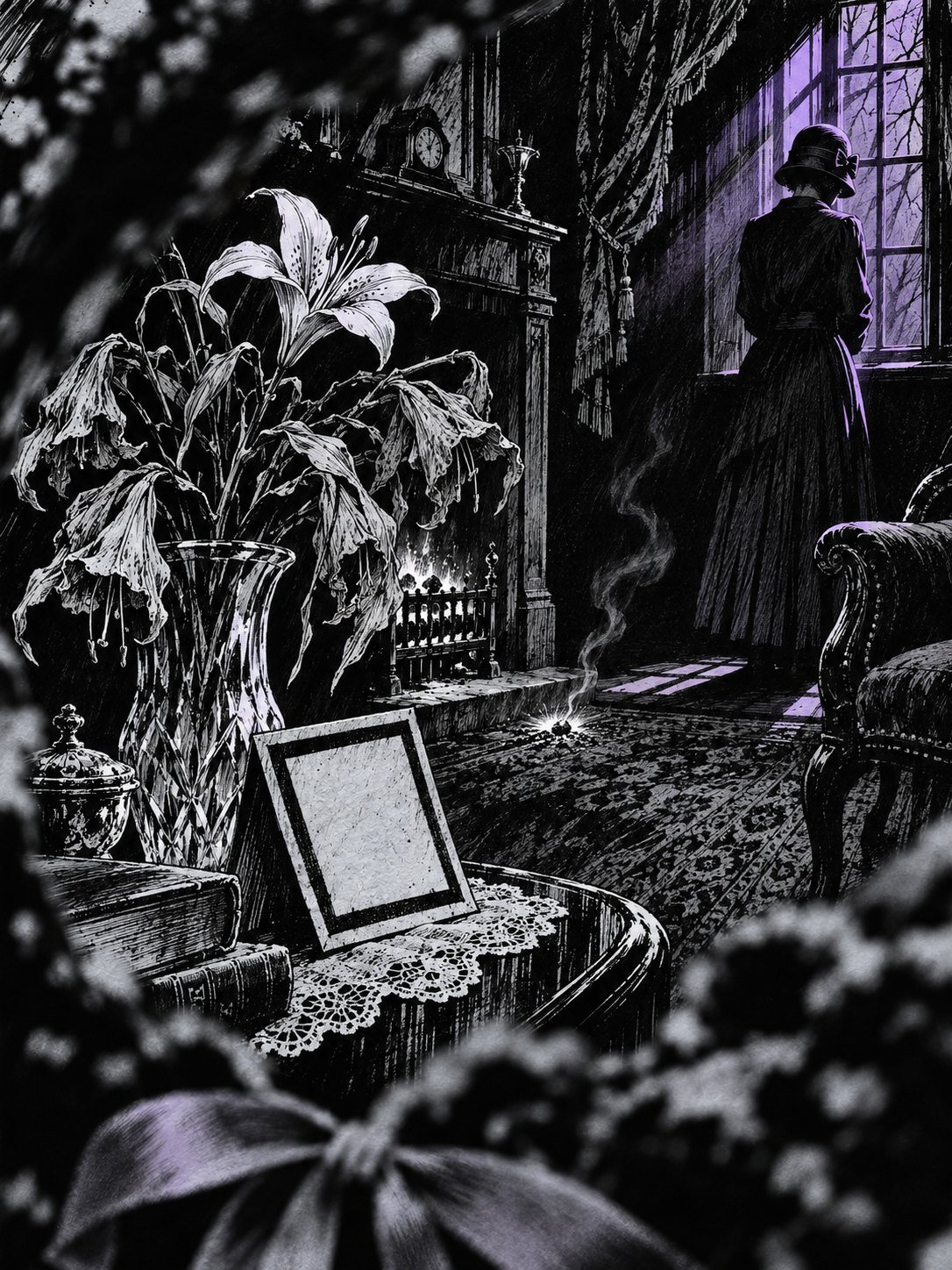
Agatha Christie was 36. She had been married to Archie Christie, a former flying officer of the First World War, for twelve years. Their daughter Rosalind was seven.
In April 1926 her mother, Clara, died. According to a review of Lucy Worsley’s biography, Christie fell into a depression afterwards.
The family lived at Sunningdale, in a house they had named Styles. (NATGEO) (NYRB-2022) (TNA-BLOG)
“I want a divorce”
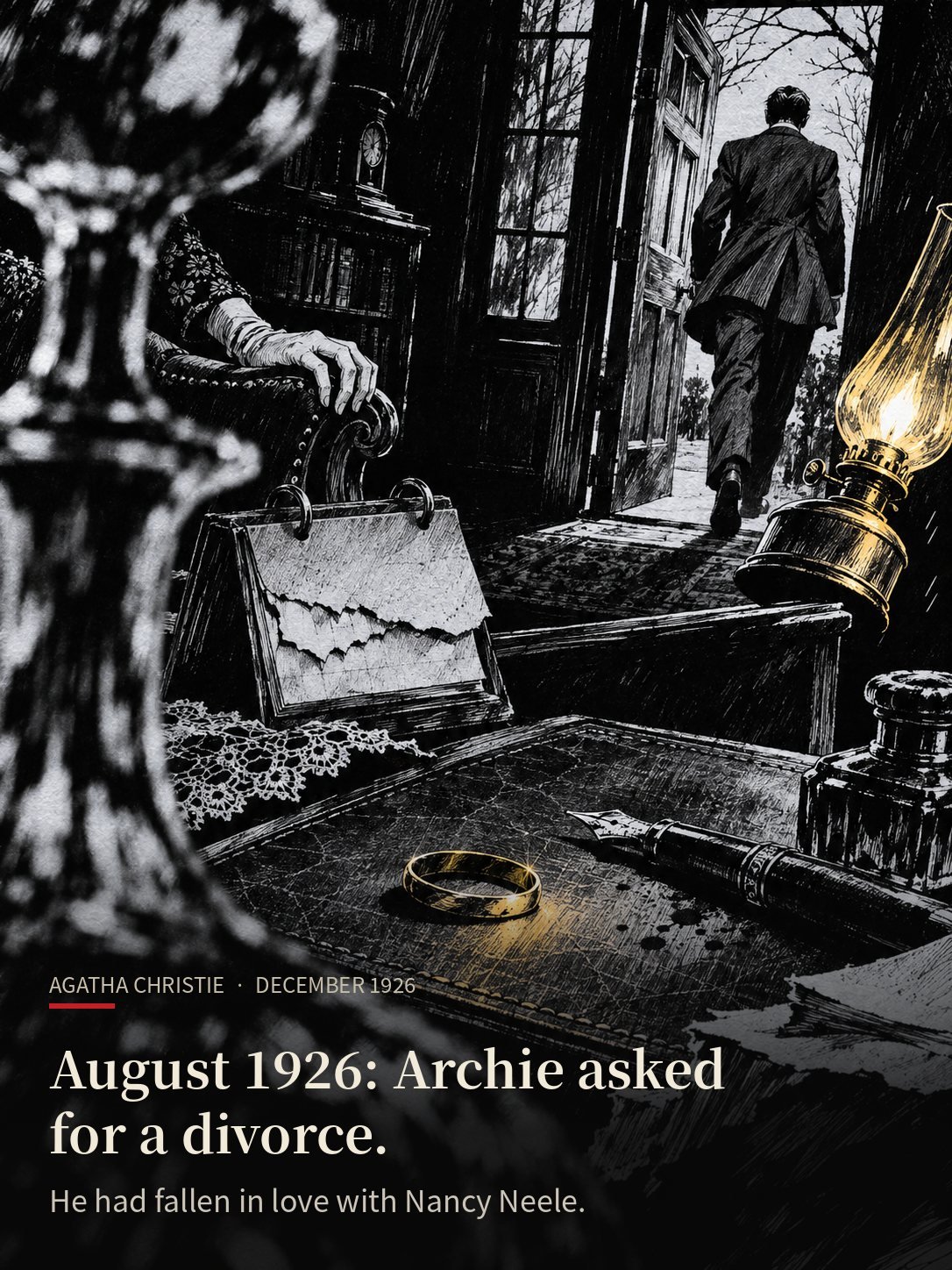
In August 1926 Archie told her he wanted a divorce. He had fallen in love with someone else.
Her name was Nancy Neele. She was born in 1899 and worked as a clerk at the Imperial Continental Gas Association, according to biographer Janet Morgan.
Some later accounts call her Archie’s secretary. That description is disputed. (WIKI-ARCHIE) (COUNTRYFILE)
She kissed her daughter goodnight

On Friday 3 December, after an argument, Archie left the house for a weekend with friends.
Late that evening Agatha went upstairs, kissed her sleeping daughter, came down, got into her Morris Cowley and drove away.
Sources give the time as about 9 p.m., just after 9.30, or 9.45. (TNA-REC) (IRISHTIMES-1998) (NATGEO) (SHEDUNNIT)
The same night, at Hurtmore Cottage

Archie spent that weekend at Hurtmore Cottage, near Godalming, the home of friends named Madge and Frank James.
Nancy Neele was there too.
Archie later said Agatha had left a note for him. He said he read it and destroyed it. (WIKI-ARCHIE) (COUNTRYFILE) (NATGEO)
6:20 in the morning

At 6:20 a.m. on 4 December, a man named McAlister helped a woman get a stalled car started.
He told police she matched the description. She was, he said, “sparsely dressed for such an inclement morning,” and strange in her manner.
At 11 a.m. Surrey police were told that her car had been found at Newlands Corner. (TNA-REC)
The search of the Downs
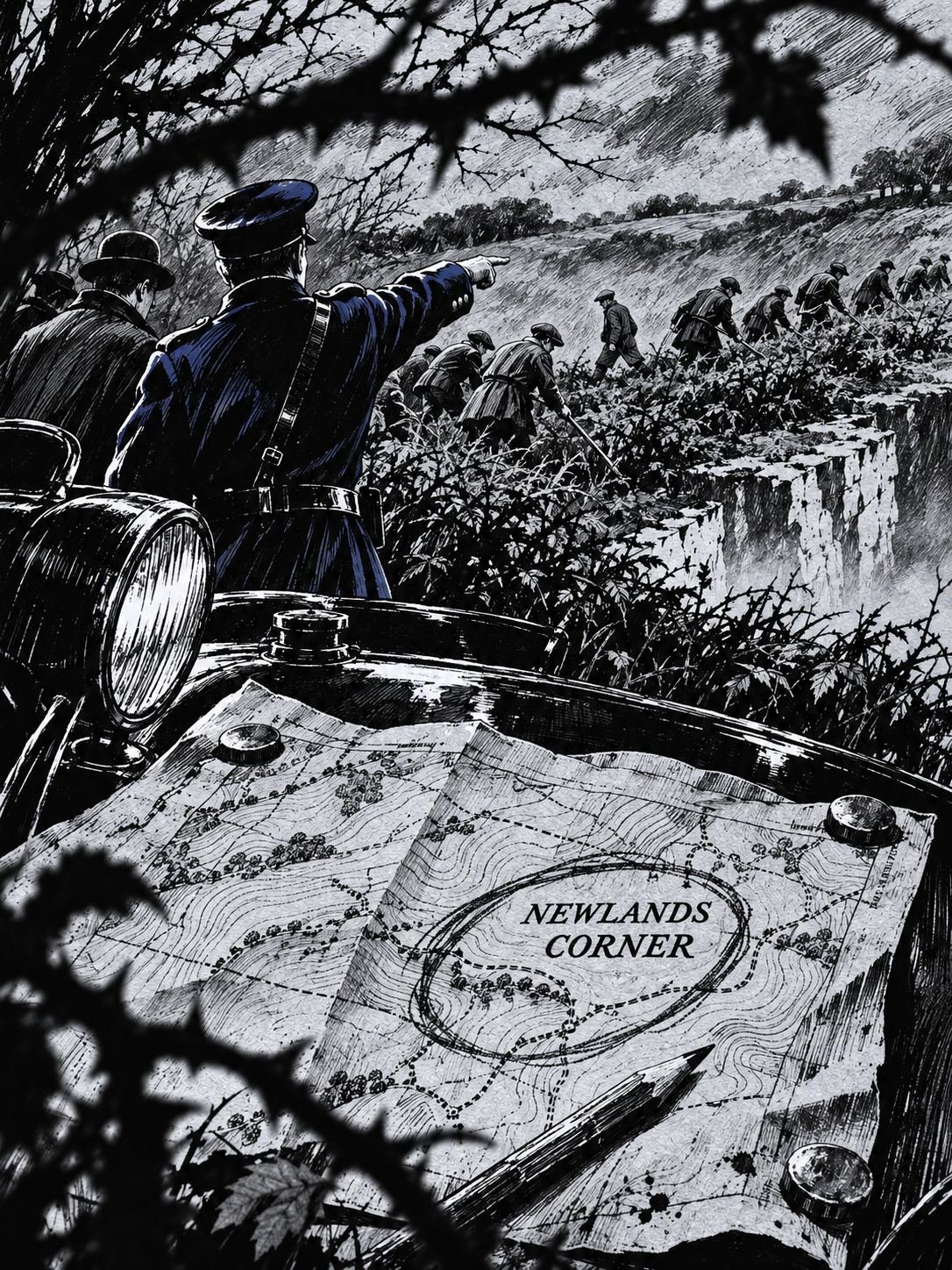
Deputy Chief Constable William Kenward of Surrey Constabulary led the search. He listed three possibilities: she had wandered off with memory loss, fallen into one of the local pits, or been the victim of a serious crime.
Police and volunteers searched the Downs from 4 to 6 December. On 9 December, local press later recalled, more than 600 officers from four counties joined in. A borrowed car and days of silence also open another mystery, Rey Rivera’s unexplained death at Baltimore’s Belvedere Hotel, where he was found eight days after vanishing in 2006.
Popular accounts say more than 1,000 police and 15,000 volunteers took part. But Kenward wrote to the Home Office in February 1927 that he had used only about three dozen regular officers, plus special constables and civilians, and that many press reports were “largely unfounded.” (TNA-REC) (GETSURREY-2016) (COUNTRYFILE) (NYRB-2022)
A letter with a London postmark

The next day, a letter she had written to Archie’s brother arrived.
It said she was going to a spa in Yorkshire to rest.
It had been posted in London. (IRISHTIMES-1998)
“Ask Candle Lanche”
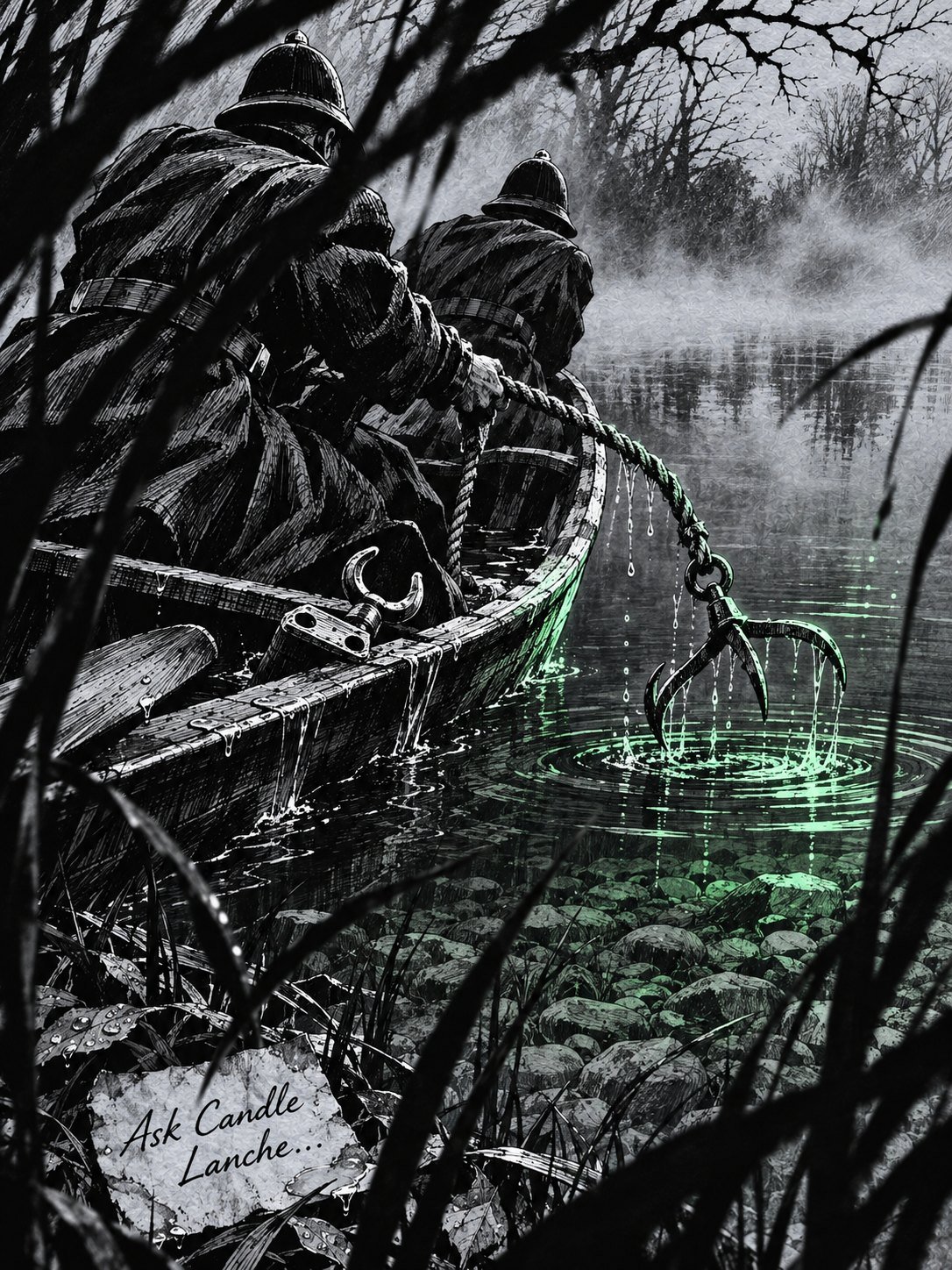
Then a hoax letter arrived: “Ask Candle Lanche, He knows more about the Silent Pool than…”
The Silent Pool is a lake in the same Surrey hills. The letter convinced many people she had drowned there.
Ponds were dragged. Local press names Albury Mill Pond and Postford Pond; other accounts say the Silent Pool itself was searched. Nothing was found. (GETSURREY-2016) (COUNTRYFILE) (SHEDUNNIT)
Conan Doyle and a glove

Famous writers joined the hunt.
Arthur Conan Doyle, the creator of Sherlock Holmes, took one of her gloves to a medium. The podcast Shedunnit names him as Horace Leaf.
The medium said she was alive. The Kent & Sussex Courier reported the consultation that Christmas Eve. (GETSURREY-2016) (SHEDUNNIT) (TNA-BLOG)
Sunday 12 December
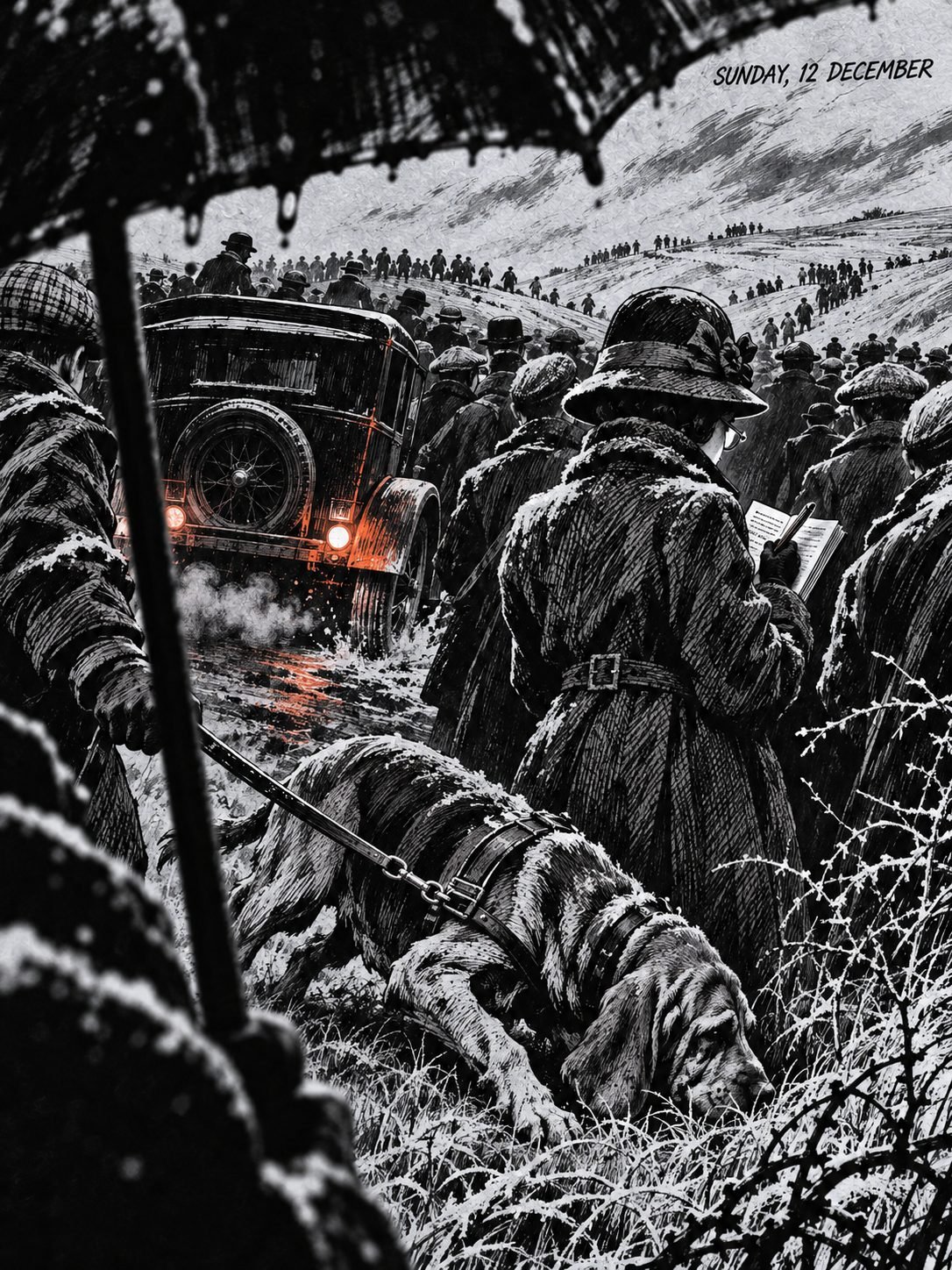
On Sunday 12 December more than 2,000 people set off from Newlands Corner to search the hills, according to local press.
Her own fox terrier was brought out. Bloodhounds were photographed working the frosted grass. Dogs failed in another famous case too: tracker dogs picked up no trail when the American silk king vanished in Malaysia’s Cameron Highlands on Easter Sunday 1967.
Somewhere in the crowd was another crime writer, Dorothy L. Sayers. She later wrote in the Daily News that there were four explanations: memory loss, foul play, suicide or a voluntary disappearance, and reminded readers that Christie was an expert at mysteries. (GETSURREY-2016) (NATGEO) (SHEDUNNIT) (NYRB-2022)
A £100 reward

The newspapers fought over the story.
The Daily News offered a £100 reward for information.
Edgar Wallace wrote in the Daily Mail that she was alive, and called it a case of “mental reprisal” against someone who had hurt her.
Archie was treated as a suspect and followed by plain-clothes officers. (COUNTRYFILE) (NYRB-2022)
A guest called Mrs Neele
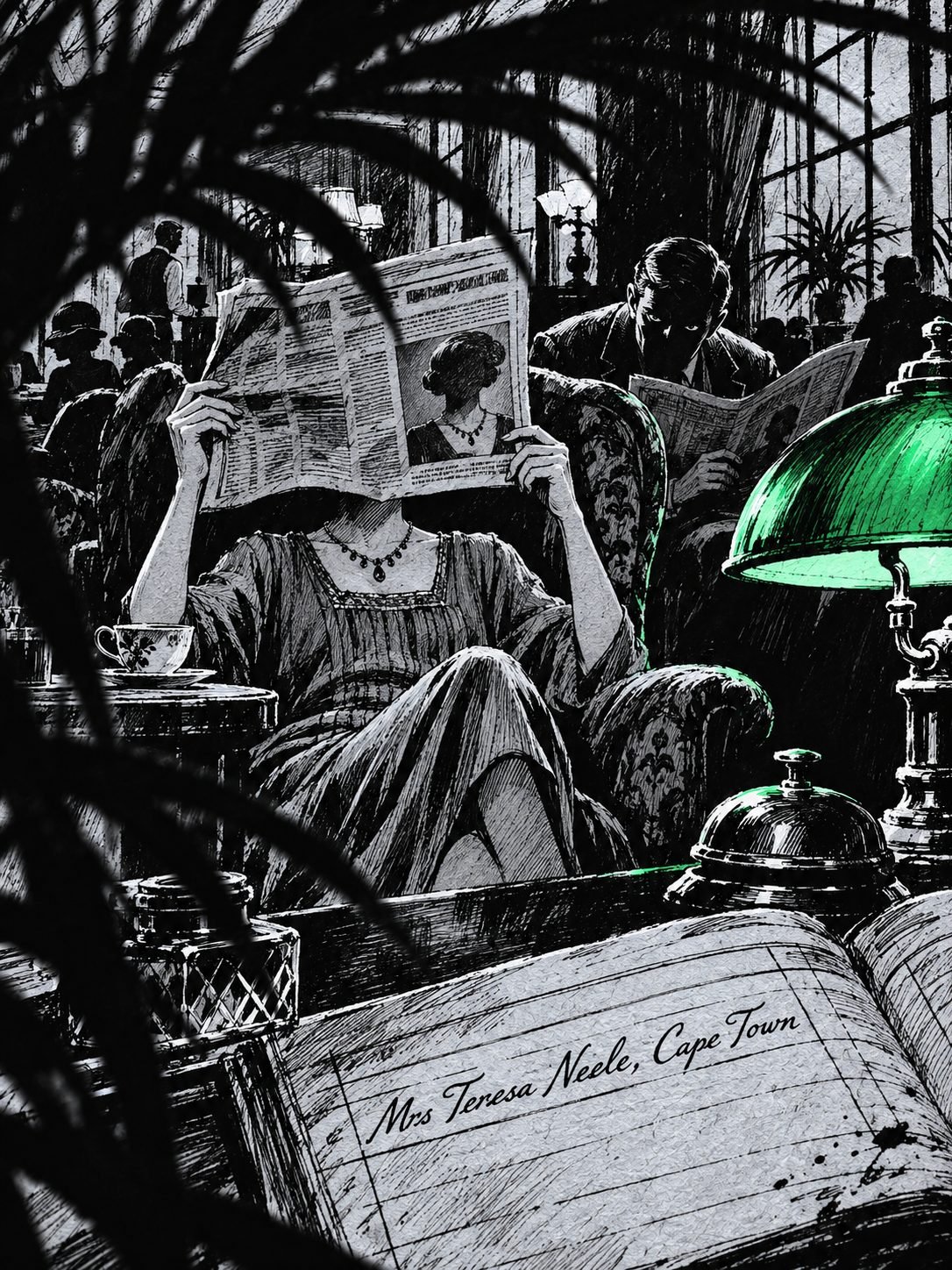
About 200 miles north, in Harrogate, a woman had checked into the Swan Hydropathic Hotel, known as the Hydro.
She signed the register under the surname of her husband’s lover: Teresa Neele. The spelling varies in print. She told the hotel she had come from South Africa; one account says Cape Town.
She paid five guineas a week. She went shopping, bought sheet music and read the newspapers. They were full of stories about her own disappearance. (TNA-BLOG) (NYRB-2022) (YP) (SHEDUNNIT)
“Teresa Neele, late of South Africa”

While the country searched for her, she placed a small notice in the personal column of The Times.
It asked friends and relatives of “Teresa Neele, late of South Africa” to write to Box R.702.
Her biographer Lucy Worsley reads it as a hidden message to Archie. (NYRB-2022)
The banjo player noticed
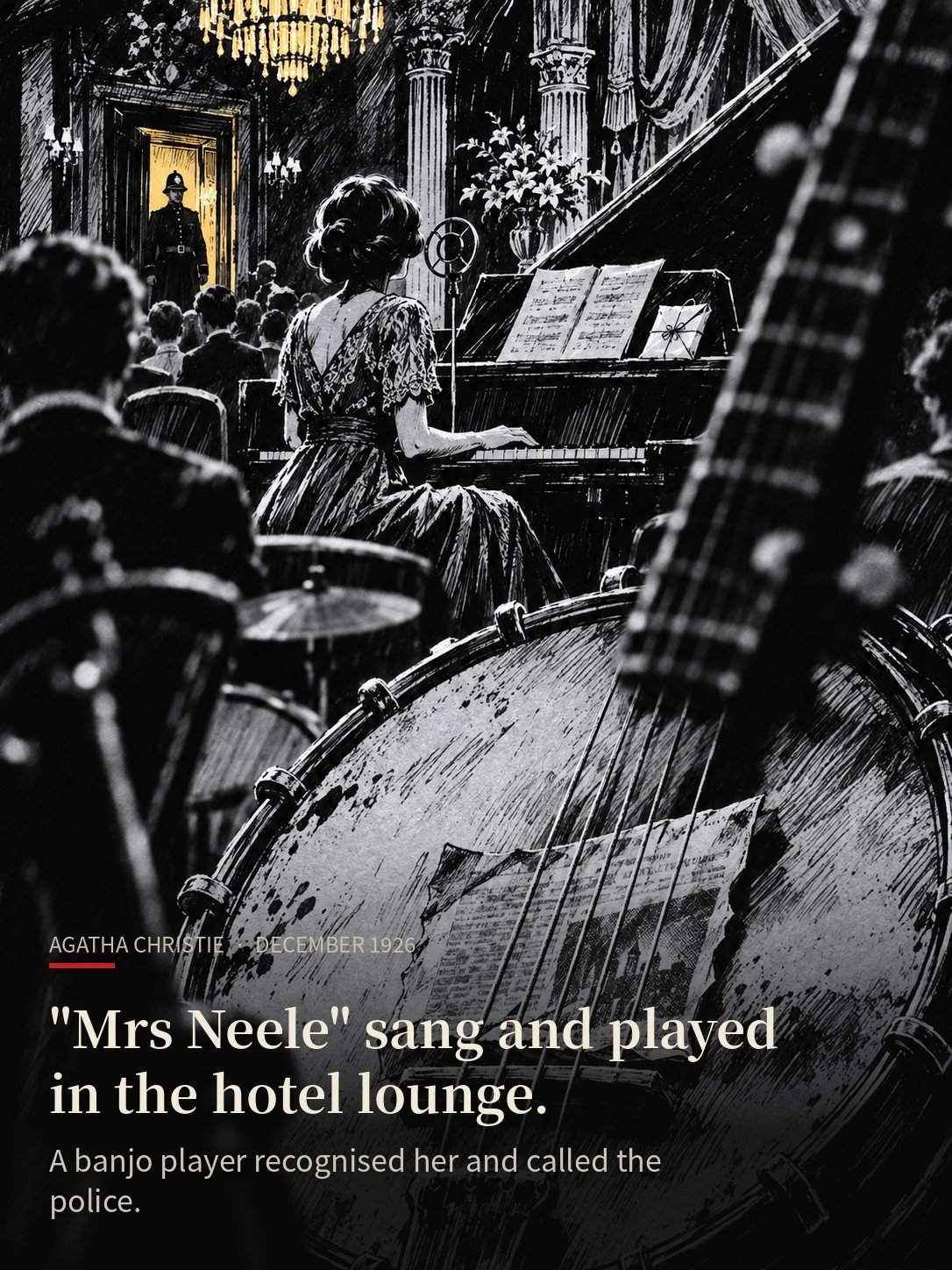
In the evenings, Mrs Neele sang in the hotel lounge and played the grand piano.
Bob Tappin, a banjo player in the hotel band, recognised her and called the police.
Other accounts credit two members of the band, or the head waiter. (YP) (NYRB-2022) (ASPECTS) (COUNTRYFILE)
“She is my wife”

On the evening of 14 December, Archie arrived at the Hydro.
She kept him waiting in the lounge while she went upstairs and changed into evening dress.
Reporters watched them at dinner. She seemed not to know him. Archie told the Yorkshire Post: “There is no question about her identity. She is my wife.” (ASPECTS) (TNA-REC) (YP) (NATGEO)
The chapter she never wrote
The family said it was complete loss of memory, confirmed by two doctors. Archie refused to pay towards the police costs, calling it “entirely a police matter.” Kenward put them at about £25.
In a 1928 interview, given during the divorce, she said she had left in a state of high nervous strain, let the car run towards the quarry, and came to in Harrogate as “Mrs Neele.” They divorced that year, and Archie married Nancy Neele.
Biographers still disagree. Andrew Norman and Lucy Worsley point to a fugue state. Laura Thompson believes she left in despair and that amnesia became the cover story. Jared Cade says it was a plan to embarrass Archie, helped by her sister-in-law. Some newspapers called it a publicity stunt; Worsley calls that victim-blaming.
Her 1977 autobiography does not mention those eleven days at all. (NYRB-2022) (TNA-REC) (NATGEO) (WORSLEY-2025) (TNA-BLOG) (IRISHTIMES-1998) (WIKI-ARCHIE)
The evidence file
The documents and objects this case rests on, and where they are now.
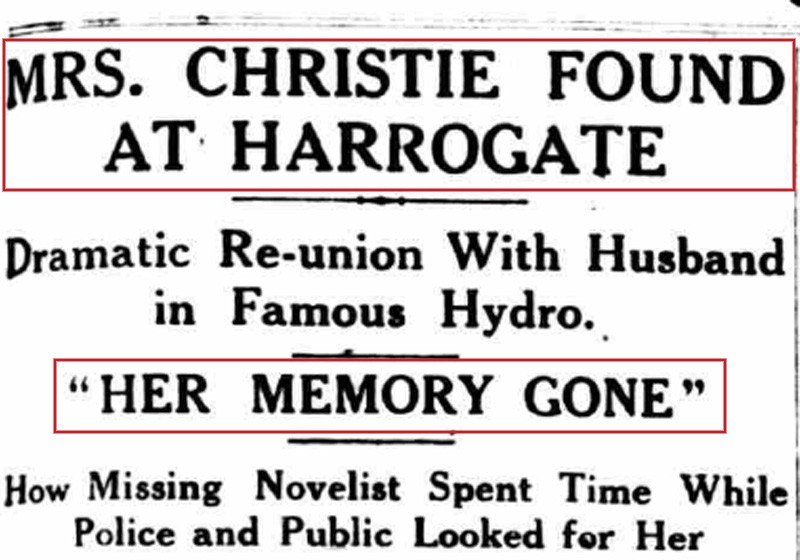 FRONT PAGE · 15 DEC 1926
Exhibits
- Exhibit A — Surrey Constabulary letter to the Home Office, 9 Feb 1927. The deputy chief constable’s own account: the 6:20 a.m. sighting, the car found at 11 a.m., three possibilities considered, about three dozen regular officers rather than 1,000, press reports “largely unfounded”, and costs of about £25. Held at The National Archives, Kew, HO 45/25904. (The National Archives)
- Exhibit B — The Morris Cowley at Newlands Corner. Found halfway down a grassy slope above a chalk quarry, its bonnet in the bushes and its headlights still on. Inside were a fur coat, a dressing case of women’s clothes and a driving licence in the name of Mrs Agatha Christie of Sunningdale, Berkshire. (The National Archives; Surrey Police and Crime Commissioner)
- Exhibit C — The letter to her husband’s brother. It arrived the next day with a London postmark and said she was going to a Yorkshire spa to rest. Its exact wording has not been published. (The Irish Times)
- Exhibit D — The note left for her husband. He said she left him a note, which he read and destroyed. By his account it no longer exists, and its contents are unknown. (National Geographic)
- Exhibit E — The “Candle Lanche” hoax letter. A hoax letter that pointed the search toward the Silent Pool. Only this fragment is known: “Ask Candle Lanche, He knows more about the Silent Pool than…” (SurreyLive)
- Exhibit F — The notice in The Times personal column. It asked friends and relatives of “Teresa Neele, late of South Africa” to write to Box R.702. Lucy Worsley reads it as a hidden plea to her husband. (The New York Review of Books)
- Exhibit G — Kent & Sussex Courier, 24 Dec 1926. The paper reported that Arthur Conan Doyle consulted a medium and took one of her gloves to the sitting. (The National Archives blog)
- Exhibit H — The Commons question, 25 Feb 1927. Neil Maclean MP asked how many Metropolitan Police officers were involved and what it cost. The answer: none were specially sent, and no cost was incurred. (The National Archives blog)
Quick answers: Agatha Christie’s disappearance
When did Agatha Christie disappear?
Agatha Christie drove away from her home in Sunningdale late on Friday 3 December 1926. Her car was found the next morning at Newlands Corner, near Guildford in Surrey, with its headlights still on, and she was missing for eleven days.
Where was Agatha Christie found?
At the Swan Hydropathic Hotel, known as the Hydro, in Harrogate, about 200 miles north. She had checked in as Teresa Neele, and her husband Archie identified her there on the evening of 14 December.
Why did Agatha Christie use the name Neele?
Neele was the surname of Nancy Neele, the woman Archie Christie had fallen in love with. He had told Agatha in August 1926 that he wanted a divorce, and he spent the weekend she vanished at a friends’ house where Nancy Neele was also staying.
How big was the search for Agatha Christie?
Popular accounts say more than 1,000 police and 15,000 volunteers searched, but the officer in charge, Deputy Chief Constable William Kenward, later wrote that he used only about three dozen regular officers plus special constables and civilians. Local press reported more than 2,000 people searching on Sunday 12 December.
Who recognised Agatha Christie at the hotel?
Bob Tappin, a banjo player in the hotel band, recognised her and called the police. Other accounts credit two members of the band, or the head waiter.
Why did Agatha Christie disappear?
Nobody knows for certain. Her family said it was complete loss of memory, confirmed by two doctors; biographers variously point to a fugue state, to despair with amnesia as a cover story, or to a plan to embarrass Archie.
Did Agatha Christie ever explain the eleven days?
Only once, in a 1928 interview during the divorce, when she said she had left in a state of high nervous strain and came to in Harrogate as “Mrs Neele.” Her 1977 autobiography does not mention the disappearance at all.
Case notes: eleven days in December
On 3 December 1926 Agatha Christie drove away from her home. Her car was found abandoned the next morning. Eleven days later she was found at a Harrogate hotel, registered under the name of her husband’s lover (TNA-REC) (TNA-BLOG).
Where the case stands (as of November 2026)
Never explained. The family’s official answer was loss of memory, confirmed by two doctors. Christie herself spoke of it only once in public, in 1928 (NYRB-2022) (NATGEO).
No crime was found. Kenward put the cost of the police search at about £25, and Archie refused to pay towards it (TNA-REC).
Agatha Christie vanished on 3 December 1926 and was found 11 days later at a hotel in Harrogate.
Timeline
| When | What happened |
|---|---|
| Apr 1926 | Her mother, Clara, dies (NYRB-2022) |
| Aug 1926 | Archie asks for a divorce (WIKI-ARCHIE) |
| Fri 3 Dec, ~9-9:45 p.m. | After an argument, she kisses her daughter goodnight and drives away (TNA-REC) (NATGEO) |
| Sat 4 Dec, 6:20 a.m. | A witness helps a thinly dressed woman start a car (TNA-REC) |
| Sat 4 Dec, 11 a.m. | Police told of her car at Newlands Corner, lights still on (TNA-REC) |
| 4-6 Dec | Police and volunteers search the Downs (TNA-REC) |
| 9 Dec | Wider search; local press recalls 600+ officers (TNA-REC) (GETSURREY-2016) |
| Sun 12 Dec | 2,000+ searchers set out; bloodhounds photographed (GETSURREY-2016) (NATGEO) |
| 14 Dec, evening | Archie identifies her at the Harrogate Hydro (TNA-REC) (YP) |
| 9 Feb 1927 | Kenward’s report to the Home Office (TNA-REC) |
| 1928 | Daily Mail interview; divorce; Archie marries Nancy Neele (NATGEO) (WORSLEY-2025) (TNA-BLOG) |
| 1977 | Her autobiography is published without a word about it (NATGEO) |
Evidence locker
Primary records and the closest copies we could trace. No photographs are shown for this case; illustrations elsewhere in this file are AI-generated.
Access: Copy (The National Archives’ published summary and extracts of the record).
Supports: How small and cheap the police search really was, by the police’s own count.
Limits: The police’s own account, written two months later; the newspapers of the time gave much bigger figures.
Access: Via the police authority’s own history pages.
Supports: The state of the car when it was found.
Limits: A modern retelling, not a 1926 report.
Where the records disagree
| Detail | What sources say |
|---|---|
| Size of the search | “More than 1,000 police and 15,000 volunteers” in popular accounts; Kenward said about three dozen regular officers (COUNTRYFILE) (NATGEO) (TNA-REC) |
| Aeroplanes | Some say planes searched for the first time in a British case; Kenward said none were police planes (ASPECTS) (SHEDUNNIT) (TNA-REC) |
| Time she left | About 9 p.m., just after 9.30, or 9.45 (IRISHTIMES-1998) (SHEDUNNIT) (NATGEO) |
| Who recognised her | Banjo player Bob Tappin, two band members, or the head waiter (YP) (ASPECTS) (COUNTRYFILE) |
| Which ponds were dragged | Albury Mill Pond and Postford Pond, or the Silent Pool (GETSURREY-2016) (COUNTRYFILE) |
| Date found | 14 December (police record) or 15 December (date it was reported) (TNA-REC) (NATGEO) |
| The alias | Teresa or Theresa Neele (NYRB-2022) (YP) |
What we still don’t know
- Whether she truly lost her memory, or planned the whole thing.
- How she got from Surrey to Harrogate.
- What was in the note Archie said he destroyed.
- Why she chose the name of her husband’s lover.
What happened after
December 2026 marks the centenary of the disappearance (SURREY-PCC).
Editor’s note
The detail that stays with me is the way she introduced herself at the Hydro. She took the surname of Nancy Neele, the woman her husband loved. And she said she had come from South Africa. Agatha and Archie had travelled there together in 1922, on a long trip round the Empire, when they were still happy. Both of those things fit into one short introduction at a hotel desk. I find that strange, and very sad.
If I have to choose, I lean towards a real confusion of memory. In 1928 she said that at Harrogate she read every day about “Mrs Christie’s disappearance” and thought that woman had acted stupidly. At the same time, a letter she had written to Archie’s brother said she was going to a spa in Yorkshire. I think both can be true. Someone can leave the house with a place in mind and still not hold on to what happened after.
Reading this in my forties, what bothered me most was something Archie said while she was still missing: that she had talked of being able to disappear at will. He must have been frightened by the rumours. But when one person in a marriage cannot speak for herself, the other one guessed out loud at her motives. That felt unkind.
At first I thought of the people out on the cold hills looking for her, and how flat they must have felt to hear she had been singing in a hotel. Then I read that she later said, “As Mrs Neele, I was very happy and contented.” After that the singing stayed with me differently. If those few days under another name really were peaceful, I wonder what it felt like to go back to her own.
— Strange World Files
Case file summary
- What: The disappearance of the crime writer Agatha Christie
- Where: Sunningdale and Newlands Corner, Surrey; found in Harrogate, Yorkshire
- When: 3 to 14 December 1926
- Who: Agatha Christie, 36
- Status: Found alive after eleven days; she never fully explained it
Illustrations are AI-generated artistic interpretations, not photos. No real person is depicted with a recognizable face. Read how we research and illustrate these files.
Sources
- “Police report on the disappearance of Agatha Christie” (record HO 45/25904, letter of 9 Feb 1927), The National Archives, n.d
- “Investigating the strange disappearance of Mrs Agatha Christie” (20sPeople), The National Archives blog, Feb 2022
- “Agatha Christie’s mysterious disappearance” (175th anniversary of Surrey Police), Surrey Police and Crime Commissioner, updated 16 Feb 2026
- “Agatha Christie disappearance: how authors…” (90th anniversary), Get Surrey / Surrey Advertiser, c. 3 Dec 2016
- “Yorkshire warmth holds the key to Agatha Christie’s biggest mystery,” Yorkshire Post, n.d. (quotes its own report of 15 Dec 1926)
- Rosemary Counter, “Why did Agatha Christie go missing? Here are 4 theories,” National Geographic, 2 Dec 2024
- Frances Wilson, “Agatha Christie’s Nightmares” (review of Lucy Worsley), New York Review of Books, 20 Oct 2022
- Lucy Worsley, “The non-mysterious disappearance of Agatha Christie,” Substack, 20 Feb 2025
- “Making her own mystery” (on Jared Cade’s book), The Irish Times, 28 Nov 1998
- Giles Milton, “Agatha Christie’s Greatest Mystery,” Aspects of History, 20 Aug 2022
- Dixe Wills, “Agatha Christie disappearance,” Countryfile.com, 11 Jan 2026
- Caroline Crampton, “The Lady Vanishes” (transcript), Shedunnit podcast, 12 Dec 2018
- “Archie Christie,” Wikipedia (lead only; cites Janet Morgan 1984, Laura Thompson 2007)
- “Agatha Christie was the most famous detective novelist in the world. Then she found herself at the centre of a mystery,” ABC News (Australia), 3 Dec 2023 (quotes 1928 Daily Mail interview)
- “Agatha Christie’s Grand Adventure” (1922 British Empire Exhibition tour), agathachristie.com, 2022