Yoshie Shiratori Escaped Four Prisons. The Fifth Held Him by Taking Off His Chains

Narrated Mystery: press play and hear the whole case read aloud, like a true crime podcast episode, or an audiobook for a long drive (about 12 minutes). The narrator is an AI voice.
Abashiri Prison, 26 August 1944. A guard looked into cell 24 and found it empty.


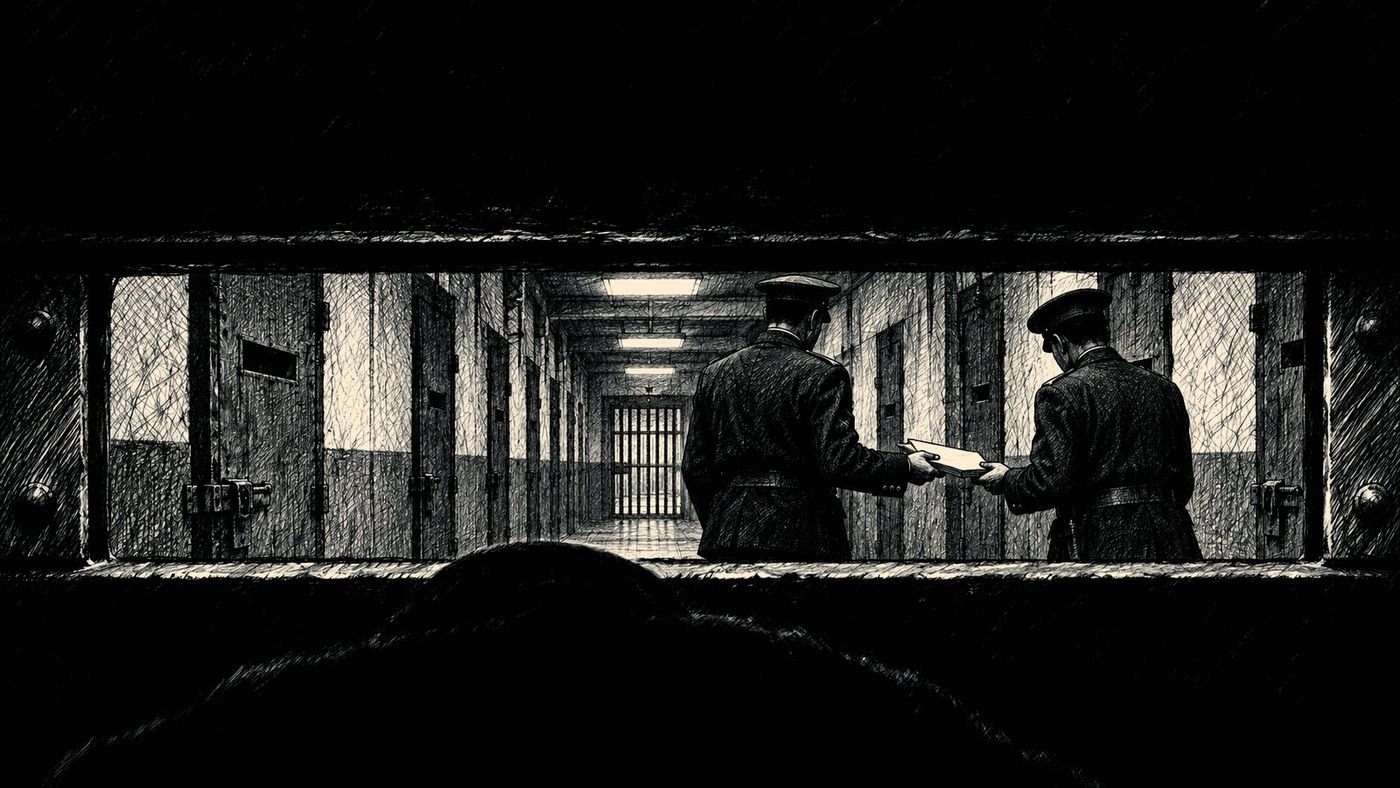
At about 11:10 on the night of 26 August 1944, a guard at Abashiri Prison looked into cell 24 of Block 4 and saw that it was empty.
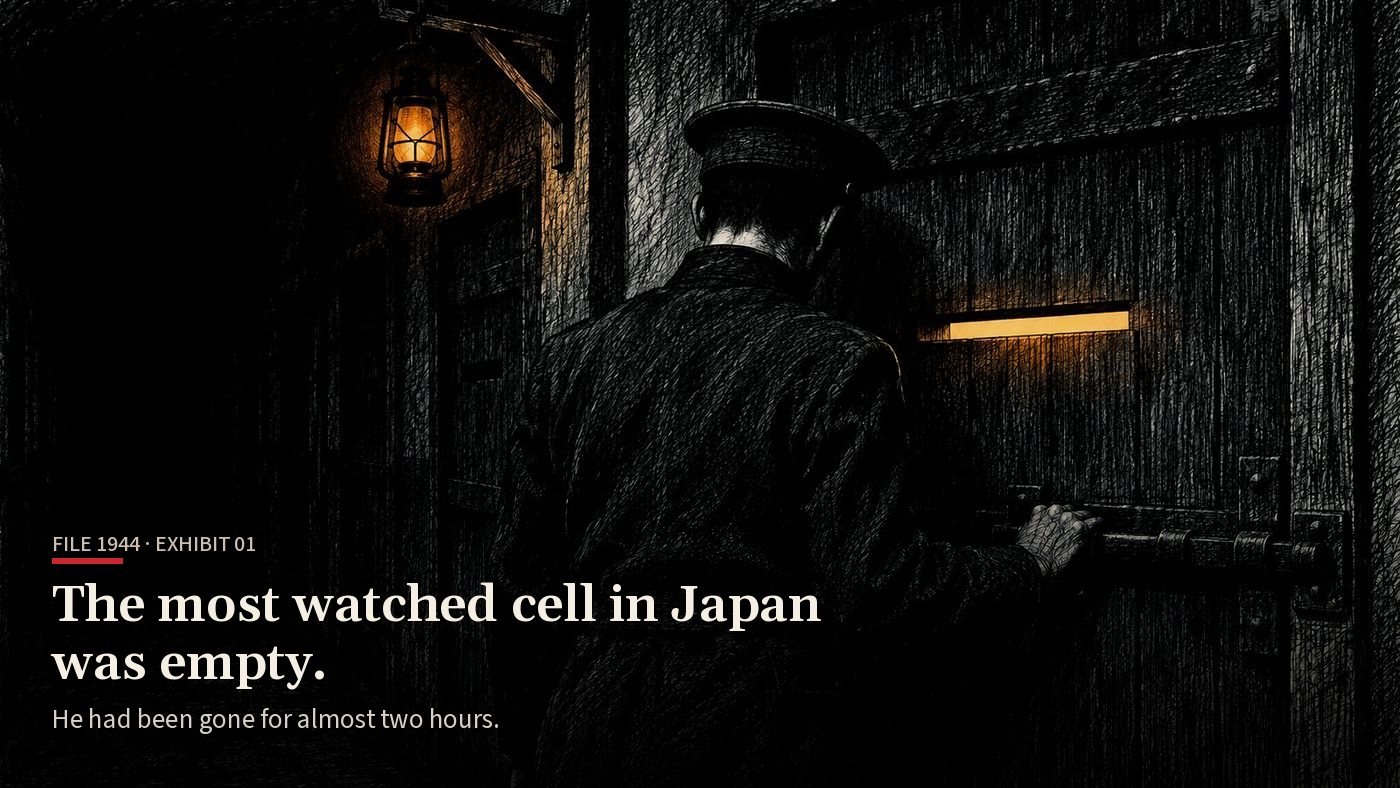
The prisoner in that cell had been watched around the clock. His cell sat directly in front of a guard post. He wore handcuffs and leg irons day and night, even while he ate.
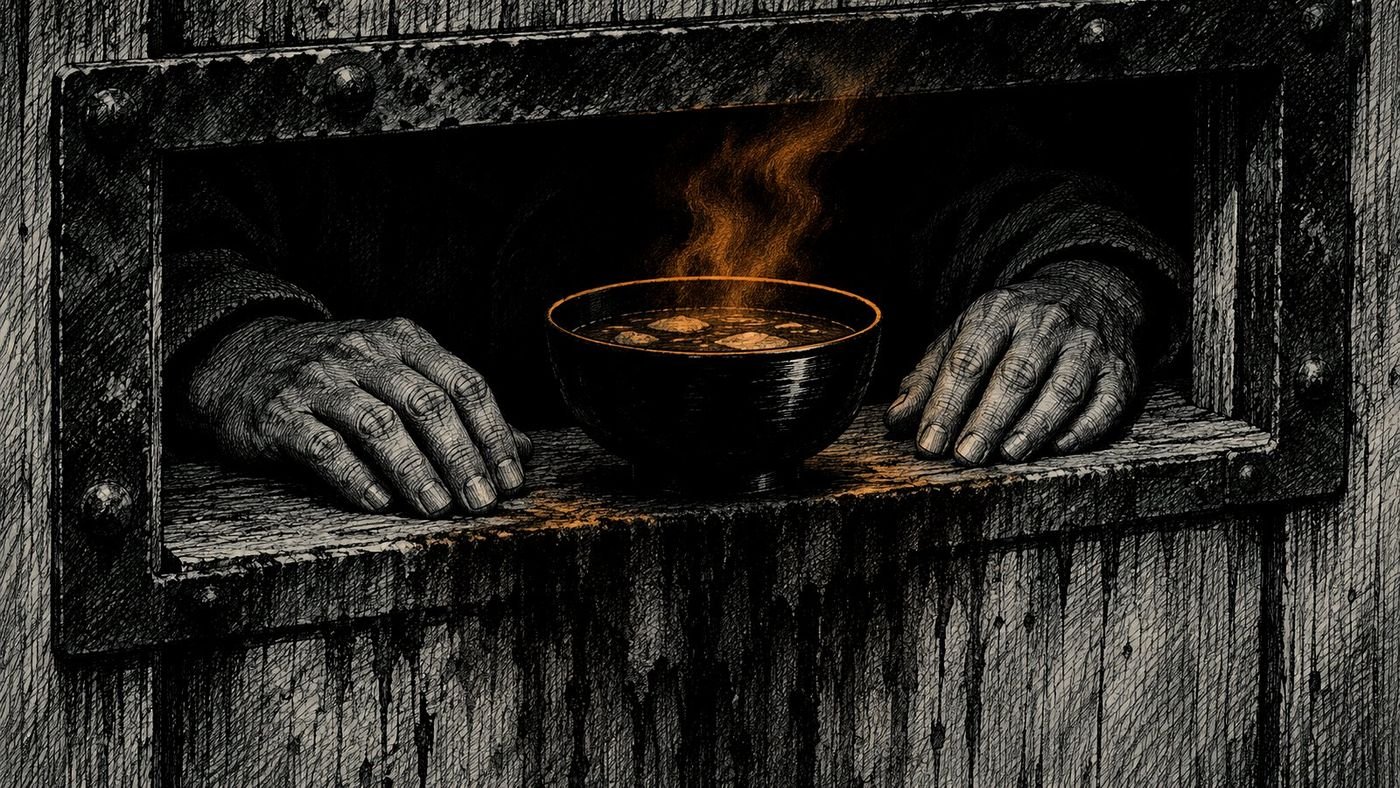
He had been gone for almost two hours.
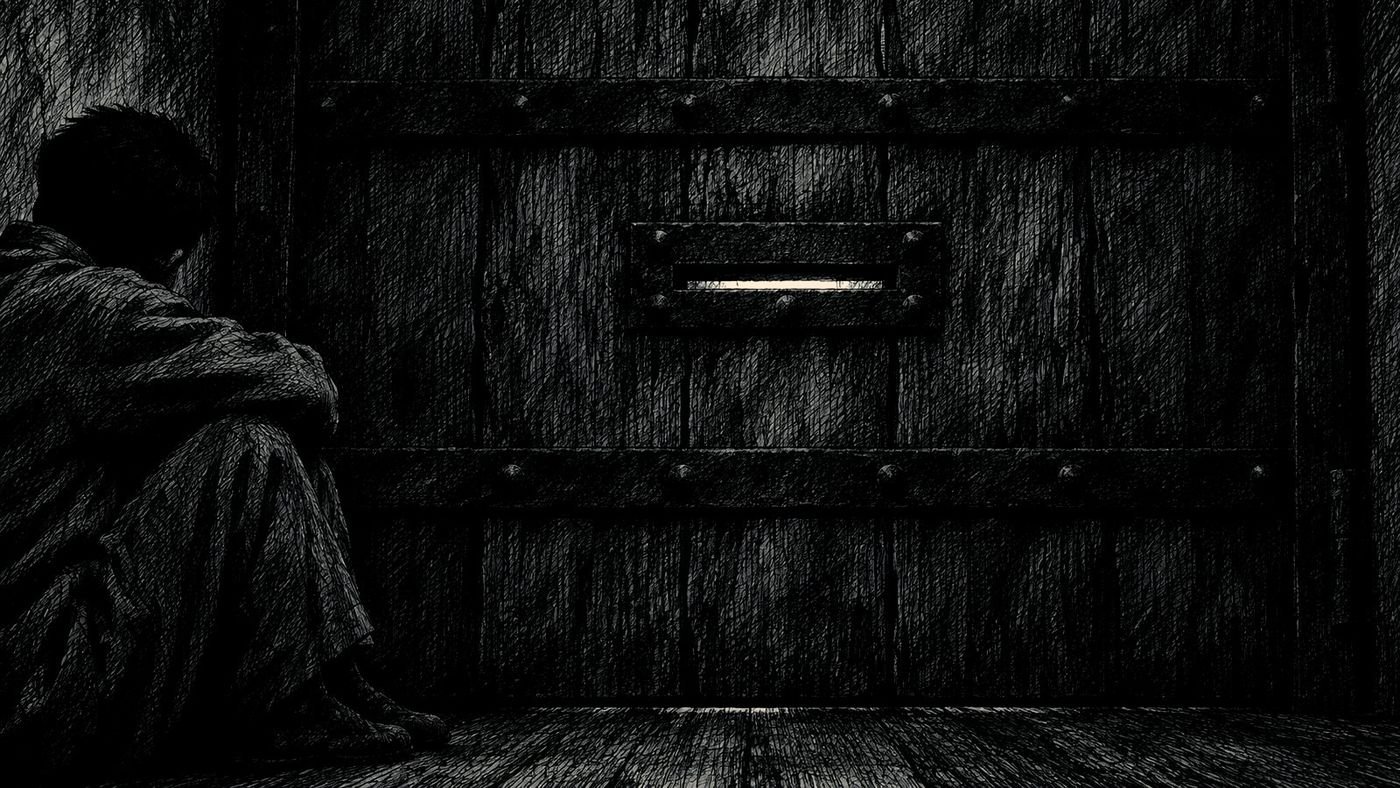
The next morning about 800 people gathered to search the forests around the prison in far northern Hokkaido. After three hours they gave up. They had found nothing.
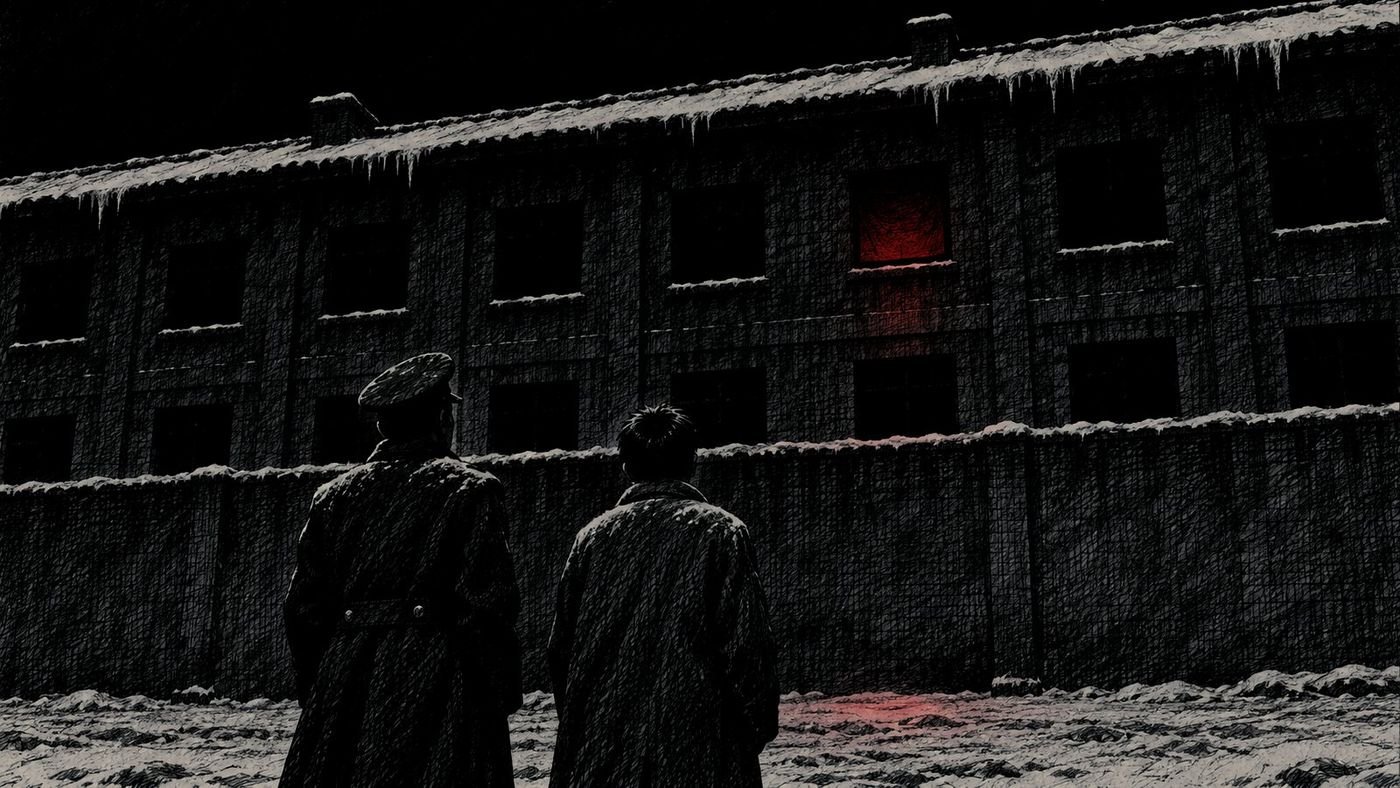
The missing man was Yoshie Shiratori. It was the third time he had escaped from a Japanese prison. It would not be the last.
A tofu shop in Aomori
Shiratori was born on 31 July 1907 in Aomori, at the northern tip of Japan’s main island. His father died when he was a small child. He was adopted by an aunt who ran a tofu shop, and he grew up helping with the business and working off his father’s debts.

By his early twenties he had a family of his own. He also had a gambling habit, and he paid for it by breaking into storehouses.

The killing that put him in prison
When he was about 25, Shiratori and an accomplice broke into a general store. A young man of the family, the owner’s adopted son, caught them in the act. During the struggle, Shiratori cut him with a sword, and he died.

Shiratori was not arrested for the killing. Two years later, police in Morioka picked him up for a storehouse burglary, and the murder came out.
He was sent to the prison in Aomori to await trial. That is where his escapes began.
Escape one: a wire key in Aomori, 1936
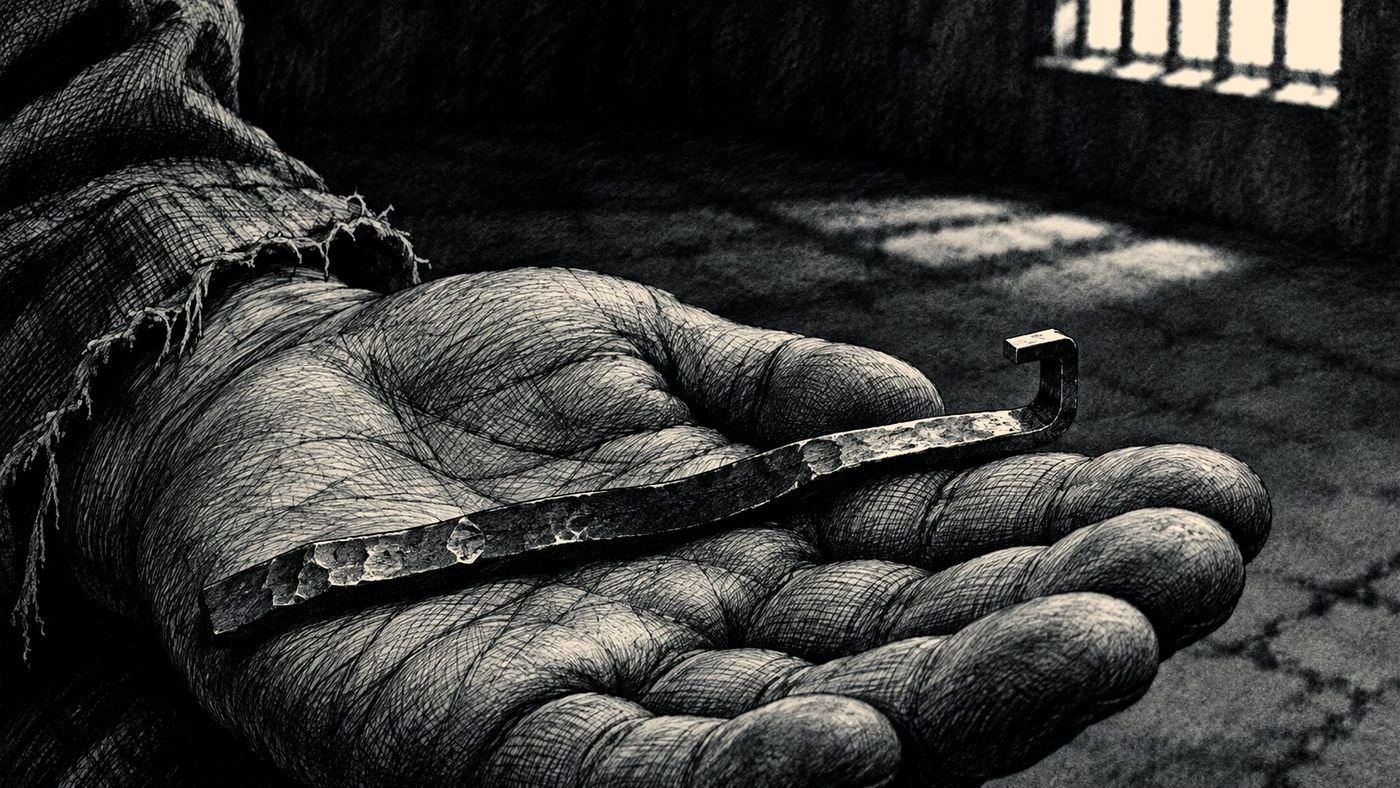
In June 1936, between 5:20 and 5:30 in the morning, Shiratori opened the lock of his solitary cell and then the prison’s back gate. According to later accounts, he had bent a piece of wire into a homemade key a few days earlier.

The local paper, the Tōō Nippō, reported on 19 June that police had thrown a net across Aomori. More than 6,300 people were mobilised. Fire crews joined in. Neighbours ran out of their houses because they thought the sirens meant a fire.

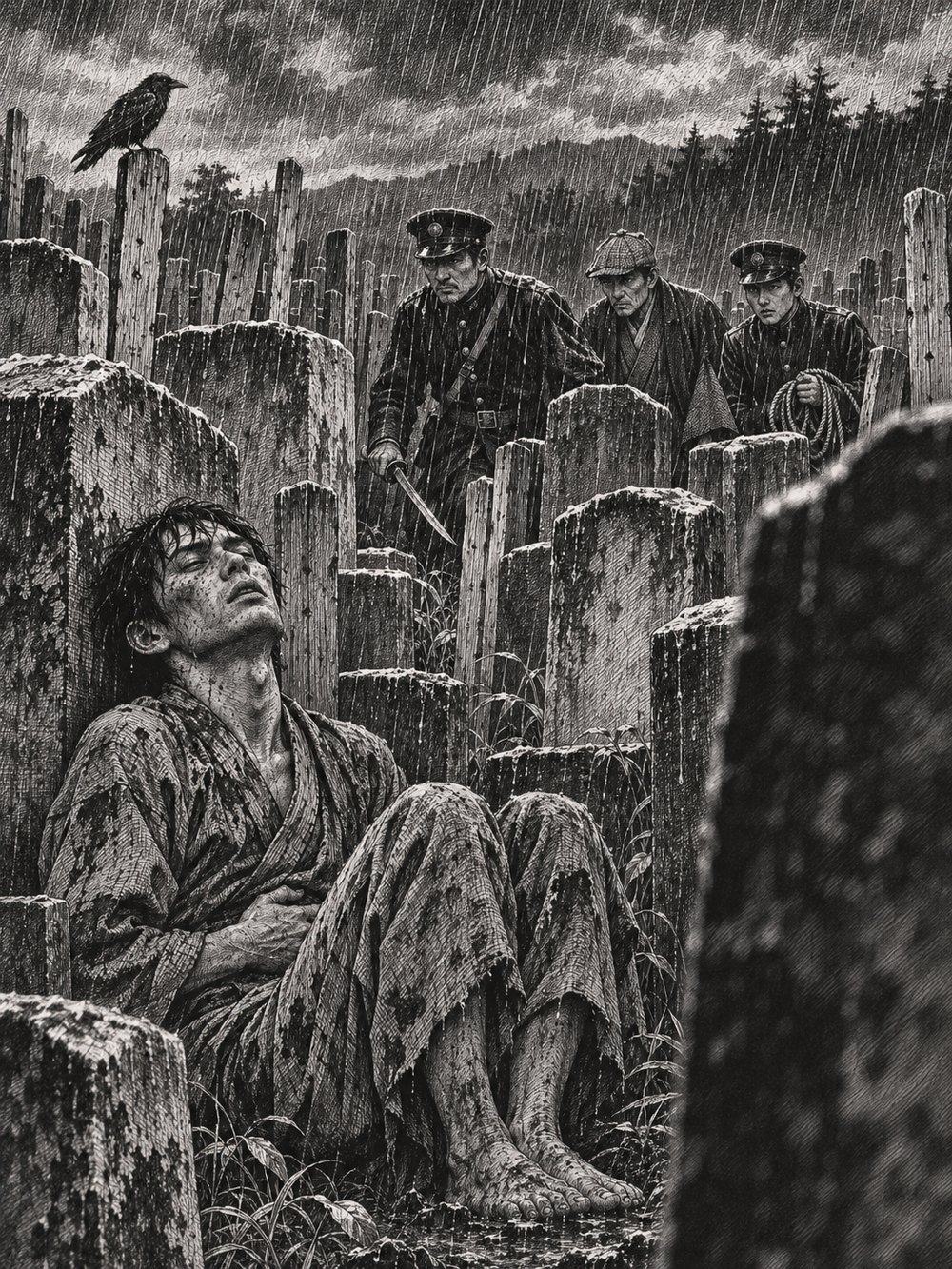
Police found him near a cemetery, hungry and weak, about two days after he got out.
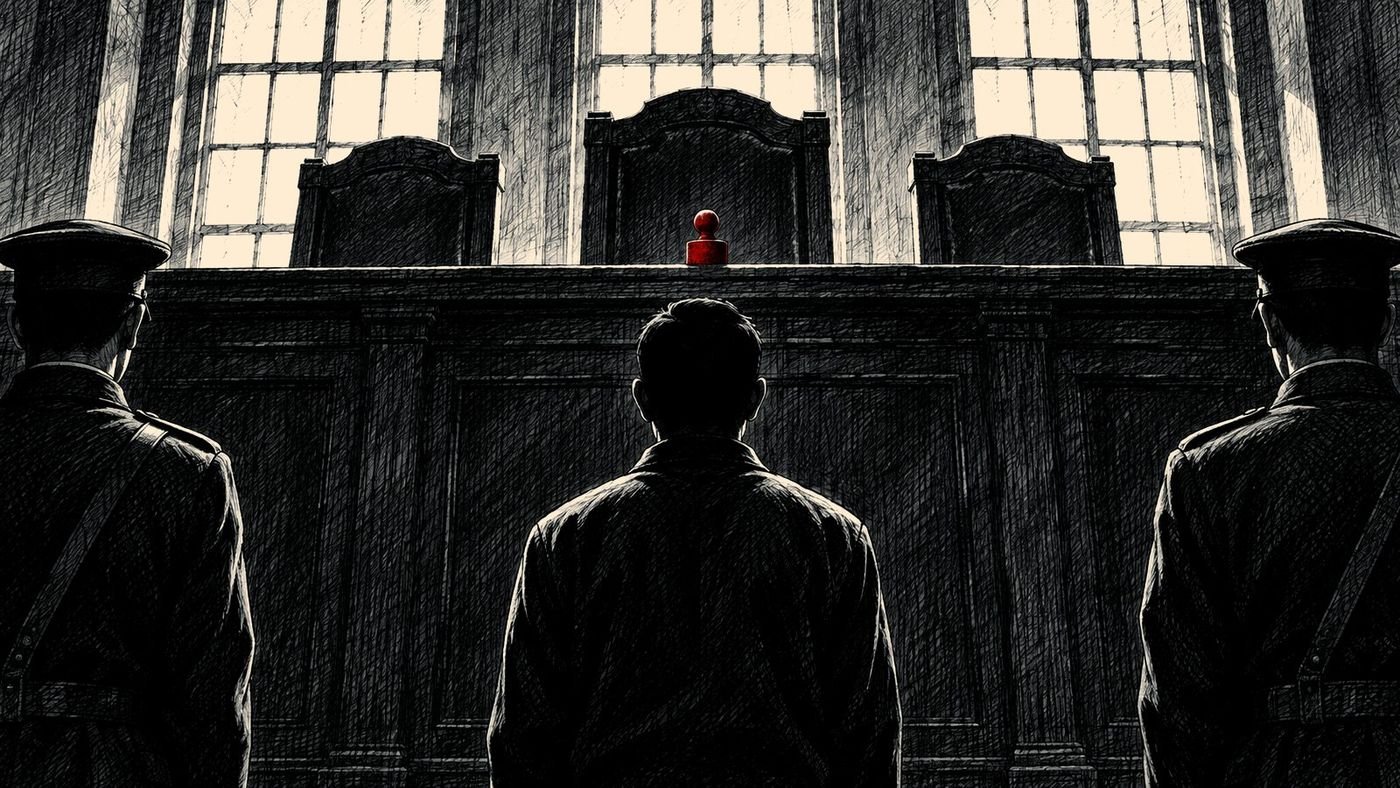
In August prosecutors asked for the death penalty. The Tōō Nippō reported that about 500 people gathered outside the courtroom and 300 got inside. He was sentenced to life in prison, and the sentence was upheld on appeal.

Escape two: Akita, 1942
In October 1941, during the war, Shiratori was moved to Akita Prison. He was put in a cold special cell. He asked for winter clothing and was refused.
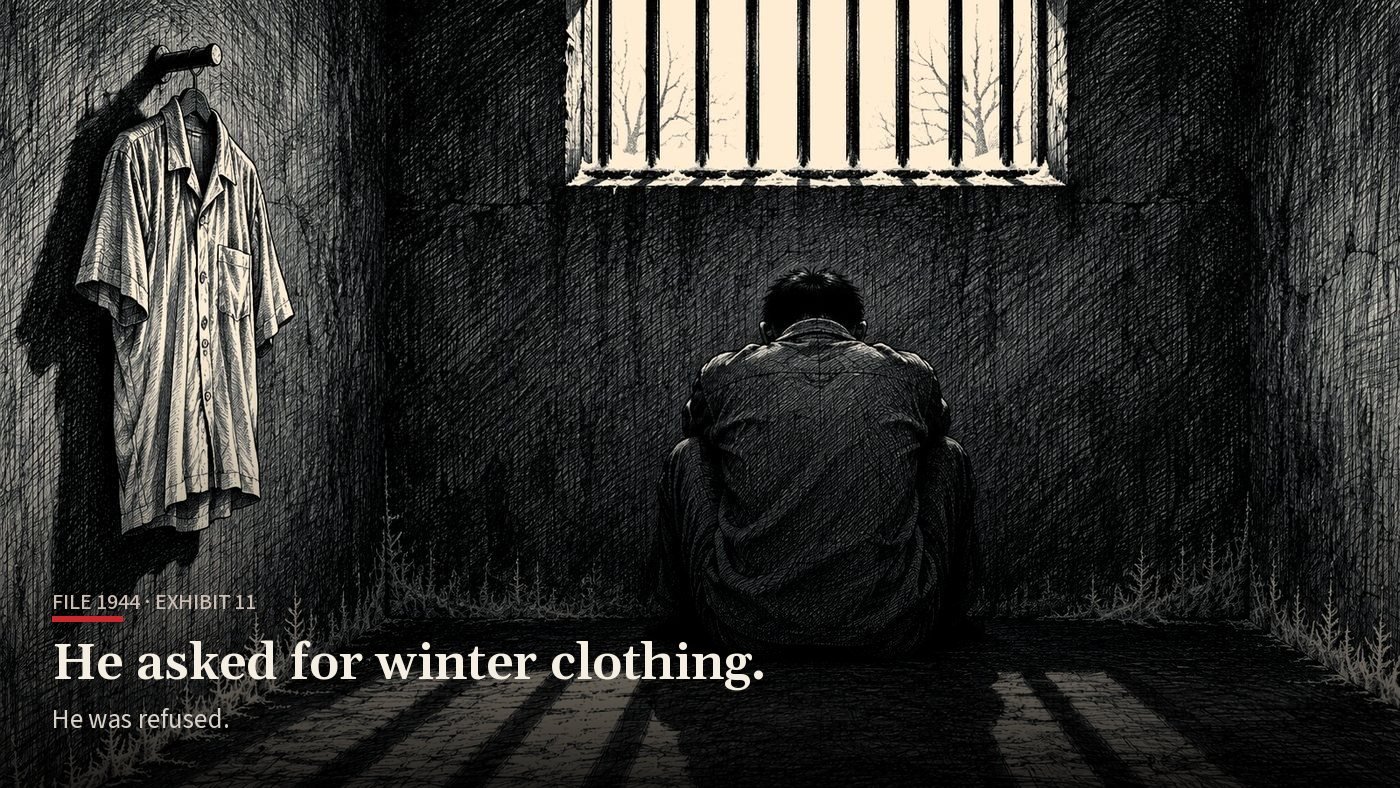
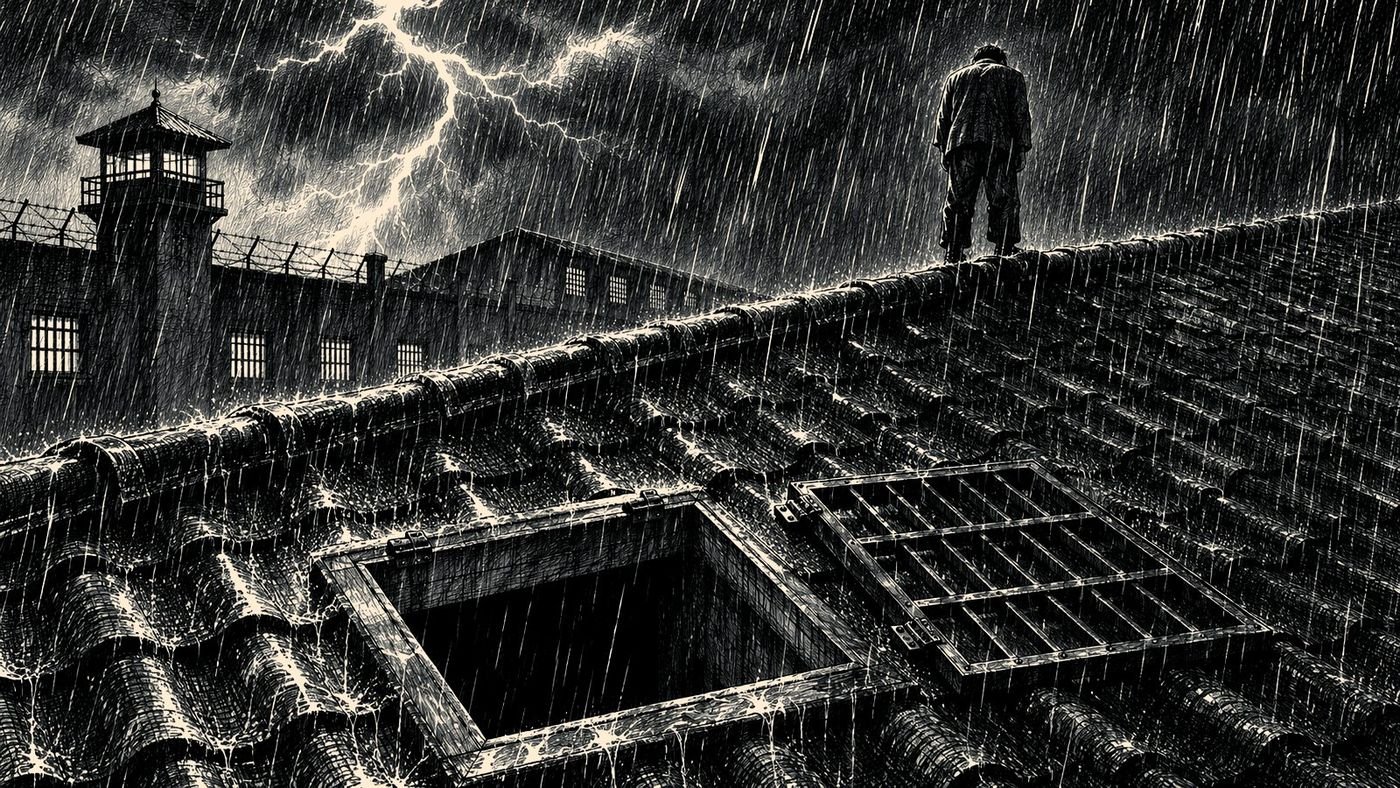
Over a long period, ten minutes at a time while the guards changed shifts, he worked at the frame of the skylight above his cell with a scrap of tin and an old nail. On 14 June 1942, in a storm, he pushed out the frame, climbed through the ceiling and got over the wall.
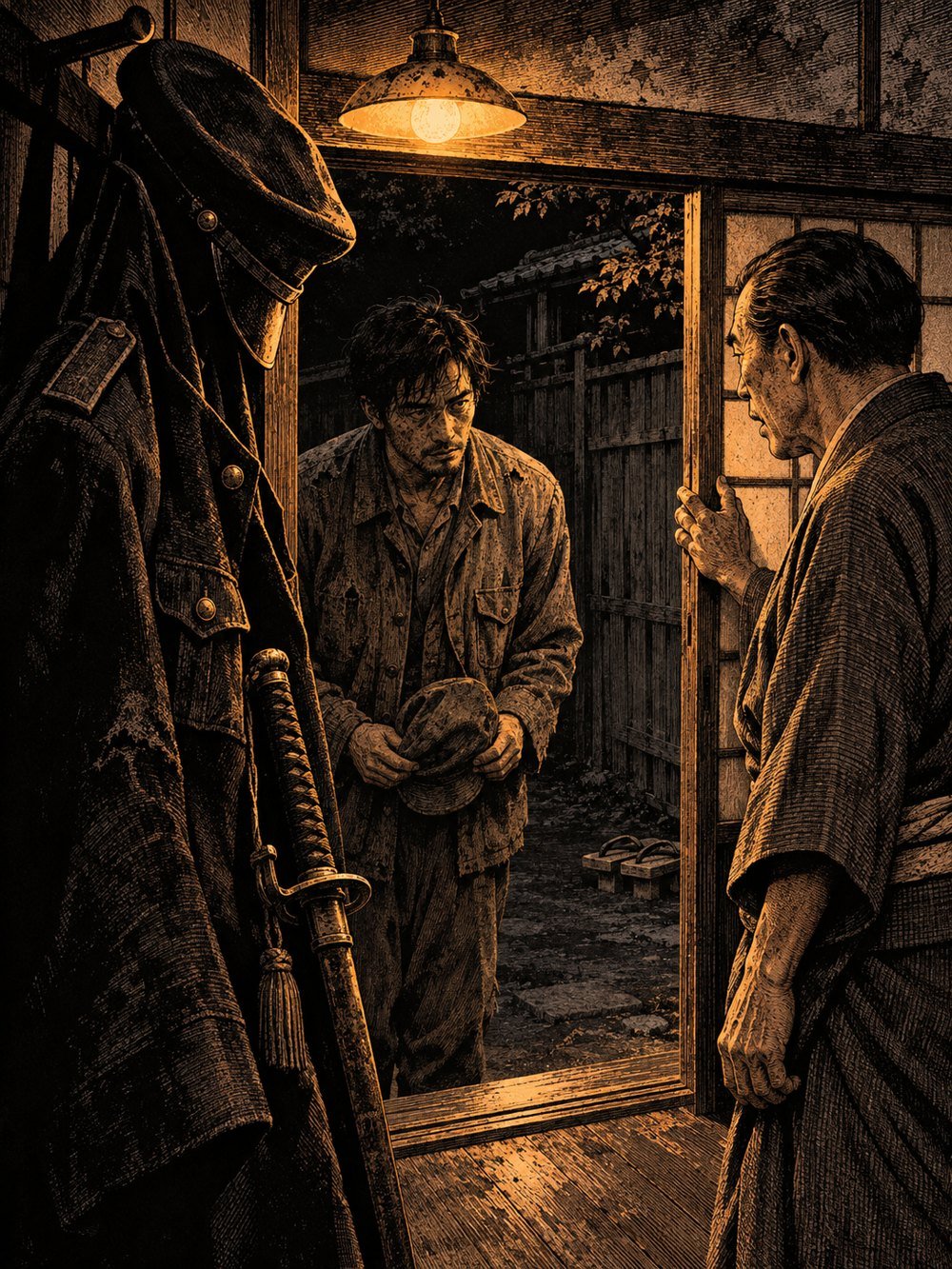
He was free for about three months. Then he went to Tokyo, to the home of Kobayashi, a senior guard he had known at Kosuge Prison. He was taken back into custody. Accounts disagree on whether he turned himself in or whether Kobayashi called the police.
In March 1943 a Tokyo court added three years for escape. The next month he was sent to the end of the line: Abashiri.
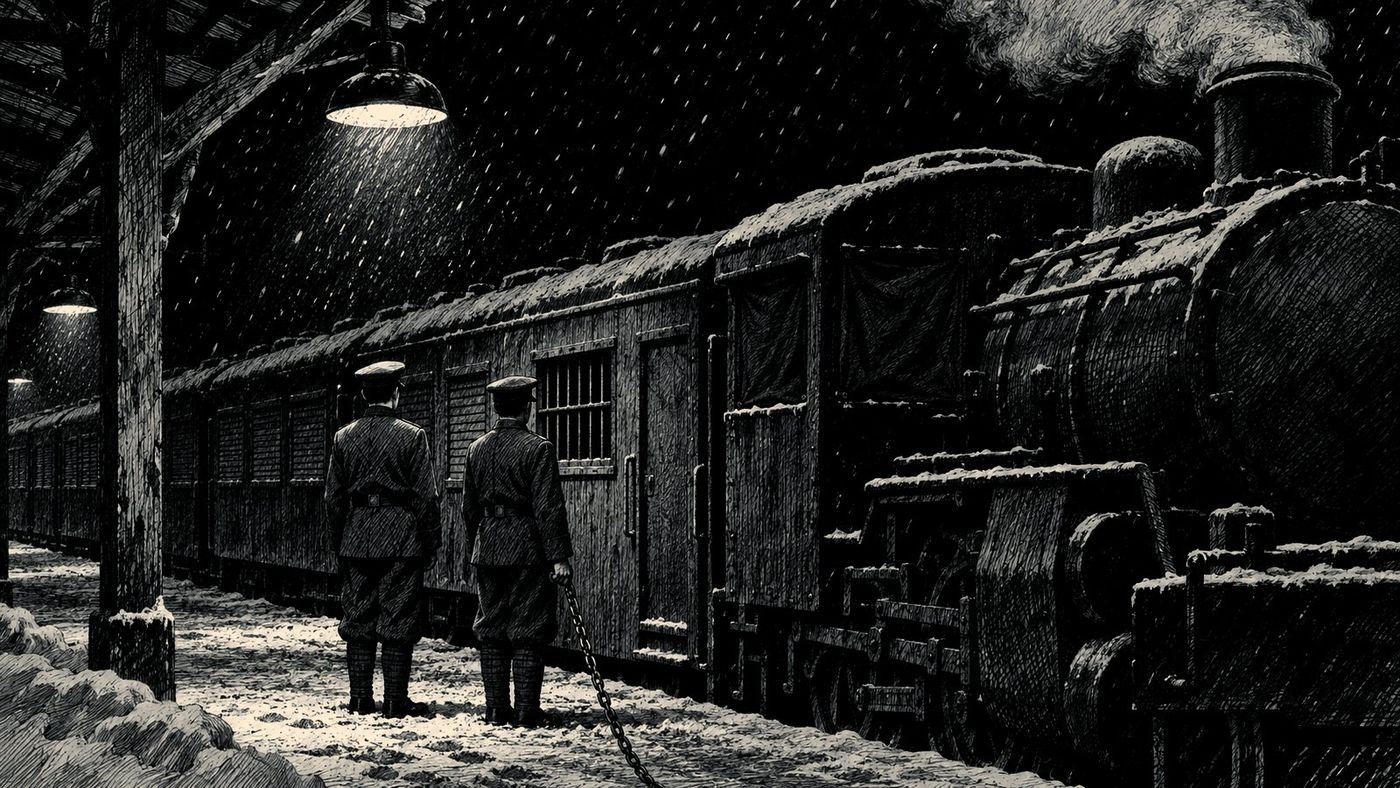
Abashiri: the prison built for men like him
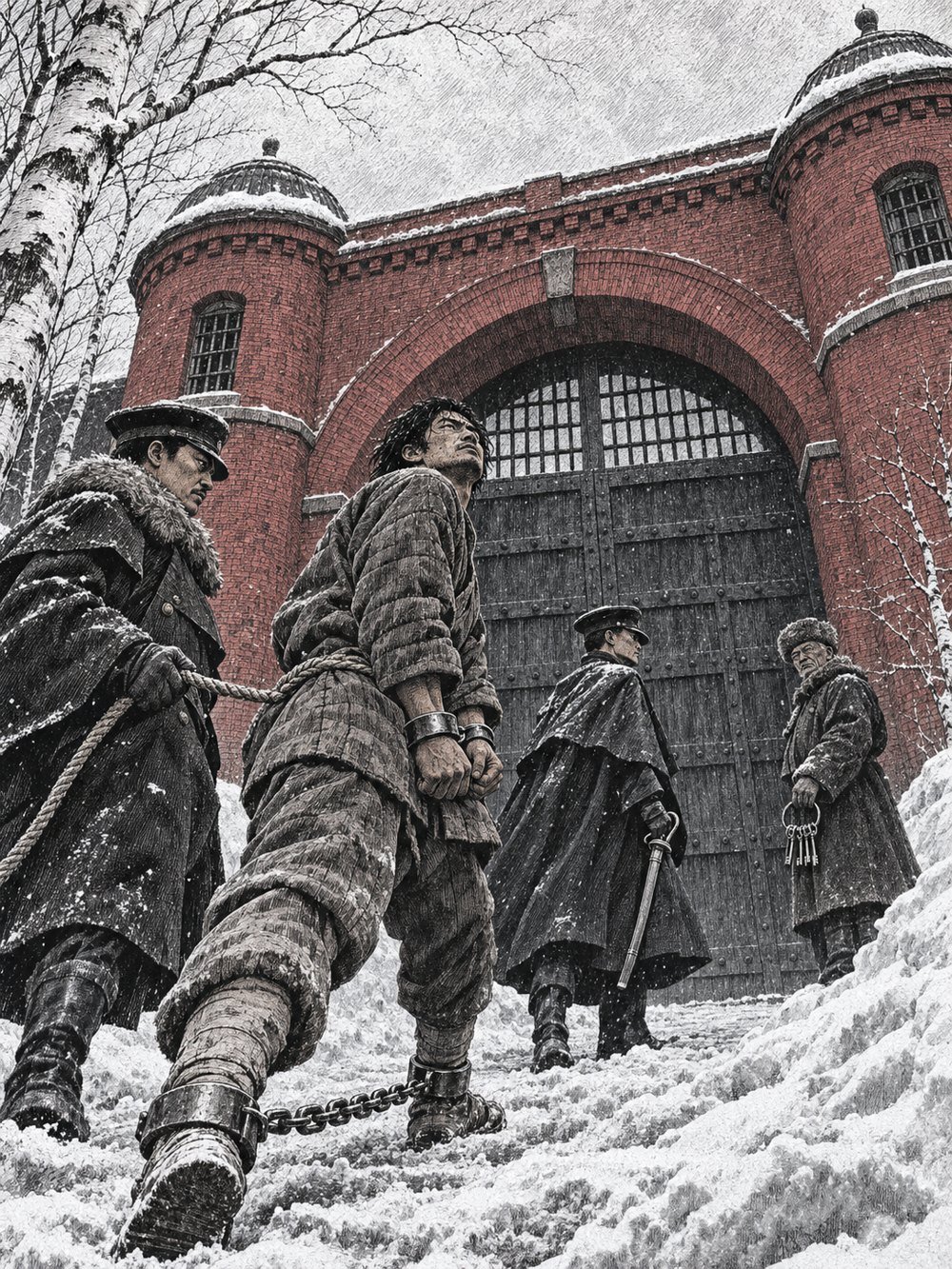
Abashiri Prison stood on the Sea of Okhotsk coast in Hokkaido, a place known for brutal winters. It was where Japan sent the prisoners it most wanted to keep.
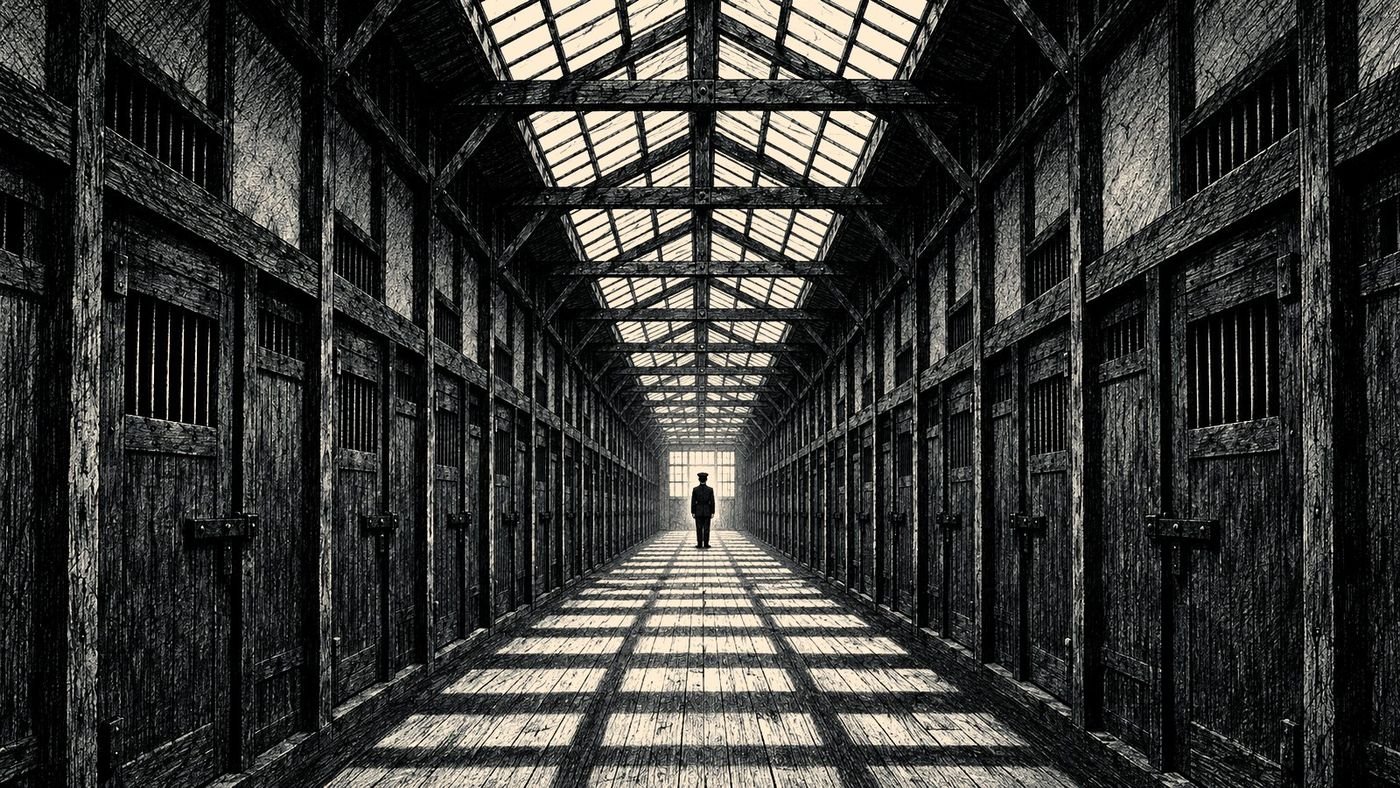
The prison put Shiratori in cell 24 of Block 4, directly in view of a guard post so he could be watched 24 hours a day. He was kept in handcuffs and leg irons. In his later testimony he described the cold, and said he believed he would be killed there.
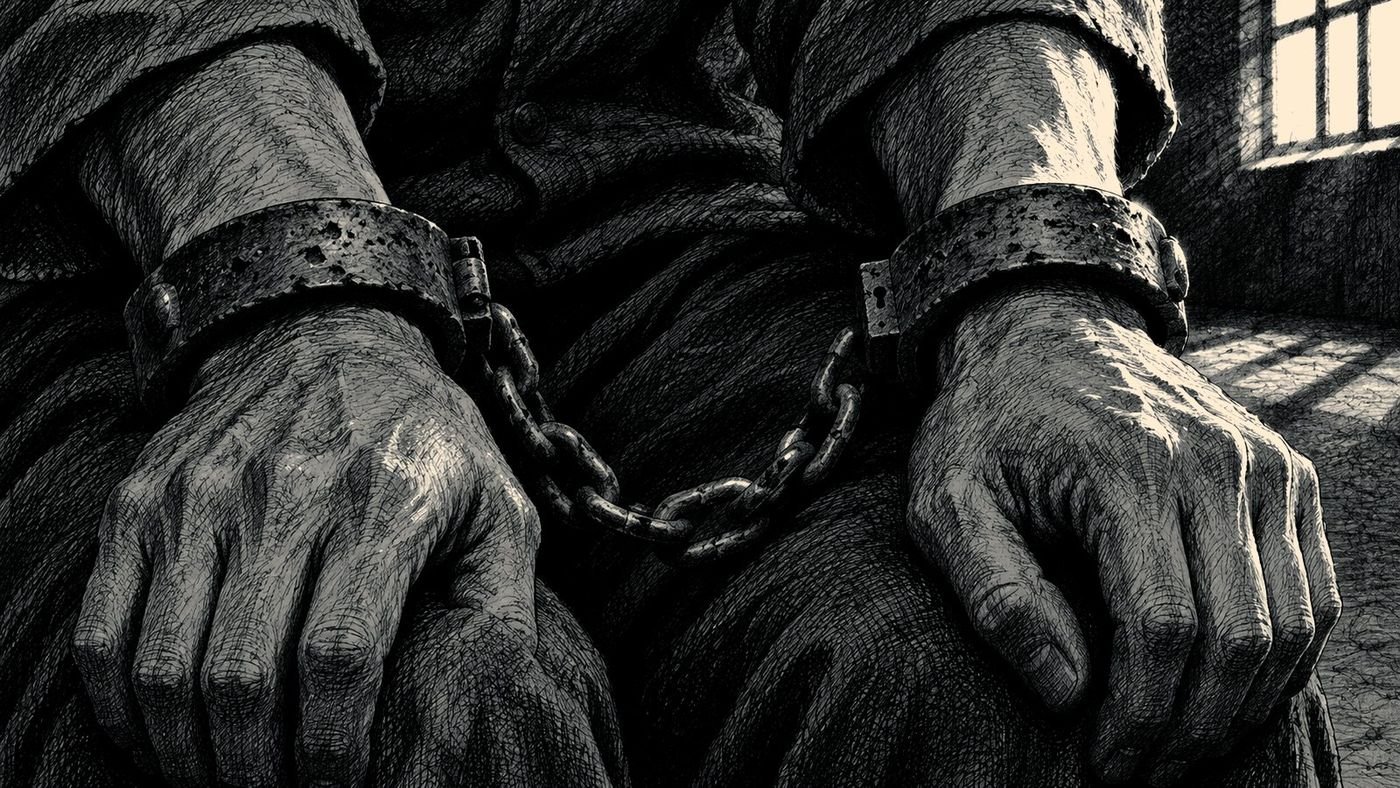
Within two months, according to old prison records, he had broken four sets of handcuffs.
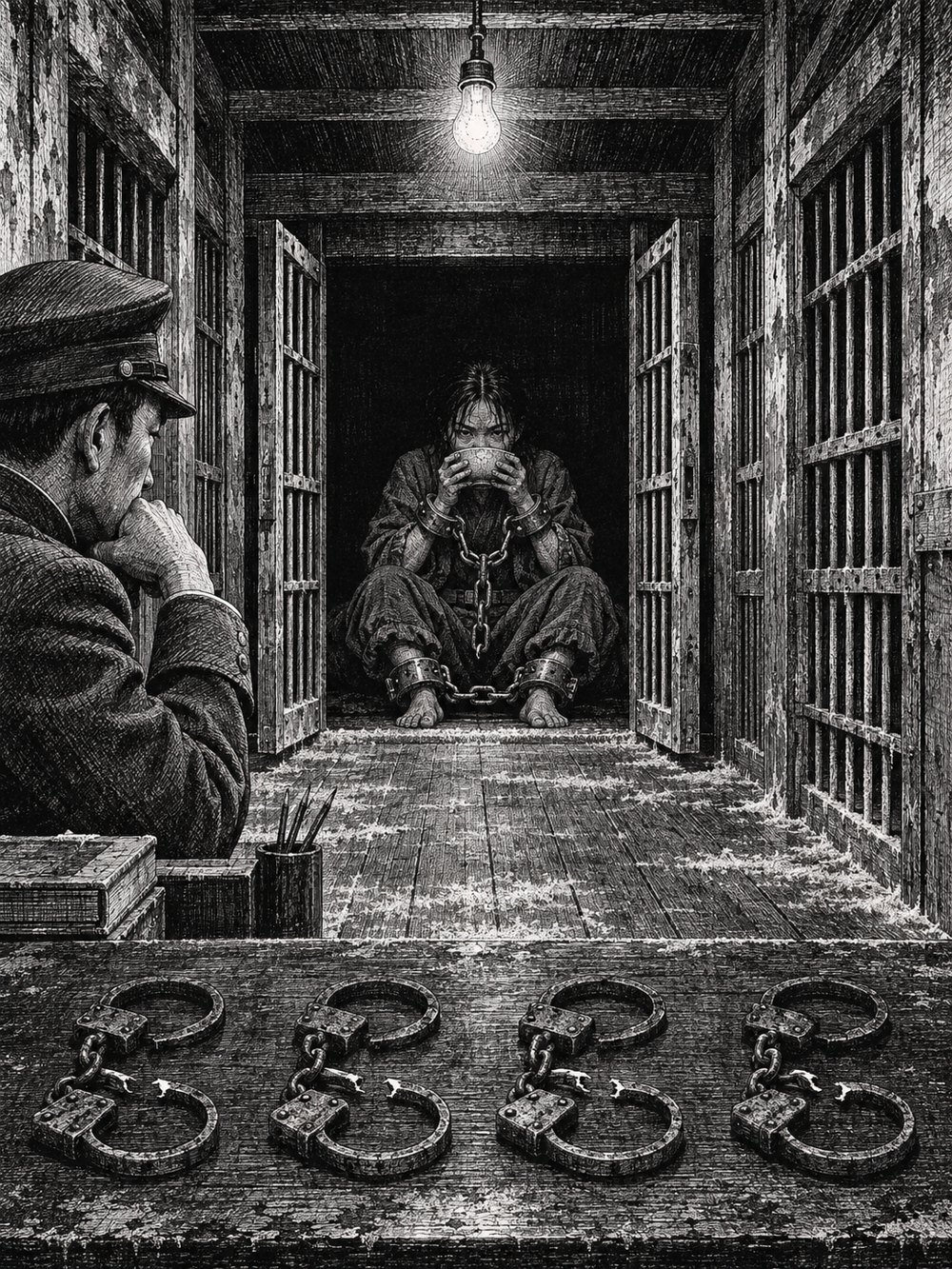
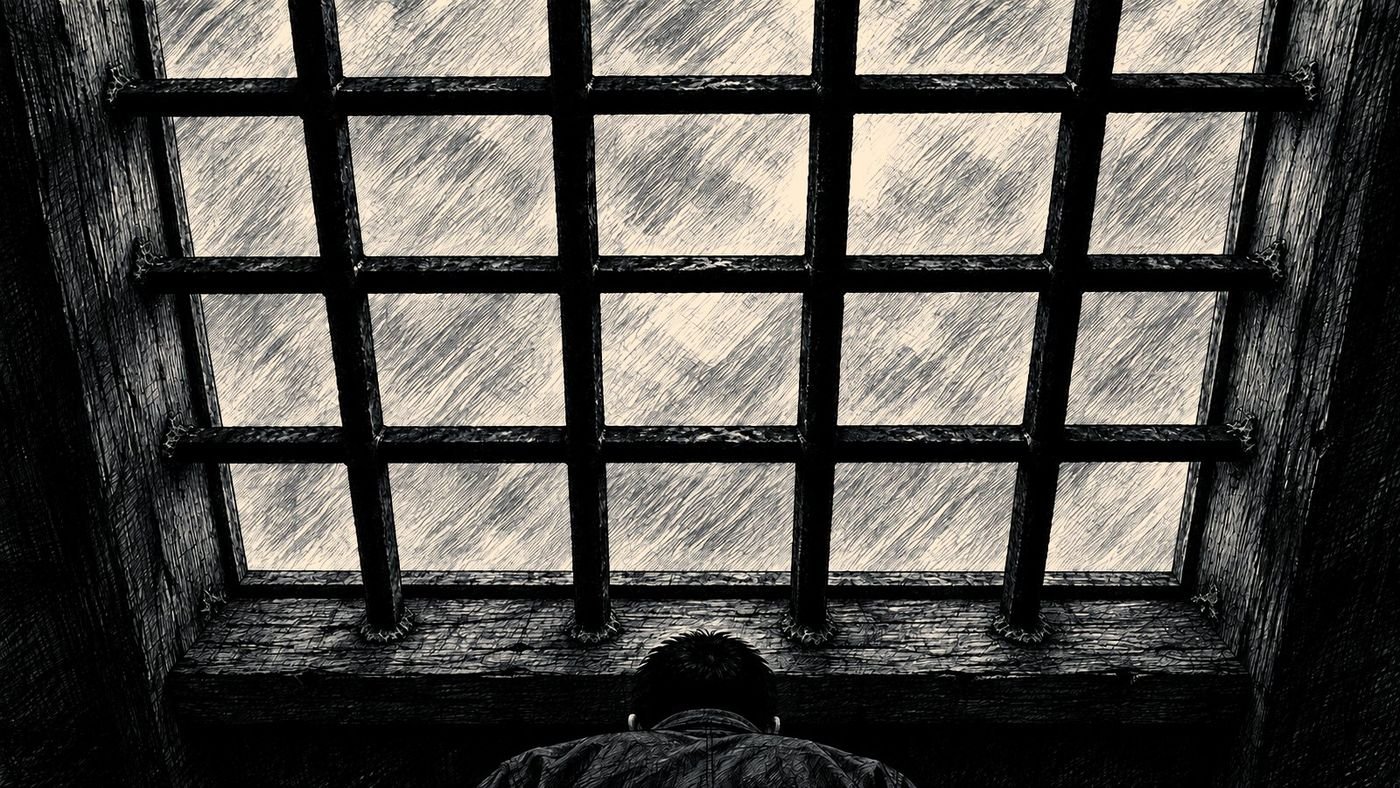
Escape three: the night of the blackout
The war gave him his chance. By 1944 the prison was short of guards, and the nights were dark because of wartime blackout rules.

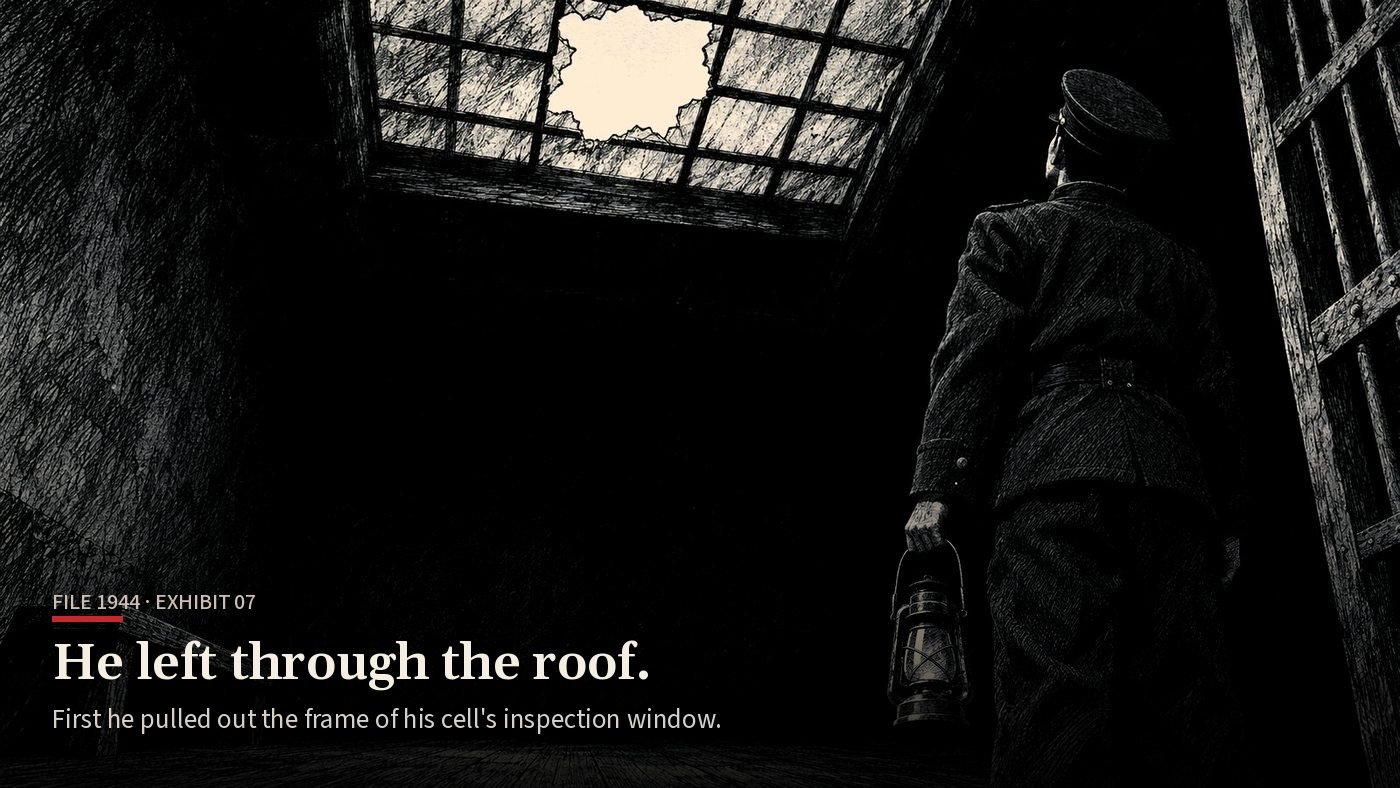
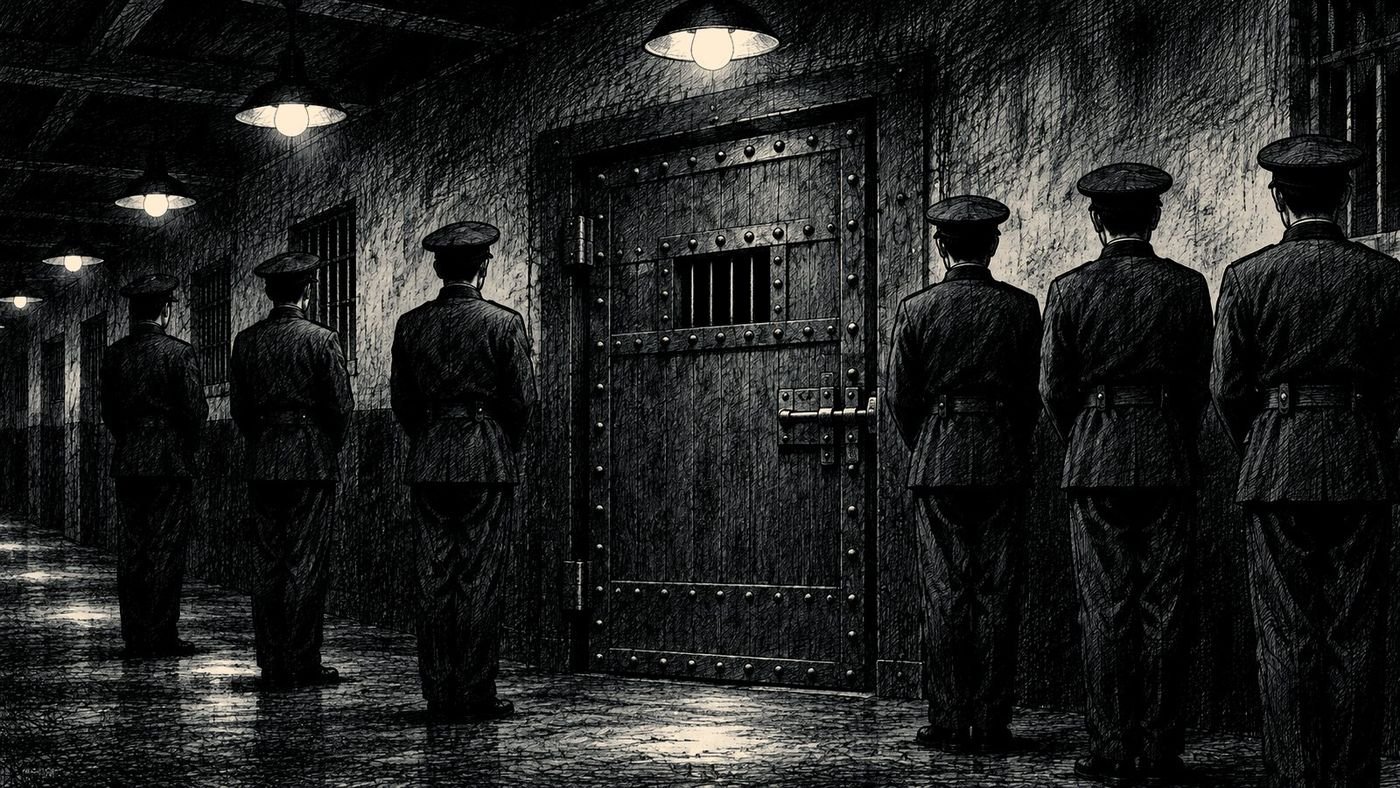
The prison’s own history, quoted in later accounts, describes what he did on 26 August. At about 9:17 p.m., after the evening inspection, he removed bolts he had already loosened on his handcuffs and leg irons. He pulled out the frame of the small inspection window in his cell door, a hole about 20 by 40 centimetres with five iron bars, and squeezed through it. He climbed to the skylight, broke the glass with his head, crossed the roof, dropped down and put a ladder against the outer wall.

Journalist Mitsunori Saito, who met Shiratori in later life, wrote that he watched him dislocate his own shoulders on request.

The inspection window is still on display at the Abashiri Prison Museum.
Two years in the mountains
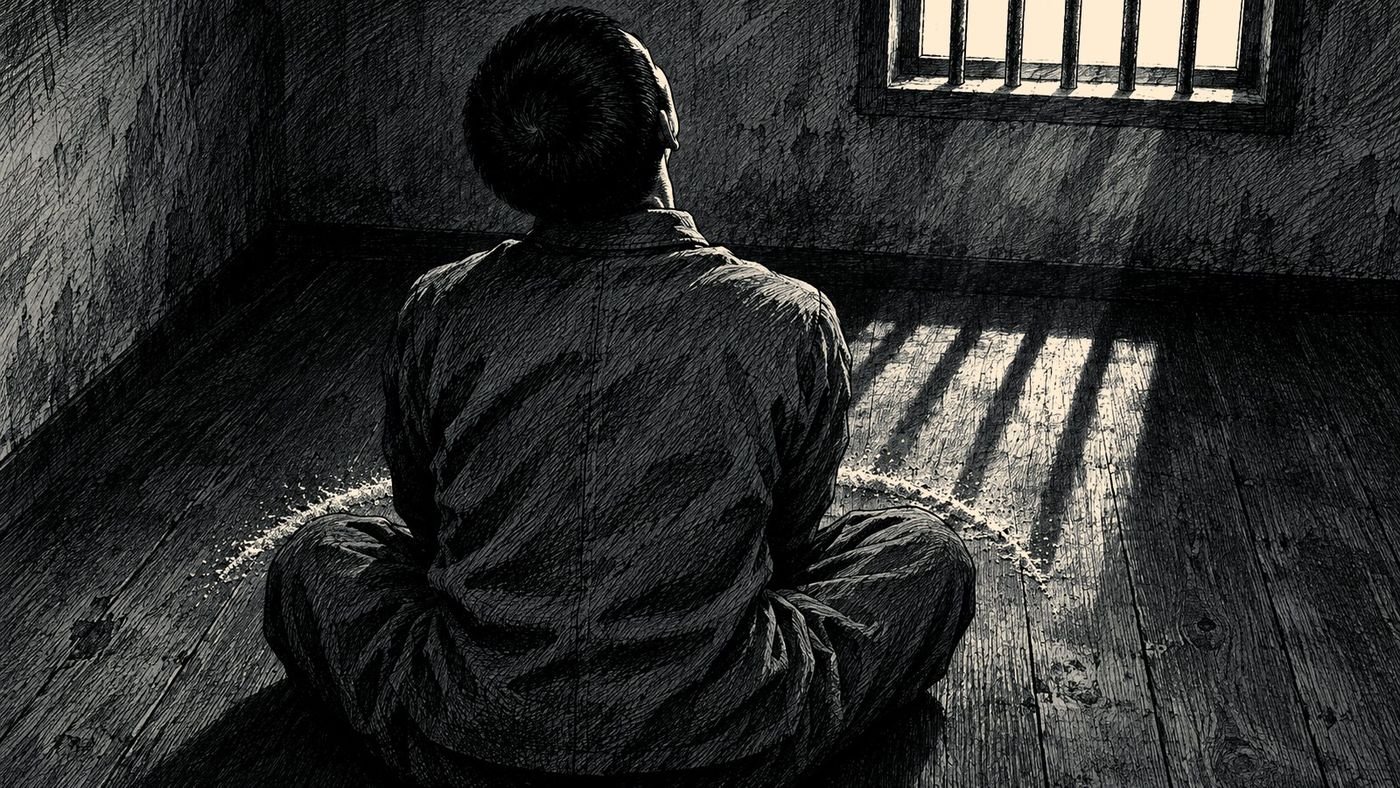
Shiratori spent the next two years hiding in the mountains, reportedly in an abandoned mine. When he finally came down to a village, he learned that the war had been over for months.

In the summer of 1946, by most accounts, he was caught taking vegetables from a field. There was a fight with the landowner, and the man died of a stab wound. Shiratori said he had been defending himself.
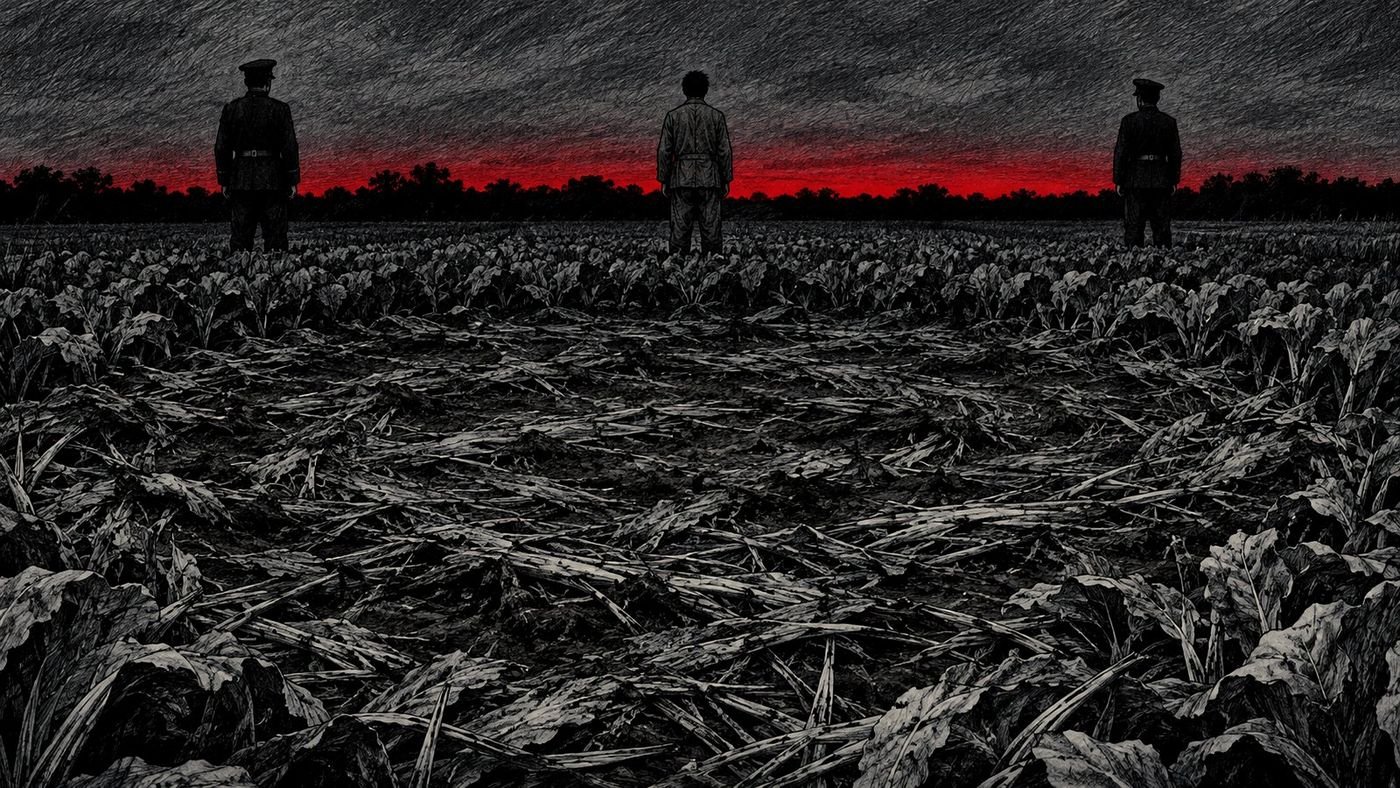
He was arrested and tried in Sapporo.
Escape four: Sapporo, 1947
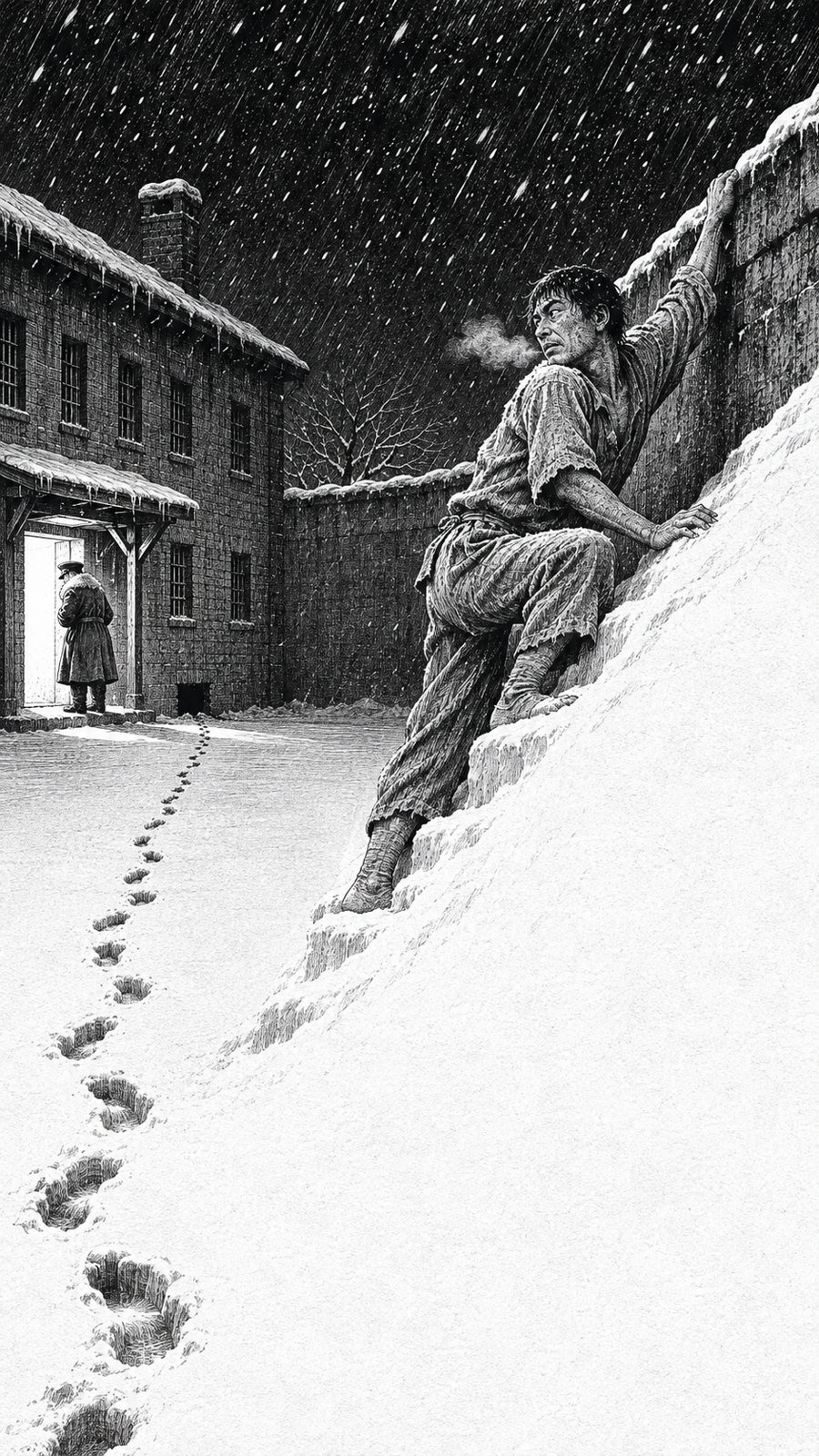
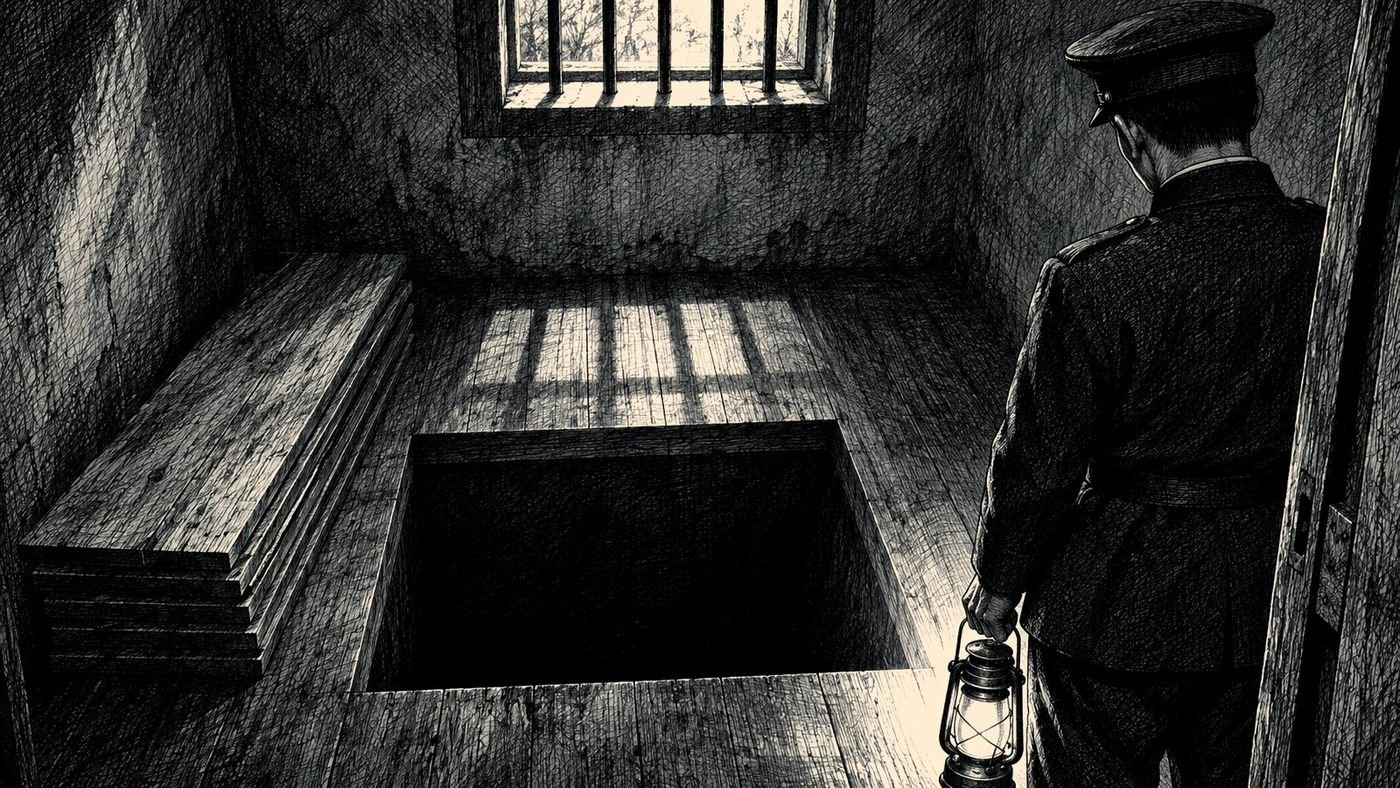
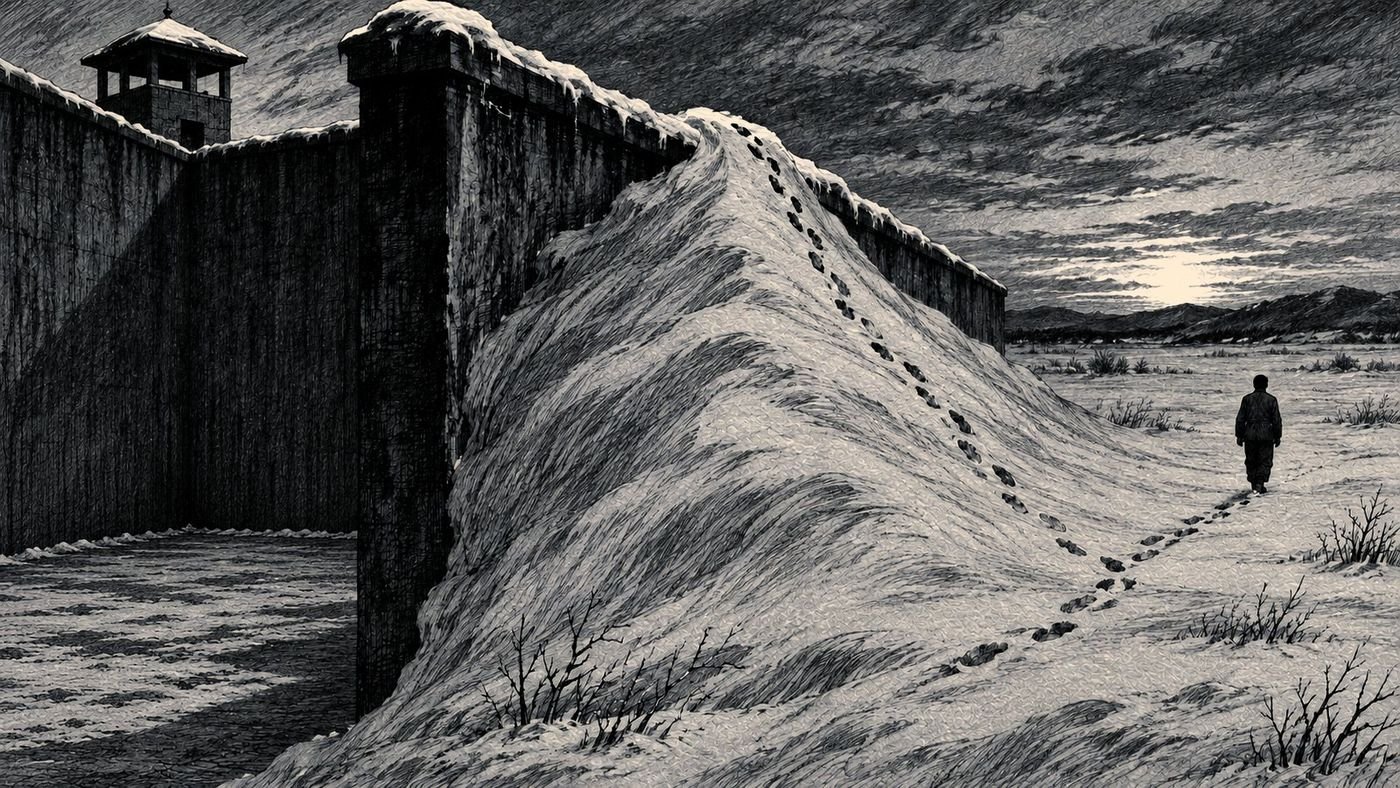
Sapporo Prison put him in a reinforced cell watched by a team of guards. On the night of 31 March 1947 he cut through the floorboards with a saw made from scraps of metal, dug under the floor with eating utensils, came up outside the building and climbed the outer wall, using banked snow as a step.

This time he stayed out for about ten months.
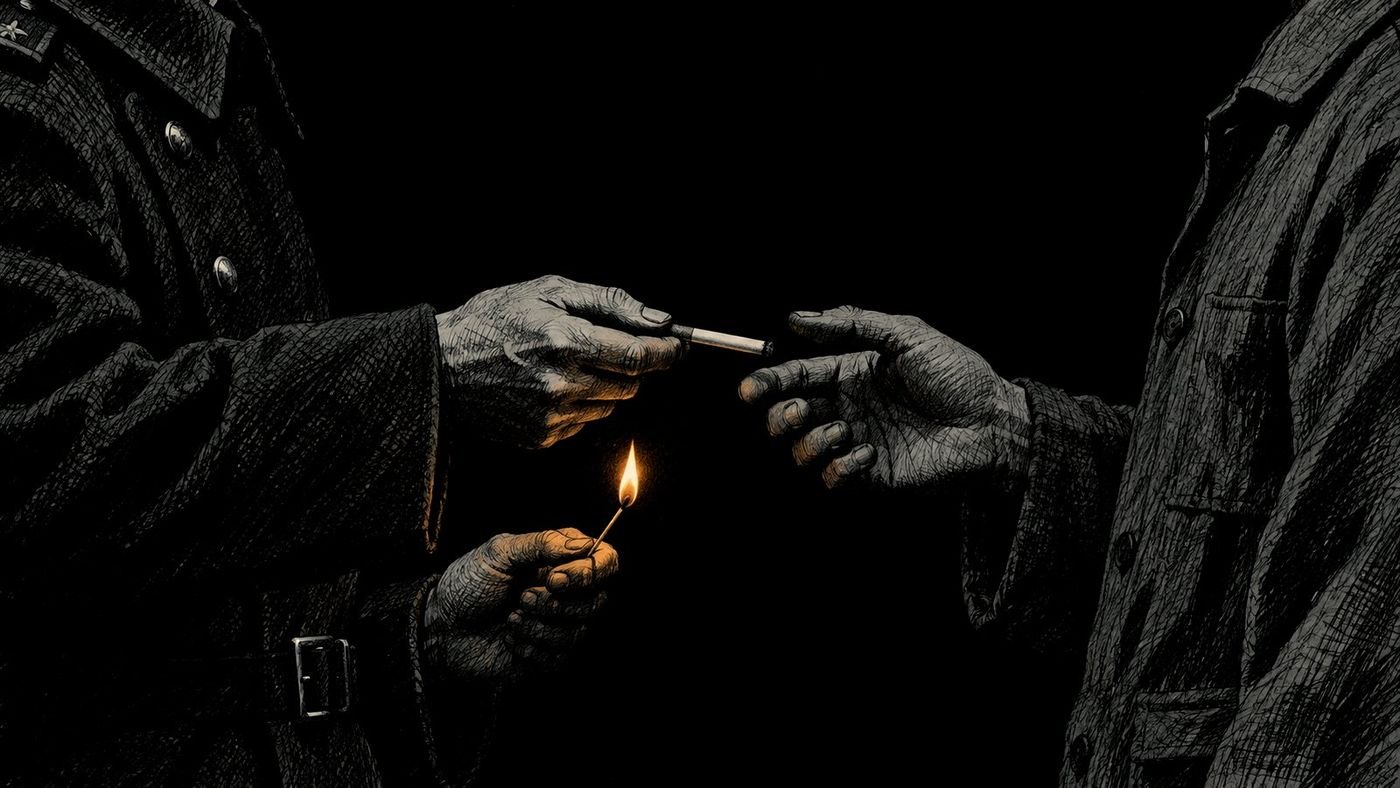
On 19 January 1948, according to the most detailed account, a police officer on patrol in Sapporo stopped him for questioning. The officer was friendly and offered him a cigarette. Shiratori told him who he was.
The court that listened
What happened next surprised almost everyone.
The Sapporo High Court reviewed the case of the farmer’s death. It accepted at least part of Shiratori’s account of how the fight happened. The death sentence that some sources say had been passed was set aside, and he was given 20 years.

In August 1948 he was moved to Fuchu Prison in Tokyo.

The fifth prison
Every prison before Fuchu had answered Shiratori with more steel: special cells, more guards, handcuffs that were never taken off.
Fuchu did the opposite. According to the accounts we found, the warden had his restraints removed and treated him like any other prisoner.
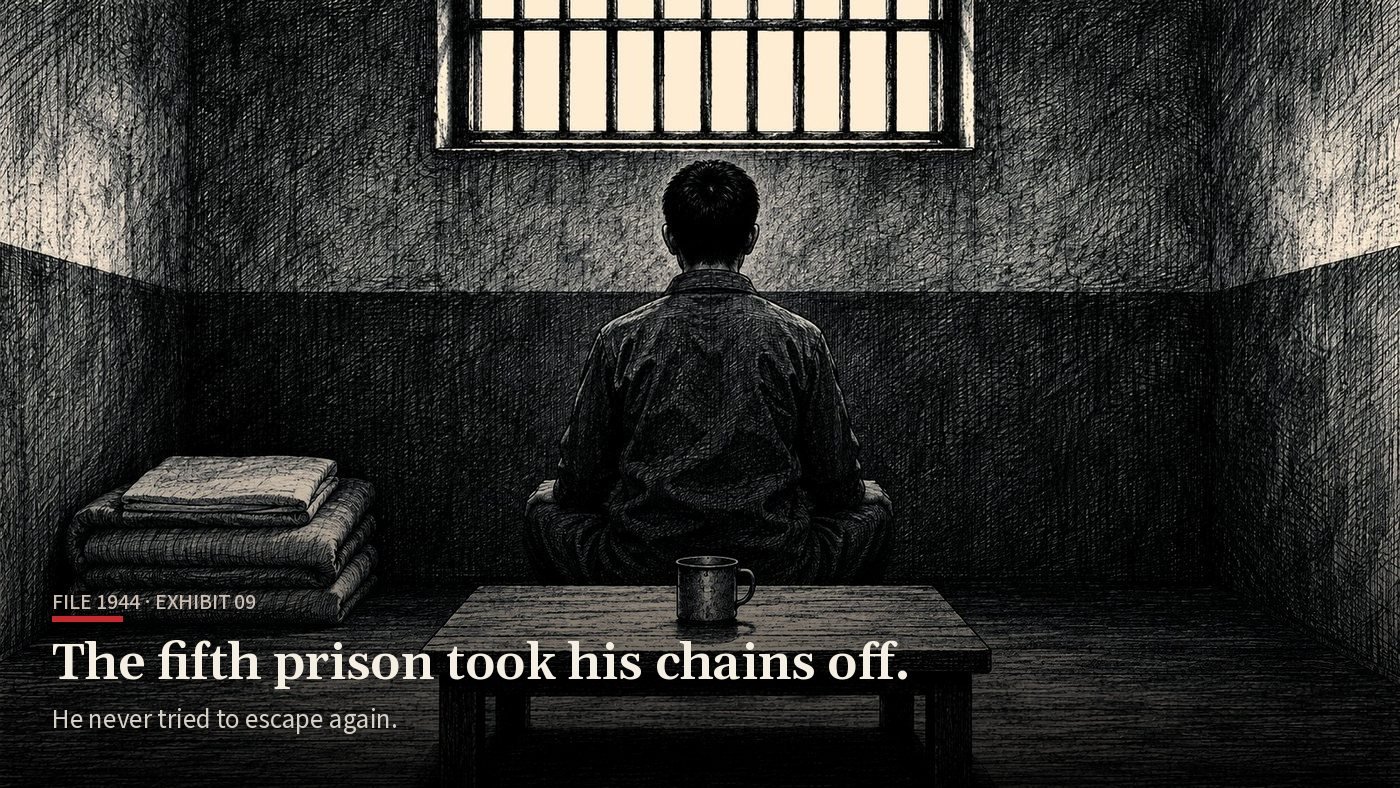
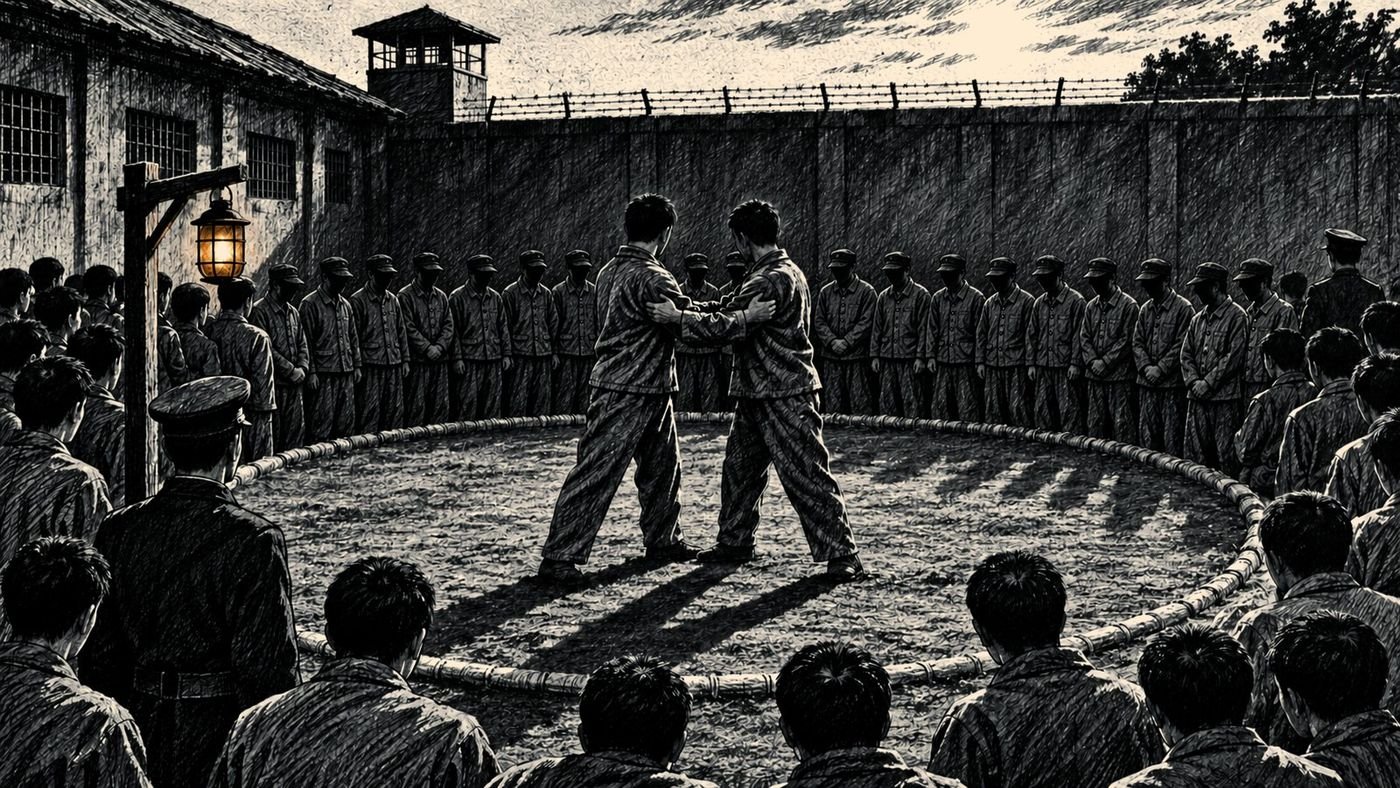
Shiratori never tried to escape again. He became a model prisoner. One account says he won the prison’s annual sumo tournament.
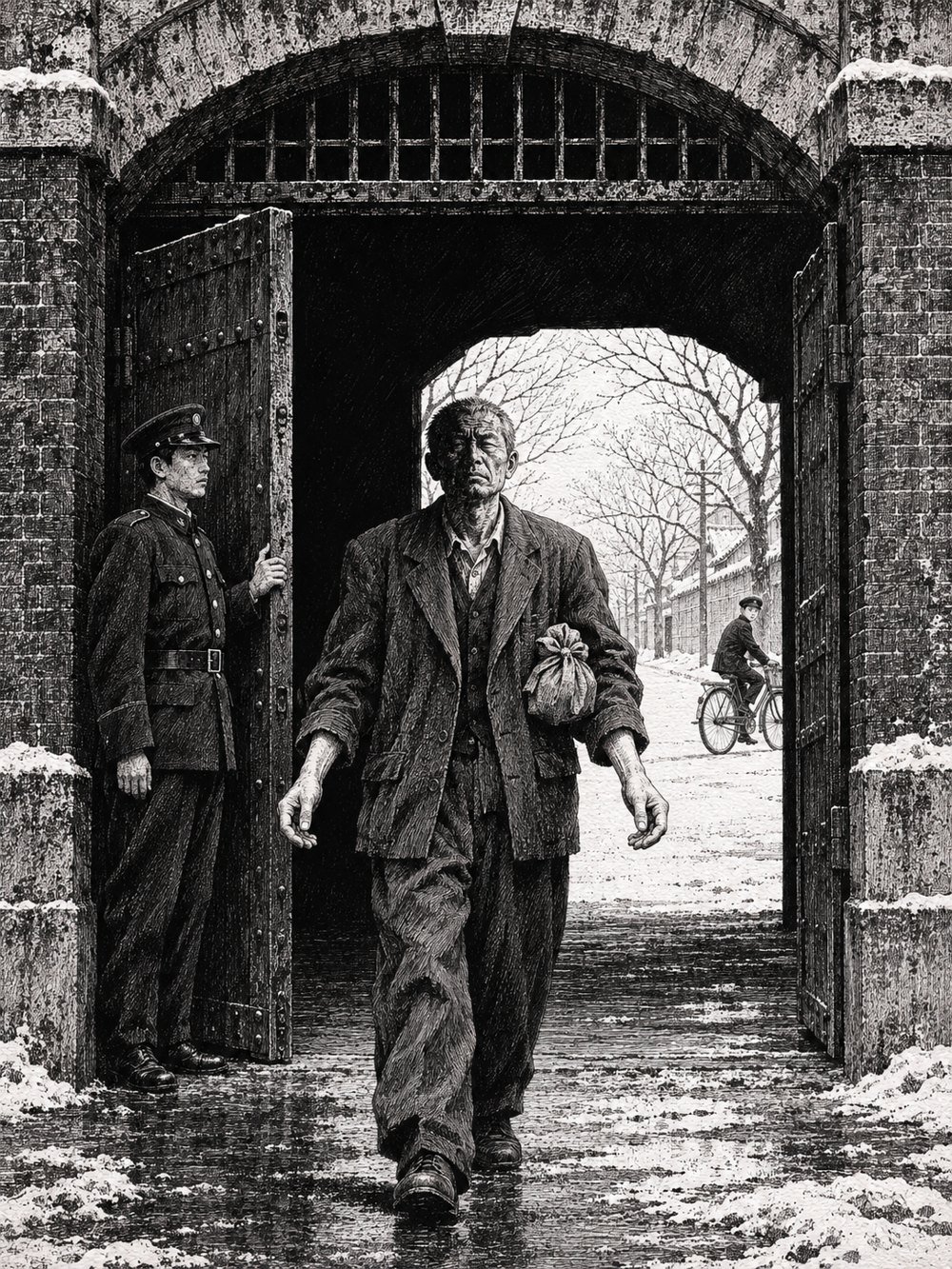
He was paroled on 21 December 1961. He worked as a labourer in Tokyo. He died of a heart attack on 24 February 1979, aged 71. A woman who had known him during his parole years claimed his remains, so that he was not buried as an unclaimed body.
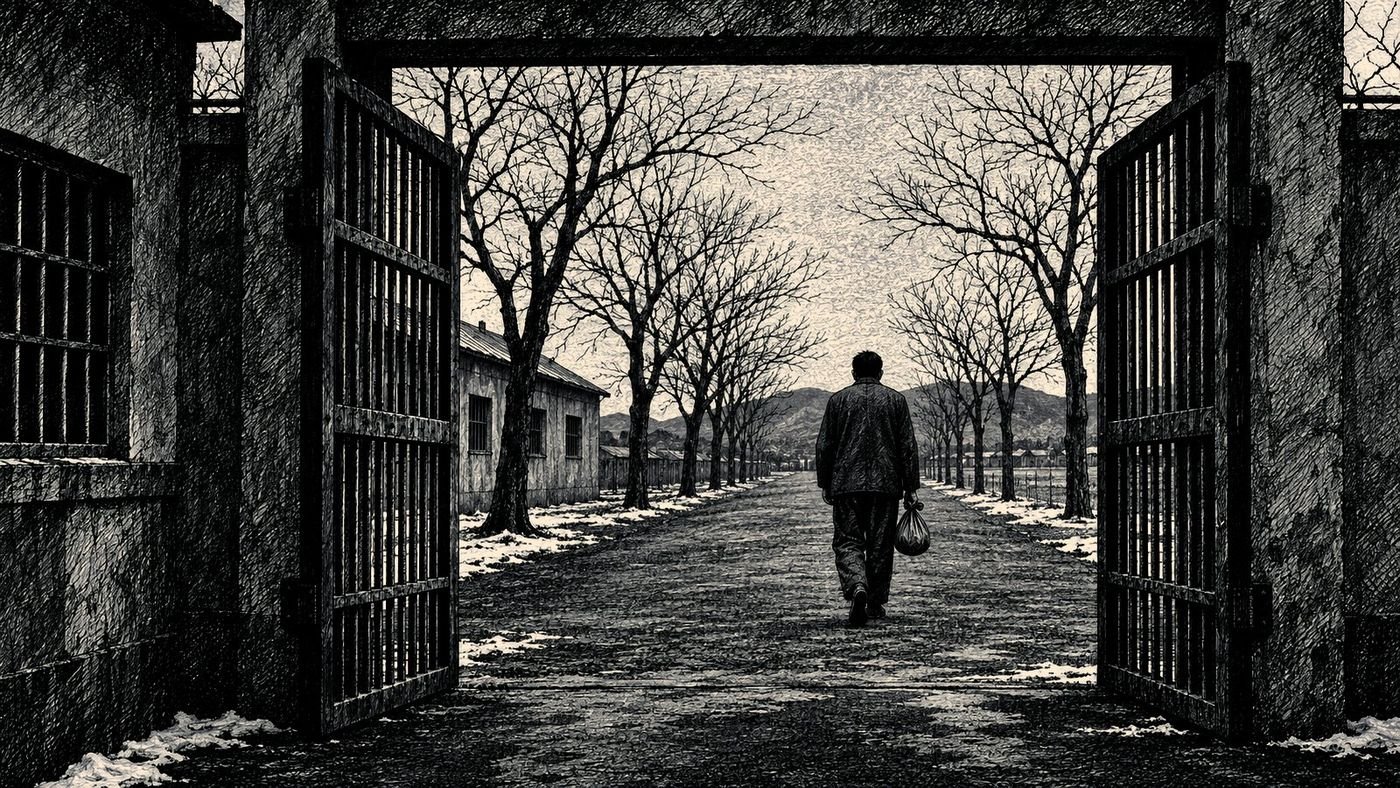
Why his name never went away
Shiratori died almost unknown. Then a novelist found him.
In 1983 Akira Yoshimura published Hagoku, which means “prison break”, a novel built on Shiratori’s life and escapes. It won the Yomiuri Prize in 1984. More than three decades later, TV Tokyo turned it into a television film, with Takayuki Yamada as the prisoner and Takeshi Kitano in the cast.
He also slipped into one of Japan’s most popular manga. In Golden Kamuy, set in Hokkaido after the Russo-Japanese War, the tattooed Abashiri escape artist Yoshitake Shiraishi is based on him.
And at the Abashiri Prison Museum, a figure of him still climbs toward the skylight of a preserved cell block, frozen halfway out.
Four prisons spent years trying to keep this man inside. Today the last of them sells tickets to watch him leave.
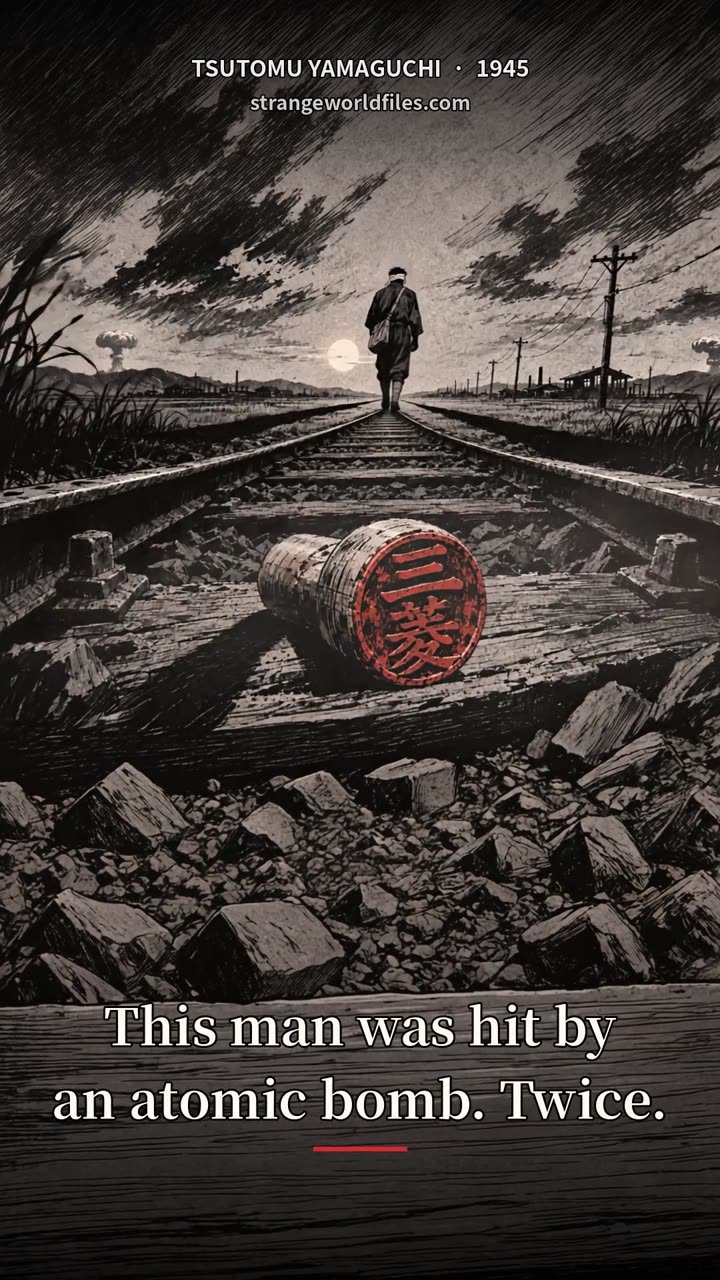
Related cases: the 48-day manhunt for the Mad Trapper of Rat River; Tsutomu Yamaguchi, who survived Hiroshima and Nagasaki; the Yonaguni Monument off Japan’s far southwest.
Evidence locker
Real photographs and records only, in the order of his prisons. The drawings above are illustrations.
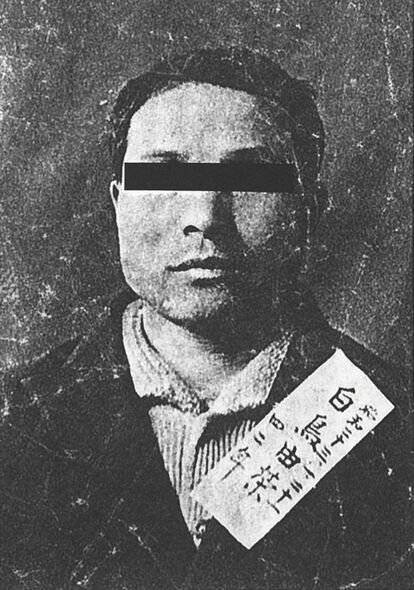 EXHIBIT A · TAP TO ENLARGE
 EXHIBIT B · TAP TO ENLARGE
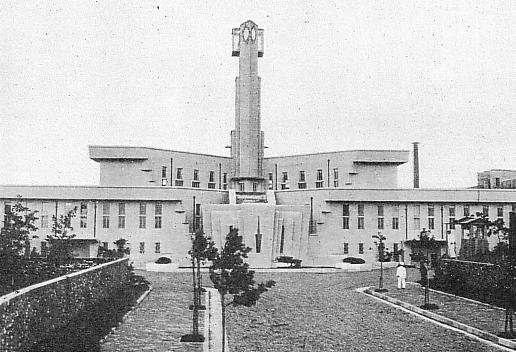 EXHIBIT C · TAP TO ENLARGE
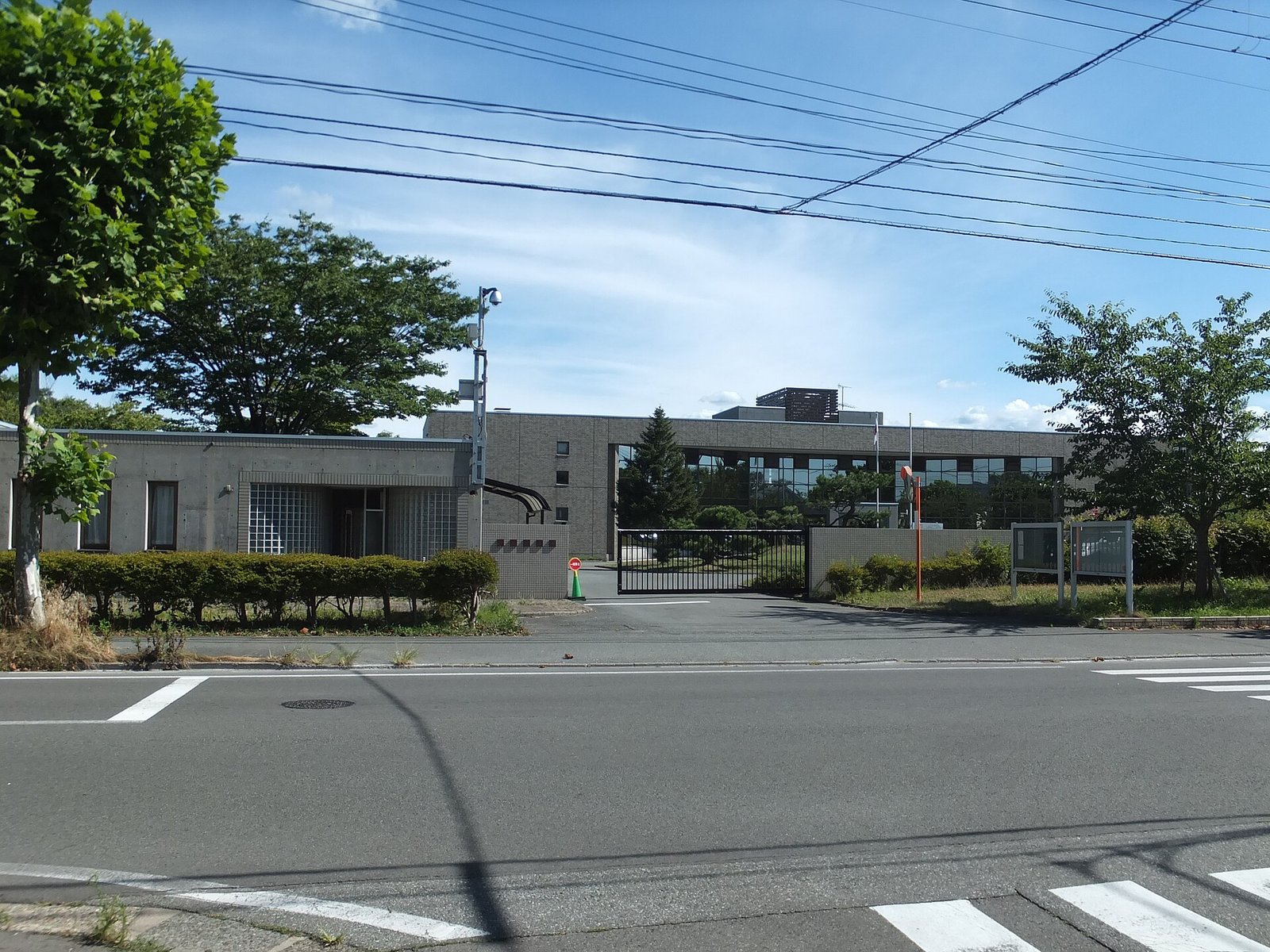 EXHIBIT D · TAP TO ENLARGE
 EXHIBIT E · TAP TO ENLARGE
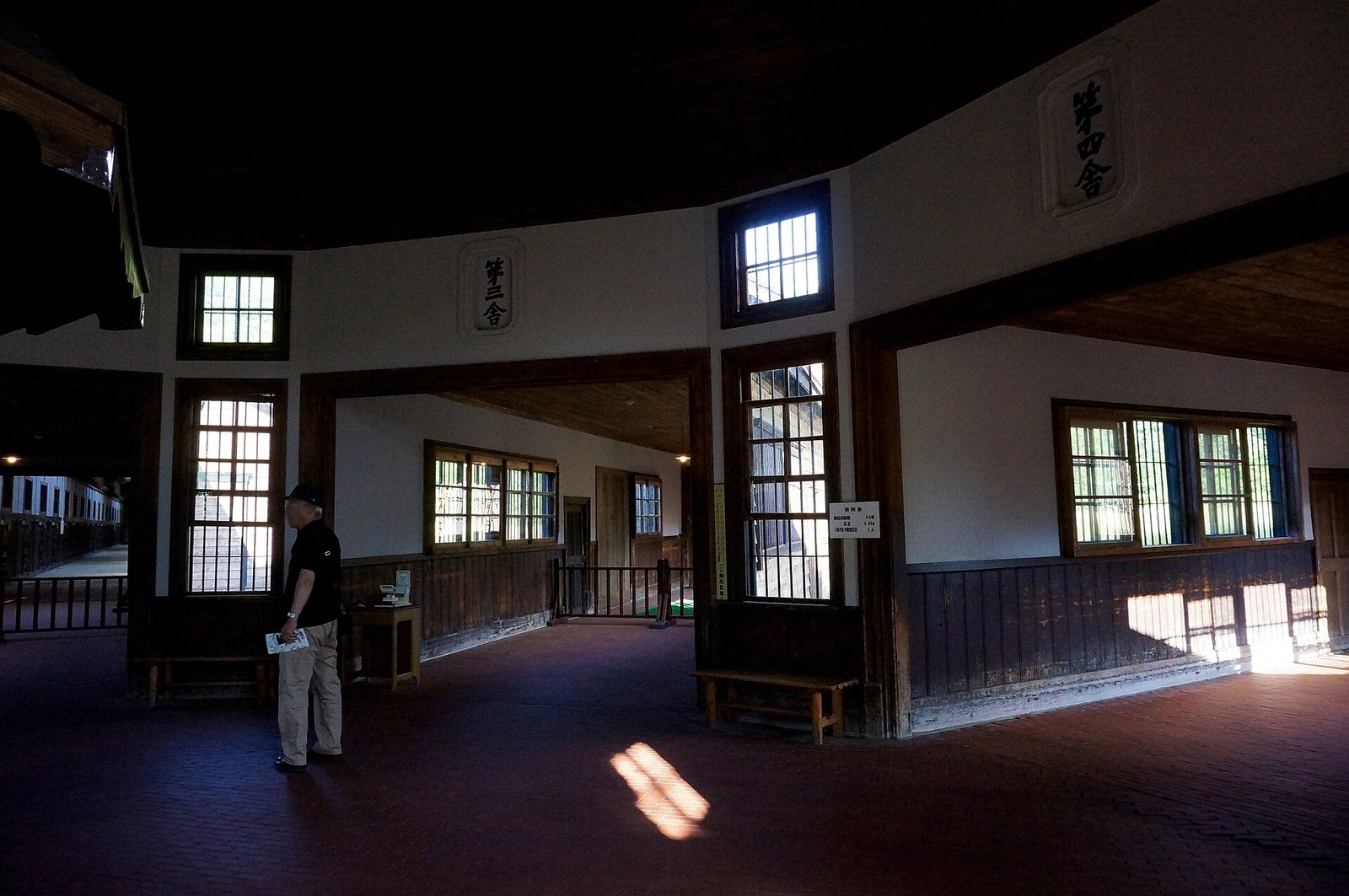 EXHIBIT F · TAP TO ENLARGE
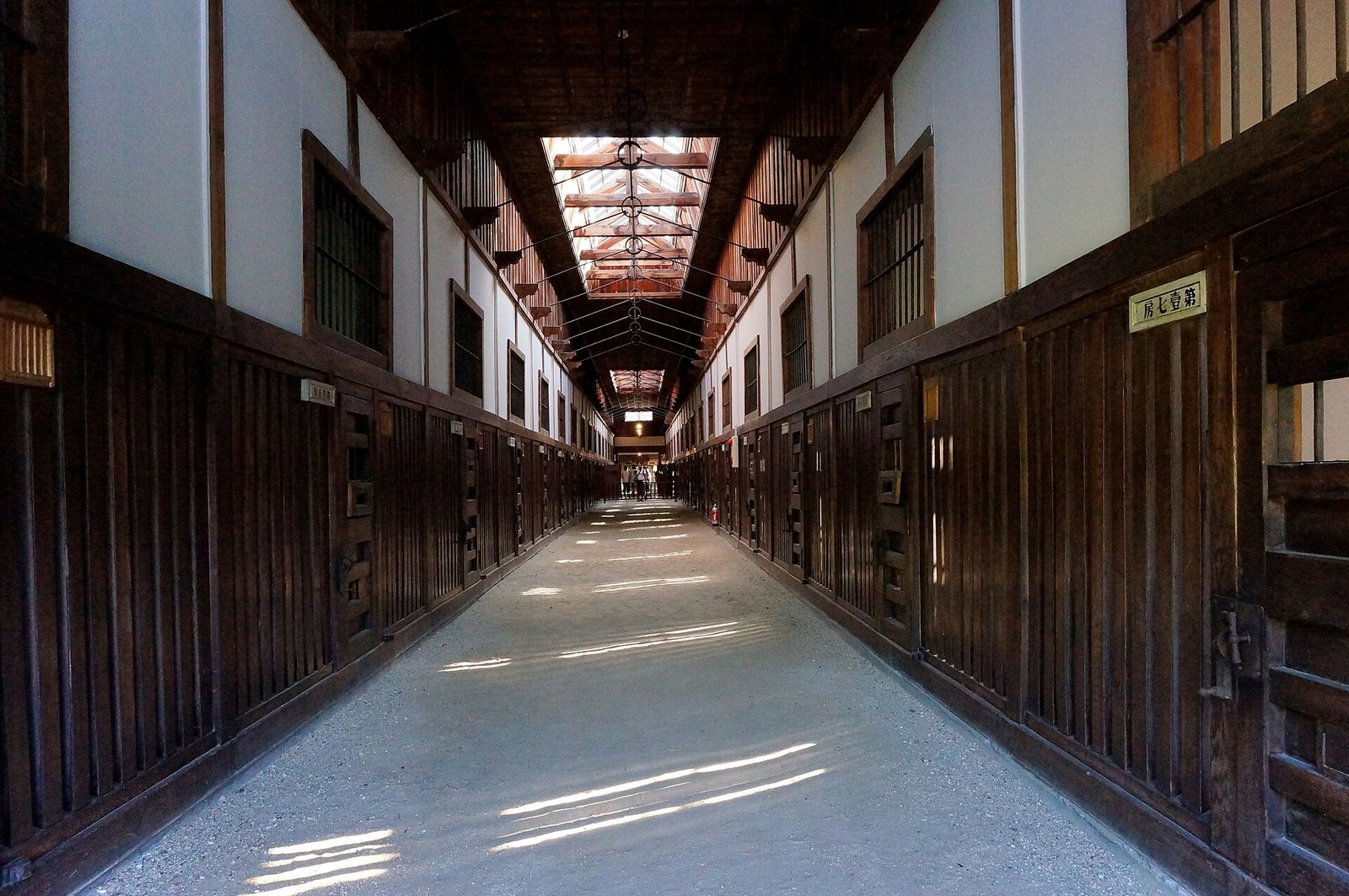 EXHIBIT G · TAP TO ENLARGE
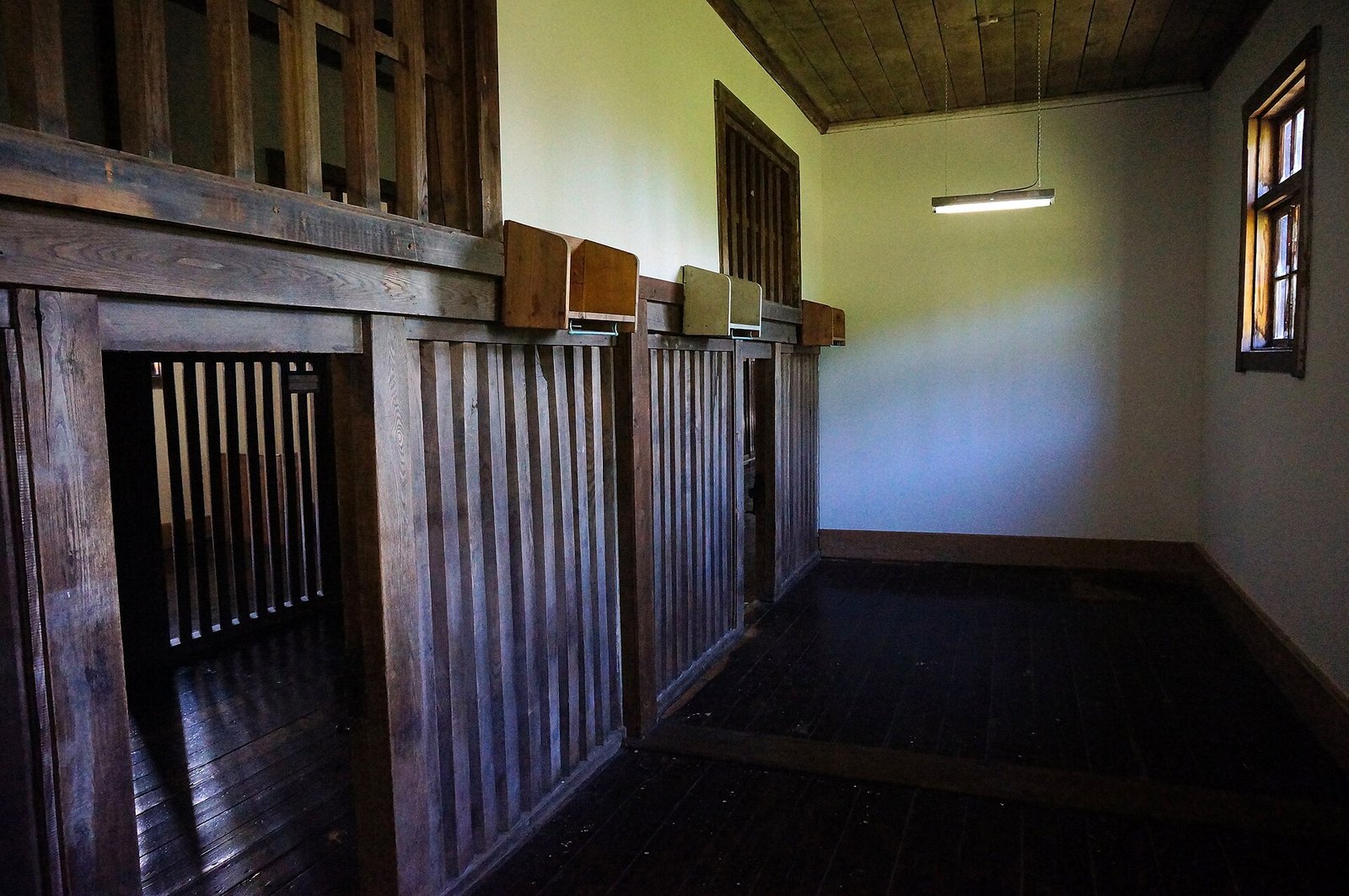 EXHIBIT H · TAP TO ENLARGE
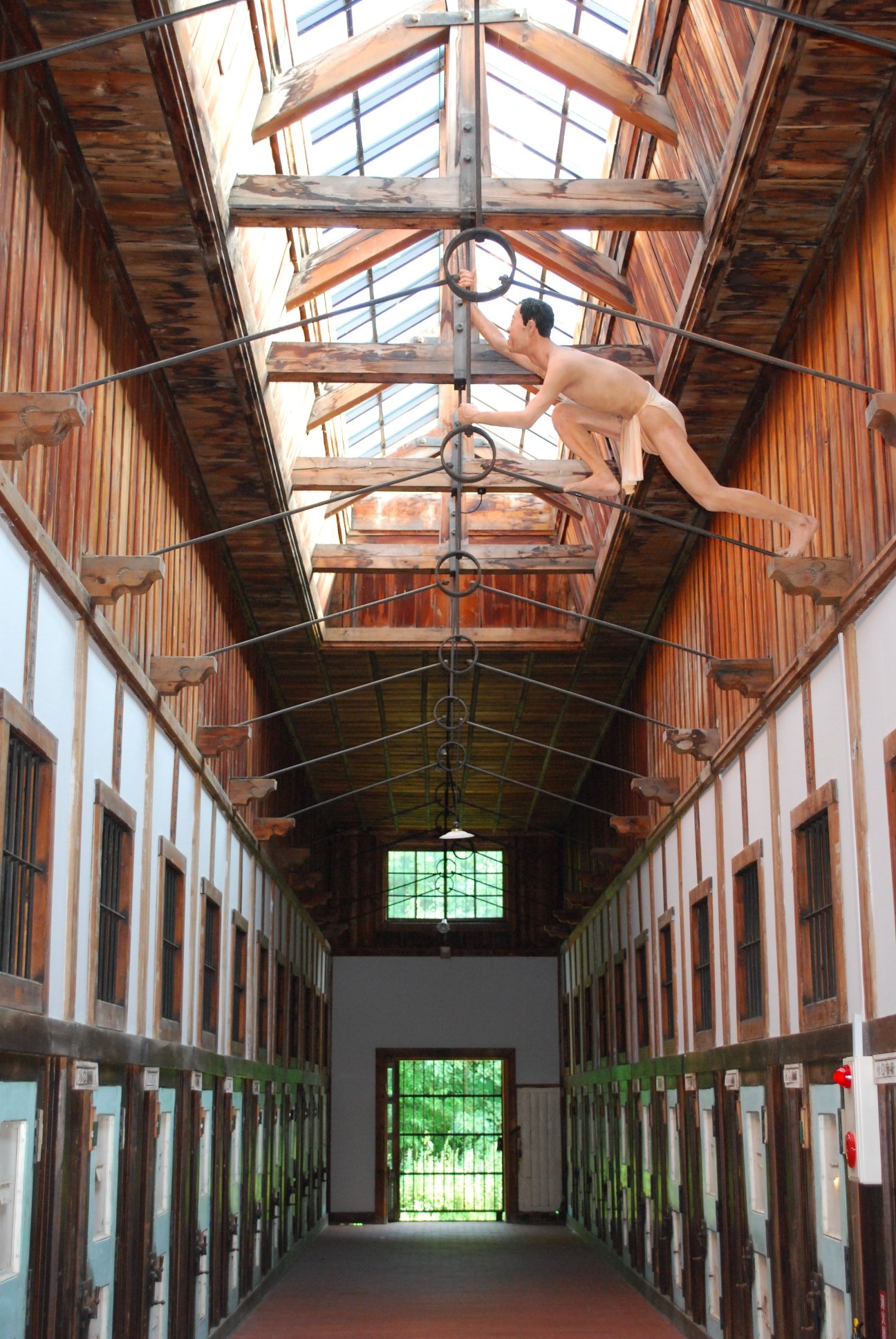 EXHIBIT I · TAP TO ENLARGE
 EXHIBIT J · TAP TO ENLARGE
 EXHIBIT K · TAP TO ENLARGE
 EXHIBIT L · TAP TO ENLARGE
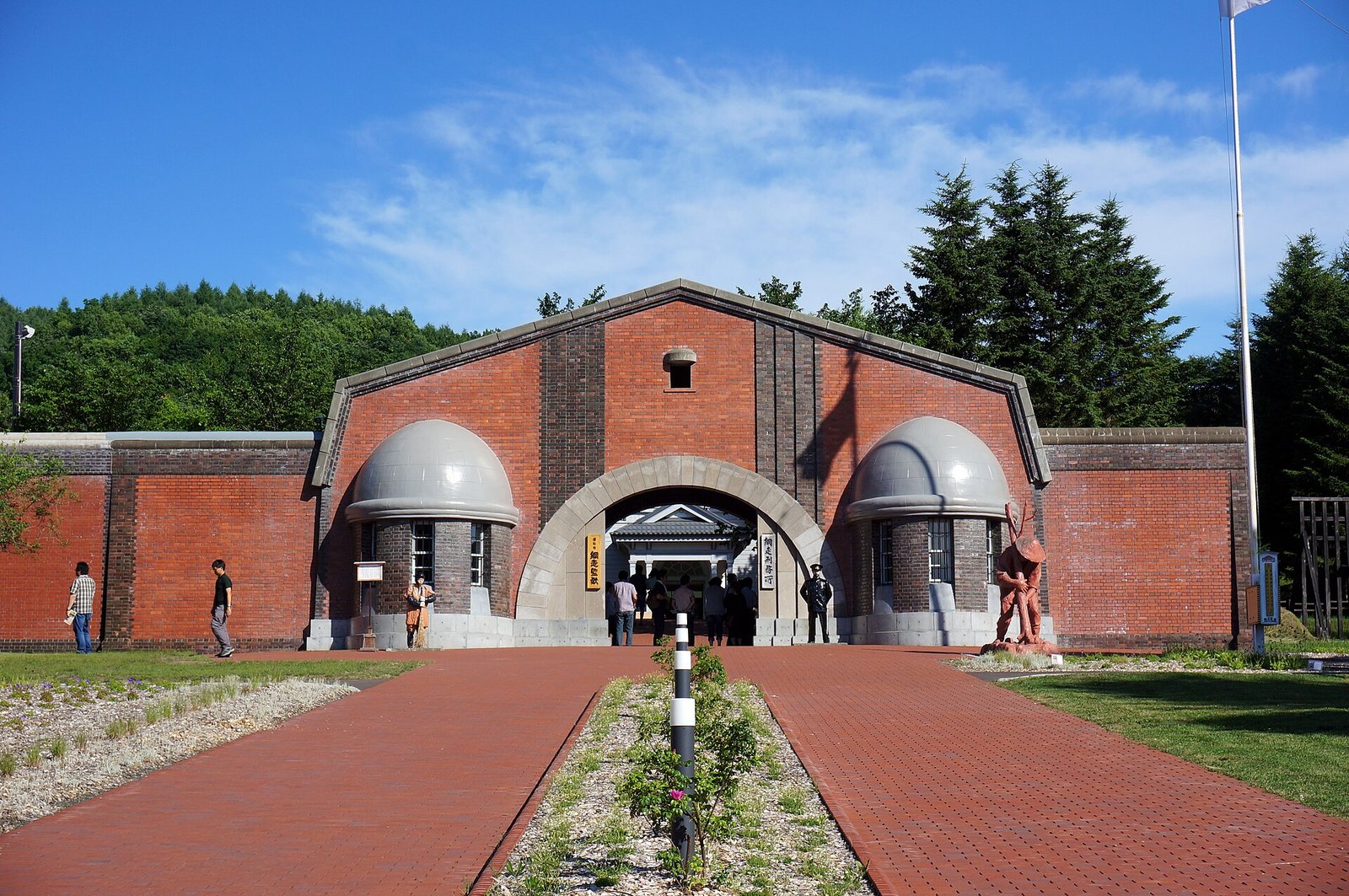 EXHIBIT M · TAP TO ENLARGE
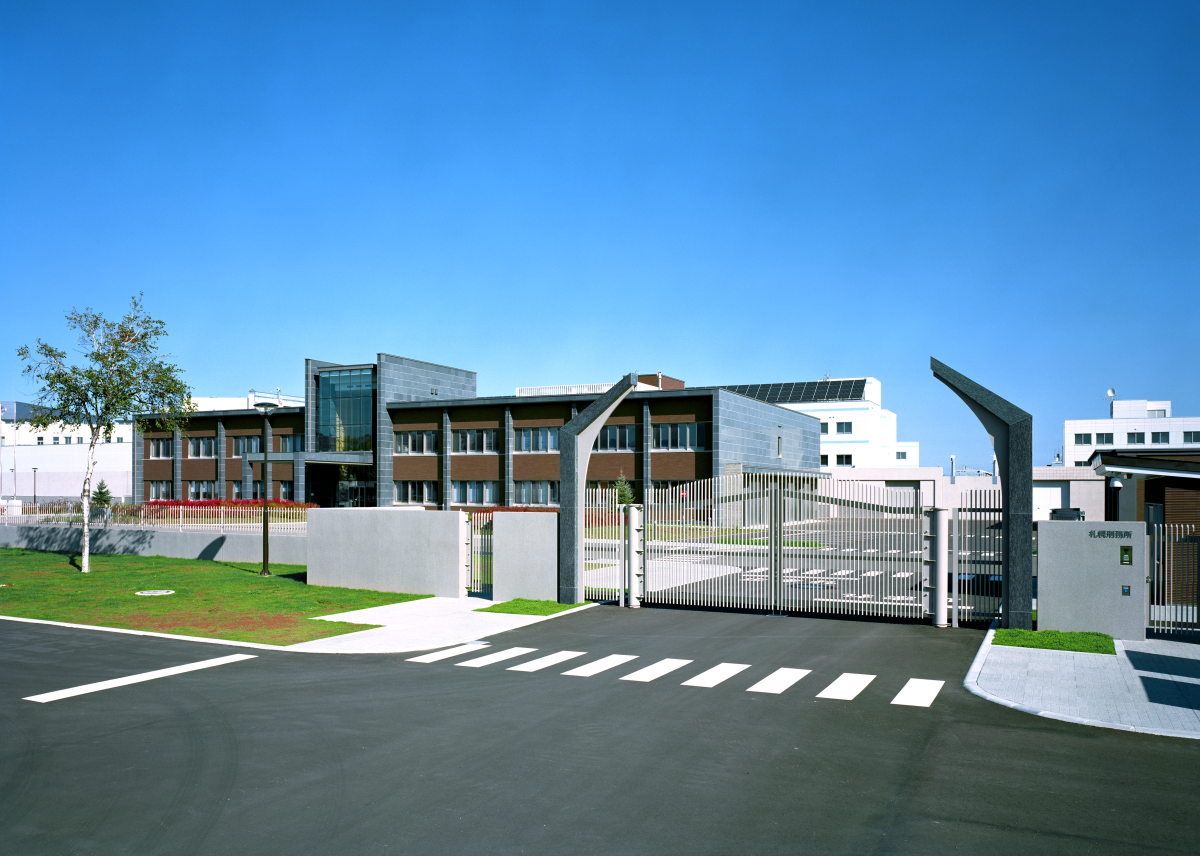 EXHIBIT N · TAP TO ENLARGE
 EXHIBIT O · TAP TO ENLARGE
 EXHIBIT P · TAP TO ENLARGE
The story you may have heard, and what the file says
| What people often say | What the record shows |
|---|---|
| “He rusted his handcuffs with miso soup.” | The prison’s own history describes him loosening bolts on his restraints and pulling out the inspection-window frame. The miso soup detail appears in later retellings and on the museum display, and was made famous by Akira Yoshimura’s 1983 novel Hagoku. |
| “He was a harmless escape artist.” | He was in prison for a killing during a robbery in the early 1930s, and a second man died in a fight with him in 1946. |
| “Every escape was perfect.” | He was caught about two days after the first one. After the second, he went to a guard’s house within three months. |
| “No prison could hold him.” | Fuchu held him for 13 years, after it took his chains off. |
| “A cigarette made him surrender.” | One detailed account says so, and it is widely repeated. We could not find it in a contemporary record. |
Why the real record is stranger than the legend. The legend is about a man who could get out of anything. The file is about four prisons that answered him with colder cells and heavier restraints, and one that tried treating him like a person. That was the one he never left.

Where the records disagree
- The first escape. One account says he was caught two days later near a cemetery, another that he gave himself up the next day, another that he was caught three days later stealing from a hospital.
- The farmer’s death and the first sentence. Most English-language accounts say the Sapporo District Court sentenced him to death. A Japanese account says the court found no intent to kill and gave him a prison term for causing death by injury. We have not found the judgment itself.
- The Sapporo escape. Sources give 31 March or 1 April 1947. He went out at night, which may explain the difference.
- Where he died. Japanese sources say a Tokyo hospital. One English source says Aomori.
Where the argument is
1. Hero or murderer? Fans of the story, and of the manga Golden Kamuy, which used him as a model for a character, tend to remember the escapes. Critics point out that his escapes came after a killing, and that a second man died while he was on the run.
2. Did the prisons create the escapes? Shiratori always said he escaped because of how he was treated. Supporters point to the cold cells, the refused winter clothing and the restraints. Sceptics note that this is mostly his own account, recorded decades later.
3. How much of the method is true? The prison’s records, Saito’s interviews and the novel Hagoku give overlapping but different versions. The more dramatic details are often the hardest to source.
On the record as it stands, we put more weight on the treatment argument, with a caution. The record is strongest at the two ends of his prison life: four prisons that used harsher conditions and stronger restraints, and four escapes; then one prison that removed the restraints, and no more escapes. That does not excuse the deaths. It does suggest that what the prisons did to him mattered.
Quick answers
Who was Yoshie Shiratori? A Japanese prisoner, born in 1907, who escaped from four prisons between 1936 and 1947: Aomori, Akita, Abashiri and Sapporo.
How did Yoshie Shiratori escape Abashiri Prison? On 26 August 1944, during a wartime blackout, he loosened the bolts on his restraints, pulled out the frame of his cell’s small inspection window, squeezed through, broke through a skylight and climbed the outer wall.
Was Shiratori the model for Shiraishi in Golden Kamuy? The manga’s escape artist Yoshitake Shiraishi is widely described as modelled on him.
What happened to Yoshie Shiratori? He was paroled from Fuchu Prison in December 1961 and died in Tokyo in February 1979, aged 71.
What is a little-known fact about Yoshie Shiratori? The last prison he was held in never had to stop an escape. It stopped using his chains.
Editor’s note
Most of what is written about Shiratori comes from three places: the records of the prisons that held him, interviews he gave to journalist Mitsunori Saito late in life, and Akira Yoshimura’s novel Hagoku. A novel is not a record, so we have not used Hagoku as a source for any fact here. Where accounts disagree, we have said so.
Sources
- Takahashi Yuki, Bunshun Online, 1 June 2022, two-part series excerpted from Nigeru ga Kachi (quotes Tōō Nippō, 19 June and 19 August 1936; Abashiri Keimusho: Kusetsu Hyakunen no Ayumi; Yamaya Ichiro, Abashiri Keimusho Yomoyamabanashi; Abashiri Prison Museum)
- Japanese Wikipedia, 白鳥由栄
- English Wikipedia, Yoshie Shiratori
- Saki no Jikenshi Tankyū (note.com), 脱獄王・白鳥由栄事件
- Shōwa Guide, 白鳥由栄
- tabi-mag, Abashiri Prison Museum
- Tokyo Weekender, “Yoshie Shiratori”
- Saito Mitsunori, Datsugoku-ō: Shiratori Yoshie no Shōgen (1985) — cited via the sources above