The Plura Cave Dive: Norway Banned the Recovery. They Went Anyway
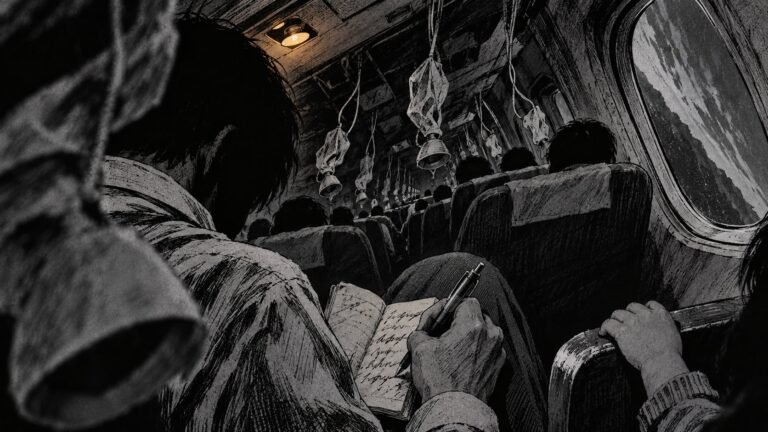
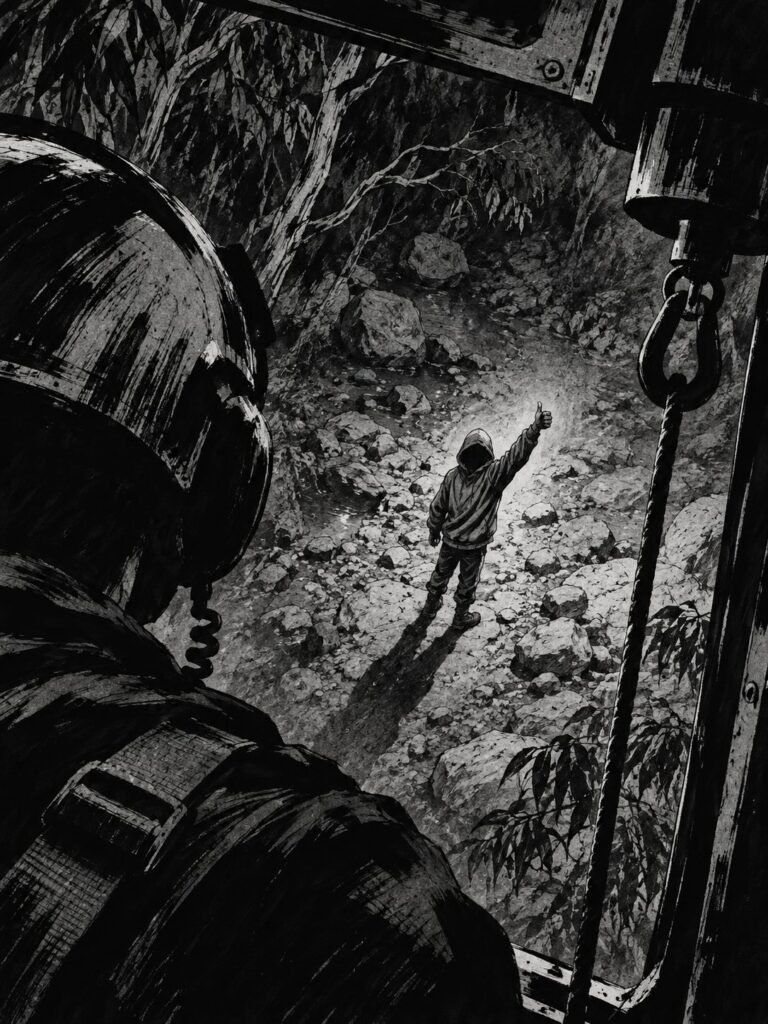
Plura Cave, northern Norway, 2014. Five divers went under the ice and three came back. At 111 metres, one man’s line caught under a rock. Officials ruled a recovery too dangerous for professionals. Seven weeks later, the survivors went back down themselves.


What the five of them cut that morning was also the only way back in.
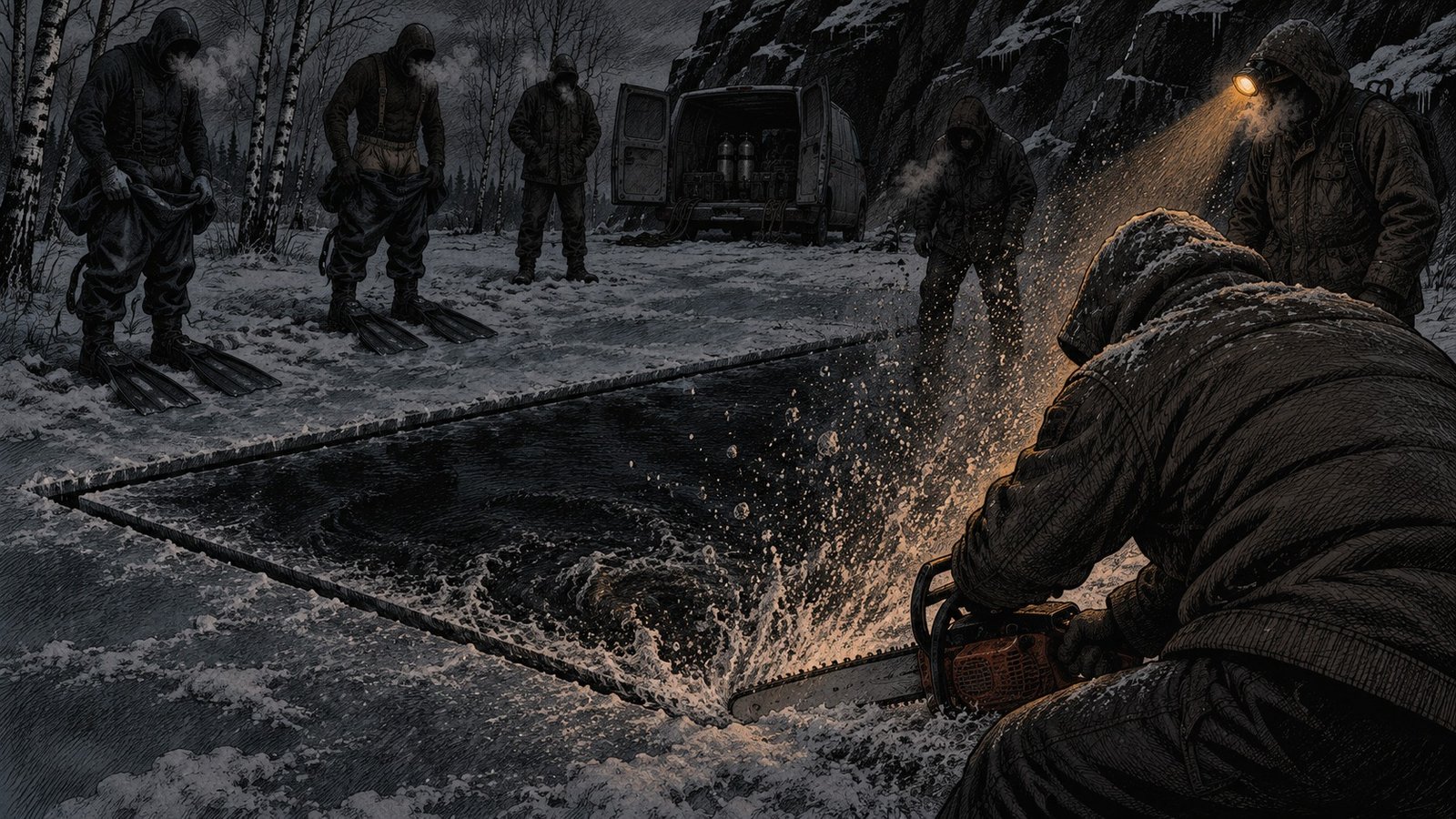
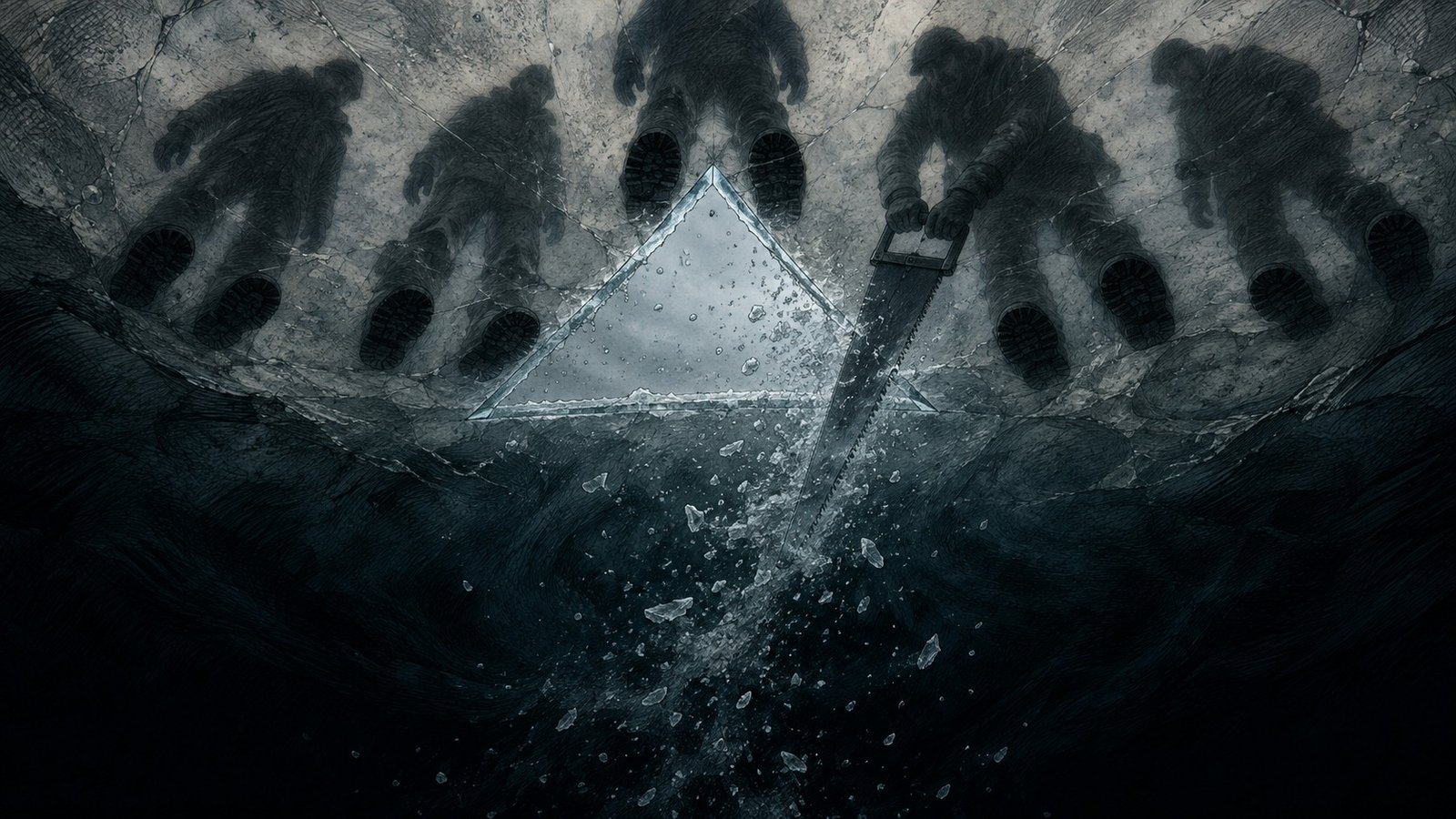
On the morning of 6 February 2014, five men cut a triangle in the ice of a frozen pond in northern Norway.
Two of them never came back up. They died about 111 metres below the ice, in a crack barely wider than a man.
Stranger still, the official recovery gave up, the police sealed the cave, and seven weeks later the survivors went back down themselves, without permission, and brought their friends out.
When the people who nearly died in a place are the only ones willing to return to it, who gets to decide what is too dangerous?
Five men, a fifteen-hour drive, and a hole the shape of a triangle
Plurdalen, in Rana, northern Norway. Minus three degrees. A farm called Jordbru, and below it a pond frozen thick enough to stand on.
Five Finnish divers had driven fifteen hours to get there. Shortly after midday one of them, a fireman from Porvoo named Patrik Gronqvist, 42, started a chainsaw and cut a triangle in the ice with his friend Jari Huotarinen, 40. The water underneath was two degrees and so clear that a lamp beam seemed to go on forever.

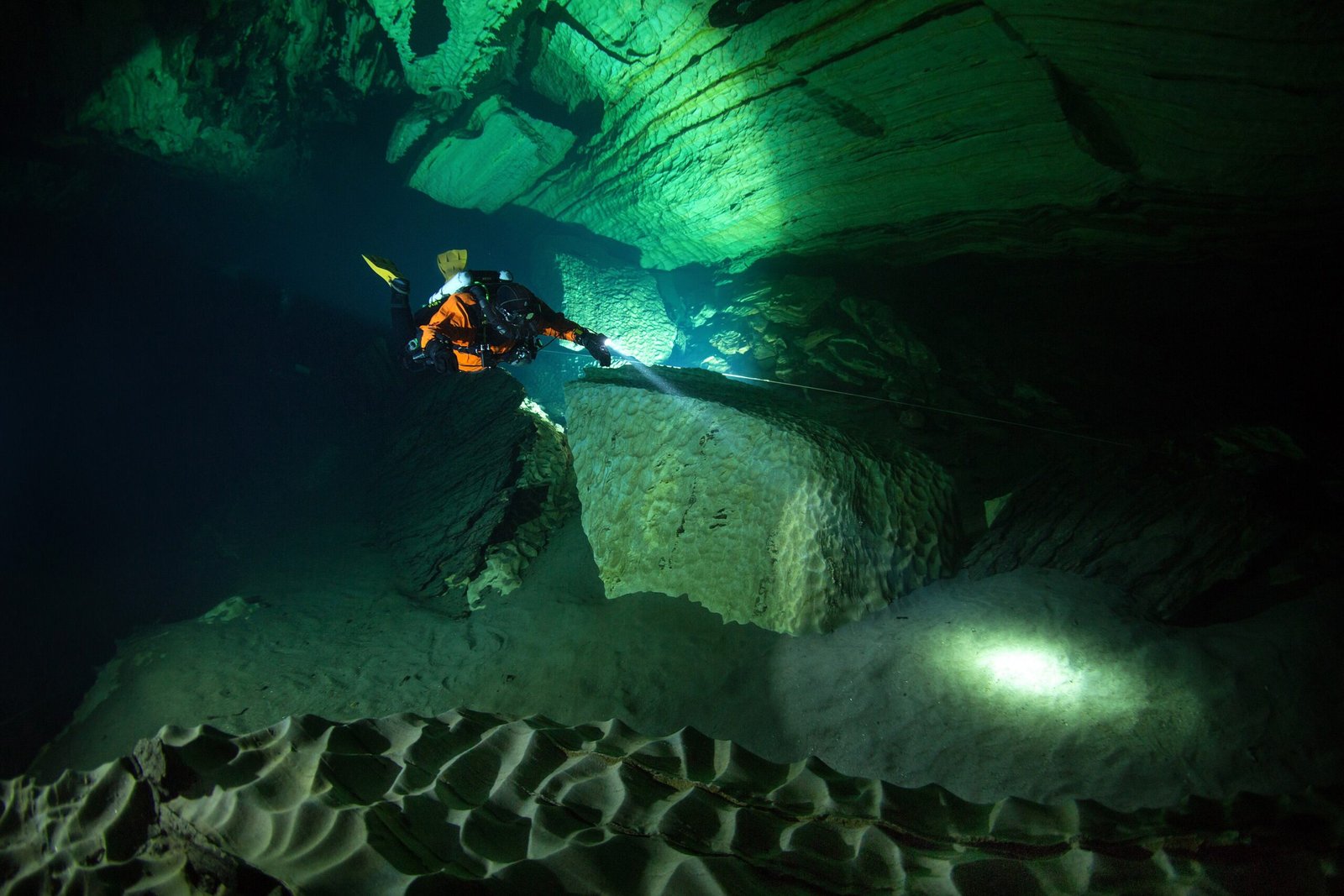
What is under that pond is Plura, a flooded cave system Norwegians have been exploring since the 1990s. Hobby divers go in half a kilometre and come back out the way they came.
These five were not planning to come back the same way. Their plan was a traverse: in at Plura, down to about 130 metres, through a connection they had found themselves the previous autumn, and out two kilometres away at a dry cave called Steinugleflaget. Five hours, they thought. Nobody had ever done it in a single dive.
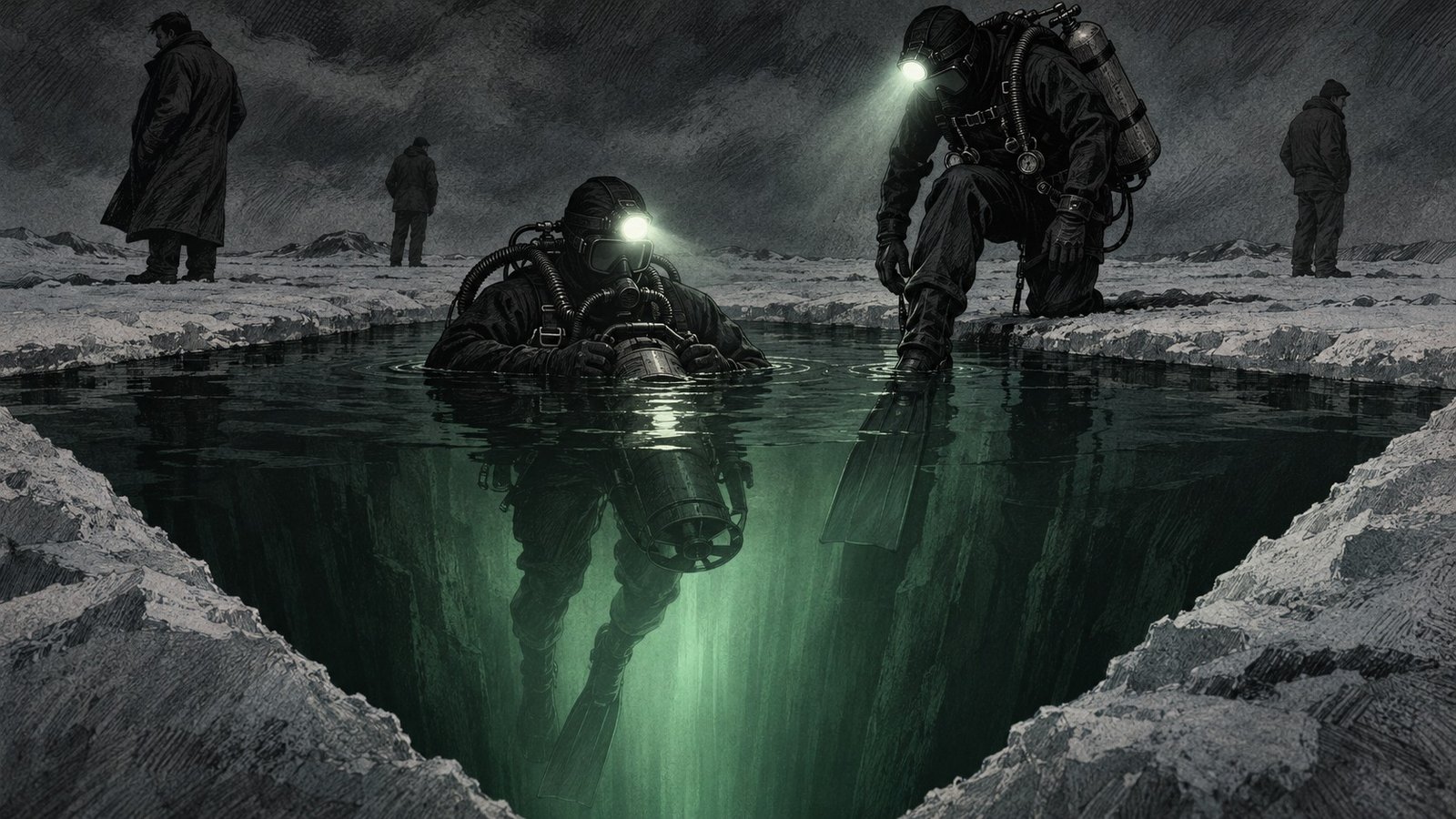
The first pair went in a little after noon. The second three followed about two hours later.
That two-hour gap is the reason this story has survivors in it at all.
The leash caught, and at 111 metres there is no slack

Gronqvist and Huotarinen were at about 111 metres, in the deepest and narrowest part of the system, when Huotarinen’s scooter leash caught under a rock.
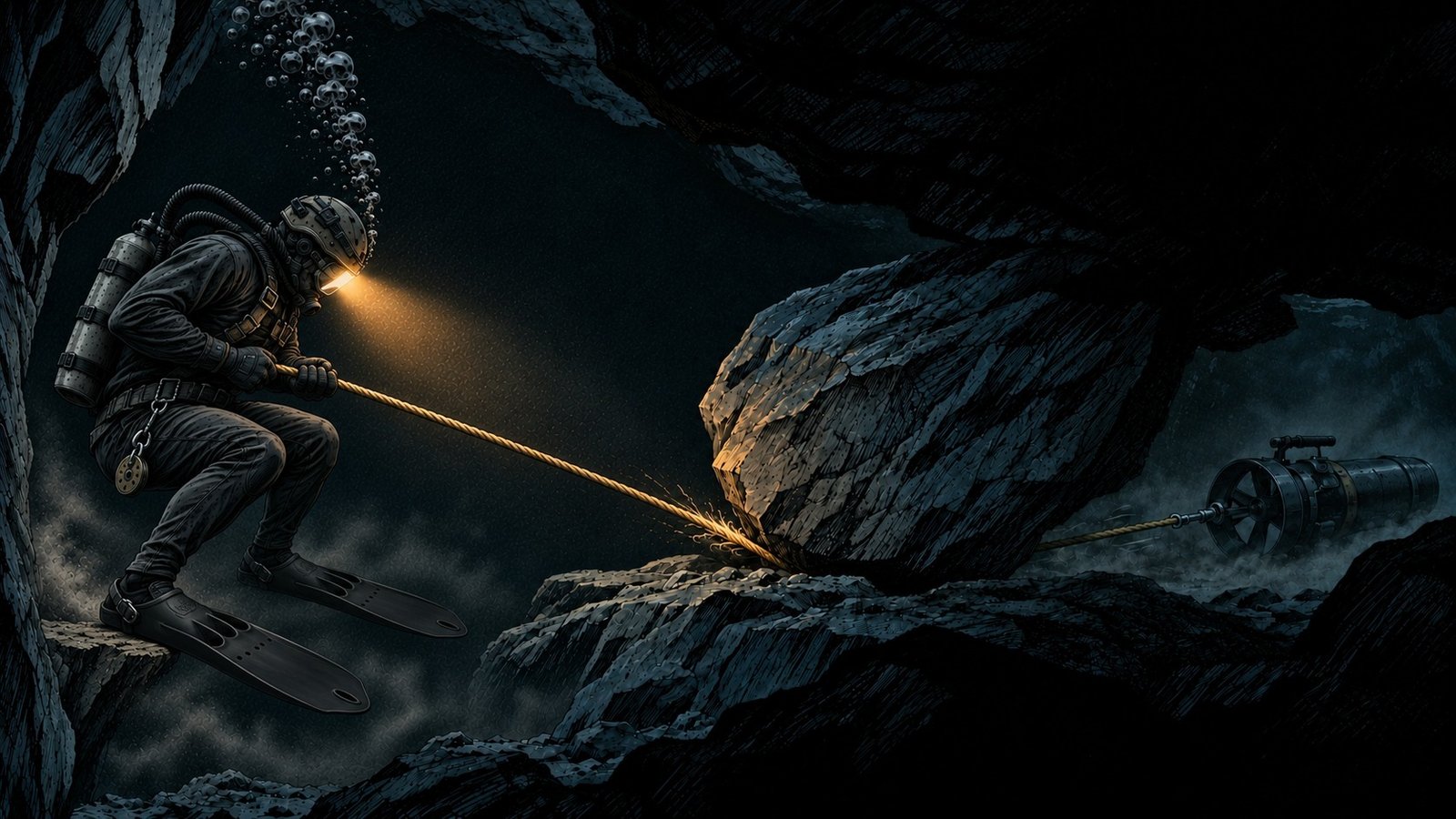
At that depth a jammed line is not an inconvenience. It is a clock.
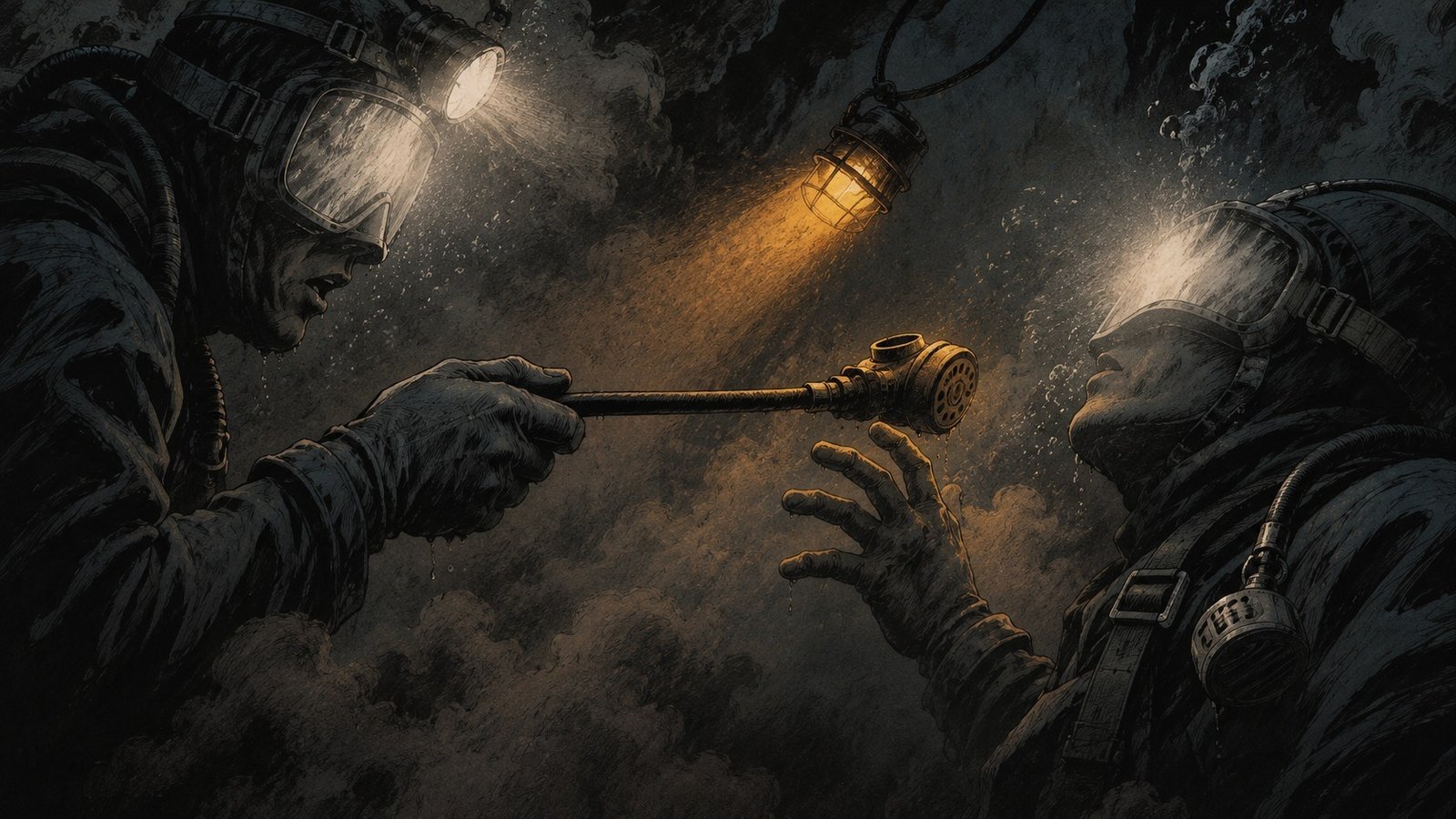
At that depth a problem has no slack in it. Huotarinen signalled for Gronqvist’s bailout gas, the open-circuit backup carried separately from the rebreather. Gronqvist gave him breaths from his own mouthpiece, two or three times. Then Huotarinen inhaled water, and died there in the restriction.
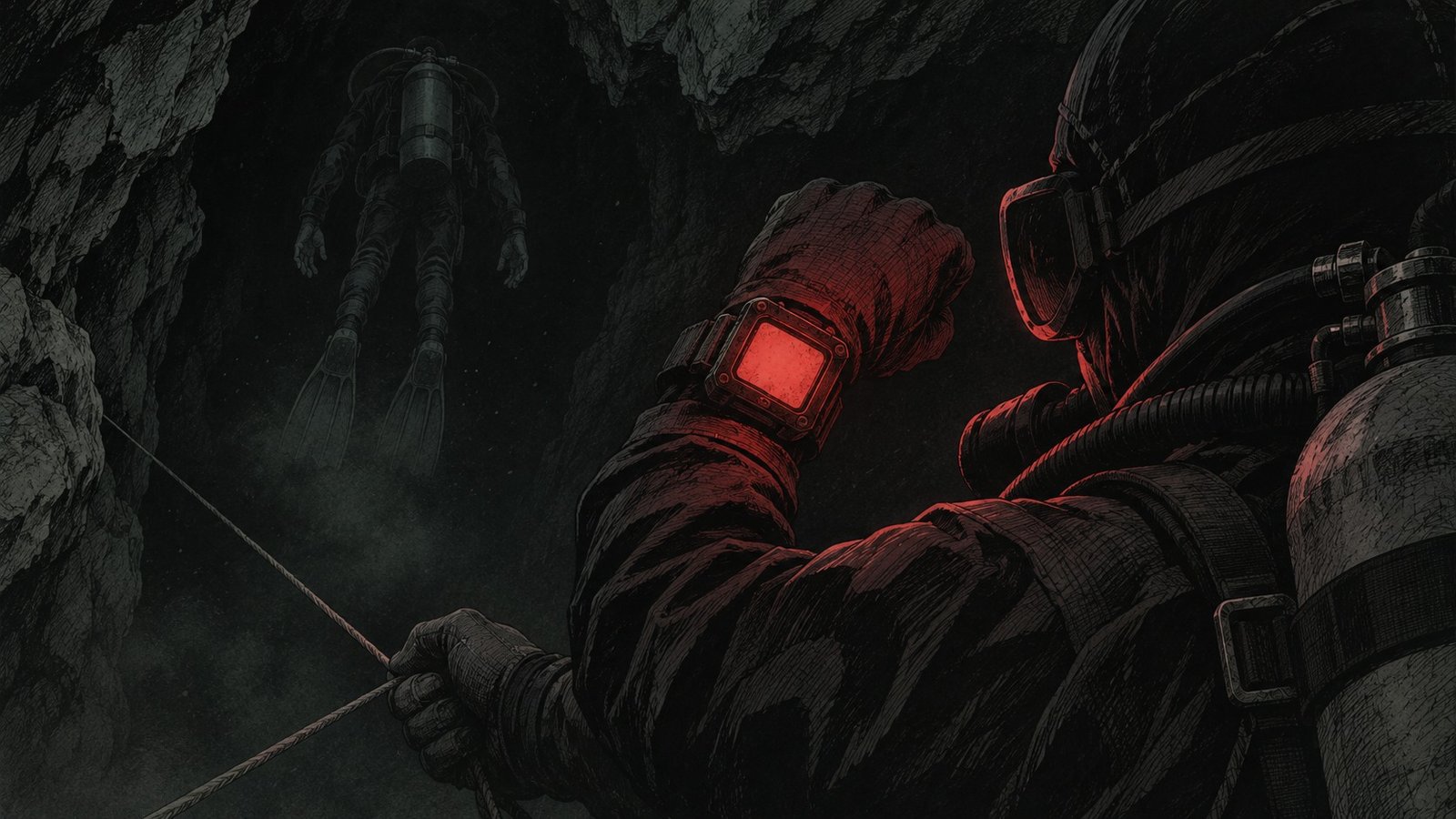
Gronqvist looked at his dive computer. It showed more than four hundred minutes of decompression ahead of him before he could safely surface.
He could not go back. The way back was longer than the way on.

So he went on, alone, toward Steinugleflaget, leaving his friend in the crack. He did not know that three more men were about to arrive at that crack from behind him.
Three men, three places, each one sure the others were dead
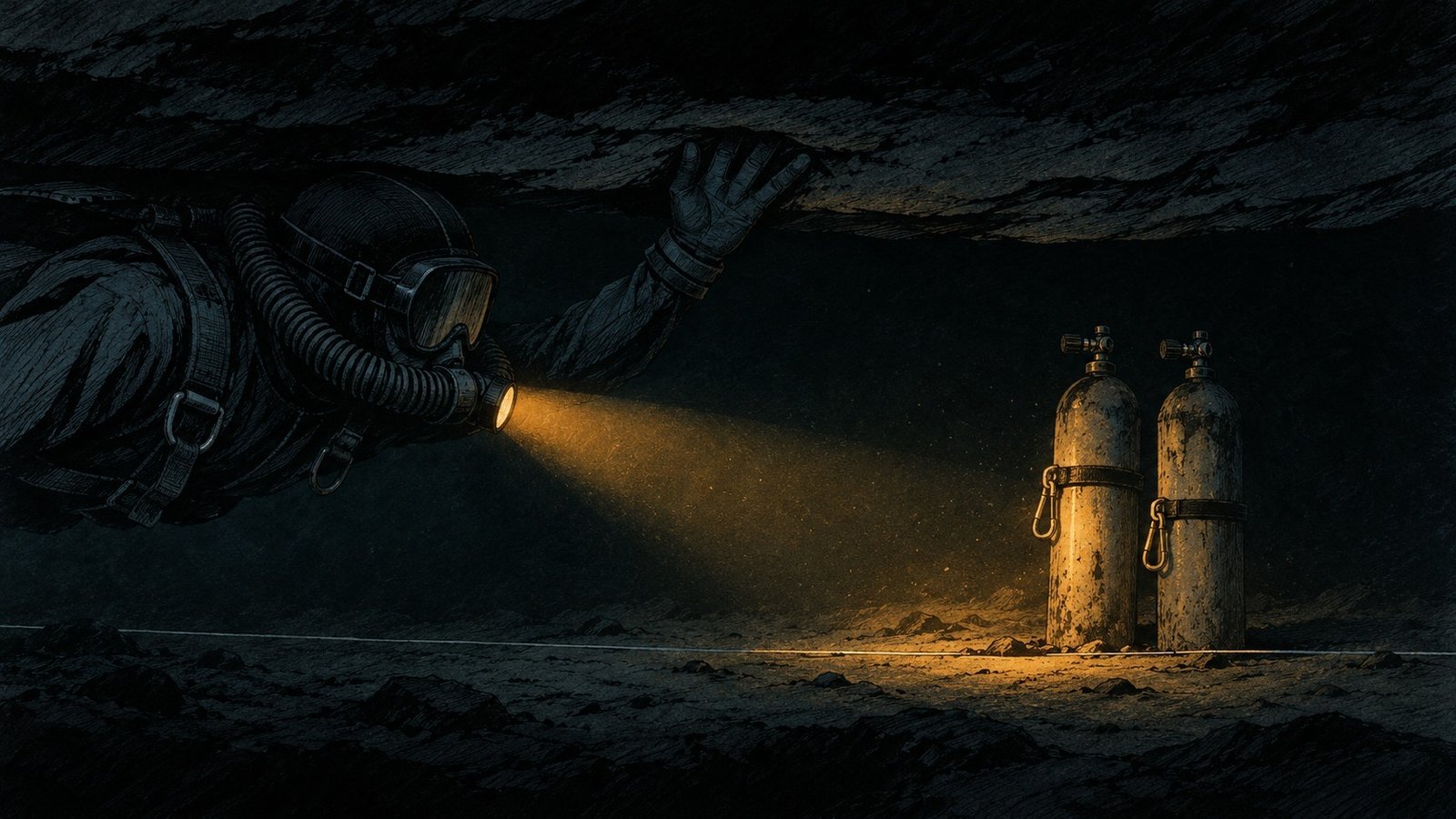
Vesa Rantanen, 33, an electrical designer from Hameenlinna, was leading the second team. At about 125 metres he jammed in an opening less than a metre high. He unclipped two cylinders to get through.
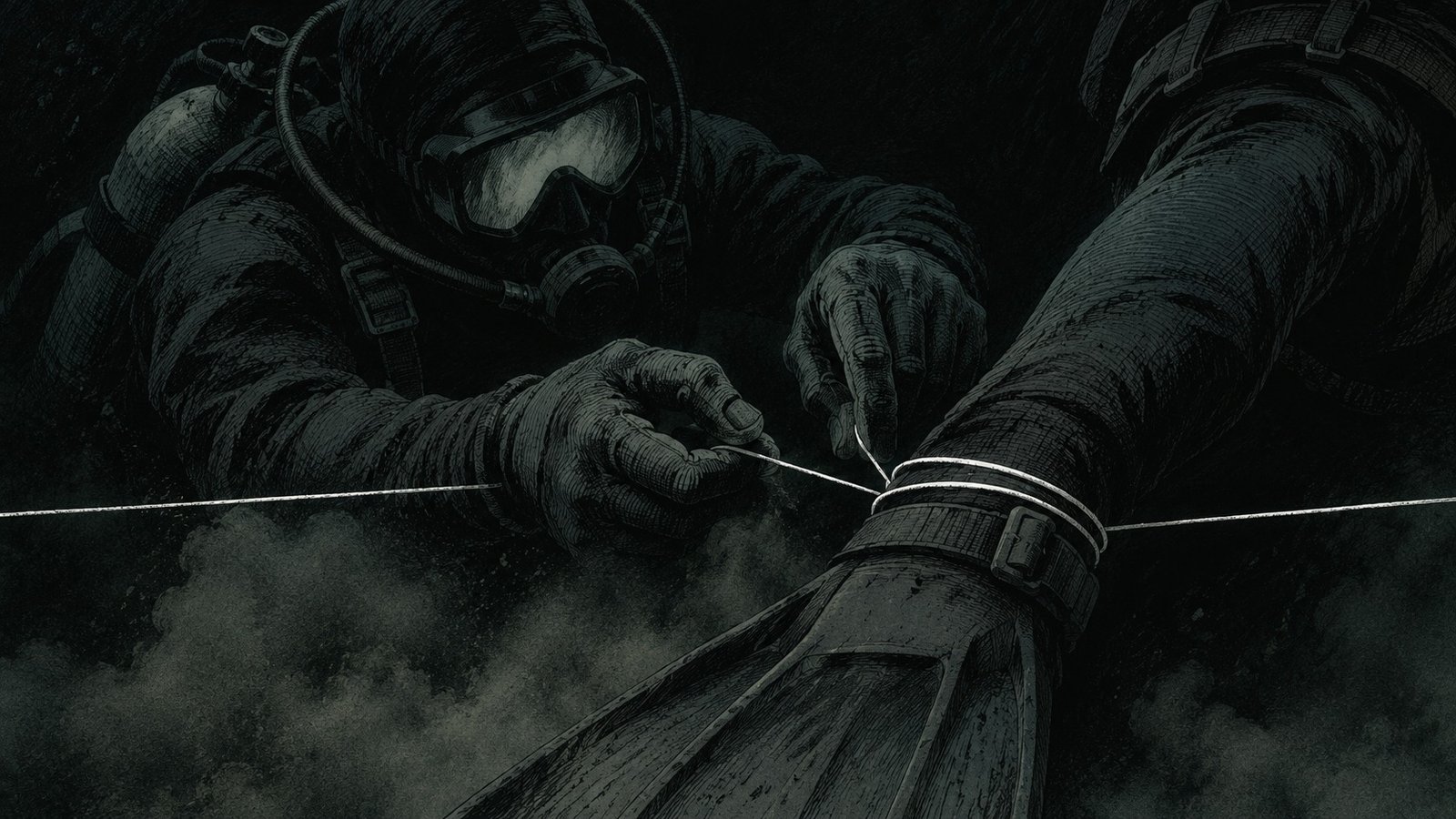
A fin tangled in the guideline. The third diver, a 34-year-old whose family later asked that his full name not be published, freed it for him.

At about 130 metres, the deepest point, Rantanen passed the marker plate the team had left there in autumn 2013. Then he heard a distress beep. In front of him, in the restriction, was Huotarinen’s body.
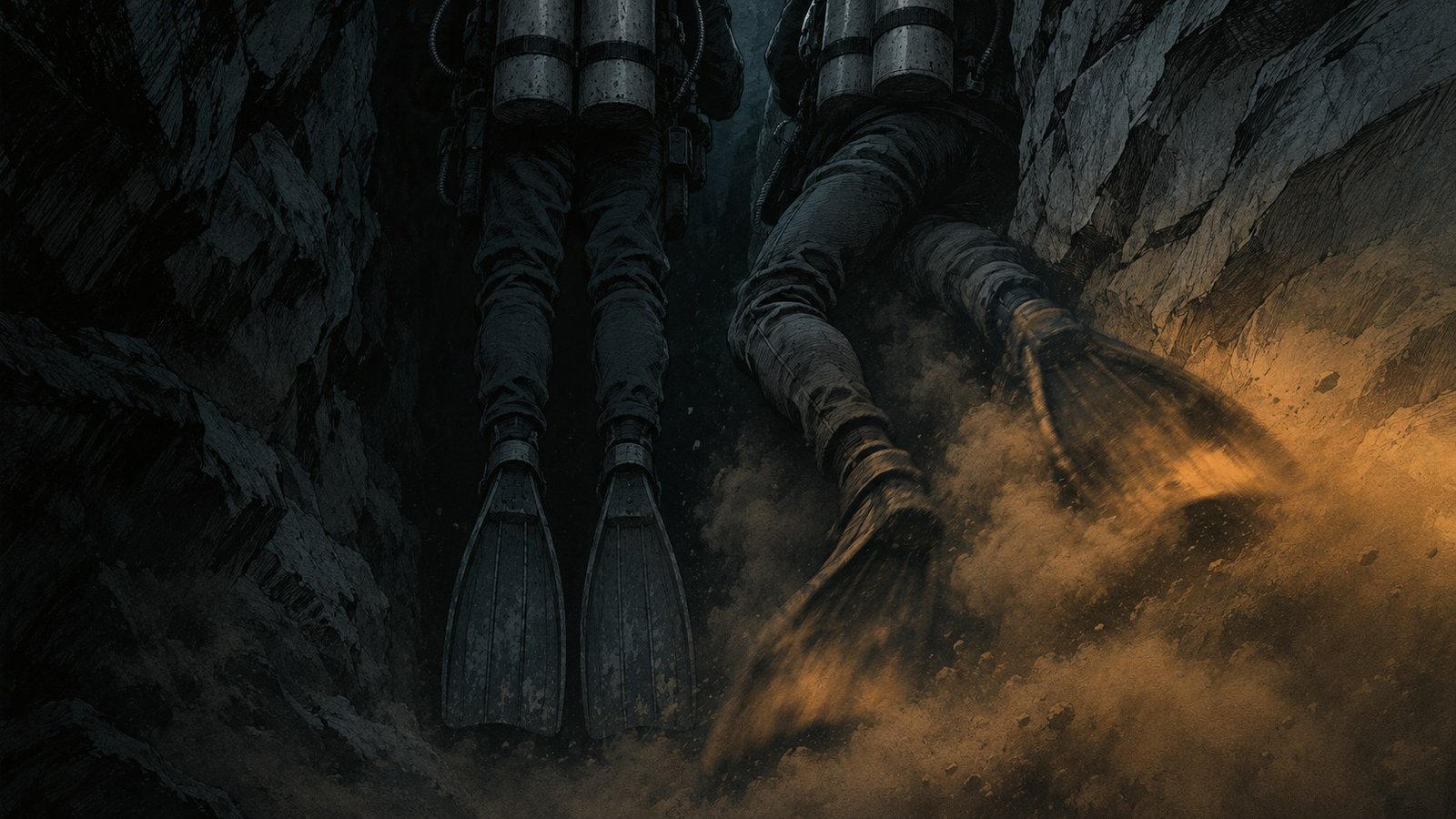
Everything that happened in the next four minutes happened in a space narrower than a doorway.
He tried to get around it. Behind him the third diver began to move erratically, then switched to his bailout system. Kai Kankanen, 46, the last man, reached him, tried to calm him, checked his equipment and found nothing wrong with it. Moments later the third diver was dead.
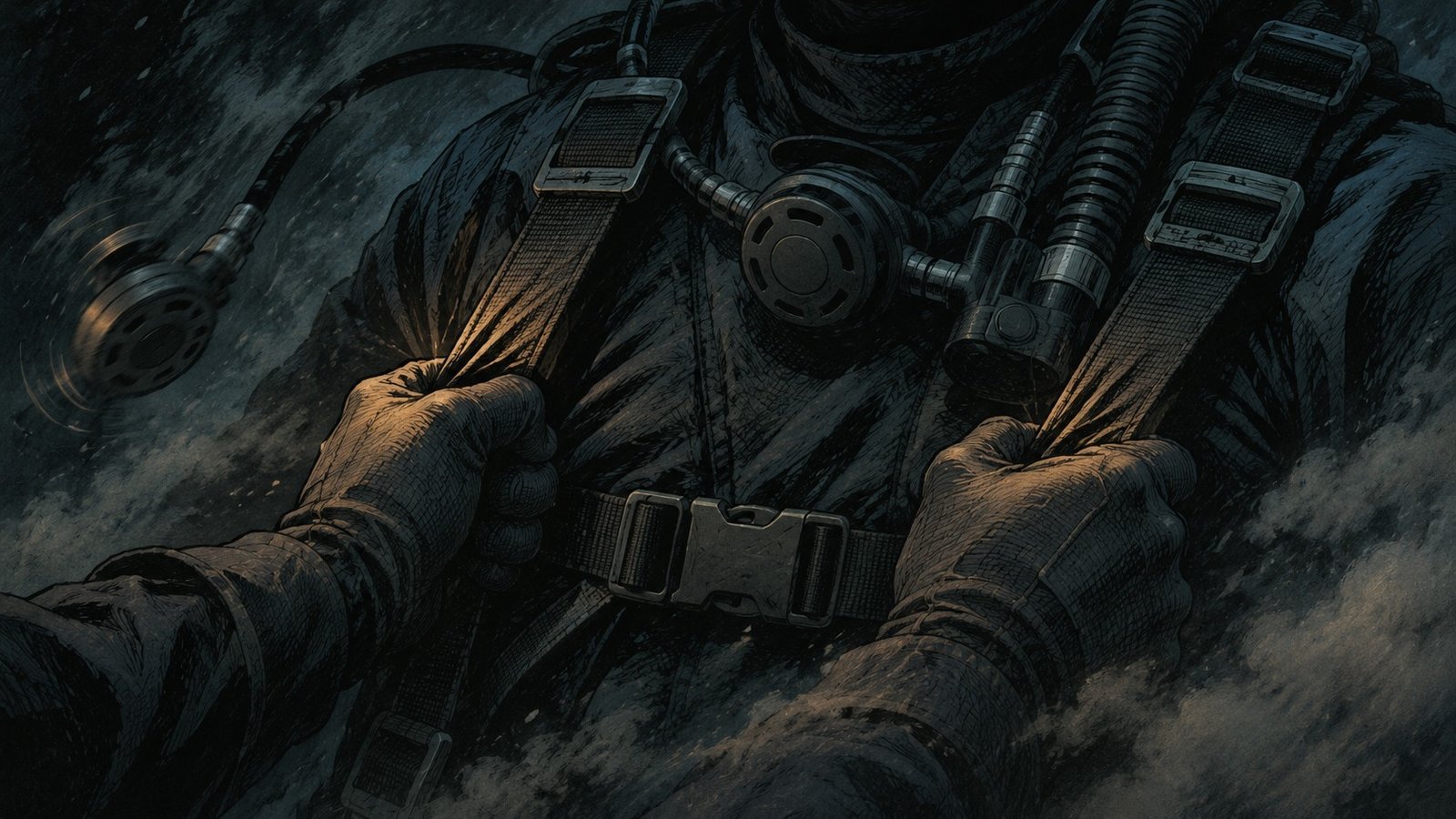
Kankanen shouted to Rantanen that the man was dead and to turn back. Rantanen could not: from where he was, the way back was longer than the way on. So the team split. Rantanen went forward, past two bodies, toward Steinugleflaget. Kankanen turned around alone, believing everyone ahead of him was already dead.
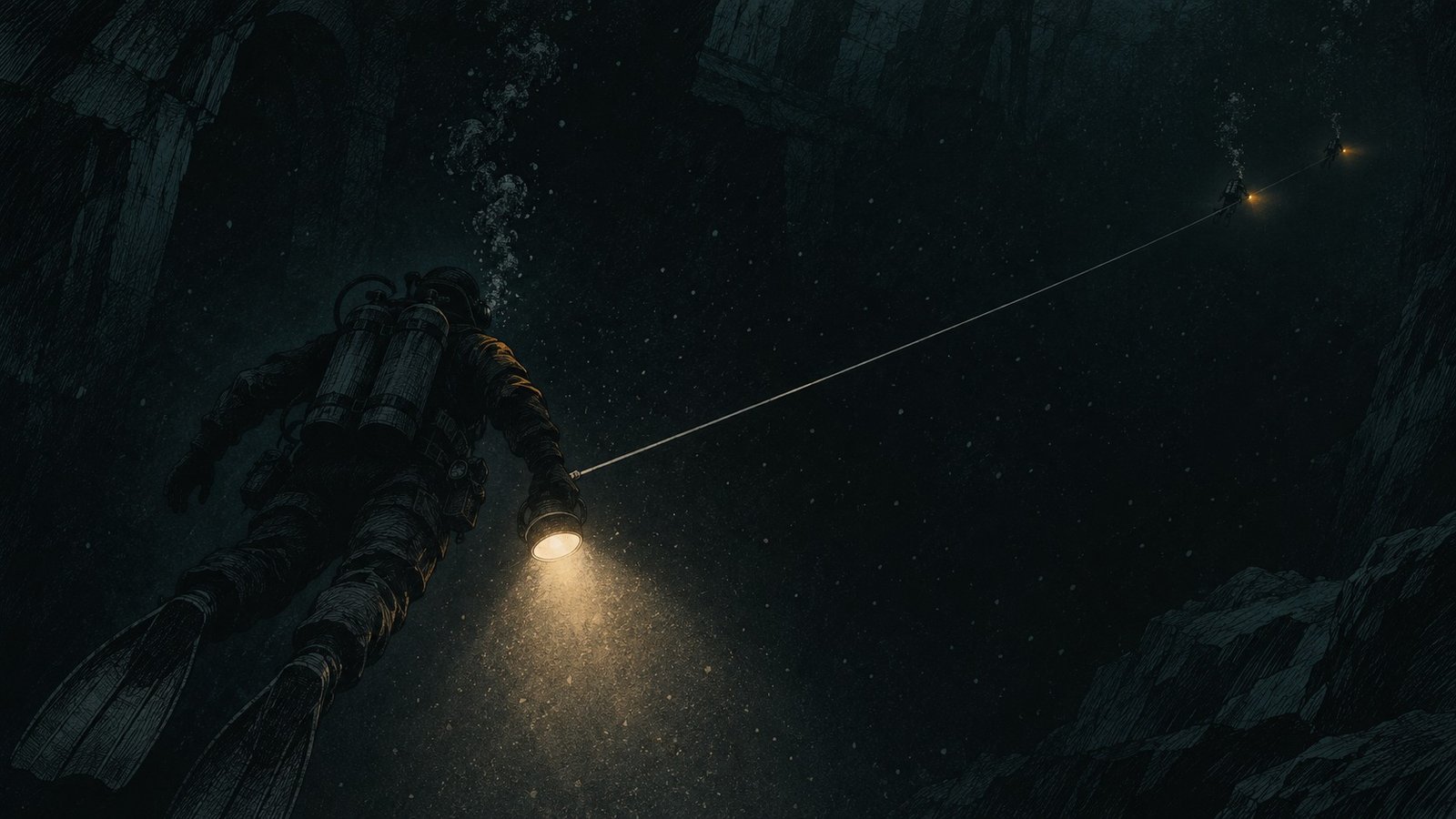
Three men were now in a flooded cave in three different places, each facing hours of decompression, and not one of them knew the others were alive.
He broke through new ice with his hands and found nobody there

Kankanen’s scooter broke down. The stretch from the air chamber back to the pond, fifteen minutes on the way in, took him forty-five minutes by hand.

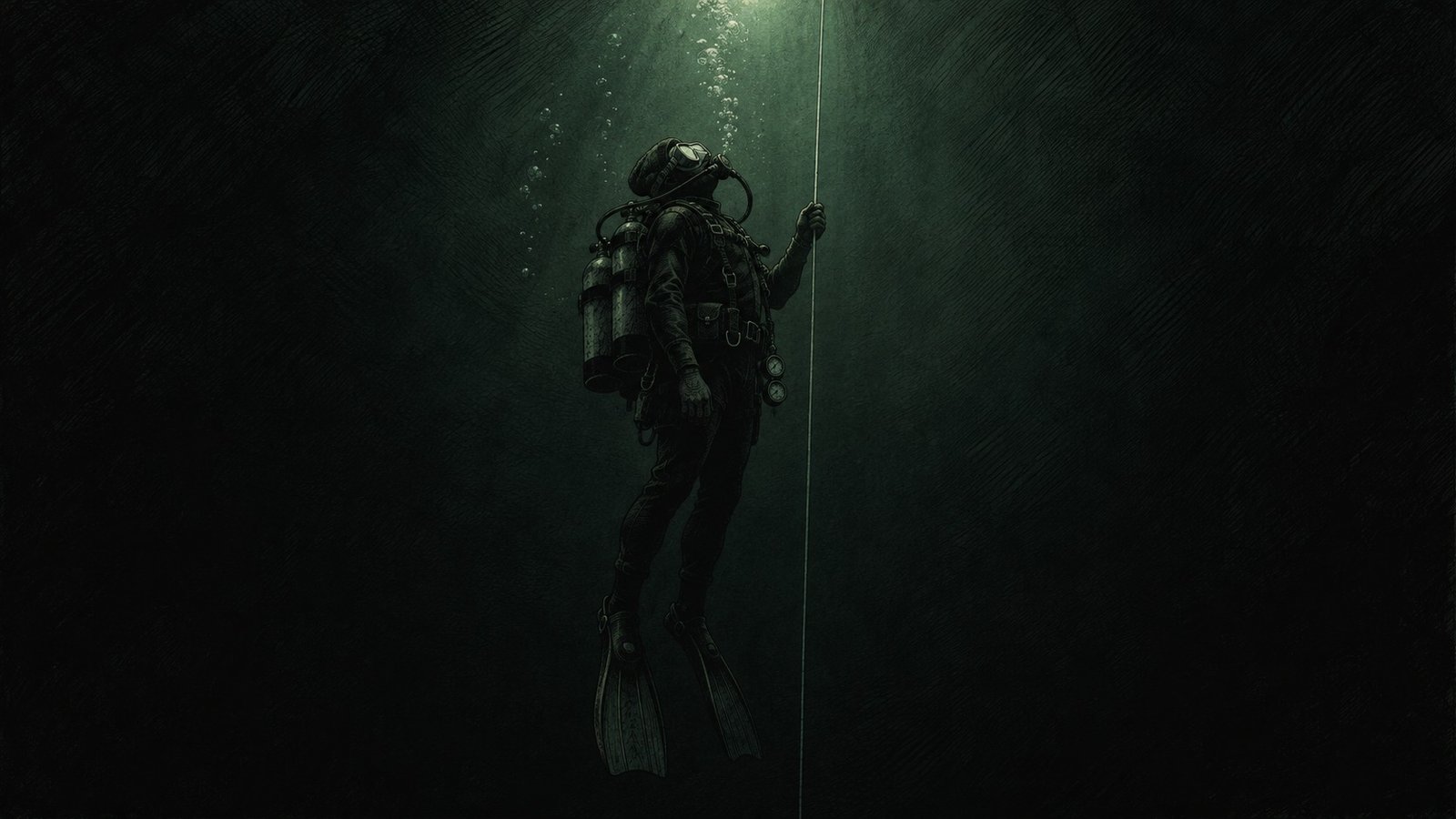
Gronqvist surfaced at Steinugleflaget a little after 9 p.m., eight and a half hours after he went in, most of it spent hanging in cold water decompressing. He decided he would stay in the water until Rantanen came, or did not.

At about twelve metres Rantanen saw a light. It was Gronqvist, waiting. Rantanen had been forced to cut his decompression short; by three metres his arm ached, and on the surface so did his right knee. Gronqvist waited with him for an hour in the dry cave before they climbed out.
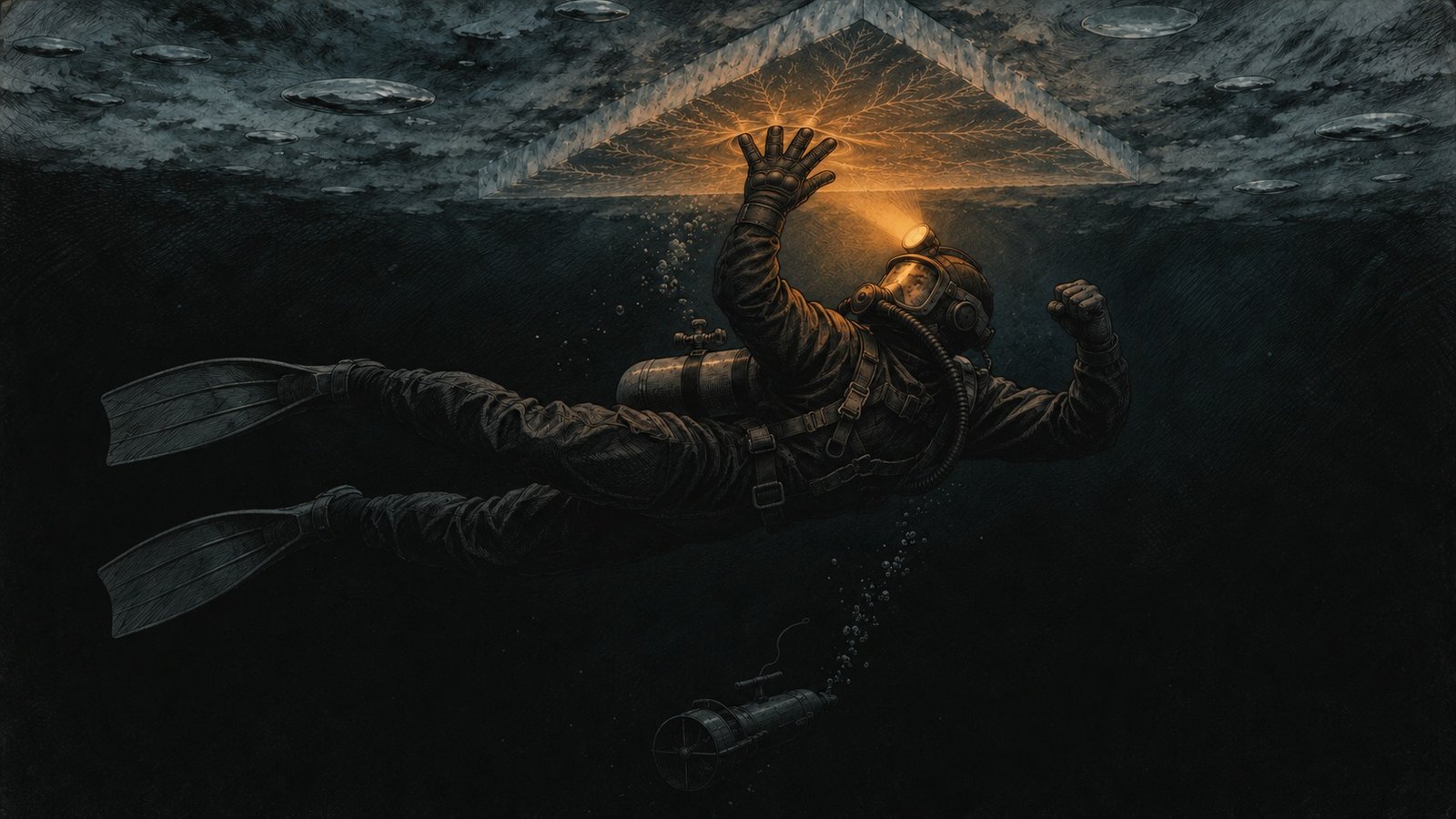
He broke it open from below, with his hands, and came up into an empty field.
Kankanen reached the pond around half past one in the morning, eleven and a half hours after he went in. The triangle they had cut had frozen over with about a centimetre of new ice. He broke through it with his hands.

There was nobody on the surface. He walked to the van and turned the lights on.
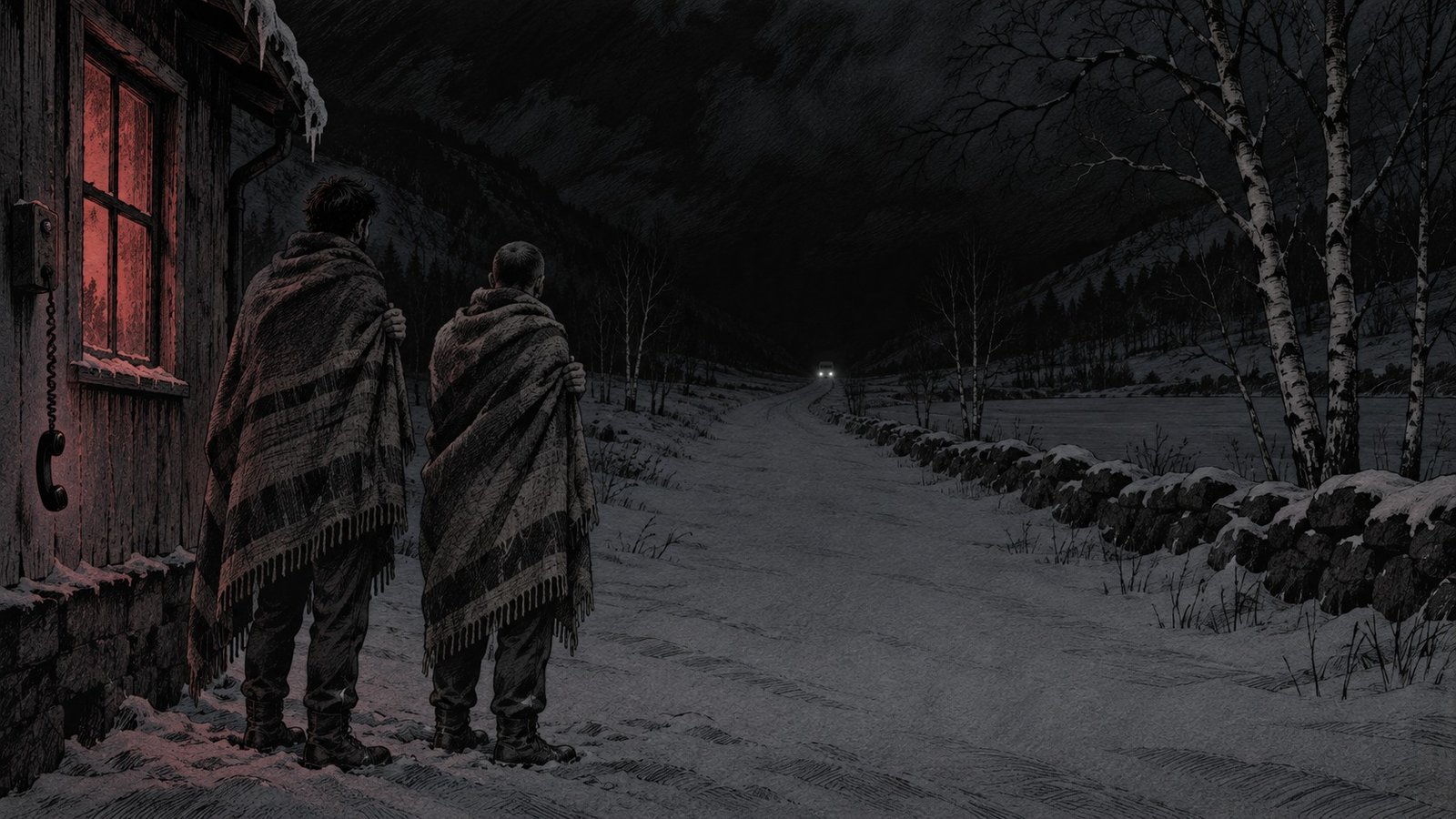
At the farm, Gronqvist and Rantanen had already raised the alarm, certain that nobody else was coming up. Near two in the morning they saw headlights.
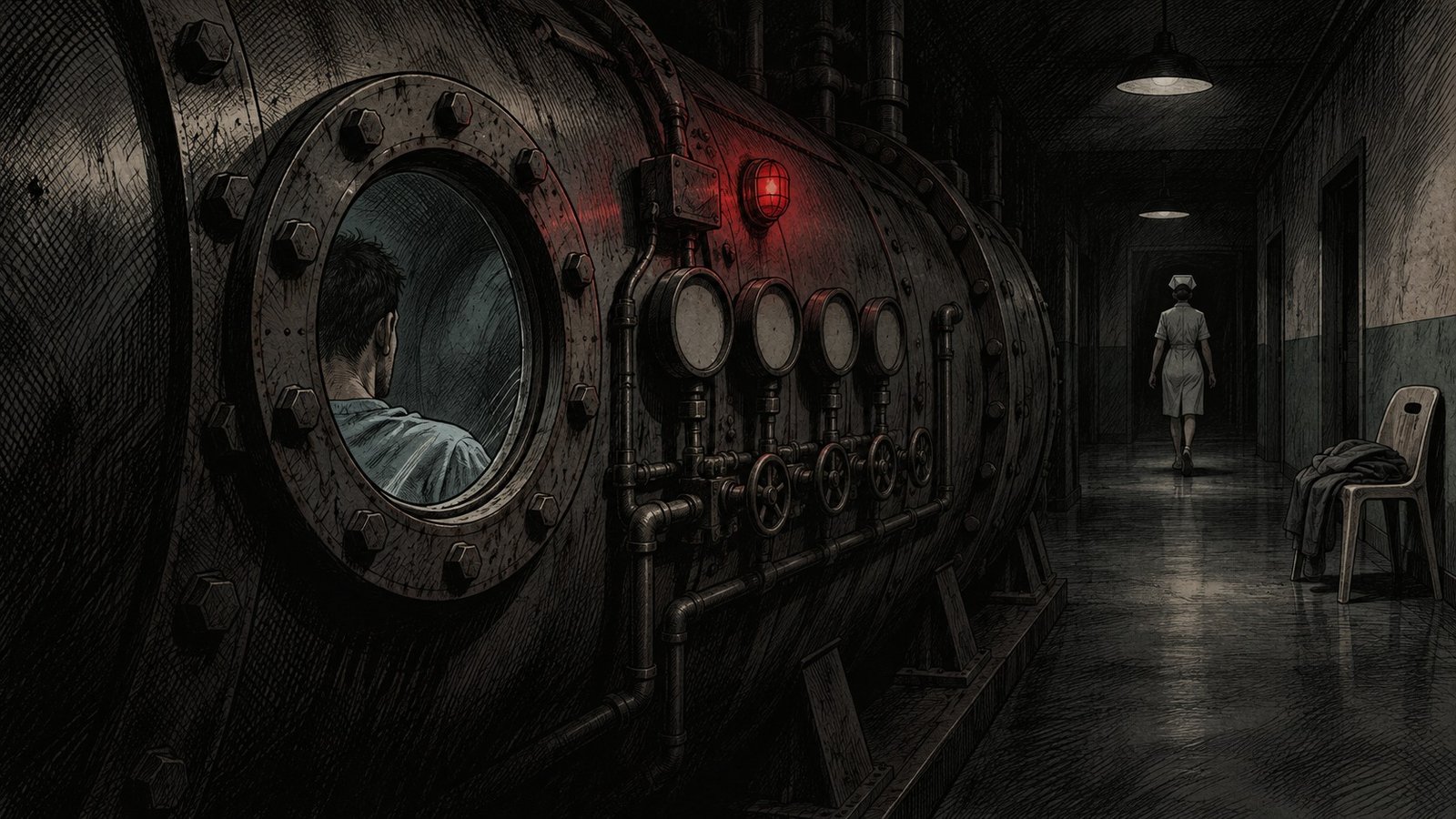
All three survivors were airlifted to Tromso. Rantanen’s decompression sickness had damaged his spine. He was still being treated in a recompression chamber in Bergen when the police came to interview him.
The professionals went in first, and the professionals stopped
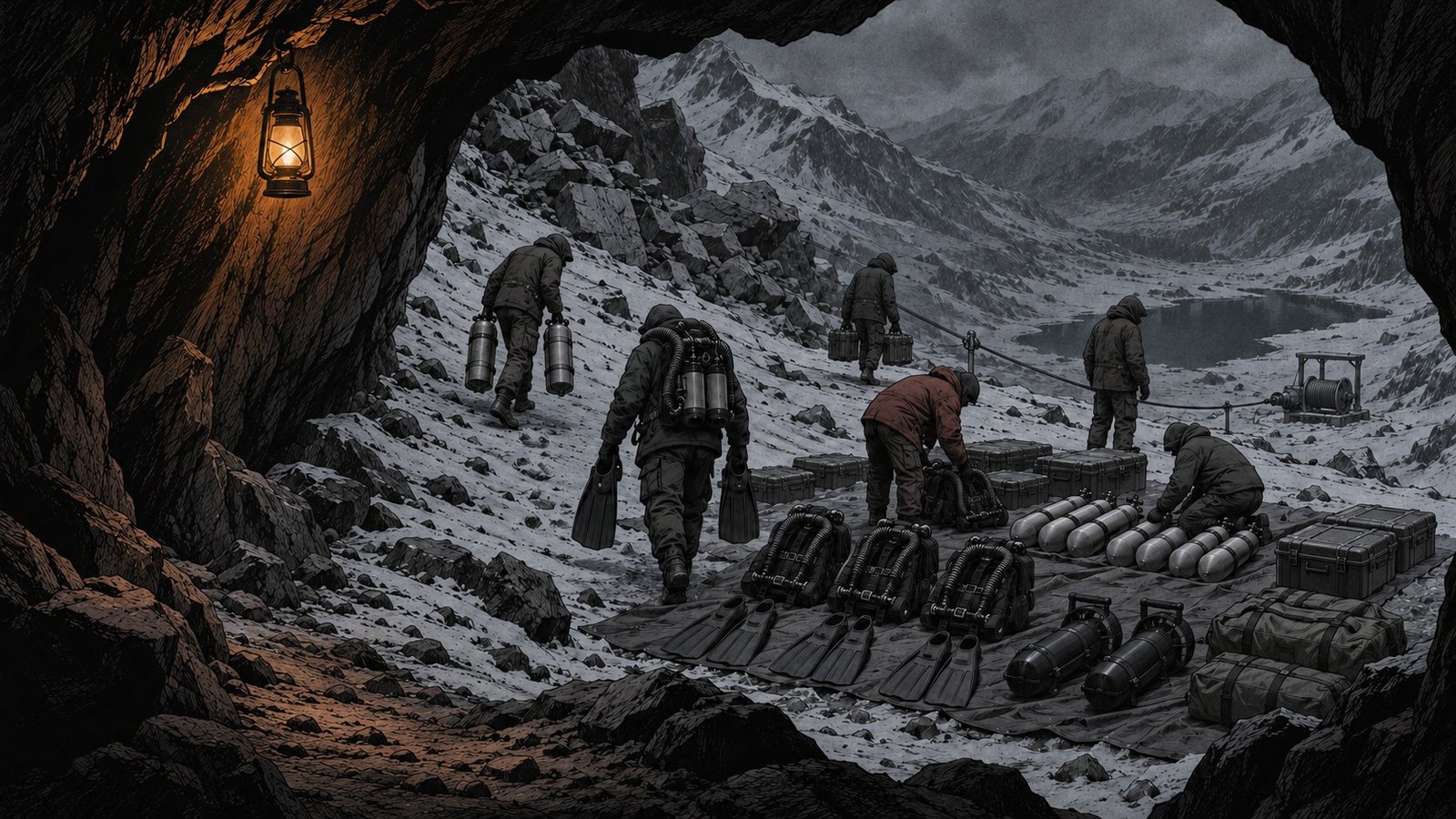
Norway called in specialists. Three experienced British cave divers arrived in Rana on 20 February, coordinated by the Oslo fire and rescue brigade and the local police. The first recovery dive went in on the 21st, from the Steinugleflaget side. Eight days were scheduled.
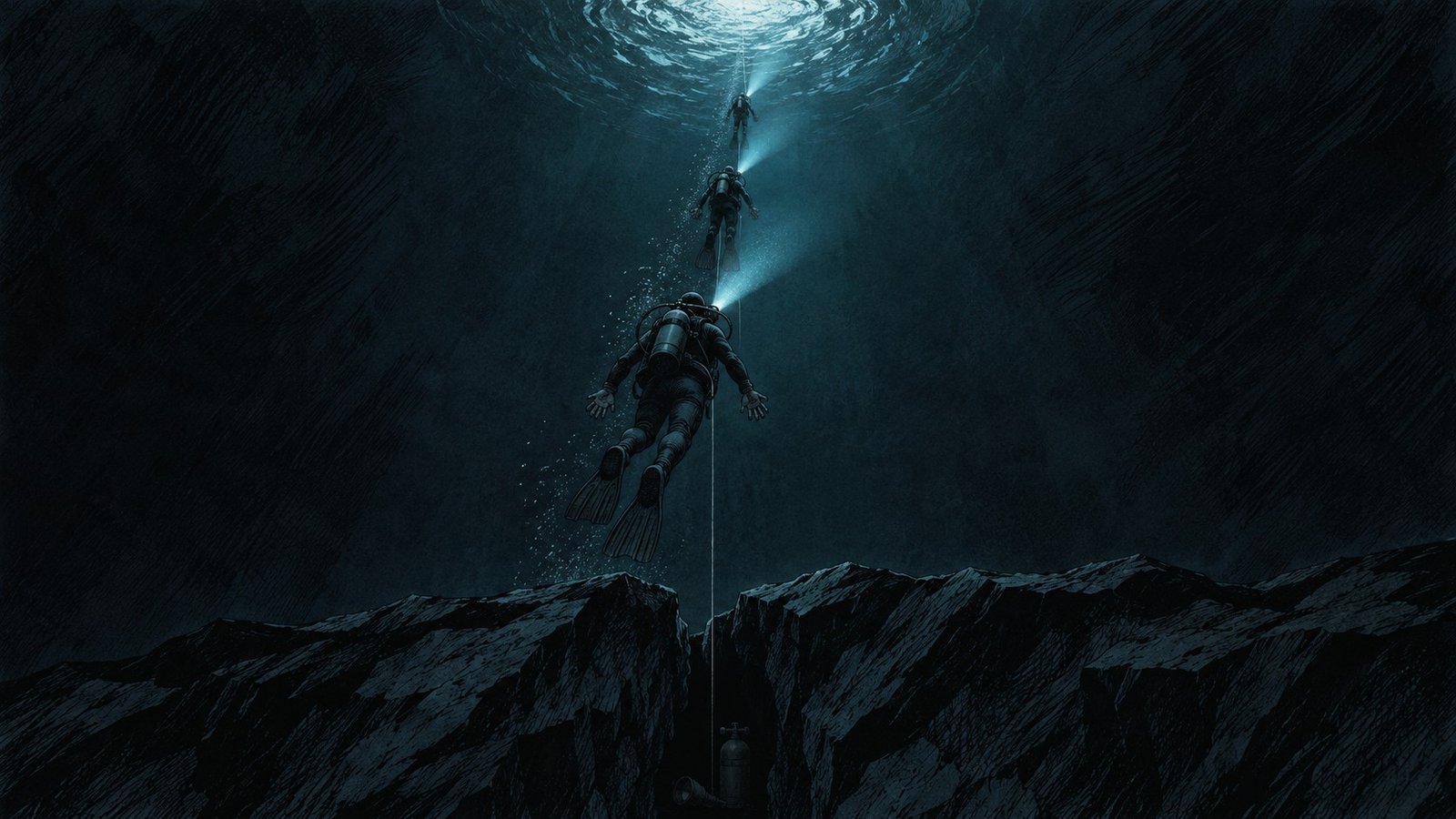
On 25 February a press conference announced that the operation was over. The divers could not free Huotarinen’s body from the restriction, and they would not pass it to reach the second man while it blocked the way. The leader of the British team said it was simply too dangerous, and not worth risking a life for.
The Norwegian authorities then made a decision that sounds cold and was, by every professional standard, correct. The bodies would stay in the cave. A diving ban was imposed and the pond was closed.
The story you may have heard ends here, with two men left in the dark at 111 metres. The record goes somewhere else entirely.
What twenty-five people moved into the valley without telling anyone

In March the three survivors, with a fourth friend, the Finnish diver Sami Paakkarinen, decided they would do it themselves. They told almost nobody, and the reason they told nobody was the police.
Fourteen Finns and eleven Norwegians took part. They moved 1,100 kilograms of equipment into the valley. Divers went in from both ends of the system and staged twenty-six bailout cylinders along the route.
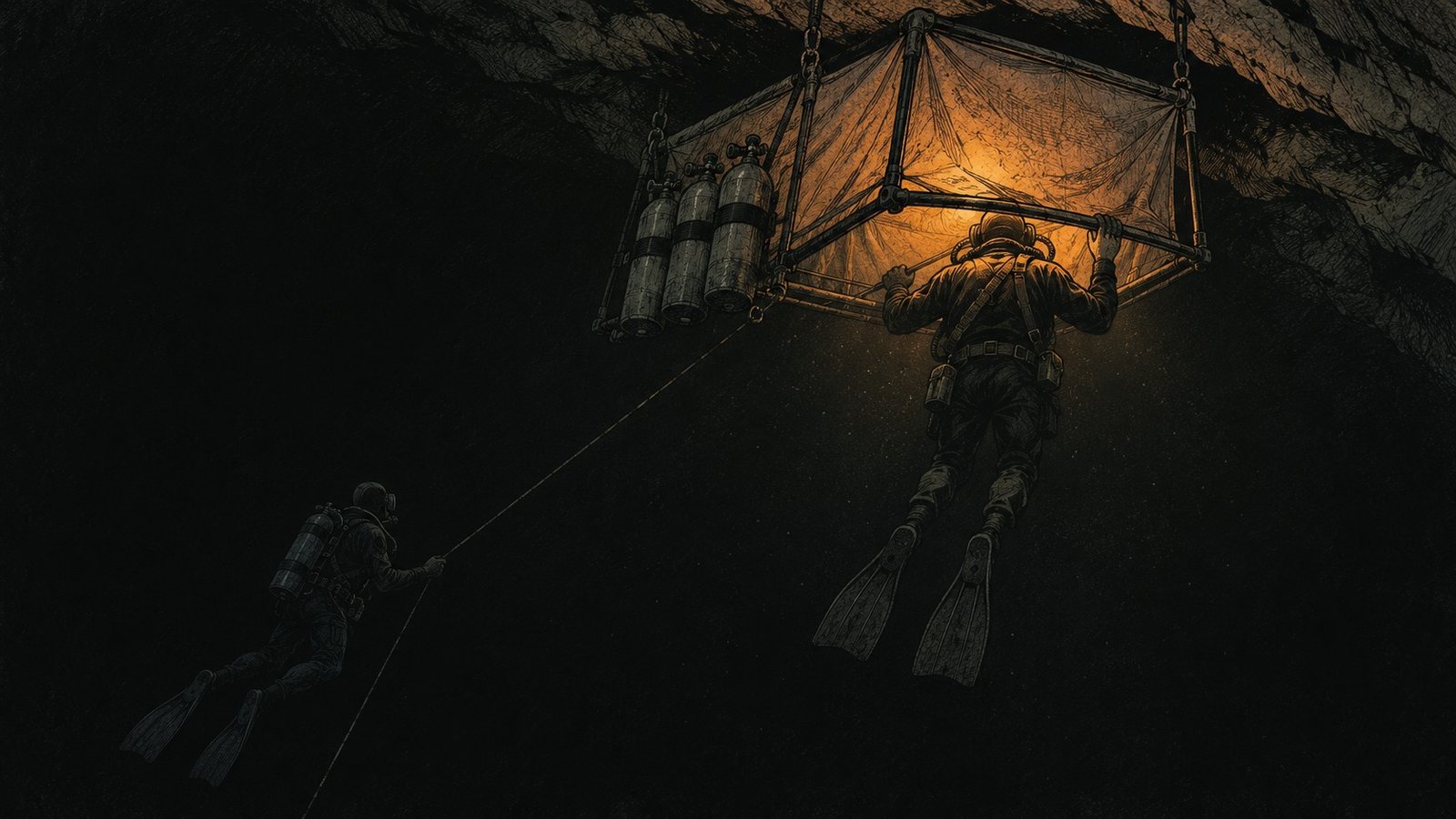
About a kilometre in from the pond they built an underwater habitat: a pocket where a diver could stand up, get his head into air and breathe while decompressing. The plan was precise. Reach the bodies, cut them out of their gear as fast as possible, and be back inside seven hours.
Rantanen, whose spine had not healed, ran the surface and did not dive. A film crew that had come to Norway to shoot a documentary about a depth record was invited to shoot this instead.
Seven weeks later, the cut that took a few minutes

What the official operation could not do in eight days was done here in a few minutes with a pair of shears.
On Wednesday 26 March 2014 a group of ten divers, two of them women, and seven helpers stood at Steinugleflaget for a moment of silence. Some of them had never met the men they were about to go and get.
Gronqvist and Paakkarinen went to the restriction. The bodies were where the men had died seven weeks earlier. They cut the harness straps and brought their friends out.

The next morning Paakkarinen telephoned the Norwegian authorities and told them what had been done. Norwegian rescue workers carried the two men out of the dry cave. A dozen local residents helped carry the equipment back down the valley. The farmer at Jordbru heated the sauna.
And here is the part nobody saw coming. The police, who had banned the dive, opened an investigation into the Finnish team, interviewed them, and then said that prosecuting them was not a priority. The group waited months for the formal word. No charges were ever brought.
A camera crew came for a record and filmed this instead
The documentary, Diving into the Unknown, directed by Juan Reina, was released in 2016. It used the divers’ own footage from the fatal dive, and the recovery was filmed from the first planning meeting to the moment the bodies came out of the water.
Its director said the film asks one question: whether this is something worth dying for.
The president of Finland awarded Gronqvist the First Class Medal of the White Rose of Finland. The bodies reached Finland in late April. At the first funeral, Gronqvist carried the coffin.
The cave reopened to divers after the recovery. A Norwegian man had died in it in 2006.
The story you may have heard, and what the file says
Most of what circulates about Plura is close to the record without being the record. Five of the most common versions, set against what the documents actually support.
| What gets repeated | What the record says |
|---|---|
| They died because their equipment failed | Huotarinen’s scooter leash caught under a rock at about 111 metres and he drowned after taking breaths from a shared mouthpiece. The second man’s gear was checked at depth by another diver and nothing was found wrong with it. Narcosis at 130 metres is the factor the survivors themselves point to. |
| The rescuers refused to even try | A British cave-diving team dived from 21 February and could not free the first body from the restriction. They stopped on 25 February because passing it was judged lethal, after eight days had been set aside for the work. |
| The survivors went straight back for the bodies | They waited seven weeks. It took twenty-five people, 1,100 kilograms of equipment, twenty-six staged cylinders and an underwater habitat. Rantanen could not dive at all; his spine had been damaged. |
| They were arrested for breaking the ban | Police investigated and interviewed the survivors, one of them inside a recompression chamber, and then said prosecution was not a priority. No charges followed. |
| It was a record attempt that went wrong | It was the first attempt at a full traverse of a connection the team itself had found in October 2013. The film crew had come to Norway for a different record attempt and was invited to film the recovery instead. |
Why the record is stranger than the legend
The legend is the tidier story: a tragic accident, a heroic rescue, grieving friends waiting at the surface. The record inverts almost every part of it.
The men who had the best reason never to go back into that cave were the only ones who did. The authorities who banned the dive ended up carrying the bodies out of the cave mouth for the people who defied the ban, and then decided not to charge them. Three survivors lived through eleven hours in two-degree water by splitting up, each one assuming the other two were already dead. And one of them finished the worst day of his life by breaking through new ice with his bare hands and climbing out into a field with nobody in it.
So who decides what is too dangerous
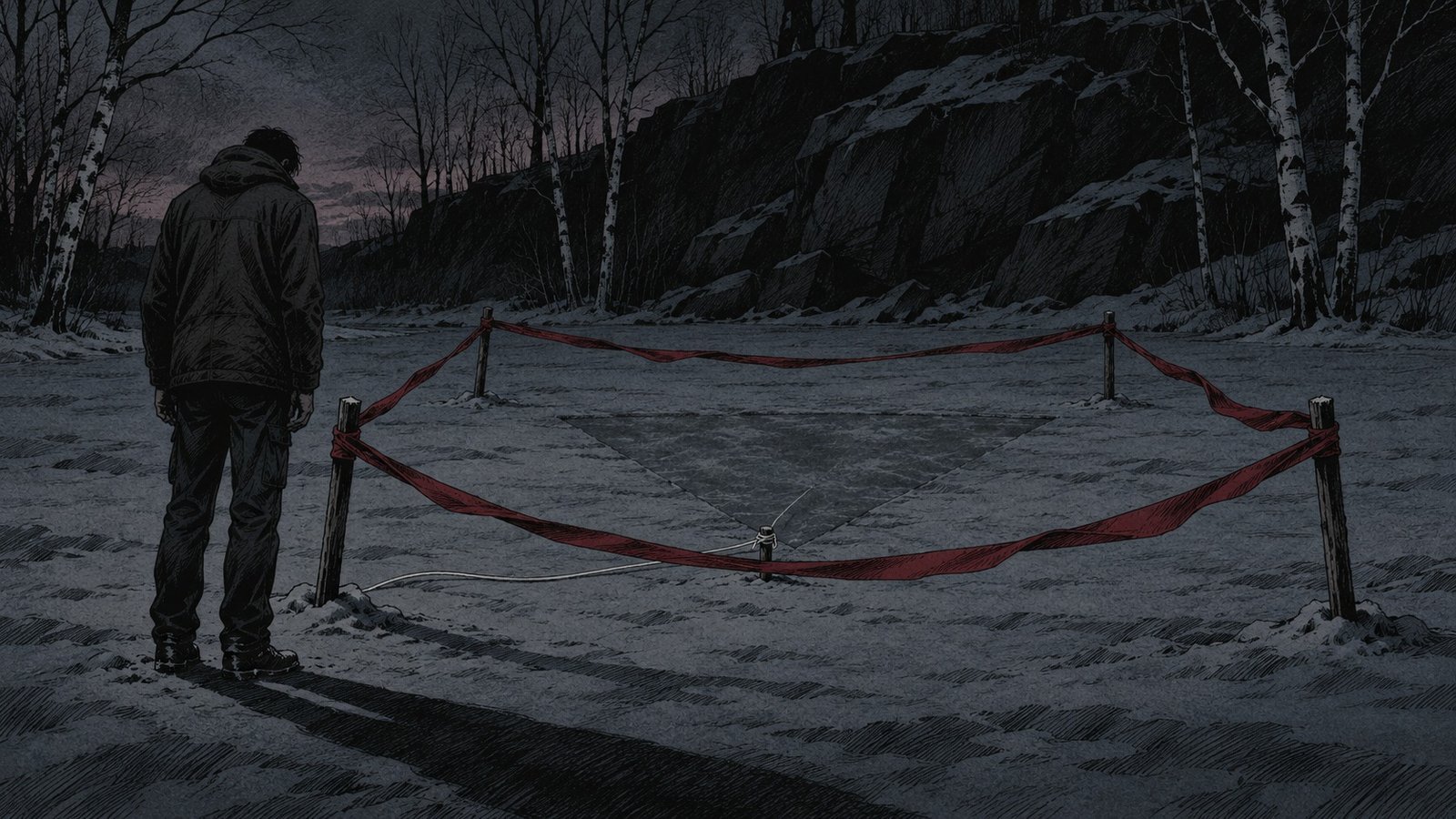
What is known: five men went in, two died at the deepest restriction, three came out by three different routes after dives of eight to eleven and a half hours. An official recovery stopped at the first body. A private one, seven weeks later, brought both men home, and nobody was charged.
What is not known: exactly why the second diver died, since his equipment was checked and found working, and whether the decision to go on rather than turn back, taken at 130 metres, could realistically have been made any other way.
If the professionals were right that it was too dangerous, were the friends wrong to prove them wrong?
Where the argument is, and where we come down
The argument lives in the technical diving community — the large ScubaBoard accident threads and the Nordic cave-diving organisations — and it is about risk authority, not facts. One side holds the unauthorised recovery was indefensible: the risk the volunteer team accepted exceeded what any official operation would be permitted even under recovery exemptions, and pushing past a body-blocked restriction at around 110 metres for a non-rescue objective invites a third and fourth death. The other holds that the official process was slow and sidelined the families, that the Norwegian ethic of bringing the dead home carries real weight, and that the Finnish team had what the official team lacked: direct knowledge of the section where the bodies lay. A third strand, audible once the documentary Diving Into the Unknown reached a wider audience, is that heroic framing buried the prior question — why the original dive killed two experienced divers at all. Separately, Norwegian cave divers argued against the permanent closure of the site that some had demanded.
The stronger case rests on the first distinction, and the official team’s conduct supports it. The authorities’ recovery attempt used some of the most experienced cave divers available — Rick Stanton, John Volanthen and Jason Mallinson — and after reconnaissance they judged the task too dangerous and stopped; Mark Dougherty, involved in the earlier effort, said publicly on 25 February 2014 that it was not worth risking lives. That is first-hand assessment by people in the water, not distant opinion. The defenders’ best point is also first-hand: the surviving Finns had been through the restriction, and their five-day operation recovered both bodies without further loss. On the accident itself the critics are right, and Stanton put it bluntly in saying the two should never have died in the first place — which points at planning, bail-out strategy and the decision to continue past a jammed restriction.
The argument exists because of a structural mismatch rather than a missing document. A supervisor signing off an official operation is legally answerable for those divers and cannot authorise a risk volunteers may accept for themselves, which guarantees a standoff whenever a body lies somewhere an official team will not go. The timeline worsens it: police kept a diving ban in place, said prosecution was not a priority, and brought no charges, while accounts differ over whether the ban had formally lapsed by the time the recovery was reported in early April 2014. A Finnish state honour to one recovery diver and a sympathetic documentary completed the reframing.
On the record as it stands, we put more weight on the critics’ reading of the original dive and on the official team’s judgement than on the heroic account of the recovery. First, the divers best placed to assess the restriction concluded under official sanction that it could not be passed safely, and that assessment was never shown wrong, only overridden. Second, the recovery’s success does not retrospectively validate the risk; it was one possible outcome. We could be wrong if the full Norwegian police file or an independent technical review showed the official operation was stopped by procedure rather than by the cave. If such a review becomes public, this section changes.
Sources for this section: en.wikipedia.org · scubaboard.com · lifeinnorway.net · scubaverse.com · dynamic.hs.fi · divernet.com · old.xray-mag.com
Quick answers: the Plura cave accident
What happened at Plura in 2014?
On 6 February 2014 five Finnish cave divers attempted the first full traverse of the Plura to Steinugleflaget system in northern Norway. Two died at about 111 to 130 metres in a narrow restriction. The other three surfaced separately after dives of eight and a half to eleven and a half hours.
Who died in the Plura cave?
Jari Huotarinen, 40, a diver from Finland, and a 34-year-old Finnish diver whose family asked that his full name not be published. Both died in the deepest restriction of the system.
Why did the official recovery stop?
A British cave-diving team dived from 21 February 2014 but could not free the first body from the restriction, and judged that passing it to reach the second man would risk a rescuer’s life. The operation was called off on 25 February and the cave was closed.
Did the Finnish divers get in trouble for the secret recovery?
Norwegian police opened an investigation after being told what had happened, interviewed the divers, and then said prosecution was not a priority. No charges were brought.
Is Diving into the Unknown a true story?
Yes. The 2016 documentary, directed by Juan Reina, uses the divers’ own footage from the fatal dive and follows the private recovery from planning to the moment the bodies came out.
What is a little-known fact about the Plura cave accident?
The last survivor out finished an eleven-and-a-half-hour dive by breaking through a centimetre of new ice with his bare hands. The triangle the team had cut that morning had frozen over while they were underneath it, and when he climbed out there was nobody on the surface at all.
Case notes: why the ban did not hold
It looks at first like a simple conflict: experts said no, amateurs said yes, and the amateurs got lucky. The record does not support that reading, and three things stand out.
The people who went back were not amateurs and not strangers to the cave. They had found the connection themselves in 2013. They knew the restriction, the depths and the route better than anyone brought in from outside, and two of them had already come out of it alive once.
The official team was not refusing out of caution alone. They were being asked to pass a body wedged in a space narrower than a doorway, at a depth where a mistake is not recoverable. Stopping was the correct professional call for a team working under a public authority with a duty of care.
The gap between those two facts is where the whole case sits. A state rescue service cannot send people to do something it judges lethal. Private individuals can decide to accept that risk for themselves, and in this instance twenty-five of them did, prepared it for seven weeks, and nobody was hurt.
What makes it uncomfortable is that it worked. Had anything gone wrong on 26 March, the same decision would be remembered as recklessness that killed more people, and the ban would read as the warning nobody listened to.
Related cases: Joe Simpson’s survival on Siula Grande; the 41 workers trapped in the Silkyara tunnel; the ski tourer buried 24 hours in an Alpine crevasse.
Evidence locker
The photographic record
Freely licensed photographs of the cave and the valley. No photographs of the 2014 dive or the recovery are free to publish.
EXHIBIT P1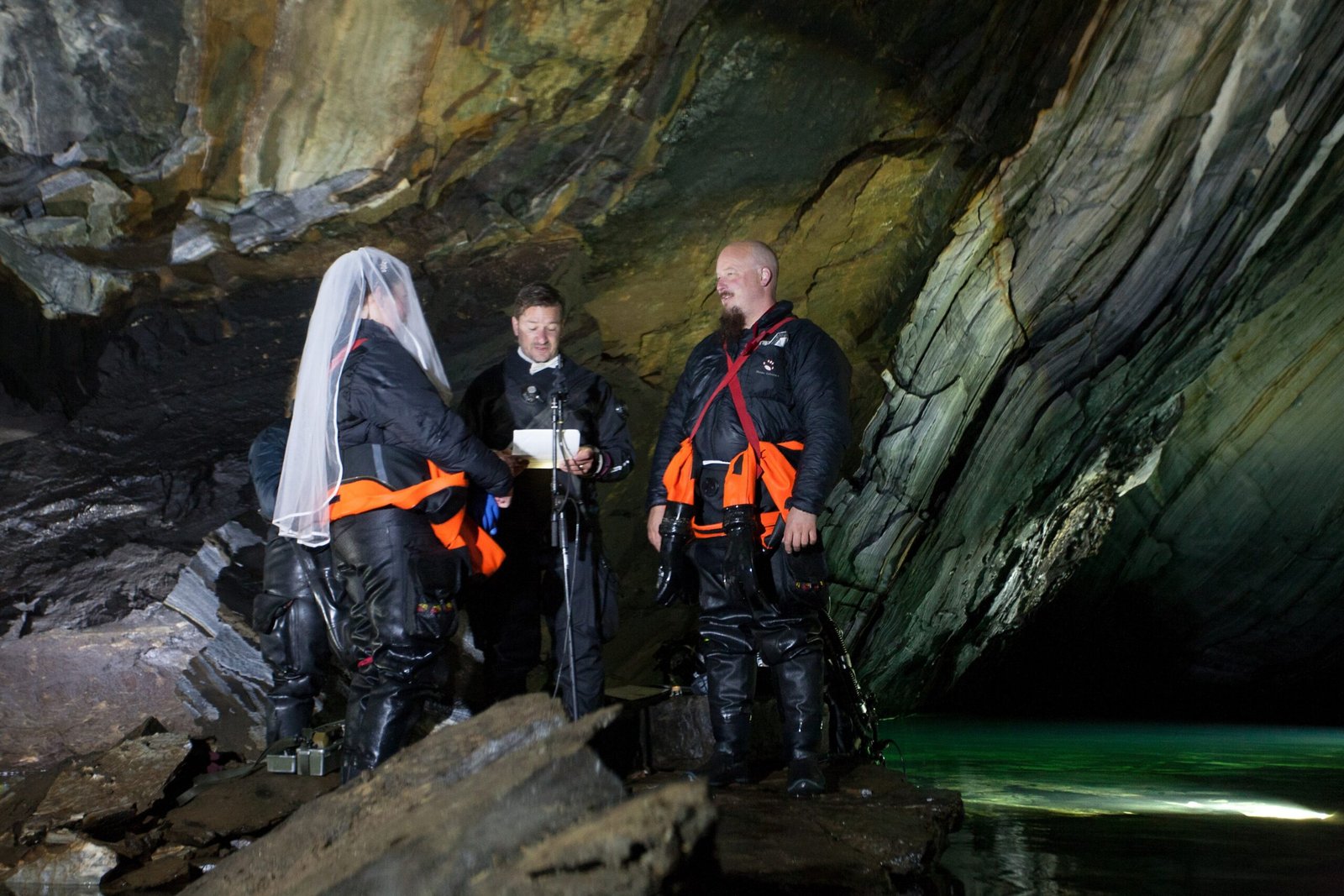 EXHIBIT P2
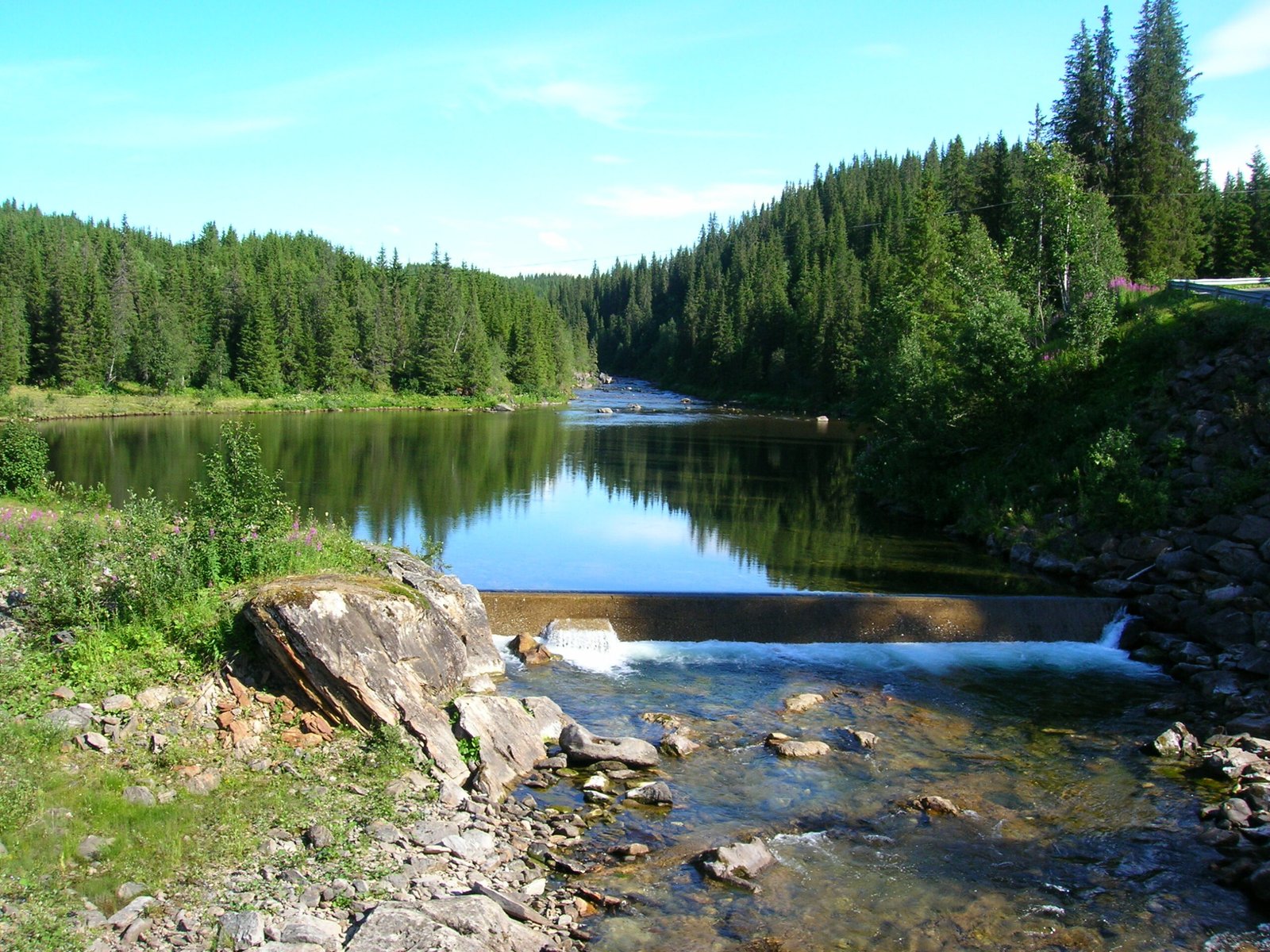 EXHIBIT P3
 EXHIBIT P4
 EXHIBIT P5
Exhibit A
Helsingin Sanomat, long-form reconstruction of the dive (2014). The paper interviewed the survivors and published the minute-by-minute account this file is built on: the names and ages of the five men, the chainsaw cut at the pond, the leash caught at about 111 metres, the shared mouthpiece, the four-hundred-minute decompression reading, the split of the second team, the eleven-and-a-half-hour exit through new ice, and the recovery of 26 March. It is also the source for the family’s request that the second man’s full name not be published, which this file follows.
Exhibit B
Scubaverse, 3 April 2014. Reports the private recovery carried out against the diving ban and quotes a police spokesman saying that prosecuting the Finnish divers was not a priority.
Exhibit C
Contemporary dive-community chronology, February 2014. Records the arrival of the three British cave divers in Rana on 20 February, the first recovery dive on 21 February, and the announcement on 25 February that the operation had been called off.
Exhibit D
Divernet on Diving into the Unknown (2016), the documentary directed by Juan Reina. Source for the scale of the private operation: fourteen Finns and eleven Norwegians, 1,100 kilograms of equipment, twenty-six staged cylinders and a seven-hour plan.
Exhibit E
Life in Norway, on the Plura cave and the 2014 accident. Source for the First Class Medal of the White Rose of Finland awarded to Gronqvist, the earlier death of a Norwegian diver in the cave in 2006, and the reopening of the system to divers after the recovery.
Editor’s note
The sentence in this case I keep returning to is not about the deaths. It is Kankanen, eleven and a half hours into a dive that had already killed two of his friends, coming up under the pond and finding that the hole had frozen shut above him. He broke it with his hands and climbed out into an empty field.
I do not think the Norwegian authorities were wrong. Asking a rescue team to squeeze past a body wedged at 111 metres is asking someone to accept a risk a public service cannot reasonably impose on its own people. The ban was the correct decision made by people doing their jobs properly.
But I also understand why it did not hold. The men who went back were not tourists. They had mapped that connection themselves, and the thing blocking the restriction was someone they had known for years. Twenty-five people spent seven weeks making sure it would work, and it did.
What I cannot settle is how differently this would read if one of them had not come back. The same preparation, the same motives, the same defiance of the same ban, and we would be calling it something other than courage. That may say more about how we judge outcomes than about the decision itself.
What would you have done if the person in the restriction were your friend and the state had just told you to leave him there?