Myrtle Holcomb: They Thought a Farmer Was Burning Brush. It Took 57 Years to Learn Her Name
Narrated Mystery: press play and hear the whole case read aloud, like a true crime podcast episode, or an audiobook for a long drive (about 11 minutes). The narrator is an AI voice.
Fifteen minutes on Ten Ten Road
On the afternoon of Saturday 27 April 1968, two women driving to church in the McCullers community of southern Wake County, North Carolina, passed a stranger walking along Ten Ten Road. She wore a green and white polka dot dress. Out there, in farm country south of Raleigh, she was dressed for town, and she was on foot.
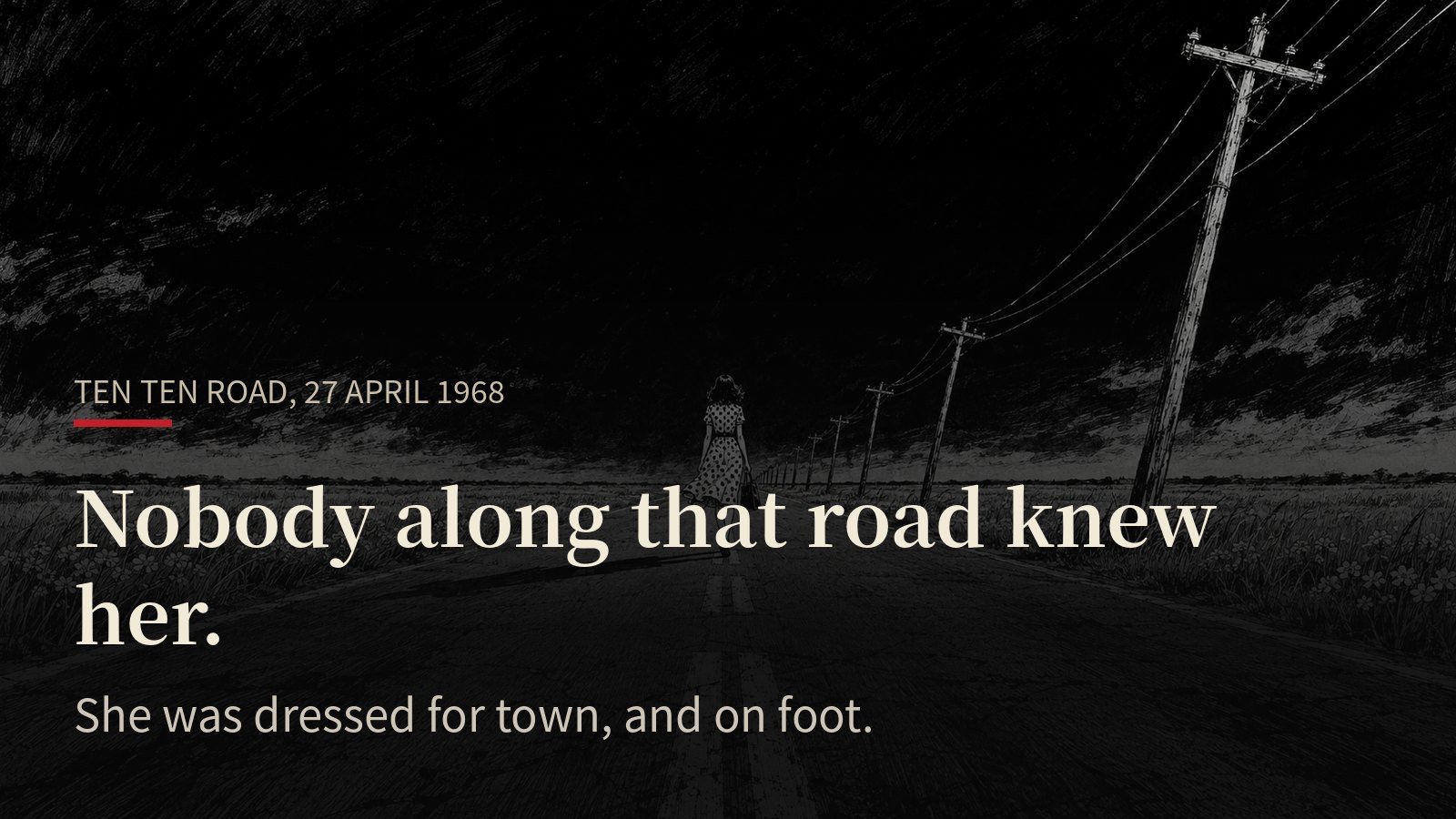
About fifteen minutes later the same two women drove back the other way. There was a fire burning in a field.
Neither of them called anyone. It would be fifty-seven years before anyone could say who the woman in the polka dot dress was, and by then the only man ever named as a suspect had been dead for decades.
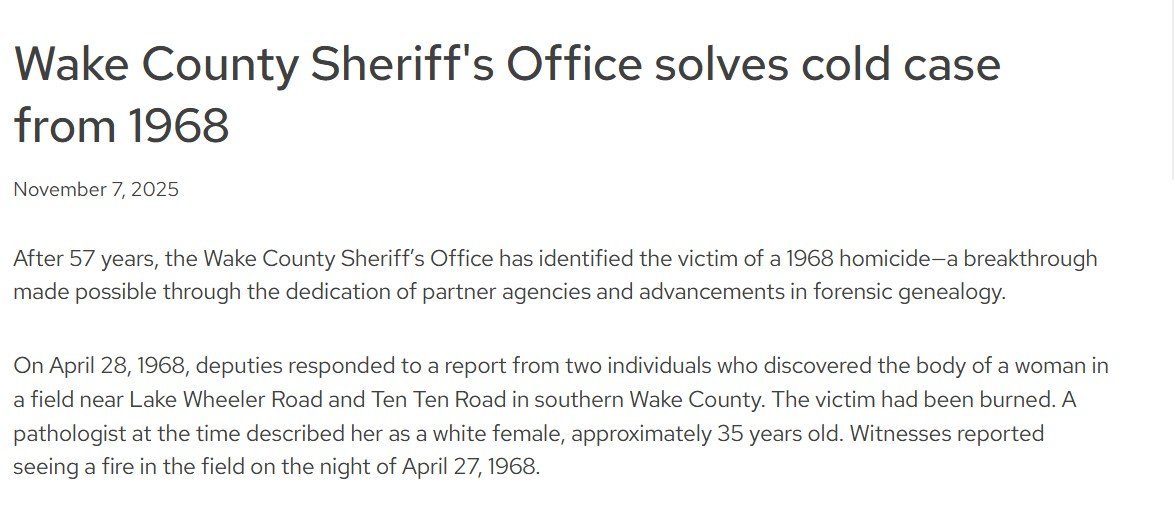
The short answer. Myrtle Holcomb, born in 1919, was the woman found dead in a field in southern Wake County, North Carolina, on 28 April 1968. She went unidentified for 57 years. A hair sample kept since 1968 produced a DNA profile in 2025, and the Wake County Sheriff’s Office announced her name on 7 November 2025. No one was ever charged, and how she came to be in that field is still unknown.
CASE FILE AT A GLANCE
Who: Myrtle Holcomb, born 1919, of Florida
Found: 28 April 1968, a field near Lake Wheeler Road and Ten Ten Road, southern Wake County, North Carolina
Unidentified for: 57 years
Identified by: A hair sample kept since 1968; DNA profile by Astrea Forensics, genealogy by First Genes LLC
Announced: 7 November 2025, Wake County Sheriff’s Office
Suspect: A local man (not named here), named after 2004; died in the 1990s; never charged
Status: Identity solved. No one ever charged; what happened in the field is unknown
Wake County, North Carolina, April 1968. A stranger in a polka dot dress, a burning field, and a name that took DNA until 2025.

Nobody calls the sheriff about smoke
In April, in that part of the county, smoke rising off a field is the most ordinary sight there is. Farmers burn brush. Nobody rings the sheriff about it, and nobody did.

The fire was reported the next day, Sunday 28 April, when two people found a woman’s body in the field, near where Lake Wheeler Road meets Ten Ten Road. Only then did the witnesses tell deputies about the smoke they had driven past the evening before.
The first problem was obvious from the start: nobody knew who she was. The second problem was hiding in the paperwork, and it would take fifty-seven years for anyone to notice it.
Everything except a name
She had almost nothing with her. No wallet, no letter, no identification of any kind.
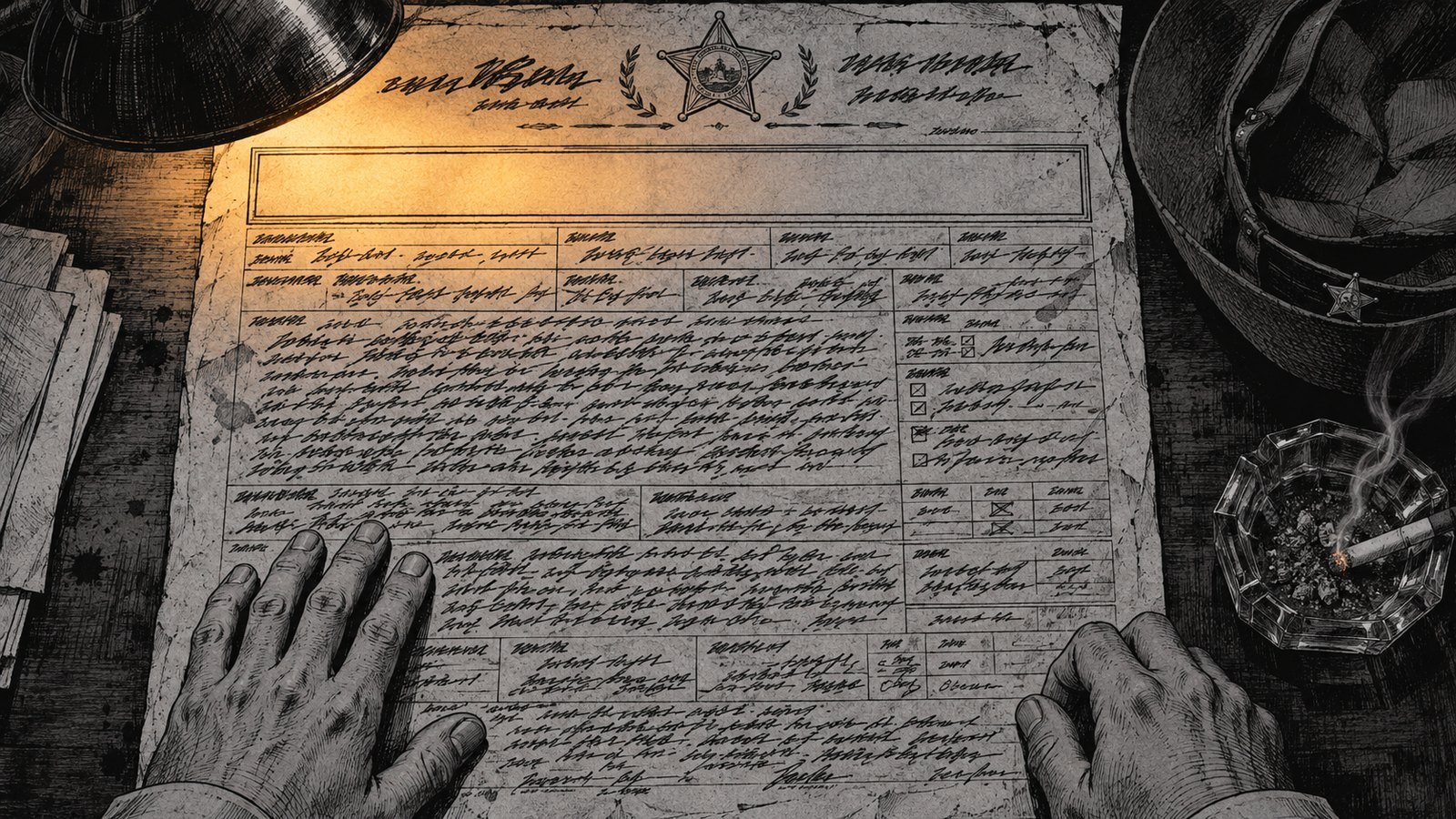
What investigators did have, they wrote down carefully. The polka dot dress or blouse, with a zipper. Brown Italian loafer-style shoes, size seven and a half. A greenish-blue all-weather coat with a grey lining. Cosmetics and shoes photographed at the scene. A woman of about five foot three, dark hair going grey in places, blood type A positive, a surgical scar below the left side of her navel. They took her dental chart. They took her fingerprints.
They had everything except who she was.
The pathologist wrote thirty-five
A pathologist put her age at about thirty-five. The case file widened it to thirty-five to forty-five.
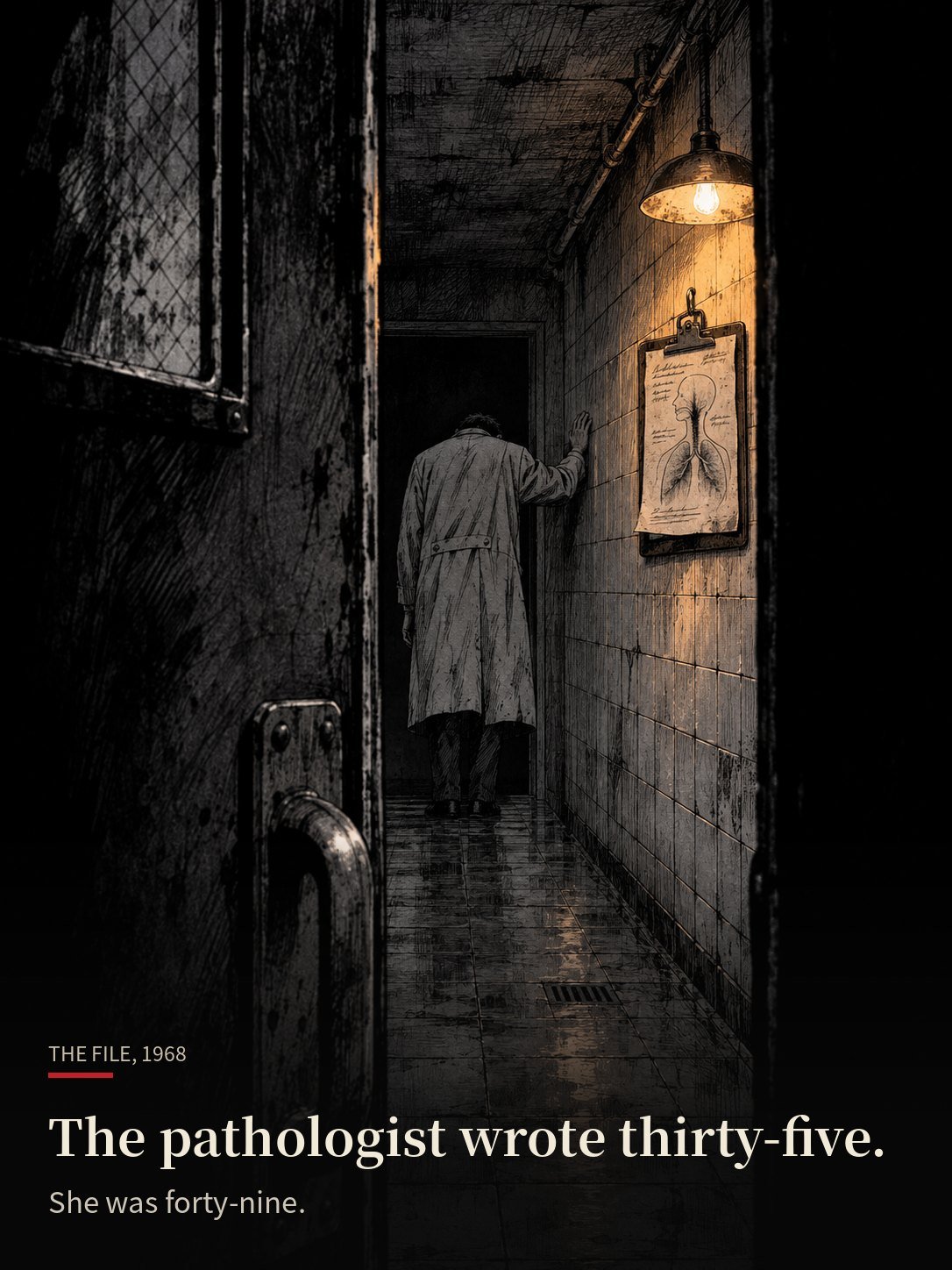
The estimate was wrong by more than a decade, though nobody would know that until 2025. Age is one of the first filters anyone runs a missing-person list through, and for fifty-seven years the search for this woman was aimed, on paper, at someone far younger than she really was.
A face in the newspaper, and nobody answered
In May 1968 a reconstruction of her face was produced and published. A second image was taken at the coroner’s office after a plastic surgeon worked on the reconstruction.
The case file describes her remains as having a recognisable face. News coverage of her identification, fifty-seven years later, said she had been burned beyond recognition. Both descriptions are in the record.
What is not in dispute is what happened next: the face was published, and nobody came forward with a name. Investigators needed a different kind of lead, and they found one close to home.
The man who drove up the road to look
In 1968 investigators interviewed a local man. We are not naming him, because he was never charged with anything.
He told them that he and a friend, David Baker, had driven up the road to take a look at the woman walking, and that by the time they got there she was gone.
That was his account. No charge followed it. But investigators wrote down one detail of his life that pointed somewhere nobody expected: he had once planted tobacco in Canada.
The Canada theory
The woman was a stranger to everyone along that road. Investigators considered that she had not ended up there by chance, and that she might have come all the way from Canada to meet him.
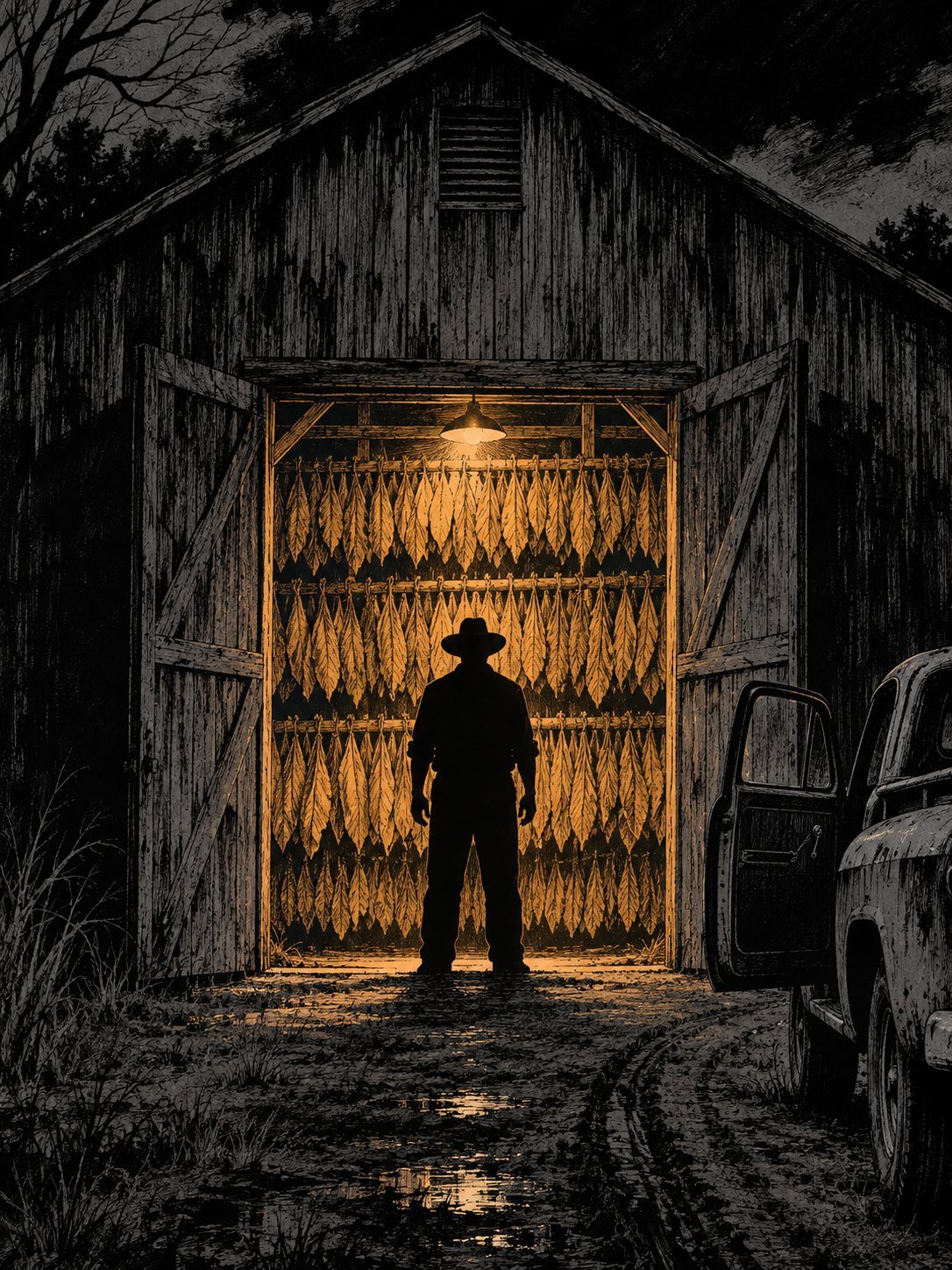
It was a theory built on almost nothing: one man’s past work, and a face that nobody in the county knew.
It would turn out to be wrong about where she came from. Nobody would find that out until 2025.
Thirty-six years later, a surname on a card
The case sat untouched for thirty-six years.

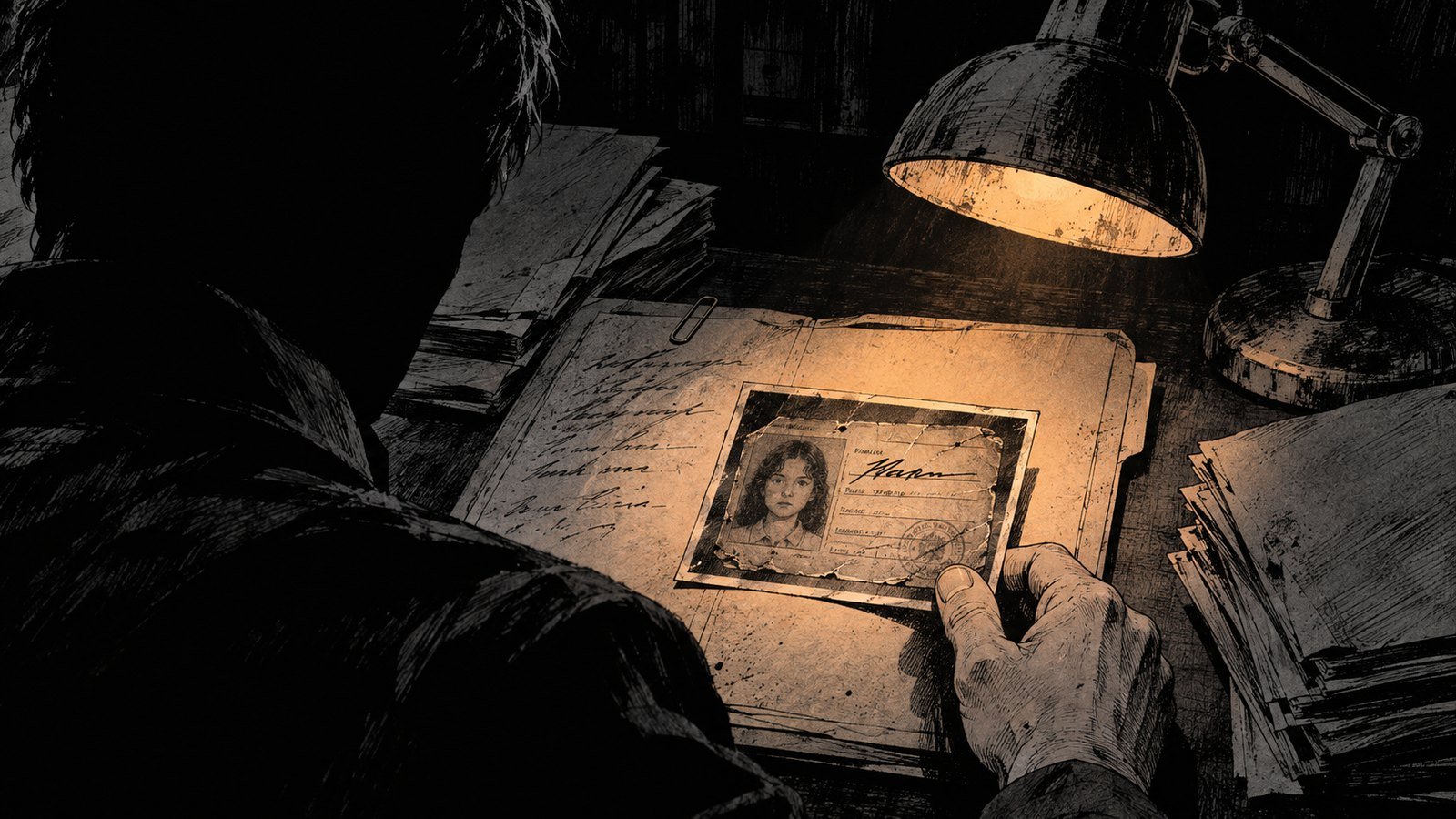
Then, in 2004, new information reached investigators and a witness was interviewed. The witness said they had once seen that man with an identification card belonging to a woman named Holcomb. They could not remember her first name.
No identification card had ever been found with the woman in the field.
The district attorney’s office decided the evidence was enough to seek a murder arrest warrant. There was one problem nobody could get around: the man was already dead. News reports give the year as 1992; the Sheriff’s Office says only that he died in the 1990s.
So in 2004 investigators had a surname, no first name, and no way to prove the woman in the field was a Holcomb at all.
“We’ve been shown no evidence, no proof”
His daughter has disputed the accusation publicly. “We’ve been shown no evidence, no proof,” she told WRAL.
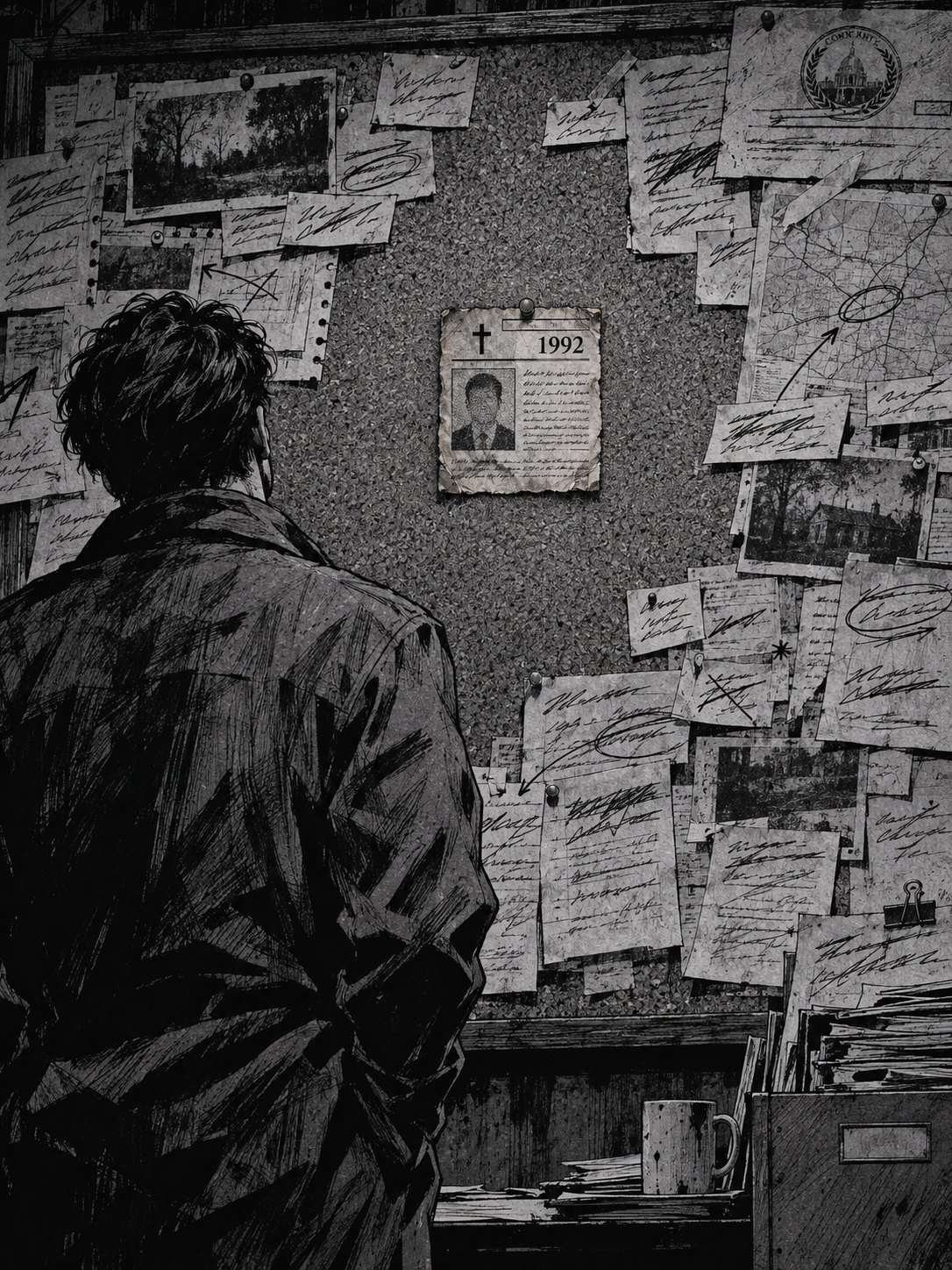

He was never charged, never tried and never convicted. A prosecutor’s view that a warrant could be sought is not a verdict, and it was never tested in front of anyone able to answer it. That is where this case legally stops.
Which left the woman in the field exactly where she had been since 1968: without a name.
Her glasses gave nothing. Her shoes gave nothing.
When the original investigation was done, someone cut and kept a sample of her hair. Nobody in 1968 could have known what it would one day be used for. It sat in Wake County Sheriff’s Office custody for fifty-seven years.
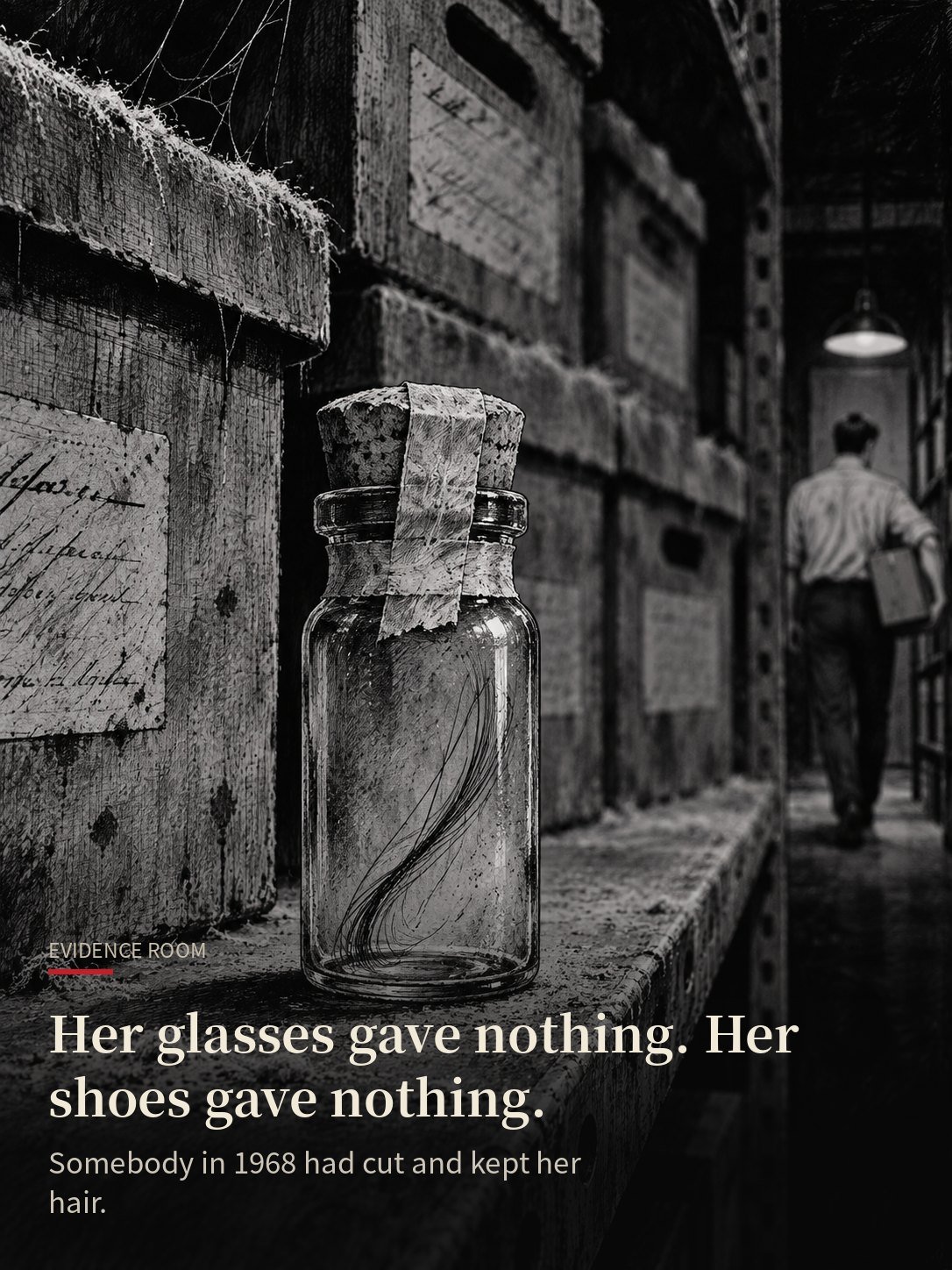
When modern DNA testing was finally tried, it was tried on the obvious things first. Her clothing. Her shoes. Her glasses. None of them produced a usable profile.
The hair did.
Four months to undo fifty-seven years
In 2024 the hair sample was sent off for testing. With support from the State Bureau of Investigation, Astrea Forensics built a DNA profile from it in 2025.
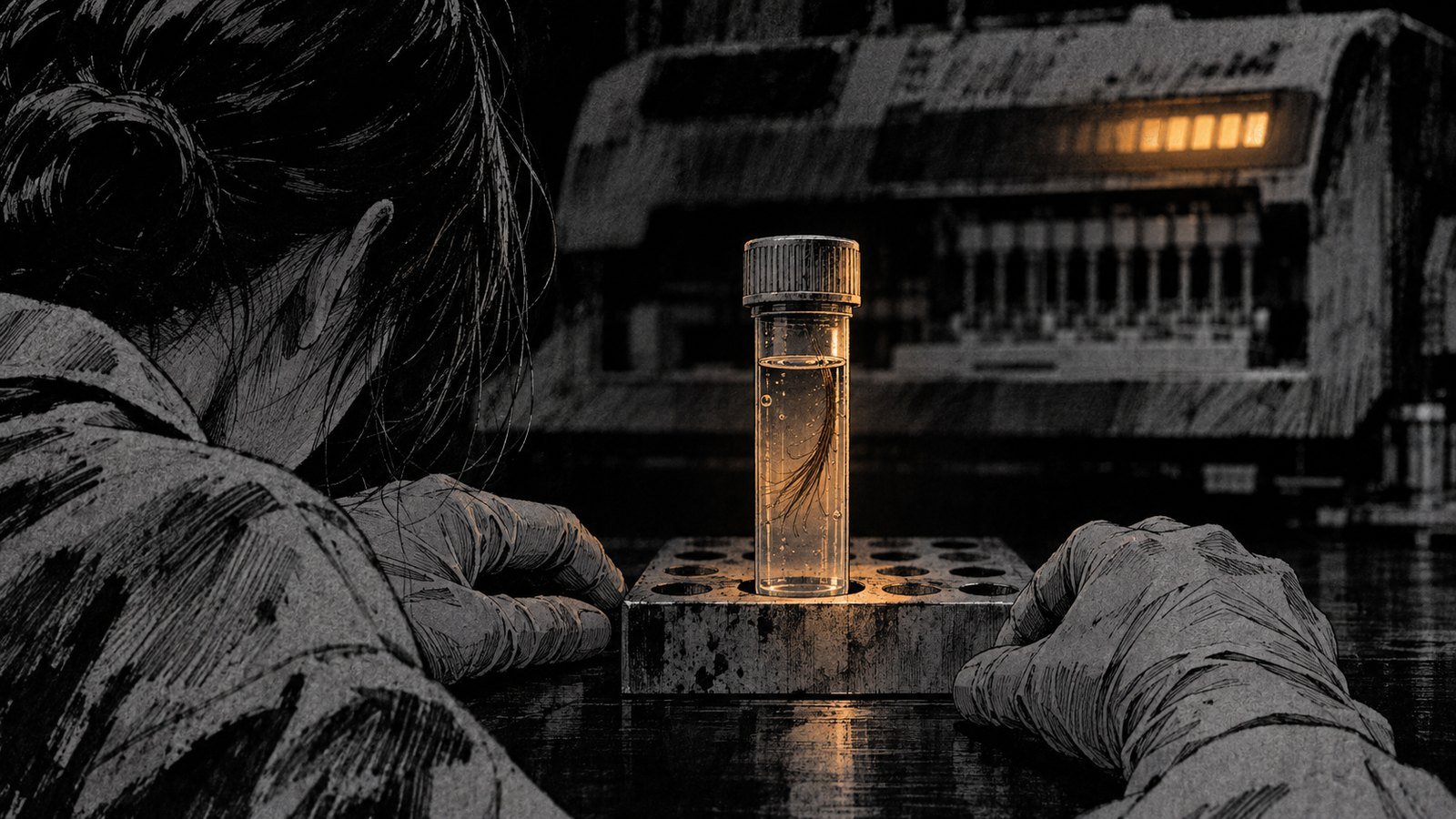

The profile went to Leslie Kaufman, a forensic genealogist with First Genes LLC, who uploaded it to the comparison databases used in this kind of work and built out family trees from the matches. Possible relatives came out of that work. Investigators met them, and further DNA testing confirmed the relationship.
It took about four months. The state put more than ten thousand dollars into the testing. Kaufman called it the oldest North Carolina cold case solved by forensic genealogy.
In September 2025, the woman in the polka dot dress finally had a name.
Her name was Myrtle Holcomb
Myrtle Holcomb was born in 1919. On the afternoon she walked along Ten Ten Road she was forty-eight or forty-nine, not thirty-five.
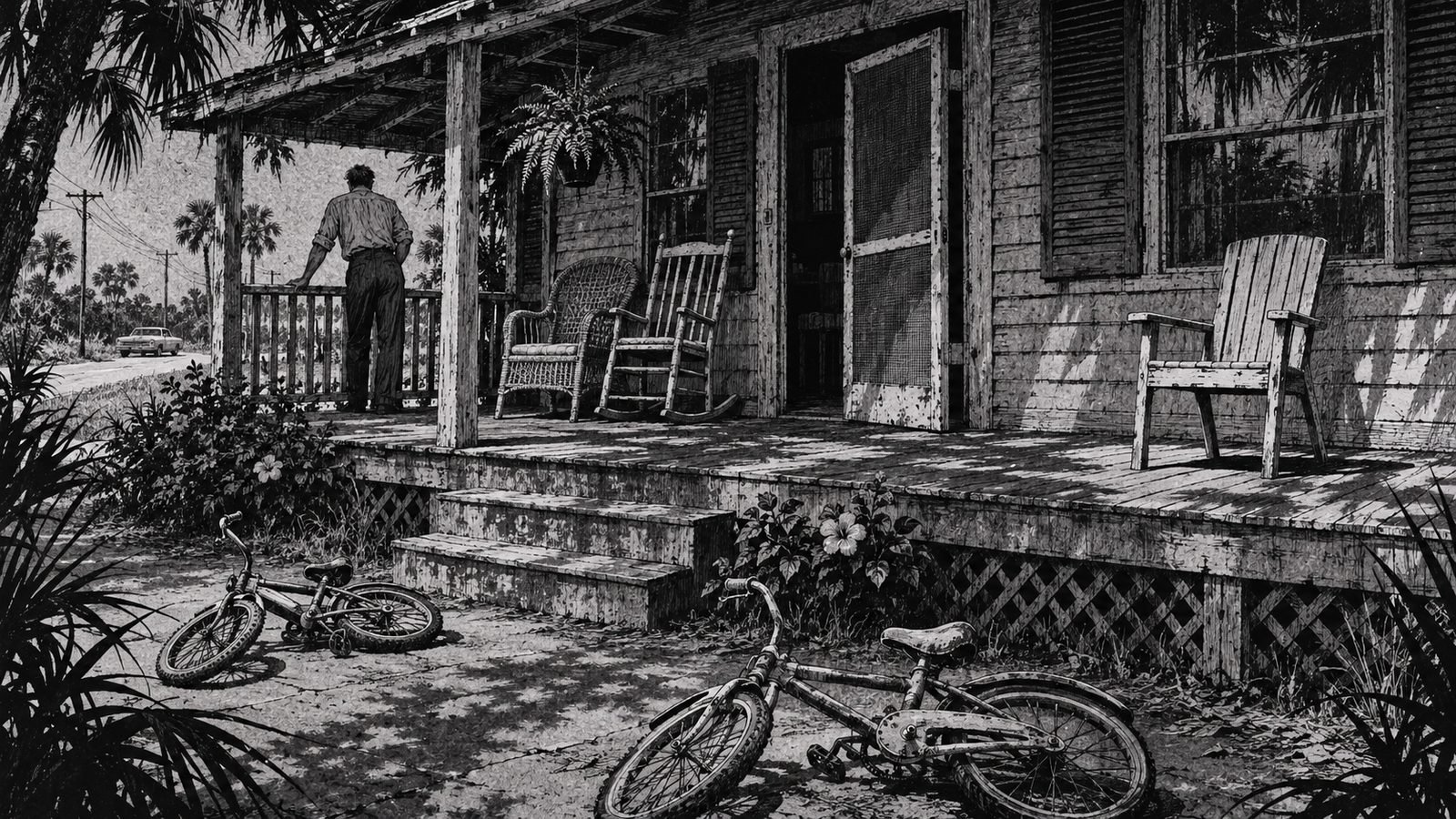
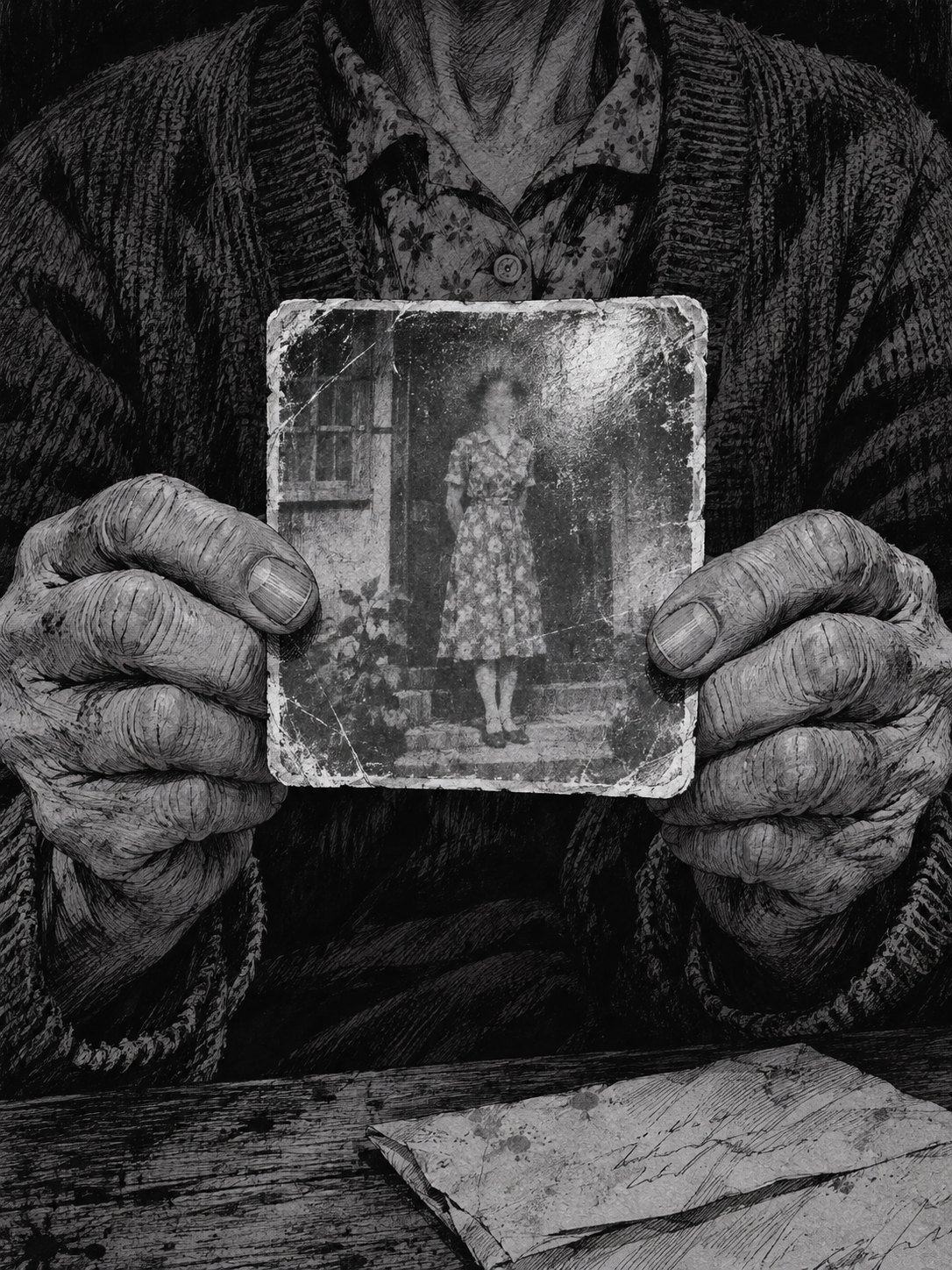
She was married, she had two children, and she was living in Florida, not Canada. Her family knew she had travelled to Raleigh. They did not know why. They had lost touch with her, and the news of how she died reached them fifty-seven years after it happened. They have asked to remain unnamed.
And the surname a witness remembered seeing on a card in that man’s possession, back in 2004, was the same as hers. Whether that card was hers has never been established in any court, and now it never can be.
The Wake County Sheriff’s Office announced the identification on 7 November 2025.
The fifteen minutes no test can explain
The hair answered one question: who she was. It cannot answer the others.
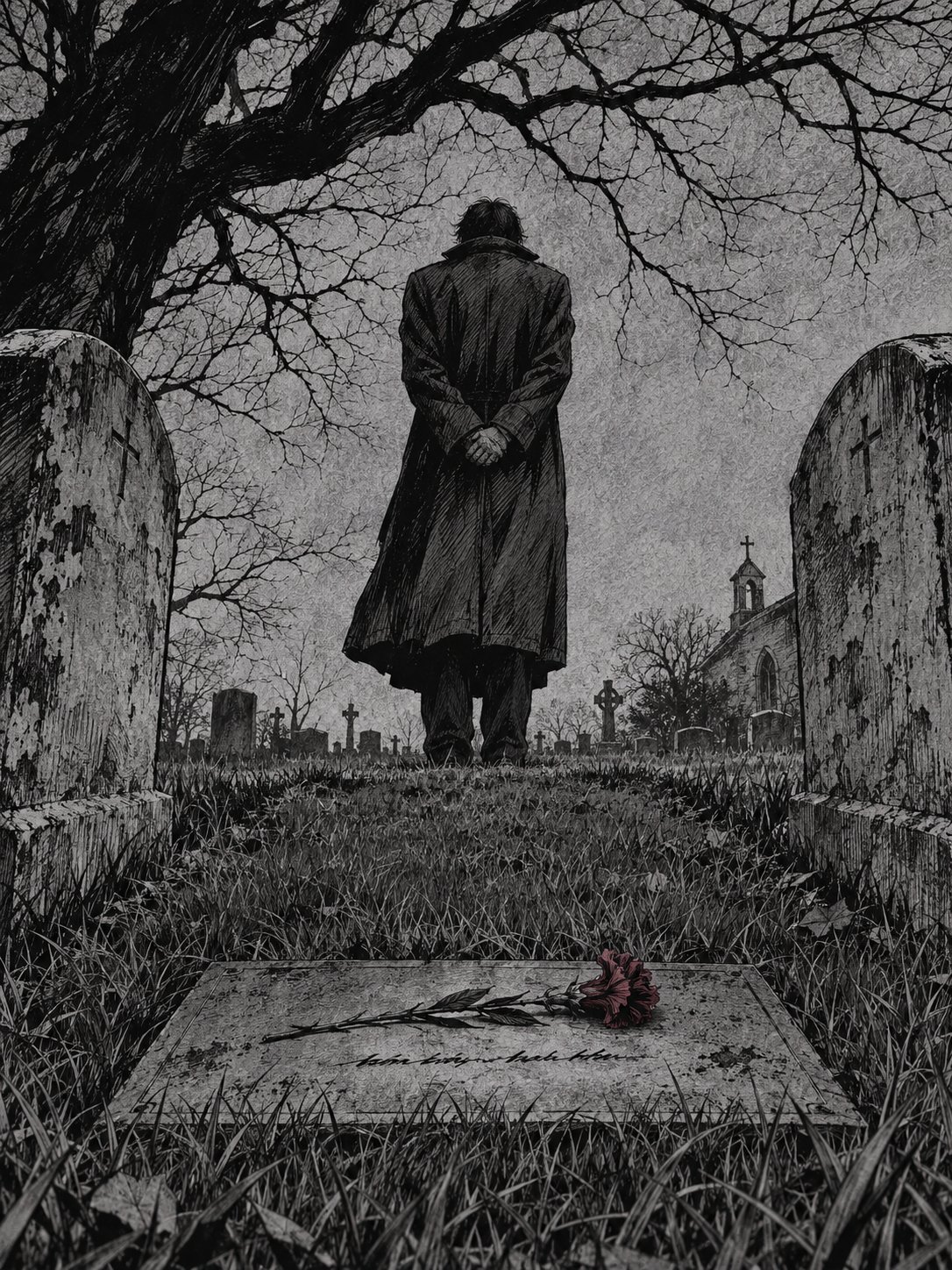
Why did a Florida woman in her late forties travel to Raleigh without telling her family why? How did she end up on foot on a rural road south of the city? Whether the card described in 2004 was ever recovered, nobody has said. Where her remains are today is not on the public record; the case file lists them as unknown and records only that hair and blood samples were kept.
And the hardest gap of all is the shortest one. Two women saw her walking. Fifteen minutes later they saw the fire.
Back on Ten Ten Road
Fifty-seven years after two women drove past her on their way to church, the woman in the green and white polka dot dress has her name back.
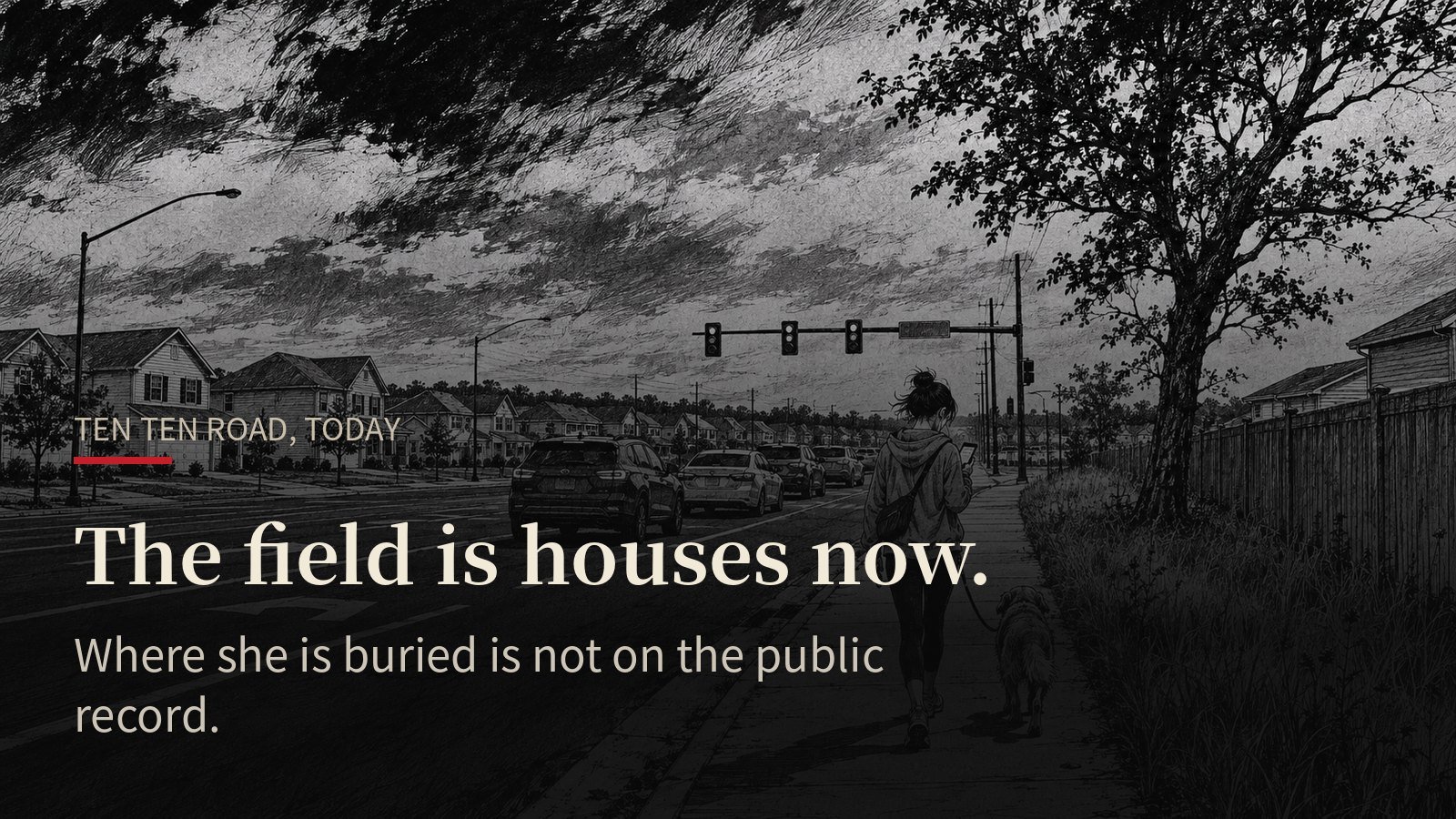
What happened to her in the next fifteen minutes is still nobody’s to tell.
The story you may have heard, and what the file says
| What gets repeated | What the record says |
|---|---|
| She was burned beyond recognition | The case file describes a recognisable face, and a facial reconstruction was made and published in May 1968. It produced no identification. |
| The victim was a woman of about 35 | A pathologist estimated about thirty-five and the file said thirty-five to forty-five. Myrtle Holcomb was born in 1919: she was nearly forty-nine. |
| DNA from her belongings solved it | Her clothing, her shoes and her glasses were all tested and all failed. The only item that worked was a lock of hair cut and kept in 1968. |
| The killer died in 1992 | Local reports give 1992. The Sheriff’s Office statement says only that the man died in the 1990s. He was never charged, and his daughter disputes the accusation. |
| The case is solved | She has a name. The identification is an agency statement, not a court finding, and nobody has ever been charged with her death. |
Why the record is stranger than the legend: the legend needs a ruined body and a miracle of modern science. The file has neither. Her face was intact enough to draw, and the drawing was printed, and nobody came forward. The science that finally named her depended on one decision made by one person in 1968, to cut a lock of hair and keep it, while every other object in the evidence room gave nothing. And the number that may have kept her in the wrong file for fifty-seven years was not a mystery at all. It was an estimate: thirty-five, written down about a woman of forty-nine. Long Island produced a near-identical wait: an airman found a woman’s body on his lunch break, and it took 48 years to learn her name.
What is documented, and what isn’t
Documented
- A woman’s body was found in a field in southern Wake County on 28 April 1968, and witnesses had seen a fire there the previous evening.
- A woman in a green and white polka dot dress was seen walking on Ten Ten Road on 27 April 1968.
- A hair sample kept since 1968 produced a DNA profile in 2025, and genealogical work on that profile identified her as Myrtle Holcomb, born 1919.
- The man was interviewed in 1968, named as a potential suspect after new information in 2004, and had died before any arrest could be made.
- A prosecutor’s office considered the evidence sufficient to seek a murder arrest warrant. No charge was ever filed.
Interpretation
- That she travelled to Wake County to meet a specific person.
- That the identification card a witness described in 2004 was hers.
- Any account of who killed her.
Not confirmed
- How she got from Florida to a rural road in Wake County, or who she was going to see.
- What happened between the sighting on the road and the fire in the field.
- Where her remains are now.
Timeline
- 1919: Myrtle Holcomb is born.
- 27 Apr 1968: A woman in a polka dot dress is seen walking on Ten Ten Road; a fire is seen in a field about fifteen minutes later.
- 28 Apr 1968: Two people find a woman’s body in the field; deputies respond.
- May 1968: A reconstruction of her face is produced and published. No identification follows.
- 1968: A local man is interviewed. No charge.
- 2004: New information; a witness describes having seen the same man with an identification card in the name Holcomb; the district attorney’s office considers a warrant.
- 1990s: The man has died by this point, so no arrest is possible. Reports give 1992.
- 2006: The case is entered on the Doe Network as 474UFNC.
- 2024: The 1968 hair sample is submitted for testing.
- 2025: Astrea Forensics develops a DNA profile; First Genes LLC does the genealogy.
- Sep 2025: The identification is confirmed.
- 6–7 Nov 2025: The Sheriff’s Office announces it.
Evidence locker
The official announcement and the two local reports that carry its details. No photographs of the victim or the scene are shown.
Access: Direct original.
Supports: The identification, the 1968 facts as the agency records them, and the genealogy route.
Limits: An agency statement, not a court finding. The man named as the 1968 suspect was never charged.
Access: Via press.
Supports: The details of how the hair sample produced the identification.
Limits: Repeats the Sheriff’s Office account; gives 1992 for the suspect’s death where the agency says only “the 1990s”.
Access: Via press.
Supports: That the identification was reported the same way by separate newsrooms.
Limits: Based on the same official release.
 EXHIBIT D · LOCATION MAP
 EXHIBIT E · 57-YEAR TIMELINE
Where the records disagree
- Her age. A pathologist estimated about thirty-five; the case file estimated thirty-five to forty-five; her birth year makes her about forty-nine.
- Her condition. News coverage of the identification says she was burned beyond recognition; the case file describes a recognisable face, and a facial reconstruction was made in May 1968.
- The location, as written down. The Sheriff’s Office gives the field as near Lake Wheeler Road and Ten Ten Road; the case file places it in the McCullers community near Fuquay-Varina. These describe the same stretch of southern Wake County in different ways.
- When the man died. Reports say 1992. The official statement says only the 1990s.
- Where the case was listed. The Doe Network file, added in January 2006 and last updated in January 2019, gives her NamUs case number as 16339 and lists her NCIC number as unknown.
Editor’s note: our read, not a finding. Of everything in this file, the detail we keep coming back to is the number thirty-five. A missing woman of forty-nine and an unidentified woman of “about thirty-five” can sit in separate files for a lifetime without anyone putting them side by side. The hair solved this case. We think the age estimate is a large part of why it took fifty-seven years to need solving.
Where the argument is, and where we come down
Nobody disputes the identification. The argument is about the man investigators named, and it has been carried on in public between his family and the authorities since the mid-2000s, mainly through Raleigh television. In 2006 WRAL reported the Sheriff’s Office chief calling a new witness’s details “significant” and “strong,” and then-District Attorney Colon Willoughby saying the information was strong enough to warrant charges, had the man not died in 1992. His daughters answered in the same report: they had been shown no evidence, his reputation as a womanizer and an abusive husband made him “an easy target,” and the investigators’ Canada theory could not be true because he had not been there in nearly ten years. When the woman was named in November 2025, one daughter repeated the first point: “We’ve been shown no evidence, no proof.” In unidentified-persons and true-crime communities the case was carried for years on the Doe Network; we could not load the forum thread discussing the identification, so we do not characterise what was said there.
Neither side’s case has ever been tested, and that decides how far each can be pushed. The investigators’ side rests on undisclosed testimony from a witness who came forward thirty-six years after the death, on the man’s own 1968 statement that he drove up the road to look at the woman, and on a prosecutor’s opinion, which is not a finding. The family’s side is a denial without counter-evidence, but one of its specific points has since been borne out: she did not come from Canada, she lived in Florida. Against that, the detail that carries the most weight came out of the investigators’ file. A witness in 2004 said the man had an identification card belonging to a woman named Holcomb, and DNA genealogy in 2025 named her Holcomb. A specific detail recorded long before the identification, and later matched, is the strongest single item in the case.
The argument exists because the only person who could have answered it died before the evidence surfaced. A suspect who cannot be charged cannot be tried, so the authorities’ view stays an assertion and the family’s denial cannot be tested either. The agencies released conclusions, not the witness statement. The early investigation built its theory around the suspect’s past, Canada, rather than around the victim, and the 2025 announcement’s headline word, “solves”, reads like a verdict.
On the record as it stands, we put more weight on the man being a serious suspect than on the family’s account that he was simply an easy target, while not treating him as her killer. First, the surname on the card was recorded in 2004 and matched by DNA in 2025, which is hard to explain as coincidence. Second, the investigators’ other main theory, Canada, was wrong, so their reading of him was not reliable in every respect. We could be wrong if the 2025 genealogical search was steered by the 2004 surname, which would weaken the match as independent confirmation. If the Sheriff’s Office releases the witness statement or the genealogy method, we will revise this section.
Sources for this section: wral.com · wral.com · wake.gov · doenetwork.org · abc11.com · tapatalk.com
Quick answers: the Myrtle Holcomb case
Who was Myrtle Holcomb?
Myrtle Holcomb was a woman born in 1919, married with two children and living in Florida, who travelled to Raleigh, North Carolina, in 1968. She was found dead in a field in southern Wake County on 28 April 1968 and remained unidentified for 57 years, until the Wake County Sheriff’s Office named her in November 2025.
How was Myrtle Holcomb identified after 57 years?
Myrtle Holcomb was identified from a hair sample cut during the 1968 investigation and kept in the Wake County Sheriff’s Office evidence room. Astrea Forensics built a DNA profile from it in 2025, and forensic genealogist Leslie Kaufman of First Genes LLC used that profile to find relatives.
Was anyone charged with Myrtle Holcomb’s murder?
No one was ever charged with Myrtle Holcomb’s murder. A local man, interviewed in 1968, was named as a potential suspect after new information in 2004, and prosecutors considered the evidence sufficient to seek a warrant, but he had already died. His daughter disputes the accusation.
Why wasn’t Myrtle Holcomb identified in 1968?
A reconstruction of her face was published in May 1968 and produced no identification. Investigators were also looking for a woman of about 35, while Myrtle Holcomb was nearly 49, and the Doe Network file lists her NCIC number as unknown, although she was on NamUs as case 16339.
What is a little-known fact about the Myrtle Holcomb case?
In the Myrtle Holcomb case, her clothing, her shoes and her glasses were all tested for DNA and all failed. The only item in the whole evidence inventory that worked was a lock of hair that someone in 1968 decided to cut and keep.
Related files
- Lake Mead Barrel Body Identified as Edward “Buddy” Jackson. Nobody Had Ever Reported Him Missing
- Foss Lake Cars: Troopers Testing a New Sonar Found Two Cars. Six People Had Been Missing Since 1969
- Hannah Graham Kleitz: A Skull in the Woods Was a Woman Who Died in 1907
Sources
- Wake County Sheriff’s Office, “Wake County Sheriff’s Office solves cold case from 1968,” 7 November 2025: https://www.wake.gov/news/wake-county-sheriffs-office-solves-cold-case-1968
- WRAL, “Cold case closure: 1968 murder victim identified using hair sample, DNA technology,” November 2025: https://www.wral.com/news/local/cold-case-closure-1968-murder-victim-identified-wake-county-myrtle-holcomb/
- ABC11 Eyewitness News, “Myrtle Holcomb: burn victim identified in Wake County cold case,” 6 November 2025: https://abc11.com/post/myrtle-holcomb-burn-victim-identified-wake-county-cold-case-1960s/18121629/
- CBS17, “Victim of 1968 homicide in southern Wake County identified, deputies say,” November 2025: https://www.cbs17.com/news/local-news/wake-county-news/victim-of-1968-homicide-in-southern-wake-county-identified-deputies-say/
- The Doe Network, case file 474UFNC, Unidentified Female, Wake County, North Carolina (record added 2 January 2006, last updated 14 January 2019, NamUs case 16339).
- WCCB Charlotte, “North Carolina cold case from 1968 finally solved,” 9 November 2025: https://www.wccbcharlotte.com/2025/11/09/north-carolina-cold-case-from-1968-finally-solved/
Evidence photos
Real photographs and published figures, kept separate from our illustrations. Each one says what it shows, and what it cannot prove.