Plain of Jars: 37 People Were Found Inside One Giant Stone Jar
Xieng Khouang, northern Laos. On a far ridge, one stone jar held the remains of at least 37 people, placed there over as long as 270 years between AD 890 and 1160. The jars of this plateau may have stood for well over a thousand years before any of them were born.


Narrated Mystery: press play and hear the whole case read aloud, like a true crime podcast episode, or an audiobook for a long drive (about 11 minutes). The narrator is an AI voice.
What the record shows
- What: More than 2,100 megalithic stone jars of uncertain origin
- When: Jars placed from perhaps 1240 BCE; burials to about the 13th century AD
- Status: Funerary use documented; makers, original purpose and transport unexplained
Still uncertain
- Who carved the jars. No settlement of the makers has been identified.
- What the jars were for on the day they were set down.
- How blocks of many tonnes were moved eight kilometres.
One jar on a far ridge
How many people can one stone jar hold, and for how long?
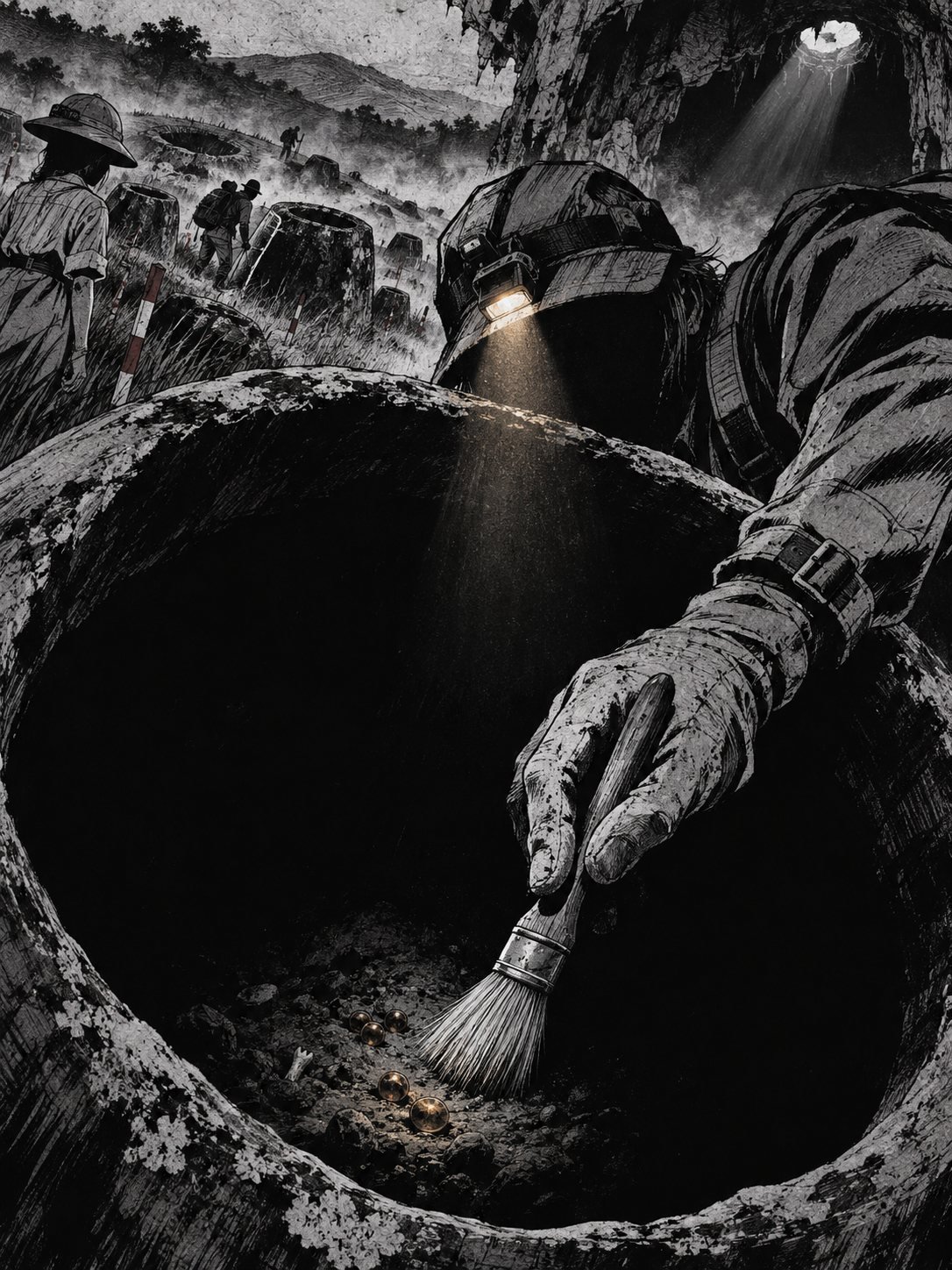
About 70 kilometres north-east of the town of Phonsavan, in the hills of Xieng Khouang Province in northern Laos, a single enormous jar sits apart from the others. Its base is 2.05 metres across. The walls are broken down to 1.3 metres. Archaeologists call the place Site 75, and the vessel Jar 1. (ANTIQ)
Between 2022 and 2024 a team worked down through what it held. They counted teeth, because teeth survive when bone does not. The count came to at least 37 people, from a child of about eighteen months to adults. (ANTIQ)
They had not gone in together. Radiocarbon dates put them between AD 890 and 1160. Somebody kept coming back to that jar for what may have been 270 years. (ANTIQ)
Here is the stranger part. The jars of this plateau may have been standing for well over a thousand years before any of those 37 were born.
A plateau full of them

The Plain of Jars is not one field. UNESCO counts more than 2,100 megalithic jars scattered over the hills and ridges around the central plateau, and Australian and Lao researchers have recorded more than 120 separate sites. Some hold a handful of jars. One has about 400. (UNESCO) (UNIMELB)
Most are sandstone. They stand one to three metres tall, and the big ones dwarf anyone beside them.
How heavy is the heaviest? Nobody agrees. Published figures run from 14 tonnes to more than 30. (WIKI) (UNIMELB) (ARCH17) (CWA102)
Their makers left no inscriptions and no known settlements. Archaeology magazine put it flatly in 2017: no written texts, no houses, no habitation sites. (ARCH17) There is a single carved figure on a single jar at Site 1, a spread-limbed human shape sometimes called the “frogman.” (WIKI)
Lids in the grass

Flat stone discs lie among the jars. Visitors have long taken them for lids.

The archaeologists who work there doubt it. There are far more jars than discs, and several discs turned out to sit on top of burials in the ground. Dougald O’Reilly of the Australian National University has argued they are grave markers. Some carry carved animal figures. (CWA102) (ARCH17)
So the jars may never have been closed with stone at all.
The woman in the cave

The first person to study the jars systematically was Madeleine Colani, a French geologist and archaeologist who lived from 1866 to 1943 and worked for the École Française d’Extrême-Orient. She came to the plateau in the early 1930s, already in her sixties. (CWA102)
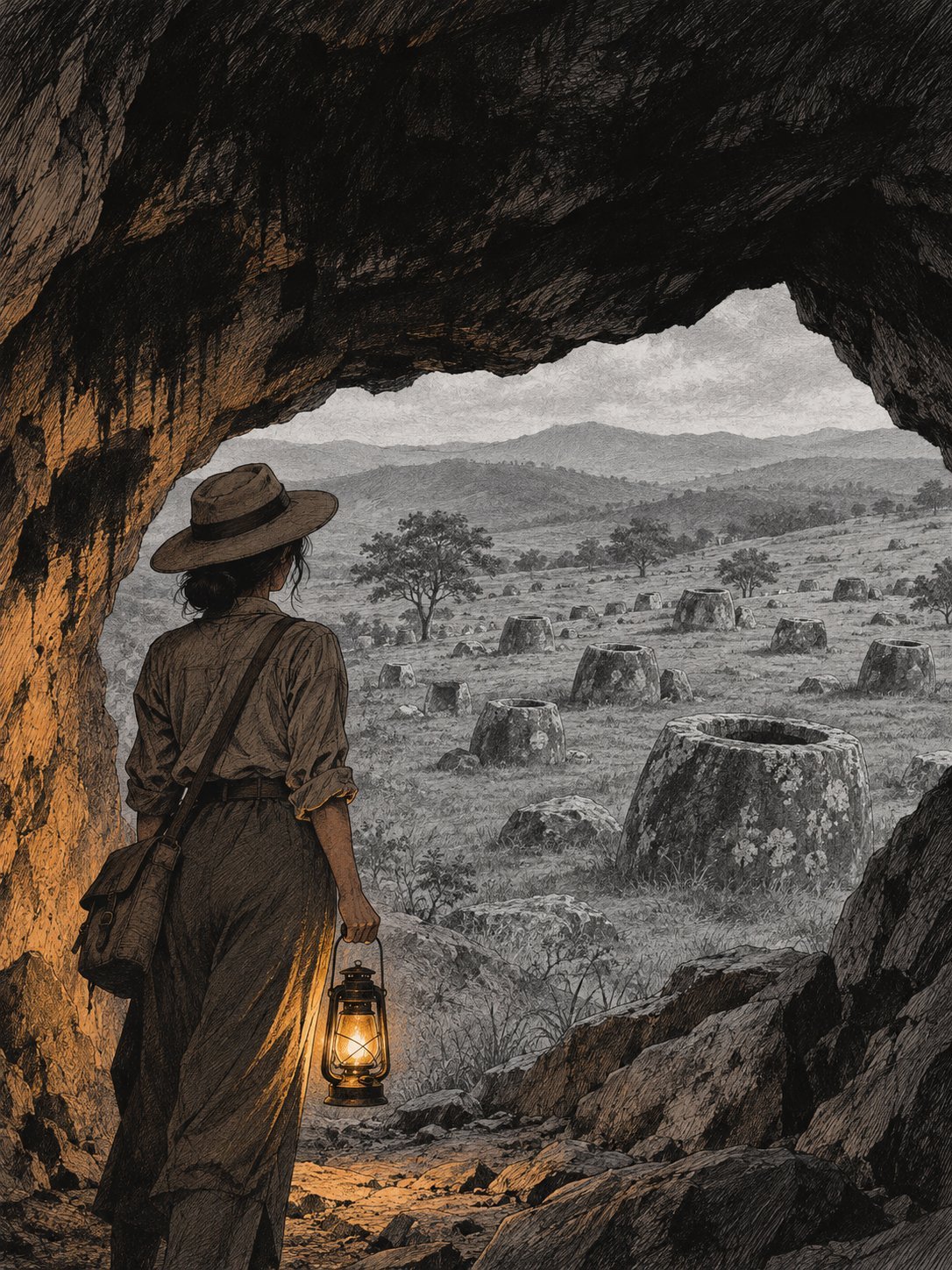

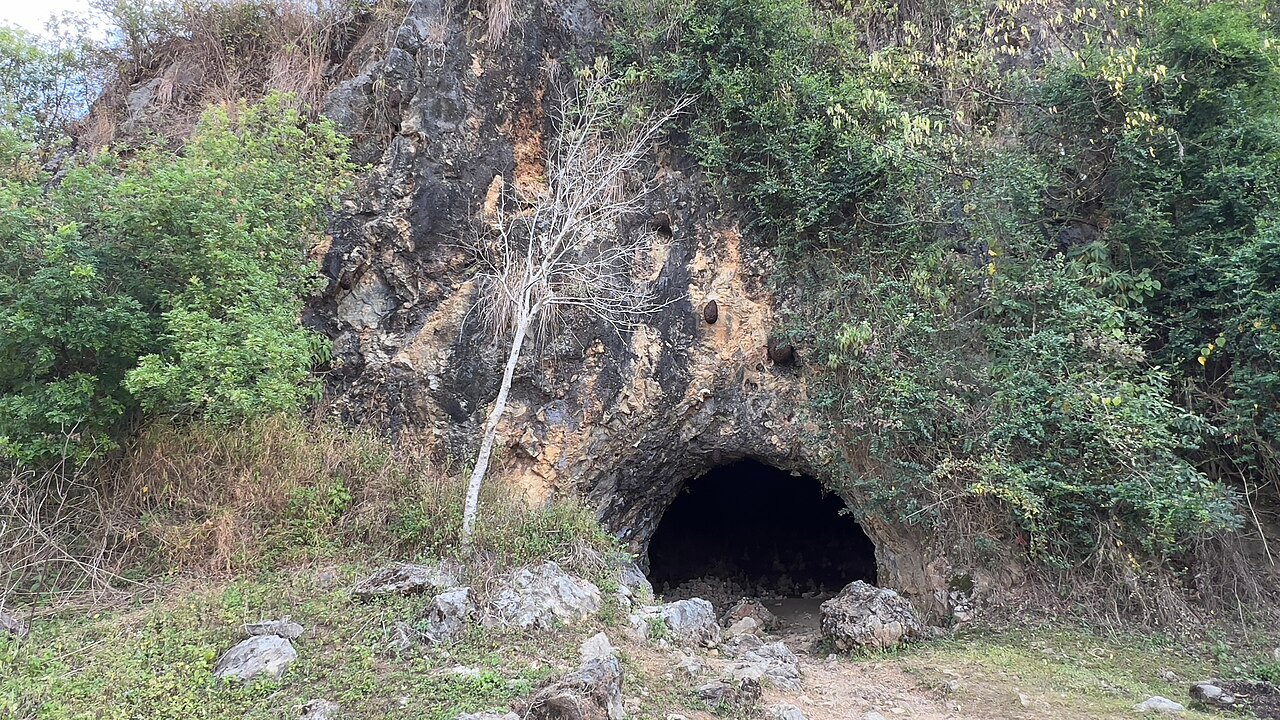
At the largest site, then called Ban Ang and now Site 1, a limestone cave looks out over the jars. Colani found its walls blackened, and burned bone and ash on its floor. Two openings in the roof let the light in. She proposed that the cave had been a crematorium, the openings its chimneys, the jars vessels for the dead, and the fields around them cemeteries. (ARCH05) (CWA102)
Inside some jars she reported glass beads, burnt teeth and bone fragments. (WIKI) (CWA102)
She published the work in 1935 in two volumes, Mégalithes du Haut-Laos. She recorded about twenty sites. For roughly seventy years that book remained the main source on the jars. (ARCH05) (CWA102)
Why so long? Because of what fell on the plateau next.
Two million tons

From 1964 to 1973, during the war in Indochina, American aircraft flew about 580,000 bombing runs over Laos. Pentagon figures put the total at 2,093,100 tons of ordnance. (NPR)
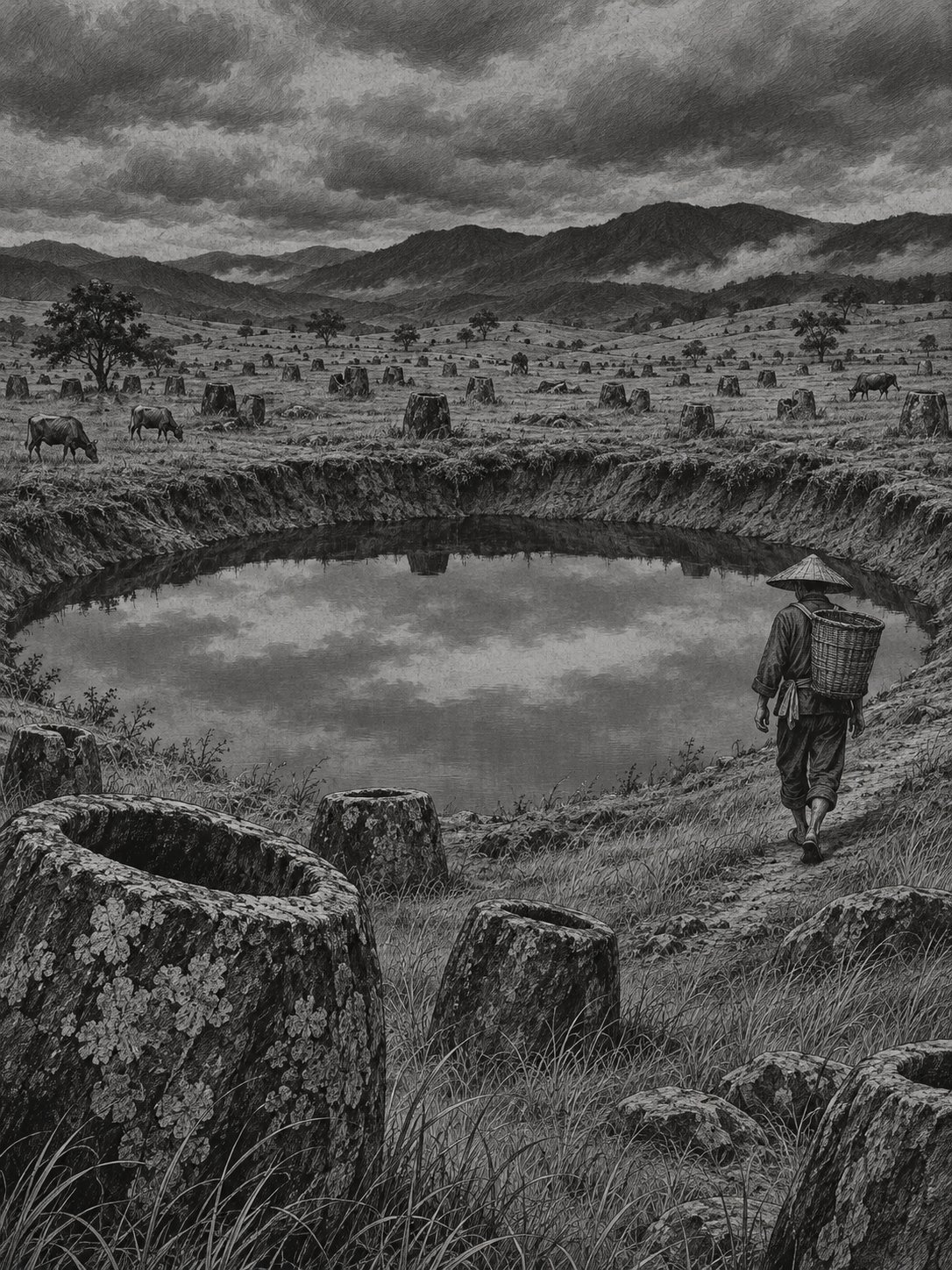
Much of it was cluster munitions: an estimated 270 million small bomblets, of which perhaps 80 million failed to go off. Xieng Khouang is among the most contaminated provinces in the country. (ARCH17)
The jar fields were inside the war zone. Site 1 still has trenches, bomb craters and a hillside cavity once used as a tank position. Some jars were broken. Others stand a few steps from a crater, intact. (ARCH05)
Between the markers

In July 2004 the Mines Advisory Group, a British-based clearance organisation, began sweeping the most visited jar sites. At Site 1 alone its teams removed and destroyed 127 unexploded items and dug up 31,814 pieces of scrap metal. (ARCH05)
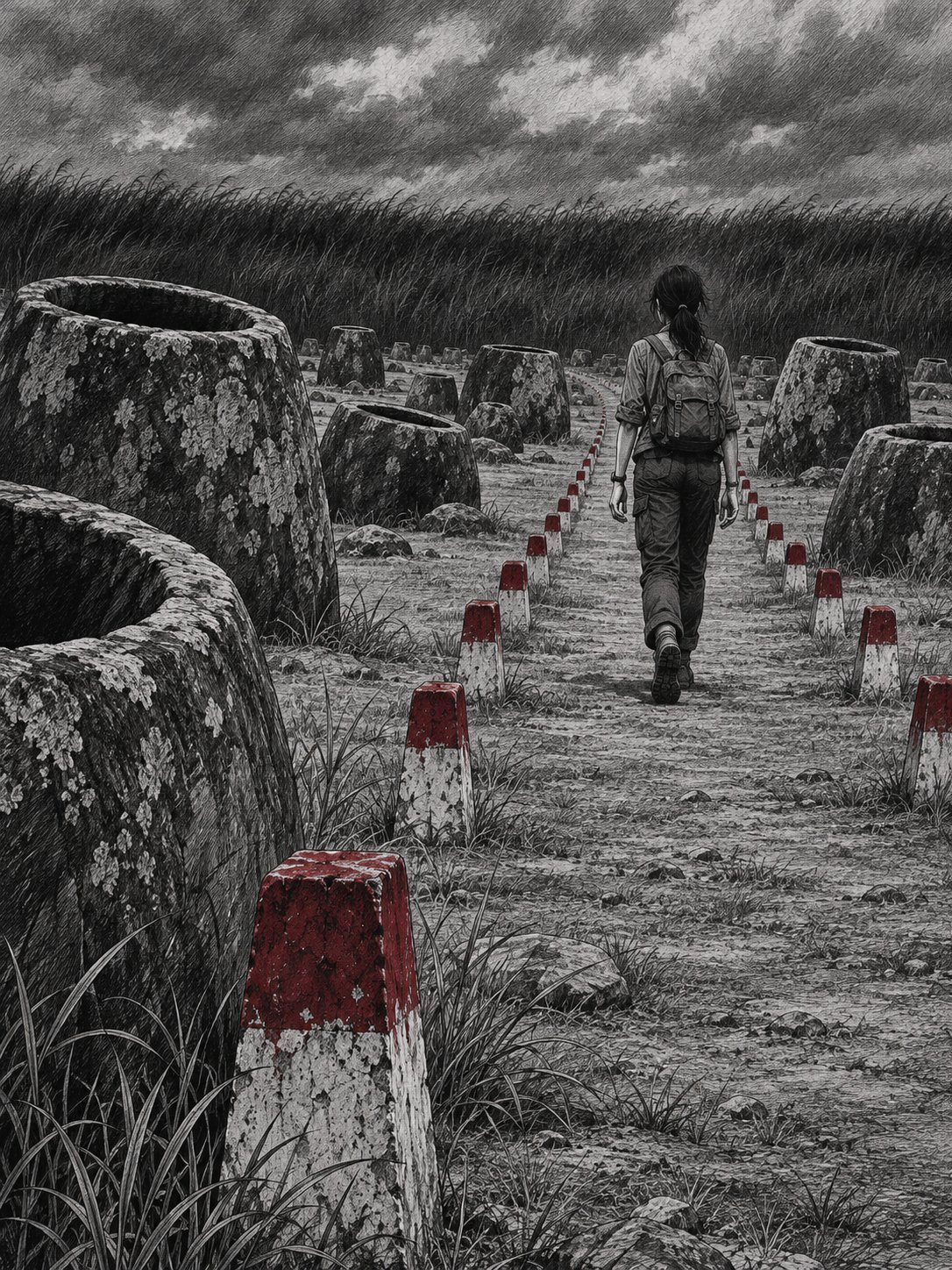

They left behind rows of small red-and-white concrete markers. The rule for visitors was simple, and it still is. Walk between them. (ARCH05)
By 2017 seven sites had been cleared. (ARCH17) The University of Melbourne said in 2021 that fewer than one in ten known jar sites had been. (UNIMELB)
This is why the science is so recent. “We don’t have any interest in working at sites that haven’t been cleared,” O’Reilly told Archaeology magazine. (ARCH17)
Older than anyone thought
In 2016 a Lao and Australian team led by O’Reilly, Louise Shewan and Thonglith Luangkhoth opened trenches at Site 1. Around one group of jars they found at least 18 people buried in the ground. More than 60 per cent were infants or children. (CWA102)
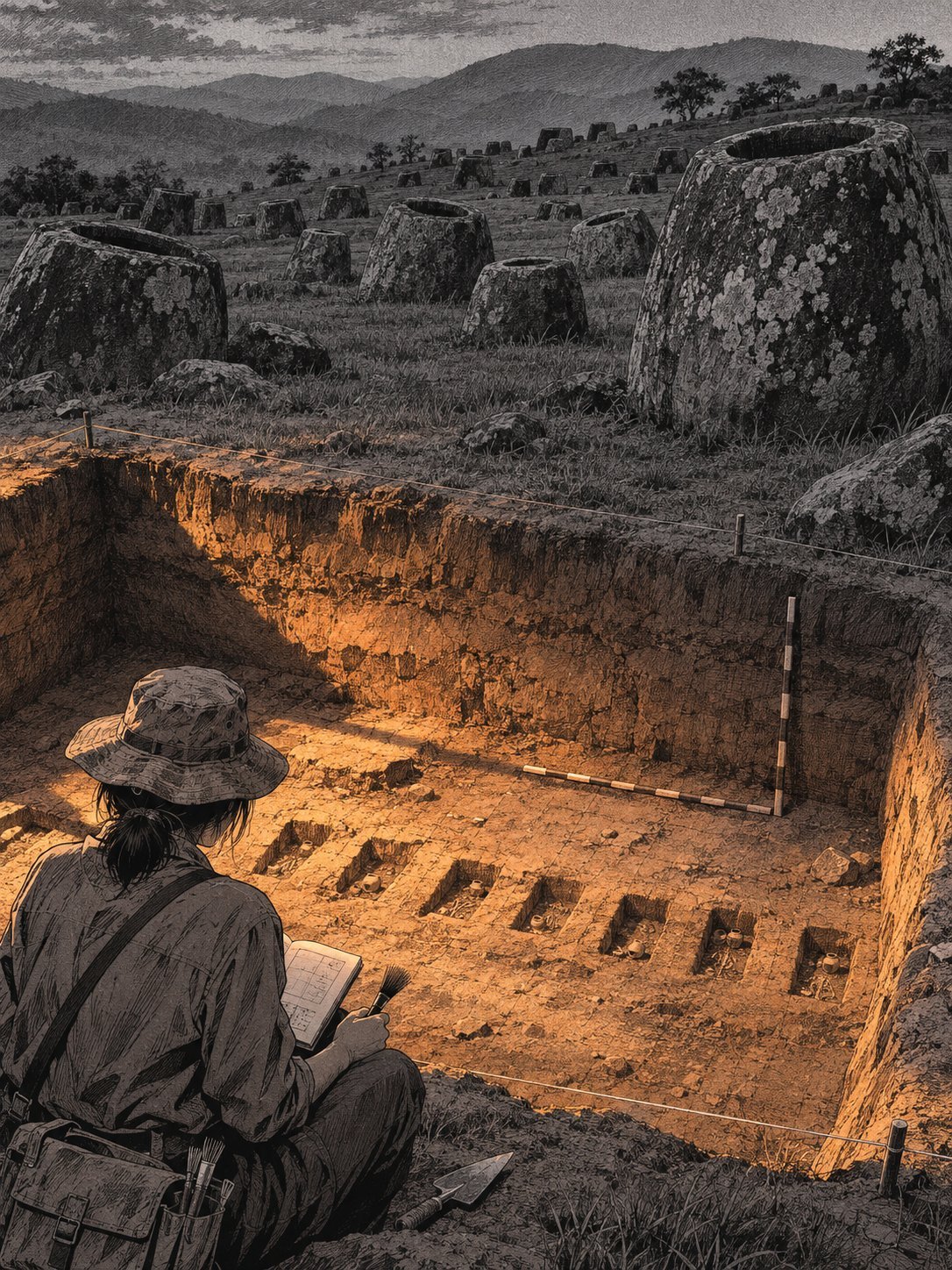
Charcoal and bone from those burials dated mostly to the ninth to thirteenth centuries AD. (CWA108)
Then the team tried something new. At Site 2 they sampled the sediment directly under two jars and measured when its grains had last seen sunlight, a method called optically stimulated luminescence. The answer: the jars were set down between about 1240 and 660 BCE. (UNIMELB) (CWA108) (PLOS)
UNESCO’s listing, written two years earlier, dates the sites from 500 BCE to 500 CE. (UNESCO) If the new dates hold, some jars are several centuries older than that, and the burials around them came much later. The authors wrote that the results “strongly suggest that the megalithic jars were placed here well before much of the mortuary activity took place.” (CWA108)
The caution matters. The early dates come from two jars at one site.
Eight kilometres

The same study matched tiny zircon crystals in the Site 1 jars to a sandstone outcrop, a presumed quarry, about eight kilometres away. UNESCO’s listing includes quarries and manufacturing sites among its components. (UNIMELB) (UNESCO)
Eight kilometres of hill country, with a load of many tonnes.

“How the jars were moved from the quarry to the site, however, remains a mystery,” O’Reilly said. (UNIMELB) The researchers have floated ideas: dragging, rolling on timber, hauling with elephants or buffalo. None has been tested against evidence on the ground. (CWA102) (ARCH17)
Thirty-seven

Which brings the story back to Site 75. Deliberate destruction turns up elsewhere in Asian archaeology, most spectacularly at Sanxingdui, where huge bronze masks were smashed, burned and buried.
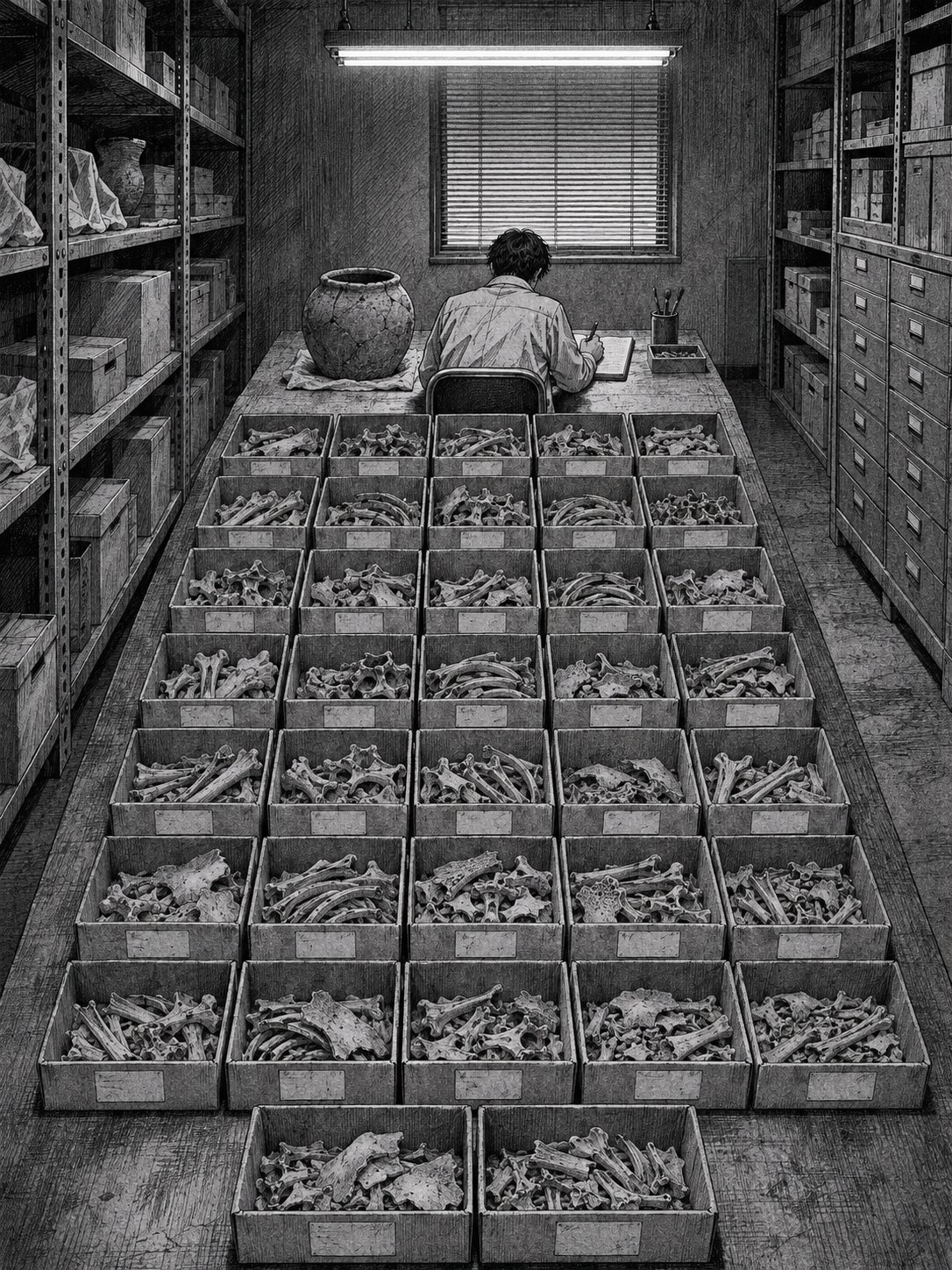
The 2026 paper in Antiquity, led by Nicholas Skopal of James Cook University with Lao co-author Souliya Bounxayhip of the Department of Heritage, describes the contents of Jar 1 as “a collective mortuary assemblage of secondary interments.” (ANTIQ) In plain terms, the dead were first laid somewhere else. Their bones were gathered later and placed in the jar.

The bones were sorted. Skulls sat toward the edge, long bones bundled together. (LIVESCI) With them were pottery, an iron knife, a small copper-alloy bell and 20 glass beads. (ANTIQ)
Twelve beads were analysed. Nine have the chemistry of South Asian glass. Two are closest to glass from Mesopotamia. One dark blue bead was probably made in south-east China or northern Vietnam between about 300 BC and AD 300, which would make it centuries older than the people it was buried with. (ANTIQ)
“The current evidence suggests this was a collective mortuary space used repeatedly over generations,” Skopal told Live Science. DNA work that could show whether the 37 were related is not finished. (LIVESCI)
Used again and again

Put the dates side by side and the picture is odd.
Jars at Site 2: in place by 660 BCE at the latest. Burials around the jars at Site 1: mostly ninth to thirteenth century AD. Bones inside the jar at Site 75: AD 890 to 1160. (CWA108) (ANTIQ)
Nobody has dated when the Site 75 jar itself was carved, so the gap there is unknown. But across the plateau, the people who used the jars for their dead in the tenth century may not have been the people who made them. Shewan’s summary: “these sites have maintained enduring ritual significance.” (UNIMELB)
World Heritage

On 6 July 2019, at its session in Baku, the World Heritage Committee inscribed the “Megalithic Jar Sites in Xiengkhuang – Plain of Jars.” The listing covers 15 components holding 1,325 jars, along with discs, burials, quarries and grave goods. (UNESCO-NEWS) (UNESCO)
The official record is here: UNESCO World Heritage List, no. 1587.
Evidence box: documented vs. claimed
| What it is | What it supports | Its limits | |
|---|---|---|---|
| Documented | Excavation of Jar 1, Site 75 (Antiquity, 2026) | At least 37 people placed in one jar, AD 890–1160 | One jar; the paper calls its own burial sequence tentative |
| Documented | Burials in the ground at Site 1 (2016 onward) | People were buried around the jars, mostly 9th–13th century AD | Shows later use, not original purpose |
| Documented | OSL dates under two jars at Site 2 (PLOS ONE, 2021) | Jars placed about 1240–660 BCE | Two jars, one site |
| Documented | Zircon match to a sandstone outcrop | Site 1 stone came from about 8 km away | Says nothing about how it travelled |
| Claimed | Colani’s crematorium cave (1930s) | Cremation was part of the rites | Later digs found mostly unburned bone (ARCH05) |
| Claimed | Jars made by giants to hold rice liquor | A living local tradition | Folklore, not evidence |
| Claimed | Jars built to catch rainwater for caravans | Repeated in guidebooks | We found no excavation or peer-reviewed study behind it |
Evidence locker
Real photographs and primary records only.
 EXHIBIT A
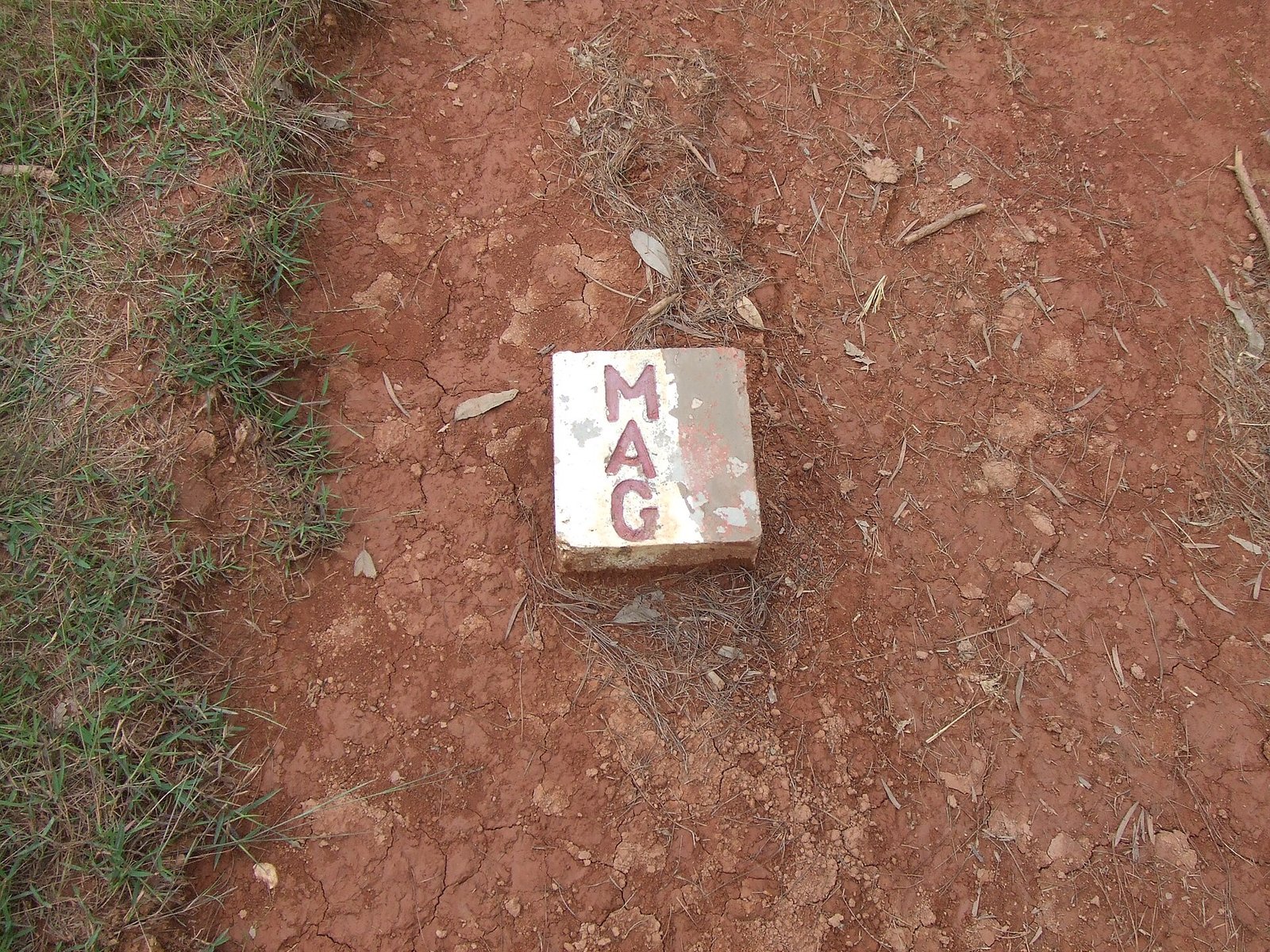 EXHIBIT B
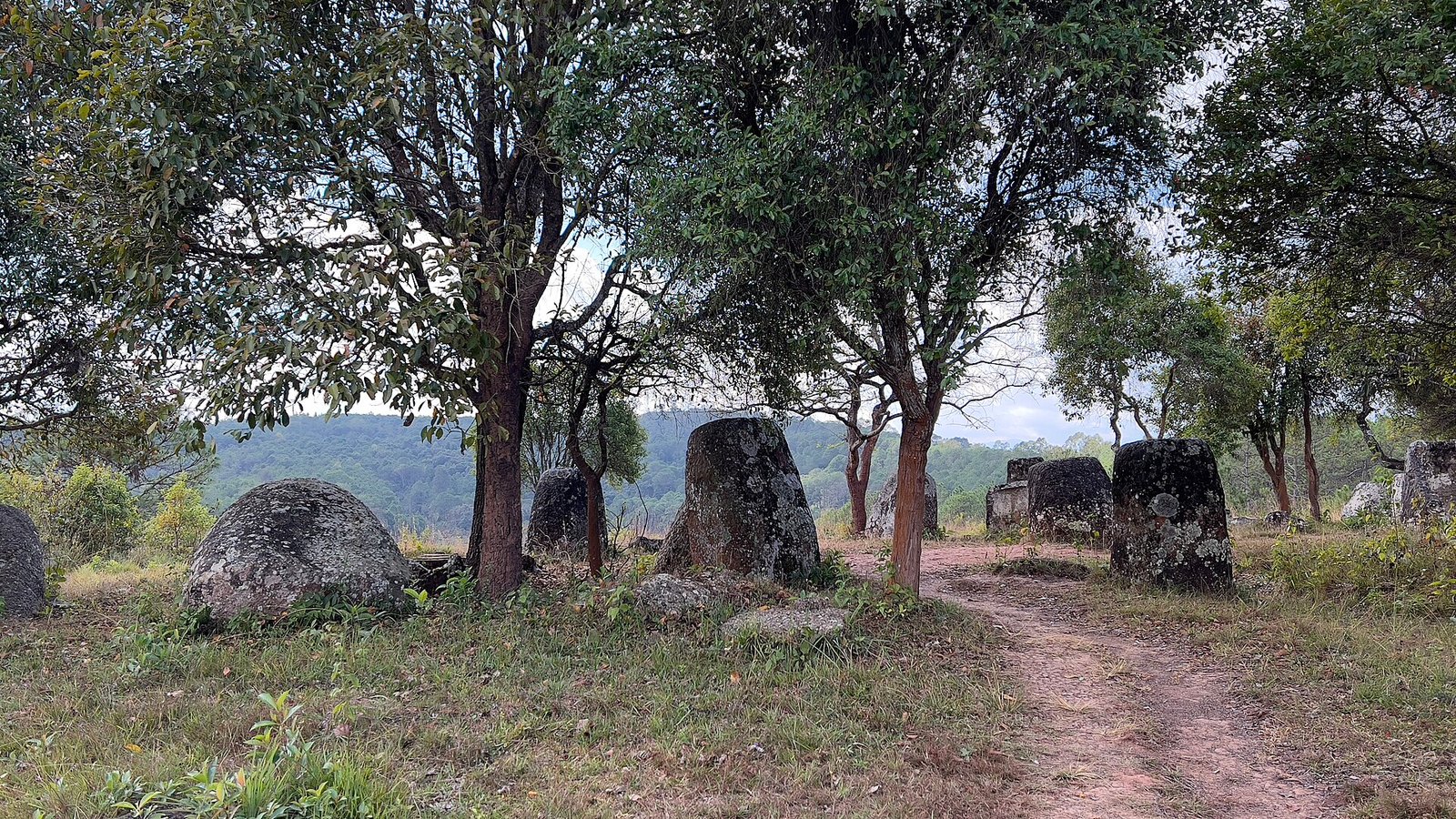 EXHIBIT C
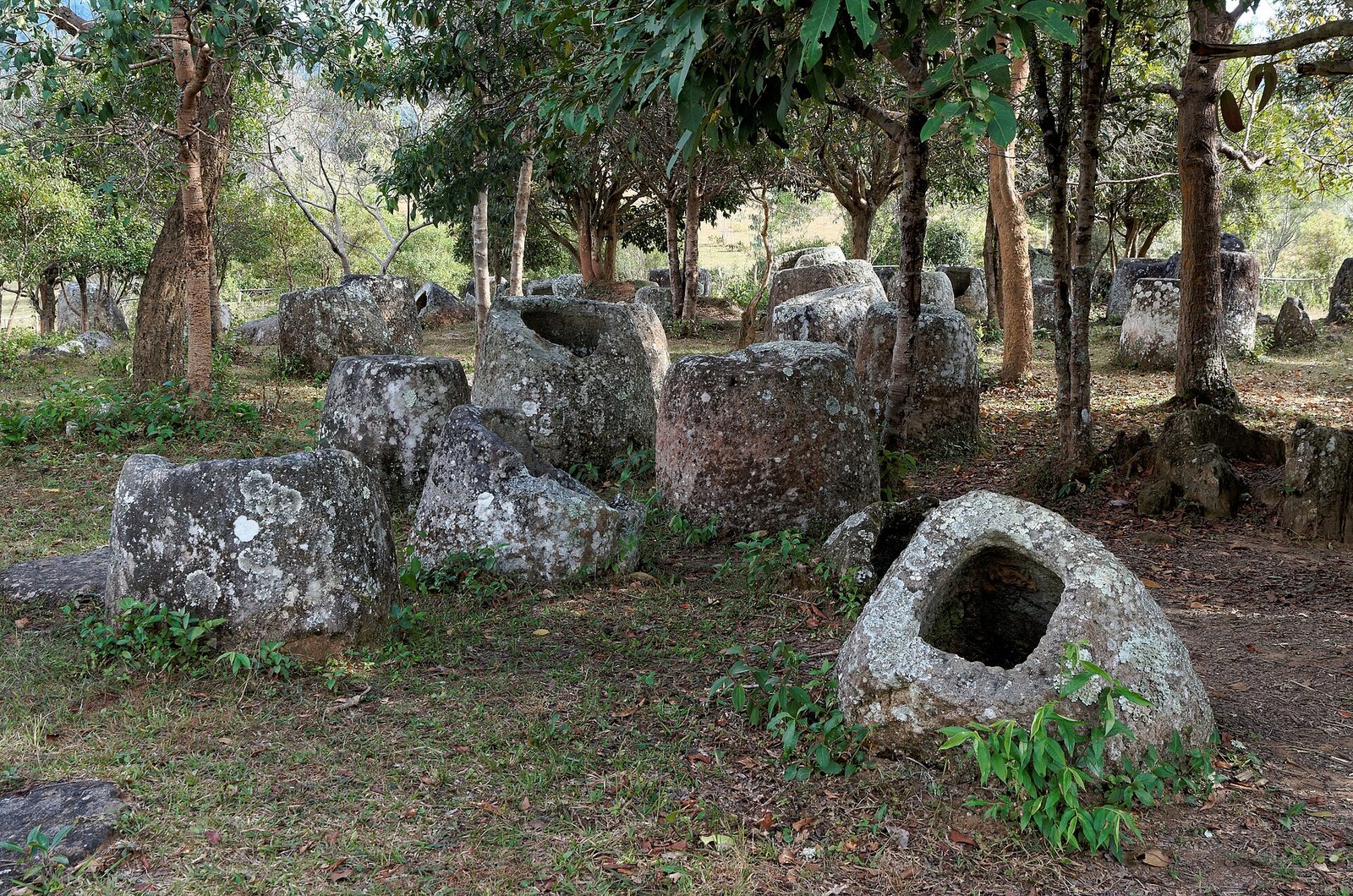 EXHIBIT D
Timeline
| Date | Event |
|---|---|
| c. 1240–660 BCE | Jars placed at Site 2, by OSL dating (PLOS) |
| c. 300 BC–AD 300 | Estimated age of the oldest glass bead later found in Jar 1 (ANTIQ) |
| AD 890–1160 | Bones placed in Jar 1 at Site 75 (ANTIQ) |
| 9th–13th century AD | Most dated burials around the jars at Site 1 (CWA108) |
| Early 1930s | Madeleine Colani surveys and excavates |
| 1935 | Colani publishes Mégalithes du Haut-Laos |
| 1964–1973 | US bombing of Laos (NPR) |
| 1994–1996 | Lao, Japanese and Australian-based researchers survey and excavate at Site 1 (WIKI) |
| July 2004 | Mines Advisory Group begins clearing jar sites (ARCH05) |
| 2016 | Lao–Australian project begins at Site 1 (ARCH17) |
| 6 July 2019 | UNESCO World Heritage inscription (UNESCO-NEWS) |
| March 2021 | OSL and zircon results published in PLOS ONE (UNIMELB) |
| 2022–2024 | Excavation of Jar 1, Site 75 (ANTIQ) |
| 19 May 2026 | “The death jar” published online in Antiquity (ANTIQ) |
The explanations, side by side

Mainstream archaeology: vessels for the dead. This is the position of UNESCO and of every team that has dug there since Colani. Human remains have now been found around jars, under marker stones and, at Site 75, inside one. The Antiquity authors suggest a two-stage rite, with smaller jars holding a body while it decomposed and larger jars receiving the bones afterwards. They label that tentative. (UNESCO) (ANTIQ)
The weak point is timing. Every well-dated burial so far is much younger than the Site 2 jar dates. Current World Archaeology’s 2021 summary was that “the original function and meaning of the jars remains unknown for now.” (CWA108) Don Matthews of the Australian National University, who was not part of the 2026 study, told Live Science its conclusions should be “tempered until wider research and excavations observe similar burials.” (LIVESCI)
Reuse by later people. A variant held by the same researchers: the jars were made early, and communities of the ninth to thirteenth centuries adopted them. This fits the dates best. It leaves the first purpose open. A Himalayan lake poses the same problem in reverse: hundreds of skeletons in one basin that, once the DNA came back, turned out to be groups who died about a thousand years apart.
Folklore: the giants’ cups. Villagers tell of a king, Khun Cheung, who had the jars made to hold liquor for a victory feast. In some versions he ruled a race of giants. This is a legend, and an old one. Julie Van Den Bergh, the Belgian archaeologist who mapped the sites in the 2000s, doubted the jars were ever fermenters. (ARCH05) (WIKI)
Popular claims: rainwater tanks and stills. Travel writing often says the jars collected monsoon rain for passing caravans. Colani did think the plateau sat on a trade route between India and Vietnam, and the Indian and Mesopotamian beads show long-distance contact. But a trade route is not a water tank, and no excavation has produced evidence for water storage. Villagers have used some jars as cattle troughs in modern times. (ARCH05) A 2001 suggestion that the jars were “distilling vessels” has not been taken up. (WIKI)
Where the records disagree
| Detail | What sources say |
|---|---|
| Age of the jars | 500 BCE–500 CE, possibly to 800 CE (UNESCO); placed 1240–660 BCE at Site 2 (PLOS) |
| Number of sites | “at least 80” in 2017; “over 100” in 2019; “more than 120” in 2021 (ARCH17) (CWA102) (UNIMELB) |
| Heaviest jar | Up to 14 tonnes; up to 20; 25 or more; over 30 (WIKI) (UNIMELB) (ARCH17) (CWA102) |
| Jars at Site 1 | 344 (ARCH17); 316 in five groups (CWA102) |
| UNESCO components | 15 (UNESCO); “11 jar-sites” (CWA108). The UNESCO figure is the official one |
| Bones inside jars before 2026 | Colani reported burnt teeth and bone in some jars; Live Science calls Jar 1 the first with undisturbed remains (WIKI) (LIVESCI) |
| The legend’s drink | Lao hai, rice wine (WIKI); lao lao, rice whiskey (ARCH05) |
What we still don’t know
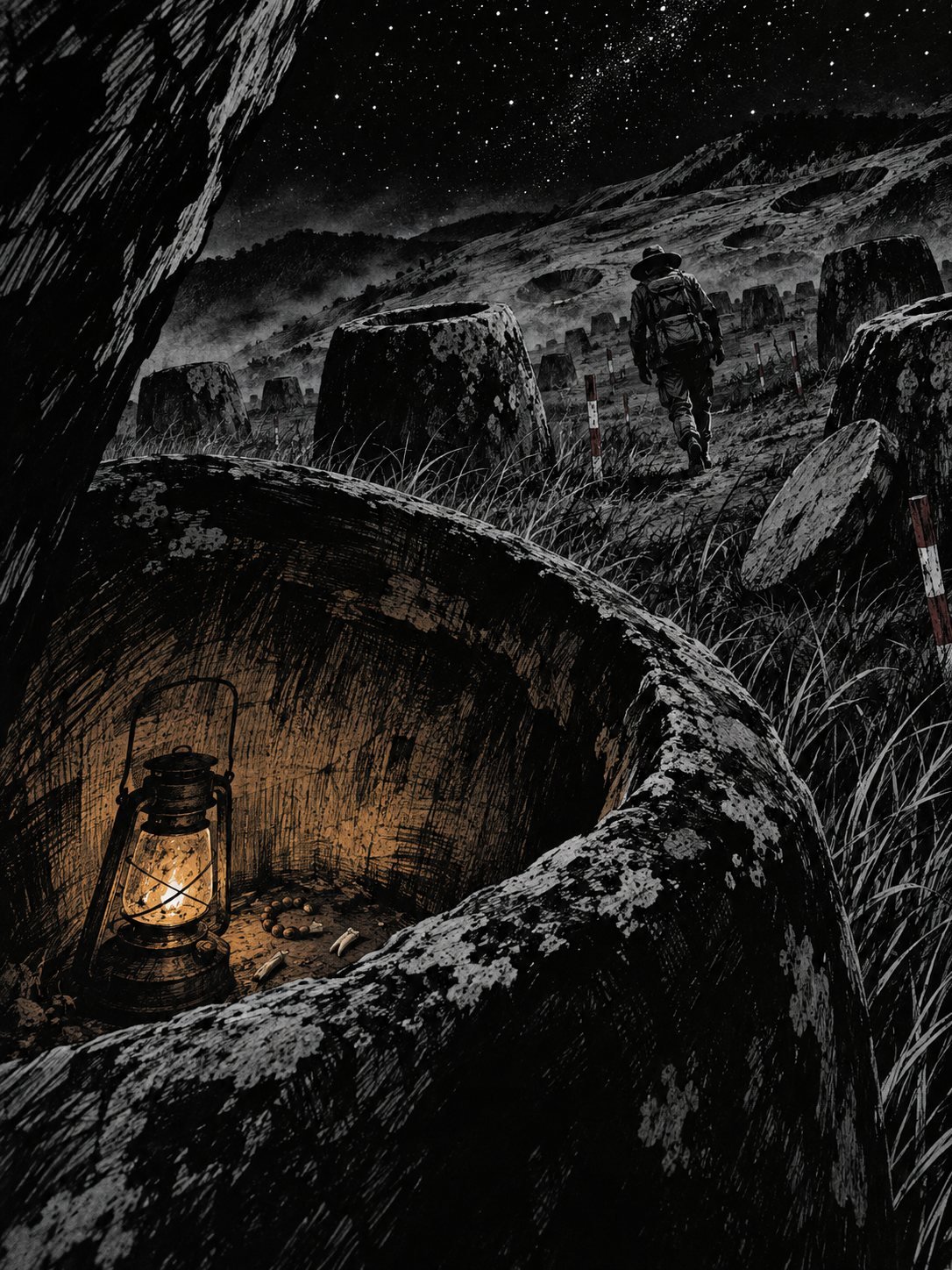
- Who carved the jars. No settlement of the makers has been identified.
- What the jars were for on the day they were set down.
- How blocks of many tonnes were moved eight kilometres.
- Whether the 37 people in Jar 1 were one family line. The DNA study is pending.
- Whether any other jar holds what Jar 1 held. Most sites have never been excavated, and most have not been cleared.
Quick answers: Plain of Jars
What is the Plain of Jars?
A landscape of more than 2,100 large stone jars spread across more than 120 sites in Xieng Khouang Province, northern Laos. It became a UNESCO World Heritage site in 2019.
How old are the jars?
UNESCO dates the sites to between 500 BCE and 500 CE. A 2021 study dated the placement of two jars to between about 1240 and 660 BCE, which would make some of them older.
What were the jars used for?
Burial rites, according to nearly all archaeologists. Human remains have been found around the jars and, in 2026, inside one. Whether that was the original purpose is not settled.
What was found in the “death jar” in 2026?
The bones and teeth of at least 37 people, placed in one jar at Site 75 between AD 890 and 1160, with glass beads from as far away as India and Mesopotamia.
Is it safe to visit the Plain of Jars?
The main visitor sites have been cleared of unexploded bombs and are marked. Visitors are told to stay between the markers. Most other jar sites have not been cleared.
What is a little-known fact about Plain of Jars?
Nobody agrees on how heavy the largest jar is. Published figures run from 14 tonnes to more than 30. (WIKI) (UNIMELB) (ARCH17) (CWA102)
Editor’s note
The detail that frightens me most is the 270 years. Put it in Korean terms: that is like a family opening the same burial jar from the middle of the Joseon dynasty until today. By the time the last bones went in, nobody alive could have known who had been placed there first. And still someone lifted the lid, or found the opening, and laid another person inside. I find that quietly chilling.
It made me think of the jar burials of ancient Korea, the ongwanmyo, where the dead were laid in large pottery jars. The idea is the same. The scale is not. These are stone jars taller than a person, more than two thousand of them scattered over the hills, and I suspect that standing among them would be overwhelming in a way no photograph can carry.
Honestly, I would hesitate to bury my own family in a jar when I had no idea who had made it or why. The people of Xieng Khouang chose those jars anyway, again and again. In their time everyone must have known the reason. Now all that is left is stone, teeth and beads, and the rest of us are guessing. That is what frustrates me most about this place: the answer was once common knowledge, and it was never written down.
— Strange World Files
Case file summary
- What: More than 2,100 megalithic stone jars of uncertain origin
- Where: Xieng Khouang Province, northern Laos, around Phonsavan
- When: Jars placed from perhaps 1240 BCE; burials to about the 13th century AD
- Key find: At least 37 people in one jar at Site 75, published May 2026
- Status: Funerary use documented; makers, original purpose and transport unexplained
Illustrations are AI-generated artistic interpretations, not photos. No real person is depicted with a recognizable face. Read how we research and illustrate these files.
Sources
- UNESCO World Heritage Centre, “Megalithic Jar Sites in Xiengkhuang – Plain of Jars,” List no. 1587
- UNESCO World Heritage Centre news release, 6 July 2019
- Skopal N. et al., “The death jar: a new mortuary tradition at the Plain of Jars, Lao PDR,” Antiquity 100(412): 1050–1067, online 19 May 2026, DOI 10.15184/aqy.2026.10352 (open access, CC BY 4.0)
- Shewan L. et al., “Dating the megalithic culture of Laos: Radiocarbon, optically stimulated luminescence and U/Pb zircon results,” PLOS ONE 16(3), 2021
- University of Melbourne newsroom, “Researchers solve more of the mystery of Laos megalithic jars,” March 2021
- “Dating the Plain of Jars,” Current World Archaeology 108 / The Past, 21 July 2021
- Shewan L., O’Reilly D., Luangkhoth T., “Plain of Jars: Researching a newly inscribed World Heritage Site,” Current World Archaeology 102
- Karen Coates, “Letter from Laos: A Singular Landscape,” Archaeology, January/February 2017
- “Plain of Jars,” Archaeology, July/August 2005, online feature
- Kristina Killgrove, “1,200-year-old giant ‘death jar’ in Laos contains generations of human skeletons,” Live Science, 18 May 2026
- Jessica E. Saraceni, “Human Remains Found on the Plain of Jars in Laos,” Archaeology, 20 May 2026
- Lewis M. Simons, on US cluster munitions and Laos, NPR, 11 July 2023
- “Plain of Jars,” Wikipedia (leads only)