No Liner Ever Crossed the Atlantic Faster. This Week She Was Sunk on Purpose

Off Destin, Florida, 11 November 2026. Crews opened the valves on the SS United States, the liner that crossed the Atlantic in 3 days, 10 hours and 40 minutes in 1952. It was meant to take 45 minutes. It took more than four hours. Then she rolled, and landed upright 180 feet down.




Narrated Mystery: press play and hear the whole case read aloud, like a true crime podcast episode, or an audiobook for a long drive (about 7 minutes). The narrator is an AI voice.
What the record shows
- What: The SS United States, the liner that crossed the Atlantic in 3 days, 10 hours and 40 minutes in 1952, then sat idle for 55 years
- When: Sunk on purpose on 11 November 2026
- Status: The sinking was meant to take 45 minutes. It took more than four hours
Still uncertain
- Her real top speed, which was kept secret for decades.
- How the wreck will change the sea floor around it over the coming years.
- Whether the planned museum will open with her funnels.
Wednesday, 3:50 p.m.
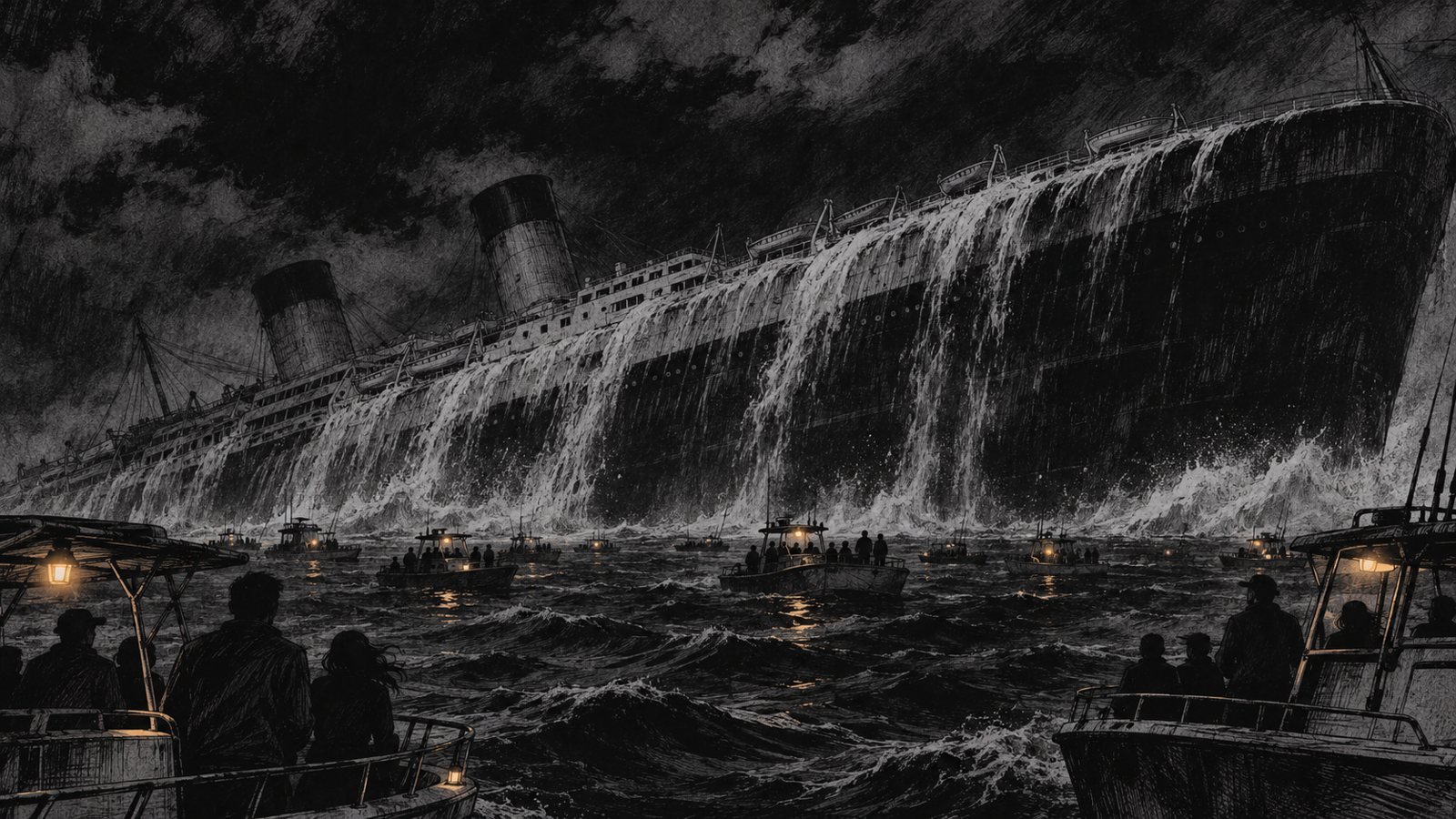
On Wednesday 11 November 2026, about 22 nautical miles southwest of Destin, Florida, a ship nearly 1,000 feet long sat alone on the Gulf. (PNJ) (WEAR)
Pleasure boats had come out to watch. (PNJ)

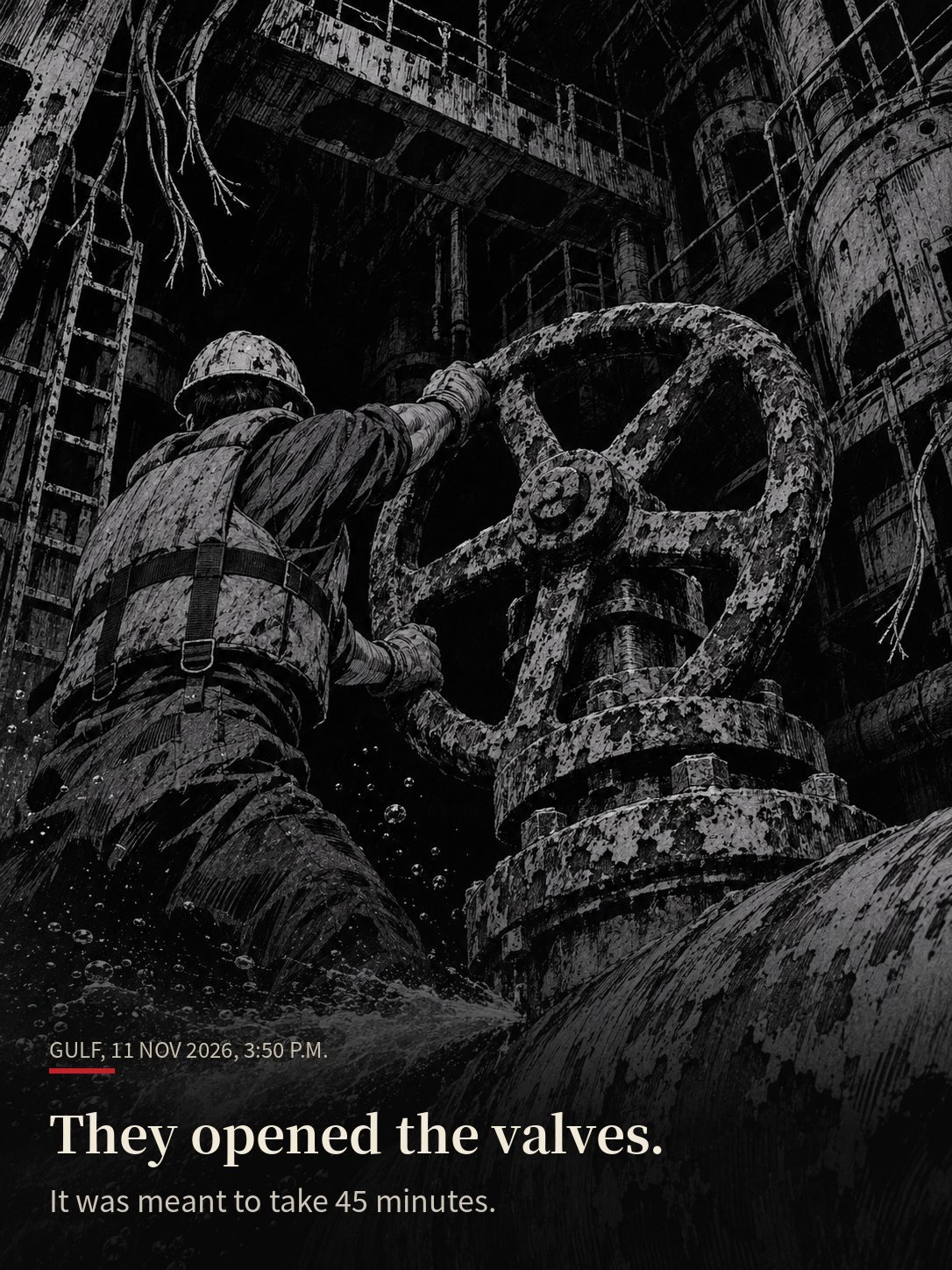
At around 3:50 p.m., crews opened the first two valves on the ship’s old seawater intake pipes. The same pipes once pulled in the cold seawater that cooled her boiler rooms, the cooling that helped make her the fastest liner in the world. Now they were letting the sea in. (PNJ)
The plan said it would take about 45 minutes. (PNJ)
It took more than four hours.
Built to outrun submarines

She was the SS United States. She was longer than the Titanic. (NPR)
Her designer, William Francis Gibbs, was obsessed with two things: speed and safety. Publicists liked to say the only wood on board was in the pianos and the butcher’s block. (AH)

There was a reason for both. The U.S. government paid $42 million of her cost of at least $70 million, because in a war she could be turned into a troopship. Stripped of her furnishings, she could carry an entire army division of 14,400 men. (AH) (WP)
A troopship like that had one defence against submarines: outrunning them. So her true top speed was treated by the Navy as a secret. (AH)
The record
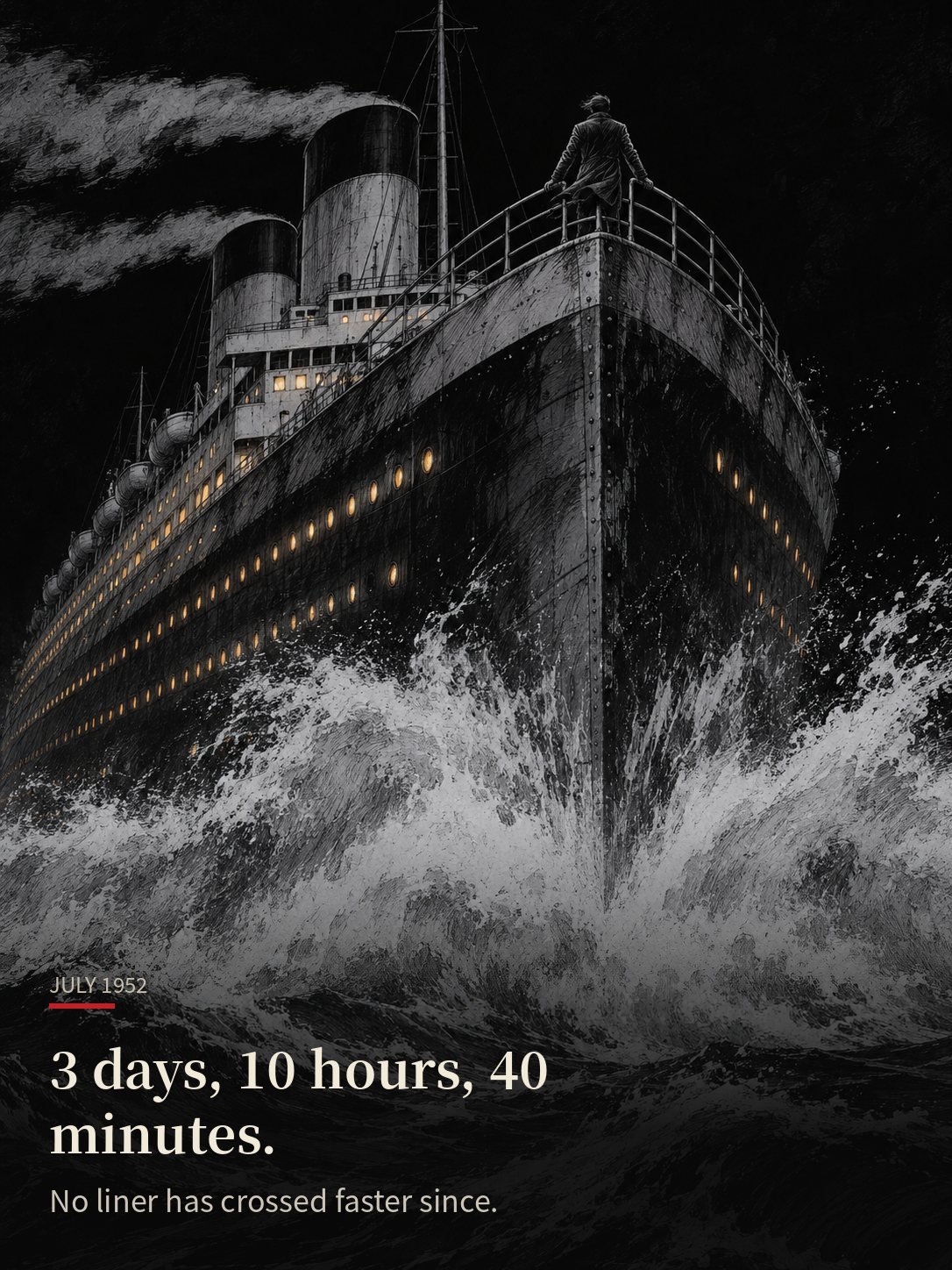
In July 1952, on her maiden voyage, she crossed the Atlantic from New York to England in 3 days, 10 hours and 40 minutes, at an average of 35.59 knots. (AH) (WP)

She beat the Queen Mary’s record by more than 10 hours, and took the Blue Riband for the fastest crossing. (AH)
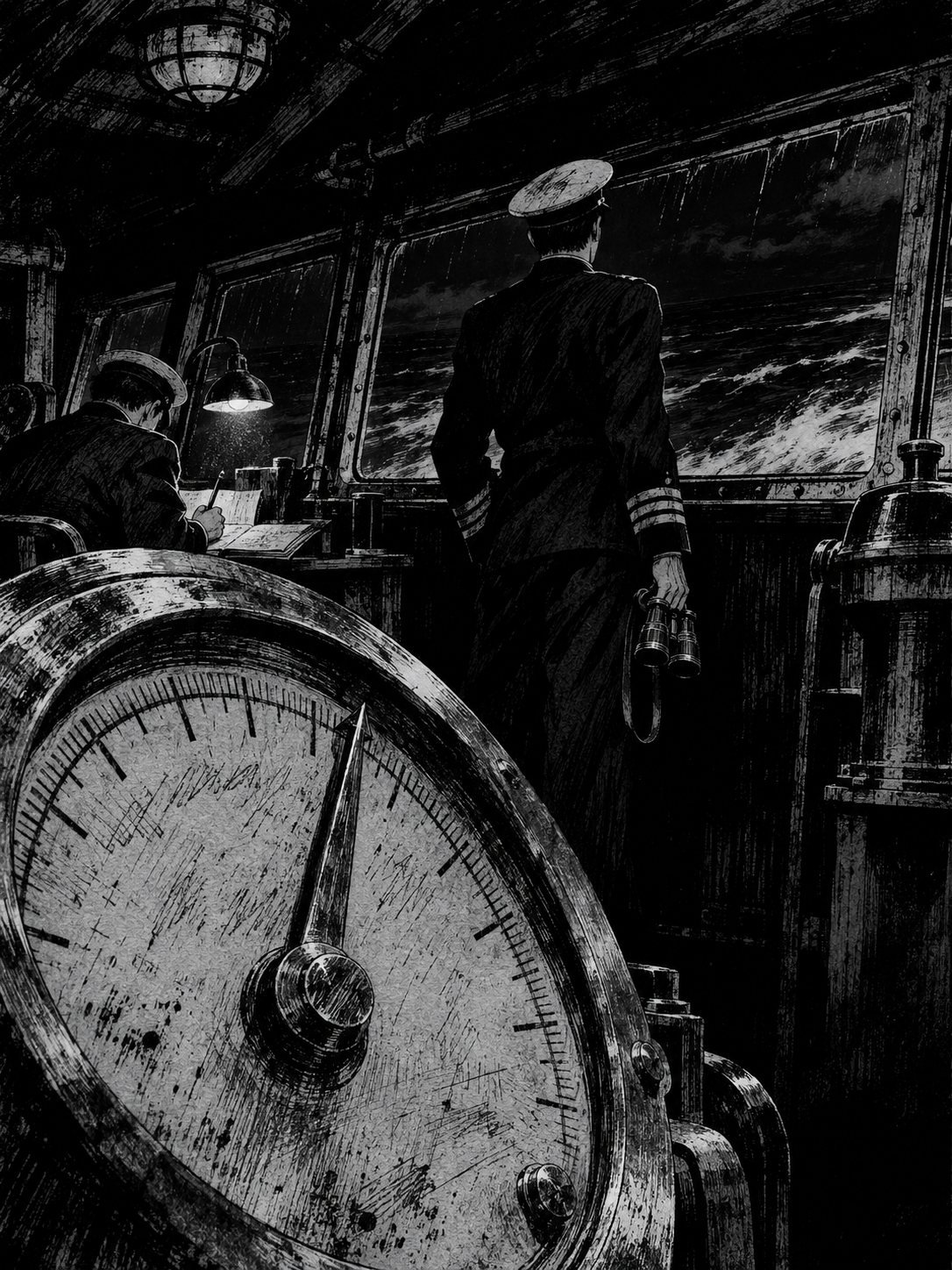
No ocean liner has crossed faster since. Smaller record-breaking craft built purely for speed later beat her time, but not one passenger liner ever has. (WP)
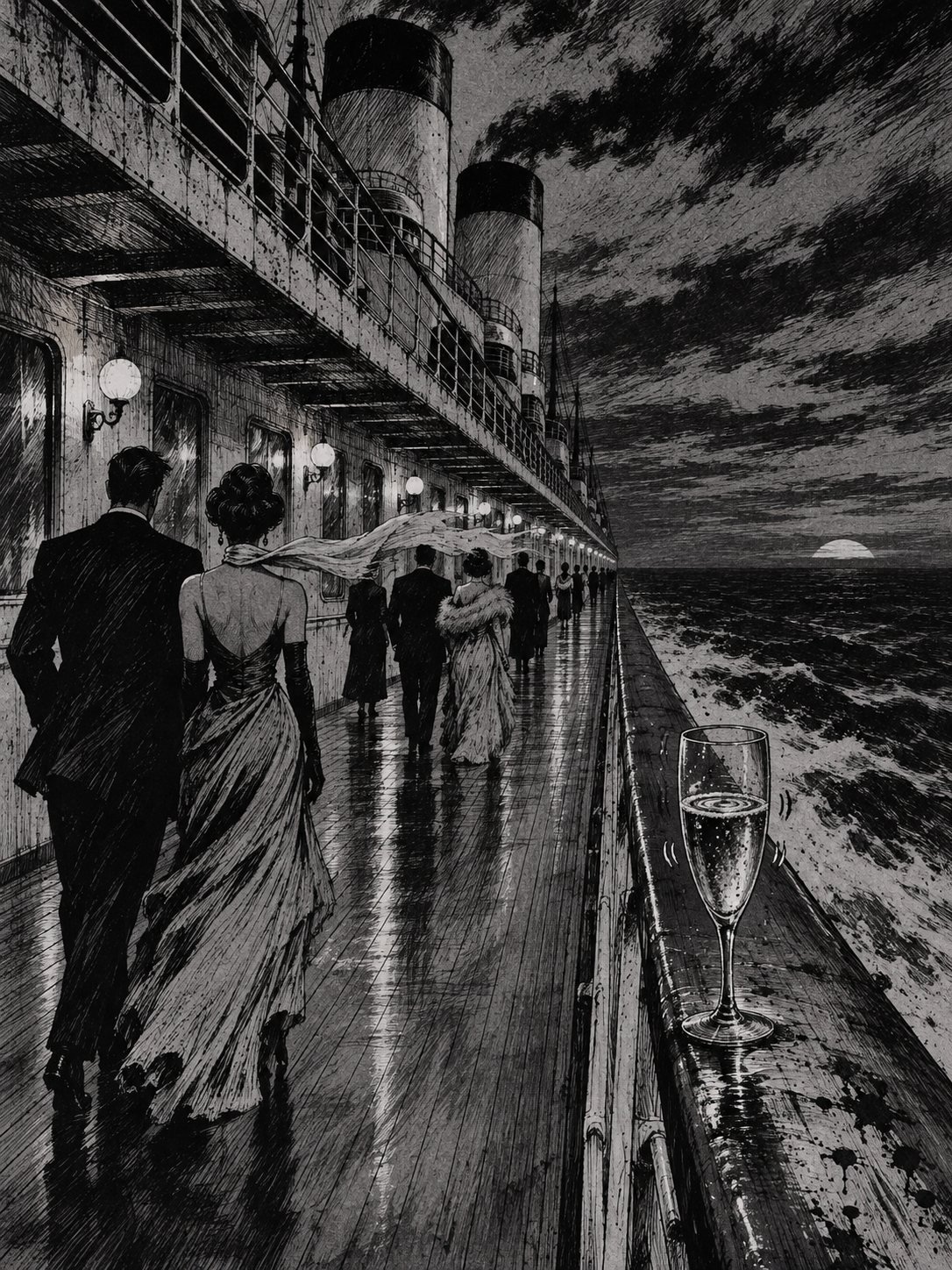
On board, over the years: Marilyn Monroe, Cary Grant, Walt Disney, Duke Ellington, Salvador Dalí, and a young Bill Clinton. Four presidents travelled on her. So did the Mona Lisa. (WP) (NPR) (FOX)
Then the planes came

She was fast. Jets were faster.
Rising costs and airline competition finished her, as they finished the great Cunard Queens. In autumn 1969 she was sent early to her annual overhaul. While she was there, her retirement was announced without warning. Her crew had days to wrap up. (AH) (WP)

She never sailed with passengers again.
Fifty-five years of waiting

What came next was a long, slow decline.


Her interior was auctioned off in 1984; about 3,000 bidders paid around $1.65 million for her furniture and fittings. In the 1990s she was towed to Turkey and Ukraine, where asbestos was stripped out and her interiors were gutted to the steel walls. (WP)
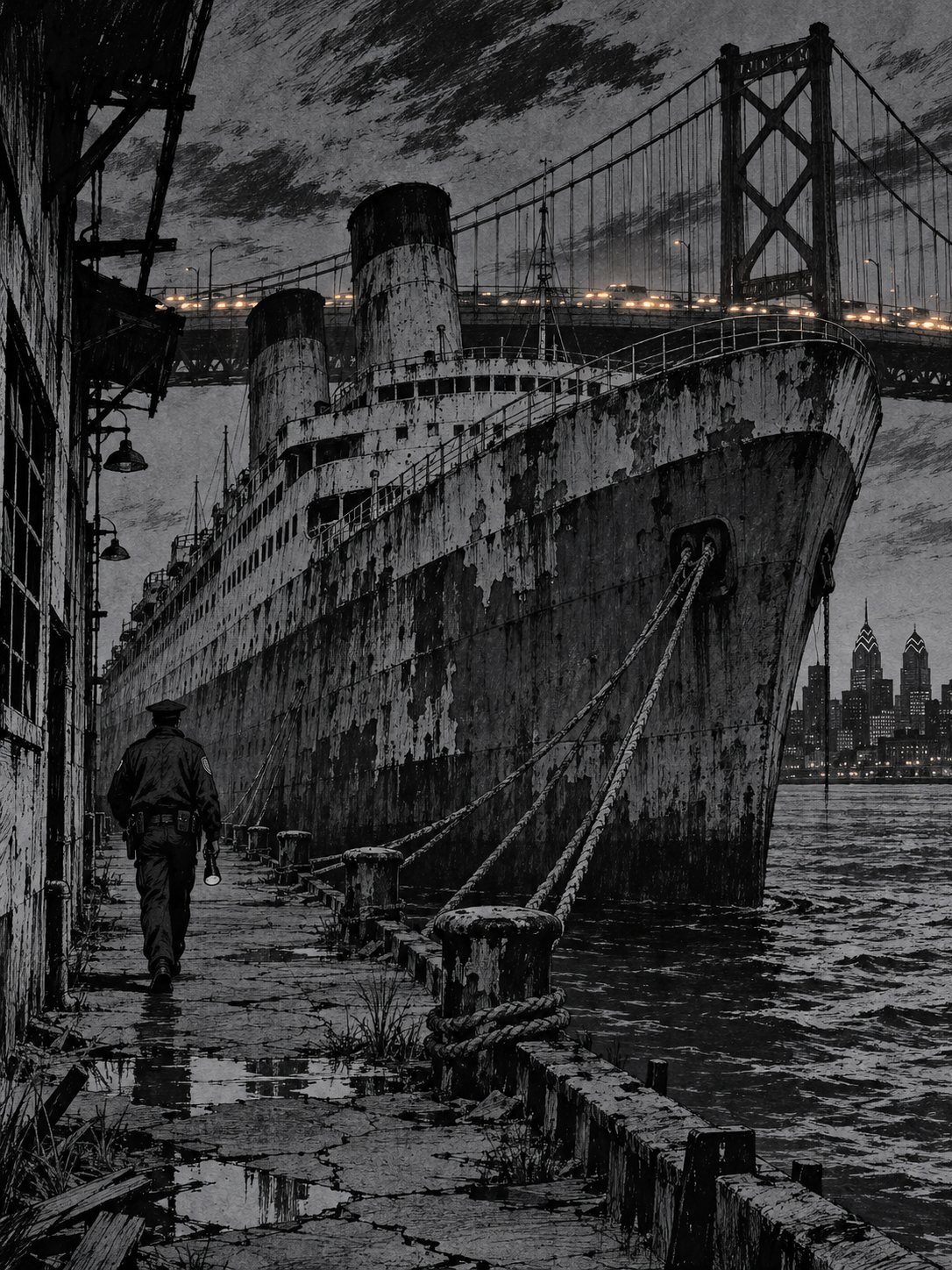
From 1996 she sat at a pier in Philadelphia, rusting. (WP)
In 2021 the pier owner, Penn Warehousing, doubled her rent, from $850 to $1,700 a day, and ended the berthing deal. The Conservancy refused to pay, and the two sides sued each other in federal court. On 14 June 2024 Judge Anita Brody threw out the pier owner’s money claims, but ruled the deal could be ended on reasonable notice and gave the ship 90 days to leave. (WP)

With the scrapyard as the other option, her owners, the SS United States Conservancy, sold her in 2024 to Okaloosa County, Florida, for $1 million. Her future would be a reef. (NPR) (WP)
The last tow
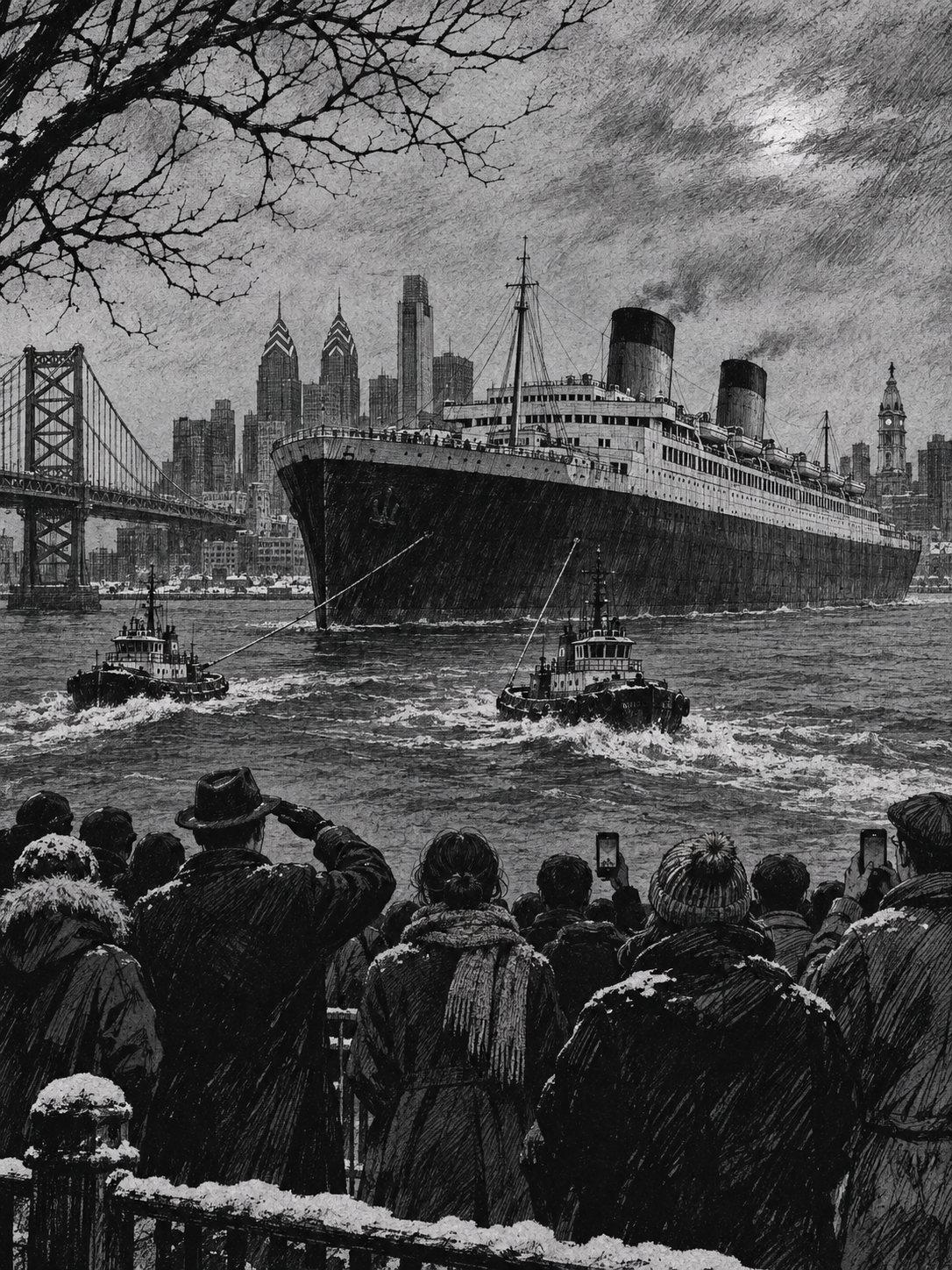
In February 2025, she left Philadelphia under tow for the last time and arrived in Mobile, Alabama, in March. (WP)

There, workers took away anything that could hurt the sea. They cleaned all 128 fuel tanks, and removed hundreds of portholes and interior doors so divers could swim through safely. (PNJ)

Her two great funnels were cut off in August 2025 and saved for a museum, along with a propeller. (WP) (WEAR)
Four hours, not 45 minutes
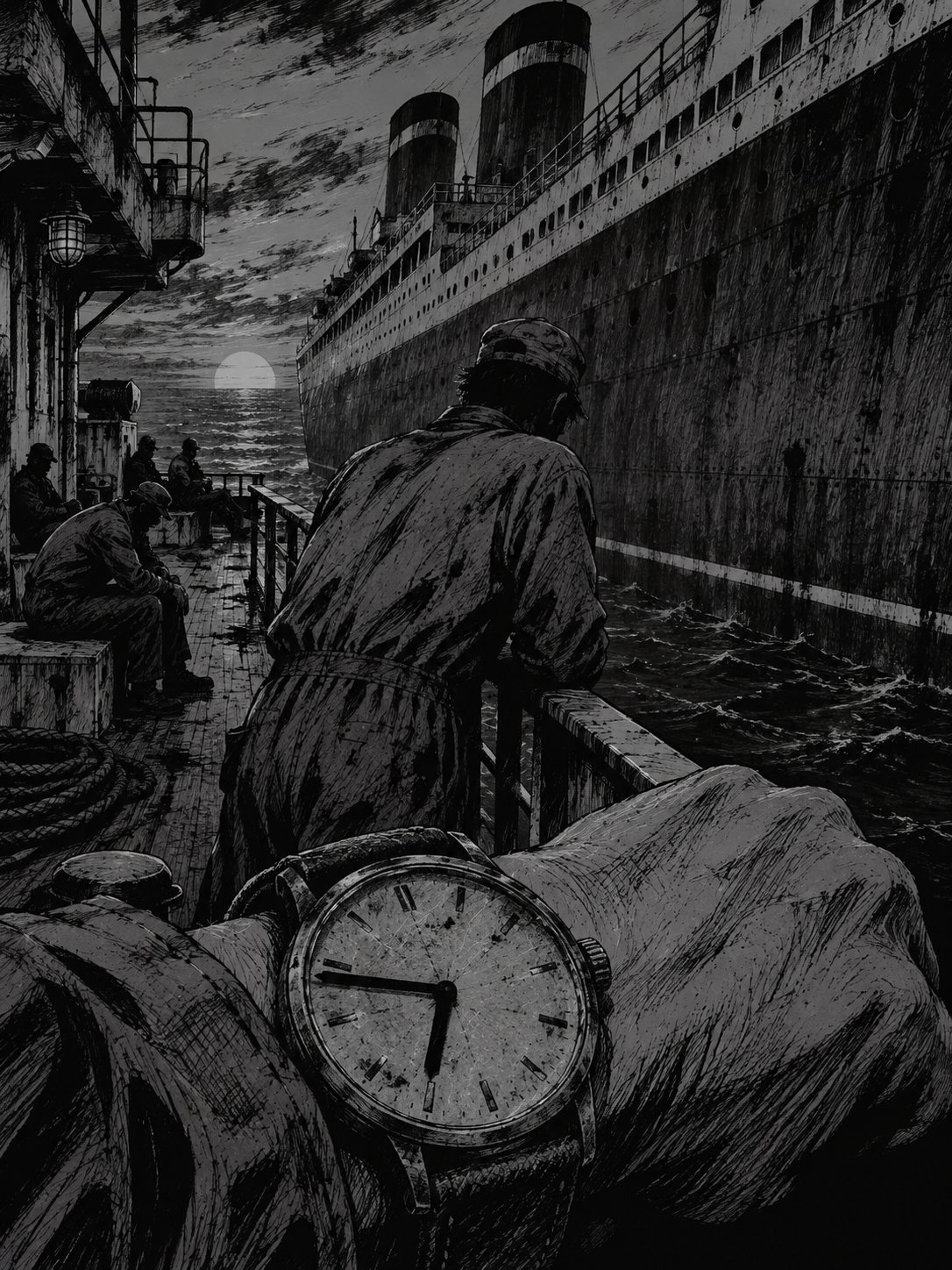
On the day, the sea did not cooperate.
The county moved the sinking up by a day to avoid bad weather, and crews ended up preparing and sinking her at the same time. (PNJ)

Air trapped inside the huge hull slowed everything down. All the valves were open about an hour after the first two. The minutes stretched into hours. (PNJ) (WEAR)
Then, at about 9 p.m., she rolled and went under within minutes. (PNJ)
“Nothing ever happens the way you want it to,” said the county’s spokesman, Nick Tomecek. (WEAR)
Upright on the bottom

The fear was that she might land on her side. A remotely operated vehicle and side-scan sonar checked soon afterwards. She was upright. (WEAR)
She now rests about 180 feet down. Her top decks are only about 60 feet below the surface, close enough for beginner divers. (PNJ)

She is now the largest artificial reef in the world, taking the title from the aircraft carrier USS Oriskany, sunk off Pensacola in 2006. (PNJ) (NPR)
Sorrow and pride

Not everyone wanted it to end this way.
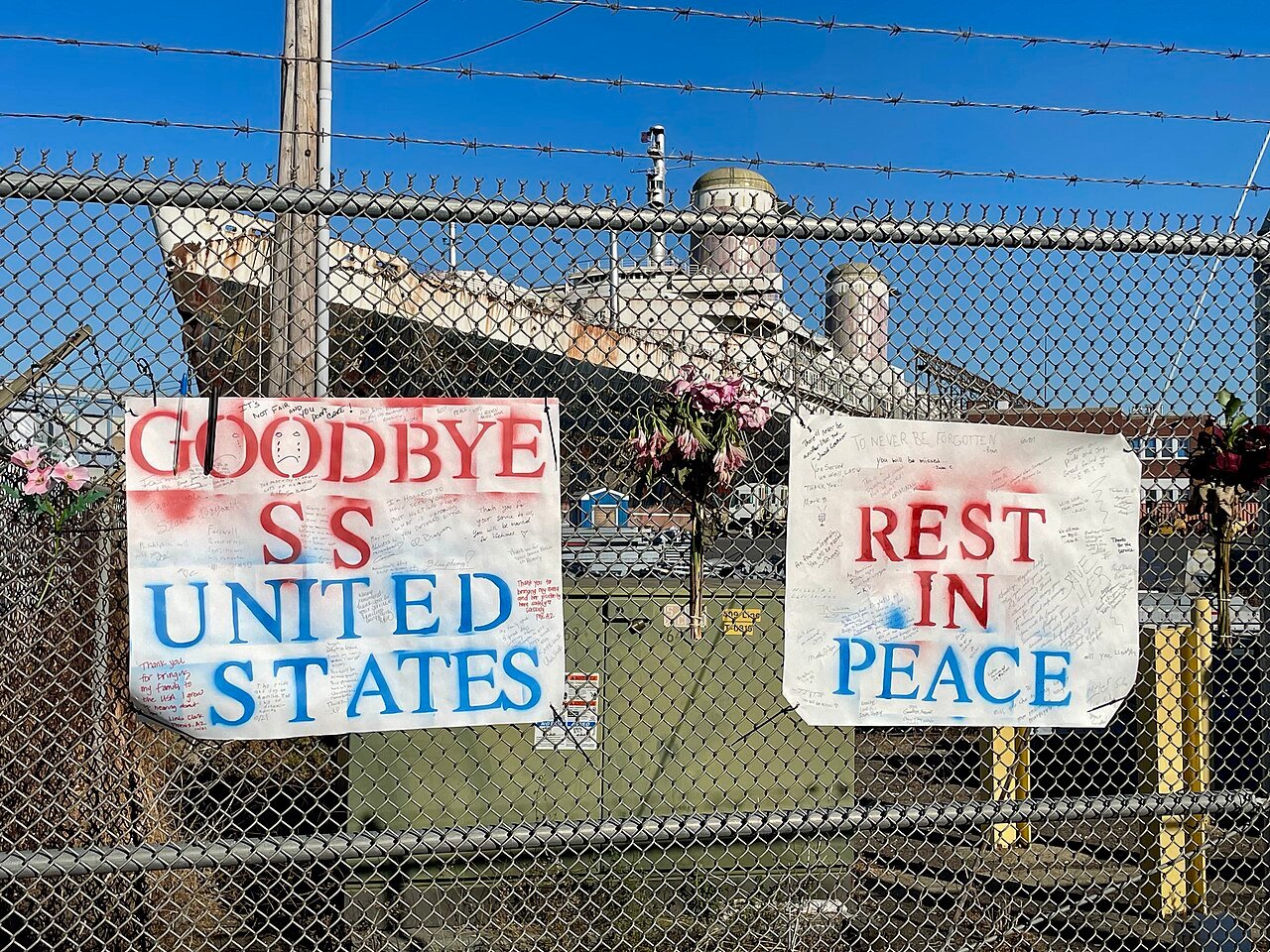
Susan Gibbs, the designer’s granddaughter, described a “complex mix of sorrow but gratitude and pride and hope.” She called the reef “the more dignified solution.” (NPR)
A local diver put it differently: watching her rust at the dock had been “way more tragic.” (NPR)
The fastest liner in history now holds a new record, in the dark, 180 feet down.
Evidence box: documented vs. claimed
| Point | Status | Source |
|---|---|---|
| Sunk about 9 p.m. on 11 November 2026, ~22 nm SW of Destin | Documented | (PNJ) (WEAR) |
| Planned 45 minutes; took about four to five hours | Documented (reports differ on the start time) | (PNJ) (WEAR) |
| Landed upright at about 180 feet | Documented (early ROV and sonar checks) | (WEAR) |
| 1952 eastbound crossing: 3 d 10 h 40 min, 35.59 knots | Documented | (AH) (WP) |
| “The only wood aboard was in the pianos and the butcher’s block” | Publicity claim | (AH) |
| Her true top speed | Long classified; still debated | (AH) |
| Largest artificial reef in the world | Documented (county claim, widely reported) | (PNJ) (NPR) |
Timeline
- July 1952: Maiden voyage; record eastbound crossing. (AH)
- Autumn 1969: Withdrawn from service during her annual overhaul. (WP)
- October 1984: Interior fittings auctioned in Norfolk. (WP)
- 1992–1996: Asbestos removal in Turkey and Ukraine. (WP)
- 1996: Docked in Philadelphia. (WP)
- June 2024: A federal judge orders her removal from the pier. (WP)
- October 2024: Sold to Okaloosa County for $1 million. (WP) (NPR)
- February–March 2025: Towed from Philadelphia to Mobile. (WP)
- August 2025: Funnels removed. (WP)
- 11 Nov 2026, ~3:50 p.m.: Valves opened. (PNJ)
- 11 Nov 2026, ~9 p.m.: She sinks. (PNJ) (WEAR)
Where the records disagree
- When the sinking began. One report says the first valves opened at about 3:50 p.m.; another says around 4 p.m., with a planned 1 p.m. start. (PNJ) (WEAR)
- How long it took. “Just over four hours” in one report, “five hours” in others. (PNJ) (NPR) (WEAR)
- How far offshore. About 22 nautical miles in county-based reports; “about 25 miles” in another. (PNJ) (FOX)
- “Still the record.” Her 1952 time has never been beaten by an ocean liner, but smaller speed craft beat it in the 1980s and 1990s. (WP)
- The date she was retired. Sources give both 11 and 14 November 1969 for the announcement. (WP)
What we still don’t know
- Her real top speed, which was kept secret for decades.
- How the wreck will change the sea floor around it over the coming years.
- Whether the planned museum will open with her funnels.
Where the argument is, and where we come down
The argument was never about how she sank but whether she should have, and whether it was done safely, and it ended in federal court days before the valves opened. The preservation side split into two camps. The New York Coalition to Save the SS United States, co-led by a co-founder of the Conservancy that sold her, wrote to the Trump administration in February 2025 asking it to buy the ship from Okaloosa County and berth her in Brooklyn as a “floating ecosystem”. The SS United States Preservation Foundation pressed an environmental case through 2026 and, in early November, sued the Army Corps of Engineers and the county in the Northern District of Florida, alleging an inadequate environmental and historic-preservation review; the challenge was dismissed. The environmental dispute is specific: the hull’s zinc chromate primer contains hexavalent chromium, and University of Florida biogeochemist Todd Osborne warned the Army Corps it could enter the food chain, a concern Erin Brockovich amplified. The county answers that the ship was cleaned to federal and state standards and that the compound converts to less toxic trivalent chromium in seawater. Drexel oceanographer David Velinsky called the risk possibly “a little overblown” while conceding it is unknown. The county’s tourism office says local divers are eager, and the designer’s granddaughter, Susan Gibbs, called the reef the more dignified end.
On preservation, the county and Conservancy hold the stronger case, because theirs rests on documented failure rather than on intention. Decades of fundraising had not produced a funded plan; a federal court ordered her off the Philadelphia pier in June 2024; and the Brooklyn proposal, according to Axios, was still trying to raise money for the tow. On the environment, the record is unresolved rather than settled for either side. Osborne’s warning is expert testimony, but the coverage we read gives no measured chromium concentrations; the county’s assurance rests on compliance with reefing guidance that does not regulate zinc chromate at all, rather than on tests specific to it; and we found no independent water or sediment testing. A dismissal is not a finding on toxicity, and the court’s reasoning was not reported.
The argument exists because the act was irreversible and the owner was not the nation. A ship treated as a national symbol had no federal owner, so its fate fell to a private conservancy, then a county project that grew to about $10.1 million. The Conservancy’s decision to sell to the reef buyer divided the preservation community against itself, and the guidance governing reef preparation was silent on the one contaminant the opponents cared about most.
On the record as it stands, we put more weight on the reef as the only plan that could actually be carried out, and less on the county’s claim that the environmental question is closed. First, every alternative proposed after the sale lacked secured funding or a berth, while the court eviction was real. Second, the chromium concern was raised by a qualified scientist and answered with regulatory compliance rather than with measurements. We could be wrong about the environment in either direction: monitoring of the wreck site could show no chromium release, or the opposite. If monitoring data are published, we will update this section.
Sources for this section: axios.com · phillyvoice.com · fox10tv.com · 6abc.com · billypenn.com · fox10tv.com
Quick answers: the SS United States reef
When was the SS United States sunk?
On Wednesday 11 November 2026. She went under at about 9 p.m. (PNJ)
Where is the SS United States now?
About 22 nautical miles southwest of Destin–Fort Walton Beach, Florida, at about 180 feet. (PNJ)
Can you dive the SS United States?
Yes. Her upper decks sit at about 60 feet, within reach of recreational divers. (PNJ)
Why was the SS United States sunk?
After decades rusting at a Philadelphia pier and a court order to leave, the only buyer with a plan was a Florida county that wanted her as a reef. (WP) (NPR)
What is a little-known fact about the SS United States?
The Navy treated her top speed as a secret, because in wartime she was meant to outrun submarines as a troopship. (AH)
Related files
- The Halifax Explosion: A Burning Munitions Ship, a Dispatcher’s Last Message and the Biggest Blast Before the Atom Bomb (1917)
- World’s Oldest Shipwreck? The Kekova Jars Were Logged as Ottoman Until a Book Moved Them 4,500 Years
- Ashtabula Bridge Disaster 1876: The Train That Fell Into a Frozen Gorge, and the Fire Engines That Never Pumped
Editor’s note
There is something quietly sad about the way she went down: through the seawater intake pipes that once cooled her boiler rooms. To the people who designed and maintained that ship those pipes were ordinary equipment, and in the end that equipment was what sank her. If I had worked aboard her, I think I could have understood and even agreed with the reef plan and still found it hard to watch the water come in.
I would have liked her to end up as a museum too. But when I think about the money and the berth it would have taken to keep her, that becomes easier to say than to do. During the years when no preservation plan came together, there were people putting their own money and time into keeping her afloat. Alongside the reef, I would like to know what those people considered and where each option ran aground.
So here is what I wonder. If someone who once crossed the Atlantic aboard her watched the footage of the hull on the seabed, what would they recognise first?
— Strange World Files
Case file summary
In 1952 she crossed the Atlantic faster than any liner before or since. Then the jets came, and she sat for 55 years waiting for a future. On 11 November 2026 the sea came in through the same pipes that once cooled her engines. It was meant to take 45 minutes. It took four hours. Another American ship was found rather than sunk on purpose: the SS Cornwallis, torpedoed off Maine by the U-boat that had just landed Nazi agents.
Evidence locker
Openly licensed photographs of the real ship, from her years at the pier to the morning she left it.
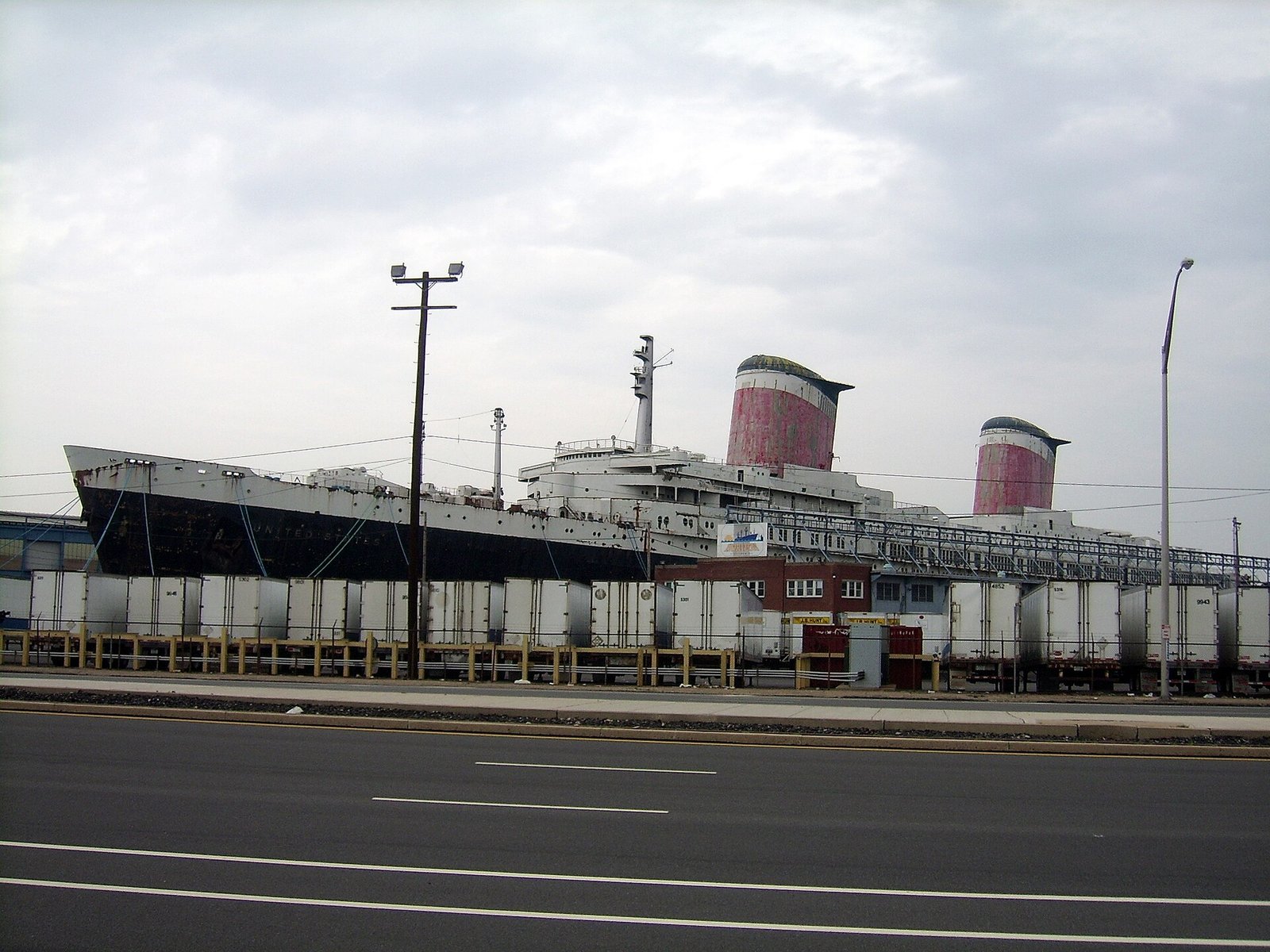 EXHIBIT A · PHILADELPHIA, 15 JUNE 2006
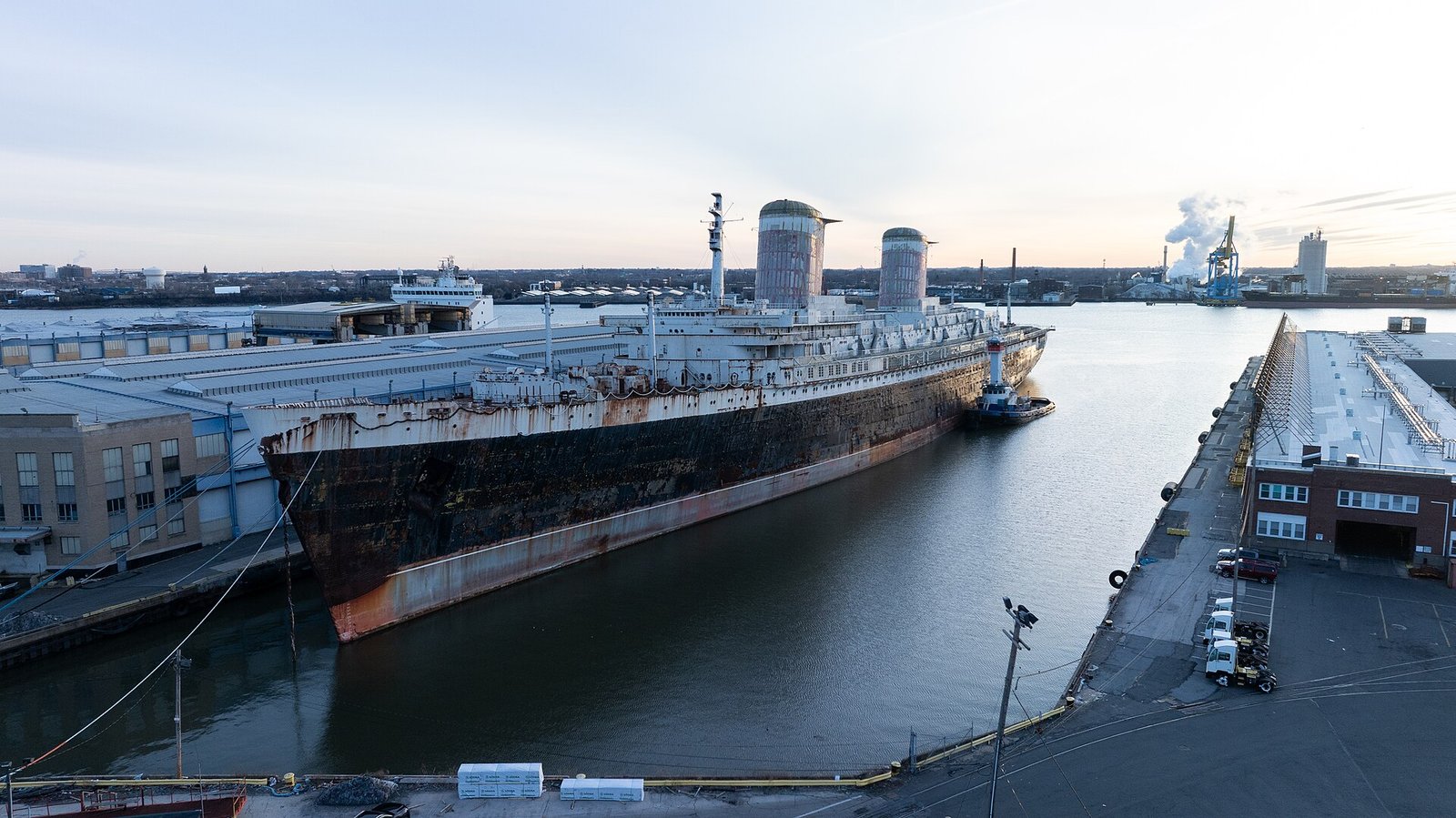 EXHIBIT B · 19 FEBRUARY 2025, 7:18 A.M.
 EXHIBIT C · 19 FEBRUARY 2025, ABOUT NOON
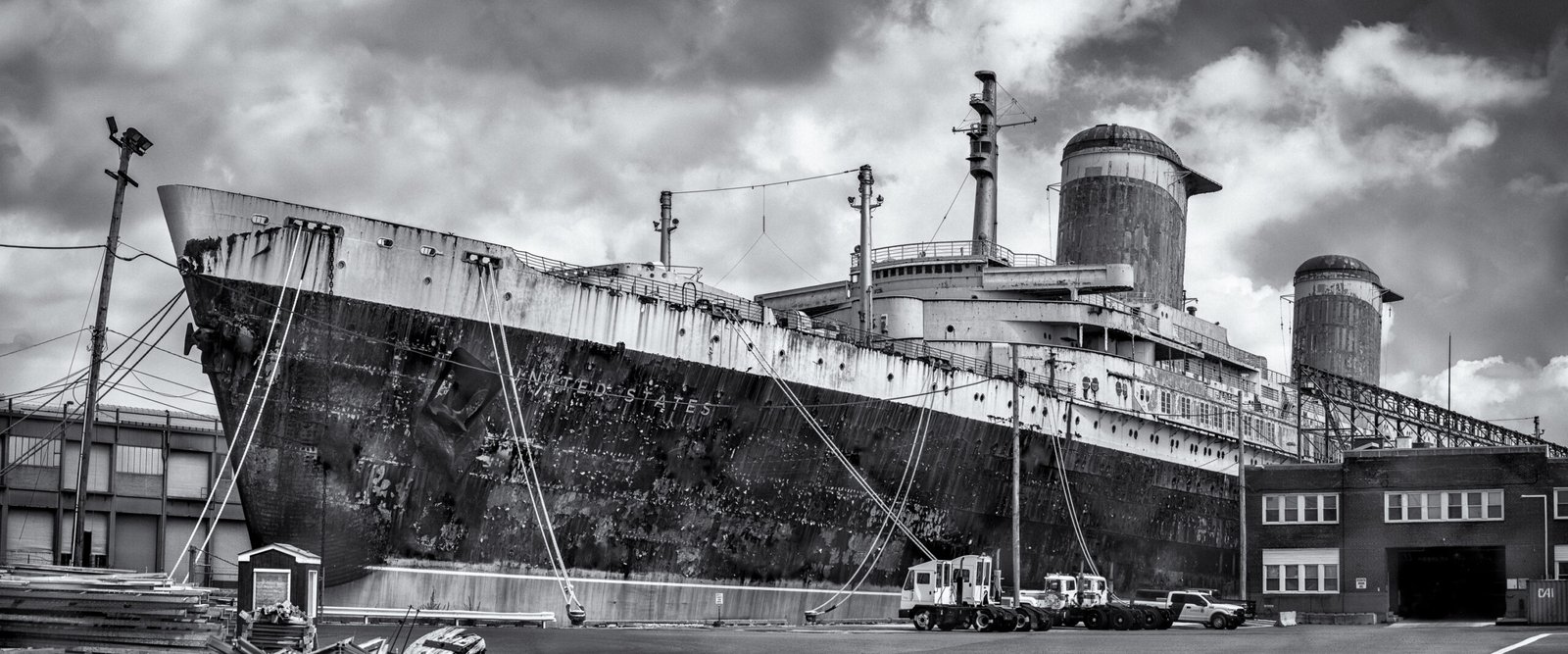 EXHIBIT D
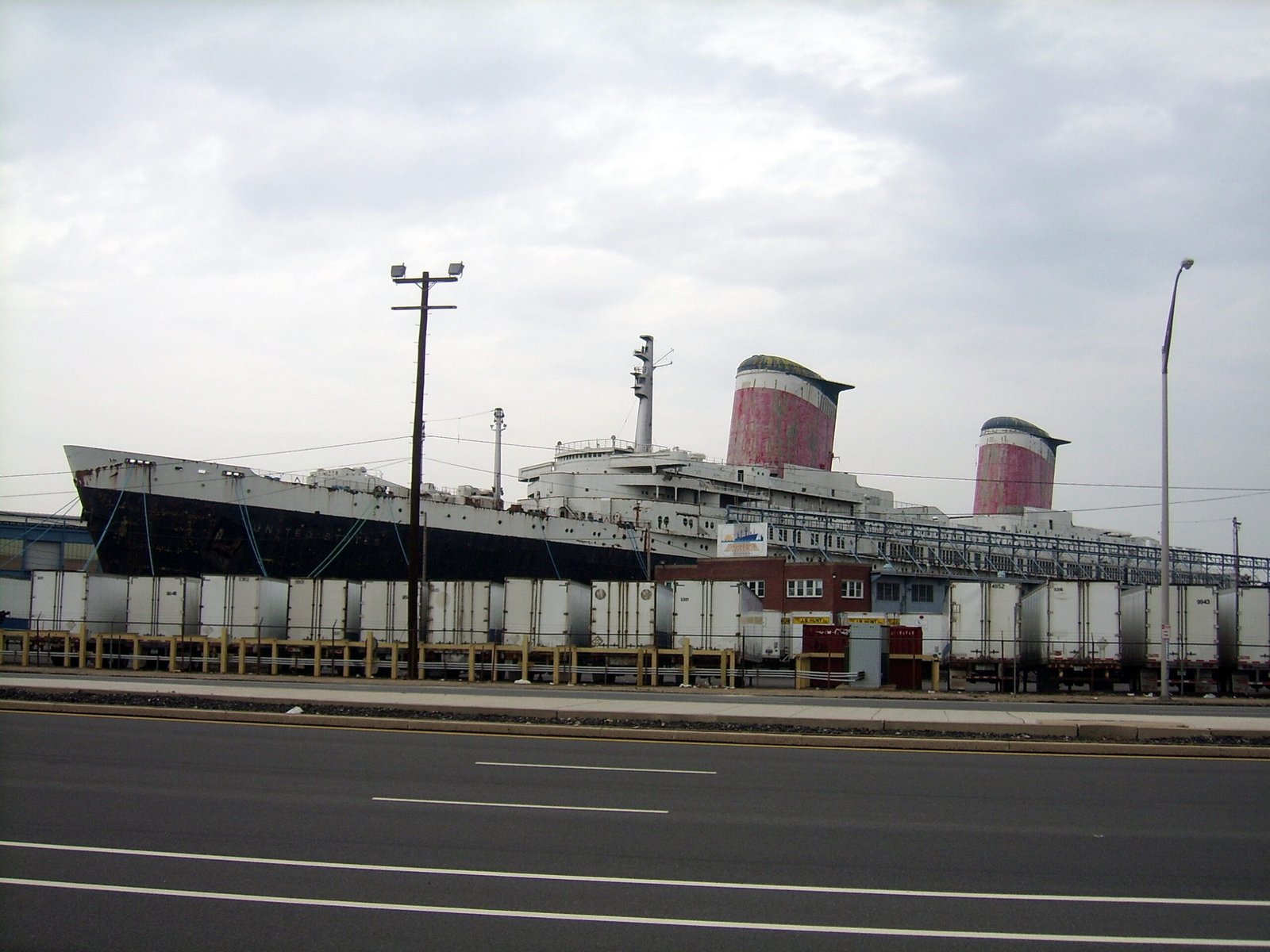 EXHIBIT E
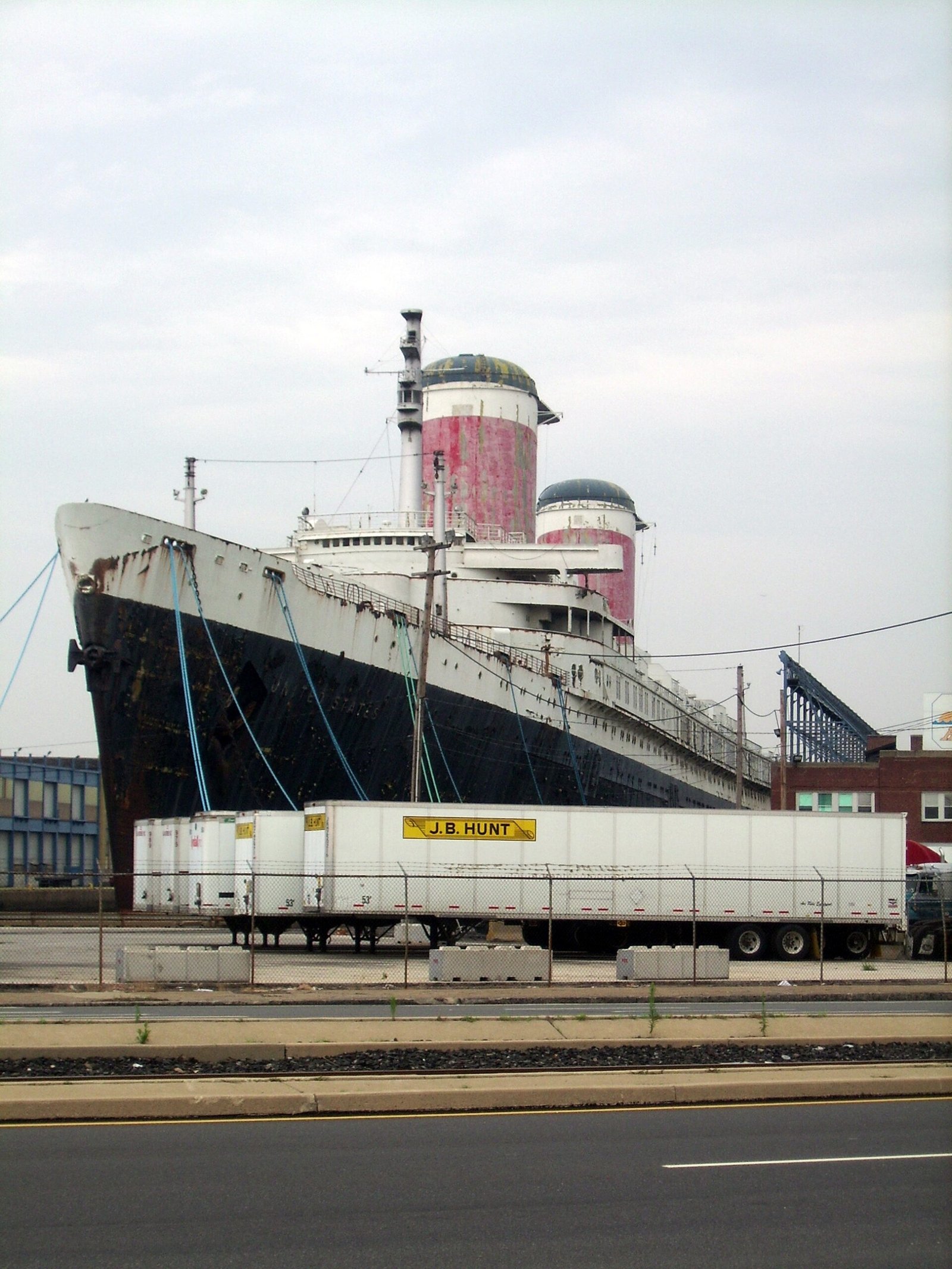 EXHIBIT F
Illustrations are AI-generated artistic interpretations, not photos. No real person is depicted with a recognizable face. Read how we research and illustrate these files.
Sources
- Pensacola News Journal via Yahoo News, “SS United States took 4 hours to sink. Here’s a recap,” 12 November 2026
- WEAR-TV, “Okaloosa County officials say SS United States sank after valve delay, landed upright,” 12 November 2026
- NPR via WVXU, “World’s fastest ocean liner is sunk to break another record: largest artificial reef,” 11 November 2026
- Fox News, “Legendary SS United States sinks beneath waves,” 12 November 2026
- Invention & Technology, “The Big Ship”
- Wikipedia, “SS United States” (background dates and figures)