The Daegu Subway Fire: The Second Train Drove Into the Smoke and the Doors Stayed Shut
Narrated Mystery: press play and hear the whole case read aloud, like a true crime podcast episode, or an audiobook for a long drive (about 11 minutes). The narrator is an AI voice.
Listen to the narration above first, then read along. The key words are underlined in the story.
- flammablecatching fire easily
- extinguishera metal container that sprays material to put out fires
- malfunctiona failure of a machine to work properly
- shuttersmetal covers that come down to close an opening
- toxicpoisonous and harmful to breathe
- evacuatemove people out of a dangerous place
- acquittedfound not guilty by a court
- reconciliationmaking peace after a serious disagreement
1. What safety rule was missing at the time?
No rule banned carrying flammable liquid onto a subway train.
2. According to police, how did two staff treat the fire alarm?
They wrote it off as a routine malfunction.
3. When was the fire finally out?
Not until 1:38 in the afternoon.
What the record shows
- When: Tuesday 18 February 2003, about 9:53 a.m.
- Who: 192 dead, 151 injured
- Status: Arsonist sentenced to life; staff convicted of negligence; memorial name still disputed
Still uncertain
- Whether the park will finally carry the memorial name.
- Whether more of train 1080’s passengers would have got out if the doors had opened earlier.
- The final appeal sentences of the subway staff.
A bottle on the 9:30 train
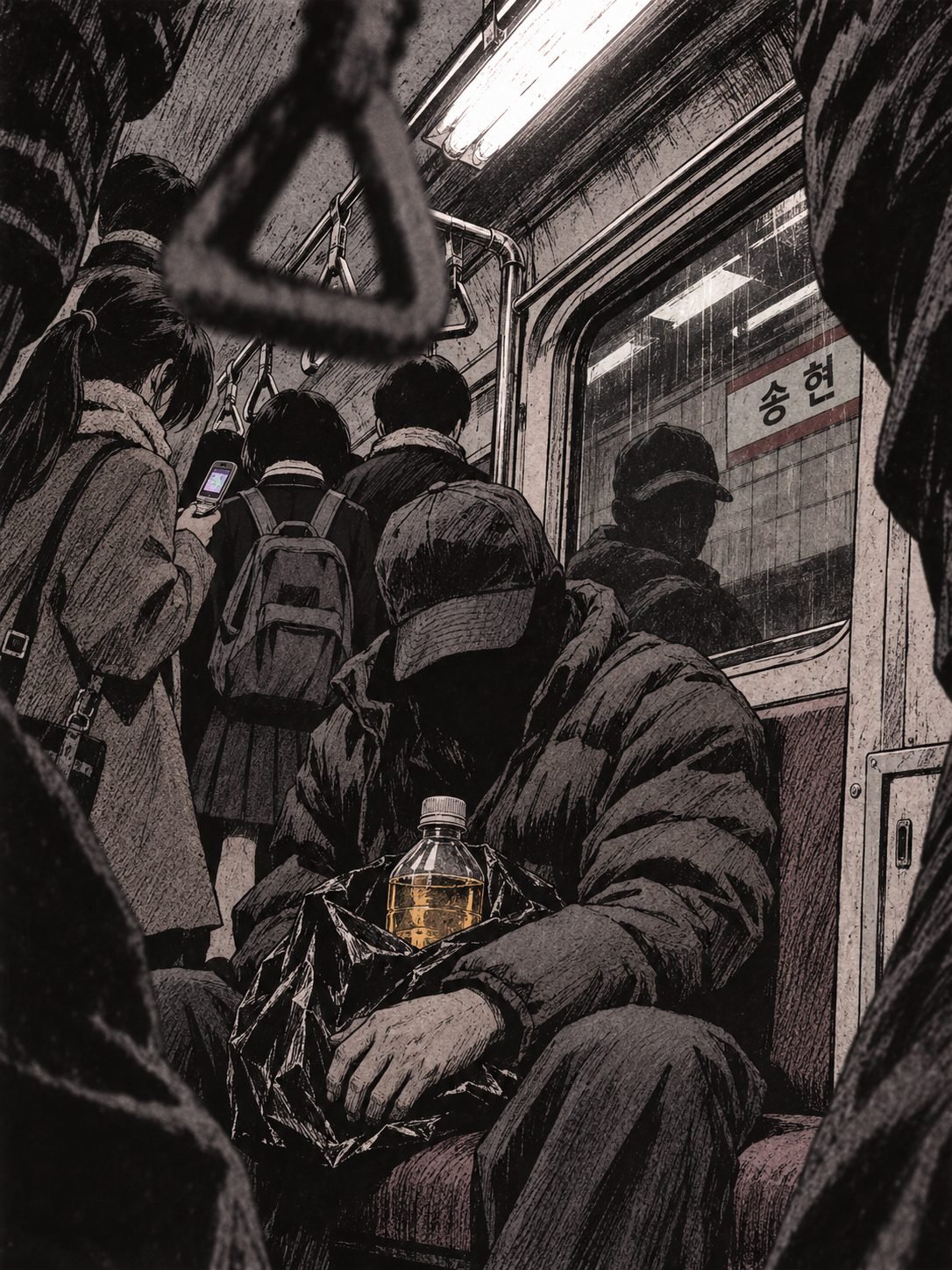
Tuesday, 18 February 2003. Rush hour in Daegu, South Korea’s third-largest city.
At about 9:30 a.m., a 56-year-old man boarded train 1079 on Line 1 at Songhyeon Station, heading east toward Ansim. He carried a plastic bottle of gasoline, about two litres by most accounts, and a lighter.
His name was Kim Dae-han. He was a former taxi driver who had been ill since a stroke and was depressed. At the time, no rule banned carrying flammable liquid onto a subway train.
The train had six cars. Their seats were foam, their wall panels fibreglass, their floors vinyl. (KH-2023) (MT-2026) (MBN-2023) (HONG)
A fire broke out on one train. Minutes later a second train pulled into the same station, and its doors stayed shut.
A lighter that would not catch
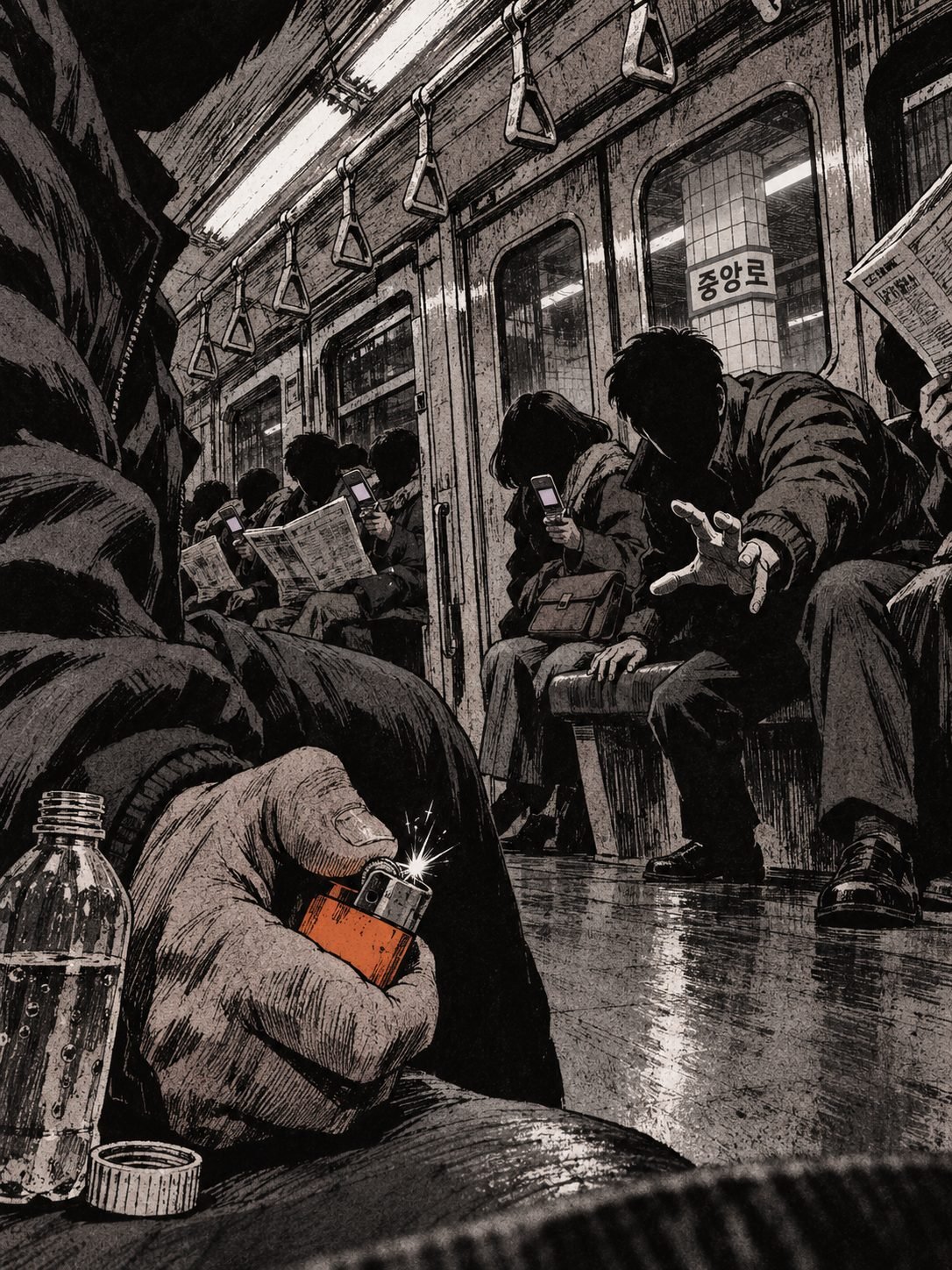
At about 9:53, as the train pulled into Jungangno, the downtown station, he tried to light it.
According to Money Today, the lighter would not catch at first. Then it caught all at once, and set his own clothes alight. He threw the bottle down.
Reuters reported that security cameras showed him holding the burning container while other passengers tried to take it from him.
He got out, went to hospital posing as an ordinary passenger, and was caught after another passenger reported him. (MT-2026) (REUT-0220) (MBN-2023) (HONG)
Train 1079 empties
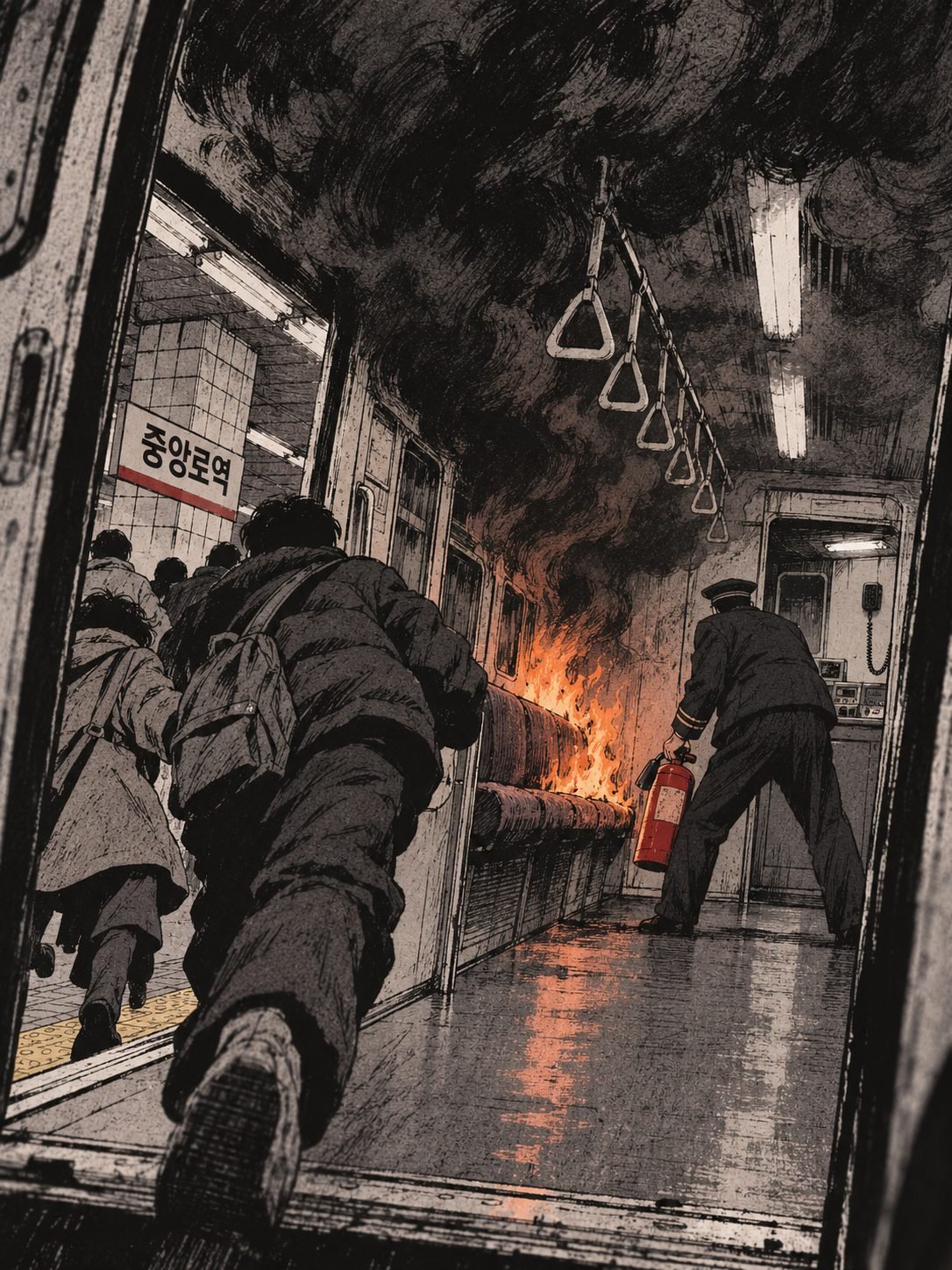
The fire spread fast through the cars. The seats and panels gave off thick, toxic smoke.
But the doors of 1079 were open, and most of its passengers got out onto the platform and ran for the stairs.
The driver of 1079 tried to fight the fire with an extinguisher. He did not report it to the control centre. (MT-2026) (KT-2016) (KH-2023) (AP-0304)
An alarm that went off all the time
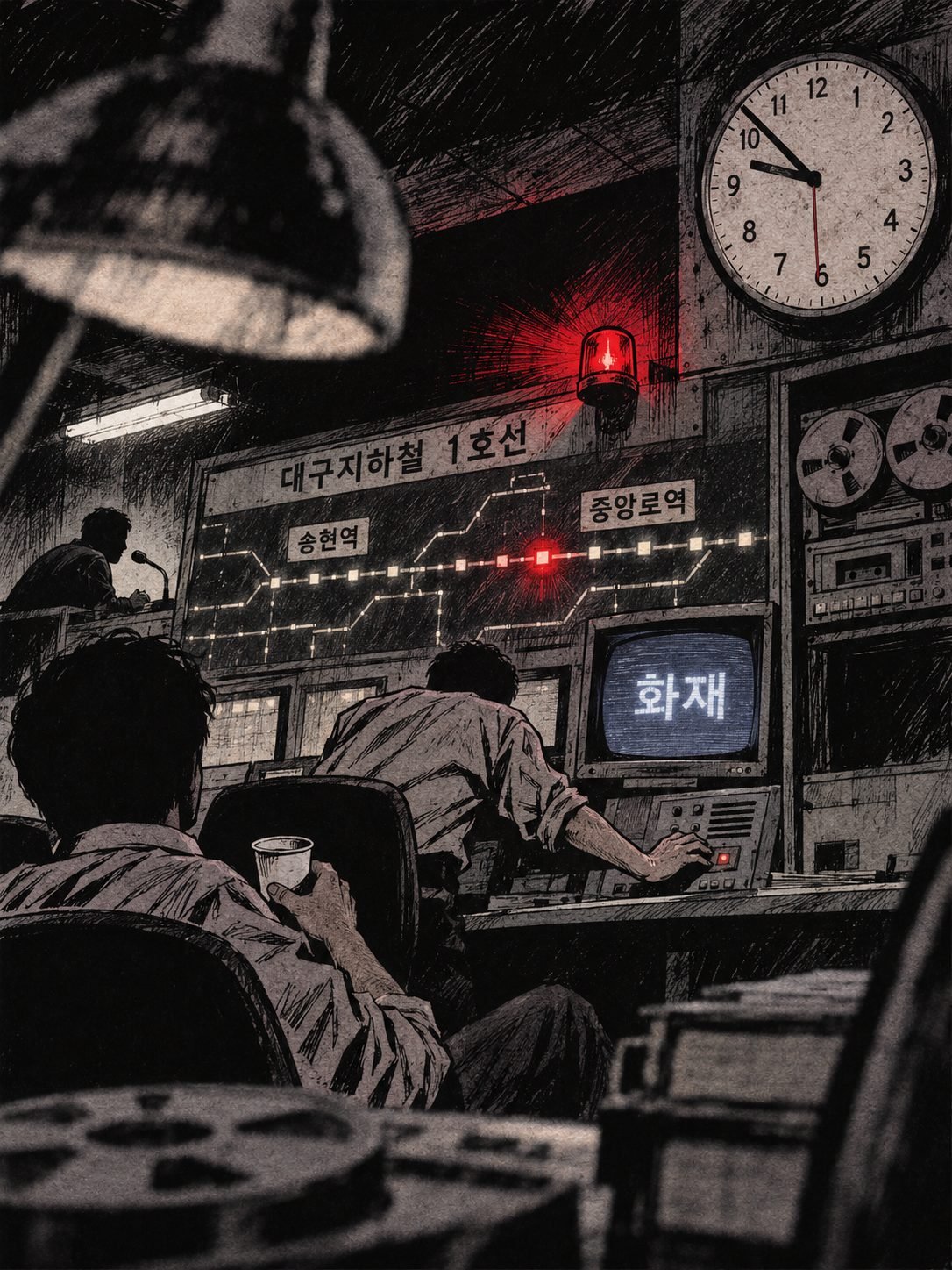
At 9:53, a fire alarm showed up on a screen in the subway’s control centre.
Staff did not act on it at once. False alarms were common, according to a study of the disaster by Won Hwa Hong of Kyungpook National University. Police later said two staff had written off the alarm as a routine malfunction.
The first report reached the fire service at about 9:54. (HONG) (KHAN-0224) (SIDAE-2024)
Smoke on the platform
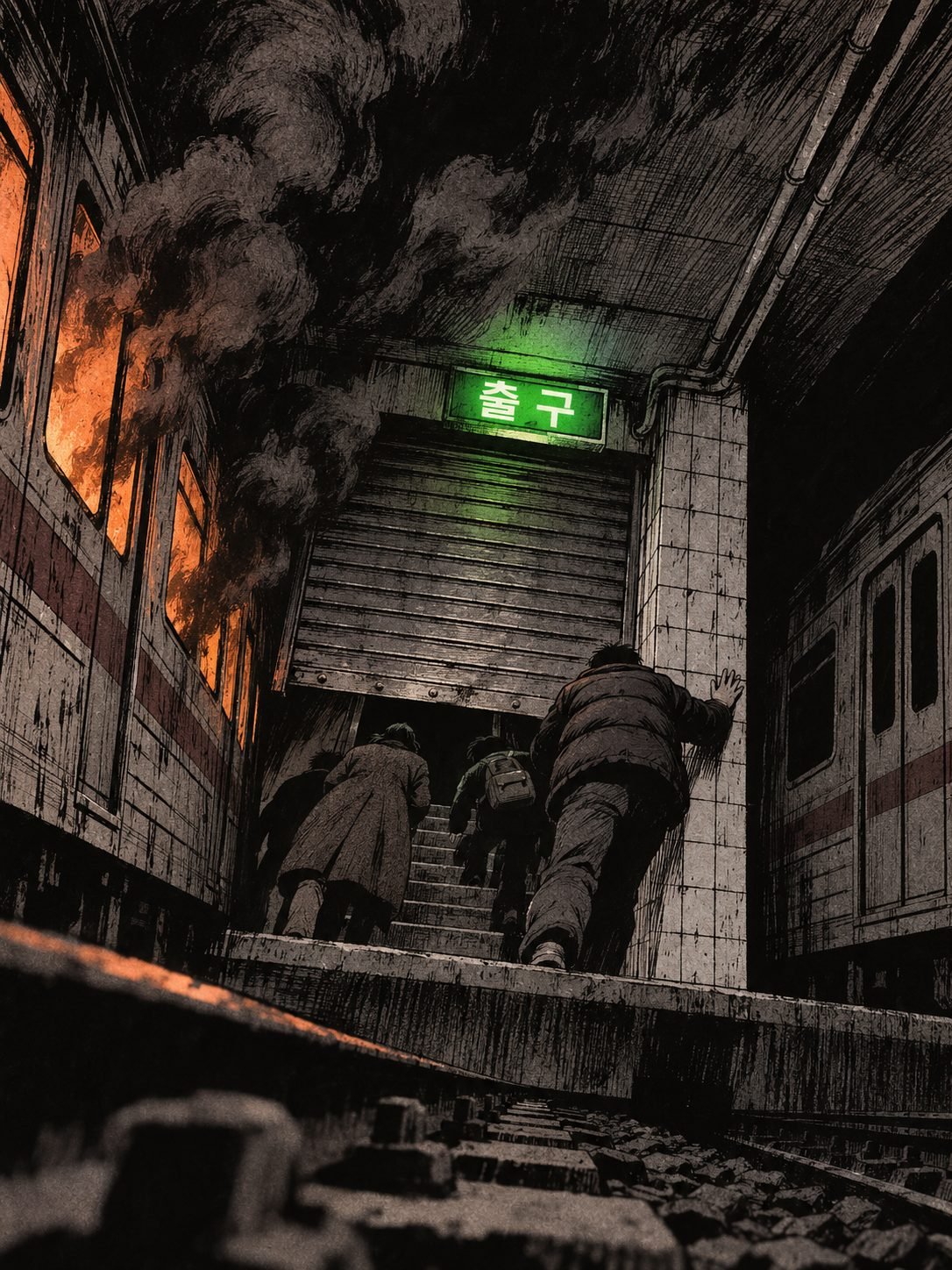
By about 9:56, smoke had filled the platform level, three floors underground. Fire shutters came down automatically.
Survivors later said they could barely see. In Hong’s survey of 146 people who got out, almost none of those from 1079 could see more than five metres. Most could not see the emergency lights at all.
And another train was coming. (HONG)
“Drive carefully. There is a fire.”
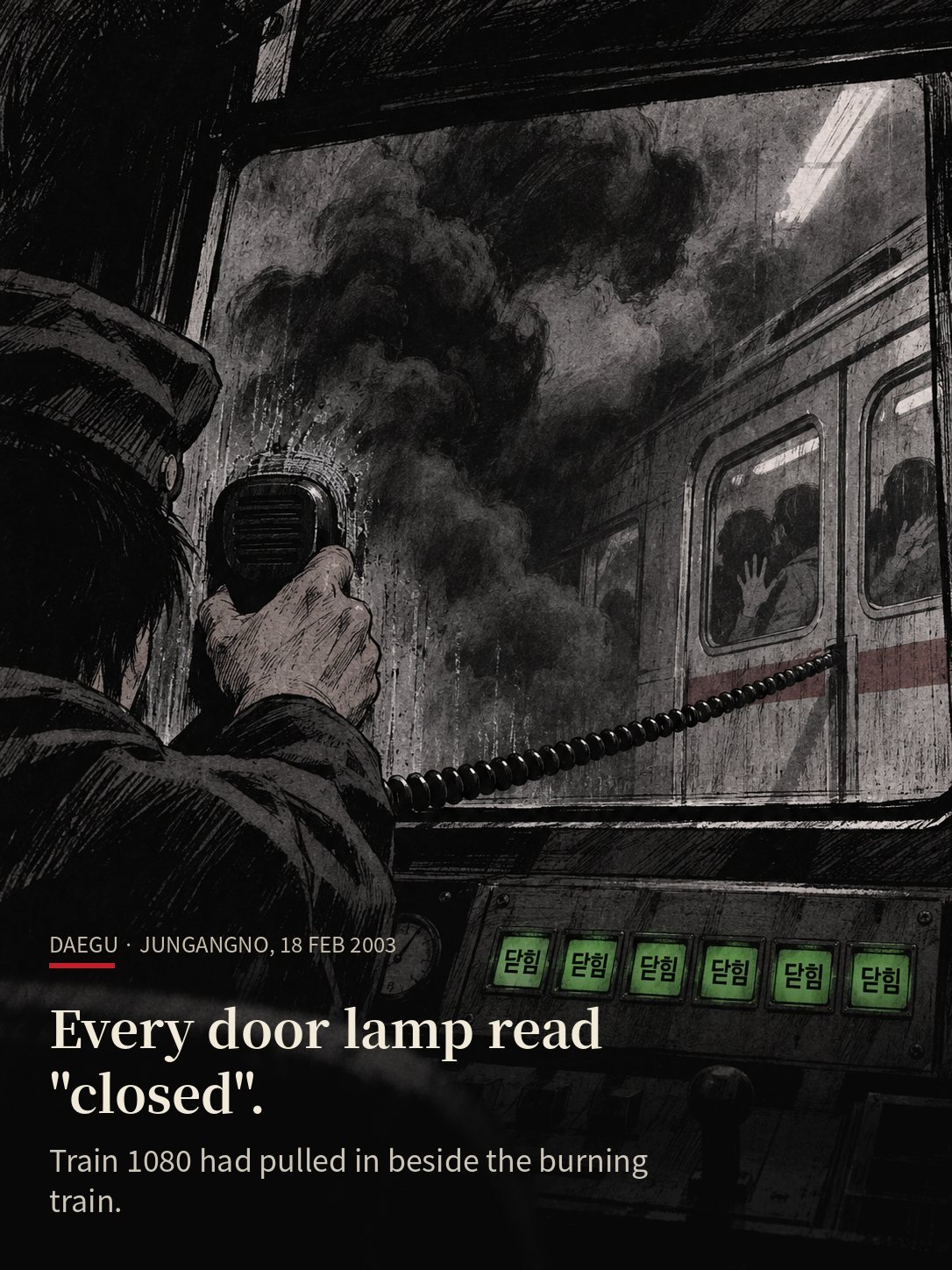
Train 1080 was running the other way, toward Daegok. The control centre radioed its driver as it approached.
“When you enter the Joongang Station, drive carefully. There is a fire,” according to AP’s translation of the transcript. There was no order to stop, or to pass through.
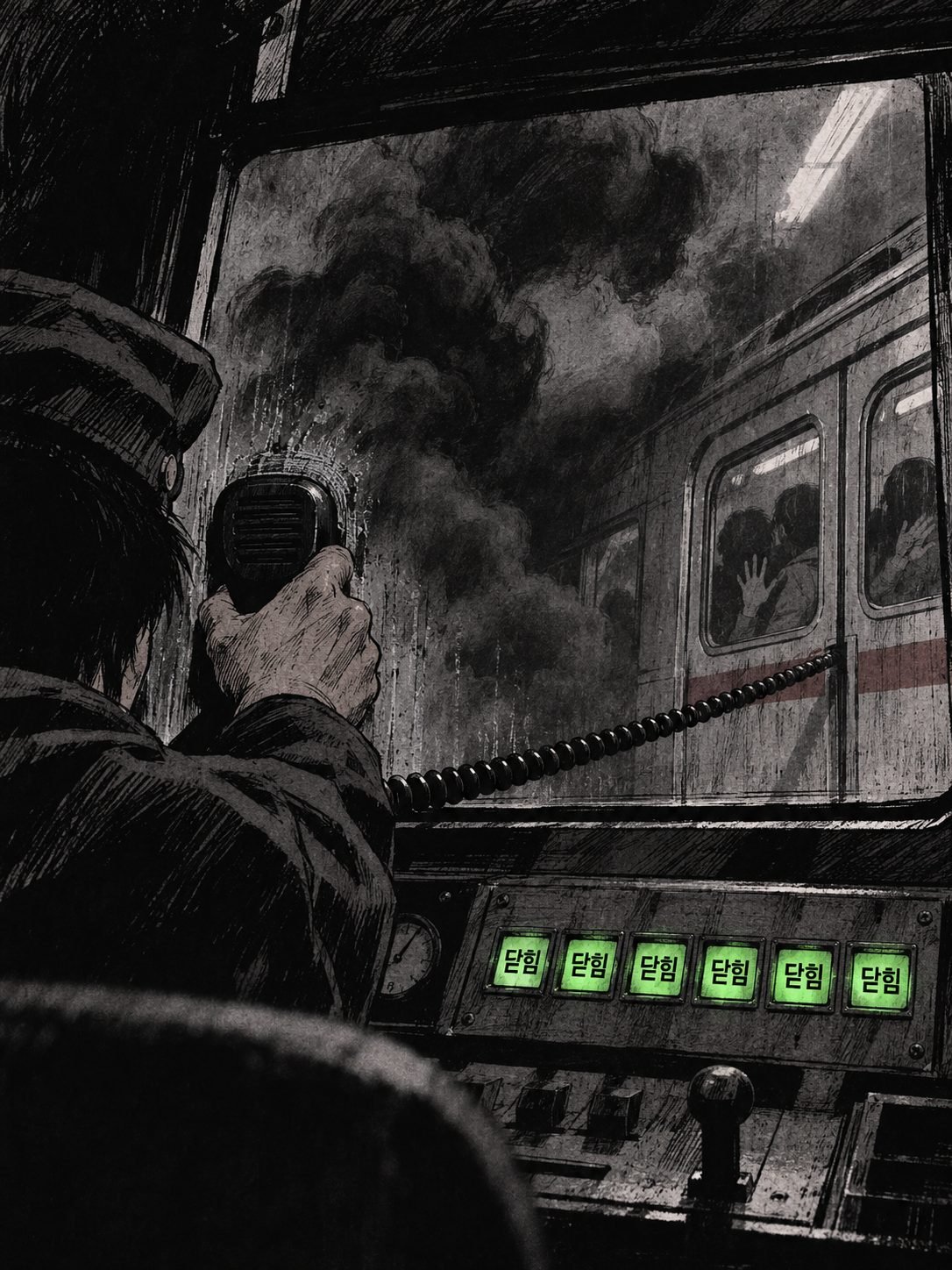
Train 1080 pulled in three or four minutes after the fire started and stopped beside the burning train. Then the power failed, and it could not leave. The backup generator failed too.
“It’s a mess. It’s stifling. Take some measures please. Should I evacuate the passengers? What should I do?” the driver radioed. He was told to stand by. He announced that passengers should stay in the train. (AP-0221b) (MT-2026) (KH-2023) (AP-0221a)
“Mom, but the door won’t open”
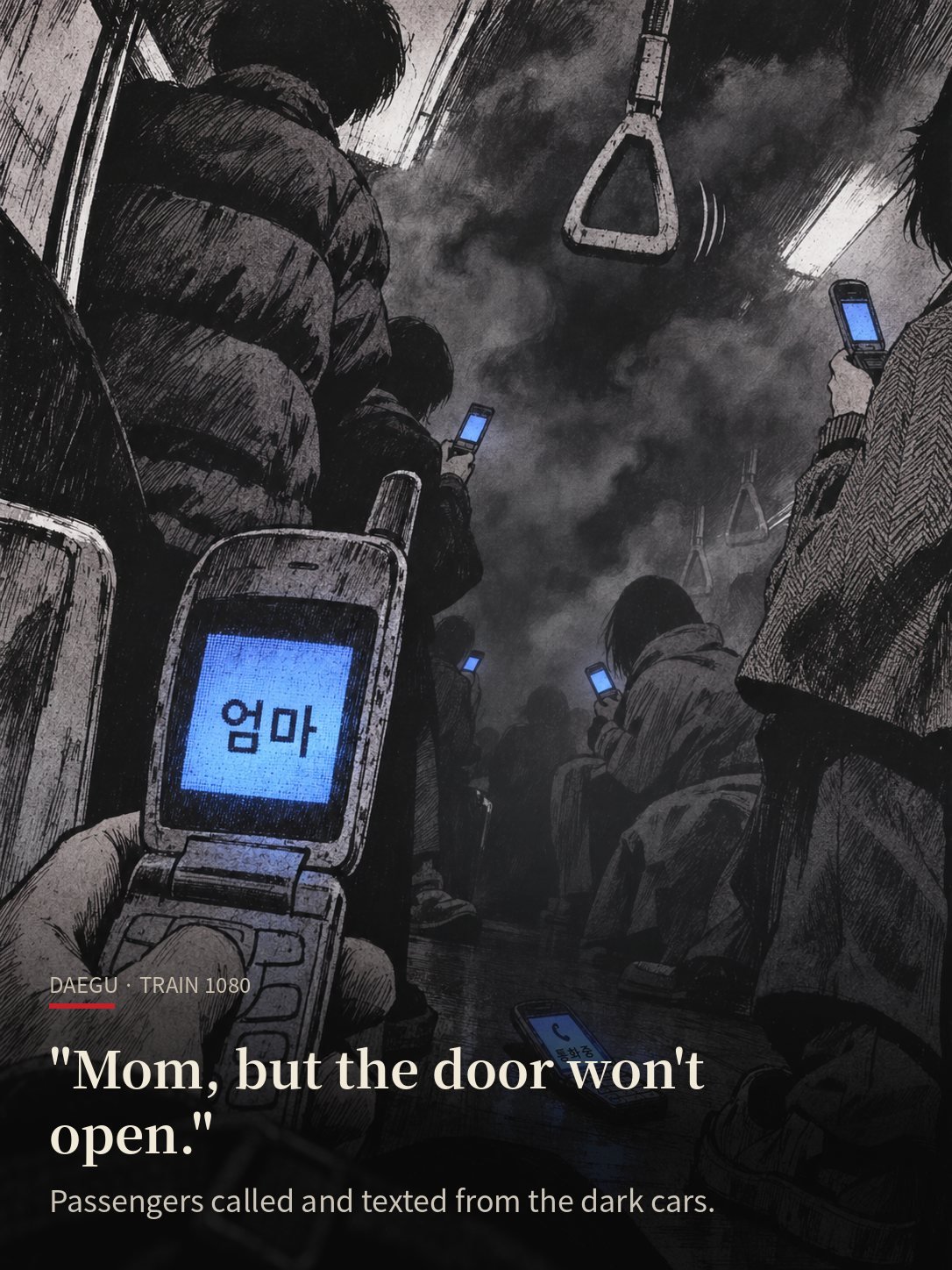
In the dark cars of 1080, people called and texted their families.
“Help me … There’s a fire on the subway. The door is locked,” a man told Korean television his wife had said, according to Reuters.
A mother told her daughter to follow the other passengers out. “Mom, but the door won’t open,” the daughter replied, the Korea Herald reported.
Days later, phone companies gave families the last location of their relatives’ phones. (REUT-0220) (KH-2023) (SIDAE-2024)
A lever under the seat
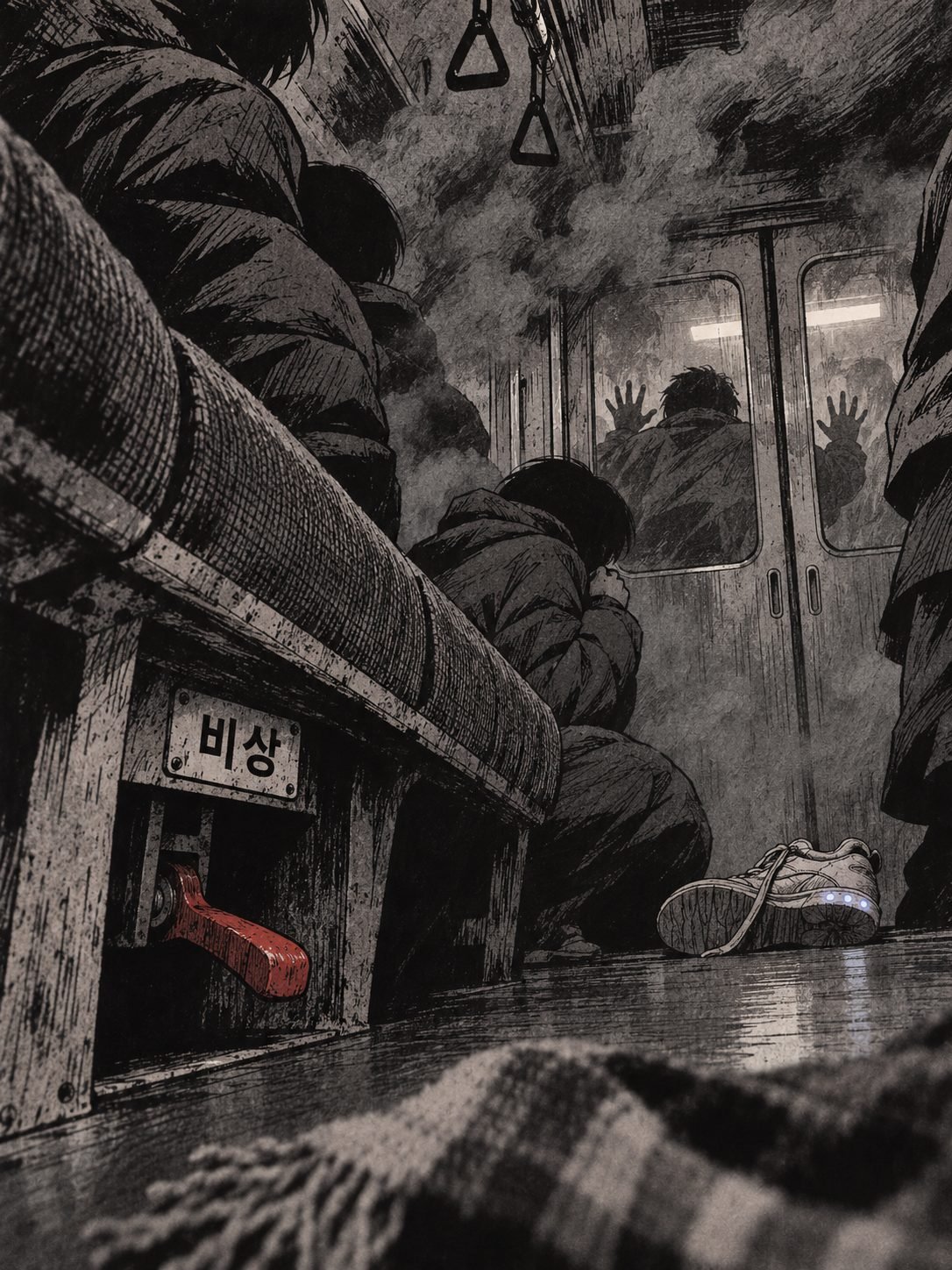
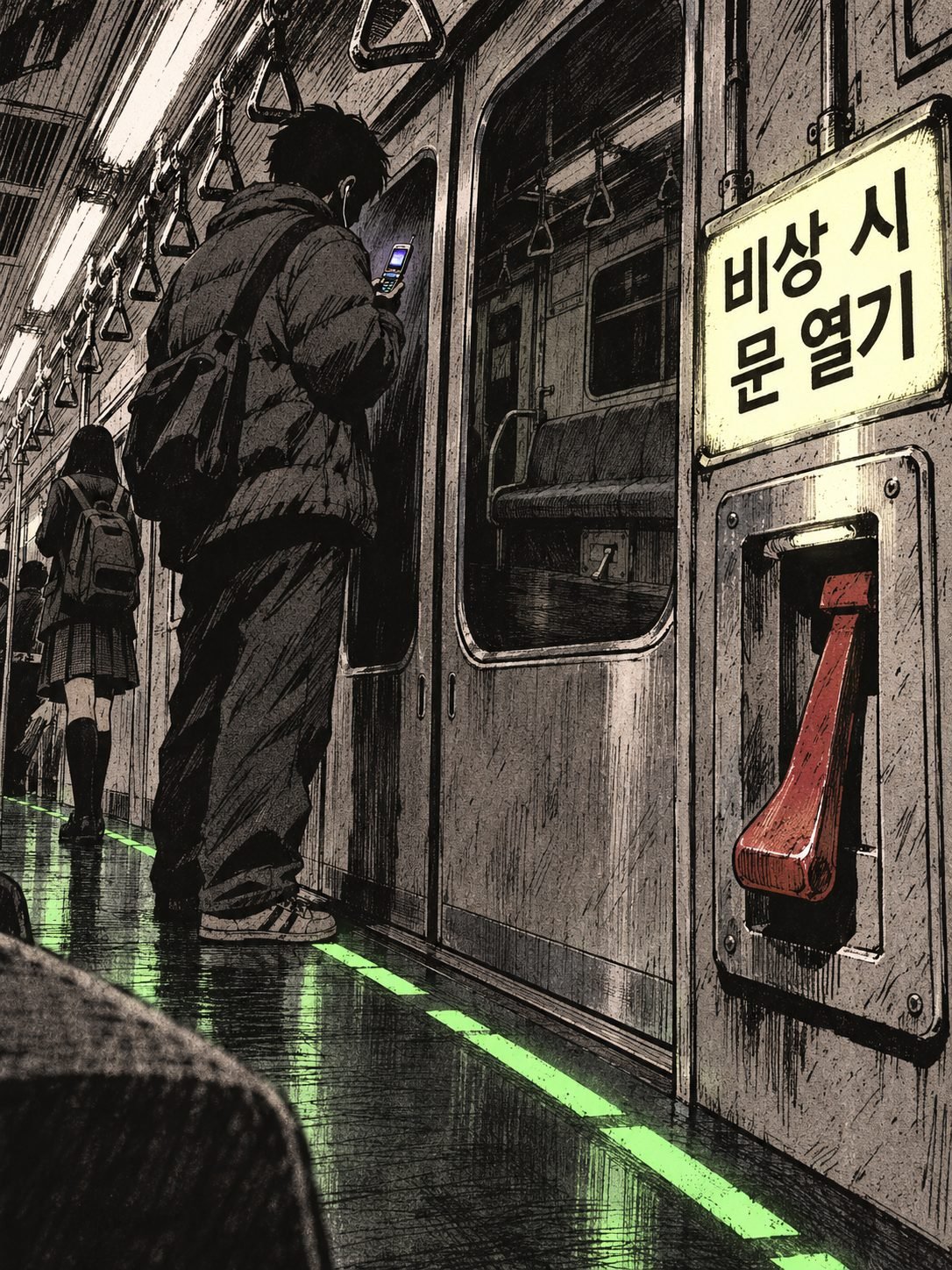
Each door could be opened by hand, with a release lever under the seats. There were instruction signs.
But the lever sat deep under the seat, few passengers knew it was there, and by then the cars were dark and full of smoke, according to Money Today and AP.
Police later said the doors were open on only two of the train’s six cars. (MT-2026) (AP-0221a)
“Kill the train and go”
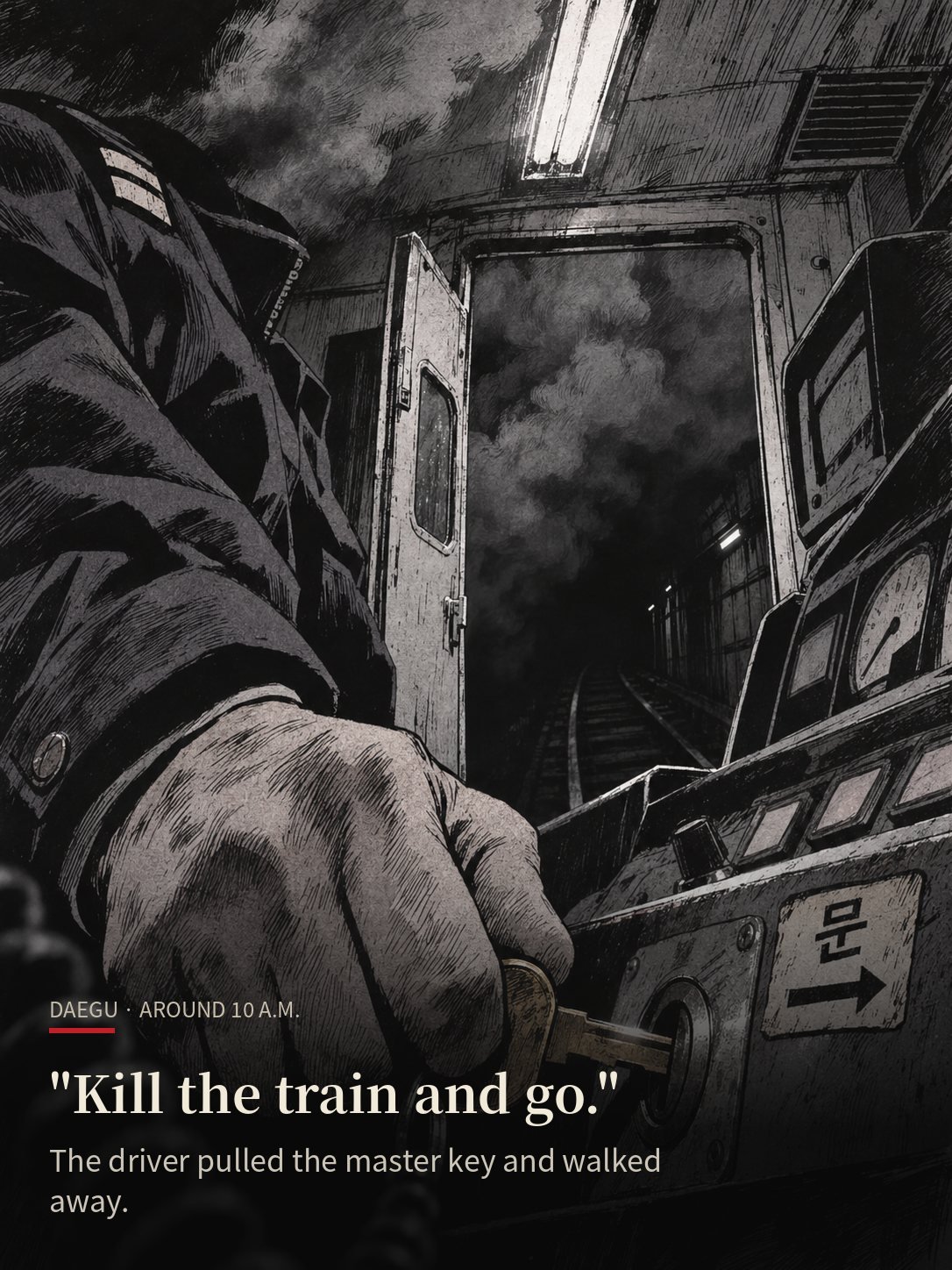
Some time around ten o’clock, the control centre gave the driver a new instruction.
According to Pressian, citing a police briefing, a controller told him: “차 죽이고 가야돼”, roughly “you’ve got to kill the train and go”, meaning pull the power key and get out. Money Today reports the order as “drop the power, kill the train and go”.
The driver pulled the master controller key from the console. When he did so is disputed: one fire researcher puts it at about 10:02, before the time police gave for the order, and the driver said he pulled it out of habit. Without it, almost nothing on the train worked, including the doors. (PRES-2003) (MT-2026) (HONG) (KH-2023) Bolted doors and no exit signs turned a 1997 matinee into the Uphaar cinema fire in Delhi, where smoke from a transformer fire filled the balcony and killed 59 people.
The key in his pocket
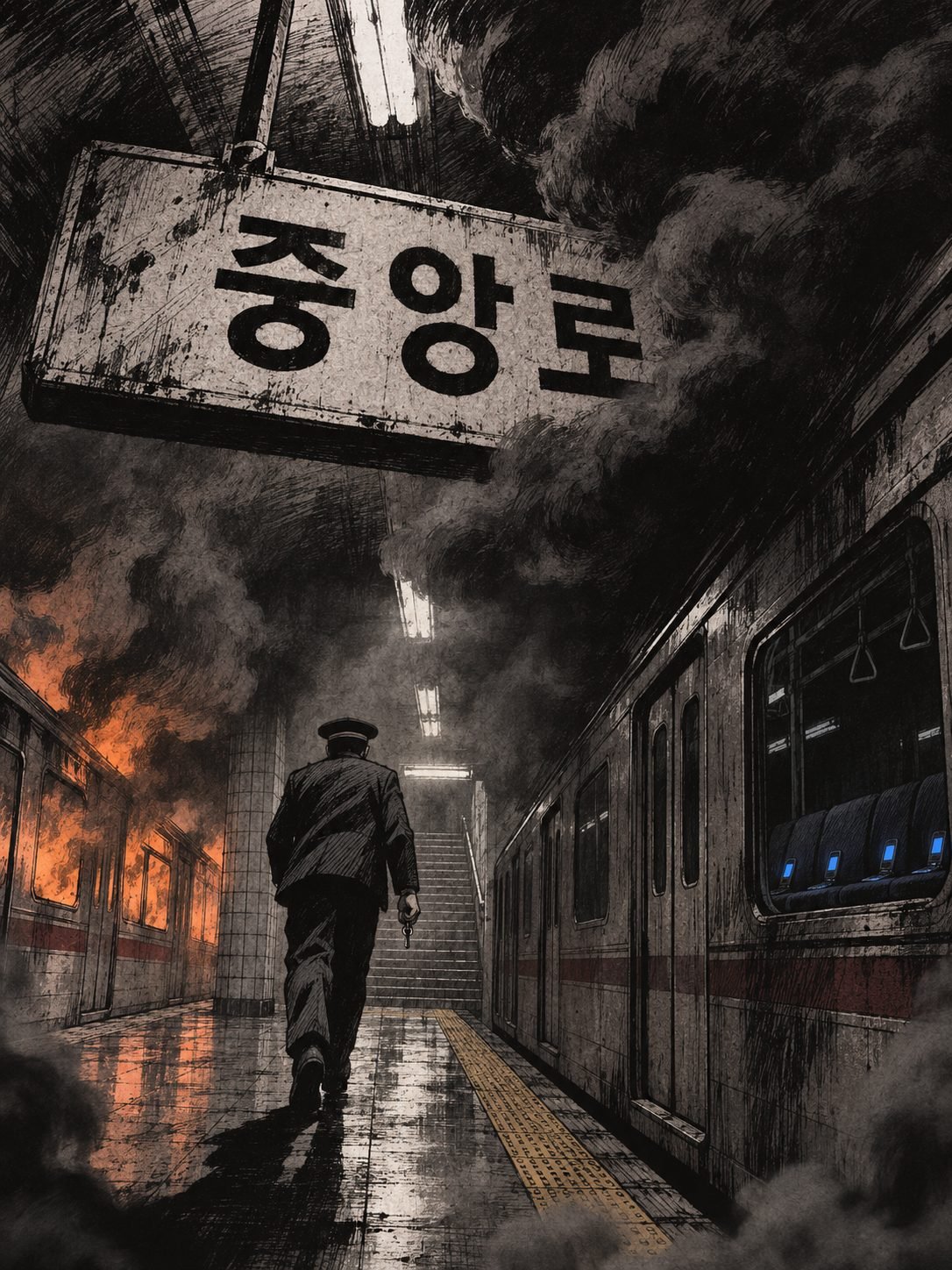
He walked away with the key.
He told police he knew that pulling it closed the doors, and that he had thought the passengers were all out. He said he pulled it out of habit. He said he had spent more than ten minutes helping people. “We don’t think that was the case,” the chief investigator told AP.
How much the key itself mattered is still argued. The train’s power had already failed before he pulled it, and the control centre had told him to go. A documentary director later wrote that some media began to question the key’s role about ten months later, after the courts had already ruled. (SEOUL-0222) (PRES-2003) (AP-0221a) (MAEIL-COL-2014)
Three hours of smoke
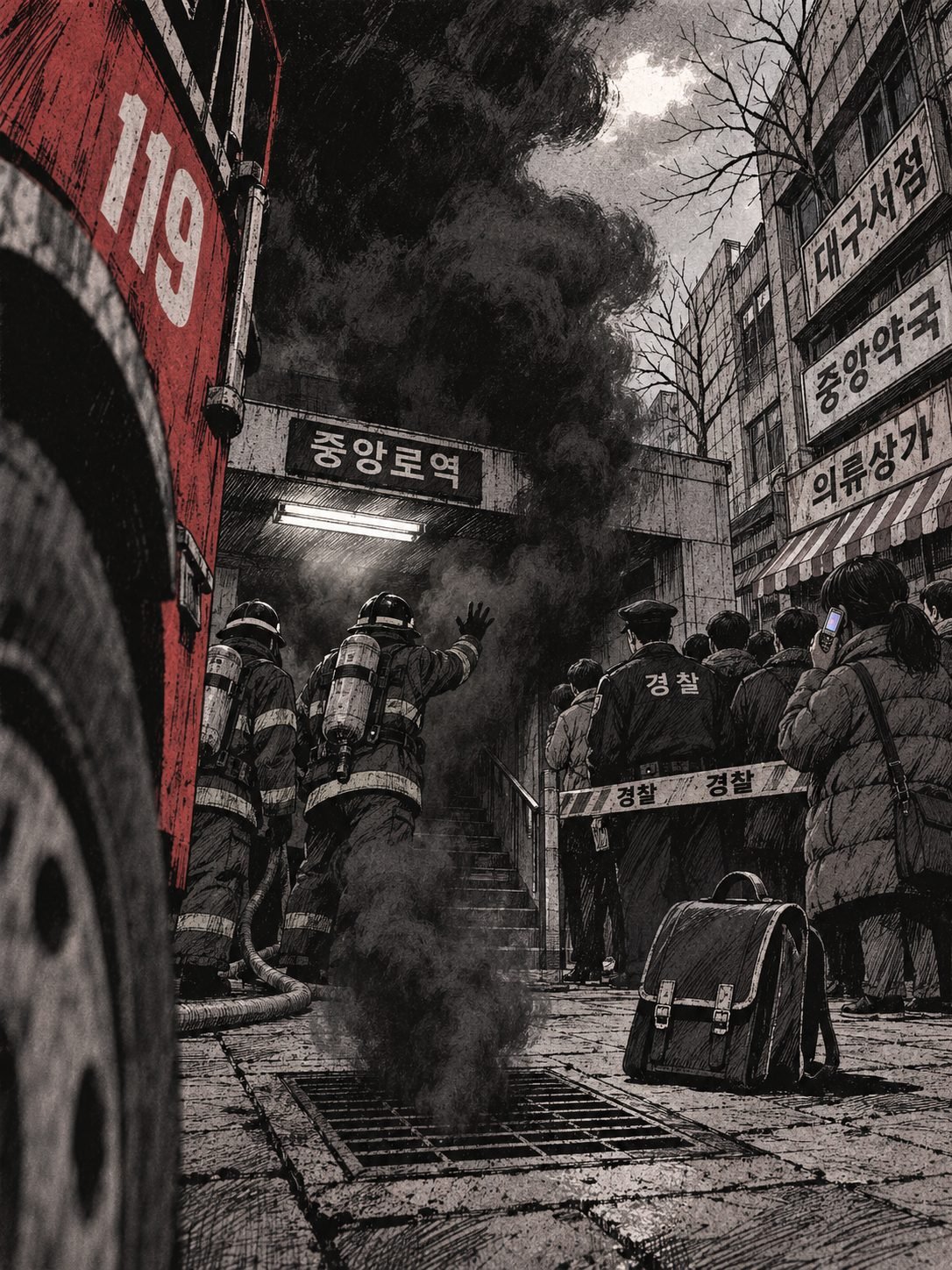
The first fire crews arrived within minutes. More than a thousand responders and over a hundred vehicles came.
But the toxic smoke kept them out of the station for hours. The fire was not out until 1:38 in the afternoon. Daegu carries another unhealed wound from 1991, when five boys went up a hill to look for salamander eggs and became the unsolved Frog Boys case on Mount Waryong.
All twelve cars of the two trains burned. (HONG) (WIKI) (MAEIL-2026)
192
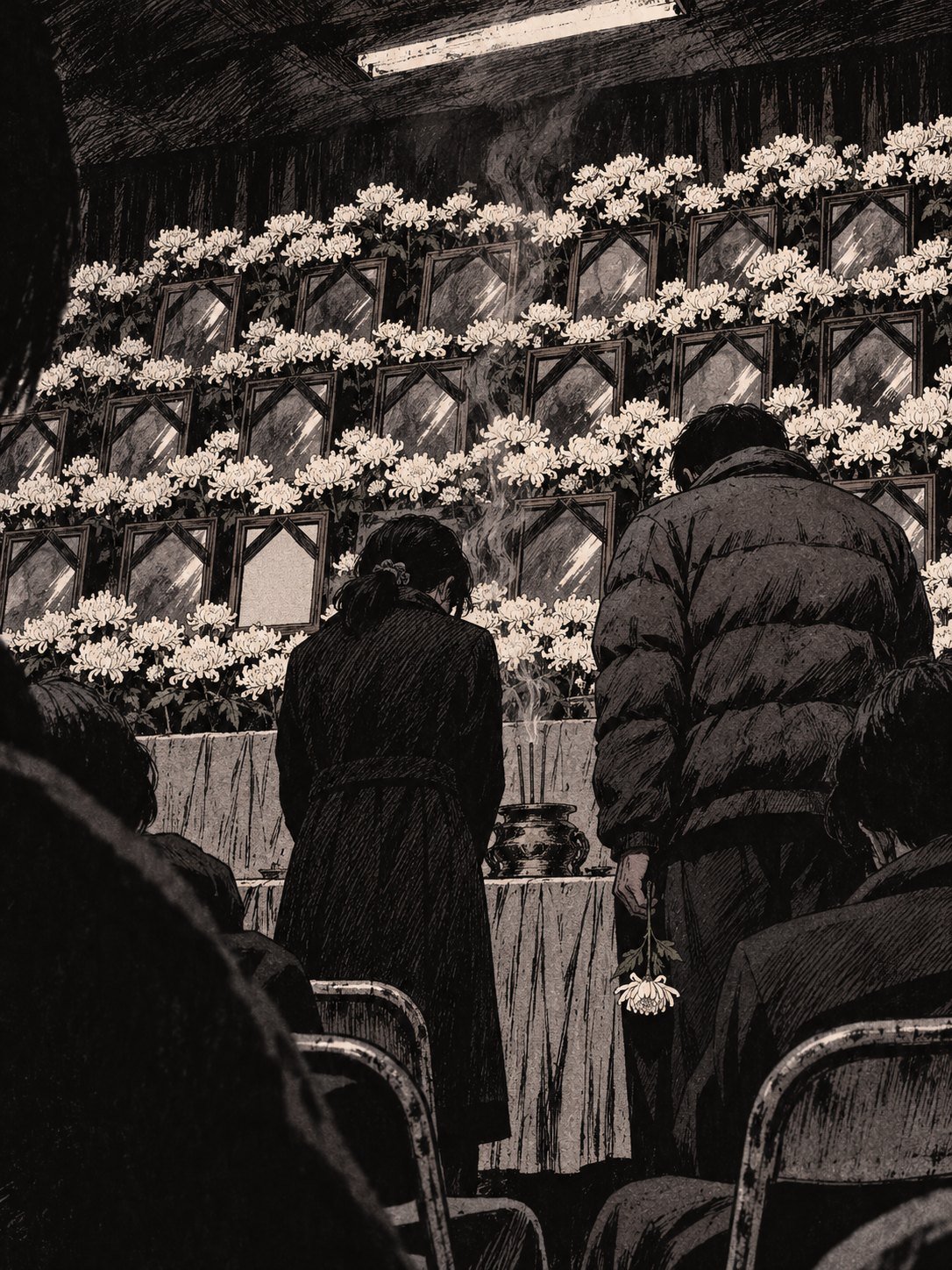
The final count was 192 dead and 151 injured.
Hong’s study counts 142 who died inside the train and 49 outside it, people who got off 1079 but died in the smoke on the way out. About 640 people had been on the two trains.
The count kept changing for weeks. A handful of the dead were never identified. (HONG) (MT-2026) (KT-2016) (SIDAE-2024)
Bags at the depot
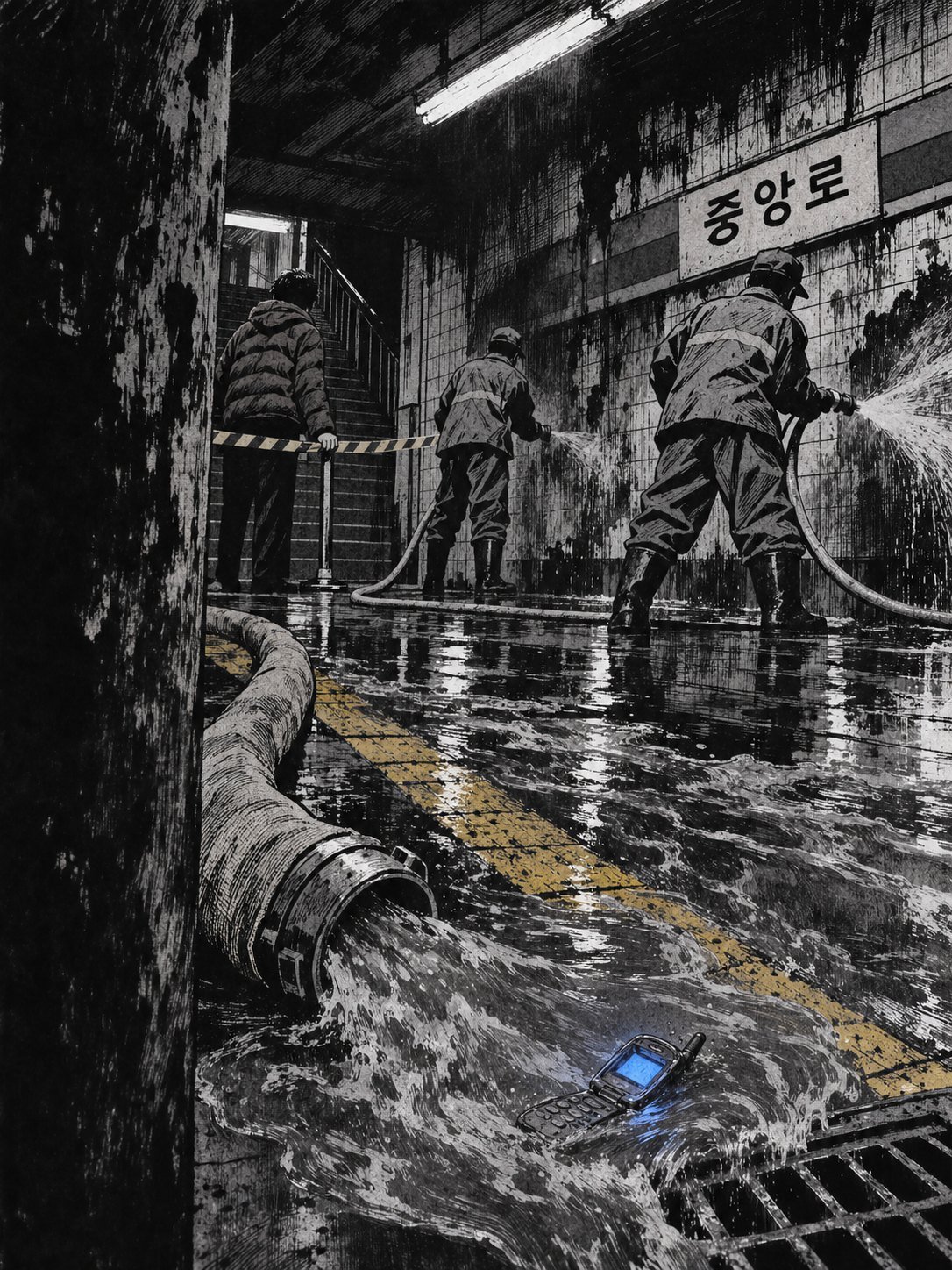
The station did not stay a scene for long. Partial service on the line resumed within a day, and families said the station was washed down with water from the day after.
Debris was bagged and taken to the yard of the Ansim depot. On about 25 February, investigators and families opened around 300 bags and found belongings: hats, mobile phones, clothes, spectacle frames.
“This shows that authorities hurried to clean up the subway station, paying little attention to our agony,” the families said, according to AP. The subway corporation’s president was charged with destroying evidence and was acquitted. (MAEIL-COL-2014) (SEOUL-0226) (AP-0226) (PRES-2016)
The missing lines
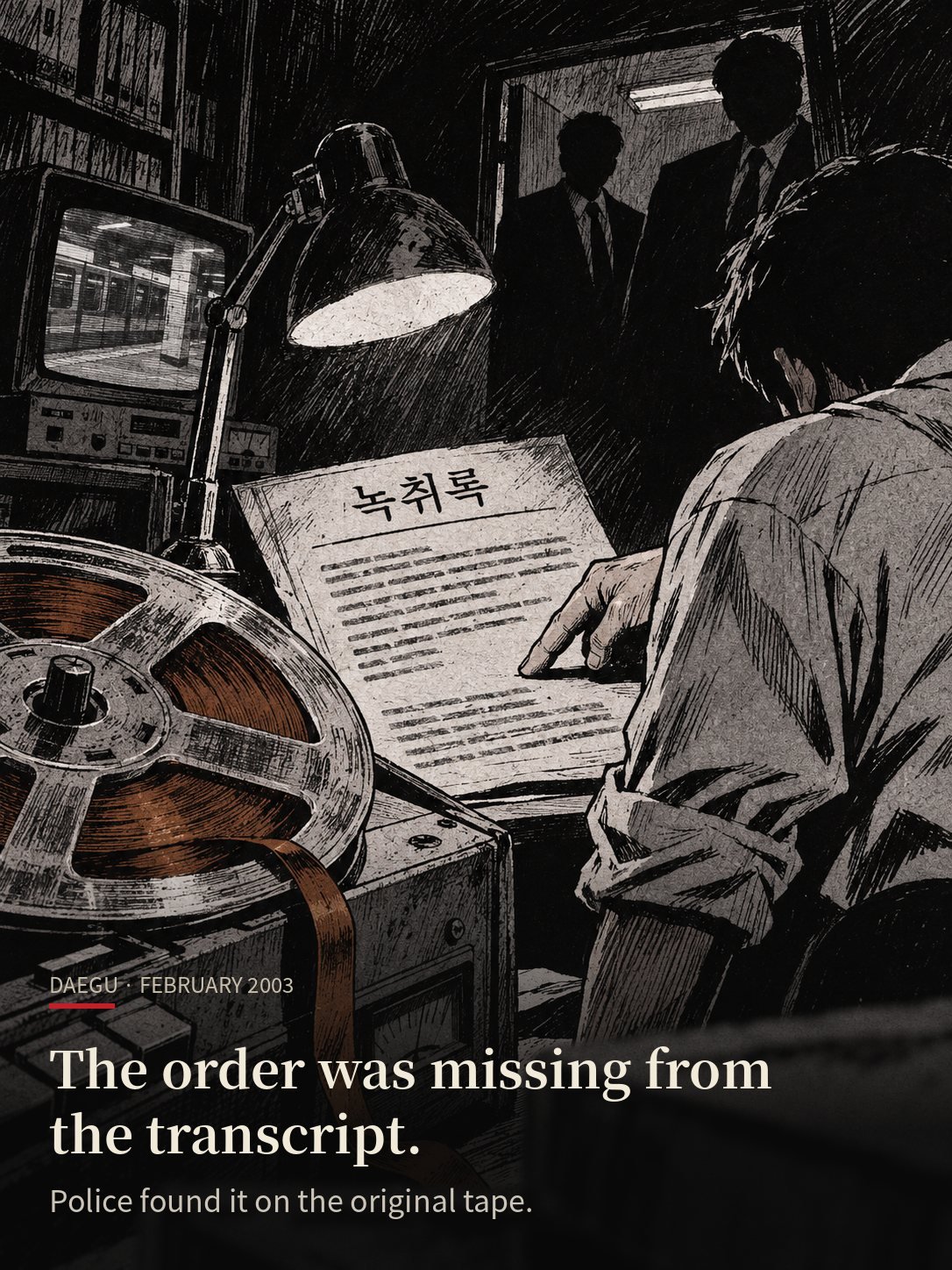
Then police found something else.
The transcript of radio calls that the subway corporation handed over was missing the exchange in which the controller told the driver to kill the train and go. Police found it on the original magnetic tape, Pressian reported.
Police said two audit staff had cut it out as a “sensitive” passage. (PRES-2003)
Life, and five years
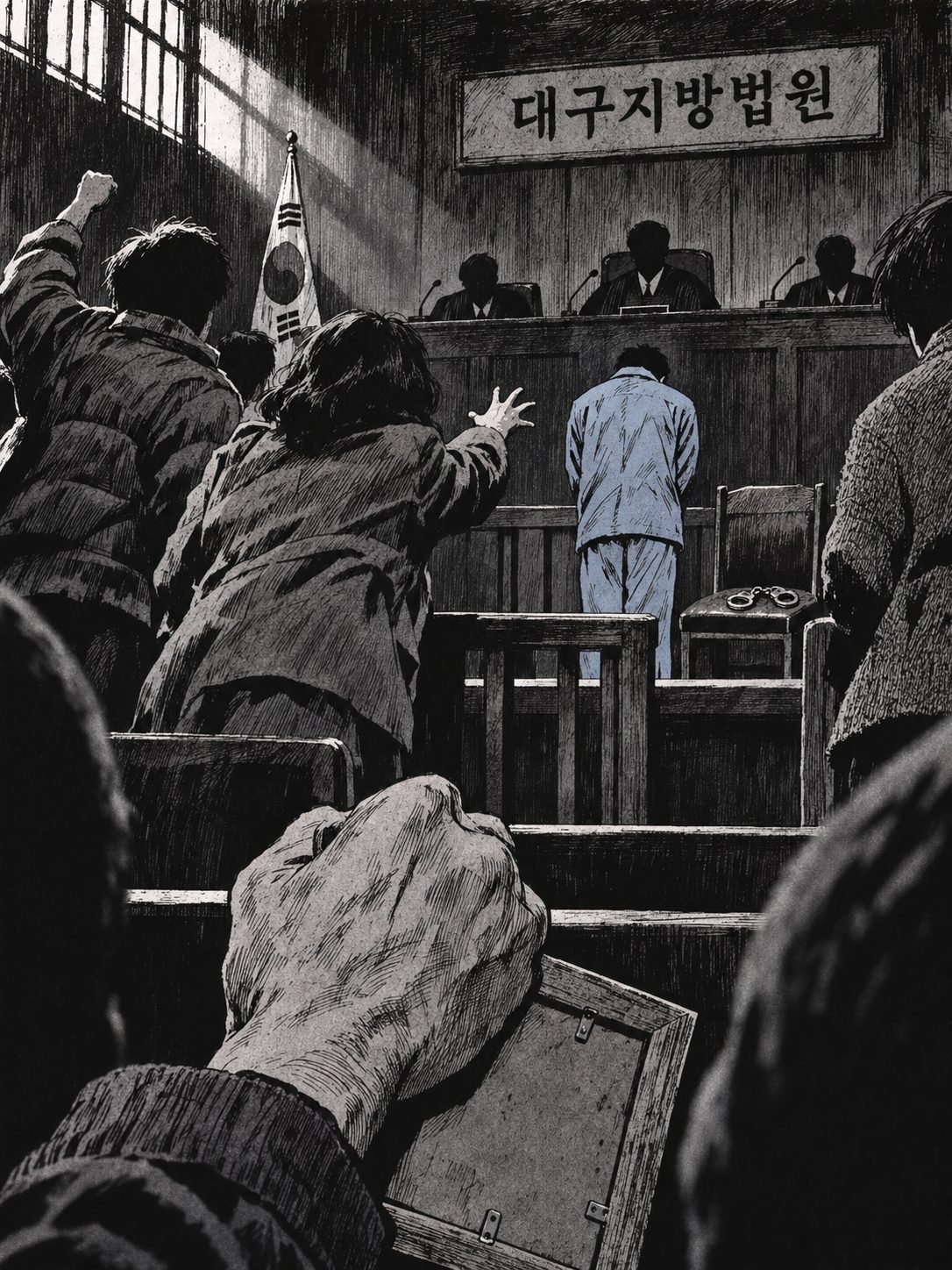
On 6 August 2003, the Daegu District Court sentenced Kim Dae-han to life in prison. Prosecutors had asked for death. Relatives in court shouted for execution.
The two drivers and six other subway employees were sentenced to prison terms of up to five years, the legal maximum for negligent manslaughter.
Kim Dae-han died in prison in August 2004. (AJ-2003) (VOA-2003) (AP-0304) (KT-2016)
Two burnt cars
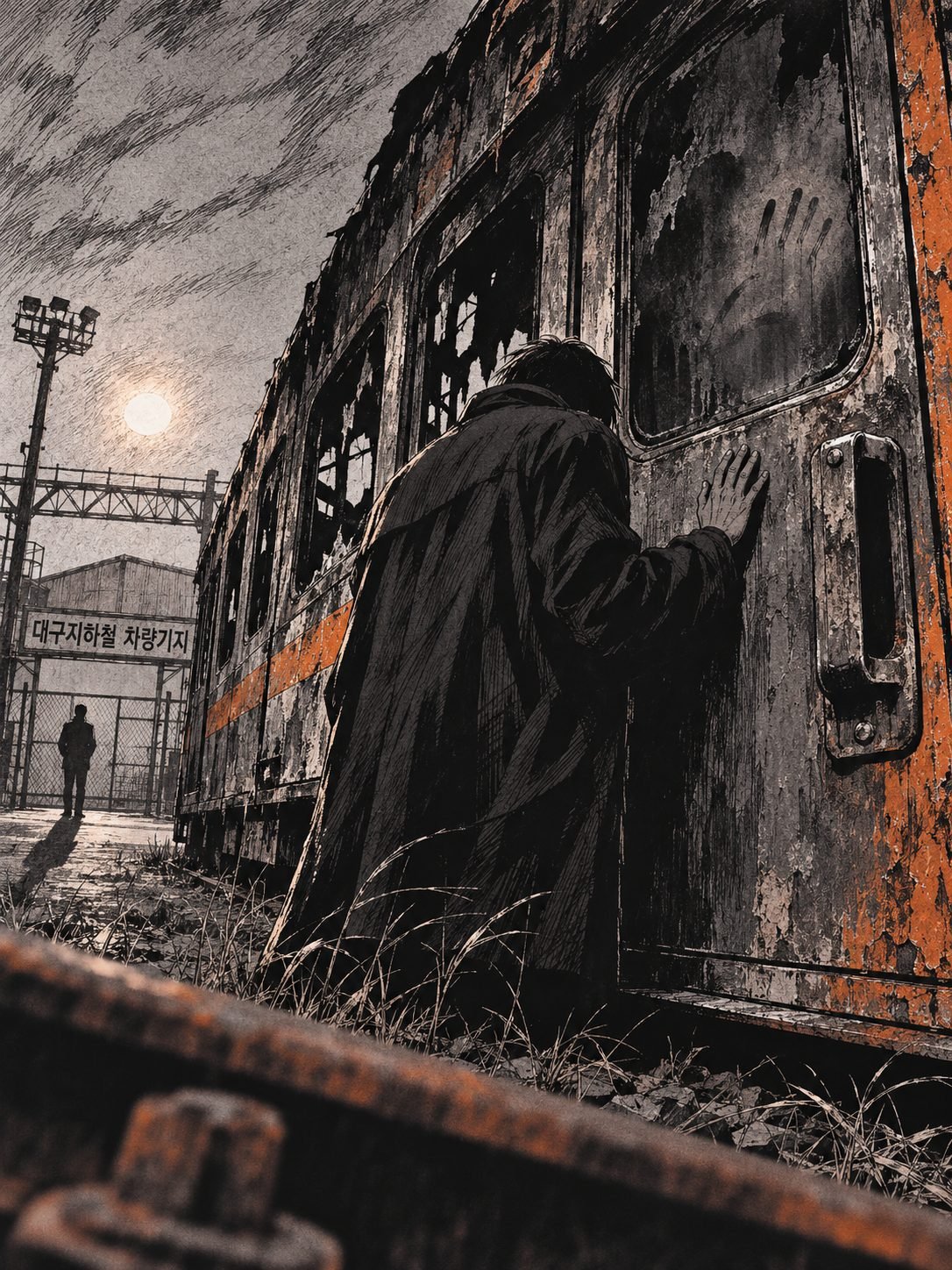
Of the twelve burnt cars, one went on display. Nine were sold.
Two were moved to the Ansim depot in January 2004, and have been left there largely as they were, according to Maeil Shinmun. (MAEIL-2026)
A memorial that cannot say its name
Afterwards, subway cars across South Korea were refitted with non-combustible seats and panels, and door-release signs were made bigger and brighter.
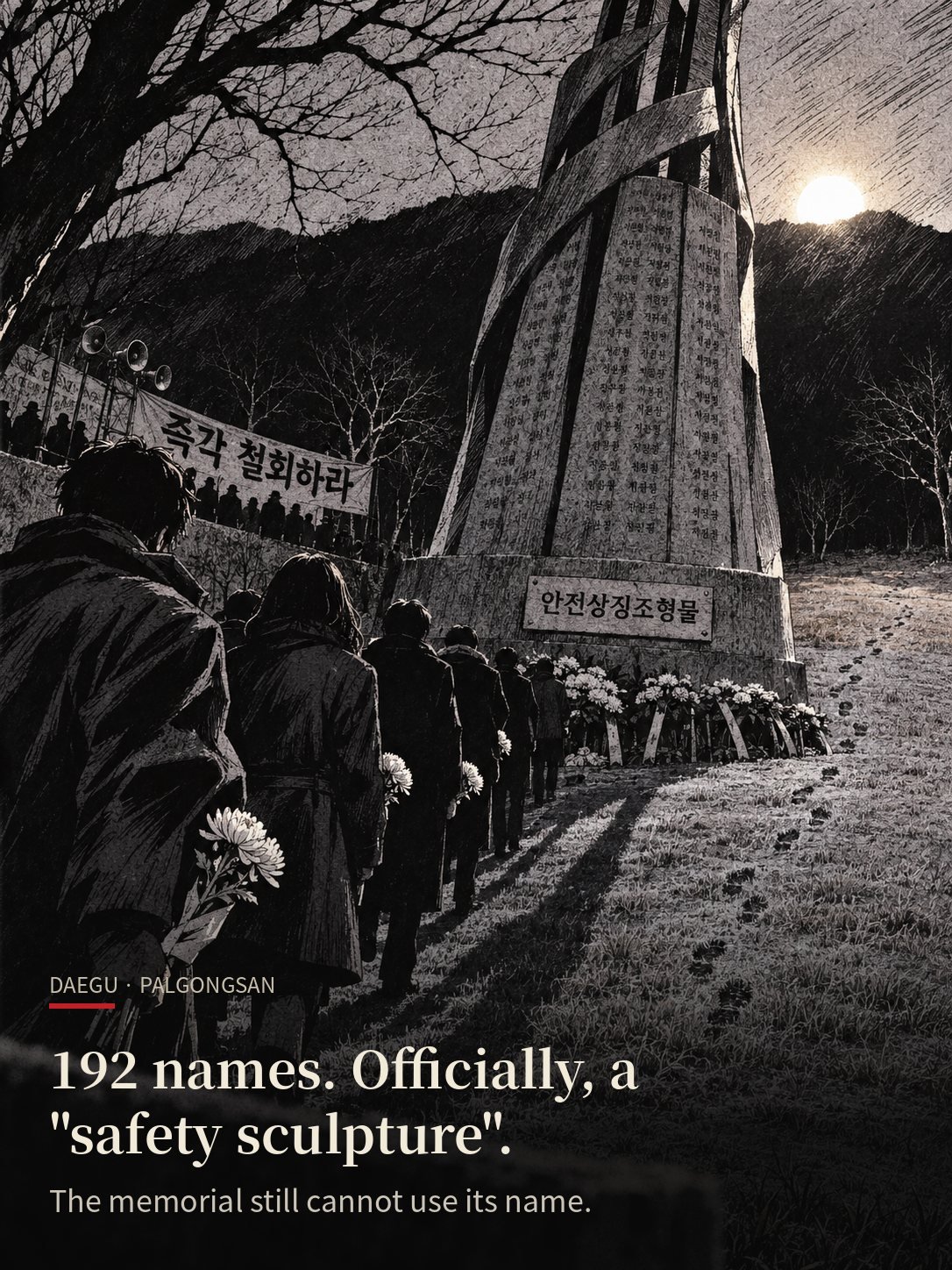
In 2008 the city opened the Daegu Citizens’ Safety Theme Park in the mountains. Because local merchants objected, it carries no memorial name. The tower bearing all 192 names is officially a “safety symbol sculpture”.
On the 20th anniversary, in 2023, merchants held a counter-rally about 30 metres from the ceremony, with banners reading “Withdraw the 2.18 memorial event from the theme park now.” “We’re not disrupting the memorial, we’re protesting the city,” one merchant said.
In February 2026, a proposal to add “2·18 Memorial Park” to the park’s name was put off again.
Then, at the 23rd anniversary on 18 February 2026, the families and the merchants signed a declaration of reconciliation. The merchants agreed to help the push for the memorial name and a tree burial site, the families agreed to back projects for local trade, and both sides blamed the city’s handling of the dispute, Yeongnam Ilbo reported. Every year, at 9:53, the families stop. (MT-2026) (KH-2023) (HANI-2023) (MAEIL-2023) (DGMBC-2024) (MAEIL-2026) (YN-2026)
The evidence file
The objects, recordings and places this case rests on, and where they are now.
Exhibits
- Exhibit A — The master controller key of train 1080. The 1080 driver pulled the key and walked away with it; without it almost nothing on the train worked, including the doors. He told police he knew pulling it closed the doors and did it “out of habit”. How much it mattered is disputed: power had already failed, and the control centre had told him to go. Reports put its removal at about 10:00 or 10:02 a.m., or after an order at about 10:10. (Seoul Shinmun; The Korea Herald)
- Exhibit B — The original tape of the control-centre radio. On the original magnetic tape, police found an exchange from 10:07 to 10:11 in which a controller said “차 죽이고(전원키 뽑고) 가야돼” (“you’ve got to kill the train [pull the power key] and go”). (Pressian)
- Exhibit C — The transcript handed to police. The subway corporation’s version of the radio log was missing that passage. Police said two audit staff had cut it out as “sensitive”. (Pressian)
- Exhibit D — The “drive carefully” instruction to train 1080. In AP’s translation: “When you enter the Joongang Station, drive carefully. There is a fire.” In Korean: “조심히 운전해 들어가시기 바란다. 지금 화재가 발생했다”. There was no order to stop or to pass through. Summary based on AP and Money Today. (Southeast Missourian (AP); Money Today)
- Exhibit E — About 300 debris bags at the Ansim depot. Debris from the station was bagged and carted to the depot yard before the search was finished. On about 25 Feb 2003, forensic teams and families opened about 300 bags and found about 100 belongings: hats, mobile phones, clothes and spectacle frames. (Seoul Shinmun; Firehouse (AP))
- Exhibit F — The burnt cars. Of the 12 burnt cars, one is on display at the Daegu Citizens’ Safety Theme Park, nine were sold, and two have stood at the Ansim depot in Dong-gu, Daegu, since January 2004, largely as they were. (Maeil Shinmun)
- Exhibit G — The Jungangno Station memorial space (2015). The burnt wall is preserved inside the station. It shows the victims’ names on an orange wall, burnt door handles, and soot-covered writing left by people trapped there. (The Korea Times)
- Exhibit H — The “safety symbol sculpture”. A tower bearing all 192 names at the Daegu Citizens’ Safety Theme Park, which opened in December 2008. It is officially not called a memorial because of objections from local merchants, and it was paid for with 815 million won of public donations. Standing in Yongsu-dong, Dong-gu, Daegu. (The Hankyoreh; Maeil Shinmun)
Quick answers: the Daegu subway fire
What happened in the Daegu subway fire?
On the morning of 18 February 2003, a man set fire to a bottle of gasoline on train 1079 as it pulled into Jungangno station in Daegu, South Korea. A second train, 1080, pulled in minutes later, stopped beside the burning train and lost power, and both trains burned.
How many people died in the Daegu subway fire?
192 people died and 151 were injured, though some sources give 148 injured. About 640 people had been on the two trains, and a handful of the dead were never identified.
Who started the Daegu subway fire?
Kim Dae-han, a 56-year-old former taxi driver who had been ill since a stroke and was depressed. At the time no rule banned carrying flammable liquid onto a subway train.
Why did so many die on train 1080?
Train 1080 was told by the control centre only to “drive carefully” into the station, and once there it lost power and could not leave. Smoke filled the dark cars, the manual door release was deep under the seats where few knew it was, and the driver later pulled the master controller key and left, though how much the key itself mattered is still argued.
What happened to Kim Dae-han and the subway staff?
The Daegu District Court sentenced Kim Dae-han to life in prison in August 2003, and he died in prison in August 2004. The two train drivers and six other subway employees received prison terms of up to five years, the legal maximum for negligent manslaughter.
What changed after the Daegu subway fire?
Subway cars across South Korea were refitted with non-combustible seats and panels, and door-release signs were made bigger and brighter. Of the twelve burnt cars, two have been kept largely as they were at the Ansim depot.
Is there a memorial for the Daegu subway fire victims?
Yes, though it cannot officially use the name: the Daegu Citizens’ Safety Theme Park opened in 2008, and its tower bearing all 192 names is officially a “safety symbol sculpture” because local merchants objected. In February 2026 the families and merchants signed a declaration of reconciliation, and every year at 9:53 the families stop.
Case notes: two trains, one station, closed doors
On 18 February 2003 a man set fire to a train at Jungangno Station in Daegu. A second train drove into the smoke, lost power and stayed shut. 192 people died (HONG) (MT-2026) (KT-2016).
Where the case stands (as of November 2026)
Closed in court. Kim Dae-han was sentenced to life in 2003 and died in prison in 2004. Subway staff were convicted of negligence (AJ-2003) (KT-2016).
Still open in Daegu. The memorial’s name has not been settled, though in 2026 the families and local merchants agreed to work together (MAEIL-2026) (YN-2026).
Most of the 192 dead were on the second train, which pulled in after the fire had started.
PROVENEXAMINED
Timeline
| When | What happened |
|---|---|
| 18 Feb 2003, ~9:30 a.m. | Kim Dae-han boards train 1079 at Songhyeon with gasoline (KH-2023) (MBN-2023) |
| ~9:53 | Fire set as 1079 stops at Jungangno; a fire alarm shows in the control centre (HONG) (MT-2026) |
| 9:55-9:56 | Train 1080 enters, told to drive carefully; power fails beside the burning train (AP-0221b) (MT-2026) (SEOUL-0222) |
| Around 10:00 | The 1080 driver pulls the master controller key and leaves (HONG) (SEOUL-0222) (PRES-2003) |
| 13:38 | Fire out (HONG) |
| ~25 Feb 2003 | Families and investigators open about 300 debris bags at the Ansim depot (SEOUL-0226) (AP-0226) |
| 25 Feb 2003 | Police say a passage was cut from the radio transcript (PRES-2003) |
| 6 Aug 2003 | Kim Dae-han sentenced to life; staff to up to five years (AJ-2003) (VOA-2003) |
| 31 Aug 2004 | Kim Dae-han dies in prison (MBN-2023) (KT-2016) |
| Dec 2008 | Daegu Citizens’ Safety Theme Park opens, with no memorial name (HANI-2023) (MAEIL-2026) |
| 18 Feb 2023 | 20th anniversary; merchants hold a counter-rally nearby (MAEIL-2023) |
| 3 Feb 2026 | Proposal to add “2·18 Memorial Park” to the name deferred (MAEIL-2026) |
Evidence locker
Primary records and the closest copies we could trace. No photographs are shown for this case; illustrations elsewhere in this file are AI-generated.
Access: Direct original (the conference PDF).
Supports: The timing of the fire and how blind the escape was.
Limits: The paper gives two different casualty totals, so we use its times with “about”.
Access: Via press (a wire report quoting the transcript).
Supports: That the second train was sent into the station after the fire had been reported.
Limits: An English rendering in a wire report; the subway corporation’s own version of the radio log was later found to have had a passage cut out.
Access: Via press.
Supports: Why the doors of 1080 stayed shut.
Limits: How much the key mattered is disputed: power had already failed, the control centre had told the crewman to go, and accounts of when he pulled it differ.
Where the records disagree
| Detail | What sources say |
|---|---|
| Train directions | 1079 toward Ansim and 1080 toward Daegok in a Korean study and press; one English encyclopedia has 1079 bound for Daegok (HONG) (MAEIL-COL-2014) (WIKI) |
| The container | A shampoo bottle of about 2 litres of gasoline, a milk carton, or a plastic container, depending on the source (KH-2023) (MT-2026) (REUT-0220) |
| When the key came out | About 10:00 or 10:02, or after an order given around 10:07-10:11 (HONG) (SEOUL-0222) (PRES-2003) (MT-2026) |
| Deaths on train 1080 | 142 in the train in Hong’s study; an early count of 79 is still repeated online (HONG) (MT-2026) (AP-0221a) |
| Injured | 151 in most reports, 148 in others (KT-2016) (HONG) |
| Staff sentences on appeal | First-instance sentences of up to five years are well reported; we could not confirm the final appeal outcome (AJ-2003) (MBN-2023) |
What we still don’t know
- Whether the park will finally carry the memorial name.
- Whether more of train 1080’s passengers would have got out if the doors had opened earlier.
- The final appeal sentences of the subway staff.
- The identities of the handful of victims never identified.
What happened after
Non-combustible interiors became mandatory and flammable cars were phased out; door-release levers were made larger and brighter (MT-2026) (KH-2023).
Editor’s note
The line that stays with me is the driver asking, “What should I do?” At first the closed doors frightened me most. After reading it all, it was that question that stayed longer. The driver was waiting for an answer from the control centre, and the passengers were waiting for the doors to open. The same few minutes passed so differently in those two places.
I think the driver had a duty to get his passengers out. I can understand him asking the control centre what to do in the smoke. But with passengers still on board, he bears responsibility for not doing enough to help them escape. The court found him negligent, and it convicted the control staff too. If I were writing this scene, I would want to follow what was decided in the control room before he left, as closely as the moment he walked away.
It began as arson, but I see it as a disaster whose toll could have been far smaller. The first thing that comes to mind is the chance to hold train 1080 outside the station. Before a second train entered a station already on fire, its passengers had not yet been put in the position of having to escape through smoke.
Thinking of the families who took those calls, what hurts most is how little anyone could do in that moment. When your child calls and says the door won’t open, you want to find some way out and tell them. But from the other end of a phone, you cannot see what is behind that door or where they should go. I don’t think I would even dare to imagine what those parents felt.
A memorial should let someone who comes for the first time understand who is being remembered, and why. If the families have to come back every year and explain again why this place is a memorial, that is a hardship in itself. If I write about the conflict at the 20th anniversary, I also want to write that at the 23rd, in 2026, the families and local merchants agreed to work together.
Next time you ride the subway, take a moment to find the emergency door release sign and the intercom in your car. If you see smoke or fire, use the intercom to tell the crew and follow their instructions. If the train has stopped at a platform and the doors will not open in an emergency, follow the manual release instructions in that car. If it has stopped in a tunnel, do not open the doors yourself or step down onto the tracks; wait for the crew’s evacuation instructions.
— Strange World Files
Case file summary
- What: An arson fire on a subway train that spread to a second train
- Where: Jungangno Station, Daegu Line 1, South Korea
- When: Tuesday 18 February 2003, about 9:53 a.m.
- Who: 192 dead, 151 injured
- Status: Arsonist sentenced to life; staff convicted of negligence; memorial name still disputed
Illustrations are AI-generated artistic interpretations, not photos. No real person is depicted with a recognizable face. Read how we research and illustrate these files.
Sources
- Won Hwa Hong (Kyungpook National University), “The progress and controlling Situation of Daegu Subway Fire Disaster”, IAFSS *Asia-Oceania Symposium on Fire Science and Technology* 6 proceedings (year not printed)
- Yoon Min-sik, “[Korean History] In 2003’s Daegu, disaster plays out underground”, *The Korea Herald*, 11 October 2023 (updated 16 April 2025)
- Kwon Ji-youn, “Victims’ families remember deadly Daegu subway fire”, *The Korea Times*, 18 February 2016
- Kim Tae-gyu, “Are Korea subways safe from disaster now?”, *The Korea Times*, 4 March 2013
- Cho Jung-woo, “Remembering victims” (photo, News1), *Korea JoongAng Daily*, 16 February 2023
- AP, “S. Korean Fire Probe Focuses on Errors”, 21 February 2003 (firehouse.com)
- Soo-Jeong Lee, AP, “Human error likely boosted death toll in subway fire”, 21 February 2003 (*Southeast Missourian*)
- AP, “S. Korea Subway Fire Death Toll Hits 189”, 26 February 2003 (firehouse.com)
- AP, “Police Arrest S. Korean Train Driver in Connection with Subway Fire”, 4 March 2003 (firehouse.com)
- Reuters, “Relatives wait as train fire’s death toll mounts”, *Taipei Times*, 20 February 2003, p. 1
- NPR, “Suspect held in deadly S. Korean arson blaze”, 18 February 2003 (summary only)
- Al Jazeera, “Subway arsonist gets life sentence”, 6 August 2003
- VOA, sentencing report (URL dated 6 August 2003; page shows 2009)
- 서울신문, 「대구지하철 참사/기관사 門닫은채 피신」, 2003년 2월 22일
- 서울신문, 「대구지하철 대참사/ 쓰레기더미서 유해 4구 발견」, 2003년 2월 26일
- 경향신문, 「방화 피의자·기관사 등 10명 구속영장 신청」, 2003년 2월 24일
- 임경구, 「대구지하철 공사, 녹음테이프 ‘조작’」, 프레시안, 2003년 2월 25일
- 허환주, 「”세월호 농성장서 치킨 먹는 일베, 불쌍하다”」 (희생자대책위 인터뷰), 프레시안, 2016년 1월 6일
- 이재윤, 「”문이 안 열려” 암흑 속 절규…192명 목숨 앗아간 지하철 참사[뉴스속오늘]」, 머니투데이, 2026년 2월 18일
- 최유나, 「휘발유 들고 지하철로…20년 전 비극 ‘대구지하철 참사’」, MBN (Daum), 2023년 2월 18일
- 김규현, 「20년째 ‘무명’ 묘역서 참배하는 대구지하철 유족들, 왜?」, 한겨레 (Daum), 2023년 2월 19일
- 이태우, 「[뉴스비하인드] 대구 지하철 참사 유가족 “대구시, 추모사업 약속 지켜야”…」, 대구MBC, 2024년 2월 19일
- 임재환, 「[지하철 참사 23주기, 끝나지 않은 이야기] 표류하는 대구지하철 참사 추모 사업」, 매일신문, 2026년 2월 12일
- 정두나, 「[취재현장-정두나] 22년, 앞으로 또 몇 년」, 매일신문, 2025년 2월 23일
- 박성현, 「”대구시가 책임져라” 지하철 참사 20주기…인근 상인들도 맞불 집회」, 매일신문, 2023년 2월 18일
- 김태일, 「[수요일 아침] 대구지하철 화재참사 후 20년」, 매일신문 (column), 2023년 1월 24일
- 현종문, 「[3040 광장] 대구지하철 참사 11주기와 교훈」, 매일신문 (column), 2014년 2월 4일
- 장성현, 「”연기만 봐도 오싹”…참사 3주기 김종신씨」, 매일신문, 2006년 2월 17일
- 문현구, 「끝나지 않은 참사의 아픔-(상)대구지하철 화재 1주기」, 매일신문, 2004년 2월 10일
- 이창훈, 「대구지하철 희생자대책위원장 항소심 ‘무죄’」, 경북매일, 2013년 2월 8일
- 김연지, 「[세월호 참사]대구지하철 유족 “11년 전과 똑같다”」, CBS노컷뉴스, 2014년 4월 27일
- 송보현, 「[좋은·나쁜·이상한 늬우스] 대구 지하철 화재 참사 21주기」, YTN, 2024년 2월 17일
- 이예빈, 「[2월18일!] 출근길 일어난 최악의 묻지마 테러… 단 10분이었다」, 시대, 2024년 2월 18일
- 한국경제 생글생글, 「되풀이 막기위해 기억돼야 할 대구 지하철 참사」 (student column), 2010년 2월 12일
- 조윤화, 「[Y르포]대구 지하철 참사 23주기 추모식…갈등관계 유족-팔공산 상인, ‘화합과 치유의 시간’으로 전환」, 영남일보, 2026년 2월 18일
- Wikipedia, “Daegu subway fire”