Percy Fawcett Walked Into the Amazon to Find the Lost City of Z. He Said “We Shall Return.” No One Did
🎧 Narrated Mystery: press play and hear the whole case read aloud, like an audiobook (about 25 minutes).
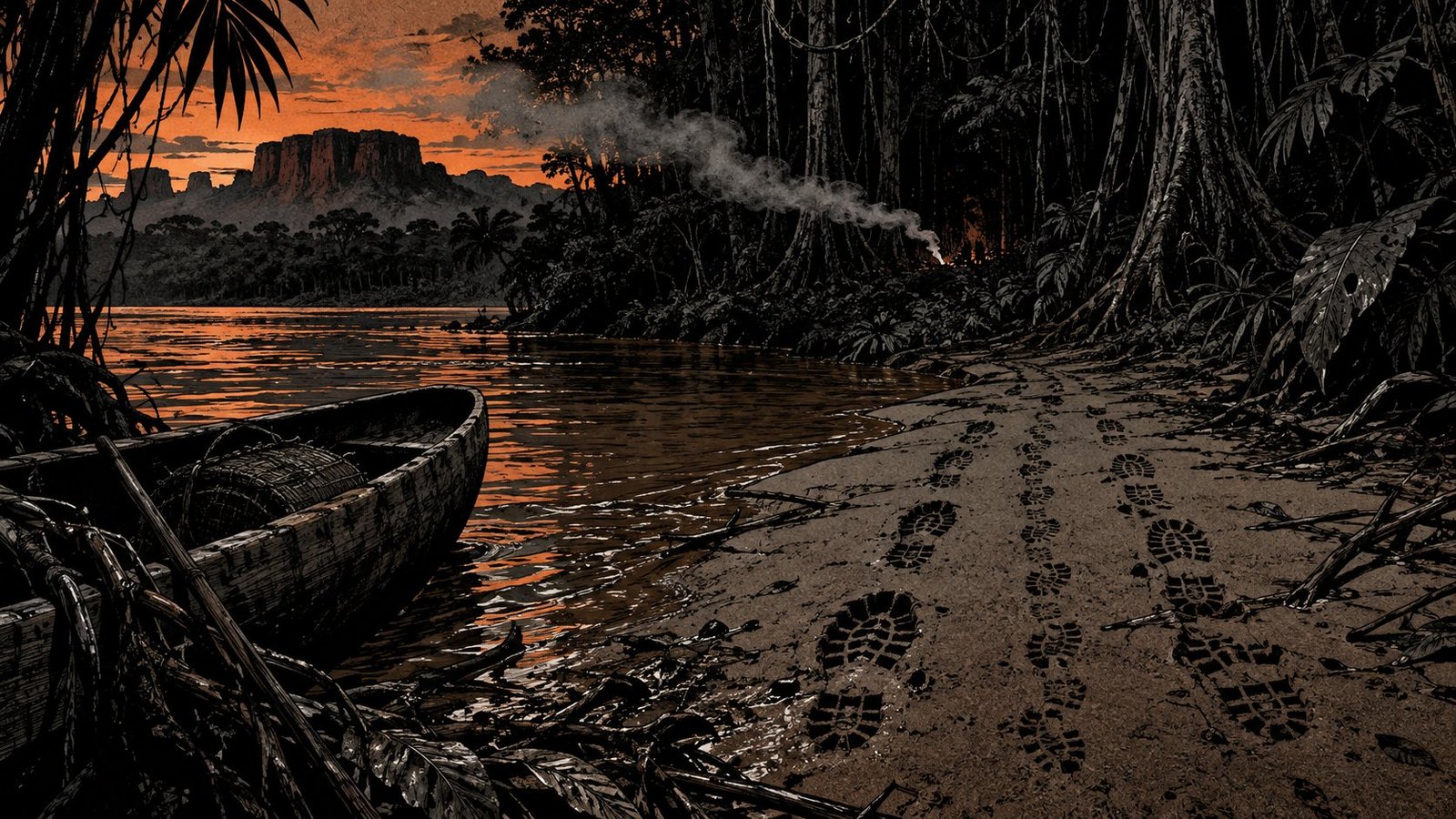
Percy Fawcett’s last river crossing: three hats in a canoe at the edge of the Amazon

“We shall return,” Percy Fawcett told reporters before he sailed for Brazil. The last trace anyone reported was smoke.
It starts with a river crossing in the Amazon, deep in the Brazilian state of Mato Grosso.
According to Kalapalo villagers of the Upper Xingu, three white men were ferried across the Kuluene River.
The villagers described this years later, in 1931, to a visiting American ethnologist named Vincenzo Petrullo.
By then, the three travellers had been missing for six years.
Their account has long been read as one of the last sightings of Fawcett’s party: the colonel, his son Jack and Jack’s best friend, Raleigh Rimell.
It is not a diary entry or a photograph. It is a memory, passed on by the people who lived there.
And it ends on the far bank of the river, where the forest begins.
What happened after that crossing is the question this whole story turns on. (PENN-EXPEDITION-2017) (WIKI-FAWCETT) (HISTORY-COM)
Five days of campfire smoke over the Xingu, and then nothing
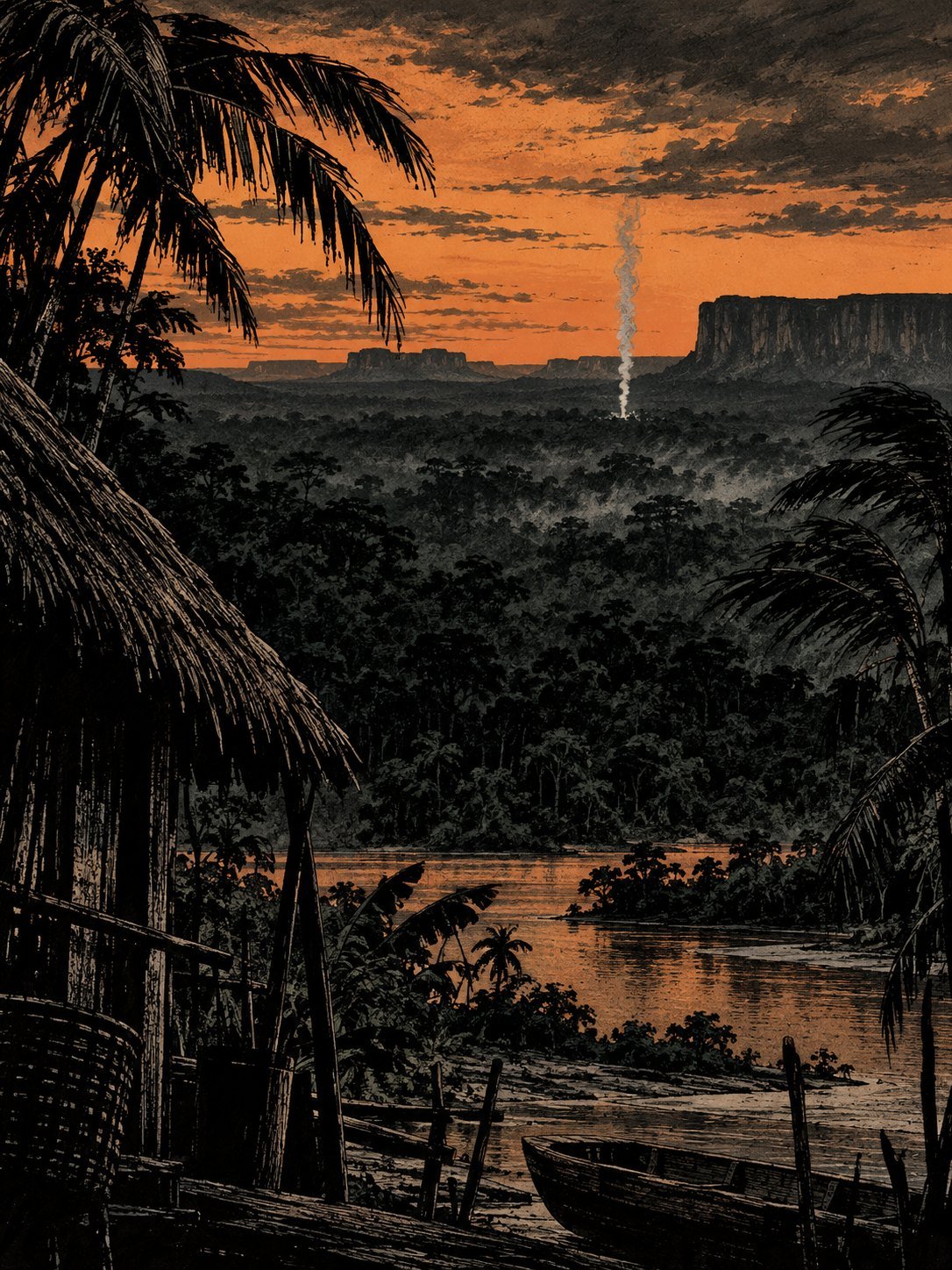
Once the men were across, the villagers went on watching the trees.
For five days, they said, they “saw the smoke of the travelers” rising from somewhere beyond the river.
Smoke meant a camp. A camp meant someone was still out there, still cooking, still moving on.
Then the smoke stopped.
No message came back. No one walked out of the forest. The sky over the canopy was simply empty.
That gap, between the last thread of smoke and the silence, is where Percy Fawcett vanishes from the record.
Everything after it is search parties, rumours, objects and bones.
Some searchers would come back with stories. Some would come back with nothing.
At least one, as we will see, would not come back at all.
But to understand why three men walked into that forest in the first place, we need to look at the letter Fawcett sent out just before. (PENN-EXPEDITION-2017) (WIKI-FAWCETT)
“You need have no fear of any failure”: Percy Fawcett’s last letter home
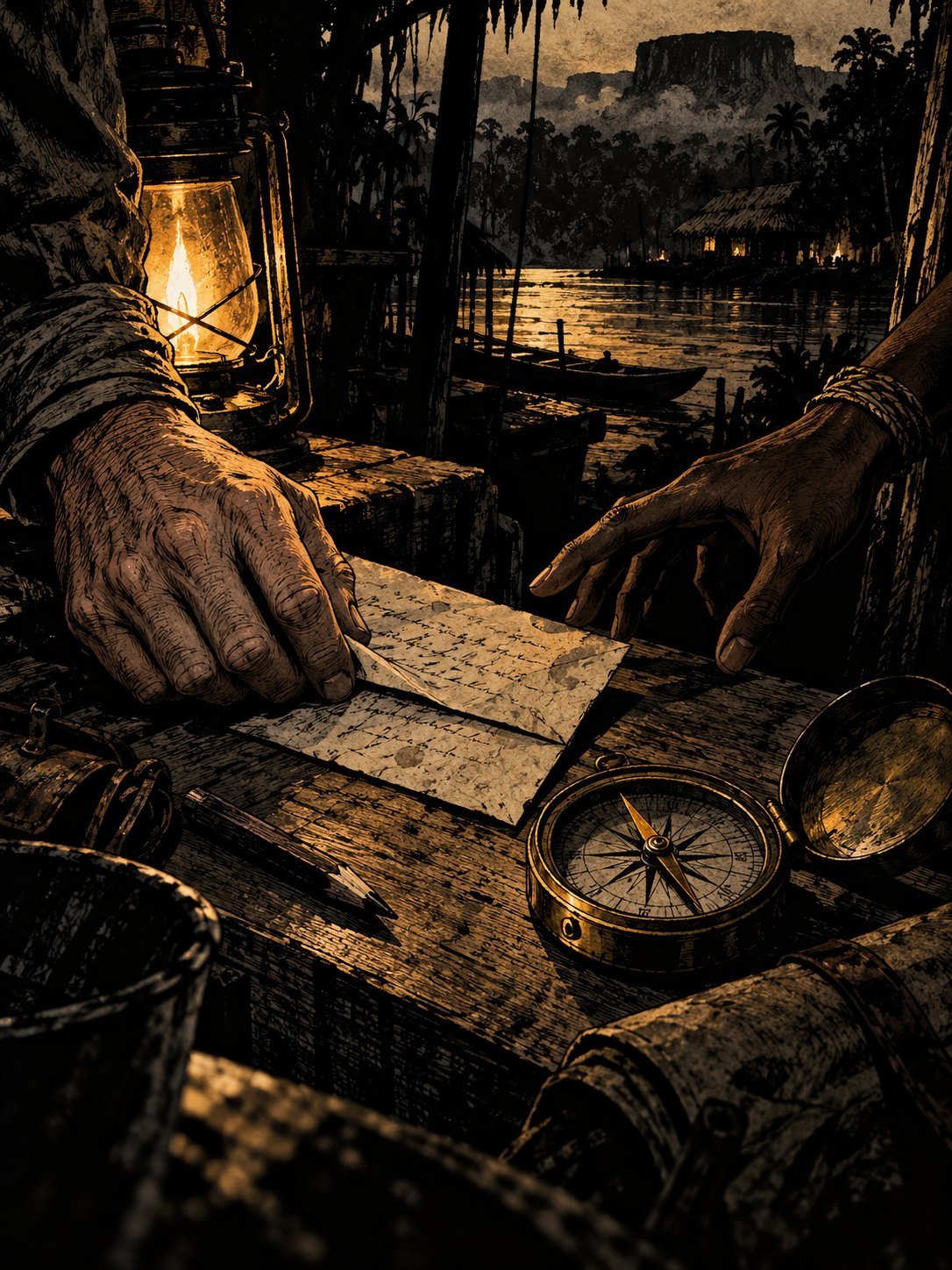
On 29 May 1925, Fawcett wrote to his wife, Nina. A runner carried the letter out of the forest.
It was calm. Confident, even.
“Jack is well and fit and getting stronger every day,” he wrote.
“We hope to get through this region in a few days.”
And then the line that would follow him for a century: “You need have no fear of any failure.”
He was 57. Jack was 21. Raleigh Rimell, like Jack, had never been on an expedition before.
Fawcett had also left instructions that no rescue party should be sent if they failed to return.
After that letter, the three men walked on into the jungle.
None of them ever came out.
So who was the man who could write “no fear of any failure” on the edge of the unknown? And what was he looking for? (HISTORY-COM) (WIKI-FAWCETT) (BOOKBROWSE-GRANN)
Percy Fawcett, the artillery officer who mapped the Amazon’s borders

Percy Harrison Fawcett was born in Torquay, Devon, in August 1867.
At 19 he was commissioned into the Royal Artillery and posted to Ceylon, now Sri Lanka. He later served in Hong Kong and Malta.
He became a Fellow of the Royal Geographical Society in 1901.
In 1906 he went to South America as chief Bolivian commissioner, surveying wild rivers along the border with Brazil.
It was slow, exact work. His astronomical observations from those boundary surveys still sit in the RGS archive.
He made seven expeditions into South America between 1906 and 1924.
On one, he looked up at a flat-topped range: “Above us rose the Ricardo Franco hills, flat topped and mysterious.”
His friend Arthur Conan Doyle drew on Fawcett’s travels for The Lost World, published in 1912.
A novel about a hidden plateau full of impossible things. Fawcett would spend the rest of his life chasing something just as hidden. (RGS-AIM25) (NATGEO-2024) (LINDAHALL)
The 62-foot anaconda: the Amazon claim that made scientists laugh
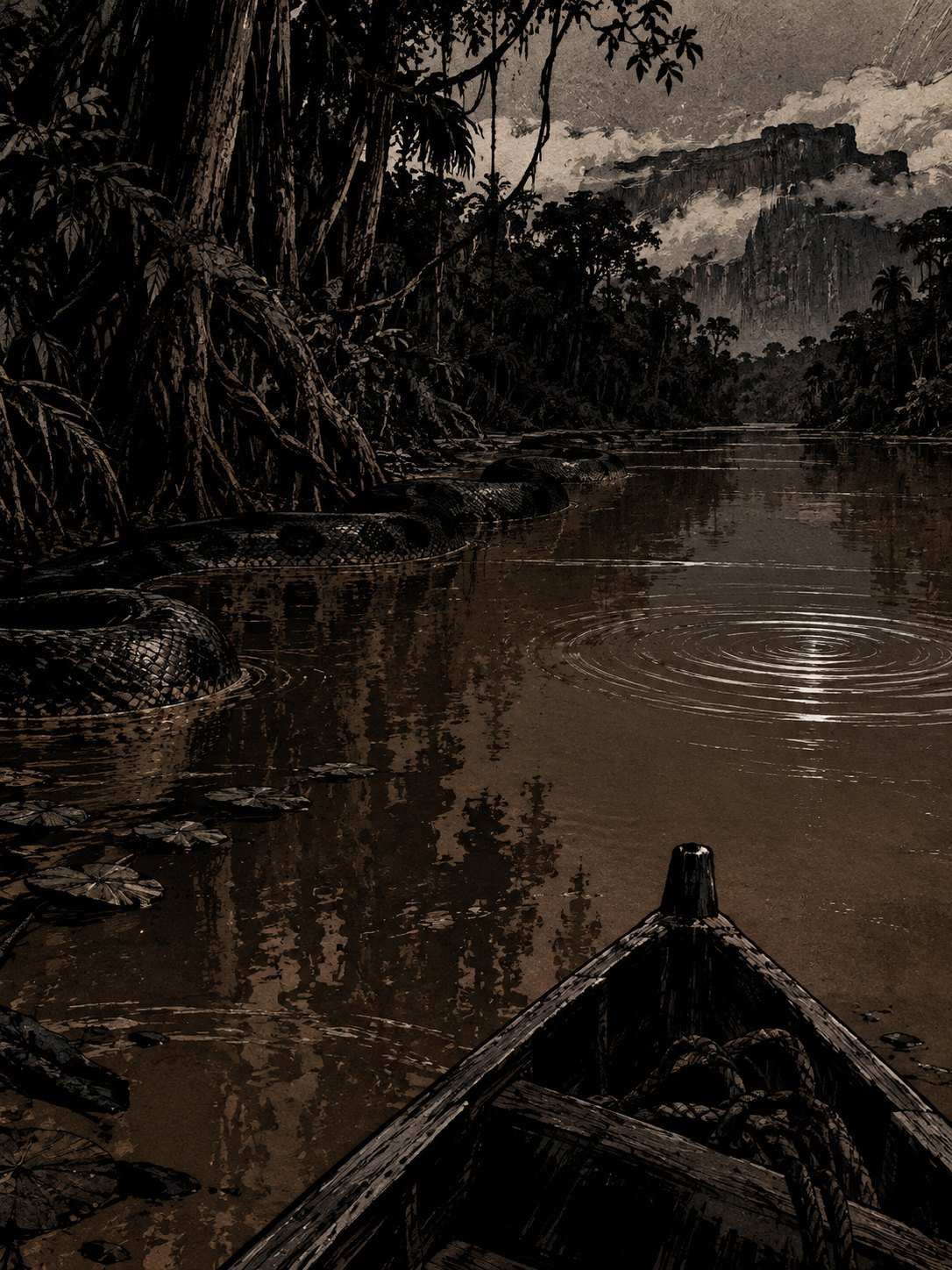
Fawcett’s reports were not always about angles and coordinates.
In 1907, he claimed he had shot a giant anaconda 19 metres, or 62 feet, long.
Scientists ridiculed the claim.
The story has never been confirmed. It rests on his own claim.
That tension would follow him for the rest of his career.
On one side was the careful surveyor, filling notebooks with star sightings so the borders of Bolivia and Peru could be fixed on a map.
On the other was the storyteller who came home with tales the experts would not believe.
Both men lived inside the same explorer.
And as his surveying years went on, the storyteller began to hear about something much bigger than a snake.
Something that, if it existed, would rewrite the history of the Americas. (WIKI-FAWCETT) (RGS-AIM25)
Manuscript 512: the ruined city in an old Portuguese document
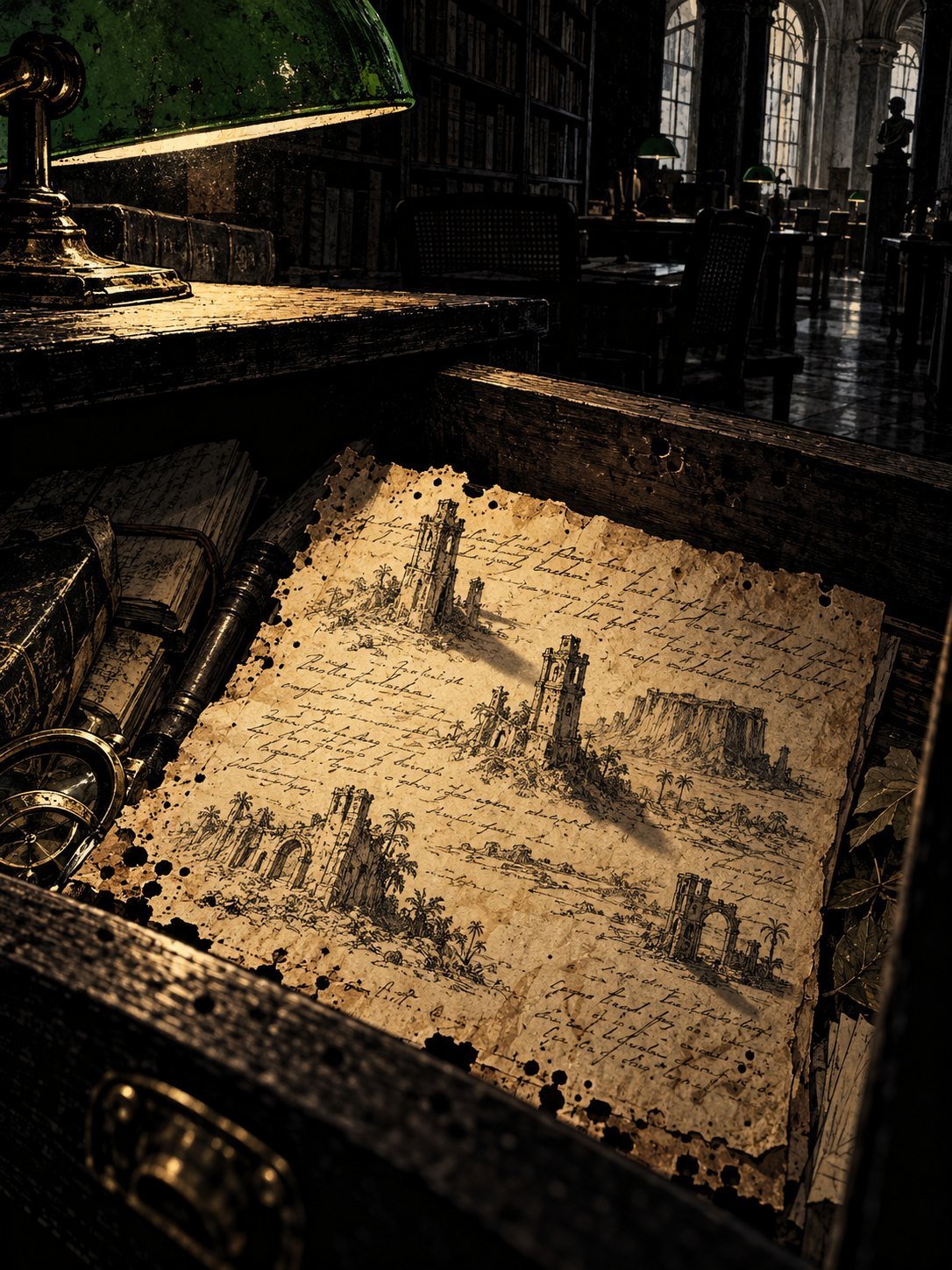
In Brazil’s National Library in Rio de Janeiro sits an 18th-century Portuguese document known as Manuscript 512.
It tells of adventurers who, in 1753, found a ruined city in the interior.
It describes strange stonework, including a feature “each corner of which is a spire, in the style of the Romans.”
For Fawcett, it was tantalising.
But it came with problems. Some scholars think the manuscript is a forgery.
And the city it describes lies in Brazil’s northeast, in Bahia, far from the Mato Grosso forests Fawcett would search.
So Manuscript 512 was never his main target. He treated it as a secondary goal, something to look for after his real prize.
That prize had a name of just one letter.
And the evidence for it was not on parchment. It was on the forest floor. (NATGEO-2024) (WIKI-LOSTCITYZ) (HISTORYHIT)
Pottery on the forest floor and the birth of the Lost City of Z
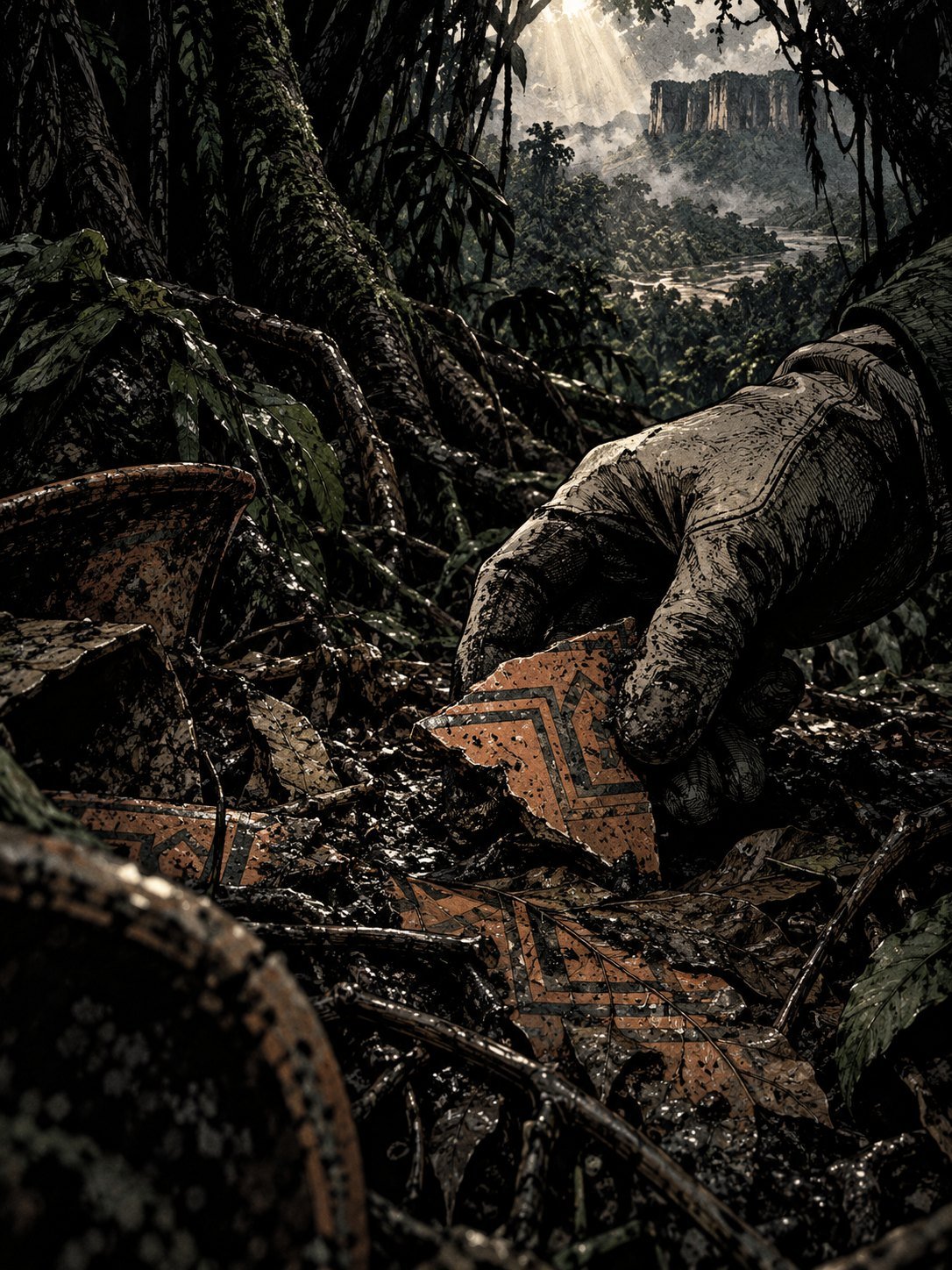
As he travelled, Fawcett kept noticing broken pottery lying among the leaves.
These shards were not rubbish. To him, they were signs that many people had once lived here.
By about 1913 or 1914, he had built a theory around them.
Somewhere in Mato Grosso, he believed, lay the ruins of a great lost city.
He called it simply “Z.”
Not a famous ruin from an old document, but a target he had worked out himself, from the ground up.
A 1927 newspaper report said he believed the city would prove that South America, not the Euphrates Valley, was the cradle of civilisation.
It was a huge claim, and he had only fragments of clay to back it.
Fawcett wanted to go and find out.
But first, a war got in the way. (WIKI-FAWCETT) (HISTORYHIT) (SHANNON-NEWS-1927)
Fever, failure and a vow: Percy Fawcett’s first hunt for Z in 1920

When the First World War broke out, Fawcett volunteered, though he was close to 50.
He commanded an artillery brigade in France, won the DSO in 1917 and was promoted to lieutenant-colonel in 1918.
Then he went straight back to Z.
His 1920 attempt went badly. He fell ill with fever. He had to shoot his pack animals and turn back.
In August 1921 he went into the interior alone.
He came back, in the words of author David Grann, “thirsty and hungry, delirious and deranged.”
Two failures. Most men would have stopped there.
Fawcett instead spent more than three years campaigning for money for one more attempt.
This time, he would not go alone. He would take the person he trusted most. (HISTORYHIT) (BU-BOSTONIA-2009) (HISTORY-COM)
“We shall return”: Percy Fawcett, Jack Fawcett and Raleigh Rimell set sail

In January 1925, Fawcett sailed from Hoboken, New Jersey, across the harbour from New York, aboard the liner S.S. Vauban.
He was 57.
Reporters gathered at the dock. He told them: “We shall return,” and “we shall bring back what we seek.”
His only companions were his eldest son, Jack, and Jack’s best friend, Raleigh Rimell. Neither young man had been on an expedition before.
Fawcett reportedly turned down T. E. Lawrence in favour of Jack.
The money came from the Royal Geographical Society, the American Geographical Society and the Museum of the American Indian.
His rival, the wealthy American doctor Alexander Hamilton Rice, was entering the Amazon with radio equipment.
Fawcett could not afford two-way radios. He would rely on runners and the telegraph.
Once he was deep in the forest, his only voice would be a letter in someone else’s hands. (BOOKBROWSE-GRANN) (HISTORY-COM)
Leaving Cuiabá: eight mules, two dogs and a promise to vanish
In April 1925, Fawcett wrote to Nina: “We shall disappear from civilization until next year.”
He meant it as a plan, not a warning.
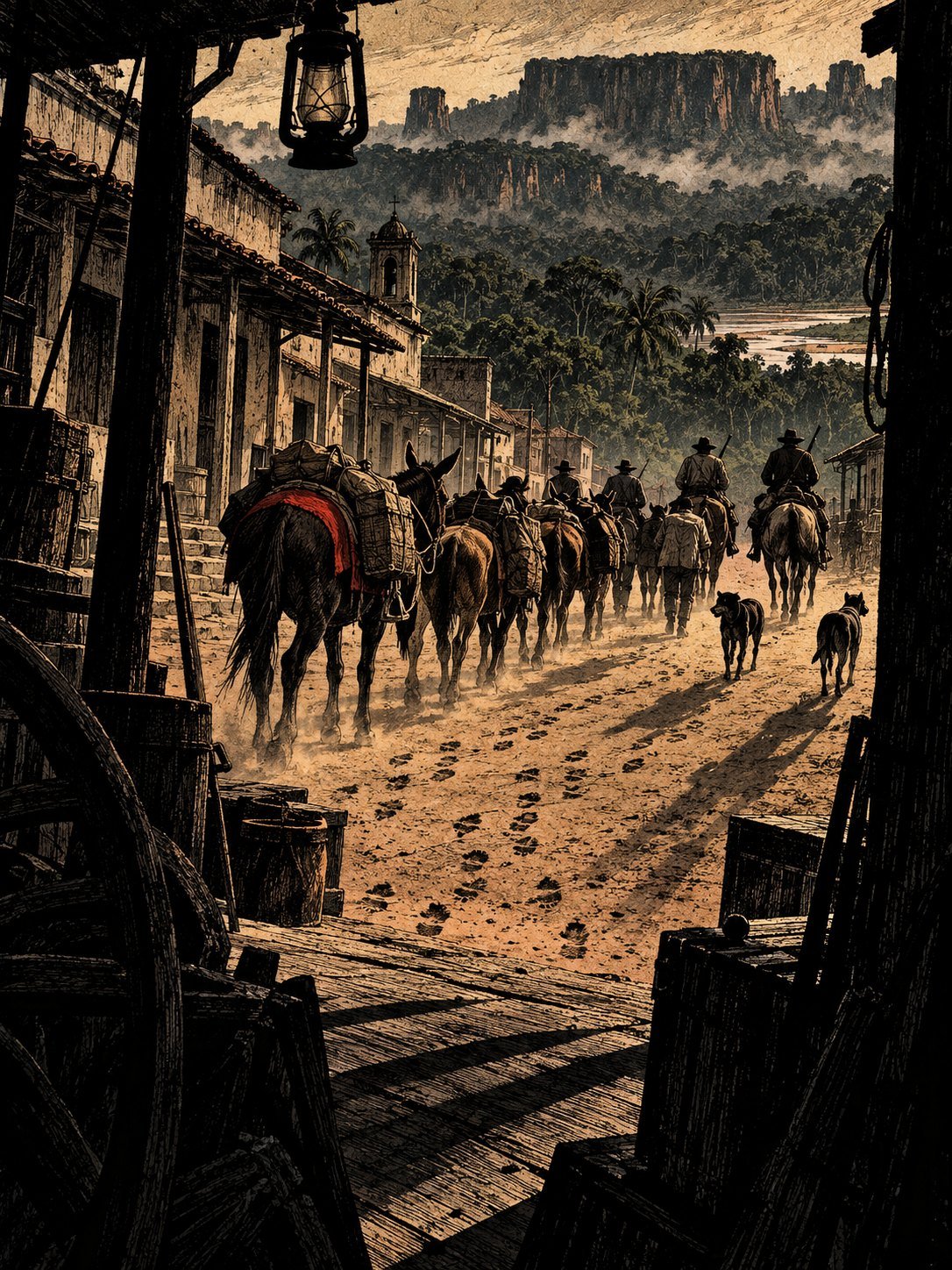
On 20 April, the party left the frontier town of Cuiabá.
With them went two Brazilian labourers, two horses, eight mules and two dogs.
The kit was the kit of a surveyor: a sextant, a chronometer, a barometer, a glycerin compass, machetes, flares, canned food and powdered milk.
Fawcett also sent at least one location report to the North American Newspaper Alliance, a syndicate of major US and Canadian newspapers.
The world was meant to follow his progress.
For a few weeks, it could.
Then the party reached a place Fawcett already knew, a place with a grim name from his last failed attempt. (WIKI-FAWCETT) (NATGEO-2024) (BOOKBROWSE-GRANN)
Dead Horse Camp: where Percy Fawcett sent his guides home

On 29 May 1925, they reached Dead Horse Camp.
It was the spot where Fawcett’s own horse had died during his 1920 attempt.
Here, he sent the guides back to Cuiabá. They carried his last letter to Nina.
From this point on, the three Englishmen went on alone.
The guides were the last outsiders known to have seen them.
Even the camp’s location is a small mystery.
In his letter to Nina, Fawcett gave it as 11°43′S. In a report for the newspapers, he gave 13°43′S.
Historians are split. Some think it was a simple typo.
Others think the mismatch was deliberate, to conceal his true route.
Either way, the guides walked back toward town, and the explorers turned toward the trees.
Then came the silence. (WIKI-FAWCETT) (HISTORY-COM) (TROWELANDPEN-2025)
“Where is Colonel Fawcett?” The Amazon silence that gripped London
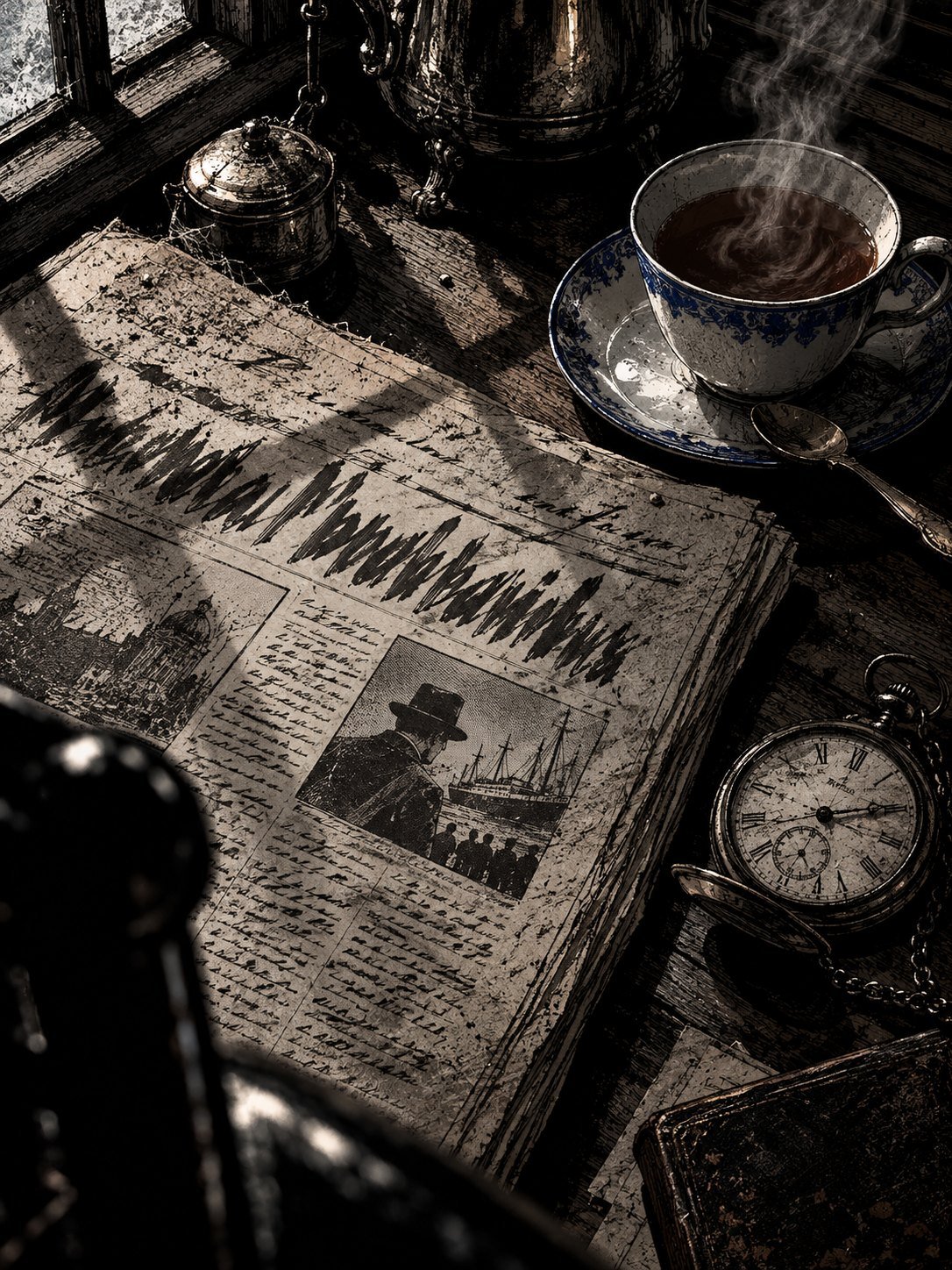
At first, the silence meant nothing. Fawcett had warned he might vanish until “next year.”
He had even left instructions that no rescue party should be sent if he failed to return.
But next year came and went.
By January 1927, London’s Daily News was asking where he was. It quoted his last message: “Don’t count on any more despatches.”
The Royal Geographical Society decided against a relief expedition. Finding the party seemed almost impossible.
That same month, the men were declared lost.
Newspapers began to say openly what families feared: the three were probably dead.
Later, the Royal Geographical Society’s records would list Fawcett as “presumed deceased.”
Nobody could prove it either way.
And as long as there was no proof, someone was going to go and look. (SHANNON-NEWS-1927) (WIKI-FAWCETT) (RGS-AIM25)
George Dyott’s 1928 search: the first hunt for the lost Fawcett party

The first major search set out in 1928.
It was led by George Miller Dyott, who left the day after his own wedding.
He came back convinced that Fawcett’s party had probably died, and he blamed the Aloique people.
But he had no bodies. He had no hard proof. The blame was his conclusion, not something he could show.
Nina Fawcett would not accept his verdict. There was, she said, “still no proof that the three explorers are dead.”
Dyott wrote up his journey as Manhunting in the Jungle in 1930. It was filmed in 1958 as Manhunt in the Jungle.
A mystery had become an adventure story, and adventure stories attract adventurers.
After Dyott, the searchers kept coming. (WIKI-DYOTT) (HISTORY-COM) (PENN-EXPEDITION-2017)
Seaplanes, rival expeditions and some 20 failed searches for Percy Fawcett

In 1930 and 1931, the adventurer Aloha Wanderwell tried to search for Fawcett by seaplane.
She lived for six weeks with the Bororo people. She found nothing.
In 1932, Peter Fleming, a literary editor at The Times and brother of Ian Fleming, answered a newspaper advertisement looking for volunteers to join a search.
That expedition broke apart. Its two factions ended up racing each other back to Pará, each trying to report first.
Fleming turned the fiasco into a book, Brazilian Adventure.
By April 1951, Time magazine counted about 20 international expeditions that had failed to find Fawcett.
Twenty attempts, and not one had brought back a definite answer.
One early team came closer than most, at least on paper. It had a scientist, a diary and a watch. (WIKI-FAWCETT) (WIKI-BRAZILIAN-ADVENTURE) (TIME-1951)
Three o’clock on the Xingu: the spot where Fawcett “entered the bush”

In 1931, the Penn Museum’s Matto Grosso Expedition reached the Xingu.
With it was the ethnologist Vincenzo Petrullo.
It was Petrullo who heard the Kalapalo account of the river crossing and the five days of smoke.
On 13 August 1931, his diary records stopping at three o’clock at the point where Fawcett “entered the mato,” the bush.
It is an oddly precise note in a story full of guesses.
A year later, a Swiss trapper, Stephen Rattin, claimed he had seen Fawcett alive, dressed in animal skins and held captive.
Petrullo called the claim “Ridiculous.” As he pointed out, “No one wears animal skins in that region.”
Sightings like this would keep surfacing. None was ever confirmed.
And for one searcher, the hunt for Fawcett would turn into a disappearance of his own. (PENN-EXPEDITION-2017) (WIKI-FAWCETT)
“Please send help”: the actor who went looking for Fawcett and vanished
Albert de Winton was a Welsh-born bit-part actor from Hollywood.
He arrived in Cuiabá in 1933 to look for Fawcett.
Nine months later he came out of the forest, emaciated.
Then he went back in.
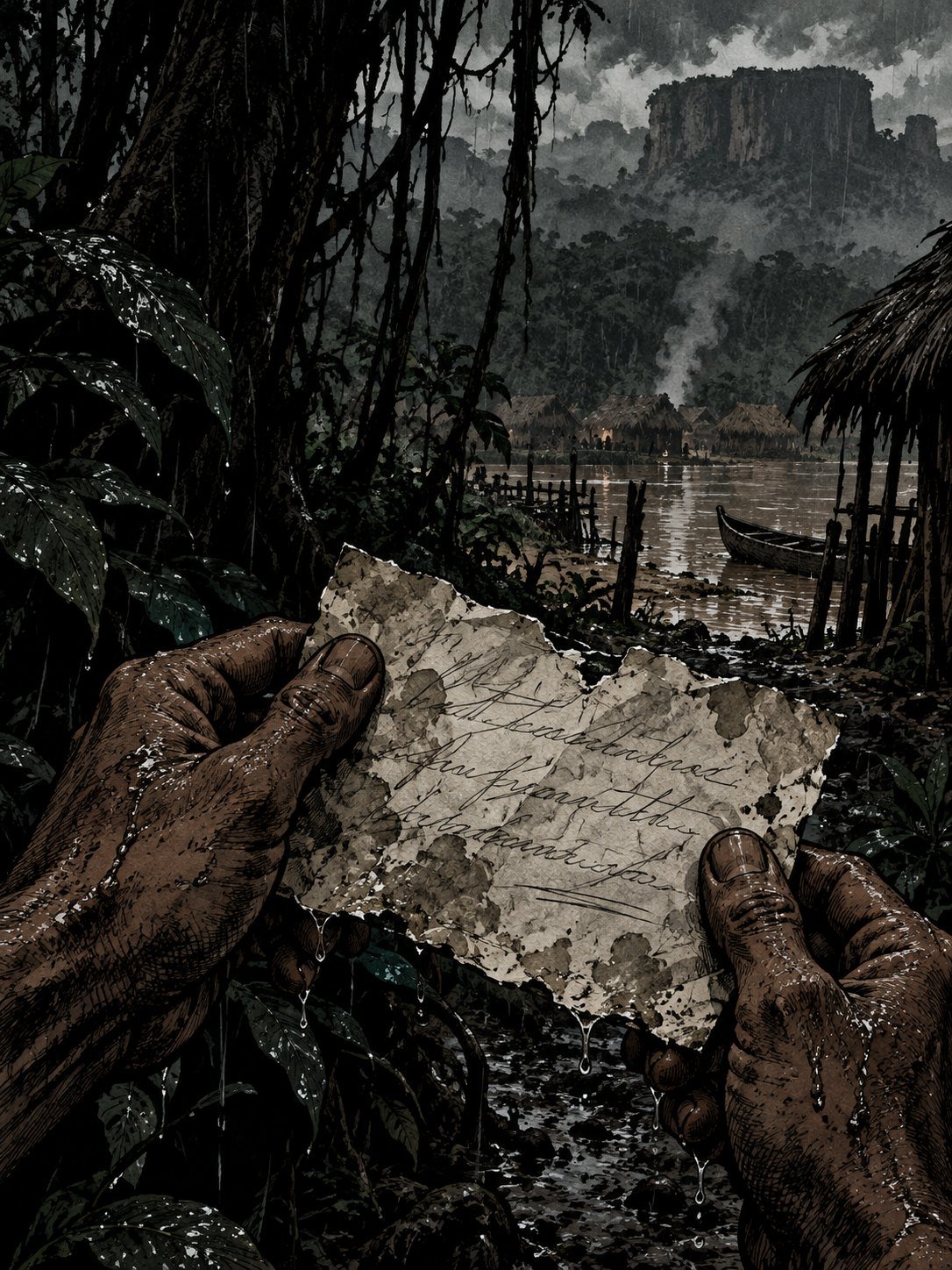
In September 1934, a runner brought out a note from him. It said he had been taken prisoner, and it pleaded: “Please send help.”
He was never seen again. Officials later heard that a Kamayurá man had killed him. That remains a report, not a proven account.
Popular accounts often claim that as many as 100 people died searching for Fawcett.
That figure is weakly sourced. No source names the dead, and an account drawing on author David Grann’s research calls it a fictitious tale.
Only one or two deaths are actually documented, and de Winton’s is very likely the main one. (LORDHEATH-DEWINTON) (WIKI-FAWCETT) (HISTORY-COM)
How tall was “Ingueleze”? A mark on a tree in the Xingu
In April 1951, the Brazilian government made a big announcement.
Orlando Villas-Bôas, an Indian agent working in the Xingu, had “finally cleared up the mystery.”
The Kalapalo people told him they had known Fawcett.
They called him “Ingueleze.”
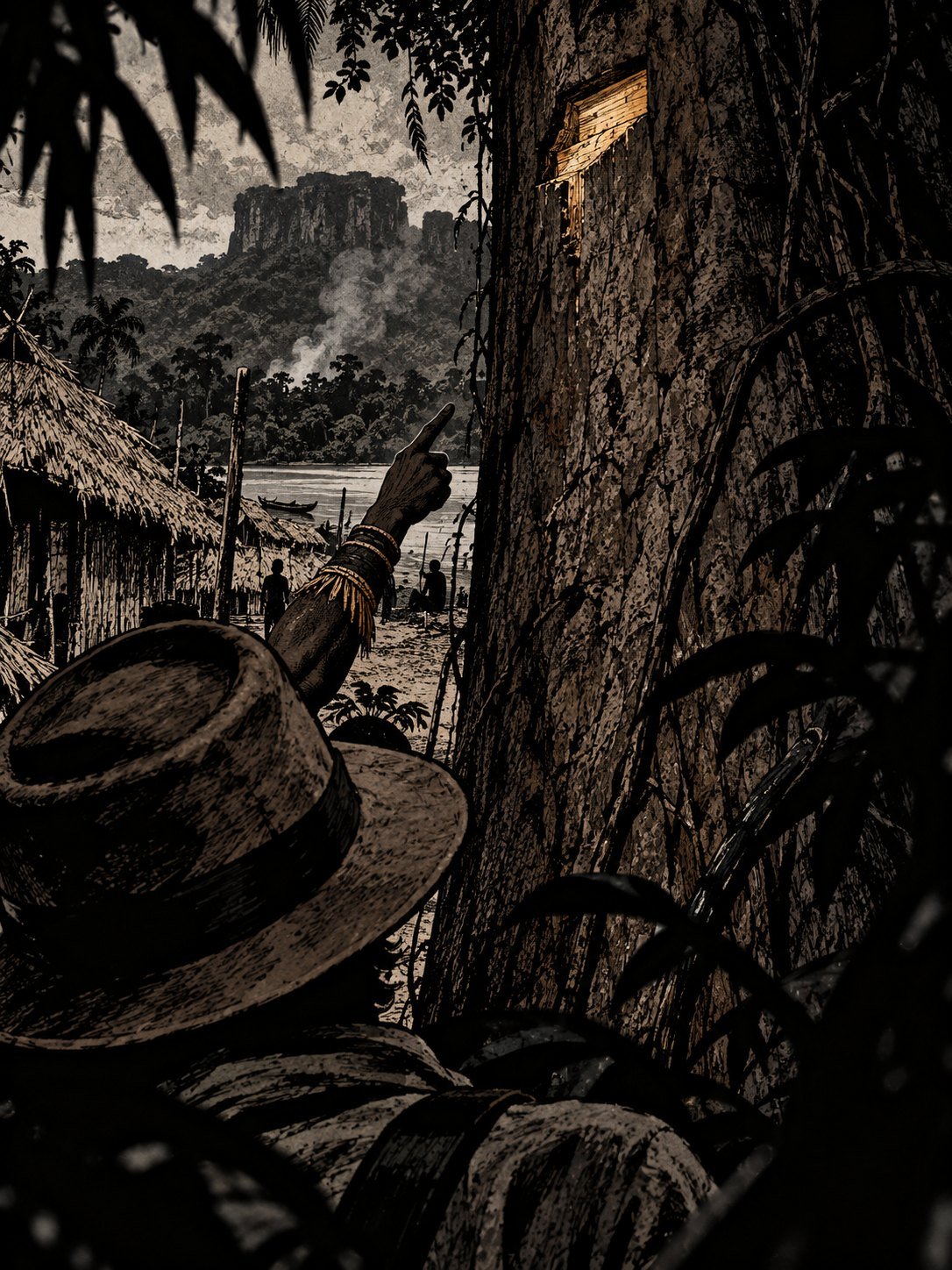
Their chief, Komatzi, led Villas-Bôas to a tree. On it was a mark, he said, showing “how tall Ingueleze was.”
For the first time in 26 years, there seemed to be a firm trail: a person who remembered, a place, a physical mark.
Time magazine reported the news.
Later accounts from the Kalapalo themselves would complicate this version, as we will see.
But a mark on a tree is not a body.
Villas-Bôas wanted more. And the chief had one more place to show him. (TIME-1951)
“You are standing on it”: the lake where the bones were found
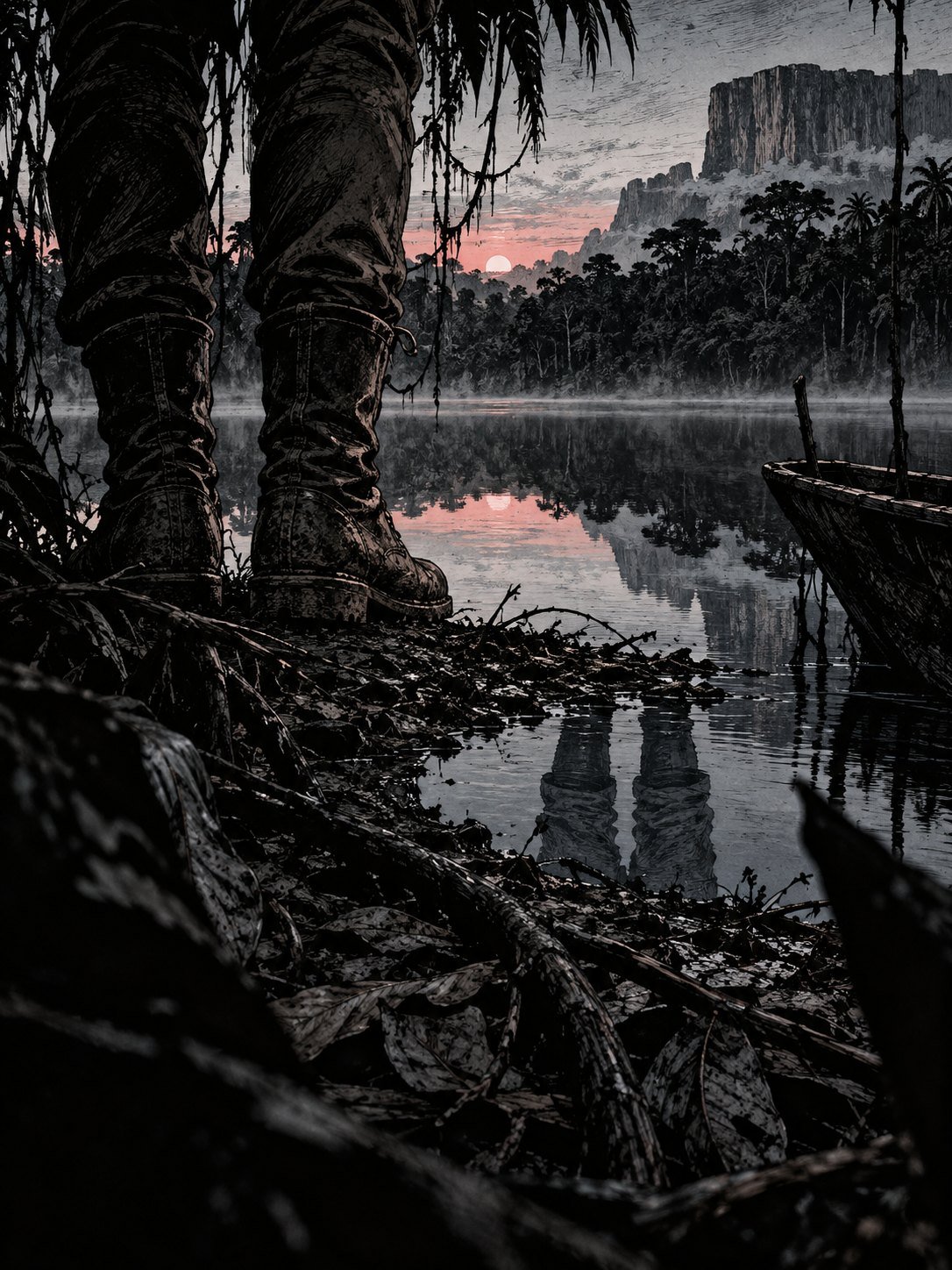
The chief took Villas-Bôas to a lake.
There, according to Time magazine’s 1951 report, he told him: “You are standing on it.”
Human remains were later supplied by the Kalapalo.
For a moment, it looked like the end of the Fawcett mystery.
But the story would not stay settled.
Later Kalapalo accounts denied that their people had killed the explorers, and said the bones were not Fawcett’s at all.
In 1998, the Kalapalo elder Vajuvi told the explorer Benedict Allen so. In 2005, Kalapalo testimony to David Grann blamed “hostile” people to the east.
One account says the remains belonged to a former chief.
So whose bones were they?
There was one way to test the claim. Send them to the experts in London. (TIME-1951) (WIKI-FAWCETT) (NATGEO-2024)
No DNA, just a jaw and false teeth: the 1951 London verdict on the bones
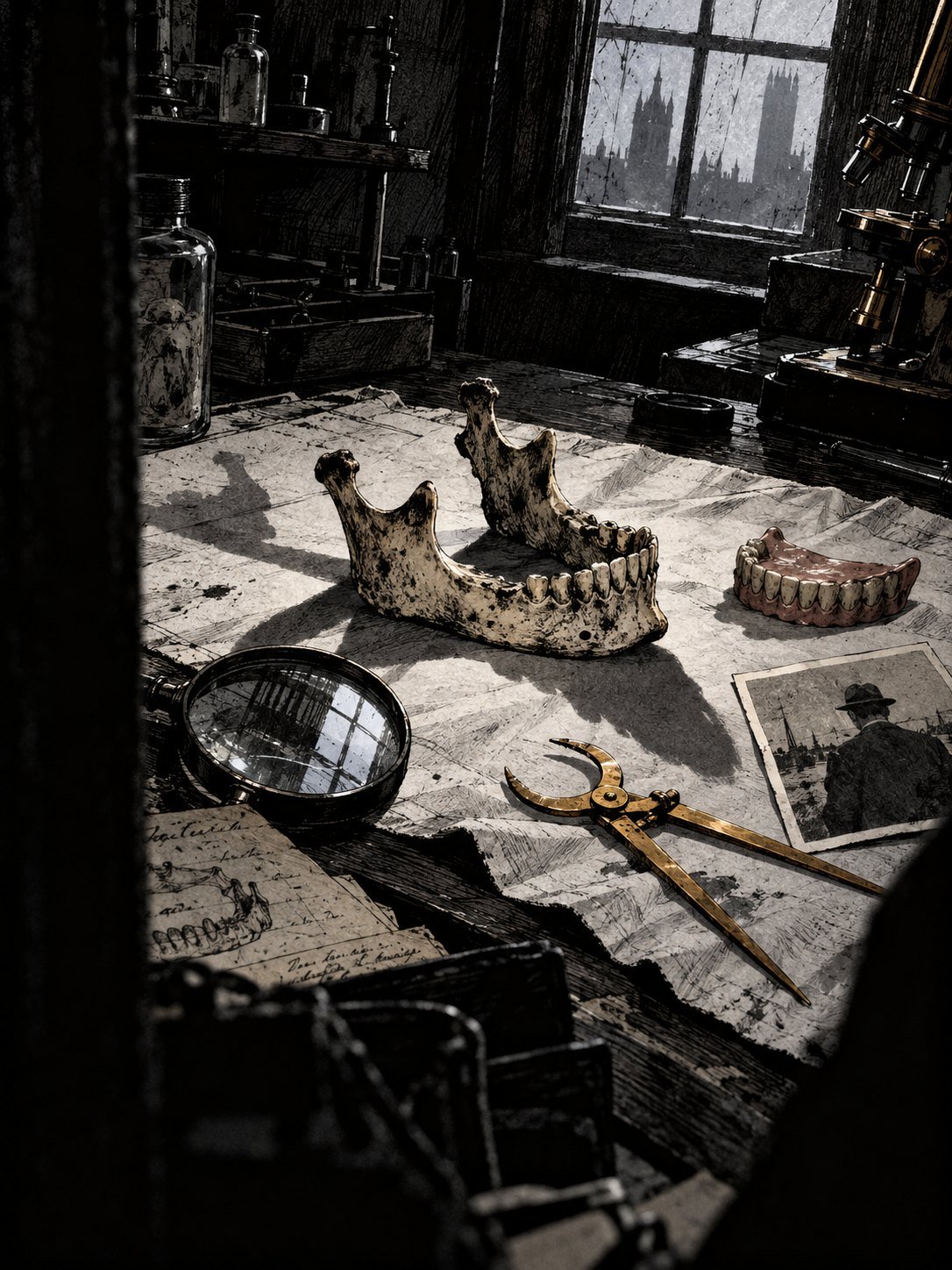
The Brazilian press baron Assis Chateaubriand brought the skeleton to Britain.
It went to the Royal Anthropological Institute in London.
There was no DNA test. In 1951, the scientists compared the remains with photographs and Fawcett’s own false teeth.
Fawcett’s younger son, Brian, supplied the photographs and his father’s denture.
The team, Professor A. J. E. Cave, Miss M. L. Tildesley and Dr J. C. Trevor, reported “conclusively that they were not those of Col. Fawcett.”
The jaw settled it. “The upper jaw provides the clearest possible evidence that these human remains were not those of Colonel Fawcett.”
Brian accepted the finding. The Institute’s November 1951 report is still held in the RGS archive.
The lake had not ended the mystery after all.
It had only added another stranger to it. (RAI-A69) (WIKI-FAWCETT) (RGS-AIM25)
A box of bones in São Paulo and the Fawcett relics that kept turning up

The London verdict did not end the strange afterlife of the bones.
As of 1965, they were reportedly sitting in a box in a flat in São Paulo.
Meanwhile, small pieces of the story kept surfacing.
An expedition nameplate turned up with a tribe in 1927, probably a gift from an earlier trip.
In 1933 a Fawcett compass was found near the Bacairy post, apparently left before the final journey.
In 1979, a signet ring appeared in a pawnshop.
In the 1940s, a fair-skinned boy named Dulipé was presented as Jack’s son. His looks were put down to albinism.
Brian Fawcett published his father’s papers as Exploration Fawcett in 1953. Villas-Bôas accused him of profiting from the story.
None of it told anyone how the three men died. (WIKI-FAWCETT) (TROWELANDPEN-2025) (RAI-A69)
Kuhikugu: was the Lost City of Z real after all?

Fawcett never found Z. But the forest he walked into had a hidden past of its own.
From the 1990s, archaeologist Michael Heckenberger worked with the Kuikuro people of the Upper Xingu to map ancient settlements.
In 2008, the team, including Afukaka Kuikuro, a descendant of the original inhabitants, described “garden cities.”
They mapped 28 towns, villages and hamlets, with plazas up to 150 metres across, deep ditches and a main road aligned to the summer solstice.
Up to 50,000 people may have lived there. European diseases likely emptied the towns in the 16th century.
Scientific American placed this network, often called Kuhikugu, in the region where Fawcett vanished.
Did he hear about it? Was it his Z? That is a theory, not a fact.
His own fate is still unknown. The forest kept its cities hidden for centuries. It is still keeping him. (UF-2003) (SCIAM-2008) (WIKI-LOSTCITYZ)
Case notes: Percy Fawcett and the Lost City of Z
In 1925 the British explorer Percy Fawcett, 57, walked into the Brazilian rainforest with his son Jack and Jack’s friend Raleigh Rimell to find a lost city he called Z (WIKI-FAWCETT) (HISTORY-COM). His last letter was dated 29 May 1925, at Dead Horse Camp (WIKI-FAWCETT) (NATGEO-2024). None of the three was ever seen again by outsiders. Bones produced in 1951 were judged not to be his (WIKI-FAWCETT) (TIME-1951).
Timeline
| When | What happened |
|---|---|
| 1906–1911 | Boundary surveys in Bolivia and Brazil (RGS-AIM25) |
| 1920 | First attempt on Z fails (WIKI-FAWCETT) |
| Jan 1925 | Sails from Hoboken, New Jersey: “We shall return” (HISTORY-COM) |
| 20 Apr 1925 | Leaves Cuiabá with mules, horses and dogs (WIKI-FAWCETT) |
| 29 May 1925 | Last letter, from Dead Horse Camp (WIKI-FAWCETT) (NATGEO-2024) |
| Jan 1927 | RGS declares the men lost (WIKI-FAWCETT) |
| 1928 | George Dyott leads the first major search (WIKI-DYOTT) |
| 1933–34 | Albert de Winton searches and does not return (LORDHEATH-DEWINTON) |
| Apr 1951 | Bones from the Kalapalo examined in London; rejected (WIKI-FAWCETT) (TIME-1951) |
| 2003–2008 | Ancient Xingu settlements mapped near where he vanished (UF-2003) (SCIAM-2008) |
Where the records disagree
| Detail | What reports say |
|---|---|
| Searchers who died | Popular sources say about 100; none names them, and only a handful are documented (HISTORY-COM) (WIKI-FAWCETT) |
| Departure | January 1925 from Hoboken in most sources; February in one; New York in a 1927 paper (HISTORY-COM) (BU-BOSTONIA-2009) (SHANNON-NEWS-1927) |
| Dyott’s search | 1927 on one Wikipedia page; 1928 in most sources (WIKI-DYOTT) (HISTORY-COM) |
| Dead Horse Camp position | 11°43′S in his letter, 13°43′S in a press report; read as a typo or a decoy (WIKI-FAWCETT) |
| Kuhikugu dates | About AD 800–1600, or 1,500 to 400 years ago, depending on the study (UF-2003) (SCIAM-2008) |
Details most coverage missed
There was never a DNA test. The 1951 verdict rested on the jaw, the teeth and his denture (WIKI-FAWCETT).
He asked that no one come after him. Fawcett left instructions that no rescue party be sent (WIKI-FAWCETT).
Something was out there. Archaeologists later mapped ancient towns, roads and ditches in the Upper Xingu (UF-2003) (SCIAM-2008).
What we still don’t know
- How and where Fawcett, Jack and Raleigh died.
- Whether the Dead Horse Camp coordinates were a typo or a deliberate decoy.
- Whose bones the Kalapalo handed over in 1951.
- Whether Z was one of the Xingu settlements, or never existed as he imagined it.
Case file summary
- What: Disappearance of explorer Percy Fawcett, his son Jack and Raleigh Rimell
- Where: Mato Grosso, Brazil, near the Upper Xingu
- When: Last heard from 29 May 1925
- Searching for: A lost city he called Z
- Status: Unsolved; bones offered in 1951 judged not his
Illustrations are artistic interpretations, not photos. No real person has a recognizable face.
Sources
- Percy Fawcett (Wikipedia)
- Scientist of the Day: Percy Fawcett (Linda Hall Library)
- GB 0402 PHF: Fawcett, Lt Col Percy Harrison, RGS archive catalogue (AIM25)
- Fawcett Papers (A69), Royal Anthropological Institute
- The man who died searching for the Lost City of Z (National Geographic, 2024)
- The Enduring Mystery Behind Percy Fawcett’s Disappearance (History.com)
- 10 Facts About Percy Fawcett and the Lost City of Z (History Hit)
- Bostonia (Boston University), Fall 2009, on Grann
- “The Lost Explorer,” Expedition 59(2), Penn Museum, 2017
- George Miller Dyott (Wikipedia)
- Albert de Winton (lordheath.com, citing NYT 16 Sep 1934 and New Yorker 2005)
- Brazilian Adventure (Wikipedia)
- Time, 16 April 1951
- “Vanished Explorers,” Shannon News, 1 March 1927 (Papers Past)
- Excerpt, Grann, The Lost City of Z, ch. 1 “We Shall Return” (pp. 1–3)
- Book of the week: The Lost City of Z (The Week)
- From jungle to cinema: 100th anniversary of Fawcett’s disappearance (Trowel & Pen, 29 May 2025)
- Percy Fawcett: The Lost Explorer (Torbay Council leaflet)
- The Lost City of Z: Secrets of the Fawcett Archive (Devon Museums)
- North American Newspaper Alliance (Wikipedia)
- UF researchers find Amazon once home to large, complex settlements (Univ. of Florida, 18 Sep 2003)
- Ancient Amazon tribes lived in sustainable “garden cities” (Mongabay, Aug 2008)
- Ancient Amazon Actually Highly Urbanized (Scientific American, 2008)
- Kuhikugu (Wikipedia)
- Lost City of Z (Wikipedia)
- Lost Cities of the Amazon Discovered From the Air (Smithsonian, May 2022)
- What Percy Fawcett Never Found (J. Iriarte, Springer Nature Communities, May 2022)
- The Amazon’s ancient complex of ‘lost cities’ flourished for a thousand years (NBC News, 11 Jan 2024)
- An Explorer Vanished Searching for a ‘Lost Civilization’… (The Debrief, 9 Jun 2026)
- Nature press release: Over 20,000 precolonial earthworks in the Southwest Amazonia (30 Jul 2026)
- Ancient Amazonian earthworks / Aquiry civilisation (The Art Newspaper, 6 Aug 2026)
- New evidence of a lost civilization… 20,000 earthworks (The Debrief, 30 Jul 2026)