The Bhawal Sannyasi: A Prince Reported Cremated in 1909 Came Back as an Ascetic, Won in Court, and Died Within Days
Narrated Mystery: press play and hear the whole case read aloud, like a true crime podcast episode, or an audiobook for a long drive (about 15 minutes). The narrator is an AI voice.
An ascetic on the riverfront at Dacca
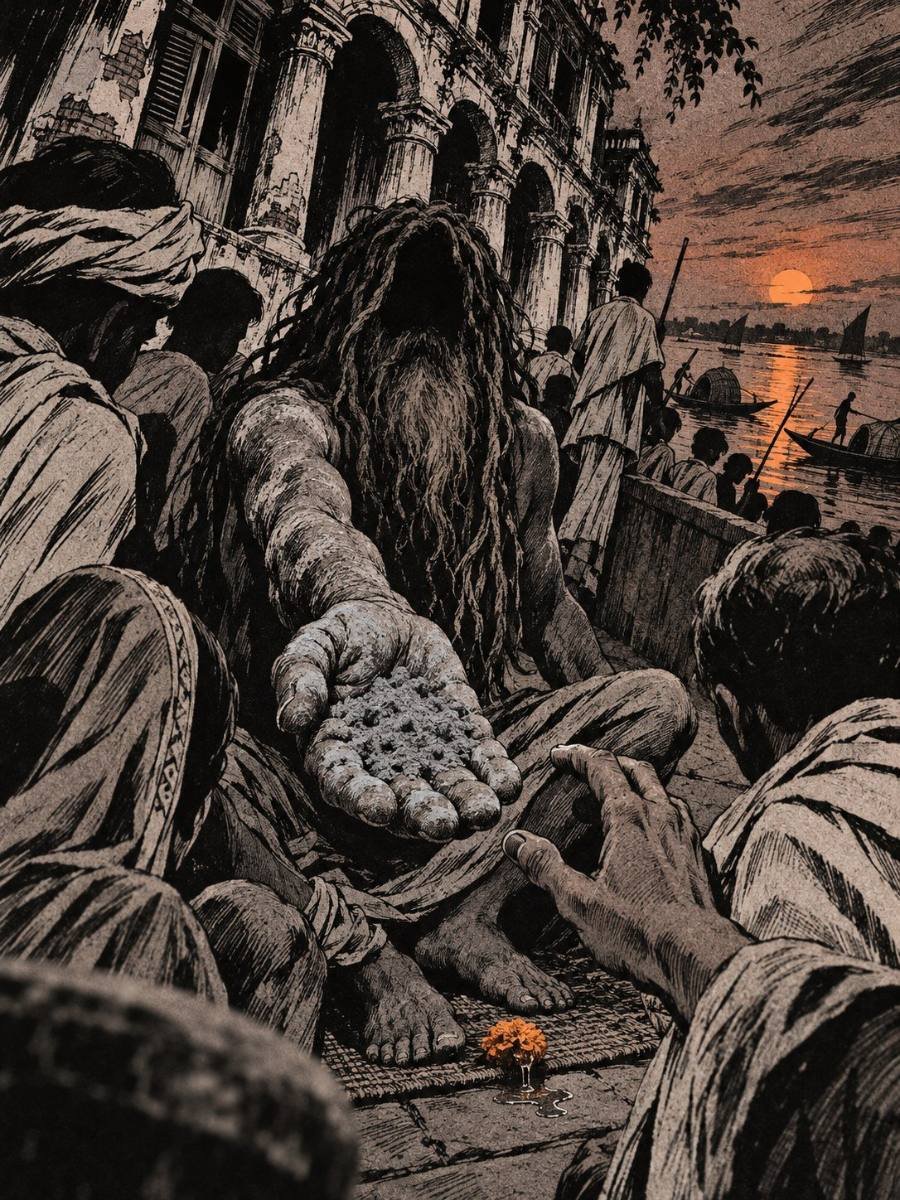
Around the turn of 1921, a holy man sat down on the Buckland Bund, the riverside embankment road of Dacca, the city now called Dhaka.
He chose a spot in front of Ruplal Das’s mansion, a grand house already going to seed, and he stayed there for about four months.
His hair was matted. His beard was long. He wore a loincloth and almost nothing else, and his body was smeared with ash. People came to him for medicine and he gave them ash. Not amulets. Ash.
He spoke Hindi. He claimed nothing. One witness later remembered him as “a beautiful fair man”.
But the people who stopped to look at him began to whisper a name. It belonged to a prince who had been dead for eleven years, and whose body, everyone had been told, was burned on a hillside in Darjeeling. (CH-EXC) (DS-2018)
The second son of Bhawal
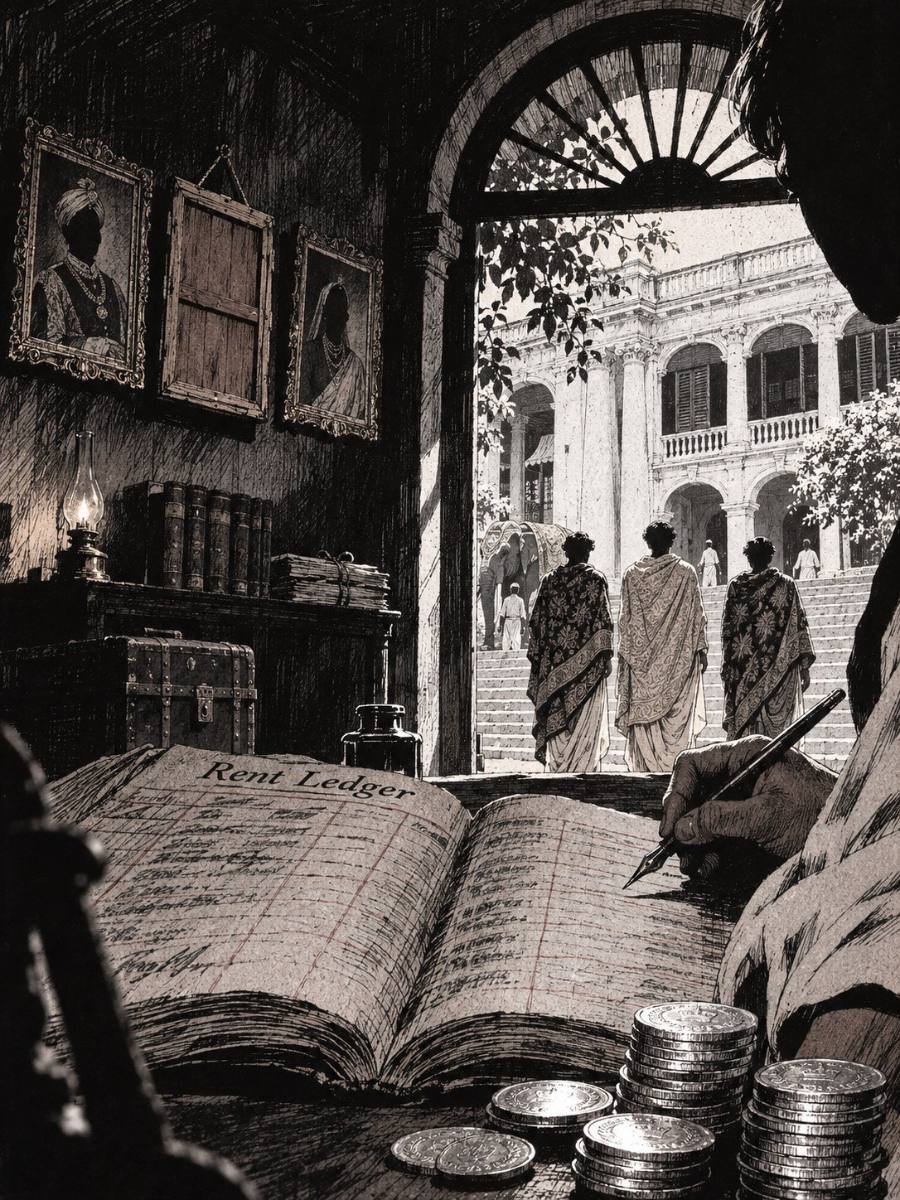
The prince in question was Ramendra Narayan Roy, born on 28 July 1884.
His family owned Bhawal, the second-largest landed estate in East Bengal. One modern estimate puts it at about 1,500 square kilometres, and by 1931 it brought in around Rs 6.5 lakh a year in rent.
The family seat stood at Jaidebpur, north of Dacca, in today’s Gazipur. There was the Rajbilas, where the family lived, and the Madhabbari, a rest-house where travellers and wandering holy men were given shelter.
Raja Rajendra Narayan Roy had three sons. Ranendra was the eldest, Ramendra the second, Rabindra the youngest. In Bengali the second son was the Mejo Kumar, the middle prince. In court he would simply be “the second Kumar”.
By the agreed facts later set out before the Privy Council, he had tertiary syphilis. That one medical detail would matter much later, when an English official looked closely at a stranger’s skin. (JAOS-2003) (PRINT-2022) (CH-EXC) (BANGLA) (PC-VLEX) (WIKI)
A rented house called Step Aside
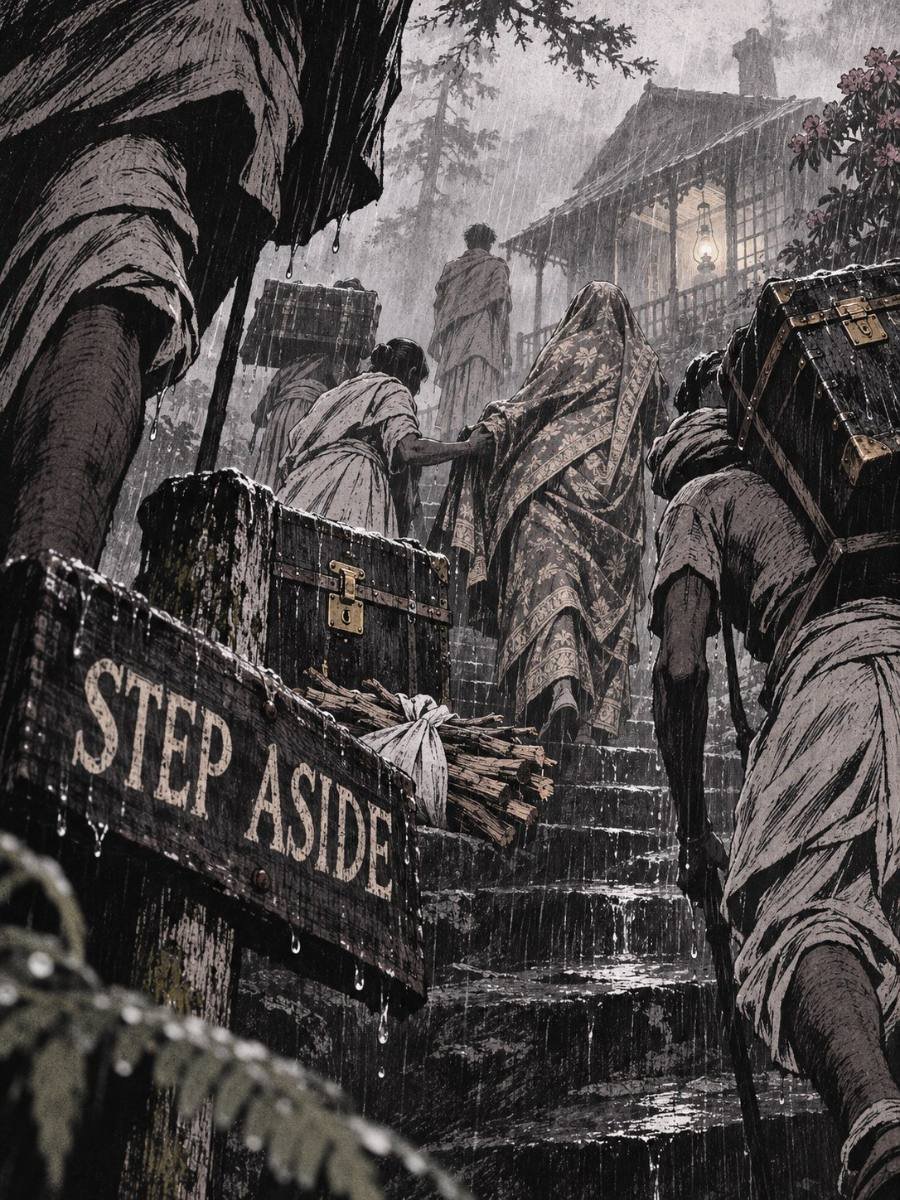
On 18 April 1909 the second Kumar left Bhawal by train for the hills.
With him went his wife, Bibhabati Devi, her brother, the family doctor and about twenty-one servants. They reached Darjeeling on 20 April.
The party moved into a house with a strangely fitting name: Step Aside. The widow’s brother had rented it, and by one account it was far too small for so many people.
Darjeeling was where Bengal’s rich went to escape the heat. It was cool and green, and wrapped in cloud for days at a time.
Nothing about the trip was secret. Every one of these facts was agreed by both sides when the case reached London 37 years later. (CH-EXC) (PC-VLEX) (LIVELAW)
A telegram to Jaidebpur
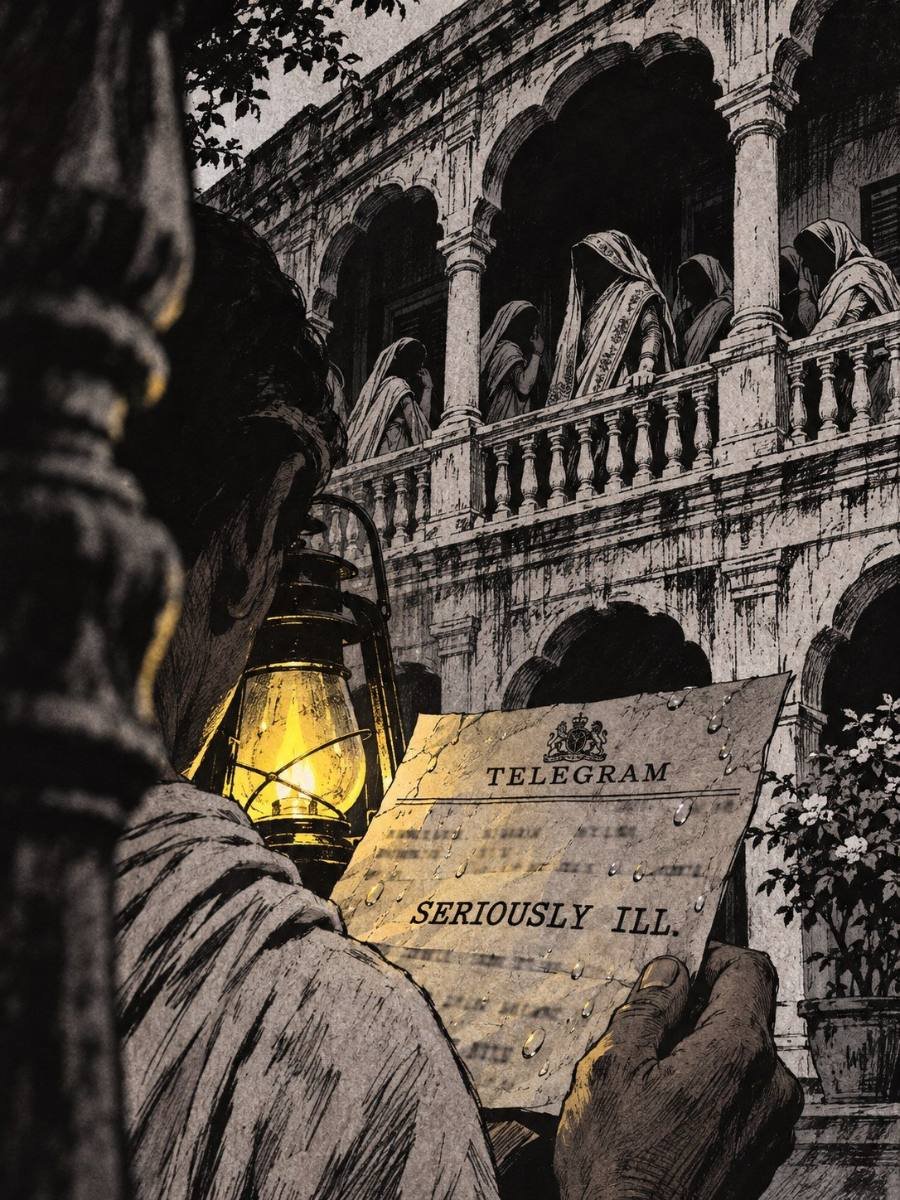
The Kumar fell ill on 6 May 1909.
A telegram went down the mountain to Jaidebpur saying he was “seriously ill”. The next morning, the family at home heard that he was dead.
The civil surgeon, Colonel John Calvert, certified the cause as biliary colic, a gallstone attack.
He was 24 years old. (CH-EXC) (PRINT-2022) (BANGLA)
Two clocks for one death
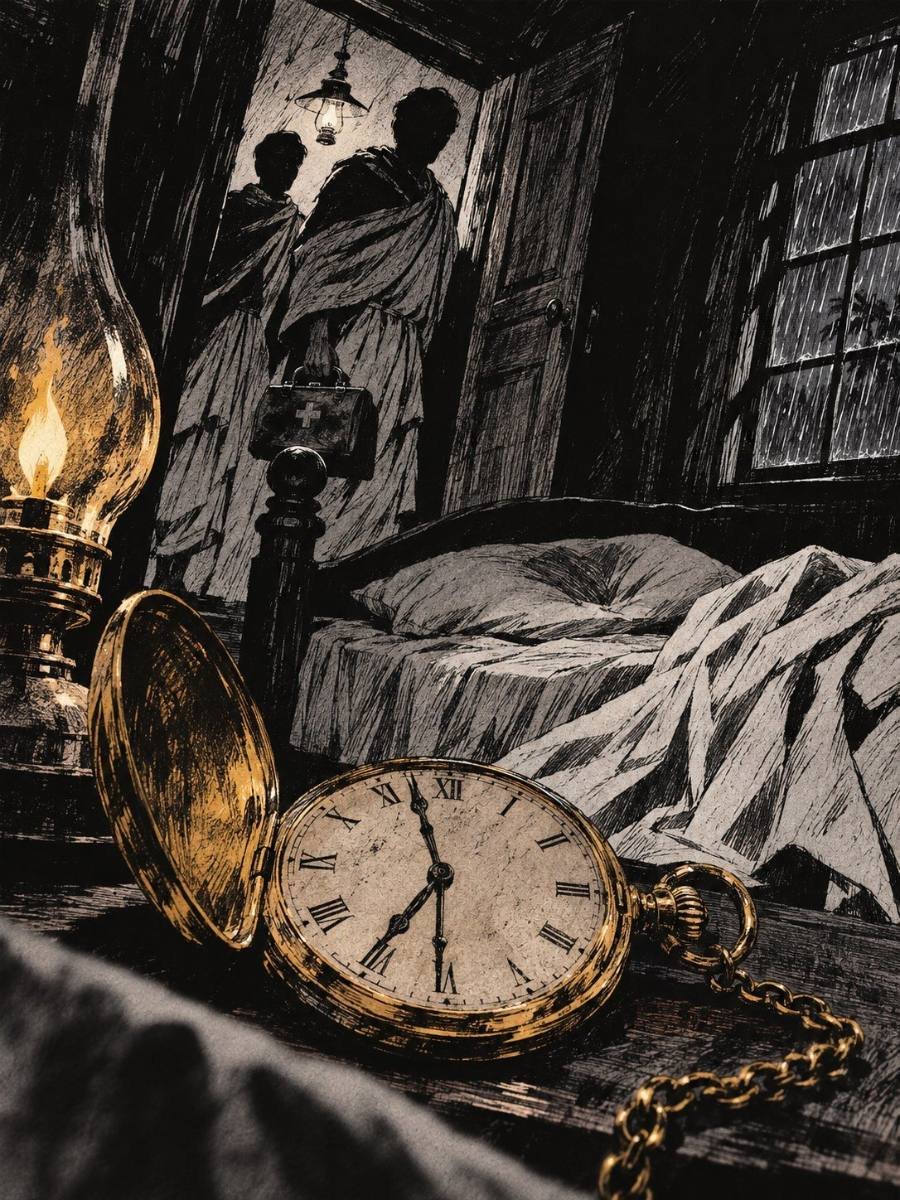
Both sides agreed on one thing. On 8 May 1909, the second Kumar was “taken for dead”.
They did not agree on when.
The widow’s case was that he died shortly before midnight.
The claimant’s case put it hours earlier, “about dusk, between seven and eight o’clock”.
The gap mattered to his story. A death at dusk left a whole night between the deathbed and the morning fire. A death near midnight left very little. (PC-VLEX)
The night of rain, by his account
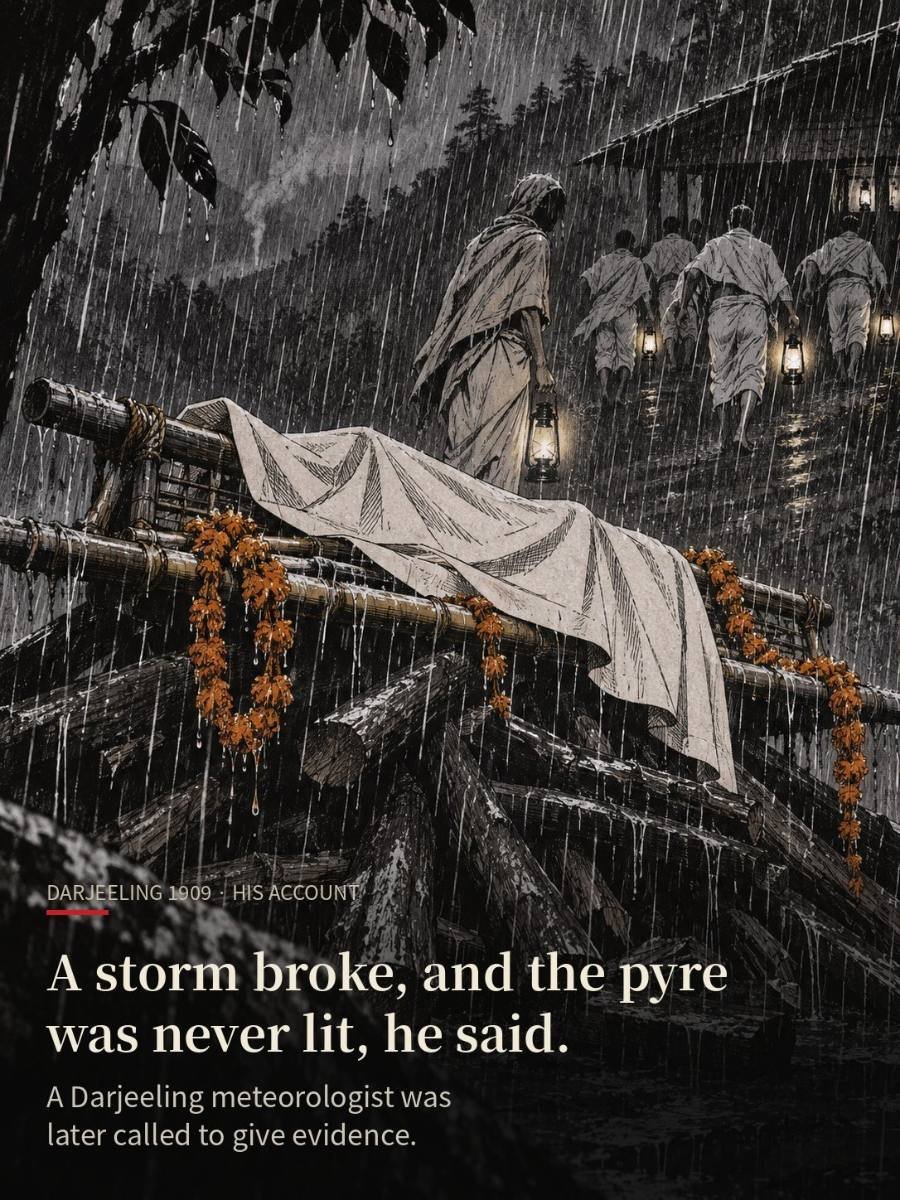
What happened next depends on whose account you take.
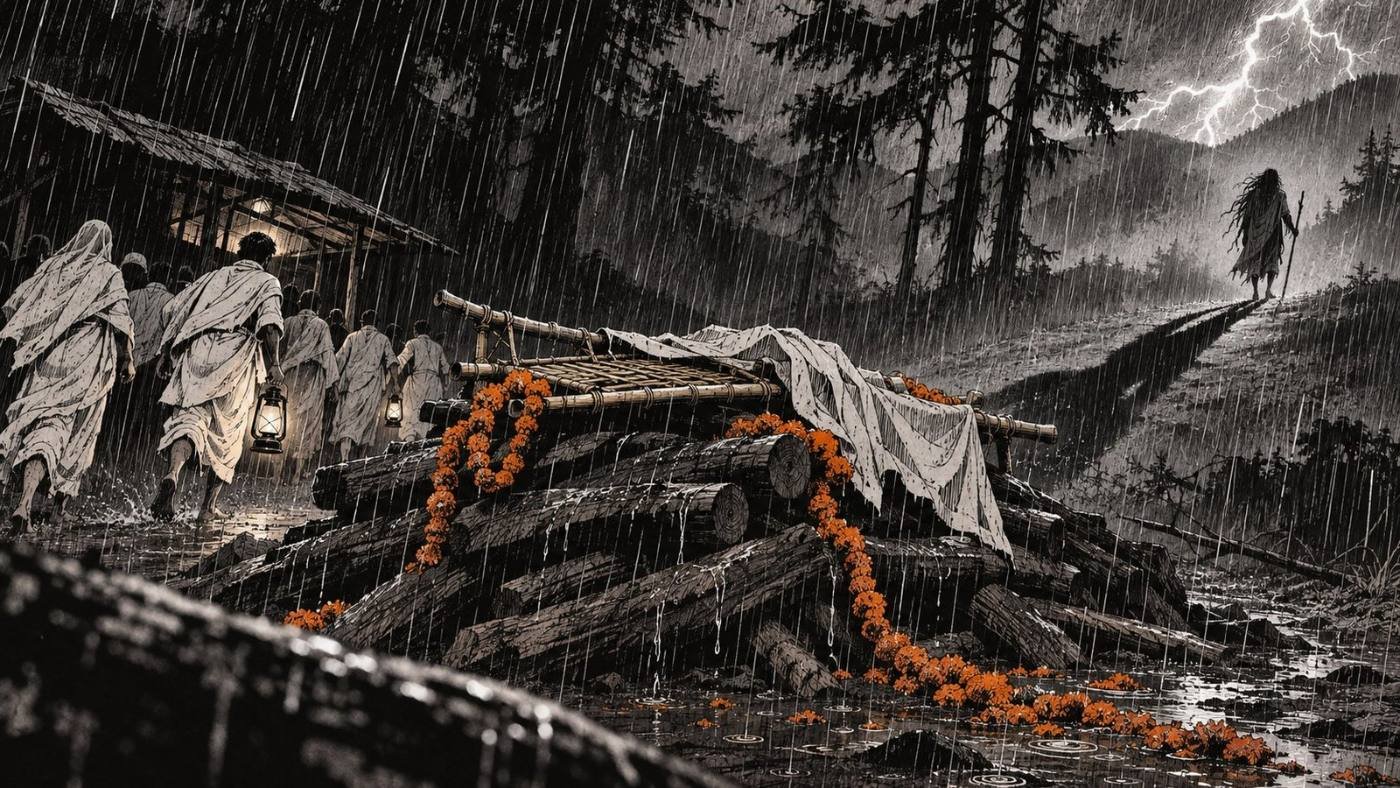
The claimant’s side told the court that the funeral party carried his “corpse” to the cremation ground that night, a storm broke, and they left it and took shelter from the rain. By his account, the pyre was never lit.
Sources disagree even about the weather in his story. It is rain in one, a thundershower or thunderstorm in others, and a hailstorm in one more.
It mattered enough that a Darjeeling meteorologist was later called to give evidence. (LIVELAW) (PRINT-2022) (DS-2018) (FA-2002) (BANGLA)
The cremation, by her account
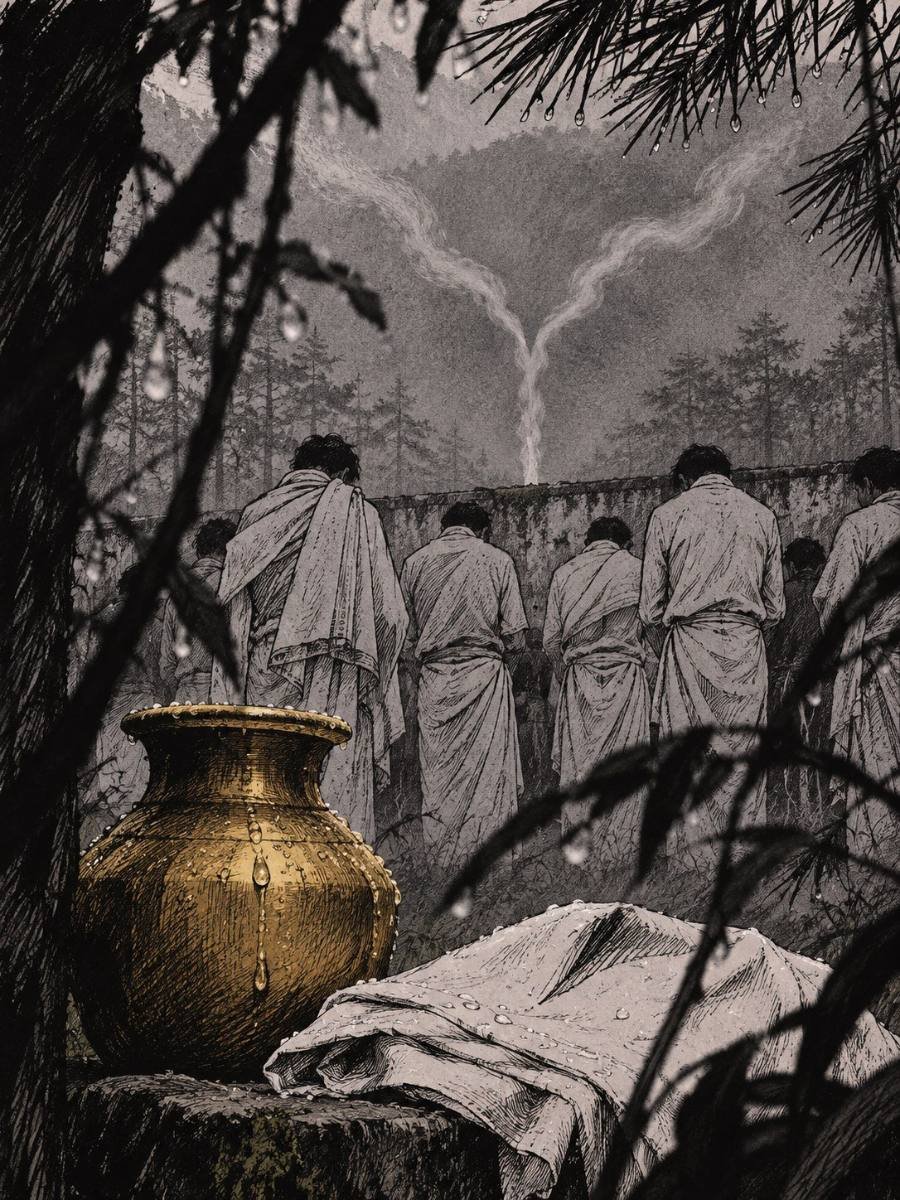
The widow’s case was simpler. The prince died before midnight and was cremated the next morning, 9 May, at the new sasan, the cremation ground at Darjeeling.
Here the two stories meet and split again. The claimant agreed that a funeral procession and a cremation took place that morning. He said the body burned was not his.
So both sides accepted that there was a procession and a fire. What they disputed was whose body was on it.
The shraddha, the funeral rites, was held on 18 May. It was remembered as a “lackluster affair”. (PC-VLEX) (CH-EXC)
Rescued by wandering ascetics, he said
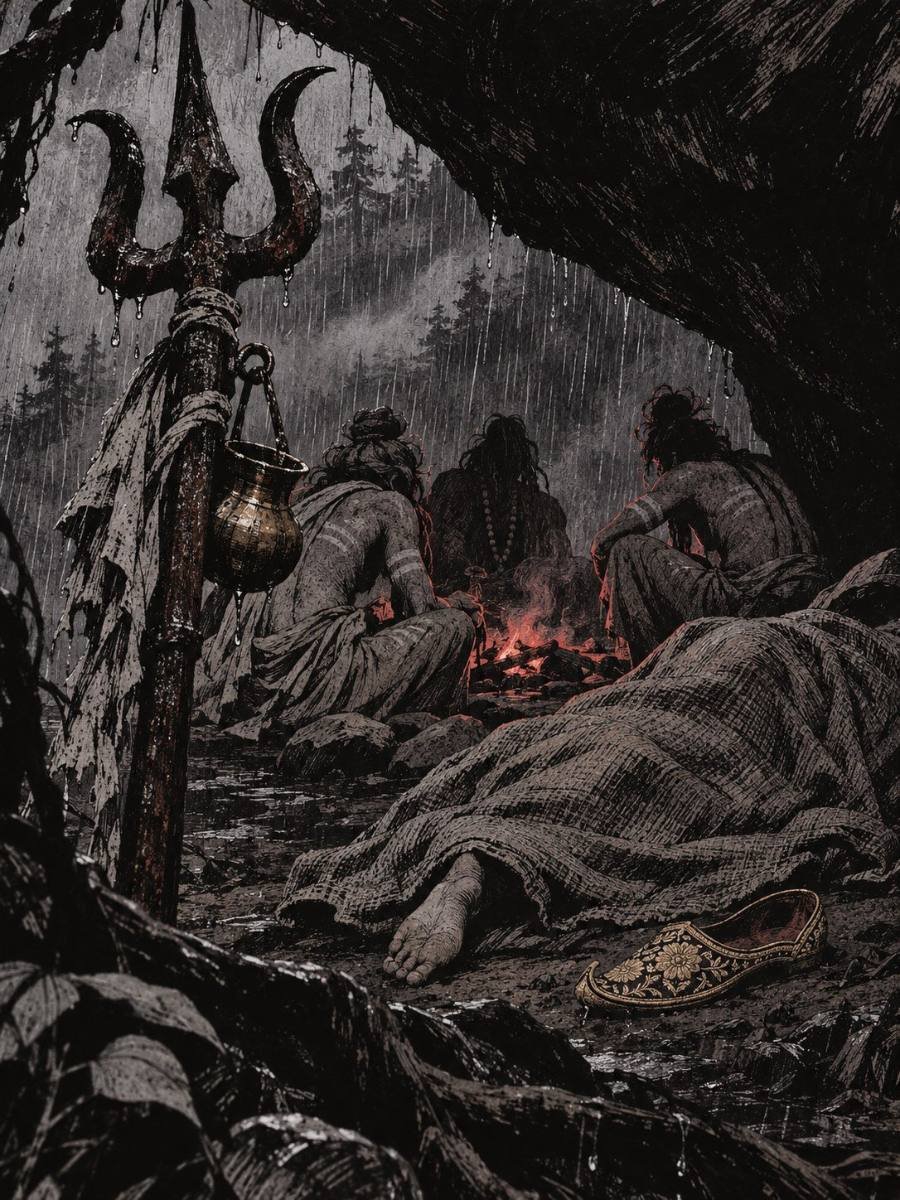
The claimant’s account of the next twelve years is the part no document can check.
He said a band of Naga ascetics, led by a guru named Dharamdas Naga, found him alive, took him away and nursed him back to health.
He said he had lost his memory, and that he wandered with them for years without knowing who he had been.
Back in Bengal, life moved on without him. His elder brother died in 1910. His widow went to live in Calcutta with her brother’s family and did not return to Jaidebpur for about twenty years. The British Court of Wards took over the running of the estate. (PRINT-2022) (TRIB-2011) (LIVELAW) (CH-EXC) (PC-VLEX)
Brought home on an elephant
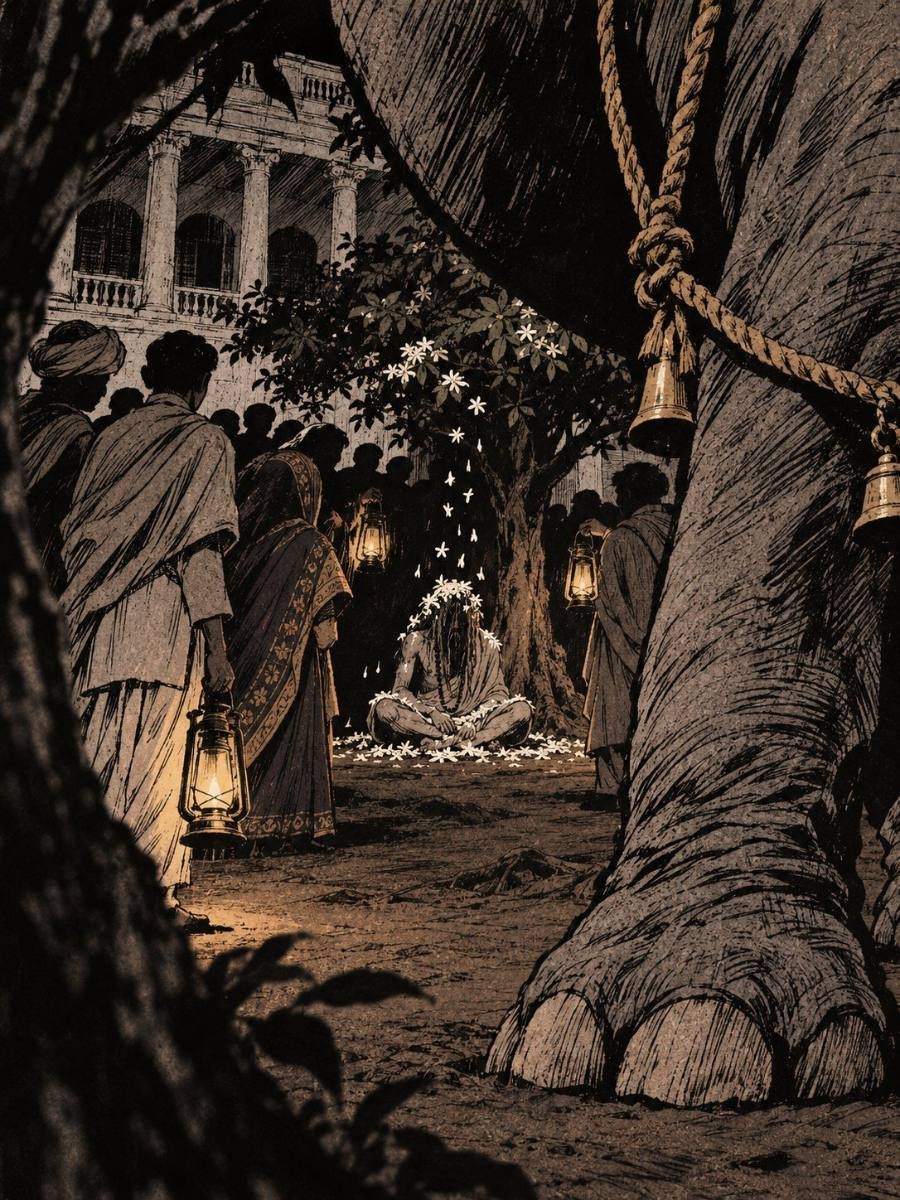
On 5 April 1921, the ascetic from the Buckland Bund was taken to Kasimpur.
A week later, on 12 April, he was sent on to Jaidebpur on an elephant. He arrived in the evening.
He did not go into the palace. He sat down under a kamini tree near the Madhabbari, the old rest-house for holy men.
Word of the ascetic under the kamini tree spread through the estate villages. (CH-EXC) (WIKI)
His sister would not let him go
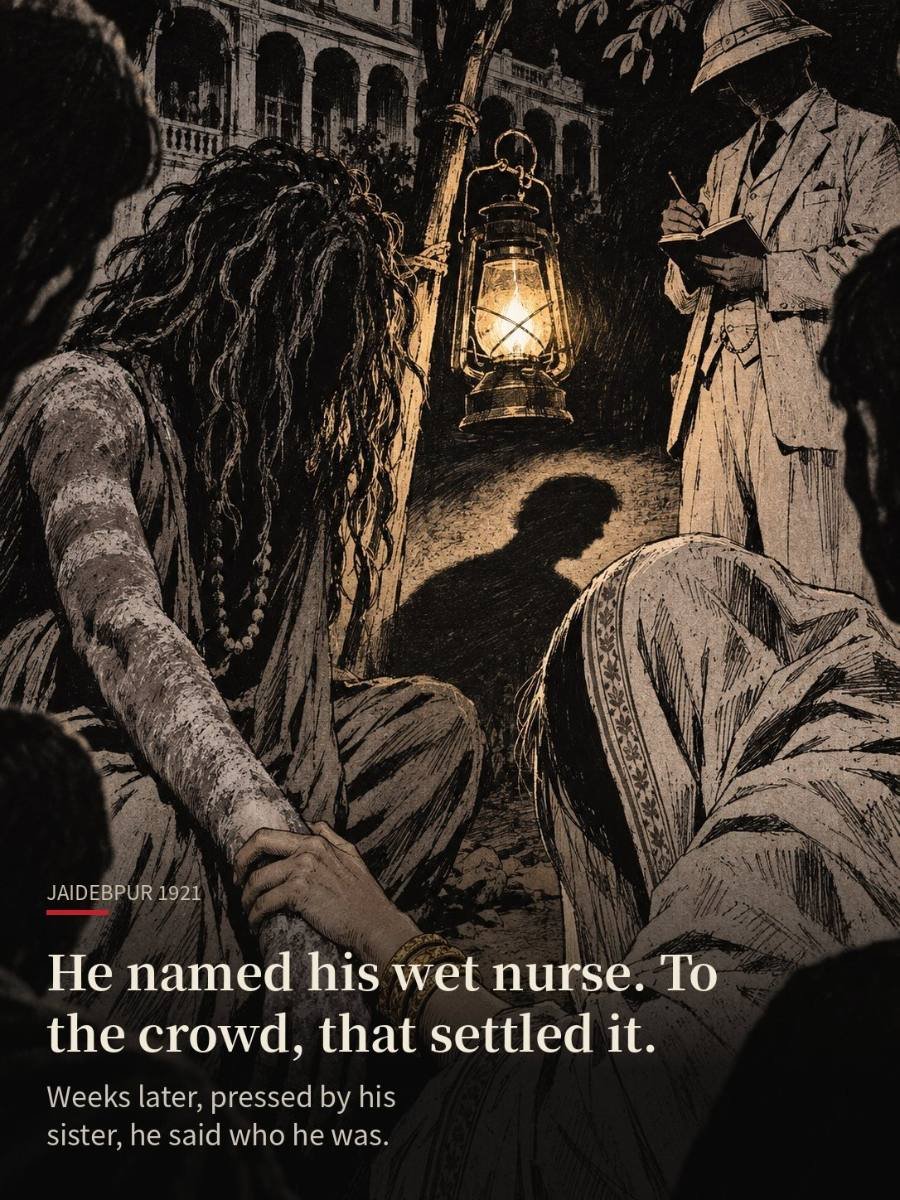
Questions came at him from every side. When someone asked the name of his wet nurse, he answered: Aloka. To the crowd that settled it.
On 4 May 1921, his sister Jyotirmayi pressed him to say who he was. He declared that he was the second Kumar.
The estate manager, an Englishman named F. W. Needham, reported it to the district magistrate, J. H. Lindsay, the next day.
On 29 May the ascetic met Lindsay in Dacca and asked for an inquiry. Lindsay noted the man’s “beautifully clear skin”. He saw no sign of the disease the second Kumar was known to have had. (CH-EXC) (WIKI)
The notice that said IMPOSTOR
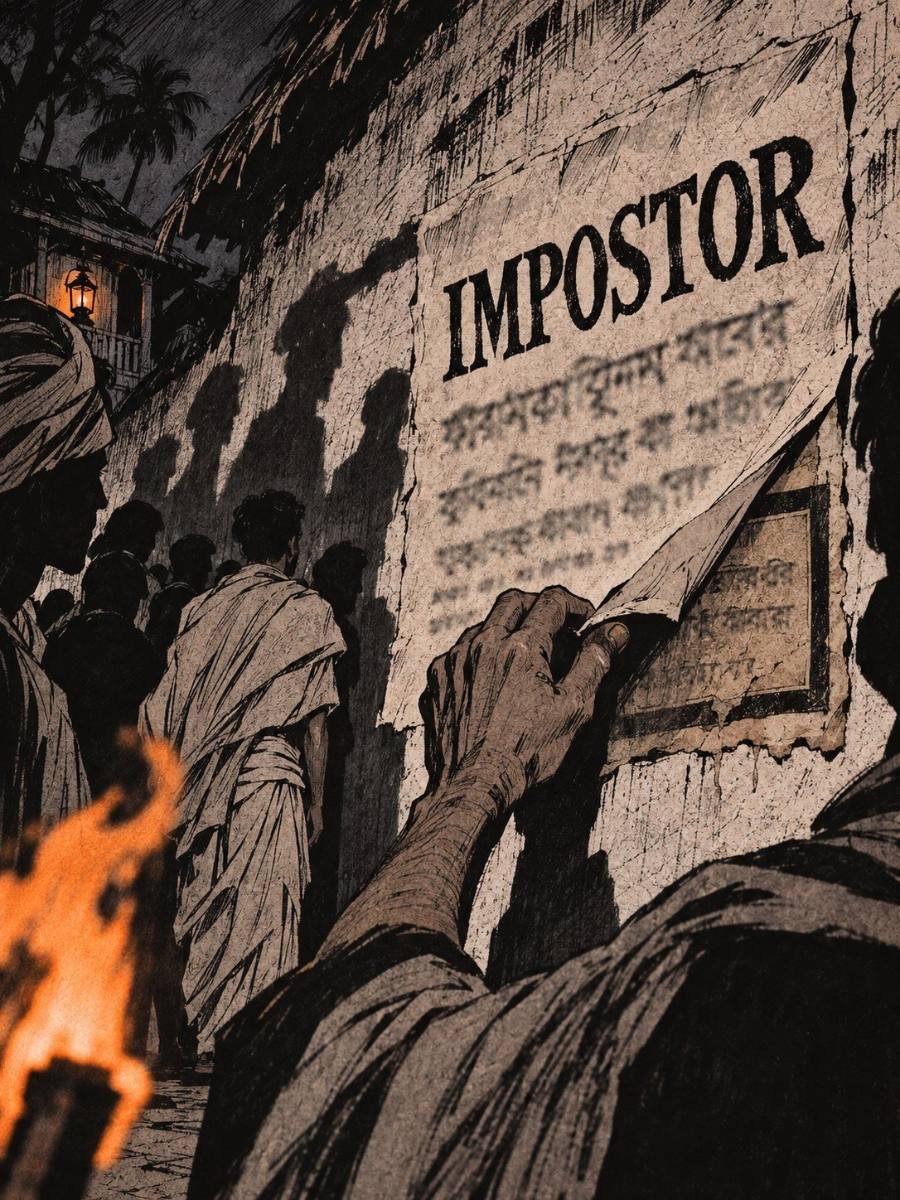
Jaidebpur had already made up its mind. On 15 May 1921, a mass meeting of thousands resolved that the ascetic was the second Kumar.
The estate had made up its mind too, the other way. On 3 June it issued a notice declaring him an impostor.
The notices did not calm anyone down. On 10 June, police at Mirzapur fired on a crowd protesting the notice, and one man died.
For years afterwards, the question split families and villages. He moved to Calcutta in 1924, joined the landholders’ association, and returned to Dhaka in 1929. (CH-EXC) (WIKI) (PRINT-2022) (DT-2014)
The wife who would not meet him
One person’s answer mattered more than anyone’s.
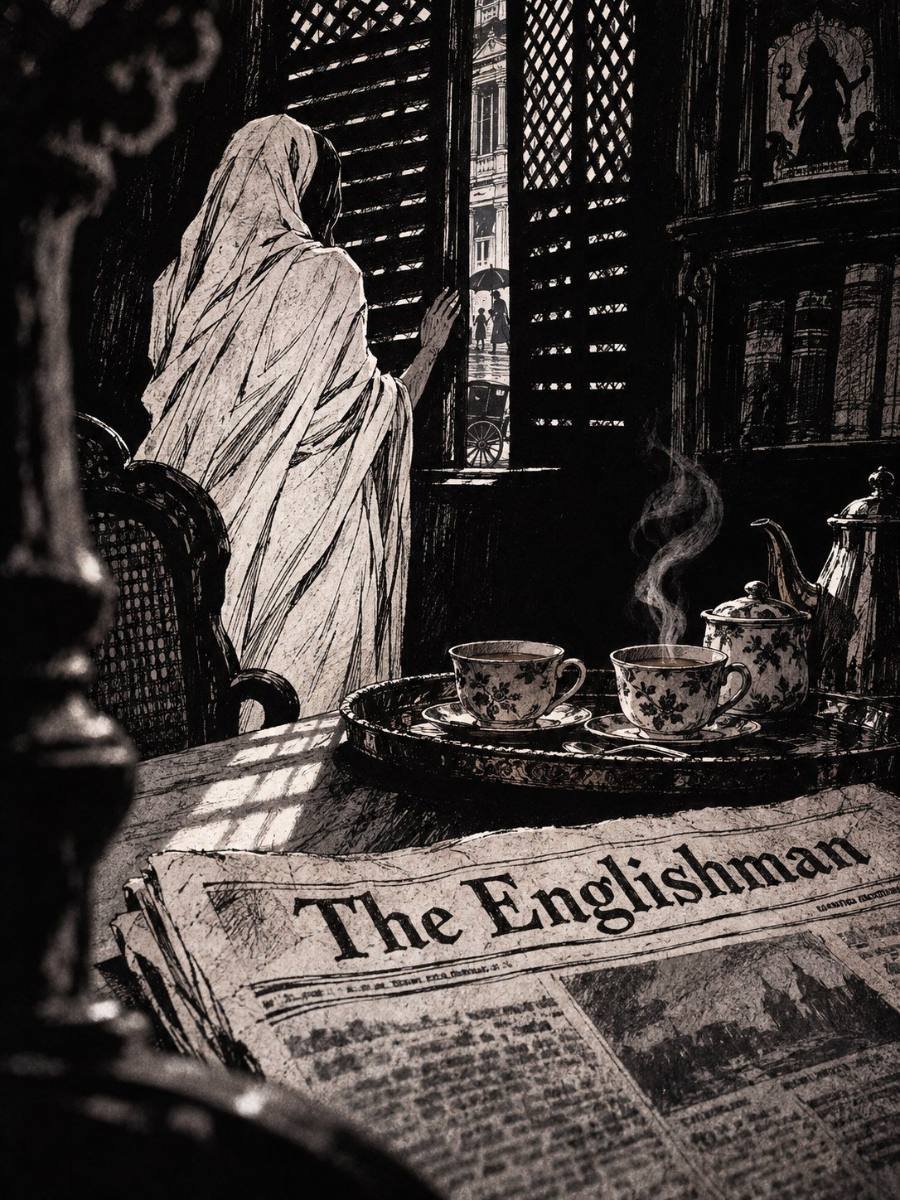
Bibhabati Devi was in Calcutta. She refused to meet the man and called him an impostor.
On 9 May 1921, a letter from her brother appeared in The Englishman, a Calcutta newspaper, disputing the claim.
Rumours about why the prince had died would follow her for the rest of her life. They were never proven, and nobody in her household was ever charged with anything. In court, her position never moved: her husband had died in Darjeeling in 1909. (DS-2018) (DS-MENON) (LIVELAW) (CH-EXC) (DS-2021)
The biggest civil trial in Bengal
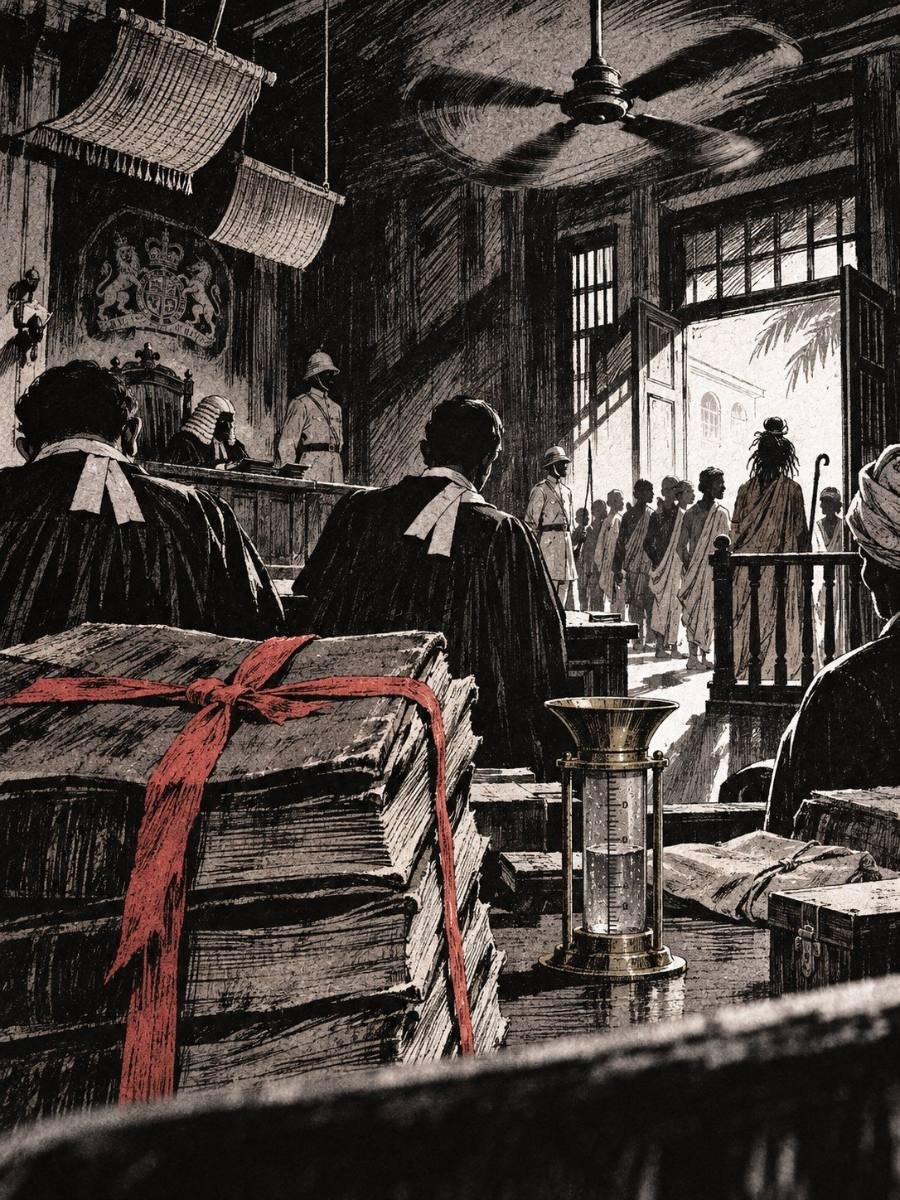
In 1930 the ascetic went to court. He asked for a declaration that he was “Kumar Ramendra Narayan Roy, second son of the late Rajah Rajendra Narayan Roy of Bhowal”, and for his one-third share of the estate.
Most sources give the filing date as 24 April 1930. The Privy Council report gives 24 July. The defendant on record was Bibhabati Devi, with the Court of Wards behind her.
The trial began in Dacca on 30 November 1933 before Pannalal Basu, then a subordinate judge.
It ran for 608 days of hearings. There were 1,584 witnesses, 1,069 for the plaintiff and 515 for the defence, some examined by commission in London. The record filled 26 volumes and 11,327 pages, with 2,000 exhibits.
Among the witnesses were the Kumar’s former mistress, Elokeshi, the guru Dharamdas Naga, and the meteorologist from Darjeeling. (PC-ST) (DS-2018) (DS-2021) (LIVELAW) (PC-VLEX)
The judge who typed alone
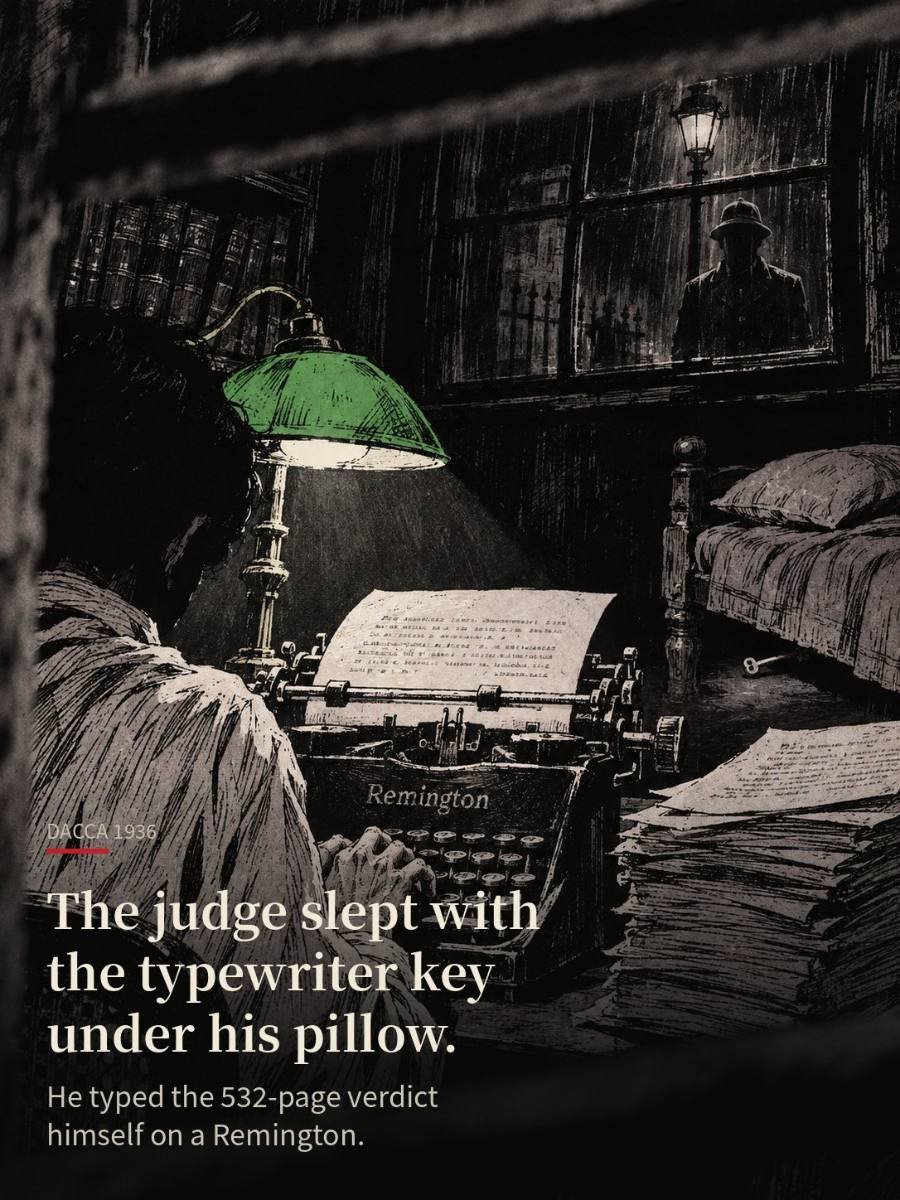
Pannalal Basu did not trust anyone with his verdict.
He refused a typist and typed the judgment himself on a portable Remington. At night he slept with the key under his pillow. His son later said it ran to 532 closely typed foolscap pages.
He turned down the district magistrate’s offer of police protection. A plain-clothes officer was posted outside his house anyway.
On 24 August 1936 he read the result: “I find that the plaintiff is Ramendra Narayan Roy, the second son of the late Rajah Rajendra Narayan Roy of Bhowal.” The decree also ordered that Bibhabati Devi “cease her life as a widow”.
The next day Basu decided it was not safe to stay in Dacca and moved his family to Calcutta. (LIVELAW) (PC-VLEX)
Affirmed in London
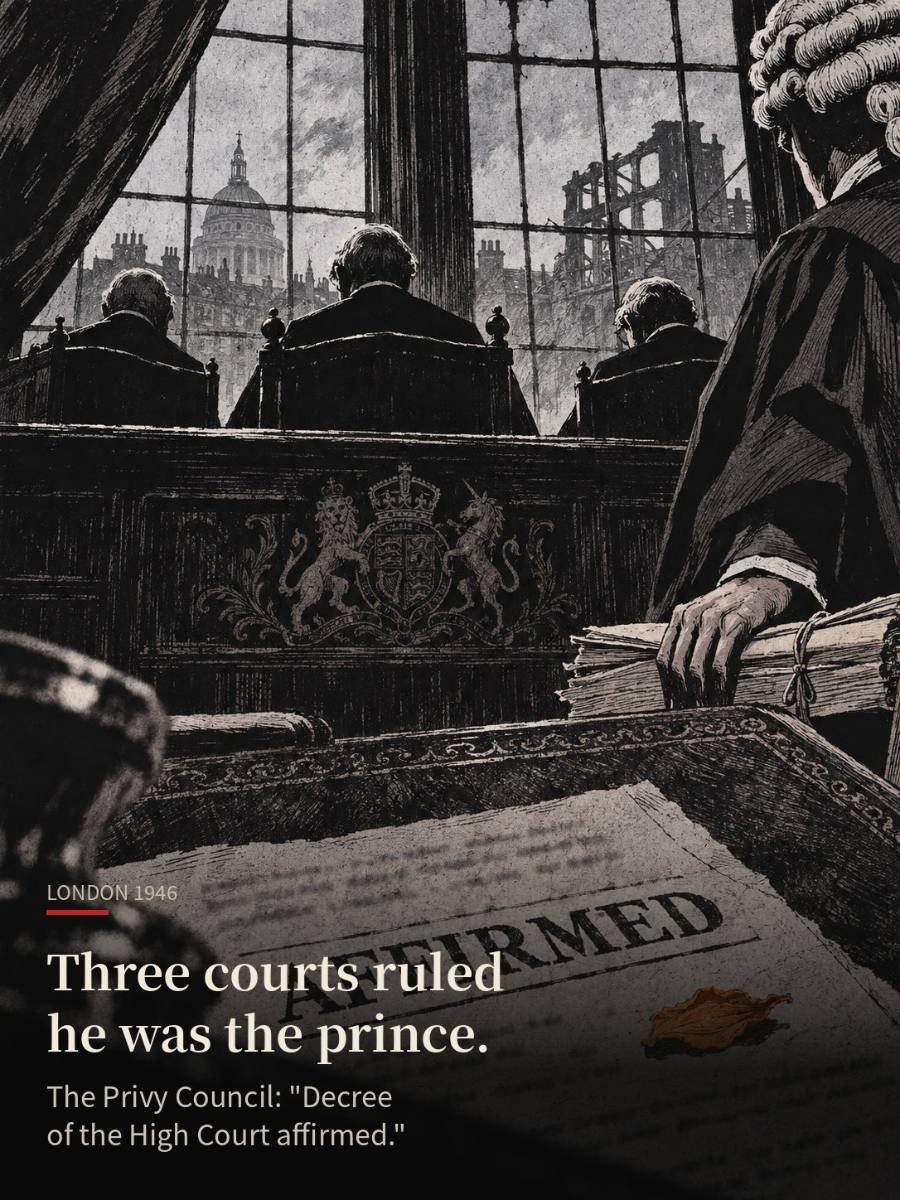
The widow appealed on 5 October 1936.
A Special Bench of the Calcutta High Court, Justices Costello, Biswas and Lodge, heard it. Lodge dissented. Biswas wrote that he was “unable to trace a single error of fact”. On 25 November 1940, the decree was affirmed by a majority of two to one.
The last stop was the Privy Council in London, the highest court of appeal for British India. Leave was sought in 1943, and wartime bomb damage pushed the hearing back to 1945.
On 30 July 1946, Lord Thankerton, Lord du Parcq and Sir Madhavan Nair gave their answer in six words: “Decree of the High Court affirmed.”
They did not say the ascetic was the prince. They said the Board would review the evidence for a third time only in exceptional circumstances, and this was not one. (DS-2021) (PC-VLEX) (LIVELAW) (WIKI) (SWARB)
Dead within days
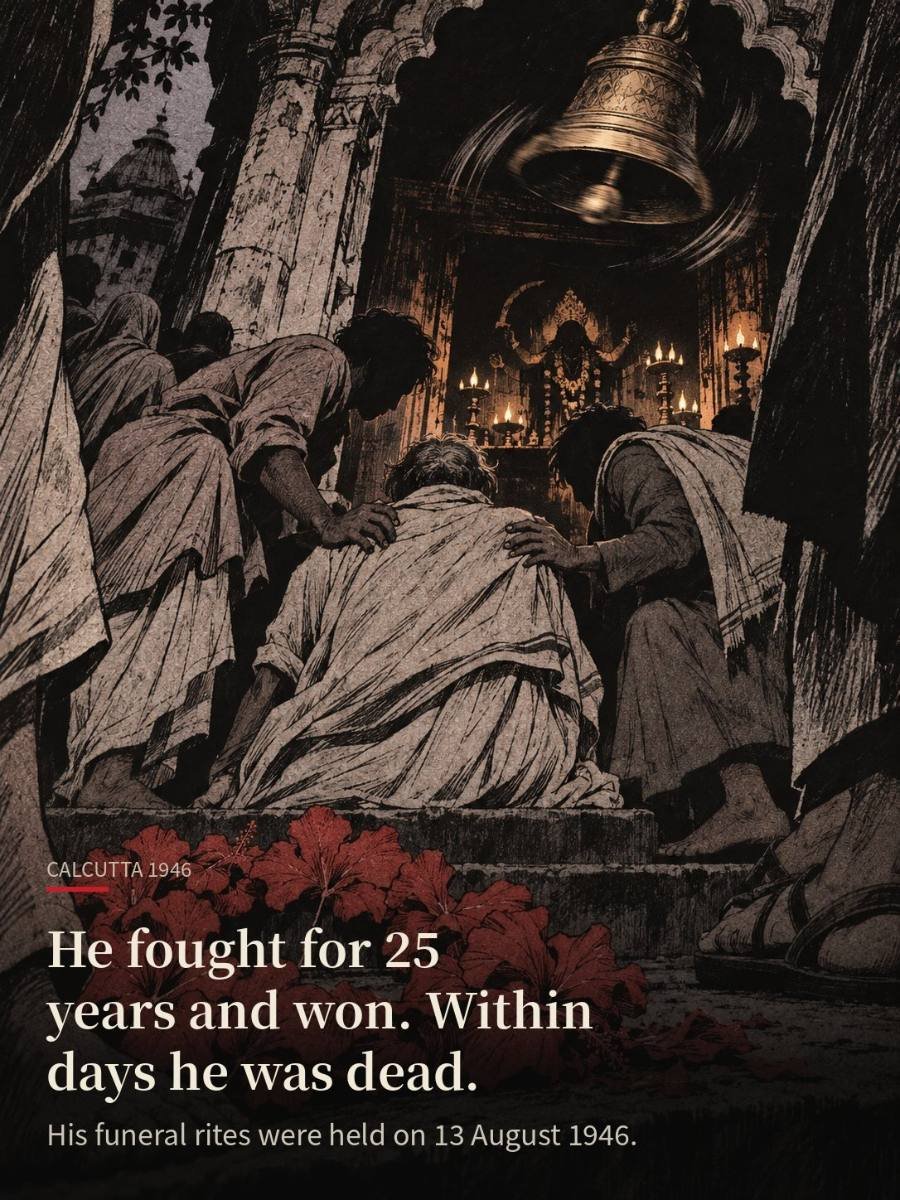
After about twenty-five years of fighting, he had won.
He fell ill the evening after the verdict, on a visit to a Kali temple in Calcutta. Most sources say he died two days later. A New Zealand paper that November said six days, under the headline “WON CASE—THEN DIED”.
His funeral rites were held on 13 August 1946.
The widow and her supporters took his death as divine judgment. (DS-2018) (DS-2021) (DS-MENON) (BPB-1946) (PRINT-2022)
The widow by the river
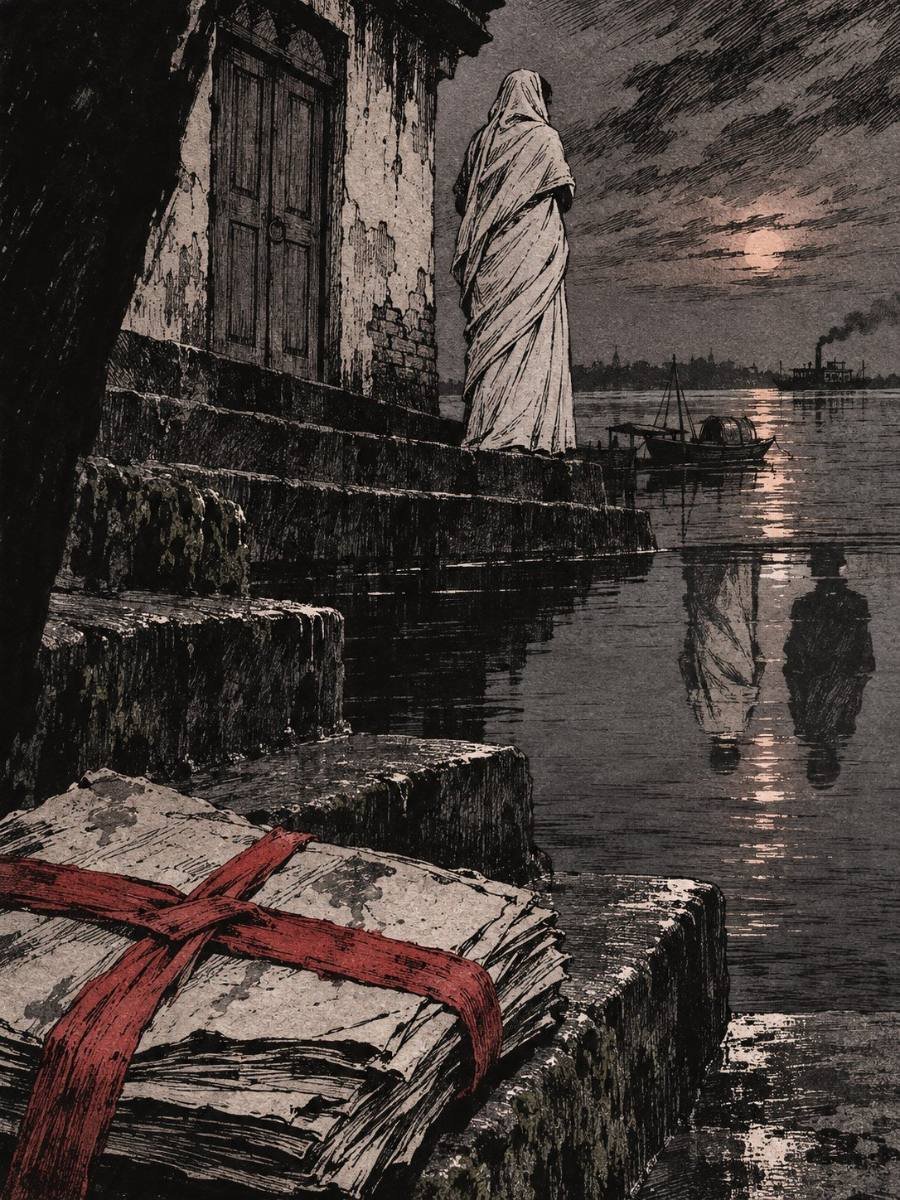
Bibhabati Devi never accepted him. She refused the inheritance that came to her through the man the courts had called her husband.
A family memoir says she spent many years in a house beside the Ganges at Uttarpara, north of Calcutta.
The historian Partha Chatterjee spent years on the case for his 2002 book A Princely Impostor?. One reviewer noted that he stays “agnostic” on whether the ascetic was really the prince.
Three courts ruled that he was. That is a legal finding, made on civil evidence. It is not a scientific proof, and in 1946 there was no test that could have given one.
So the question the crowd asked on the Buckland Bund in 1921 has never had a final answer. Who, exactly, was the man with the ash on his hands? (DS-MENON) (SETU) (JAOS-2003) (PUP) (PC-VLEX)
Case notes: the Bhawal Sannyasi
In 1909 Kumar Ramendra Narayan Roy, second son of the Raja of Bhawal in East Bengal, was reported dead at Darjeeling and cremated. Around 1921 an ash-covered ascetic on the riverfront at Dacca was recognised as him. After a 608-day trial and two appeals, the Privy Council in London affirmed in 1946 that he was the Kumar. He died within days (PC-VLEX) (LIVELAW) (DS-2018).
Where the case stands (as of November 2026)
Closed in law. On 30 July 1946 the Privy Council affirmed the decree declaring the claimant to be Kumar Ramendra Narayan Roy (PC-VLEX) (PC-ST). The Board declined to review the facts a third time, so the ruling rests on the trial court’s findings (SWARB).
The identity question was decided on civil evidence. No scientific test existed, and the historian Partha Chatterjee stays “agnostic” on it (JAOS-2003).
Timeline
| When | What happened |
|---|---|
| 28 Jul 1884 | Ramendra Narayan Roy, second son of the Raja of Bhawal, is born (BANGLA) |
| 20 Apr 1909 | The second Kumar’s party reaches Darjeeling and moves into “Step Aside” (PC-VLEX) (CH-EXC) |
| 8 May 1909 | He is “taken for dead”; the two sides dispute the hour (PC-VLEX) |
| 9 May 1909 | A funeral procession and cremation at the new sasan, Darjeeling (both sides agree one took place) (PC-VLEX) |
| c. Dec 1920 – Jan 1921 | An ash-covered ascetic appears on the Buckland Bund, Dacca (CH-EXC) |
| 12 Apr 1921 | He arrives at Jaidebpur on an elephant (CH-EXC) |
| 4 May 1921 | Pressed by his sister, he declares he is the second Kumar (CH-EXC) |
| 3 Jun 1921 | The estate issues a notice calling him an impostor (CH-EXC) (WIKI) |
| 24 Apr 1930 | Suit filed in Dacca (one report gives 24 July) (DS-2018) (PC-ST) |
| 30 Nov 1933 | Trial opens before Pannalal Basu (DS-2018) (LIVELAW) |
| 24 Aug 1936 | Basu rules for the plaintiff (PC-VLEX) (LIVELAW) |
| 25 Nov 1940 | Calcutta High Court affirms, 2–1 (PC-VLEX) |
| 30 Jul 1946 | Privy Council: “Decree of the High Court affirmed.” (PC-VLEX) (SWARB) |
| 13 Aug 1946 | Funeral rites for the claimant, who died within days of the ruling (DS-2021) |
Evidence locker
Real photographs and records only, with our markings. Illustrations elsewhere in this file are AI-generated.
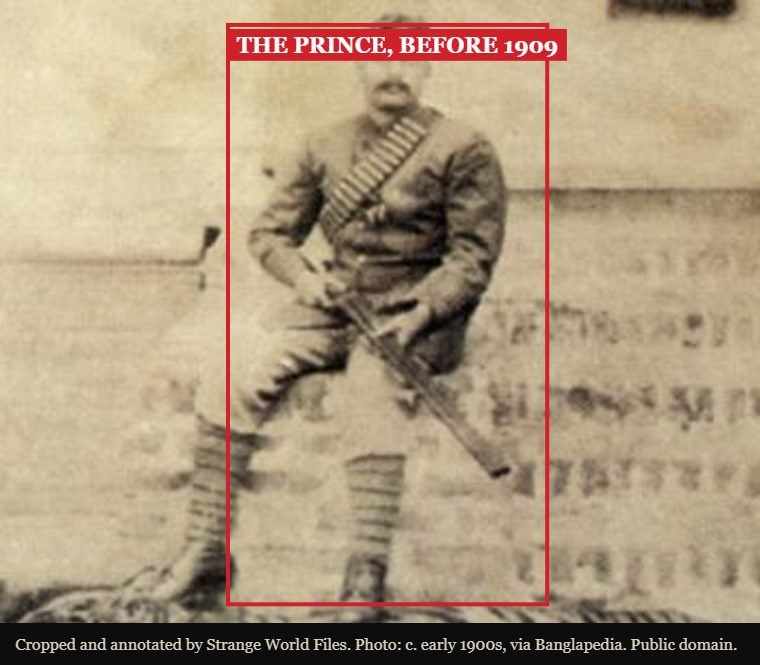 EXHIBIT A · TAP TO ENLARGE
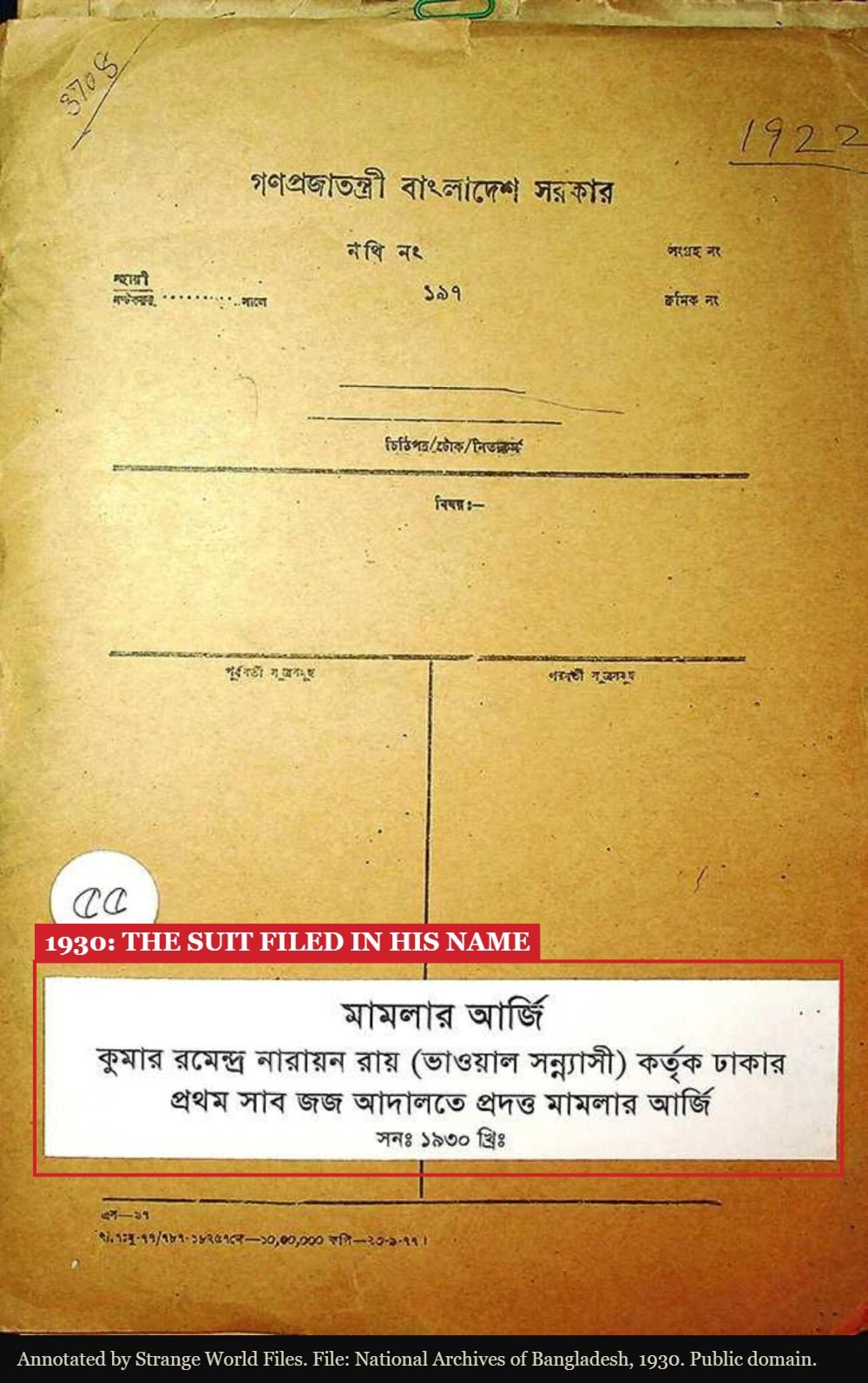 EXHIBIT B · TAP TO ENLARGE
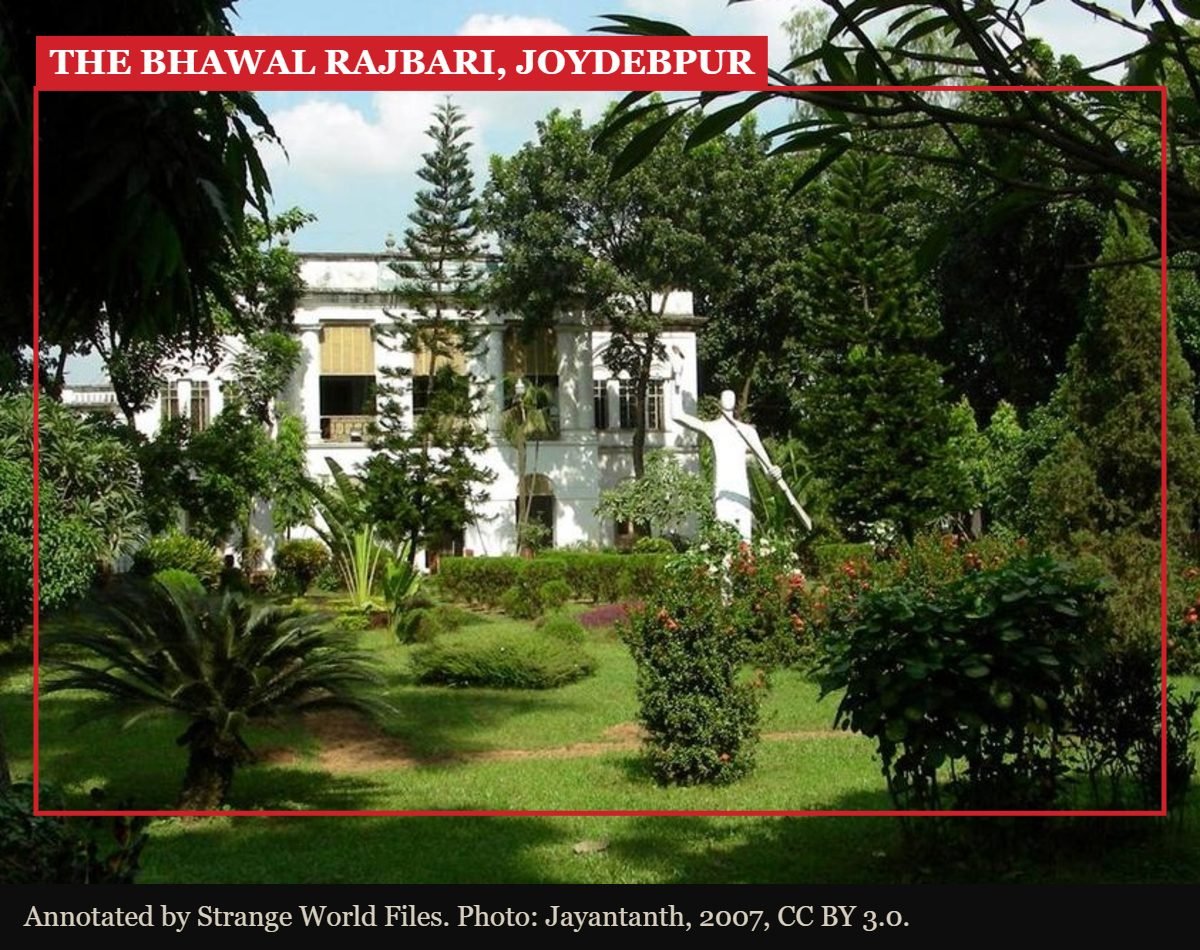 EXHIBIT C · TAP TO ENLARGE
Where the records disagree
| Detail | What sources say |
|---|---|
| Hour he was “taken for dead” | Shortly before midnight (widow) versus “about dusk, between seven and eight o’clock” (claimant) (PC-VLEX) |
| What interrupted the cremation (his version) | Rain, a storm, a thundershower, a thunderstorm or a hailstorm (LIVELAW) (PRINT-2022) (DS-2018) (FA-2002) (BANGLA) |
| When the suit was filed | 24 April 1930 versus 24 July 1930 (DS-2018) (PC-ST) |
| Number of witnesses | 1,584 (1,069 + 515), 1,039 + 479, or “nearly 1,500” (LIVELAW) (PRINT-2022) (FA-2002) |
| Mass meeting at Jaidebpur | 15 May or 16 May 1921 (CH-EXC) (PRINT-2022) |
| Trial judgment date | 24 August 1936 in court records; one encyclopedia gives 22 December 1937, which is wrong (PC-VLEX) (BANGLA) |
| How soon he died | Two days after the verdict in most accounts; six days in a 1946 wire story (DS-2018) (BPB-1946) |
What we still don’t know
- Who, if not the Kumar, was cremated at Darjeeling on the morning of 9 May 1909.
- What the Darjeeling meteorologist actually told the court about the weather that night.
- Where the ascetic was between 1909 and 1920; only his own account covers those years.
- Why Bibhabati Devi never once agreed to meet him.
What happened after
Pannalal Basu later became a West Bengal minister (LIVELAW). The case became the 1975 film Sanyasi Raja, starring Uttam Kumar, and later the 2018 film Ek Je Chhilo Raja (TRIB-2011) (WIKI). The Bhawal Rajbari at Joydebpur is now used as a government office (DS-2016).
Editor’s note
What stayed with me most was the ending. He fought for about twenty-five years, through 608 days of hearings in Dacca, a split appeal in Calcutta and a final ruling in London, and then he was dead within days of winning. Most of us know how draining it is to put right even one small unfairness in ordinary life. It takes up your thoughts and wears out your days. This man spent decades simply trying to have the world agree on who he was. I honestly can’t decide whether to be glad he was recognised in the end, or to grieve for all the years that went into it.
If I had to choose, I lean a little towards believing he really was the prince. What I keep coming back to is that his own family recognised him. His sister pressed him until he said it, and thousands of people on the estate were sure. When you have known someone for a long time, there is a moment, even if their face has changed, when a habit of speech or an expression makes you think: that’s him. Of course families can be wrong too. And that leaves the hardest part. His wife, the person who knew him most closely, said no until the very end and refused the inheritance. I still don’t know how to weigh her judgment against everyone else’s.
I chose this case because I would like to talk about it with our readers in India. It is one of the most famous trials in the history of Bengal, and at its heart is a question anyone can ask themselves: if someone in my family came back like that, years later and changed beyond easy recognition, would I know them?
— Strange World Files
Case file summary
- What: A Bengal prince reported dead and cremated in 1909; an ascetic who appeared in 1921 was ruled by three courts to be him
- Where: Darjeeling; Dacca (Dhaka) and Jaidebpur (today’s Gazipur), Bangladesh; Calcutta; London
- When: 1909 to 1946
- Who: Kumar Ramendra Narayan Roy of Bhawal; Bibhabati Devi; Judge Pannalal Basu
- Status: Closed in law (Privy Council, 30 July 1946); the claimant died within days
Illustrations are AI-generated artistic interpretations, not photos. No real person is depicted with a recognizable face. Read how we research and illustrate these files.
Sources
- vLex, *Srimati Bibhabati Devi v Kumar Ramendra Narayan Roy* [1946] AC 508 (Privy Council, 30 July 1946), partial judgment text
- SupremeToday, *Srimati Bibhabati Devi v. Kumar Ramendra Narayan Roy*, 1946 Supreme (SC) 32, PC Appeal No. 17 of 1945 (header and opening only; paywalled)
- swarb.co.uk, “Srimati Bibhabati Devi v Kumar Ramendra Narayan Roy and Others: PC 30 Jul 1946” ([1946] AC 508, [1946] UKPC 1)
- Partha Chatterjee, *A Princely Impostor?* (Princeton UP, 2002), ch. 1 “The Facts of the Matter”, publisher sample PDF hosted by buecher.de
- Princeton University Press, book page for *A Princely Impostor?*
- Rosane Rocher, review of *A Princely Impostor?*, *Journal of the American Oriental Society* 123:4 (1 October 2003), via vLex
- Lucian W. Pye, review, *Foreign Affairs*, September/October 2002
- Sanjoy Ghose, “The Typewriter Still Works – The Story Of A Judge Who Presided Over India’s Most Sensational Trial”, LiveLaw, 17 July 2020
- Praveen Swami, “The poisoned prince of Bhowal who rose from his pyre…”, ThePrint, 26 December 2022
- Waqar A. Khan, “The Legendary Tale of The Bhawal Sannyasi”, *The Daily Star* (Dhaka), 3 December 2018 (date from Wikipedia citation; not shown on page)
- Waqar A. Khan, “Legacy of the Kumar of Bhawal”, *The Daily Star*, 26 September 2021
- Apurba Jahangir, “The Haunted Estate”, *The Daily Star*, 12 May 2016
- Sreelata Menon, “A prince who rose from the dead”, *The Daily Star* (undated)
- Tim Steel, “The Bhawal estate scandal”, *Dhaka Tribune* (opinion), 7 November 2014
- Sirajul Islam, “Bhawal Case”, Banglapedia (Asiatic Society of Bangladesh), last edited 18 June 2021
- Shalini Rawat, review of *The Prince and the Sannyasi*, *The Tribune* (Spectrum), 7 August 2011
- *Bay of Plenty Beacon* (NZ), “WON CASE—THEN DIED”, 27 November 1946, p. 6, Papers Past
- Gopa Bhattacharjee, “Finding Bibhabati Devi: Queen of Bhawals”, *Setu*, September 2020
- Wikipedia, “Bhawal case”