Westall UFO: A Whole School Saw It in 1966. No Photo Survives
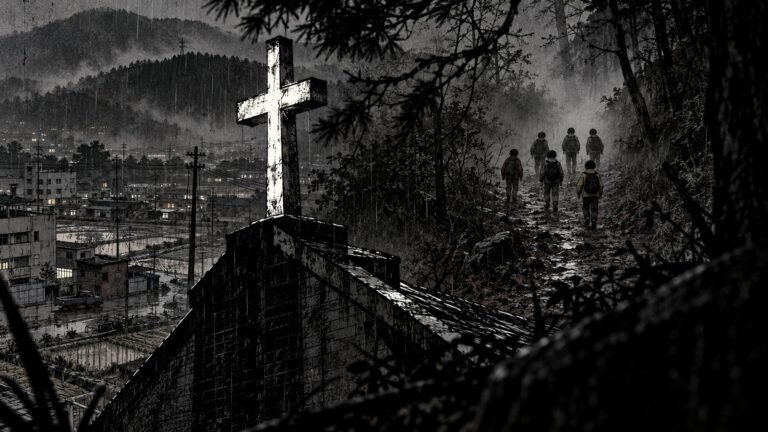
Westall High School, Clayton South, Melbourne, 6 April 1966. During morning break, hundreds of students and some teachers watched a silver object over the school oval. Children found a circle of flattened grass. A teacher counted five small planes. The next day a newspaper suggested a weather balloon.

Narrated Mystery: press play and hear the whole case read aloud, like a true crime podcast episode, or an audiobook for a long drive (about 9 minutes). The narrator is an AI voice.
What the record shows
- What: A daylight mass sighting of an unidentified object by school students and teachers
- When: Wednesday 6 April 1966, mid-morning
- Status: No official finding. Balloon explanations proposed and disputed
Still uncertain
- What the object was. No authority has ever published a finding.
- Who flew the light aircraft. No pilot has ever been identified.
- Where the photographs and the television film went.
“Flying saucers outside!”

How do hundreds of people watch the same thing in broad daylight and leave behind not one picture of it?
Wednesday 6 April 1966, mid-morning, Clayton South, on the south-eastern edge of Melbourne. A science teacher at Westall High School was in the middle of a lesson when a first-year student ran into the room. There were flying saucers outside, the child said. Flying saucers outside. (RYAN)

The teacher was not amused. Then recess came, he took his class out to the oval, and he looked up.
By the end of the morning, according to the researcher who has spent two decades collecting accounts, about 300 of the school’s 485 students were standing on and around that oval. A woodwork teacher later put it in one line: “Westall High School, as a teaching institution, ceased!” (RYAN)
A Wednesday before Easter
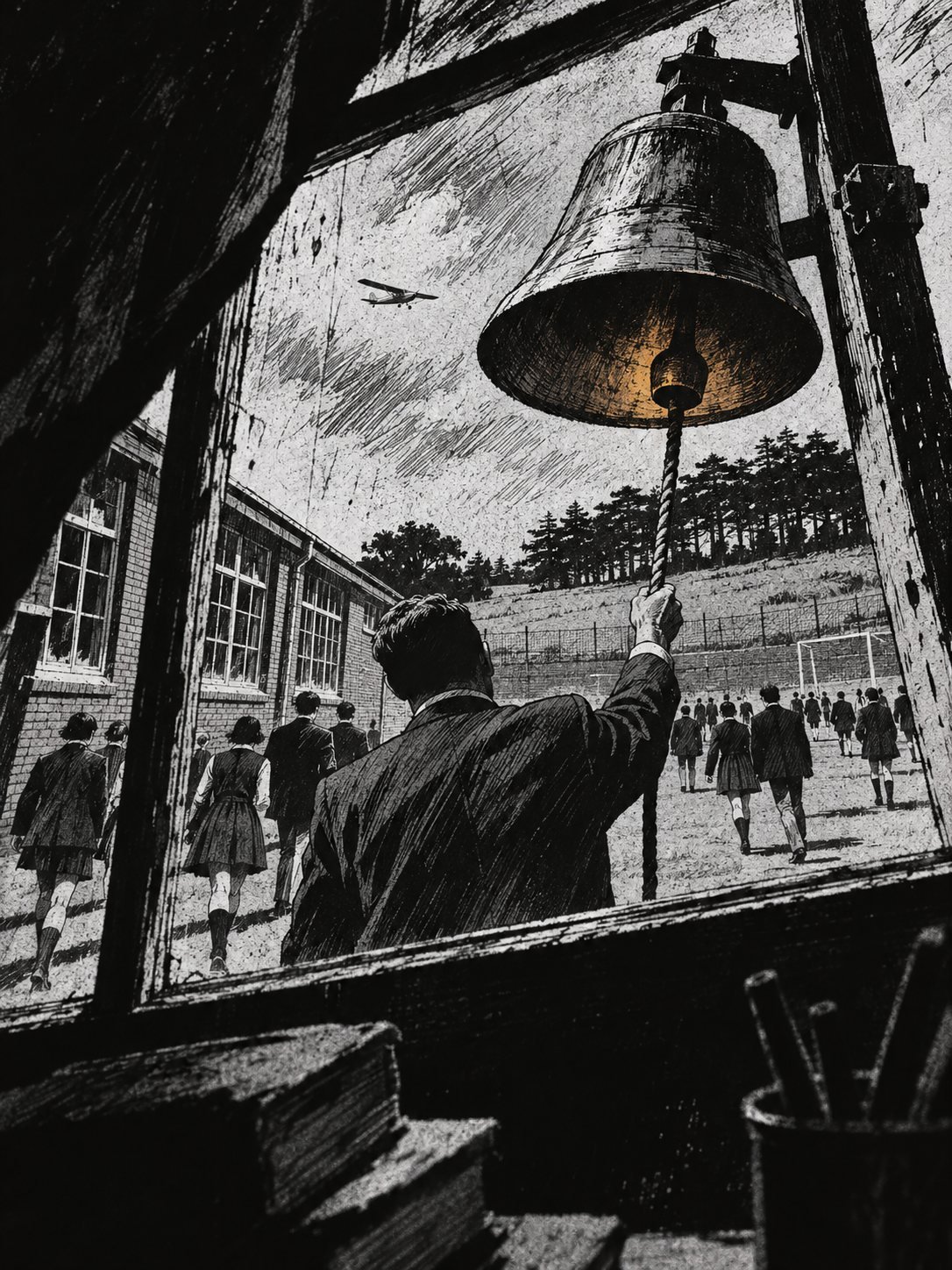
Westall in 1966 was a new suburb with paddocks still between the houses. The city centre was about 21 kilometres away. Moorabbin Airport, busy with training flights, was about four. (RYAN)
It was the last week of term, two days before Good Friday. The sky was cool and blue with a few white clouds. Around 10:15, a physical education class of about fifty students and two teachers was out on the oval. They were the first to notice something low in the sky. (RYAN)

What did the Westall students say they saw?
The fullest account comes from Shane Ryan, a former teacher and academic who began tracing witnesses in the 2000s and has gathered more than 140 statements. His summary, published on the City of Kingston’s local history site: a silver or white object, shiny, shaped like an upturned bowl, roughly the size of one or two cars. No sound. No wings, windows or markings. At times it came down to the height of the gum trees and the goal posts. (RYAN) (STAR)
Those are memories recorded forty years on. What was written down in 1966 is thinner, and different in places.
A twelve-year-old filled in a report form for a flying saucer society the very next day. She gave the time as 10:20, the duration as fifteen minutes, and described two circular objects moving “faster than some light aircraft in vicinity.” (P1947)
The science teacher spoke to the local weekly, the Dandenong Journal, two weeks later. To him the object was “silver grey and seemed to ‘thicken’ sometimes,” and he also compared it to “a thin beam of light, about half the length of a light aircraft.” He watched for about twenty minutes. (SLV) (P1947)
A second-year student drew it for the same paper: round, with a hump on top. (SLV)
Over the fence

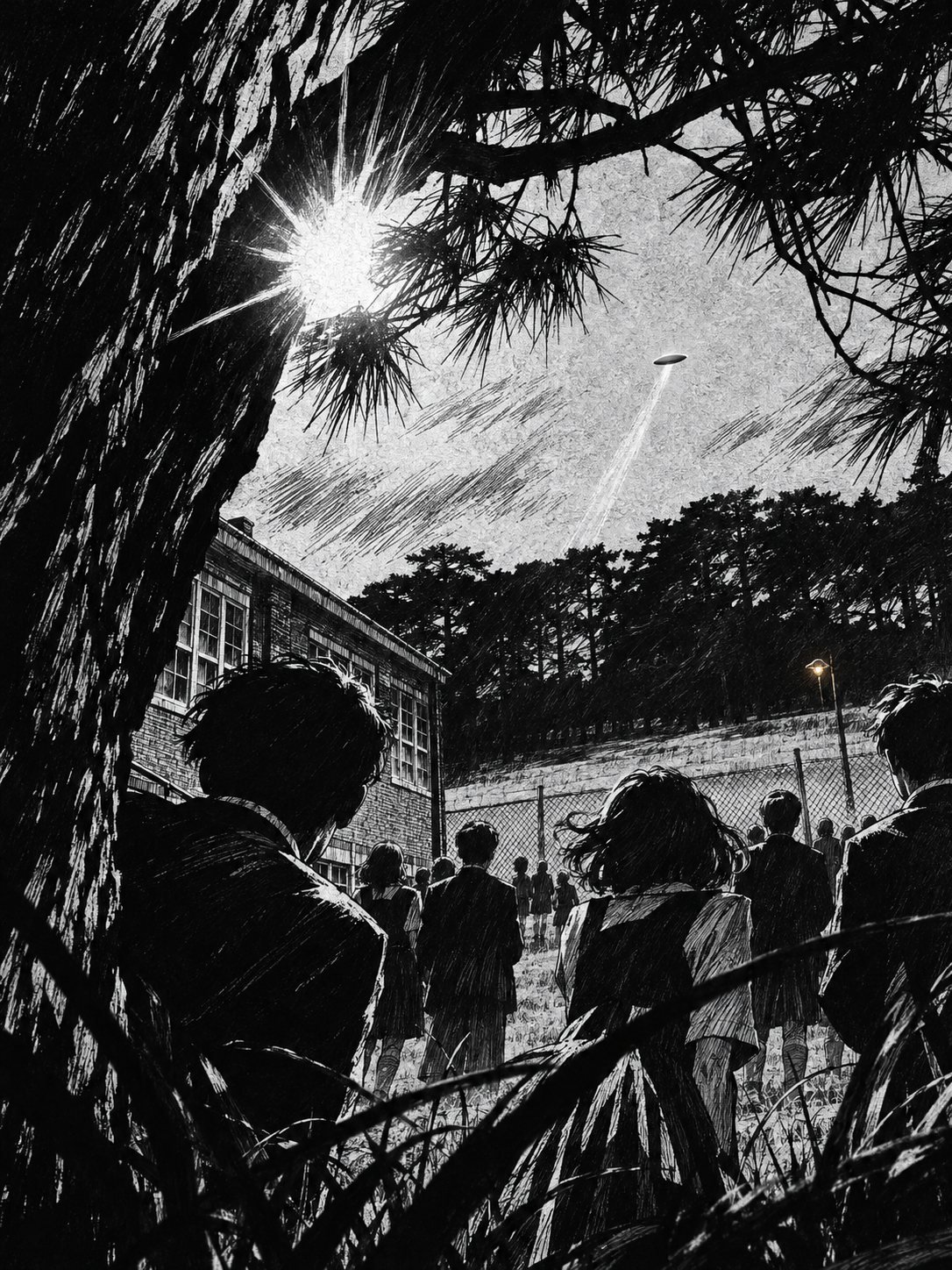
South of the school, about 400 metres away, stood a property called The Grange with a clump of tall pines. Witnesses say the object drifted that way and sank behind the trees. (RYAN)
Students went after it. A child’s account printed that year in a school magazine describes the “dazzling silvery object flying around some pine trees,” then a run to the paddock, then a class that got back “fifteen minutes late.” (P1947)


Some witnesses told Ryan the object landed for a few minutes. Australian Skeptics investigator Richard Saunders, reviewing the case in 2026, counted two people who claim a landing and wrote that it “cannot be verified.” (RYAN) (SKEPTICS)
What was the circle in the paddock?

What several children did report finding was a mark in the long grass.
The 1966 report form describes flattened, waist-high grass about ten yards across, some 600 yards from the school. The school-magazine account says the grass “had been utterly crushed against the earth” in a patch 25 to 30 feet wide. (P1947)
Later testimony adds more: a perfect circle, stalks swirled one way, a discoloured ring at the edge. Those details come from recollections gathered decades afterwards. (RYAN)
Members of the Victorian Flying Saucer Research Society reached the site on Good Friday, two days later, and photographed a circle. The society says it can no longer find the photographs or its notes. The local paper’s contract photographer said he took pictures too. They were never printed. (RYAN)
Five small planes

Then there are the aircraft.
The science teacher told the Dandenong Journal that five light aircraft circled the object at fairly low height, in what the paper called a “cat and mouse” game. The school-magazine writer saw “many private aircraft, mainly Cessna” head for the pines before the object “streaked away leaving the planes far, far behind.” (P1947) (SLV)

The paper tried to find the pilots. Moorabbin officials said a dozen aircraft had taken off that morning. The air force said it had nothing flying in the area. One local pilot said he had been “somewhere in that area” and noticed nothing unusual. (P1947)
Nobody came forward. On 21 April the Journal’s front page asked: “WHO WERE 5 PILOTS?” (SLV)
Sixty years later the question is still open.
“School silent”

The Journal’s first front page, a week earlier, carried a different headline: “FLYING SAUCER MYSTERY: SCHOOL SILENT.” (SLV)
Witnesses say the headmaster called an assembly and told students that flying saucers did not exist, that they had seen nothing of importance, and that they were not to talk about it or speak to reporters. That is the students’ recollection. But there is a trace of it in print from the time. A Journal columnist wrote on 21 April that children told him: “The head master said we are not to say anything.” (RYAN) (P1947)

The science teacher and the student who drew the object both gave interviews anyway. Both were reprimanded, according to Ryan. (RYAN)
Was the Westall UFO a balloon?

Melbourne’s daily paper, The Age, ran the story the next morning on page six. “An unidentified flying object seen over the Clayton-Moorabbin area yesterday morning might have been a weather balloon,” it began. (P1947)
The Weather Bureau had released a balloon at Laverton, west of the city, at 8:30 a.m., and westerly winds could have carried it across. The paper added that no commercial, private or air force pilot had reported anything unusual. (SLV) (P1947)

That was the official explanation, and it was a newspaper paragraph. No investigation report on Westall has ever been made public. (STAR) A balloon was offered again in 2025, for a thermal video of a glowing object off Yemen that a Hellfire missile appeared to hit without exploding.
The men nobody can document
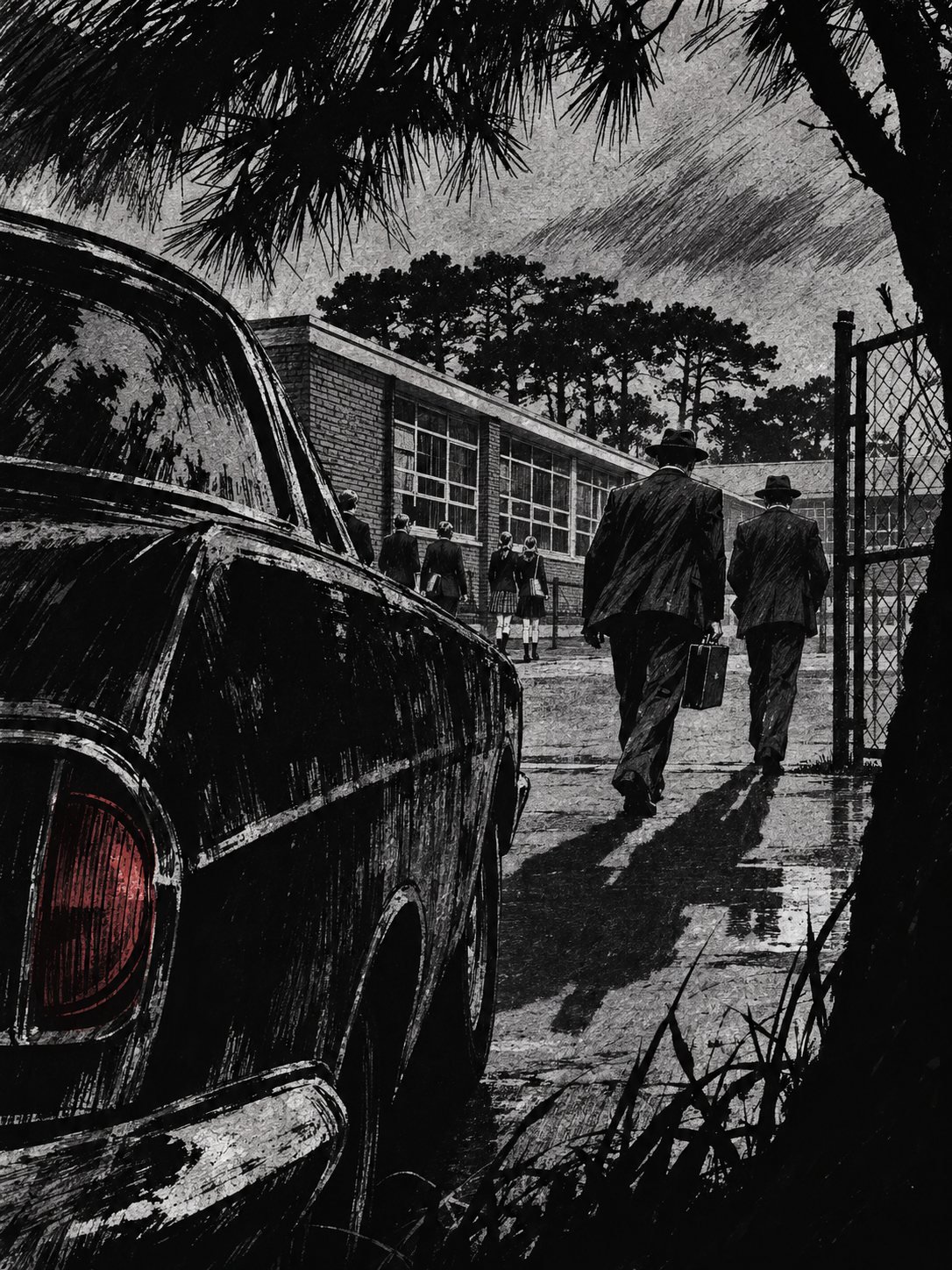
This is the part of the story that grows in the retelling, so it needs care.
Of the people Ryan interviewed, 24 recalled seeing police or military personnel at the paddock. Some said army, some air force. A few remembered men in dark suits at the school, said to be “from the Government,” questioning students in the headmaster’s office. One recalled soldiers with jeeps. (RYAN)
All of this is recollection from decades later. No contemporary document has been produced that shows a cordon, a search or an order of secrecy. In 1966 an army spokesman told the Journal there was no record of personnel in the area. (P1947)
One near-contemporary note does exist. The American atmospheric physicist James McDonald visited Melbourne in 1967 and interviewed the science teacher. According to an account drawn from McDonald’s journal, the headmaster “got on edge” and would not bring the teacher out to speak with the air force, which made no follow-up “to anyone’s knowledge.” (CHALKER26)
Evidence box: documented vs. claimed
| What it is | What it supports | Its limits | |
|---|---|---|---|
| Documented | The Age, 7 April 1966, p. 6 | Hundreds of children and some teachers watched an object during morning break; a balloon was suggested within a day | One short article; no reporter saw the object |
| Documented | Dandenong Journal front pages, 14 and 21 April 1966 | A named teacher’s description; light aircraft; the school’s silence | Local weekly; interviews one to two weeks later |
| Documented | Flying saucer society report form, 7 April 1966 | A child’s next-day account: 10:20, fifteen minutes, flattened grass | One witness, aged twelve |
| Documented | U.S. fallout programme report, 1 January 1968 | A HIBAL research balloon was launched on 5 April 1966 | Says nothing about where it came down |
| Claimed | The object landed and took off | Would rule out a drifting balloon | Two witnesses, by one count; unverifiable |
| Claimed | Soldiers, a cordon, men in suits | A cover-up | Memories from decades later; no document |
| Claimed | Photos and TV film existed | The event was recorded | None can be found today |
Evidence locker
Real photographs and primary records only.
Timeline
| Date | Event |
|---|---|
| 6 April 1966, about 10:15 a.m. | A sports class on the oval notices an object (RYAN) |
| Same morning | Students gather; the object is said to drop behind the pines at The Grange; light aircraft seen |
| 6 April, evening | A Channel Nine news item reportedly airs; the film has not been found (RYAN) |
| 7 April | The Age: “Object perhaps balloon” (SLV) |
| 8 April (Good Friday) | Flying saucer society members photograph a circle in the grass (RYAN) |
| 14 April | Dandenong Journal: “FLYING SAUCER MYSTERY: SCHOOL SILENT” (SLV) |
| 21 April | Dandenong Journal: “WHO WERE 5 PILOTS?” (SLV) |
| 1967 | James McDonald interviews the science teacher (RYAN) |
| 8 April 2006 | Witness reunion for the 40th anniversary (CHALKER26) |
| 4 June 2010 | Documentary Westall ’66: A Suburban UFO Mystery premieres (CHALKER26) |
| April 2014 | Keith Basterfield proposes the HIBAL balloon (BASTERFIELD14) |
| 2025 | Grant Lavac lodges parliamentary e-petition EN7396 (STAR) |
| 6 April 2026 | ABC’s Australian Story airs “The Westall UFO Mystery” (CHALKER26) (SKEPTICS) |
Forty years of quiet

For a long time the case lived mostly in the memories of the people who had been there. Then, on 8 April 2006, former students met again at a hall near the old school. (CHALKER26)
Ryan’s interviews fed a 2010 documentary directed by Rosie Jones. The local council built a playground with a silver saucer at The Grange Reserve, and a marker on Osborne Avenue now tells the story close to the site. (CHALKER26) (WIKI) (HMDB)
The explanations, side by side
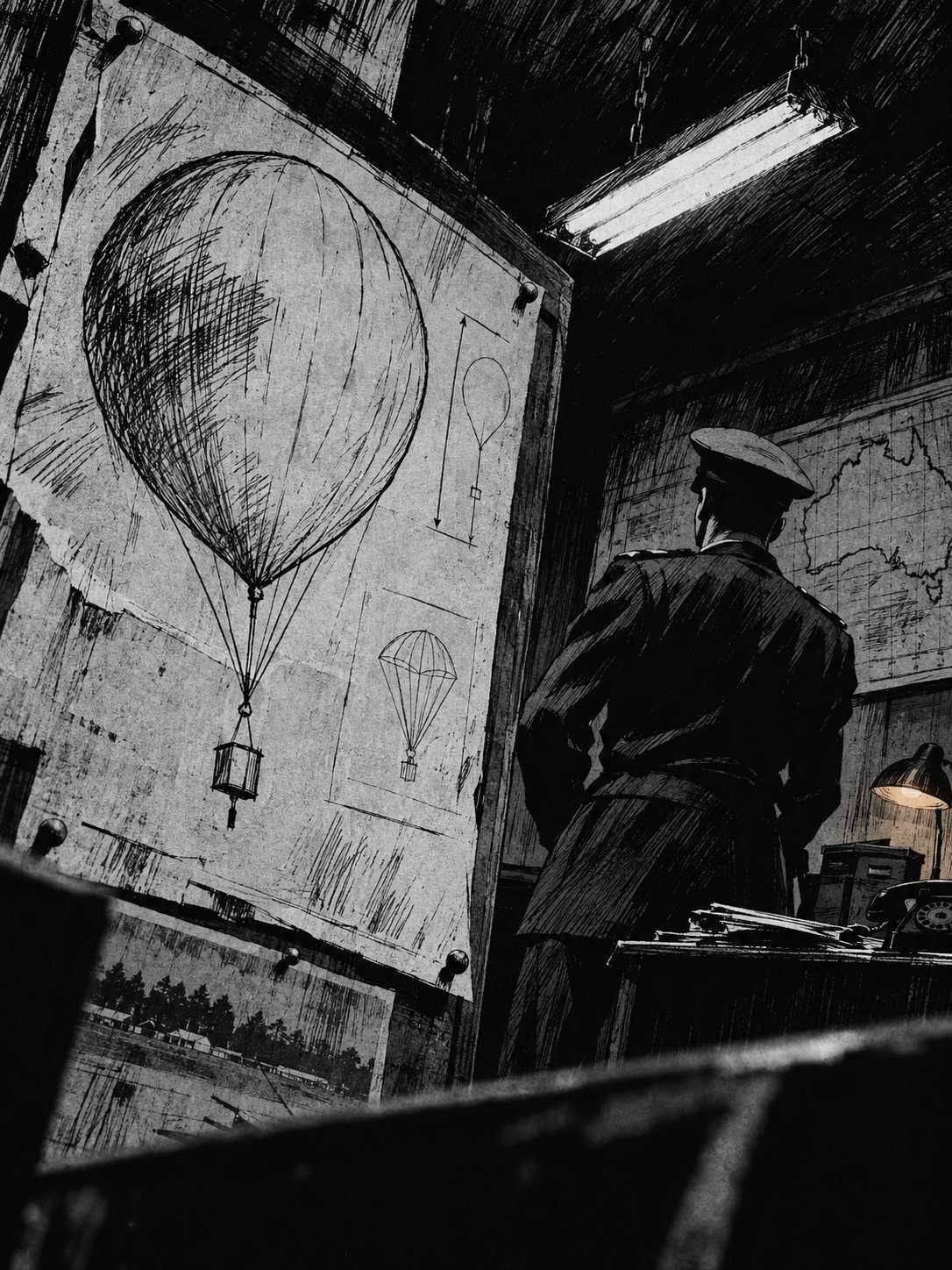
None of these is proven. The first three are conventional; the last is the fringe reading.
A weather balloon. The 1966 answer. In April 2026 Saunders called it “a very likely candidate,” pointing to The Age’s forecast of “fresh to strong and gusty” west to south-west winds, the right direction to bring a Laverton balloon to Westall. Ryan said on television that the winds blew the other way. (SKEPTICS)
Then the ground shifted. According to researcher Bill Chalker, Australian Story producer Rebecca Latham reported on 23 April 2026 that archived upper-air data put the Laverton launch at 9 a.m. and the balloon “too high and too far away,” bursting about 170 kilometres from Melbourne. In May, Saunders added a note to his own article: “We have new information that could rule out the weather balloon.” He has not yet said it is verified. (CHALKER26) (SKEPTICS)
A HIBAL balloon. HIBAL was a joint U.S.-Australian programme that sent very large balloons into the stratosphere from Mildura to sample fallout from nuclear tests. Each carried a payload of roughly 180 to 200 kilograms under a 12-metre parachute, and a light aircraft followed to trigger the descent by radio. In 2014 researcher Keith Basterfield suggested that flight 292, scheduled for 5 April 1966, strayed and came down near Westall. A silver shape, a chase plane and men arriving to collect equipment would all fit. (BASTERFIELD14) (MUTANTS)
The weak point is paper. The programme’s file series was destroyed in 1996, Basterfield found, and he wrote: “I now have no way of testing my hypothesis.” In 2017 he located a U.S. report confirming that flight 292 did launch on 5 April. Where it landed is not recorded. Chalker argues that surviving data points to a normal flight and calls both balloons “a very poor fit” for the testimony. (BASTERFIELD14) (BASTERFIELD17) (CHALKER26)
A towed target. Science writer Brian Dunning has suggested a nylon target drogue pulled by an aircraft for the later part of the sighting. (WIKI)
Memory. Saunders notes “inconsistent and changing accounts over the years.” Sixty years of reunions, films and interviews can shape what people recall. This does not explain what was seen. It limits how far late details can be trusted. (SKEPTICS)
An unknown craft. Many witnesses reject every balloon. “They say it wasn’t a weather balloon or hot-air balloon,” Lavac told a local paper. Supporters point to the number of witnesses and the object’s reported speed. Against it: no photograph, no radar record, no physical sample. (STAR)
Where the record disagrees
| Detail | What sources say |
|---|---|
| Time | About 10:15 (Ryan); 10:20 (1966 report form); “during morning break” (The Age); about 11 a.m. (Saunders) (RYAN) (P1947) (SKEPTICS) |
| Duration | “Several minutes” over the oval (Ryan); 15 minutes (report form); about 20 minutes (teacher, 1966) |
| Witnesses | “Hundreds” (The Age); about 300 of 485 (Ryan); 100 to 300 (Saunders); more than 200 (Star News); up to 100 (State Library) |
| Number of objects | One; two (report form); up to three (later accounts) |
| Laverton balloon launch | 8:30 a.m. (The Age, 1966); 9 a.m. (Latham, 2026, via Chalker) |
| HIBAL payload | About 180 kg; about 200 kg (MUTANTS) (BASTERFIELD14) |
| The “Clayton Calendar” account | A Westall High paper (State Library); a magazine from nearby Brown’s Road State School (Ryan’s correction) (SLV) |
Sixty years on

In 2025 Melbourne researcher Grant Lavac lodged an e-petition with the federal parliament, EN7396, asking for an independent inquiry. A local paper reported his claim that the Defence department has refused access to a Westall file under freedom of information. We could not confirm that from Defence, and we found no published government response to the petition. (STAR)
On the anniversary itself the national broadcaster devoted an episode of Australian Story to the case. Six days later Ryan spoke at Westall Library in Clayton South, where a forthcoming book was announced. (SKEPTICS) (LIBRARY)
What we still don’t know

- What the object was. No authority has ever published a finding.
- Who flew the light aircraft. No pilot has ever been identified.
- Where the photographs and the television film went.
- Where HIBAL flight 292 came down.
- Whether officials really visited the school. A week after the sighting the paddock had been burnt, witnesses say; who burnt it, and why, is not documented. (RYAN)
Where the argument is, and where we come down
Westall has the most clearly drawn argument in this batch, and the sharpest disagreement is not believers against sceptics but two researchers who both work from archives. Keith Basterfield proposed that the 6 April 1966 sighting was a HIBAL balloon — part of a joint US–Australian programme monitoring fallout from the British tests at Maralinga — pointing to flight 292, scheduled for 5 April 1966, and noting that the launch memo for that month’s four flights is missing. Bill Chalker, working the same National Archives material, calls HIBAL a non-starter: the Defence file shows no containment or security problem in April 1966, a May 1966 memo on the risks of descending instrument packages says nothing about Westall, and a scientist involved in HIBAL cited a 1968 Sydney incident, not Westall, as the programme’s famous flying-saucer case. Australian Skeptics, in Richard Saunders’s account, favours a Bureau of Meteorology balloon released from Laverton and disputes researcher Shane Ryan’s claim that the winds blew the wrong way; Brian Dunning splits the event in two, a balloon plus a towed target drogue for the pursuing aircraft. Witness-centred researchers reject all of it.
The archival side is better grounded than either the witness or the balloon case, and what it mostly establishes is absence. The research is real: files were obtained under Freedom of Information and the gap in the launch records is genuine. But a missing memo is equally consistent with a cancelled flight, and HIBAL records do show cancellations, so the strongest balloon evidence is absent paperwork rather than a documented flight. The testimony is extensive — well over a hundred accounts, adults included — but was systematically collected in the early 2000s, four decades later, and disagrees on the number of objects, their colour and size, whether anything landed, and how many circles were left in the grass. Contemporary material is thin: The Age reported next day that no commercial, private or RAAF pilot had reported anything unusual, and air force personnel who visited the field on 9 April found nothing of interest before the landowner burned it.
The argument exists because an official body never produced a file matching what hundreds of people remember. Something at the school was taken seriously enough that witnesses recall being told not to discuss it and a teacher’s film was reportedly taken, and no explanation was ever given — while the one candidate programme that would explain official reticence is precisely the one whose April 1966 launch paperwork is missing. Four decades of retrospective interviewing then did what retrospective interviewing does.
On the record as it stands, we put more weight on the object being mundane and the official handling being not, than on either the extraterrestrial reading or a confident HIBAL identification. First, the contemporary record holds no pilot report, no radar trace and no physical residue, which is hard to square with a large craft manoeuvring over suburban Melbourne at midday. Second, what has survived best — official visits, instructions to stay quiet, a confiscated film — fits a programme nobody wanted discussed. We could be wrong if a launch and recovery record for flight 292 turned up, converting the sceptical case from inference into documentation, or if contemporary 1966 material emerged describing something no balloon can account for. Either would change this section.
Sources for this section: en.wikipedia.org · theozfiles.blogspot.com · ufos-scientificresearch.blogspot.com · skeptics.com.au · skeptoid.com · theconversation.com · yourlifechoices.com.au
Quick answers: the Westall UFO
What was the Westall UFO incident?
On 6 April 1966, students and teachers at Westall High School in Clayton South, Melbourne, reported a silver-grey object in the sky above the school oval. Many said it went down behind nearby pine trees and then left at speed.
How many people saw it?
Estimates run from about 100 to more than 300. The Age wrote of “hundreds of children and a number of teachers” the next day. Researcher Shane Ryan puts the crowd at about 300.
Was the Westall UFO a weather balloon?
That was the suggestion in 1966, and it has never been confirmed. A 2026 review of upper-air data reportedly places that morning’s balloon far from Westall. A second candidate, a HIBAL research balloon, cannot be tested because its records were destroyed.
Was there a government cover-up?
Unproven. Witnesses recall being told to stay quiet, and a 1966 newspaper column supports that the headmaster said so. Accounts of soldiers and men in suits come from later memories. No official document about them has surfaced.
Are there any photos of the Westall UFO?
None is known. Photographs of the flattened grass were reportedly taken by two parties and cannot be found. A television news item from that night is also missing.
What is a little-known fact about the Westall UFO?
The school’s science teacher told a local paper that five light aircraft circled the object at fairly low height. When the paper tried to find the pilots, the air force said it had nothing flying in the area. (P1947)
Editor’s note
The line that stays with me is the one children told a reporter at the time: that they had been told not to say anything. If a child came home and said they had seen something strange at school, most parents would assume they had got it wrong. But teachers saw it too. And if the principal then told everyone to keep quiet, I would have wanted to ask the school exactly what was going on. Maybe he simply did not know what it was and was afraid of the whole thing getting out of hand. That is understandable. Still, if those words were really said, I suspect they stayed with the students as long as the object did. When an adult offers no explanation and only tells you to stop talking, it makes everything feel more suspicious, not less.
Where do I land? A little closer to the balloon. A record that a high-altitude sampling balloon was actually launched the day before is the most solid clue anyone has found in sixty years. But I cannot read this file and say, “Fine, it was a balloon,” and move on. I still want to know why five light aircraft were circling the area, and what the marks in the grass really looked like.
Most of all, it frustrates me that two separate groups are said to have photographed that circle and not one picture can be found. A single photograph would have narrowed this down more than any theory has since. Everything that could have been checked in 1966 has slipped away, one piece at a time, and now the case rests almost entirely on what people remember. That, more than the object itself, is what I find hardest to let go of.
— Strange World Files
Case file summary
- What: A daylight mass sighting of an unidentified object by school students and teachers
- Where: Westall High School and The Grange, Clayton South, Melbourne, Australia
- When: Wednesday 6 April 1966, mid-morning
- Toll: None
- Status: No official finding. Balloon explanations proposed and disputed
Illustrations are AI-generated artistic interpretations, not photos. No real person is depicted with a recognizable face. Read how we research and illustrate these files.
Sources
- Shane L. J. Ryan, “An Ongoing Mystery: The Westall Flying Saucer Incident,” Kingston Local History (City of Kingston), 11 Jun 2012
- Terri Berends, “Strange lights in the sky: The Westall UFO event, 1966,” State Library Victoria blog, 6 Apr 2024 (with reader corrections by Shane Ryan)
- Project 1947, Westall source texts: The Age 7 Apr 1966, Dandenong Journal 14 and 21 Apr 1966, 1966 report form, Clayton Calendar account
- Richard Saunders, “The Westall UFO of 1966,” Australian Skeptics, 21 Apr 2026, updated 26 May 2026
- Bill Chalker, “Westall ’66 – the prehistory of its investigation leading up to the 2006 reunion,” The Oz Files, 23 Apr 2026
- Keith Basterfield, “Project HIBAL – the answer to the Westall files?” 20 Apr 2014
- Keith Basterfield, Westall document post, 5 Oct 2017
- “Seeking the Westall UFO ‘truth’,” Cranbourne Star News, 7 Sep 2025
- Kingston Libraries, “Westall UFO: 60 Years On,” event of 12 Apr 2026
- Historical Marker Database, “Flying Saucer Sighting” marker, Osborne Avenue, Clayton South
- “‘Talk to No One’: The Continuing Mystery of the Westall UFO,” We Are the Mutants, 21 May 2018
- “Westall UFO,” Wikipedia (leads only)