A 15-Foot Wave of Molasses Hit Boston at Lunchtime. The Tank Had Been Painted to Hide the Leaks
| What | A molasses storage tank burst and sent a wave of about 2.3 million gallons through a Boston neighbourhood |
| Where | Commercial Street, North End, Boston, Massachusetts |
| When | About 12:40 pm, 15 January 1919 |
| Toll | 21 dead, about 150 injured |
| Status | The company was found liable in 1925; no criminal conviction |
Narrated Mystery: press play and hear the whole case read aloud, like a true crime podcast episode, or an audiobook for a long drive (about 13 minutes). The narrator is an AI voice.
The children who caught the drips

Boston, January 1919. Commercial Street, on the waterfront of the North End.
Above the street stood a giant steel tank, squat and wide, painted brown. It was full of molasses.
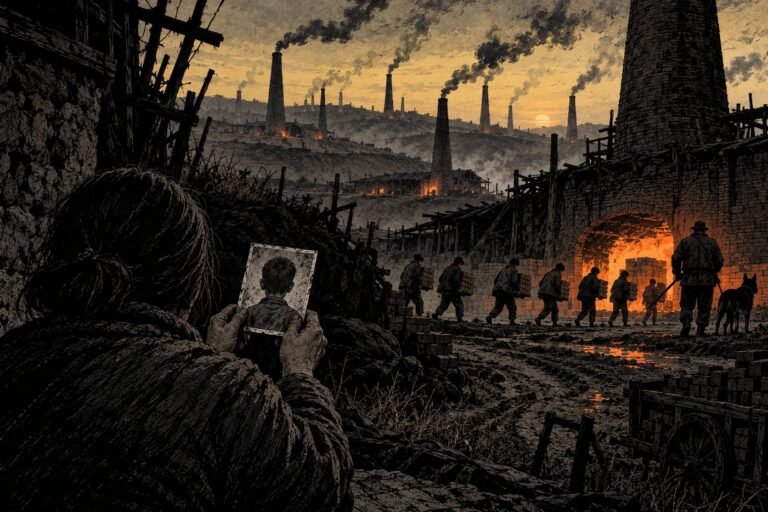
It leaked. Dark streaks ran down its riveted seams, and neighbourhood children came with pails to catch the drips. Molasses was sweet, and it was free.
“It leaked from day one,” the historian Stephen Puleo said.
The company’s answer to the leaks had been a coat of brown paint, the same colour as the stains.
On Wednesday, 15 January, at lunchtime, the tank burst. (NPR-2019) (WBUR-2019) (GLOBE-2019) (SMITH)
A tank built for a deadline

The tank went up in 1915, built by the Purity Distilling Company, which later became part of United States Industrial Alcohol, or USIA.
It was about 50 feet tall and 90 feet across, by most accounts, with curved steel sides and riveted seams on a concrete base. It was built to hold more than two million gallons.
The man in charge was Arthur Jell. He was a finance man, not an engineer. Researcher Ronald Mayville described him as “a finance expert, not an engineer.”
The job was rushed. Jell had a deadline: the tank had to be finished by 31 December 1915.
Mayville, a structural engineer, later judged the tank “under-designed,” with steel that was too thin and riveting that was substandard. (SMITH) (BRIT) (VITA) (WBUR-2019) (MASS-SOC)
Nobody tested it with water

Before a big tank goes into service, the safe thing is to fill it with water and see whether it holds.
This one was never properly tested. It “was never filled with water to test it,” one account says. The Boston Globe later wrote that the company “dispensed with tests.”
According to one account, it was filled with molasses on the same day it was finished.
From then on, it held millions of gallons of a liquid far heavier than water, a few feet from people’s homes. (MASS-SOC) (APS-2017) (GLOBE-2019)
It groaned every time it was full
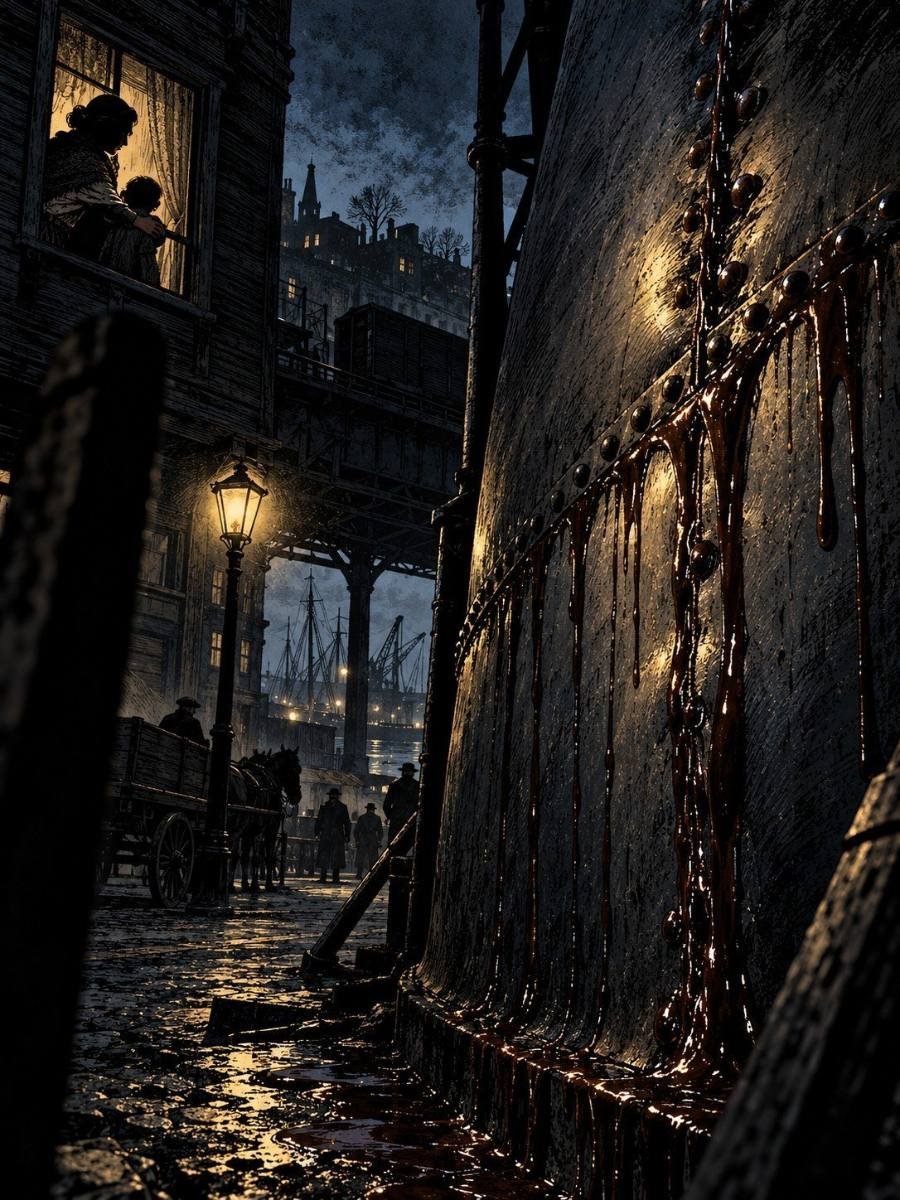
The tank leaked from the start. Molasses streaked down its sides.
The people who lived beside it noticed something else. The tank would “shudder and groan every time it was full,” neighbours said.
History.com describes it as a tank that “groaned, peeled, and often leaked onto the street.”
The North End was a crowded neighbourhood of largely Italian and Irish immigrant families. They lived in its shadow. (WBUR-2019) (NPR-2019) (HIST-NEWS) (GLOBE-2019)
The fix was brown paint
An employee warned that the tank was unsafe. Jell dismissed his concerns, according to the accounts, and a labourer was hired to caulk the seams.
The tank was not emptied. It was not rebuilt.
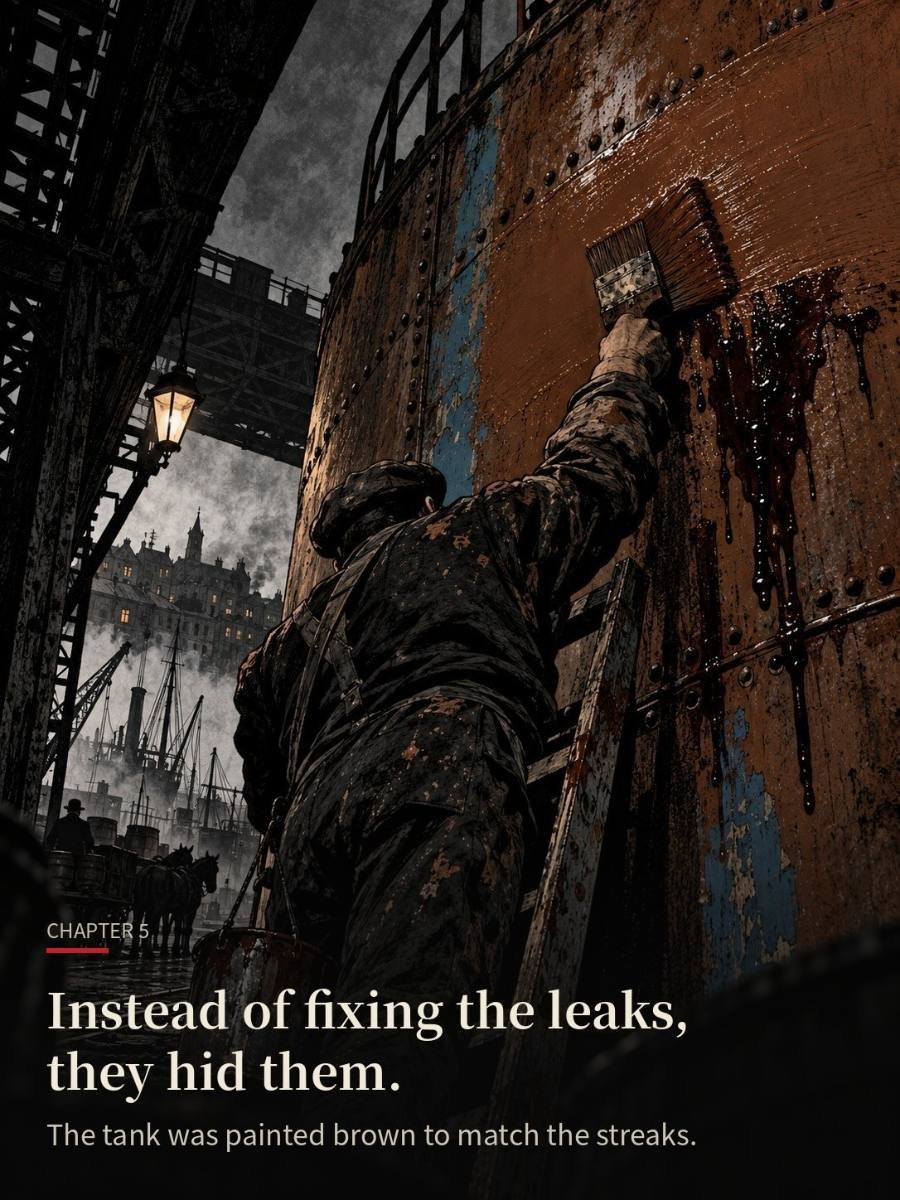
Instead, the company painted it brown.
One account says it had originally been blue. The new colour matched the leaks, so the stains no longer showed. (VITA) (HIST-NEWS) (GLOBE-2019) (WBUR-2019) (APS-2017)
A fresh load from the Caribbean
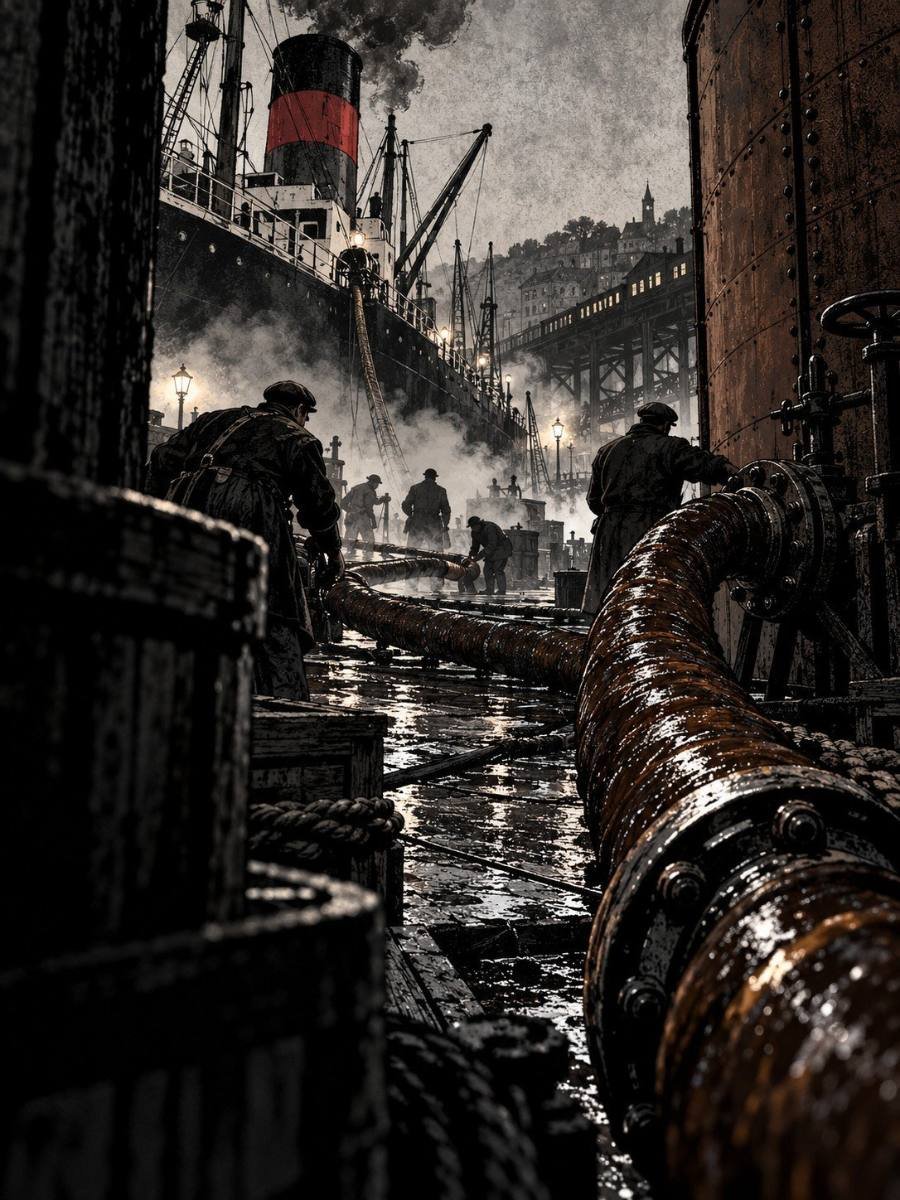
The molasses came by ship from the Caribbean. From the tank it went by rail to a distillery in Cambridge.
A few days before 15 January, a fresh shipment had arrived and been pumped in. Accounts differ on the exact day and amount.
The tank was close to full. The Globe’s front page the next day said it held about 2,200,000 gallons when it gave way.
Scientists later estimated the new molasses was still about 5 °C warmer than the air. It had not fully cooled since arriving. (HIST-NEWS) (HIST-TDIH) (SMITH) (GLOBE-1919-01-16) (SCIDAILY-2016)
A warm day in January
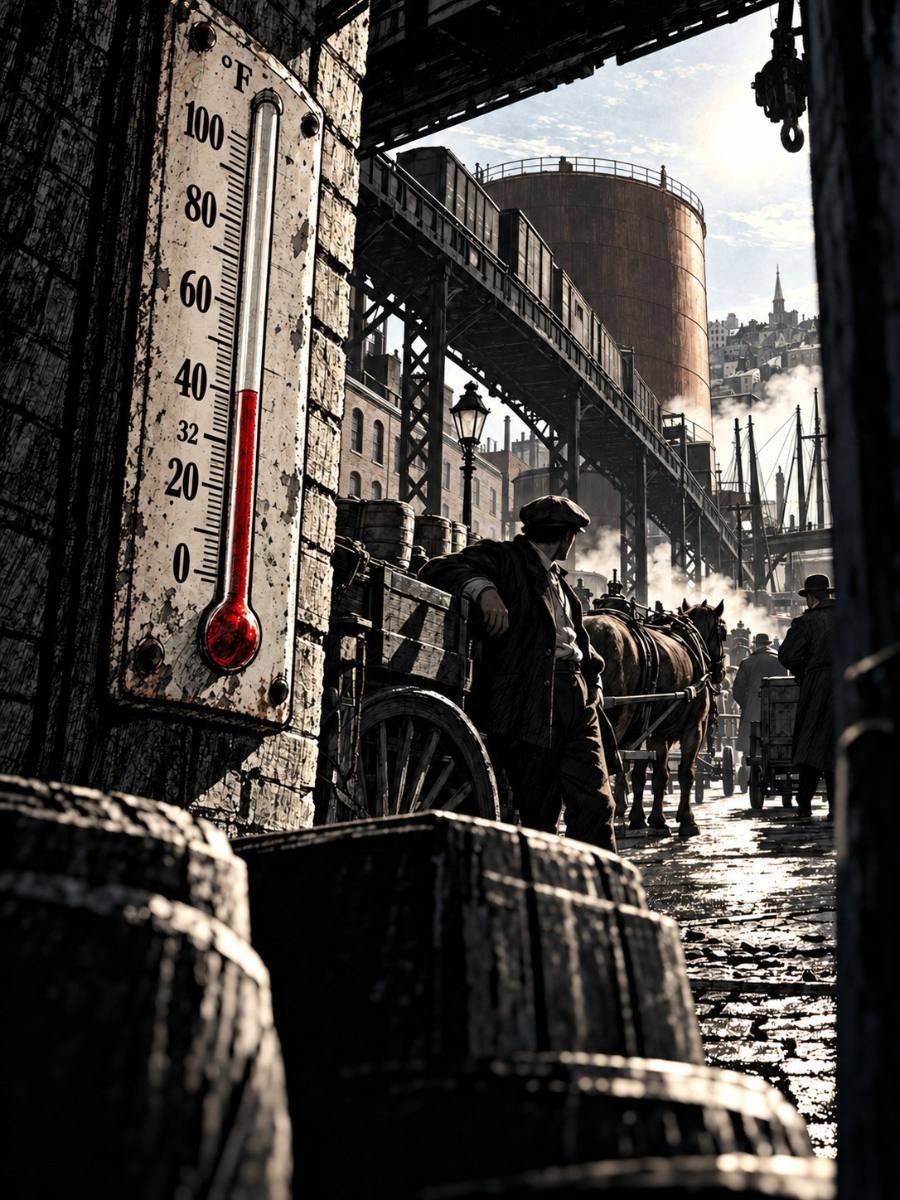
Wednesday, 15 January 1919, was mild for a Boston winter. The temperature was close to 40 °F, and there was no snow on the streets.
People were outside. Labourers along the waterfront stopped for lunch.
The brown tank stood over all of them. (SMITH) (GLOBE-2019) (HIST-NEWS)
Lunch in the freight shed
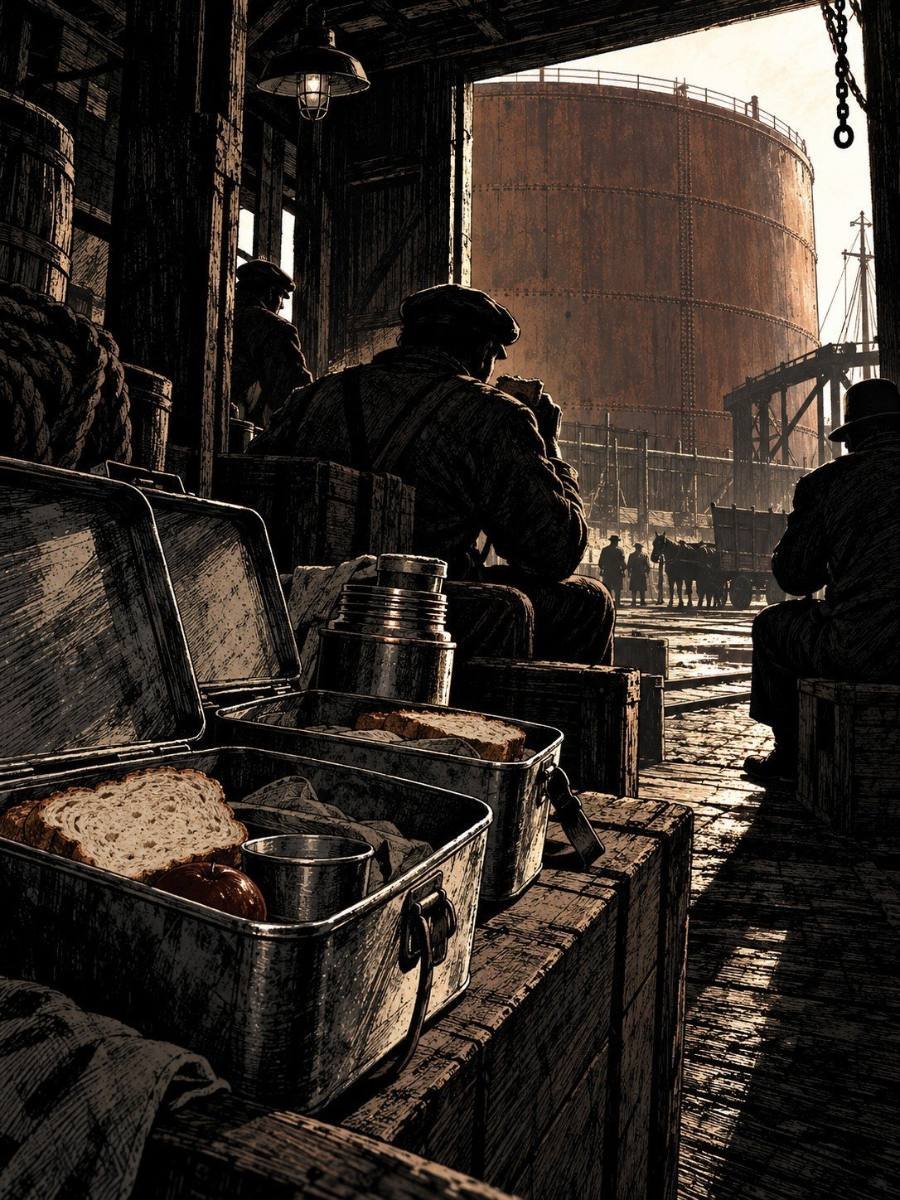
Along the waterfront, men sat down to eat in a freight shed near the tank.
Wagon drivers and teamsters were at work in the street. Their horses stood by.
Some children were walking home from school.
It was about 12:40. Sources put the moment anywhere between 12:30 and 12:45. (SMITH) (NEU-2019) (HIST-NEWS) (SCIDAILY-2016)
A country about to go dry
The First World War had ended two months earlier.
During the war, molasses had been in high demand, because it could be distilled into industrial alcohol for munitions.
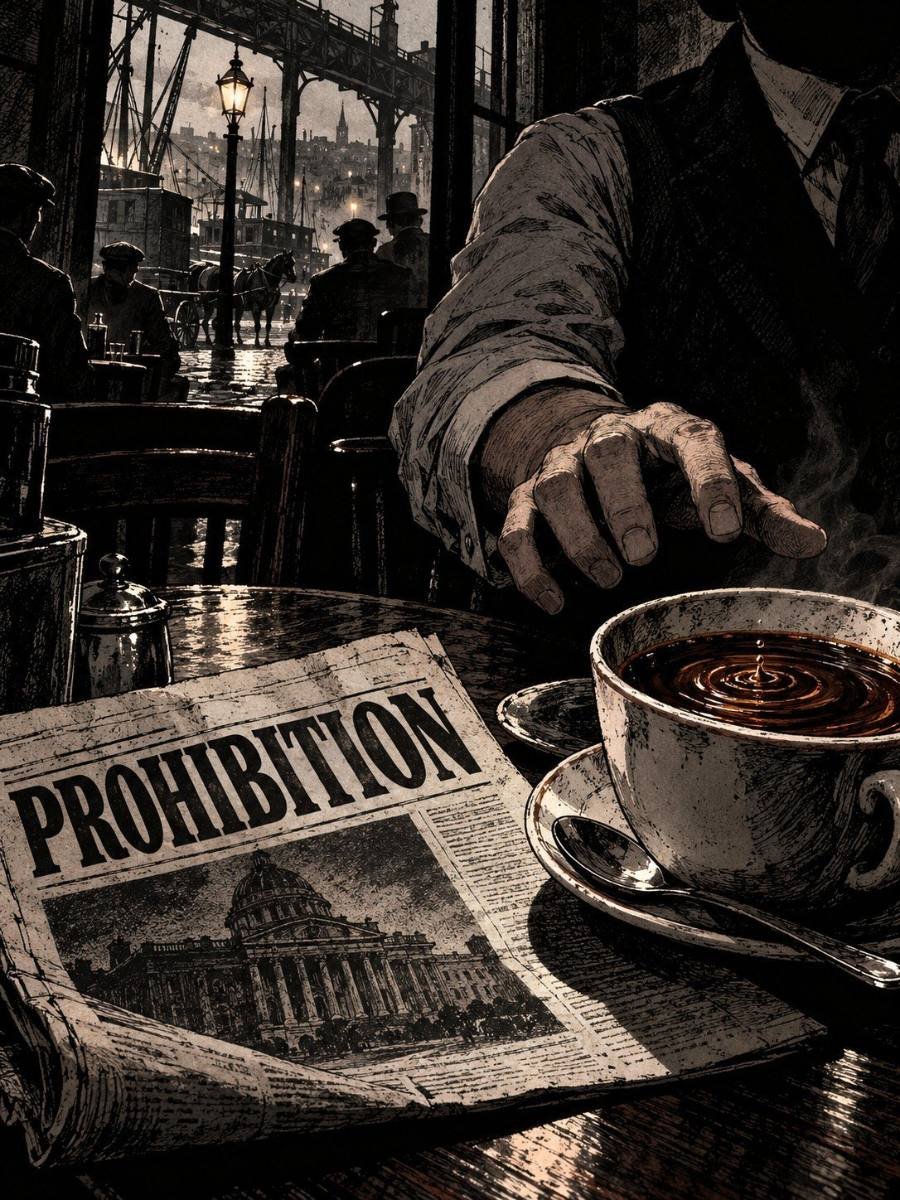
Now the country was about to ban alcohol altogether. The 18th Amendment, Prohibition, was just one state away from ratification.
That same week, the papers were full of it. The Globe’s front page the day after the flood carried the news that Nebraska had ratified the amendment as the 36th state. (SMITH) (WBUR-2019) (GLOBE-2019) (GLOBE-1919-01-16)
Rivets firing like a machine gun
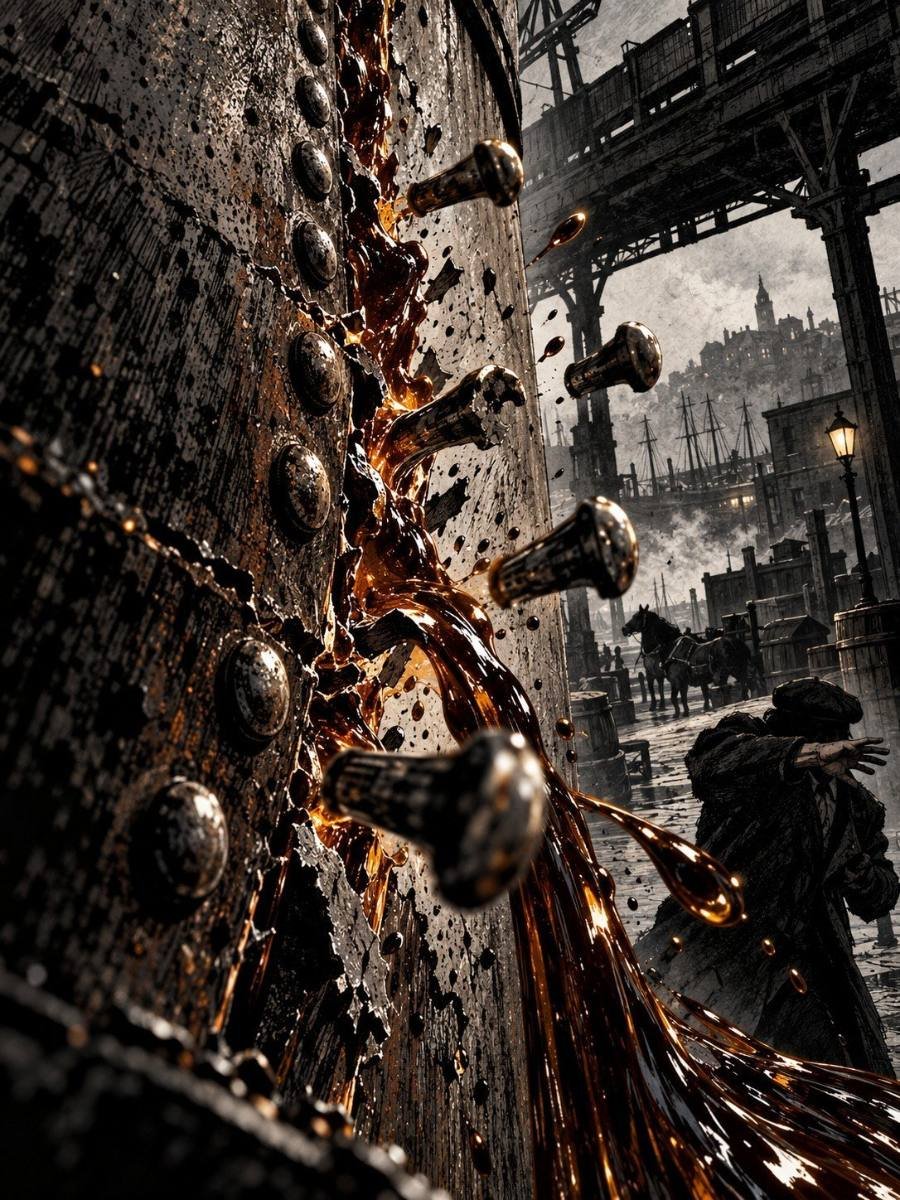
Witnesses heard “sharp ripping or rumbling sounds,” the Globe reported in 1919.
Then the rivets gave way, one after another, with a noise like a rapid-fire machine gun.
Many of the men nearby had just come home from the war. The sound reminded them of the front, Smithsonian wrote.
The tank seemed to rise, and then split apart. (GLOBE-1919-01-16) (SMITH)
A wall of molasses
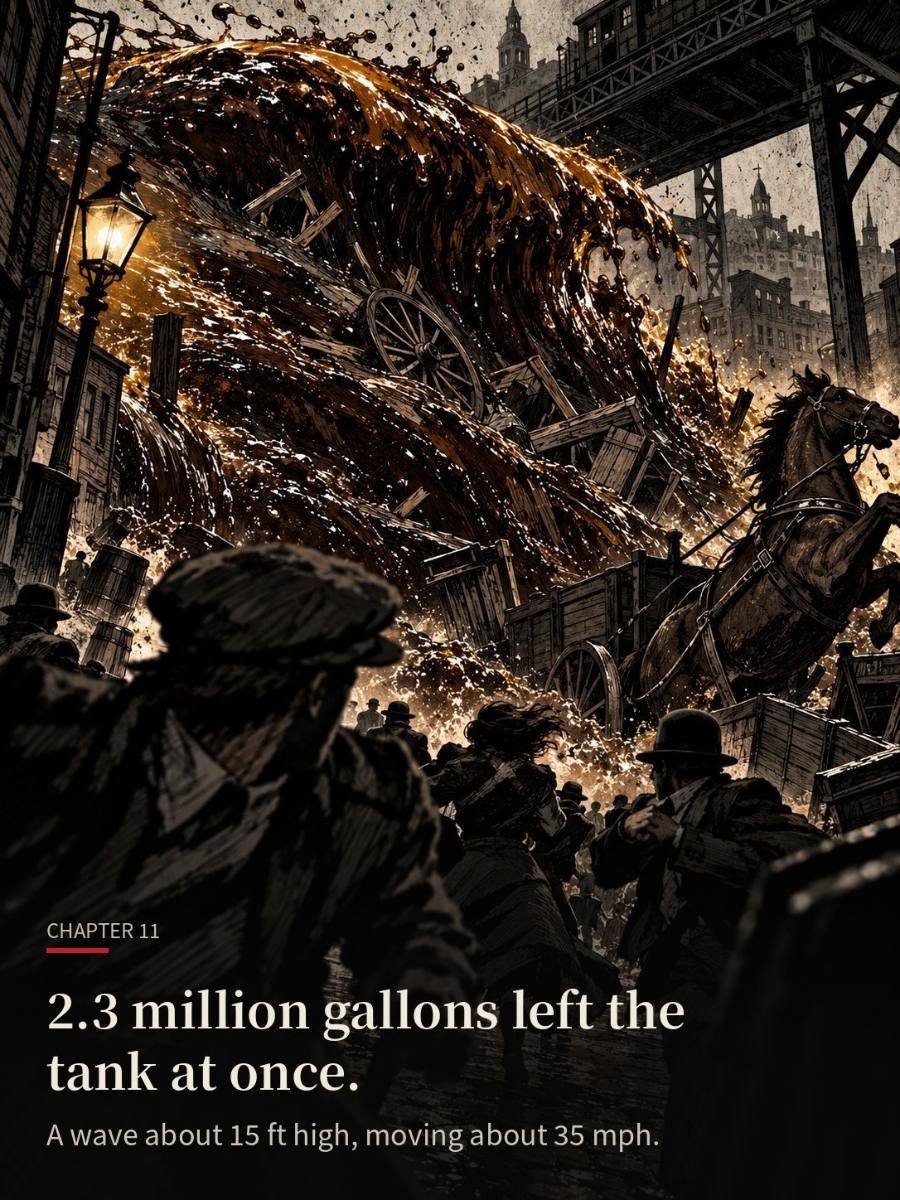
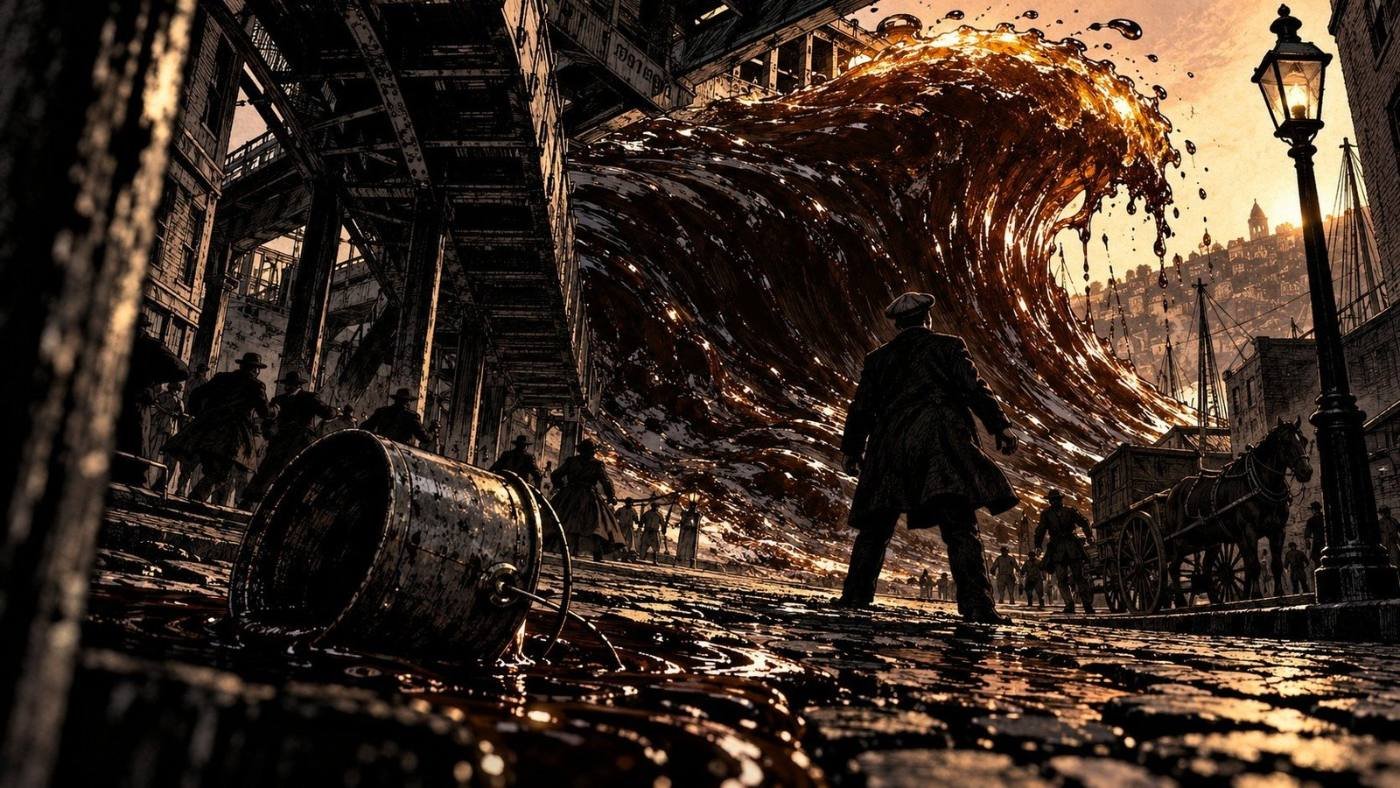
Around 2.3 million gallons came out at once, roughly 13,000 tons.
It rose into a wave. Most accounts give its height as about 15 feet, and some as 25 feet or more.
It moved at about 35 miles an hour. No one on foot could outrun it.
The Boston Post described it this way: “A rumble, a hiss—some say a boom and a swish—and the wave of molasses swept out.”
Several blocks were left under two to three feet of molasses. (WBUR-2019) (HIST-NEWS) (GLOBE-2019) (SMITH) (CSM-2016)
The train that stopped in time
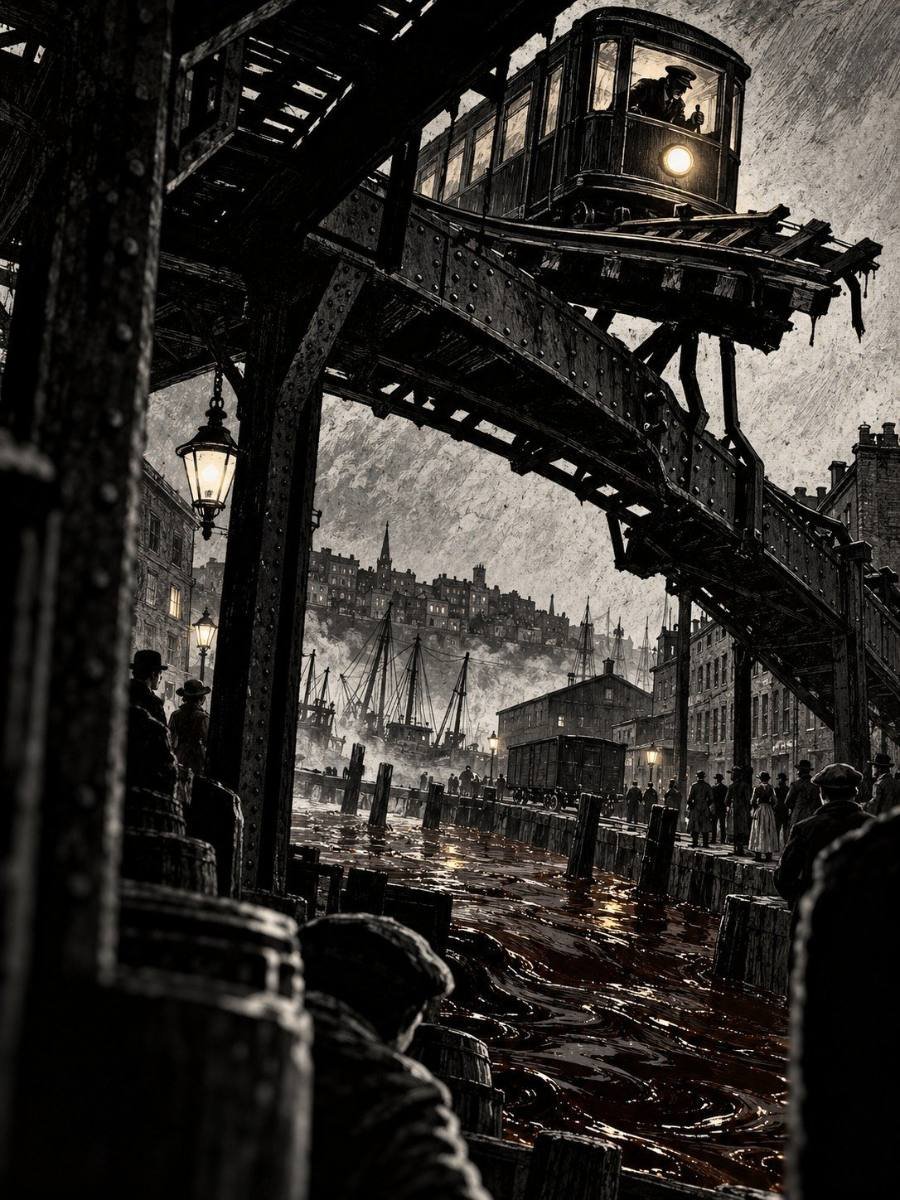
Commercial Street ran beneath the steel girders of the elevated railway.
The wave struck the El’s supports. A piece of the tank was thrown across the street, beneath the tracks. The girders buckled, and the track sagged.
A train was approaching.
It stopped just in time, as the track sagged. Northeastern University’s account credits an alert conductor. (GLOBE-1919-01-16) (GLOBE-2019) (SMITH) (NEU-2019)
Engine 31
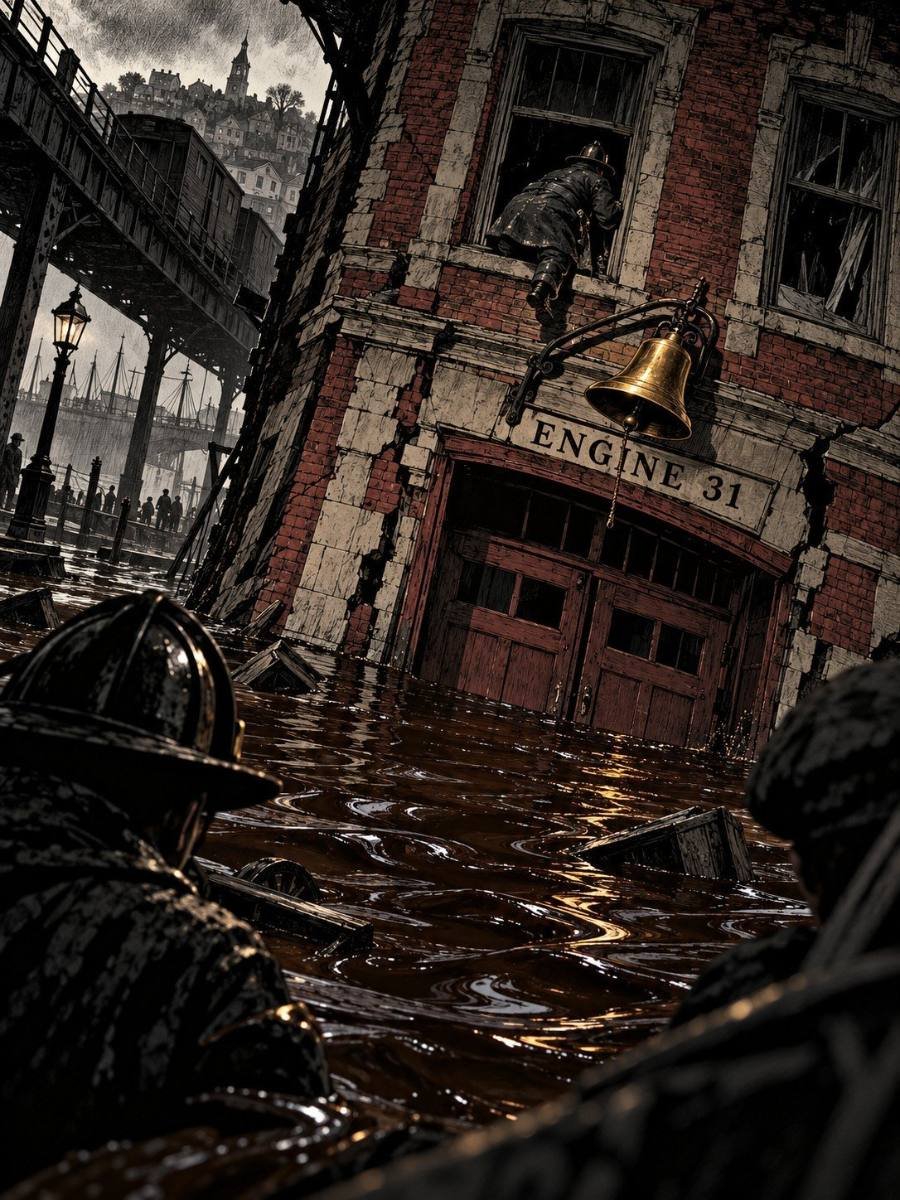
On the waterfront stood the firehouse of Engine 31, with a fireboat moored alongside.
The wave knocked the building off its foundation. Its upper floor came down onto the lower one.
Firefighters were trapped inside for hours.
One of them did not survive. (HIST-NEWS) (VITA) (GLOBE-1919-01-16)
A bed frame for a raft
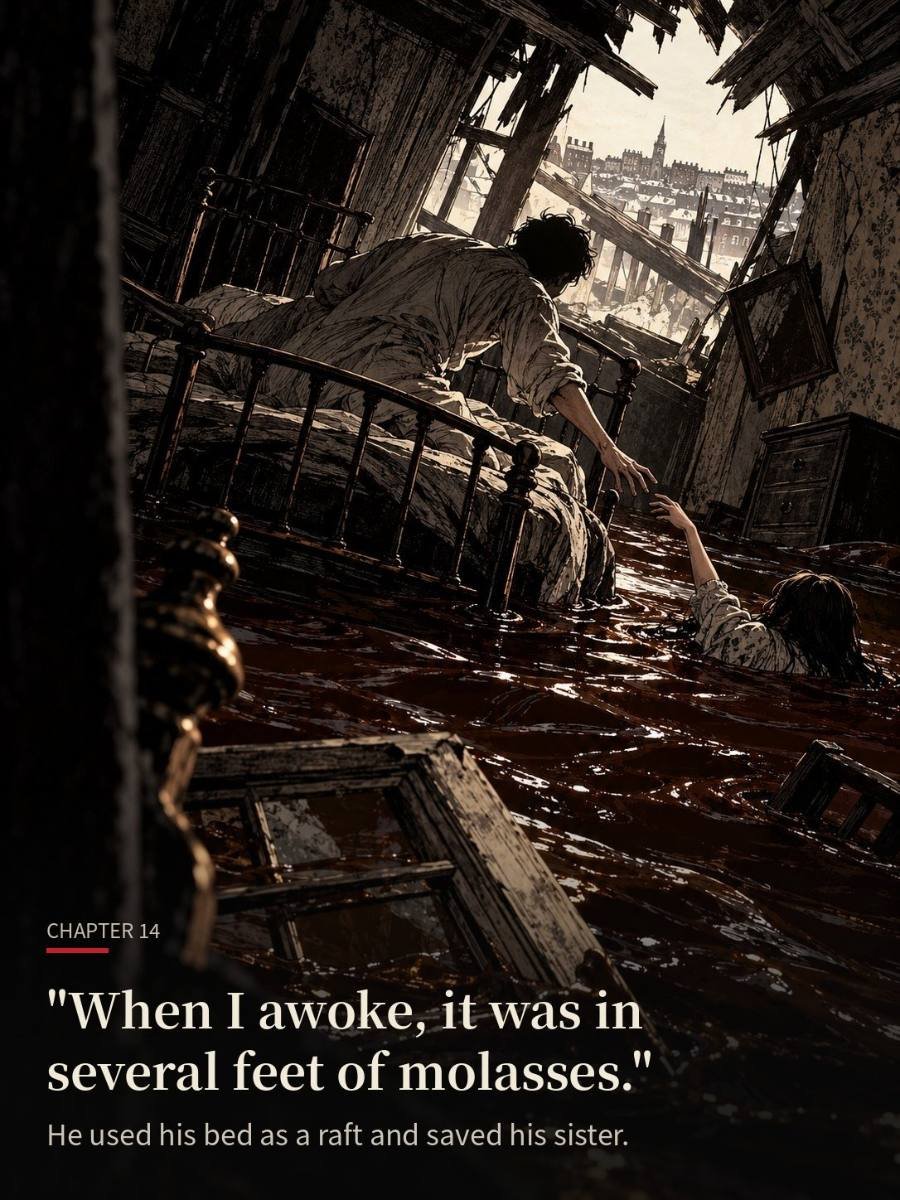
At the foot of Copp’s Hill, the Clougherty family’s house collapsed.
“When I awoke, it was in several feet of molasses,” Martin Clougherty said.
He climbed onto his floating bed frame and used it as a raft. He pulled his sister Teresa out.
Their mother, Bridget Clougherty, was killed when the house came down. (SMITH) (HIST-NEWS) (VITA)
Two children by the tank
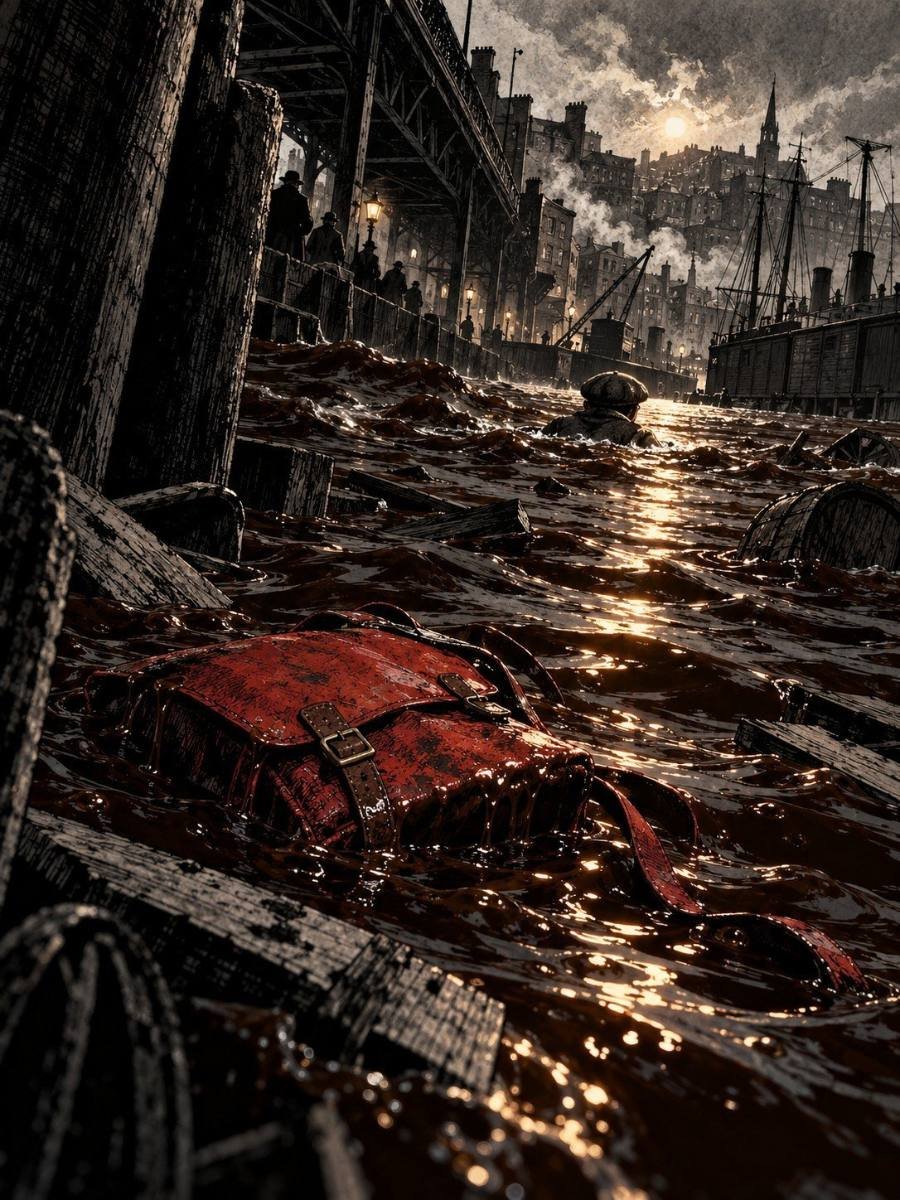
Anthony di Stasio was walking home from school when the wave picked him up and carried him.
He survived.
His sister Maria, ten years old, did not. Pasquale Iantosca, also ten, was killed too.
According to one account, both children had often collected leaked molasses at the foot of the tank. (SMITH) (HIST-NEWS) (GLOBE-2019) (VITA)
The cadets from the Nantucket
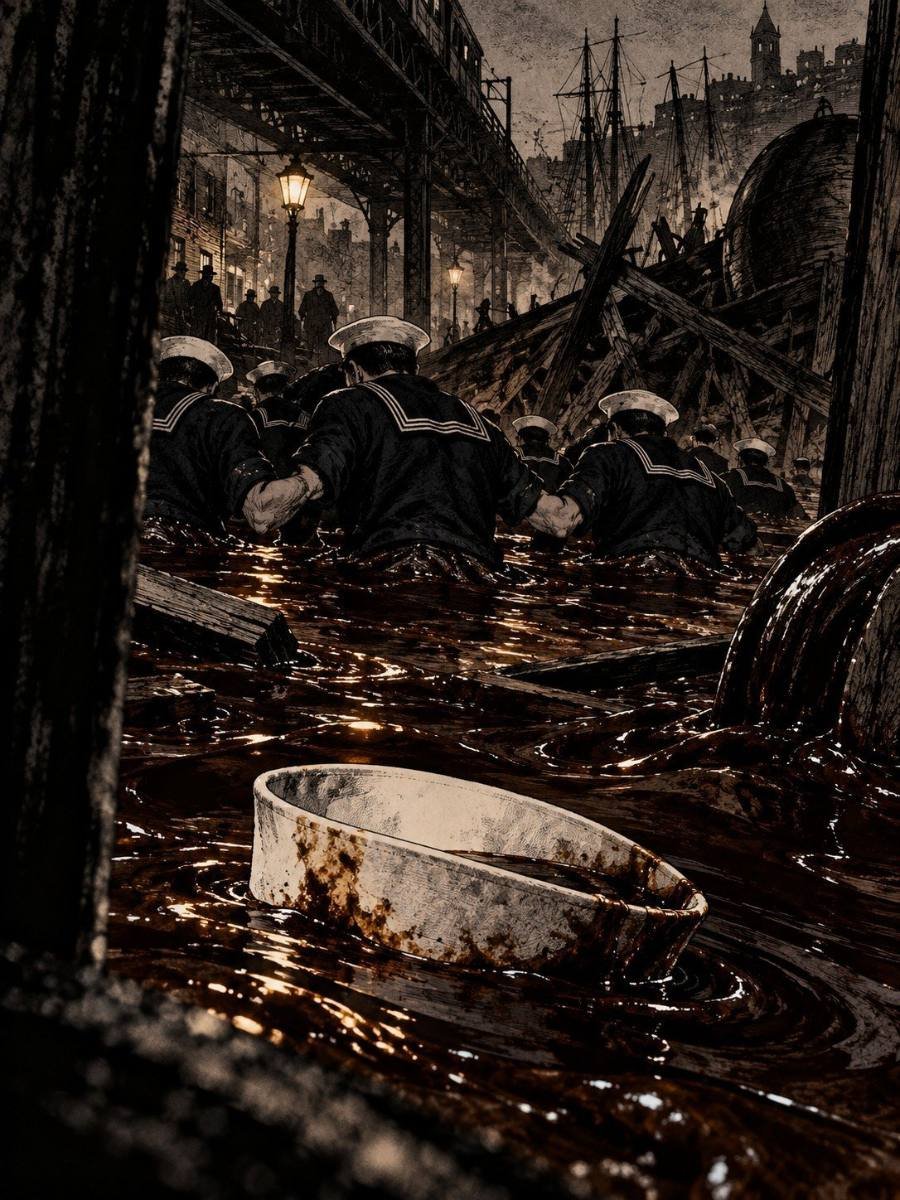
The training ship USS Nantucket was docked nearby. Its cadets were among the first to arrive, more than a hundred of them.
Police and firefighters came within minutes. Soldiers, sailors and civilians followed.
They waded in. The molasses slowed every vehicle and every step. (HIST-TDIH) (GLOBE-2019) (HIST-NEWS) (SMITH)
Night fell, and the molasses set
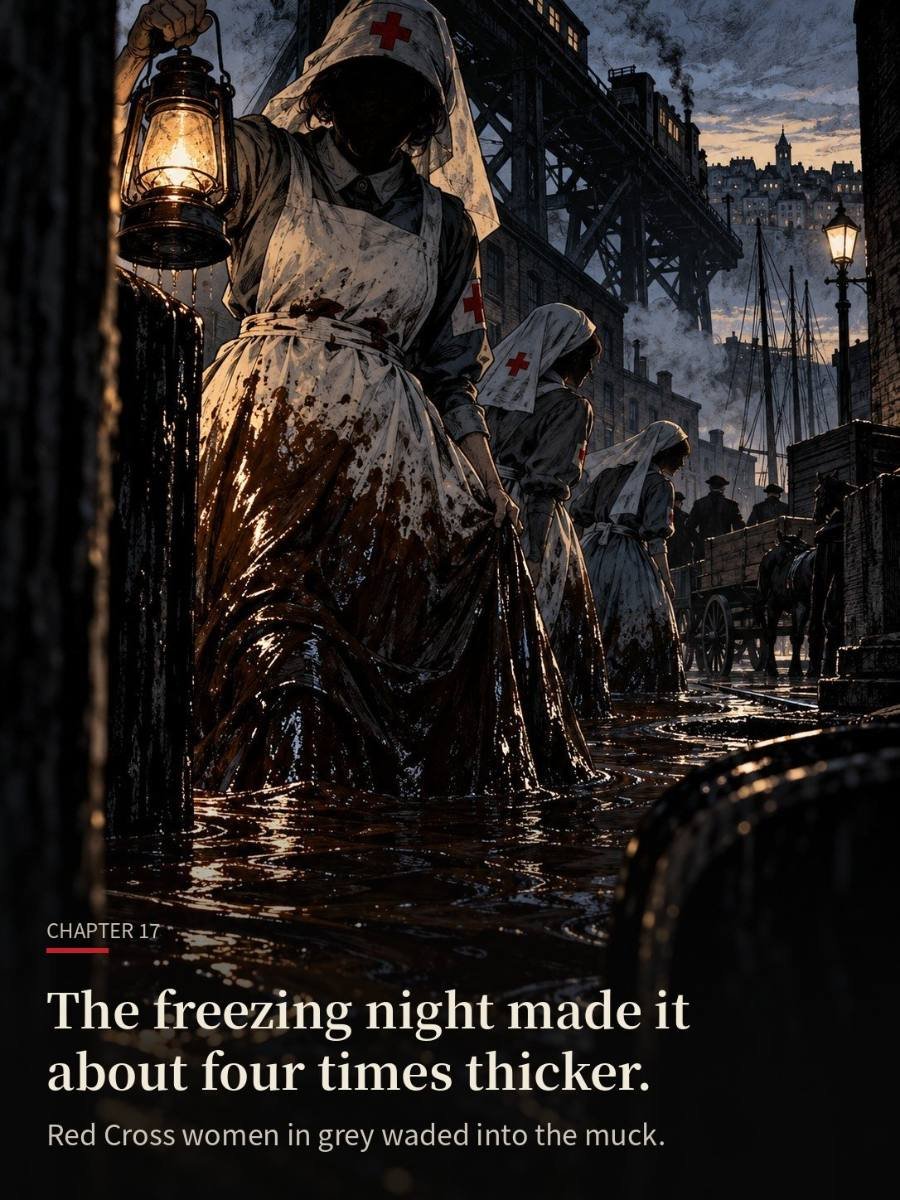
Red Cross volunteers in grey uniforms waded into the muck to help.
Then night fell, and the temperature dropped to just below freezing.
The molasses began to harden around the people still trapped in it.
About half the victims “died basically because they were stuck,” a Harvard researcher said later. (SMITH) (CSM-2016) (GLOBE-2019)
Saws, chisels and torches
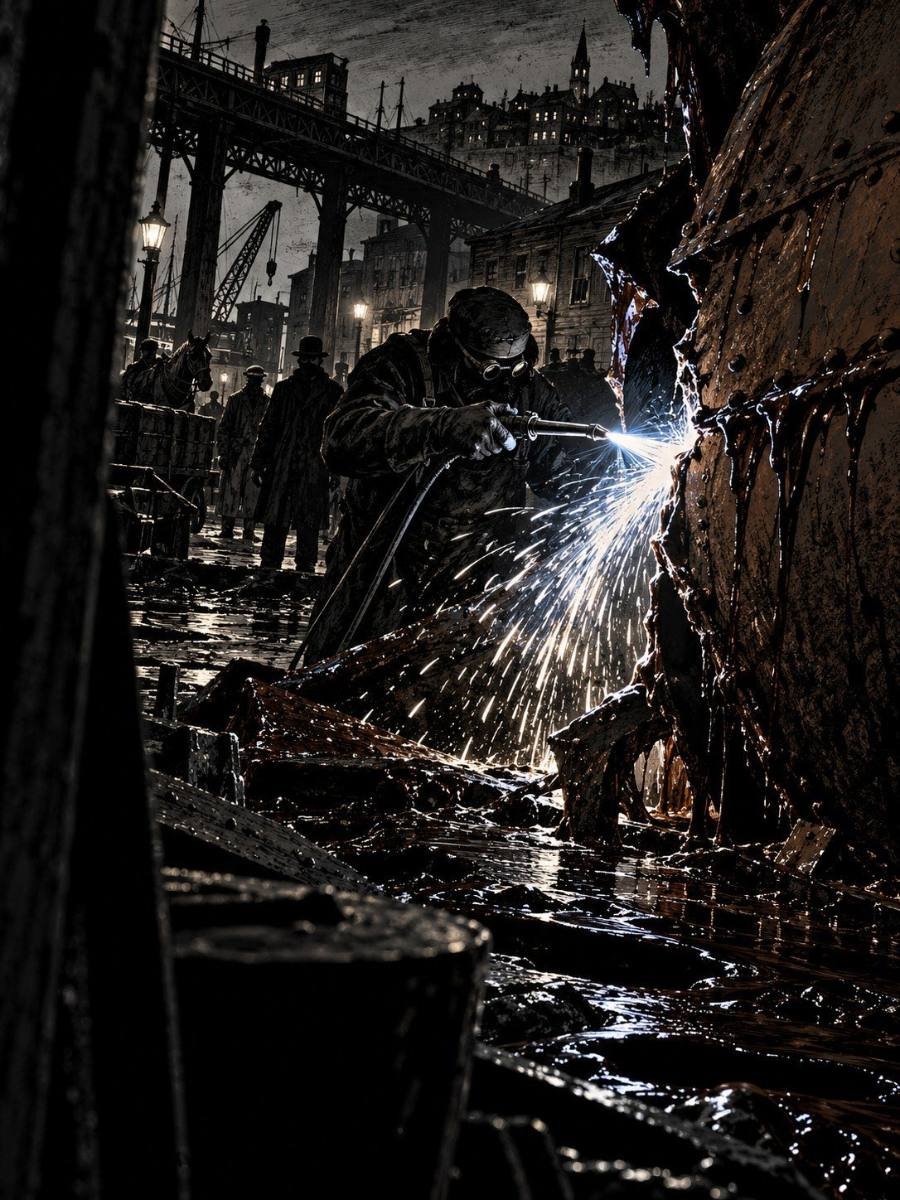
Rescuers had to cut through the hardening mass with saws and chisels.
On 20 January, five days after the flood, welders cut into the wrecked tank with torches to search for bodies.
In 2016, scientists studying the disaster found that cooling molasses from 10 °C to 0 °C triples its thickness.
The cold night had made the rescue far harder. (GLOBE-2019) (SMITH) (SCIDAILY-2016) (CSM-2016)
The harbour stayed brown until summer
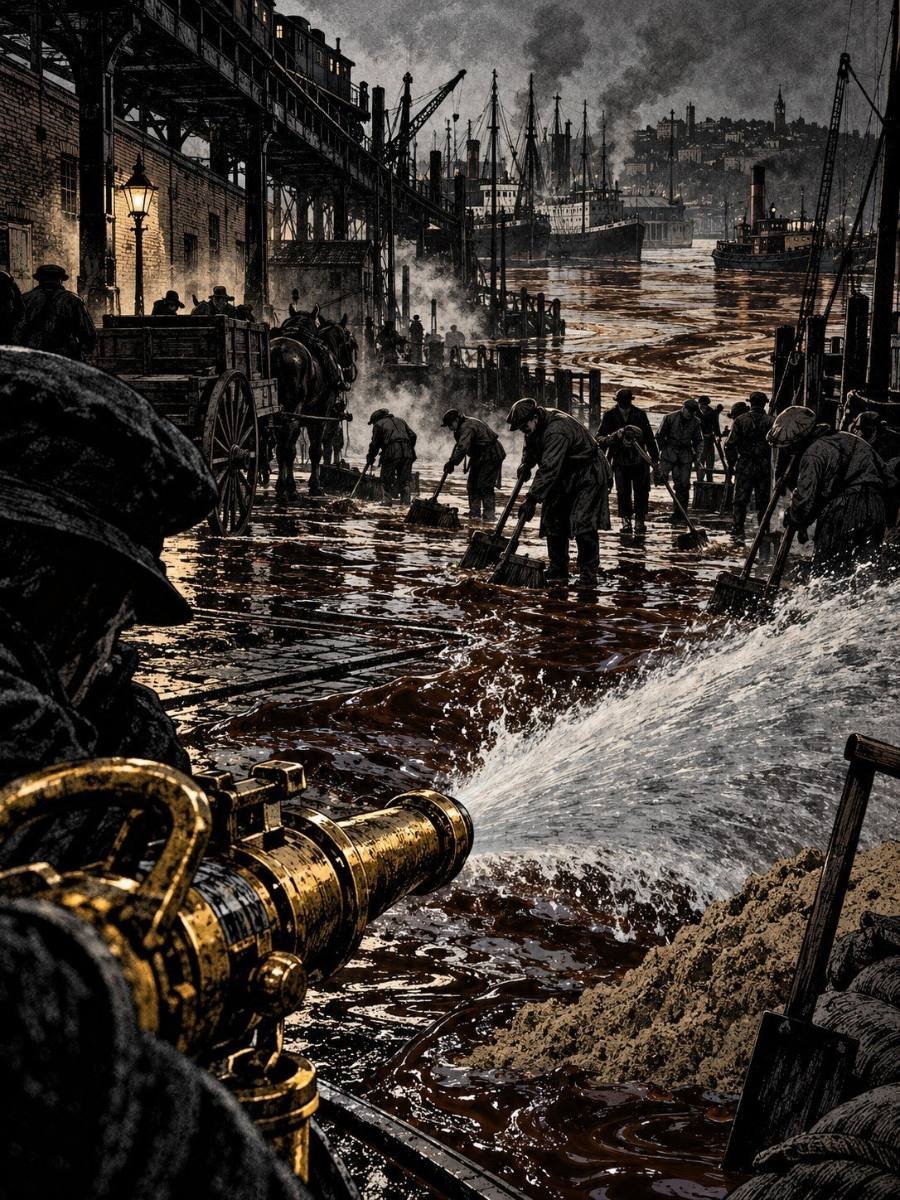
The final toll was 21 dead and about 150 injured.
More than 300 workers spent weeks clearing the wreckage. Fireboats pumped salt water to wash the streets, and crews spread sand to soak up the rest.
Molasses was tracked across Greater Boston, into subways, streetcars and homes.
The inner harbour turned brown, and it stayed that way until the summer. (SMITH) (HIST-NEWS) (APS-2017) (VITA)
“Evilly disposed persons”
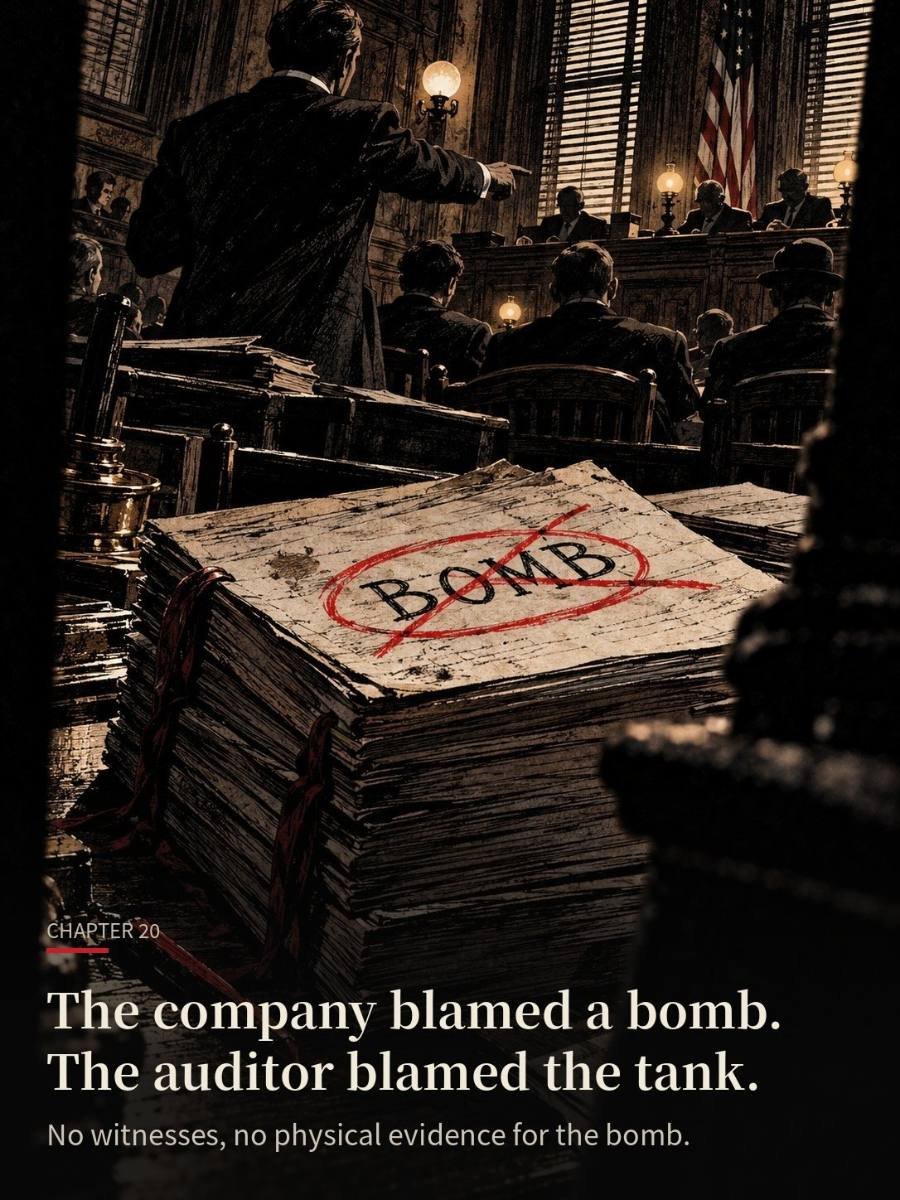
More than a hundred families and businesses sued. The claims were combined into what became the largest civil action in Massachusetts history.
USIA said the tank had not failed at all. It blamed sabotage by “evilly disposed persons,” and pointed at Italian anarchists with a bomb.
On the day, explosives experts who examined the site had found no evidence of an explosion, the Globe reported.
The hearings ran for years, with around a thousand witnesses or more, and thousands of pages of testimony. (GLOBE-2019) (MASS-SOC) (HIST-NEWS) (GLOBE-1919-01-16)
The plaque, and the smell

In April 1925 the court-appointed auditor, Hugh Ogden, rejected the bomb story. USIA was liable. The tank had simply not been strong enough for its load.
The company paid about $630,000. Families of the dead received about $7,000 each.
The case helped lead to new rules requiring engineers to sign off on their plans, rules that spread from Massachusetts to other states.
Today the site is a park with a baseball field. A small plaque, easy to miss, marks the disaster.
Some in the North End still say that on hot summer days, you can smell molasses. (HIST-NEWS) (SMITH) (GLOBE-2019) (NPR-2019) (NEU-2019)
Case notes: the Great Boston Molasses Flood
At about 12:40 pm on 15 January 1919, a steel tank holding more than two million gallons of molasses burst on Commercial Street in Boston’s North End. A wave about 15 feet high, by most accounts, swept through the waterfront at about 35 miles an hour, buckling the elevated railway and flattening buildings. Twenty-one people died and about 150 were injured (SMITH) (HIST-NEWS) (BRIT).
Where the case stands (as of November 2026)
The case is closed. In April 1925 the court-appointed auditor found United States Industrial Alcohol liable and rejected its claim that anarchists had bombed the tank. The tank, he found, was simply not strong enough for its load (HIST-NEWS) (HIST-TDIH). No one was criminally convicted.
Researchers are still adding to the science. A 2016 Harvard study found that the cold night after the burst made the molasses several times thicker, which is why so many people were trapped (CSM-2016) (SCIDAILY-2016).
Timeline
| When | What happened |
|---|---|
| 1915 | Purity Distilling builds the tank on Commercial Street, rushed to meet a 31 December deadline (SMITH) (VITA) |
| 1915–1918 | The tank leaks from the start; neighbours say it groans when full; it is painted brown (WBUR-2019) (GLOBE-2019) |
| Mid-January 1919 | A fresh shipment of molasses nearly fills the tank (SMITH) (SCIDAILY-2016) |
| 15 Jan 1919, about 12:40 pm | The tank bursts; a wave of about 2.3 million gallons floods the waterfront (HIST-NEWS) (SCIDAILY-2016) |
| 15 Jan 1919, night | The temperature drops and the molasses hardens (CSM-2016) (GLOBE-2019) |
| 16 Jan 1919 | Front pages report the disaster; Prohibition is ratified that week (GLOBE-1919-01-16) |
| 20 Jan 1919 | Welders cut into the wrecked tank to search for bodies (GLOBE-2019) |
| Spring 1919 | The last victim is recovered from under Commercial Wharf, about four months later (GLOBE-2019) |
| April 1925 | Auditor Hugh Ogden rejects the bomb defence and finds USIA liable (HIST-NEWS) |
| 2016 | Harvard researchers show how the cold thickened the molasses (SCIDAILY-2016) (CSM-2016) |
Evidence locker
Real places and records only. Illustrations elsewhere in this file are AI-generated.
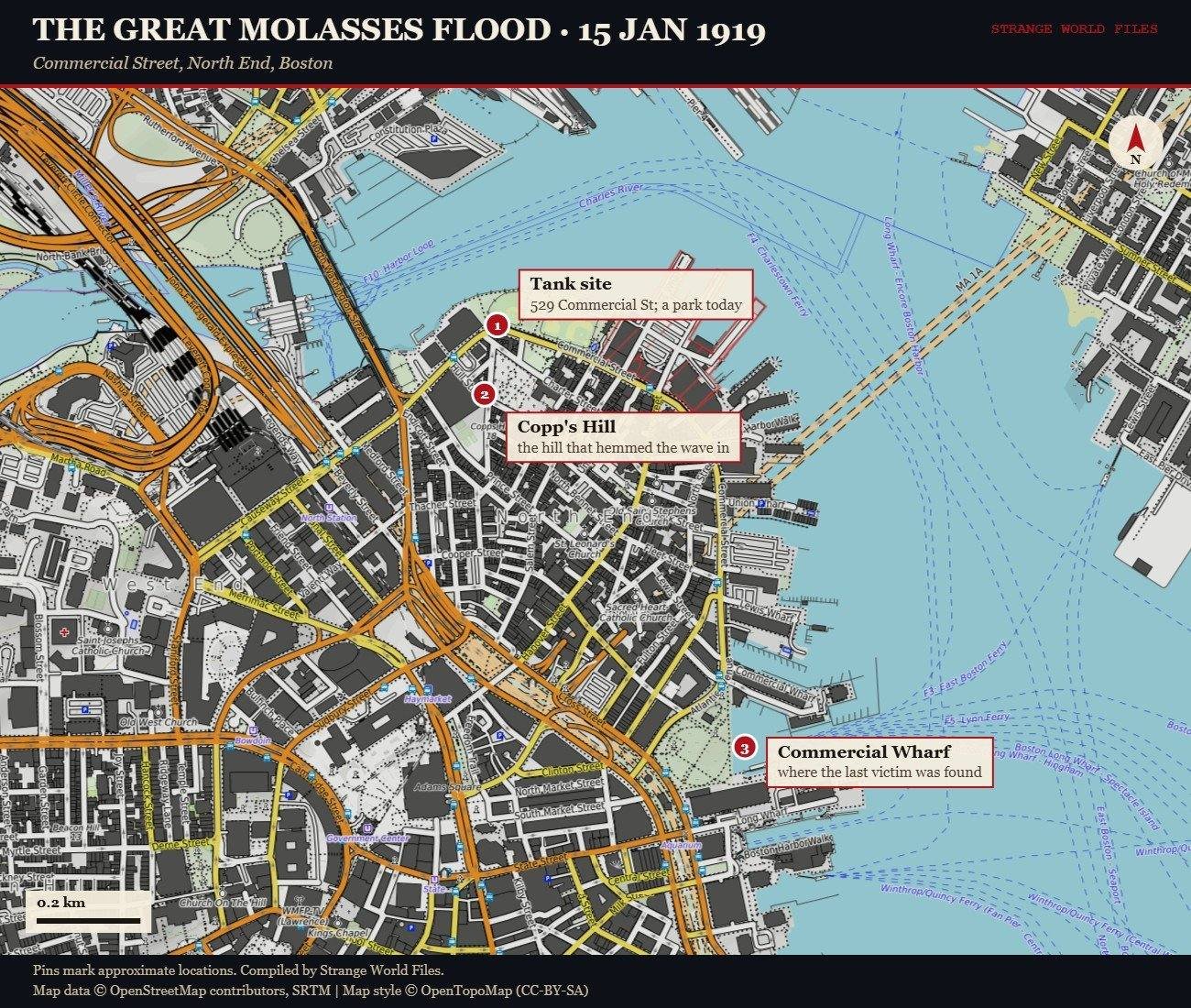 EXHIBIT A · TAP TO ENLARGE
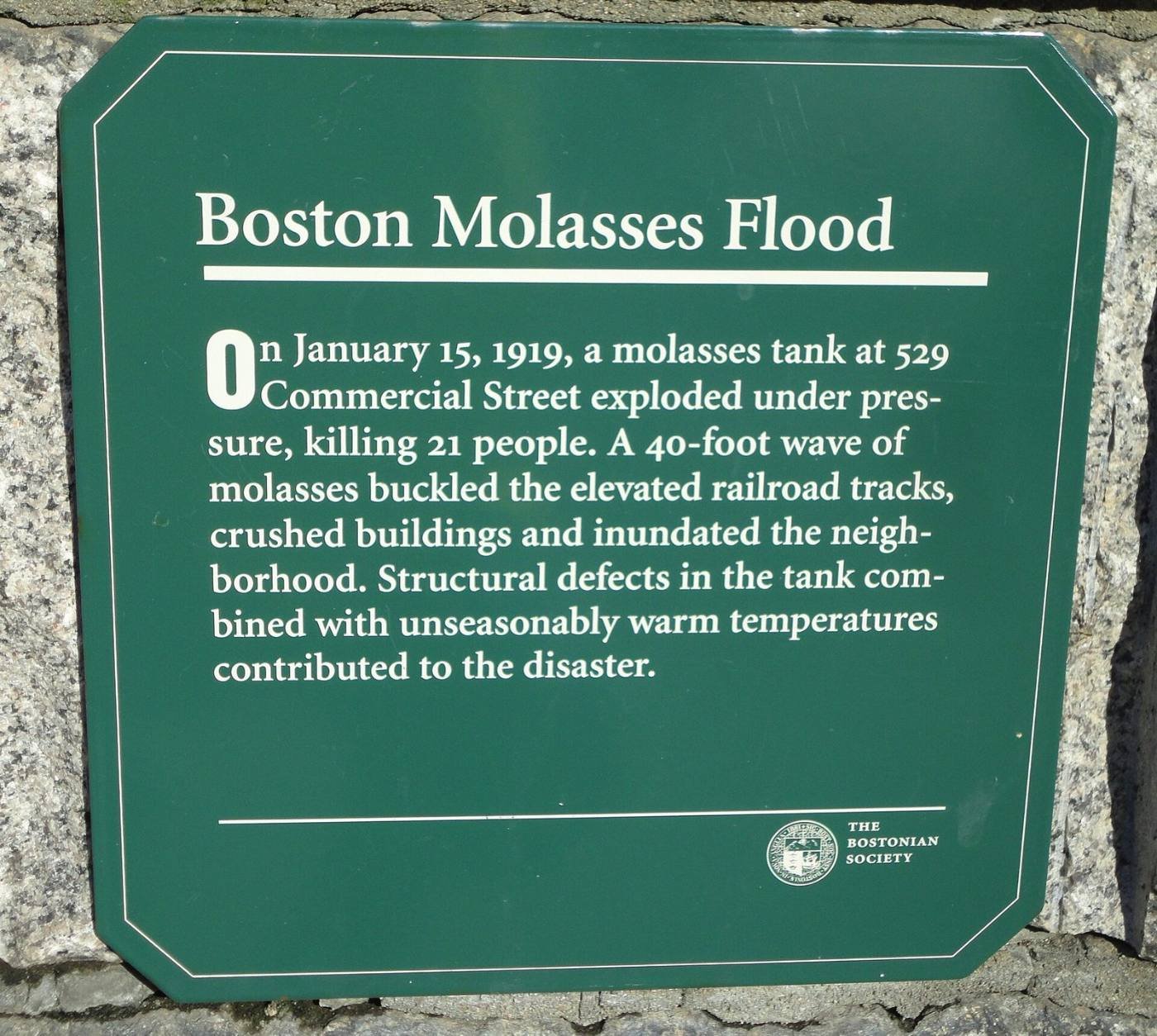 EXHIBIT B
Where the records disagree
| Detail | What sources say |
|---|---|
| Wave height | About 15 ft in most accounts; 25 ft, 30 ft and 40 ft in others (SMITH) (CSM-2016) (NPR-2019) (NEU-2019) |
| Speed | About 35 mph in most accounts; about 30 mph in one (SMITH) (NEU-2019) |
| Gallons released | About 2.3 million in most accounts; about 2,200,000 in the 1919 Globe (WBUR-2019) (GLOBE-1919-01-16) |
| Time | Anywhere from 12:30 to 12:45 pm (SMITH) (SCIDAILY-2016) (VITA) |
| Tank size | About 50 ft tall and 90 ft across, or 58 ft by 98 ft (SMITH) (HIST-TDIH) |
| Witnesses at the hearings | About 1,000, or about 3,000 (HIST-NEWS) (SMITH) |
| How long the smell lasted | Weeks, months, years or decades; the hot-day smell is often called local legend (VITA) (BRIT) (SMITH) (NEU-2019) |
What we still don’t know
- The exact height and speed of the wave.
- Exactly how much molasses the tank held that day.
- Whether the steel was as thin as some later investigations claimed.
- How long the smell really lingered over the North End.
What happened after
The verdict pushed Massachusetts, and then other states, to require engineers to certify their plans and inspectors to check them (MASS-SOC) (NPR-2019). At the centenary in 2019, the names of the 21 victims were read aloud. In 2018 the Boston Globe gave its archive of flood photographs to Northeastern University (NEU-2019).
Editor’s note
The detail I can’t get past is the paint. Someone looked at a tank that leaked, groaned and shuddered every time it was filled, and decided the problem was how it looked. Brown paint over brown stains. It is almost too neat a symbol, and yet it really happened.
I also keep thinking of the children with their pails. To them, the tank was a treat, a place where something sweet dripped down for free. The same neighbourhood that knew it groaned also sent its kids to stand at its feet. Nobody there had the power to empty it. That belonged to people far away, with a deadline and a balance sheet.
Molasses sounds harmless, even funny. That is part of why this story is so often told as a curiosity. But twenty-one people did not come home that day, and many of them died simply because they could not move as the cold night set in. The science of 2016 makes that painfully clear.
What came out of it, in the end, was a rule most of us never think about: that a qualified engineer has to sign off on the things built around us. It is strange to owe something so ordinary to something so terrible.
— Strange World Files
Case file summary
- What: A molasses storage tank burst and sent a wave of about 2.3 million gallons through a Boston neighbourhood
- Where: Commercial Street, North End, Boston, Massachusetts
- When: About 12:40 pm, 15 January 1919
- Toll: 21 dead, about 150 injured
- Status: The company was found liable in 1925; no criminal conviction
Illustrations are AI-generated artistic interpretations, not photos. No real person is depicted with a recognizable face. Read how we research and illustrate these files.
Sources
- *The Boston Globe*, evening edition, 16 January 1919, page 1 (“End District Ruined By Molasses Tank Disaster”; “Some Say Collapse and Others An Explosion”). Newspapers.com page view
- *Boston Globe Magazine*, “The Great Molasses Flood was Boston’s strangest disaster,” 9 January 2019
- Edwards Park, “Without Warning, Molasses in January Surged Over Boston,” *Smithsonian* (1983, republished 14 January 2019)
- Secretary of the Commonwealth of Massachusetts, State House Tours, “Did You Know? Molasses Flood” (transcript, cites Puleo’s *Dark Tide*)
- WBUR, “Boston Molasses Flood, 100 Years Later,” 15 January 2019 (Puleo, Mayville)
- NPR (via KUNC), “After 100 Years, A Look Back At Boston’s Great Molasses Flood Of 1919,” 13 January 2019 (Puleo interview)
- History.com, Evan Andrews, “The Great Molasses Flood of 1919.”
- History.com, This Day in History, “Molasses floods Boston streets.”
- Encyclopaedia Britannica, “Great Molasses Flood.”
- ScienceDaily (AIP/APS press release), “Molasses creates a sticky situation,” 21 November 2016
- *Christian Science Monitor*, “Scientists finally decode the Great Molasses Flood of 1919,” 29 November 2016
- APS News, “January 15, 1919: Physics and the Boston Molasses Flood,” January 2017
- Northeastern University News, “Here’s what Boston looked like after a deadly wave of molasses swallowed the North End” (Boston Globe archive photos)
- American Ancestors / NEHGS *Vita Brevis* blog, “The Great Molasses Flood,” January 2019