Silkyara Tunnel Collapse: 41 Men Trapped 17 Days, Freed by Rat-Hole Miners
| What | Collapse of the Silkyara Bend–Barkot road tunnel and the 17-day rescue of 41 workers |
| Where | Uttarkashi district, Uttarakhand, India |
| When | November 12–28, 2023 |
| Rescued by | A team of rat-hole miners led by Wakeel Hasan, after the auger drill broke |
| Status | All 41 survived; panel found negligence (2024); tunnel broke through (2025) |
🎧 Narrated Mystery: press play and hear the whole case read aloud, like an audiobook (about 24 minutes). The narrator is an AI voice.
Diwali morning, and the mountain fell in
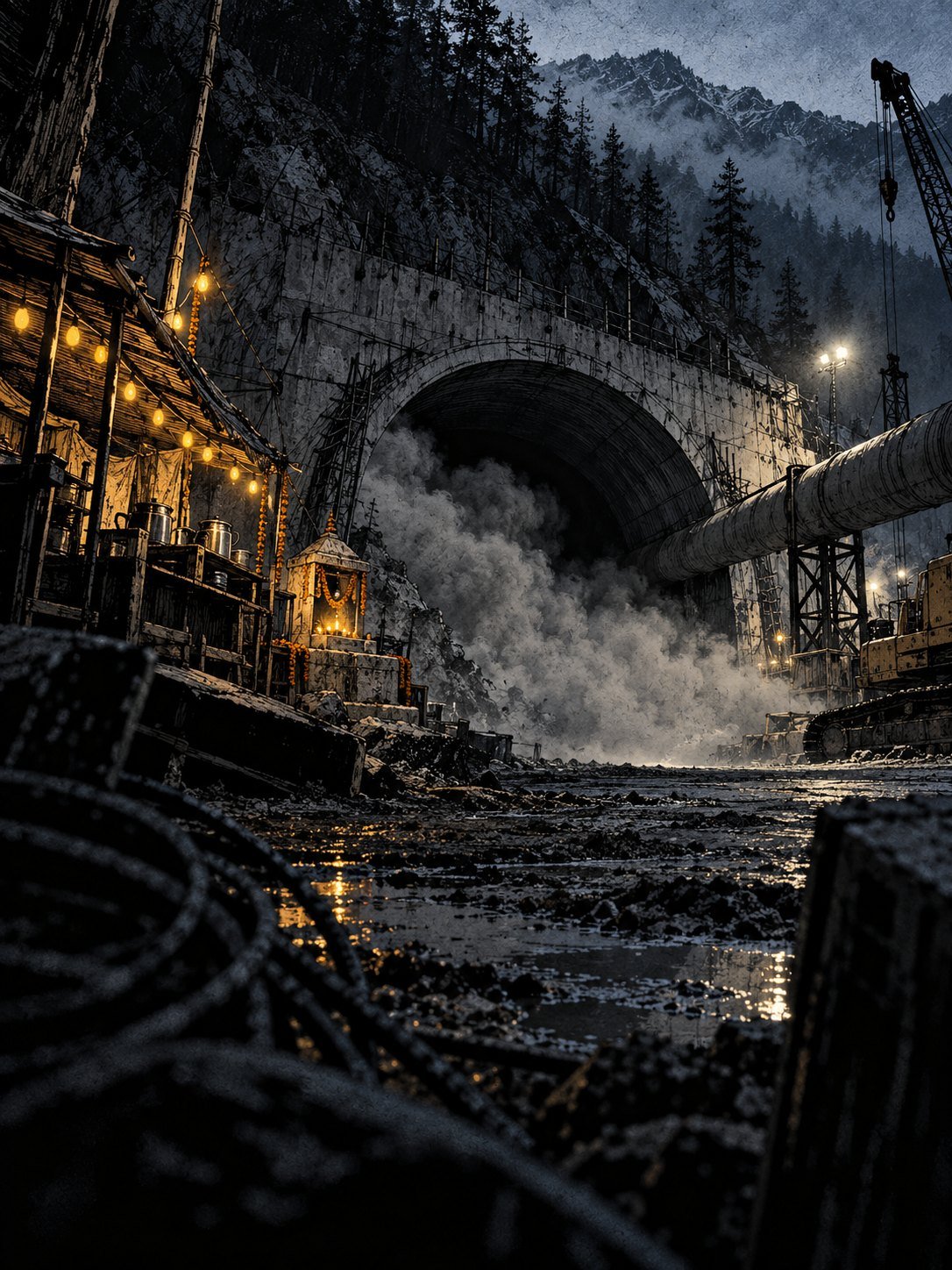
Sunday, November 12, 2023. Diwali, India’s festival of lights.
In the Himalayan hills of Uttarakhand, it was meant to be a day of lamps and family. But deep inside a new road tunnel near a place called Silkyara, a crew of workers was still on the job.
At about 5:30 in the morning, a section of the tunnel caved in.
Rock, broken steel and dust came down from the roof. Where the road had been, there was now a wall of rubble.
On the far side of that wall were 41 men.
They were alive. But the only way out was buried under about 197 feet (60 m) of rubble.
Nobody knew it yet, but getting them out would take 17 days. And the machines sent to save them would break. (WIKI) (OPEN) (AP-PBS)
The man in the pipe was digging by hand
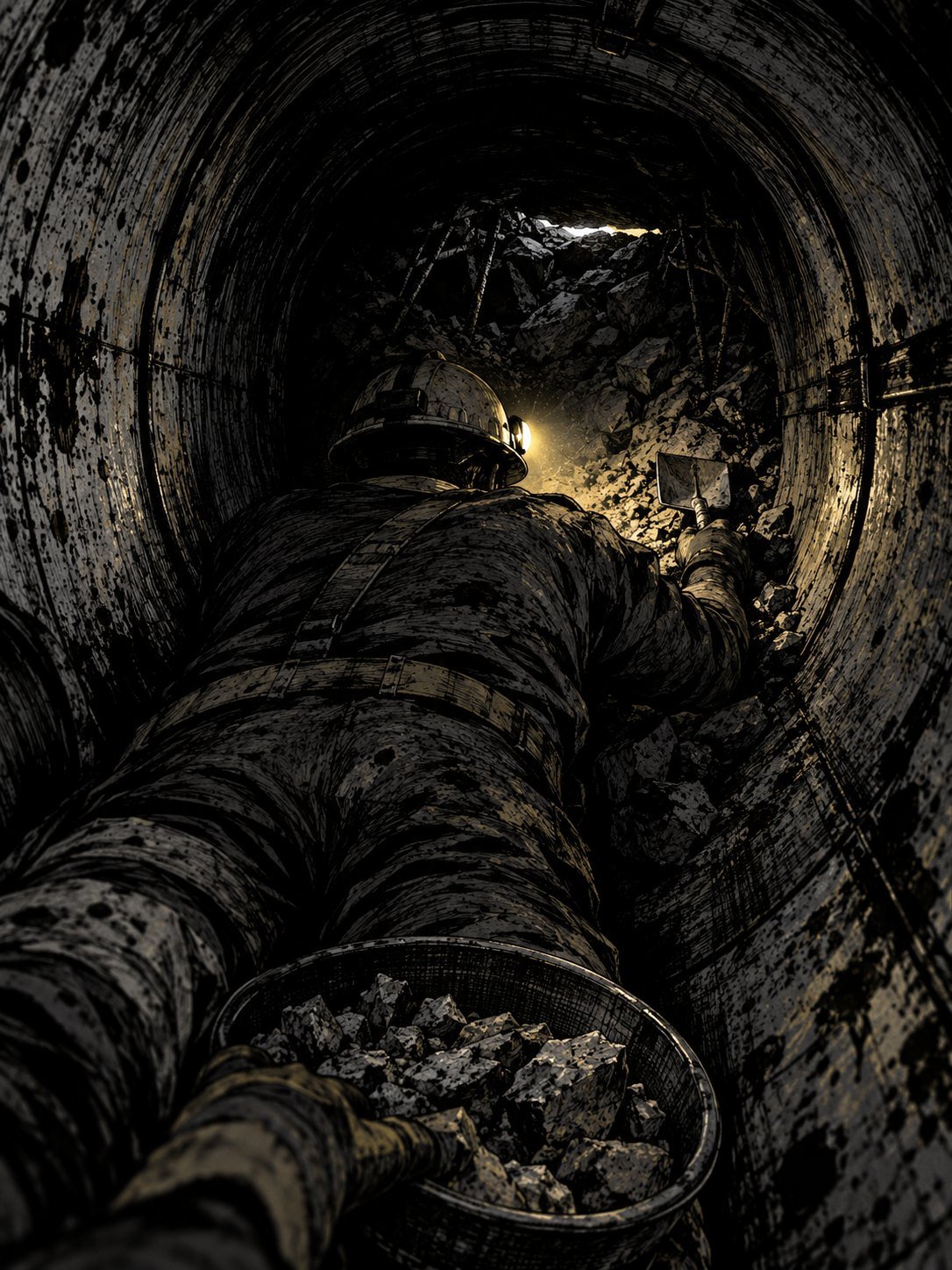
Now jump ahead 15 days.
A man lies flat on his stomach inside a steel pipe about 3 feet wide. It is just wide enough for one person.
In front of him is rock and rubble. He is digging through it by hand.
Three men work inside the pipe at a time, taking turns. Outside, the night is freezing.
He is a rat-hole miner. His trade is digging narrow coal burrows, a method India banned in 2014.
He is only here because the machines failed. A giant American drill, flown in by the air force, has broken inside the rubble and been cut out in pieces.
So now the lives of 41 trapped workers depend on a few men crawling through a pipe.
What they found at the end of it is why this story is still told. (DAWN-AFP2) (OUTLOOK-MINERS) (CBS) (AP-PBS) (TRIB-PLASMA)
Then the stretchers started rolling out
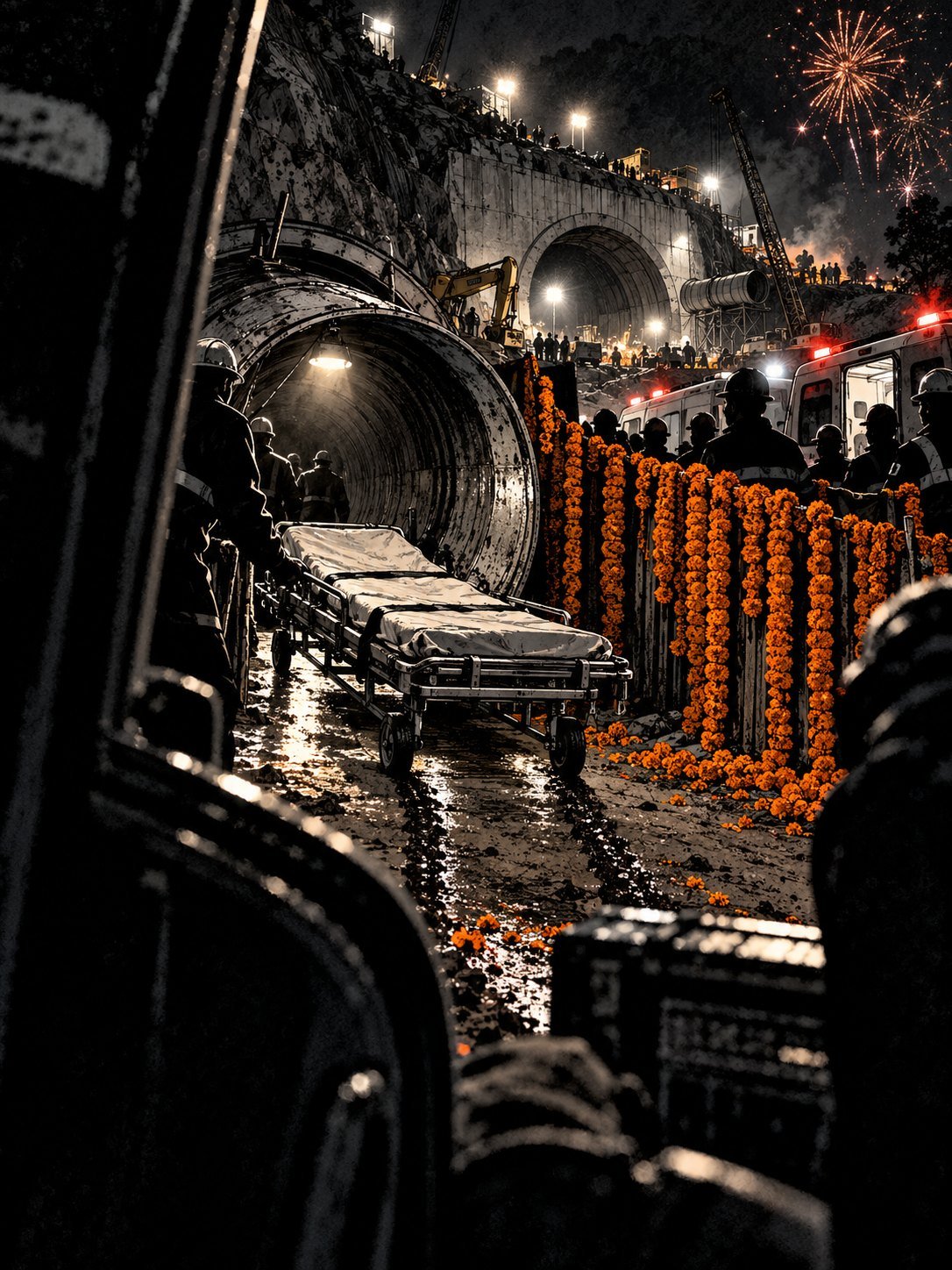
Tuesday night, November 28. The mouth of the tunnel.
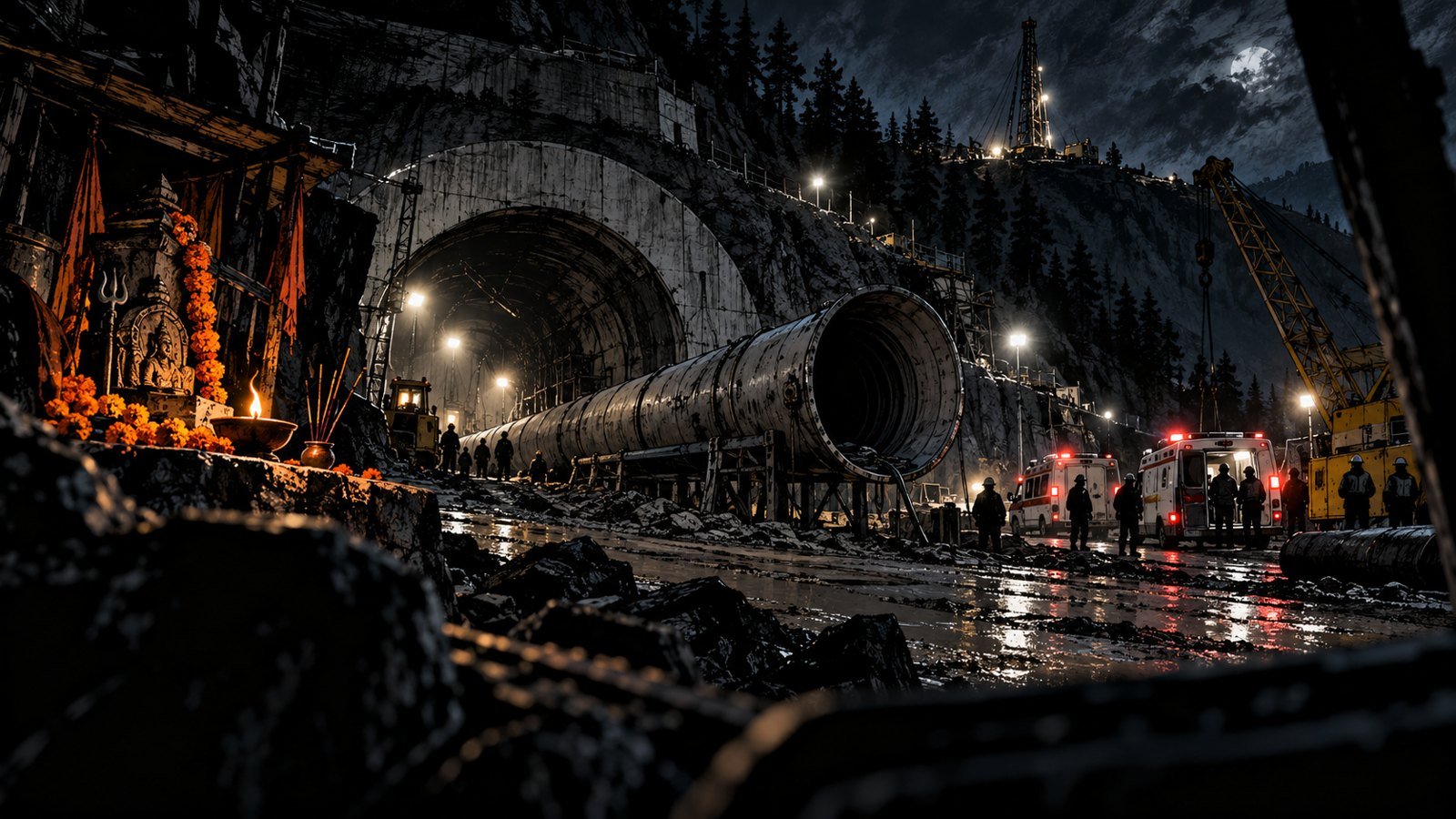
Crowds stood in the cold. Ambulances waited.
One by one, the workers came out on wheeled stretchers, pulled through about 187 feet (57 m) of steel pipe.
The state’s chief minister, Pushkar Singh Dhami, met them at the tunnel mouth and placed marigold garlands on them. People chanted “Hail mother India!” Firecrackers went off in the dark.
At about 8:50 p.m., the state government confirmed it.
All 41 men were out. All 41 were alive.
They had been trapped for 17 days.
To understand why that night felt like a miracle, go back to the morning it all began. (DAWN-AFP2) (ALJ) (AP-PBS) (CBS) (WIKI) (STATESMAN)
A wall of rock where the road should be
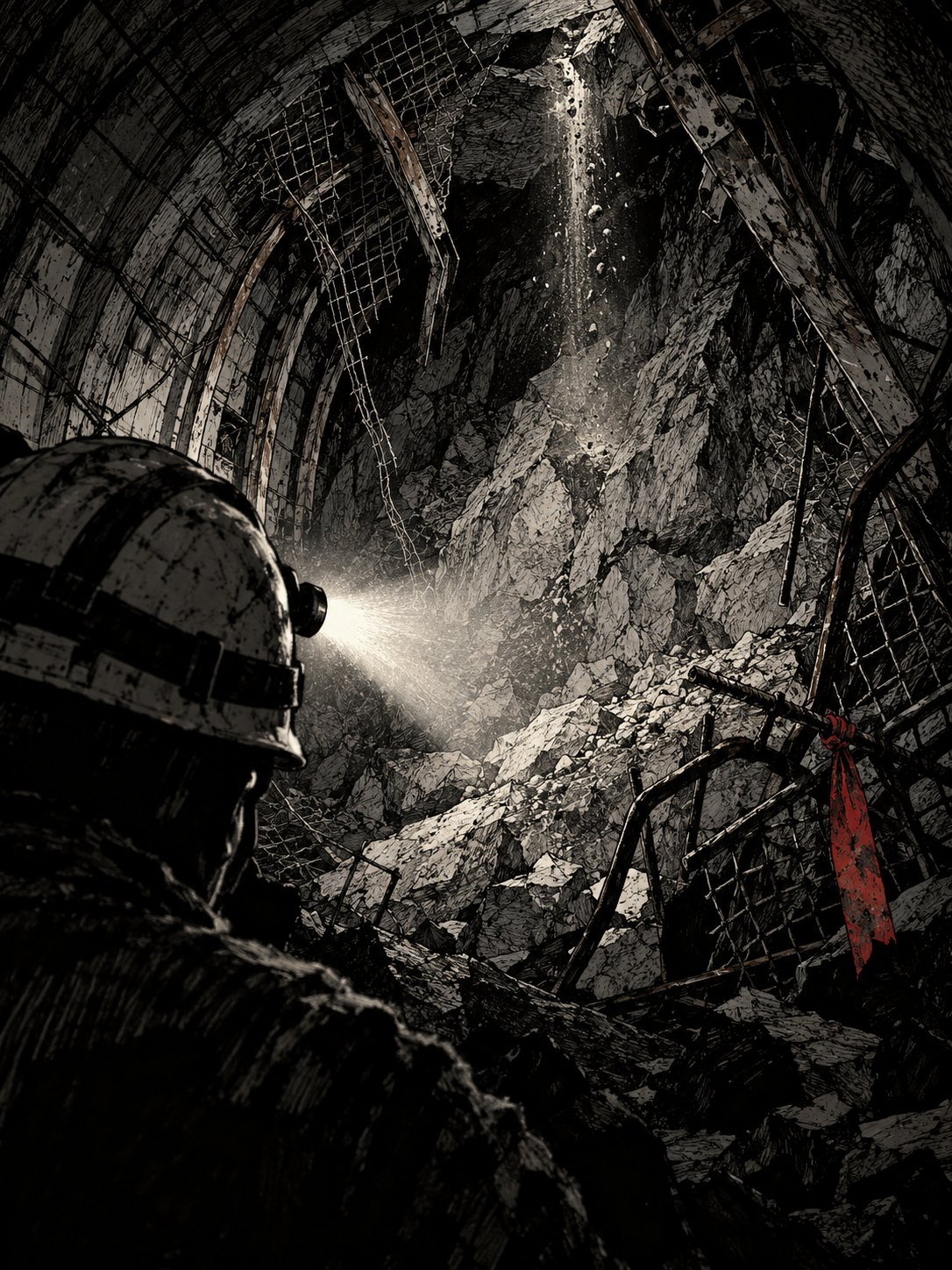
The tunnel was being cut through the mountains of Uttarkashi district. It was about 2.8 miles (4.5 km) long and nearly 43 feet (13 m) wide.
It was part of the Char Dham road, a project worth about $1.5 billion, meant to link four Hindu pilgrimage sites with an all-weather highway.
That Sunday morning, the roof came down about 656 feet (200 m) in from the Silkyara entrance.
The blockage stretched about 197 feet (60 m). It was not a pile of loose stones. It was rock, steel girders and mesh, packed into the tunnel.
The 41 workers were further in, about 853 to 869 feet (260 to 265 m) from the entrance, reshaping the tunnel. The collapse fell between them and the way out.
Rescuers brought in excavators. By the first night they had cleared about 66 feet (20 m) of debris.
But new rubble kept falling from above, filling the gap again.
On the other side, was anyone still breathing? (WIKI) (AP-PBS) (REUT) (ALJ) (DAWN-AFP)
A note on a scrap of paper
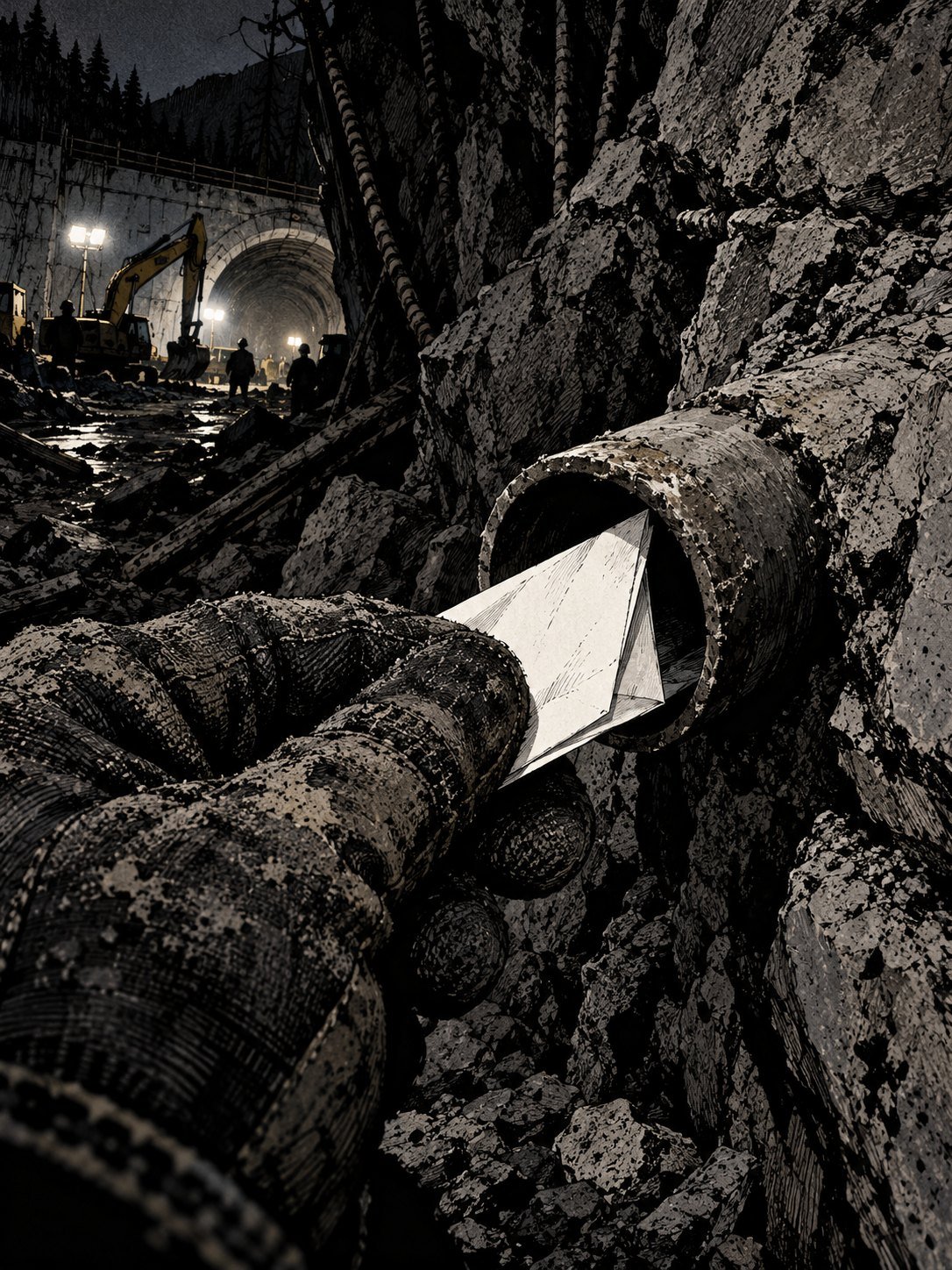
The first answer did not come by phone.
It came as a note, written on a scrap of paper.
The men inside were alive.
Later that night, reportedly just after midnight, rescuers made contact by radio.
Early reports said 40 workers were trapped. The final count was 41.
Running through the rubble was an old pipe, only 4 inches (10 cm) wide, used for compressed air and water. It became their lifeline. Rescuers pumped oxygen through it.
For now, the men were safe.
But safe is a strange word for men sealed inside a mountain. (DAWN-AFP) (BT)
Forty-one men, a mile of road, no exit
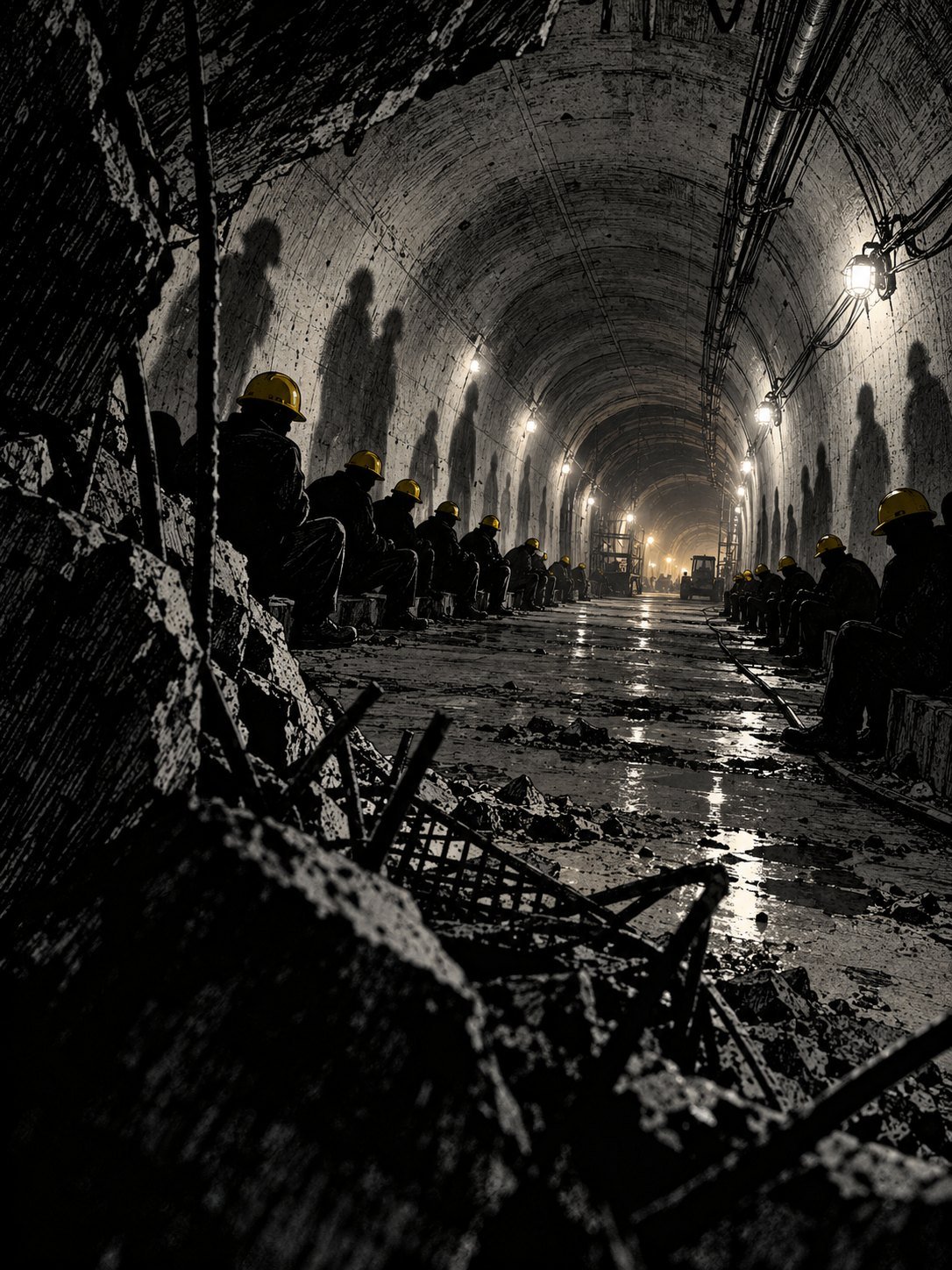
Behind the collapse, the men were not stuck in a cave.
They were in a finished stretch of tunnel about 1.24 miles (2 km) long. It had lights. It had room to walk.
A disaster official said they had about 1,312 feet (400 m) of space “to walk and breathe.”
What it didn’t have was a way out.
The 41 were migrant workers who had come from across India for this job.
By one count, 15 were from Jharkhand, 8 from Uttar Pradesh and 5 from Odisha. Others came from Bihar, West Bengal, Uttarakhand, Assam and Himachal Pradesh.
Now they were stuck together in the dark, with nothing to do but wait.
Waiting like that can break a person. Their foreman had a plan for that. (BT) (OUTLOOK-AUGER) (DAWN-AFP) (STATESMAN) (PRINT-1YR)
The foreman made them do yoga
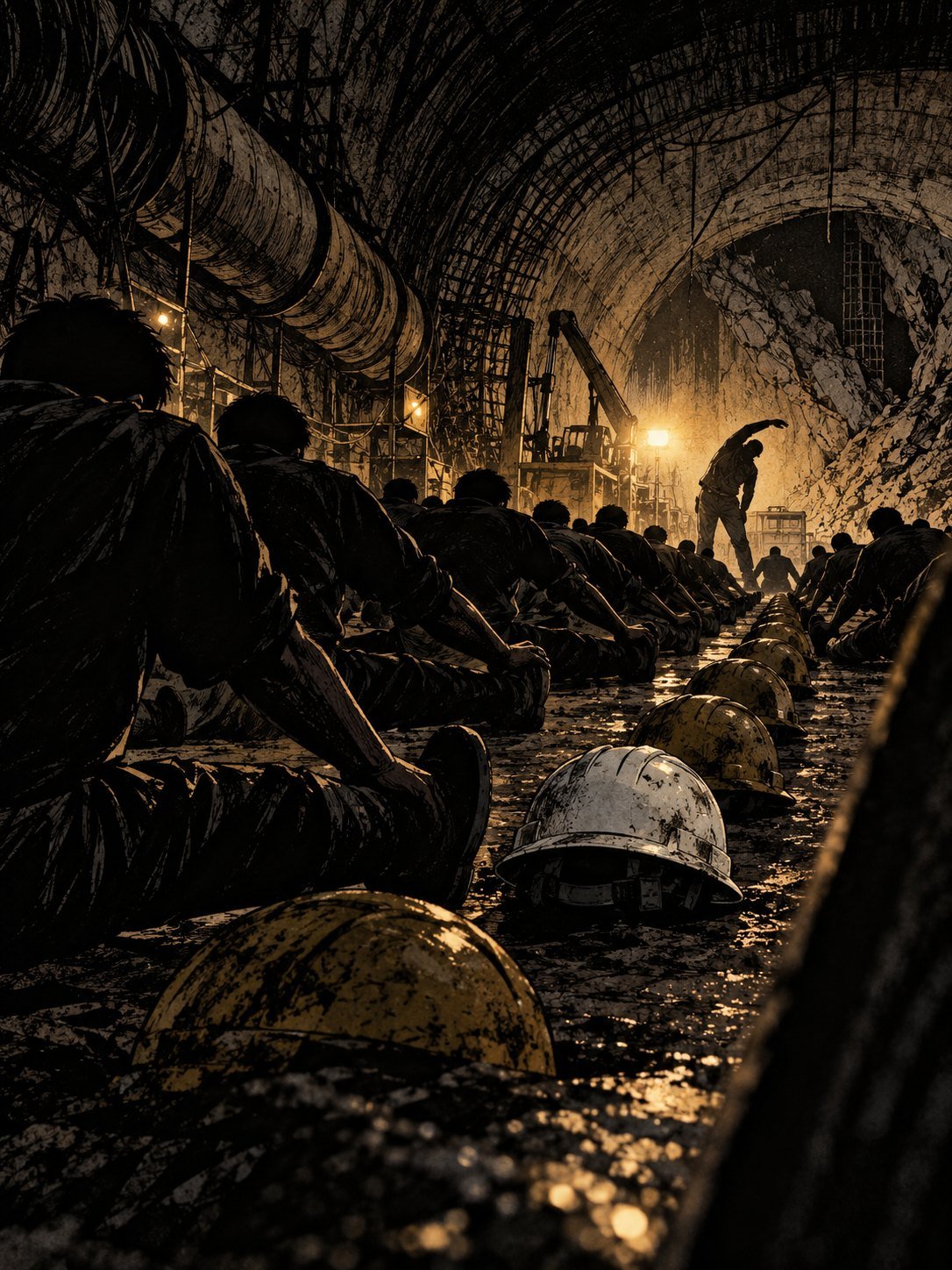
The foreman trapped inside was Gabbar Singh Negi, from Kotdwar in Uttarakhand’s Pauri Garhwal district.
He had the men do yoga.
He had them meditate. He had them take morning walks along the empty road.
The goal was simple. Keep their minds steady.
Later, Prime Minister Narendra Modi would single him out for praise.
Outside, the state government gave the rescue a name. It called it Operation Zindagi, which means Operation Life.
But calm minds were only half of it. Forty-one men also needed to eat. (FPJ) (OUTLOOK-YOGA) (WIKI)
Dinner came through a 4-inch pipe
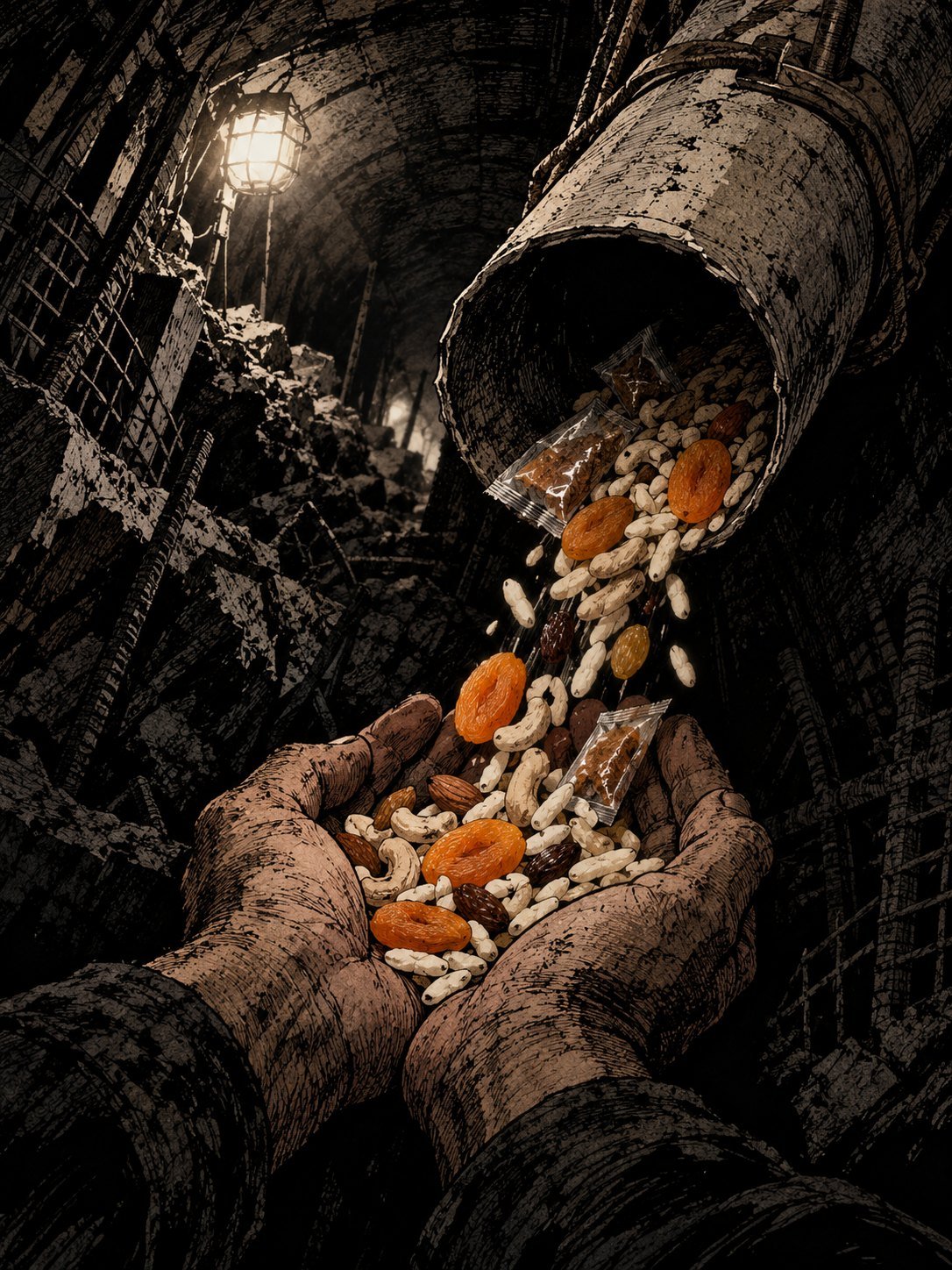
Everything had to fit through that same thin pipe.
Through it came small food packets. Dry fruit. Medicines.
Oxygen went in the same way.
It kept them going. But a hot meal would not reach them for more than a week.
Outside, the digging went on. Every time the excavators cleared some rubble, more slid down to take its place.
Scooping it out was not going to work. The rescuers needed a machine that could bore straight through.
Four days after the collapse, one arrived. It came in pieces, by air. (DAWN-AFP) (BT)
A giant drill arrives by air force plane
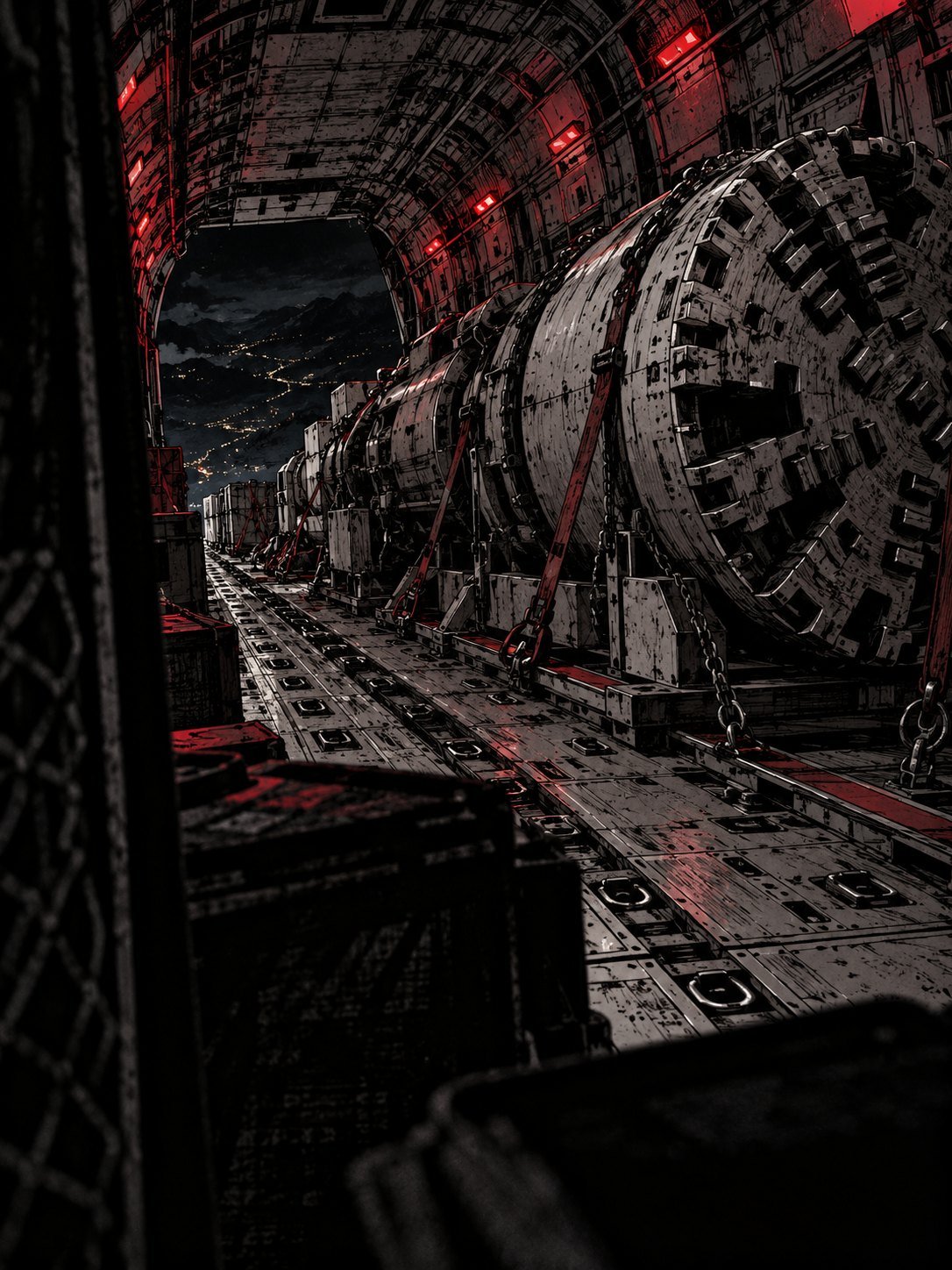
On November 16, a heavy American-made auger drilling machine reached the site.
An auger is a drill with a spiral blade, like a huge corkscrew. This one weighed about 25 tonnes, roughly 55,000 pounds.
Indian Air Force C-130 Hercules planes flew it in, in parts.
The air force also sent a C-17 and two C-130J Super Hercules aircraft, carrying 36 tonnes of equipment, about 79,000 pounds.
The drill’s job was to push steel pipes, about 31.5 to 35.4 inches (800 to 900 mm) wide, through the rubble.
If it worked, the pipes would form an escape tube, and the men could come out through it.
They set it up and pointed it at the wall. (OPEN) (OUTLOOK-AUGER) (WIKI) (WEEK-1121)
The plan was a steel pipe through the rubble
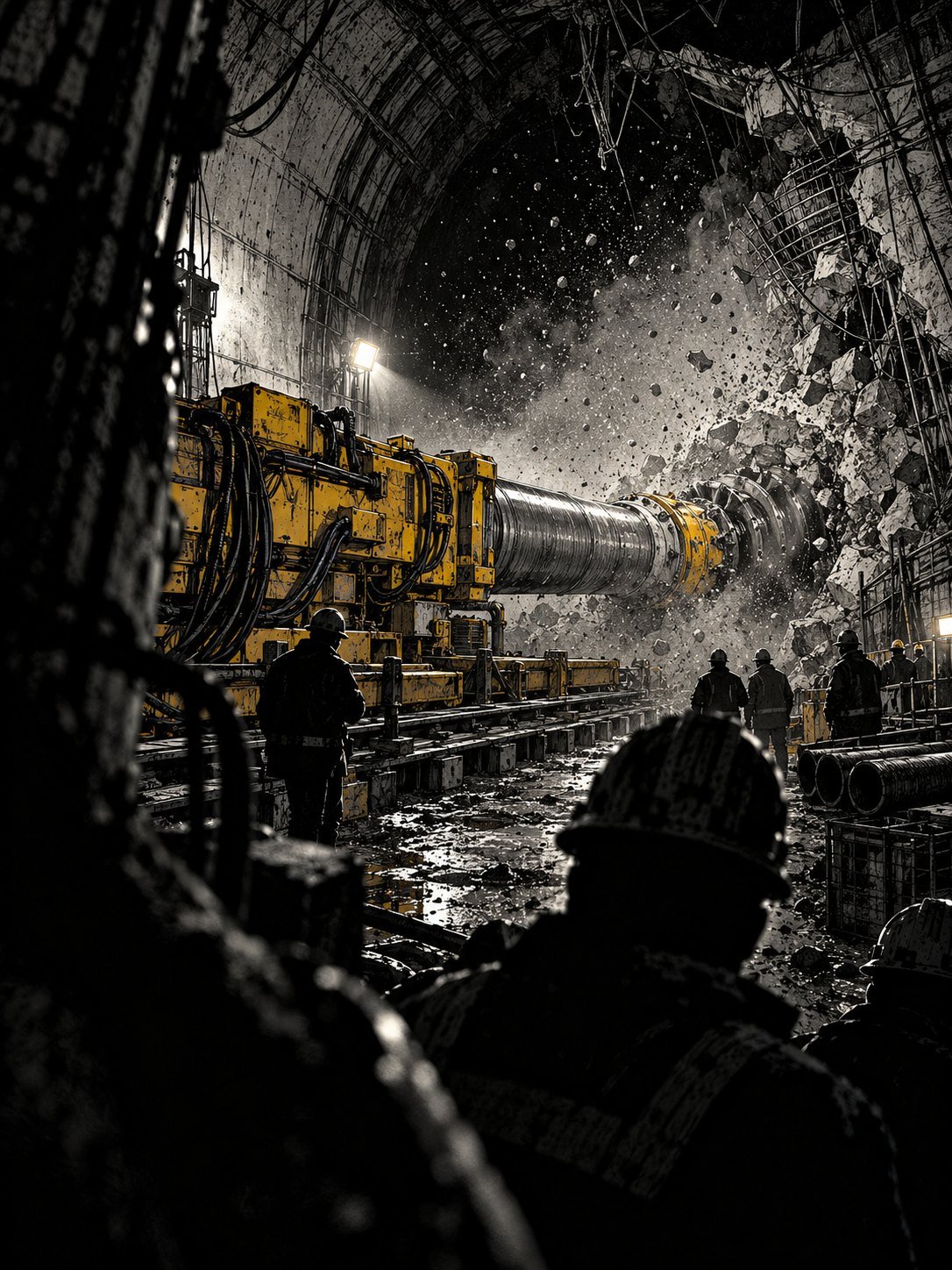
The machine sat on the tunnel floor, aimed at the rubble.
The plan was easy to explain. Drill into the debris and push a steel pipe in behind the drill. Then add the next length of pipe and push again.
The pipe had to cross roughly 187 to 197 feet (57 to 60 m) of collapsed rock and steel.
At about 3 feet wide, it would be big enough for a man.
For the 41 men inside, every foot of pipe meant a foot closer to home.
For the rescuers, it meant drilling into a mountain that had already fallen once.
Then, on November 17, everyone in the tunnel heard a sound they did not want to hear. (OUTLOOK-AUGER) (WIKI) (AP-PBS) (ALJ)
A loud crack, and the drill went quiet
On November 17, a loud cracking sound rang out inside the tunnel.
Drilling stopped.
In a tunnel that had already collapsed once, nobody could ignore a sound like that.
There was more trouble. At about the 72-foot (22 m) mark, the auger hit something hard. Drilling halted for days.
Rescuers started looking for other ways in. On November 19, the Border Roads Organisation built a road about 0.71 miles (1.15 km) long up the hill above the tunnel, in case they had to drill straight down from the top.
They contacted the team behind the 2018 Tham Luang cave rescue in Thailand.
Then Arnold Dix arrived. The Australian is president of the Geneva-based International Tunnelling and Underground Space Association. From the start, he publicly promised that all 41 men would come home.
“I predicted 41 people would return home unharmed by Christmas,” he said later.
Christmas was more than a month away. The men inside were still living on dry fruit. (WIKI) (OUTLOOK-AUGER) (WEEK-1121) (TRIB-DIX) (INDIANLINK)
Day nine, and their first hot meal
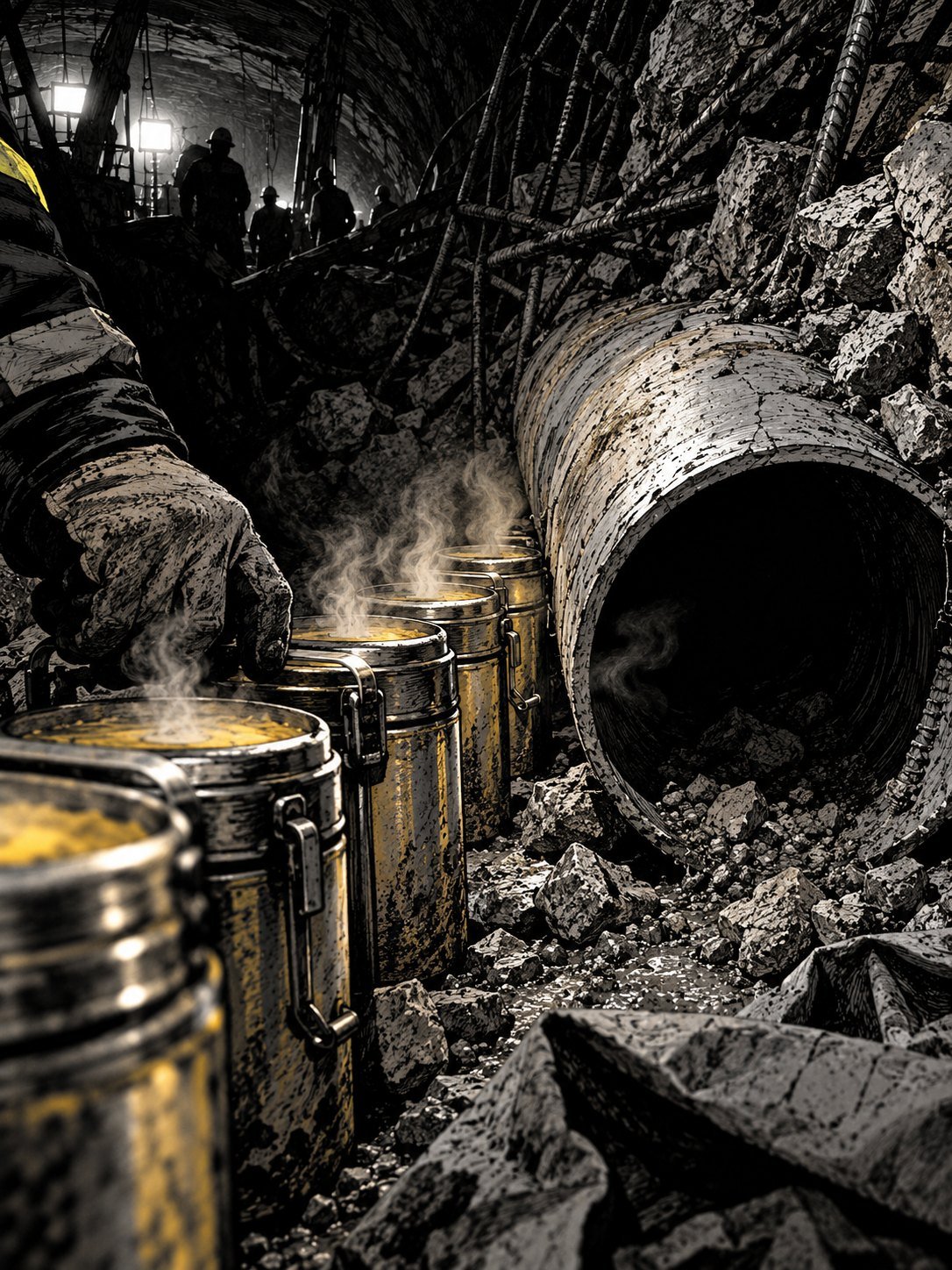
On November 20, day nine, the rescuers finally had a win.
They pushed a wider pipe, 6 inches (15 cm) across, through the rubble.
That was big enough for real food.
The first hot meal went in: khichdi, a simple dish of rice and lentils. An official said 24 bottles of meals were sent, plus bananas.
For nine days the men had lived on small packets and dry fruit. Now they had something warm.
The new pipe could carry more than food. It could carry a camera.
Early the next morning, the world was going to see them for the first time. (WEEK-1121) (BT) (KUWAIT-AFP)
The camera found them, alive and in helmets
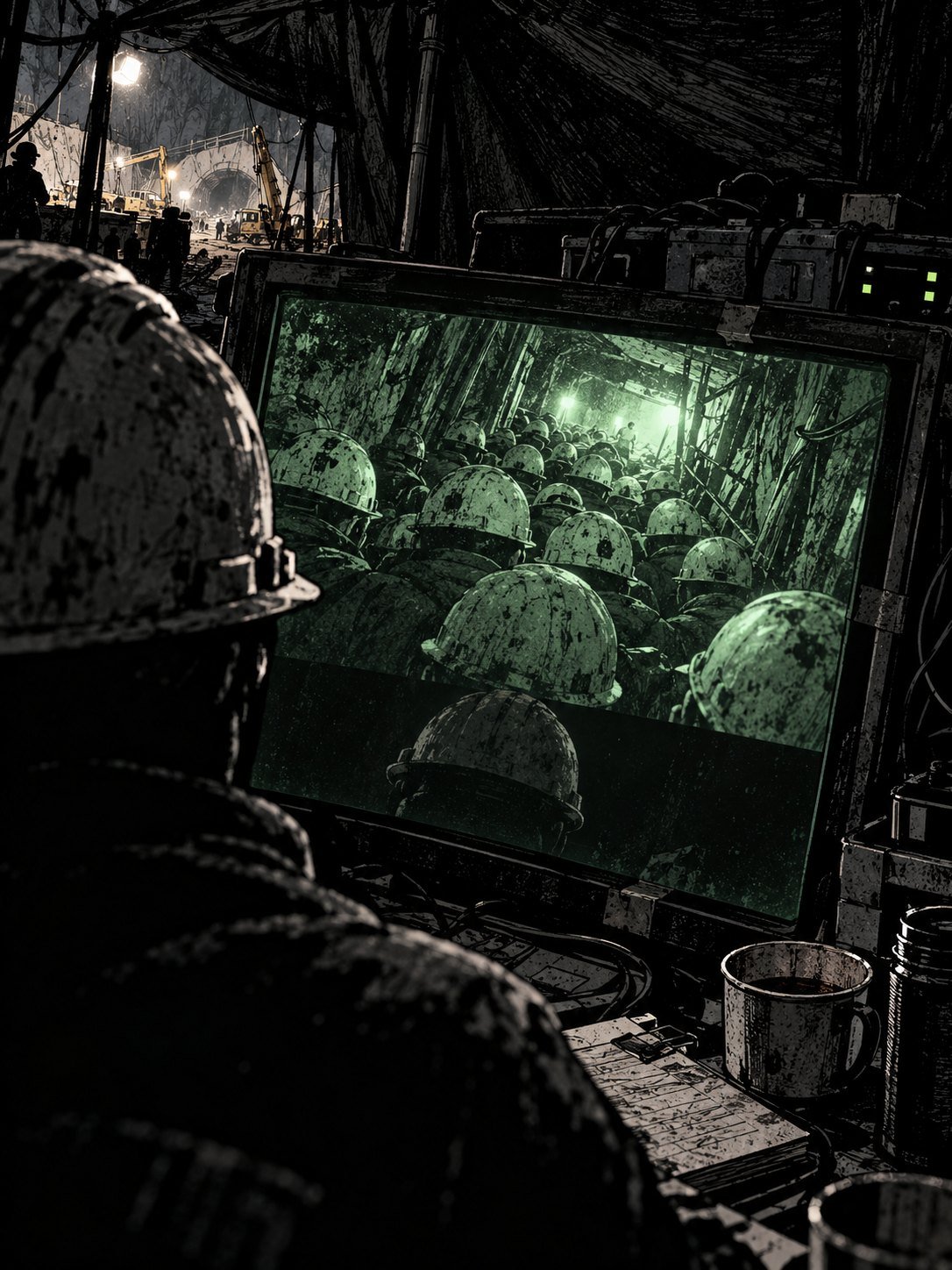
Early on November 21, day 10, rescuers fed an endoscopic camera down the 6-inch pipe. It was a thin, bendable camera on a cable.
The picture was grainy. But it showed the men.
They were alive. They were still wearing their helmets. They crowded toward the lens.
A rescuer’s voice can be heard in the footage: “We will bring you out safely, do not worry.”
It was the world’s first look at the 41.
Mobile phones and chargers went down the pipe next, so the men could talk to their families.
Arnold Dix told reporters: “Those 41 men are coming home. Exactly when? Not sure.”
Outside, some people believed they already knew why all this had happened. Their reason had nothing to do with rock. (BT) (KUWAIT-AFP) (WEEK-1121) (OPEN)
Locals said the mountain god was angry
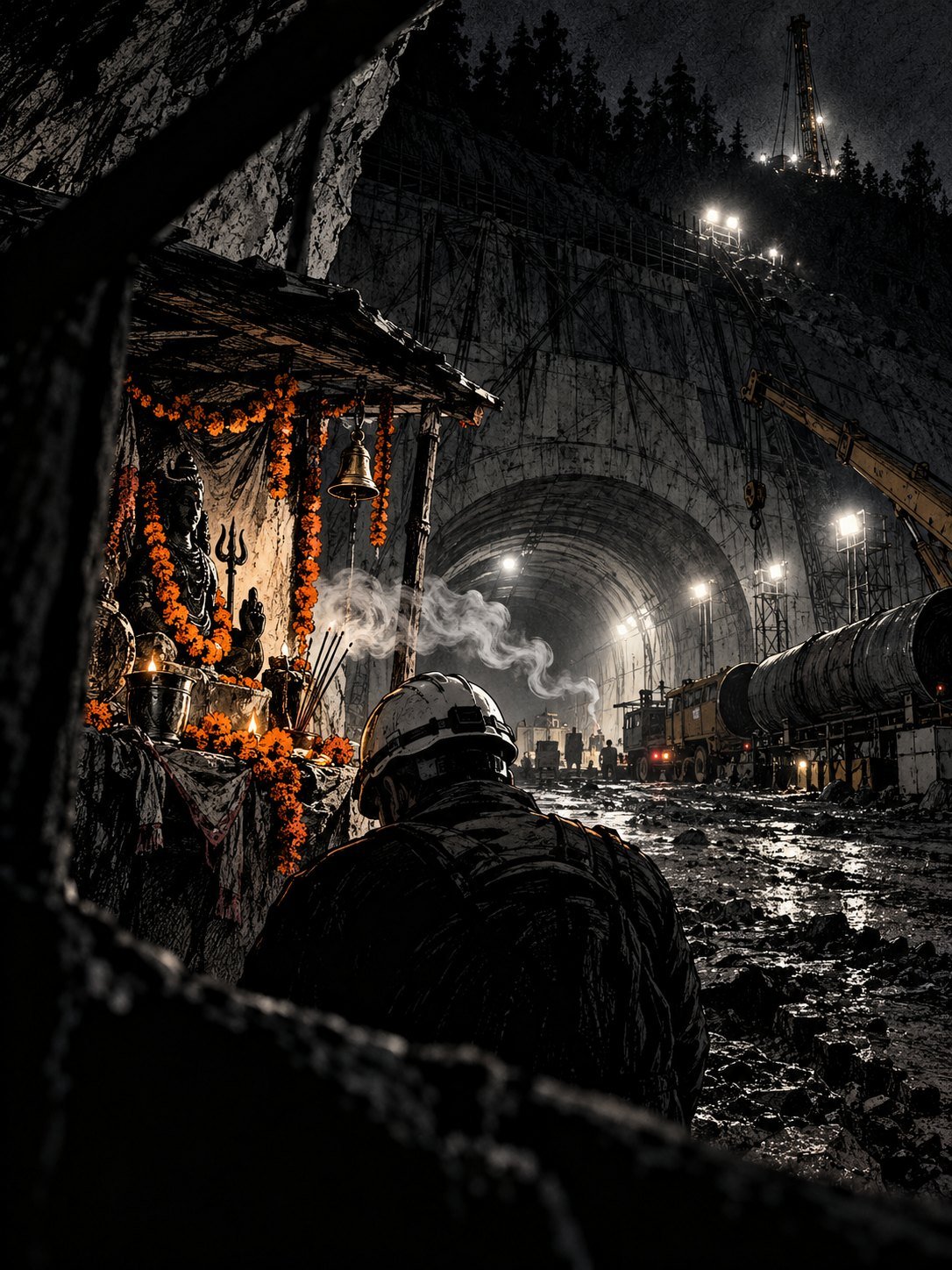
The people of these hills worship a mountain deity called Baba Baukhnag.
Locals believed a small shrine to him had been removed when construction began. It was supposed to be rebuilt. It never was.
In their eyes, the deity was angry.
One account, from publicity for Arnold Dix’s later book, says a small temple at the entrance was knocked down on the first day of Diwali, the day of the collapse. That timing has never been confirmed.
A makeshift temple to Baba Baukhnag was set up at the rescue site.
Days before the breakthrough, Dix, the international tunnel expert, was seen praying there.
Engineering and prayer were now working side by side at the tunnel mouth.
They would need both. Inside the rubble, the drill was running into things it could not get past. (WEEK-TEMPLE) (OPEN) (INDIANLINK) (TRIB-DIX)
The drill broke 154 feet in
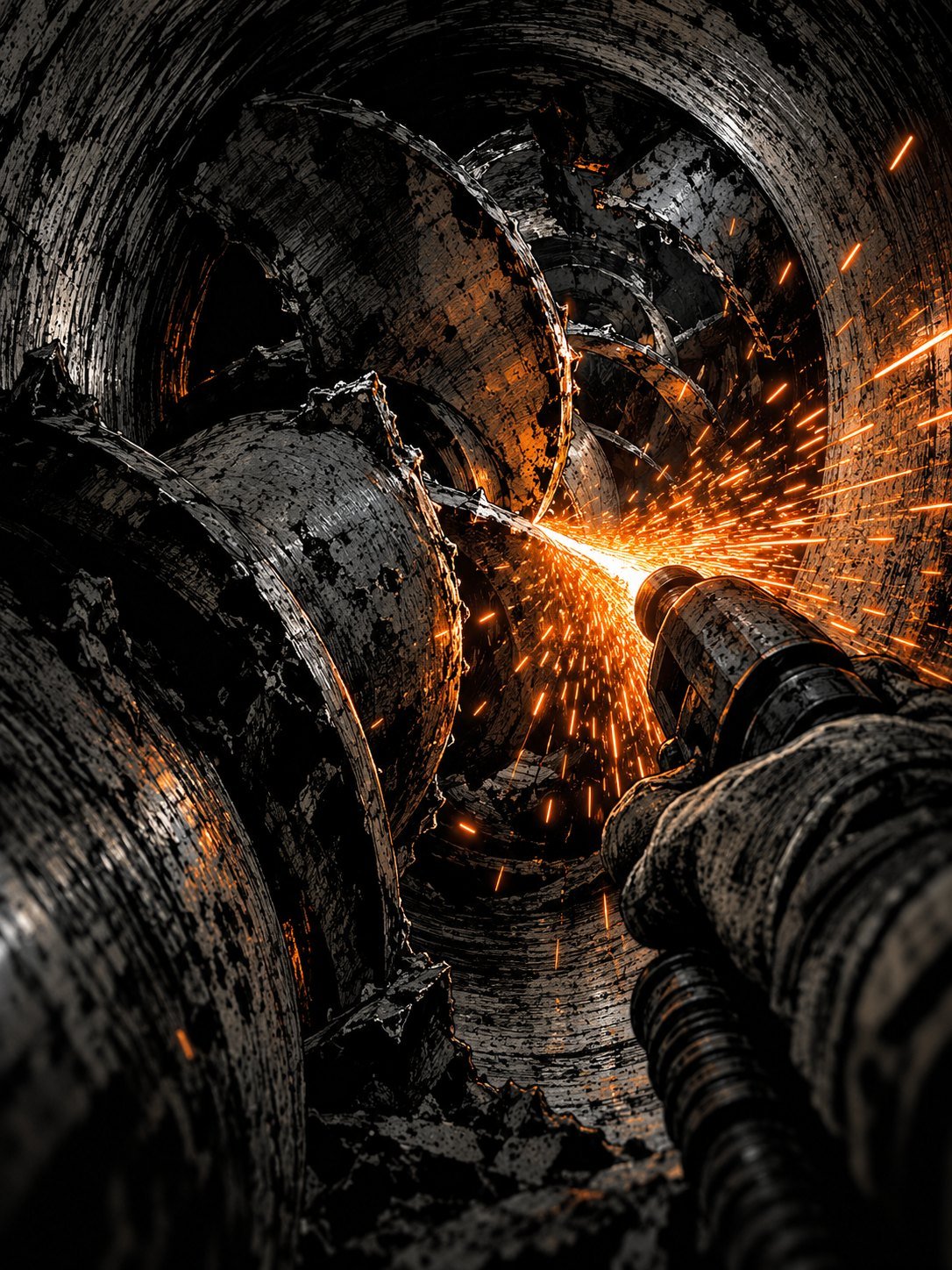
On November 22 and 23, progress stalled. The drill kept hitting steel girders, mesh and rubble buried in the collapse.
Officials said about 75% of the debris had been drilled.
Then, on Friday night, November 24, day 13, the auger’s blades jammed inside the rubble and broke.
It had bored about 154 feet (47 m). The full distance was roughly 187 to 197 feet (57 to 60 m). The pipe was about 30 to 39 feet (9 to 12 m) short.
Worse, the broken blades were stuck inside the rescue pipe itself. Nothing could move forward until they came out.
On November 26, a plasma cutter was flown in from Hyderabad to slice the auger out in pieces. About 66 feet (20 m) was cut first. Some 82 feet (25 m) still had to come out.
The Army’s Madras Sappers, a unit of military engineers, joined the rescue.
Two weeks in, the giant machine was being cut to scrap. The rescuers needed a plan B. (WIKI) (AP-PBS) (OUTLOOK-AUGER) (CBS) (TRIB-PLASMA)
Plan B was to drill down from the top
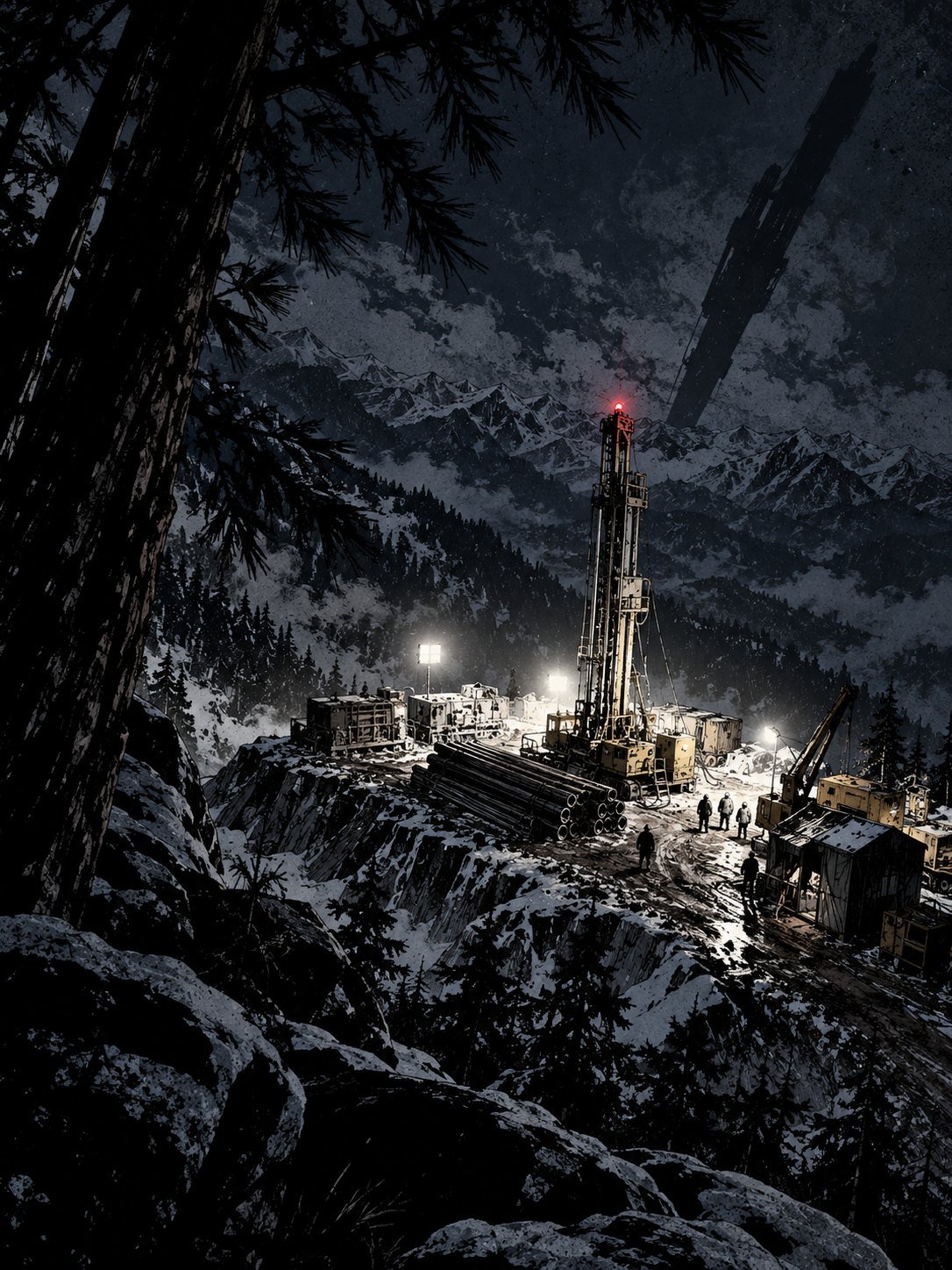
Plan B was on top of the mountain.
The idea was to drill 282 feet (86 m) straight down from the summit to the trapped men.
By November 27, SJVN’s vertical drill had reached about 105 feet (32 m). Another company, THDC, started from the far end of the tunnel, at Barkot.
Meanwhile, hard questions were being asked. On November 24, a member of a government panel told Reuters that the tunnel ran through a geological fault called a shear zone, and that it had no escape passage.
Government guidelines recommend emergency exits for tunnels longer than about 0.93 miles (1.5 km). The highway authority was told to audit 29 tunnels under construction.
Before the work started again, a priest, Ganesh Prasad Bijalwan, performed a puja, a prayer ritual.
Drilling from the top would take time. So the rescuers turned to a very different idea, and a banned one. (WIKI) (TRIB-PLASMA) (REUT) (PRINT-1YR)
They called in the rat-hole miners
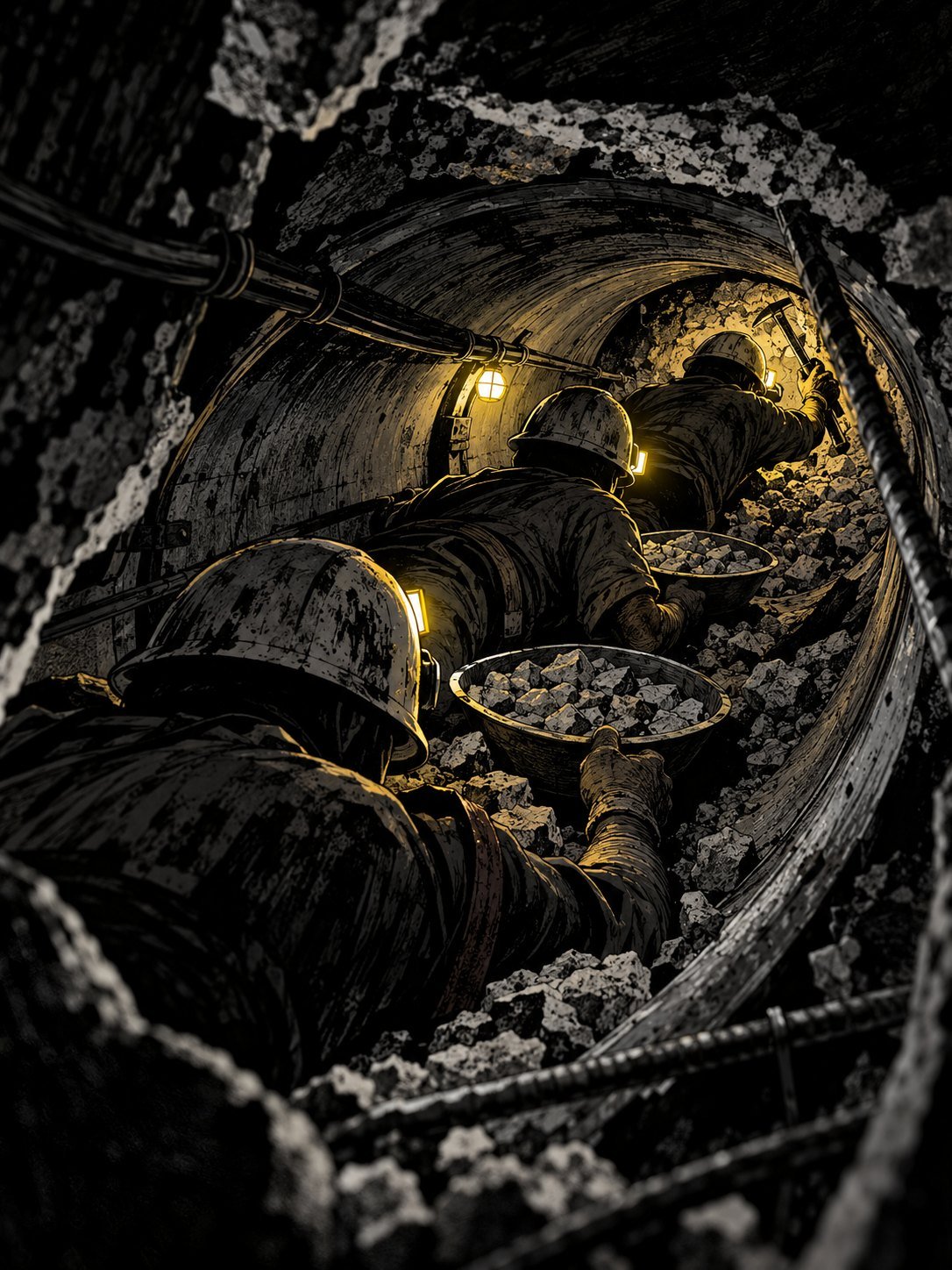
Rat-hole mining is a way of digging narrow coal burrows by hand. India’s National Green Tribunal banned it in 2014.
Now the rescue needed exactly that skill.
A team of rat-hole miners from Delhi and Uttar Pradesh was called in. Most reports say there were 12. They worked for a Delhi company, Rockwell Enterprises, and their leader was Wakeel Hasan.
Among them were Munna Qureshi, Feroze Qureshi, Monu Kumar, Mohammad Irshad and Mohammad Naseem.
At 3 p.m. on Monday, November 27, they started. They crawled into the steel pipe, about 3 feet wide and “just wide enough for one person.” Three of them dug by hand at a time, taking turns.
Outside, temperatures were plummeting.
They had promised to finish in 24 to 36 hours. “We had decided that we would work 24/7 and not leave until we bring all of them out,” they said.
The team said it did not charge for the job.
Through the night and into the next day, they kept crawling forward. (CBS) (OUTLOOK-MINERS) (HITAVADA) (TRIB-SHOULDERS) (SCROLL) (DAWN-AFP2) (ALJ) (AP-PBS)
Twenty-seven hours later, they broke through
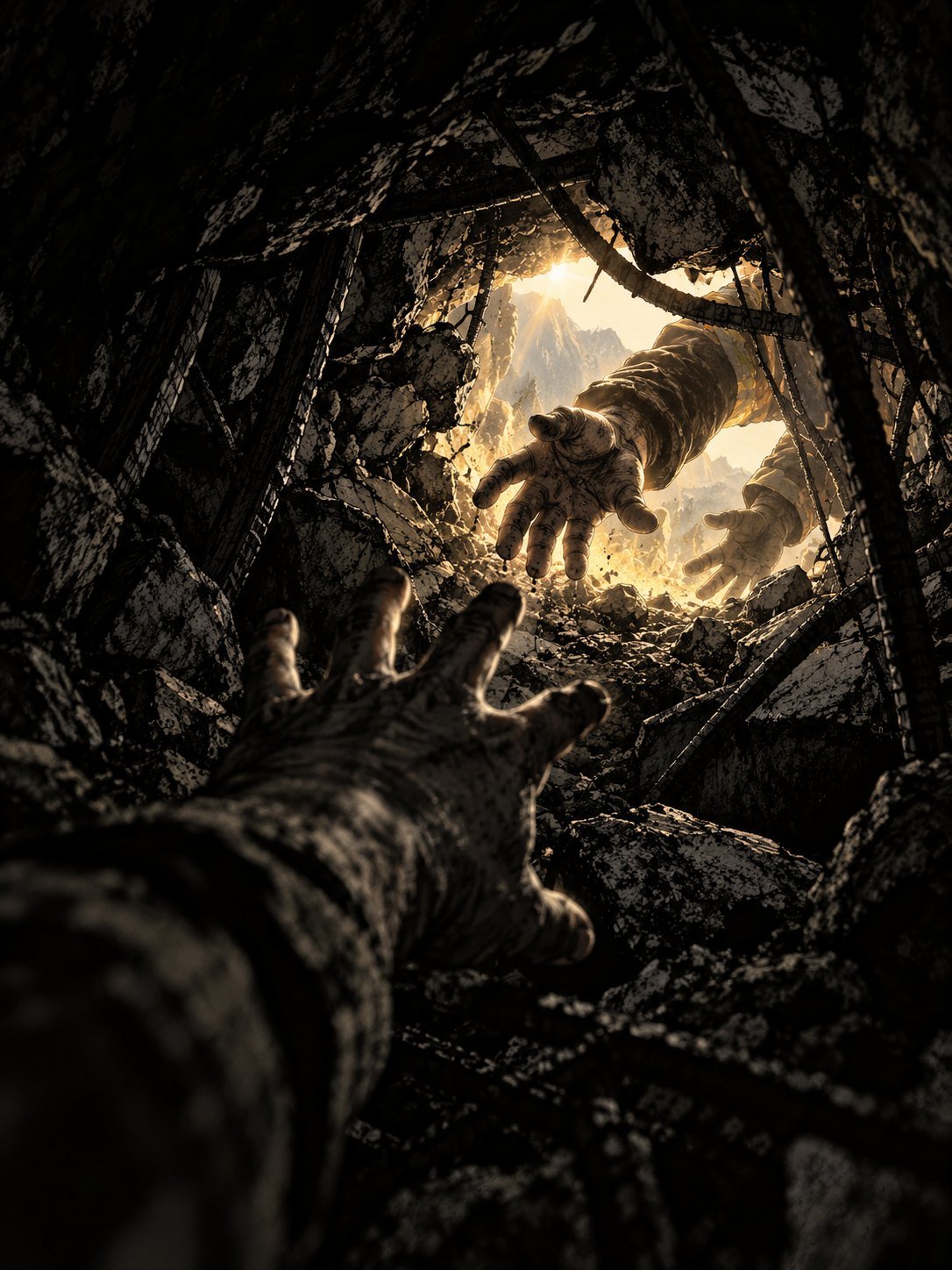
Tuesday, November 28. Day 17.
Hasan later said the team had planned to dig about 49 feet (15 m). Instead they kept going. By his count, they pushed the pipe about 59 feet (18 m).
Other reports put the gap left by the broken drill at 30 to 39 feet. The numbers may measure different things, rubble cleared versus pipe pushed.
At about 6 p.m., they broke through to the other side.
That was about 27 hours after they started, inside the 24 to 36 hours they had promised.
After the air force flights, the giant drill and the plasma cutter, it was men digging by hand who got there.
The first two rescuers through were about to meet the men they had come for. (HITAVADA) (TRIB-SHOULDERS) (ALJ) (TRIB-PLASMA) (OUTLOOK-AUGER)
They lifted the rescuers on their shoulders
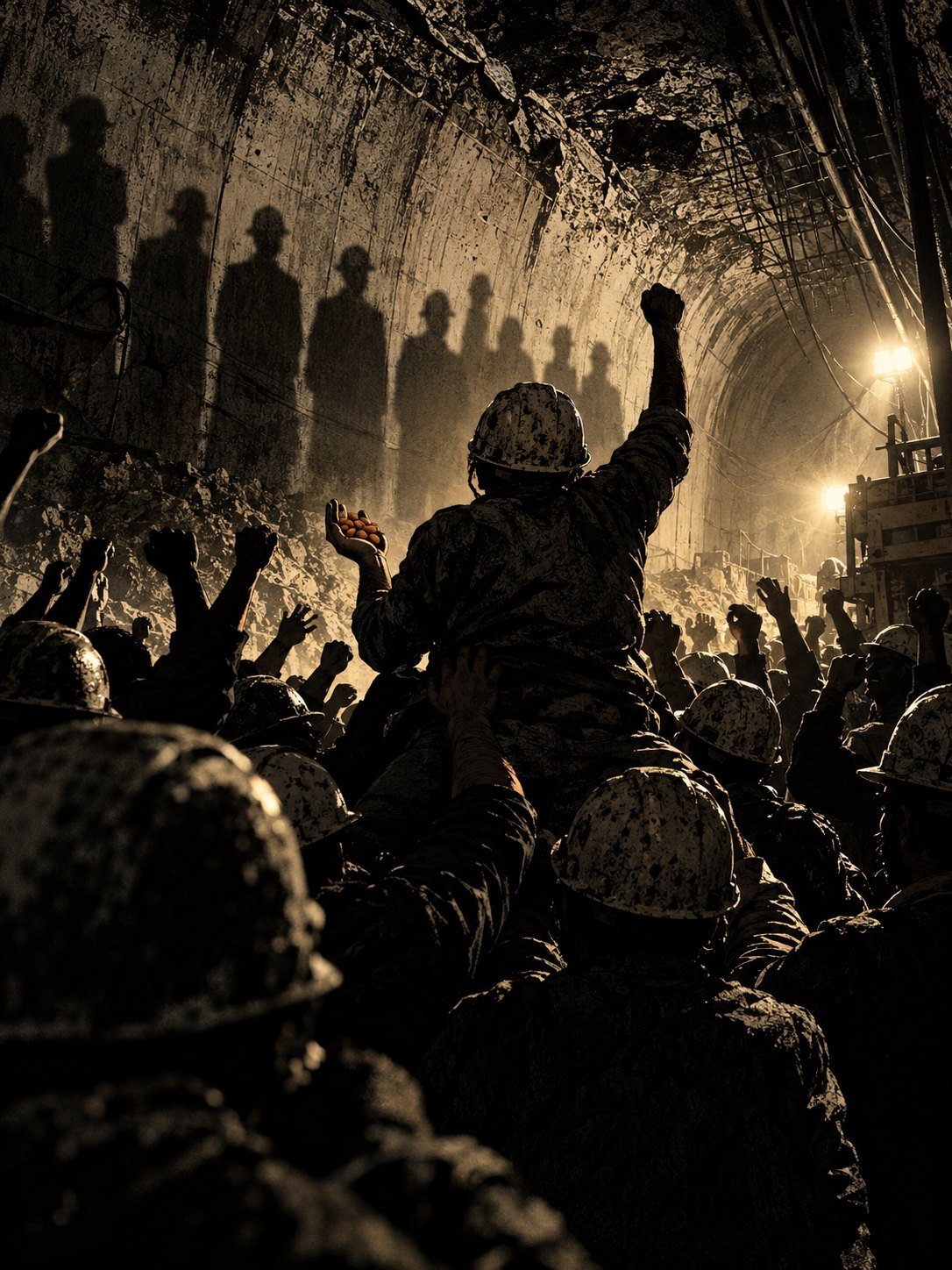
Feroze Qureshi and Monu Kumar were the first rescuers to meet the trapped men.
“They lifted me on their shoulders,” Qureshi said.
The workers gave Kumar almonds and asked his name.
Then the long ride out began. The men were pulled one by one on wheeled stretchers through about 187 feet (57 m) of welded steel pipe, roughly 3 feet (90 cm) wide. The final phase took about an hour.
At the tunnel mouth, Chief Minister Dhami and Minister of State V.K. Singh were waiting.
At about 8:50 p.m., the government confirmed that all 41 were out. Ambulances took them to a field hospital at the Chinyalisaur community health centre.
One family had skipped Diwali, because it fell on the day of the collapse. A worker’s father said: “We will celebrate it when he reaches the village.”
The story could have ended there, with a late Diwali. It didn’t. (TRIB-SHOULDERS) (DAWN-AFP2) (ALJ) (AP-PBS) (WIKI) (STATESMAN)
Three months later, a bulldozer came for his home
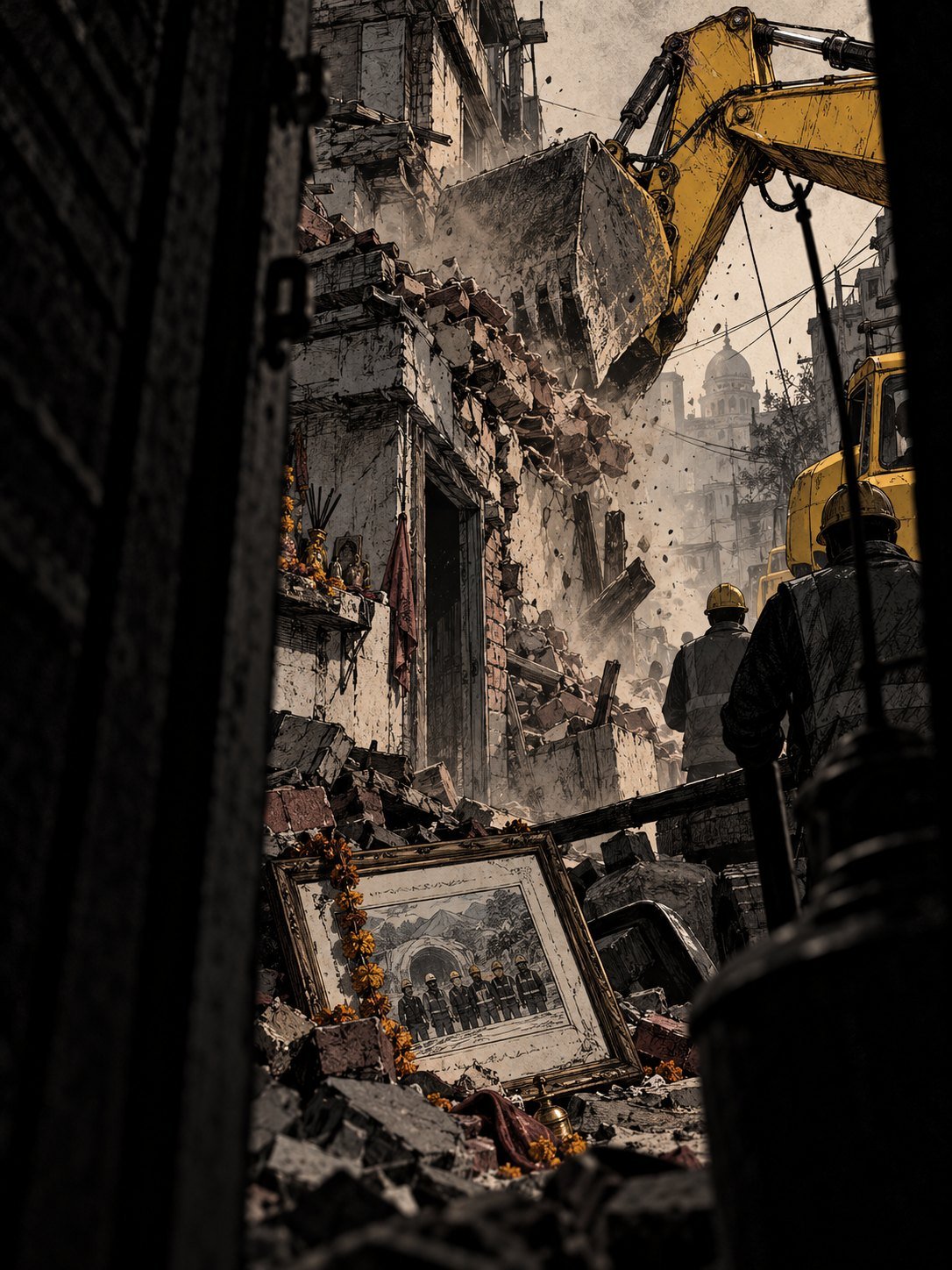
Arnold Dix called the rescue a miracle. He said he had heard the trapped men had been “playing cricket” inside. Then he went to the Baba Baukhnag shrine to give thanks, as he had vowed.
On November 29, an air force Chinook helicopter flew the 41 to AIIMS Rishikesh. On December 1, they were declared fit to go home.
The Uttarakhand government gave each worker Rs 1 lakh (100,000 rupees). The builder, Navayuga, gave each one Rs 2 lakh plus two months’ paid leave or a bonus.
Each rat-hole miner was given Rs 50,000. The Wire reported that the miners refused the reward as “not commensurate.” It is unclear whether they ever cashed it.
Then, on February 28, 2024, the Delhi Development Authority bulldozed Wakeel Hasan’s home in Khajuri Khas, Delhi. It called the house an encroachment.
“This is how we have been rewarded for rescuing so many people – we have been rendered homeless,” Hasan said.
A local MP, Manoj Tiwari, promised him housing under a government scheme.
That same month, Outlook reported that the miners had gone back to low-paid crawl work, that promised rewards were late, and that their names were missing from official lists.
The tunnel, meanwhile, still had questions to answer. (ALJ) (TRIB-DIX) (WIKI) (LOKMAT-CHEQUE) (PRINT-1YR) (WEEK-GADKARI) (SCROLL) (WIRE-REWARD) (OUTLOOK-MINERS)
The tunnel broke through, and the god got a temple
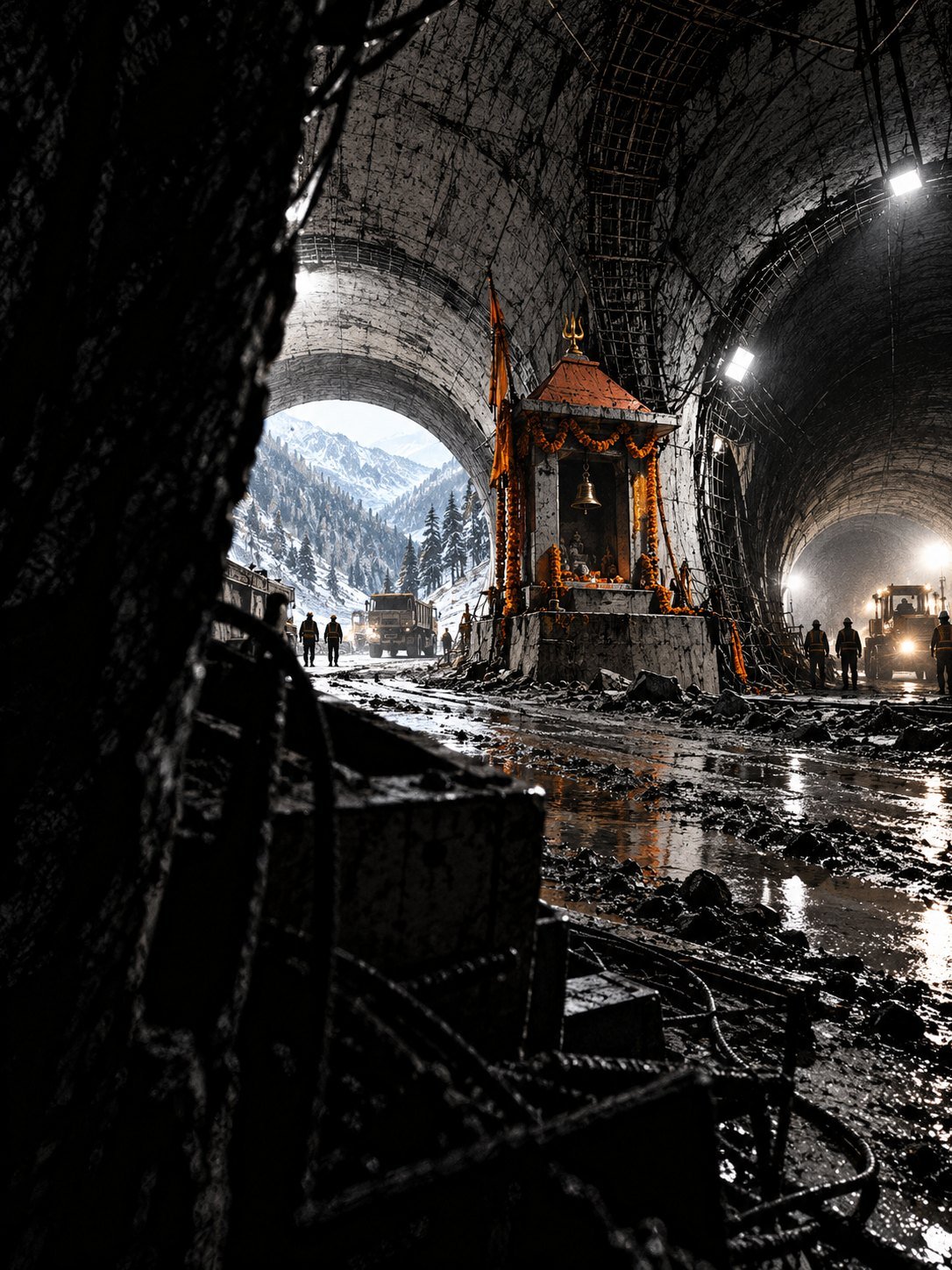
Work on the tunnel restarted on January 30, 2024.
In September 2024, a five-member expert panel sent its final report to the government. It found “profound” negligence by NHIDCL, the state company that owns the tunnel, by the builder Navayuga, and by the authority engineer.
It recorded 21 collapses in four years, rock rated as stronger than it really was, a cheaper ventilation system swapped in, and no dedicated escape passage. It said the contractor should bear the costs. The government has argued that the two sides of the tunnel’s dividing wall act as escape routes for each other. No confirmed final penalties have been reported.
Many of the rescued men never went back. In an August 2024 survey, 9 of the 41 had returned to the site. Another 31 had taken other work, farming or running small shops. One called the tunnel the “jaws of death.”
On April 16, 2025, the two ends of the tunnel finally met. It is about 2.82 miles (4.531 km) long and cuts the route between Gangotri and Yamunotri by about 16 miles (26 km).
The same day, Chief Minister Dhami consecrated a new temple to Baba Baukhnag at the tunnel mouth. He said the tunnel would be renamed after the deity.
In early 2026, officials expected it to open around the end of that year.
For 17 days, a mountain held 41 men, and the biggest machines anyone could fly in could not set them free. In the end, it was a few men crawling through a cold steel pipe, digging by hand, who brought every one of them home. (WEEK-RESUME) (PRINT-PANEL) (WEEK-GADKARI) (WIKI) (PRINT-1YR) (PRINT-BREAK) (WEEK-TEMPLE) (IINFRA) (AAJTAK-2026)
Case notes: 41 men, 17 days and the rescue the machines couldn’t finish
At about 5:30 a.m. on November 12, 2023, part of the Silkyara Bend–Barkot road tunnel in Uttarkashi district, Uttarakhand, India, caved in and trapped 41 workers behind roughly 197 feet (60 m) of rubble (WIKI) (AP-PBS). After a heavy auger drill broke about 154 feet (47 m) in, a team of rat-hole miners finished the escape tunnel by hand, and all 41 men were pulled out alive on November 28 (AP-PBS) (HITAVADA) (ALJ). A government expert panel later found “profound” negligence (PRINT-PANEL).
Timeline
| When | What happened |
|---|---|
| Nov 12, 2023, ~5:30 a.m. | Tunnel section caves in on Diwali morning; 41 trapped (WIKI) (OPEN) |
| Nov 12–13 | First contact by paper note, then radio; oxygen and food through a 4-inch pipe (DAWN-AFP) |
| Nov 16 | American-made auger airlifted in parts by the Indian Air Force (OPEN) (WIKI) |
| Nov 17 | Drilling stops after a loud crack inside the tunnel (WIKI) |
| Nov 20 (day 9) | 6-inch pipe through; first hot meal of khichdi (WEEK-1121) (BT) |
| Nov 21 (day 10) | Camera gives the first video of all 41 men (BT) (KUWAIT-AFP) |
| Nov 24 | Auger blades break about 154 ft in (AP-PBS) (TRIB-PLASMA) |
| Nov 26 | Plasma cutter flown in; vertical drilling begins from the hilltop (TRIB-PLASMA) (WIKI) |
| Nov 27, 3 p.m. | Rat-hole miners start digging by hand (HITAVADA) |
| Nov 28, ~8:50 p.m. | All 41 out (WIKI) (STATESMAN) |
| Feb 28, 2024 | Team leader Wakeel Hasan’s Delhi home demolished (SCROLL) |
| Sep 20, 2024 | Final expert panel report: “profound” negligence (PRINT-PANEL) |
| Apr 16, 2025 | Tunnel breakthrough; new Baba Baukhnag temple consecrated (PRINT-BREAK) (WEEK-TEMPLE) |
Where the records disagree
| Detail | What reports say |
|---|---|
| How many were trapped | Early AFP reports said 40; every later count says 41 (DAWN-AFP) (DAWN-AFP2) |
| Days trapped | Most outlets say 17; Wikipedia’s infobox says 16 (WIKI) |
| How far the drill stopped short | 9 m, 10–12 m or the “last 12 m” depending on the report; the miners say they pushed the pipe 18 m (ALJ) (TRIB-PLASMA) (HITAVADA) |
| Rescue pipe width | 800 mm or 900 mm (about 3 ft); both sizes were on site (OUTLOOK-AUGER) (ALJ) |
| Size of the miners’ team | 12 in most reports; 24 in one (HITAVADA) (CBS) |
| Escape passage | A panel member and the final report say there was none; the minister said the two sides of the dividing wall serve as escape routes (REUT) (PRINT-PANEL) (WEEK-GADKARI) |
Details most coverage missed
The first word from inside was a note on paper. Radio contact came only later that night (DAWN-AFP).
The method that saved them was banned. India’s National Green Tribunal outlawed rat-hole mining in 2014 (CBS) (OUTLOOK-MINERS).
Many of the 41 never went back. In August 2024, only 9 had returned to the site; one called the tunnel the “jaws of death” (PRINT-1YR).
What we still don’t know
- Whether any final penalties were imposed after the expert panel’s report.
- Exactly how far the auger stopped short, since reports measure different things.
- Whether the miners ever cashed the state reward they were reported to have refused.
- When the finished tunnel will open to traffic.
Case file summary
- What: Collapse of the Silkyara Bend–Barkot road tunnel and the 17-day rescue of 41 workers
- Where: Uttarkashi district, Uttarakhand, India
- When: November 12–28, 2023
- Rescued by: A team of rat-hole miners led by Wakeel Hasan, after the auger drill broke
- Status: All 41 survived; panel found negligence (2024); tunnel broke through (2025)
Illustrations are artistic interpretations, not photos. No real person has a recognizable face.
Related files
- His Partner Cut the Rope and Left Him for Dead. Joe Simpson Crawled 5 Miles Back on a Broken Leg
- The Voice on the Phone: The Kidnapping of Lee Hyung-ho, Korea’s Most Haunting Cold Case
- One Sip of Iced Coffee, Then She Collapsed. Jessica Wongso Got 20 Years, but No Camera Saw the Poison Go In
Illustrations are AI-generated artistic interpretations, not photos. No real person is depicted with a recognizable face. Read how we research and illustrate these files.
Sources
- Uttarakhand tunnel rescue (Wikipedia)
- Indian rescuers free trapped workers after 17 days stuck in a collapsed tunnel (AP via PBS NewsHour)
- All 41 miners rescued from collapsed tunnel in India’s Uttarakhand (Al Jazeera)
- Collapsed Indian tunnel had no safety exit, was built through geological fault – panel member (Reuters via Malay Mail)
- All 40 workers in India tunnel collapse ‘safe’ (AFP via Dawn, 13 Nov 2023)
- All 41 Indian workers rescued from tunnel after 17 days (AFP via Dawn)
- Indian workers trapped in tunnel seen on camera (AFP via Kuwait Times)
- India tunnel collapse rescue success as rat miners reach men (CBS News)
- After sending food via 6-inch pipe, rescuers try for live visuals (The Week, 21 Nov 2023)
- First visuals of trapped workers emerge (Business Today, 21 Nov 2023)
- Explained: what is an auger machine used in Silkyara tunnel (Outlook)
- Plasma cutter flown in to remove auger blades from rubble (Tribune/PTI, 26 Nov 2023)
- ‘They lifted us on shoulders’: rescue workers recount first meeting (Tribune/PTI, 29 Nov 2023)
- Tunnelling specialist Arnold Dix worships local deity after rescue (Tribune, 29 Nov 2023)
- We fulfilled our commitment: Specialist rat miner team (The Hitavada, 30 Nov 2023)
- The Spirit of Silkyara (Open Magazine)
- More than half of trapped workers from Jharkhand, UP: full list (The Statesman)
- Dhami meets rescued workers in hospital, hands over Rs 1 lakh cheques (Lokmat Times)
- Who is Gabbar Singh Negi? (Free Press Journal)
- ‘Practised yoga, took walks to keep spirits up’ (Outlook)
- Beyond hero-worshipping, what Uttarakhand’s rat-hole miners hope for (Outlook, 29 Feb 2024)
- Uttarakhand tunnel rescuer’s home demolished by DDA (Scroll, 29 Feb 2024)
- No inquiry report yet but Silkyara work resumes; rat-hole miners refuse govt reward (The Wire, 23 Dec 2023)
- Work resumes at Silkyara tunnel after 2 months (The Week/PTI, 30 Jan 2024)
- Action against erring persons after expert panel report: Gadkari (The Week/PTI, 25 Jul 2024)
- Openings provided in Silkyara tunnel to help stranded commuters escape (Business Standard, 6 Dec 2023)
- Unwilling to return to ‘jaws of death’, rescued Silkyara workers turn farmers, grocers (ThePrint, 6 Aug 2024)
- Govt panel puts Silkyara collapse onus on NHIDCL, contractor: ‘profound negligence’ (ThePrint, 12 Oct 2024)
- Silkyara tunnel achieves breakthrough, Dhami says it will be renamed after Baba Baukhnag (ThePrint, 16 Apr 2025)
- Dhami performs pran pratishtha for Baba Baukh Nag temple (The Week, 16 Apr 2025)
- Barkot–Silkyara Bend Tunnel Project marks major breakthrough (Indian Infrastructure, 22 Apr 2025)
- ‘The Promise’: Arnold Dix’s epic rescue of 41 Indian workers (Indian Link)
- Rescue in the Himalayas: Arnold Dix and the Silkyara mission (Devdiscourse, 29 Nov 2024)
- Silkyara rescue anniversary: Dhami on disaster management (Lokmat Times, 28 Nov 2025)
- U’khand CM releases teaser of documentary on Silkyara rescue (The Week/PTI, 19 Dec 2025)
- Silkyara tunnel nears completion (Aaj Tak, Hindi, 28 Jan 2026)
- Aamir Khan to back film on Silkyara rescue with Kabir Khan as director (ThePrint/PTI, 10 Jul 2026)
- DocuBay to premiere “41 Alive” (MediaNews4U, Oct 2026)