Roopkund Skeleton Lake: Hundreds of Dead in a Himalayan Lake, and They Died 1,000 Years Apart
Narrated Mystery: press play and hear the whole case read aloud, like a true crime podcast episode, or an audiobook for a long drive (about 10 minutes). The narrator is an AI voice.
Listen to the narration above first, then read along. The key words are underlined in the story.
- thawsmelts after being frozen
- screeloose broken stones covering a mountain slope
- artefactsobjects made and used by people long ago
- ancestrythe origin of a person’s family line
- genomesthe complete sets of a person’s DNA
- pilgrimagea journey to a holy place
- deitya god or goddess
- souvenirsthings taken away to remember a place
1. On what date did the forest ranger reach the lake?
On 2 September 1942.
2. How many genetically distinct groups did the 2019 study find?
At least three.
3. Why can one storm not explain all the deaths?
The two main groups died about 1,000 years apart.
What the record shows
- When: Two main groups, about 800 CE and about 1800 CE; first officially reported in 1942
- Who: 38 people sequenced: 23 South Asian, 14 eastern Mediterranean, 1 Southeast Asian
- Status: Cause of death and the reason for the later group unknown
Still uncertain
- How most of the dead actually died.
- Why 14 people with eastern Mediterranean ancestry were at the lake around 1800.
- Whether the older South Asian group died in one event or several.
The lake that gives back its dead
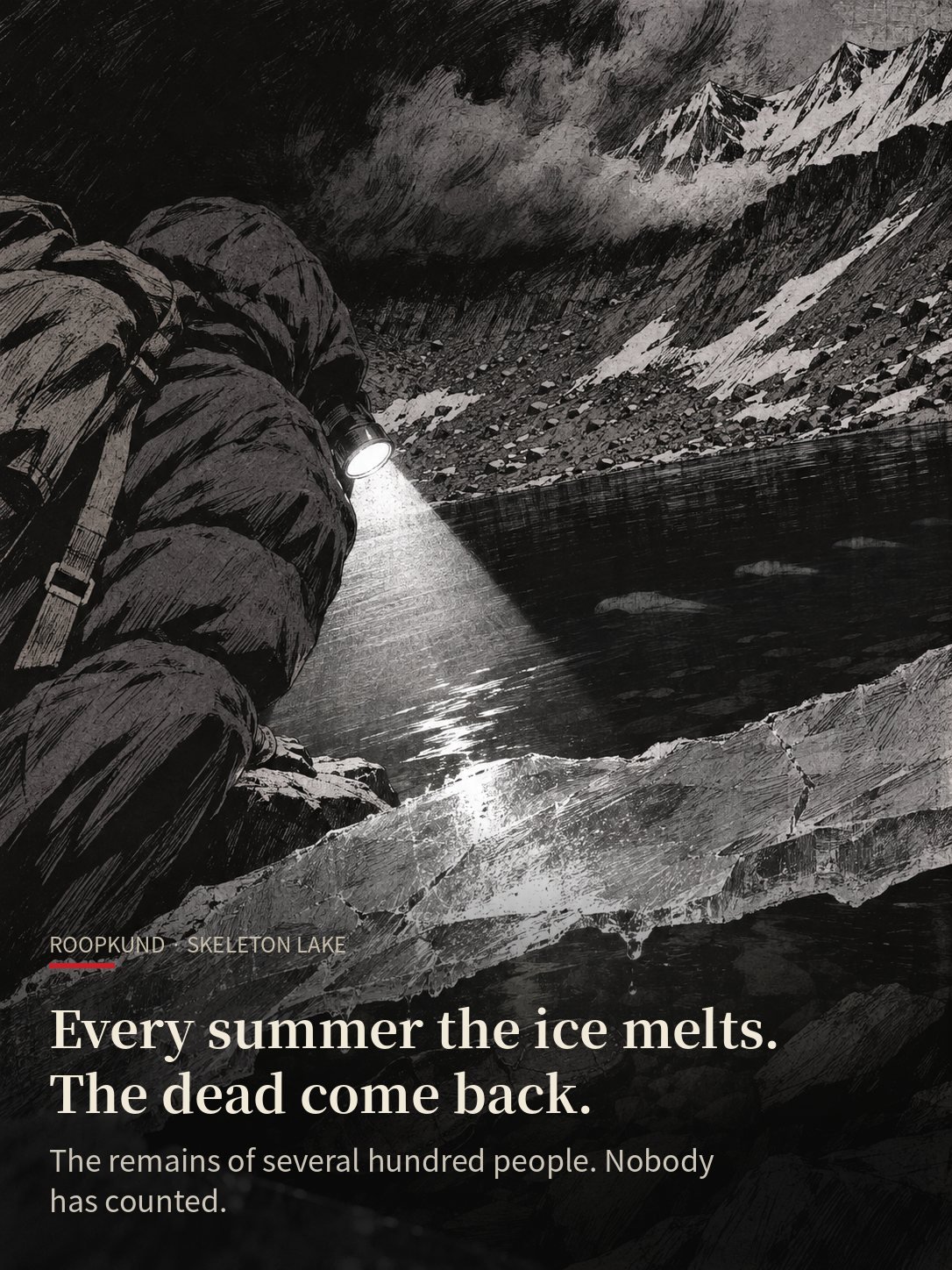
Every year, for a few weeks, a small lake high in the Himalaya thaws.
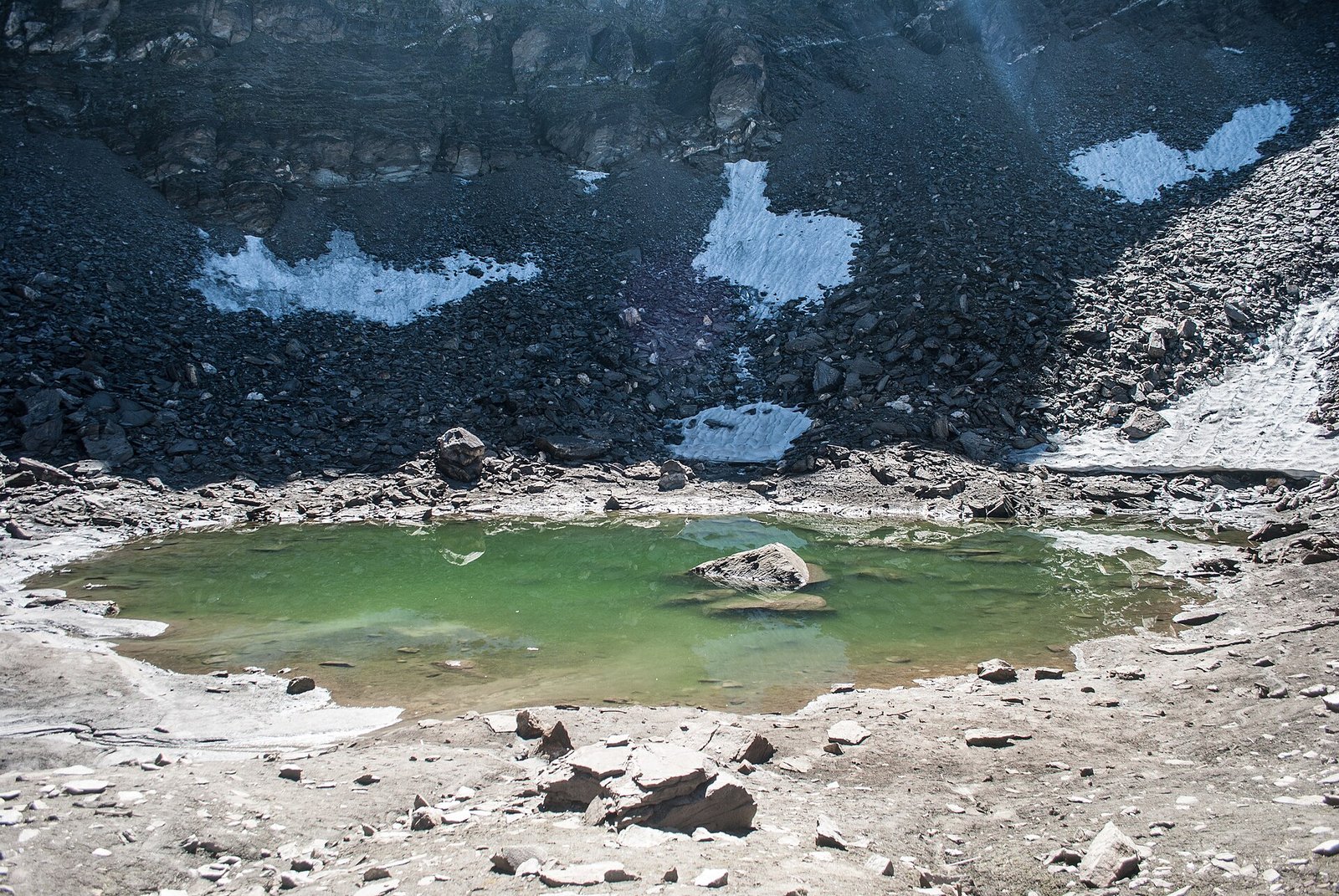
Roopkund is about 40 metres across, at about 5,000 metres (over 16,000 feet) in the Garhwal Himalaya of Uttarakhand, India. It is frozen most of the year.
When the snow and ice melt, the shore starts to show what it has been holding: leather shoes, glass bangles, bamboo staffs, and the remains of several hundred people, along the edge and under the shallow water.
Nobody has ever counted them. Nobody knows exactly how they died.
And when scientists finally read their DNA, they found something nobody expected: these people did not die together. Some of them died about 1,000 years after the others. (NATCOMM-2019) (SBS-2025) (MPI-2019)
Hundreds of skeletons lie around a Himalayan lake about 5,000 metres up. DNA showed they did not all die together.



1942: a ranger at the edge of the water
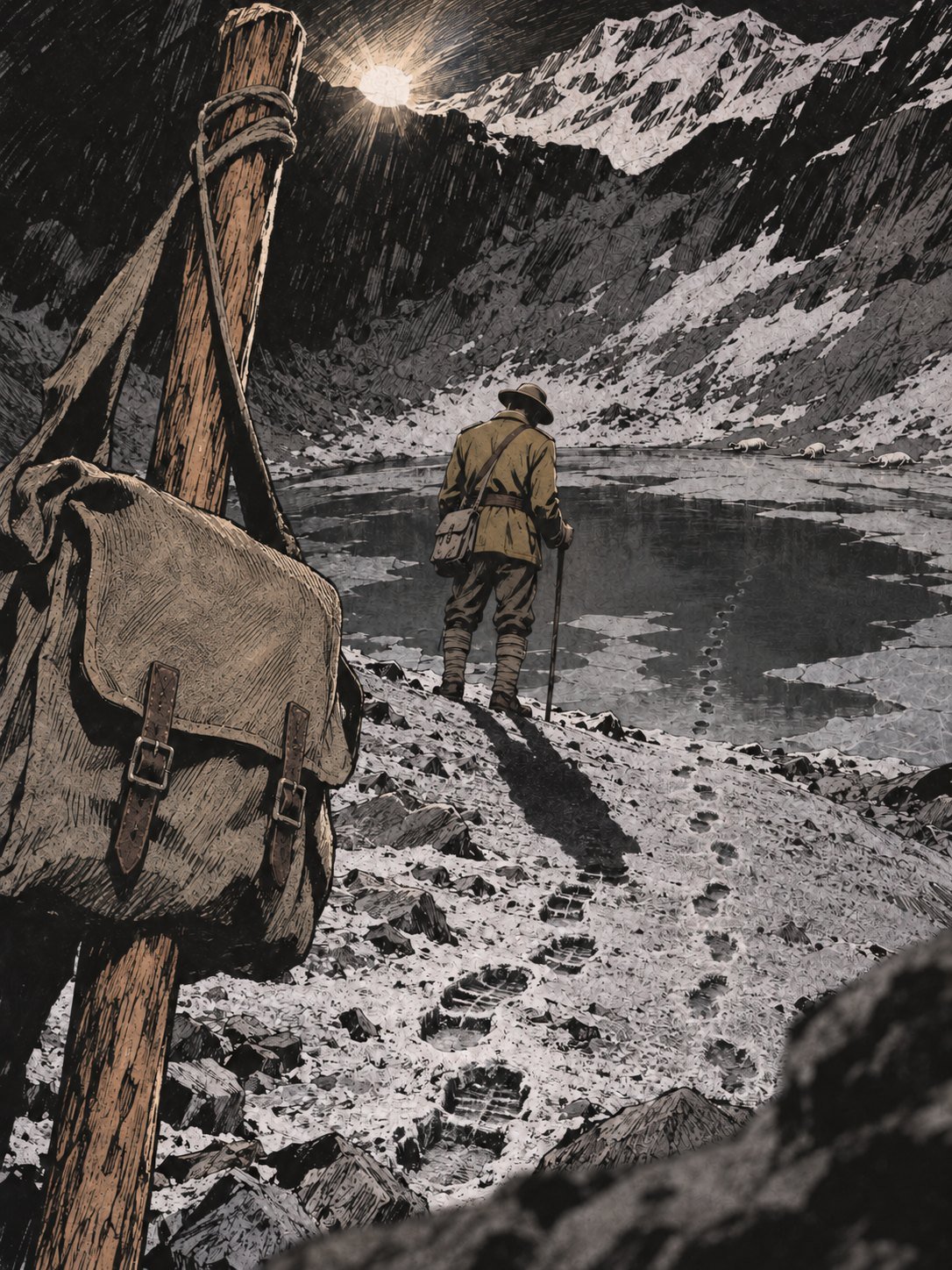
On 2 September 1942, a forest ranger named H. K. Madhwal reached the lake.
On the shore, according to a 2023 academic chapter by Barthwal and Walimbe, he found “a considerable number of human remains”.
Madhwal was Indian. He worked for the British-run forest service. And it was the middle of the Second World War. (BW-2023) (MF-2015)
Were they Japanese soldiers?
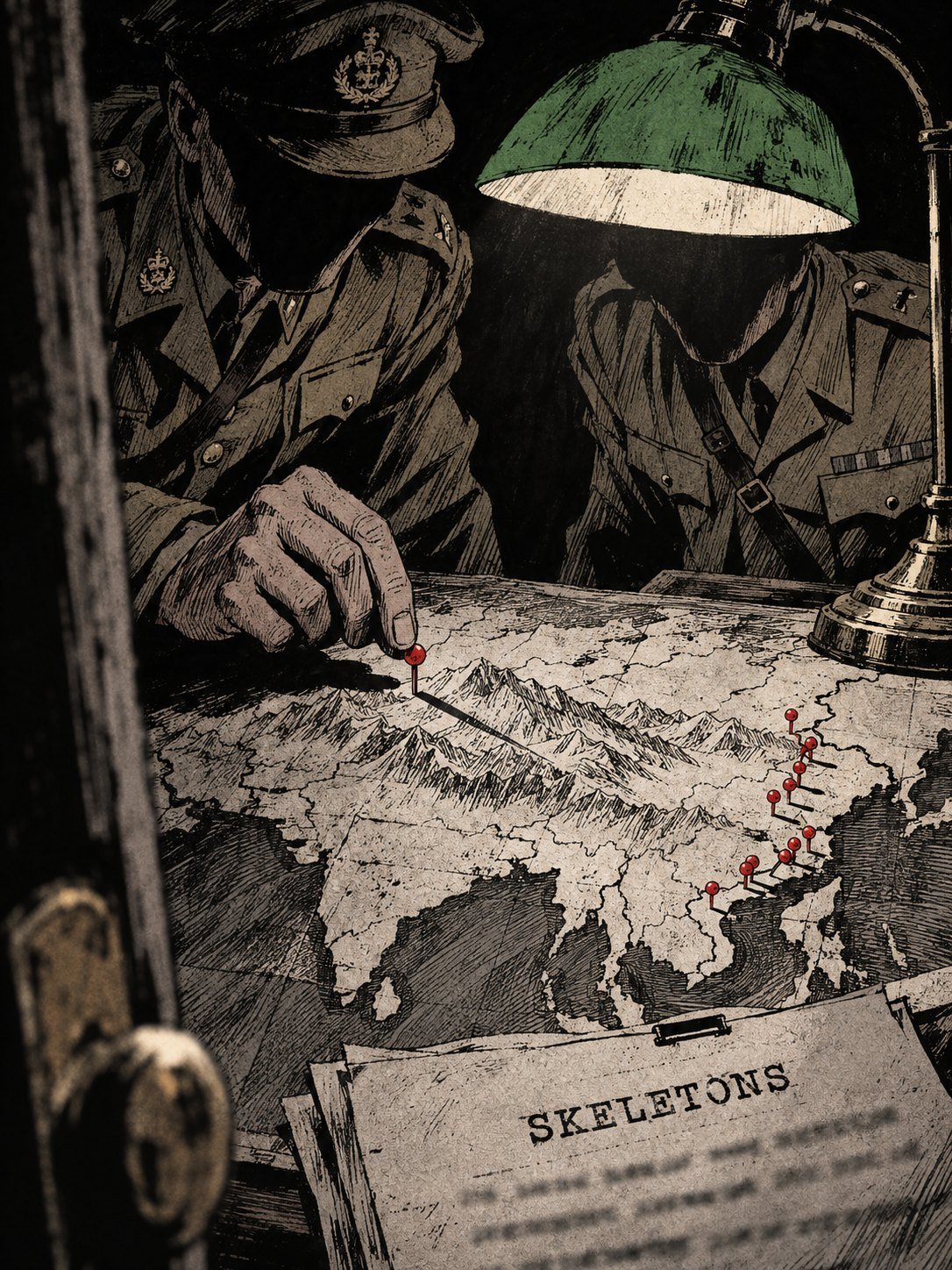
The British government was terrified of a Japanese land invasion.
Officials feared the skeletons “might belong to Japanese soldiers” who had slipped across the mountains, Atlas Obscura reports. Investigators were sent up to the lake. (AO) (SLATE-AO-2013)
Too old to be an army
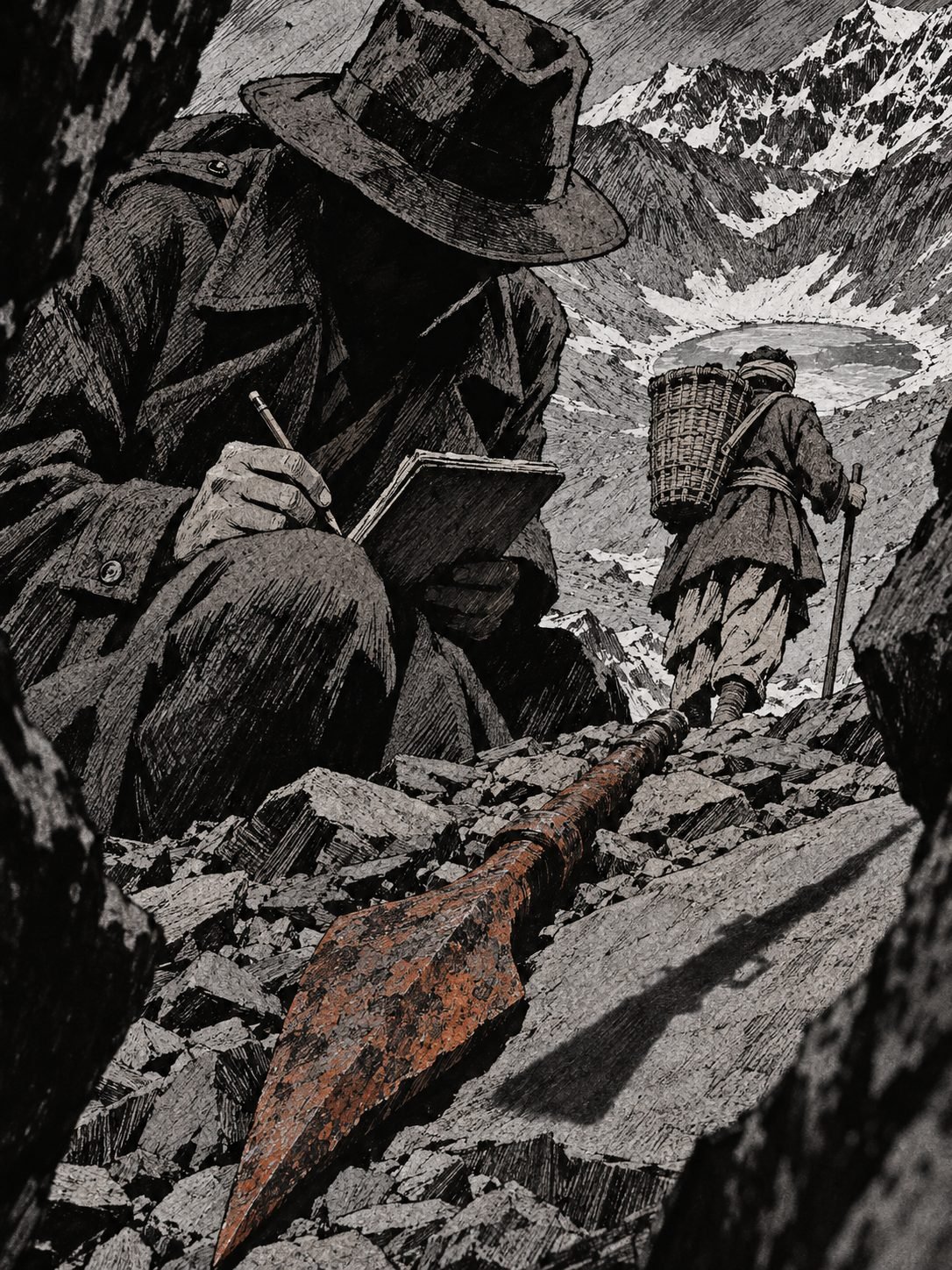
The investigators found that the bones were much older than that.
The Japanese theory was ruled out. But the place now had a new name: Skeleton Lake.
Over the years, other explanations were offered: a lost army returning from Tibet in 1841, soldiers from a failed medieval attack, an epidemic, even a ritual suicide. None of them was ever proven. (SLATE-AO-2013) (DTE-2005) (OUTSIDE-2019)
The king who danced on a sacred road
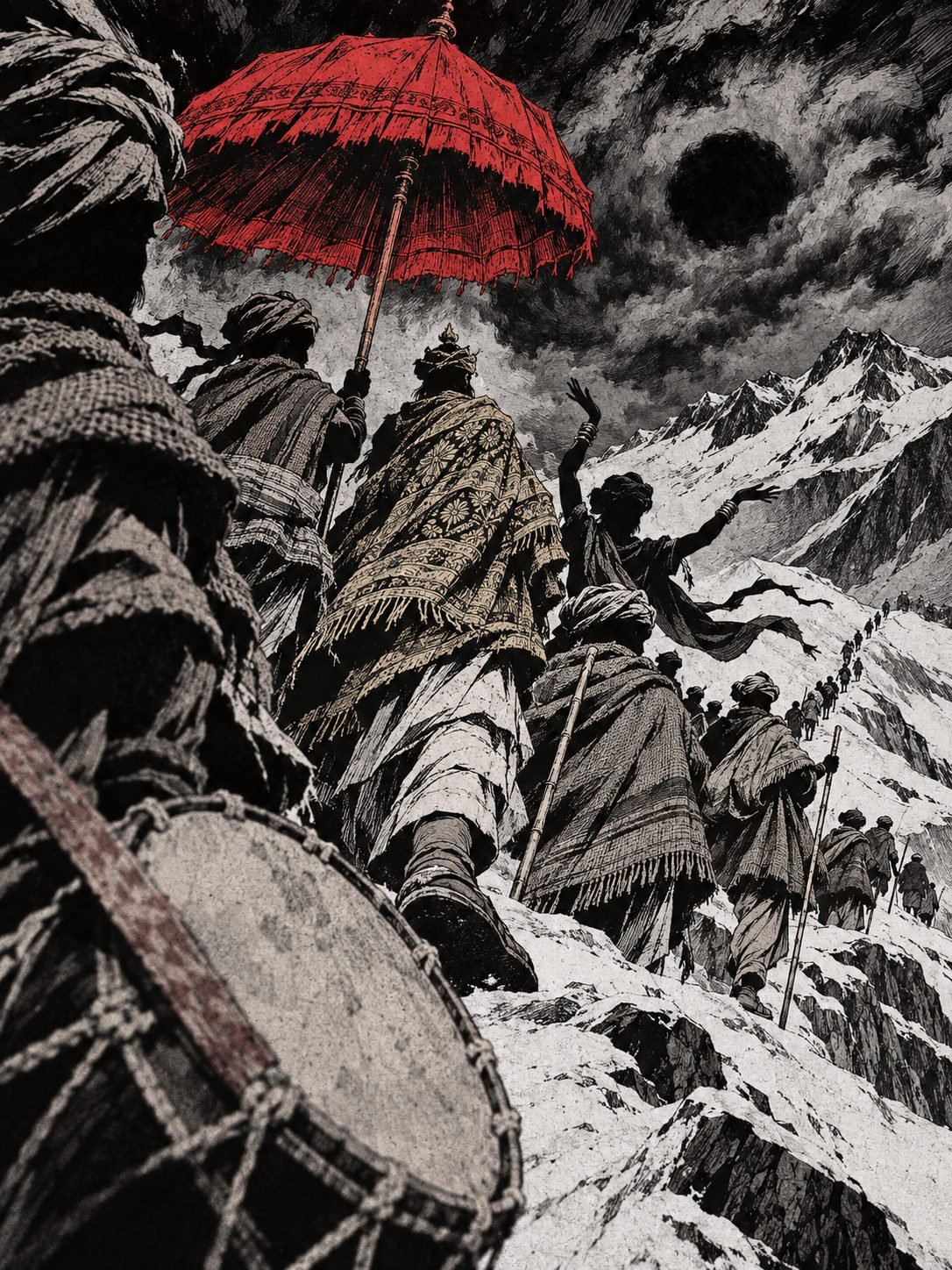
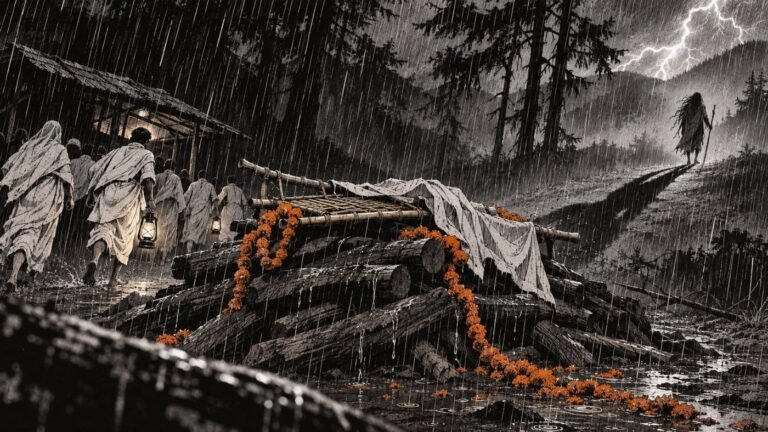
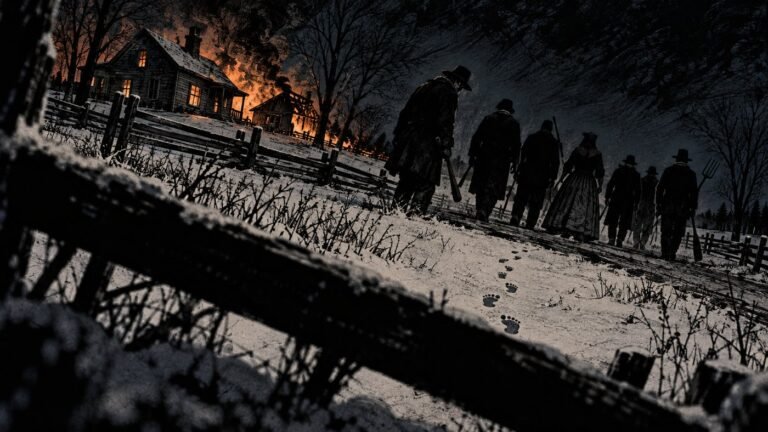
The people who live below the mountain have their own explanation. It is a legend.
King Jasdhaval of Kanauj, it says, set out with Queen Balampa on a pilgrimage to the Nanda Devi mountains, to celebrate the birth of an heir.
His party sang and danced loudly on the sacred way, against the rules of the pilgrimage. That angered the local deity, Latu. (DTE-2005) (TRIB-2009)
Hail hard as iron
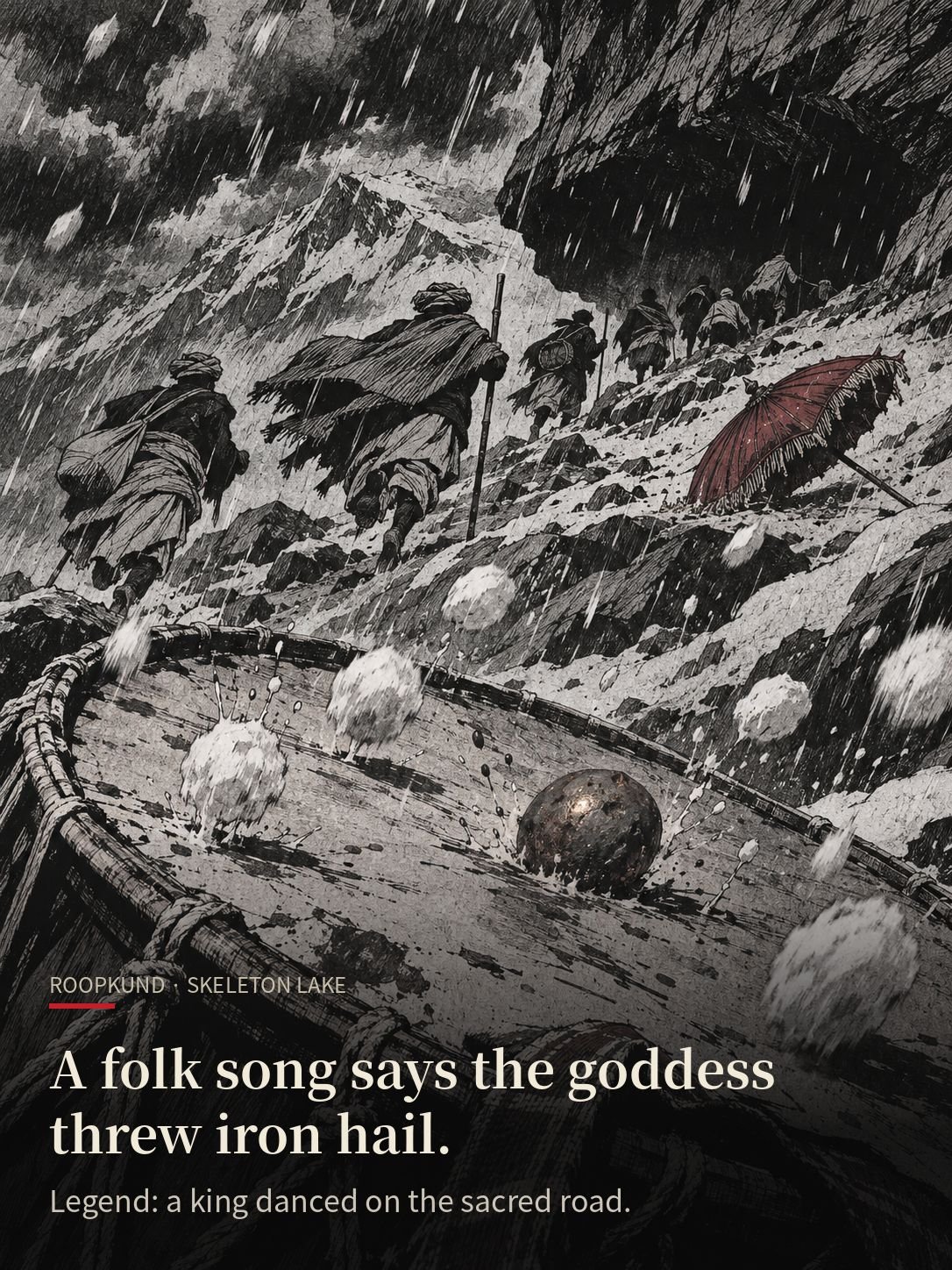
A local folk song tells the rest. The goddess struck the royal procession with “iron balls” thrown from the sky, National Geographic reports.
Outlook describes it as a women’s song about Nanda Devi’s anger at intruders, with hailstones “hard as iron”.
It is a legend, and its exact words do not appear in any of the sources we read. But hold on to that image of hail. It comes back. (NATGEO-2019) (OUTLOOK-2004) (AO)
The pilgrimage that still climbs
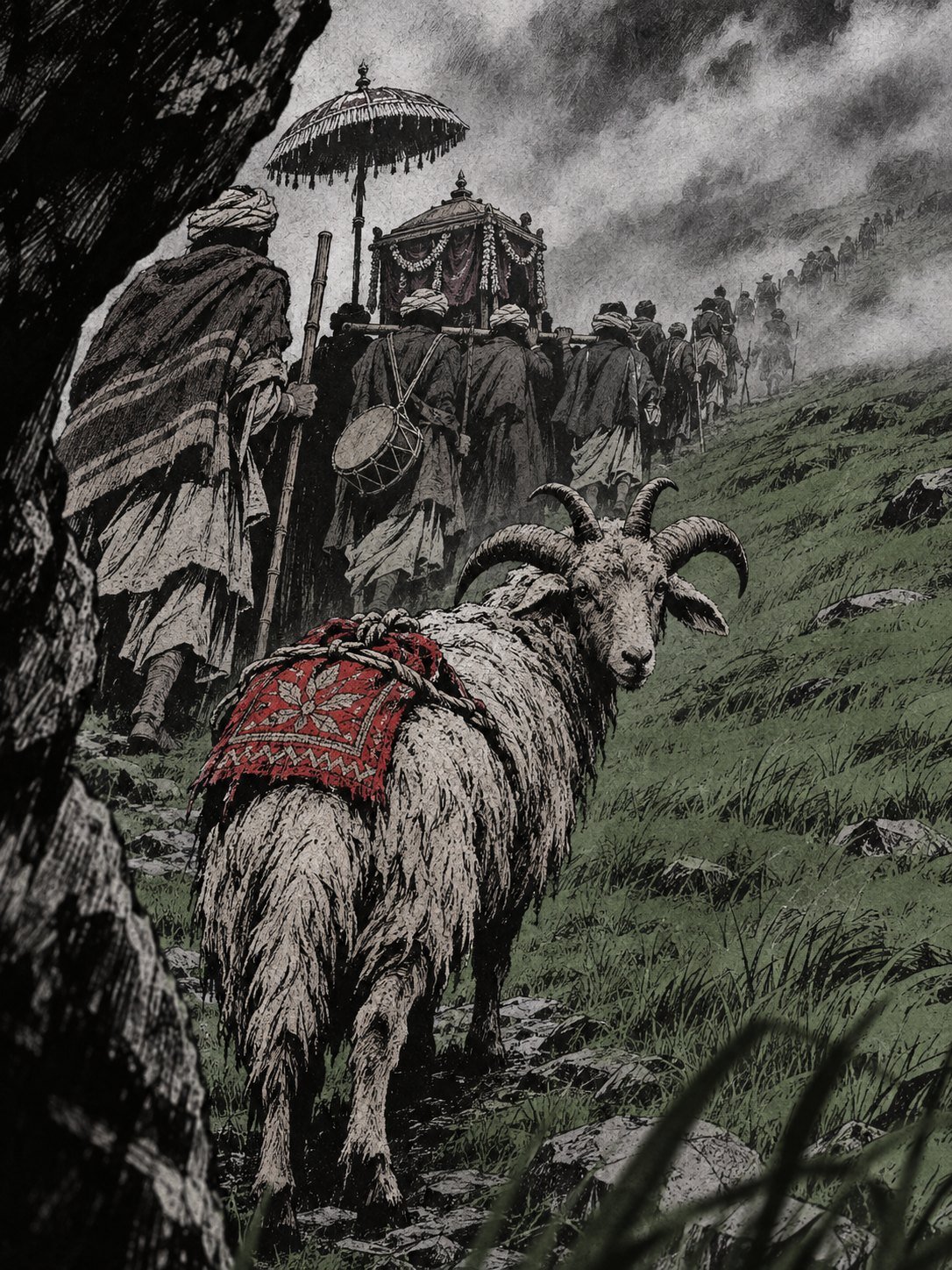
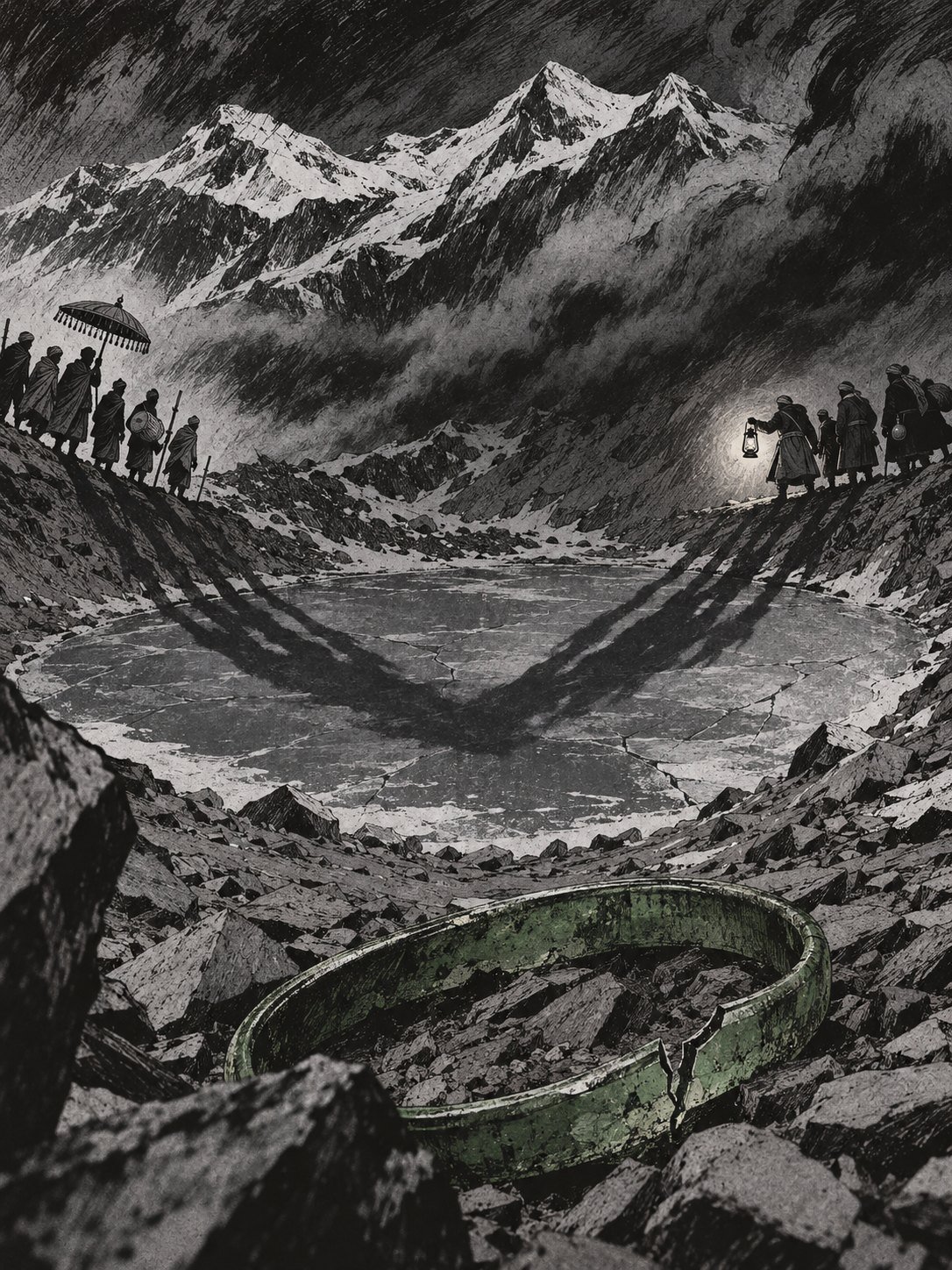
The lake lies on the route of the Nanda Devi Raj Jat, a Himalayan pilgrimage that today takes place about every 12 years.
In 2014 it began on 18 August at Nauti village and covered 280 km in 19 days, up to Roopkund and beyond. At its head walked a four-horned sheep, which was released into the wild at the end with ornaments, food and clothing. (NATCOMM-2019) (BS-2014)
1956: crates and a first date
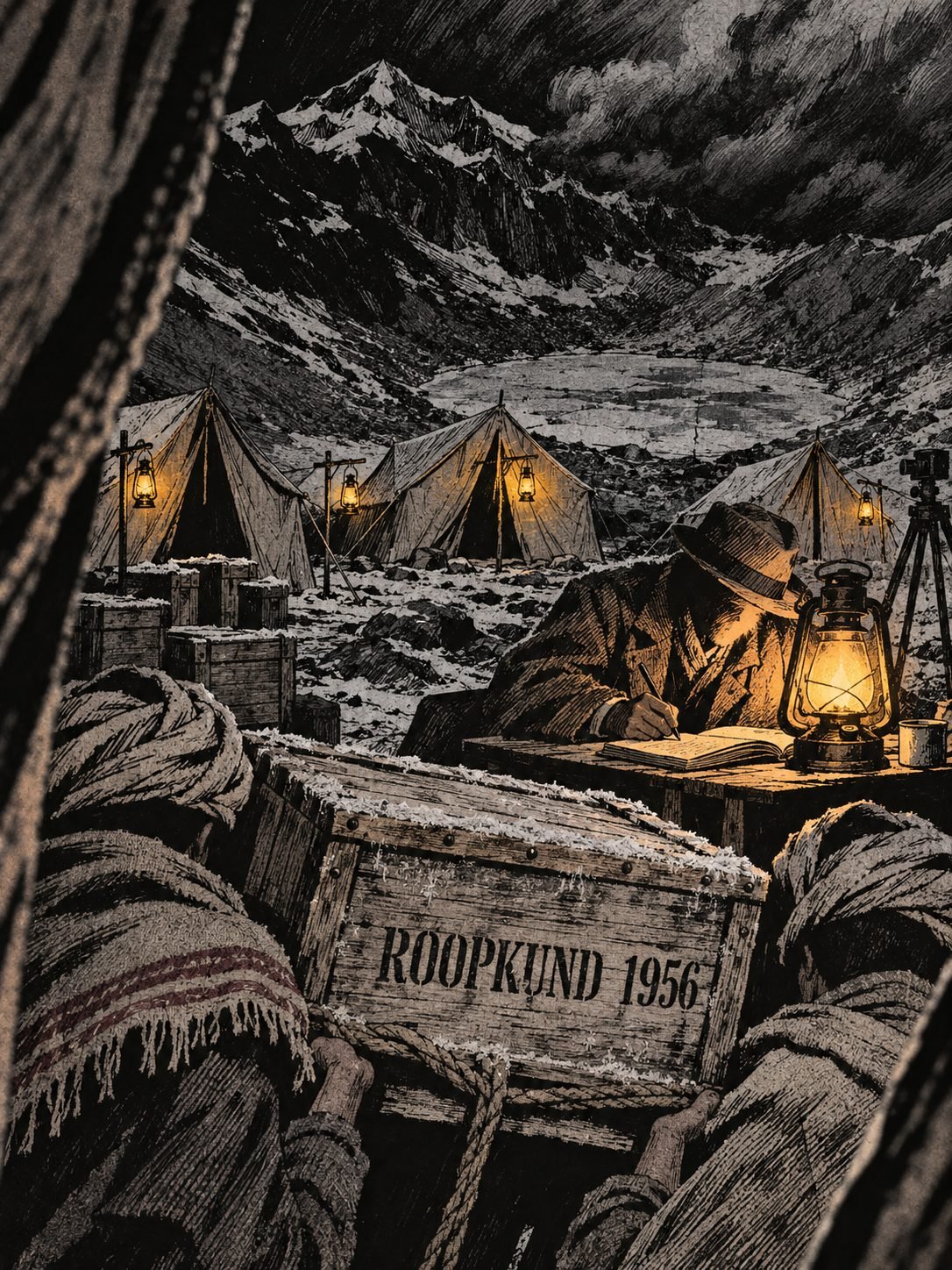
Between 4 and 18 September 1956, three teams reached the lake. One came from the government’s Department of Anthropology in Calcutta, now the Anthropological Survey of India, and one from Lucknow University. They packed remains and artefacts into crates and carried them down. Remains can also travel far from where they were laid to rest, like the 1907 skull found in a Wilmington park, taken from a Delaware mausoleum in 2002.
The first radiocarbon result, published in 1958, gave 650 ± 150 years before present.
It would not be the last word. (BW-2023) (TRIB-2009)
2003-04: a camera on the scree
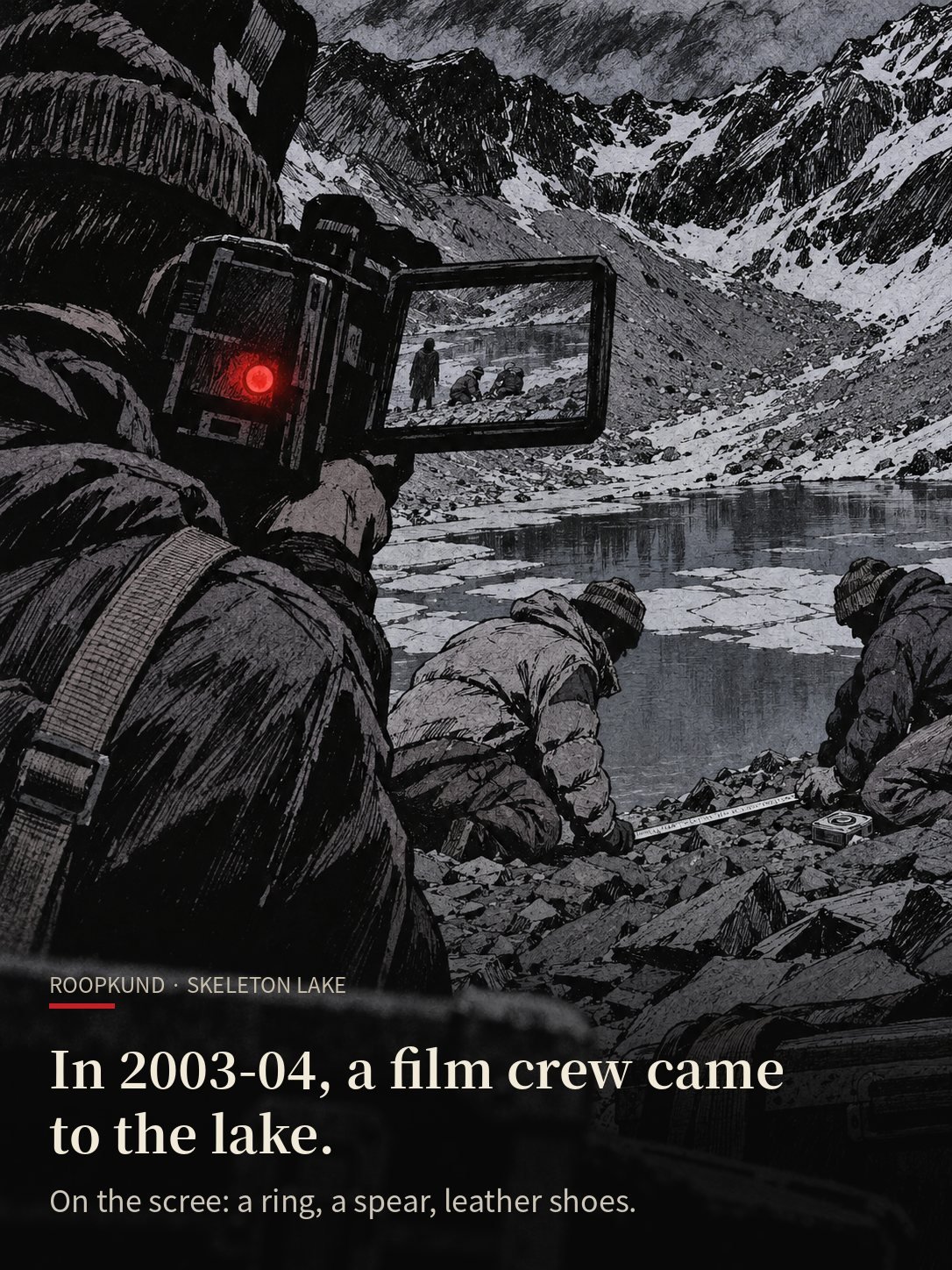
Decades later, a team of Indian and European scientists worked at the lake while a crew filmed a National Geographic documentary called Skeleton Lake. Sources disagree on whether the main visit was in 2003 or 2004.
On the scree they found a ring, an iron spearhead, leather shoes, bamboo staves and scraps of clothing. (OUTLOOK-2004) (DTE-2005) (AO)
The glass bangles
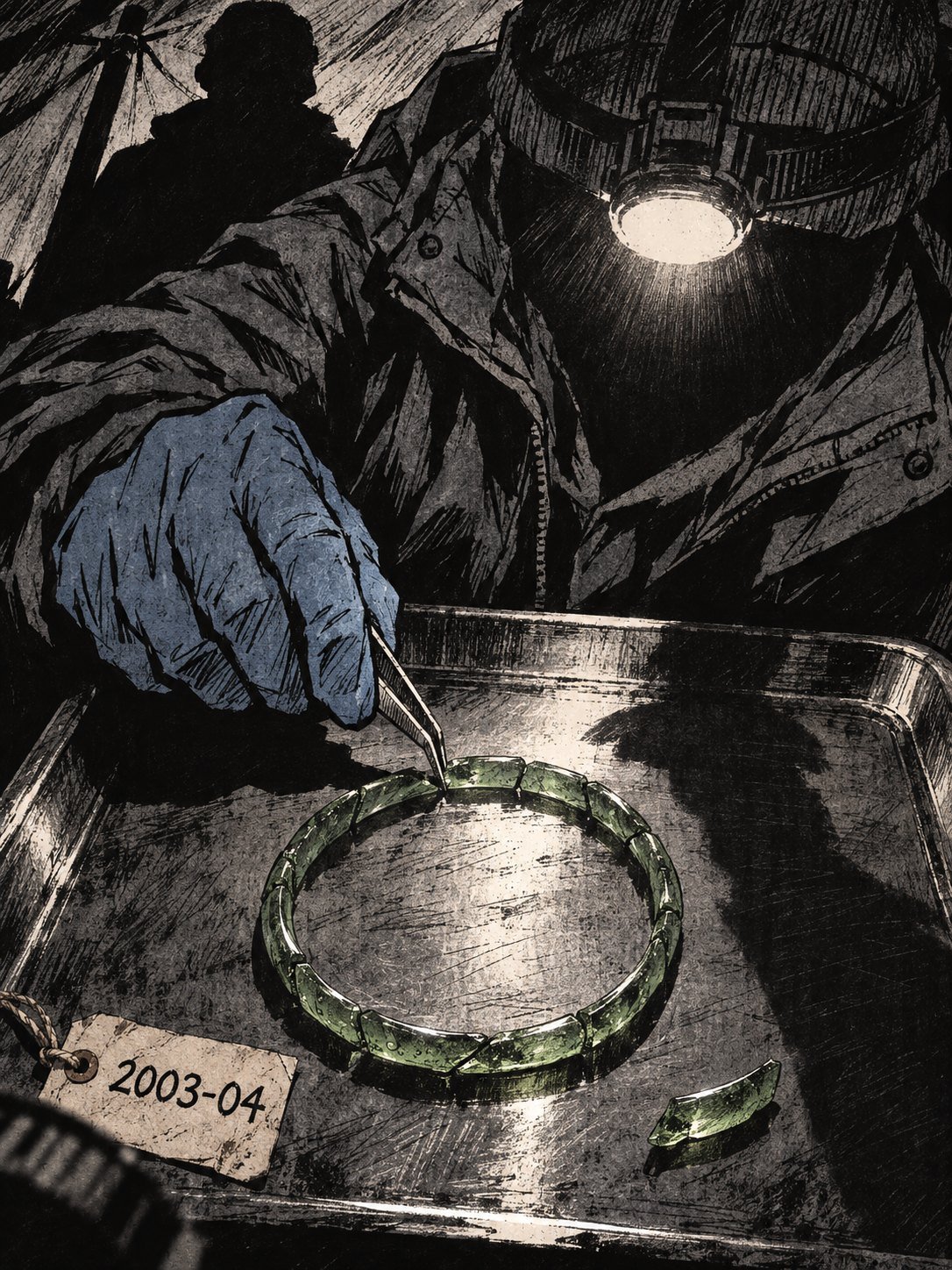
Among the finds were glass bangles.
That meant women had been among the dead. Whoever these people were, this was not only a party of soldiers or porters. (DTE-2005)
The size of a cricket ball

Subhash Walimbe of Deccan College found injuries made by blunt, round objects about the size of cricket balls, all on the heads and shoulders, as if they had come from directly above.
Oxford’s radiocarbon lab dated the deaths to about 850 AD. The team concluded that death was caused by extremely large hailstones, and Oxford’s Tom Higham that “everybody in Roopkund died at the same time”.
The legend and the science seemed to agree. A storm of giant hail, one terrible day, about 1,200 years ago.
For 15 years, that was the answer. (DTE-2005) (OUTLOOK-2004) (SLATE-AO-2013)
Bone powder and the first ancient DNA from India

Then the DNA came back.
For a study published in 2019, researchers took 76 skeletal samples at the Anthropological Survey of India in Kolkata. The ancient DNA work was done at the CCMB in Hyderabad.
They got genome-wide data from 38 people. The press release called it the first ancient DNA ever reported from India. (NATCOMM-2019) (MPI-2019) (EUREKA-2019)
A thousand empty years
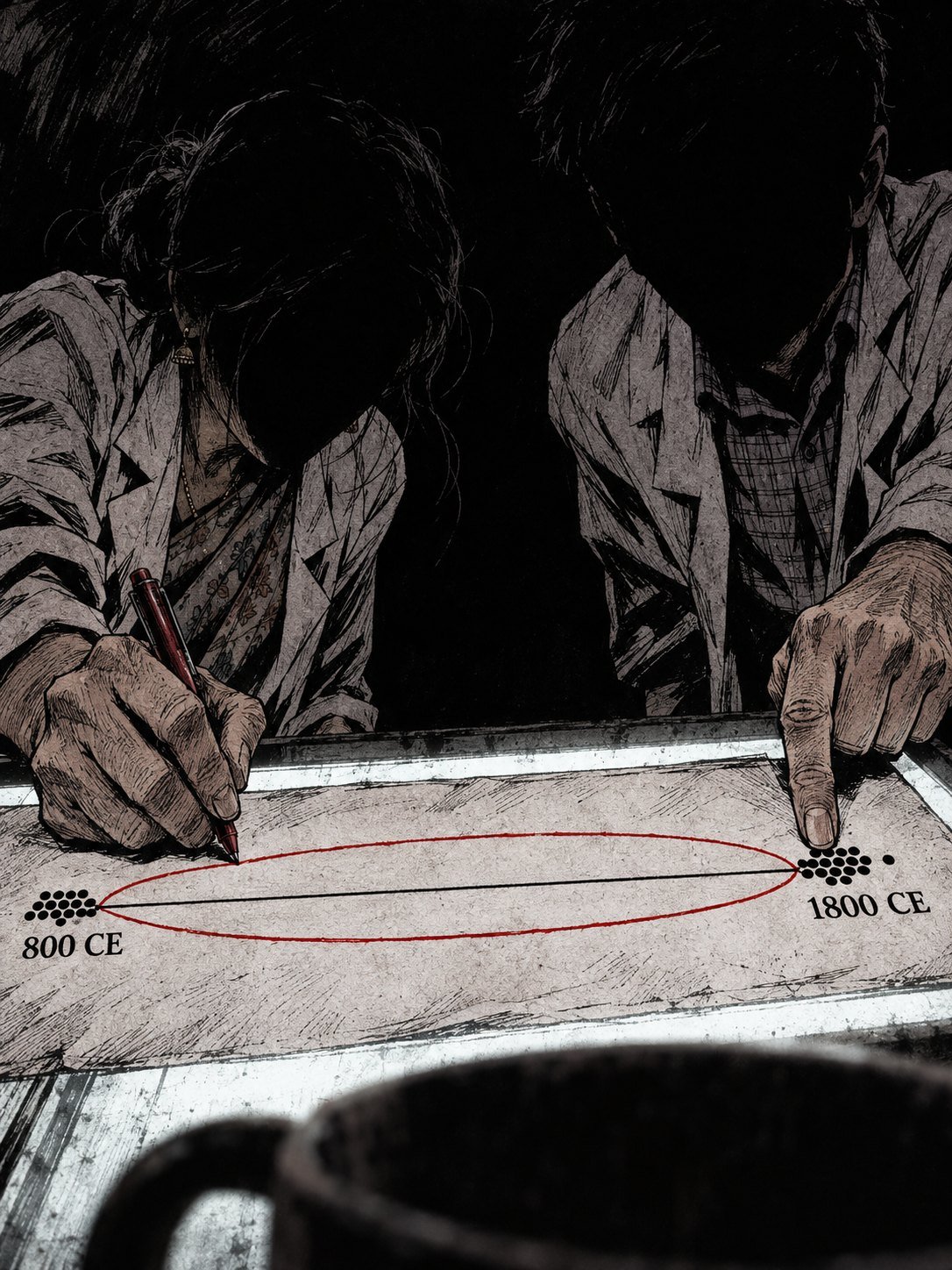
The study, published in Nature Communications on 20 August 2019, found at least three genetically distinct groups.
Twenty-three people had South Asian ancestry and died between the 7th and 10th centuries, possibly in several events. Fourteen had ancestry most like present-day people of Crete and Greece, and died around 1800. One had ancestry more typical of Southeast Asia.
The two main groups died about 1,000 years apart.
“We were extremely surprised,” said lead author Éadaoin Harney. (NATCOMM-2019) (MPI-2019)
Who were the fourteen?
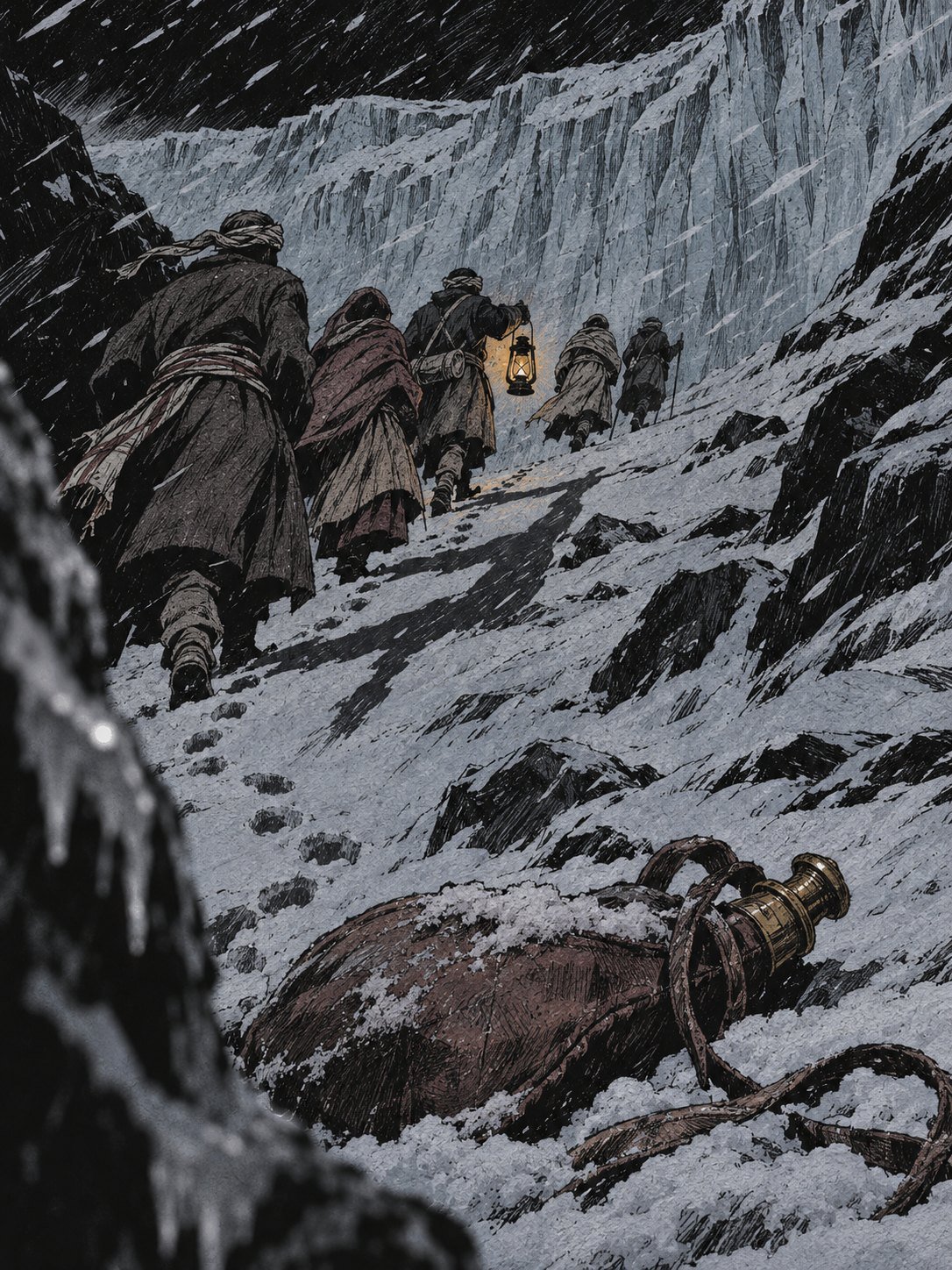
Nobody knows what this group looked like. The picture is imagined.
The paper suggests the 14 were unrelated men and women born in the eastern Mediterranean during Ottoman rule, who had lived inland before they died in the Himalaya. They were broadly healthy, and no sign of bacterial disease turned up in their DNA.
Their dates overlap. They may have died in a single event. Why they were there, about 5,000 metres up in the Indian Himalaya, nobody can say. The authors think a Hindu pilgrimage is unlikely for them. (NATCOMM-2019) (RM-2019) (LIVESCI-2021)
The storm that cannot explain everything
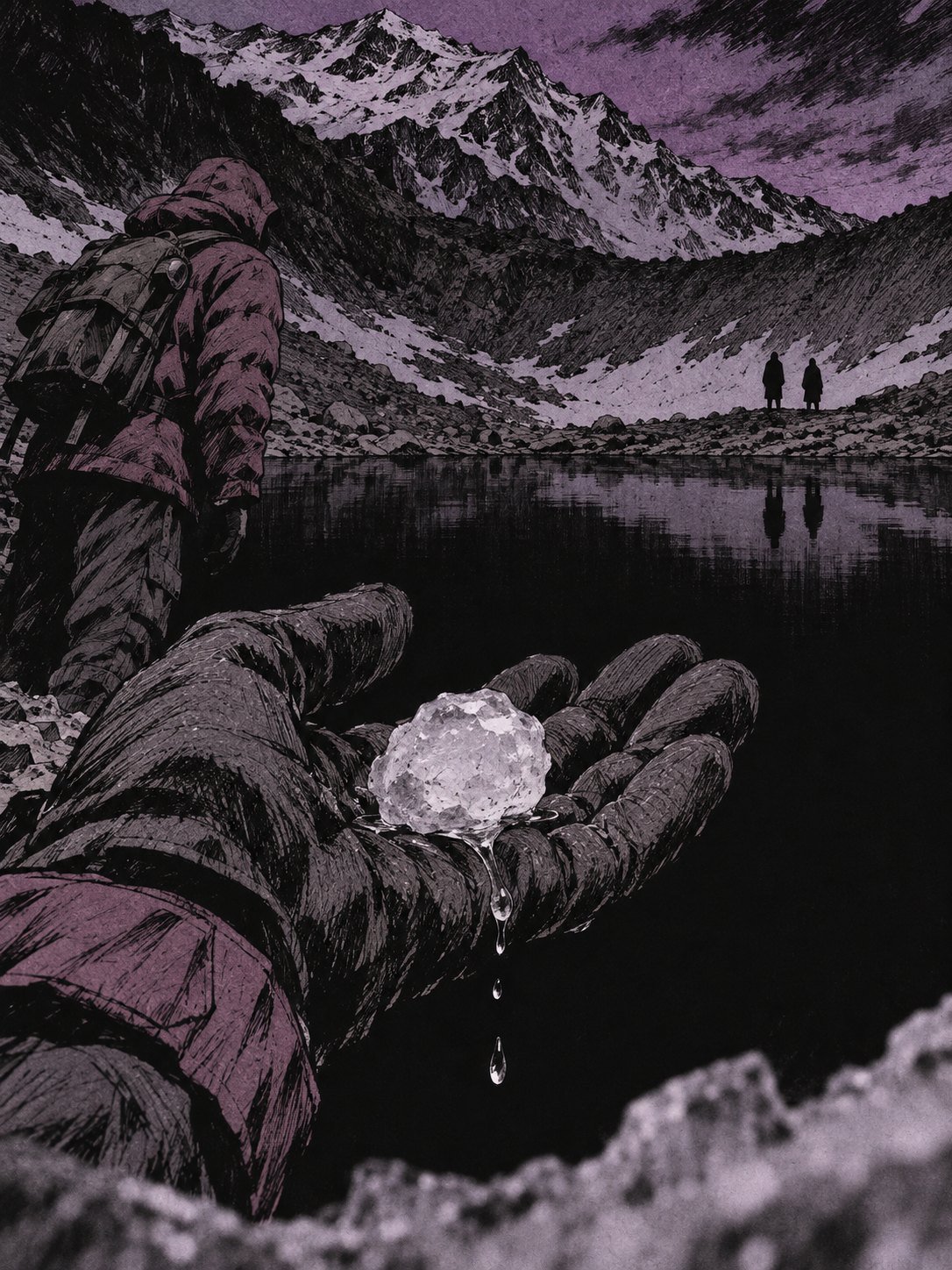
Hail is not ruled out. Three people had unhealed compression fractures, and a violent hailstorm is one possible cause among others. Bones in remote places do not always answer questions: remains handed over in 1951 were judged not to be those of Percy Fawcett, lost in the Amazon in 1925.
But one storm cannot kill people who died 1,000 years apart.
“It is still not clear what brought these individuals to Roopkund Lake or how they died,” said senior author Niraj Rai. (NATCOMM-2019) (NYT-2019) (MPI-2019)
Taken away, one by one
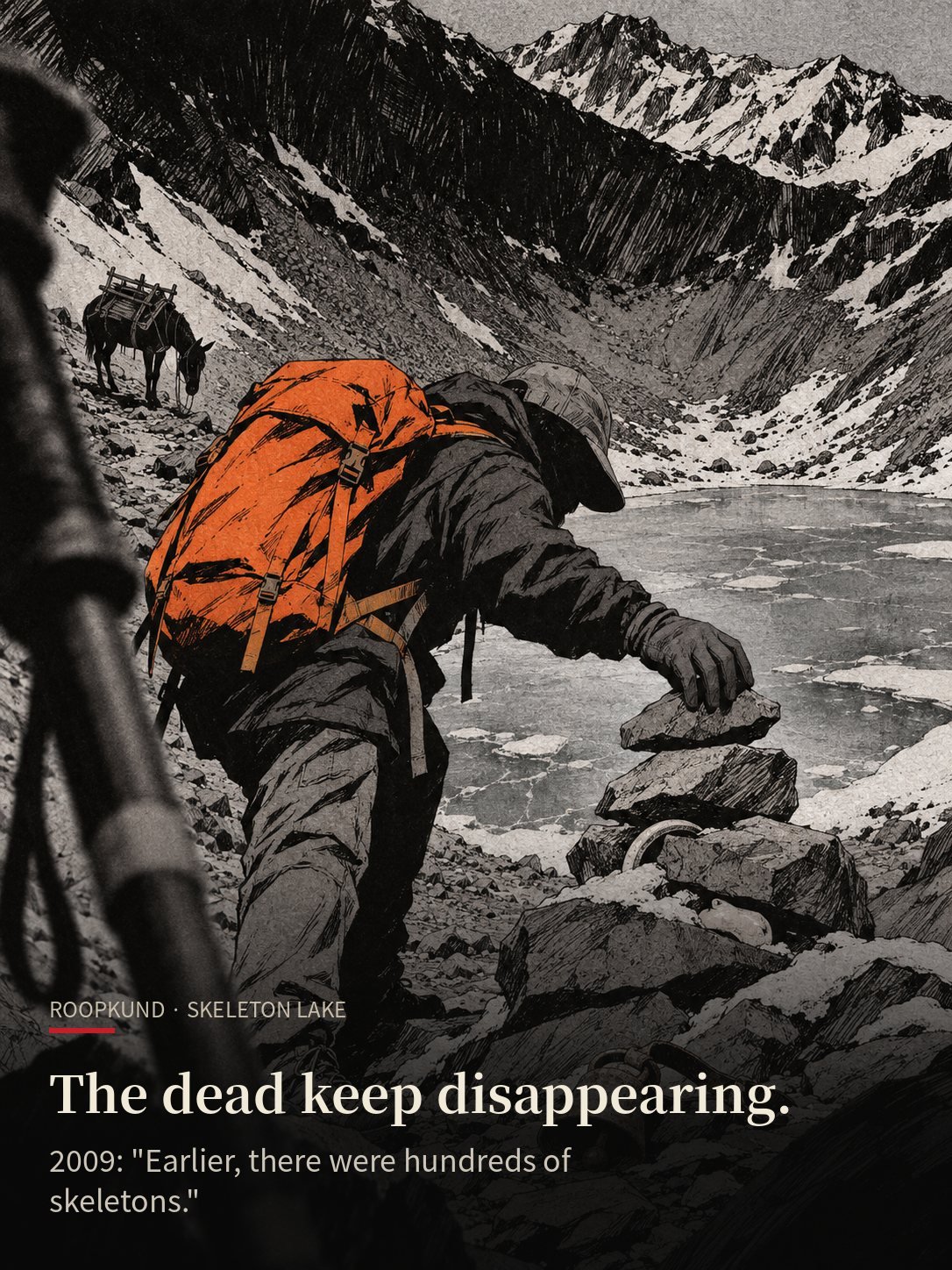
The lake has another problem: the dead keep disappearing.
“A large number of these are being taken away by tourists and trekkers as well as researchers,” The Tribune reported in 2009. “Earlier, there were hundreds of skeletons, but now only a few remain.”
The Chamoli district administration asked the state to declare the area protected. The 2019 paper notes that visitors have moved the remains and removed many of the artefacts. (TRIB-2009) (NATCOMM-2019) (LIVESCI-2021)
The ice closes again
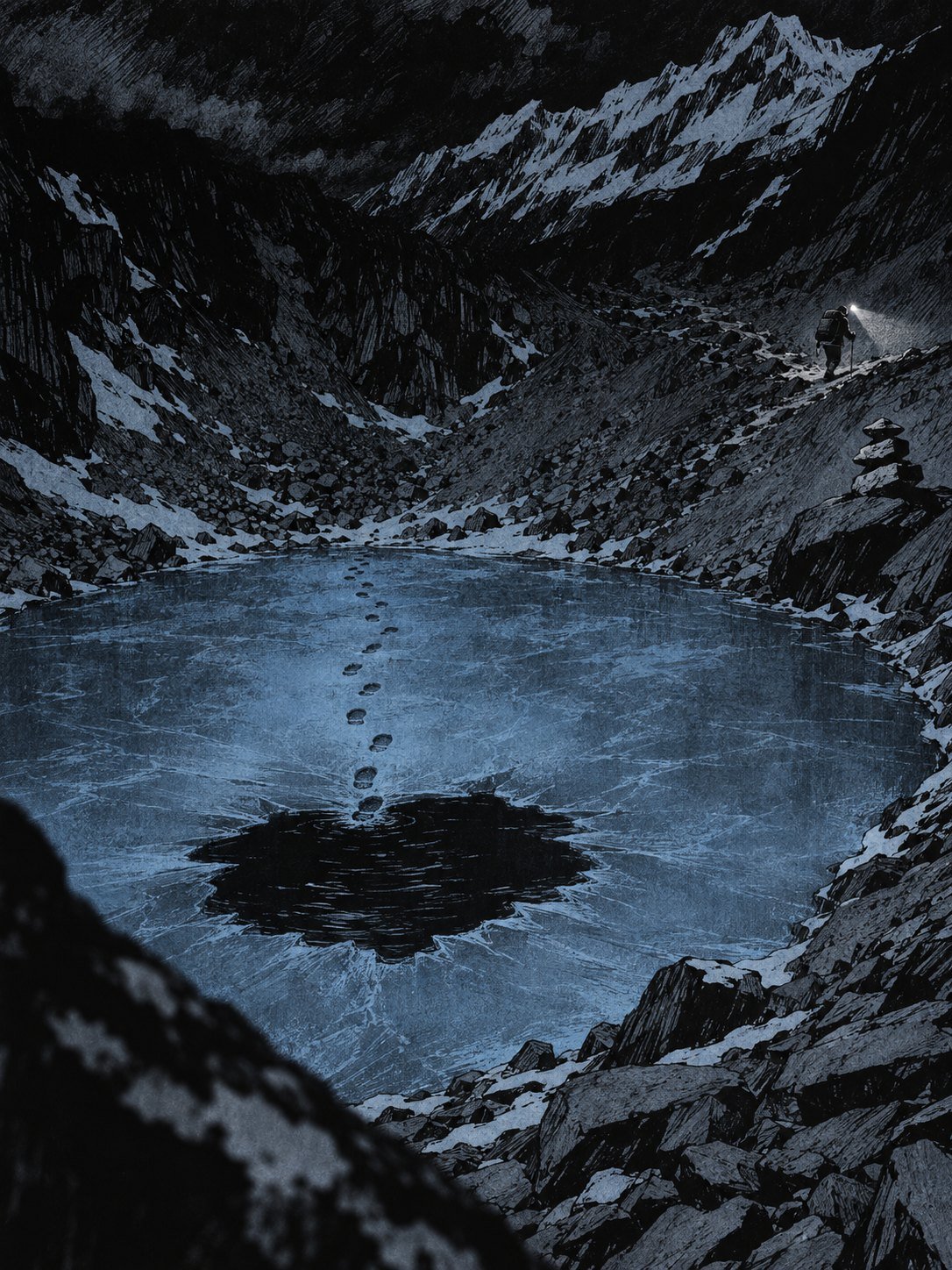
In August 2018 the Uttarakhand High Court banned overnight camping in the high meadows, which effectively stopped the multi-day trek to the lake.
Every autumn the ice closes over the water again.
Only 38 of the several hundred dead have had their genomes read. The rest have never been tested. Over the years many remains were carried away; only a few are still at the lake.
“We hope that this study represents the first of many analyses of this mysterious site,” Rai said. (STATESMAN-2018) (IH-2026) (MPI-2019)
The evidence file
The papers, samples and finds this case rests on, and where they are now.
Exhibits
- Exhibit A — The 2019 ancient-DNA paper. Harney and colleagues read genome-wide DNA from 38 people and found at least three groups: 23 with South Asian ancestry who died between the 7th and 10th centuries, 14 with ancestry most like present-day people of Crete and Greece who died in the 17th to 20th centuries, and one with ancestry more typical of Southeast Asia. Published in Nature Communications on 20 August 2019 under an open licence. (Nature Communications; Max Planck Society repository)
- Exhibit B — The skeletal samples. 76 samples, 72 of them long bones and four teeth, were taken at the Anthropological Survey of India in Kolkata; the DNA work was done at the CCMB in Hyderabad. The paper gives mitochondrial results for 71 people; the press release says 72. (Max Planck Institute)
- Exhibit C — The 1956 expedition collections. Between 4 and 18 September 1956, three teams, from the government’s Department of Anthropology in Calcutta, from Lucknow University and led by Swami Pranavanand, collected remains and artefacts at the lake. In 2009 The Tribune reported samples from the Anthropological Survey’s expedition on display at its museum in Dehradun. (Barthwal & Walimbe, 2023; The Tribune)
- Exhibit D — The first radiocarbon date. Published by Crane and Griffin in 1958: 650 ± 150 years before present. Down To Earth reports later tests giving the 12th to 15th centuries. Summary based on Barthwal and Walimbe and Down To Earth. (Barthwal & Walimbe, 2023; Down To Earth)
- Exhibit E — The glass bangles and other finds. A team working at the lake in 2003–04 recorded glass bangles, a ring, an iron spearhead, leather shoes, bamboo staves and scraps of clothing. The bangles showed that women had been there. Where these finds are held now is not recorded. (Down To Earth; Outlook)
- Exhibit F — The Oxford date, about 850 AD. Oxford’s Radiocarbon Accelerator Unit dated the deaths to about 850 AD, and Tom Higham concluded that “everybody in Roopkund died at the same time”. The 2019 paper refuted the single event; hail may still have killed some of them. Summary based on Down To Earth, Outlook and the 2019 paper. (Down To Earth; Outlook)
- Exhibit G — The Tribune report, 5 February 2009. “A large number of these are being taken away by tourists and trekkers as well as researchers,” it reported. The Chamoli district administration wrote to the state government asking for the area to be declared protected. (The Tribune)
Evidence locker
Real archival images. Illustrations elsewhere in this file are AI-generated.
EXHIBIT A · TAP TO ENLARGEQuick answers: Roopkund, the Skeleton Lake
What is Roopkund Skeleton Lake?
Roopkund is a small glacial lake about 40 metres across, at about 5,000 metres (over 16,000 feet) in the Garhwal Himalaya of Uttarakhand, India. When its ice melts each year, the shore reveals leather shoes, glass bangles, bamboo staffs and the remains of several hundred people.
How many skeletons are at Roopkund?
Nobody has ever counted. The 2019 Nature Communications study uses “several hundred,” while other sources give figures from about 200 up to 800.
Who found the Roopkund skeletons?
A forest ranger named H. K. Madhwal found “a considerable number of human remains” on the shore on 2 September 1942. During the Second World War, British officials feared they might be Japanese soldiers, until investigators found the bones were far older.
How did the people at Roopkund die?
Nobody knows for certain. Scientists who worked at the lake in 2003–04 concluded they were killed in a storm of extremely large hailstones, echoing a local legend, but the 2019 DNA study found that the two main groups died about 1,000 years apart, so one storm cannot explain them all.
What did DNA reveal about the Roopkund skeletons?
A 2019 study of 38 genomes found at least three distinct groups: 23 people with South Asian ancestry who died between the 7th and 10th centuries, 14 with ancestry most like present-day people of Crete and Greece who died around 1800, and one with ancestry more typical of Southeast Asia. Why the second group was there, nobody can say.
What is the legend of Roopkund?
Local legend says King Jasdhaval of Kanauj and his party angered the deity Latu by singing and dancing on a sacred pilgrimage route, and the goddess struck them with hail “hard as iron.” The lake lies on the route of the Nanda Devi Raj Jat pilgrimage, held about every 12 years.
Can you still trek to Roopkund?
In August 2018 the Uttarakhand High Court banned overnight camping in the high meadows, which effectively stopped the multi-day trek to the lake. Visitors had been removing remains and artefacts for years.
Case notes: one lake, two groups, a thousand years
Roopkund is a small glacial lake in the Indian Himalaya where the remains of several hundred people lie. For years they were blamed on one giant hailstorm. In 2019 ancient DNA showed at least three groups who died about 1,000 years apart (NATCOMM-2019) (MPI-2019).
Where the case stands (as of November 2026)
Open. The 2019 study showed the dead belong to at least three groups who died about 1,000 years apart, so no single event can explain them (NATCOMM-2019).
Why the eastern Mediterranean group was there, and how anyone died, is still unknown. “It is still not clear what brought these individuals to Roopkund Lake or how they died,” said senior author Niraj Rai (MPI-2019).
The dead at Roopkund did not die together. Some died about 1,000 years after the others.
Timeline
| When | What happened |
|---|---|
| 2 Sep 1942 | Forest ranger H. K. Madhwal reports a considerable number of human remains on the shore (BW-2023) |
| 1942 | Wartime officials fear Japanese soldiers; investigators find the bones far older (AO) (SLATE-AO-2013) |
| 4-18 Sep 1956 | Three teams, including the Anthropological Survey and Lucknow University, collect remains (BW-2023) |
| 1958 | First radiocarbon result published: 650 ± 150 years before present (BW-2023) |
| 2003-04 | Scientists and a National Geographic film crew work at the lake; finds include glass bangles, a ring and a spear (OUTLOOK-2004) (DTE-2005) |
| 2004 | Oxford dates the deaths to about 850 AD; giant hail is named as the cause (DTE-2005) (OUTLOOK-2004) |
| 2009 | The Tribune reports remains being taken by visitors; the district asks for protection (TRIB-2009) |
| 2014 | The Nanda Devi Raj Jat pilgrimage passes the lake, led by a four-horned sheep (BS-2014) |
| 21 Aug 2018 | The Uttarakhand High Court bans overnight camping in the high meadows (STATESMAN-2018) (IH-2026) |
| 20 Aug 2019 | Nature Communications: three groups, about 1,000 years apart (NATCOMM-2019) (MPI-2019) |
Where the records disagree
| Detail | What sources say |
|---|---|
| Number of dead | About 200 in some sources, up to 800 in others; the 2019 paper says several hundred (NATCOMM-2019) (BW-2023) (NATGEO-2019) |
| Altitude | 5,029 m in the 2019 paper; other sources round to about 5,000 m or give other figures (NATCOMM-2019) (WIKI) |
| Year of the film expedition | 2003 in some reports, 2004 in others (OUTLOOK-2004) (AO) |
| Months frozen | Eight months a year in one report, eleven in another (TRIB-2009) (NATGEO-2019) |
| People with mitochondrial DNA | 71 in the paper, 72 in the press release (NATCOMM-2019) (MPI-2019) |
What we still don’t know
- How most of the dead actually died.
- Why 14 people with eastern Mediterranean ancestry were at the lake around 1800.
- Whether the older South Asian group died in one event or several.
- How many people lie at the lake in total.
What happened after
A trekking company reported in September 2026 that India’s Supreme Court had set aside the 2018 camping ban, reopening the trek; we could not confirm this in a major outlet (IH-2026).
Editor’s note
The glass bangles are what stay with me. “Several hundred remains” is too big a number to picture one person. A bangle or a shoe makes it close again. Someone picked that bangle before they set out, put on those shoes and left home. I start out thinking of this as a frightening place, and end up wondering where these people were going, and who was waiting for them at home.
If I had stopped reading where the hailstorm legend matched the skull injuries, I would have believed it without a doubt. It fits so well. But after the DNA, there are people that story does not explain, and that stung a little. When an explanation fits neatly, it is easy to feel we have reached the truth, whether we are reading a case or writing one. When new evidence makes the story more complicated, I think the reader deserves the complication too.
I don’t think DNA that resembles people from Greece or Crete proves anyone set out from there. If I let myself guess, I imagine a religious reason. I have no evidence for that; it is only that reaching that height seems to need a reason you believe in, the way people still travel far for a prayer or a promise. But I don’t want to write my guess as their story. They may have had a reason none of us has thought of.
The people who carried bones and objects away as souvenirs make me angry. Old bones do not become objects you can take, and not knowing someone’s name does not make it fine to treat them carelessly. To the person who took it, it was an odd souvenir. Left where it was, it might have been a clue to someone’s life and death. From people we already know so little about, it takes away even the chance of finding out.
The image I keep coming back to is the ice melting and showing a shoe or a walking staff. Those were the things they needed to walk that high. Someone may have leaned on that staff until the very end. In the pictures, I wanted one object like that to catch the eye, more than the number of the dead, so that for a moment you think: someone walked all the way up here.
I am curious, but I don’t think I would go. I’m not sure I could climb to 5,000 metres, and I don’t know what I would do standing in front of the remains. Taking photos would feel wrong, and staring at them as a curiosity would feel worse. I am not free of it either: reading and writing about this, I am also curious about other people’s deaths. So more than wanting to see it myself, I mostly hope that what is left there is not scattered any further.
— Strange World Files
Case file summary
- What: The remains of several hundred people around a small glacial lake
- Where: Roopkund, Chamoli district, Uttarakhand, India, about 5,000 m up
- When: Two main groups, about 800 CE and about 1800 CE; first officially reported in 1942
- Who: 38 people sequenced: 23 South Asian, 14 eastern Mediterranean, 1 Southeast Asian
- Status: Cause of death and the reason for the later group unknown
Illustrations are AI-generated artistic interpretations, not photos. No real person is depicted with a recognizable face. Read how we research and illustrate these files.
Sources
- Harney, É. et al., “Ancient DNA from the skeletons of Roopkund Lake reveals Mediterranean migrants in India”, *Nature Communications* 10, 3670 (2019), CC BY 4.0. Read as the publisher PDF on the Max Planck repository:
- Max Planck PubMan record (abstract, article no. 3670)
- Max Planck Institute (Science of Human History, now Geoanthropology), “Biomolecular Analyses of Roopkund Skeletons Show Mediterranean Migrants in Indian Himalayas”, press release, 20 August 2019
- EurekAlert! (AAAS), the same Max Planck release, 20 August 2019
- ScienceDaily, the same release, 20 August 2019
- Harvard Department of Organismic and Evolutionary Biology, “Ancient DNA Reveals Mediterranean Migrants in India”, 20 August 2019
- Barthwal, A. & Walimbe, S. R., “Roopkund Human Skeletal Remains: A Short Note on the Signs of Nutritional Stress and Anemia…”, in *Animals in Archaeology* (Festschrift for P. P. Joglekar), vol. 2, pp. 805–820, Dept of Archaeology, University of Kerala, 2023
- Kristin Romey, “DNA study deepens mystery of lake full of skeletons”, National Geographic, 20 August 2019
- Robin George Andrews, “The Mystery of the Himalayas’ Skeleton Lake Just Got Weirder”, The New York Times, 20 August 2019. Read as the NYT-copyright syndicated copy in the NZ Herald:
- Rachel Gutman, “An Unexpected Discovery in a Lake Full of Bones”, The Atlantic, August 2019, excerpt only, on The Atlantic’s Medium channel
- Sam Yadron, Outside, 20 August 2019
- Mohana Basu, “Roopkund lake skeletons put a date to Nanda Devi yatra origin…”, ThePrint, 21 August 2019
- Paramananda Barman, Research Matters, 22 August 2019
- Business Insider (India edition), “A remote Himalayan lake holds up to 800 skeletons…”, October 2019 (no byline or date on the page; Wikipedia gives Aylin Woodward, 22 October 2019)
- Stephanie Pappas, “Hundreds of skeletons fill this remote Himalayan lake. How did they get there?”, Live Science, 24 February 2021
- Rajshekhar Pant, “Skeleton Lake”, Down To Earth, 31 August 2005
- Outlook, “Bones Of A Riddle” (originally Hari Menon, 8 November 2004 per Wikipedia; page shows “Outlook News Desk”, republished 5 February 2022)
- S. M. A. Kazmi, “Roopkund’s skeletal tales”, The Tribune, 5 February 2009
- Atlas Obscura, “Skeleton Lake of Roopkund, India” (place entry, undated)
- Atlas Obscura on Slate, “An Indian lake surrounded by hundreds of ancient skeletons…”, 24 May 2013
- PTI via Business Standard, “‘Himalayan Kumbh’ begins”, 18 August 2014
- The Statesman, “HC order to affect trekking in U’khand” (2018; no date or byline on the page)
- Sugandha Rohatgi, Indiahikes blog, “Roopkund trek reopens after 8 years: what the Supreme Court ruling means”, 22 September 2026
- Outlook Traveller, “Uttarakhand’s Roopkund Lake Shrinks Owing To Climate Change”, 15 October 2024
- Anita Barar, SBS Hindi, 25 July 2025
- Chris Higgins, “The Mysterious Case of Skeleton Lake”, Mental Floss, 18 July 2015
- Nina Strochlic, “India’s Mysterious Skeleton Lake”, The Daily Beast, 1 December 2013
- Wikipedia, “Roopkund” (read directly, 4 November 2026)