One Sip of Iced Coffee, Then She Collapsed. Jessica Wongso Got 20 Years, but No Camera Saw the Poison Go In
| Who | Wayan Mirna Salihin (27); Jessica Kumala Wongso (27), convicted |
| Where | Olivier cafe, Grand Indonesia mall, Jakarta, Indonesia |
| When | January 6, 2016 |
| What | Death by alleged cyanide poisoning in an iced coffee |
| Status | Convicted (2016); paroled (2024); final review rejected (2025) |
🎧 Narrated Mystery: press play and hear the whole case read aloud, like an audiobook (about 18 minutes). The narrator is an AI voice.
One sip of iced coffee. Then she couldn’t breathe
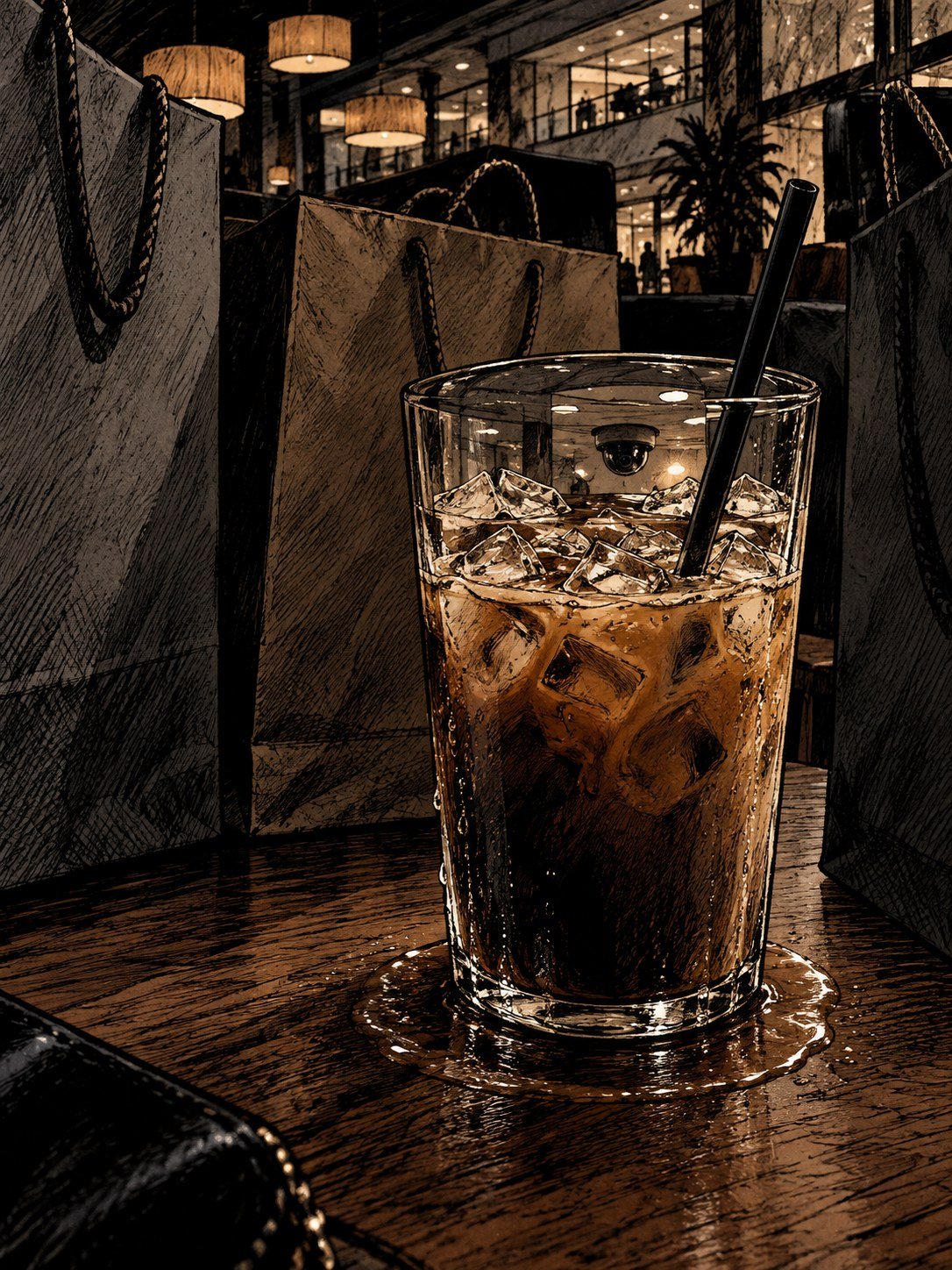
January 6, 2016. A smart cafe inside Grand Indonesia, one of the biggest shopping malls in Jakarta.
Three friends in their twenties met up after years of living in Australia. One of them, Mirna, took a sip of her Vietnamese iced coffee.
She said it tasted awful. Within minutes she was convulsing on the sofa. By that evening she was dead.
Police said the coffee contained cyanide.
The woman who had ordered it for her, her old friend Jessica Wongso, would spend the next eight years in prison.
She has said from the very start that she didn’t do it. (Wikipedia) (Netflix Tudum)
Twenty years in prison, and no one saw her do it
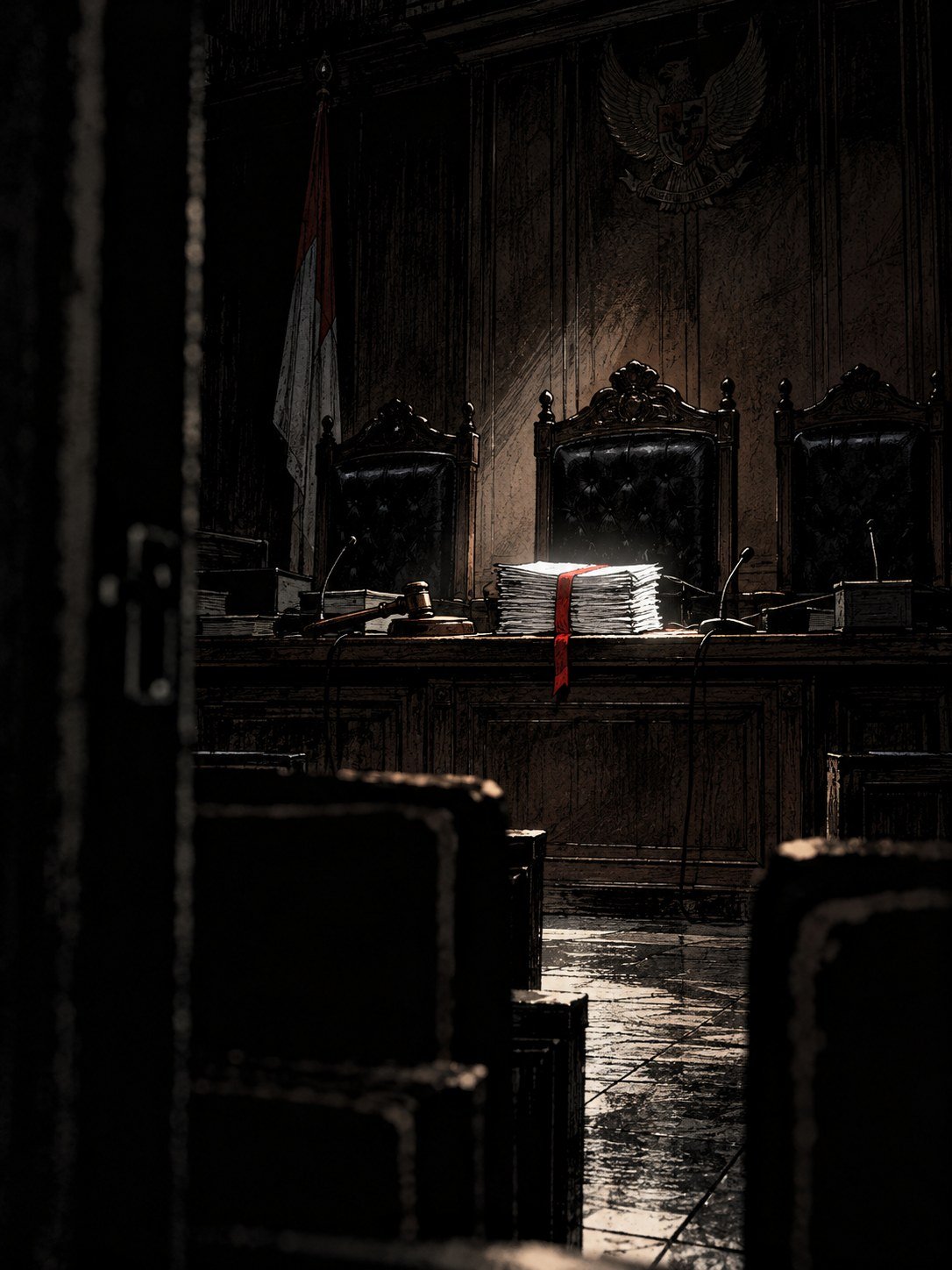
October 27, 2016. Central Jakarta District Court.
Three judges found Jessica Kumala Wongso guilty of the premeditated murder of Wayan Mirna Salihin and sentenced her to 20 years. Reading the 377-page verdict took about four hours. The judges called the crime “vile and sadistic.”
But there was something strange about this conviction.
No camera showed Jessica putting anything in the coffee. No one testified to seeing her do it. There was no full autopsy.
“I don’t accept this verdict,” Jessica said, “because this is unfair and one-sided.”
Seven years later, a Netflix documentary would make millions of people around the world ask the same question: was she guilty? (ABC) (Jakarta Post, verdict) (The Conversation)
She arrived more than an hour early

Go back to the afternoon of January 6.
Jessica Wongso, 27, arrived at Grand Indonesia at 3:33 p.m. She had come to meet two friends she knew from design school in Sydney: Mirna and another woman, Hani.
She was well over an hour early.
Jessica had lived in Australia from about 2007 to 2015. She and Mirna had been close friends while both studied at Billy Blue College of Design in Sydney. Now they were both back in Jakarta.
Mirna had got married only weeks earlier.
Jessica walked through the huge marble mall, did some shopping, and made a reservation at a cafe called Olivier. (Wikipedia) (Netflix Tudum) (Jakarta Post, Mar 2016)
At 4:14 p.m., she ordered the drinks
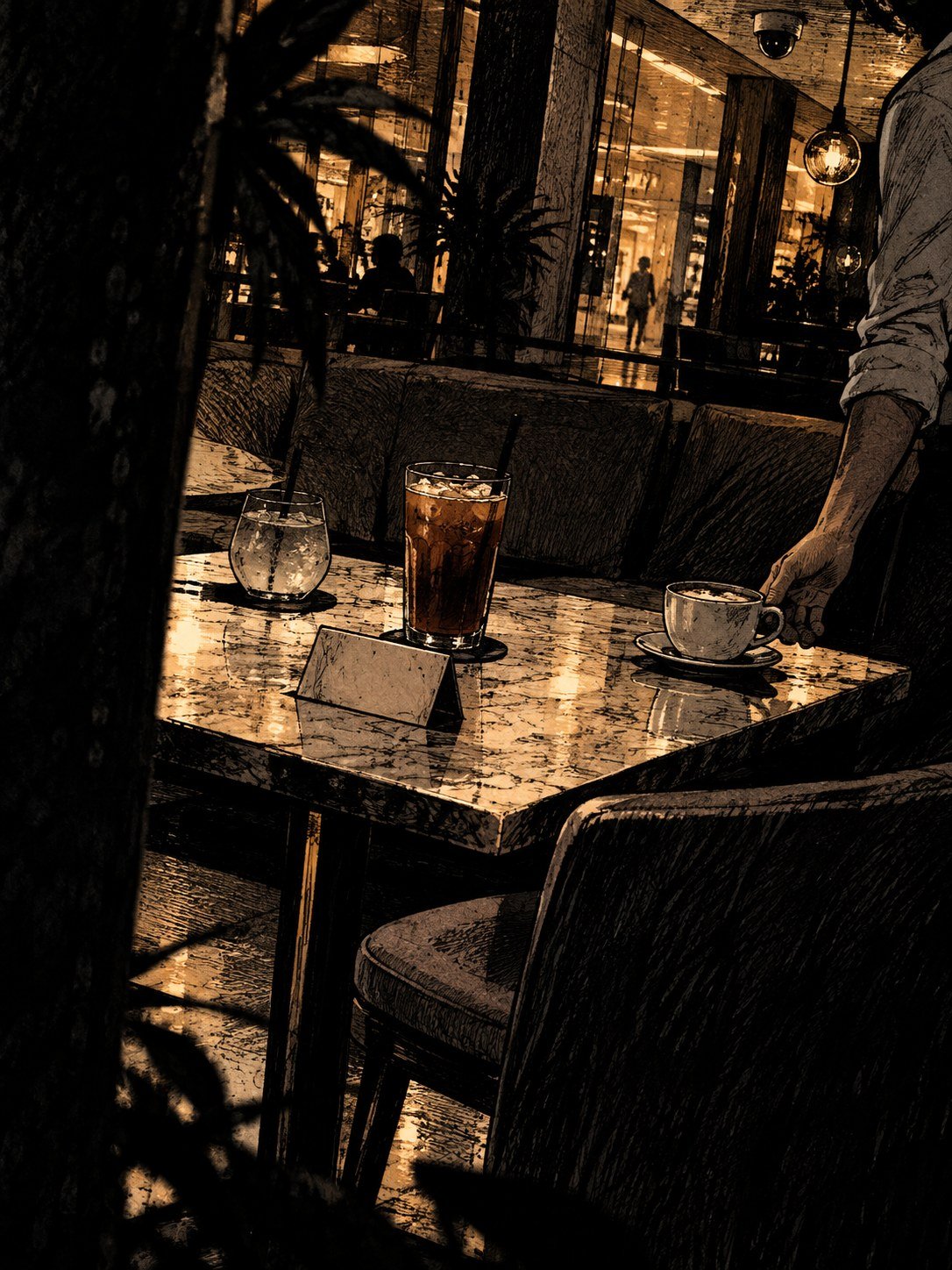
At 4:14 p.m., Jessica came back to Olivier and sat at the reserved table.
She ordered for her friends before they arrived. One of the drinks was a Vietnamese iced coffee, Mirna’s.
The drinks were brought to the table and left there.
Mirna and Hani would not arrive for about another hour.
In that hour, the iced coffee sat in front of Jessica.
Everything the prosecution later said happened, it said happened in that hour. (Wikipedia)
Three shopping bags on the table
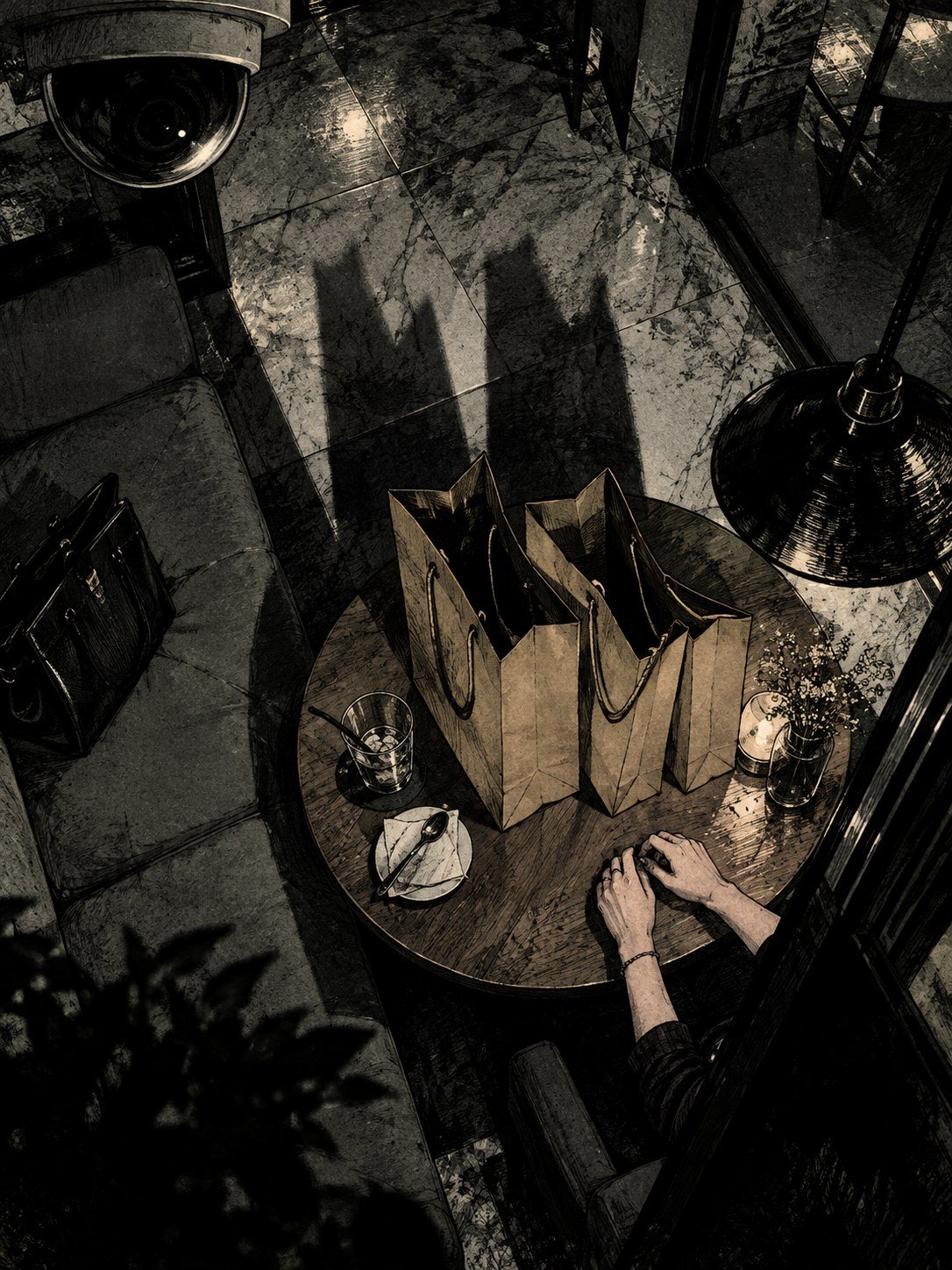
Olivier had security cameras. They recorded the table where Jessica sat.
What they showed became the heart of the case.
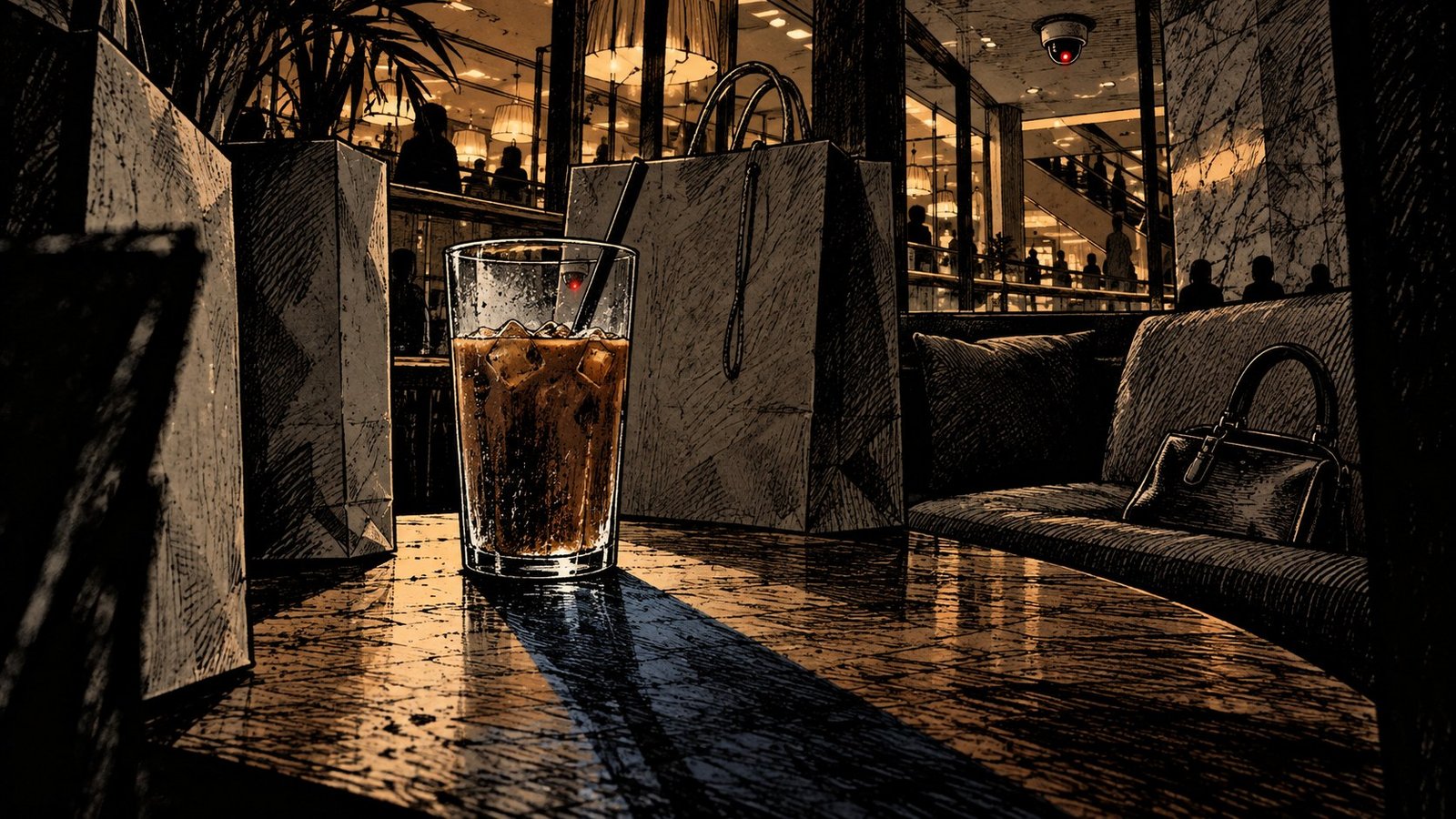
Paper shopping bags were placed on the table, and from the camera’s angle they hid the drinks. The prosecution said she used three bags to make a kind of wall.
Behind them, her hands moved. The camera could not see what they were doing.
The prosecution said she was putting cyanide into the coffee. Her defence said she was texting on her phone.
No footage ever showed her putting anything into the drink, or taking anything from her bag. (Wikipedia) (The Conversation) (ABC)
Mirna and Hani walked in around 5:20
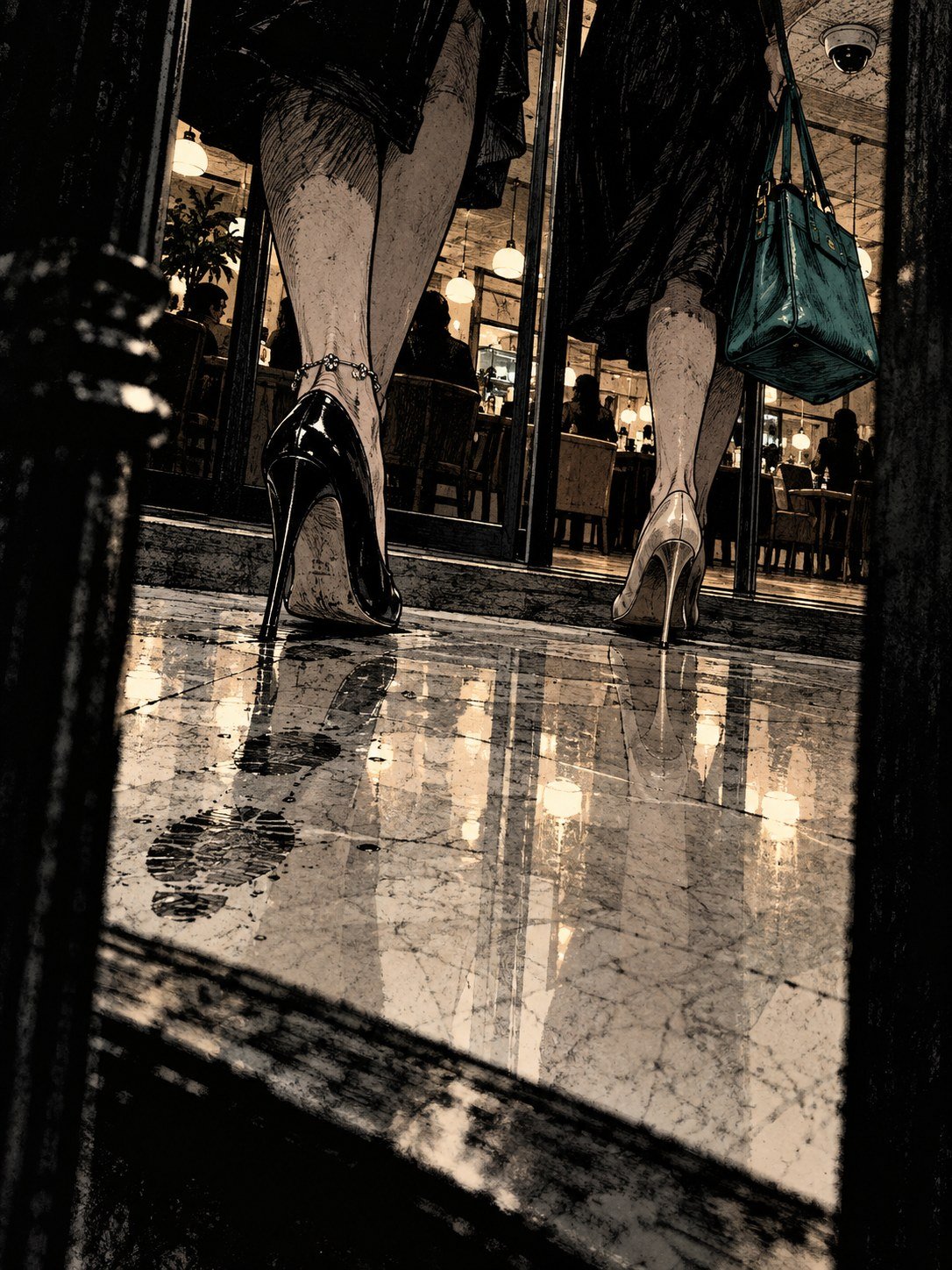
Around 5:15 to 5:20 p.m., Mirna and Hani arrived at the cafe.
Hani, whose full name is Boon Juwita, later told the court that Mirna had been reluctant to meet Jessica alone.
The three women sat down together. The iced coffee was waiting at Mirna’s place.
It had been sitting there for about an hour.
Mirna picked it up and took a sip.
Hani was sitting right next to her. (Jakarta Post, Jul 2016) (Wikipedia)
“It tastes awful”
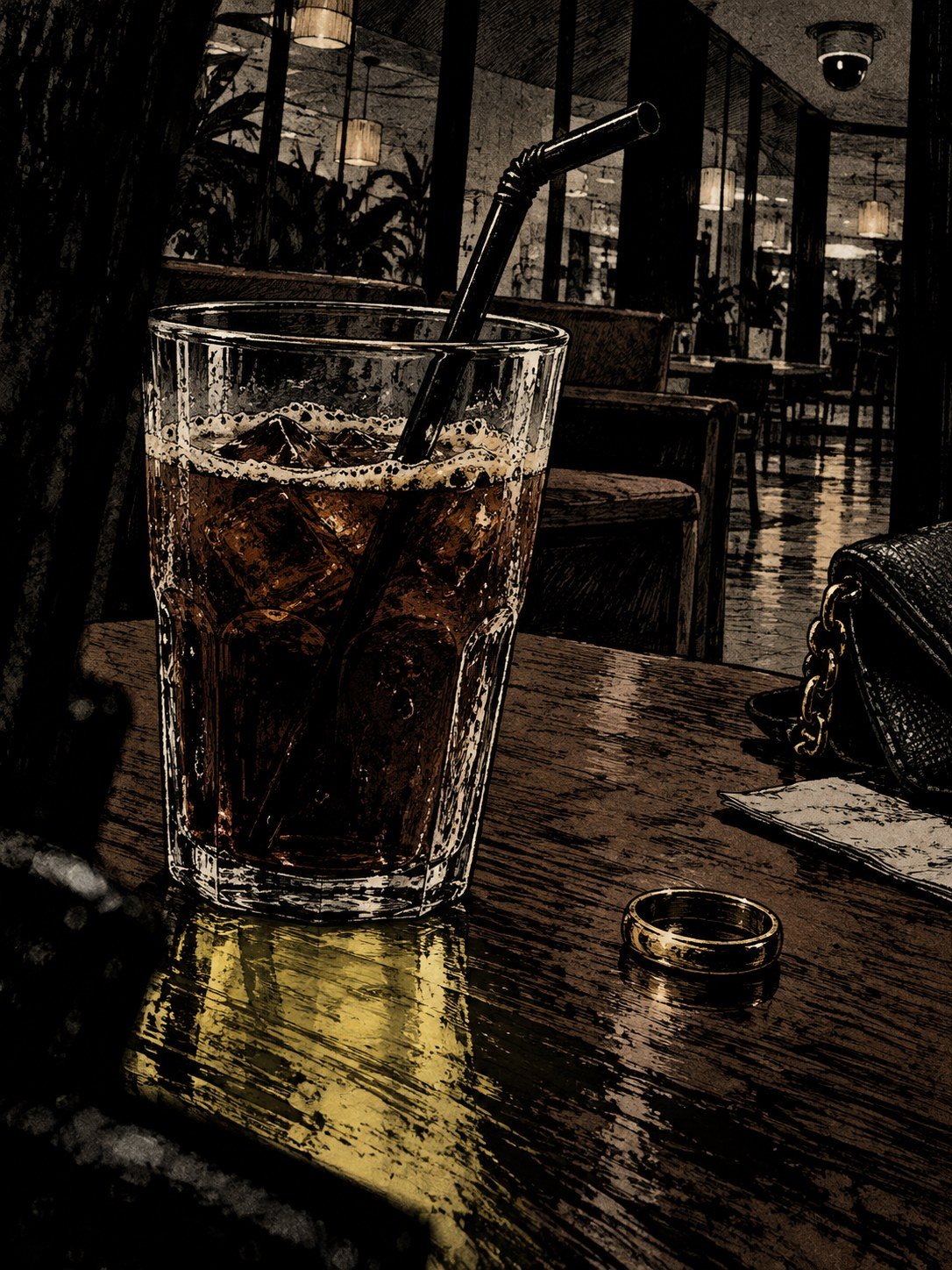
Mirna made a face. According to Hani’s testimony, she exclaimed that the coffee tasted awful.
Hani said the coffee was an odd colour and didn’t smell like coffee. She tried it herself. It was “bitter and burning.”
The cafe owner later tasted it too.
Neither Hani nor the owner became ill. The defence would point to that again and again.
But Mirna was already in trouble.
Within moments of her sip, she began to fit. (Jakarta Post, Jul 2016) (The Conversation)
A few seconds later, she collapsed on the sofa
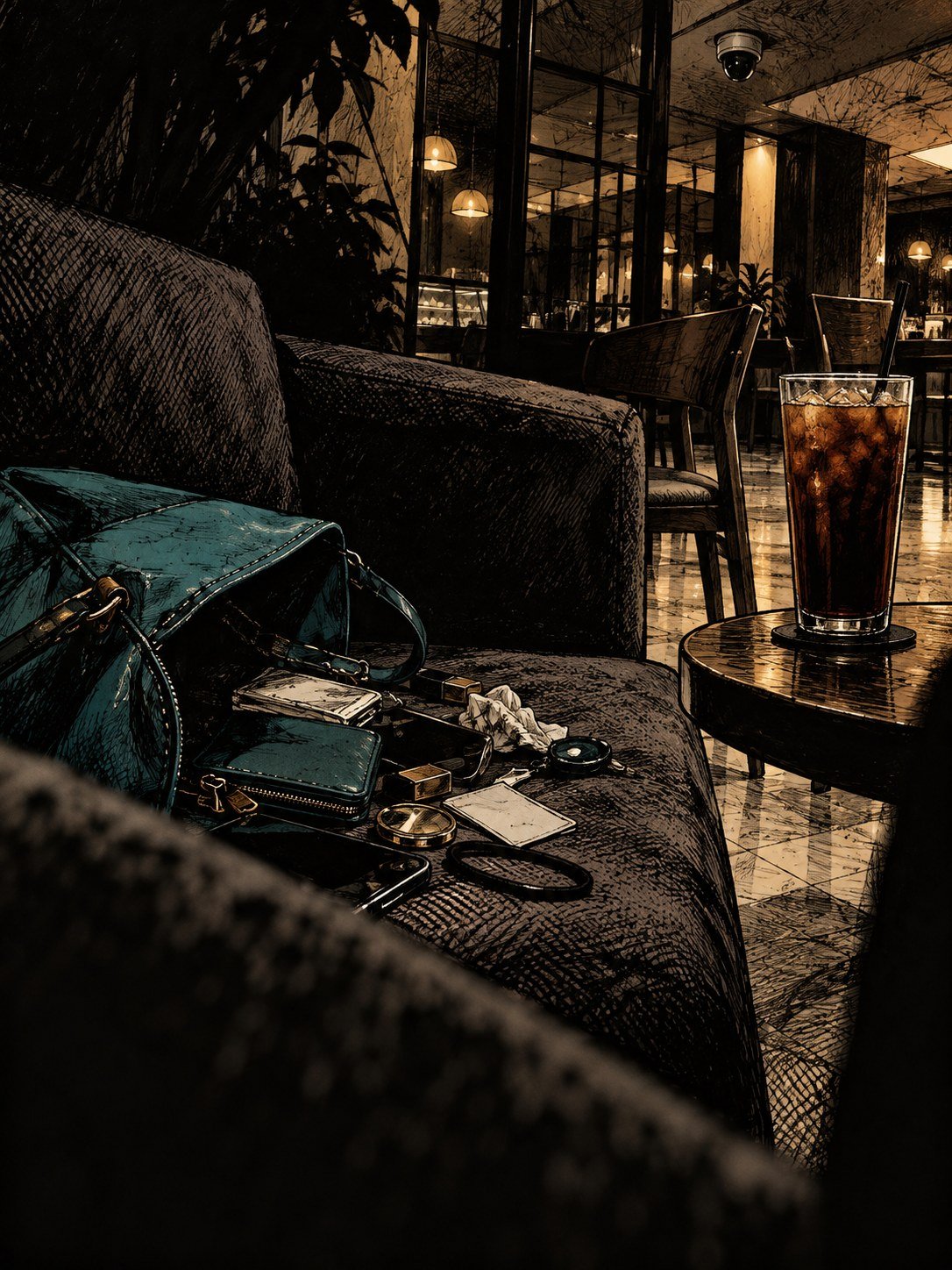
The cafe’s camera captured what happened next.
Mirna began to have what looked like a seizure. She slumped on the sofa, convulsing.
Her friends tried to help. Nobody at the table knew what was happening to her.
Mirna’s husband, Arief Soemarko, was called. He drove her to Abdi Waluyo Hospital in Menteng, in central Jakarta.
The coffee was left behind on the table. It would become the most important piece of evidence in the case. (Wikipedia) (Netflix Tudum)
Pronounced dead at 6:30 p.m.
At Abdi Waluyo Hospital, doctors could not save her.
Wayan Mirna Salihin was pronounced dead at 6:30 p.m., about an hour after her first sip.
She was 27 years old, a graphic designer, the daughter of businessman Edi Darmawan Salihin, and a twin. She had been married for just a few weeks.
Her family wanted to know what had killed a healthy young woman in a shopping mall cafe.
The police thought they knew. (Wikipedia)
Cyanide in the coffee
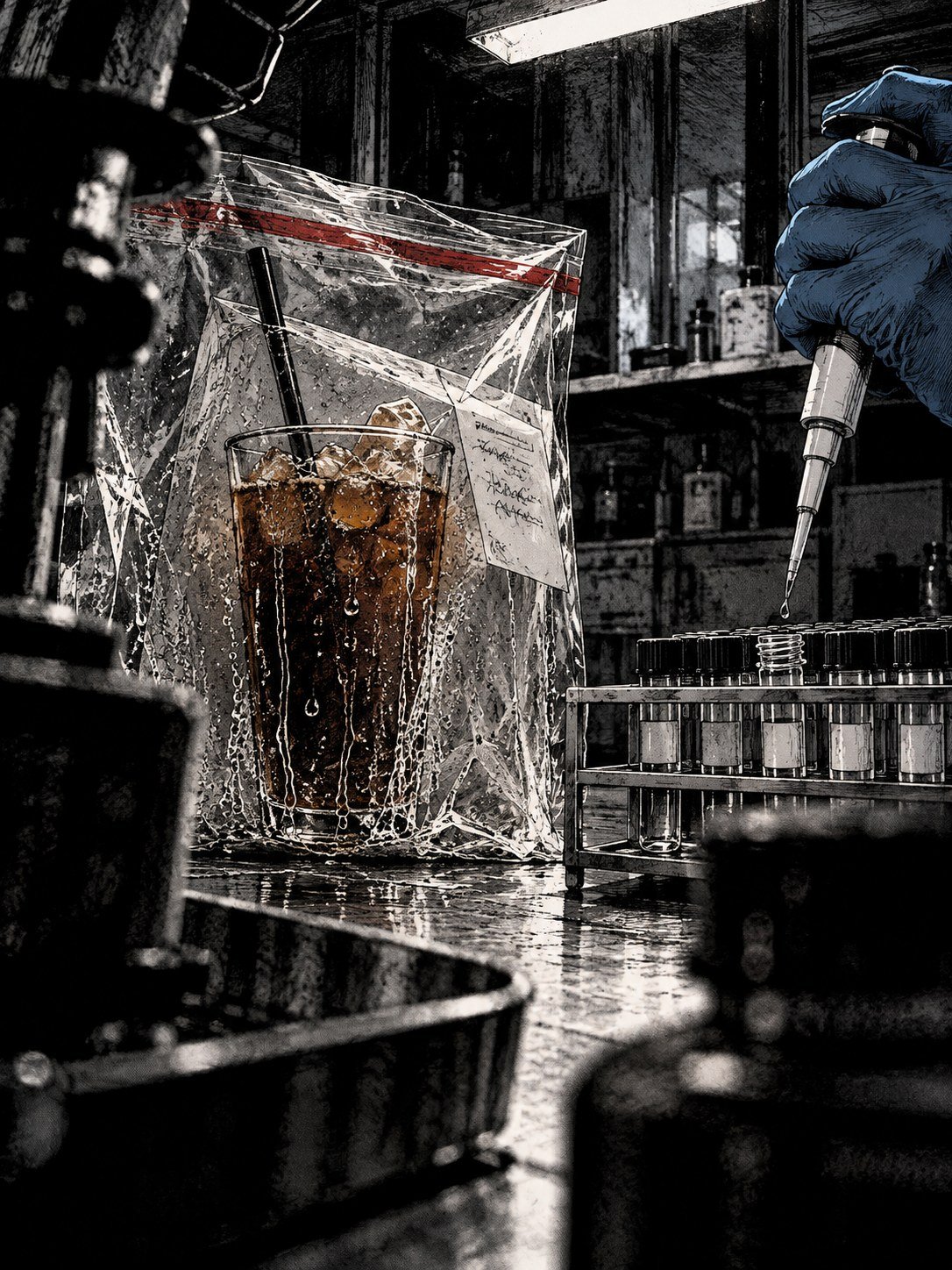
The leftover coffee went to the police laboratory.
Police said it contained cyanide. The prosecution’s toxicologist estimated the concentration at 7,400 to 7,900 milligrams per litre, and prosecutors said a single sip could have delivered about 298 milligrams.
That would be a fatal dose many times over.
But Mirna’s own body told a less clear story. A gastric sample taken about 70 minutes after her death contained only 0.2 milligrams of cyanide.
Another prosecution expert estimated she took in between 12.8 and 27.2 milligrams.
The numbers did not agree with each other. That gap would become the defence’s strongest argument. (Jakarta Post, Sep 14 2016) (Jakarta Post, Sep 21 2016) (Jakarta Post, Aug 25 2016)
There was no full autopsy
Normally a sudden death like this would lead to a full autopsy. This one didn’t.
Investigators took samples from her organs, but no full examination of her body was done.
The defence pushed for an autopsy. The prosecution declined.
Later, a forensic pathologist from Australia, Beng Ong, told the court that the stomach damage and the small trace of cyanide could be a “post mortem change”: something that happened after death, not the cause of it.
He also said cyanide swallowed by mouth usually takes 30 minutes to hours to act. Mirna collapsed within minutes.
Without a full autopsy, nobody could settle the question with certainty. (Jakarta Post, Sep 6 2016) (The Conversation) (ABC)
Three weeks later, police came for Jessica

At the end of January 2016, Jessica Wongso was named a suspect and arrested.
She was charged under Article 340 of the Indonesian Criminal Code: premeditated murder. In Indonesia, it can carry the death penalty.
Jessica said she was innocent.
Prosecutors sent the case file back to police several times, asking for more. It wasn’t declared complete until May 26, 2016.
The case was already a sensation across Indonesia.
And investigators had started looking into her life in Australia. (Jakarta Post, Mar 2016) (Wikipedia) (Jakarta Post, Oct 27 2016)
She had worked on Sydney’s ambulances

In Sydney, Jessica had worked for the New South Wales ambulance service.
At trial, prosecutors called witnesses about her years in Australia. Her former ambulance supervisor reported that Jessica had once said: “If I want to kill anyone, I know how to do it.”
An ex-boyfriend, Patrick O’Connor, had sought a restraining order against her in November 2015, calling her “mentally unstable.” A New South Wales police officer testified about it.
A prosecution psychiatrist told the court she had been treated in a Sydney hospital in late 2015.
Her defence said none of this proved she had poisoned anyone. Her lawyer said of the Australian records: “If the record is true there should be verdicts from courts.”
In the trial, the Australian history was used to paint a picture of her. It was not evidence that she poisoned the coffee. (ABC) (Jakarta Post, Aug 2016) (Jakarta Post, Sep 27 2016) (Jakarta Post, Mar 2016)
Australia helped, on one condition

Indonesian police wanted information from Australia. But Australia does not help in cases that could end in an execution.
The Australian Federal Police agreed to help only after Indonesia gave an assurance. A spokeswoman for Australia’s justice minister said: “the death penalty will not be sought.”
The AFP passed on files about her mental health and history. Indonesia’s police chief said they contained about 14 items.
The Conversation, an academic news site, argued the assurance could not legally bind Indonesian prosecutors or judges.
In the end, prosecutors did not ask for death.
But Jessica was on trial for her life in the eyes of the public. And the public was watching every minute. (Jakarta Post, Mar 2016) (ABC) (The Conversation) (Wikipedia)
A trial broadcast live to the nation
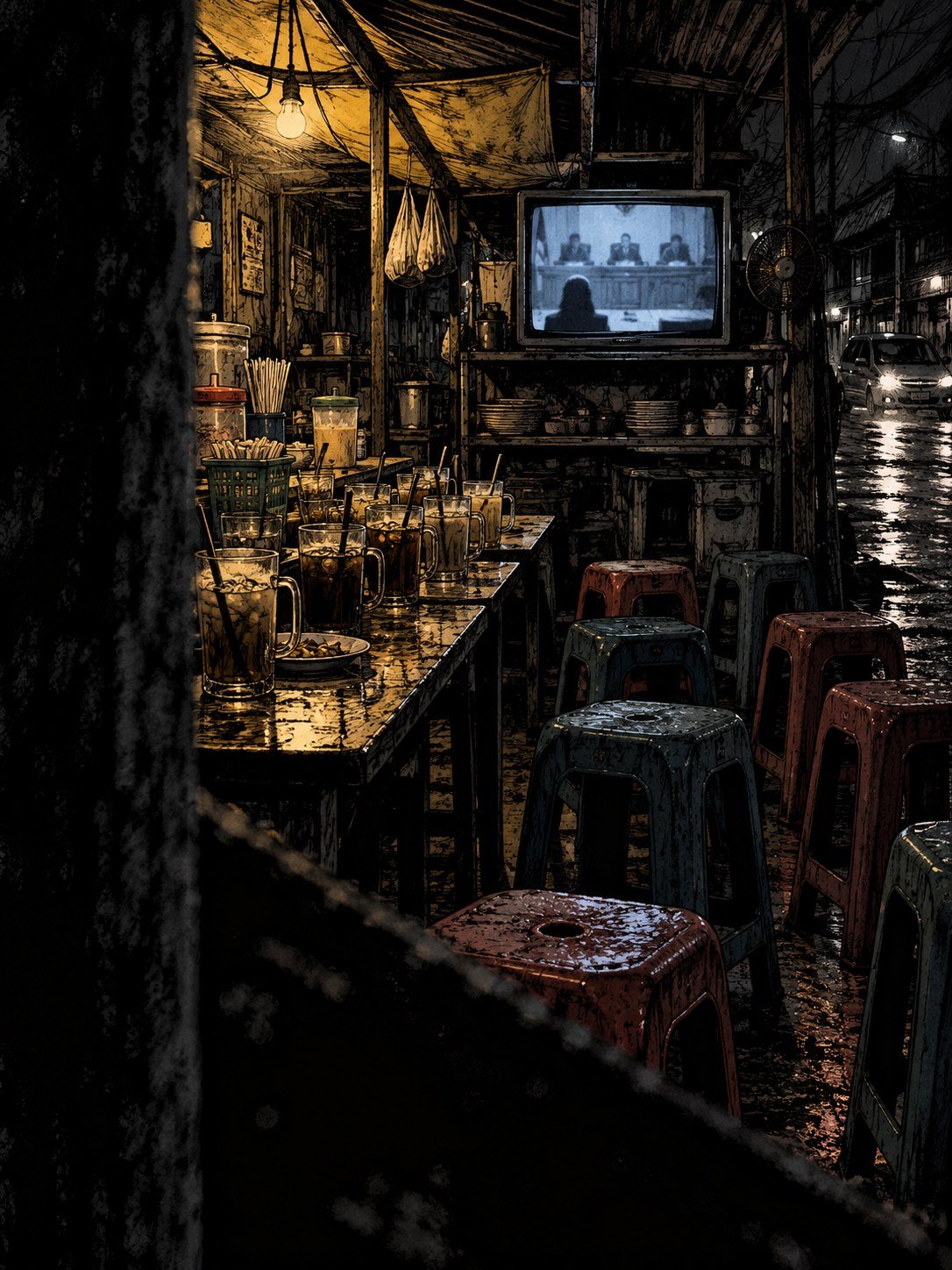
The trial opened on June 15, 2016, at the Central Jakarta District Court. It ran for 135 days.
It was broadcast live on Indonesian television. People watched it at home, at work, and on the TVs of street food stalls.
Nearly 50 witnesses testified, including three Australian toxicology and forensic experts called by the defence.
The judges were Kisworo, presiding, with Binsar Gultom and Partahi Tulus Hutapea.
The defence said the cafe CCTV had been manipulated. The judges rejected that and accepted the footage as legal evidence.
Every expression on Jessica’s face was discussed on TV. When she cried, the judges later called it a “stage show.” (Wikipedia) (Jakarta Post, Oct 27 2016) (ABC) (Jakarta Post, CCTV ruling) (The Conversation)
The prosecution’s motive: a friendship in Sydney
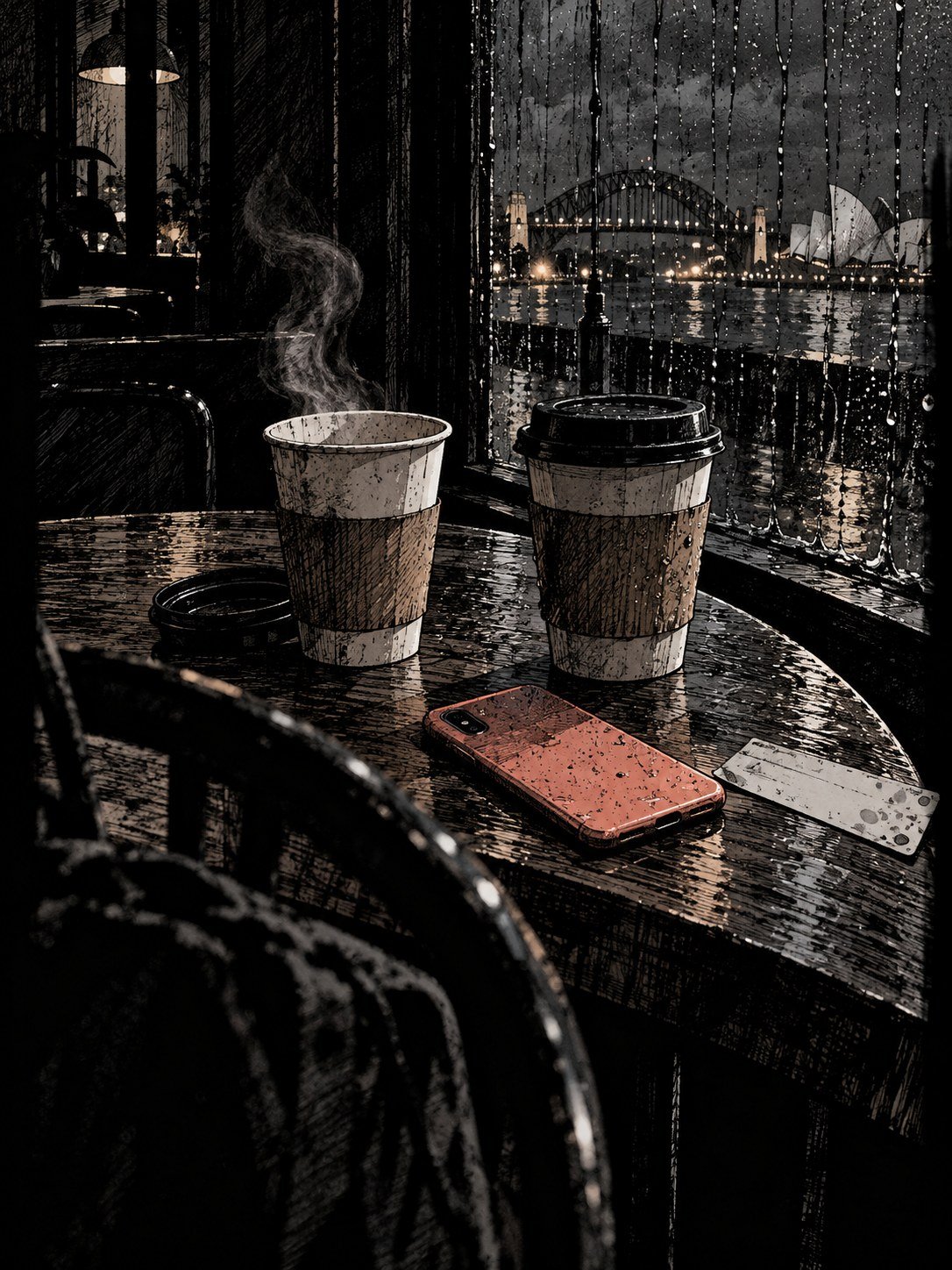
Why would she do it? Prosecutors offered a motive from the women’s years in Sydney.
They said Mirna had urged Jessica to leave her boyfriend, O’Connor, whom they described as abusive and a drug user. They said Jessica took it as a betrayal and wanted revenge.
Jessica denied it. She told the court their friendship had been fine, and that Mirna didn’t even know O’Connor’s name.
Prosecutors never produced a witness who saw Jessica buy cyanide or carry it.
On October 5, 2016, prosecutor Meilani Wuwung asked the court for 20 years in prison.
Not death. Twenty years. (Jakarta Post, Jun 2016) (Jakarta Post, Oct 5 2016)
Four hours to read the verdict

October 27, 2016. The courtroom was full. The cameras were on.
The three judges took turns reading the 377-page verdict. It took about four hours.
Guilty of premeditated murder. Twenty years.
“I don’t accept this verdict because this is unfair and one-sided,” Jessica said.
Mirna’s husband, Arief, had his own words for reporters: “There is no way I’ll forgive her.”
The case was legally over. In Indonesia, the argument had only just begun. (ABC) (Jakarta Post, verdict)
Every appeal failed

Jessica served her sentence at Pondok Bambu women’s prison in East Jakarta.
Her lawyers appealed. The Jakarta High Court rejected it.
On June 21, 2017, the Supreme Court rejected her cassation appeal.
On December 3, 2018, a first judicial review, a last-resort petition in Indonesian law, was rejected too.
Year after year, she stayed in prison. She kept saying she was innocent.
Then, in 2023, the case came back to life in a way no one expected. (Wikipedia) (Jakarta Post, 2017) (Jakarta Post, 2019) (Tempo)
Netflix made the whole world watch the CCTV
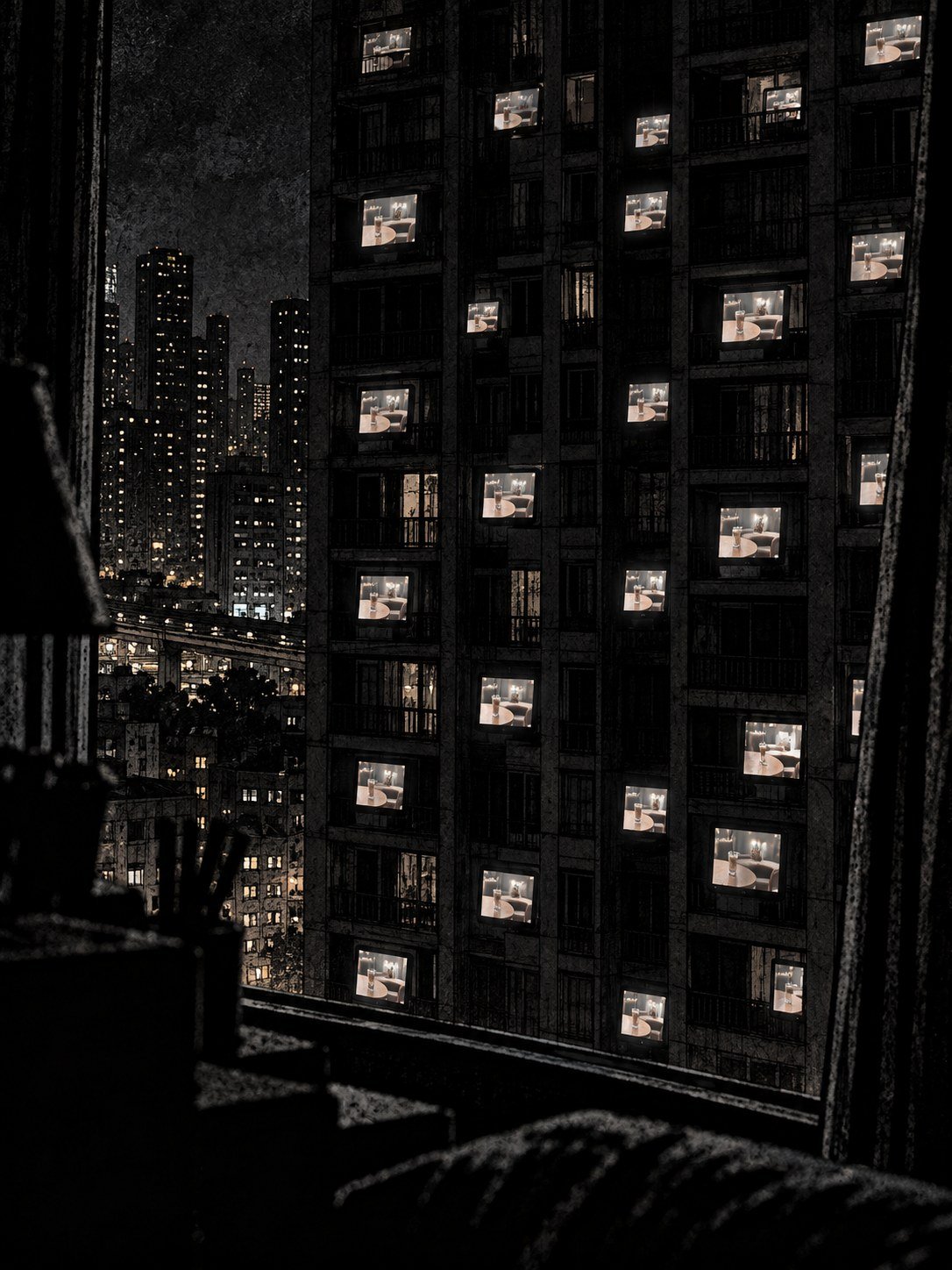
On September 28, 2023, Netflix released “Ice Cold: Murder, Coffee and Jessica Wongso,” directed by Rob Sixsmith.
It became the first Indonesian documentary to reach Netflix’s global top 10 for non-English films. It was No. 1 in Indonesia for three weeks. Its trailer had 44 million views.
Suddenly millions of people around the world were watching the same grainy cafe footage, pausing on the shopping bags, arguing about her hands.
Many viewers came away doubting the verdict.
On October 10, 2023, Indonesia’s Attorney General’s Office responded. “I affirm the closure of this case,” an official said.
For the authorities, there was nothing left to discuss. (Wikipedia, Ice Cold) (Netflix Tudum) (Indonesian National Police)
August 2024: she walked out of prison

On Sunday, August 18, 2024, Jessica Wongso walked out of Pondok Bambu prison on parole.
She had served about eight years. Remissions had cut almost five years off her sentence.
She is not free. She must report to the East Jakarta parole office until March 27, 2032. Indonesia’s law minister said she is “still considered an inmate.”
She still says she did not kill her friend.
And she wasn’t finished fighting. (Tempo) (Tempo, minister) (Jakarta Post, Aug 2024)
The coffee is gone. The question isn’t
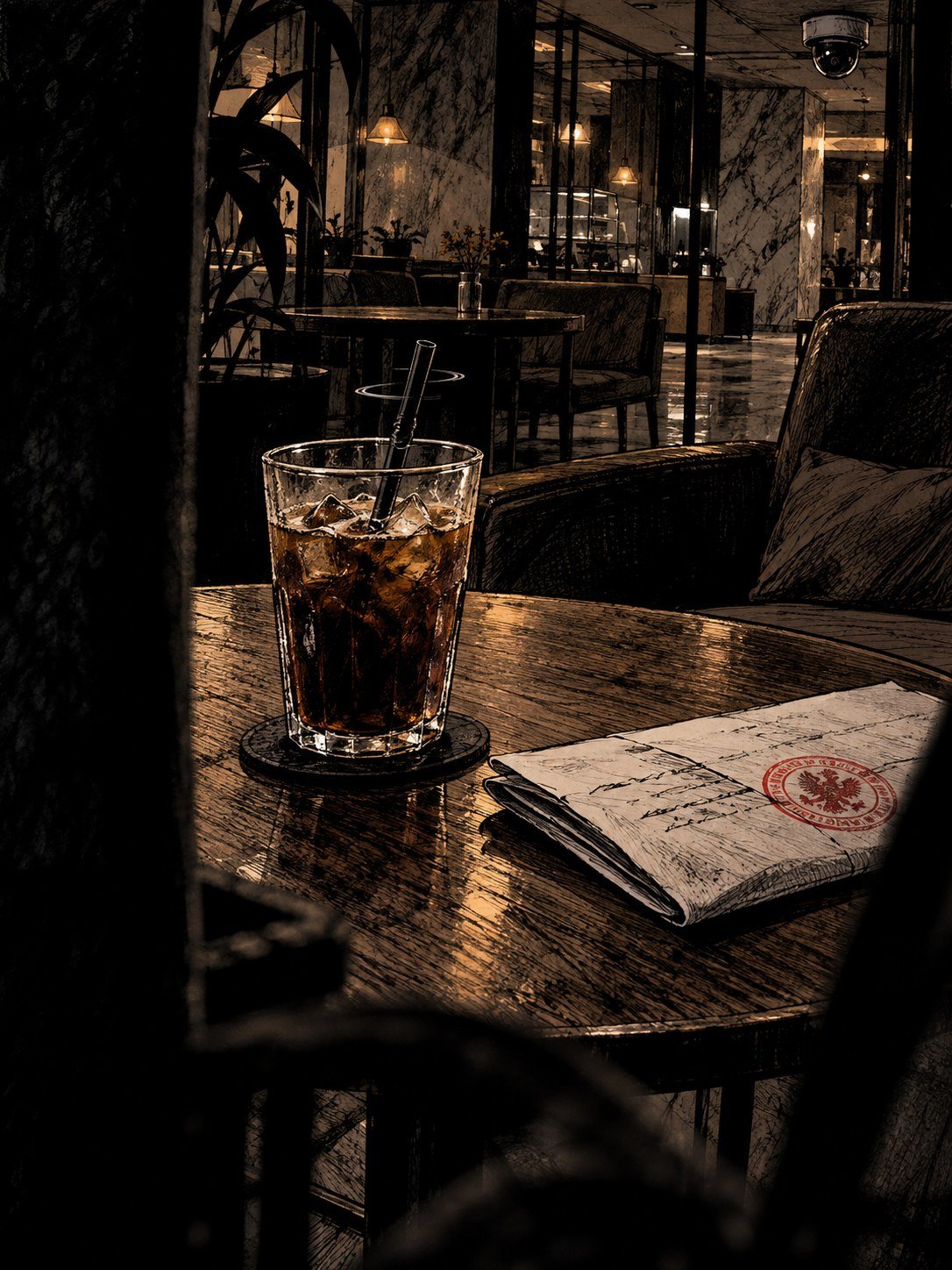
In October 2024, her lawyer Otto Hasibuan filed a second judicial review, citing new CCTV footage from Olivier and alleged errors by the judges.
On August 14, 2025, the Supreme Court rejected it.
Legally, the case is closed. Jessica Wongso was convicted of murder, and every court that looked at it again agreed.
But the questions that made the case famous were never fully answered. Why was there no full autopsy? Why did the cyanide numbers disagree so badly? Why did no camera catch the poison going in?
Mirna’s family believes justice was done. Many people who watched the documentary aren’t so sure.
Somewhere in that hour at the cafe table, behind three shopping bags, is the answer. The camera just couldn’t see it. (Jakarta Post, Oct 2024) (CNN Indonesia) (The Conversation)
Case notes: a murder conviction built on a camera that couldn’t see
Wayan Mirna Salihin, 27, died on January 6, 2016, after drinking a Vietnamese iced coffee at Olivier cafe in Grand Indonesia, Jakarta (Wikipedia). Her friend Jessica Kumala Wongso, who ordered the drink, was convicted of premeditated murder by cyanide poisoning on October 27, 2016, and sentenced to 20 years (ABC) (Jakarta Post, verdict). Every appeal was rejected, the last on August 14, 2025 (CNN Indonesia). She was released on parole in August 2024 and maintains her innocence (Tempo) (Jakarta Post, Aug 2024).
Timeline
| When | What happened |
|---|---|
| Jan 6, 2016, 3:33 p.m. | Jessica arrives at Grand Indonesia (Wikipedia) |
| 4:14 p.m. | She orders the drinks at Olivier (Wikipedia) |
| ~5:15-5:20 p.m. | Mirna and Hani arrive; Mirna sips the coffee and collapses (Wikipedia) (Jakarta Post, Jul 2016) |
| 6:30 p.m. | Mirna pronounced dead at Abdi Waluyo Hospital (Wikipedia) |
| End of Jan 2016 | Jessica arrested and charged with premeditated murder (Jakarta Post, Mar 2016) (Wikipedia) |
| Jun 15, 2016 | Televised trial opens; it runs 135 days (Wikipedia) (The Conversation) |
| Oct 27, 2016 | Guilty; 20 years (ABC) (Jakarta Post, verdict) |
| Jun 21, 2017 | Supreme Court rejects cassation (Jakarta Post, 2017) |
| Dec 3, 2018 | First judicial review rejected (Jakarta Post, 2019) |
| Sep 28, 2023 | Netflix releases Ice Cold (Wikipedia, Ice Cold) (Netflix Tudum) |
| Aug 18, 2024 | Released on parole (Tempo) (Jakarta Post, Aug 2024) |
| Aug 14, 2025 | Second judicial review rejected (CNN Indonesia) |
What the sources agree on, and where they don’t
| Detail | Prosecution side | Defence side |
|---|---|---|
| Cyanide dose | About 298 mg in one sip (prosecutors); 12.8-27.2 mg (prosecution expert) (Jakarta Post, Sep 14 2016) (Jakarta Post, Aug 25 2016) | 0.2 mg in the gastric sample, “not enough to have caused her death” (Jakarta Post, Sep 21 2016) |
| Speed of collapse | Consistent with a large dose of cyanide (Jakarta Post, Sep 14 2016) | Oral cyanide usually takes 30 minutes to hours; she collapsed within minutes (Jakarta Post, Sep 6 2016) |
| CCTV | Admitted as legal evidence; tampering claim rejected (Jakarta Post, CCTV ruling) | No frame shows her adding anything; hand movements explained as texting (The Conversation) (ABC) |
| Autopsy | Organ samples taken (Jakarta Post, Sep 6 2016) | No full autopsy; the defence asked for one and was refused (ABC) |
Details most coverage missed
Two other people tasted the coffee. Hani and the cafe owner both tried it and were not harmed, a point the defence raised repeatedly (The Conversation).
The death penalty was taken off the table by a deal with Australia. The Australian Federal Police shared files only after Indonesia gave an assurance that the death penalty would not be sought (Jakarta Post, Mar 2016) (ABC).
The coffee itself was never produced in court, according to The Conversation’s analysis of the trial (The Conversation).
What we still don’t know
- Exactly how the cyanide got into the coffee, and when.
- Why no full autopsy was carried out.
- Why the prosecution’s cyanide figures differed so widely from what was found in Mirna’s stomach.
- What the new CCTV footage cited in 2024 actually showed.
Case file summary
- Who: Wayan Mirna Salihin (27); Jessica Kumala Wongso (27), convicted
- Where: Olivier cafe, Grand Indonesia mall, Jakarta, Indonesia
- When: January 6, 2016
- What: Death by alleged cyanide poisoning in an iced coffee
- Status: Convicted (2016); paroled (2024); final review rejected (2025)
Illustrations are artistic interpretations, not photos. No real person has a recognizable face.
Related files
- Erin Patterson’s Mushroom Lunch: Four Grey Plates, One Orange. Three Dead. Today, Life Without Parole
- The Hwaseong Murders: The Real Killer Behind ‘Memories of Murder’ Was Always Right There
- Convicted of Murder With No Body. Then Cédric Jubillar Led Police to Delphine
Illustrations are AI-generated artistic interpretations, not photos. No real person is depicted with a recognizable face. Read how we research and illustrate these files.
Sources
- Wikipedia: Murder of Wayan Mirna Salihin
- Wikipedia: Ice Cold: Murder, Coffee and Jessica Wongso
- Netflix Tudum: Ice Cold
- ABC/RNZ: Australian resident found guilty of cyanide coffee murder
- The Conversation: Jessica Wongso found guilty, but she may not have had a fair trial
- Jakarta Post: AFP records (Mar 2016)
- Jakarta Post: Jessica accused of revenge killing
- Jakarta Post: Mirna reluctant to meet Jessica alone, Hani says
- Jakarta Post: Psychiatrist describes Jessica’s mental health in Australia
- Jakarta Post: Toxicologist assures that cyanide killed Mirna
- Jakarta Post: No signs that cyanide caused Mirna’s death, says pathologist
- Jakarta Post: Toxicologist challenges prosecutors
- Jakarta Post: Cyanide in Mirna’s stomach did not cause her to die
- Jakarta Post: Ex-boyfriend tells police Jessica is unstable
- Jakarta Post: Prosecutors demand 20 years
- Jakarta Post: Guilty or not, Jessica to face verdict
- Jakarta Post: CCTV footage is legal evidence
- Jakarta Post: Jessica gets 20 years
- Jakarta Post: Supreme Court rejects appeal (2017)
- Jakarta Post: Jessica fails with appeal for review (2019)
- Jakarta Post: Jessica Wongso released early on parole (2024)
- Jakarta Post: Jessica Wongso files another appeal (2024)
- Tempo: Jessica Wongso gets remission on parole
- Tempo: Still an inmate despite parole
- CNN Indonesia: MA tolak PK kedua Jessica (2025)
- Indonesian National Police: AGO confirms closure of case