A Diver Found Roman Wine Jars on This Cliff in 1959. Six Months Later They Were Gone, and One Was Tied With Rope
Narrated Mystery: press play and hear the whole case read aloud, like a true crime podcast episode, or an audiobook for a long drive (about 9 minutes). The narrator is an AI voice.
What the record shows
- What: Dressel 1A Roman wine amphorae wedged in an underwater cliff at more than 40 metres
- Found: by Duilio Marcante and Carabinieri divers on 7 November 1959; reported on 10 November
- Lost: by May 1960 the main pile was gone and one jar was tied with rope; the position dropped out of the record after 1961
- Refound: by Carabinieri divers on a training dive; nine amphorae mapped; announced 22 October 2026
Still uncertain
- Who tied the rope and took the pile in 1959–60.
- Where the ship itself is; no hull has been found.
- How the ship sank.
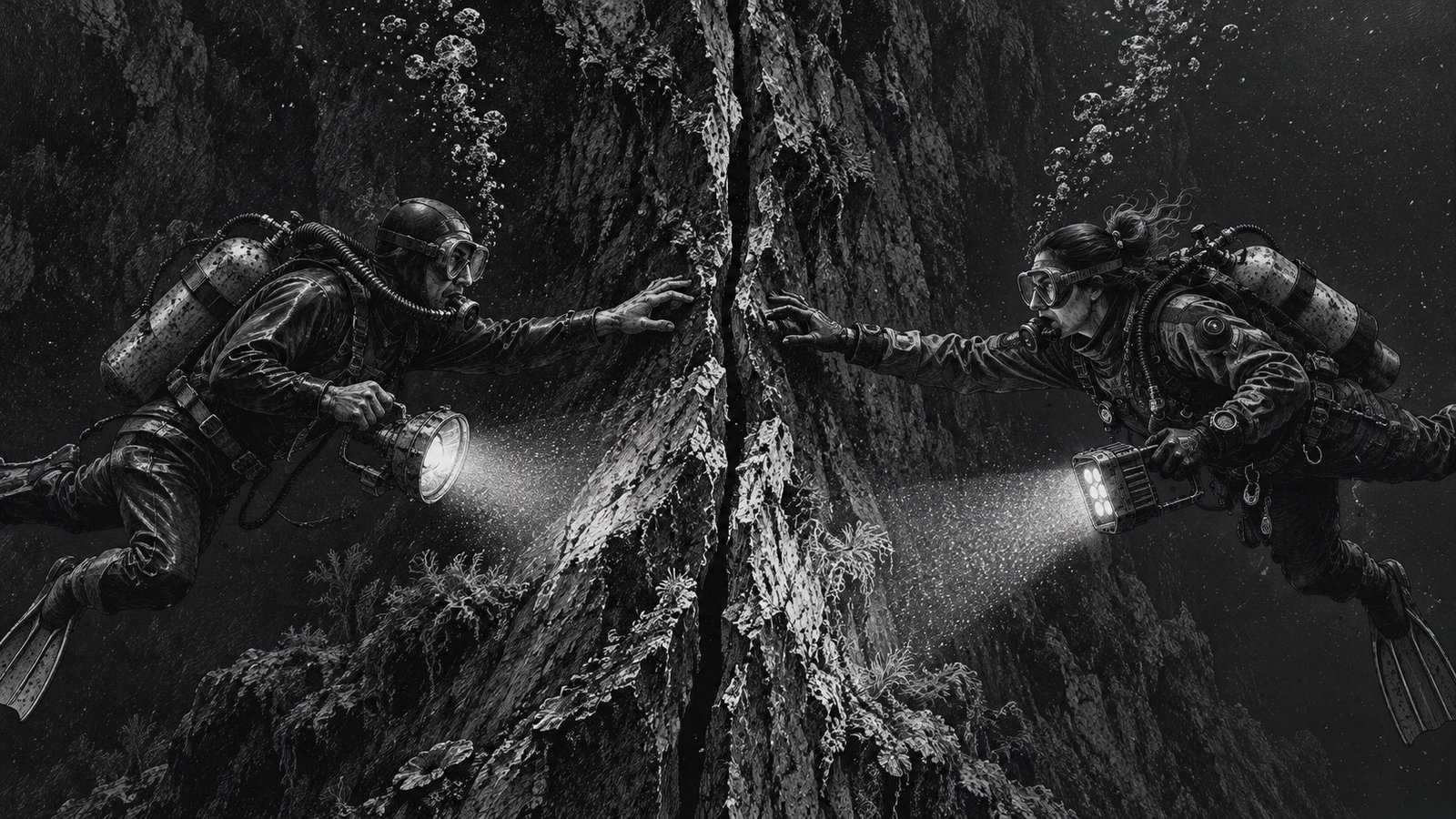
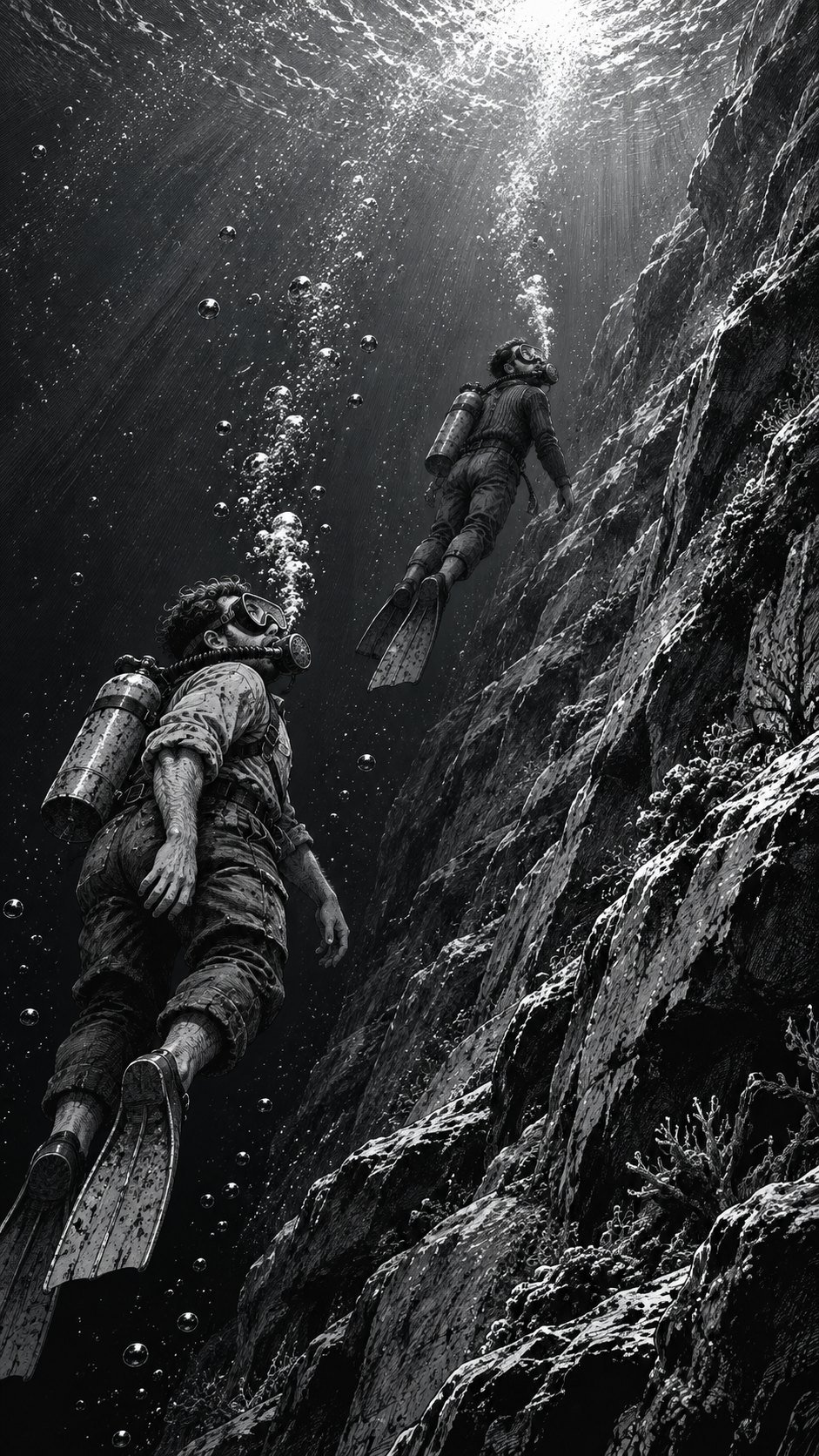
May 1960. Two divers drop down a cliff off Punta Chiappa, a rocky point on the Italian Riviera near Camogli.
Six months earlier, one of them had found a pile of Roman wine jars down here, wedged into the rock.
Now the pile is gone.
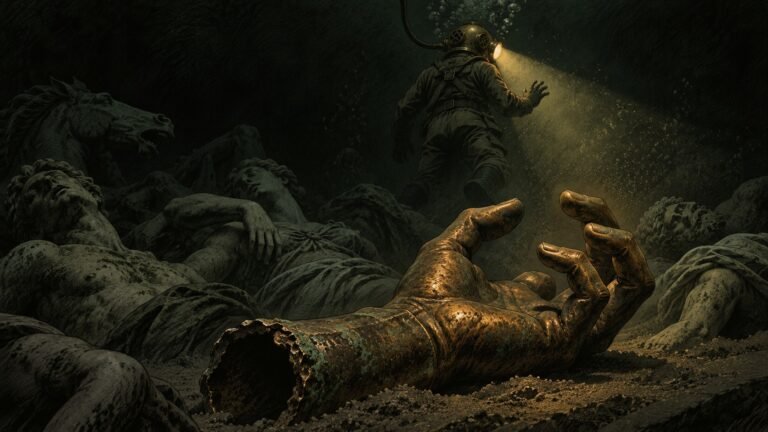
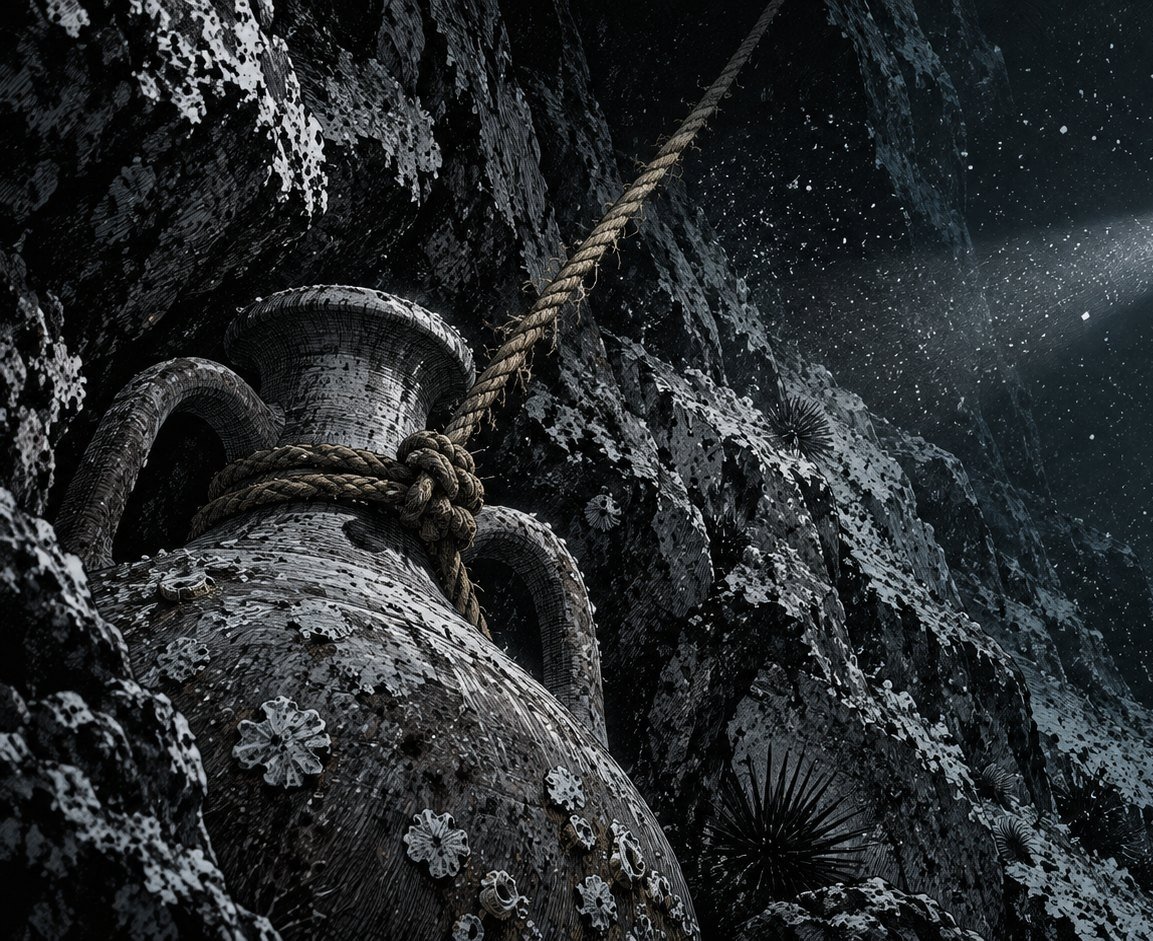
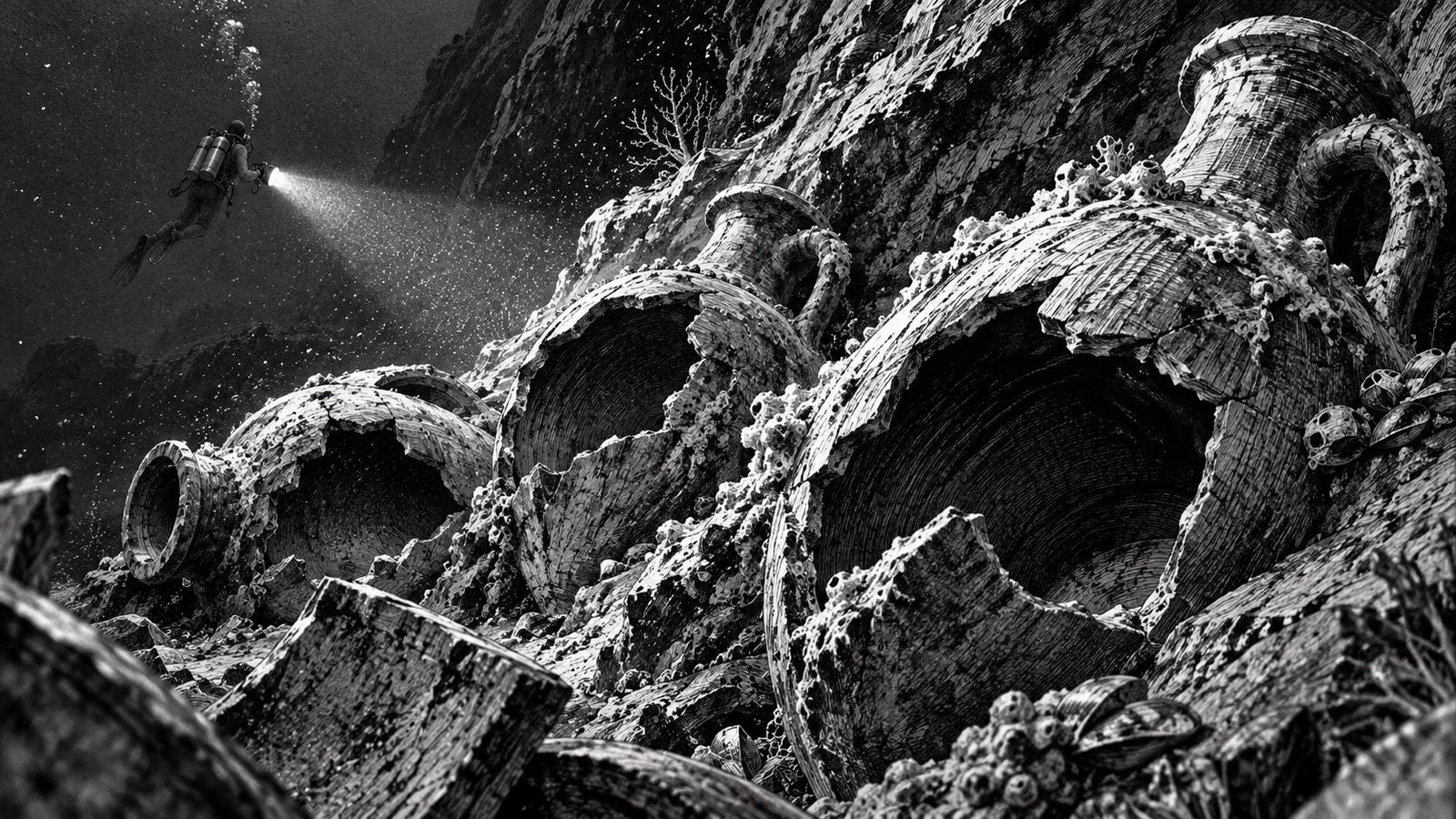
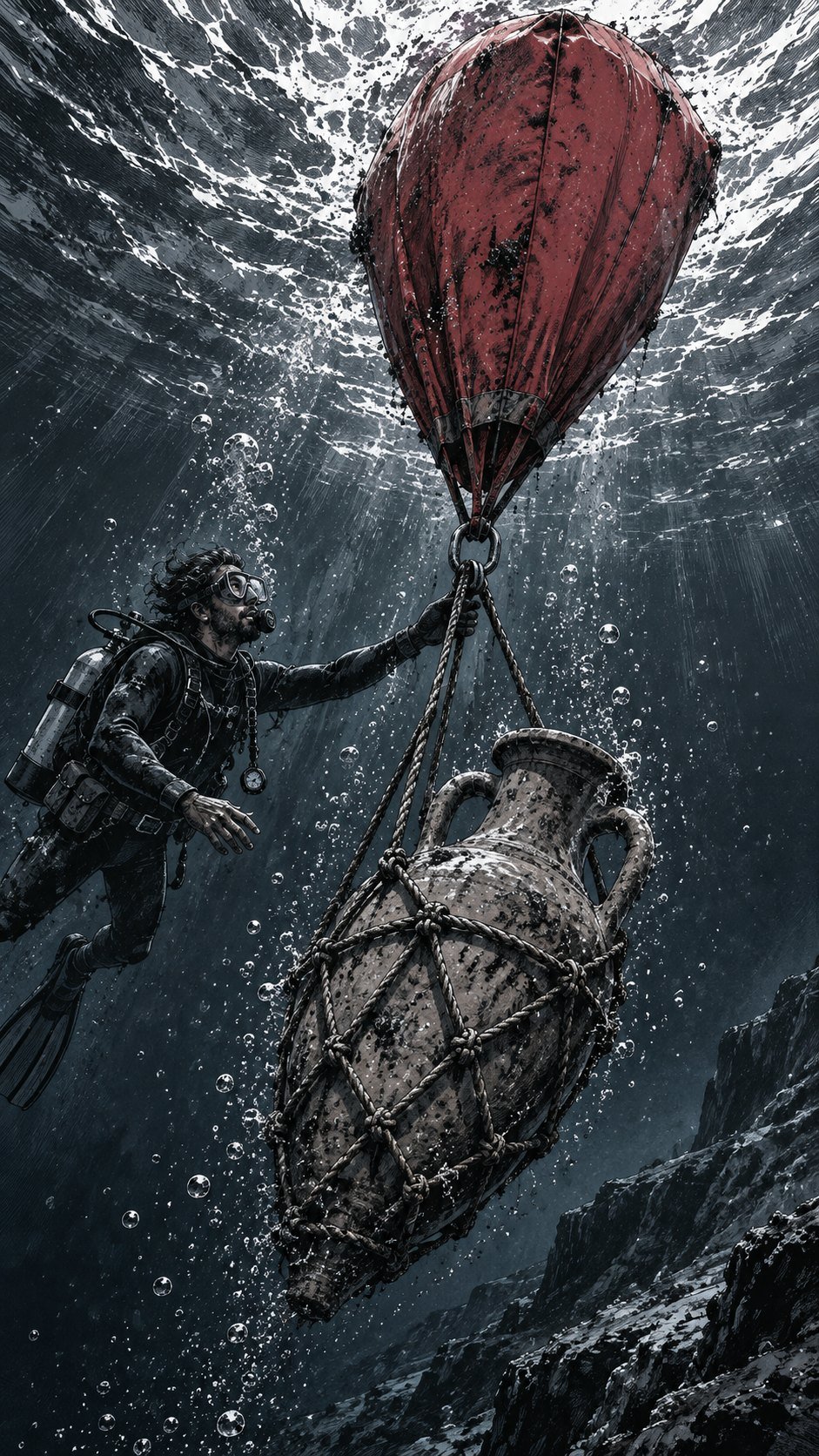
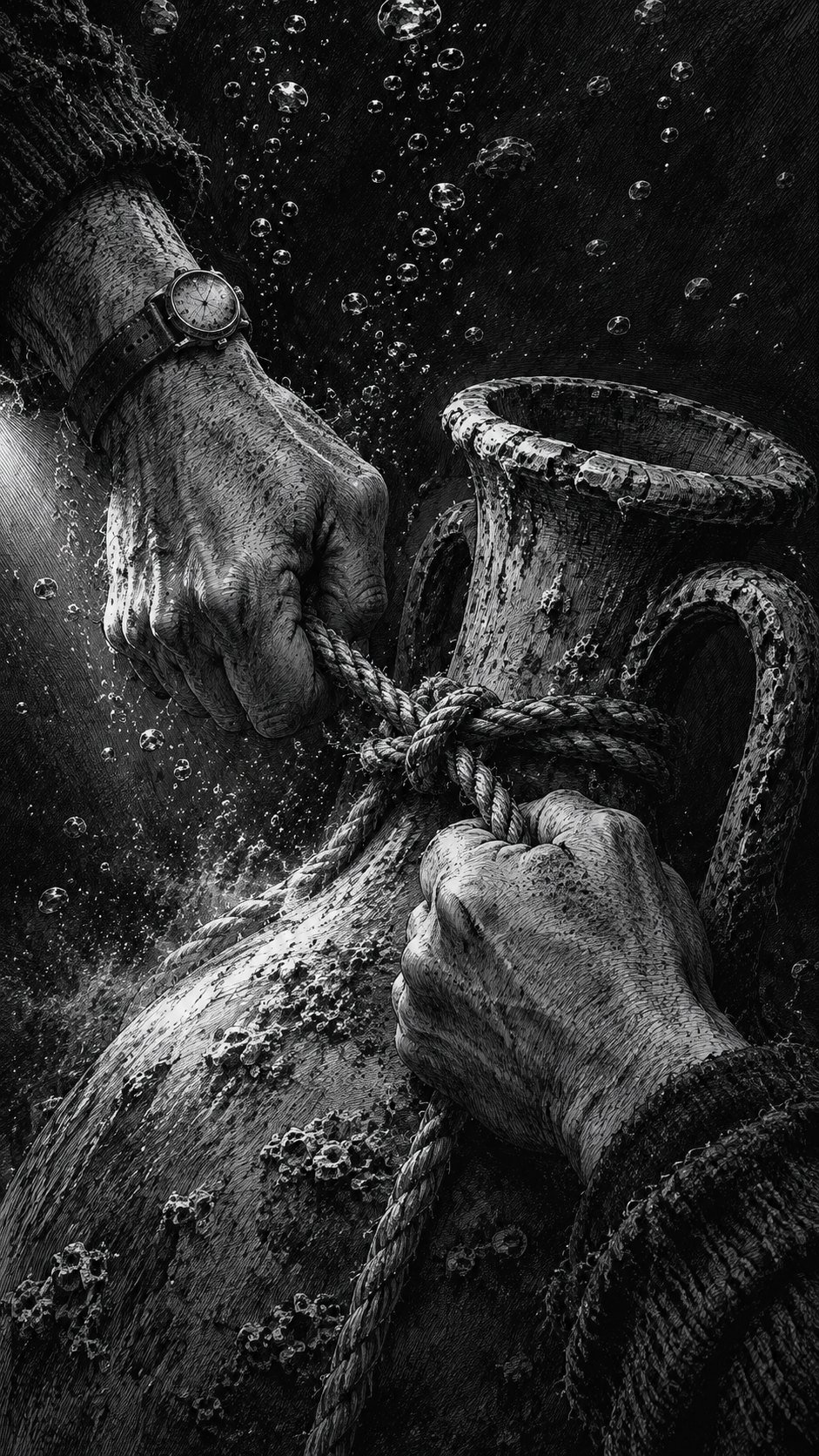
What is left is stranger. One amphora sits in the dark with a thin rope tied around it, as if someone had prepared it to be hauled up and never came back. Three others lie broken in the rock.
Someone had been here first.
So who tied the rope, and how did a Roman wreck that had been reported to the right people disappear from the record for 67 years?
Who found the Roman wreck off Camogli?
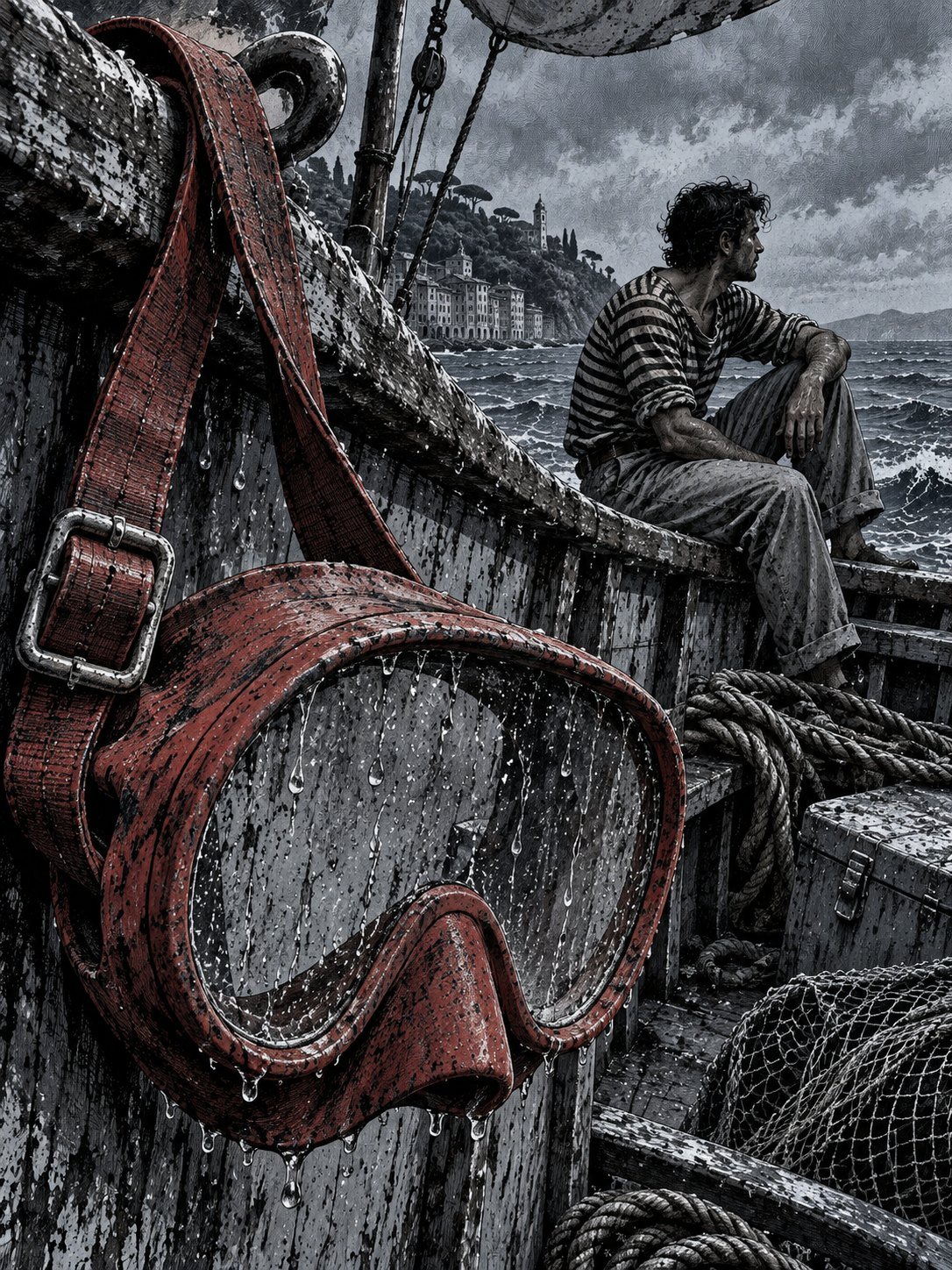
The diver who found the jars was Duilio Marcante, one of the pioneers of Italian scuba diving.
In 1954 he had been behind one of the most famous underwater landmarks in the world: the bronze “Christ of the Abyss,” sunk in the bay of San Fruttuoso, just around the headland from Punta Chiappa, in memory of a diver who died there.
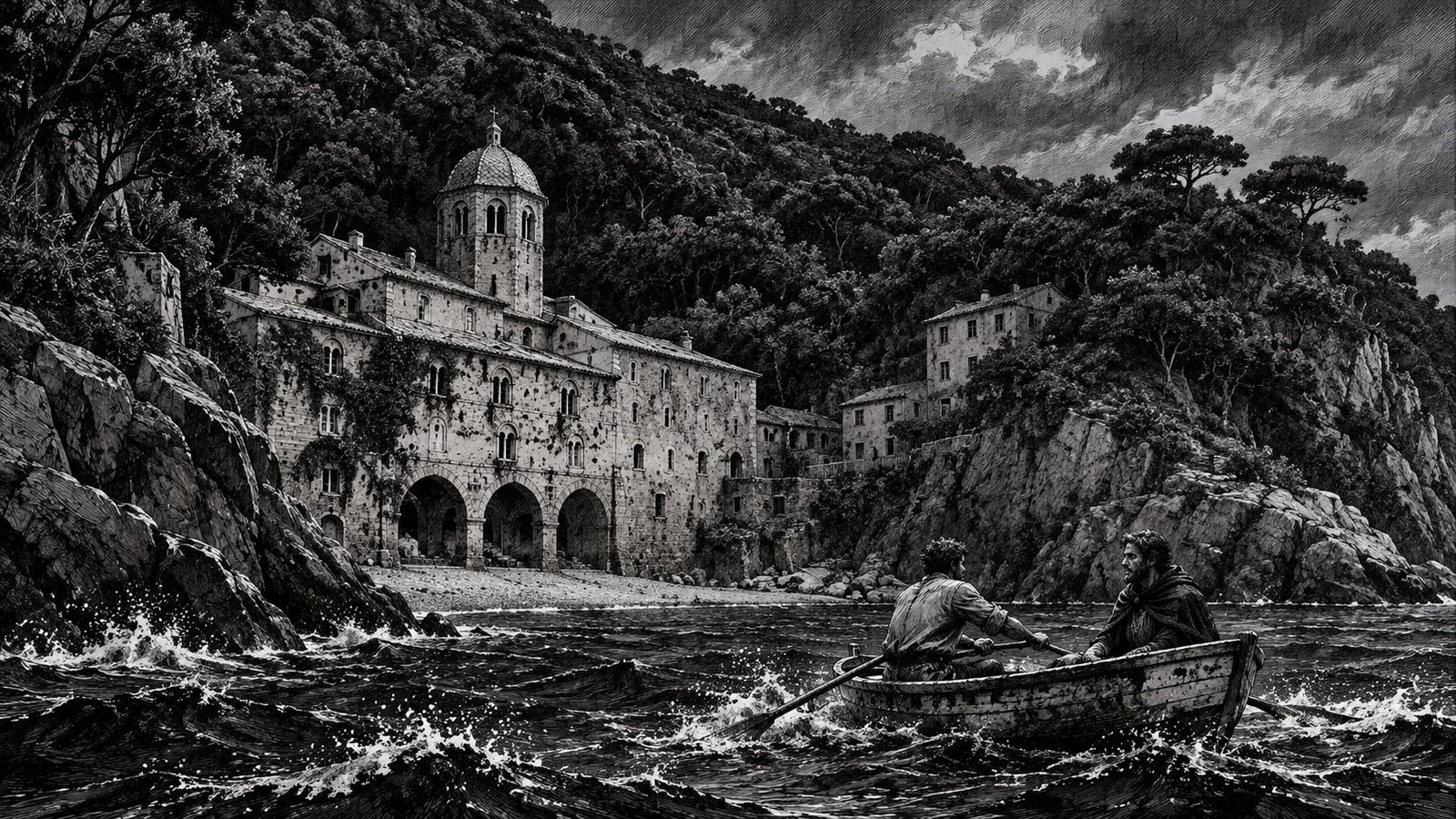
So when Marcante said there was a Roman wreck under this cliff, people listened.
What did the divers find in November 1959?
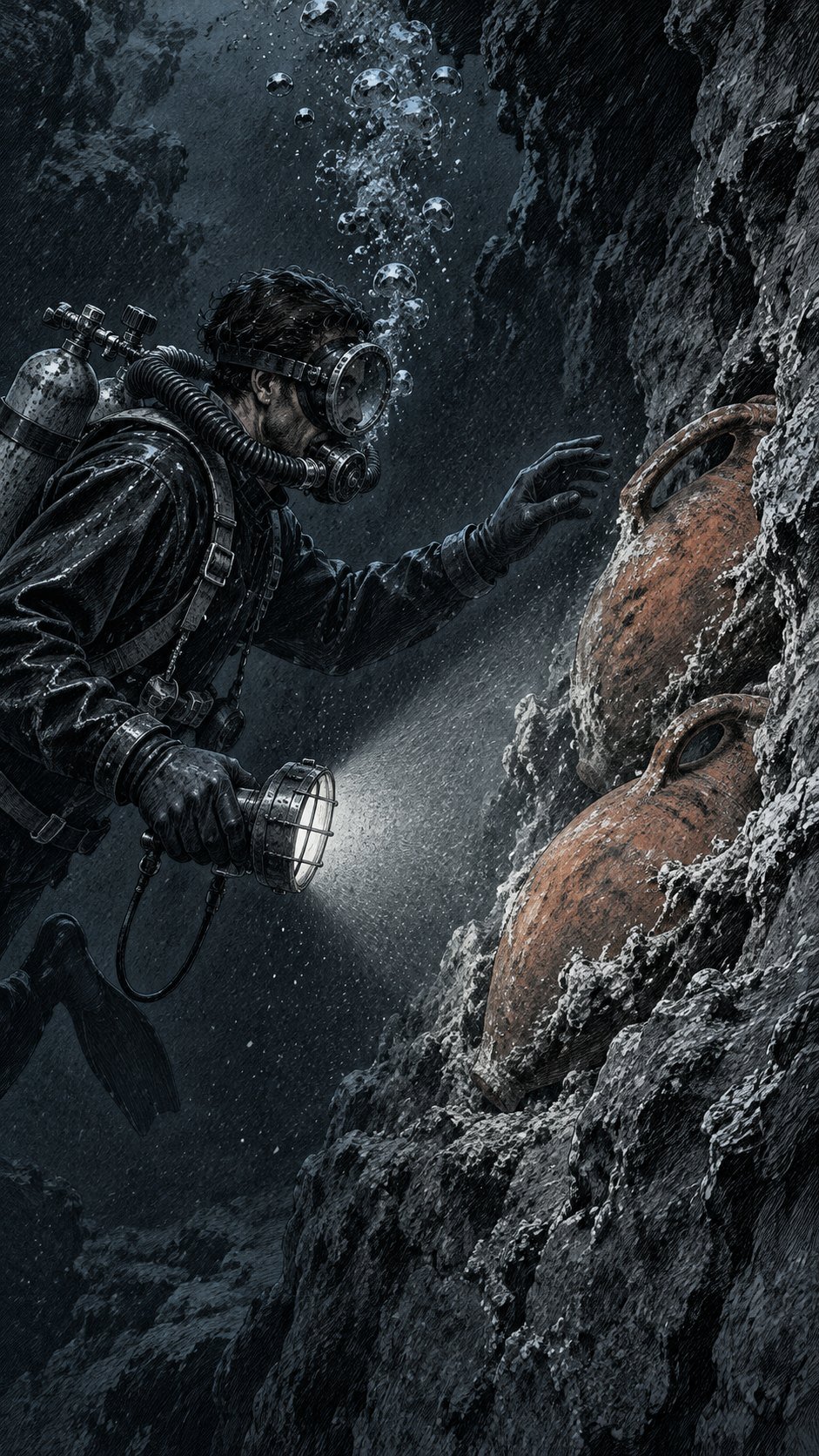
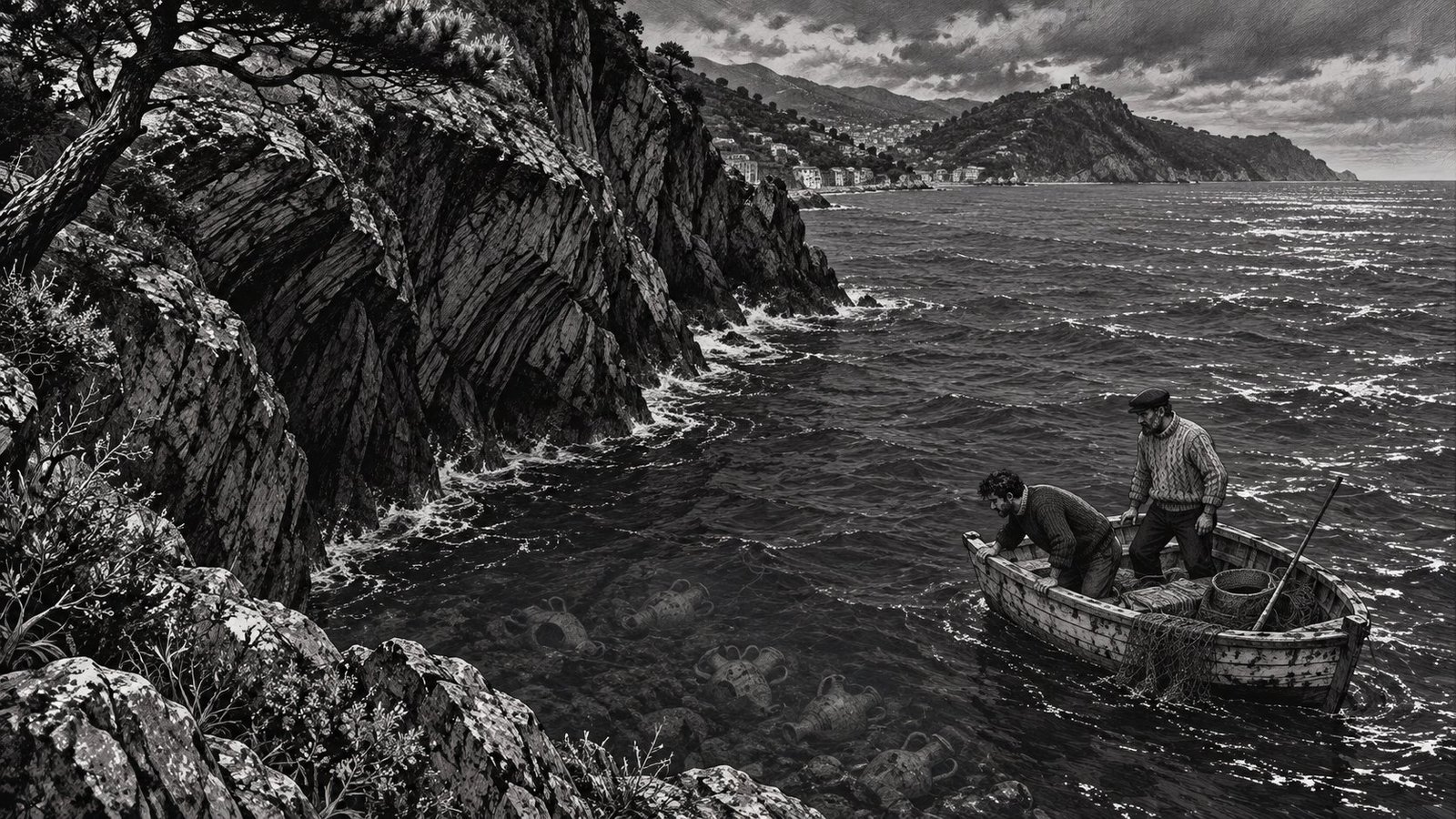
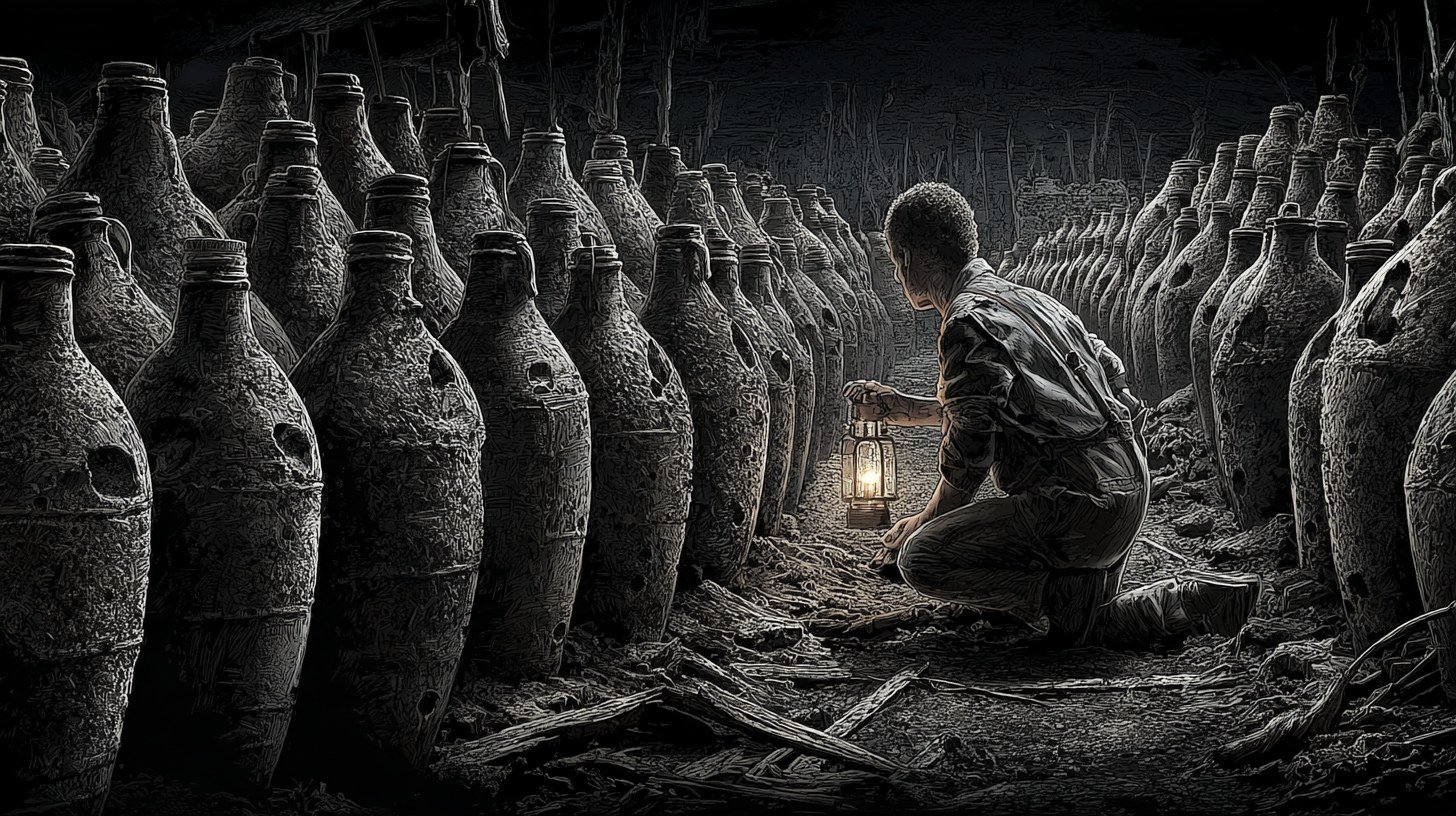
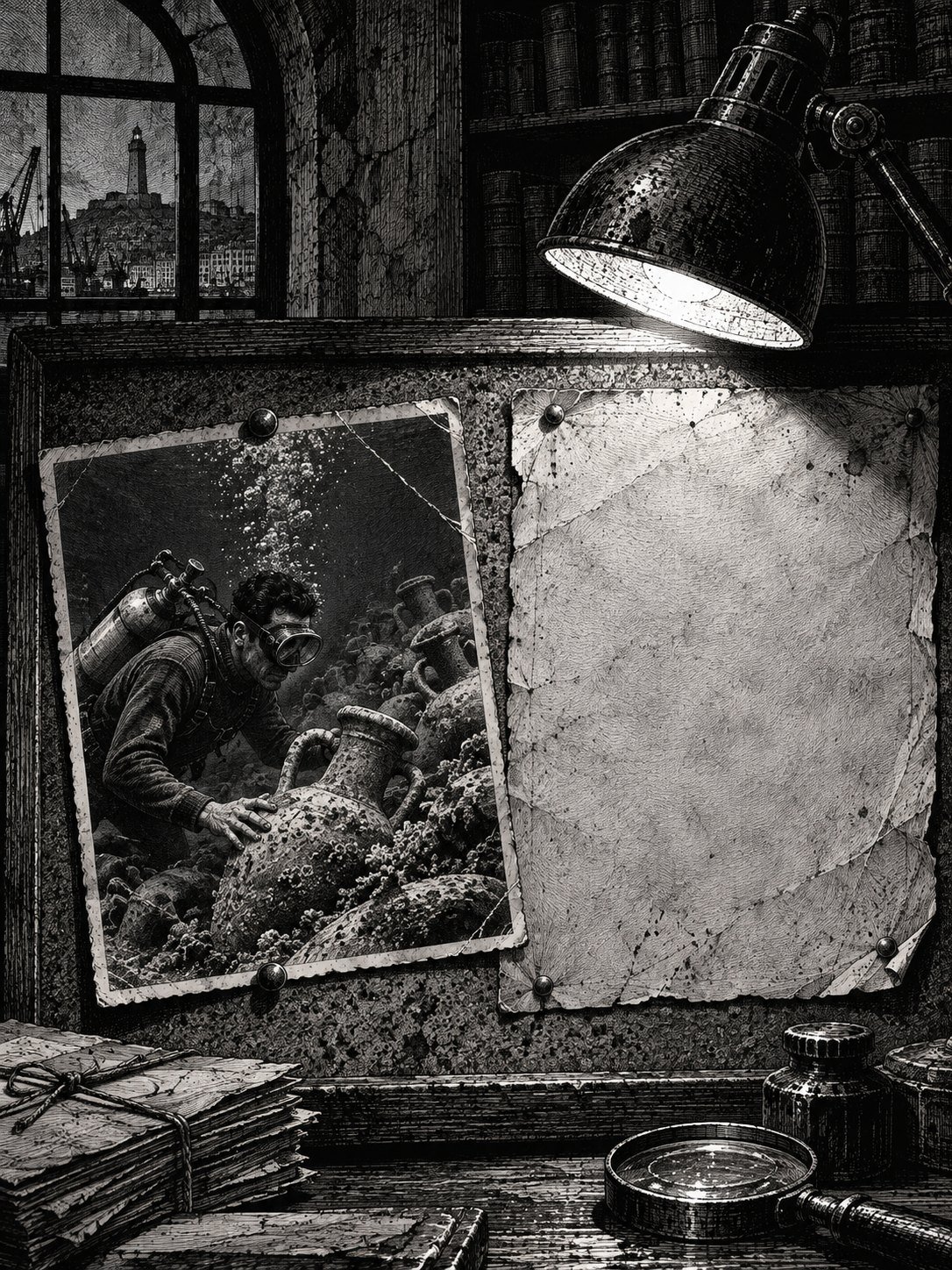
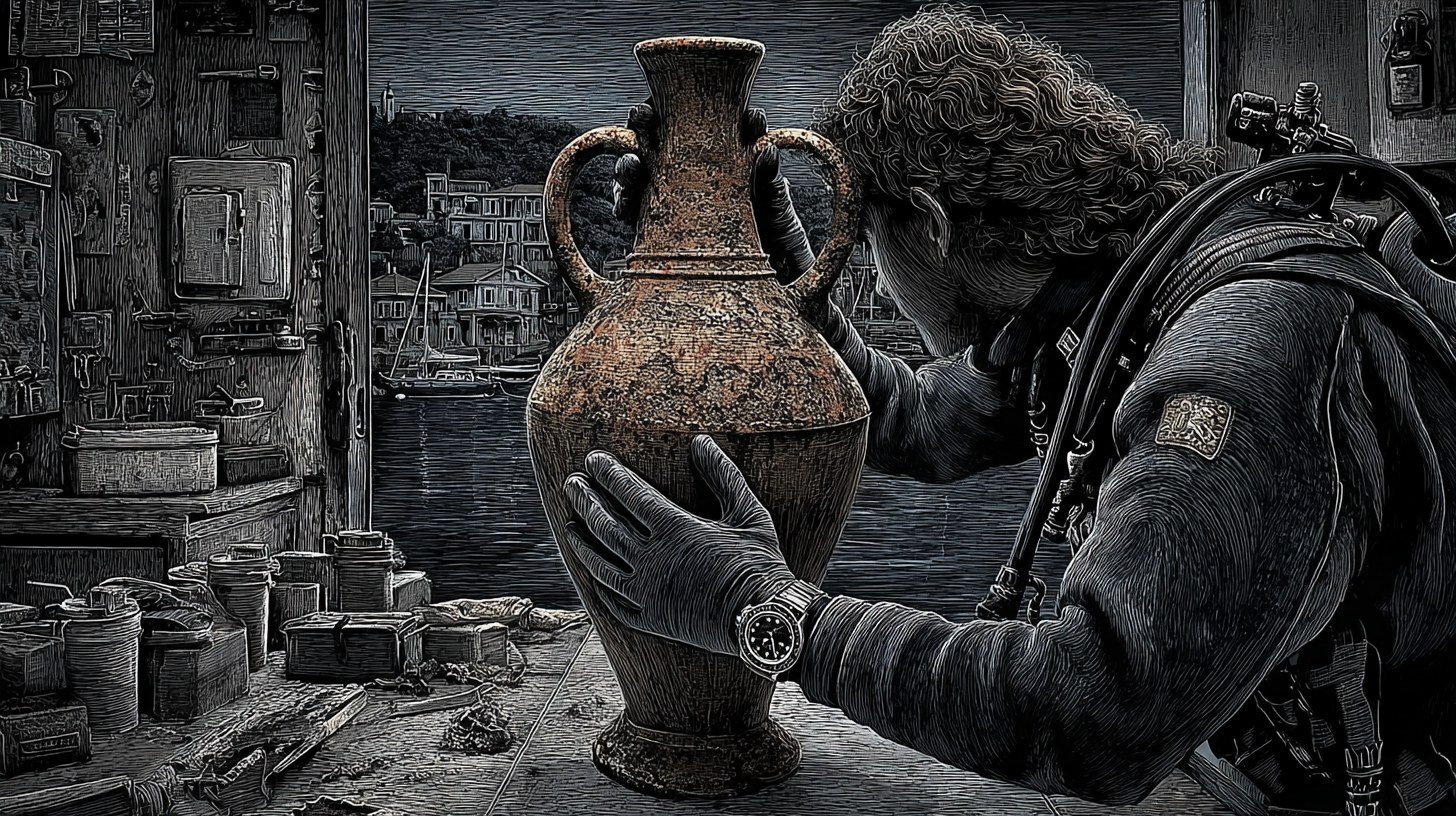
On 7 November 1959, diving with the Carabinieri’s diving unit, Marcante spotted amphorae “wedged between the rocks and fused to them by substantial masses” of coral and calcareous algae, as he later described them.
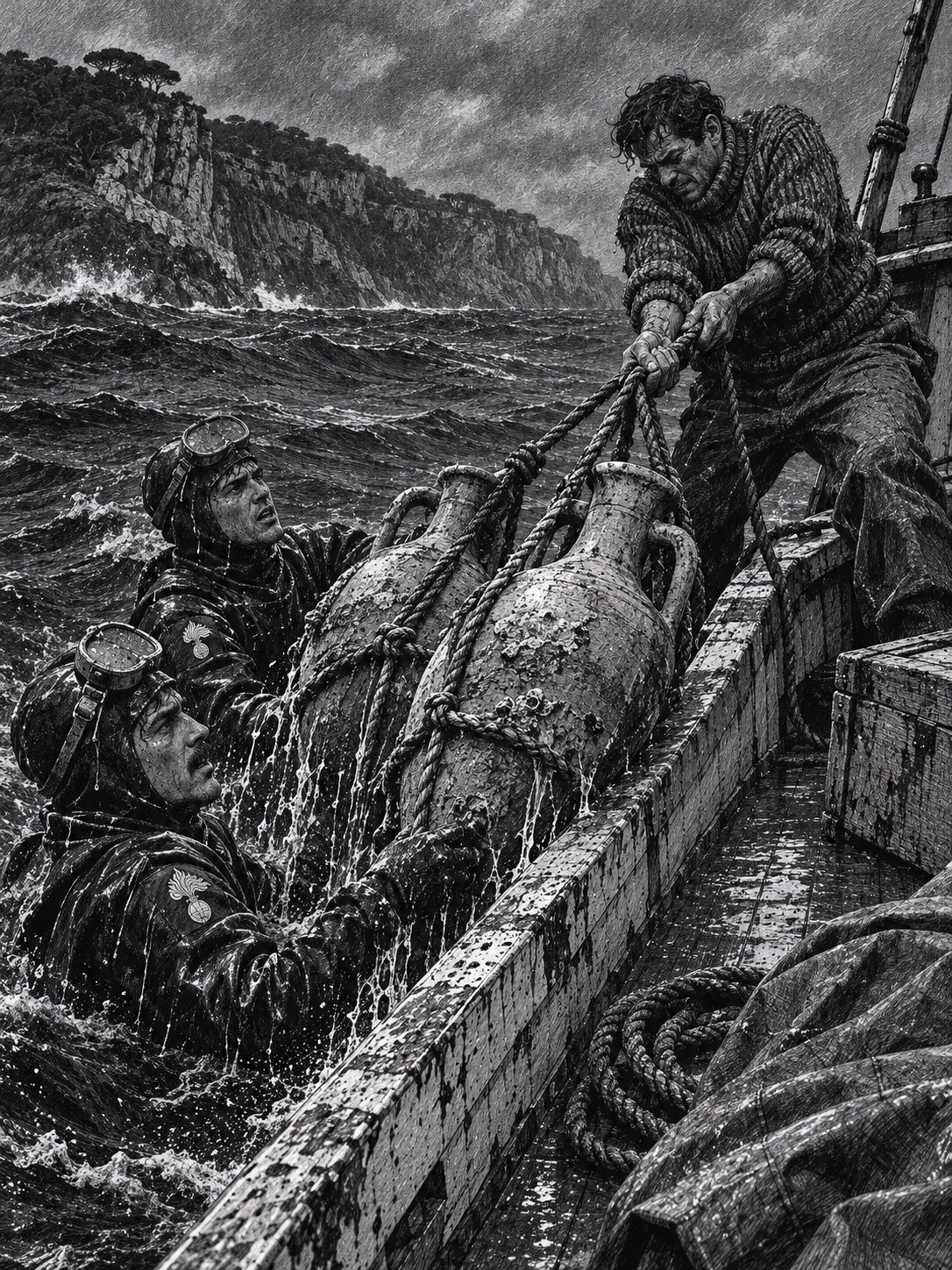
Two days later the team came back and lifted two intact jars, to stop them being stolen. On 10 November he reported the find to Liguria’s antiquities office and to the underwater archaeology centre in Albenga, run by Nino Lamboglia.
He also reported something else: a larger heap of jars at the foot of the cliff, half buried in sediment.
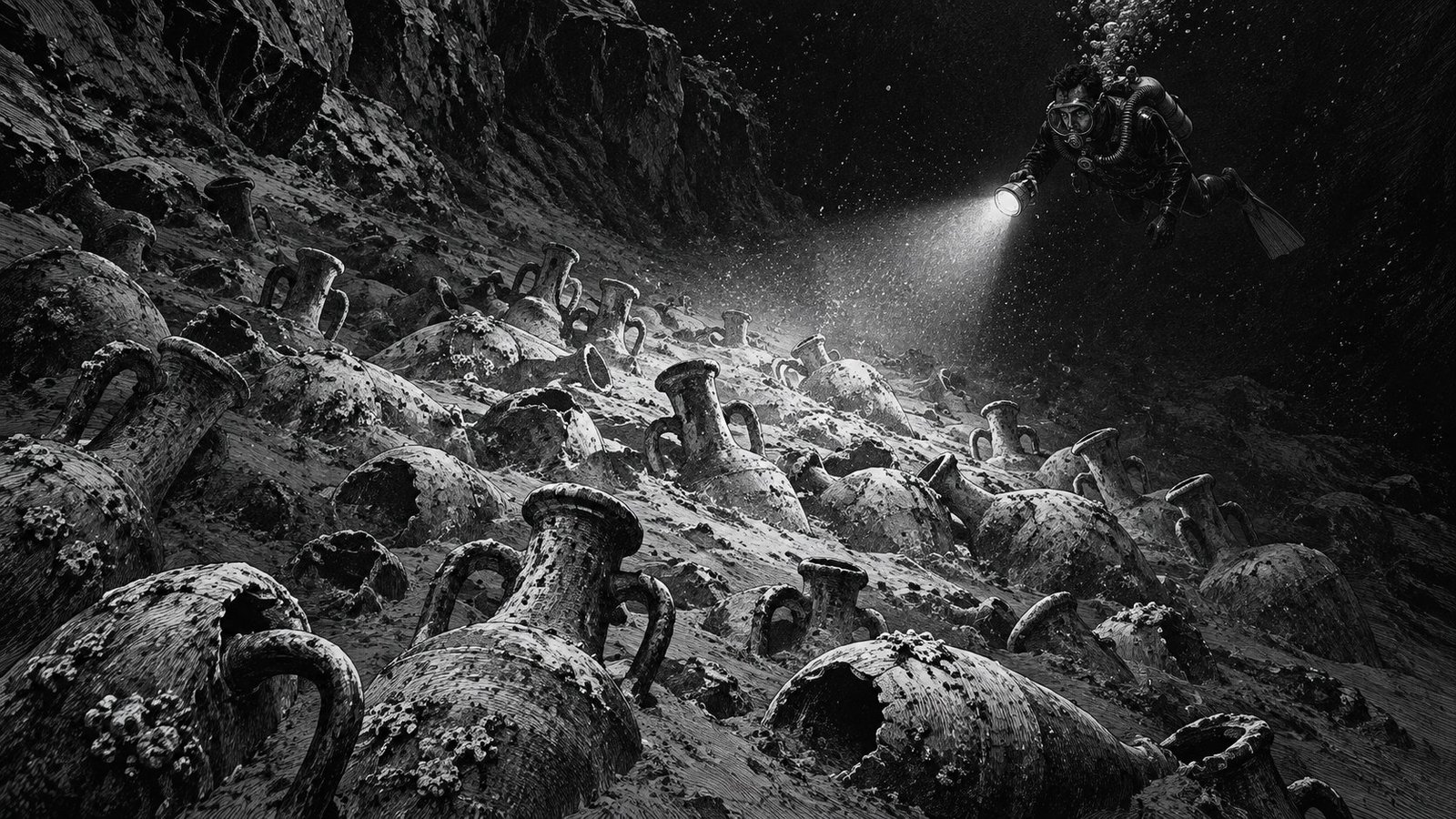
That heap is the reason this story exists.
Why was the wreck lost for 67 years?
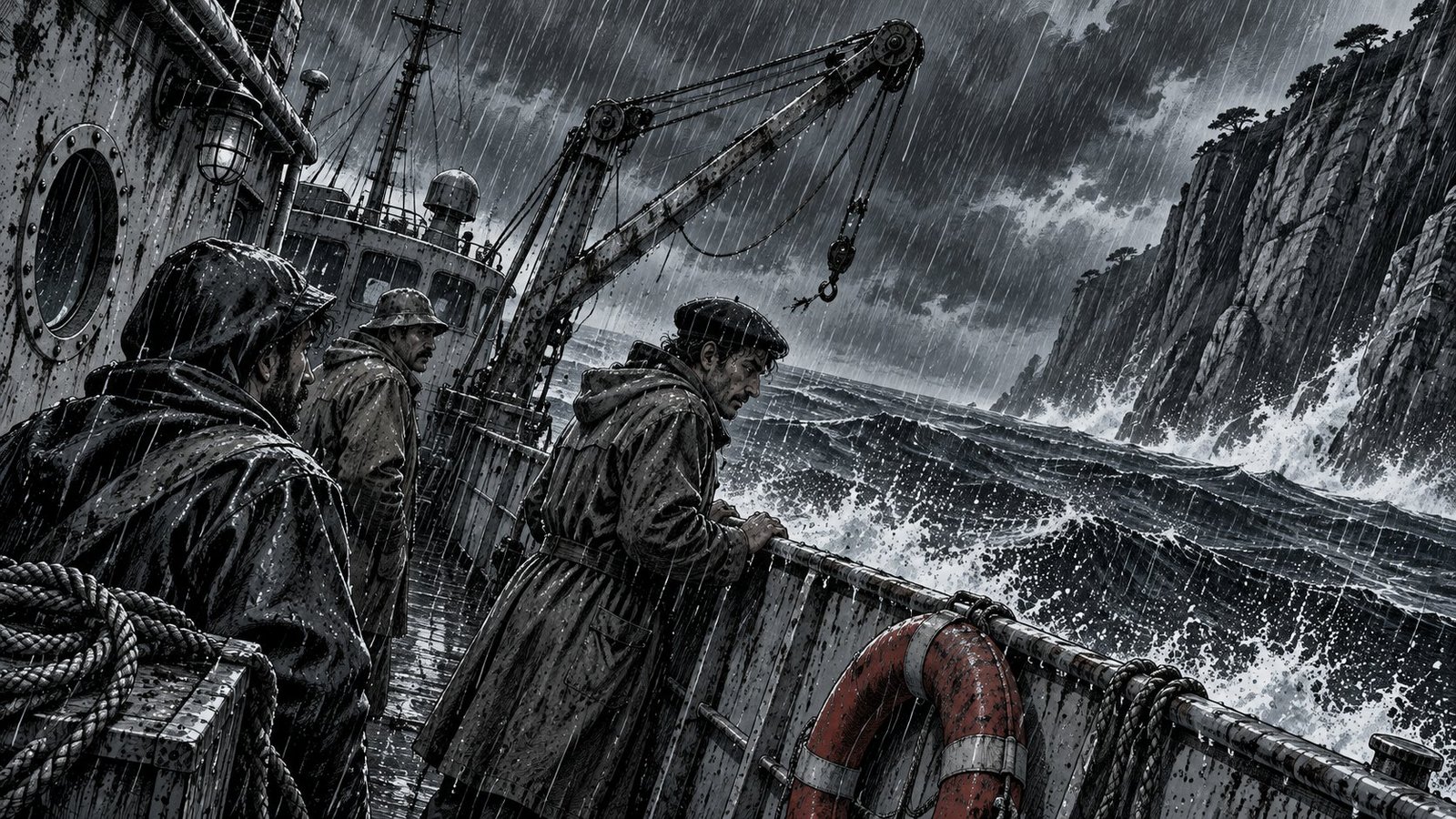
Lamboglia is often called the father of Italian underwater archaeology. But in 1959 his research ship, the Daino, then in its first year of work, could not operate safely over a site this deep on a seabed this steep. The research was postponed indefinitely.
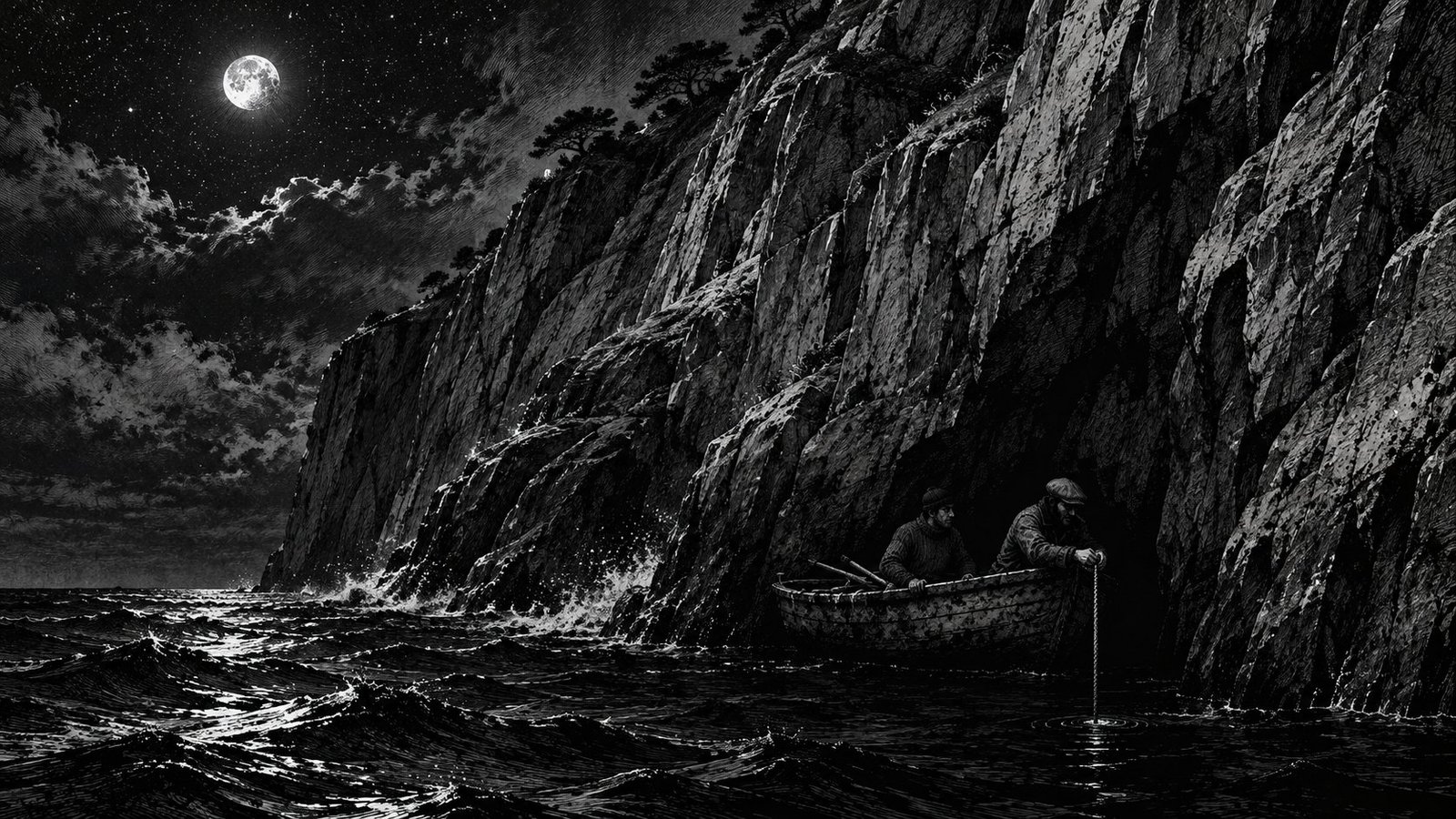
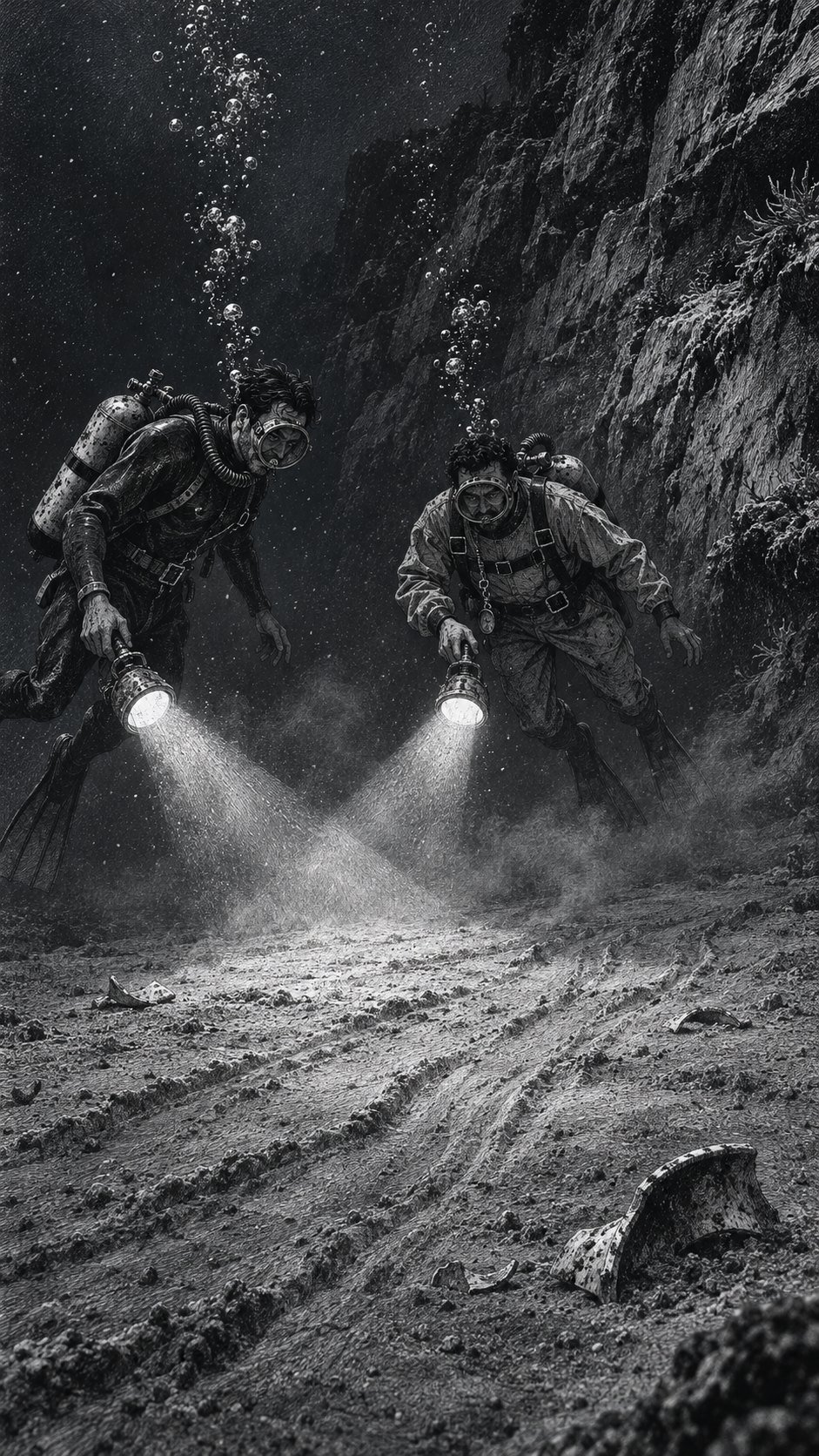
When the diver Gianni Roghi went down with Marcante and the Carabinieri on 8 and 9 May 1960, there was no trace of the heap.
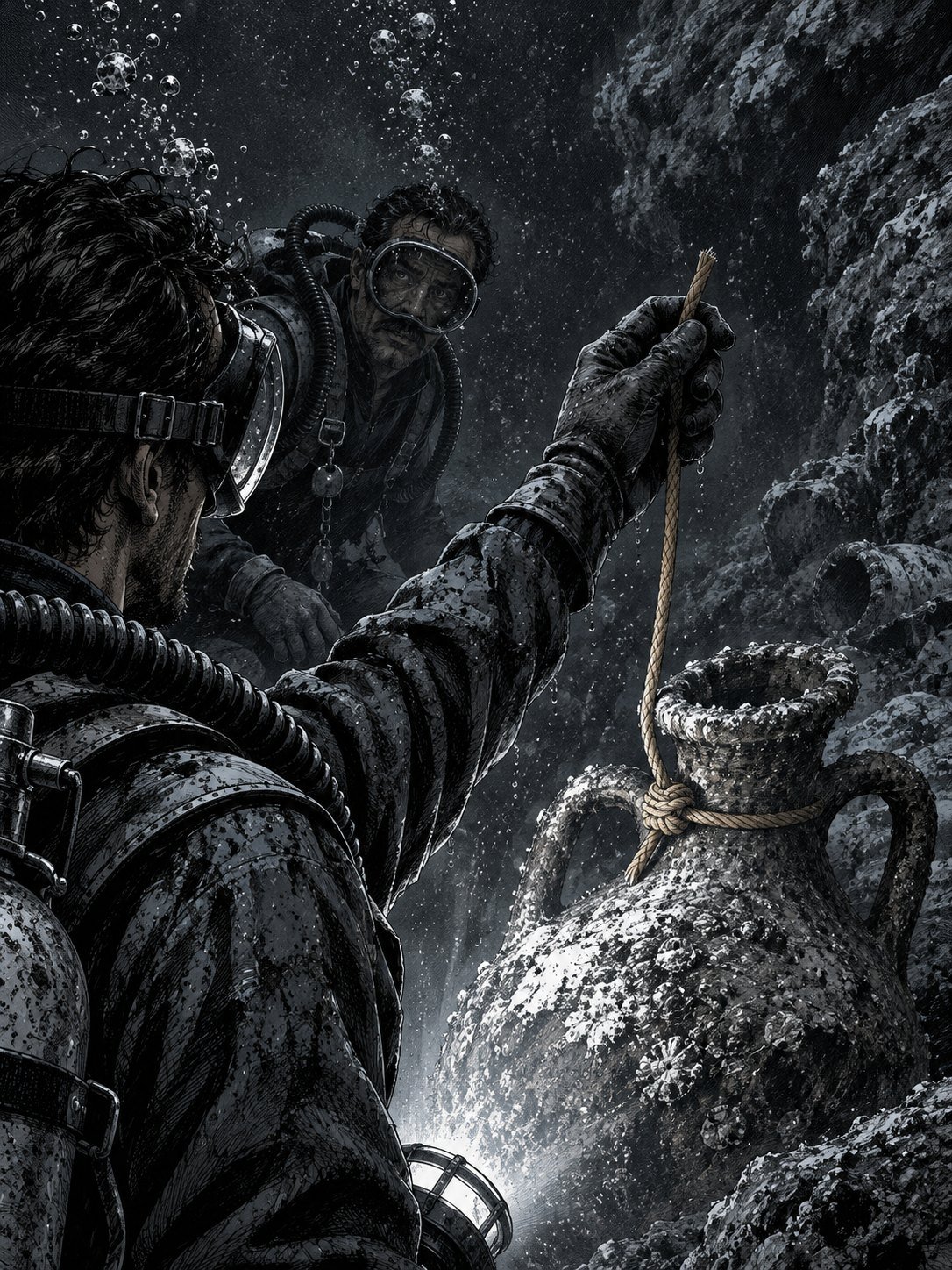
Instead they found one amphora tied with a thin rope, apparently prepared for theft, and three broken ones fused into the rock.
In September 1961, Lamboglia set the case down in the proceedings of the third international congress of underwater archaeology in Barcelona, citing the depth and the looting.

And then the wreck dropped out of the record. Its exact position was lost.
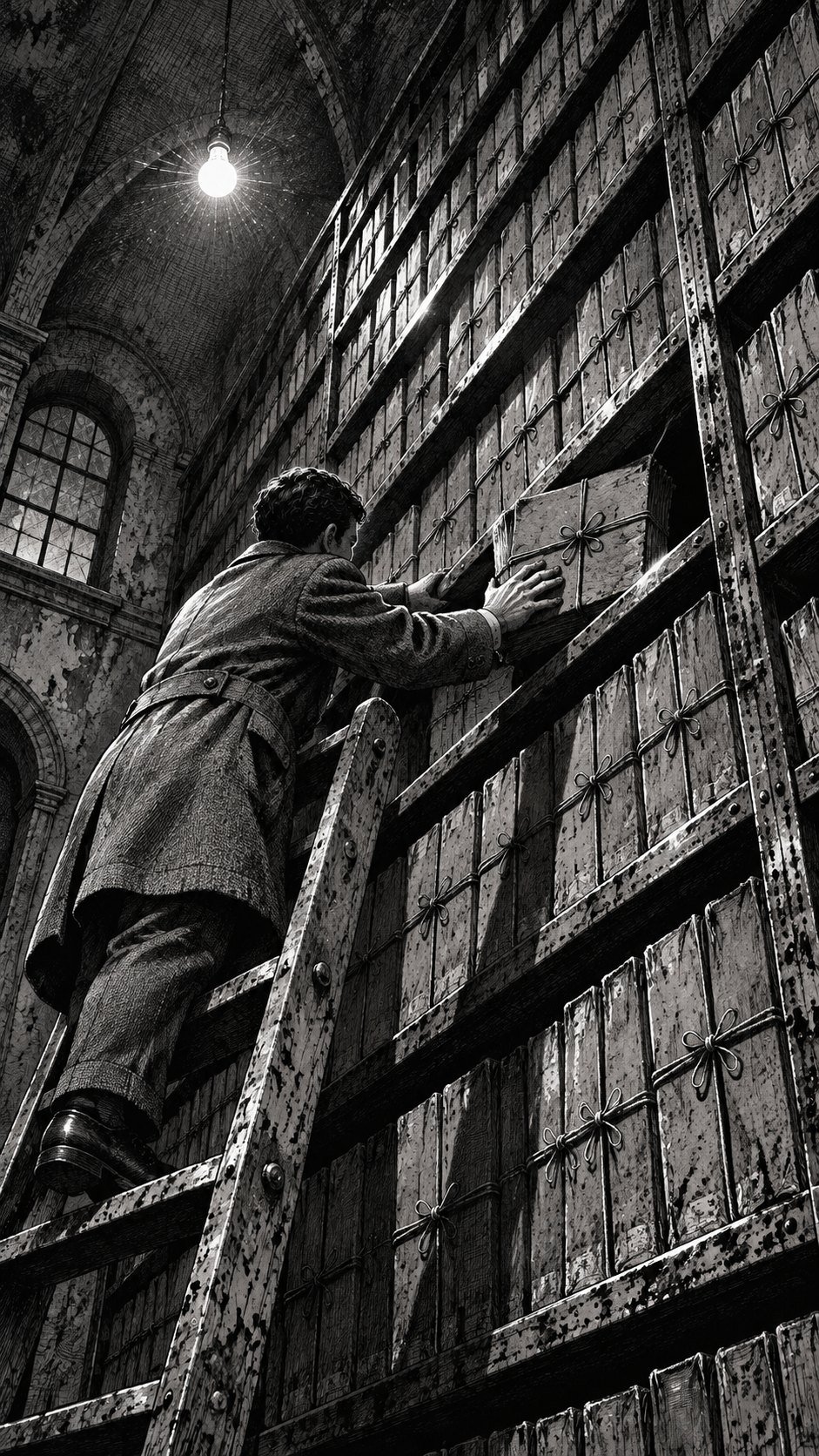
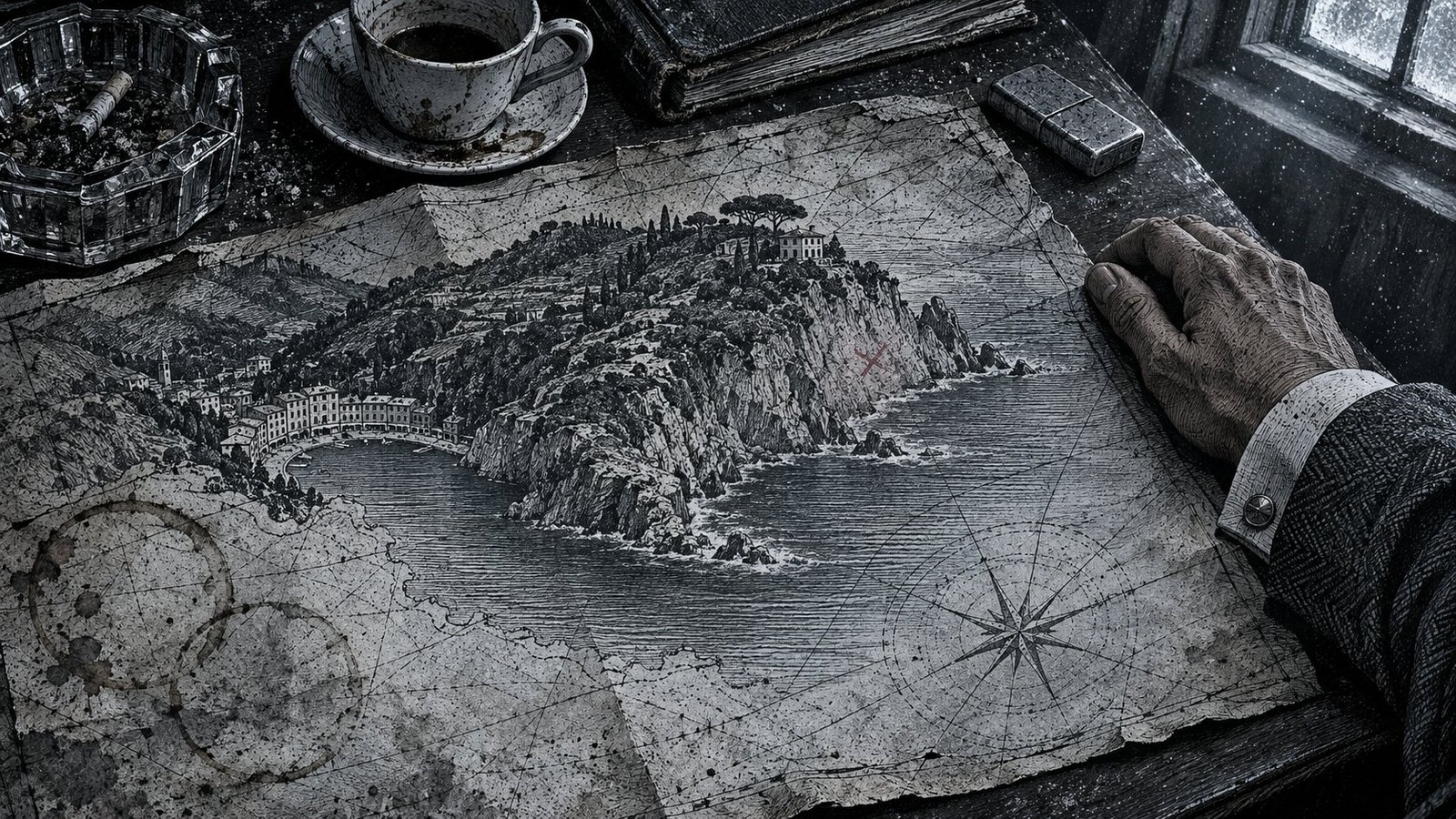
For 67 years it was a ghost: written about, but nowhere.
How old is the Camogli shipwreck?
The jars themselves say more than the archive did.
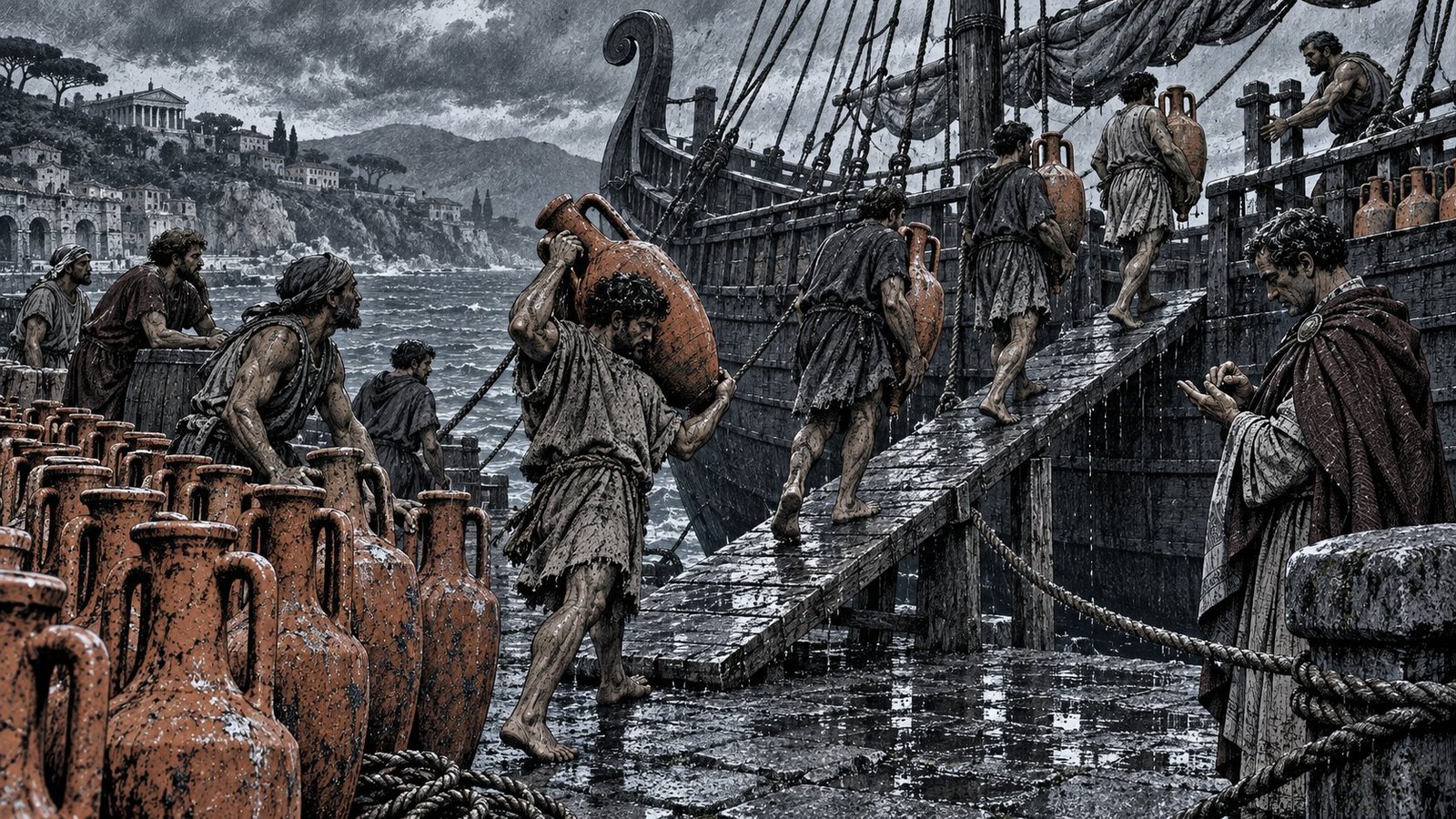
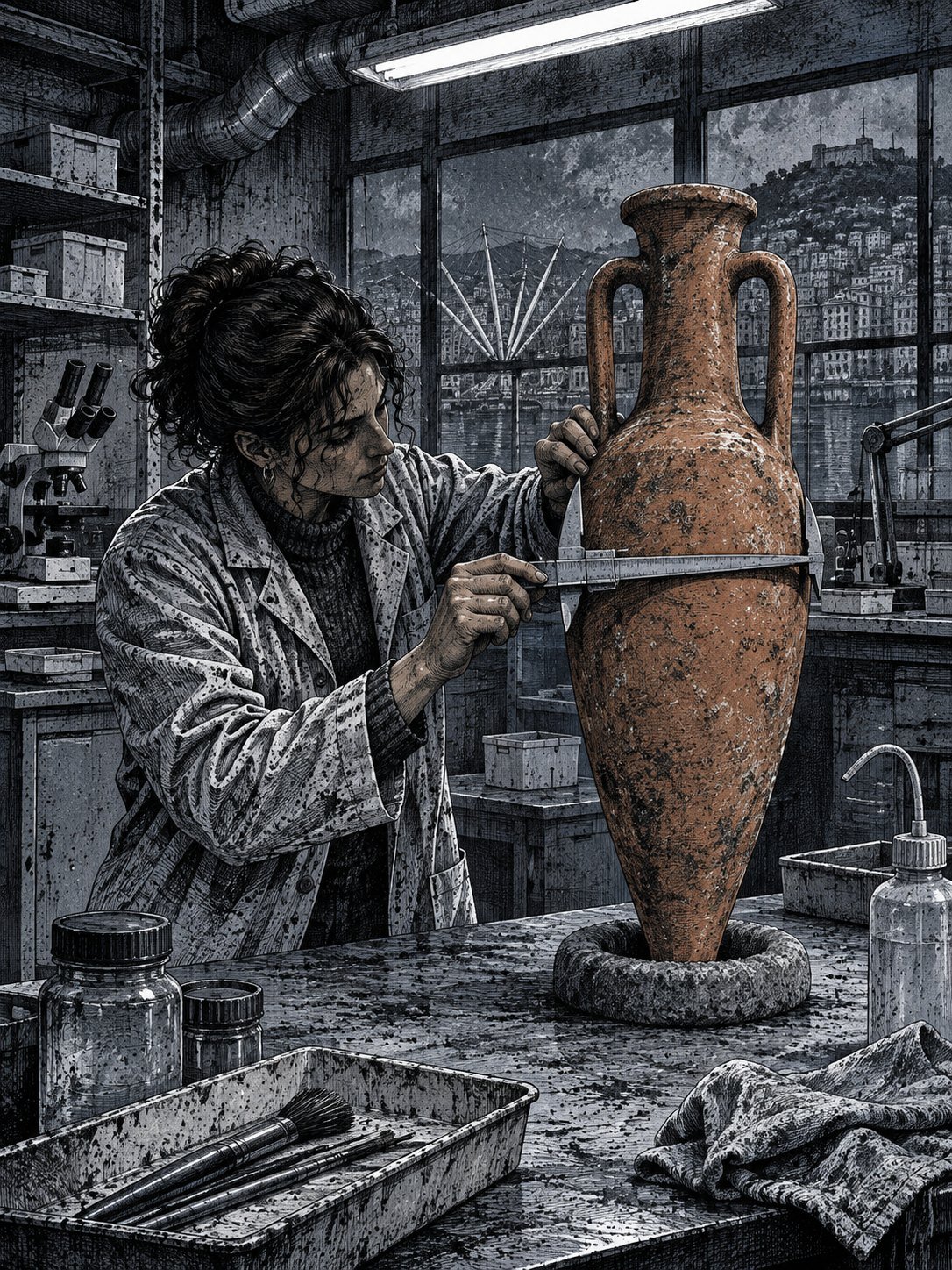
Simon Luca Trigona, who heads the underwater team of Liguria’s archaeology superintendency, identified them as Dressel 1A wine amphorae, made on Italy’s Tyrrhenian coast between the end of the 2nd century BC and the first decade of the 1st century BC.
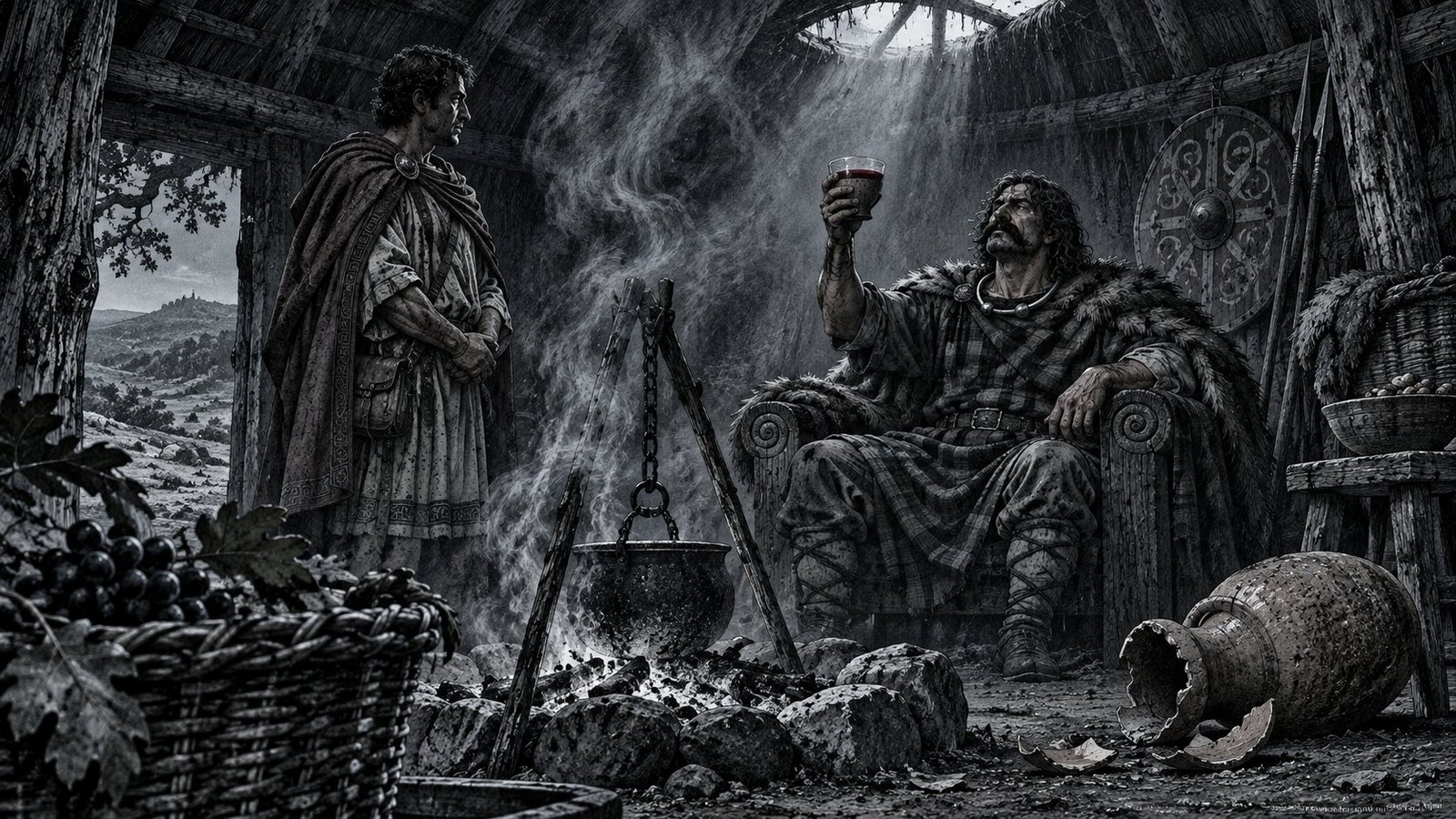
That is just after Rome conquered southern Gaul, when Italian wine was being shipped north in huge quantities.
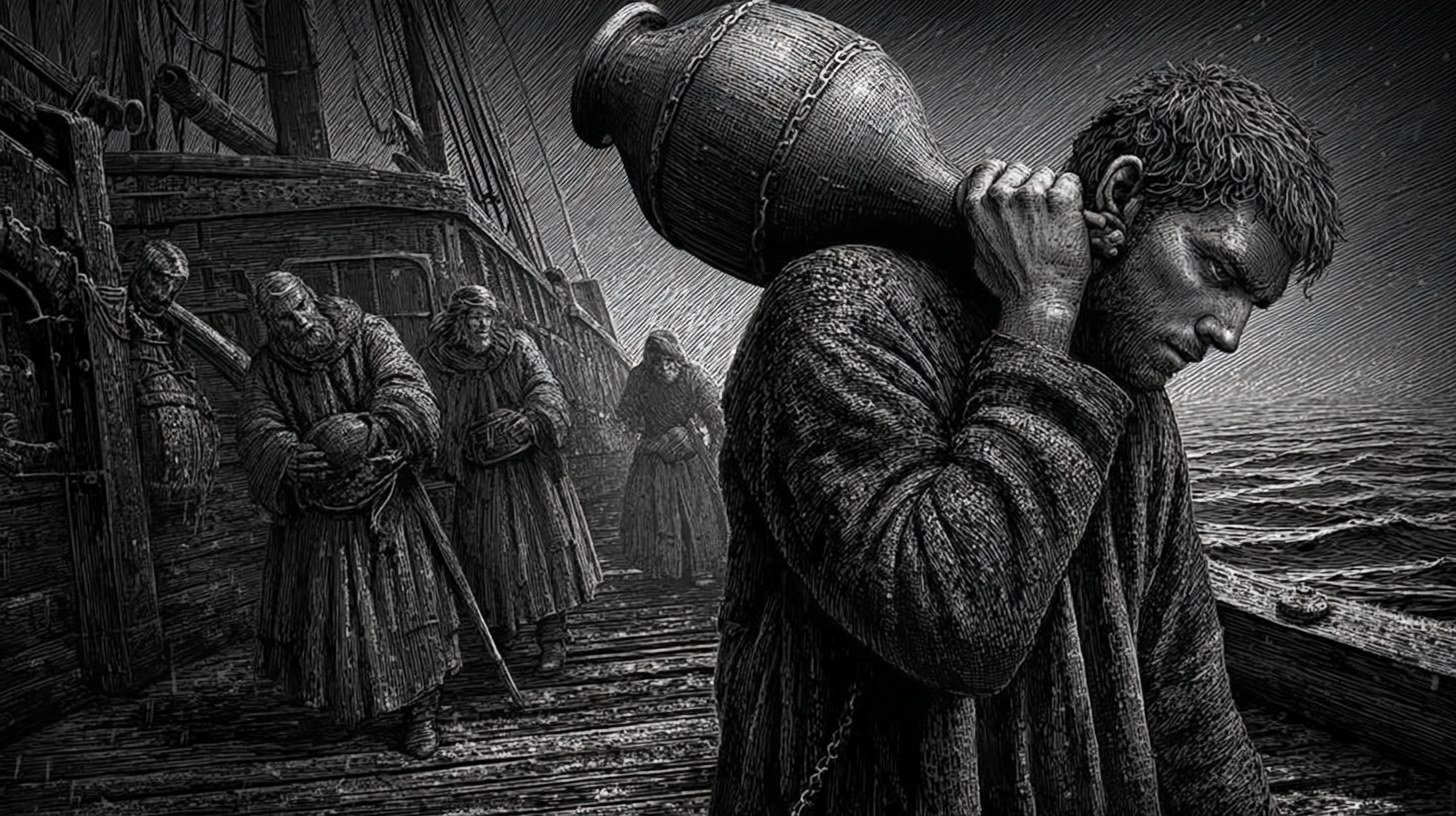
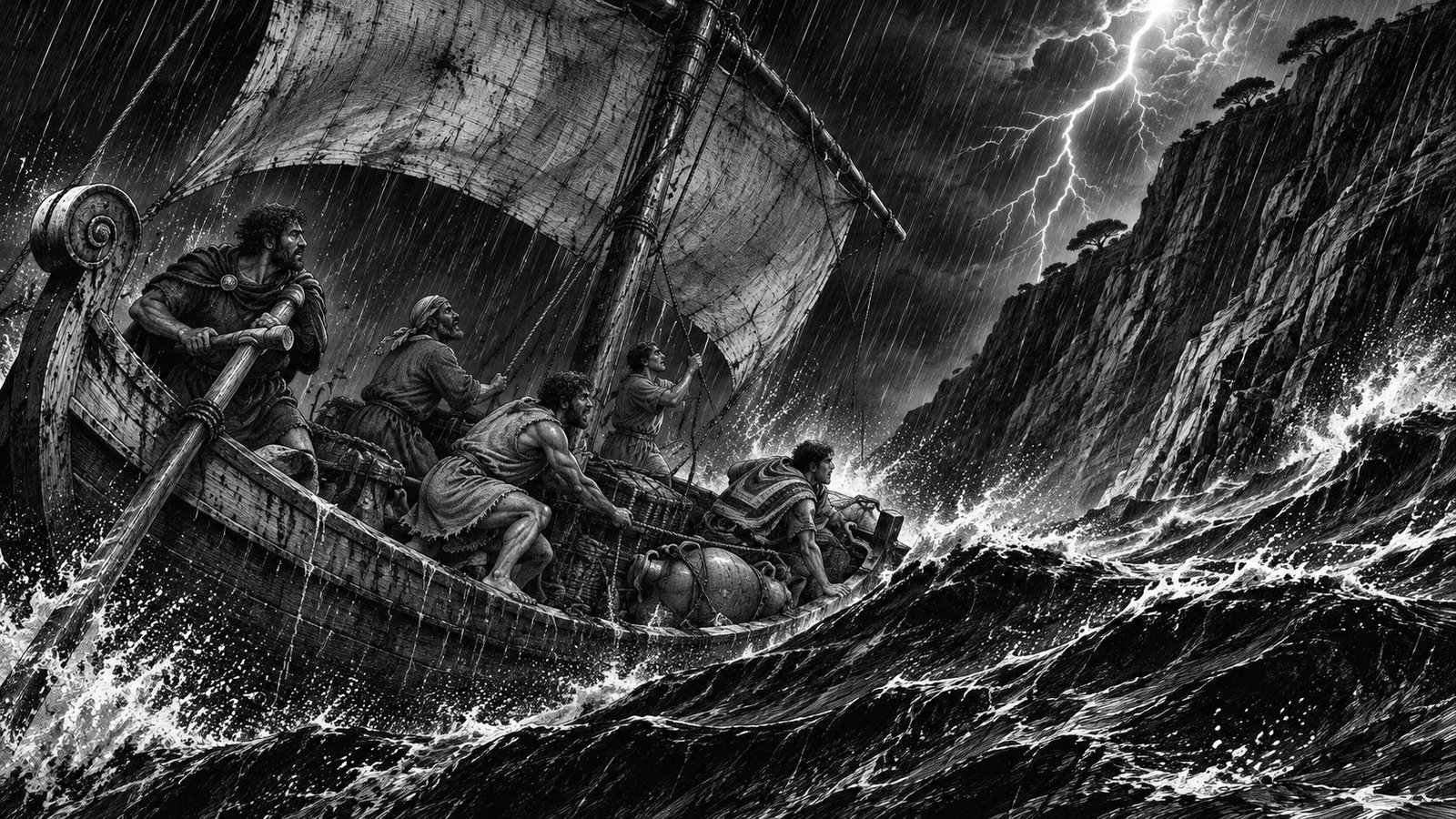
So somewhere off this cliff, a ship full of wine went down. How it sank, nobody knows.
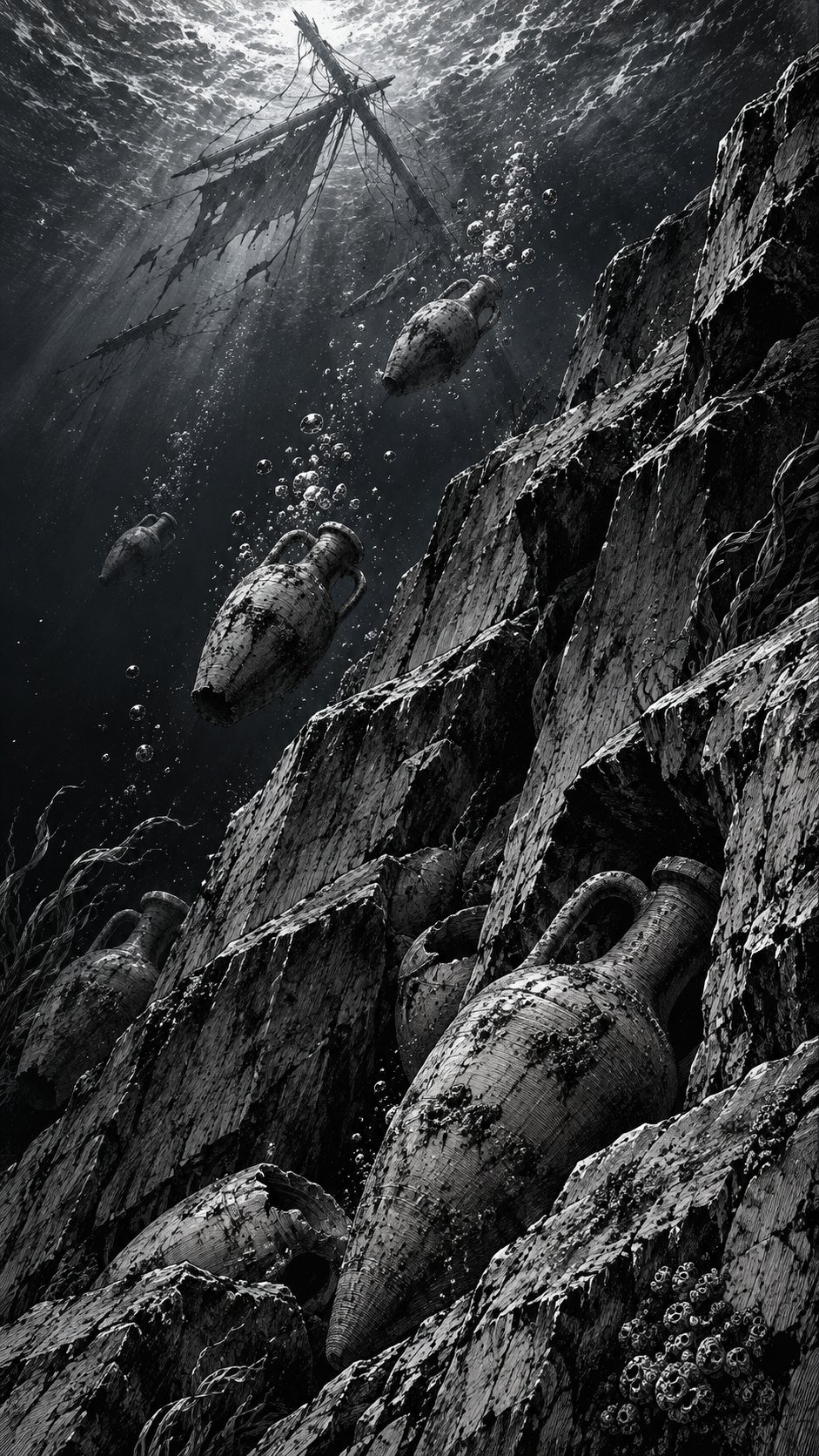
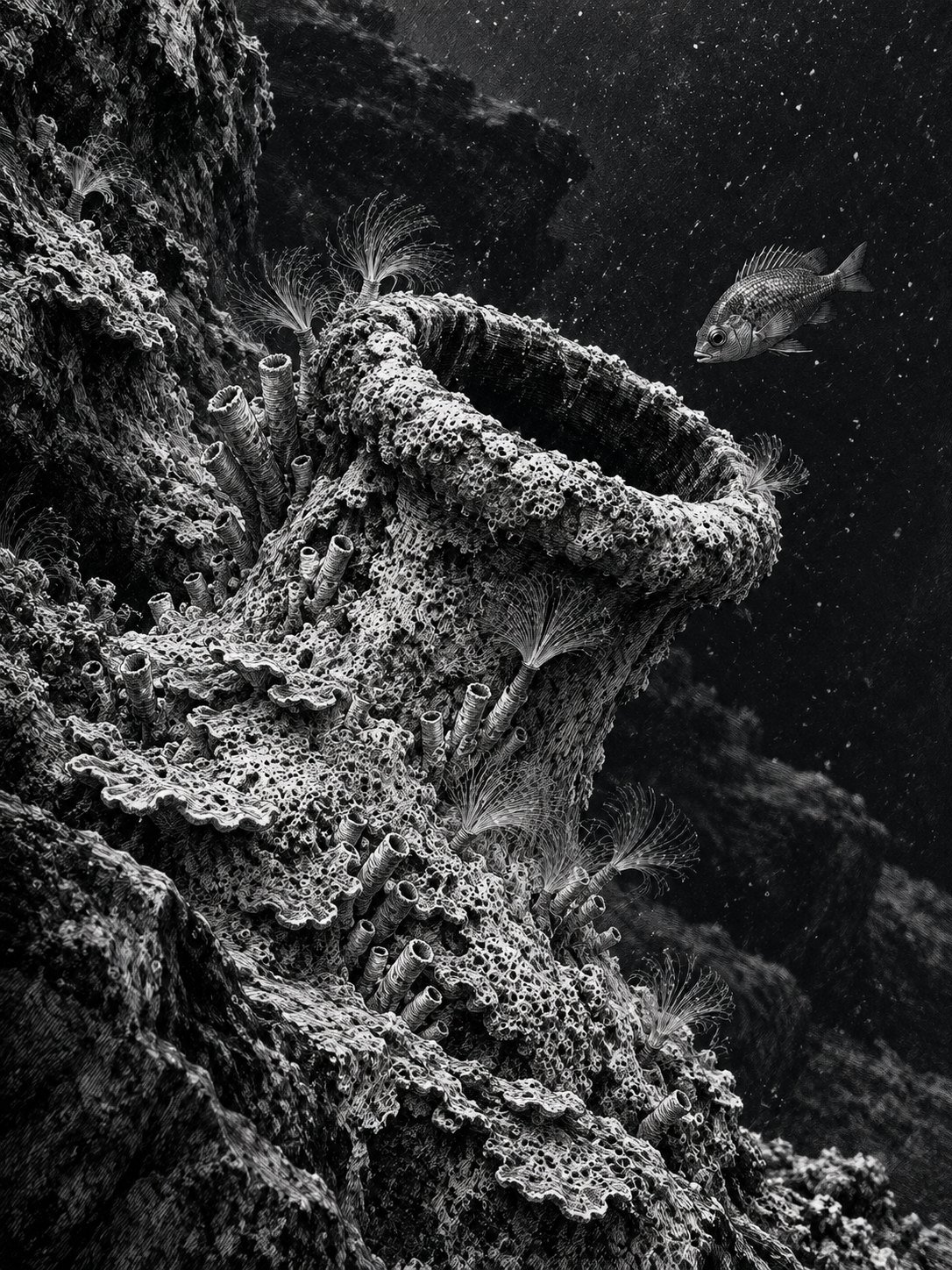
Over the centuries the jars that did not fall into the deep were cemented into the cracks of the cliff by marine growth.
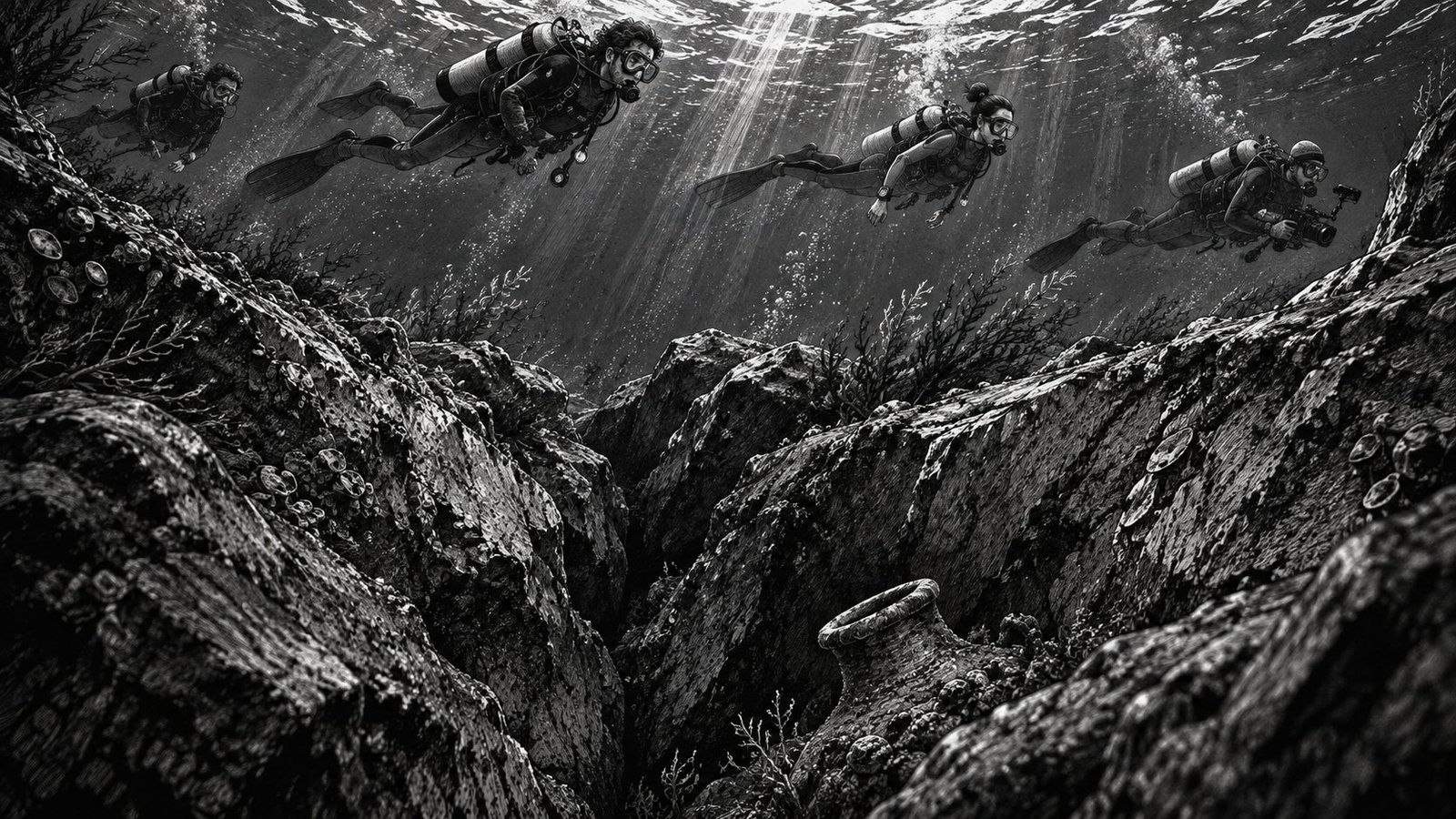
Recreational divers passed over them for decades. Nobody connected them to Marcante’s lost report.
It seemed like the end of the story: a wreck found, reported, and lost. It wasn’t.
How was the wreck found again in 2026?
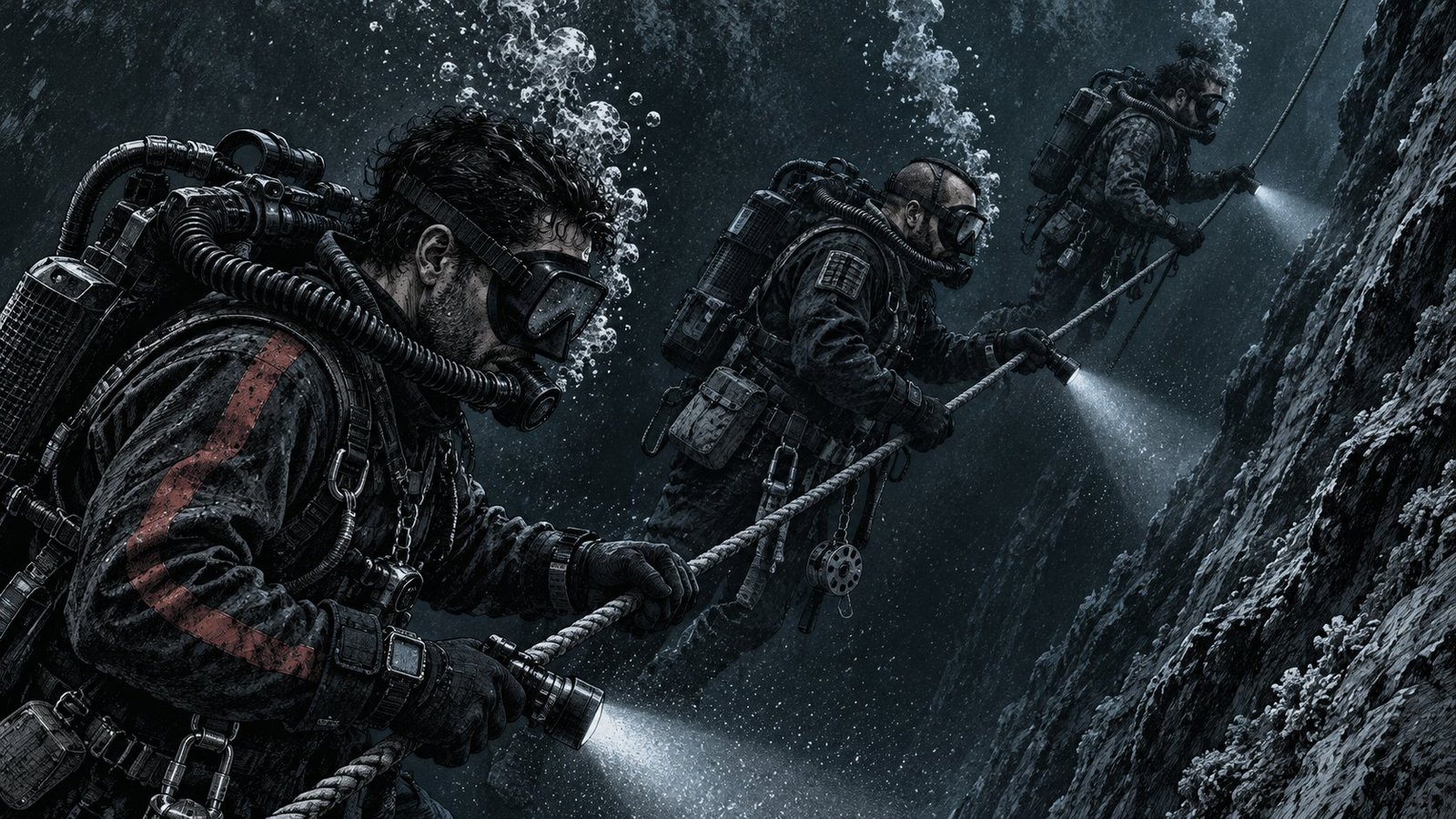
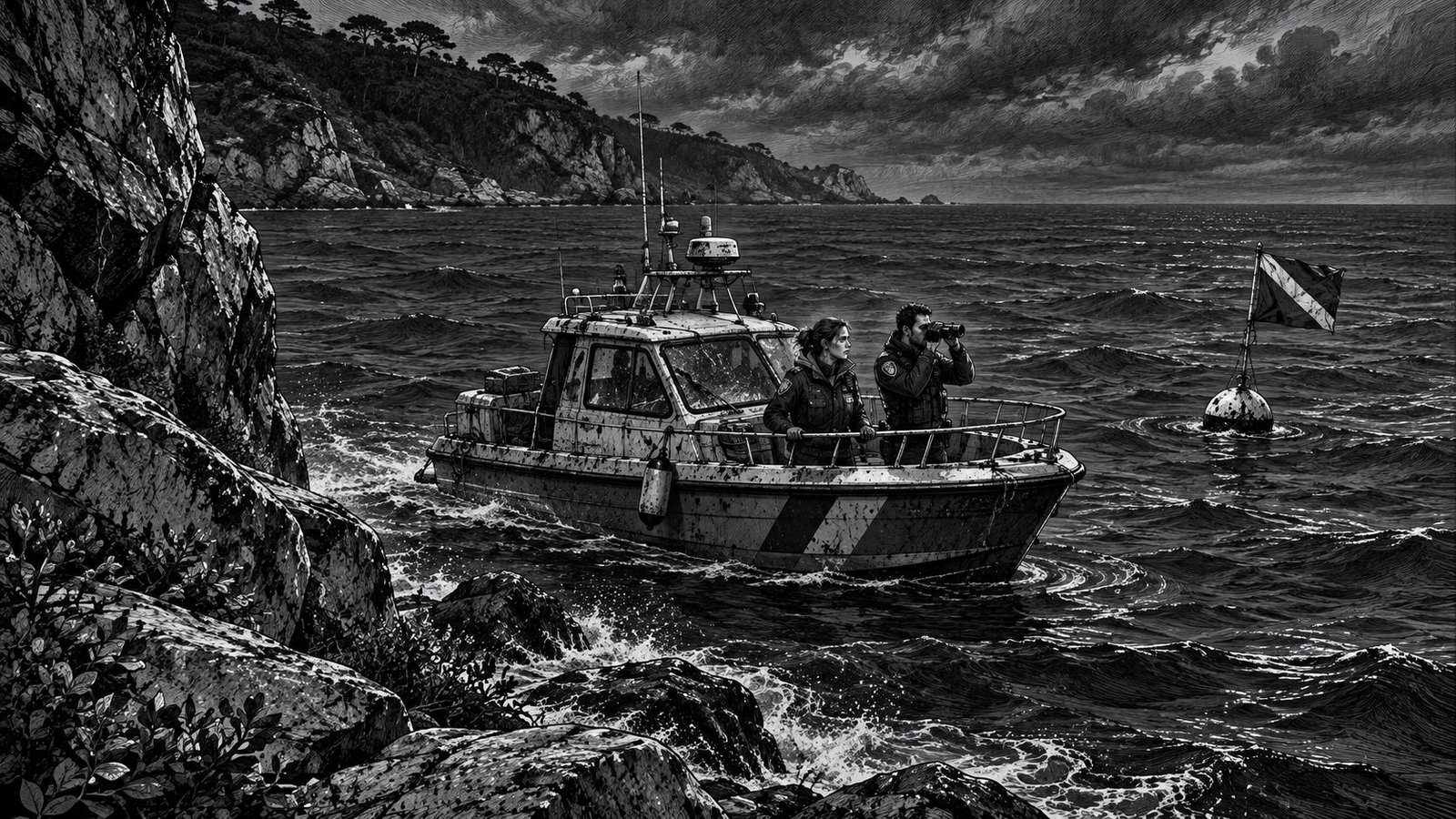
In 2026, Carabinieri divers from Genoa were on a routine training dive off Punta Chiappa, inside the Portofino Marine Protected Area.
At more than 40 metres, against the cliff, one of them saw an intact Roman amphora.
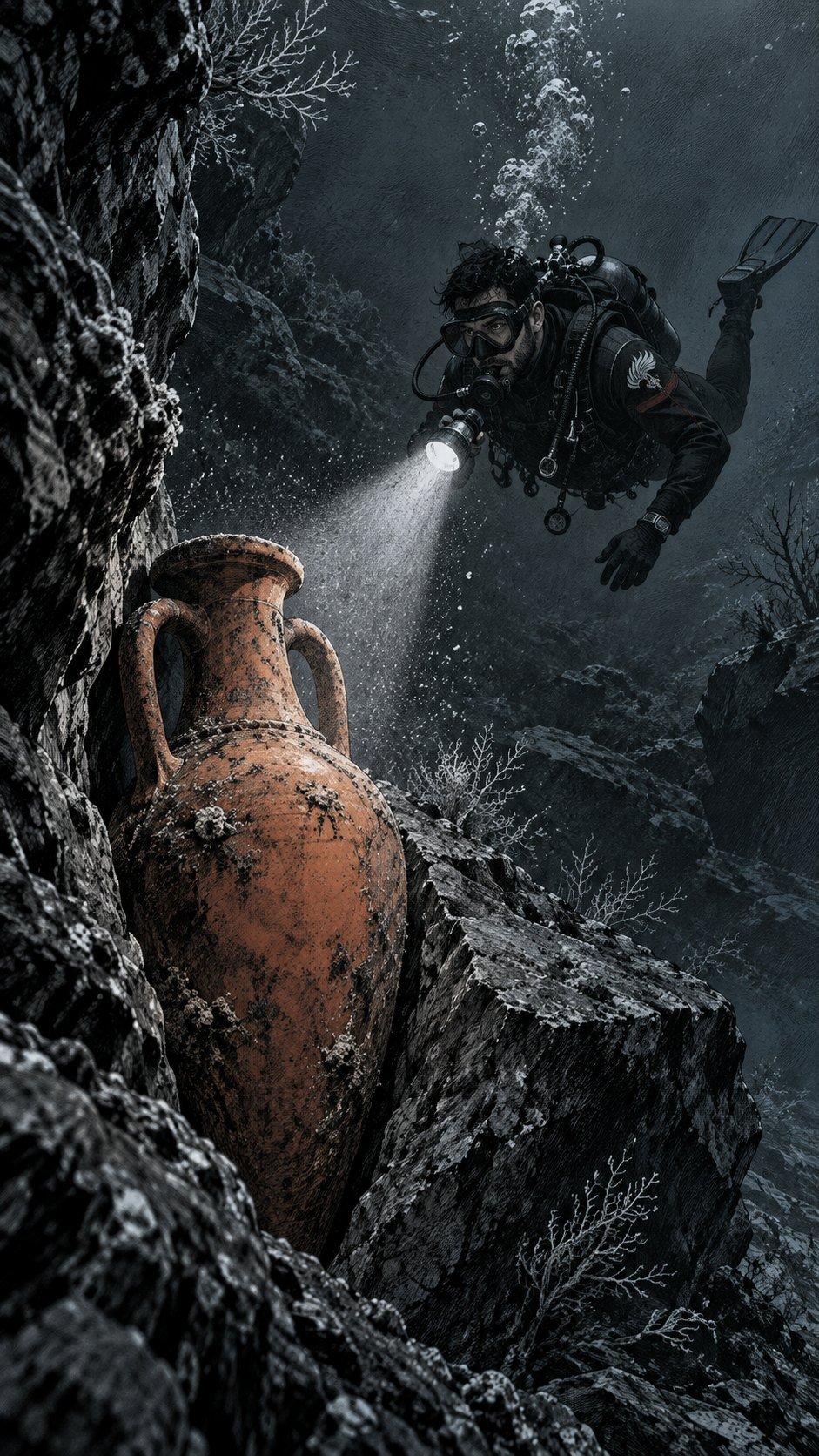
The superintendency’s underwater service came back and mapped the spot. In a narrow strip along the cracks in the cliff, they counted nine amphorae, cemented to the rock.
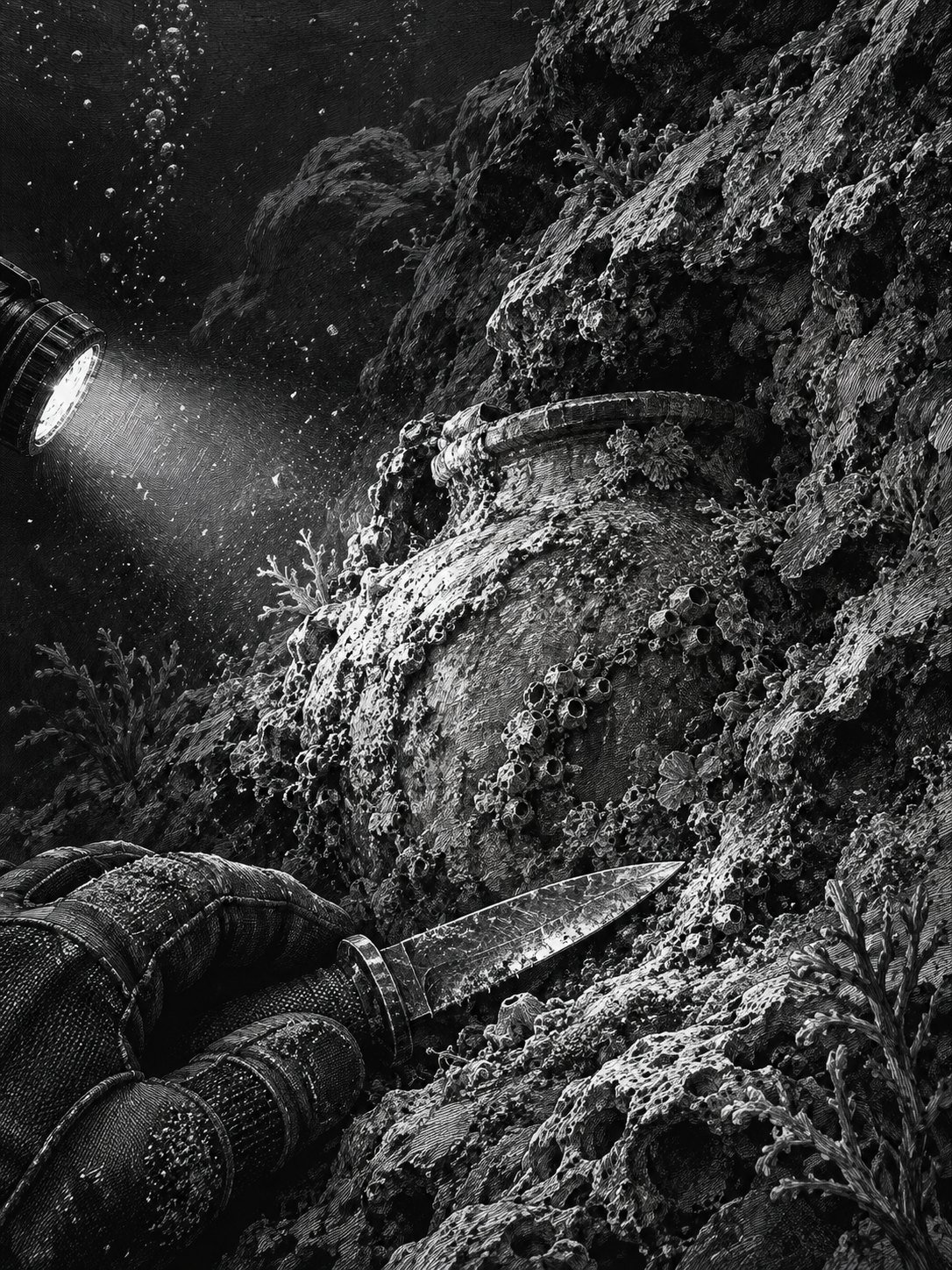
Two of the most exposed were lifted, because so many divers visit the site.
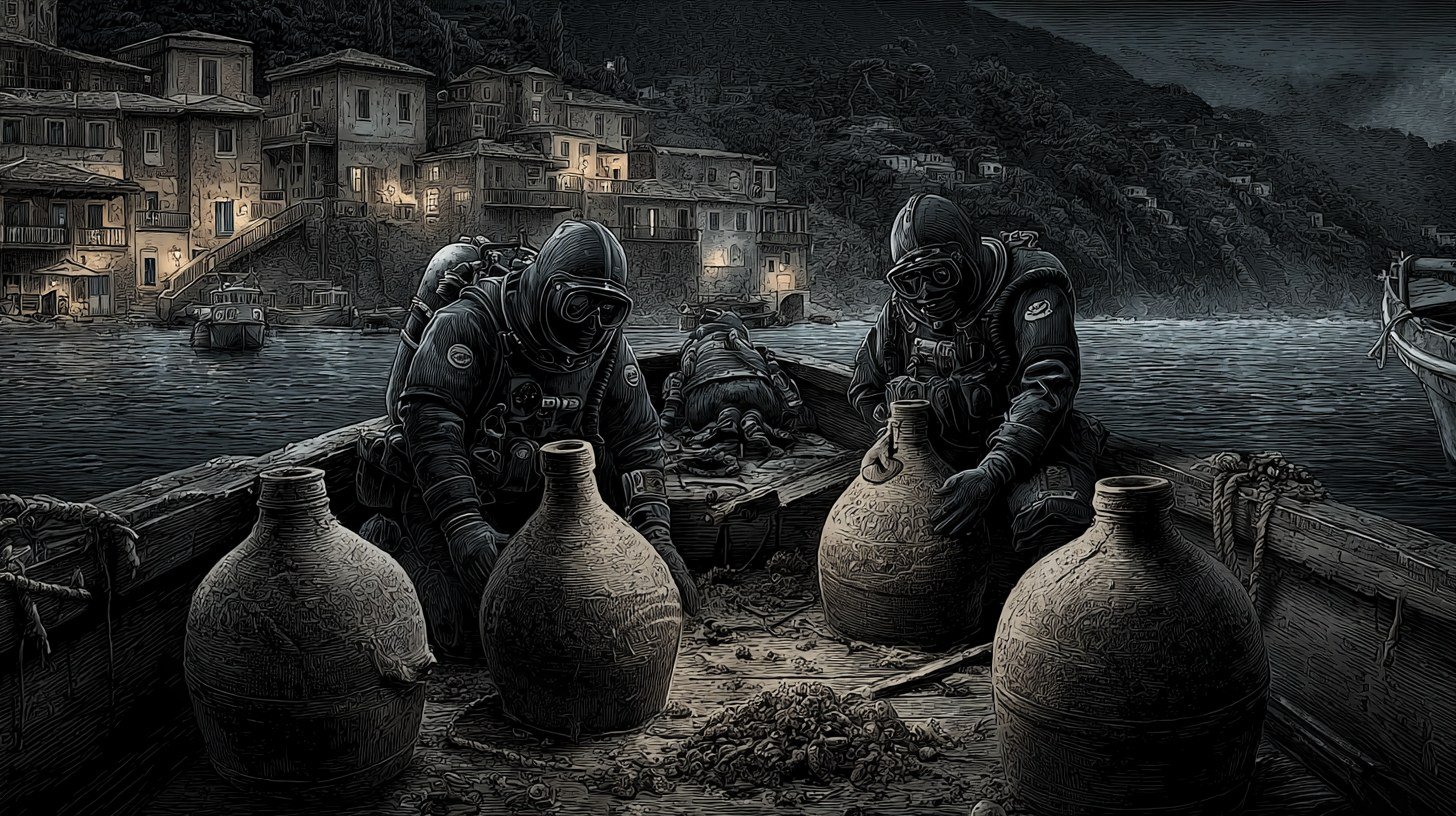
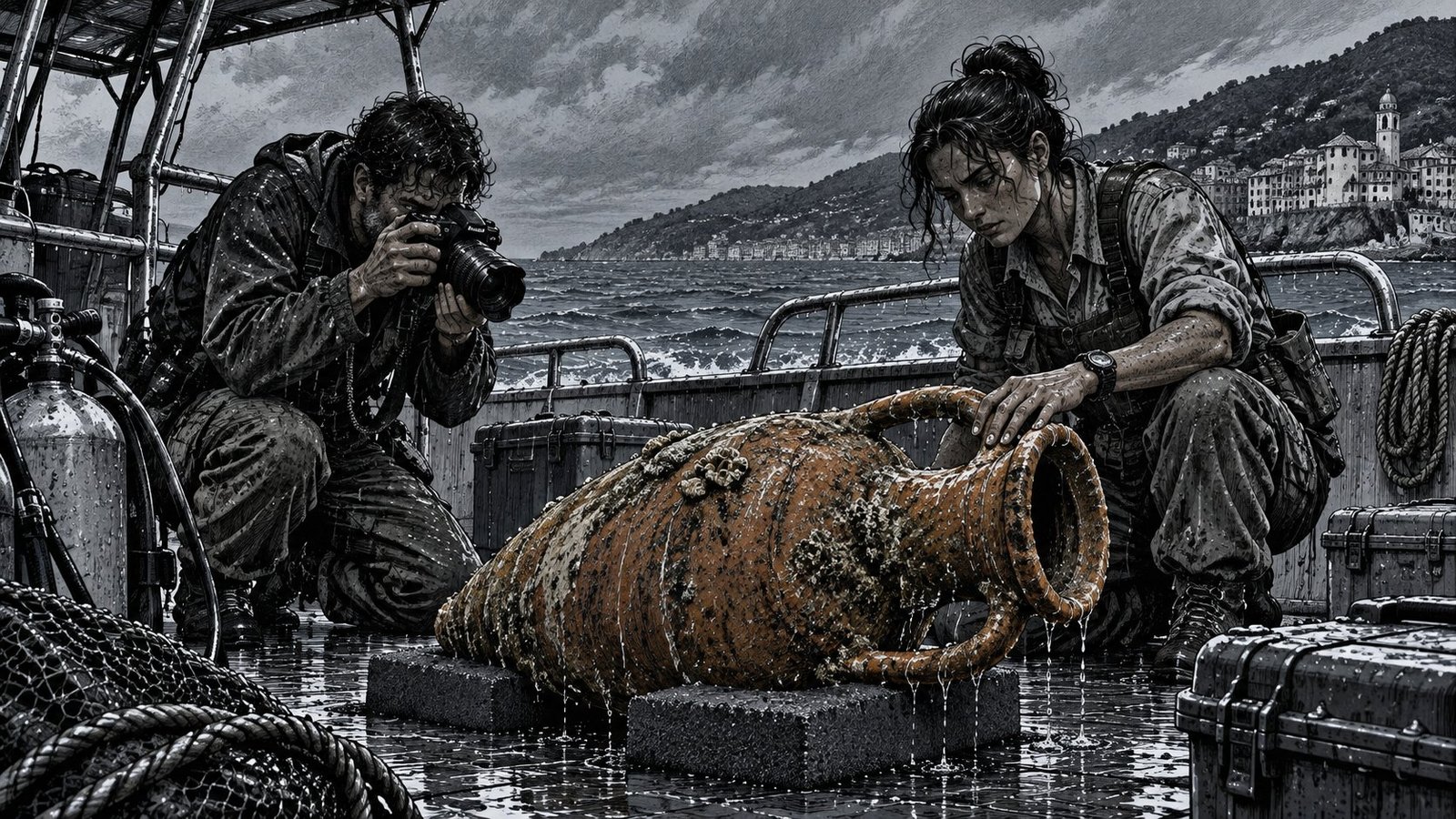
Trigona confirmed it was the same site Marcante had reported in 1959. The superintendency announced the find on 22 October 2026.
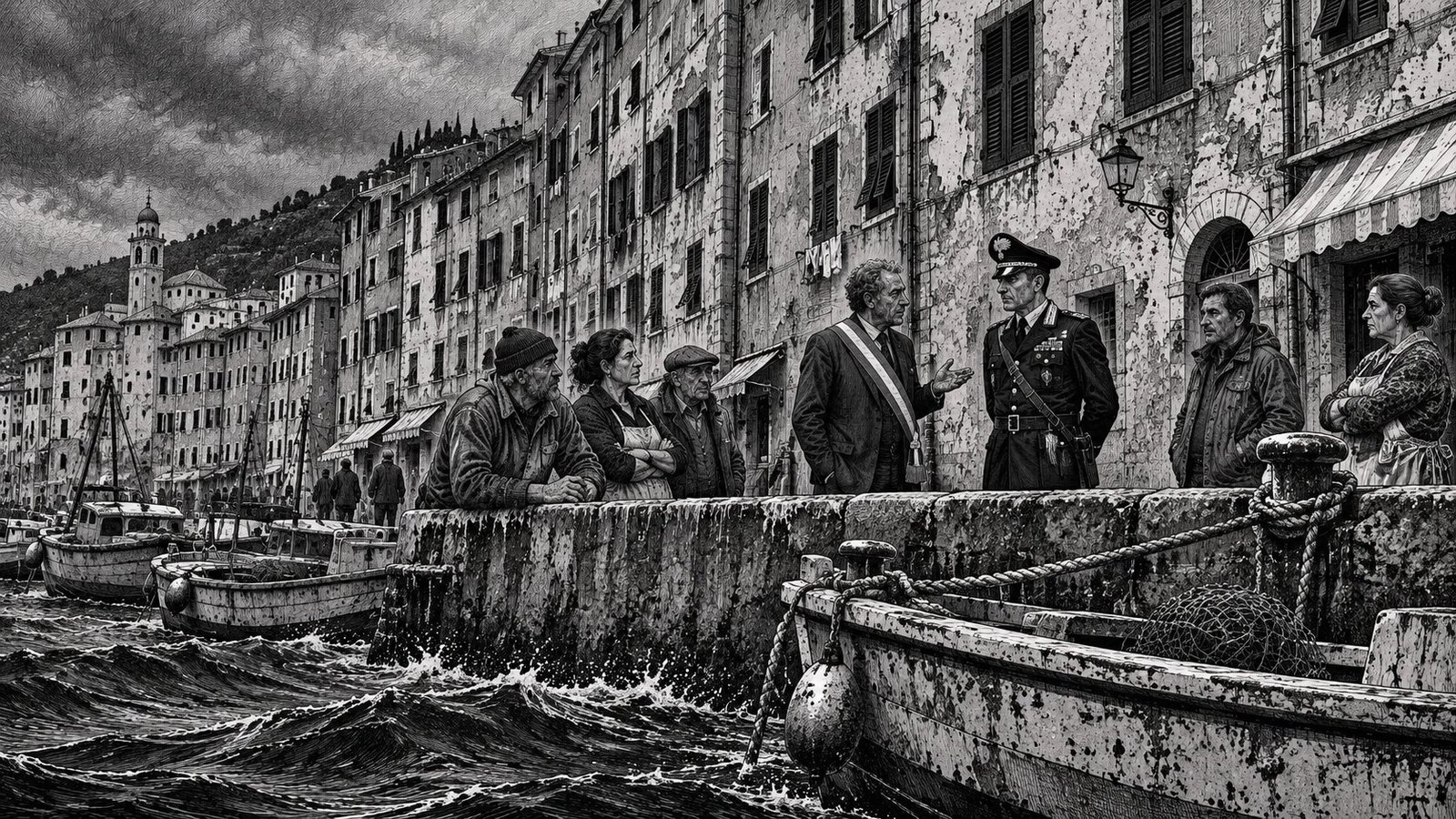
The lost wreck had come back. Not the ship. Its cargo.
Has the ship itself been found?
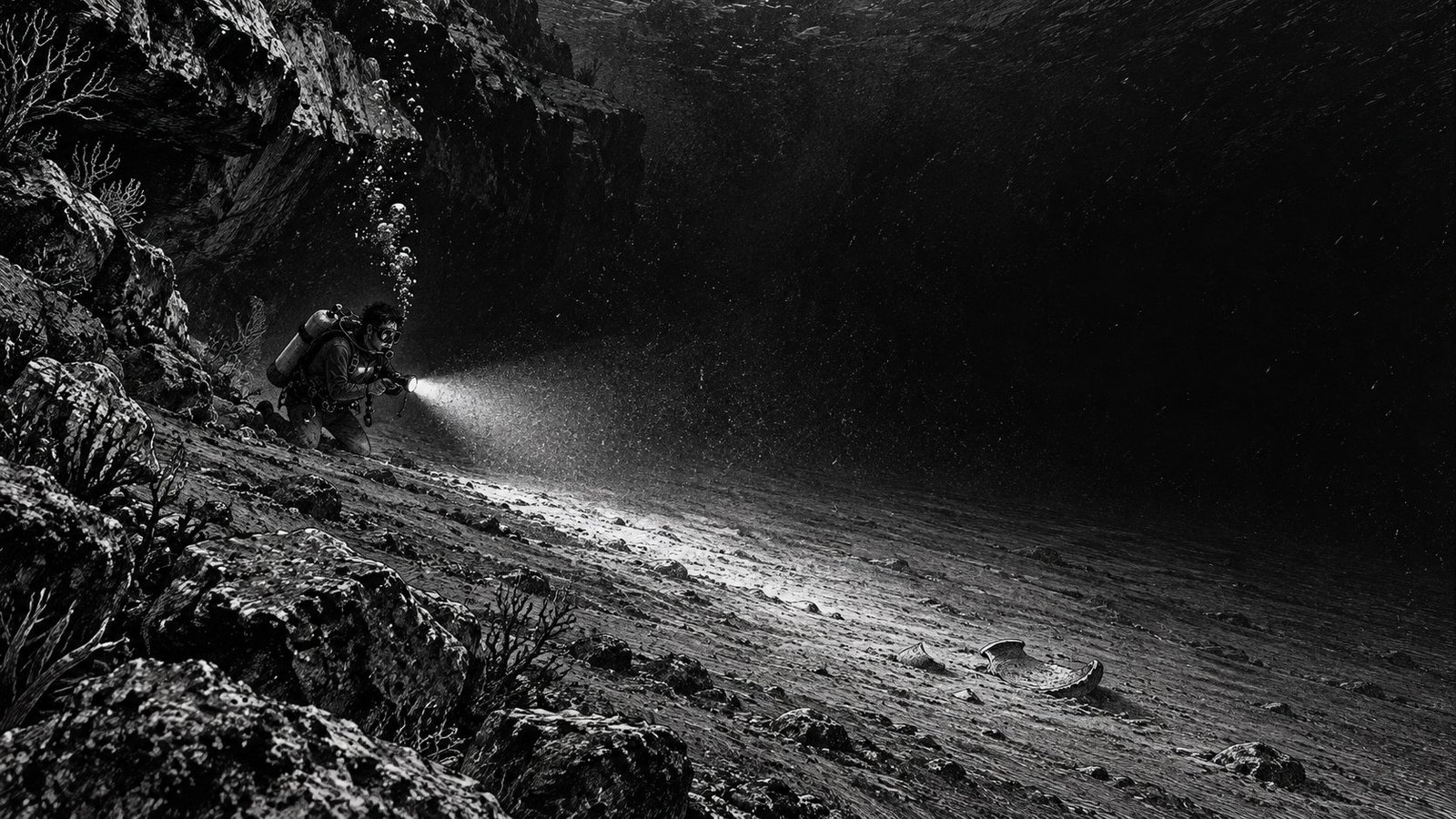
Here is the part most headlines skipped. No piece of the hull has been found. Not a plank. The size of the ship is unknown.
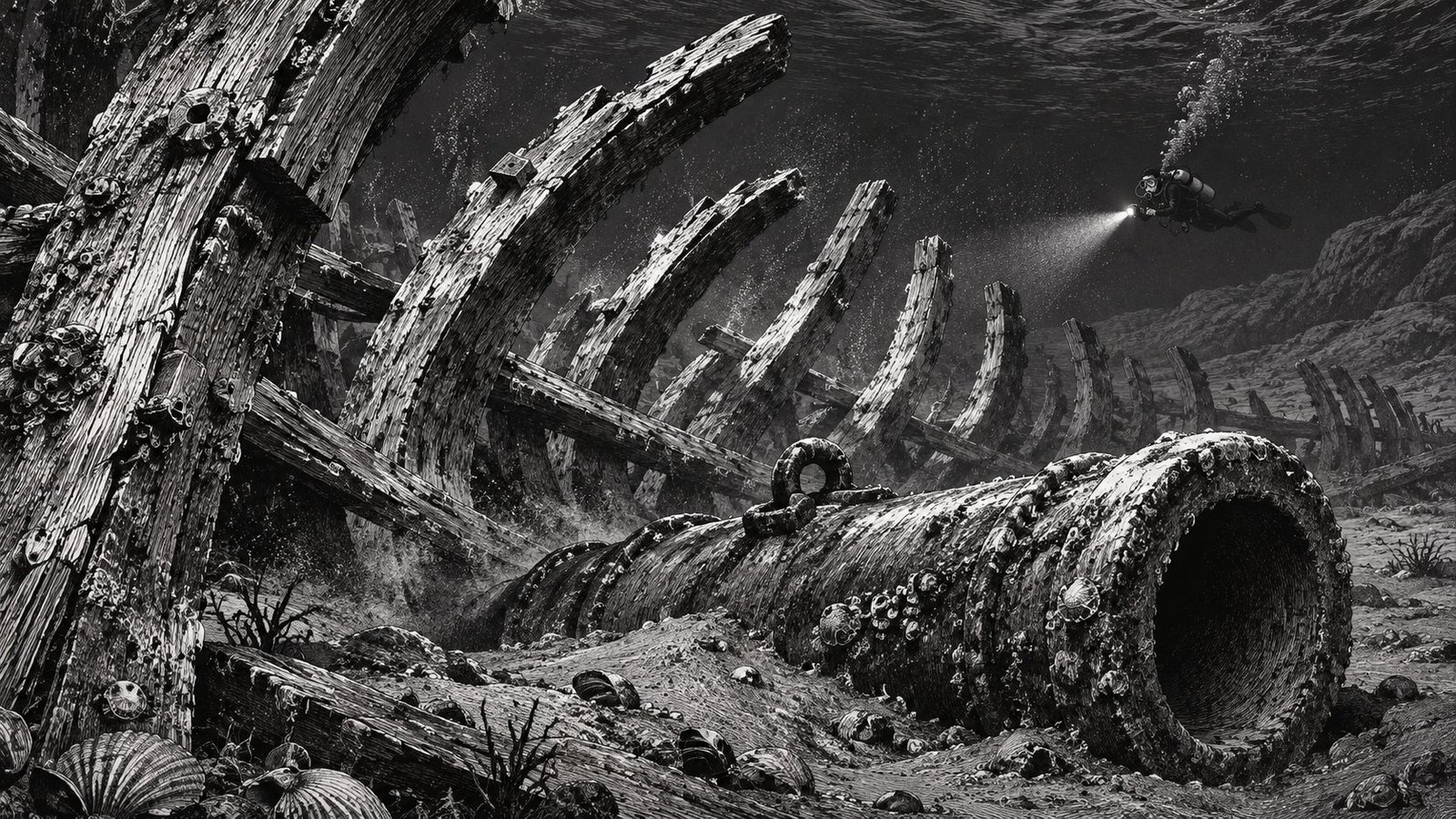
What has been found is what stayed on the cliff: jars that wedged into cracks as the ship broke up or slid down the slope. Further work will search the surrounding rock and sediment for more cargo or traces of the vessel.
And this is not the only Roman wreck to vanish off Genoa. Trigona noted that the Roman wreck of Pegli, west of the city, found in the early 1950s and from the same period, was also lost and has never been relocated.
The same waters also hold the remains possibly from the Santo Spirito, which sank in 1579.
The superintendency now says the site needs constant monitoring and rules for diving. The area is already under surveillance.
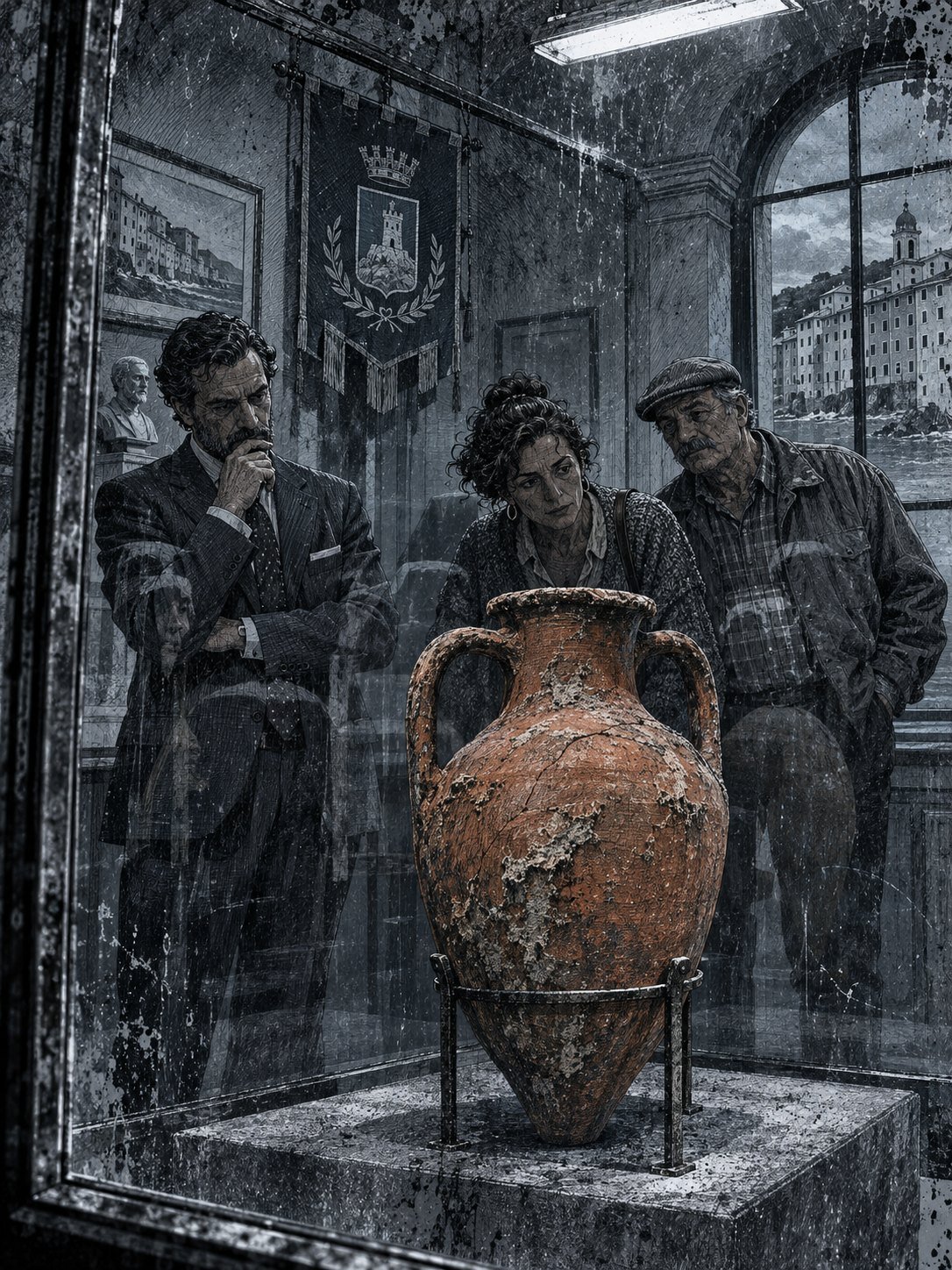
Camogli’s mayor, Giovanni Anelli, hopes the amphorae will one day be shown to the public.
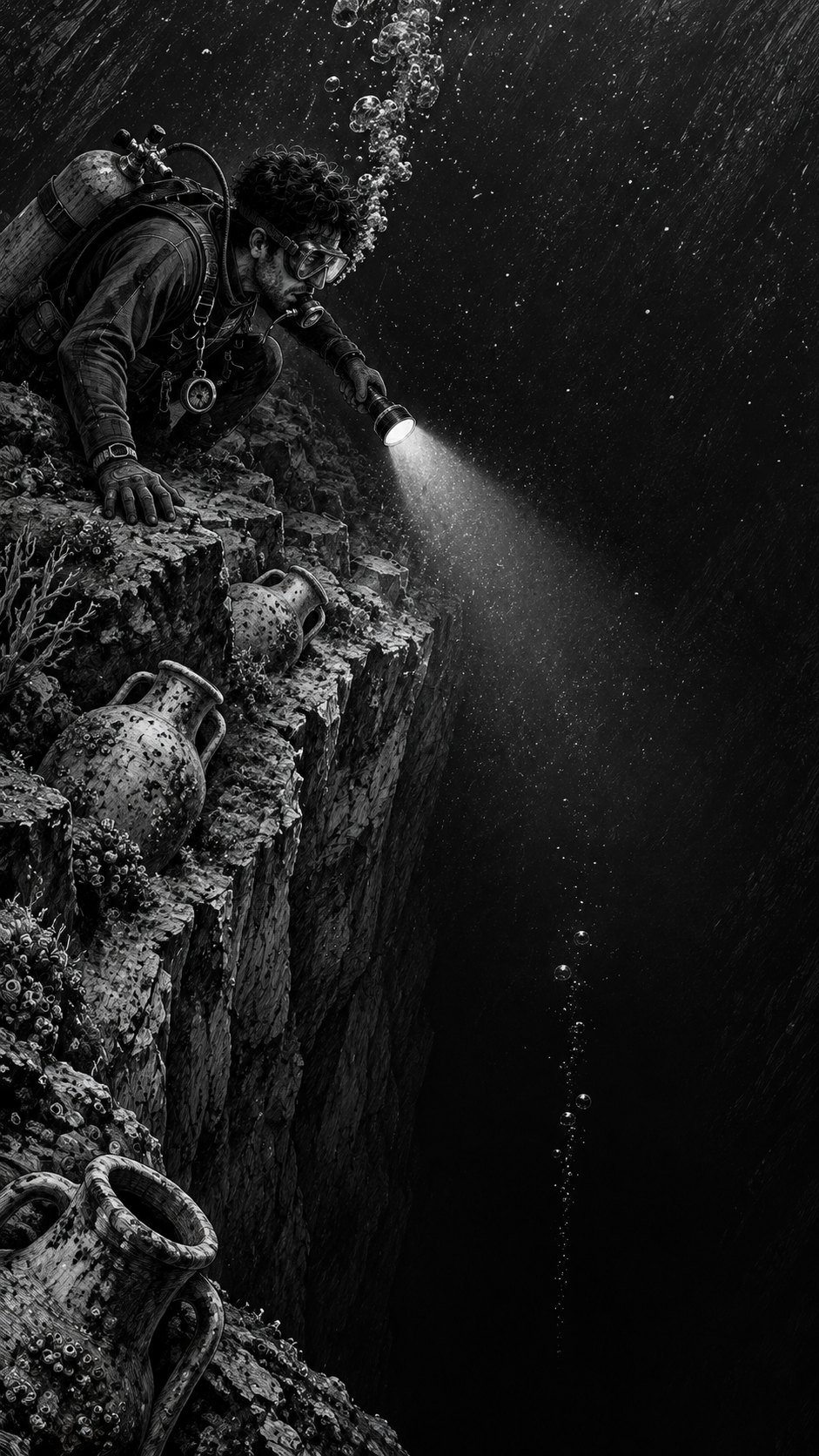
A wreck that was found, reported, published, and lost. Its cargo is back. Its ship is still somewhere below.
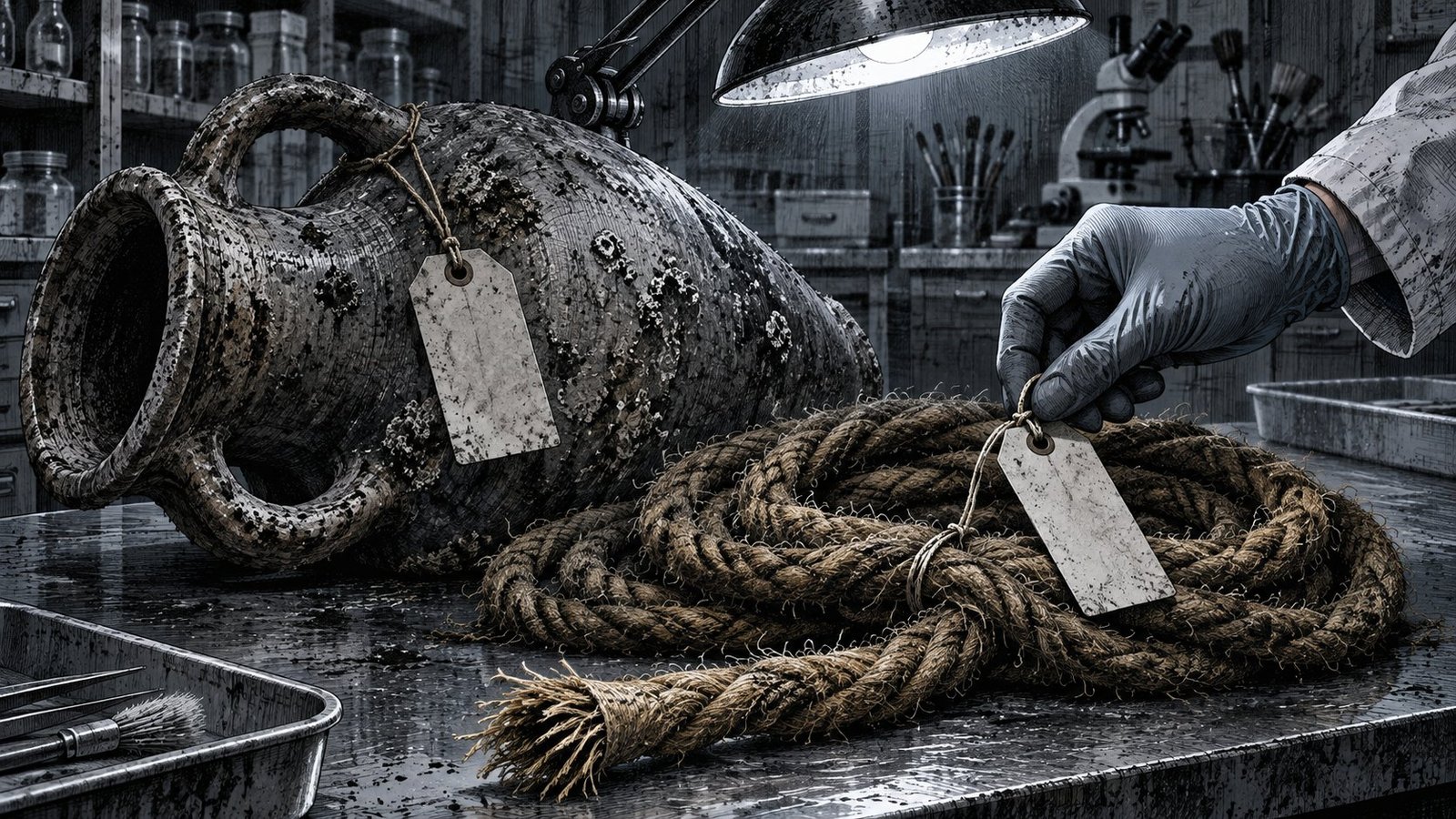
So who tied the rope, and did they ever come back for the rest?
Related cases: the 4,700-year-old jars of the Kekova wreck; the underwater ruins of Yonaguni; the SS United States, sunk on purpose in 2026.
Evidence locker
Real records only. The drawings above are illustrations.
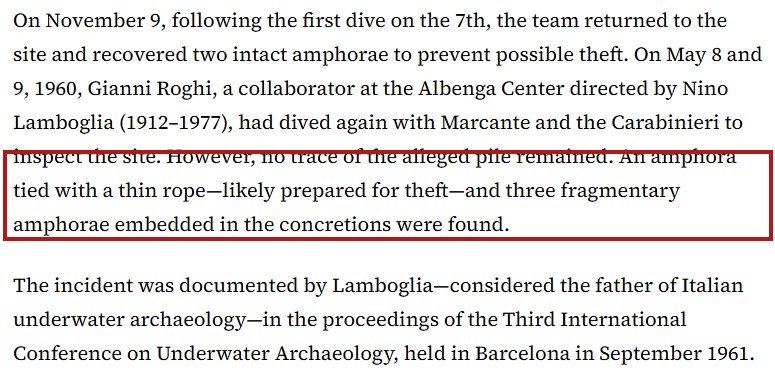 EXHIBIT A · TAP TO ENLARGE
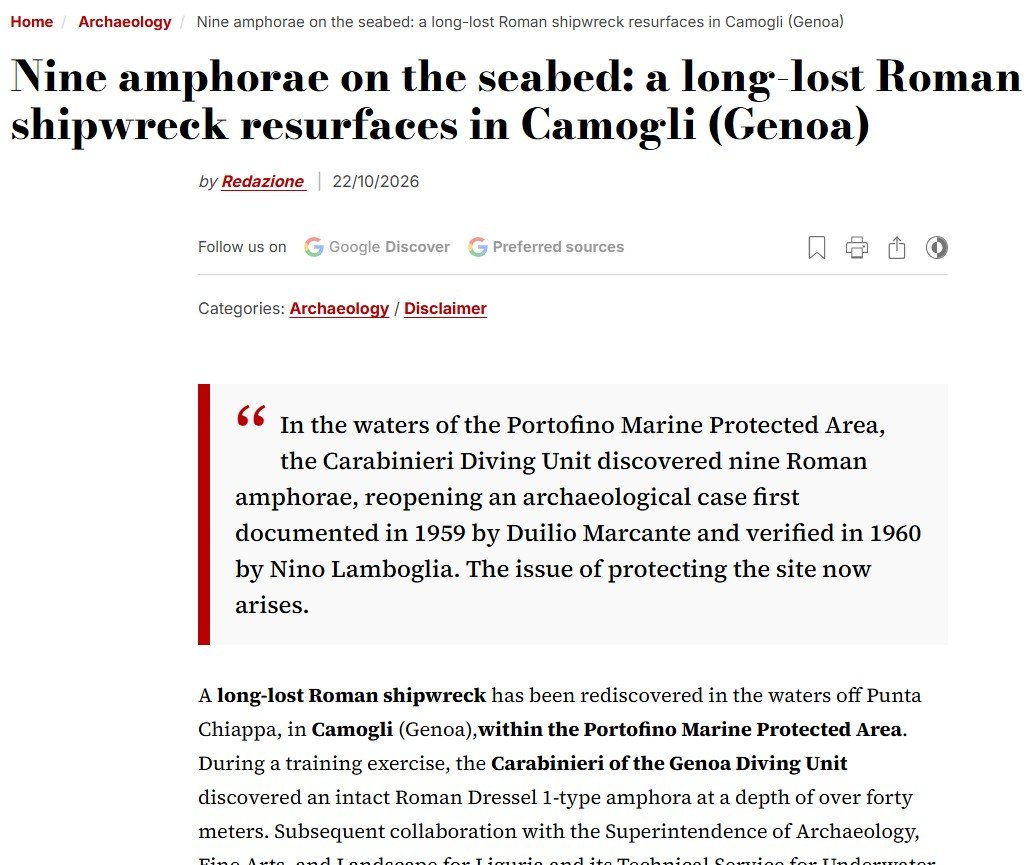 EXHIBIT B · TAP TO ENLARGE
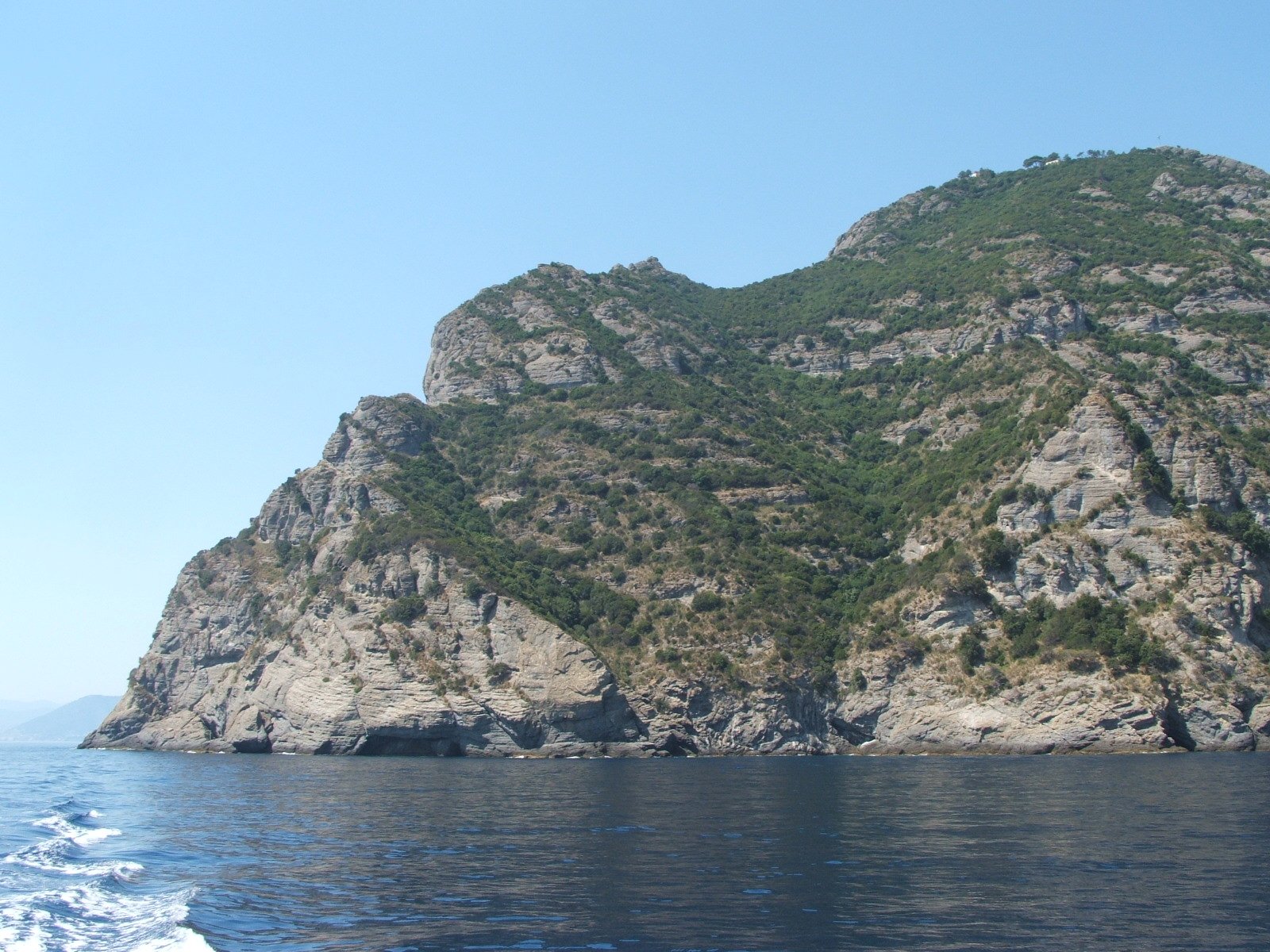 EXHIBIT C · TAP TO ENLARGE
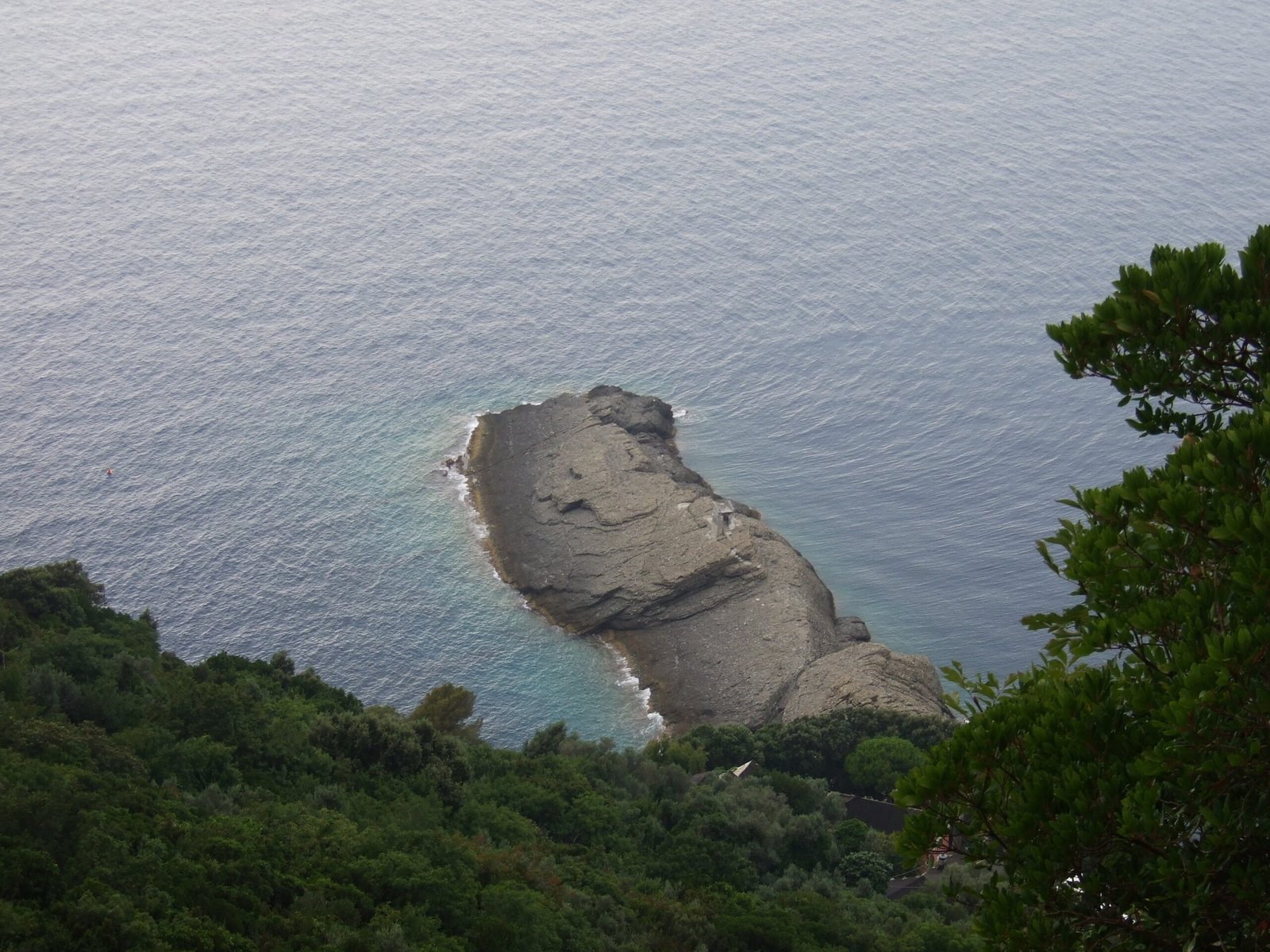 EXHIBIT D · TAP TO ENLARGE
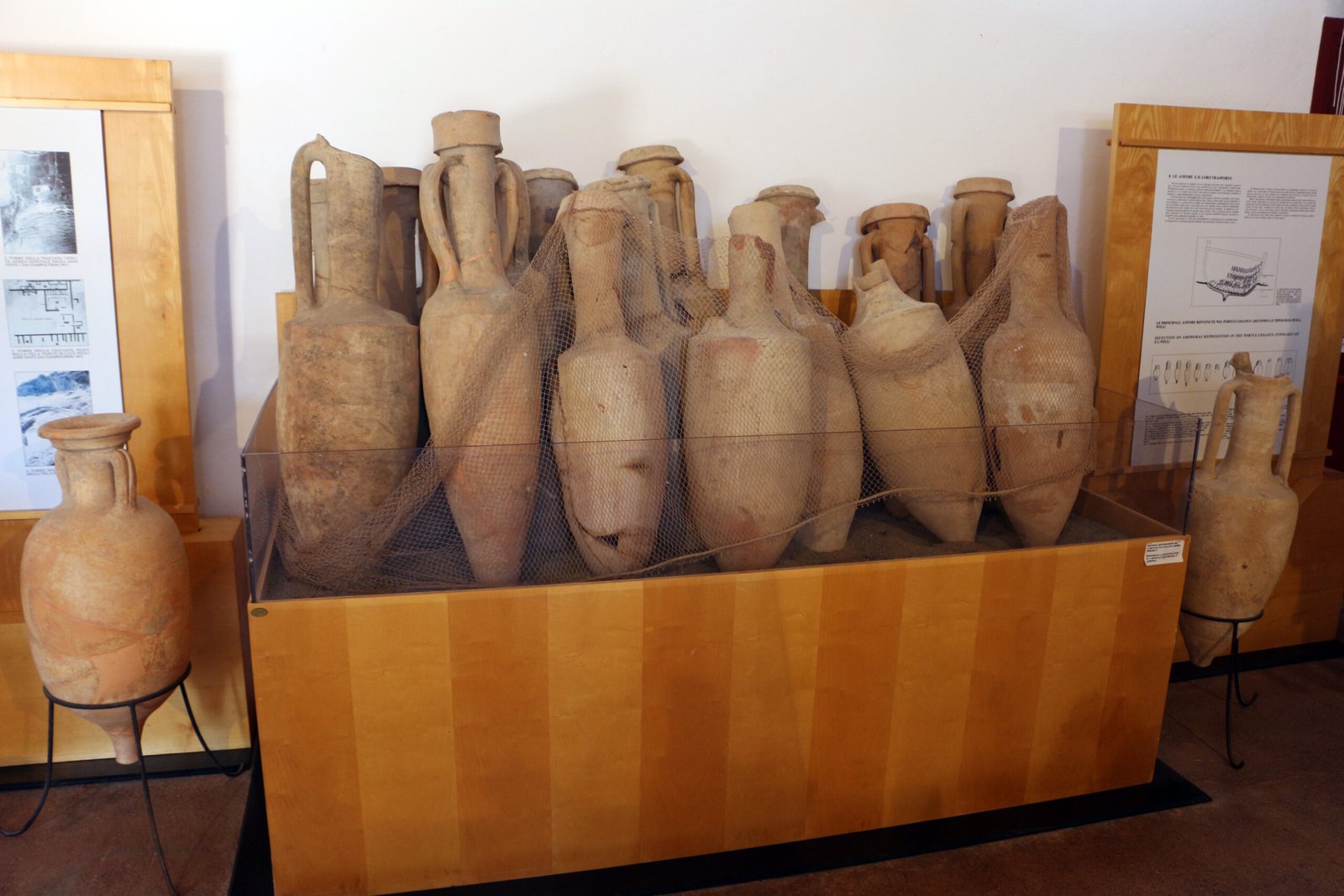 EXHIBIT E · TAP TO ENLARGE
The story you may have heard, and what the file says
| The popular version | What the record shows |
|---|---|
debunked “A “ghost ship” was found intact after 67 years.” | No hull has been found. Nine amphorae were mapped on the cliff and two were lifted. |
debunked “Nobody knew a wreck was there.” | It was found and reported in 1959 and published in 1961. Then its exact position was lost. |
debunked “It was found with high-tech sonar.” | It was found by Carabinieri divers who saw an amphora on a training dive. |
unverified “Treasure hunters stole the rest.” | In May 1960 the main pile was gone and one jar was tied with rope. Lamboglia suspected looting; nobody has been identified. |
debunked “It is the only lost Roman wreck off Genoa.” | The Roman wreck of Pegli, found in the early 1950s, was also lost and has never been relocated. |
Why the record is stranger than the legend. The legend is a ship lost to time. The record is a wreck that was found by one of Italy’s best divers, reported to the right people within three days, written up at an international congress, and still lost, while somebody with a rope may have got there first. The sea did not hide this wreck. People misplaced it.
Where the argument is
Coverage of the rediscovery has reopened an old argument in underwater archaeology: what should happen to finds like these?
One side says leave them where they are. UNESCO’s 2001 Convention on the Protection of the Underwater Cultural Heritage makes preservation in place the first option, and many divers and archaeologists argue that the cliff has protected these jars for 2,000 years better than any store room could.
The other side points to 1960. When the finds were left, they disappeared. The superintendency itself lifted the two most exposed jars this year for exactly that reason, because so many divers visit the site.
A third question runs underneath both: how does a site reported to the authorities vanish from the record for 67 years? The answer in the record is not secrecy but practicality: a research ship that could not work there, a postponement that became permanent, and a position nobody wrote down precisely enough.
Our view: the rope is the strongest argument in the whole case, and it is an argument for watching the site, not for stripping it. Leaving the jars in place only works if someone is looking. In 1960, nobody was.
What we still don’t know
- Who took the main pile of jars between November 1959 and May 1960.
- Where the hull is, and how big the ship was.
- Whether more cargo lies in the sediment below the cliff.
- Exactly when in 2026 the Carabinieri divers made the find.
Quick answers
What is the Roman ghost shipwreck of Camogli? A Roman cargo wreck site off Punta Chiappa near Camogli, Italy, first found by Duilio Marcante in 1959, lost from the record after 1961, and found again by Carabinieri divers in 2026.
How old is the Camogli shipwreck? The Dressel 1A wine amphorae date from the end of the 2nd century BC to the first decade of the 1st century BC, about 2,100 years ago.
Was the ship found? No. Nine amphorae have been mapped so far. No part of the hull has been found.
Why was it lost for 67 years? The 1959 research ship could not work safely over such a deep, steep site, the research was postponed, and the exact position dropped out of the record.
What is a little-known fact about the Camogli shipwreck? The diver who first found it, Duilio Marcante, was also behind the Christ of the Abyss statue sunk just around the headland in San Fruttuoso in 1954.
Editor’s note
What we keep coming back to is how fast everyone did the right thing in 1959. Marcante found the jars on the 7th, protected two of them on the 9th, and reported the site on the 10th. The system worked for three days. Then a ship that was too small for the job, a postponement, and a cliff that was too steep let the whole thing slip.
The rope is the detail that turns this from a story about archaeology into a story about people. Someone went to the trouble of tying it. Someone did not come back. We will probably never know who, and that small unfinished act has outlasted every official file on the site.
So the question we would most like answered is a practical one. Now that the site has been found twice, who exactly is watching it, and how often?
— Strange World Files
Sources
- Finestre sull’Arte, “Nine amphorae on the seabed: a long-lost Roman shipwreck resurfaces in Camogli” (22 October 2026): www.finestresullarte.info
- Daily Galaxy, “Lost Beneath Italy’s Waters for 67 Years, a Roman ‘Ghost Shipwreck’ Has Finally Been Rediscovered” (25 October 2026): dailygalaxy.com
- Greek Reporter, “Roman ‘Ghost Shipwreck’ Rediscovered Off Italy After 67 Years” (24 October 2026): greekreporter.com
- UNESCO, Convention on the Protection of the Underwater Cultural Heritage (2001): www.unesco.org
- Wikipedia, “Christ of the Abyss”: en.wikipedia.org