A White-Hot Dot Crossed a US Warship’s Path in 2020. Six Years Later the Pentagon Released It, and Said Nothing
Narrated Mystery: press play and hear the whole case read aloud, like a true crime podcast episode, or an audiobook for a long drive (about 9 minutes). The narrator is an AI voice.
What the record shows
- What: a roughly 20-second black-and-white infrared clip in which a small bright point crosses the frame
- Filmed: 2020, by an infrared sensor on a “U.S. military platform” in the Middle East (news reports say a warship); released 20 November 2026 in PURSUE Release 08
- Official word: listed as an unresolved case; the department describes only an “area of contrast” moving across the frame
- On screen: every number blacked out; no range, speed or size
Still uncertain
- What the bright point was.
- The platform (news reports say a warship), the date and the exact location.
- Whether radar or any other sensor tracked it.
Middle East, 2020. One white-hot dot on a U.S. military infrared camera, an official “area of contrast,” and seventy years of files with the same label: unresolved.




It lasts about twenty seconds. It is grey, grainy and silent.

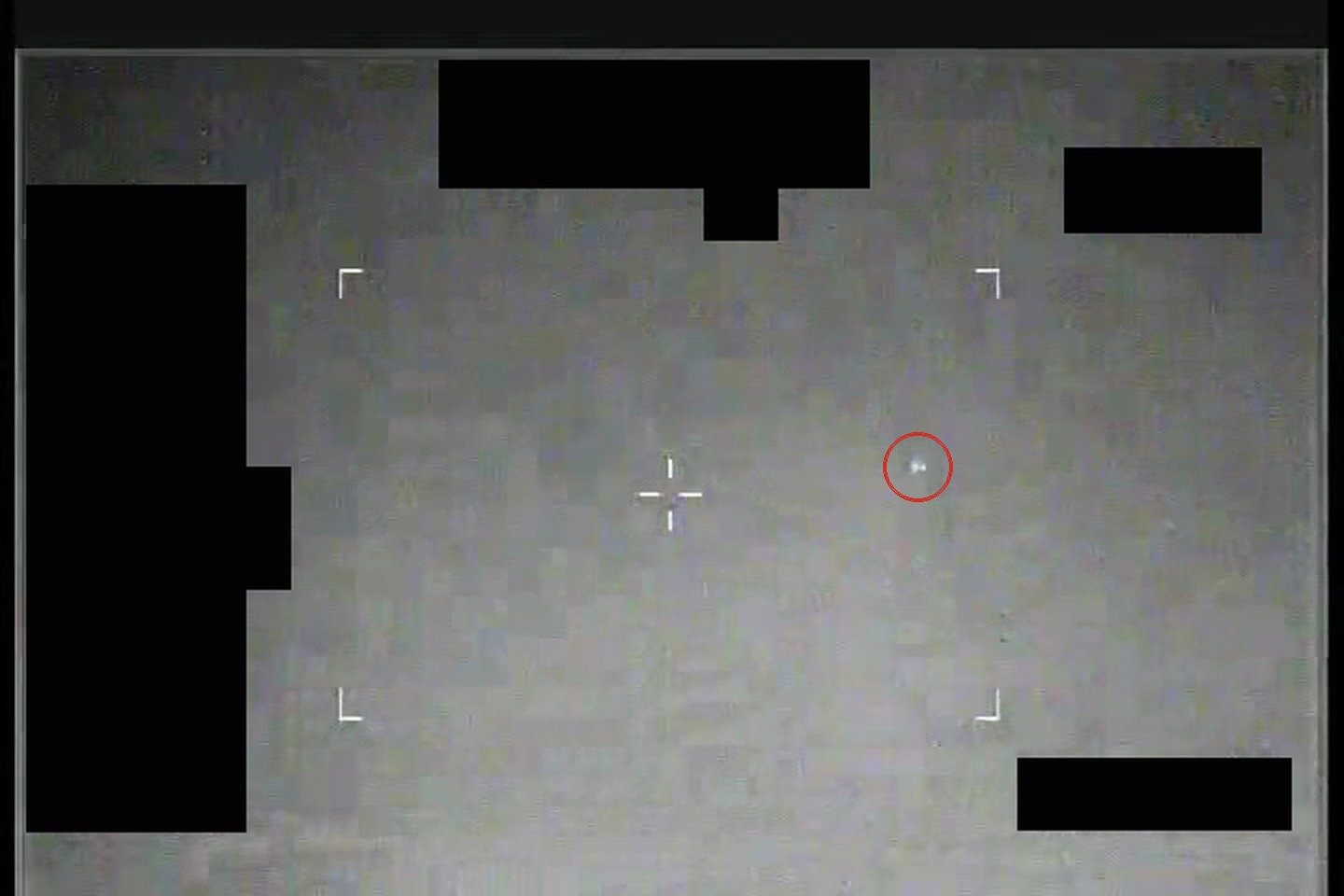
Somewhere in the Middle East, 2020. An infrared camera on a U.S. military platform is pointed out at the water. The official file never names the platform. News reports say it was a warship. Big black boxes cover the edges of the screen, where the government has blacked out the numbers.
Then a small point of light, glowing white the way hot things glow on infrared, slides across the picture. A few seconds later it is gone.

On 20 November 2026, six years after it was filmed, the U.S. Department of War put the clip on its public UFO website. What was it? The department’s description, as quoted in press reports, says only that an “area of contrast” moves across the frame. No assessment, no explanation.
So what exactly did the military film, and why release it with no explanation at all?
What did the Pentagon release on 20 November?
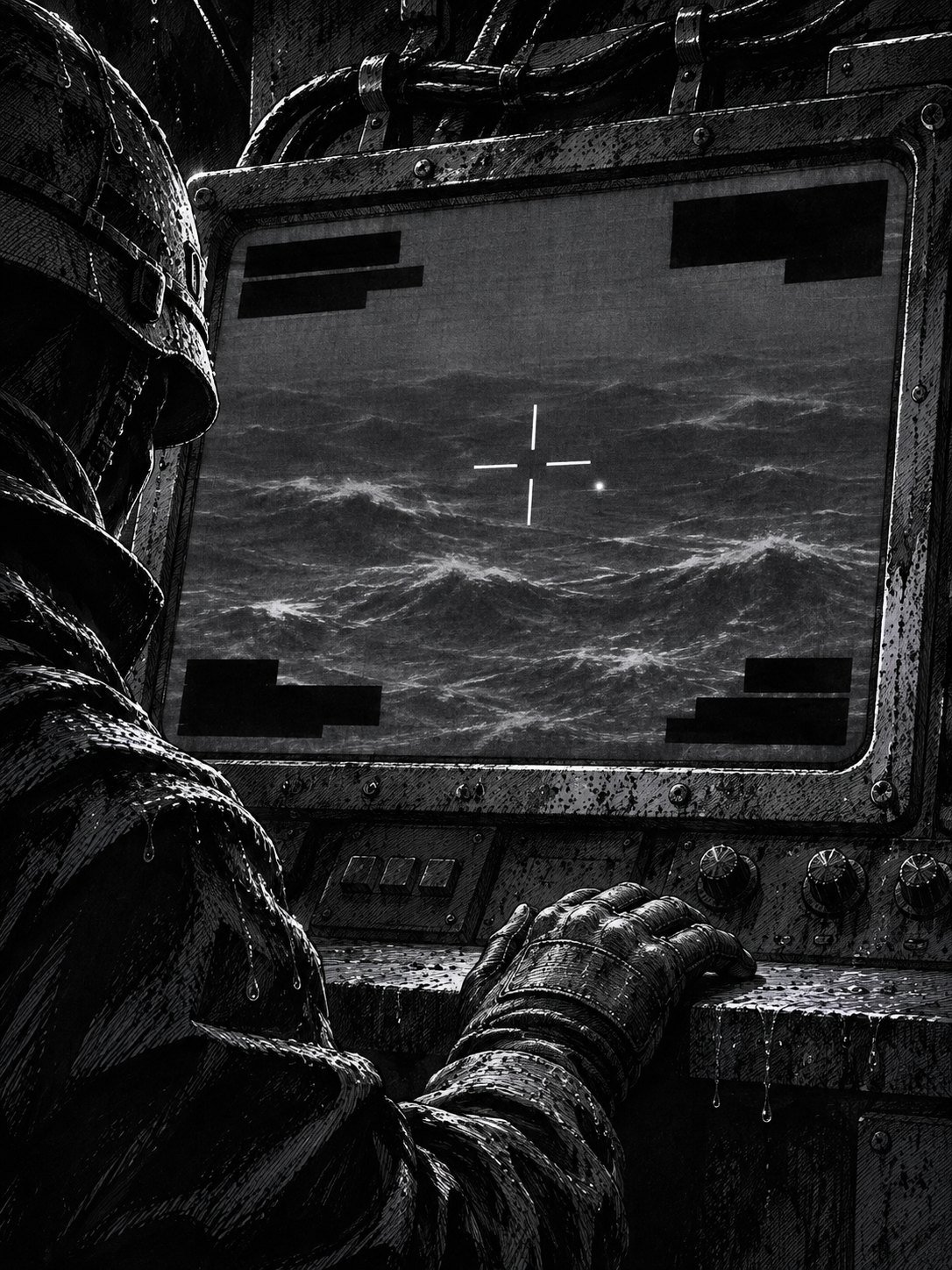
The clip is part of the eighth batch of files the Department of War has published under a programme with a long name: the Presidential Unsealing and Reporting System for UAP Encounters, or PURSUE.
The programme followed a presidential order in February 2026. The first batch went online on 8 May 2026. Release 07 came out on 23 October. Release 08 followed on Thursday 20 November: 43 records in all, 40 documents and three videos, according to the count reported by Interesting Engineering, though some later reports added a fourth clip. The three videos were submitted by U.S. Central Command and come from military sensors in the Middle East.

The department’s own site says something important about everything in the archive. The materials, it says, are “unresolved cases, meaning the government is unable to make a definitive determination on the nature of the observed phenomena.”
Unresolved. Not alien. Not explained. Just: not enough to say.

But this was not the first time U.S. military cameras had caught something like this.
The Navy has been here before
In April 2020, the same year this new clip was filmed, the Pentagon officially released three Navy videos that had already leaked: FLIR1 from 2004, and GIMBAL and GOFAST from 2015. All three came from fighter-jet cameras, and all three became the most famous UFO footage of the decade.
In 2021, the Pentagon also confirmed that a leaked 2019 video, a glowing sphere filmed from the USS Omaha off California, had been taken by Navy personnel.

So a strange shape on a U.S. military infrared screen is not new. What is new is the way it reached the public. The earlier videos leaked first and were confirmed later. This one was simply posted, with a file number and a shrug.
And when you actually watch the twenty seconds, it is stranger than the headlines.
What the camera saw, and what it didn’t
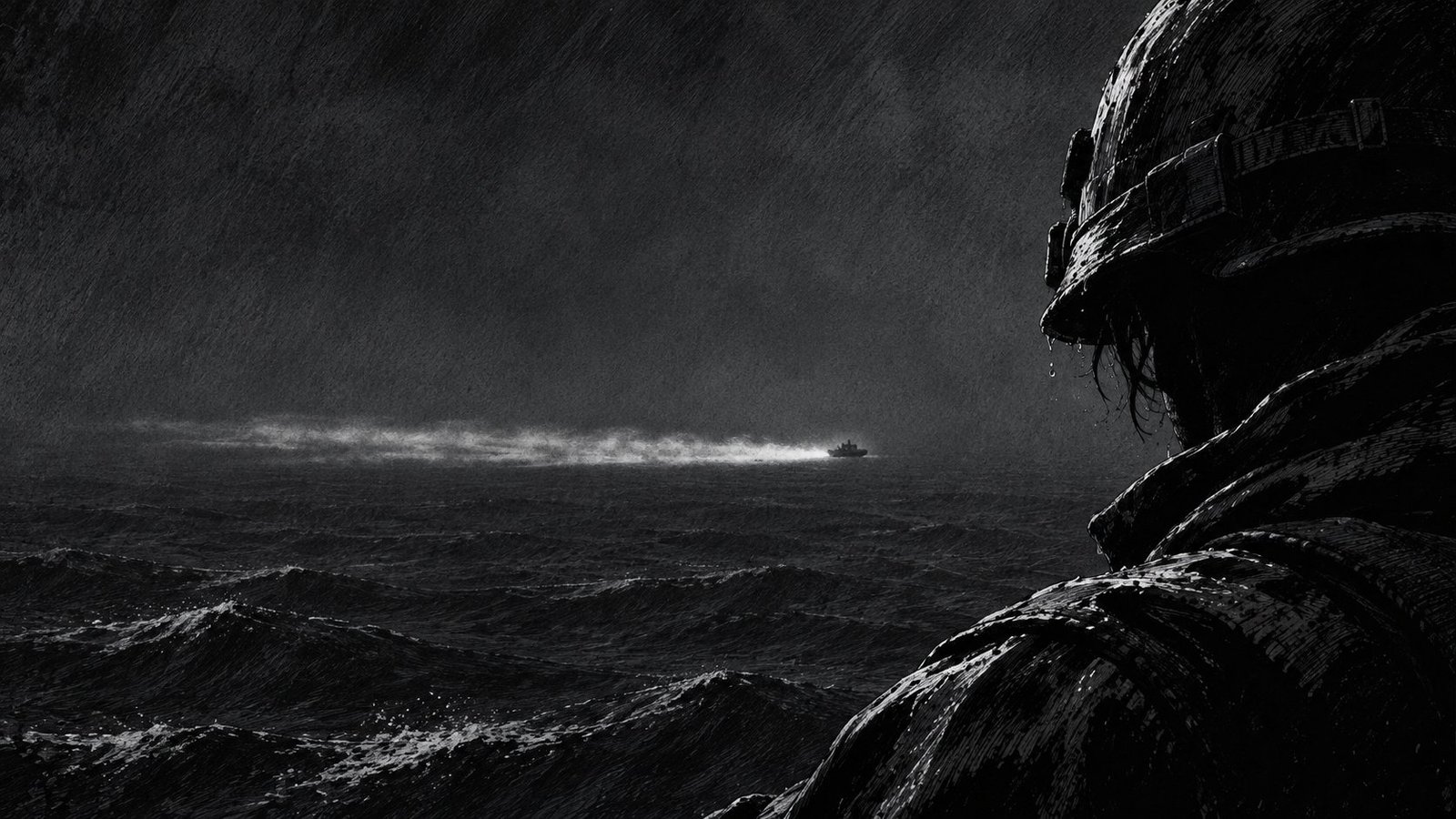
We downloaded the official video file from the Department of War’s release package and went through it frame by frame. Here is what is on the screen, and nothing more.
For the first nine seconds or so, the camera holds on a long, pale smear low in the frame, with a small darker blob at its left end. It looks like a wake on the water, or a vessel seen from far away. The file does not say which.

Around the ten-second mark, the whole picture flares white for a moment, the way infrared cameras do when they readjust.
Then the scene changes. The camera is looking at an almost featureless grey. A single bright point drifts past the crosshair over a few seconds. It is tiny: a few pixels wide.

Two things are missing that most headlines took for granted. We could not find a frame where a ship and the dot clearly appear together. And there is nothing on the screen, not a number, not a speed, not a range, that the government left unredacted.
Which raises the obvious question. How big was it, and how far away?
What do the other two UFO videos show?
The 2020 clip was not alone. All three videos in Release 08 were submitted by U.S. Central Command to the Pentagon’s UAP office, and all three were filmed by military sensors in the Middle East. But they come from three different years, according to the official descriptions summarised by LiveNOW from FOX.
The 2020 clip is the one in the headlines: about 20 seconds of infrared, with a point of contrast entering from the right edge and moving right to left.
The 2023 clip is 13 seconds long, from an electro-optical and infrared system. The official description says only that the sensor “captures an area of contrast.”
The 2026 clip is the longest, at 54 seconds, and in some ways the strangest. The sensor pans to track several points of contrast moving roughly right to left, zooms in and out several times, and keeps losing contact with two of them.

Three years, three clips, the same region, the same kind of description. None of them comes with an answer.
How big was the object, and how far away?

On an infrared camera, brightness means heat, not size. A bird’s body, a small drone’s motor, a distant aircraft’s engine and a sun-warmed balloon can all show up as a white point.
Without the range to the object, a dot that crosses the screen in a few seconds could be something small and close moving slowly, or something big and far away moving fast. The camera alone cannot tell you which. The black boxes sit exactly where the numbers that could would normally be.
The department does give a reason for the boxes. Its stated rule is that redactions protect witnesses’ identities, the locations of government facilities and sensitive military information unrelated to UAP, and that nothing about “the nature or existence” of any encounter was blacked out, per LiveNOW from FOX.
Take that at face value and it means whatever sits under those boxes was judged to be about the platform and its sensor, not about the object. The trouble is that on infrared targeting footage, the corners are usually where readings such as range and altitude appear. In the 2015 Navy videos, those readings were visible. Here, they are not.
The Pentagon’s own investigators have said much the same about other cases. The All-domain Anomaly Resolution Office, which studies these reports, has found that most cases it could resolve turned out to be ordinary objects such as balloons, birds and drones.
None of that says what this dot was. It says why a twenty-second clip, on its own, cannot.

It seemed like the end of the story: a blurry clip, no data, no comment. It wasn’t.
What else is in Pentagon UFO Release 08?
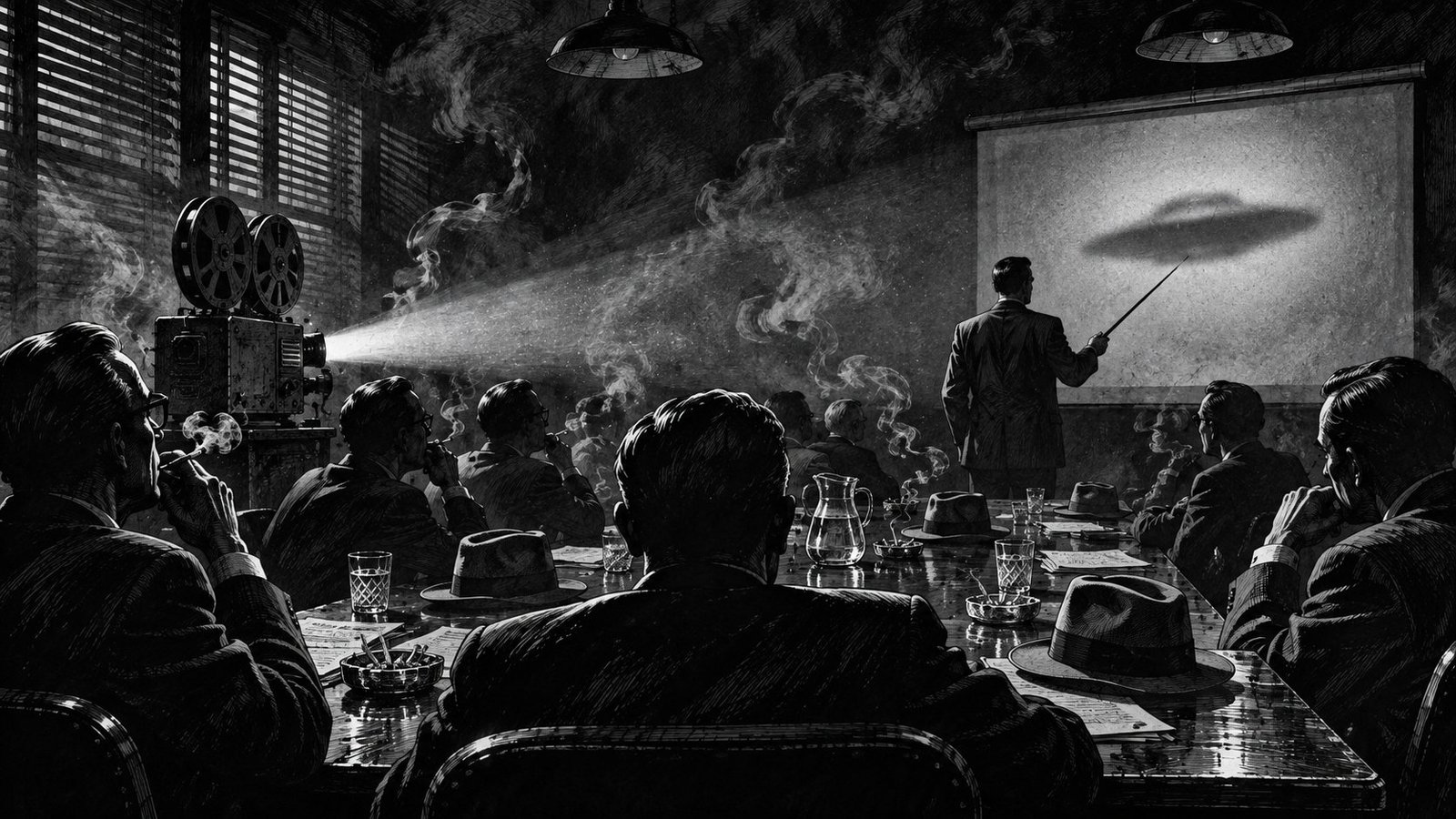
The same release carried files that go back seventy years, and some of them are far more detailed than the video.
Among them, according to the Department of War’s listing and press reports: a 1952 CIA briefing on “flying saucers”; air intelligence reports from Massachusetts and Michigan in October 1957; a 1953 sighting report by the Lockheed engineer Kelly Johnson; a 2023 radar detection over the western United States; and a 2009 report by Bigelow Aerospace Advanced Space Studies, a contractor for a Defense Intelligence Agency study, published by the government for the first time.
1952: the CIA asks what the Air Force is missing
The CIA paper is dated 14 August 1952 and titled simply “Flying Saucers.” It opens in the middle of a panic: “a phenomenal increase in the number of Flying Saucer reports,” requests for information pouring in on the Air Force, “including an official query from the White House.”
It quotes the Air Force’s own public line from a press conference on 29 July: analysis showed “no pattern of anything remotely consistent with any menace to the United States,” and the recent Washington sightings were possibly due to “temperature inversions.” The CIA’s scientific office decided it was time to check the Air Force’s method for itself.
The numbers in it are startling for 1952: some 1,500 reports in the United States, 250 of them in July alone, with Air Force analysts leaving about 20 percent unexplained. Other CIA papers from that year in the same release discuss bringing together a panel of scientists to weigh the evidence, according to LiveNOW from FOX and Interesting Engineering.

1953: the engineer who saw it himself
One file is worth a pause. On 16 December 1953, near Agoura and Point Mugu in California, the Lockheed engineer Clarence “Kelly” Johnson, one of the most famous aircraft designers in American history, reported a dark, elongated, elliptical object in the sky. Crew aboard a Lockheed WV-2 aircraft saw it too.
Johnson saw it at about 5 p.m. from his ranch west of Agoura. He first took it for a cloud or a smoke trail. It seemed to hang motionless for several minutes, then moved west and disappeared. The flight-test crew off Point Mugu described “an apparently stationary, dark, wing-like or elongated object.” A drawing in the file shows light blue flames at its back. The report contains no radar data, no photographs and no physical evidence, per LiveNOW from FOX and Interesting Engineering.
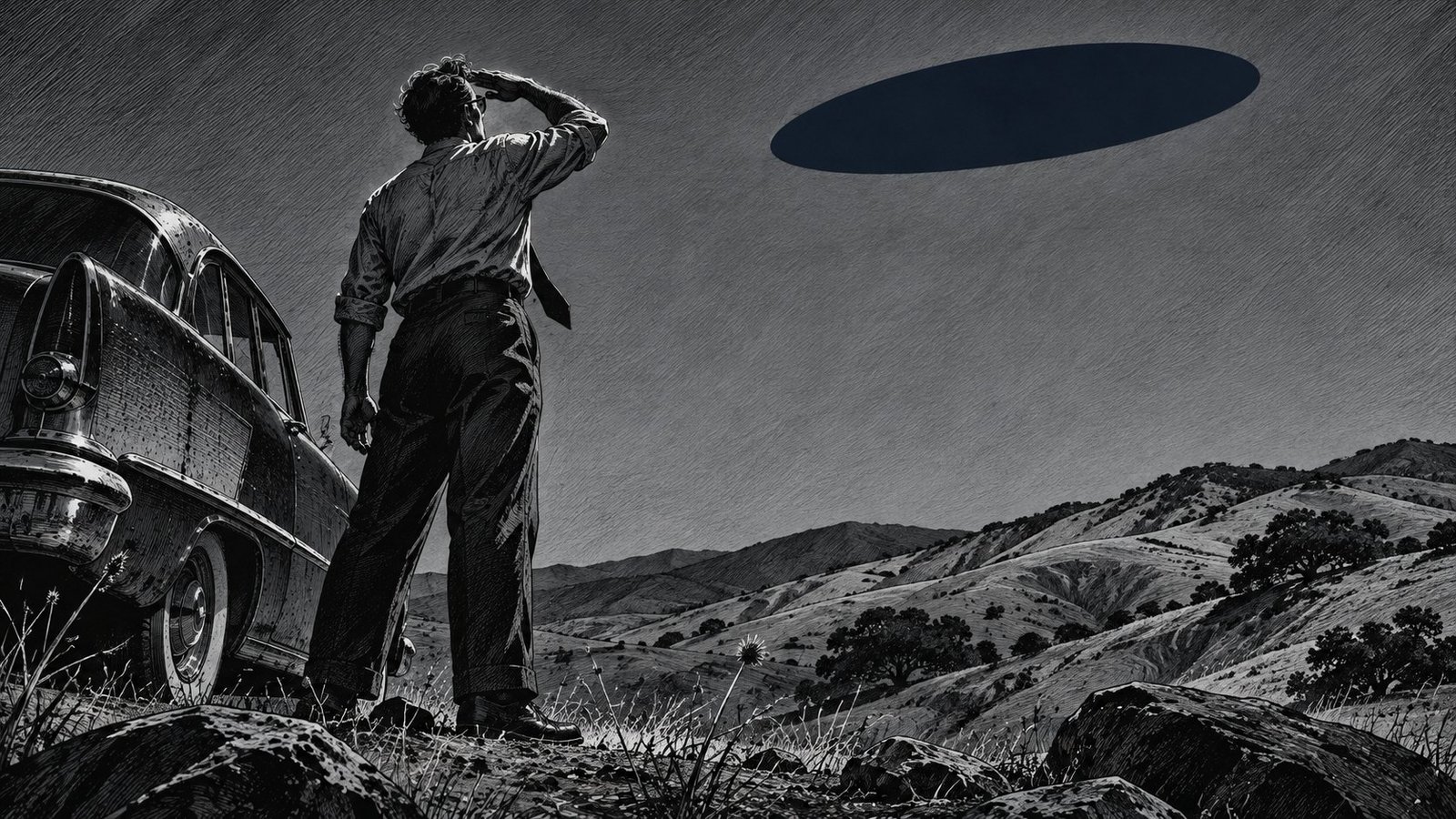
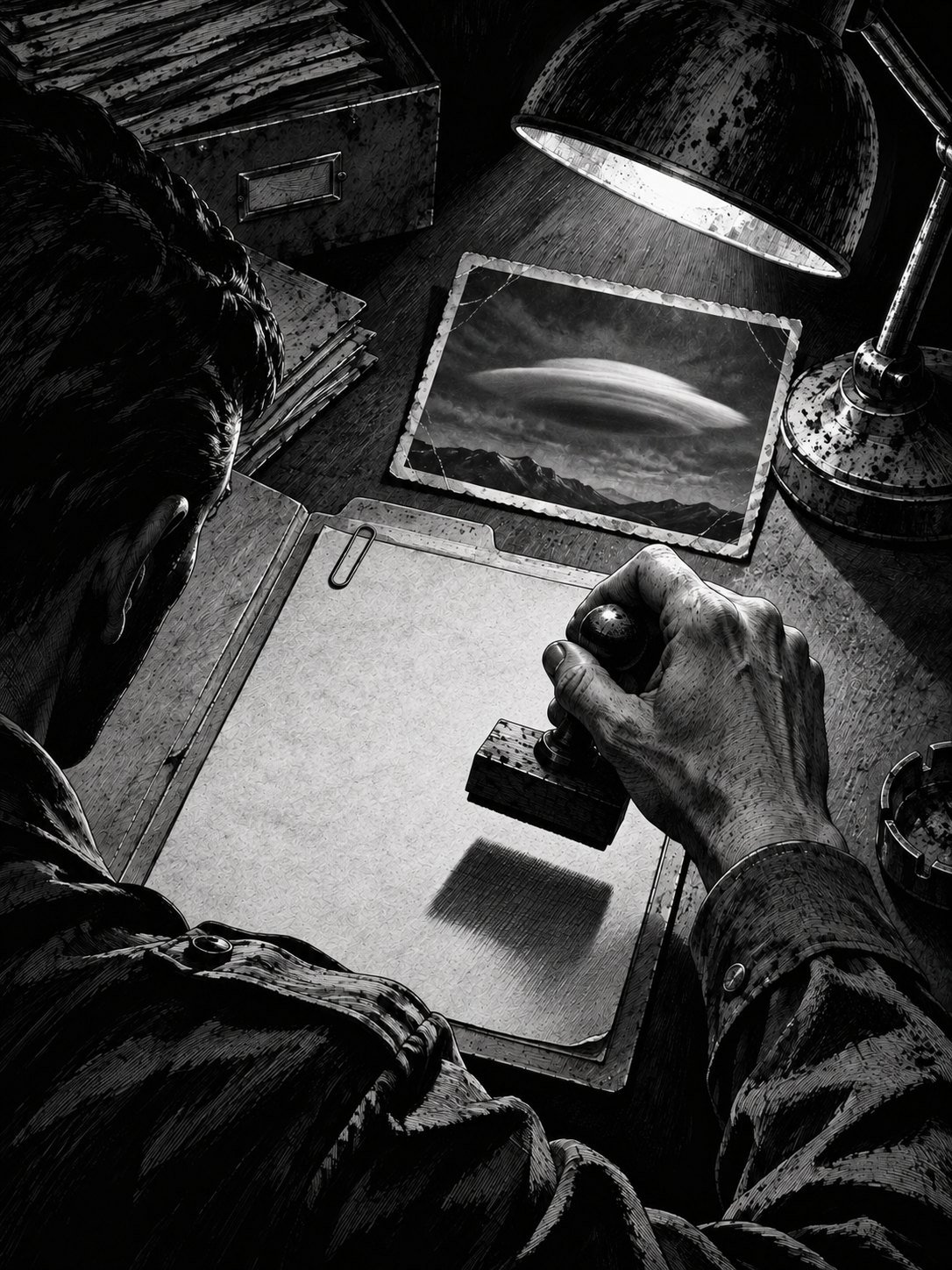
The Air Force’s investigators filed it as a lenticular cloud. The 15-page file shows the witnesses did not all agree with that.
1957: a cylinder covered in spikes
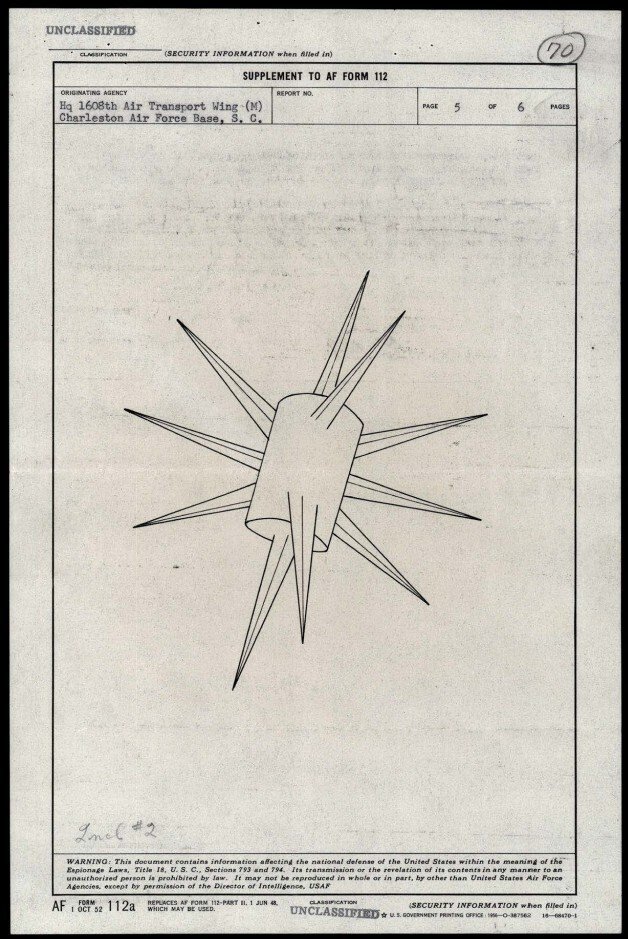
Two Air Force intelligence reports from October 1957 come with drawings. The first, logged under Massachusetts on 12 October 1957, is a supplement to Air Force Form 112 from the headquarters of the 1608th Air Transport Wing at Charleston Air Force Base, South Carolina. Page five of six is a single sketch: a short cylinder with long, sharp spikes radiating out in every direction.
The second, logged under Michigan the next day, is a pencil drawing on lined paper headed “UFOB”: a flat saucer with a small dome and five round windows, marked 120 feet across. It was drawn by a civilian witness.

2009: a contractor’s file on Brazil
The release also includes the “Ten-Month Report” of Bigelow Aerospace Advanced Space Studies, dated July 2009 and written for a Defense Intelligence Agency study. One page shows a drawing from the Colares “UFO flap” in Brazil, observed in São Benedito in May 1990, and says BAASS was analysing material “leaked and distributed by the Brazilian government.” Its stated aim was to examine “the relationship between advanced space technology and physiological effects.”

That is a contractor describing its own plans, not a government finding. But it shows how far the Pentagon’s files on this subject reach, from a CIA memo in 1952 to a contractor’s database on Brazil.
2023: eight radar hits, 84 seconds, Mach 2.5?
The most modern record in the release is a radar case from the western United States in 2023. A civil air-surveillance radar recorded eight detections over 84 seconds at an estimated 55,000 to 70,000 feet. If all eight came from one object, it covered about 38.5 miles in that time, a minimum average speed of about 1,650 mph, roughly Mach 2.5, with a 39-degree turn after about 48 seconds.
The government’s own summary then takes most of that back. The radar swept only every 12 seconds, which “is not sufficient to independently establish” that the eight hits came from the same object at all. The speed and the turn are, in its words, “bounded estimates derived from discontinuous detections.”
It looked as if the release had finally produced hard numbers. It had not.

From a cloud verdict in 1953 to “unable to make a definitive determination” in 2026, the files keep ending the same way.
Seventy years later, the 2020 clip got no answer at all.
So which is stranger: an explanation you don’t believe, or no explanation?
Related cases: the Yemen orb a Hellfire missile appeared to hit; the Pentagon’s silent black triangle; the Phoenix Lights of 1997.
Evidence locker
Real records only. The drawings above are illustrations.
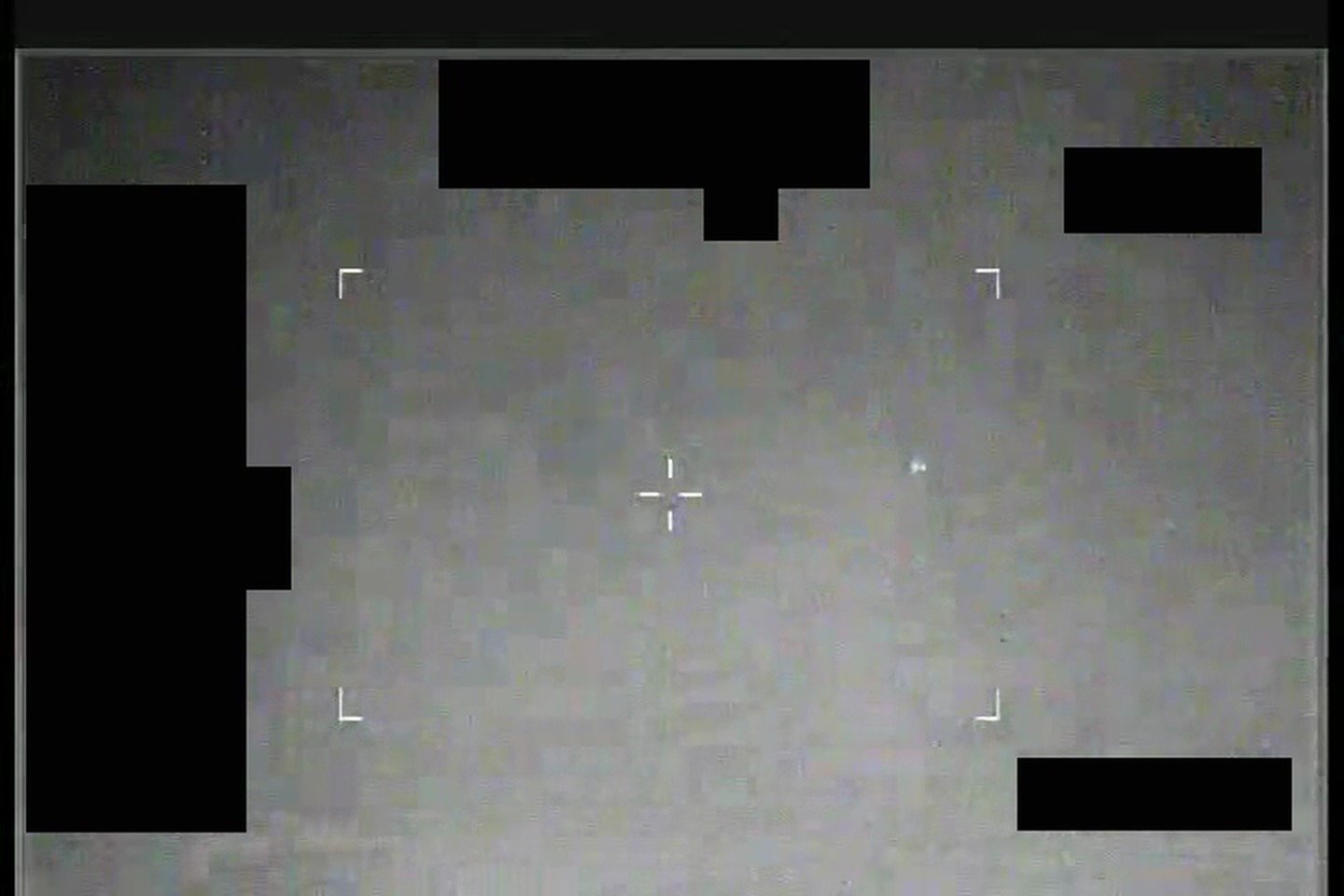 EXHIBIT A · TAP TO ENLARGE
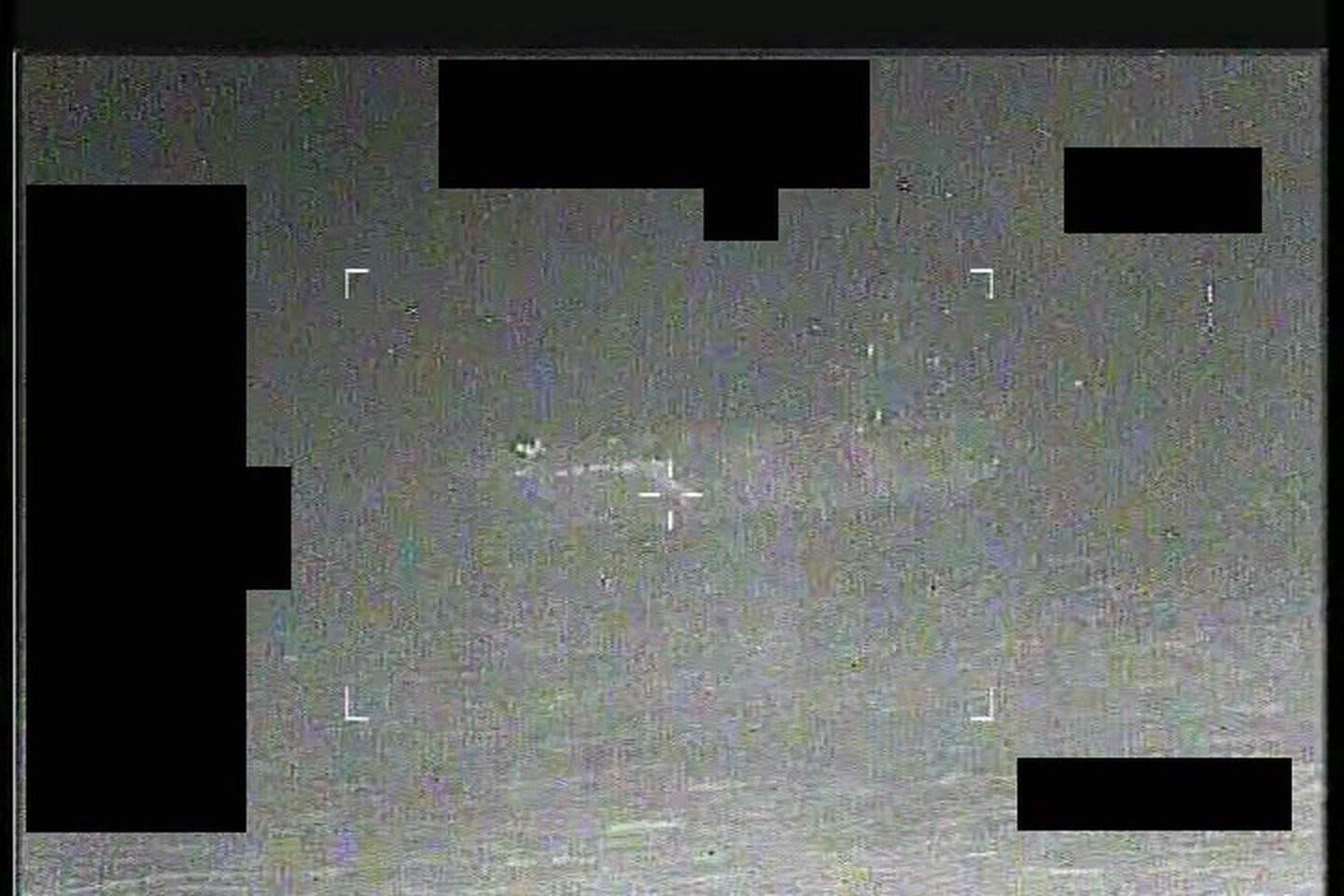 EXHIBIT B · TAP TO ENLARGE
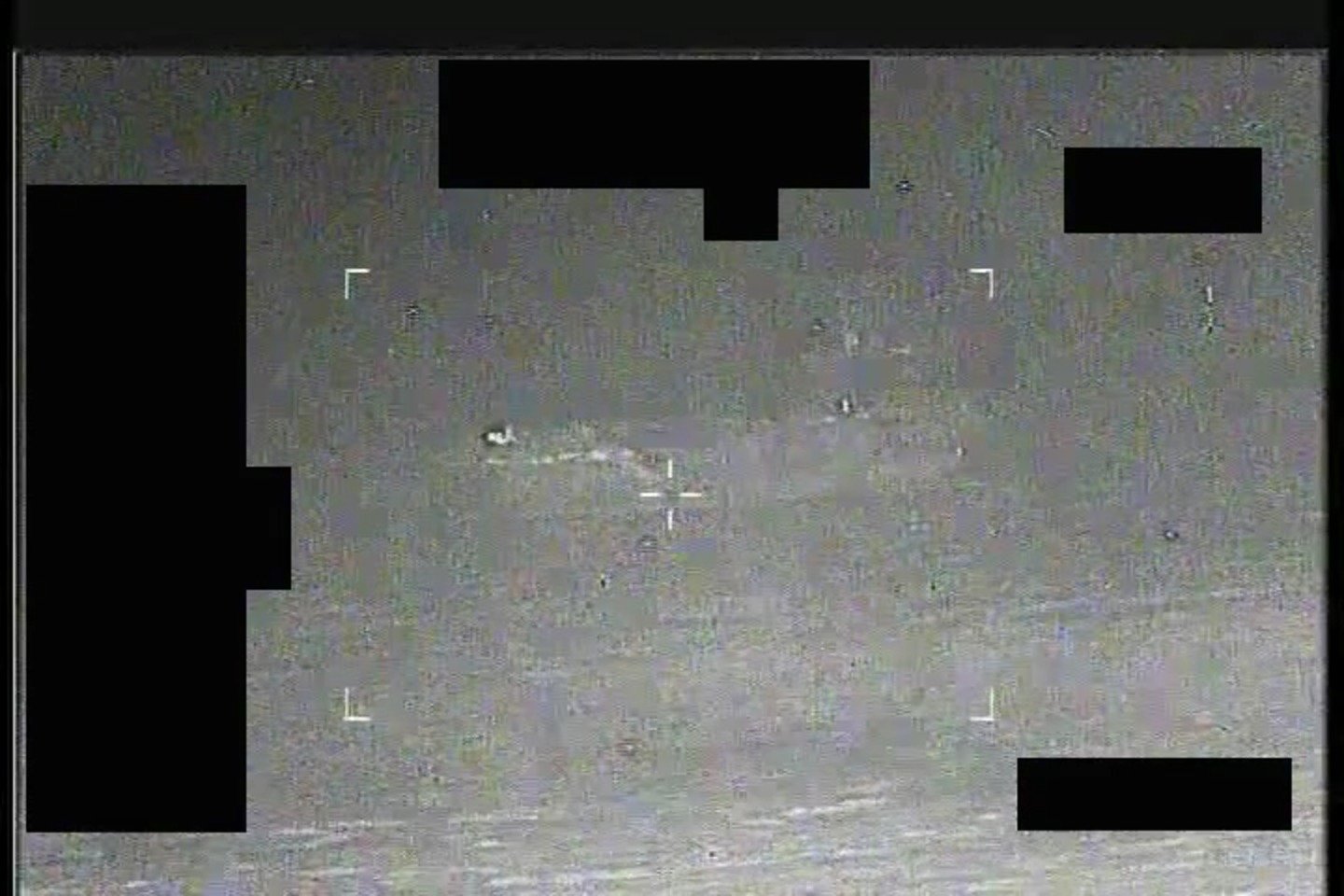 EXHIBIT C · TAP TO ENLARGE
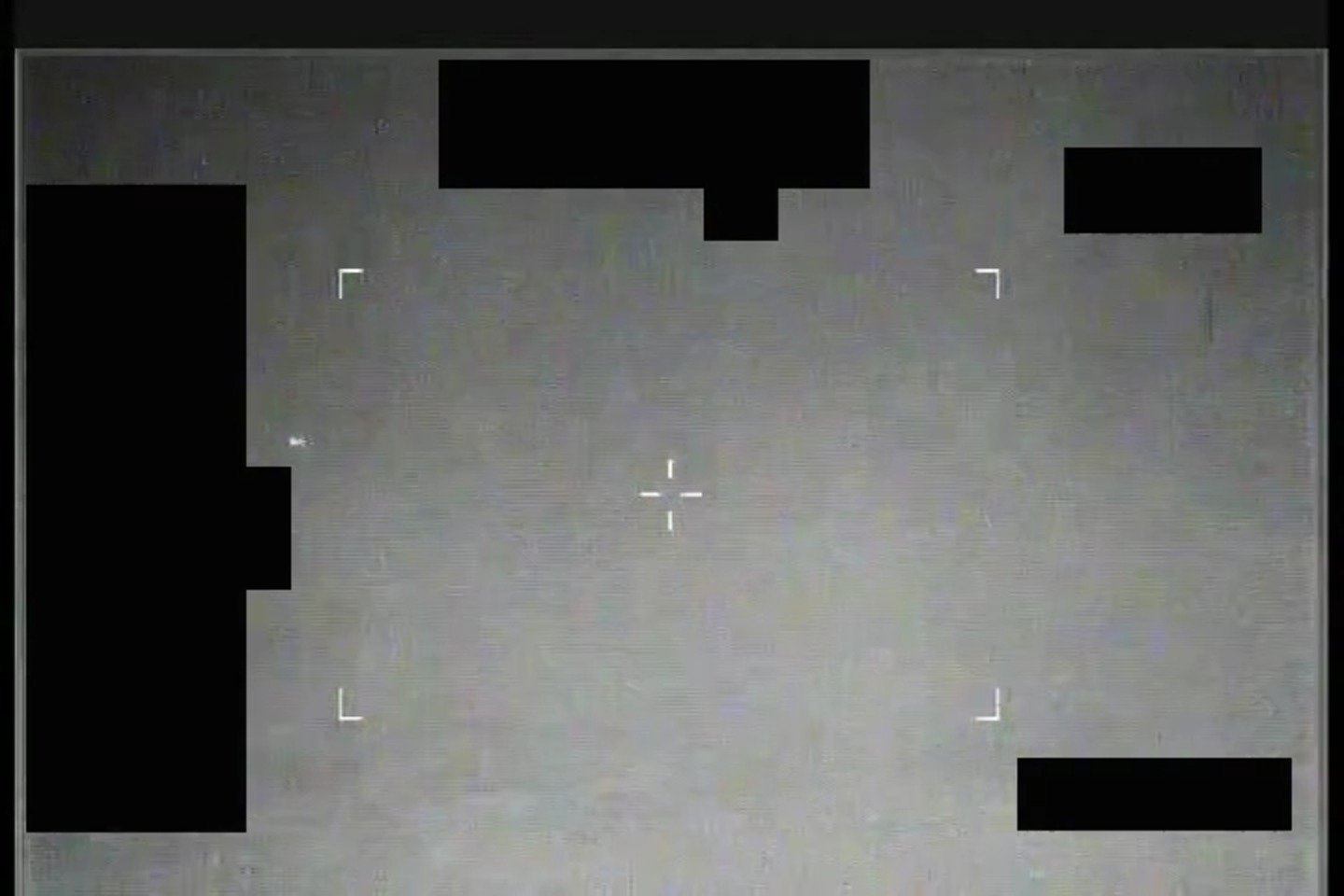 EXHIBIT D · TAP TO ENLARGE
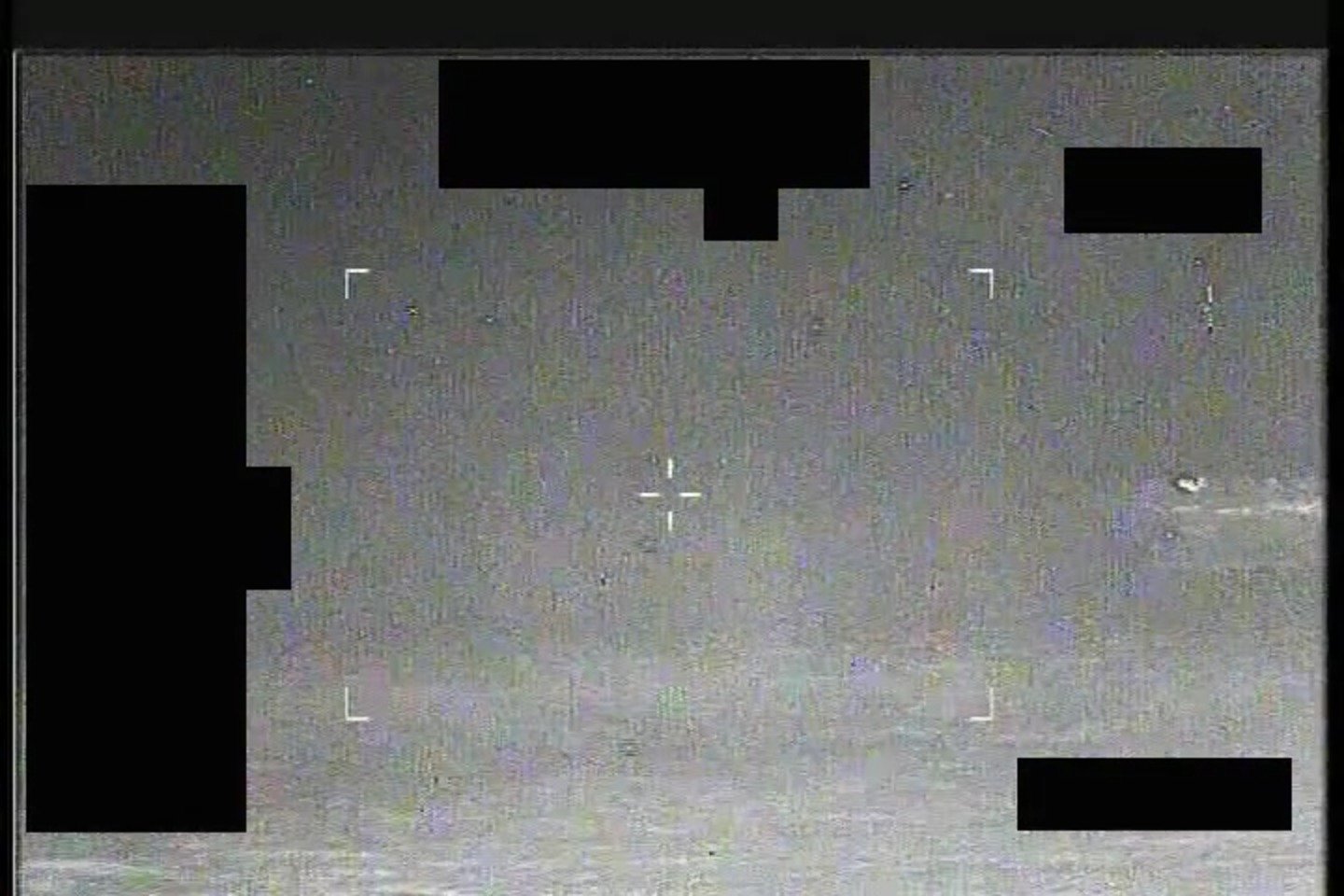 EXHIBIT E · TAP TO ENLARGE
The story you may have heard, and what the file says
| The popular version | What the record shows |
|---|---|
debunked “The Pentagon confirmed a UFO chased a US warship.” | The department released the clip as an unresolved case and describes only an “area of contrast” moving across the frame. Nothing in the file says it chased anything. |
partly true “This is brand-new UFO footage.” | It is newly released. It was filmed in 2020, six years earlier. |
unverified “The object flew right over the ship.” | Press reports say it moved past the ship. In the released clip we could not find the ship and the dot clearly in the same frame. |
unverified “The government knows what it is and is hiding it.” | The PURSUE site defines everything in the archive as cases the government could not determine. The redactions hide the numbers, so nobody outside can check either way. |
debunked “It’s the first UFO video filmed by the Navy.” | The Pentagon released Navy videos from 2004 and 2015 in April 2020 and confirmed a 2019 USS Omaha video in 2021. |
Why the record is stranger than the legend. The legend needs a chase and a cover-up. The real file has neither. It has a government that says, in writing, that it does not know, and then shows you the clip anyway, with the numbers that would let you work it out blacked out. That is not a cover-up story. It is a story about how little twenty seconds of video can prove, even when it comes straight from a military sensor.
Where do people disagree, and who has the better case?
We read the reaction to Release 08 in the week it came out: the launch-day threads on r/UFOs and r/UAP, the posts the department made on X for each file, and the comments under news uploads on YouTube. The reaction was not one argument. It was several, one for each file, and they did not lean the same way.
On r/UFOs, the launch-day thread captured the mood in two comments. One, at +127 when we checked, said its writer had given up expecting much after the third release. Another, at +115, said that a few years ago one leaked page of the 2009 contractor report would have kept the forum busy for a week. Disappointment in the videos and real interest in the old documents sat side by side in the same thread.
1. Did the dot really race past a warship?
Headlines said it did. The official description is narrower. It says the clip comes from “an infrared sensor aboard a U.S. Military platform”, that an “area of contrast” enters from the right for the first nine seconds, and that the sensor then pans and changes magnification to keep it in the centre. It does not say ship, and it does not say the object passed anything.
- Most common view: the clip cannot tell you speed or identity. There is no range, and the camera itself is moving. Under one newspaper’s YouTube upload, the most-liked comment called it close to useless without data, and the next most common reaction mocked the picture quality.
- Often raised: an ordinary explanation, usually a drone. One post on X suggested a plane climbing away after a missed carrier landing. Nobody offered anything in the frame to support either.
- Minority: that this is finally hard evidence of a real encounter, because it is the military’s own sensor footage.
2. A sharp turn, or a camera losing its lock?
The other two videos in the release, from 2023 (13 seconds) and 2026 (54 seconds), started a different argument. A weekly summary on r/UFOs described the 2023 dot as changing direction sharply. The official description says the sensor moved to keep the dot in the centre. In the 2026 clip the camera follows several dots, then two after about 29 seconds, and keeps losing them.
- Most common view: there is not enough data. One r/UFOs comment, at +13, pointed out that in all three clips a compressed, flickering dot plus a turning camera can look like the object itself is moving.
- Often raised: birds, or several drones flying together. When one user asked whether a bird could turn that widely, the well-known debunker Mick West replied that it is the camera that is moving.
- Minority: that the big swings on screen do not fit a bird. No one has the altitude, speed or distance to test either side.
3. Do the black boxes hide the answer?
Since the first PURSUE release, the Pentagon has said its redactions protect witness identities, the locations of government sites and sensitive military information unrelated to UAP, and that it has not hidden the “nature or existence” of any encounter. Nobody, inside or outside, has shown which box covers which number in this clip.
- Most common view: even if nothing about the object was hidden, the missing numbers are exactly the ones an outsider would need to check distance or speed. A comment criticising the compression and the black boxes together reached +13 on r/UFOs.
- Often raised: that the government picks its weakest footage on purpose. That is a feeling built on repeated low-quality releases, not on any evidence of a better original.
- Minority: that sensor performance genuinely needs protecting, because an adversary could work out what the camera can do. The poster replied directly, but more people in that thread sided with the critics.
4. Mach 2.5, or eight separate blips?
The 2023 radar slide shows eight detections in 84 seconds, one radar sweep every 12 seconds, at an estimated 55,000 to 70,000 feet. Add up the straight lines between the dots and you get 38.5 miles. If it was one object, that is at least 1,650 mph, around Mach 2.5. But the slide itself says the connecting lines are not a reconstructed track.
- On Reddit, the leading view: prove it is one object first. The same radar seeing something eight times does not mean it saw the same thing eight times.
- On X, often argued: the dots are spaced evenly enough to deserve a closer look. Others answered that only time-stamped 3D coordinates could show that.
- Minority: a claim of turns above 40g, “impossible for a human aircraft”. It depends on a turn distance that is not in the file.
5. Was Kelly Johnson fooled by a cloud?
This was the file that changed the most minds. On 16 December 1953, near Agoura, California, the famous Lockheed designer reported a dark shape that seemed to hang still for about three minutes, then left his view within about 90 seconds of starting to move. A Lockheed test crew in the air reported it too. The Air Force card says lenticular cloud. Johnson’s own letter shows he had already weighed that possibility.
- Leading view: the cloud verdict deserves a second look. The most-liked comment, at +67, said that if anyone could tell a cloud from an aircraft, it was Johnson.
- The better argument, as one reply put it: not “he couldn’t be wrong”, but his original statement that the shape moved differently from the clouds around it. Even a sceptic in the thread admitted the case read stronger once he had read Johnson’s own words.
- Minority: a silhouette at dusk can fool anyone, however expert.
6. A spiked cylinder and a 120-foot saucer: what did 1957 really see?
Two 1957 sketches drew attention for their shapes more than their substance. On 12 October 1957, five people fishing off Martha’s Vineyard, Massachusetts, reported a metallic cylinder with spikes that changed direction. A separate Air Force record card from the time suggested a balloon carrying several radar reflectors, which were being tested in the area. Nobody has linked the sighting to a specific launch. The next day, near Lake Erie in Michigan, two 15-year-old students reported the “UFOB” saucer, drawn 120 feet wide, with an estimated speed of 225 mph at 150 yards. Those figures are in the documents. Whether any of them is accurate is not known.
- On X, most common: reactions to the look of it (“spikes are scarier than a disc”), not arguments about what it was.
- Minority: people who said the sketch convinced them the phenomenon is real.
- We found no thread that argued the balloon verdict either way, and none that discussed the Michigan drawing at all.
7. The 2009 contractor report: evidence, or an interested party?
The release includes a 538-page report that the contractor BAASS delivered to the Defense Intelligence Agency in 2009, with pilot accounts of the 2004 “Tic Tac” case, an RAF Lakenheath case and the Utah ranch. It even describes plans for a vault to store recovered material. The plan is real. That anything was ever put in it is not shown. The DIA turned down the request for a special access programme in 2009, and in 2010 recorded that the reports had been of limited value.
- Most supported: the report is worth reading as a record of how these cases were written up at the time, especially the pilot statements.
- Often raised: conflicts of interest. The ranch belonged to the same businessman whose company did the investigating, and the Lakenheath pilot has since said it may have been a balloon. The thread’s author largely agreed.
- Minority: that the vault plan proves material already existed. Even the author of the Lockheed-focused thread said the report does not show that.
Why the argument started at all
Because the release hands people the case and keeps the measurements. The video is low resolution, the numbers are boxed out, the radar dots are not joined by real data, and the old documents are rich but come with their own verdicts. Each side fills the gap with what it already expects to find.
Our view: on the three videos and the radar, the sceptics have the stronger position. A white point with no range cannot be called fast, large or advanced, and eight dots are not yet a track. The Kelly Johnson file is the one where the case for a second look is genuinely strong. And the single most useful thing the Pentagon could release next is not another clip. It is the numbers under the black boxes, and the time-stamped radar data behind those eight dots.
What we still don’t know
- What the platform was (news reports say a warship; the file does not say), and exactly where in the Middle East it was.
- The date and time of the recording beyond the year 2020.
- The range, size and speed of the object.
- Whether any other sensor, such as radar, tracked it.
- Why this clip was chosen for release now.
Quick answers
What is the Pentagon warship UFO video? A roughly 20-second black-and-white infrared clip filmed in 2020 by a sensor on a “U.S. military platform” in the Middle East (news reports say a warship), released by the Department of War on 20 November 2026 in the eighth PURSUE batch.
Did the Pentagon say it was a UFO? No. It listed the clip as an unresolved case, and its description says only that an “area of contrast” moves across the frame.
Where can I watch the original? On the Department of War’s PURSUE site, war.gov/UFO, under Release 08.
What else was in Release 08? 43 records in all, 40 documents and three videos, including Kelly Johnson’s 1953 sighting report and a 2009 Bigelow Aerospace Advanced Space Studies report.
What is a little-known fact about the warship UFO video? The official file never says a warship filmed it, only a “U.S. military platform”, and the clip does not appear to show a ship and the object clearly in the same frame, and every on-screen number has been blacked out.
Editor’s note
Honestly, if that dot turns out to be a bird or a balloon, I think I will feel a little let down. I would probably say “I knew it” while secretly having hoped for a different answer. Once you hear that it was filmed by the military and released years later, even an ordinary dot starts to look different. The jump from wondering whether there is life somewhere out there to imagining it came all the way to Earth takes about a second. I came to this story with that same hope.
But with the numbers blacked out and no explanation, it is frustrating. We do not know how big the object is or how far away it was, so how are we supposed to guess what it is? Some of this is military information that cannot be released, and I understand that. But if this was as much as could be shared, I wish someone had also explained what this video can and cannot tell us. Showing the footage should have settled at least some of the curiosity. Instead, it only left me with more questions.
In the end, we do not know what the dot was, and I do not love ending it there either. It feels like being told a fascinating story that stops just before the ending. But I cannot fill the gap with the answer I would like. When the next video comes out, I will probably go looking again, wondering whether this one will be sharper, or come with an explanation. I know it may turn out to be nothing, and I keep looking anyway. I think it is because part of me hopes there is still something out there we do not understand.
— Strange World Files
Sources
- DVIDS description of DOW-UAP-PR166, “Unresolved UAP Report, Middle East, 2020”, quoted in full by UFO Intel: ufointel.substack.com
- Reader reaction: r/UFOs launch-day thread “8th Tranche of PURSUE is out” and related threads (20-21 November 2026): reddit.com/r/UFOs
- U.S. Department of War, PURSUE: Presidential Unsealing and Reporting System for UAP Encounters, Release 08: www.war.gov
- Interesting Engineering, “New Pentagon files reveal 1953 sighting of dark, elliptical UFO” (Nov 2026): interestingengineering.com
- UFO Soldier, “Kelly Johnson’s 1953 UFO File Preserves a Cloud Finding and the Witnesses’ Disagreement”: ufosoldier.com
- Wikipedia, “United States UFO files” (release dates): en.wikipedia.org
- FRNT, “Pentagon Releases New UFO Files Featuring Warship Footage and Secret Vault Plans” (Nov 2026): frnt.com
- U.S. Department of Defense, “Statement by the Department of Defense on the Release of Historical Navy Videos” (27 April 2020): www.defense.gov
- LiveNOW from FOX, “Pentagon releases eighth batch of declassified UFO files including a 1952 CIA flying saucer evaluation report” (November 2026)
- U.S. Department of War, PURSUE database: records CIA-UAP-D027, DOW-UAP-D165, DOW-UAP-D172, DOW-UAP-D190, DOW-UAP-D197 (Release 08, 20 November 2026)