Shackleton’s Endurance: The Ice Crushed Their Ship. All 28 Men Still Came Home
Narrated Mystery: press play and hear the whole case read aloud, like a true crime podcast episode, or an audiobook for a long drive (about 16 minutes). The narrator is an AI voice.
A stranger at the manager’s door
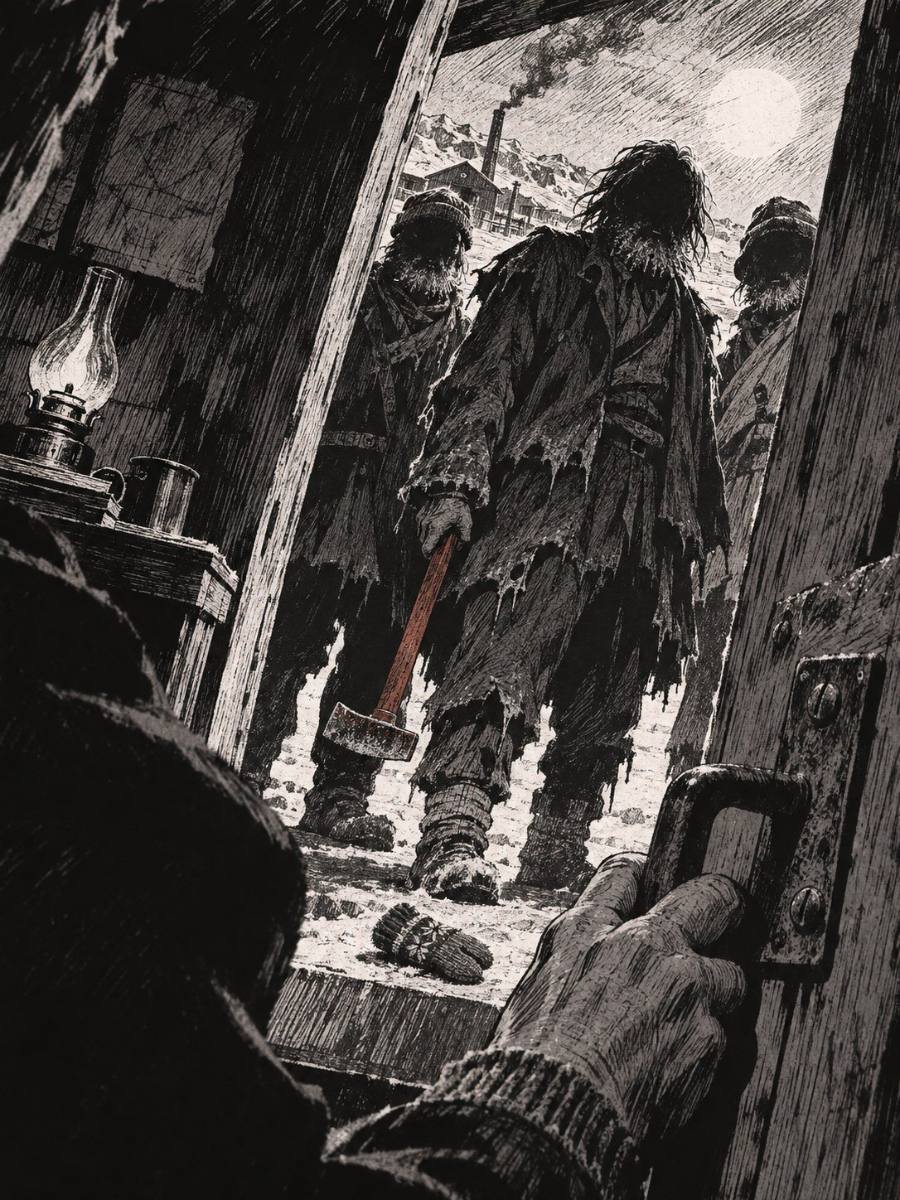
On 20 May 1916, three men walked down a mountainside into the Stromness whaling station on South Georgia, an island far out in the South Atlantic.
Their clothes were in rags. Their hair and beards had not been cut in well over a year. Two small boys saw them, gave them one long look and ran. An old man, by Shackleton’s own account, “started as if he had seen the Devil himself”.
They were taken to the station manager, Sørlle. He looked at the leader’s face and did not recognise it.
“Don’t you know me?” Shackleton asked. Sørlle said he knew the voice. He guessed it was the mate of a ship called the Daisy.
“My name is Shackleton.”
The three men had just crossed the island on foot. Before that, they had crossed about 800 miles of the Southern Ocean in an open boat. Behind them, on a rock called Elephant Island, 22 more men were waiting to be fetched. (SOUTH-X)
Sailing into a war
The plan, announced in 1913, was enormous. Ernest Shackleton wanted his Imperial Trans-Antarctic Expedition to be “the first to cross the Antarctic continent from the Weddell Sea to the Ross Sea”.
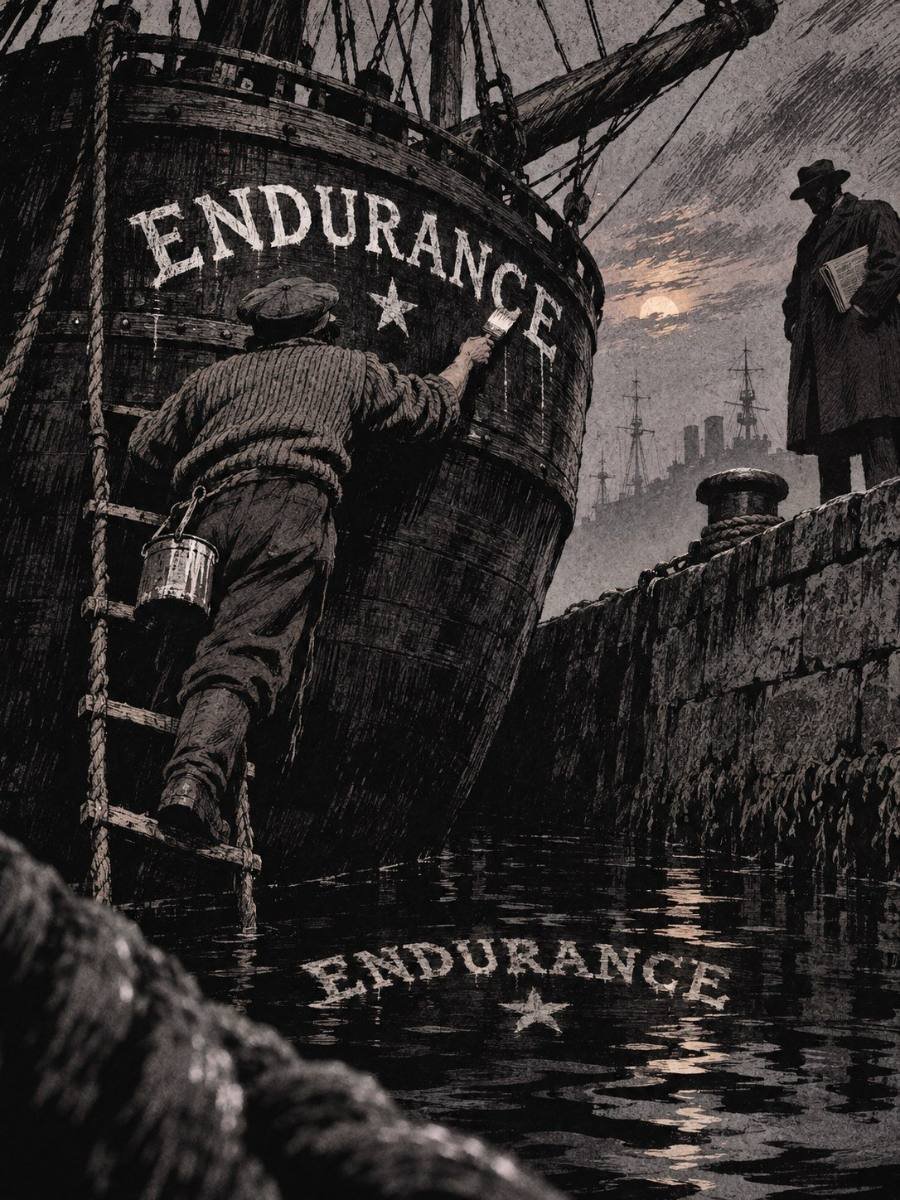
His ship had been built in Norway for pack ice and launched in 1912 as the Polaris. She was a three-masted barquentine with a coal-fired steam engine. Shackleton bought her for £14,000 and renamed her after his family motto, Fortitudine Vincimus, “through endurance we conquer”. She became the Endurance.
She left London on 1 August 1914. Three days later, Britain declared war on Germany. On 8 August she sailed from Plymouth anyway.
A second ship, the Aurora, would land a support party on the far side of the continent to lay supply depots for the last leg of the crossing. (SPRI-END) (FMHT-HIST) (RGS-TL) (SPRI-AURORA)
Frozen in, 76 degrees south
The Endurance left South Georgia on 5 December 1914 and pushed south into the Weddell Sea. Two days later she met pack ice.
On 18 January 1915 the ice closed around her at 76°34′S. Two days later Shackleton wrote that she was “firmly beset”. The ice was “packed heavily and firmly all round the Endurance in every direction”.
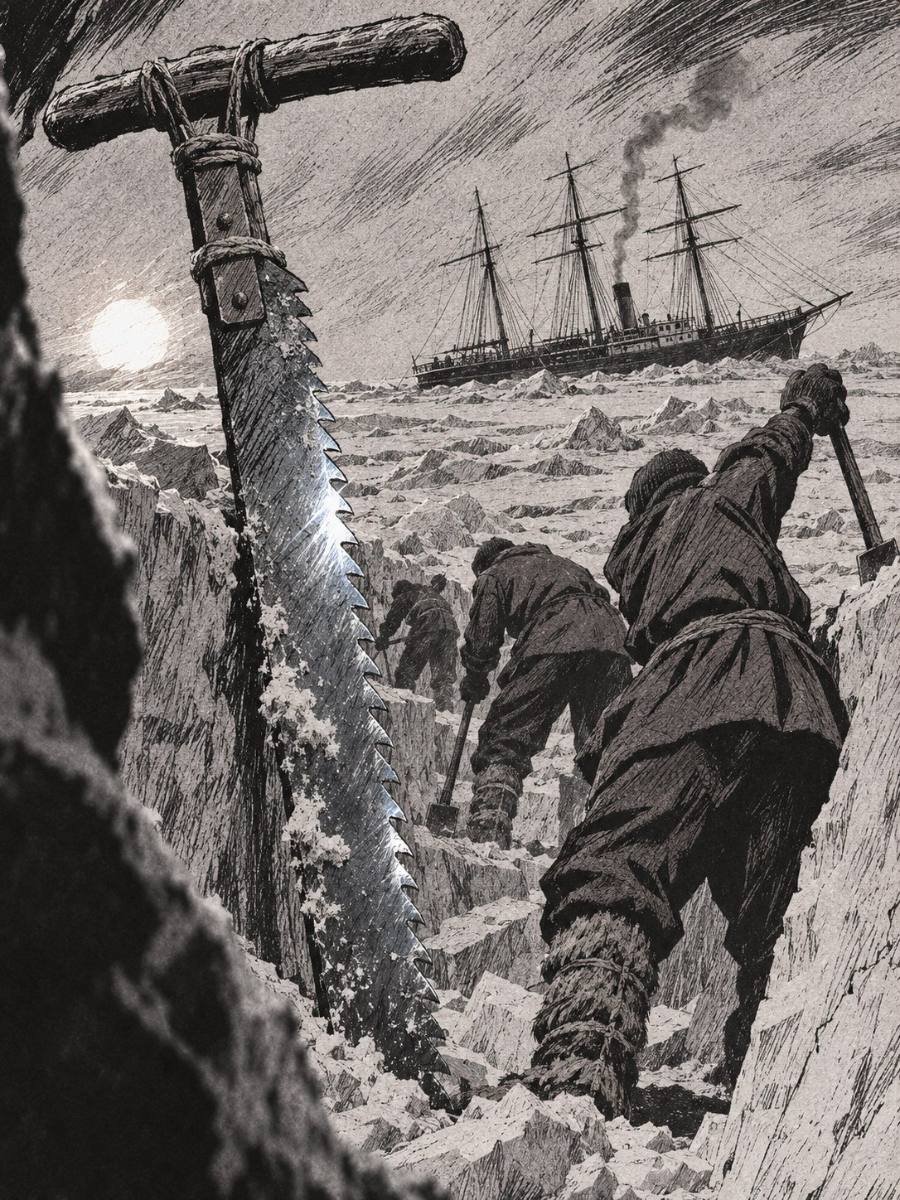
In February the crew went over the side with saws and chisels and tried to cut a channel. It did not work. By late February the ship had drifted to about 77°S, her farthest south, and Shackleton accepted that she would spend the winter in the ice.
The fires had already been let out to save coal. The ship was no longer sailing anywhere. The ice was carrying her. (RGS-TL) (SOUTH-II) (FMHT-HIST)
Eight penguins came to watch
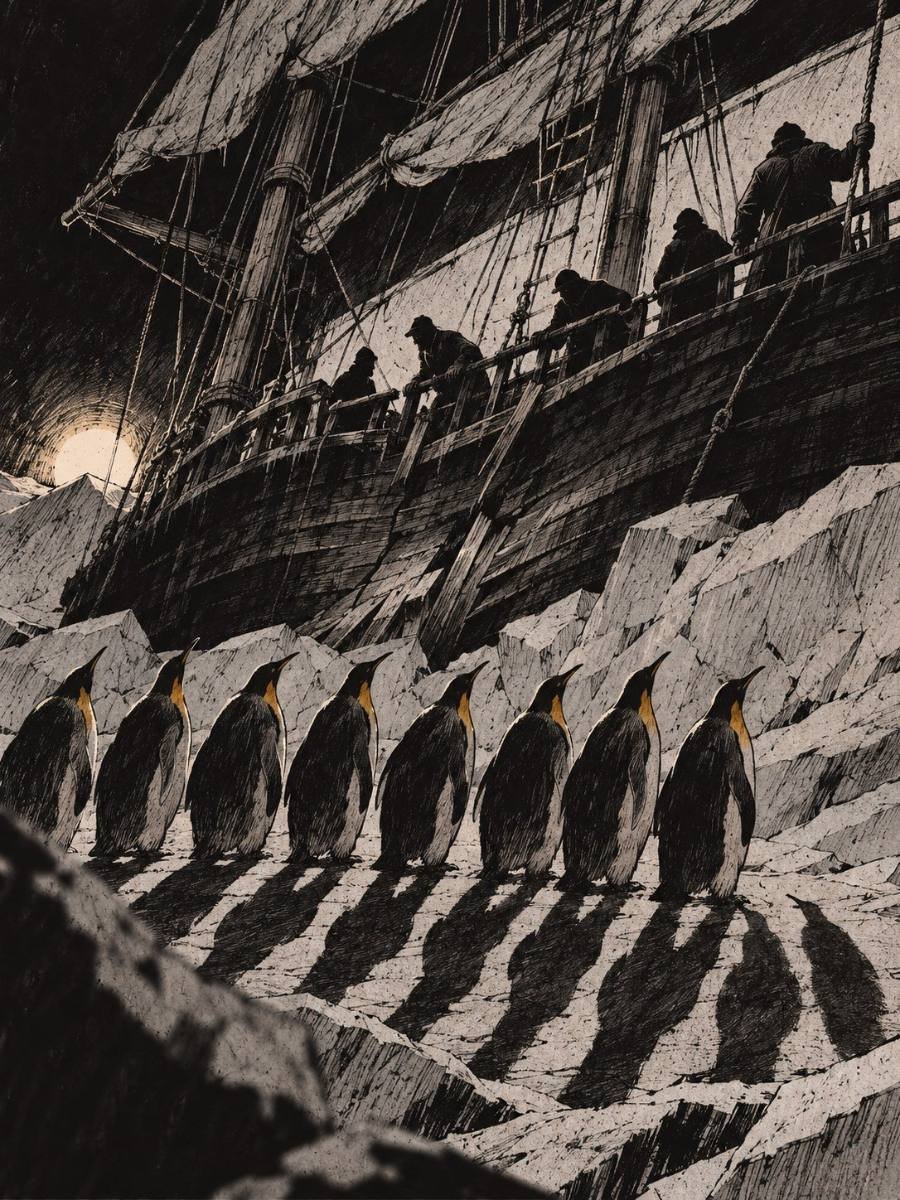
Through the long polar winter the floes moved, and the Endurance moved with them, hundreds of miles in all.
From about September 1915 the pressure began to work on the hull. From 24 October it bent and splintered, with sounds the men compared to heavy fireworks.
At the height of it, eight emperor penguins walked up to the dying ship and stood looking at her. In Shackleton’s account, their cries “sounded like a dirge for the ship”.
On 27 October 1915, at 5 p.m., he ordered everyone onto the ice. The ship was, he wrote, “crushed beyond all hope of ever being righted”. That night he added: “It is hard to write what I feel.” (COOL-TL) (FMHT-HIST) (SOUTH-IV)
Two pounds and one page of Job
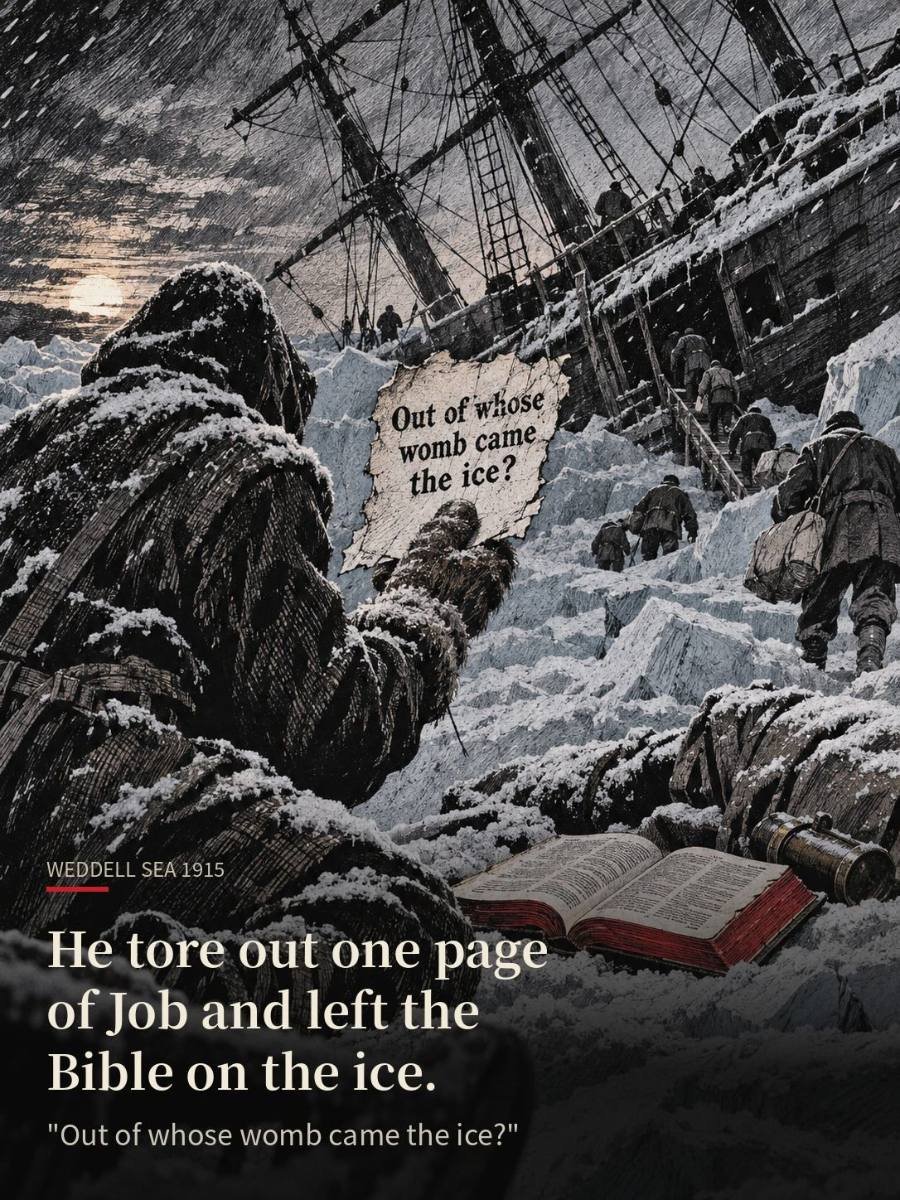
Twenty-eight men now lived on a floating sheet of ice. Each was allowed two pounds of personal belongings.
Shackleton set the example himself. Queen Alexandra had given the expedition a Bible. He tore out the fly-leaf and one page from the Book of Job, the page with the line “Out of whose womb came the ice?” Then he left the rest of the Bible on the ice.
Some things were let through. Leonard Hussey kept his banjo. Hurley’s photographs were kept too.
Their first camp was a dumping ground for everything they could no longer carry. They called it Dump Camp. (SOUTH-IV) (RGS-TL)
Into the flooded ship for the photographs
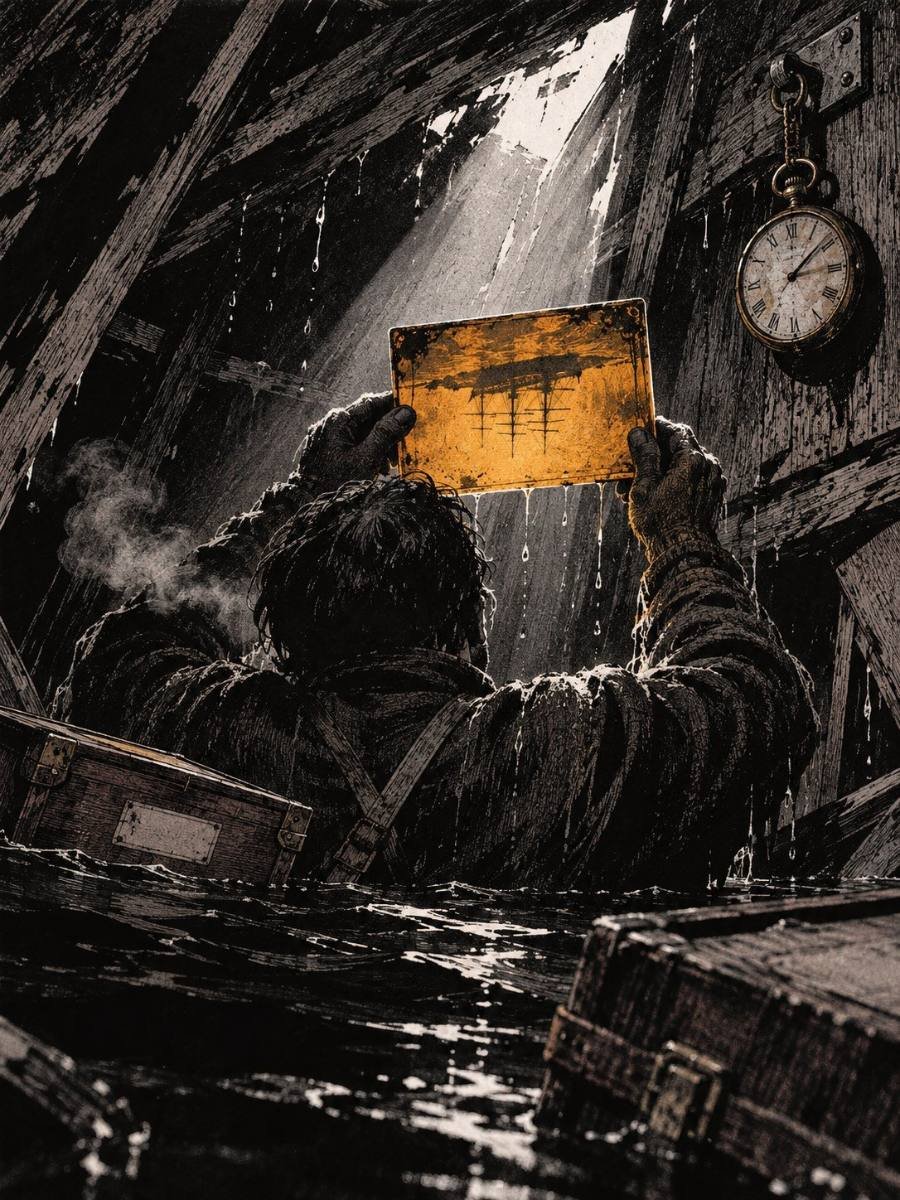
The wreck still stood in the ice nearby, and on 8 November 1915 the expedition’s photographer, Frank Hurley, went back inside her.
The cabins where his glass-plate negatives were stored were flooded. He went in anyway and came out with the plates.
There was no way to carry them all. On the ice, Hurley and Shackleton went through them together and chose about 120 to keep. The rest, about 400, were smashed.
Sources count the survivors differently. Today the Royal Geographical Society holds nearly 150 of Hurley’s glass plates and 39 celluloid negatives. They are most of the reason anyone knows what the Endurance looked like. (RGS-TL) (FMHT-HIST) (NATGEO-HURLEY)
“She’s going, boys!”
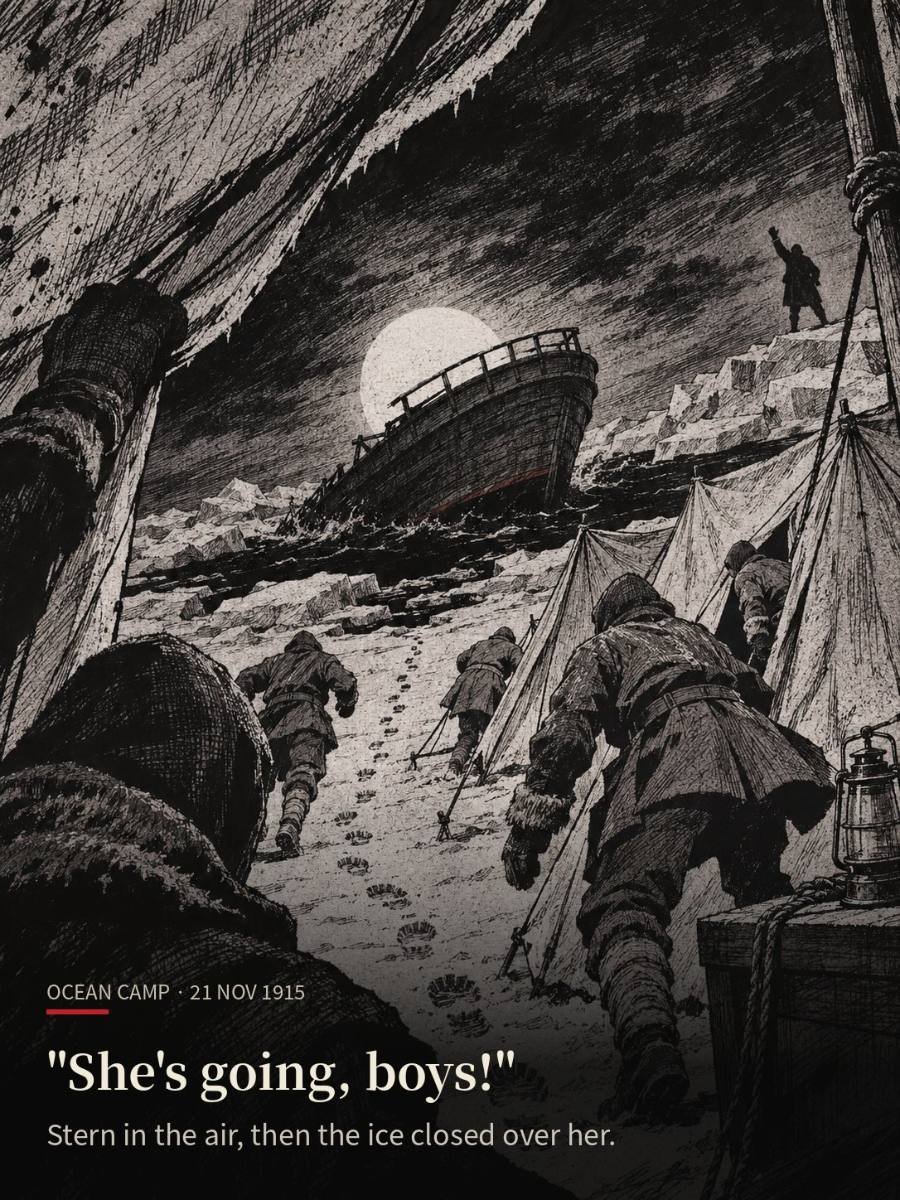
The men had moved to a sturdier floe about a mile and a half from the wreck. They called it Ocean Camp.
On the evening of 21 November 1915, they were lying in their tents when Shackleton called out from the look-out: “She’s going, boys!”
They came out in time to see it. She went down bows first, her stern raised in the air. Then, in Shackleton’s words, “the ice closed over her for ever”.
“She’s gone, boys,” he said, quietly.
The navigator, Frank Worsley, worked out the position by calculation, not by sextant: 68°39′30″S, 52°26′30″W. It would take 107 years for anyone to test it. (SOUTH-V) (FMHT-HIST)
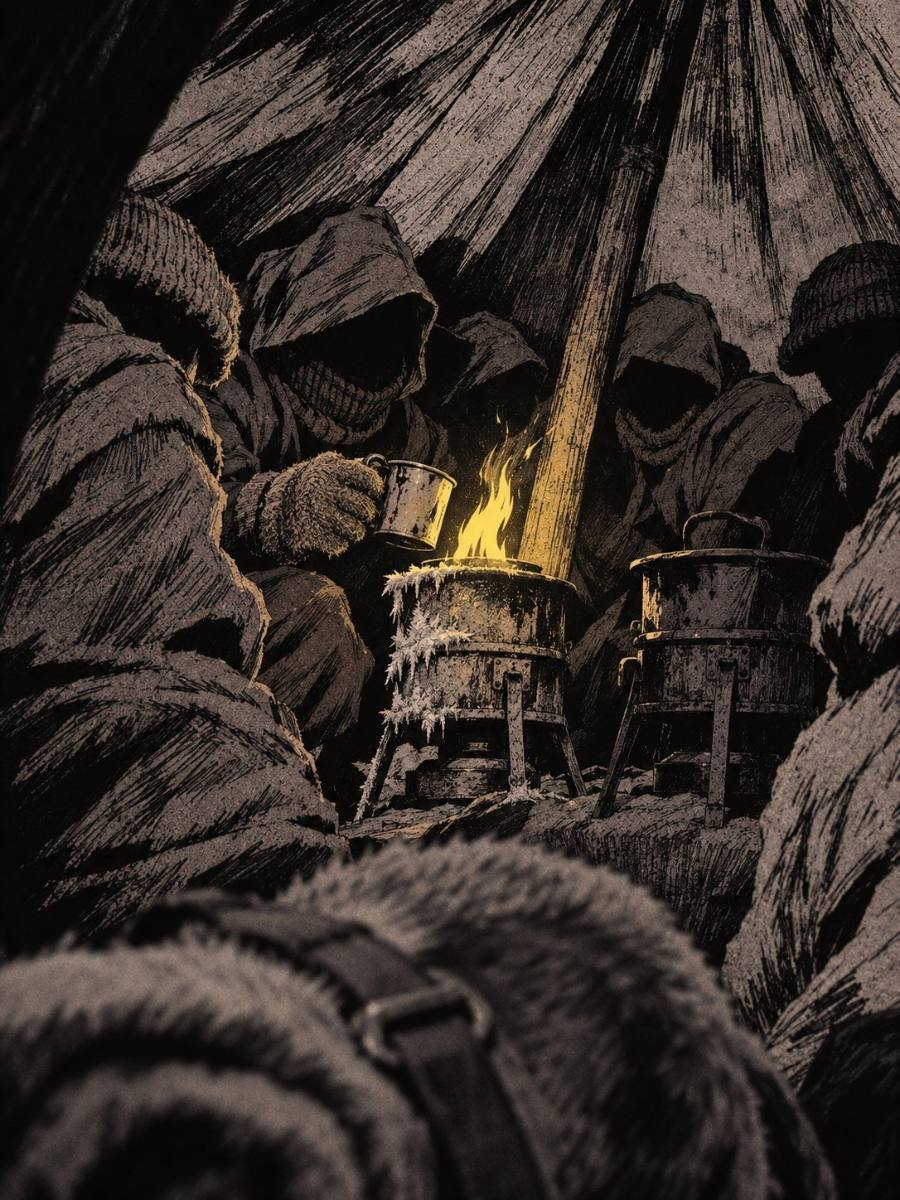
One stove for 28 men
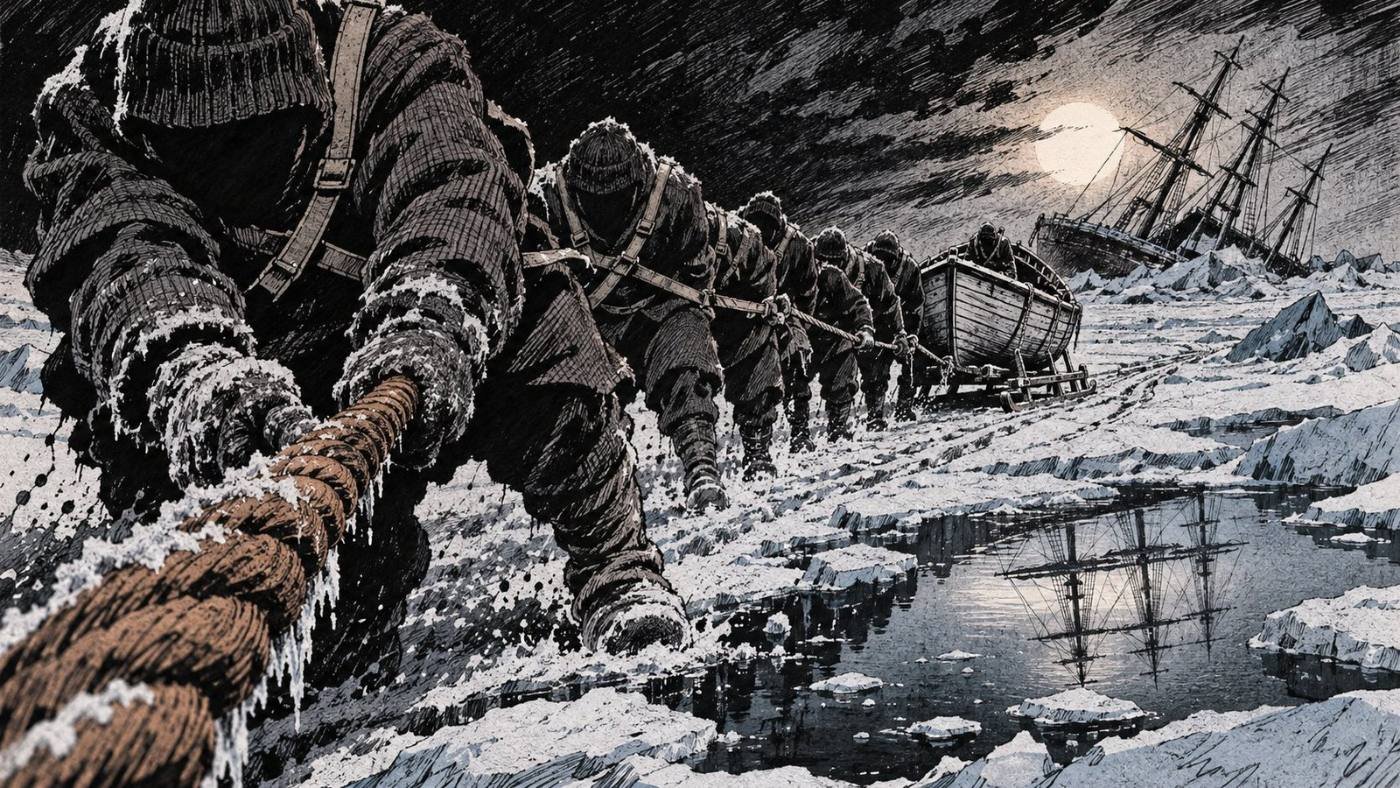
At 3 a.m. on 23 December 1915 the men were roused to drag the boats across the ice by night, when the snow was harder. They had kept Christmas a day early.
The ice ahead was too broken. They stopped on another floe and named it, with some honesty, Patience Camp. They would live there for nearly three and a half months.
Supplies ran down. Shackleton wrote that blubber was so short that one stove had to be shut down. At another point he counted forty days’ food left.
They lived mostly on seal and penguin. All the while the floe drifted north, toward open sea and toward islands they could not reach. (SOUTH-VI) (COOL-TL) (SOUTH-VII) (SOUTH-V)
Empty harnesses on the ice
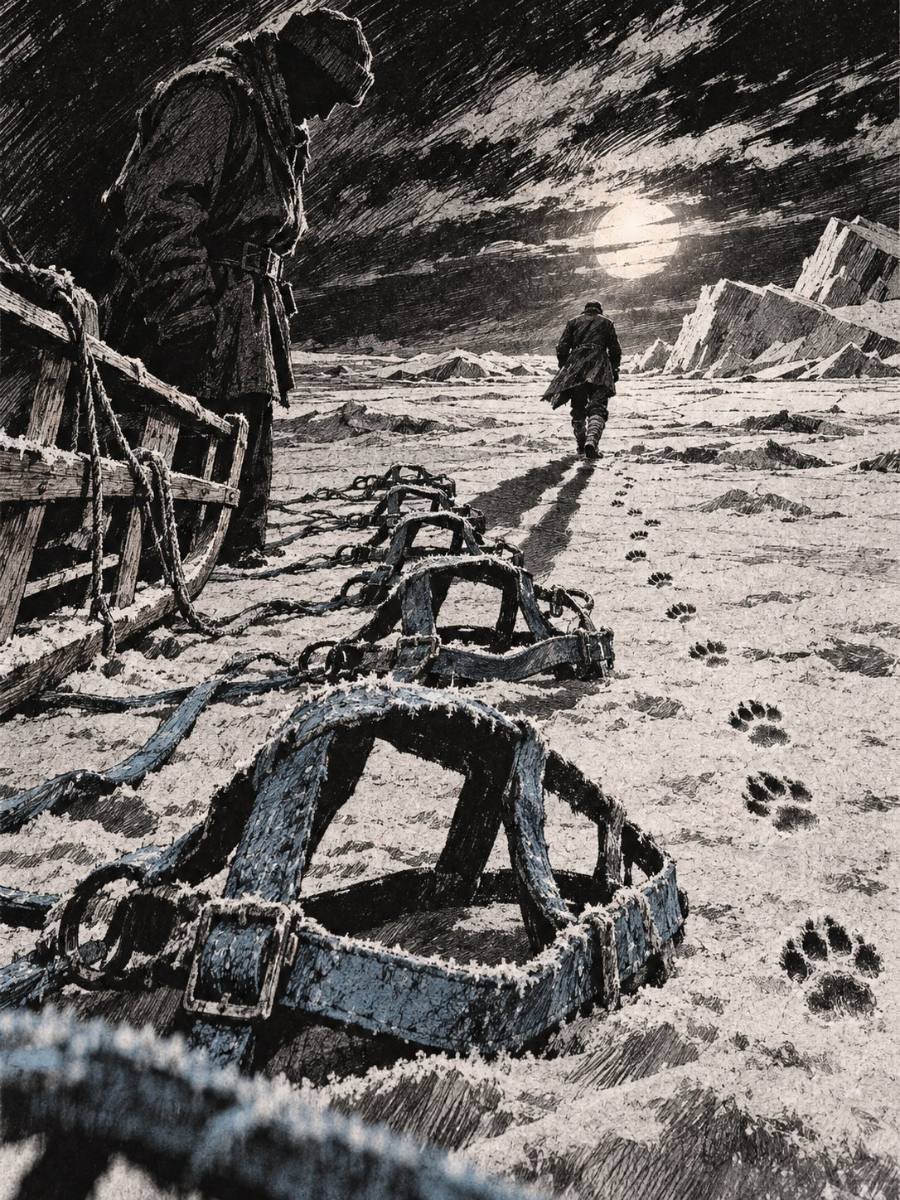
Some of the hardest entries in Shackleton’s book are about the animals.
Two days after the ship was abandoned, he had the carpenter’s cat, Mrs Chippy, and the youngest pups shot. “We could not undertake the maintenance of weaklings under the new conditions,” he wrote.
At Patience Camp, as the ice broke up and the sledges became useless, he ordered the dogs shot, all but two teams. He called it “the worst job that we had had throughout the Expedition”.
The last two teams were shot on 2 April 1916, and the men ate the meat. A week later, they would need every boat and every man’s strength. (SOUTH-IV) (RGS-SCH5) (SOUTH-VII)
The floe split under the boats
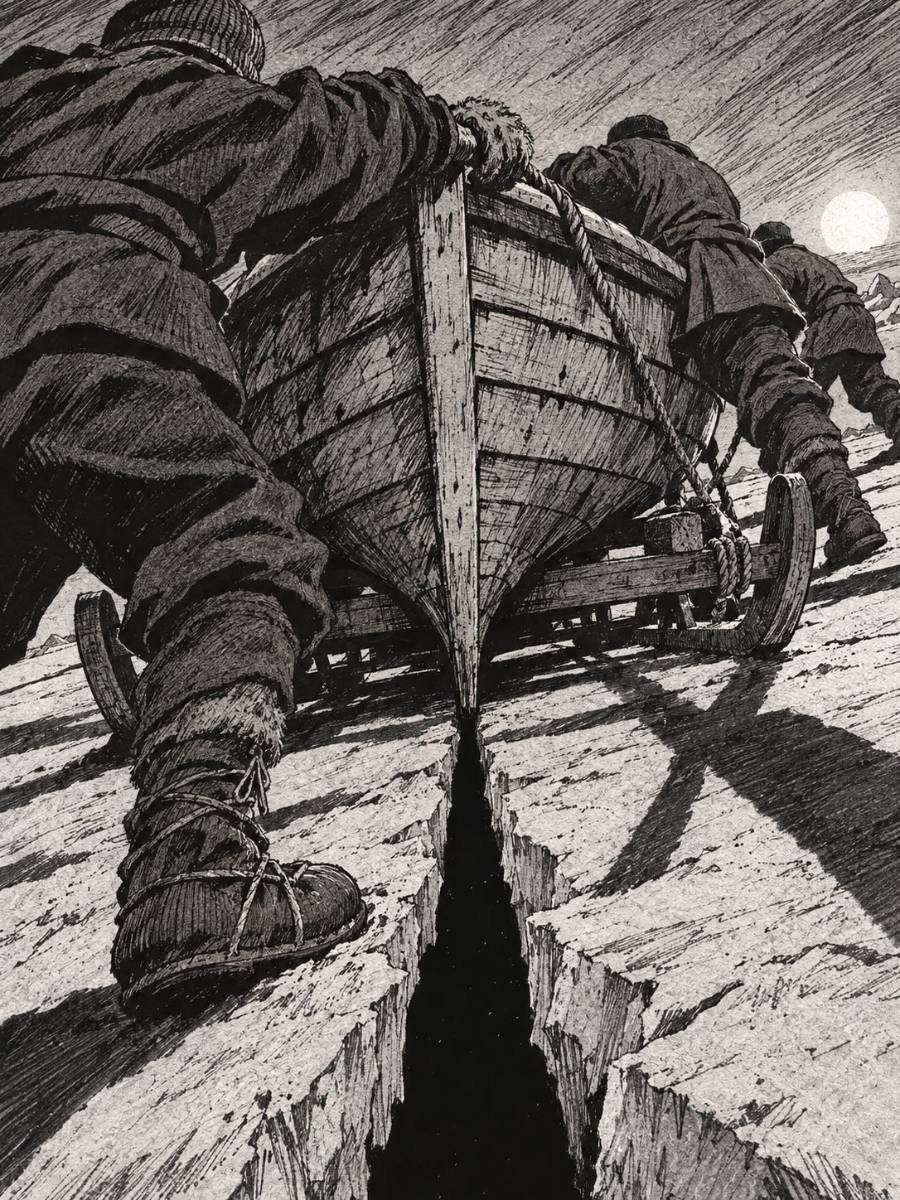
At 11 a.m. on 9 April 1916, the floe they had lived on for months split right across, under the boats.
At 1 p.m. the boats went into the water: the James Caird, the Dudley Docker and the Stancomb Wills. Shackleton took the James Caird with Frank Wild and eleven men. Worsley had the Dudley Docker with nine.
For days they rowed and sailed through loose ice and freezing spray, with almost nothing to drink. “We were dreadfully thirsty now,” Shackleton wrote.
They were heading for Elephant Island, a bleak scrap of rock off the tip of the Antarctic Peninsula. (SOUTH-VIII) (RGS-TL)
Solid ground after 497 days
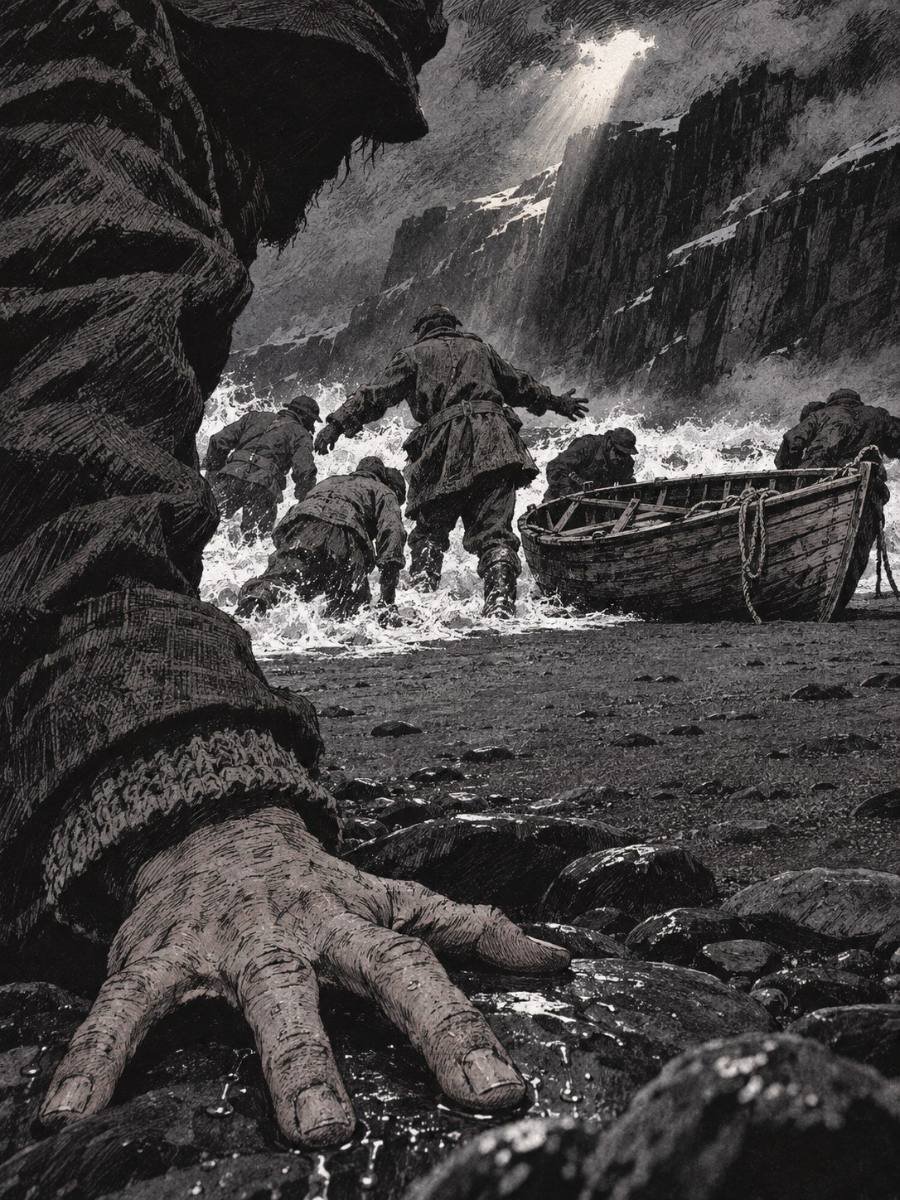
On 15 April 1916, the boats came ashore on Elephant Island.
It was the men’s first solid ground in 497 days. Shackleton wrote that some of them were “laughing uproariously”, and that this was the first landing ever made on the island.
The beach was no place to stay. Wild found a narrow spit about seven miles to the west, and the party moved there two days later. It became known as Cape Wild.
No ship would ever think to look for them there. If anyone was going to be rescued, someone would have to go and ask. (RGS-TL) (COOL-TL) (SOUTH-VIII)
Six men, one boat, 800 miles
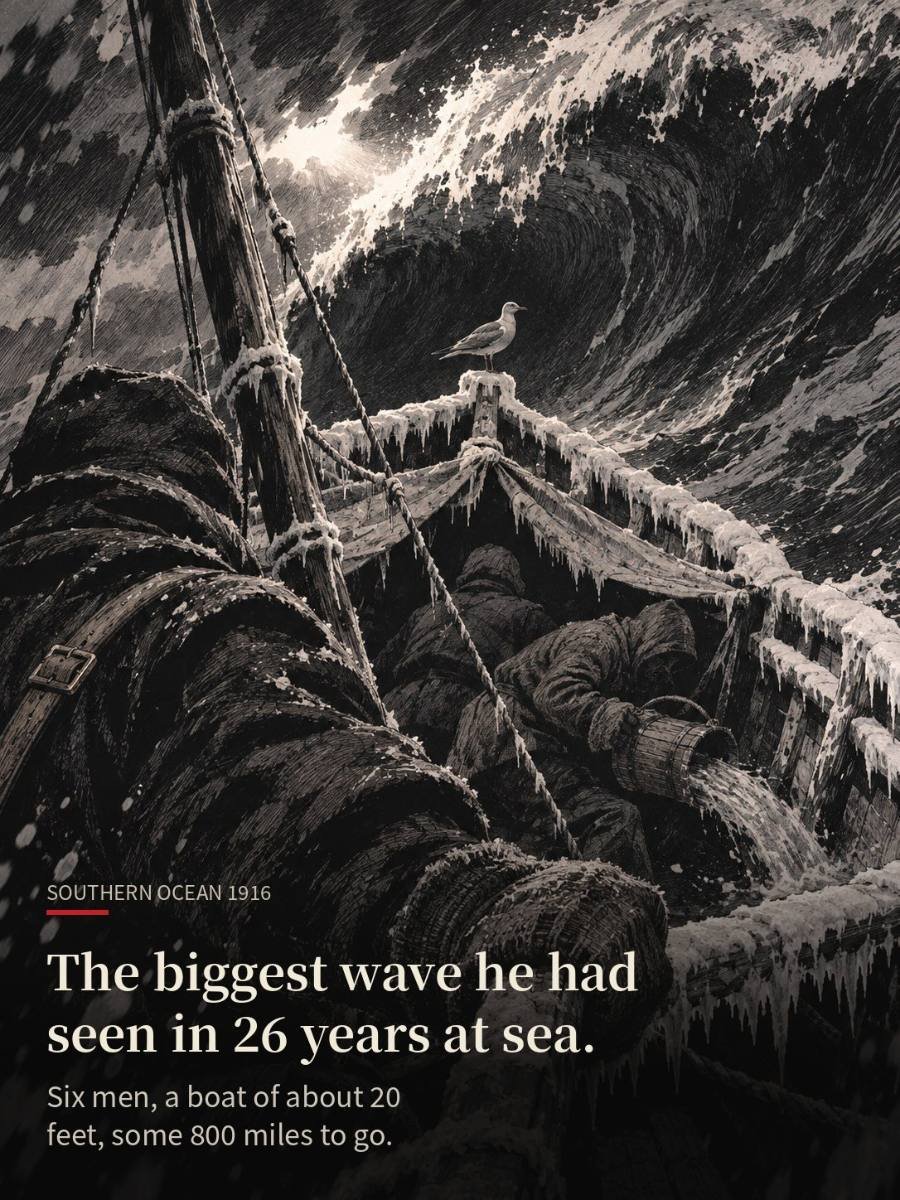
On 24 April 1916, six men sailed from Elephant Island in the James Caird: Shackleton, Worsley, Tom Crean, the carpenter Harry McNeish (also spelled McNish), Timothy McCarthy and John Vincent.
The boat was about 20 feet long. South Georgia, the nearest place with people on it, was more than 800 miles away. Shackleton later wrote, “The 20 ft. boat had never looked big.”
Spray froze on the boat until her bows, sides and decking wore “a heavy coat of mail” of ice. One night he saw a wave so large that “during twenty-six years’ experience of the ocean in all its moods I had not encountered a wave so gigantic”.
On 8 May McCarthy saw the black cliffs of South Georgia. Two days later, after sixteen days at sea, they landed at King Haakon Bay, on the wrong side of the island. (SOUTH-IX) (RGS-TL) (BRIT-BIO) (SPRI-END)
Three men, and the feeling of a fourth
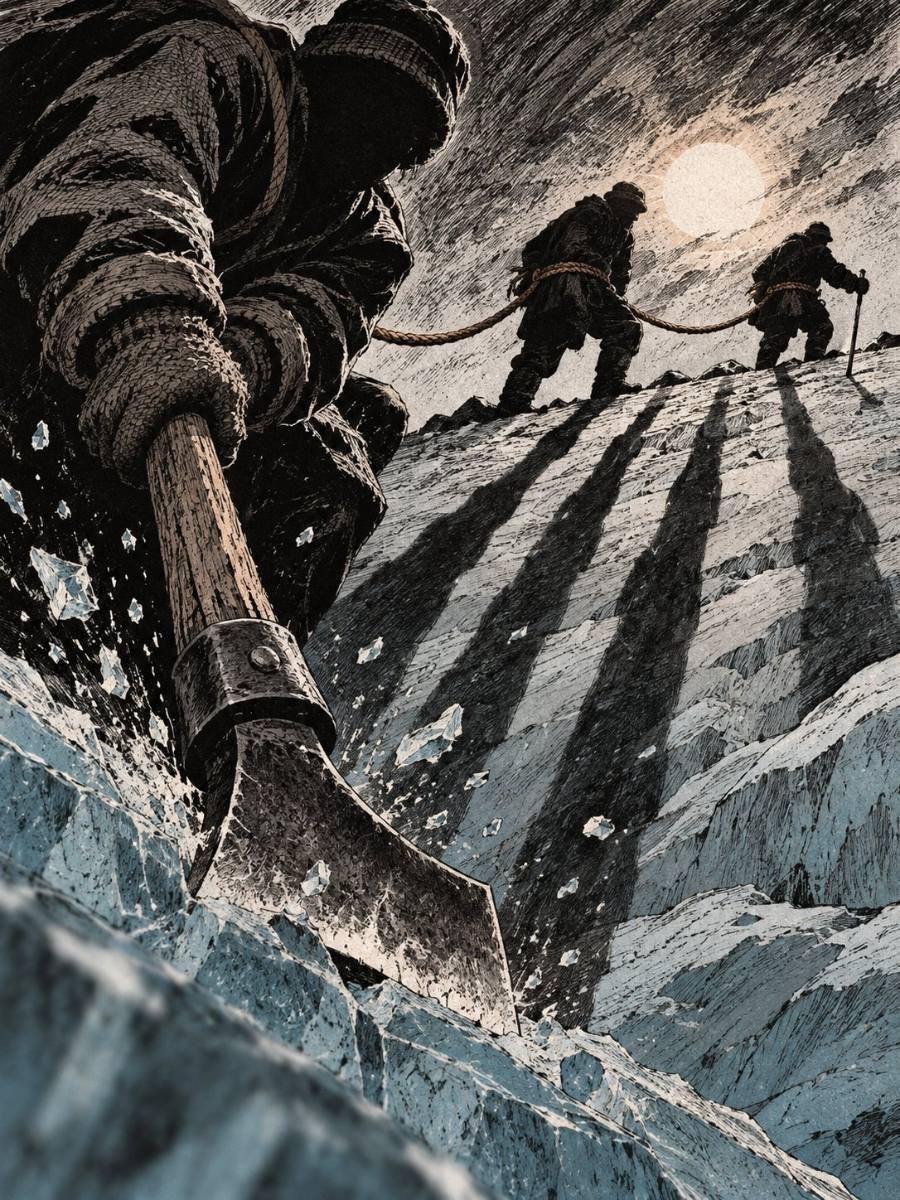
The whaling stations were on the north coast. Three of the six, McNeish, McCarthy and Vincent, were in no state to go on, and stayed in a camp they called Peggotty Camp.
On 19 May 1916, Shackleton, Worsley and Crean set out to cross South Georgia’s unmapped interior on foot. They carried a carpenter’s adze to cut steps in the ice, 50 feet of rope and a Primus stove.
At one point they sat down on a slope and slid, “in the fashion of youthful days”.
Later, Shackleton wrote that “it seemed to me often that we were four, not three”. Worsley told him the same: “Boss, I had a curious feeling on the march that there was another person with us.” (RGS-TL) (SOUTH-X) (SPRI-END)
Seven o’clock, and a whistle
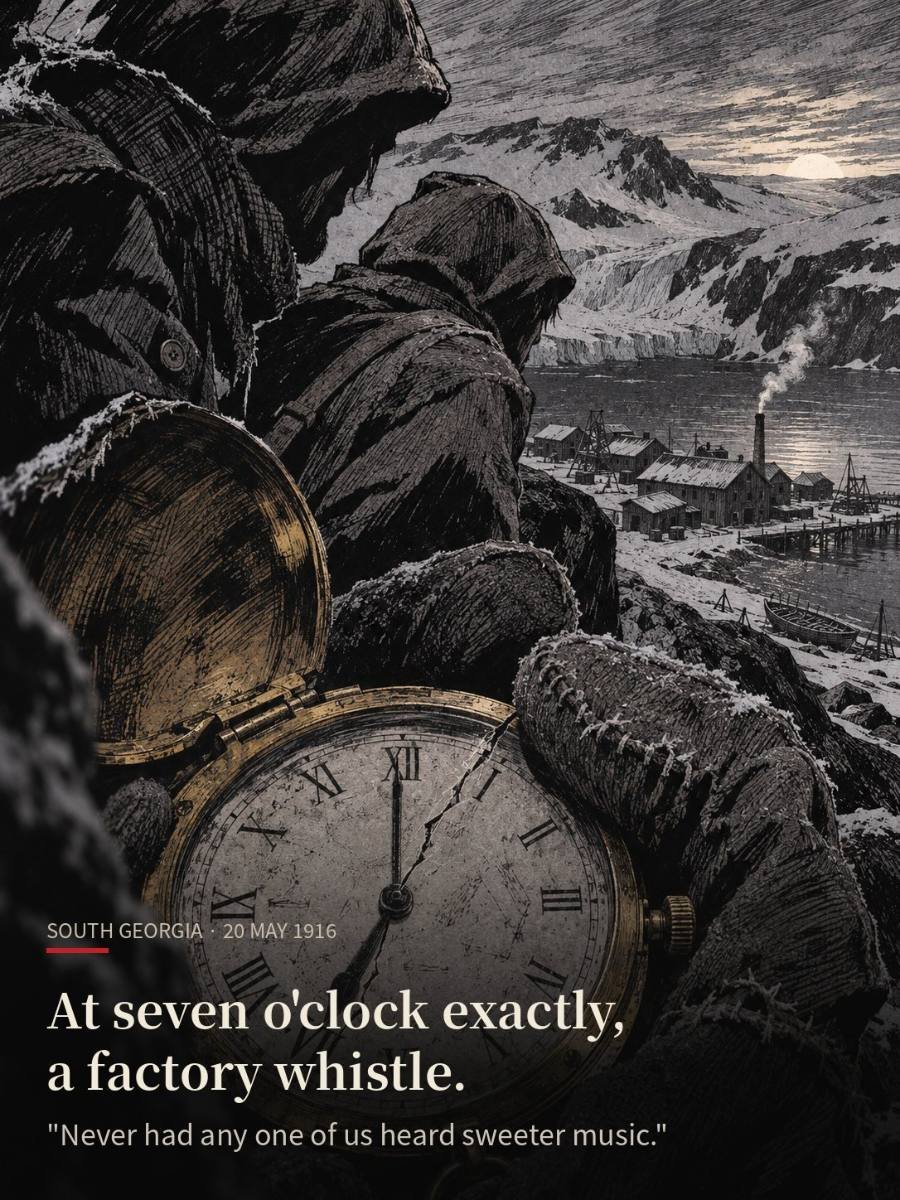
Early on the morning of 20 May they were on a ridge above the coast.
At 6.30 a.m. Shackleton thought he heard a steam whistle. They knew the whalers were called to work at seven, so they sat and watched the chronometer.
“Right to the minute the steam-whistle came to us.” It was the first sound made by anyone outside their own party since December 1914. “Never had any one of us heard sweeter music.”
The last stretch went straight down through a waterfall. After 36 hours on the march, at about half past one in the afternoon, they saw the sheds and factory of Stromness below them. (SOUTH-X) (RGS-TL)
A house of two upturned boats
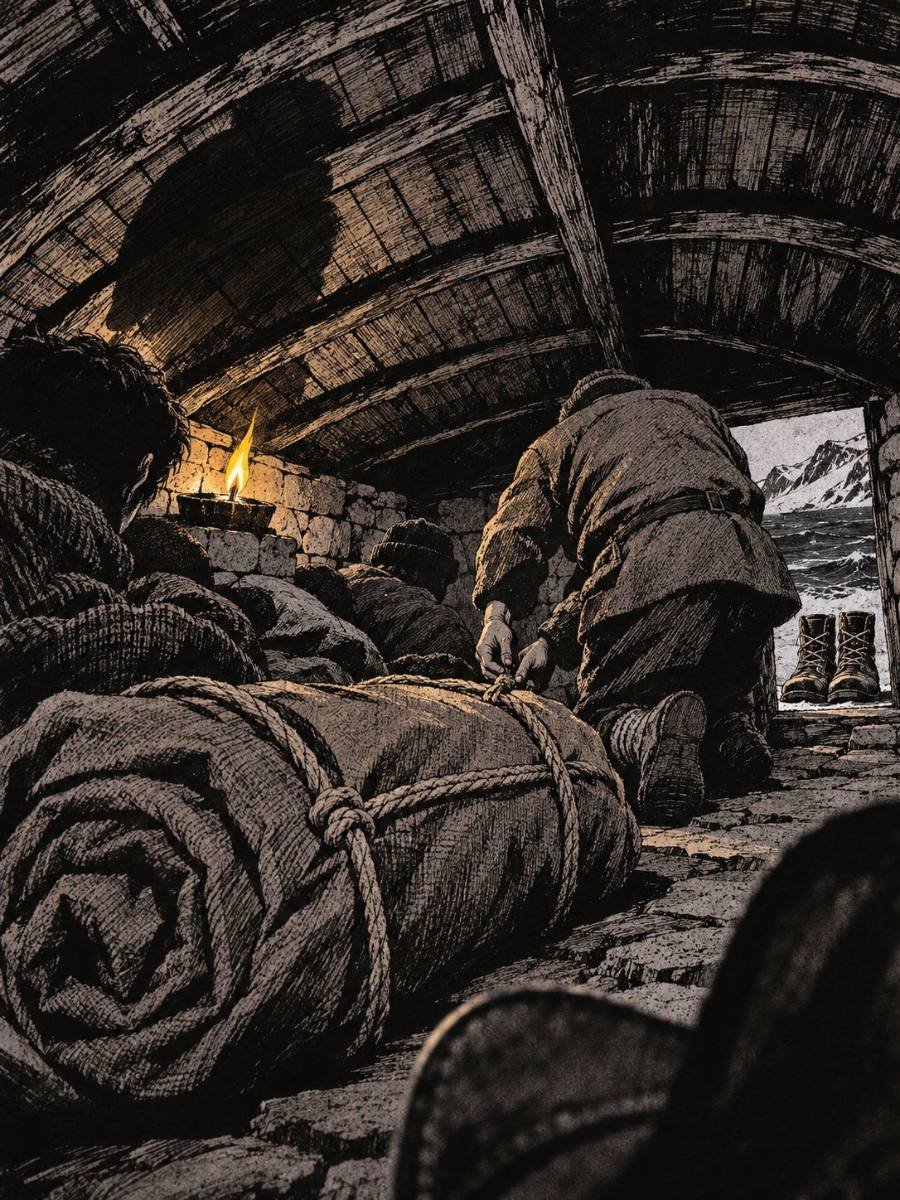
On Elephant Island, 22 men had turned the two smaller boats upside down on low stone walls and made a hut. At its highest point the ceiling was four and a half feet.
They lived on seal and penguin, and later on limpets and seaweed boiled in sea-water.
Frank Wild was in charge. Every morning, beginning about a fortnight after the boat left, he rolled up his sleeping bag and said: “Get your things ready, boys, the Boss may come to-day.”
Meanwhile the Boss was trying. A whaler, the Southern Sky, was stopped by pack ice in May. A Uruguayan trawler got within about twenty miles in June and turned back. An old oak schooner, the Emma, was towed out in July and failed too. (SOUTH-XII) (SOUTH-XI) (RGS-TL) (COOL-TL)
“Ship O!”
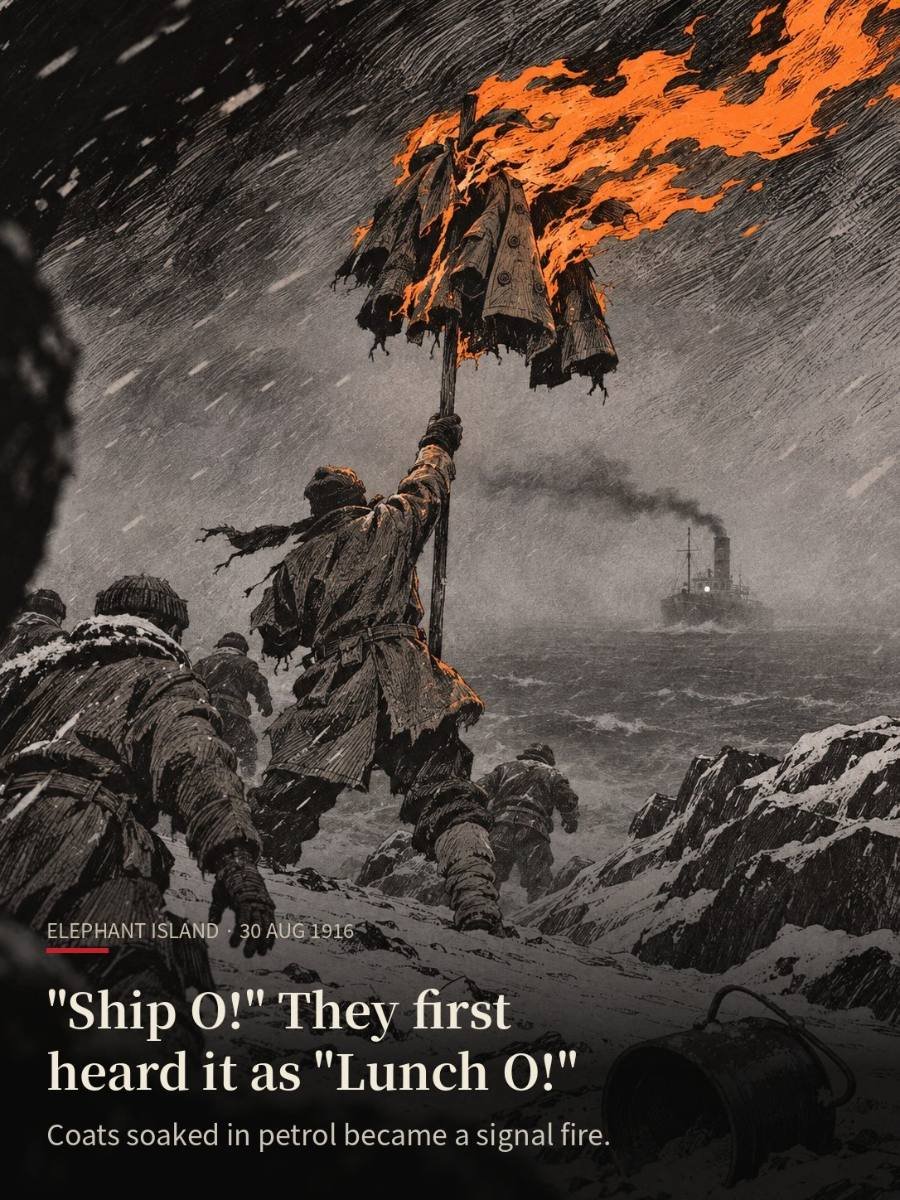
The fourth try was a small Chilean Navy steam tug, the Yelcho, commanded by the pilot Luis Pardo. She left Punta Arenas on 25 August 1916.
On Elephant Island, by then, there was about two days’ food left. On 30 August, at lunchtime, George Marston was outside and shouted “Ship O!”. Inside, the men first heard it as “Lunch O!”.
They rushed for the door and kicked over the pot of limpets and seaweed on the way. Wild soaked coats, mitts and socks in petrol and set them alight on Penguin Hill as a signal.
From the boat, Shackleton called out: “Are you all well?” Wild answered: “We are all well, boss.” Within an hour every man was aboard. All 28 men of the Endurance came home. On the far side of the continent, three men of the Ross Sea party did not. (SOUTH-XI) (RN-2025) (SOUTH-XII) (SPRI-AURORA)
The name on the stern, 3,008 metres down
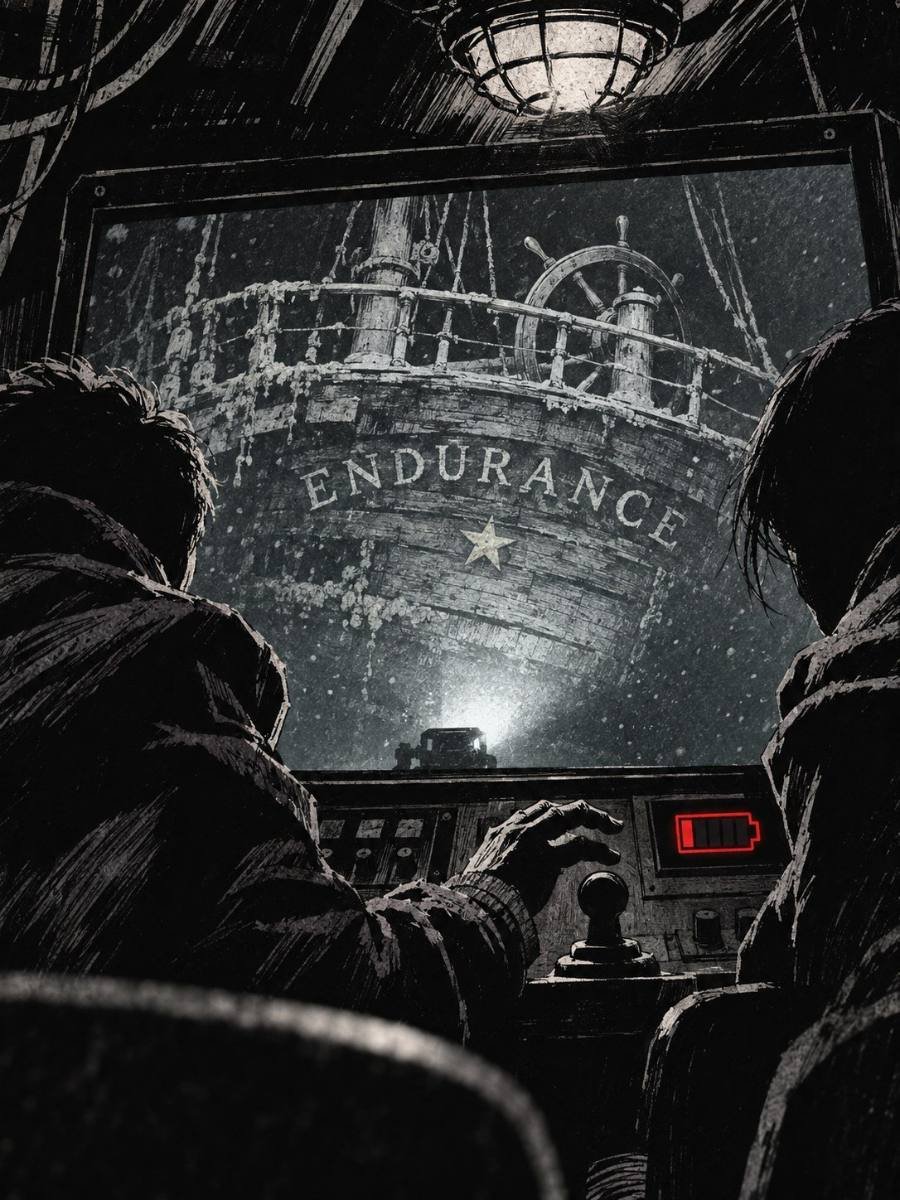
Shackleton died at Grytviken, South Georgia, on 5 January 1922, aged 47, and was buried there.
A century later, an expedition called Endurance22 went looking for his ship from the South African icebreaker S.A. Agulhas II. Its underwater vehicles searched a box of about 15 by 8 nautical miles of the Weddell Sea floor.
On 5 March 2022, with about 81 per cent of the box covered, the vehicle’s batteries were nearly gone. “We are at very low power,” the pilot said. Then the camera picked up a wooden stern, with “E N D U R A N C E” arched across it above a five-pointed star.
She lay upright, 3,008 metres down, just over four nautical miles from Worsley’s calculated position. “This is by far the finest wooden shipwreck I have ever seen,” said the director of exploration, Mensun Bound.
The wreck is protected under the Antarctic Treaty. The team filmed and surveyed her, and touched nothing. (BRIT-BIO) (FMHT-OTD) (E22-FOUND) (NATGEO-2024) (E22-BLOG)
Case notes: Shackleton and the Endurance
In 1915 the Endurance, the ship of Ernest Shackleton’s Imperial Trans-Antarctic Expedition, was crushed by pack ice in the Weddell Sea. Her 28 men camped on drifting ice, sailed open boats to Elephant Island, and sent six men about 800 miles to South Georgia for help. All 28 came home. The wreck was found in 2022 (SOUTH-IV) (SOUTH-XI) (E22-FOUND).
Where the case stands (as of November 2026)
Closed. Every one of the 28 men of the Endurance came home in 1916 (SOUTH-XI) (SPRI-END). On the other side of the continent, three men of the Ross Sea party died (SPRI-AURORA).
The wreck was found on 5 March 2022 and is protected as a Historic Site and Monument under the Antarctic Treaty. It was filmed and surveyed, not disturbed (E22-FOUND) (E22-BLOG).
Timeline
| When | What happened |
|---|---|
| 1 Aug 1914 | The Endurance leaves London; Britain declares war on 4 August (FMHT-HIST) |
| 5 Dec 1914 | Sails south from South Georgia (RGS-TL) |
| 18 Jan 1915 | Beset in the Weddell Sea at 76°34′S (RGS-TL) (SOUTH-II) |
| 27 Oct 1915 | Ship abandoned at 5 p.m.; 28 men on the ice (SOUTH-IV) |
| 21 Nov 1915 | The Endurance sinks (SOUTH-V) |
| 29 Dec 1915 | Patience Camp established (RGS-TL) |
| 9 Apr 1916 | Floe splits; three boats launched (SOUTH-VIII) |
| 15 Apr 1916 | Landing on Elephant Island, first land in 497 days (RGS-TL) |
| 24 Apr 1916 | The James Caird sails with six men (RGS-TL) |
| 10 May 1916 | Landing at King Haakon Bay, South Georgia (RGS-TL) |
| 19–20 May 1916 | 36-hour crossing to Stromness (SOUTH-X) (RGS-TL) |
| 30 Aug 1916 | The Yelcho takes off all 22 men from Elephant Island (SOUTH-XI) (RN-2025) |
| 5 Jan 1922 | Shackleton dies at Grytviken (BRIT-BIO) |
| 5 Mar 2022 | Endurance22 finds the wreck 3,008 m down (E22-BLOG) (FMHT-OTD) |
Evidence locker
Real photographs only, with our markings. Illustrations elsewhere in this file are AI-generated.
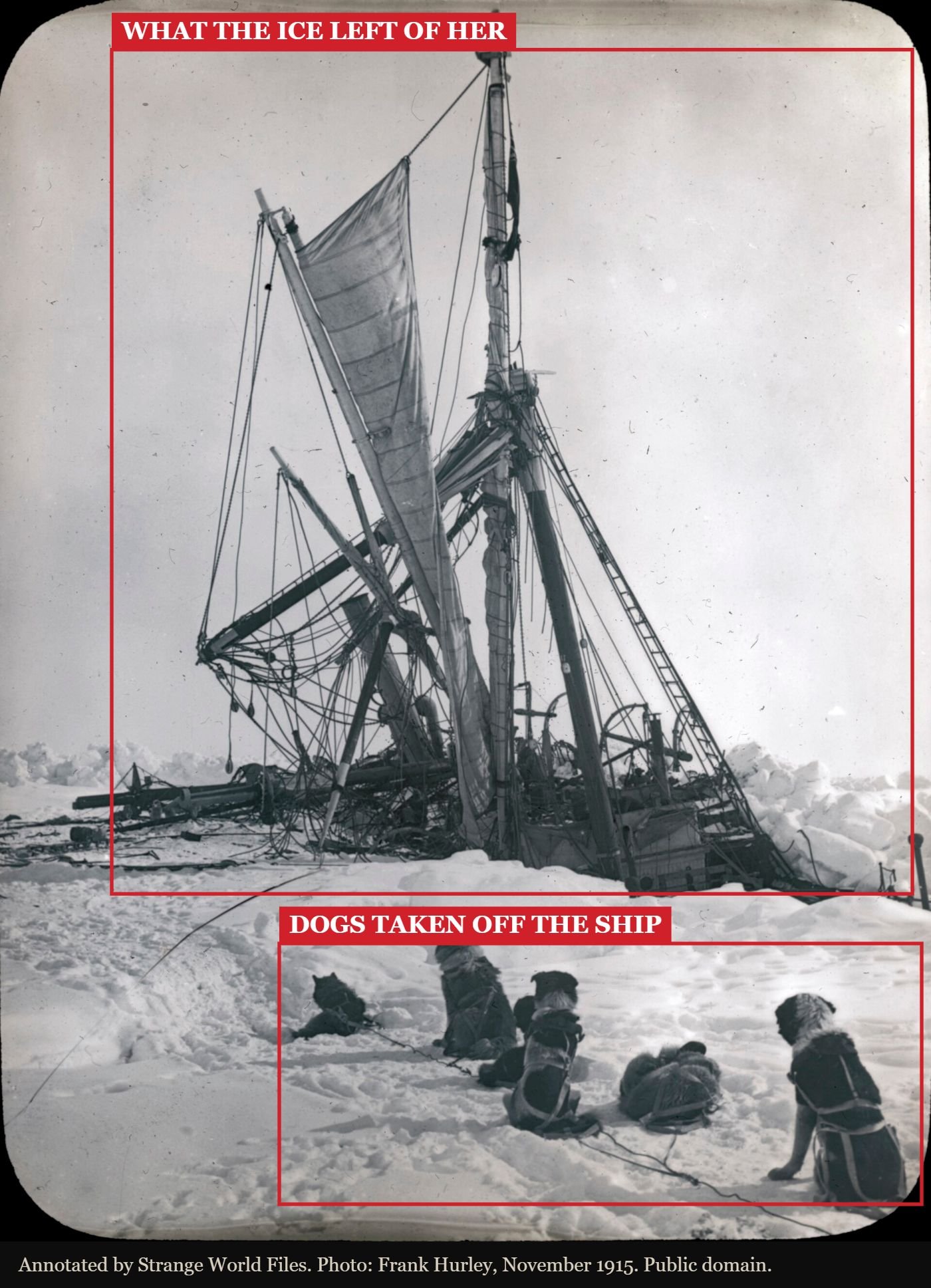 EXHIBIT A · TAP TO ENLARGE
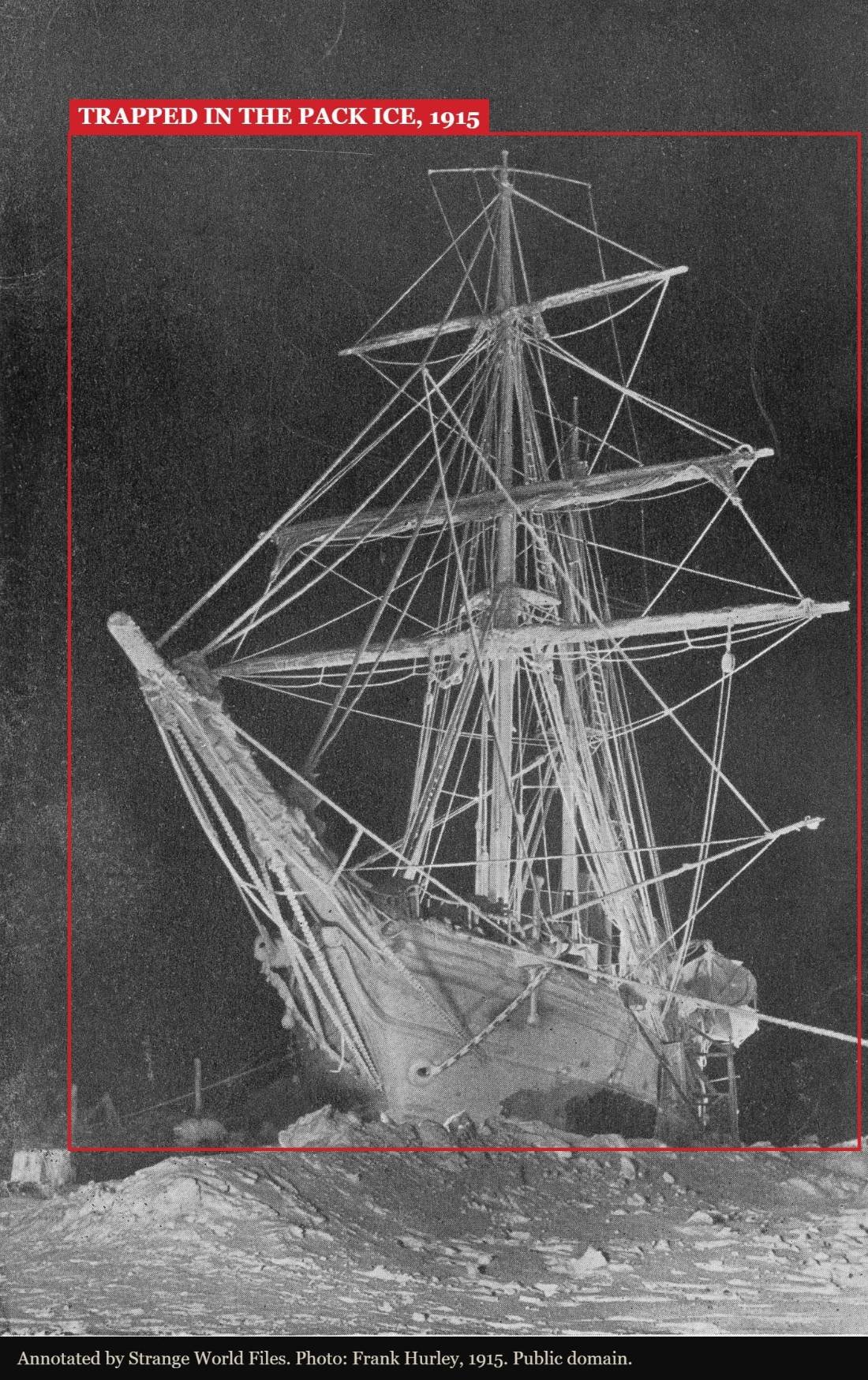 EXHIBIT B · TAP TO ENLARGE
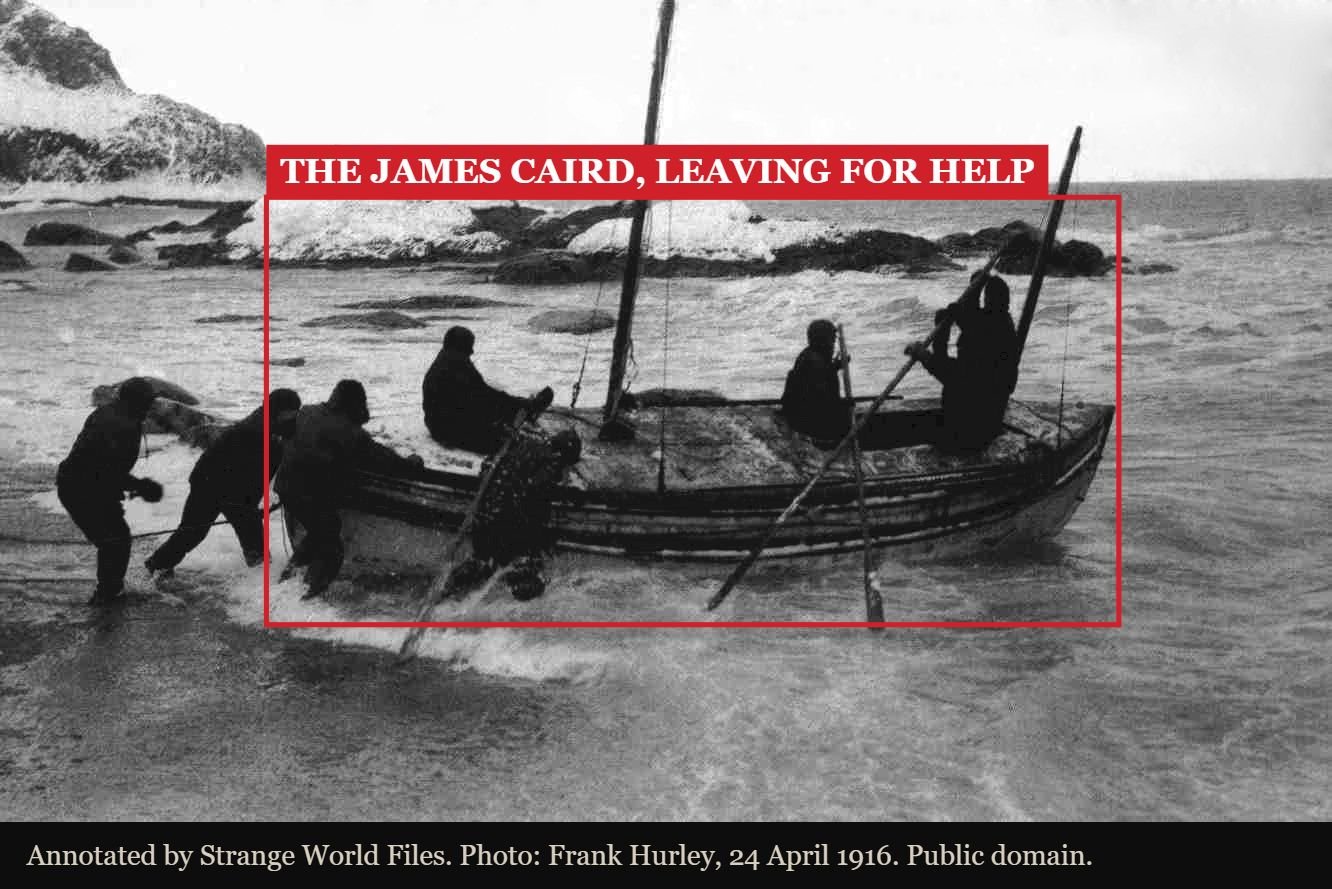 EXHIBIT C · TAP TO ENLARGE
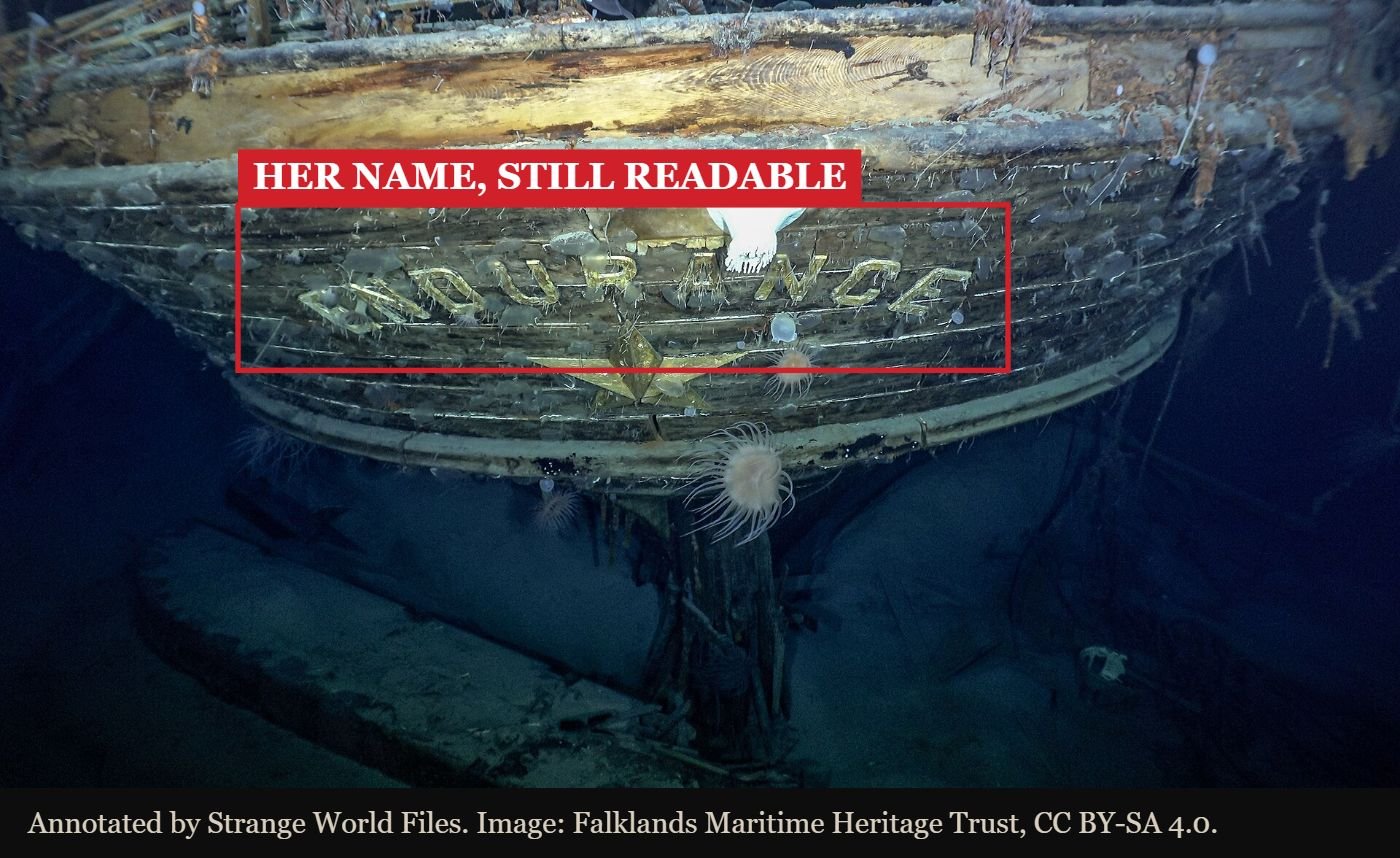 EXHIBIT D · TAP TO ENLARGE
Where the records disagree
| Detail | What sources say |
|---|---|
| James Caird distance in km | About 1,300 km or 1,450 km; Shackleton gives “over 800 miles” without saying which kind (BRIT-BIO) (SPRI-END) (SOUTH-IX) |
| James Caird length | 20 ft (Shackleton) or 22 ft (SOUTH-IX) (FMHT-HIST) |
| Hurley’s glass plates | About 120 kept and 400 smashed, or nearly 150 plates surviving today (RGS-TL) (NATGEO-HURLEY) |
| Ocean Camp founded | 27 October or 1 November 1915 (RGS-TL) (COOL-TL) |
| Wreck distance from Worsley’s position | Just over 4 nautical miles, or about 10 km (E22-BLOG) (FMHT-HIST) |
| Temperature when the ship was abandoned | −8.5 °F (about −22 °C) or −26 °C (SOUTH-IV) (FMHT-HIST) |
| The “Men wanted” advertisement | Widely quoted, but no original has ever been found; treated as apocryphal (SMITH-AD) |
What we still don’t know
- Exactly how far the James Caird sailed in kilometres, since Shackleton never said which miles he meant.
- How many of Hurley’s original glass plates were saved on the ice.
- What, if anything, explains the “fourth man” that Shackleton and Worsley both felt on South Georgia.
- Whether the leather boots seen on the wreck in 2022 belonged to Frank Wild, as has been suggested.
What happened after
Frank Hurley’s surviving plates and negatives are held by the Royal Geographical Society (NATGEO-HURLEY). The Chilean pilot Luis Pardo, who commanded the Yelcho, is still remembered by the Royal Navy and Chile (RN-2025). The wreck was found 100 years to the day after Shackleton’s burial at Grytviken, according to the Falklands Maritime Heritage Trust (FMHT-OTD).
Editor’s note
The scene that stays with me longest is six men leaving in a small boat to fetch help. We read it knowing that every man came home, but on 24 April 1916 nobody on that beach knew the ending. No one could promise the James Caird would cross some 800 miles of the Southern Ocean, or that the 22 men left on Elephant Island would hold out until help came back. The ones leaving and the ones staying must both have been afraid, and still each side had to put its life in the other’s hands. When I think about it, I find myself wondering as much about the men watching the boat go as about the Boss’s courage. How hard was it to believe, day after day, that he would come back once the boat was gone from sight? Frank Wild answered that the only way he could: every morning he rolled up his sleeping bag and told the others, “Get your things ready, boys, the Boss may come to-day.” It was more than four months before he did.
I do think the expedition failed. It never got close to crossing the continent, which was the whole point. But if I had been one of those men, I don’t think I could have come home, hugged my family and then called the Boss a failure. At work, we all know how hard it is to drop something we should drop, because of the time already sunk into it and because we don’t want to admit we judged wrong. With an expedition that carried his own name, that pull must have been stronger still. He changed the goal anyway, and carried responsibility for the people with him to the very end. That is what I respect. “Leadership” can sound like a big word, but the boss I want to trust is the one who thinks about my situation when things go wrong, and who stays beside me while we clean it up. I think that is why people still read Shackleton’s story today.
If I had to choose, I would go with the six in the boat. Not because I’m brave, but because I don’t think I could stand waiting with no news at all. Every day the ship didn’t come, I would be wondering whether it was the weather, whether something had happened, or whether they simply had no way of finding us. I would rather be on the side where, however hard it is, there is something for me to do. But choosing the boat isn’t only about keeping your own body going. In the moments when you are exhausted and want to give up, you also have to carry the fact that there are men waiting on the island. Seen that way, I can’t easily say which side was better. The men who stayed and got through it one day at a time did their own essential share of the rescue too.
— Strange World Files
Case file summary
- What: The Endurance was crushed in Antarctic ice; her 28 men escaped across the ice and the Southern Ocean, and all came home
- Where: Weddell Sea; Elephant Island; South Georgia
- When: August 1914 to September 1916 (wreck found March 2022)
- Who: Sir Ernest Shackleton and the 28 men of the Imperial Trans-Antarctic Expedition’s Weddell Sea party
- Status: Closed; wreck found 3,008 m down and protected
Illustrations are AI-generated artistic interpretations, not photos. No real person is depicted with a recognizable face. Read how we research and illustrate these files.
Sources
- *South*, ch. II “New Land”, read on Project Gutenberg
- *South*, ch. IV “Loss of the Endurance” (Cool Antarctica transcription)
- *South*, ch. V “Ocean Camp”
- *South*, ch. VI “The March Between”
- *South*, ch. VII “Patience Camp”
- *South*, ch. VIII “Escape from the Ice”
- *South*, ch. IX “The Boat Journey” (Standard Ebooks edition)
- *South*, ch. X “Across South Georgia”
- *South*, ch. XI “The Rescue”
- *South*, ch. XII “Elephant Island”
- Scott Polar Research Institute, “Imperial Trans-Antarctic Expedition 1914-16 (Endurance)”
- Scott Polar Research Institute, Ross Sea party (Aurora) expedition page
- Royal Geographical Society (with IBG), Shackleton expedition timeline (PDF)
- Royal Geographical Society, “Shackleton’s Endurance: Part 5: Staying alive”
- Falklands Maritime Heritage Trust, “History of Shackleton’s Endurance”
- Falklands Maritime Heritage Trust, “On this day in history: 5th March 2022, Shackleton’s Endurance found”
- Endurance22, “Endurance is Found”
- Endurance22 Expedition Blog, 9 March 2022
- Joel K. Bourne Jr., “The ‘Endurance’ disappeared over a century ago. Here’s how explorers found the famous ship.”, National Geographic, 31 October 2024
- Nick Martin, “These images were almost lost to icy waters—instead they made the ‘Endurance’ crew legends”, National Geographic, 31 October 2024
- Encyclopaedia Britannica, “Ernest Shackleton”
- Smithsonian Magazine, “Shackleton Probably Never Took Out an Ad Seeking Men for a Hazardous Journey”
- Royal Navy, “Chilean officer who rescued Shackleton crew remembered”, 15 January 2025
- Cool Antarctica, “Sir Ernest Shackleton, Endurance Voyage Timeline and Map”