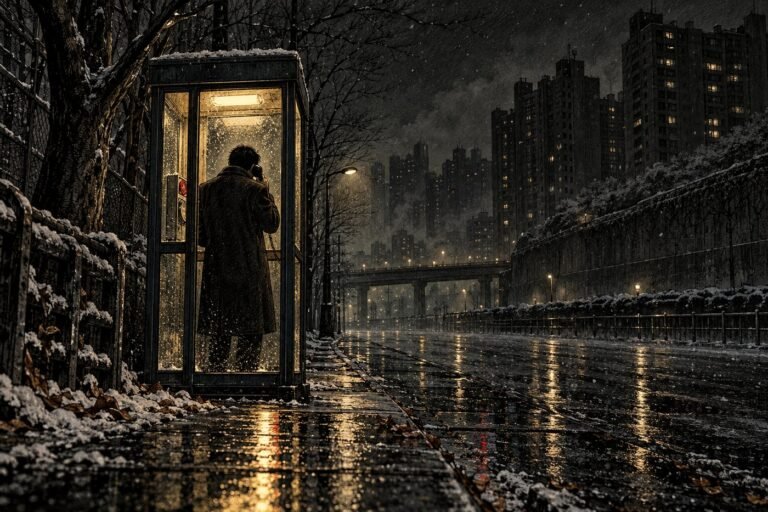
How Did Anyone Survive Hiroshima? One Man Was 170 Metres From the Bomb, Looking for Papers in a Basement
Narrated Mystery: press play and hear the whole case read aloud, like a true crime podcast episode, or an audiobook for a long drive (about 21 minutes). The narrator is an AI voice.
What the record shows
- Closest survivor: Eizo Nomura, in a basement about 170 metres from the hypocentre; 36 of his 37 co-workers died
- What saved people: concrete and stone walls, being buried, light-coloured clothing, and chance
- What came after: radiation sickness, censorship, discrimination, and decades of waiting for recognition
- Today: 91,105 certified survivors in Japan at the end of March 2026, average age 86.66; about 1,600 in South Korea
Still uncertain
- How many Koreans were killed: estimates only.
- How many people lived through both bombings.
- Who sat on the Sumitomo Bank steps.
Hiroshima, 6 August 1945. A basement, a pocket watch stopped at 8:15, and a shadow left on a bank’s steps.
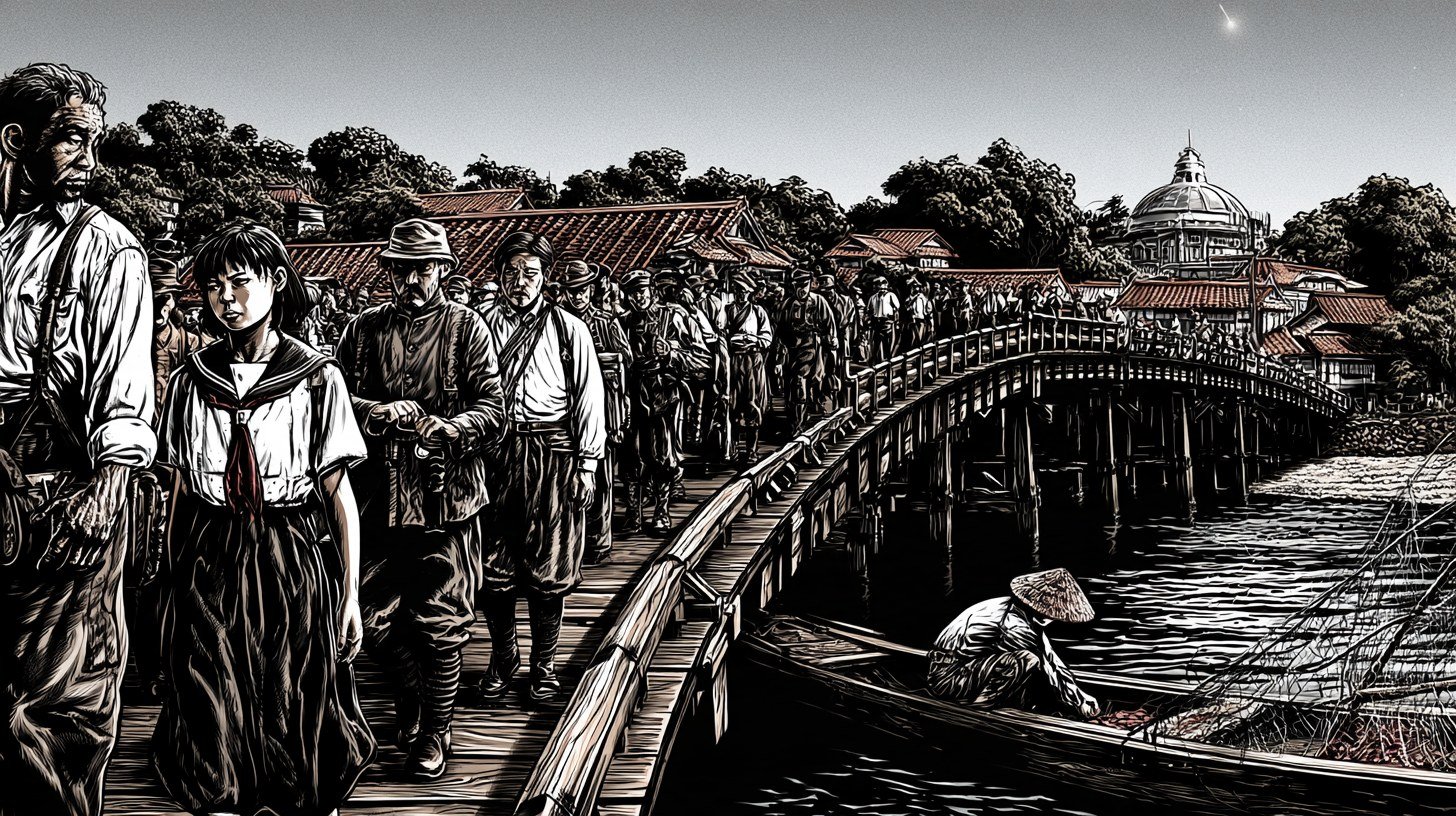
At 8:14 on the morning of 6 August 1945, Hiroshima was on its way to work.
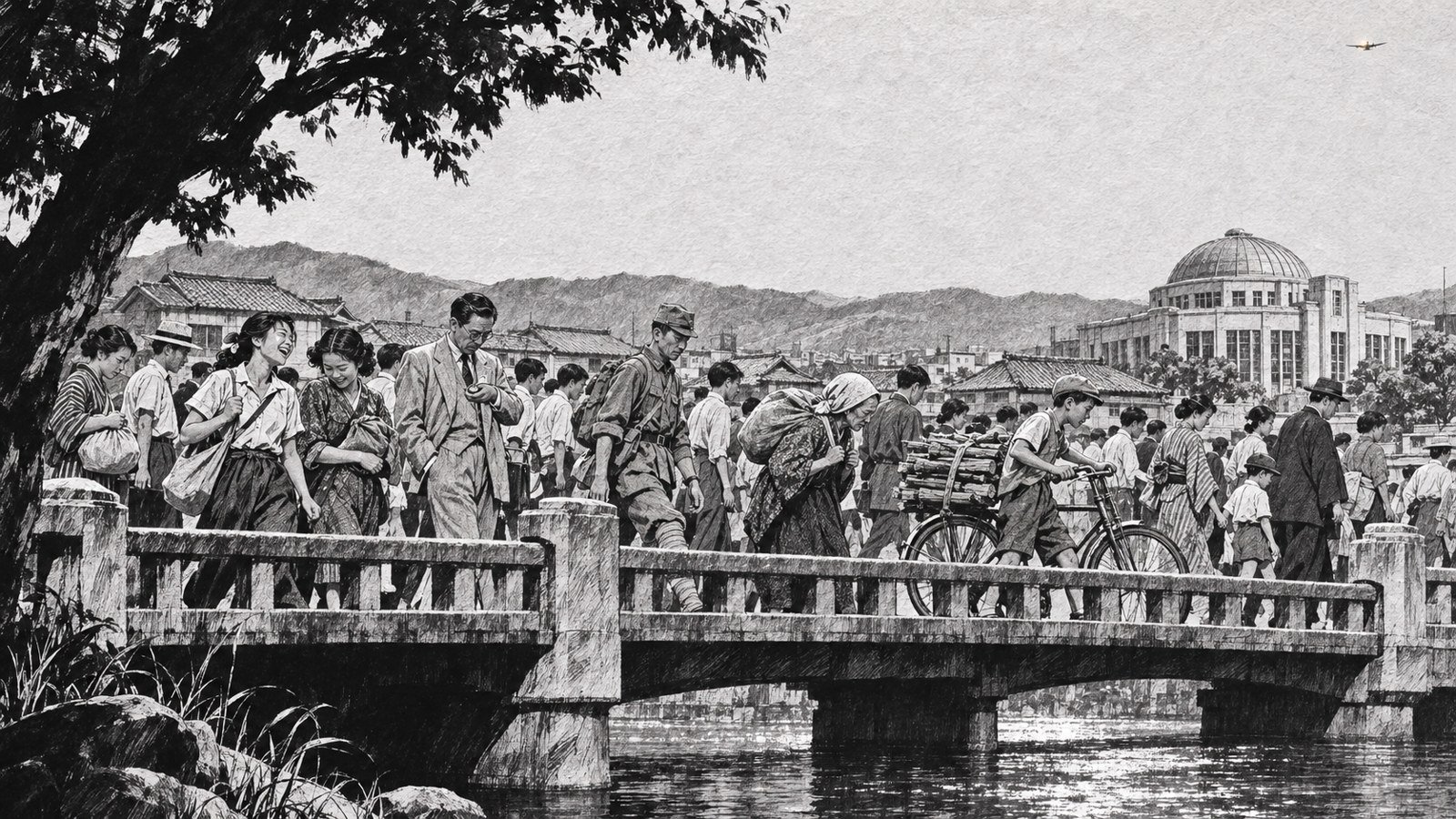
Clerks crossed the bridges. Schoolchildren walked to the city centre in work clothes. High above, a single plane caught the sun, and almost nobody looked up.
One minute later, a man named Eizo Nomura was standing in a basement, looking for some papers.
That errand saved his life. Of the 37 people at work in his building that morning, he was the only one who lived.
The building was about 170 metres from the point the bomb exploded above. That is closer than anyone else known to have survived Hiroshima.
So how did anyone live through the first atomic bomb ever used on a city, and what happened to the people who did?
Who survived closest to the Hiroshima bomb?
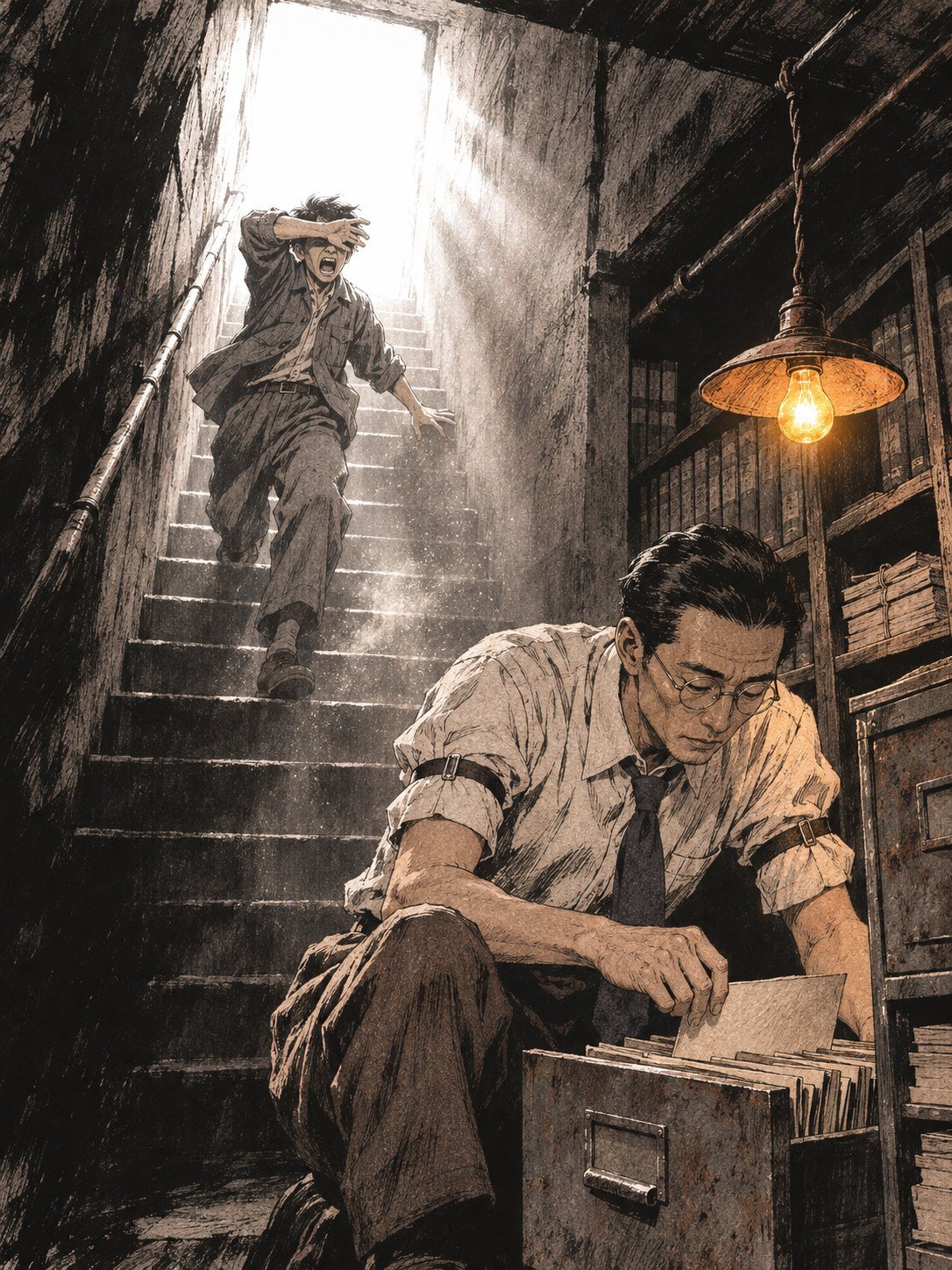
Nomura was 47. He worked for the Hiroshima Prefectural Fuel Rationing Union, whose offices were in a solid concrete building on the riverbank called the Fuel Hall. On the morning of 6 August he went down to the basement to fetch documents.
He was still down there when the world above him turned white.
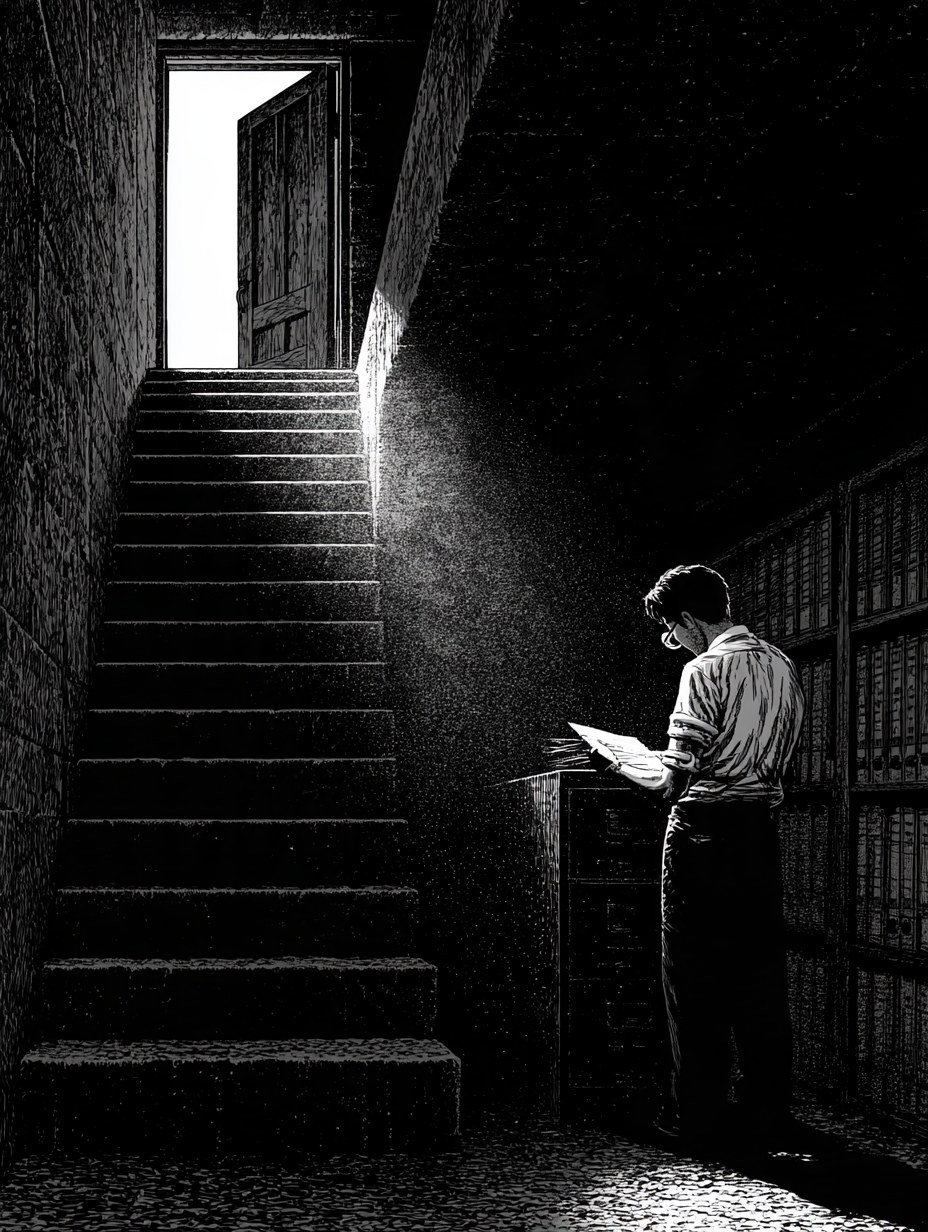
When he climbed the stairs, the building was full of smoke and the city outside was burning. He walked out through the fires.
According to the Chugoku Shimbun’s record of that day, 36 of the 37 employees at the Fuel Hall that morning died. Seven others did get out of the building. All seven died too, one of them, a woman, about two weeks later.
Nomura thought he had made it. Then, on 1 September, he came down with a high fever. Red spots appeared on his skin. His gums swelled and bled. Doctors did not know what to do for him.
He recovered. In 1950 he published a memoir whose title means “Exposed at the Hypocentre.” He lived until 1982 and died at 84.
The Fuel Hall still stands. It is now the Rest House in Hiroshima’s Peace Memorial Park, and visitors can see the basement where one errand made the difference between 36 deaths and one survivor.
But that raises a harder question. If a basement could save a man 170 metres away, what was everyone else up against?
What happened in the first second?
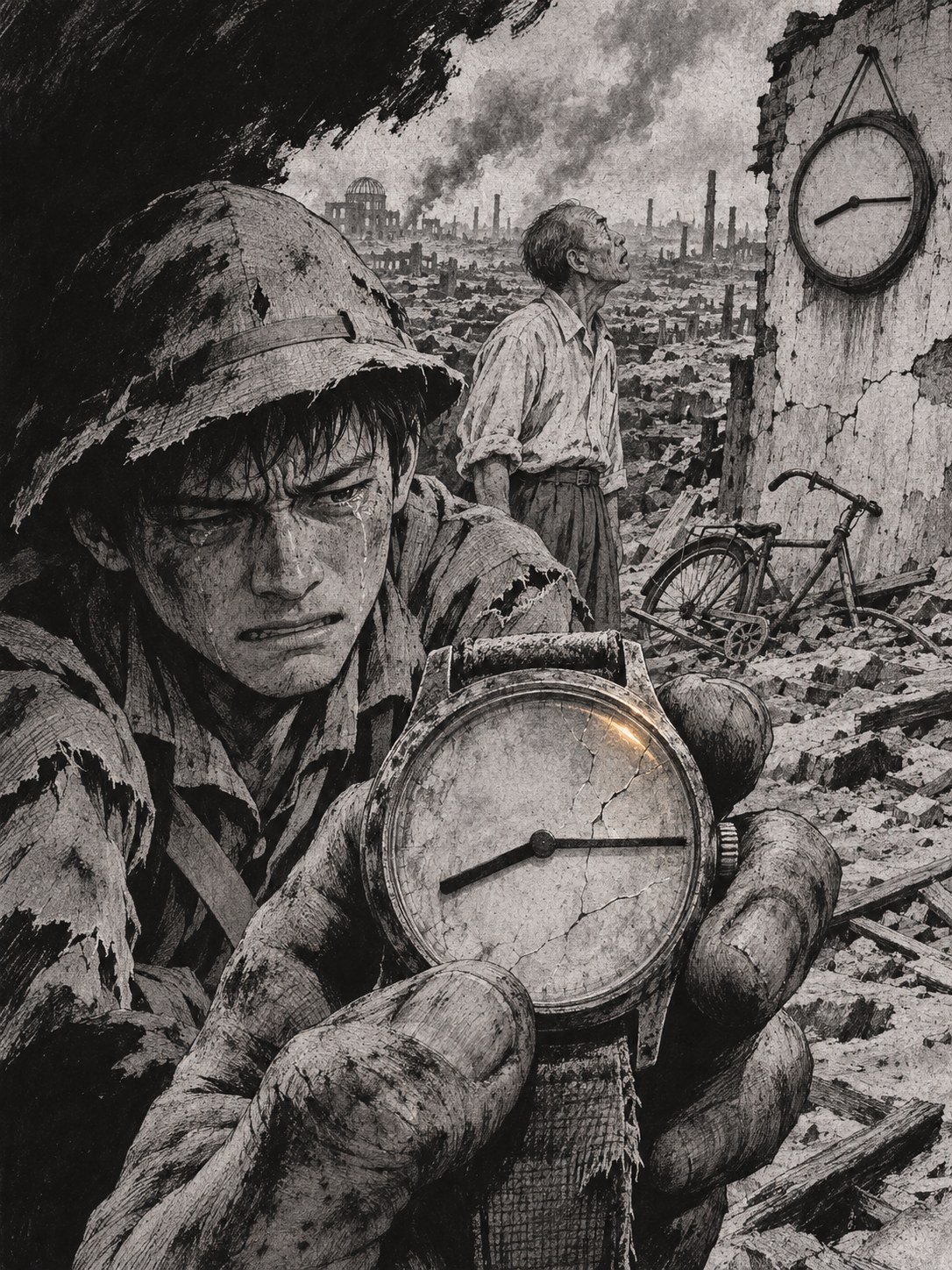
The bomb, called Little Boy, did not hit the ground. It exploded in the air, about 600 metres above the city, at 8:15.
Three things came out of it, one after another.
First, light and heat. People in the open close to the centre were burned beyond recognition. Survivors almost always describe the same thing first: everything turned white.
Second, the blast. A wall of air moved outward faster than sound. One woman who was eight that day told the BBC it looked like a wave the height of a two-storey house coming down the road toward her. Wooden houses folded flat.
Third, radiation. It went through walls and through people, and nobody could see, hear or feel it.
The Hiroshima Peace Memorial Museum keeps a pocket watch that belonged to a 59-year-old man named Kengo Nikawa. He was about 1.6 kilometres from the centre. His son donated it in 1975. Its hands stopped at 8:15.
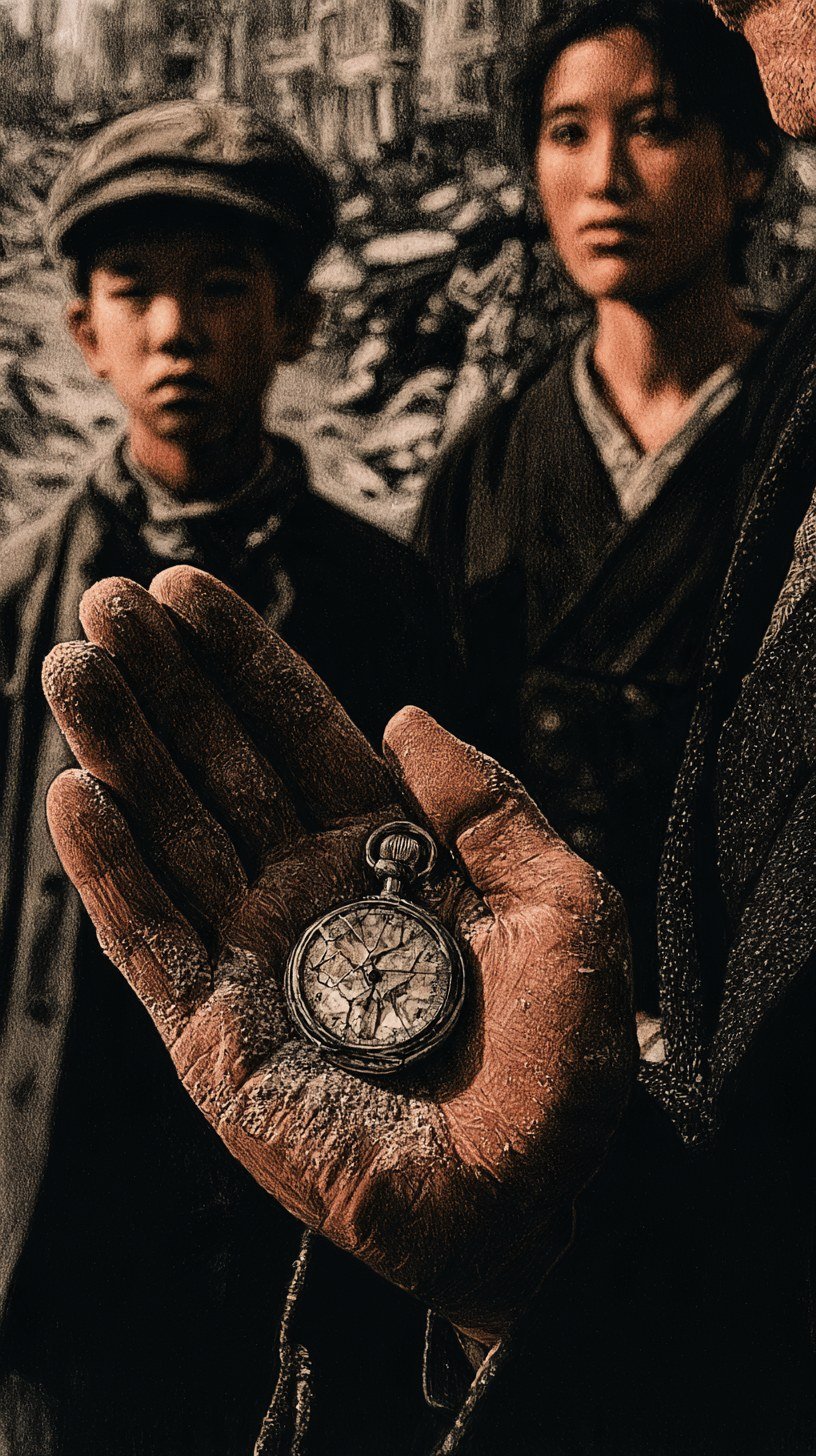
By the end of 1945, about 140,000 people in Hiroshima were dead. That is the number in the history books.
But it hides something stranger. Some people very close to the centre lived. Some people much farther away did not.
Why did some people live just a few hundred metres away?
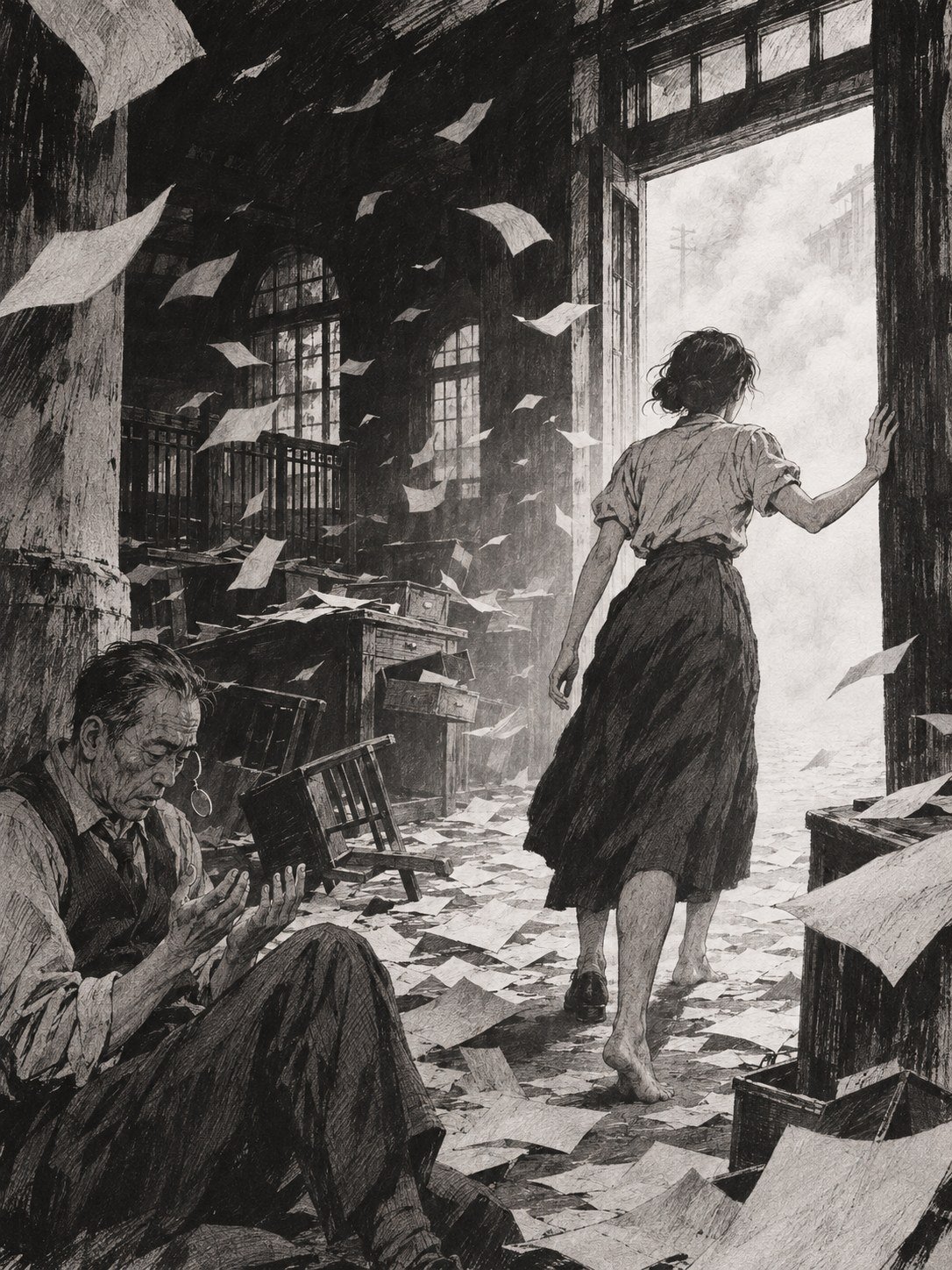
Akiko Takakura was 20. She was a clerk at the Bank of Hiroshima, about 300 metres from the centre, and she was inside, dusting desks, when the flash came. She described it as “like a white magnesium flash.”
She woke up in the dark inside the building. When she walked out, the city she knew was gone.
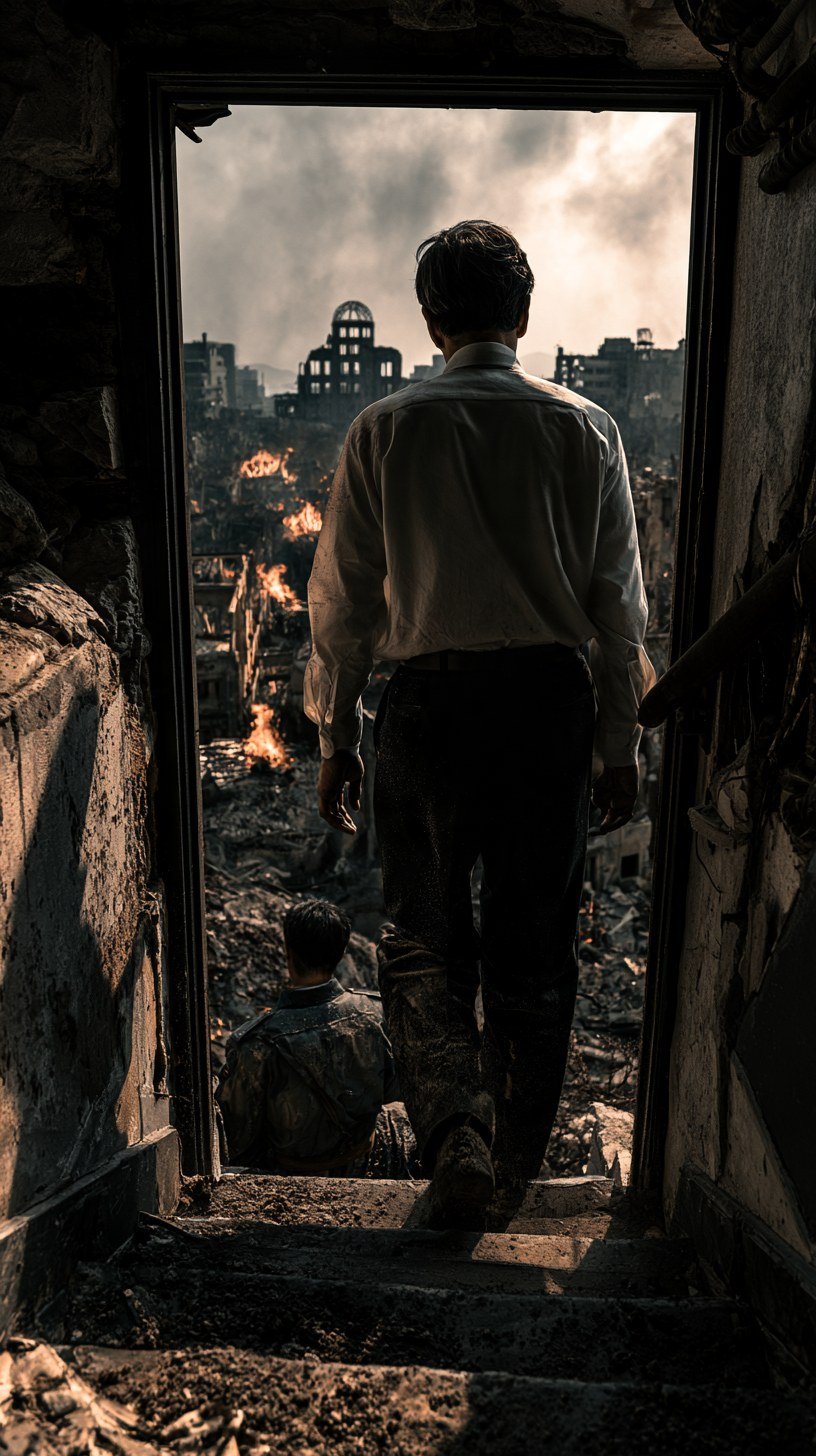
A short walk away was the Hiroshima branch of the Sumitomo Bank, about 260 metres from the centre.
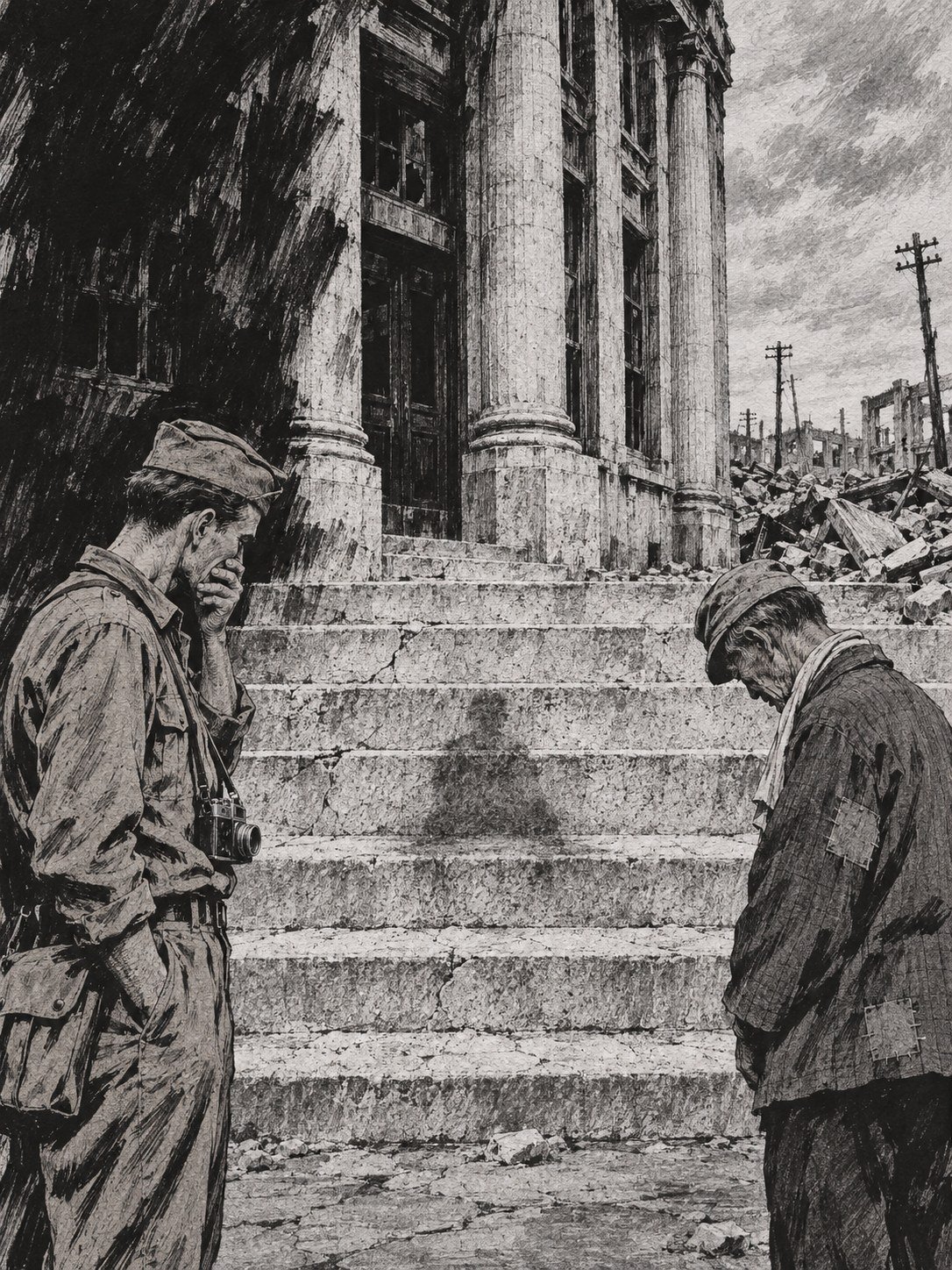
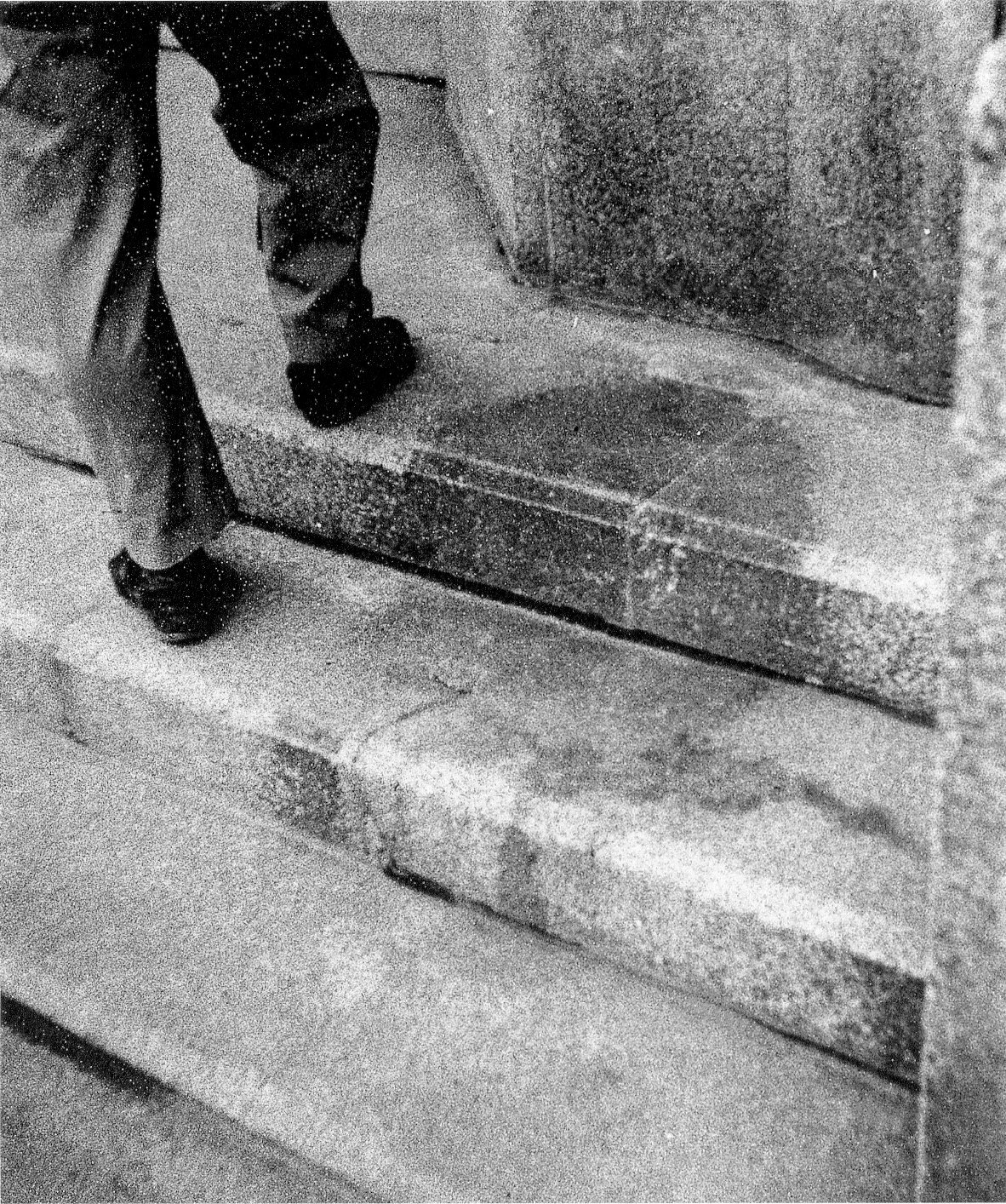
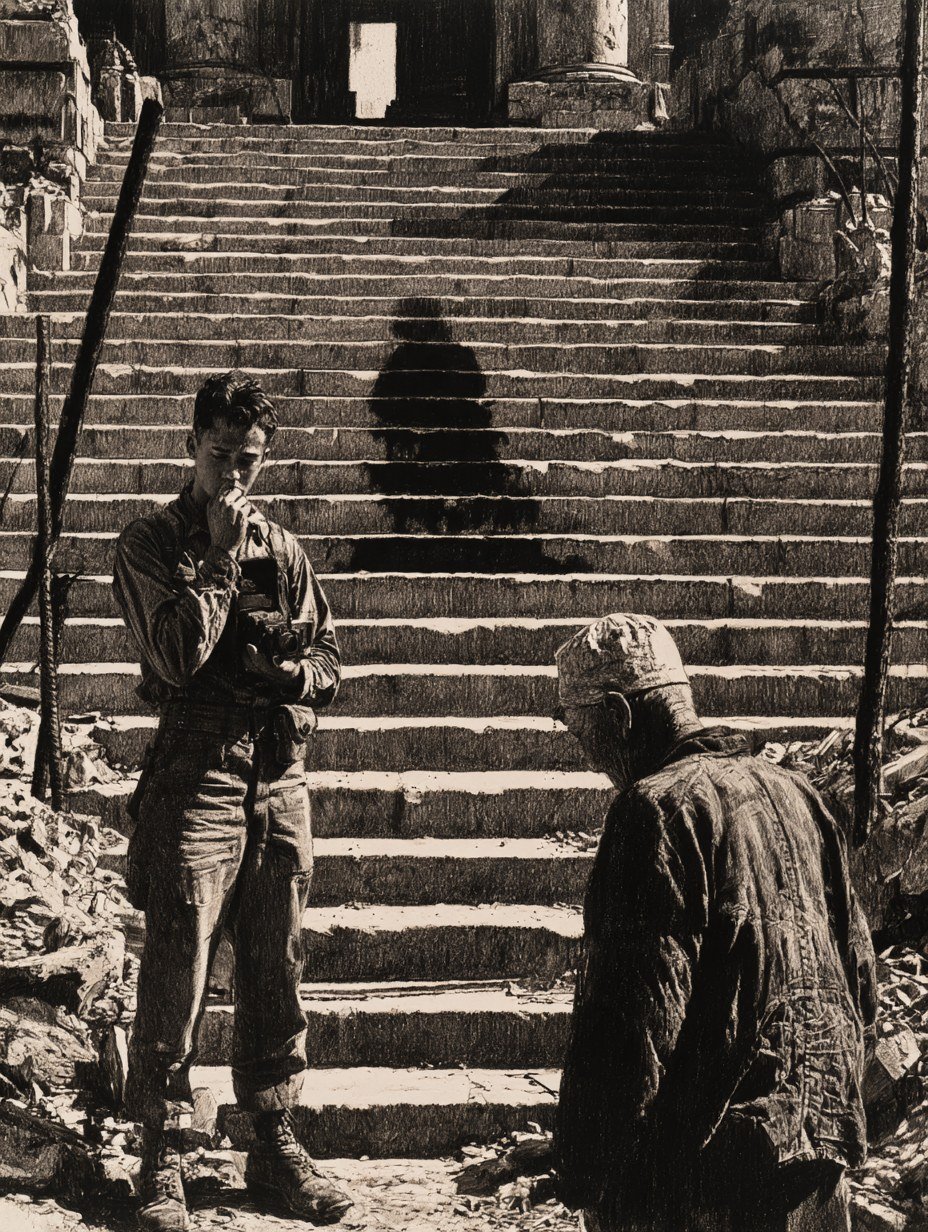
Someone was sitting on its stone steps that morning, probably waiting for the bank to open. The flash discoloured the stone everywhere except where that person’s body blocked it. What was left was a dark patch in the shape of someone sitting down.
The steps were later moved into the Peace Memorial Museum. Nobody has ever been able to say for certain who sat there.
Then there is the Bank of Japan’s Hiroshima branch, about 380 metres from the centre. It was a heavy stone building, and it stayed standing.
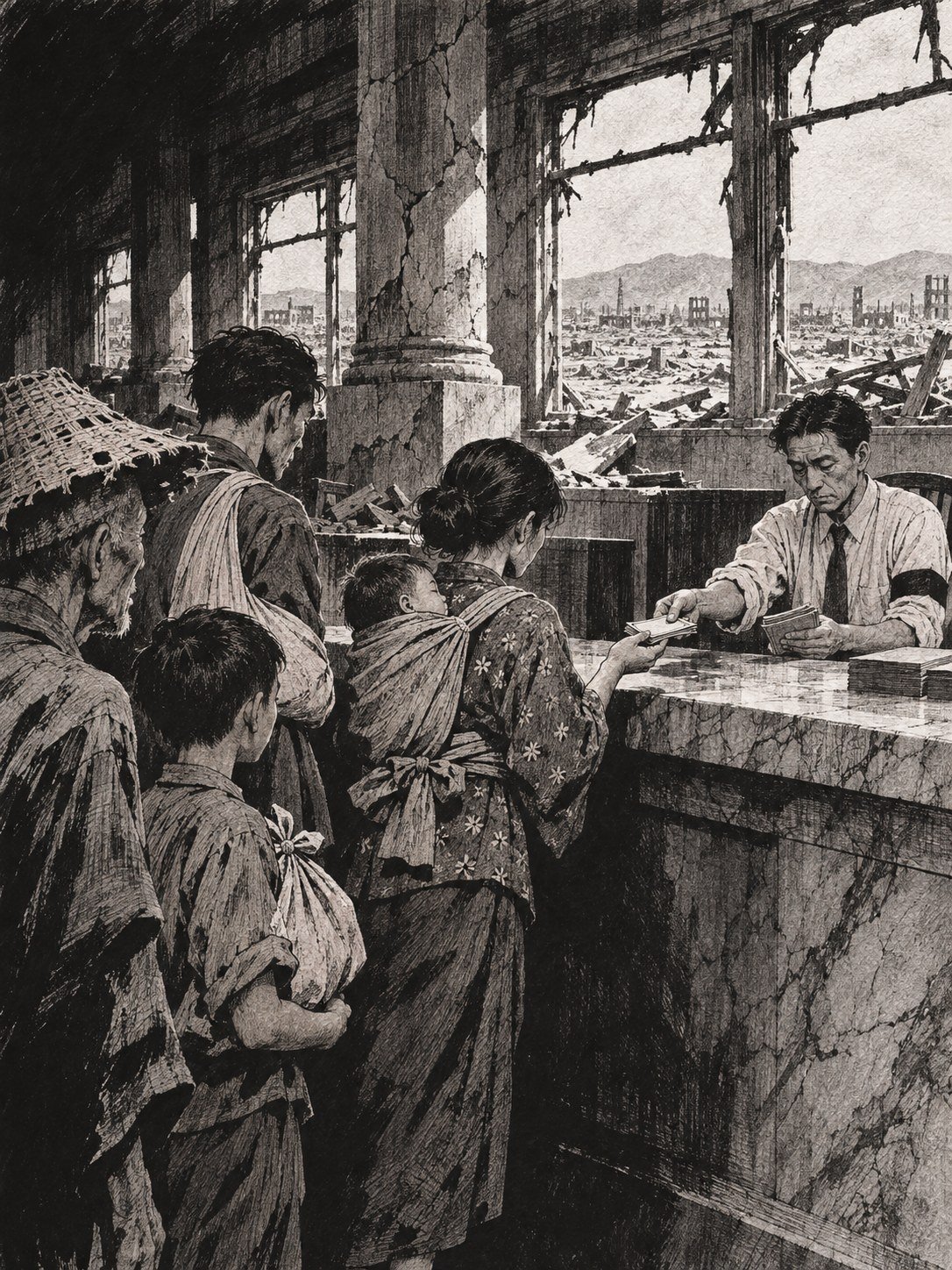
Two days after the bomb, on 8 August 1945, it was open for business again. The branch manager let the city’s other banks work out of the building, and tellers from every major bank set up along its marble counter.
So it seems the answer was simple: concrete, stone, a wall in the right place.
It wasn’t that simple.
Could the colour of your clothes decide who was burned?
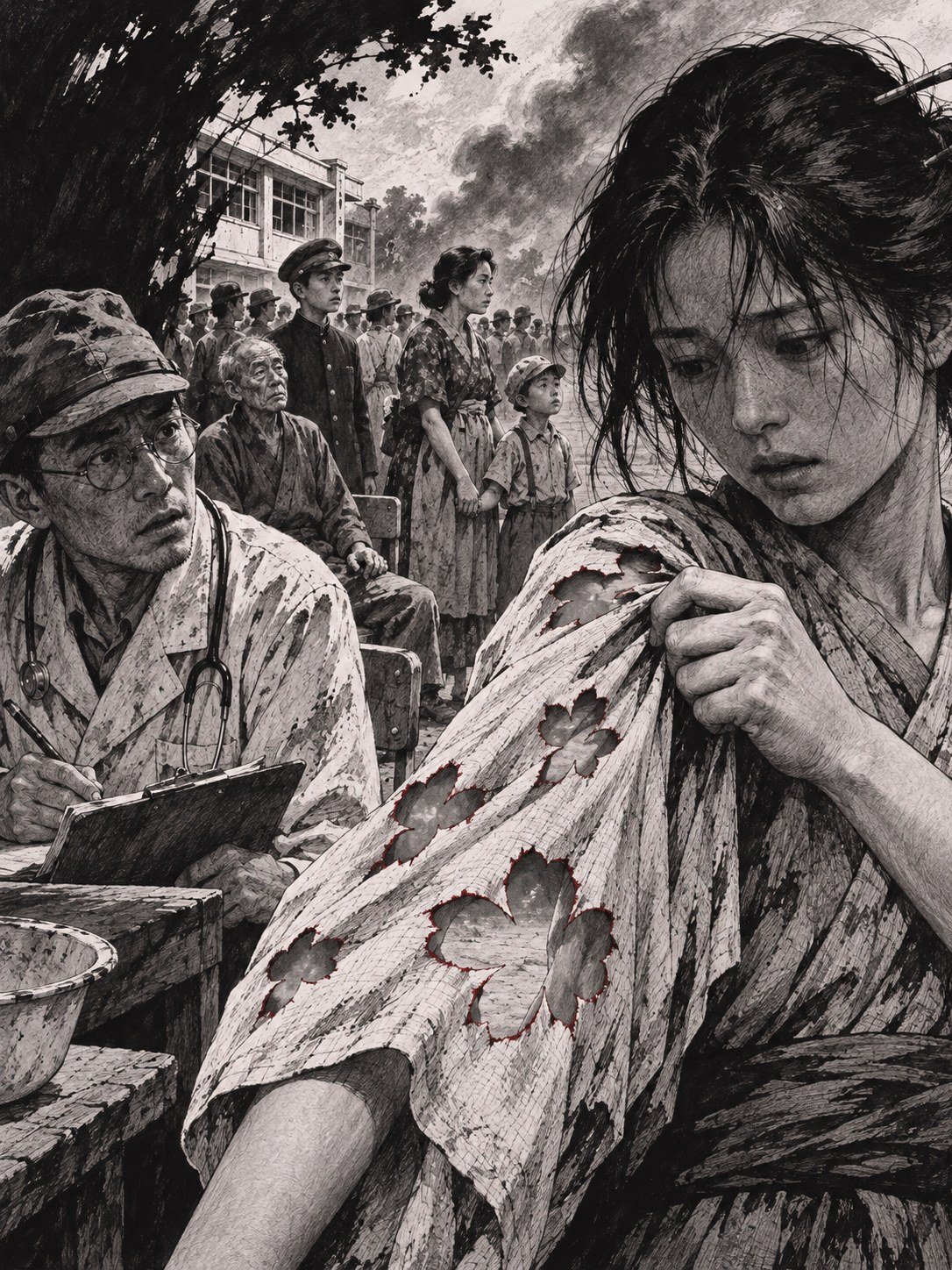
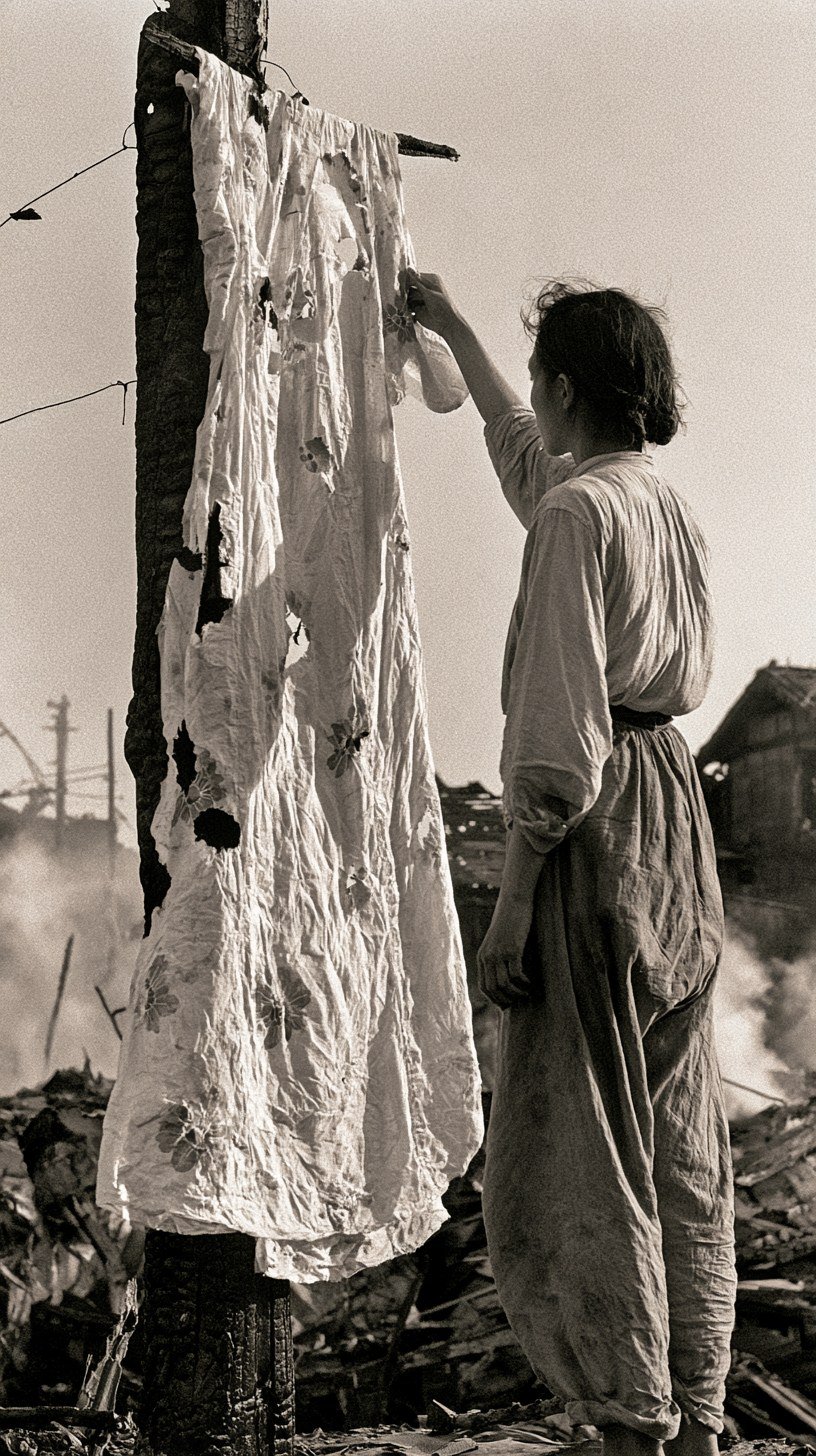
This sounds like a myth, but it is in the photographic record. Dark fabric absorbs heat. Light fabric reflects it.
Doctors in Hiroshima photographed women whose skin had been burned in the exact pattern of their kimonos. The dark parts of the pattern burned through. The white parts did not.
Being buried could save you too.
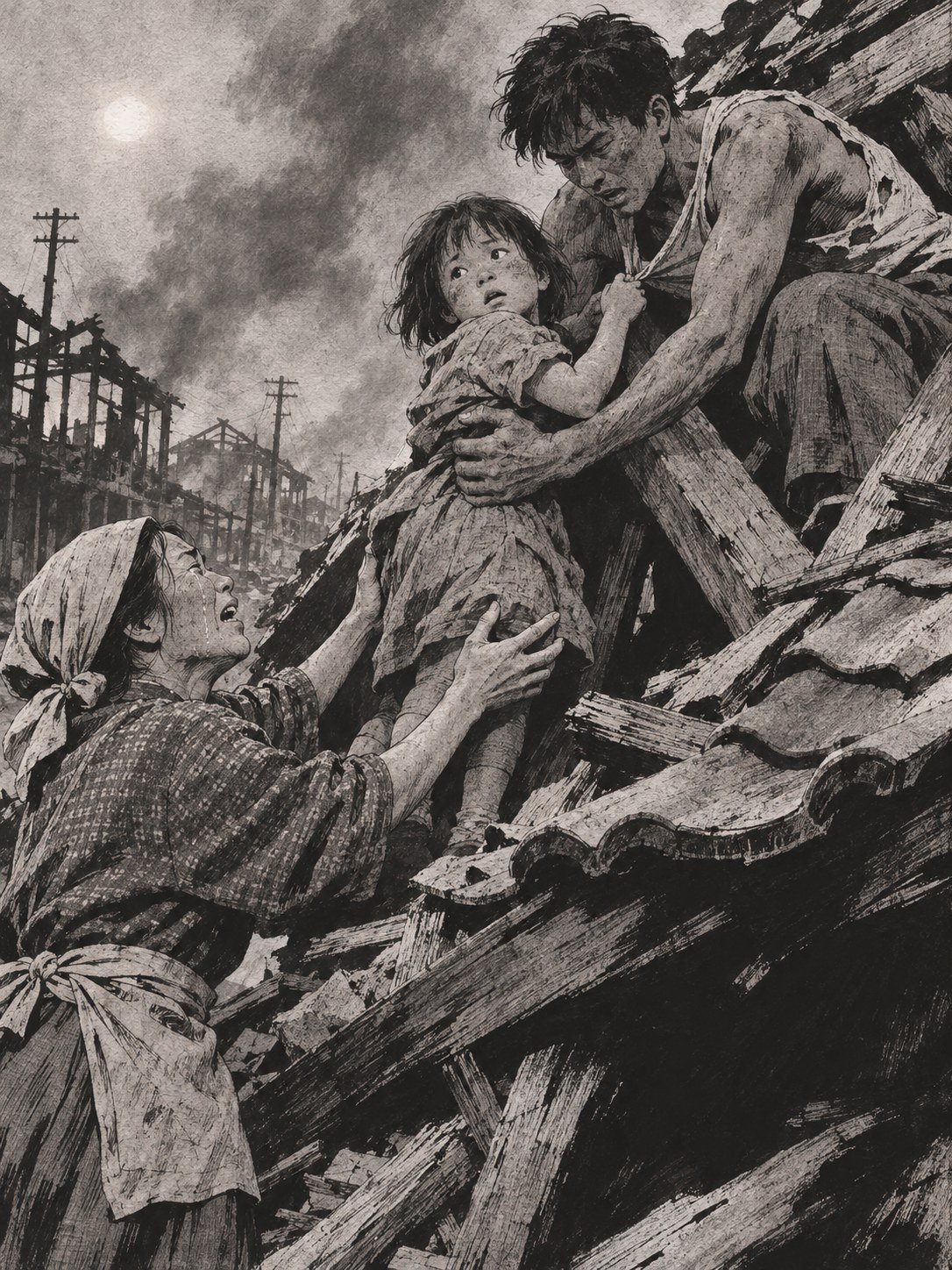
Bae Kyung-mi was five, a Korean girl living in Hiroshima. When her house collapsed, the wreckage came down on top of her. It shielded her from the heat that killed her aunt and uncle in the same house.
A roof falling on a child is supposed to be a disaster. That morning it was a shield.
Hold on to her name. Her story comes back later, and it is the part of Hiroshima most of the English-speaking world has never heard.
Why did so many children never come home?
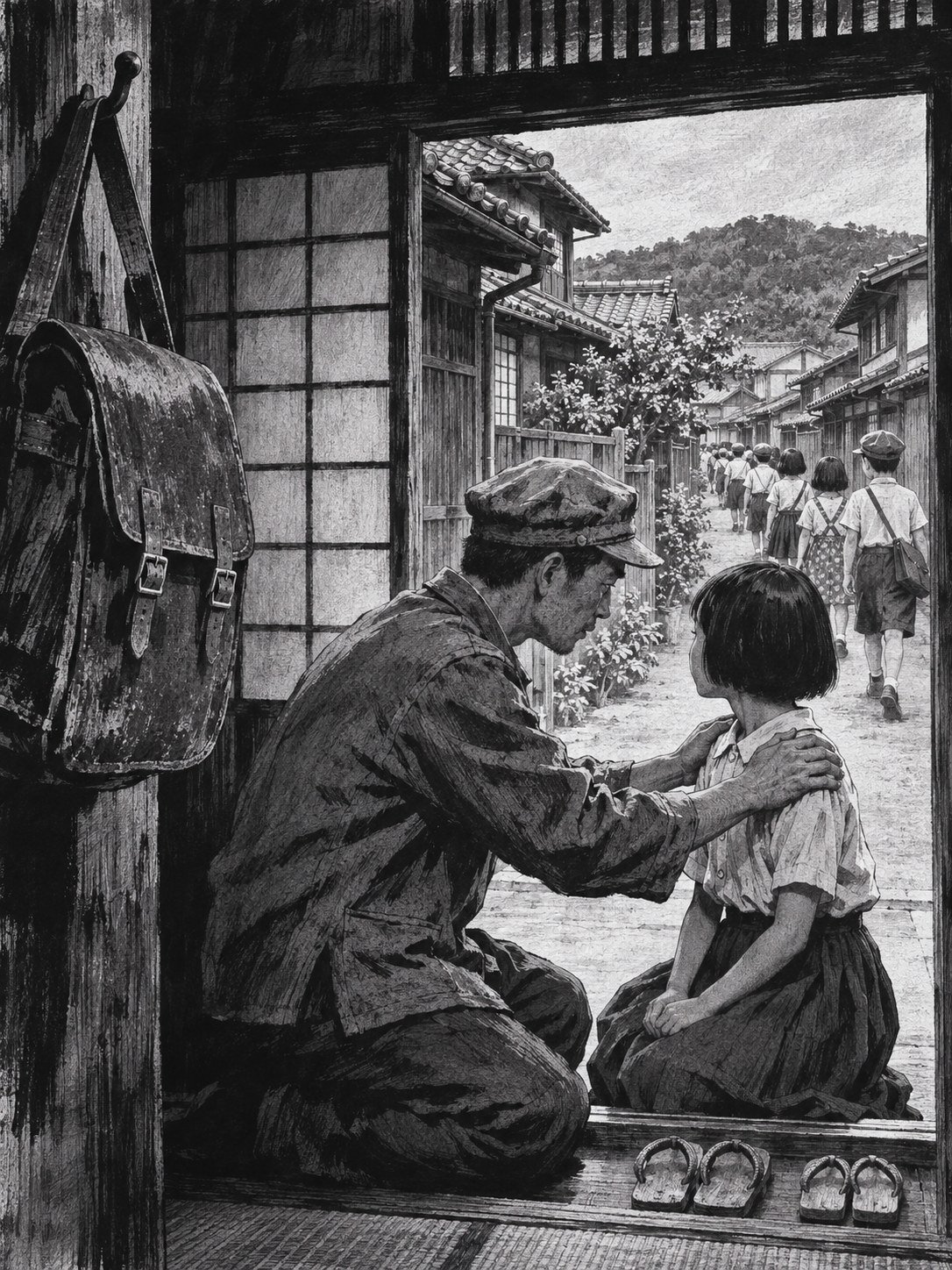
An eight-year-old girl named Keiko was supposed to be at school that morning. There had been air-raid alarms in the night, and her father told her not to go. “Something might happen today,” he said.
She was standing alone in the street when the bomb exploded. The house behind her came down. She lived.
Thousands of children were not at their desks either. They had been sent into the city centre to help tear down buildings, to make firebreaks against air raids. They were working outdoors.
According to the Chugoku Shimbun, about 8,400 students were doing building demolition work on 6 August. About 6,300 of them died.
One of them was Shigeru Orimen, a first-year student at the Second Hiroshima Prefectural Junior High School. He was working at a demolition site about 600 metres from the centre. Early on 9 August his mother found his body. He was clutching his lunch box under his stomach.
The lunch inside, which he never got to eat, was burned black. The lunch box is in the Peace Memorial Museum.

About 1,500 metres from the centre, Shinichi Tetsutani, three years and eleven months old, was riding his tricycle in front of his house. The flash burned him and the tricycle. He died that night.
His father could not bear to bury him in a lonely grave far from home. He buried his son in the backyard, with the tricycle, so he could still play with it.
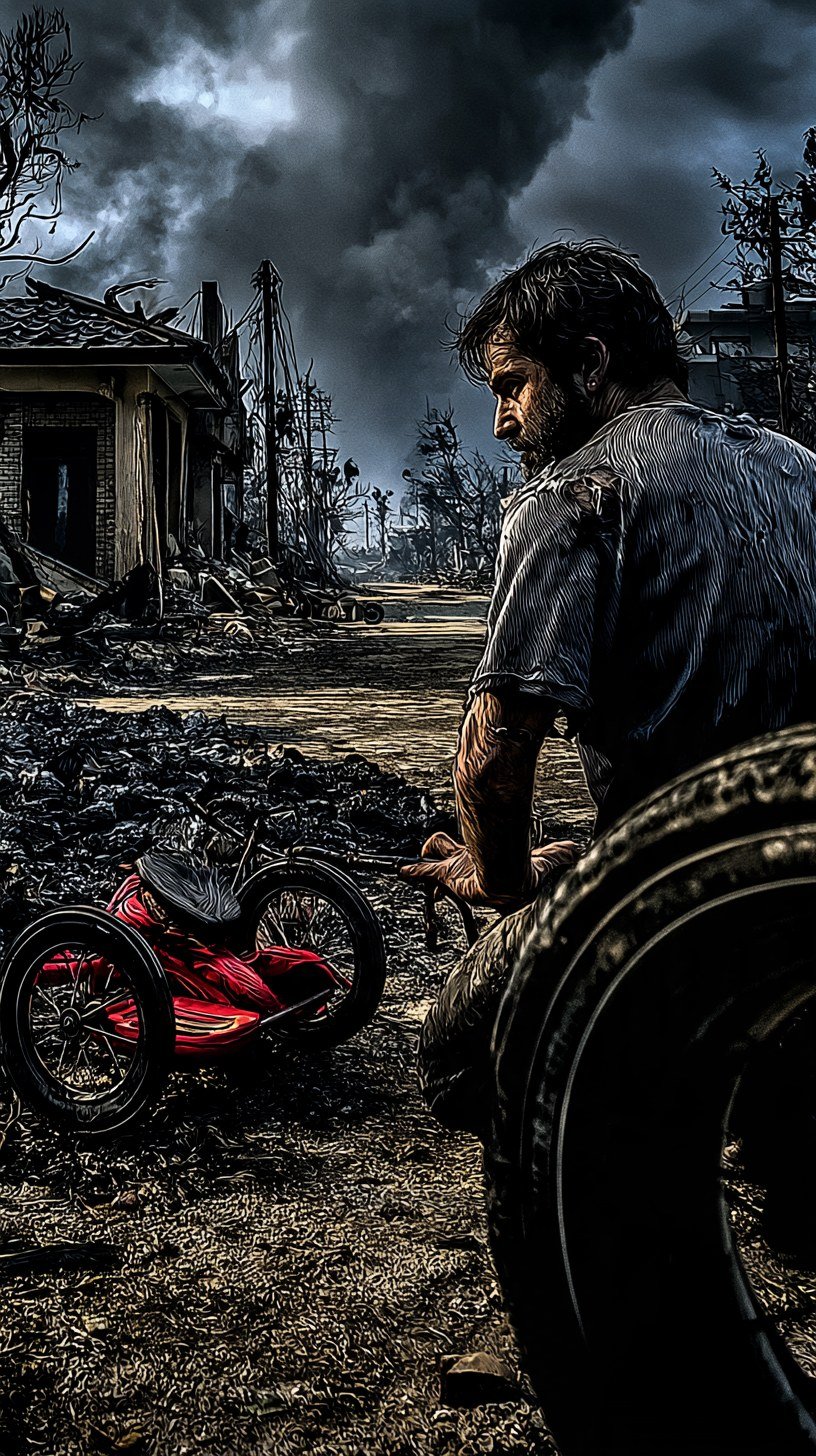
About forty years later, in the summer of 1985, his father dug up the remains to move them to the family grave, and donated the tricycle to the museum.
By now it might seem the story ends with the people who were killed that morning. It doesn’t. For the survivors, the second part was only beginning.
What was the sickness that came weeks later?
The survivors walked out of the city, and for a few days many of them seemed all right.
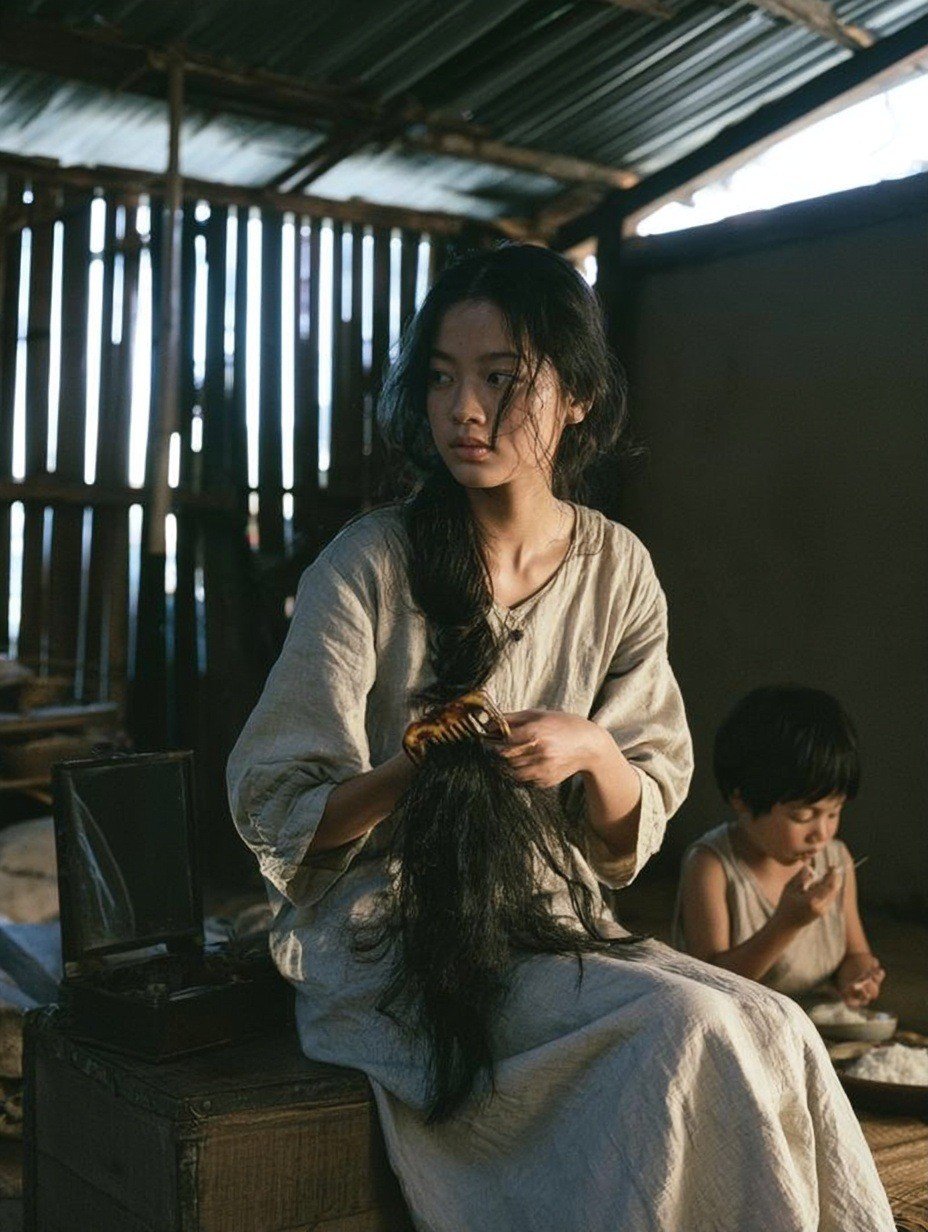
Then their hair started to come out.
A man who was six that summer told the BBC how the fear changed. People ran a comb through their hair and it came away in clumps. Everyone knew what that meant: when your hair falls out, you die soon. He used to pull at his own hair to check whether it would stay.
This was acute radiation sickness. Gums bled. Purple spots appeared on the skin. People who had walked away from the fires died days or weeks later from damage no one could see. It was what happened to Nomura in September.
Doctors in Hiroshima did not know what they were treating. And for years, most of the world did not know either.
Why did the world not see it for years?

On 6 August itself, only one man is known to have taken photographs inside the city. Yoshito Matsushige, a newspaper photographer, stood at the west end of the Miyuki Bridge for about thirty minutes before he could make himself press the shutter. He took five pictures. They are the only photographs known from Hiroshima that day.
Then came the silence. After Japan surrendered, the occupation authorities brought in press rules that restricted reporting on the bombings. A Japanese film crew that shot footage of the ruins found its film confiscated and taken to the United States. It was only returned in 1967.
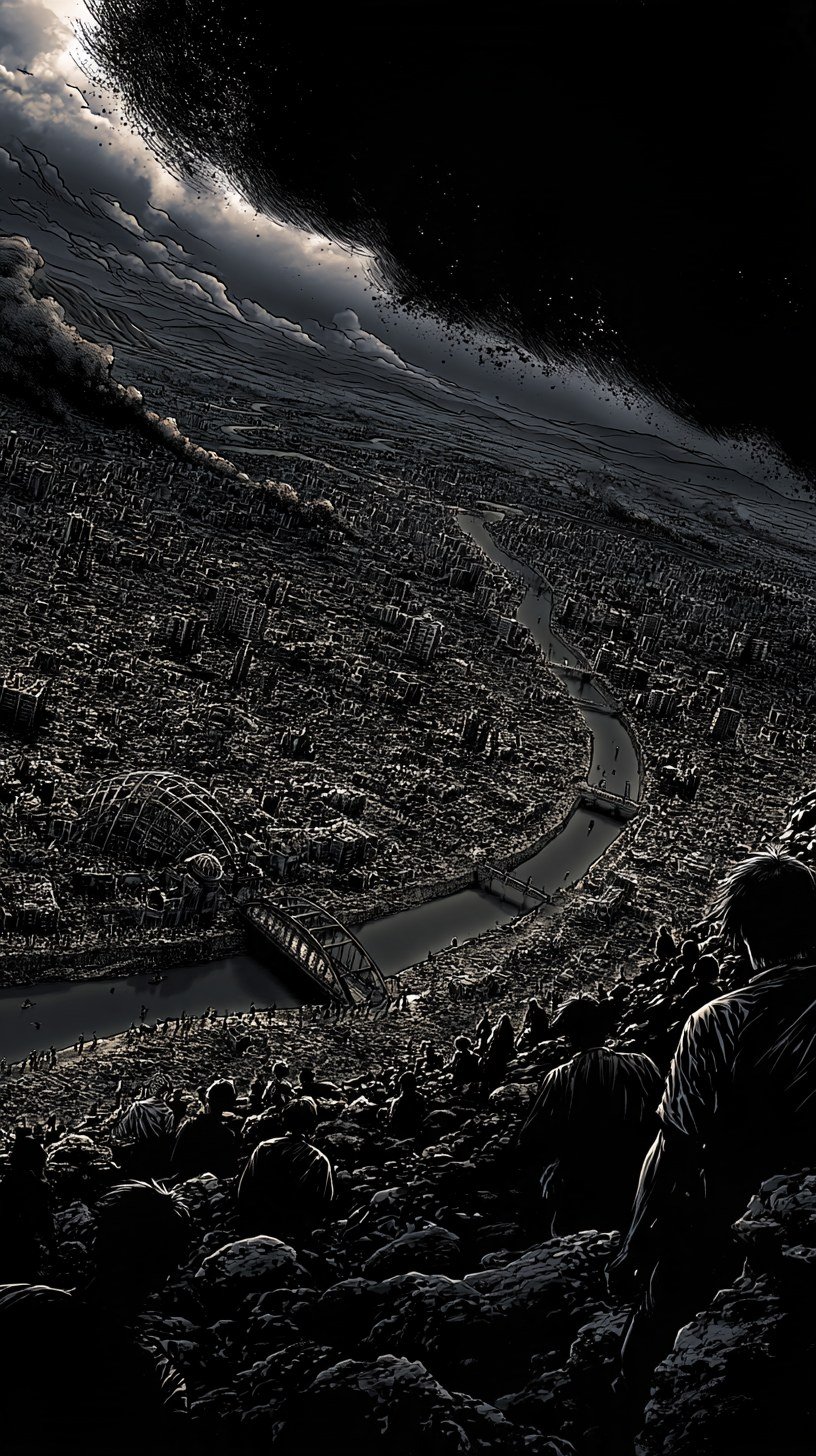
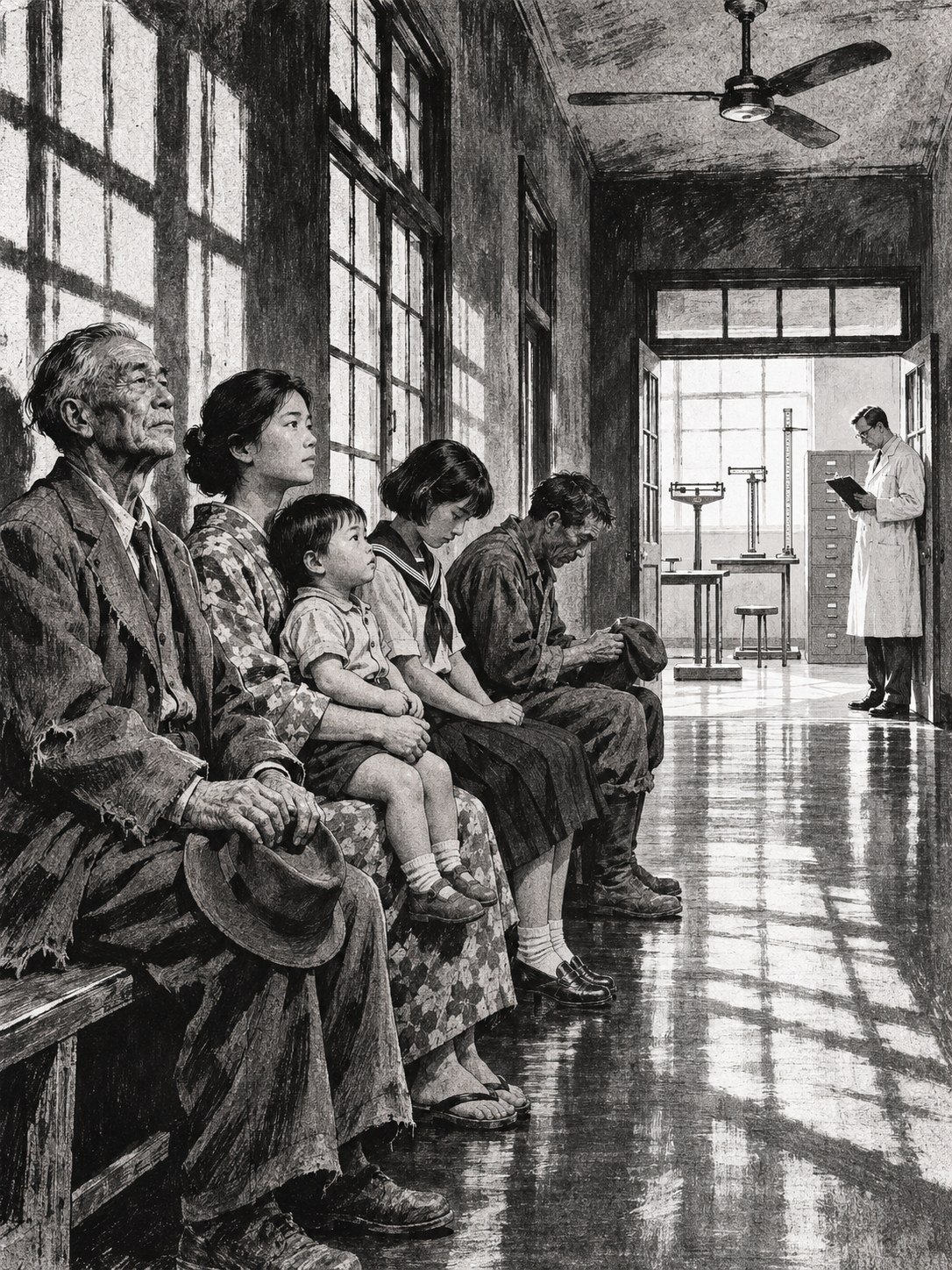
In 1947 the United States set up the Atomic Bomb Casualty Commission in Hiroshima to study the survivors. Over the following decades it examined tens of thousands of people, and its data still shapes what the world knows about radiation.
But it did not treat them. Many survivors remember being measured, photographed and sent home. That memory is still bitter.
In 1975 the commission became the Radiation Effects Research Foundation, run jointly by Japan and the United States. Its long studies found higher rates of leukaemia and other cancers among people who had been exposed, rising the closer they had been.
One survivor in the BBC’s 2025 report was carried into the city by his mother when he was 18 months old, after the bomb had fallen. He has had six cancer operations. “I’m holding on as best I can,” he says.
Why did survivors hide what happened to them?
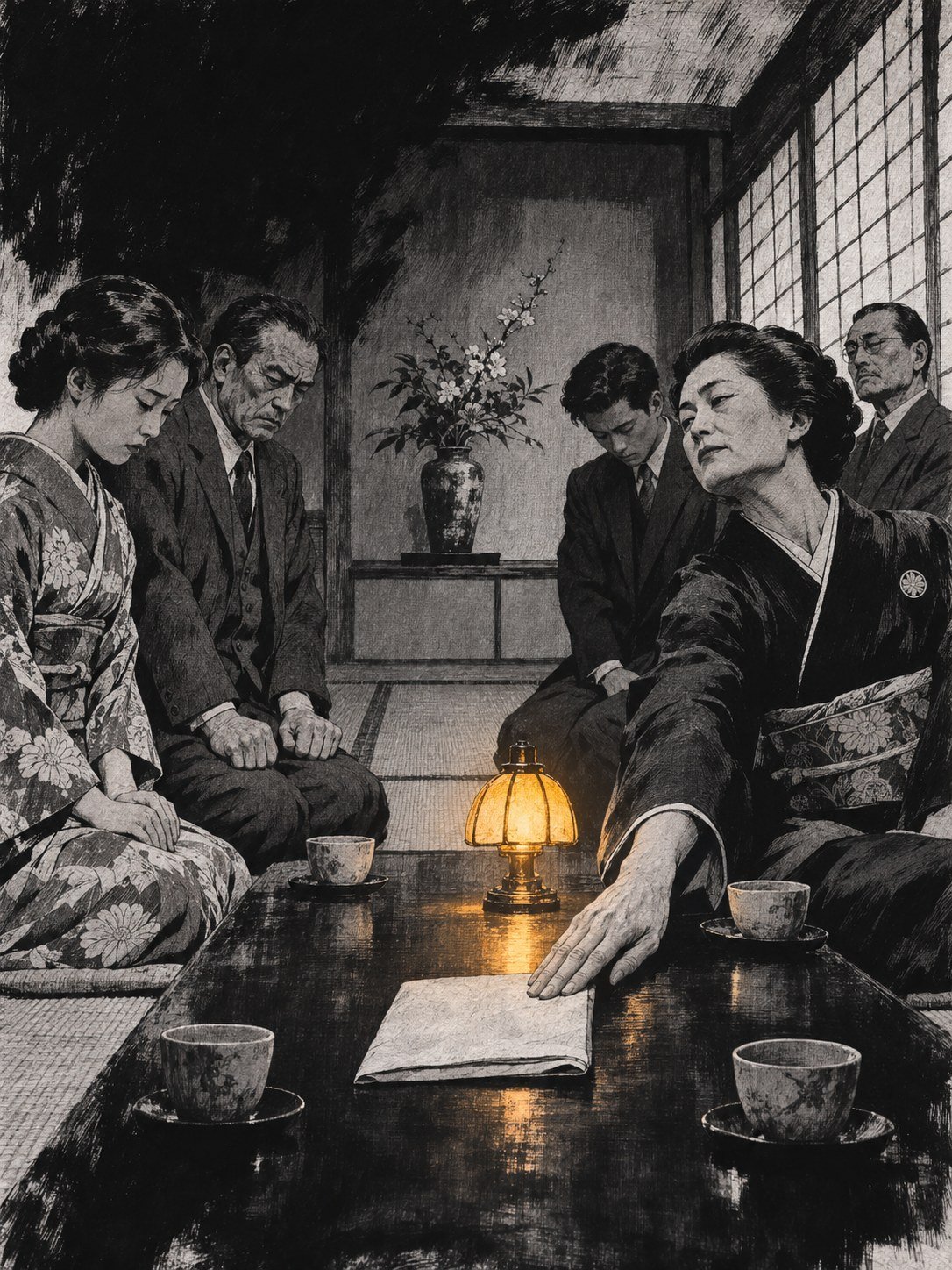
Then came something the bomb did not do. People did it.
Survivors, called hibakusha, found that the word itself could close doors. Rumours said radiation sickness was contagious, or that their children would be born damaged. Families looked into a marriage partner’s past. Some employers would not hire them.
So many survivors stopped talking.
A woman from Hiroshima who later moved to Wales told the BBC that when she finally told her family what had happened to her, her children never brought it up with her again.
And what about those children? Large studies of the sons and daughters of survivors have not found clear evidence that their parents’ exposure caused inherited illness. But the fear shaped whole lives anyway. Groups of second-generation survivors have taken the government to court asking for health support. So far the courts have turned them down.
Even so, these were the survivors Japan counted. There were others it barely counted at all.
Who were the survivors nobody counted?
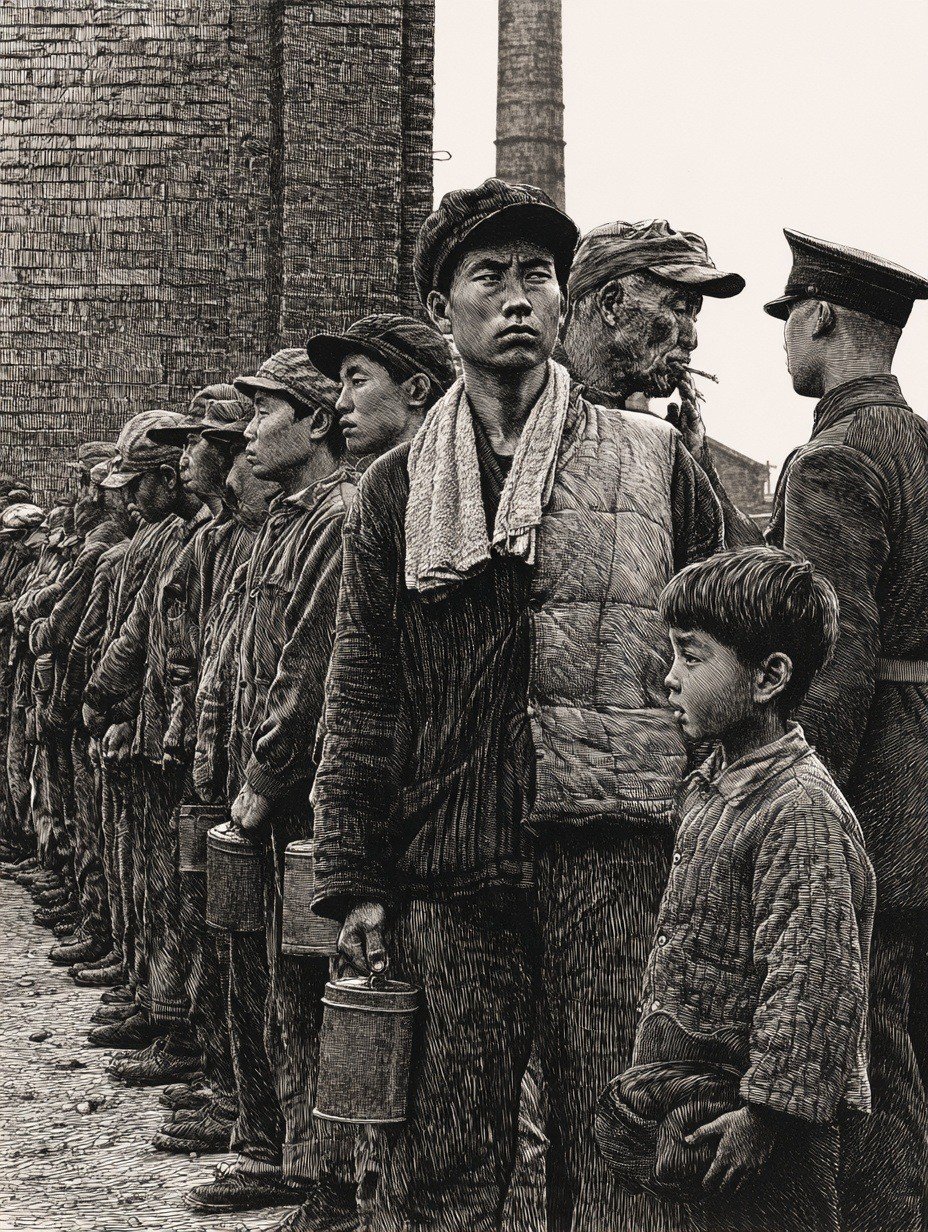
In August 1945, Korea was a Japanese colony. Tens of thousands of Koreans were living and working in Hiroshima, many of them brought to Japan as labourers.
According to AFP, Korean groups estimate that up to 50,000 Koreans were in Hiroshima when the bomb fell, and more than one in ten of the roughly 740,000 people killed or injured in Hiroshima and Nagasaki were Korean.
Nobody knows the exact number. Records burned, and many Koreans had been registered under Japanese names.
The Korean survivors went home to a country that was about to be divided and go to war. They carried the same scars and the same rumours.
Bae Kyung-mi, the five-year-old shielded by her collapsing house, kept quiet for decades. Her sons only learned what had happened to her in 1996, when she registered at a new centre for survivors in Hapcheon, the rural county people call Korea’s Hiroshima because so many survivors came from there. Because of her high cancer risk, she later had her ovaries and a breast removed.
Even in memory, Korean victims were kept outside. A memorial to them was built in April 1970 at the west end of Honkawa Bridge, just outside the Peace Memorial Park. It was only moved inside the park in July 1999.
South Korea passed a law to support its survivors in 2016. AFP reported that about 1,600 Korean survivors are still alive.
Did anyone survive both atomic bombs?
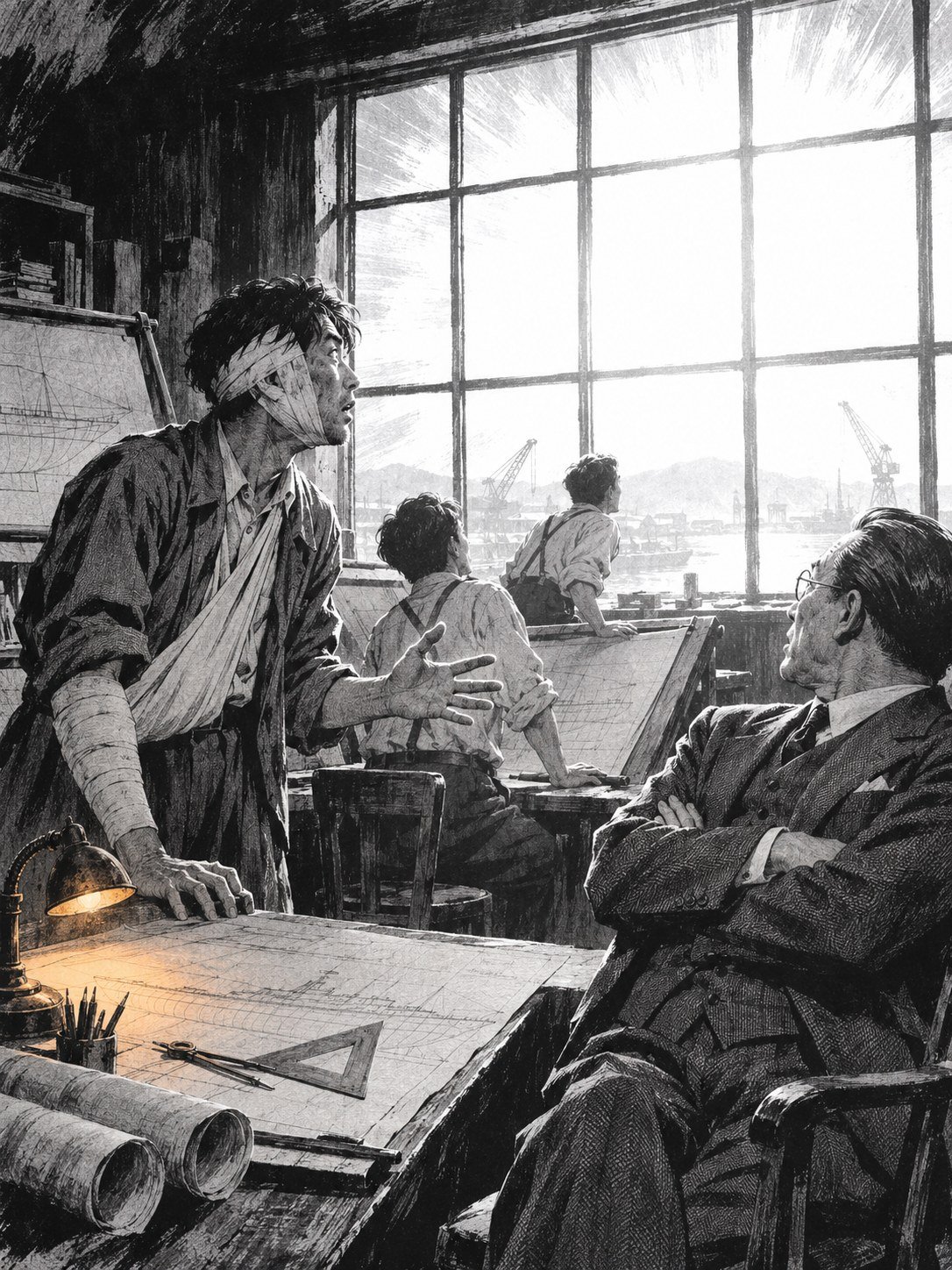
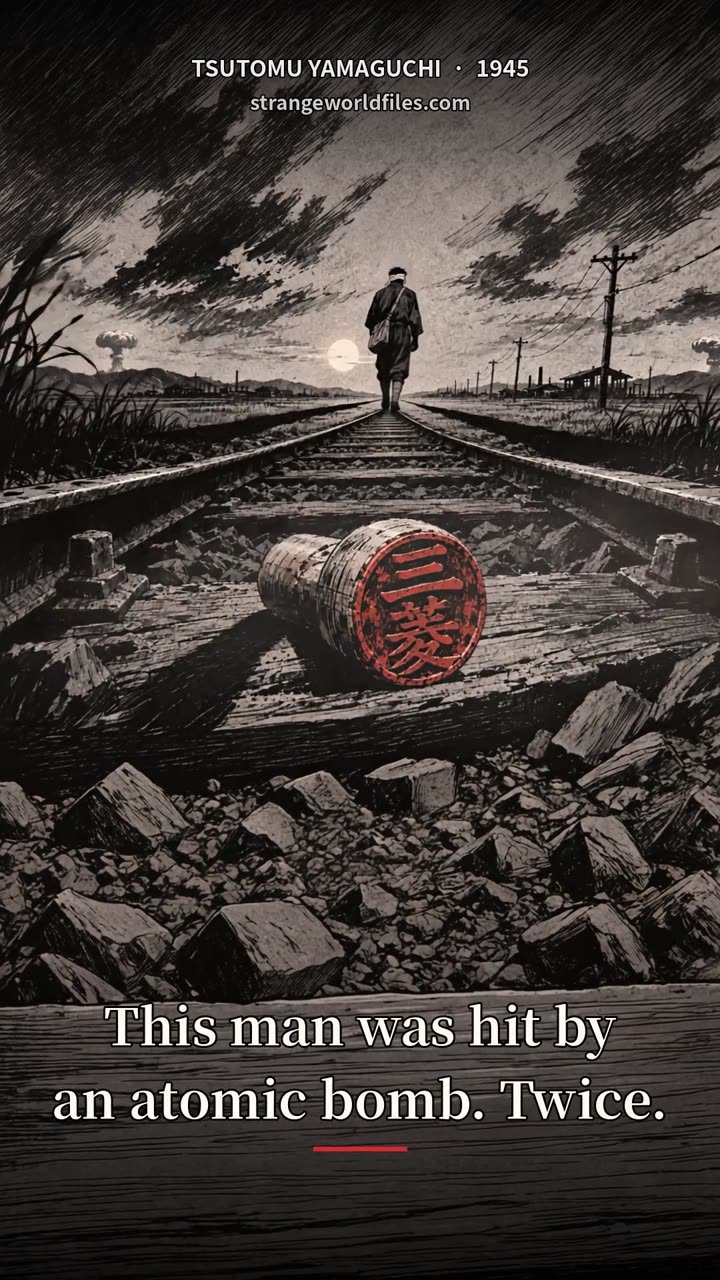
Tsutomu Yamaguchi, an engineer, was in Hiroshima on a business trip on 6 August. Burned and with damaged eardrums, he made his way home a few days later.
Home was Nagasaki.
On 9 August he was in his office, describing the bomb to his boss, when the second one exploded over his city.
He survived that too. In March 2009 Japan officially recognised him as a survivor of both bombings, the only person ever given that status. He died in January 2010, at 93.
He was not the only person caught in both cities. He was the one whose double exposure was officially certified.
Is Hiroshima still radioactive?
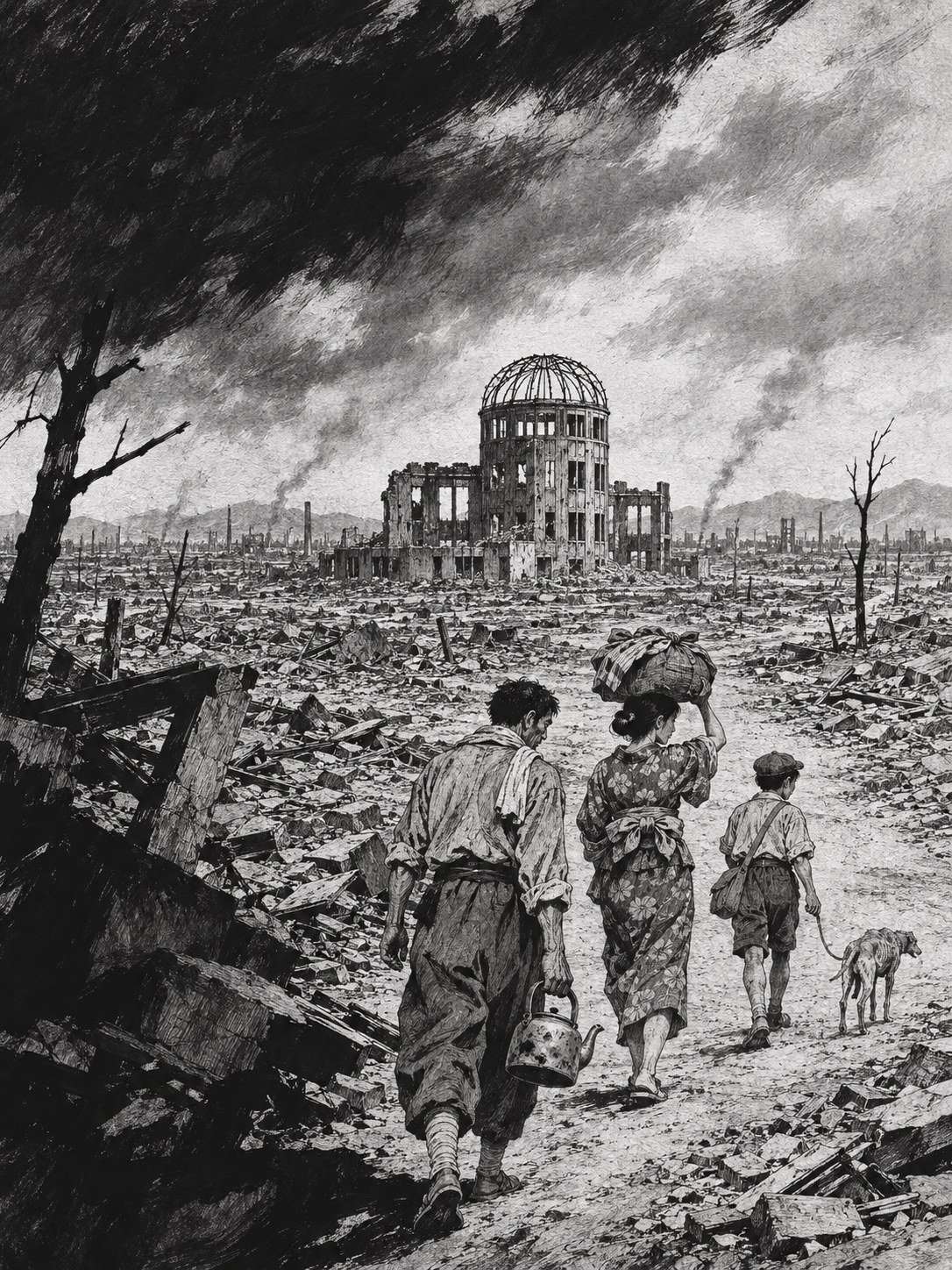
This is the question visitors ask most, often in a whisper, standing in the Peace Park.
The answer is no, and the reason is one of the strangest facts in the whole story. Because the bomb exploded about 600 metres up and the fireball never touched the ground, most of the radioactive material rose into the sky instead of being driven into the soil. The radiation that did reach the ground faded fast.
In 1945, people said nothing would grow in Hiroshima for 75 years.
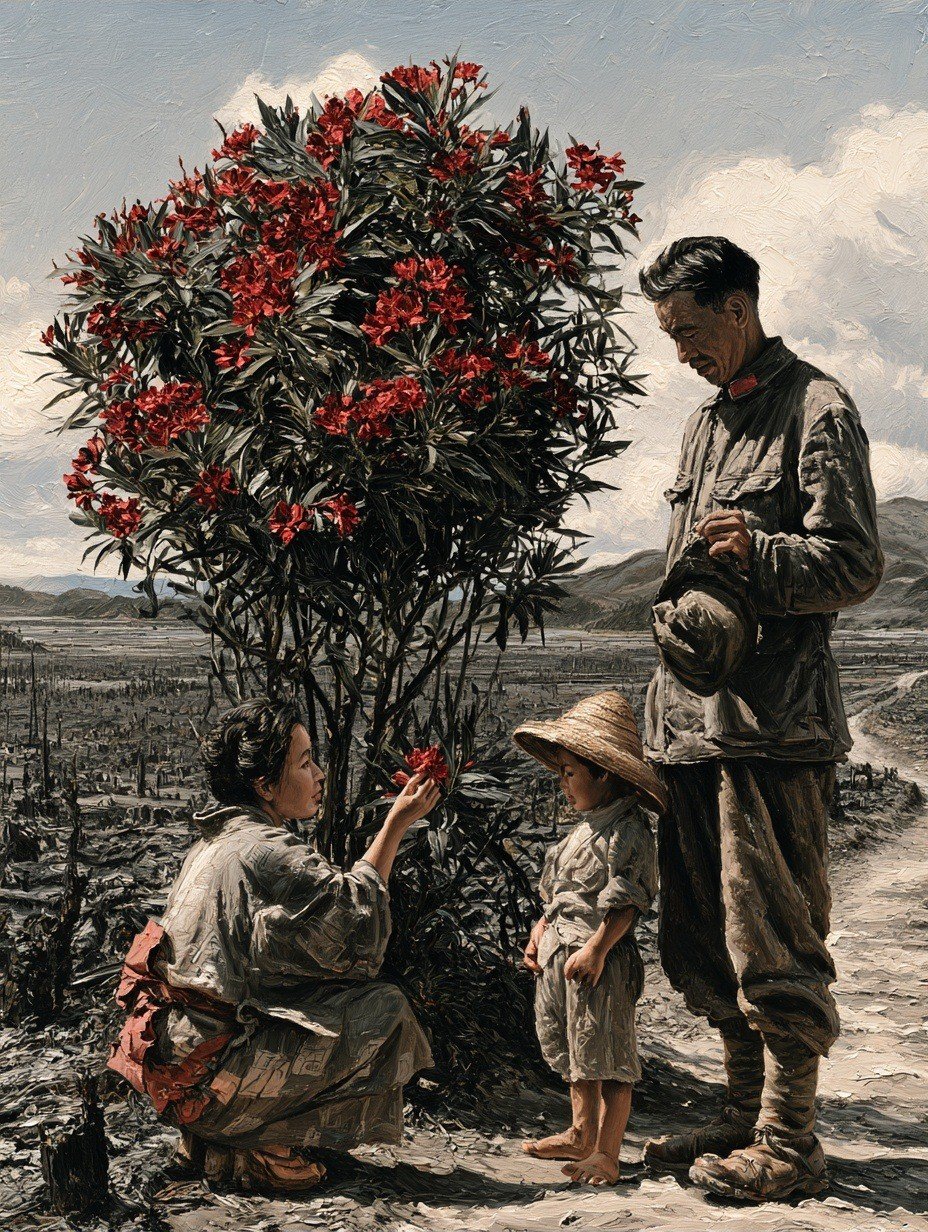
Then the oleanders bloomed. The city of Hiroshima calls the oleander “the very first flower to bloom on the scorched earth,” and it gave the people rebuilding the city strength and hope. In 1973, residents voted it the city’s official flower.
The ruined Genbaku Dome was kept in the state the bomb left it, and in 1996 it became a UNESCO World Heritage Site. More than a million people live in Hiroshima today.
The ground recovered. For some survivors, the paperwork never did.
Why did black rain survivors wait 76 years?
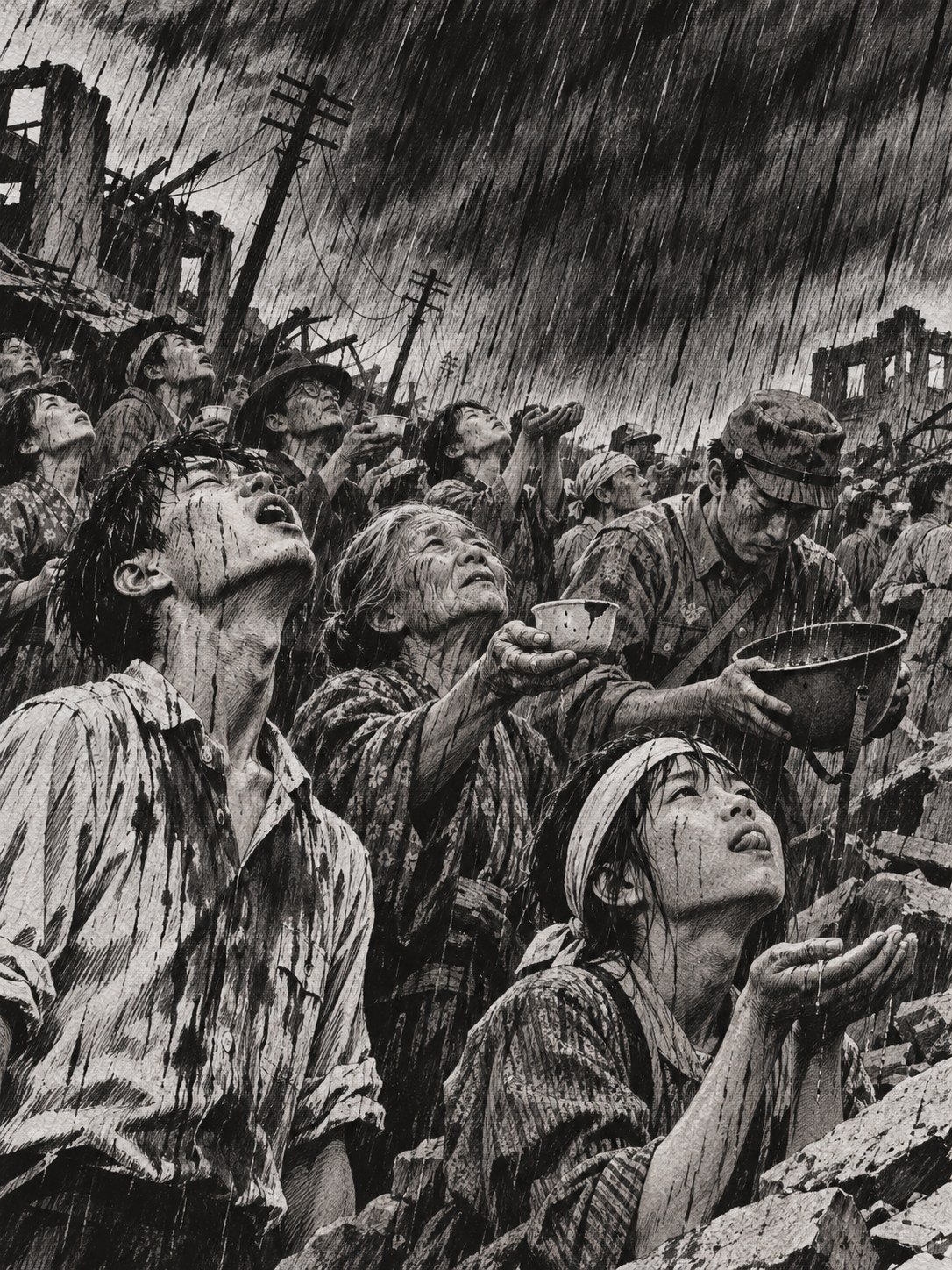
After the explosion, a sticky black rain fell over the north-west of Hiroshima. It was full of soot, ash and radioactive dust. People drank it because they were thirsty.
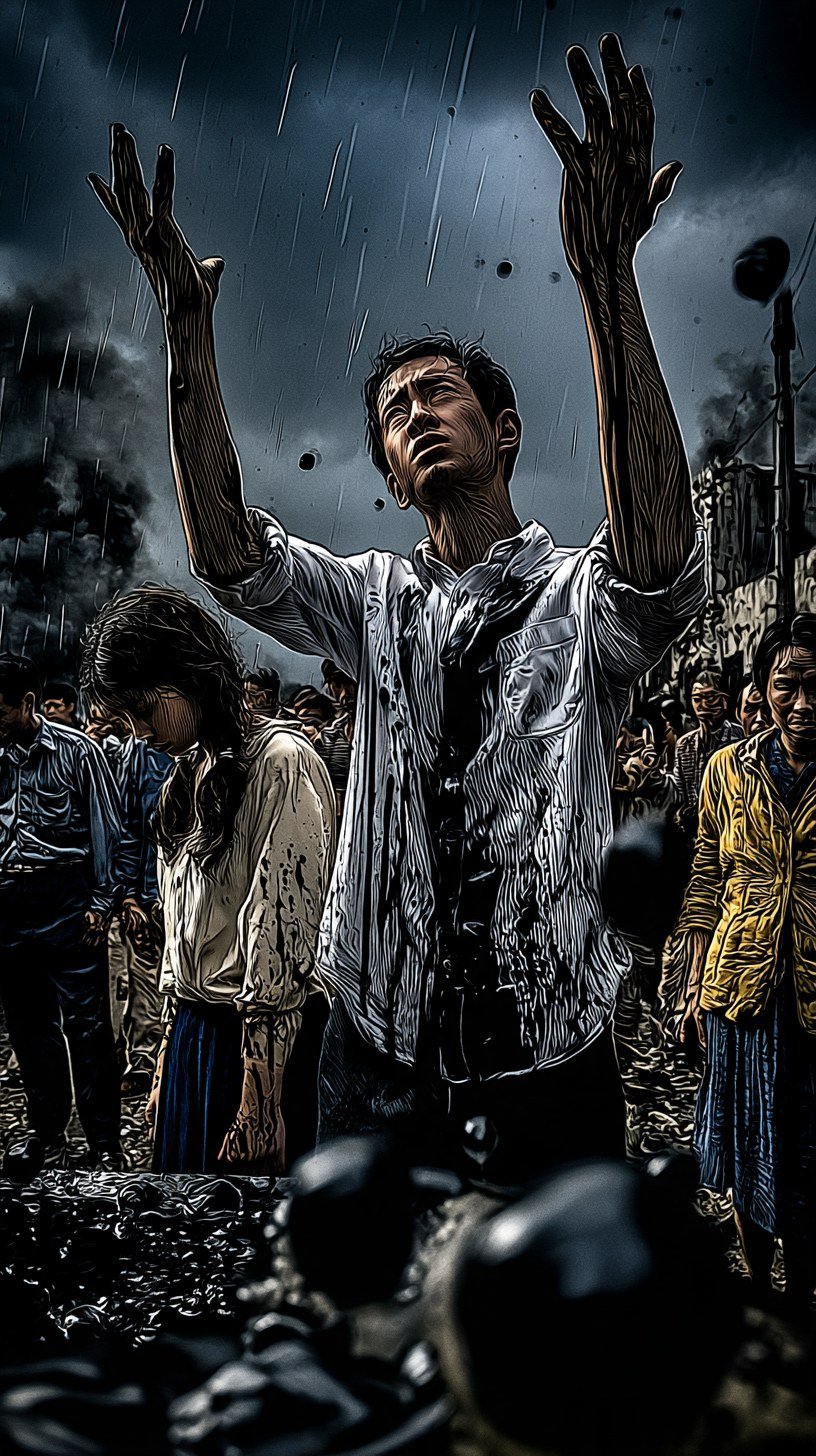
For decades, the government drew a line on the map. People inside the official rain zone could be recognised as survivors. People just outside it could not, even if they had stood in the same rain.
On 14 July 2021, the Hiroshima High Court ruled that 84 people who had been caught in black rain outside the official zone were survivors too. The government did not appeal. New rules followed in 2022, and thousands more people applied.
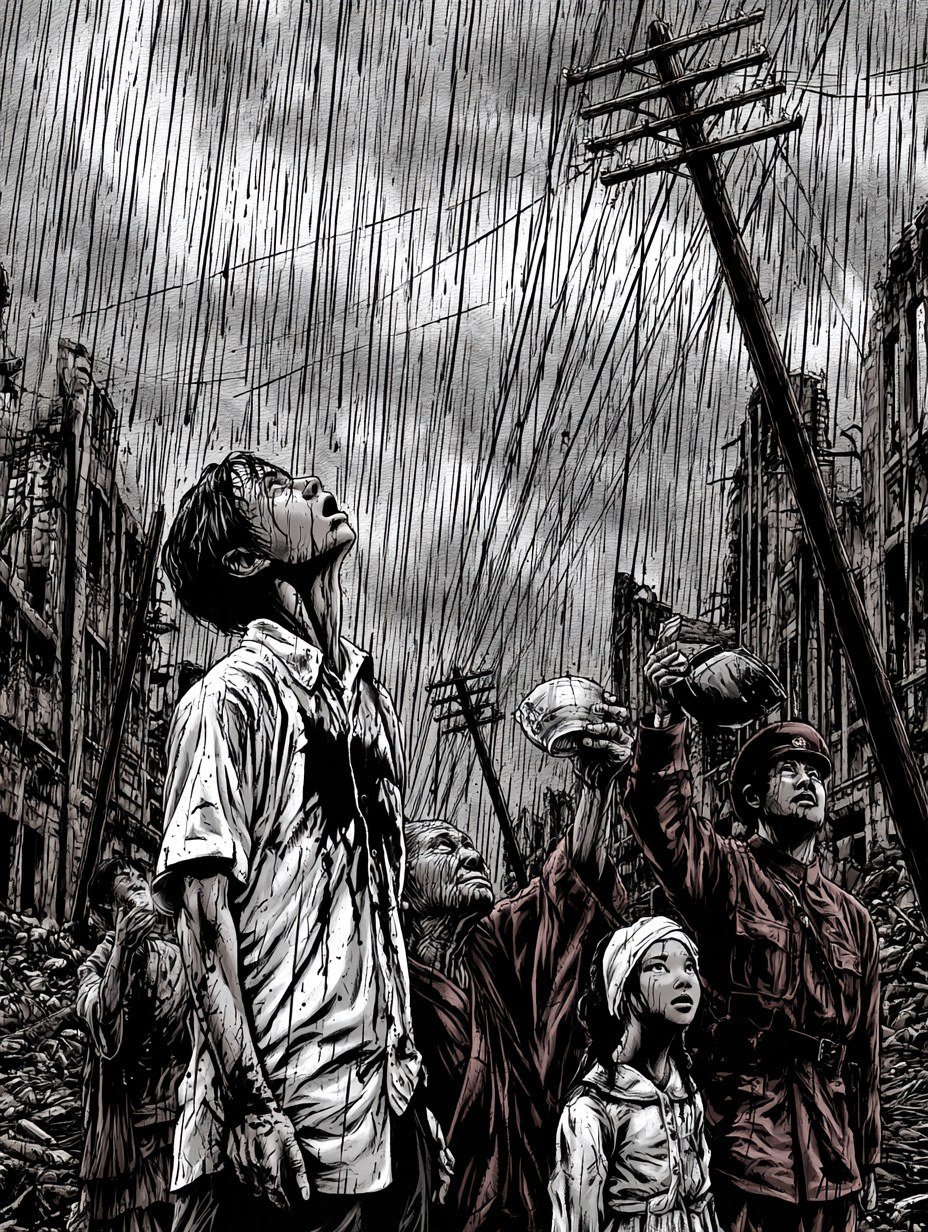
Many of them were in their eighties and nineties. They had waited 76 years for someone to agree that the rain had fallen on them.
What do the last survivors want us to remember?
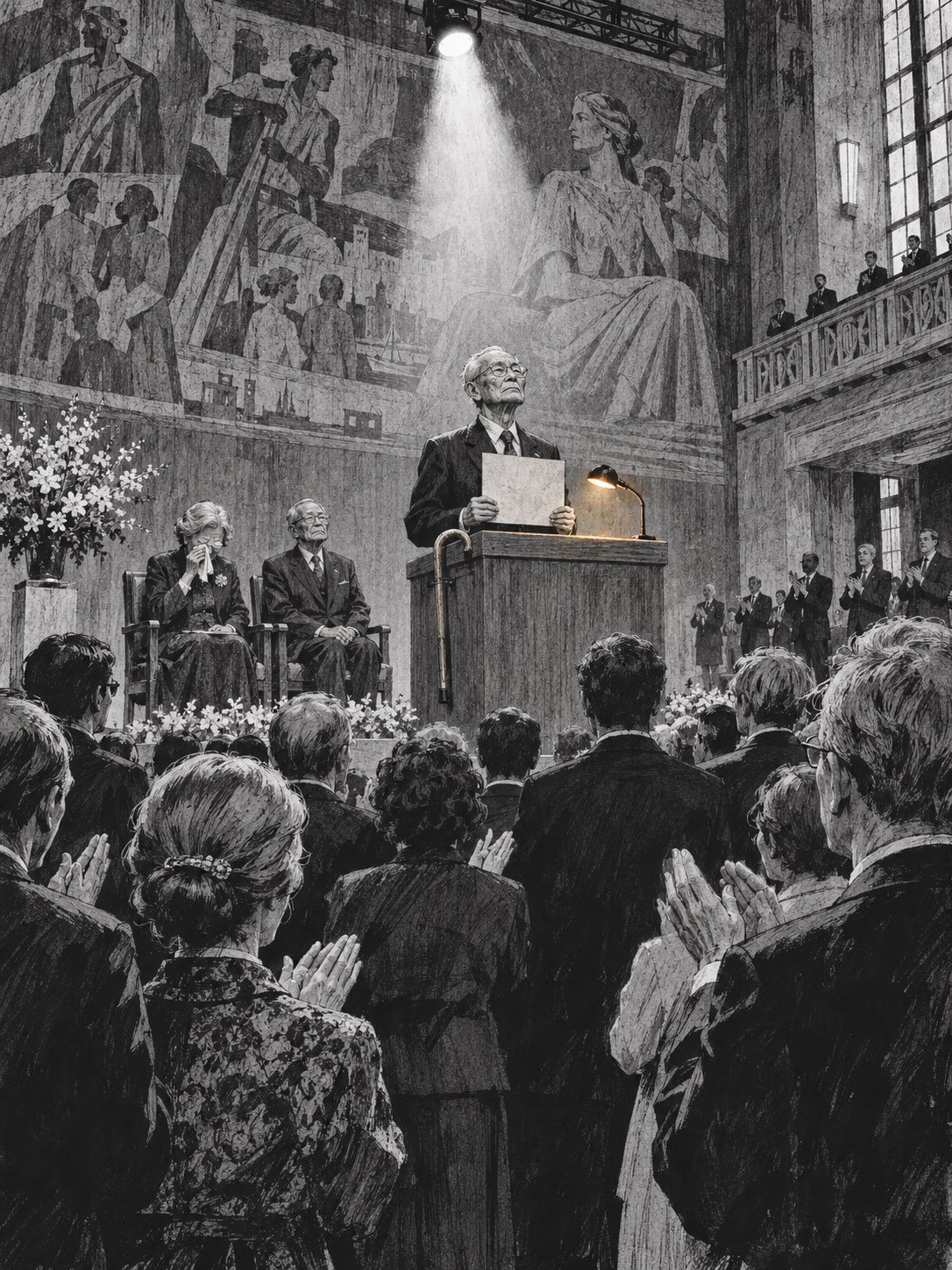
At the end of March 2026, according to Japan’s health ministry figures, 91,105 people held the official atomic bomb survivor’s certificate. Their average age was 86.66.
On 10 December 2024, a 92-year-old man named Terumi Tanaka stood at a podium in Oslo to accept the Nobel Peace Prize for Nihon Hidankyo, the Japanese survivors’ organisation. He had been 13, at home in Nagasaki, about three kilometres from the explosion.
He told the audience he was “infinitely saddened and angered” that the taboo against using nuclear weapons was under threat.
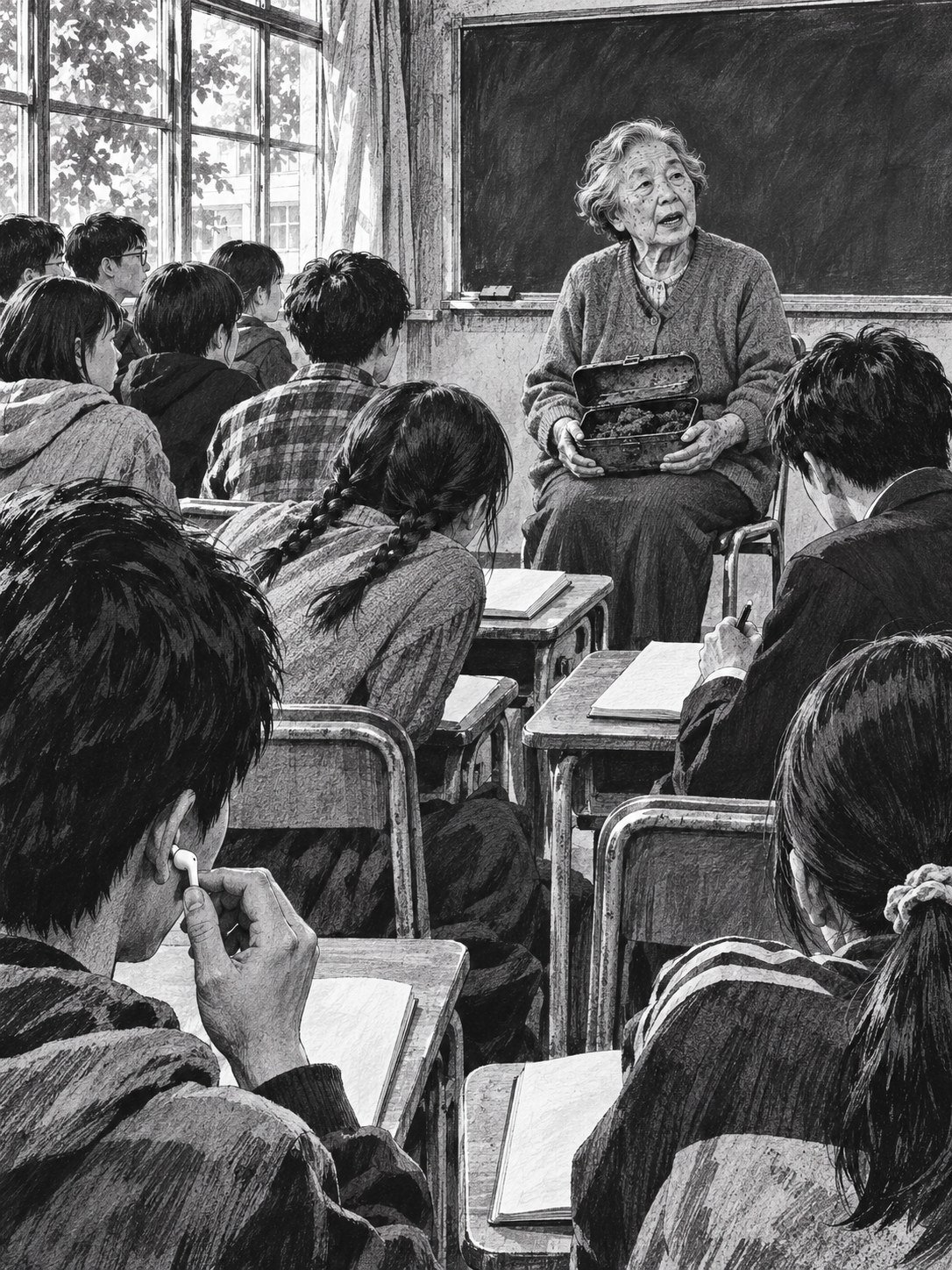
Today, the people who tell these stories in Hiroshima’s classrooms are in their late eighties and nineties. The objects will outlast them: a watch stopped at 8:15, a child’s tricycle, a lunch box with the rice still burned black inside.
When the last person who saw the white flash is gone, will a lunch box be enough to explain what one bomb did to the people who survived it?
Evidence locker
Real records only. The drawings above are illustrations.
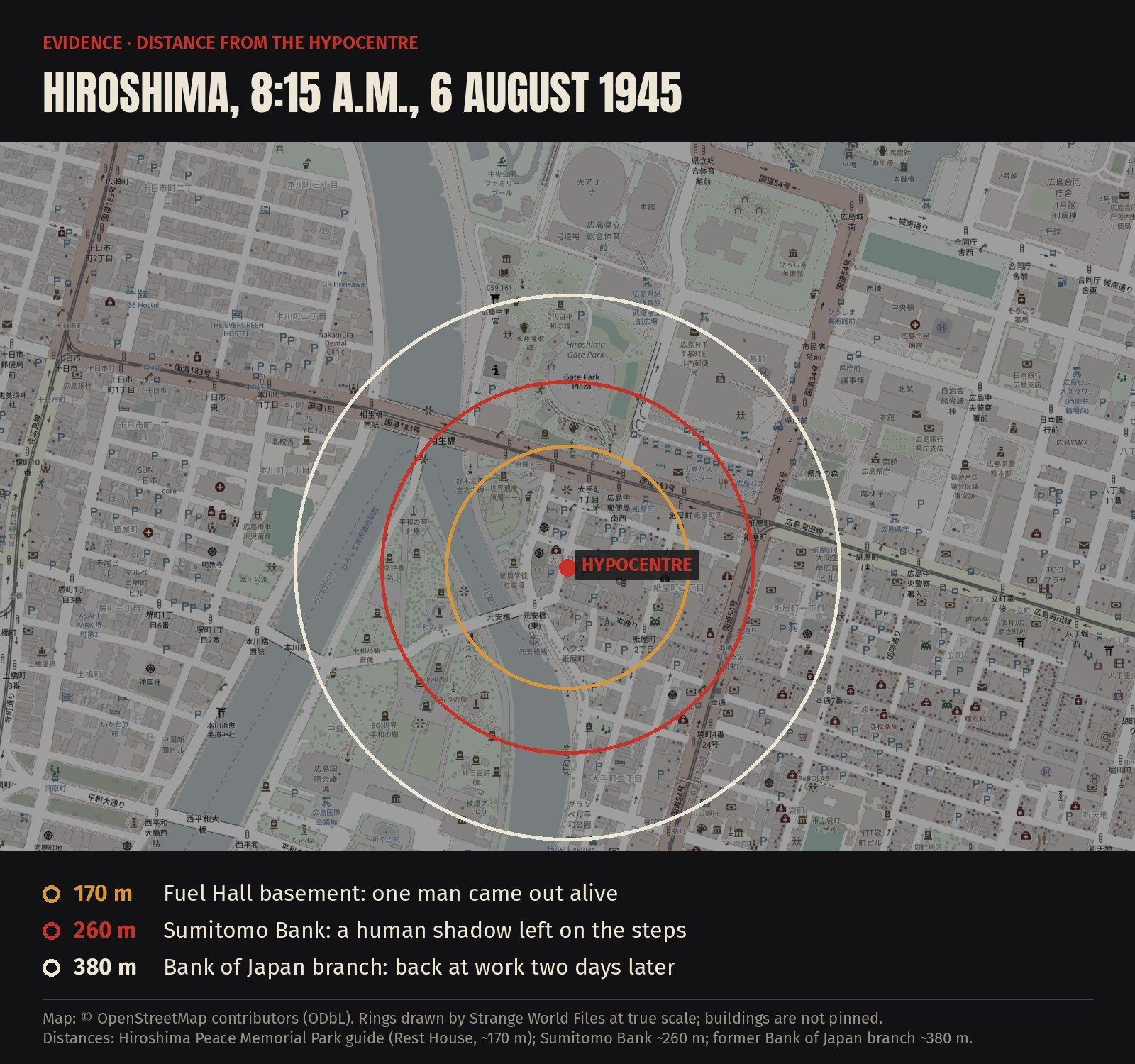 EXHIBIT A · TAP TO ENLARGE
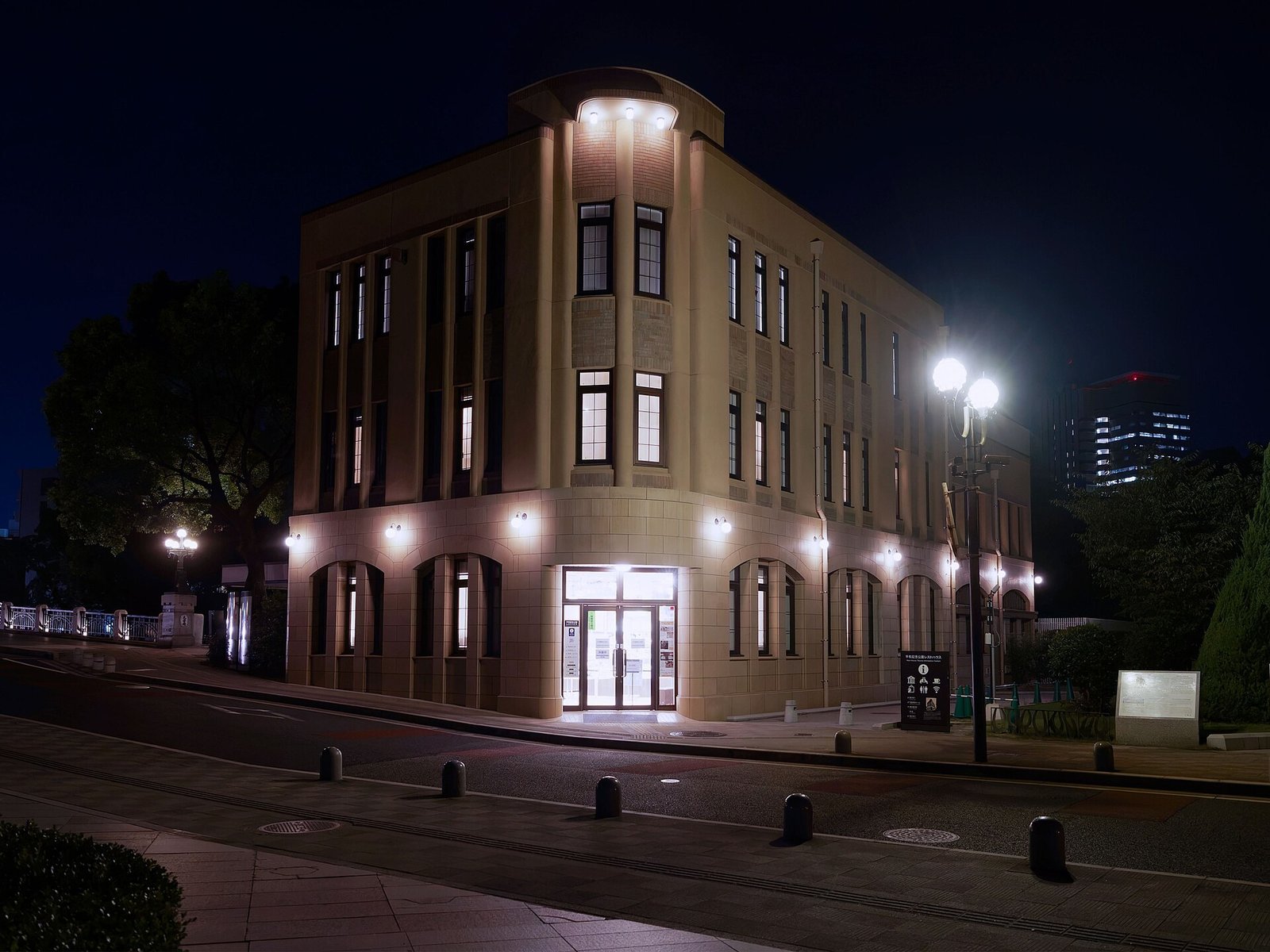 EXHIBIT B · TAP TO ENLARGE
 EXHIBIT C · TAP TO ENLARGE
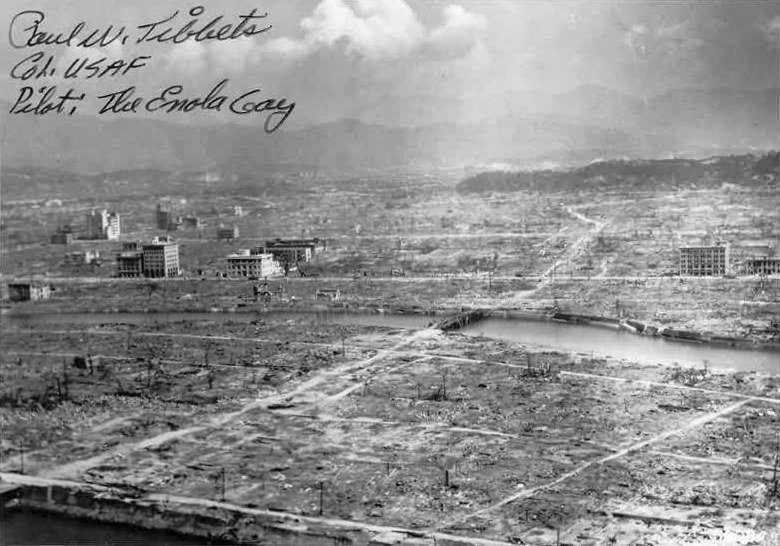 EXHIBIT D · TAP TO ENLARGE
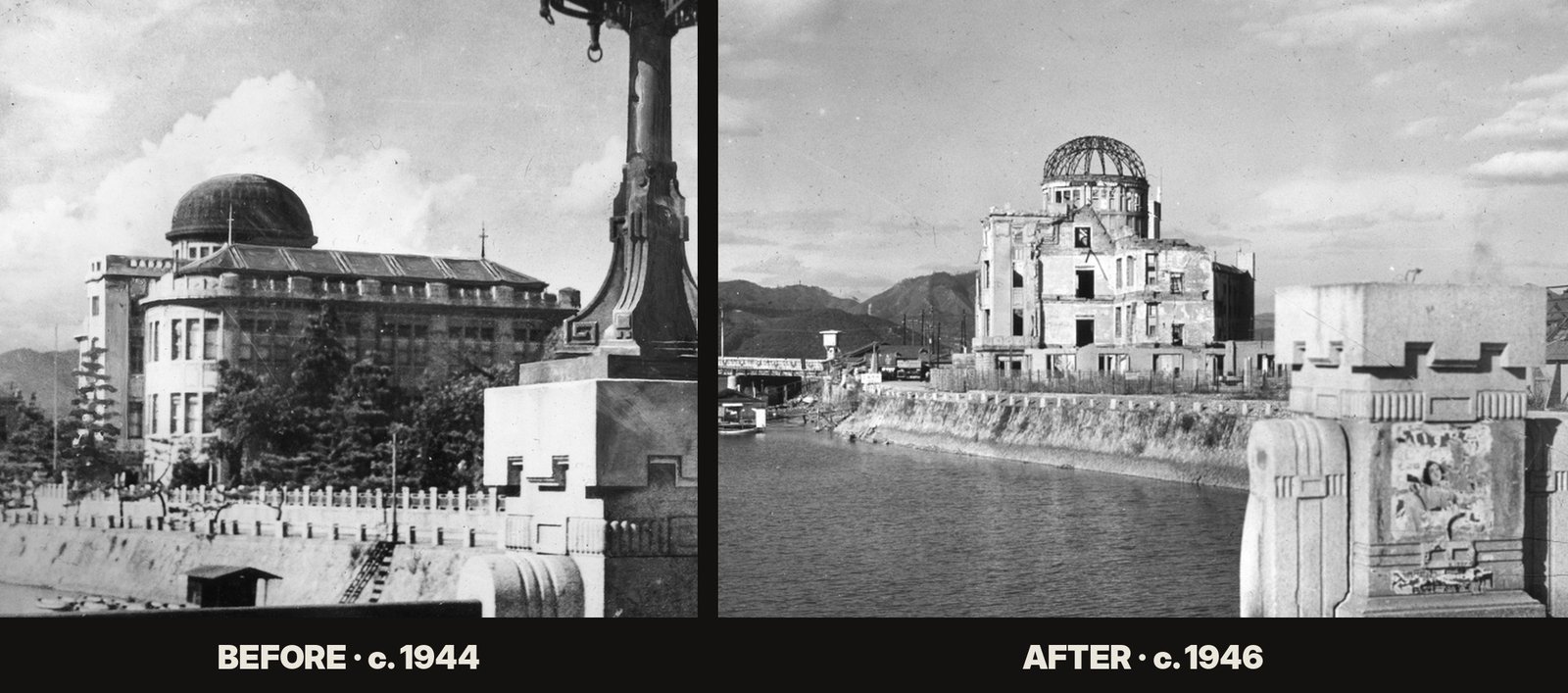 EXHIBIT E · TAP TO ENLARGE
 EXHIBIT F · TAP TO ENLARGE
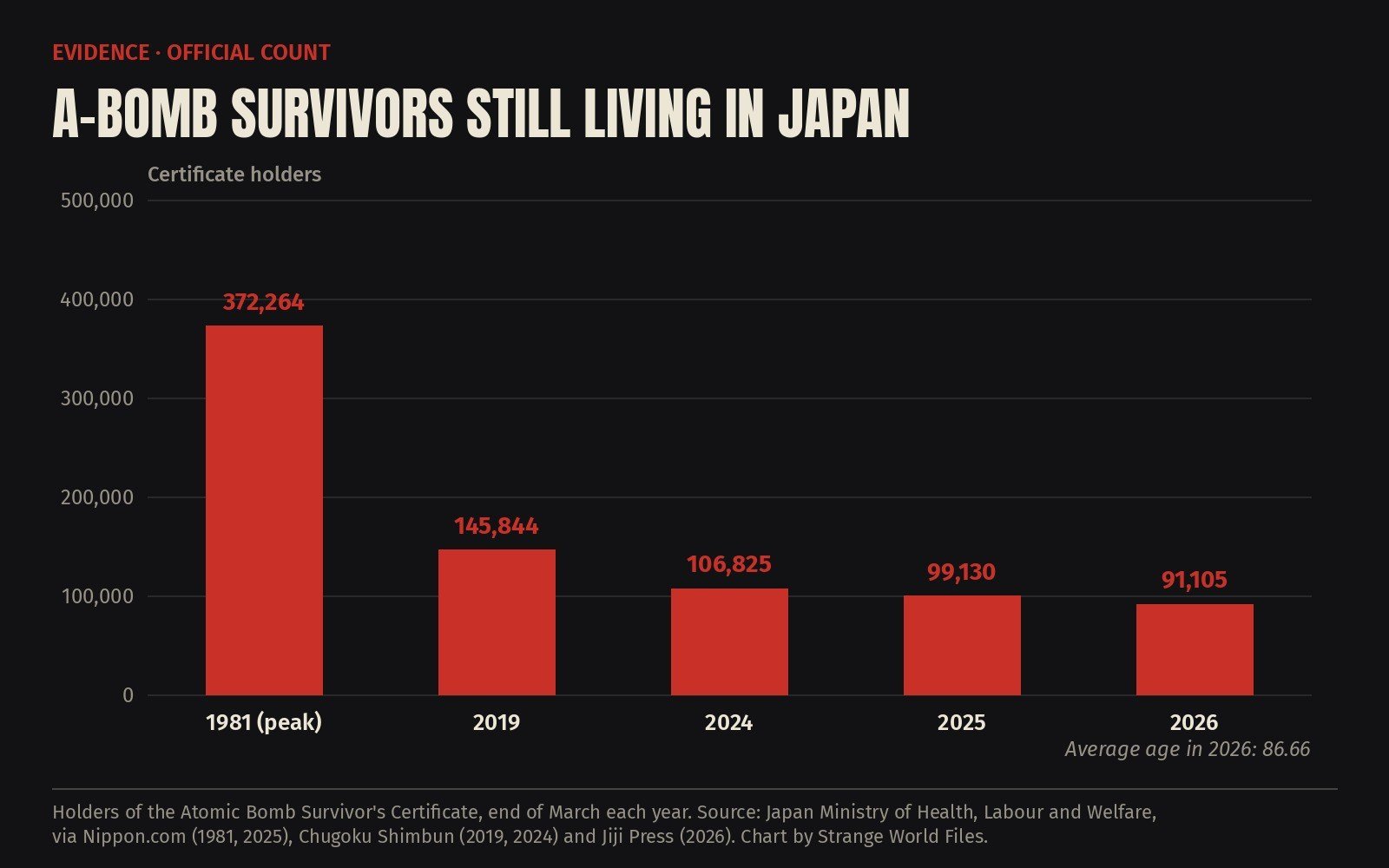 EXHIBIT G · TAP TO ENLARGE
The story you may have heard, and what the file says
| The popular version | What the record shows |
|---|---|
debunked “People near the bomb were vaporised, leaving only their shadows.” | The famous shadow on the Sumitomo Bank steps formed where a person’s body blocked the flash from discolouring the stone. It records where someone sat, not that they turned to vapour. |
debunked “Hiroshima is still radioactive today.” | The bomb exploded about 600 metres up, so most of the radioactive material rose away instead of soaking into the ground. More than a million people live in Hiroshima today. |
partly true “Wearing white saved lives.” | Light clothing reflected heat and reduced burns; kimono patterns burned into skin show it. It did nothing against the blast or the radiation. |
partly true “Tsutomu Yamaguchi was the only person to survive both bombs.” | He was the only person officially certified for both, in 2009. Others are believed to have lived through both but were never certified. |
disputed “The survivors’ children inherited radiation damage.” | Large long-term studies have not found clear evidence of inherited effects. Second-generation survivors have taken the government to court for health support; so far they have lost. |
Why the record is stranger than the legend. The legends make the bomb sound like magic: people turned to shadows, a city poisoned forever. The record is more unsettling. Whether a person lived often came down to a staircase, a stone wall, the pattern on a kimono or a father’s bad feeling the night before. And surviving the first second was only the beginning. For many people the harder part lasted the rest of their lives.
Where the argument is
Two arguments come up again and again whenever Hiroshima is discussed online.
Did the bombs end the war? One side says the bombs forced Japan’s surrender and saved the lives a land invasion would have cost. The other side points to the Soviet Union declaring war on Japan on 8 August, between the two bombings, and argues that this shook Japan’s leaders just as much. Historians are still divided. The two events came within days of each other, which is exactly why the question has never been settled.
Did the Atomic Bomb Casualty Commission exploit the survivors? Survivors who were examined but not treated often describe feeling like test subjects. Defenders say the commission was set up for research, not treatment, and that its data has since protected millions of people. The argument is really about whether studying suffering without relieving it can ever be justified.
A quieter argument runs underneath both: who counts as a survivor? The black rain ruling, the Korean survivors and the second-generation lawsuits are all versions of the same question.
Our view: on the first question, we do not think the record supports a simple answer either way, and we would distrust anyone who says it does. On the second, we lean toward the survivors. The research mattered, but people who had lost almost everything gave their bodies to science and got very little back.
What we still don’t know
- How many Koreans were killed in Hiroshima and Nagasaki; the figures are estimates.
- How many people lived through both bombings without ever being certified.
- Who sat on the Sumitomo Bank steps at 8:15.
- Whether the long-term studies have answered every question about survivors’ children.
Quick answers
How close to the Hiroshima bomb did anyone survive? Eizo Nomura survived about 170 metres from the hypocentre, in the basement of the Fuel Hall, now the Rest House in the Peace Memorial Park. Of the 37 people at work in the building, he was the only survivor.
How did people survive the Hiroshima atomic bomb? Mostly by being shielded: inside concrete or stone buildings, in basements, under collapsed houses, or simply away from the city centre. Light-coloured clothing reduced burns. Chance played a large part.
Is Hiroshima still radioactive? No. The bomb exploded in the air, so radiation levels returned to normal soon after. More than a million people live in Hiroshima today.
What was the black rain? Radioactive, soot-filled rain that fell over north-west Hiroshima after the explosion. In July 2021 the Hiroshima High Court ruled that 84 people caught in it outside the official zone were survivors too.
How many atomic bomb survivors are alive today? At the end of March 2026, 91,105 people in Japan held the official survivor’s certificate, with an average age of 86.66. About 1,600 Korean survivors are believed to be alive in South Korea.
Did anyone survive both atomic bombs? Yes. Tsutomu Yamaguchi was officially recognised in 2009 as a survivor of both Hiroshima and Nagasaki. Others are believed to have survived both but were never certified.
What is a little-known fact about the Hiroshima survivors? More than one in ten of the people killed or injured in Hiroshima and Nagasaki are believed to have been Korean. The memorial to Korean victims stood outside the Peace Memorial Park until 1999.
Editor’s note
However many times I read that a man survived in a basement 170 metres from the hypocentre, I can’t quite feel the distance. 170 metres is a walk you would not normally think of as a distance at all. And that close, someone lived. When I read that things like where you were standing, or what happened to be shielding you, decided who lived, I try to imagine myself there and quickly hit a wall. How much of it could my own choices have changed?
What stays with me more is what came after. If someone came back from that, I would want the people around them to ask first whether they were hurt. But if survivors had to hide that they had been exposed, it means they lived worrying not only about their own bodies but about how people would see them. Without even a moment to feel relief at being alive, they had to learn that what happened that day could count against them for the rest of their lives. That is hard for me to imagine.
Reading Bae Kyung-mi’s story made me ask how much I really knew about the lives of Korean survivors. Knowing that there were Korean victims is different from hearing what one person lived through in the years afterwards. When I think about Hiroshima, I realise I have mostly stopped at the day of the explosion. I hope readers will also remember how the people who survived that day had to live from the next morning on.
— Strange World Files
Sources
- Chugoku Shimbun / Hiroshima Peace Media Center, “Documenting Hiroshima of 1945: only one survivor at Fuel Hall”: www.hiroshimapeacemedia.jp
- Atomic Archive, “Testimony of Akiko Takakura”: atomicarchive.com
- Japan Ministry of Land, Infrastructure, Transport and Tourism multilingual database, former Bank of Japan Hiroshima Branch: www.mlit.go.jp
- Hiroshima Peace Memorial Museum via Google Arts & Culture, “Lunch box” (Shigeru Orimen): artsandculture.google.com
- Hiroshima Peace Memorial Museum via Google Arts & Culture, “Tricycle” (Shinichi Tetsutani): artsandculture.google.com
- Hiroshima Peace Media Center, Kengo Nikawa’s pocket watch: www.hiroshimapeacemedia.jp
- Hiroshima Peace Media Center, mobilised students in building demolition: www.hiroshimapeacemedia.jp
- Hiroshima Peace Media Center, “Yoshito Matsushige’s photographic negatives, five witnesses of A-bombing”: www.hiroshimapeacemedia.jp
- Hiroshima Peace Memorial Museum virtual museum, the confiscated film and its return in 1967: hpmmuseum.jp
- AFP via Digital Journal, “80 years on, Korean survivors of WWII atomic bombs still suffer” (August 2025): www.digitaljournal.com
- Hiroshima Peace Culture Foundation, Monument in Memory of the Korean Victims of the A-bomb: www.pcf.city.hiroshima.jp
- City of Hiroshima, City Tree and City Flower (Oleander): www.city.hiroshima.lg.jp
- Japan Times, black rain appeal dropped (July 2021): www.japantimes.co.jp
- Nippon.com / Jiji Press, “Number of Hibakusha Drops to 91,100” (July 2026): www.nippon.com
- NBC News, Terumi Tanaka’s Nobel Peace Prize speech (December 2024): www.nbcnews.com
- BBC News Korean, Hiroshima survivors’ testimony (6 August 2025): www.bbc.com