The Halifax Explosion: A Burning Munitions Ship, a Dispatcher’s Last Message and the Biggest Blast Before the Atom Bomb (1917)
What the record shows
- When: Thursday 6 December 1917, 9:04:35 a.m.
- Toll: Nearly 2,000 dead (1,782 known by name), about 9,000 injured
- Status: Three men charged; no one convicted; both ships found equally to blame
Still uncertain
- Whether Coleman’s warning actually stopped the passenger train.
- Exactly how many people died; the named list is known to be incomplete.
- The exact explosive load of the Mont-Blanc.
Narrated Mystery: press play and hear the whole case read aloud, like a true crime podcast episode, or an audiobook for a long drive (about 12 minutes). The narrator is an AI voice.
Listen to the narration above first, then read along. The key words are underlined in the story.
- munitionsbombs, shells and other weapons for war
- flammablecatching fire easily
- dispatchera person who directs train movements by radio or telegraph
- collisiona crash between two moving things
- ignitedmade something start burning
- shatteredbroke suddenly into many small pieces
- blizzarda heavy snowstorm with strong winds
- manslaughterthe crime of killing someone without meaning to
1. At about what time did the Imo cut into the Mont-Blanc’s side?
At about 8:45 a.m.
2. What did the Supreme Court of Canada decide in 1919?
It found the two ships equally to blame.
3. When did the relief train leave Boston, and who was on it?
At 10 p.m. on 6 December, carrying surgeons, nurses and Red Cross workers.
On 6 December 1917 a munitions ship caught fire in Halifax Harbour after a collision. A railway dispatcher stayed at his key to warn an incoming train.


“Hold up the train”
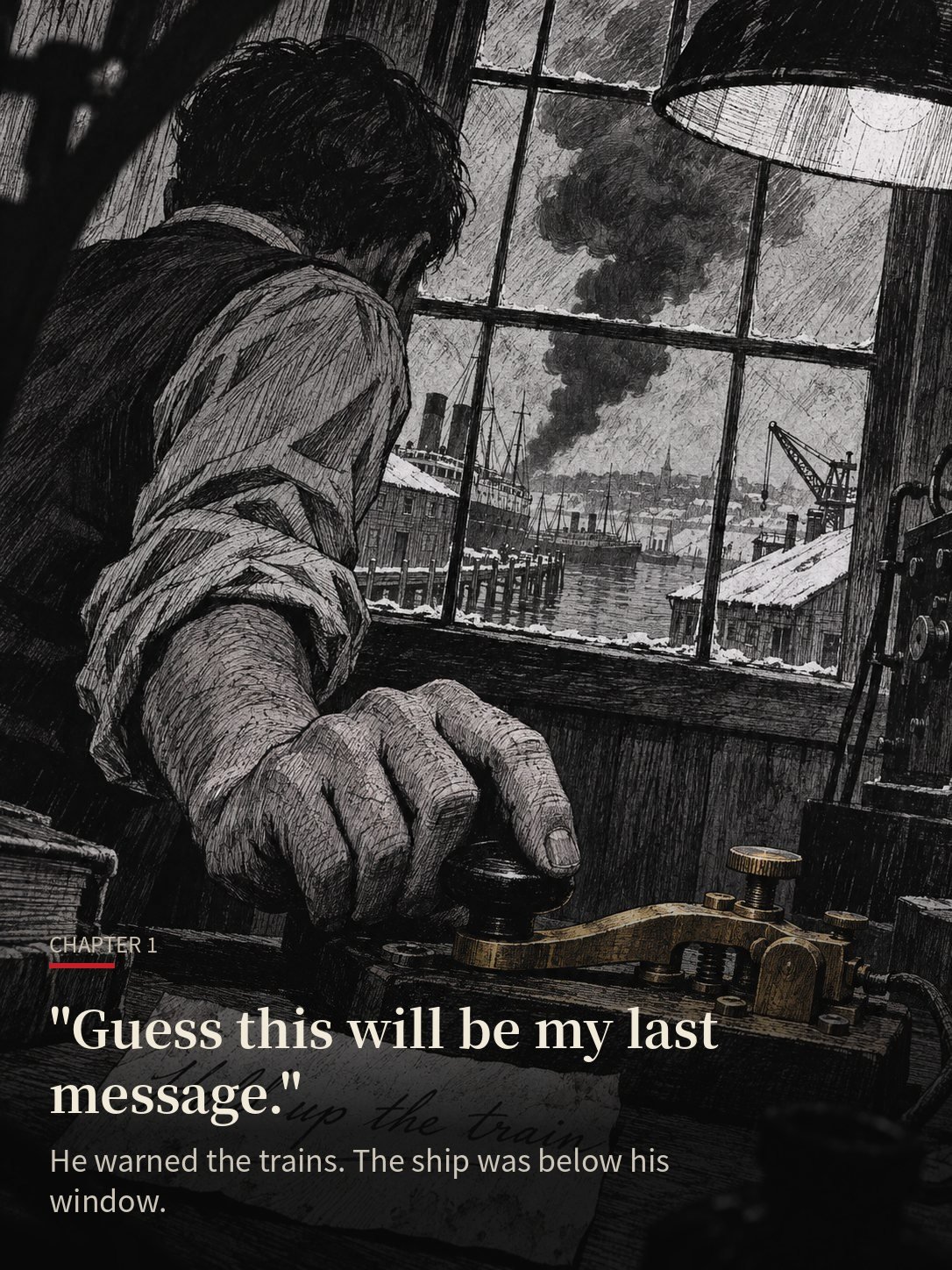
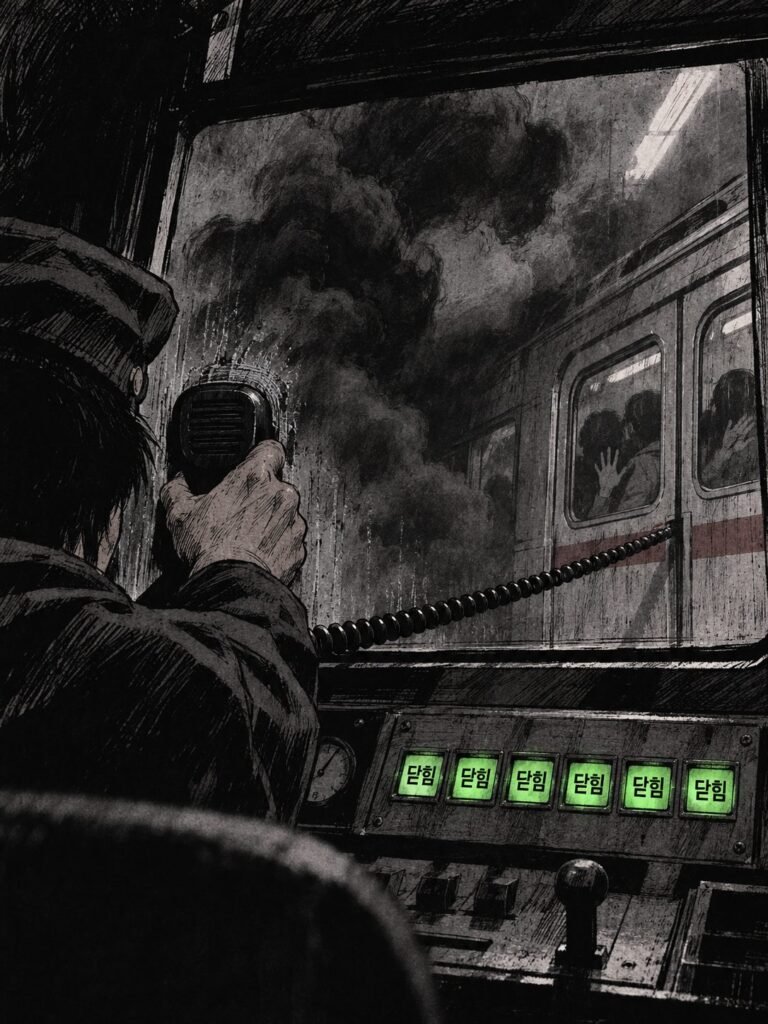
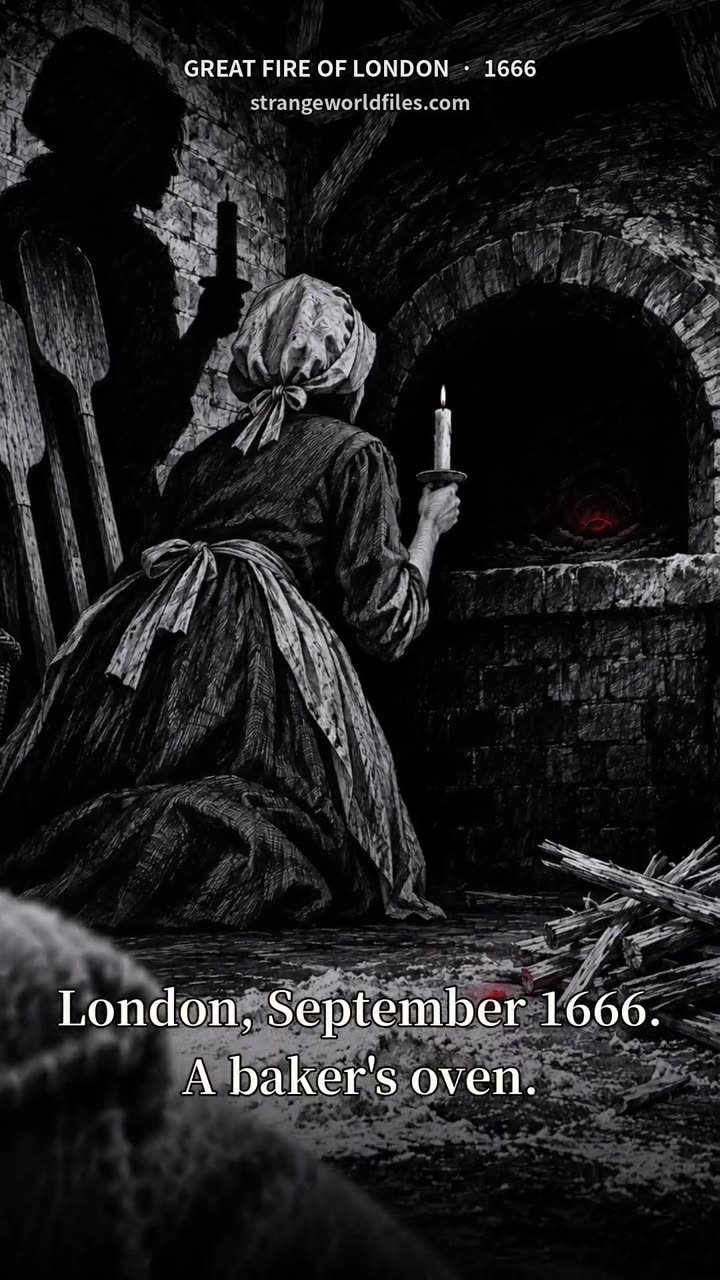
Thursday 6 December 1917, a few minutes before 9 a.m. In a small wooden railway office at the edge of Halifax Harbour, a train dispatcher named Vince Coleman sat at his telegraph key.
Out on the water, a French cargo ship was on fire. It was drifting toward the pier right below his window. Coleman had been told what was in its hold.
He knew a passenger train from Saint John, New Brunswick, was due in at 8:55 with about 300 people aboard. So he tapped out a message down the line. The version the Maritime Museum of the Atlantic gives reads: “Hold up the train. Ammunition ship afire in harbor making for Pier 6 and will explode. Guess this will be my last message. Good-bye boys.” (MMA-COLEMAN) (CBC-COLEMAN)
A harbour at war

In 1917 Halifax, Nova Scotia, was one of the busiest wartime ports in the world. Convoys gathered there to carry troops, food and munitions across the Atlantic to the war in Europe.
About 65,000 people lived in and around the city. At night, anti-submarine nets were drawn across the harbour mouth to keep out German U-boats. Nothing went in or out until morning.
On the evening of 5 December, two ships were stuck on opposite sides of those nets. (PARKS-2017) (NSA-EXPLOSION) (VIMY) (CE-FEATURE)
Nearly 3,000 tonnes
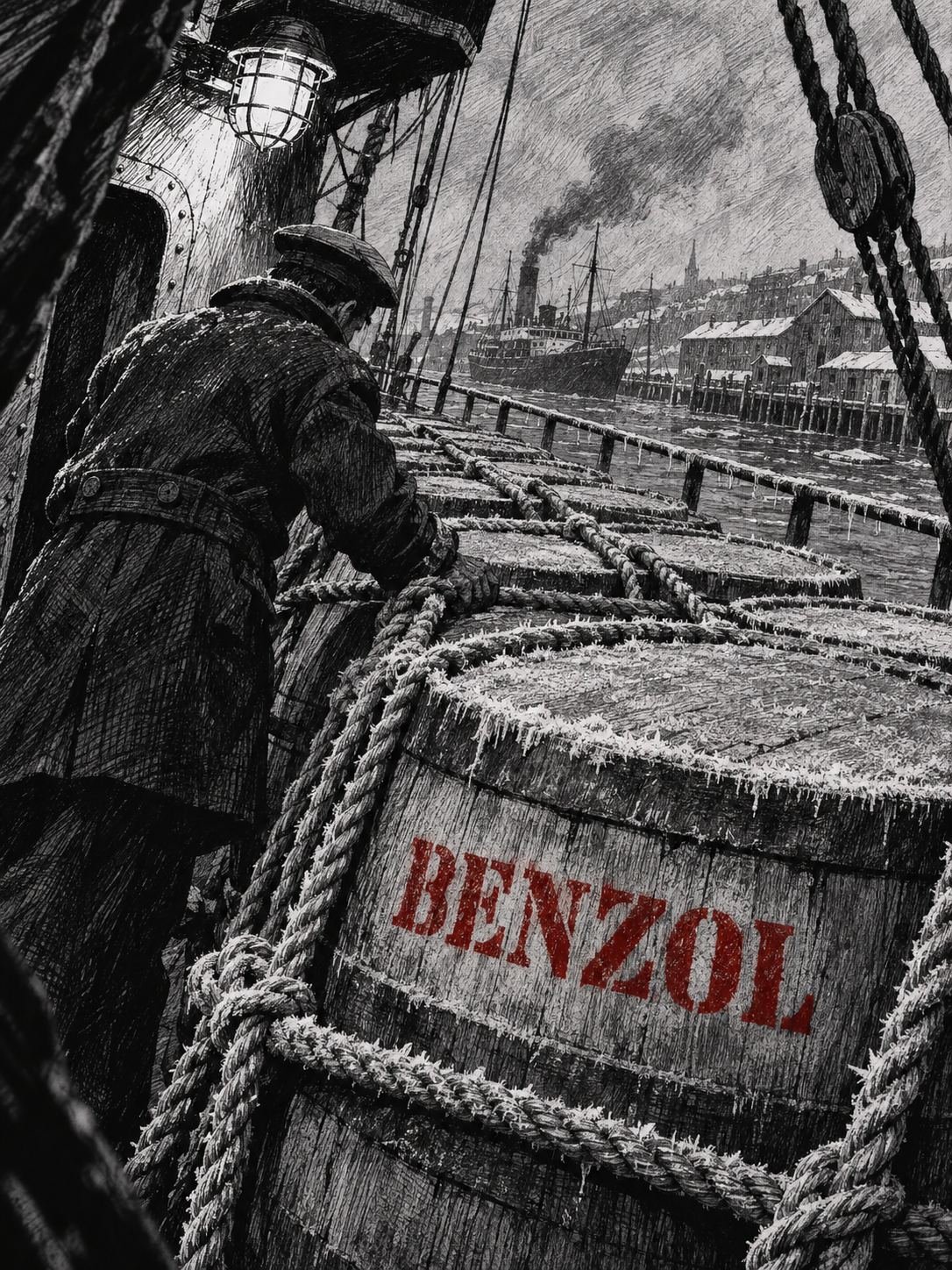
One was the Mont-Blanc, a French cargo steamer that had come up from New York. She was riding low in the water.
Her hold was packed with picric acid, TNT and guncotton. Barrels of benzol, a highly flammable fuel, were lashed on her deck. Britannica puts the total at 2,925 tonnes of explosives; other sources give somewhat less.
She was waiting outside the nets. Her captain was Aimé Le Médec, and her harbour pilot was Francis Mackey. (WFA) (VIMY) (BRITANNICA) (CE-SUMMARY) (ATLBOOKS-2014)
The wrong side of the channel
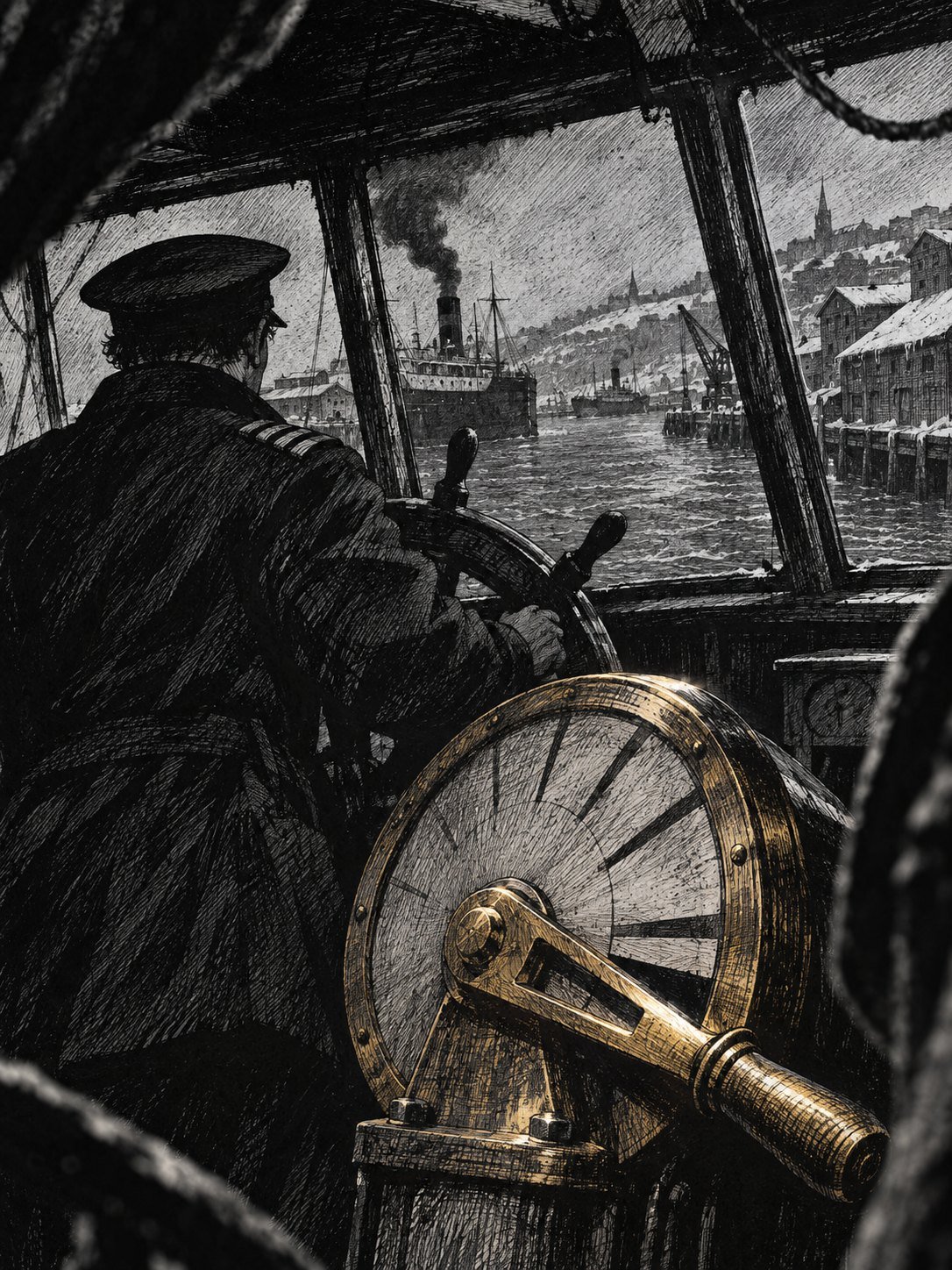
The other ship was the Imo, an old Norwegian steamer chartered to carry relief supplies to Belgium. She was empty, and she was late: the nets had closed before she could leave the night before.
On the morning of 6 December both ships were cleared to move. The Mont-Blanc came in at about 4 knots, in the correct lane, heading for Bedford Basin.
The Imo came out through the Narrows, the tightest part of the harbour, at about 7 knots. The harbour limit was 5. Because of other traffic she was on the wrong side of the channel. (CE-FEATURE) (WFA) (CE-SUMMARY)
One blast, two blasts
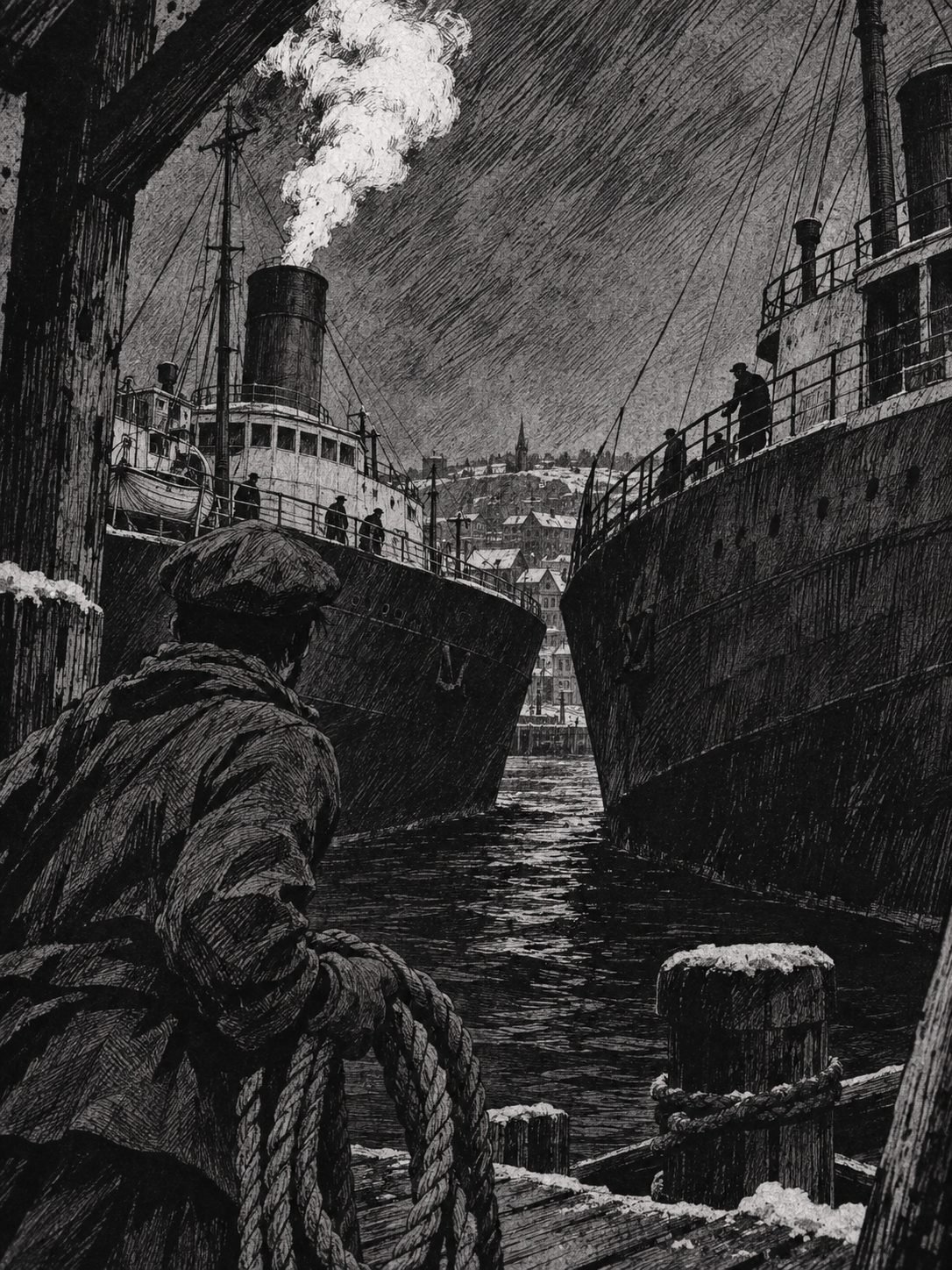
The two ships saw each other coming. The Mont-Blanc gave one blast on her whistle, claiming the right of way. The Imo answered with two.
The Mont-Blanc whistled again. Again the Imo answered twice.
Both ships cut their engines. The Mont-Blanc turned to avoid running aground. Then the Imo reversed, her bow swung round, and at about 8:45 a.m. she cut about nine feet into the Mont-Blanc’s side. (WFA) (HISTORY)
The crew rowed away
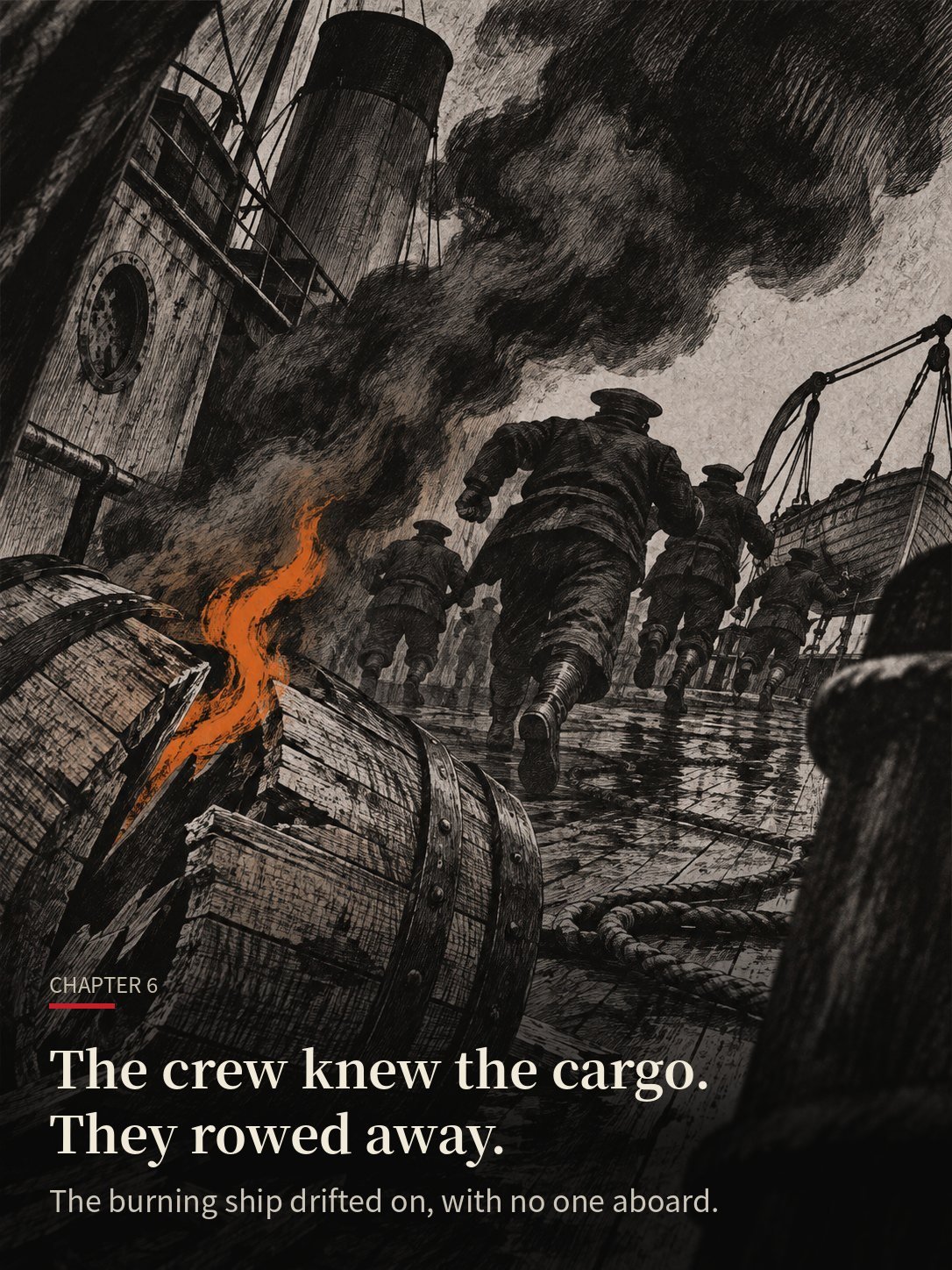
The collision itself was slow. But it set the cargo alight. Sparks from the reversing Imo ignited vapour from the damaged hold, and burning benzol spread fire to the barrels on deck.
The French crew knew exactly what they were carrying. They took to the lifeboats and rowed hard for the far shore. All but one of them survived.
The burning ship, with no one aboard, drifted toward Halifax. In about 20 minutes it came to rest against Pier 6, in the north-end neighbourhood of Richmond. (WFA) (VIMY) (PARKS-2017) (CEDRE)
Everyone came to watch
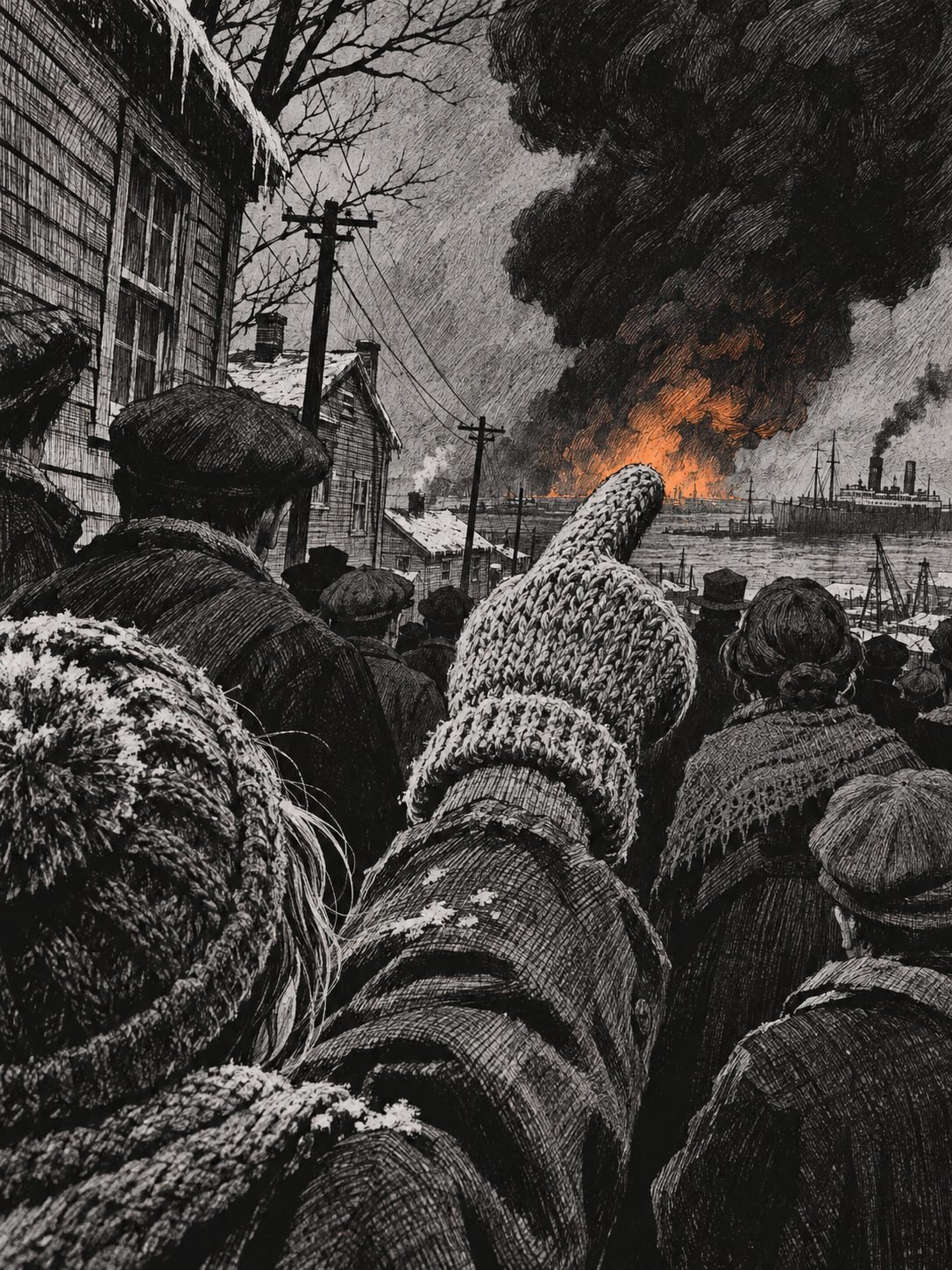
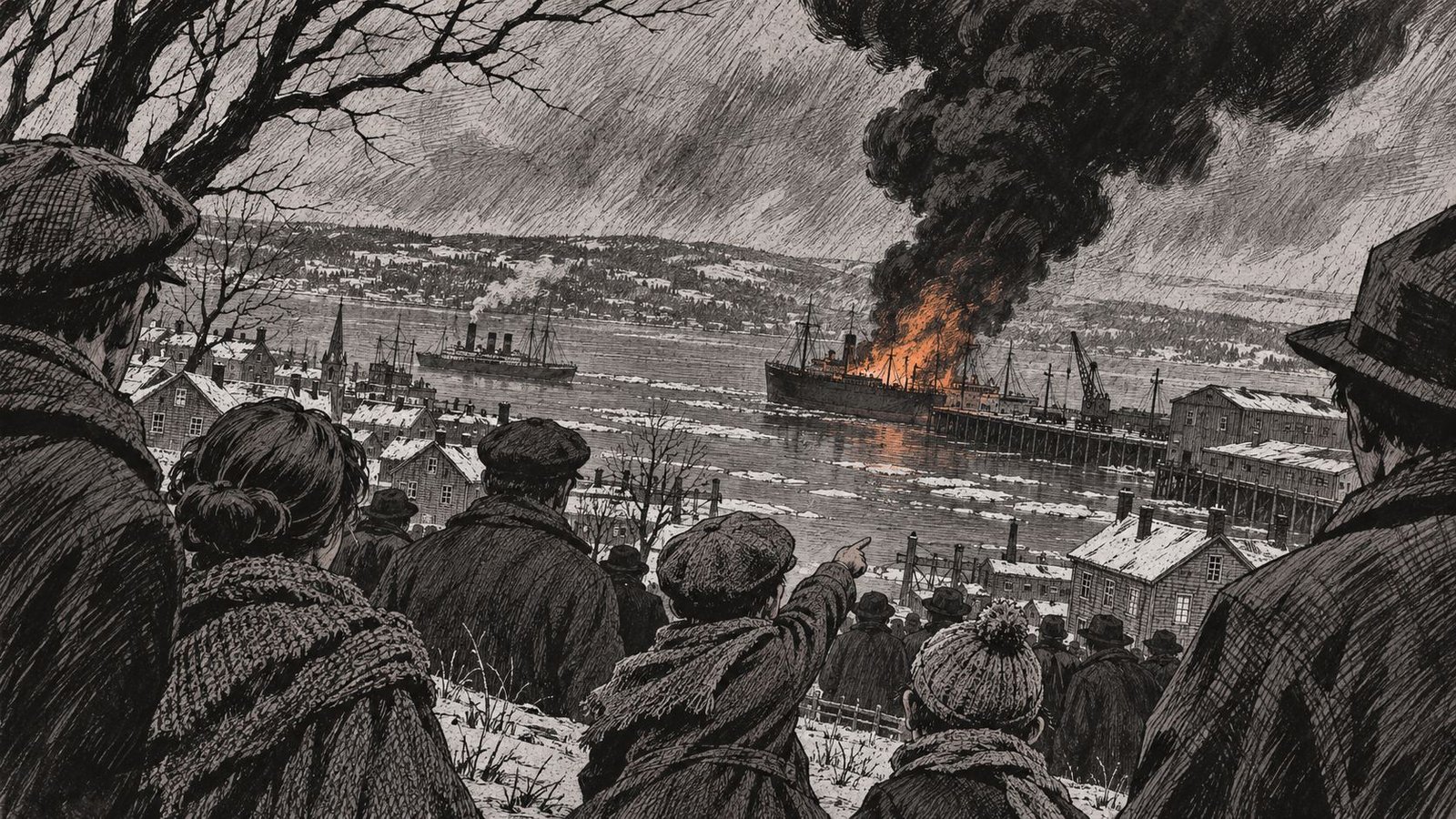
A column of black smoke rose over the harbour, and people came to see it.
Workers on their way to the docks stopped. Children on their way to school gathered near the wharves. Thomas Raddall, then 14, later wrote that the waterfront “was soon a mass of eager sightseers.”
Only a handful of naval officers understood how dangerous the ship was. (CE-SUMMARY) (DAL-2007) (PARKS-2017)
Faces at the windows
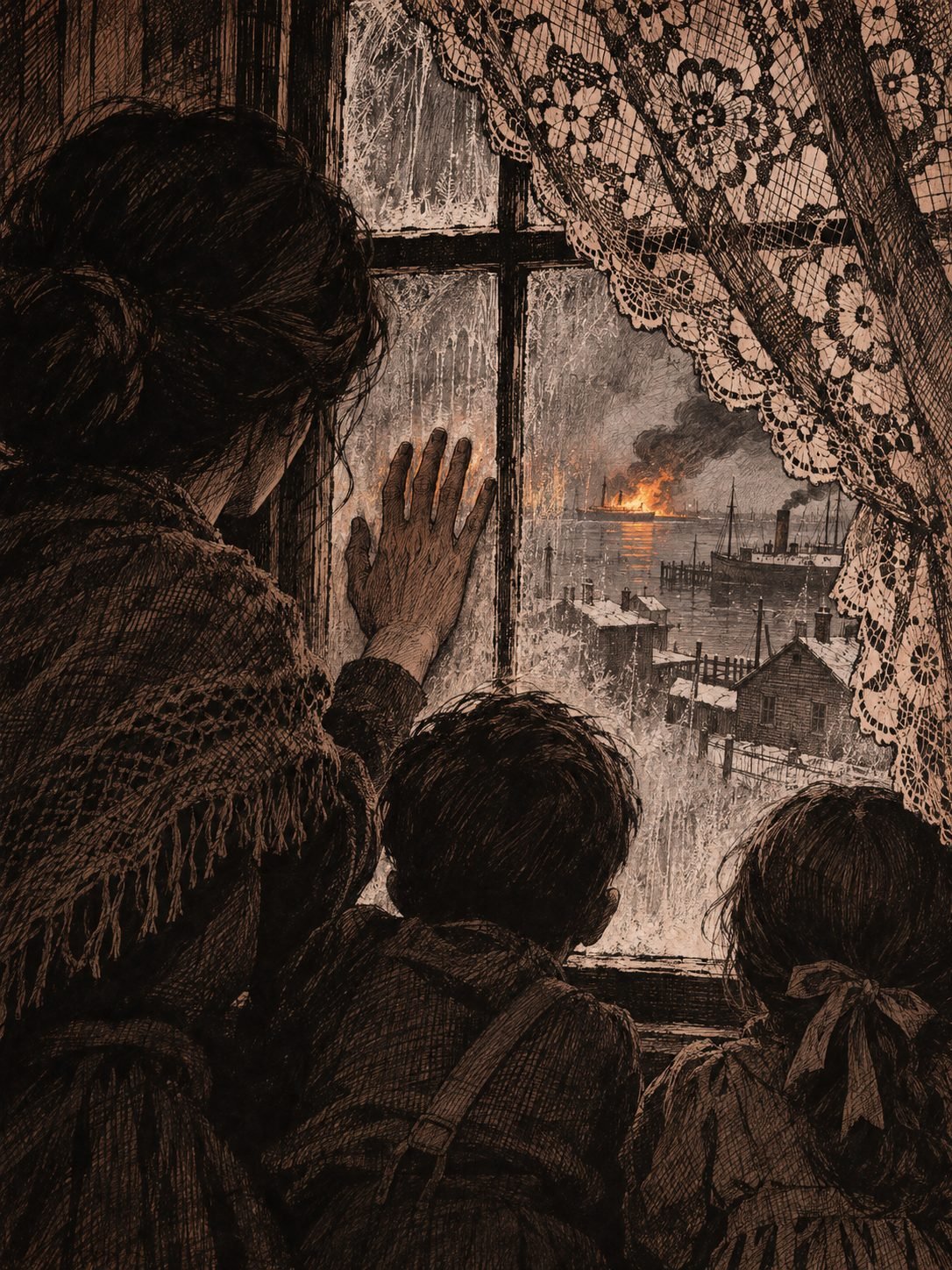
Richmond climbed a steep hill above the harbour. In the houses on that hill, families crowded to their windows to look at the fire. Barely a year later, disaster struck another harbour city, when the Great Boston Molasses Flood sent a wave near 15 feet high through the North End.
When the ship exploded, according to The Canadian Encyclopedia, they were looking straight at it, through the glass. (CE-CNIB) (PARKS-2017)
The Patricia
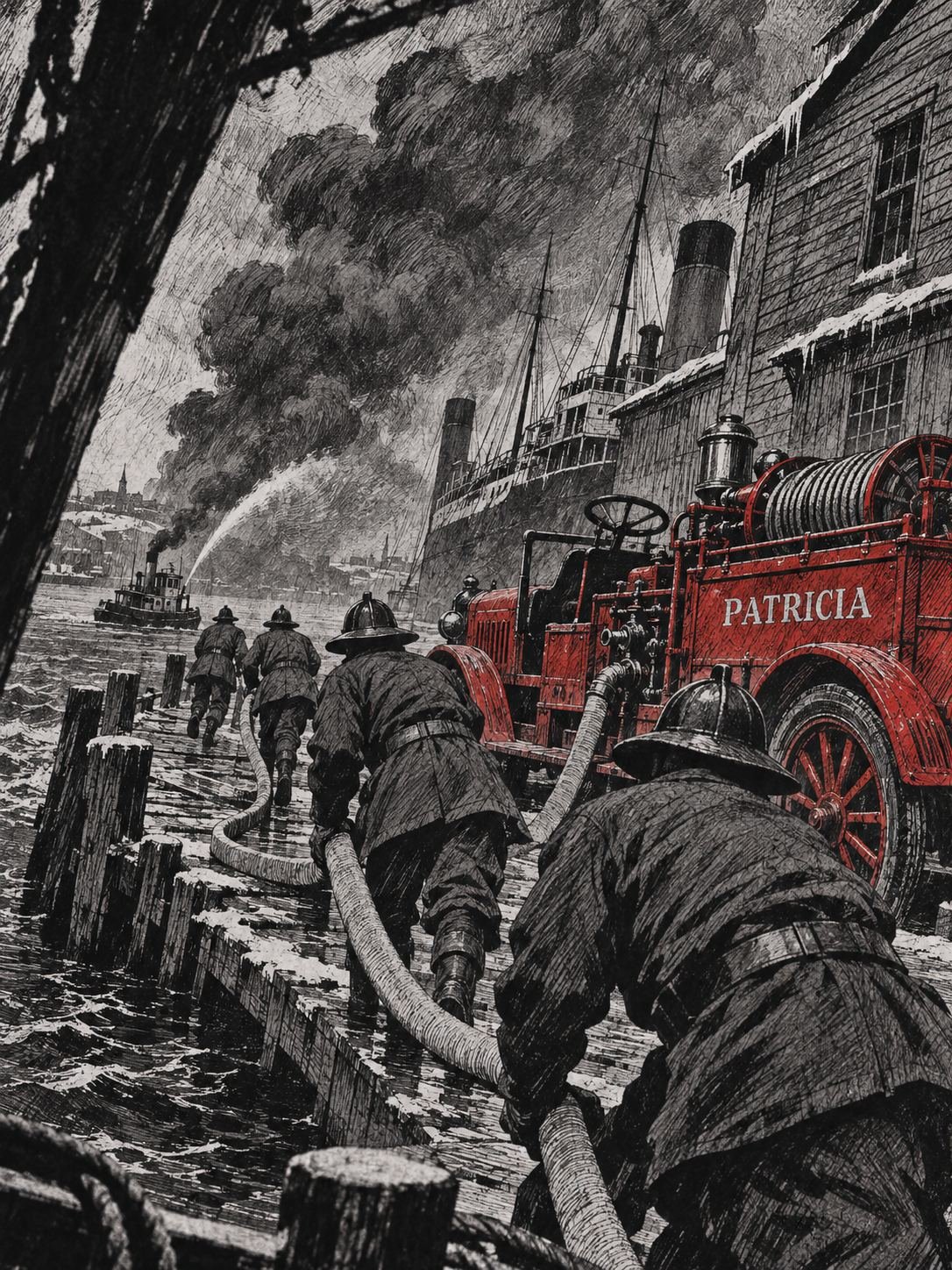
Help went toward the fire. The tug Stella Maris turned her hoses on the burning ship, and small boats set out from two warships in the harbour.
The Halifax Fire Department sent its newest engine, the Patricia, Canada’s first motorised fire engine. Its crew were connecting hoses at a hydrant near the pier. (WFA) (HISTORY) (DAL-2007)
Back at his desk
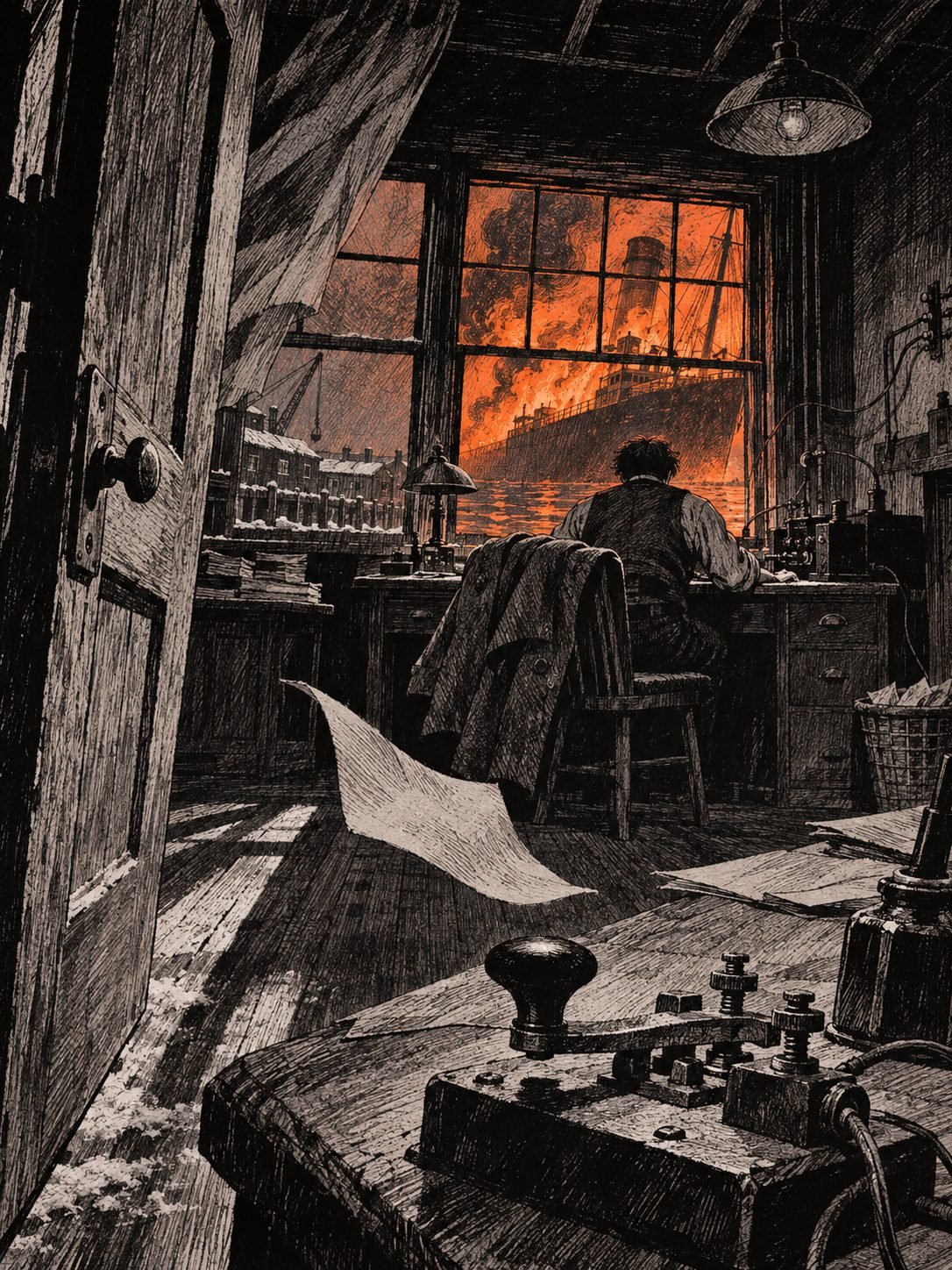
Coleman, according to the Western Front Association, had at first left the office after being warned. Then he learned that passenger trains were heading into Richmond. He went back to his key.
His message went out along the whole Intercolonial Railway, as far as Truro.
Historians still do not know whether it stopped the train. Archibald MacMechan’s interviews in 1917 suggest the train had already passed the station at Rockingham. A 1917 Moncton newspaper said it was held there for 15 minutes. What the message certainly did was warn the railway, so that help could be organised fast. (WFA) (MMA-COLEMAN) (CBC-COLEMAN)
9:04:35 a.m.
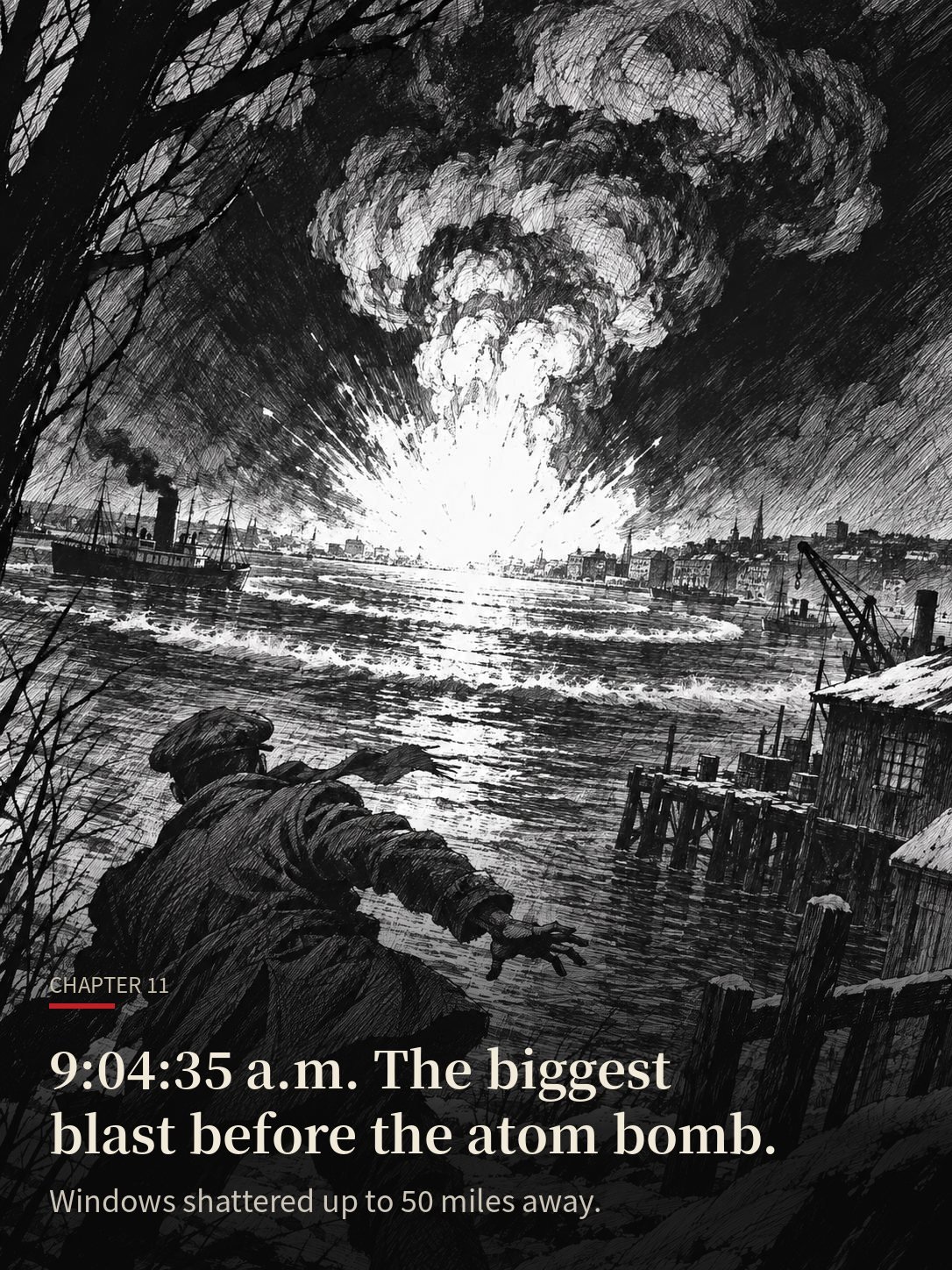
At 9:04:35 a.m., the Mont-Blanc exploded.
It was the largest human-made explosion in history until the atomic bombs of 1945. A cloud of smoke rose thousands of metres above the harbour. Windows shattered up to 50 miles away, and the blast was heard hundreds of miles away.
Vince Coleman was killed at his telegraph key. (VIMY) (PARKS-2017) (CE-SUMMARY) (HISTORY) (MMA-COLEMAN)
Richmond was gone
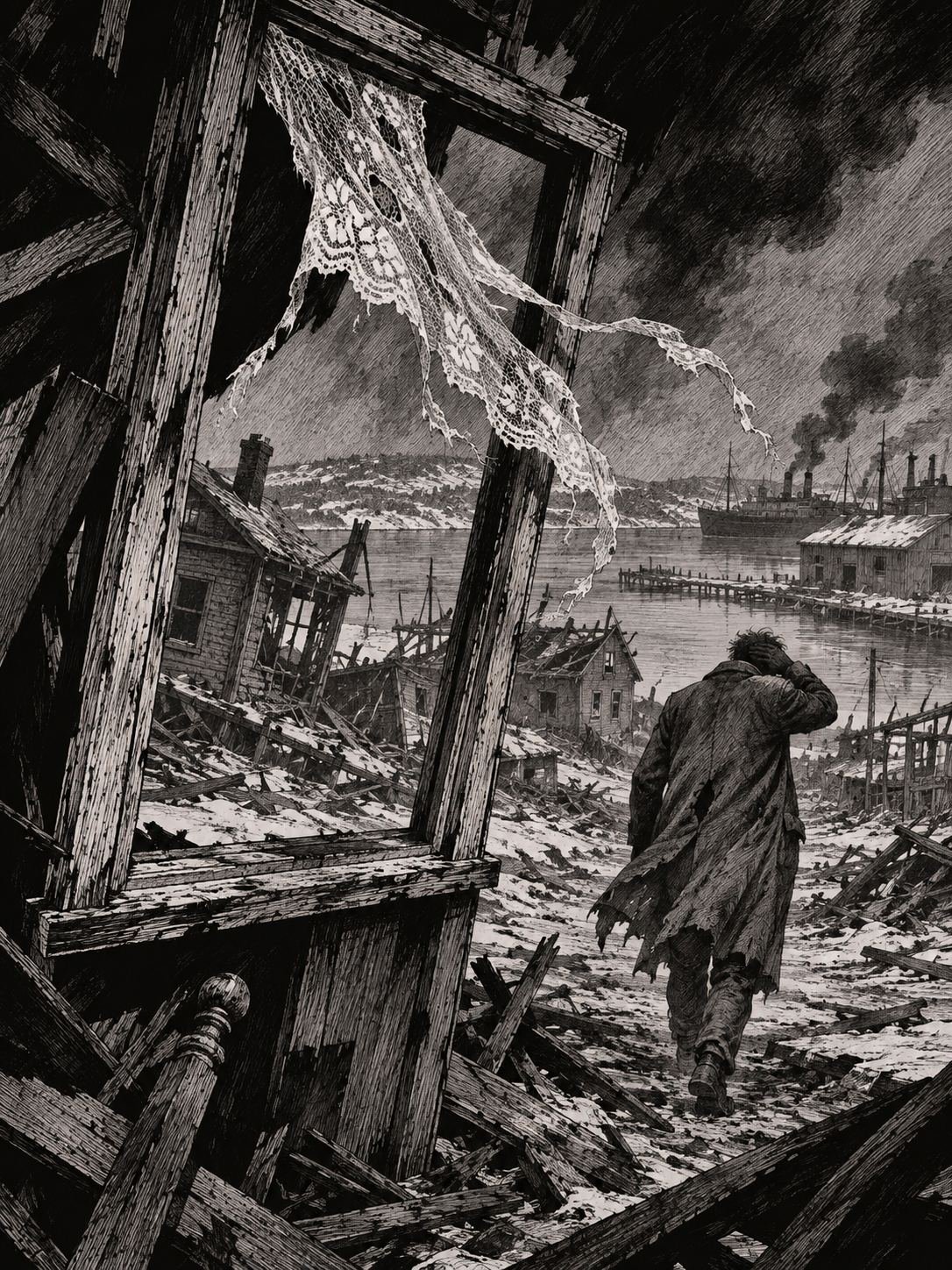
Within seconds, the Richmond neighbourhood was destroyed. Britannica says more than a square mile of the city was flattened. More than 1,600 houses were destroyed and thousands more buildings damaged. The Halifax blast was the biggest before the atomic bomb, and we also tell of the man who lived through both atomic bombings in August 1945.
Hundreds of people lost their sight, many of them cut by the window glass they had been looking through. In the days that followed, 12 eye doctors treated 592 people with eye injuries.
The scale of it helped lead, in 1918, to the founding of the Canadian National Institute for the Blind. (CE-FEATURE) (BRITANNICA) (VIMY) (CE-CNIB)
A wave out of the harbour
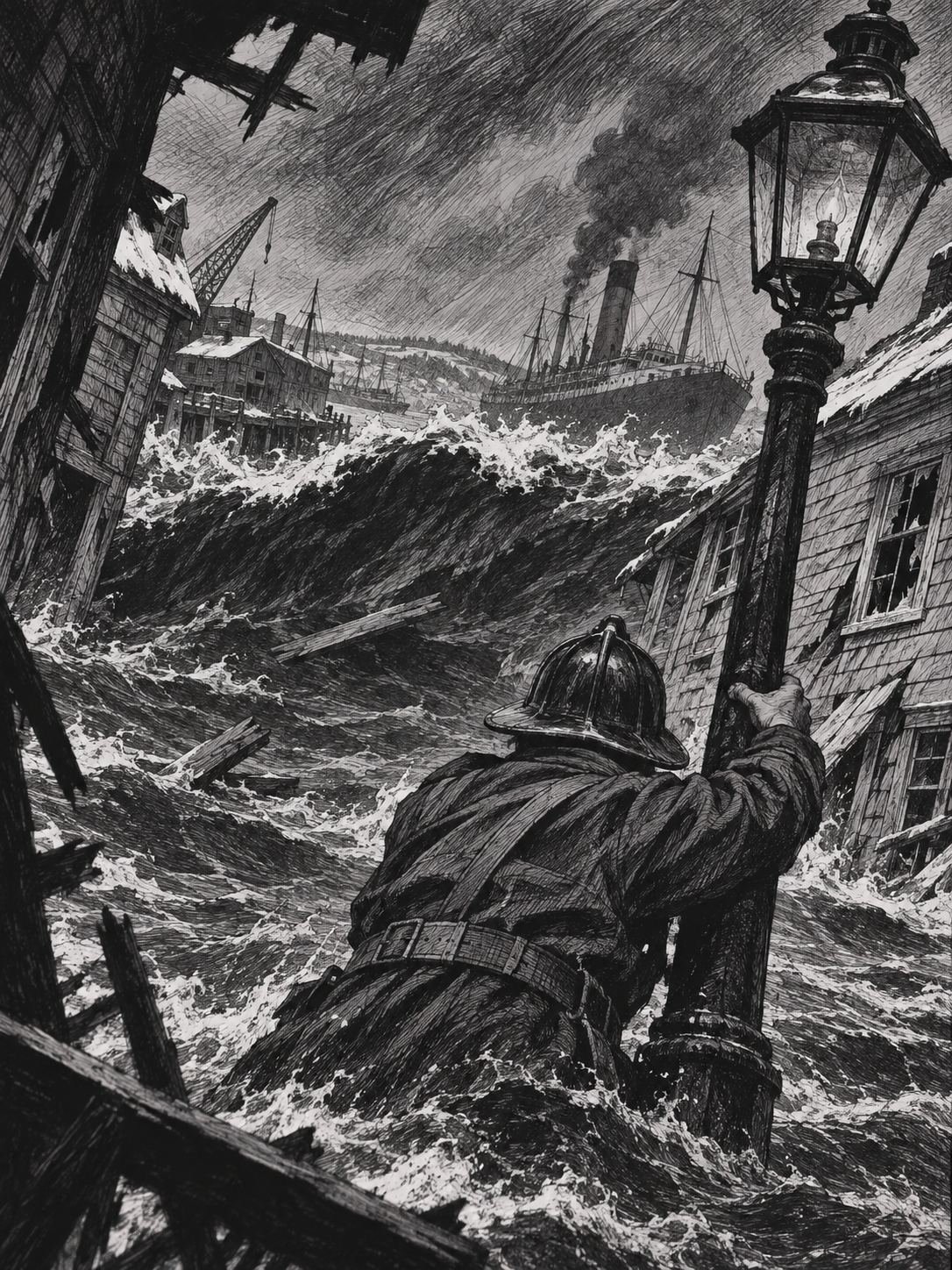
The blast pulled the harbour water up into a wave. It swept over the north end of Halifax and the Dartmouth shore opposite. Britannica says it reached about 18 metres (60 ft) above the high-water mark; the Vimy Foundation gives about 6 metres.
It picked up the Imo and dropped her on the Dartmouth shore. It wiped out the Mi’kmaq settlement at Tufts Cove.
Billy Wells, the driver of the Patricia, was thrown by the blast. The wave carried him up the Richmond hill. He was the only one of the engine’s crew to survive. (BRITANNICA) (VIMY) (CE-SUMMARY) (KAYAK-2017) (CBC-STORIES)
An anchor in a field
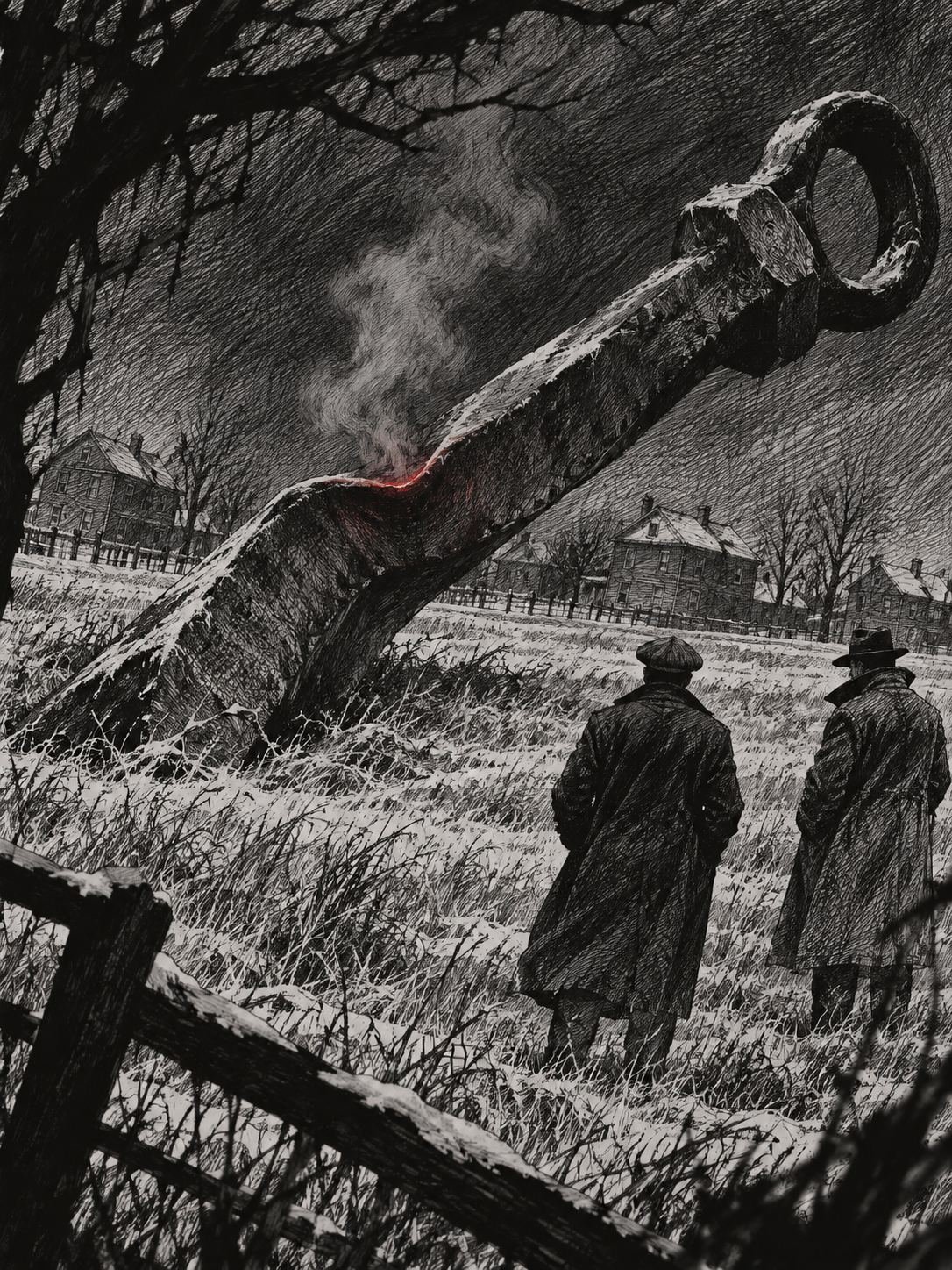
Pieces of the Mont-Blanc fell all over the city. Part of her anchor, the shank, weighing about 1,140 pounds, was thrown about two and a half miles. Her deck gun landed beside a lake in Dartmouth.
The anchor shank is still there, now a monument at 110 Spinnaker Drive. It has been moved a few times since it landed. (HISTPLACES-ANCHOR) (VIMY)
Under the stove

The next morning, 7 December, it began to snow. By the end of the day about 40 cm had fallen, with gusts above 90 km/h. Rescuers dug through the ruins in a blizzard.
In one cellar they found a girl of 23 months, Annie Liggins, alive. She had been sheltered under a stove, beside the ash pan, for 26 hours. The papers called her “Ashpan Annie.” She lived to 95. (CBC-WEATHER) (PARKS-2017) (CBC-STORIES)
The train from Boston
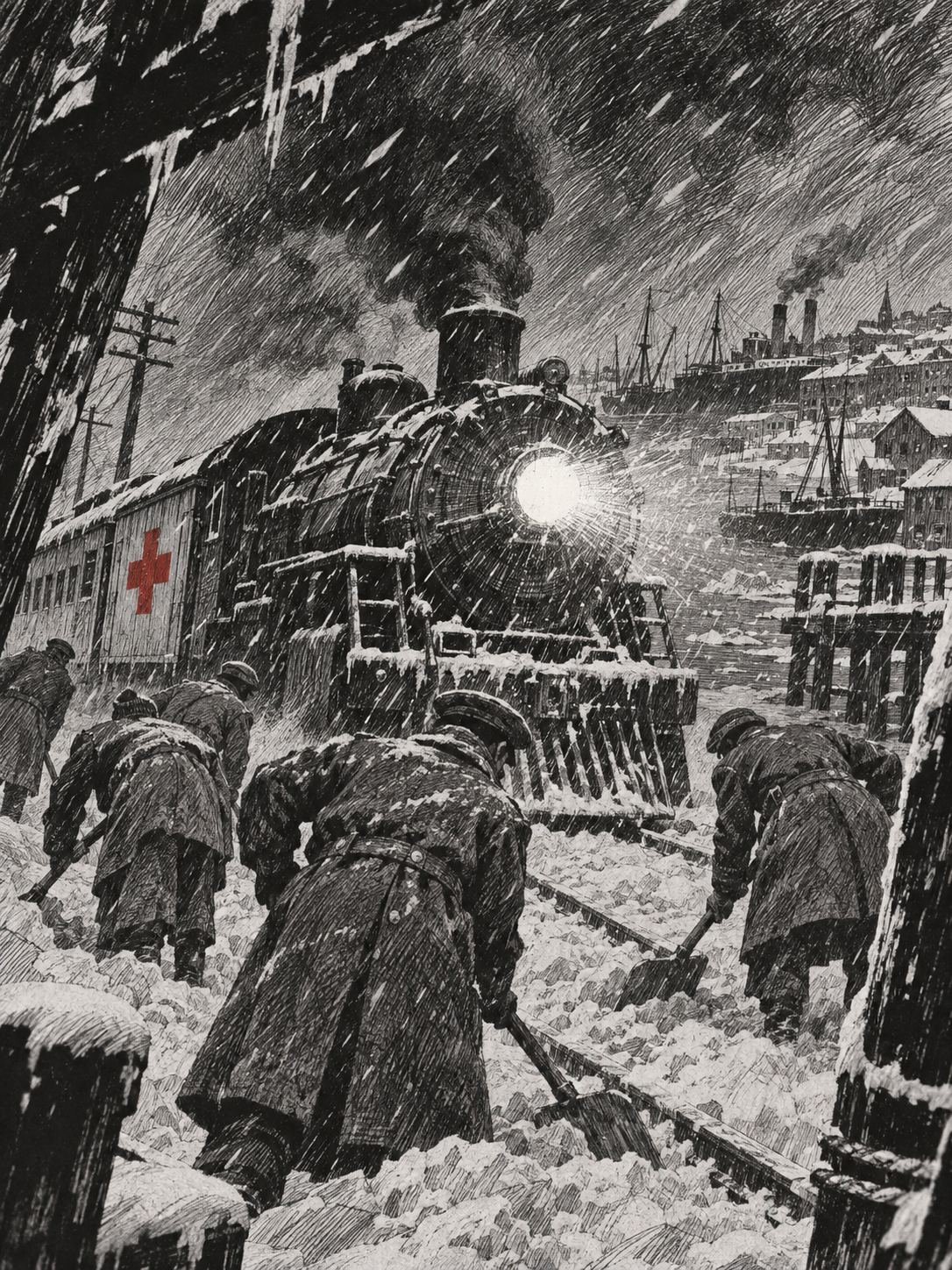
Help was on its way within hours.
A relief train left Boston at 10 p.m. on 6 December, carrying surgeons, nurses and Red Cross workers. Snow stopped it on the way, but it pushed on, about 700 miles. It reached Halifax on the morning of 8 December, the first medical relief party to arrive.
Nearly 2,000 people had died. The Nova Scotia Archives’ database holds 1,782 known names, and warns that not every victim will ever be counted. About 9,000 were injured. (MMA-COLEMAN) (MHS-2022) (BOSTON-2020) (CE-SUMMARY) (NSA-LIST)
Discharged
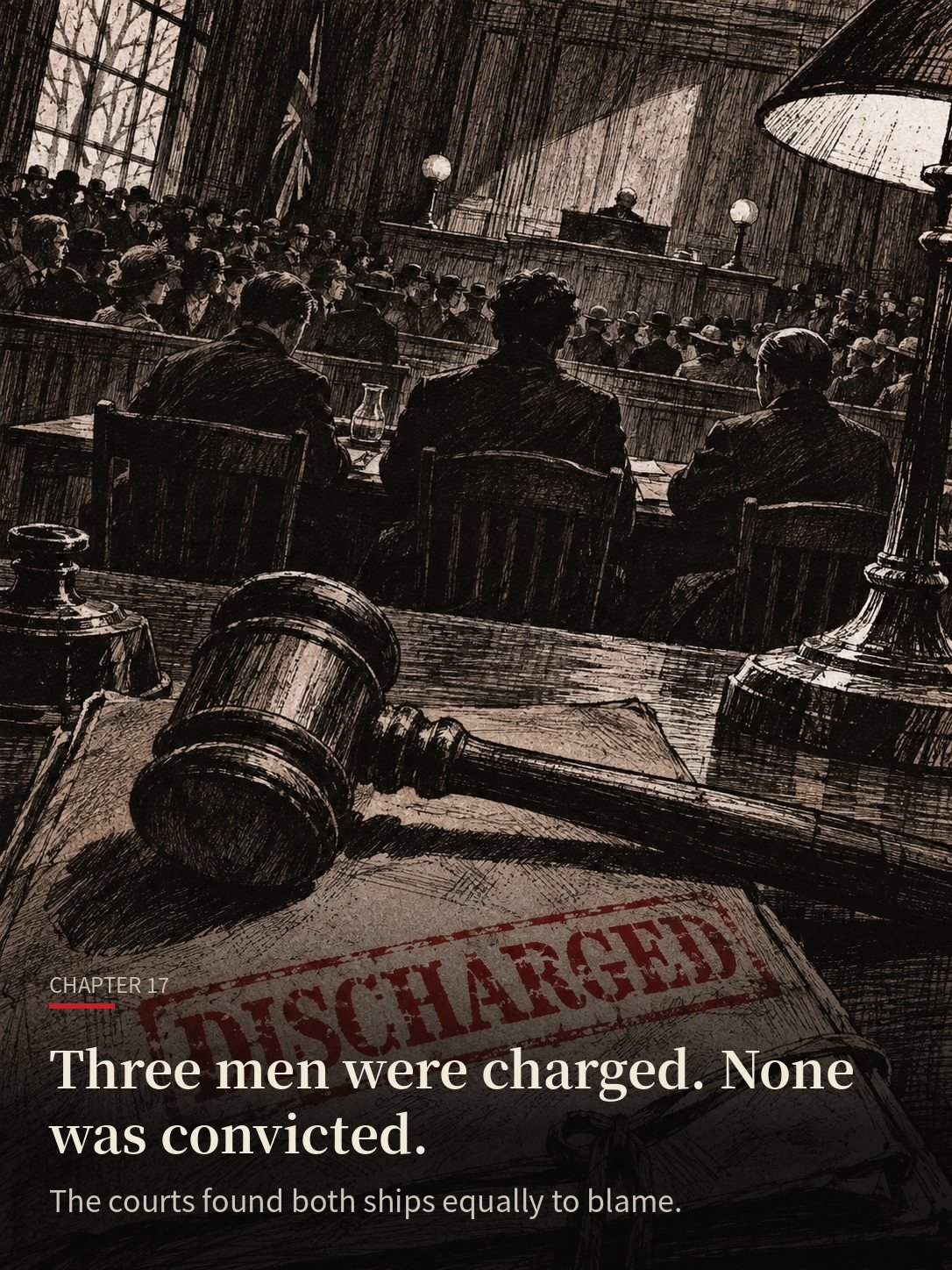
Within a week, an inquiry opened. In February 1918 Justice Arthur Drysdale blamed the Mont-Blanc’s captain Aimé Le Médec and her pilot Francis Mackey, and censured the naval officer in charge of harbour traffic, F. Evan Wyatt.
All three were charged with manslaughter. Another judge, Justice Benjamin Russell, found no evidence against Mackey and Le Médec, and the charges were dropped. Wyatt was tried, and the jury acquitted him.
In 1919 the Supreme Court of Canada found the two ships equally to blame. “No one ever went to jail for causing the explosion,” The Canadian Encyclopedia says. (ATLBOOKS-2014) (CE-SUMMARY) (CEDRE) (WFA)
A tree for Boston
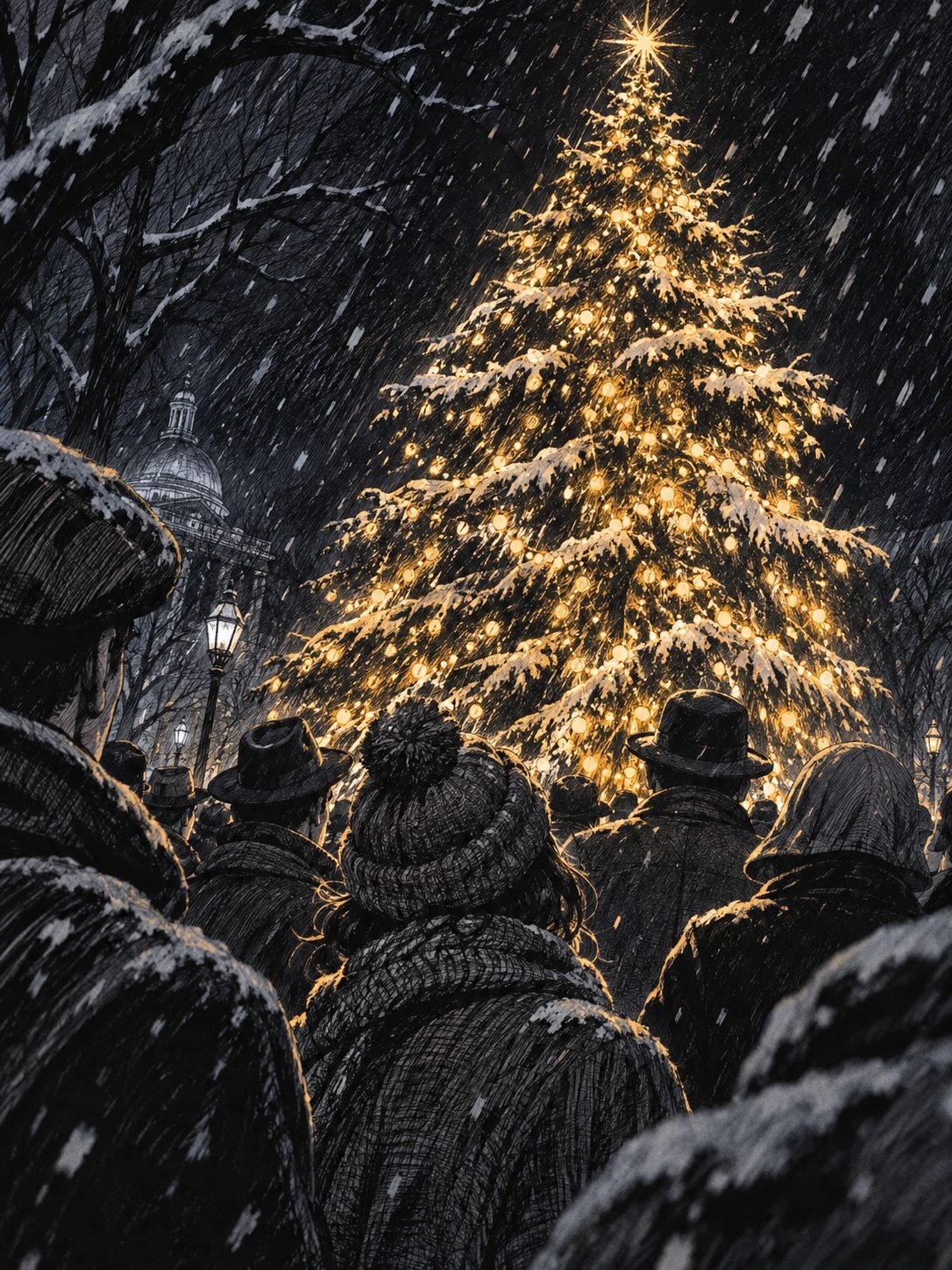
In December 1918, Nova Scotia sent Boston a Christmas tree to say thank you.
Since 1971 the province has sent one every year. It is lit on Boston Common each December. (BOSTON-2020) (BOSTON-2025) (MHS-2022)
A small blue dress

Vince Coleman’s wife Frances and their four children survived. Their two-year-old daughter Eileen was badly hurt by a falling sink. It was about a year and a half before the family was together again.
Today, at the Maritime Museum of the Atlantic in Halifax, Coleman’s telegraph key sits behind glass. The museum also holds Eileen’s small blue dress.
Every 6 December, the city gathers at the memorial bell tower on Fort Needham, above the place where Richmond stood. (MMA-COLEMAN) (CBC-COLEMAN) (BRITANNICA) (HALIFAX-BELLTOWER)
The evidence file
The objects and records this case rests on, and where they are now.
Exhibits
- Exhibit A — Vince Coleman’s telegraph key. The key the train dispatcher used to send his warning from the Richmond railway yards office, about 750 ft from the centre of the blast. Held at the Maritime Museum of the Atlantic, Halifax, with his watch and pen. (Maritime Museum of the Atlantic)
- Exhibit B — Coleman’s warning message. Two wordings are documented, and 1917 newspapers already printed different versions. The museum gives: “Hold up the train. Ammunition ship afire in harbor making for Pier 6 and will explode. Guess this will be my last message. Good-bye boys.” CBC gives: “Munitions ship on fire. Making for Pier 6. Goodbye.” Summary based on the Maritime Museum of the Atlantic and CBC News. (Maritime Museum of the Atlantic; CBC News)
- Exhibit C — Eileen Coleman’s small blue dress. Worn by Coleman’s two-year-old daughter, who survived the explosion. It shows that the dispatcher’s own family lived in Richmond. Held at the Maritime Museum of the Atlantic, Halifax. (Maritime Museum of the Atlantic)
- Exhibit D — The Mont-Blanc anchor shank. Part of the ship’s anchor, about 1,140 lb, thrown about 2.5 miles; other sources say about 3.78 km or about 4 km. It has been moved several times, so where it stands is not the exact landing spot. A monument at 110 Spinnaker Drive, Armdale, and a municipal heritage property since 1984. (Canada’s Historic Places)
- Exhibit E — Mont-Blanc‘s 90 mm gun. The ship’s gun came down at Albro Lake, Dartmouth, more than 2 km away. Another measure of the force of the blast. (Vimy Foundation)
- Exhibit F — The cargo sheet. What was in the hold. Britannica lists 2,925 tonnes: 2,367 t of picric acid, 250 t of TNT, 246 t of benzol and 62 t of guncotton; HISTORY and CEDRE give 2,300 t, 200 t, 35 t and 10 t. Summary based on Britannica, HISTORY and CEDRE. (Britannica; HISTORY; CEDRE)
- Exhibit G — Thomas Raddall’s written account (1951). Raddall was a 14-year-old pupil in 1917. He recalled that the waterfront “was soon a mass of eager sightseers”, which helps explain why so many people were watching the burning ship. Held in the Dalhousie University Archives. (Dalhousie University)
Evidence locker
Real archival images. Illustrations elsewhere in this file are AI-generated.
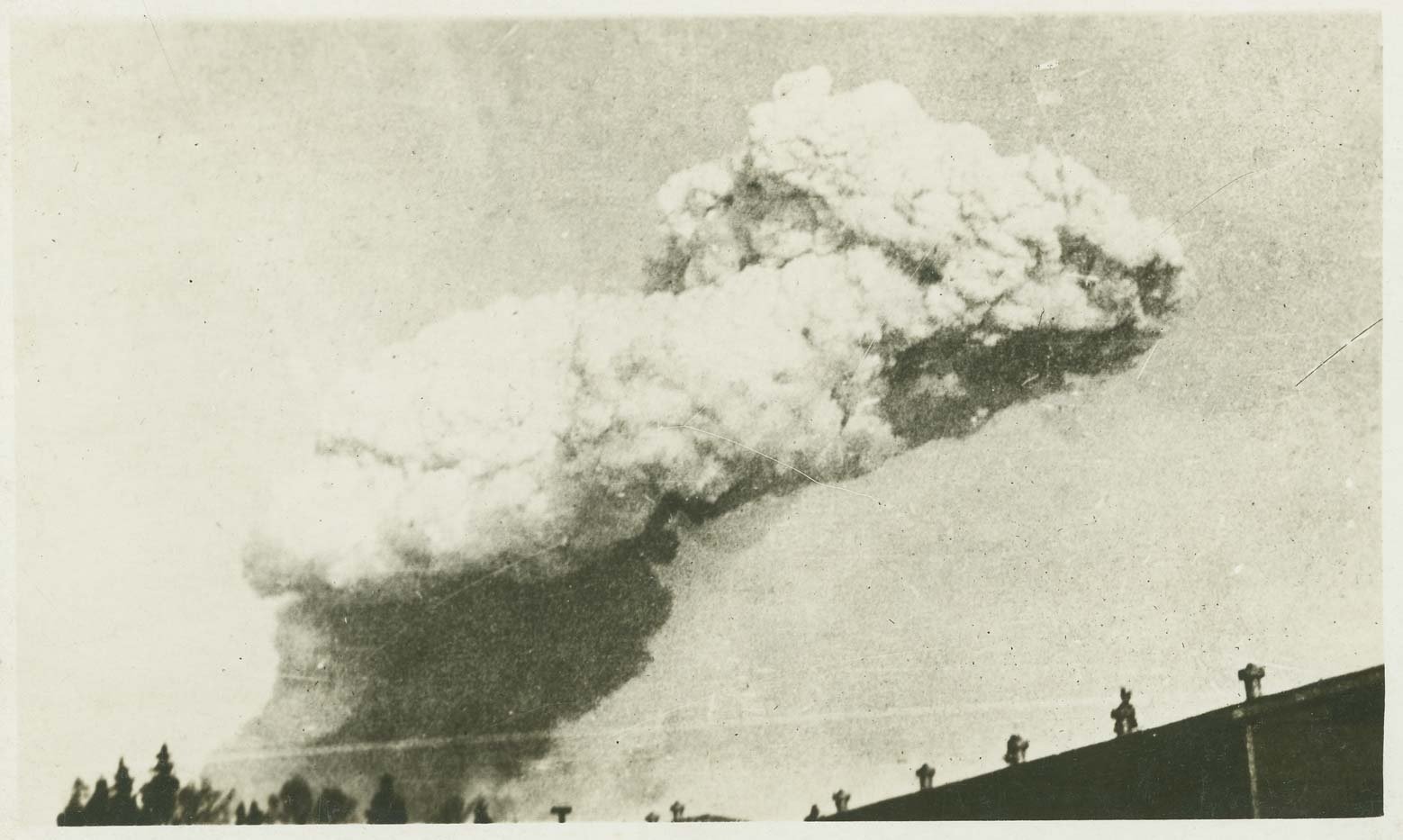 EXHIBIT A · TAP TO ENLARGE
 EXHIBIT B · TAP TO ENLARGE
In the papers: “CENSOR TAKES CONTROL OF WIRES AT HALIFAX” — Asheville Times, 6 December 1917.
Quick answers: the Halifax Explosion
What caused the Halifax Explosion?
On the morning of 6 December 1917, the Norwegian steamer Imo collided with the French cargo ship Mont-Blanc in the Narrows of Halifax Harbour. The Mont-Blanc was carrying nearly 3,000 tonnes of explosives; the collision set her cargo alight, and about 20 minutes later, at 9:04:35 a.m., she blew up beside Pier 6.
How many people died in the Halifax Explosion?
Nearly 2,000 people died, and about 9,000 were injured. The Nova Scotia Archives’ database holds 1,782 known names and warns that not every victim will ever be counted.
How big was the Halifax Explosion?
It was the largest human-made explosion in history until the atomic bombs of 1945. Windows shattered up to 50 miles away, more than 1,600 houses were destroyed, and the Richmond neighbourhood in Halifax’s north end was wiped out.
Who was Vince Coleman?
Vince Coleman was a railway dispatcher who stayed at his telegraph key to warn an incoming passenger train from Saint John that a burning ammunition ship was about to explode. He was killed at his key; historians still do not know whether his message stopped the train, but it warned the railway so that help could be organised fast.
Was anyone convicted for the Halifax Explosion?
No. The Mont-Blanc’s captain and pilot and the naval officer in charge of harbour traffic were charged with manslaughter, but the charges against the captain and pilot were dropped and a jury acquitted the officer. In 1919 the Supreme Court of Canada found the two ships equally to blame.
Why does Nova Scotia send Boston a Christmas tree?
To thank Boston for its help after the explosion: a relief train carrying surgeons, nurses and Red Cross workers left Boston on the night of 6 December and reached Halifax on 8 December, the first medical relief party to arrive. Nova Scotia first sent a tree in 1918, and the yearly gift, lit on Boston Common, has run since 1971.
Is there a Halifax Explosion memorial?
Yes. Every 6 December the city gathers at the memorial bell tower on Fort Needham, above where Richmond stood. Part of the Mont-Blanc’s anchor still stands as a monument where it landed, about two and a half miles away, and Coleman’s telegraph key is at the Maritime Museum of the Atlantic.
Case notes: two ships, a burning cargo and a city
On 6 December 1917 the Imo and the munitions ship Mont-Blanc collided in Halifax Harbour. About twenty minutes later the burning Mont-Blanc exploded, flattening the north end of the city (CE-SUMMARY) (WFA).
Where the case stands (as of November 2026)
Closed. Three men were blamed by the 1917-18 inquiry and charged with manslaughter. The charges against the Mont-Blanc’s pilot and captain were dropped for lack of evidence, and the naval officer F. Evan Wyatt was acquitted. No one was convicted (ATLBOOKS-2014) (CE-SUMMARY).
In the civil courts, the Supreme Court of Canada (1919) and the Privy Council (1920) found the two ships equally to blame (CEDRE) (ATLBOOKS-2014).
Dispatcher Vince Coleman’s last telegraph stopped an incoming train and saved its 300 passengers.
Timeline
| When | What happened |
|---|---|
| Evening, 5 Dec 1917 | Anti-submarine nets close; Imo cannot leave, Mont-Blanc waits outside (VIMY) (CE-FEATURE) |
| 6 Dec, ~8:45 a.m. | Imo’s bow cuts into Mont-Blanc in the Narrows (WFA) (HISTORY) |
| ~8:45-9:04 a.m. | Fire on deck; the crew row away; the ship drifts to Pier 6 (VIMY) (PARKS-2017) |
| Just before 9:05 | Vince Coleman sends his warning down the railway (MMA-COLEMAN) |
| 9:04:35 a.m. | Mont-Blanc explodes (VIMY) (PARKS-2017) |
| 7 Dec | Blizzard; about 40 cm of snow (CBC-WEATHER) |
| 8 Dec | Boston relief train arrives, the first medical party (MHS-2022) |
| 13 Dec | Wreck Commissioner’s Inquiry opens (WIKI-only) |
| 4 Feb 1918 | Inquiry blames Mont-Blanc’s captain and pilot, censures Wyatt (ATLBOOKS-2014) |
| 17 Apr 1918 | Wyatt acquitted by a jury (WIKI-only) |
| 1918 | CNIB founded; Nova Scotia sends Boston a Christmas tree (CE-CNIB) (BOSTON-2020) |
| 19 May 1919 | Supreme Court of Canada: both ships equally to blame (CEDRE) (CE-SUMMARY) |
| 1920 | Privy Council upholds equal blame (ATLBOOKS-2014) |
| 1971 | Yearly tree for Boston begins (BOSTON-2025) |
| 9 Jun 1985 | Memorial Bell Tower dedicated on Fort Needham (HALIFAX-KITZ) |
Where the records disagree
| Detail | What sources say |
|---|---|
| Deaths | 1,782 named (Nova Scotia Archives, incomplete); about 2,000 (Canadian Encyclopedia summary); 1,963 “official” (CE 2013); more than 1,800 (HISTORY) (NSA-LIST) (CE-SUMMARY) (CE-FEATURE) (HISTORY) |
| Explosives | 2,925 t (Britannica, Parks Canada marker); about 2,545 t (HISTORY, CEDRE); 5.85 million lb (Vimy) (BRITANNICA) (PARKS-MARKER) (HISTORY) (VIMY) |
| Collision to blast | About 20 minutes (most); 19.5 (Zemel); 15 (Canadian Geographic); 25 (Parks marker) (WFA) (MMA-TALK) (CANGEO-2017) (PARKS-MARKER) |
| Coleman’s message | Long museum version vs short CBC version: “Munitions ship on fire. Making for Pier 6. Goodbye.” (MMA-COLEMAN) (CBC-COLEMAN) |
| Did he stop the train? | MacMechan’s 1917 interviews suggest it had passed Rockingham; a Moncton paper says it was held 15 minutes (MMA-COLEMAN) |
| Wave height | About 18 m / 60 ft (Britannica) vs about 6 m / 20 ft (Vimy) (BRITANNICA) (VIMY) |
| Homeless | About 25,000 (CE) vs more than 6,000 (Vimy, Parks marker) (CE-SUMMARY) (VIMY) (PARKS-MARKER) |
| First tree for Boston | 1918 (City of Boston 2020) vs 1971 as the first of the yearly series (City of Boston 2025) (BOSTON-2020) (BOSTON-2025) |
What we still don’t know
- Whether Coleman’s warning actually stopped the passenger train.
- Exactly how many people died; the named list is known to be incomplete.
- The exact explosive load of the Mont-Blanc.
- How many people lost their sight in total.
What happened after
Richmond was rebuilt as the Hydrostone district, which Parks Canada calls Canada’s first public housing project (PARKS-2017). The Imo was repaired, renamed, and ran aground in the Falkland Islands in 1921 (GREATSHIPS).
Editor’s note
The detail we keep coming back to is the windows. People didn’t know what was burning in the harbour, so they did the most ordinary thing in the world: they went to look. They stood at kitchen windows and on the docks and walked their children down to see. If they had known it was a ship full of explosives, most of them would have grabbed those same children and run the other way. That’s why we don’t want to tell this as “people were killed watching a fire.” They were never given the one piece of information that would have let them make a different choice.
We don’t imagine the railway dispatcher who stayed at his key wasn’t afraid. He must have wanted to leave as badly as anyone. He stayed because if he didn’t stop the incoming train, it would carry hundreds of people who knew nothing straight into the harbour. We admire that choice deeply. But we don’t want the lesson to be “this is how the rest of us should be willing to die.” It should also be that a warning only got through because one man was prepared to risk his life to send it. He was someone who should have finished his shift and gone home.
As for the courts, we understand why the ending was so hard for families to accept, and we also don’t think a high death toll on its own means somebody must be punished. What it does mean is that people were owed a full account: who knew what, what was decided, and why none of it ended in a conviction. A trial closing doesn’t close the families’ questions. At the very least, finding out why their people never came home shouldn’t have been left as one more job for the ones who survived.
Case file summary
- What: A munitions ship exploded after a collision in the harbour
- Where: The Narrows, Halifax Harbour, Nova Scotia, Canada
- When: Thursday 6 December 1917, 9:04:35 a.m.
- Toll: Nearly 2,000 dead (1,782 known by name), about 9,000 injured
- Status: Three men charged; no one convicted; both ships found equally to blame
Illustrations are AI-generated artistic interpretations, not photos. No real person is depicted with a recognizable face. Read how we research and illustrate these files.
Sources
- *The Canadian Encyclopedia*, “Halifax Explosion (Plain-Language Summary),” 25 May 2022:
- James H. Marsh, *The Canadian Encyclopedia*, “The Halifax Explosion” (feature), 18 Oct 2013, edited 4 Mar 2015:
- Jon Tattrie (updated by Jessica Poulin), *The Canadian Encyclopedia*, “The Halifax Explosion and the CNIB,” 7 Feb 2017, edited 3 Dec 2024:
- Maritime Museum of the Atlantic (Nova Scotia Museum), “Vincent Coleman and the Halifax Explosion,” n.d.:
- Maritime Museum of the Atlantic, “From Collision to Explosion – Minute by Minute” (talk listing, Joel Zemel), 6 Dec 2016:
- CBC News, “The ‘ordinary man’ who died for strangers when Mont-Blanc exploded,” 3 Dec 2017:
- CBC News Interactives (Katy Parsons, Andre Mayer, Rachel Ward), “Halifax Explosion: stories,” c. 2017:
- CBC News, “How the largest mass-blinding in Canadian history birthed CNIB,” 6 Dec 2016:
- CBC News, “Halifax Explosion, Dec. 6, 1917: weather and snowfall amounts,” c. Dec 2017:
- Nova Scotia Archives, “1917 Halifax Explosion” (online exhibit), n.d.:
- Nova Scotia Archives, “Halifax Explosion: A List of those that Died” (database), begun 2002:
- Parks Canada, “Halifax Explosion” (news release / backgrounder), Dec 2017:
- Parks Canada harbour marker at Halifax Citadel, as transcribed by the Historical Marker Database:
- Janet F. Kitz, “History of Bells and of the Halifax Explosion Memorial Bell Tower,” Halifax Municipal Archives (written for the 1985 time capsule):
- Halifax Regional Municipality, “Halifax Explosion Memorial Bell Tower” (public art page), n.d.:
- Canada’s Historic Places, “Mont Blanc Anchor Site,” listed 14 Mar 2005:
- City of Boston, “Boston’s 2020 tree lighting marks 103 years of friendship with Nova Scotia,” Dec 2020:
- City of Boston, “City of Boston’s Official Tree Arrives November 18,” 19 Nov 2025:
- Rakashi Chand, “True Holiday Spirit: The Boston Common Tree and the Sisterhood of Two Cities,” Massachusetts Historical Society, *The Beehive*, 6 Dec 2022:
- Vimy Foundation, “The Halifax Explosion,” n.d.:
- *Encyclopaedia Britannica*, “Halifax explosion,” n.d.:
- HISTORY.com Editors, “The Great Halifax Explosion,” 20 Jul 2010, updated 27 May 2025:
- CEDRE (Centre de documentation, de recherche et d’expérimentations sur les pollutions accidentelles des eaux), “Mont Blanc” incident sheet, n.d.:
- David Tattersfield, “The world’s largest pre-atomic explosion: Halifax Harbour 1917,” Western Front Association, 6 Dec 2015:
- GreatShips.net, “Runic (I) / Imo,” n.d.:
- Henry Roper, “Unearthing new information on the Halifax Explosion” (review of Joel Zemel, *Scapegoat*), *Atlantic Books Today*, 4 Dec 2014:
- Joel Zemel, “Charles John Mayers: The Real Life Story Behind ‘The Flying Sailor’,” halifaxexplosion.net, 2023:
- Nick Walker, “Disaster reshaped city,” *Canadian Geographic*, 6 Dec 2017:
- Dal News Staff, “‘The great blast smote the place'” (Thomas Raddall’s 1951 account), Dalhousie University, 6 Dec 2007:
- Allyson Gulliver, “Shattered City, Shattered Lives,” *Kayak* / Canada’s History, 25 Jan 2017 (children’s magazine; WEAK):
- Wikipedia, used for flagged details only: “Halifax Explosion”