KAL 007: The Jumbo Jet That Drifted Five Hours Off Course Before a Soviet Fighter Shot It Down (Korean Air Lines Flight 007)
Narrated Mystery: press play and hear the whole case read aloud, like a true crime podcast episode, or an audiobook for a long drive (about 21 minutes). The narrator is an AI voice.
Four in the morning in Anchorage
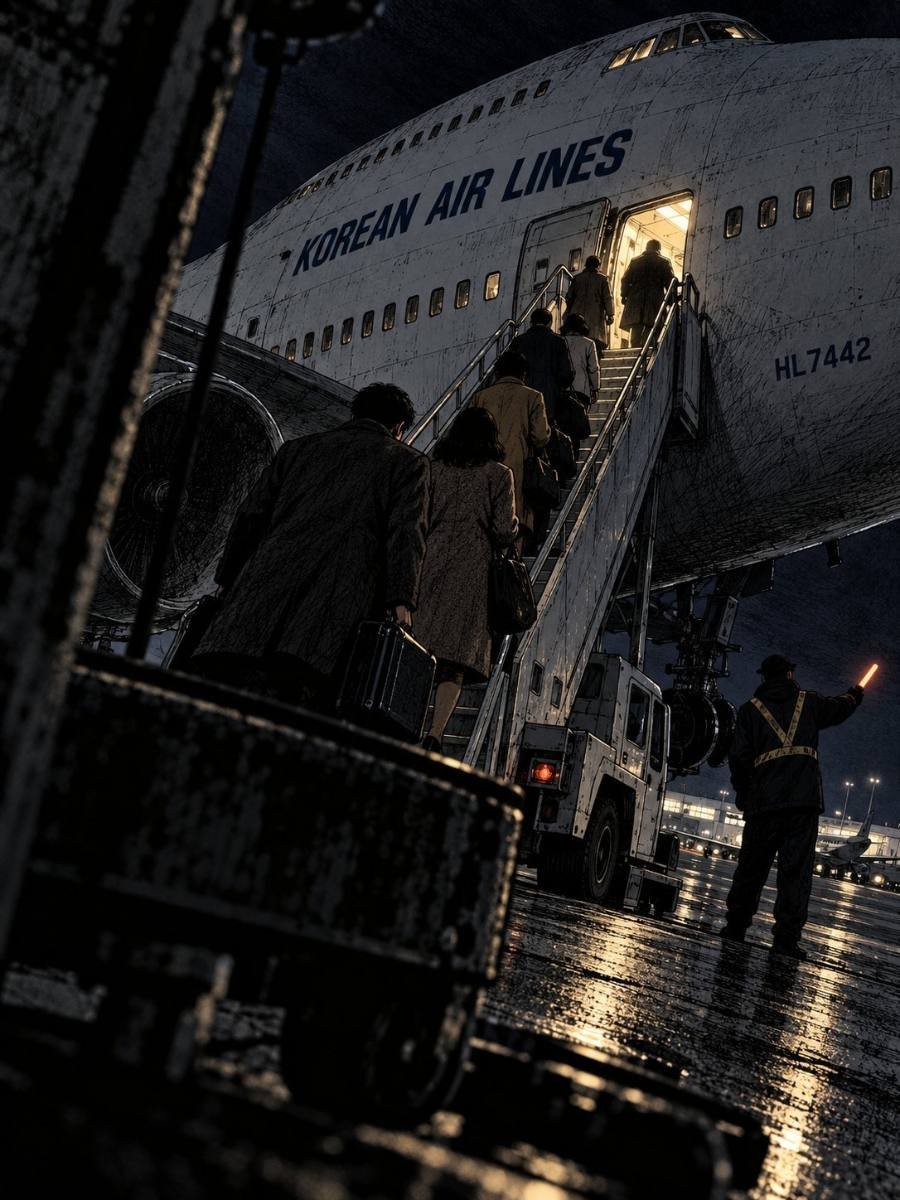
It was still dark when the passengers climbed the stairs.
Anchorage, Alaska, on the last day of August 1983. Korean Air Lines Flight 007 had come in from New York after an uneventful night, and a fresh crew was taking it on to Seoul. The jet was a Boeing 747, registration HL7442, eleven years old.
Its departure had actually been pushed back. Passenger handling and customs in Seoul would not open before six in the morning, Korean time, so there was no point arriving early.
At 13:00 UTC, about four o’clock local time, it lifted off runway 32.
There were 269 people aboard. Most were Korean or American. One of them was a US congressman, Larry McDonald of Georgia, who had ended up on this flight after missing his original connection.
The plan said seven hours and 53 minutes to Seoul. (ICAO93-FACT) (ICAO93-SUM) (ASN) (AFMAG-2013) (MILITARY-COM) (CLOUDBERG-2024)
Three people on a quiet flight deck
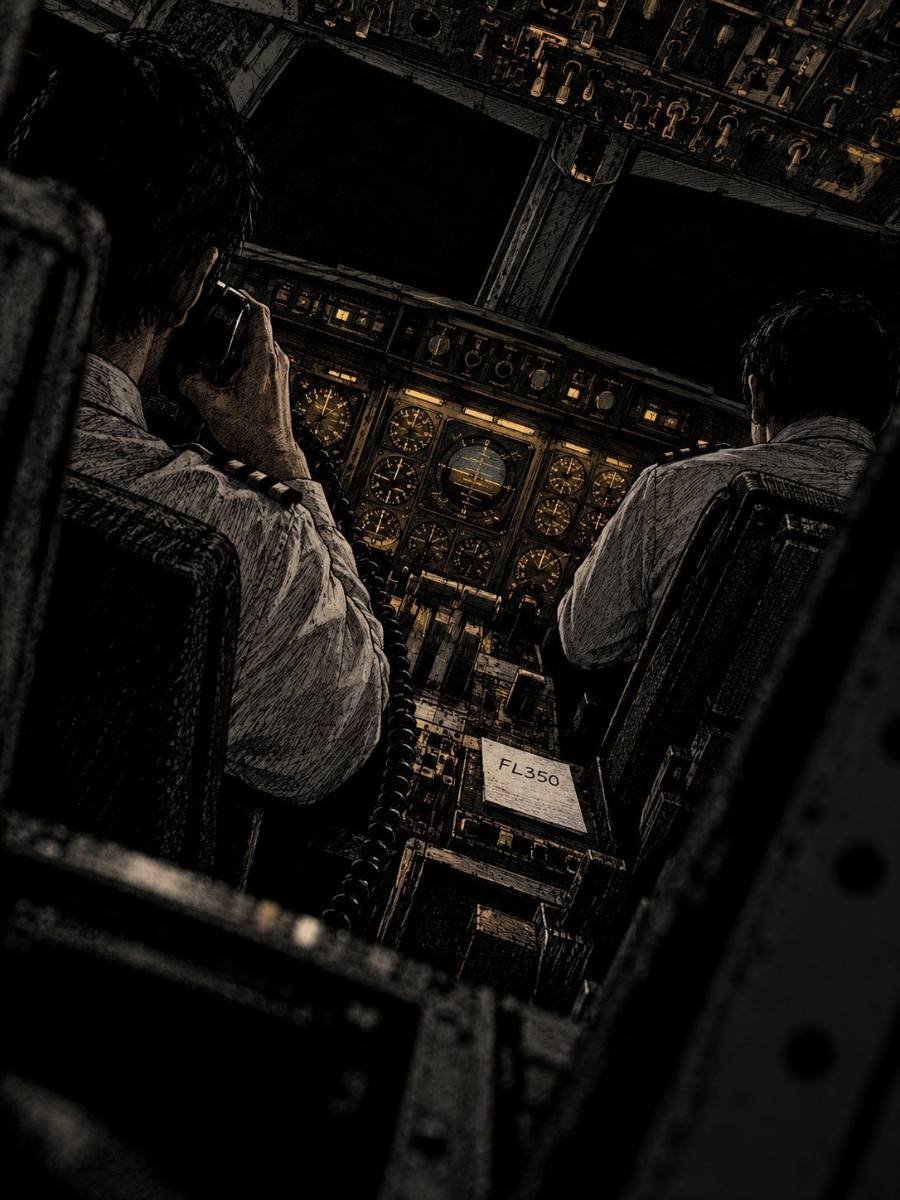
Up front sat the captain, a former air force pilot with more than 10,600 hours, beside his first officer and the flight engineer.
Their route across the ocean, called R20, ran close beside Soviet airspace along Kamchatka and the Kuril Islands. The plan was to climb in steps to 35,000 feet as the fuel burned off.
The route had a history. Five years earlier, Soviet fighters had attacked another Korean Air Lines jet, KAL 902, after it strayed over Soviet territory. Two people died.
When investigators finally heard the cockpit tape, they described, in James Oberg’s quotation of the report, “a normal, relaxed atmosphere on the flight deck.” (CLOUDBERG-2024) (ICAO93-FACT) (BRITANNICA) (OBERG-SPECTATOR-1993)
A heading of 245 degrees
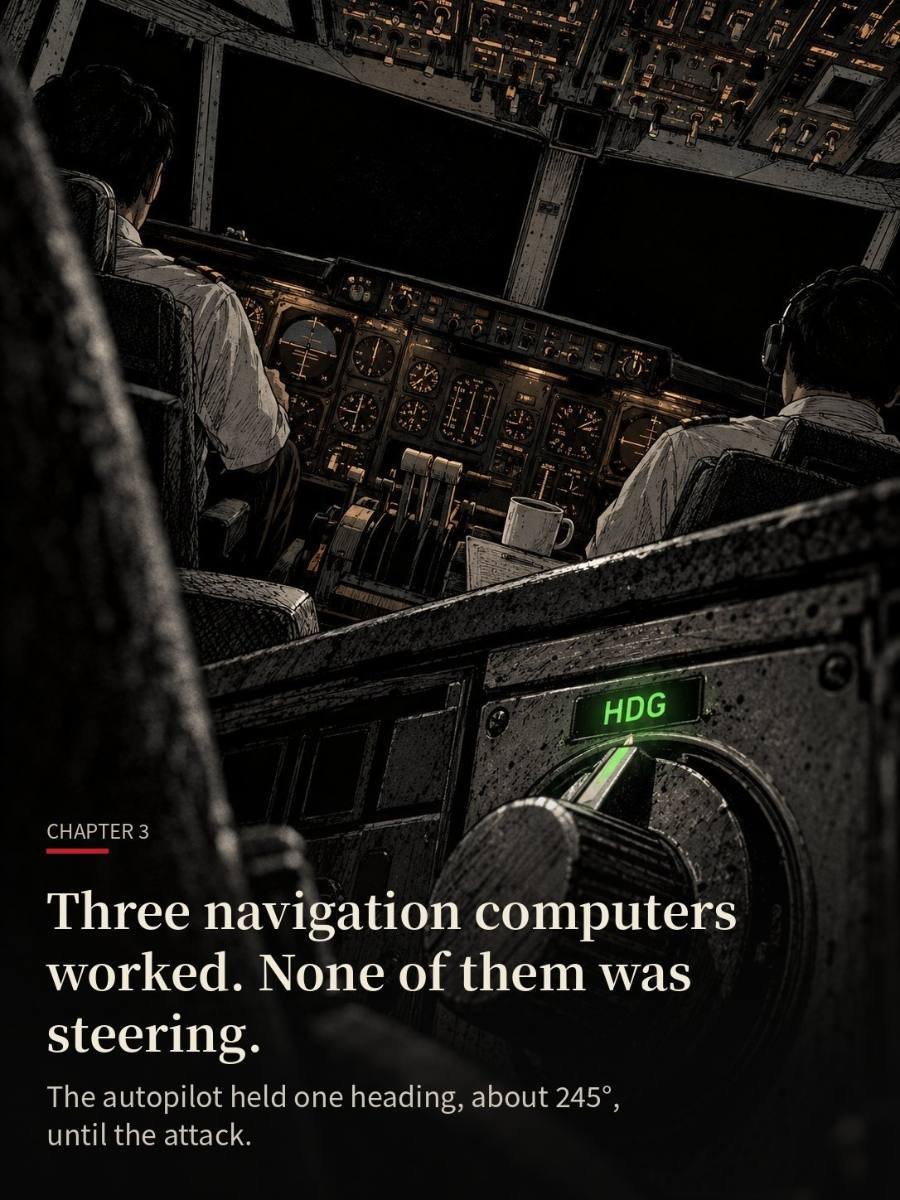
About three minutes after lift-off, the jet turned onto a magnetic heading of roughly 245 degrees.
It never left that heading again until it was attacked.
The flight data recorder showed a line so steady that investigators from the International Civil Aviation Organization (ICAO) concluded only the autopilot could have held it. In a 1993 report, they gave the most likely explanation. The crew had not noticed that the autopilot was either still in simple heading mode, or had been switched to the navigation computers only after the aircraft was already more than 7.5 nautical miles off the route. Beyond that distance the computers could not capture the track.
In other words, the computers knew where the plane should go. They were never steering it.
ICAO found no failure of any aircraft system behind the drift. (ICAO93-FIND-A) (ICAO93-FIND-B) (CSM-1993) (AFMAG-2013)
Waypoints typed in, checked, and ignored by the autopilot
The irony is in the preparation.
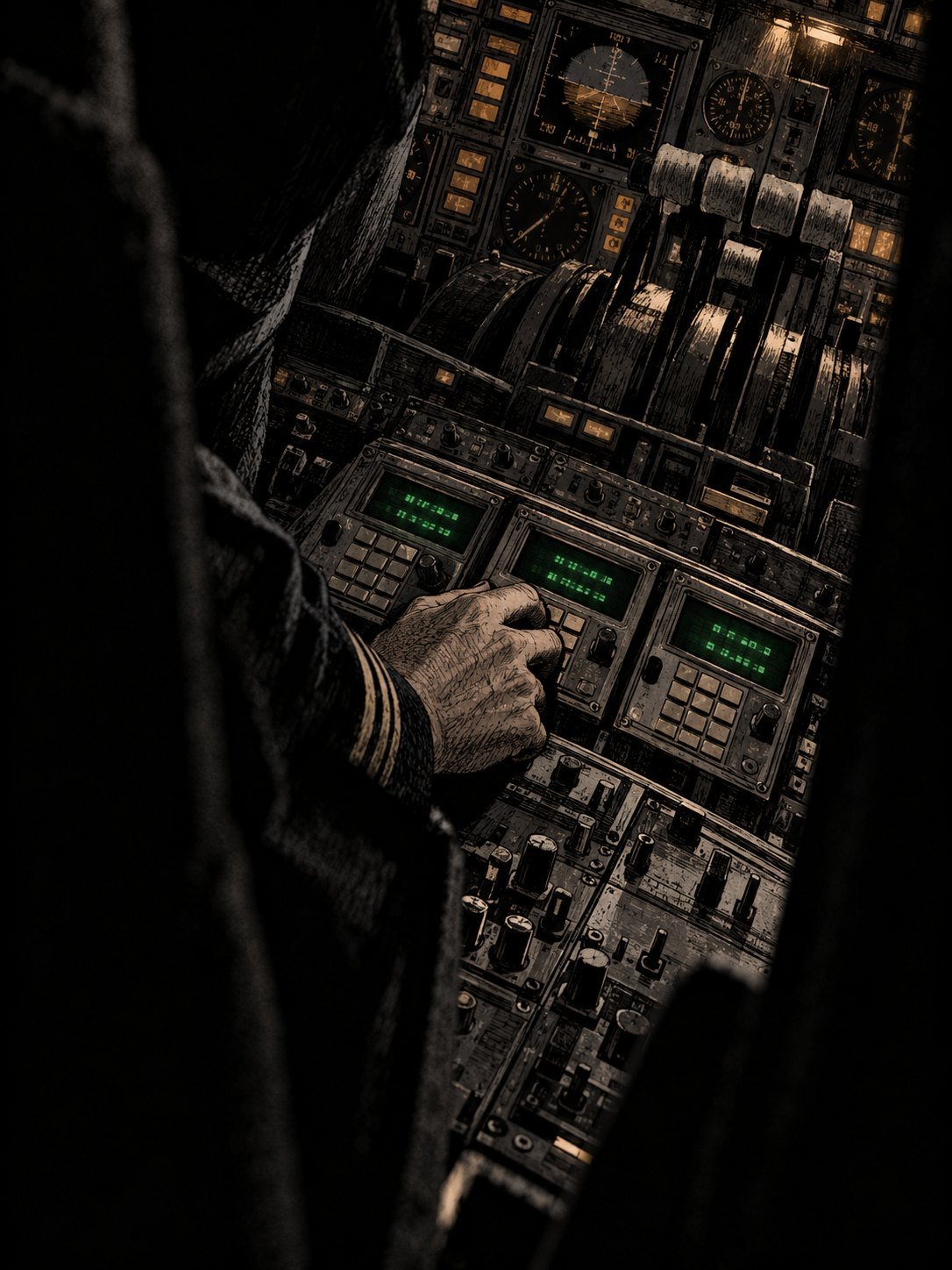
Before departure, the first officer had switched on all three inertial navigation systems, entered the ramp position from the route manual and started the alignment. The waypoints across the ocean went in while the units aligned. Each crew member checked the position entry. On the earlier leg from New York, ICAO noted, all three units had worked normally.
ICAO’s first report, in December 1983, could not say much. The Soviet Union had supplied nothing. It offered two possibilities: the plane had moved before alignment finished, or the autopilot had held a constant heading because the navigation system was never engaged.
Ten years later, with the original recordings in hand, ICAO settled on the steady-heading explanation, one of the possibilities its first report had raised.
The crew, it added, had the right long-range training. Korean Air’s INS training was adequate. (ICAO93-FACT) (CLOUDBERG-2024) (OBERG-KAL007) (ICAO93-FIND-A) (ICAO93-FIND-B)
Why a lost plane can look on time
Meanwhile the instruments kept looking normal.
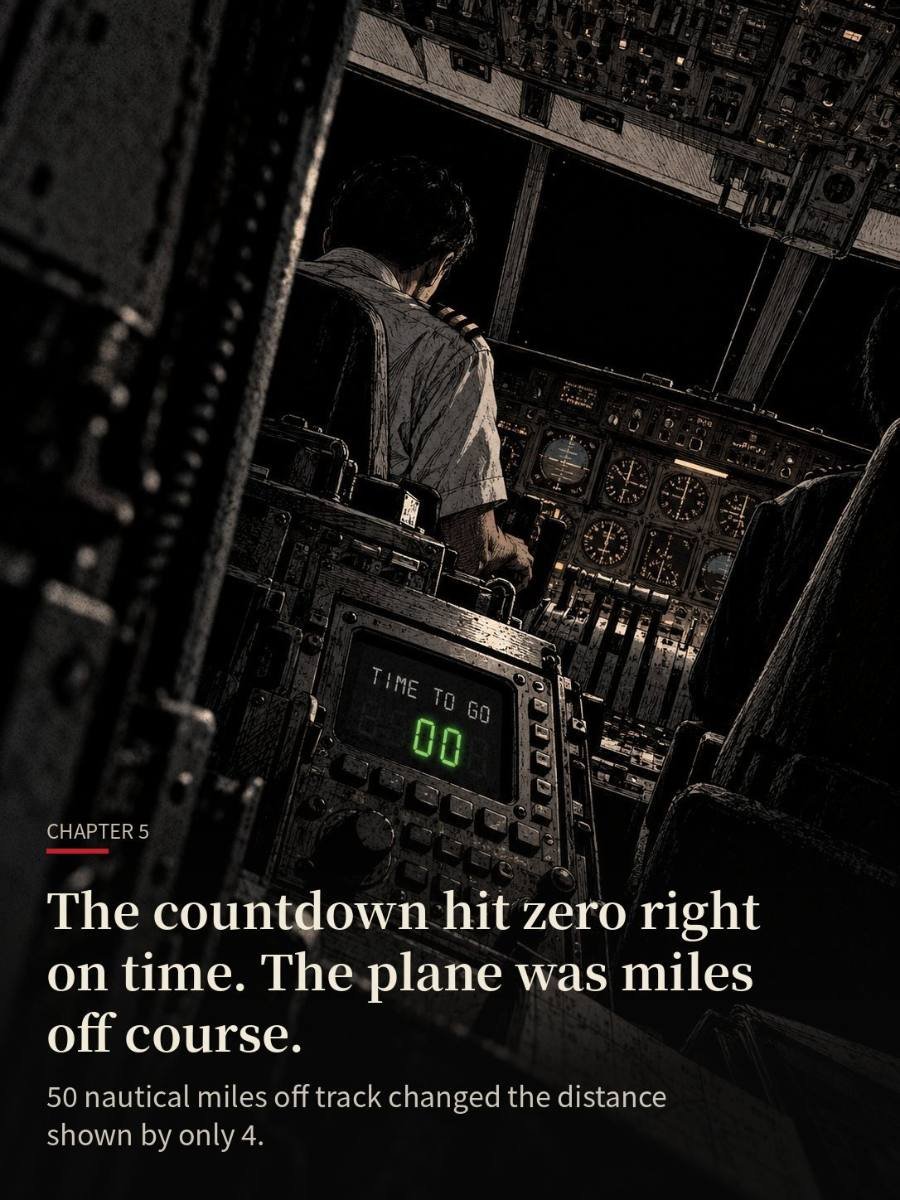
The navigation units counted down a “time-to-go” figure to each waypoint, and signalled passage when the plane drew level with it, even if it was far to one side. ICAO worked out how small the clue was. On a 300-nautical-mile leg, a plane 50 nautical miles off track would see only a 4-mile difference in the distance shown. At 100 miles off, the difference was 16.
So the numbers rolled to zero roughly on schedule.
It had happened before. ICAO cited a case from May 1983 in which a crew, with the autopilot left in heading mode, ended up 250 nautical miles off track and missed it through two waypoint passages. Crews blamed “complacency, boredom and fatigue” on long night flights over water.
ICAO did find that the displays showing which mode the autopilot was in may have been inadequate. (ICAO93-2.12) (ICAO93-2.1) (ICAO93-FIND-B)
Radar in Alaska was not watching for this
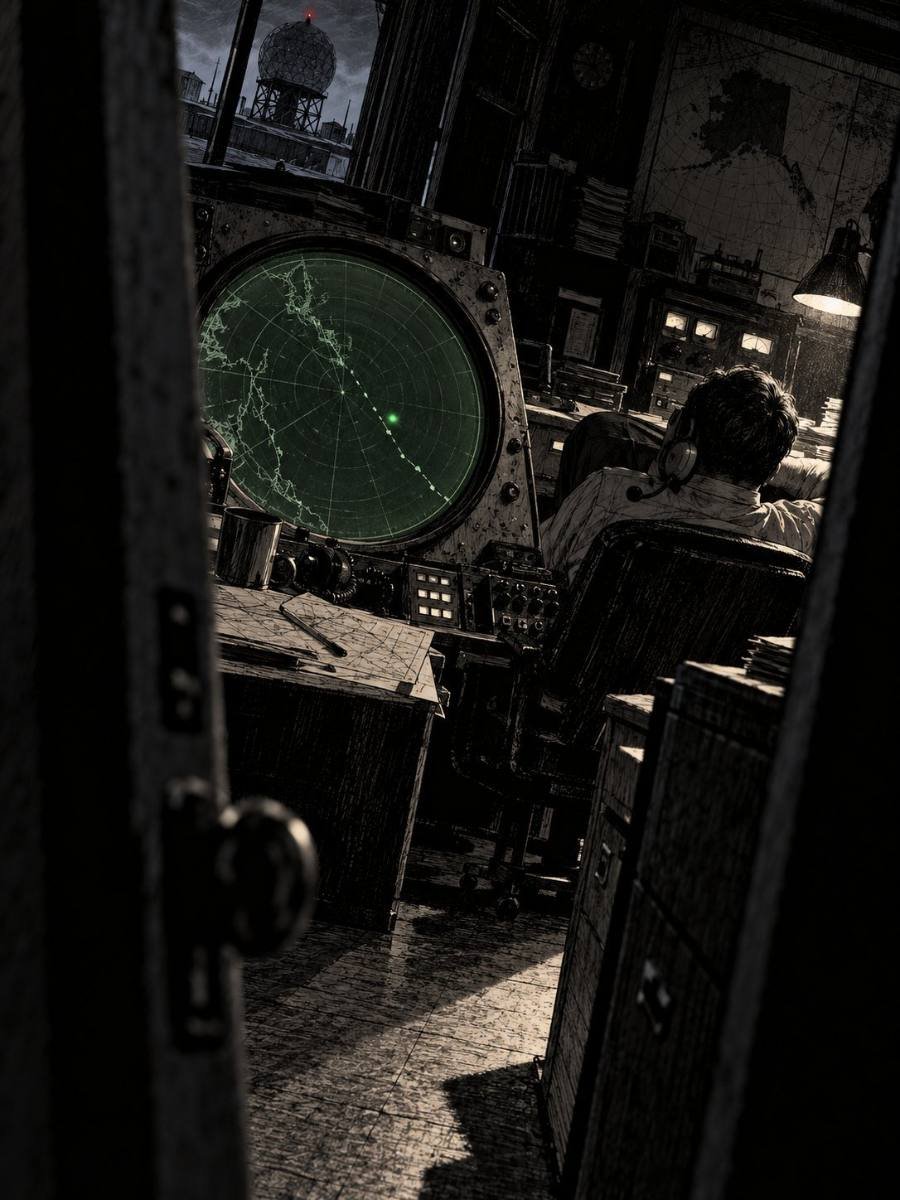
The drift began almost at once.
By 13:27 UTC, when Anchorage radar service ended near the Cairn Mountain beacon, the jet was about six nautical miles north of it. It passed about 12 nautical miles north of Bethel, the beacon it was meant to fly over. The Anchorage VOR/DME was out of service that night.
Alaskan military radars, US representatives told ICAO, “were not aware in real time” of the growing deviation. The jet crossed the Alaskan air defence zones well north of its route.
Then it was over open ocean. Out of radio range, it asked its sister flight, KAL 015, to relay its position reports.
At the first ocean waypoint the jet was about 60 nautical miles off course, most sources say, though one gives 100. At the third it was about 160. (ICAO93-FACT) (ICAO93-FIND-B) (AFMAG-2013) (ICAO93-SUM) (CLOUDBERG-2024) (MILITARY-COM) (WIKI)
Track 6065
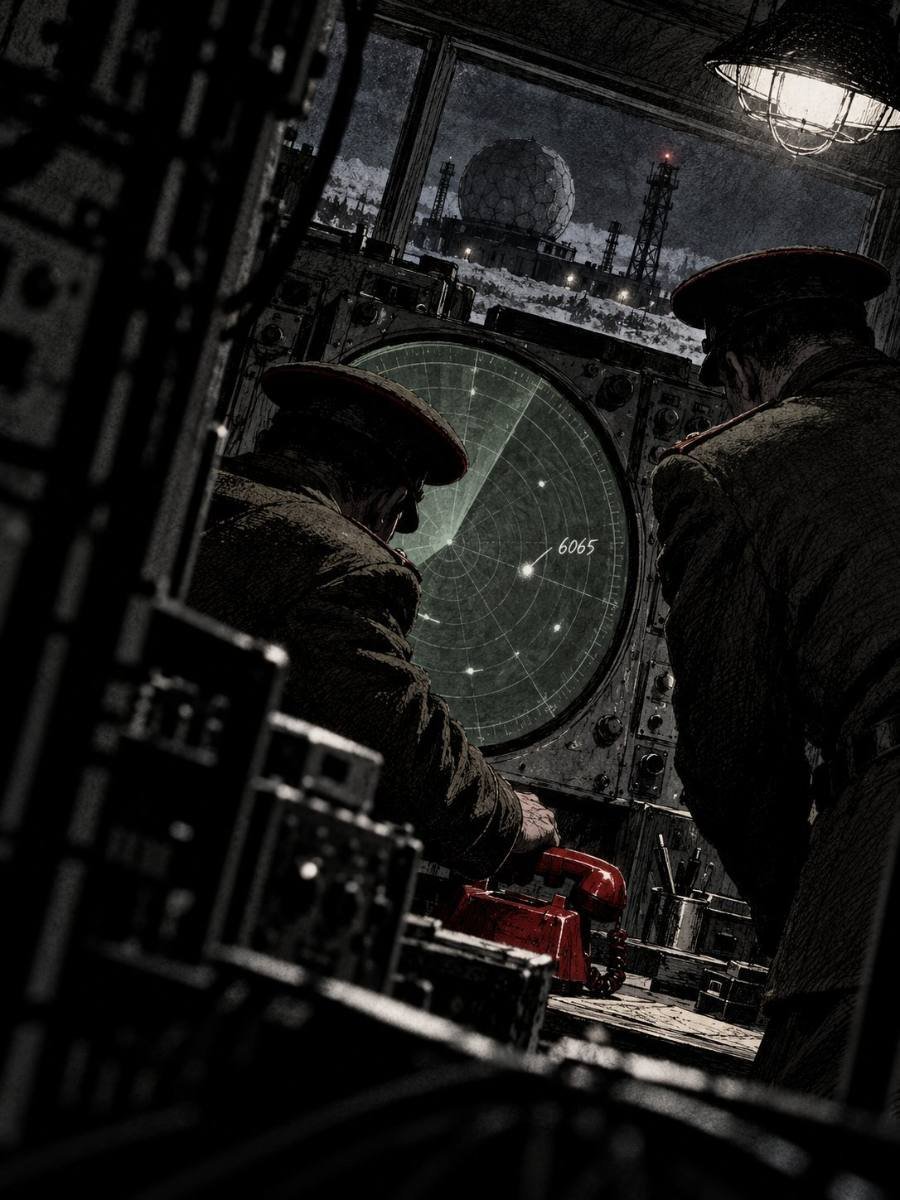
At 15:51 UTC a new blip appeared on Soviet radar. They logged it as track 6065.
That night a US Air Force RC-135 reconnaissance plane was flying northeast of Kamchatka. The two aircraft never came closer than 75 nautical miles, the US said, and Russia confirmed it in 1993. Soviet radar still plotted them as one track.
So the airliner began its life on Soviet scopes as a probable spy plane.
It crossed into Soviet airspace over Kamchatka. Soviet aircraft tried to intercept it between about 16:40 and 17:08 UTC and failed. Four MiG-23 fighters ran low on fuel and turned back.
Published flight information warned that intruders into Soviet airspace might be fired on without warning. The jet was squawking transponder code 1300, an outbound code that Russia later said delayed identification. (CLOUDBERG-2024) (ICAO93-2.12) (ICAO93-SUM) (ICAO93-FIND-C) (AFMAG-2013)
A second chance over Sakhalin
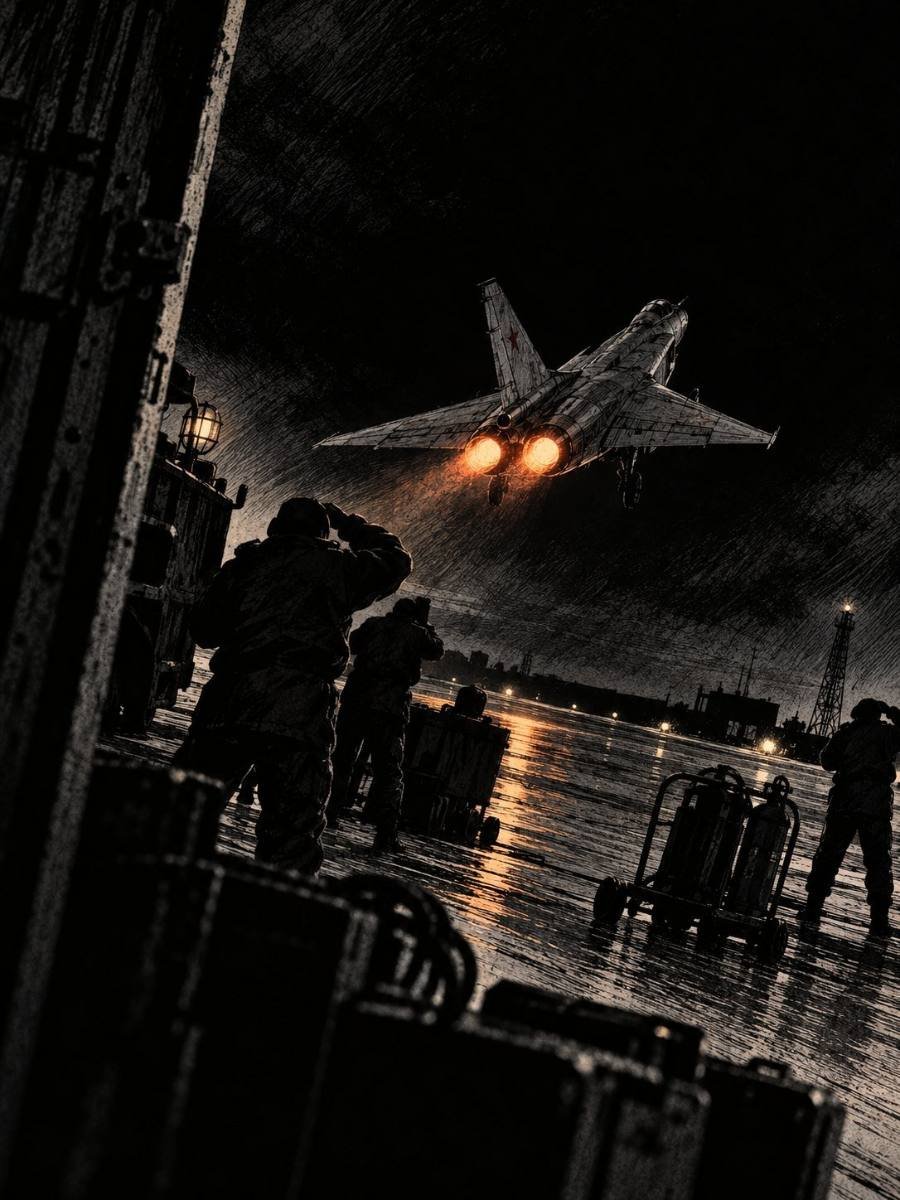
At 17:27 UTC the commander on Sakhalin island was warned. An intruder was coming, possibly an RC-135. Even then the identification was tentative.
Fifteen minutes later, a Sukhoi Su-15 interceptor took off from Sokol air base. Callsign 805. The pilot was a major.
Japanese defence radar watched something move across Sakhalin, but nobody there knew it was a lost civilian jet.
From about 18:00 UTC the interceptors closed in.
On the 747 it was the middle of the night. ICAO found no evidence that anyone on board knew a fighter was there. (SEOULSHINMUN-1993) (CLOUDBERG-2024) (AFMAG-2013) (ICAO93-SUM) (ICAO93-FIND-C) (ICAO93-FIND-A)
The lights were on
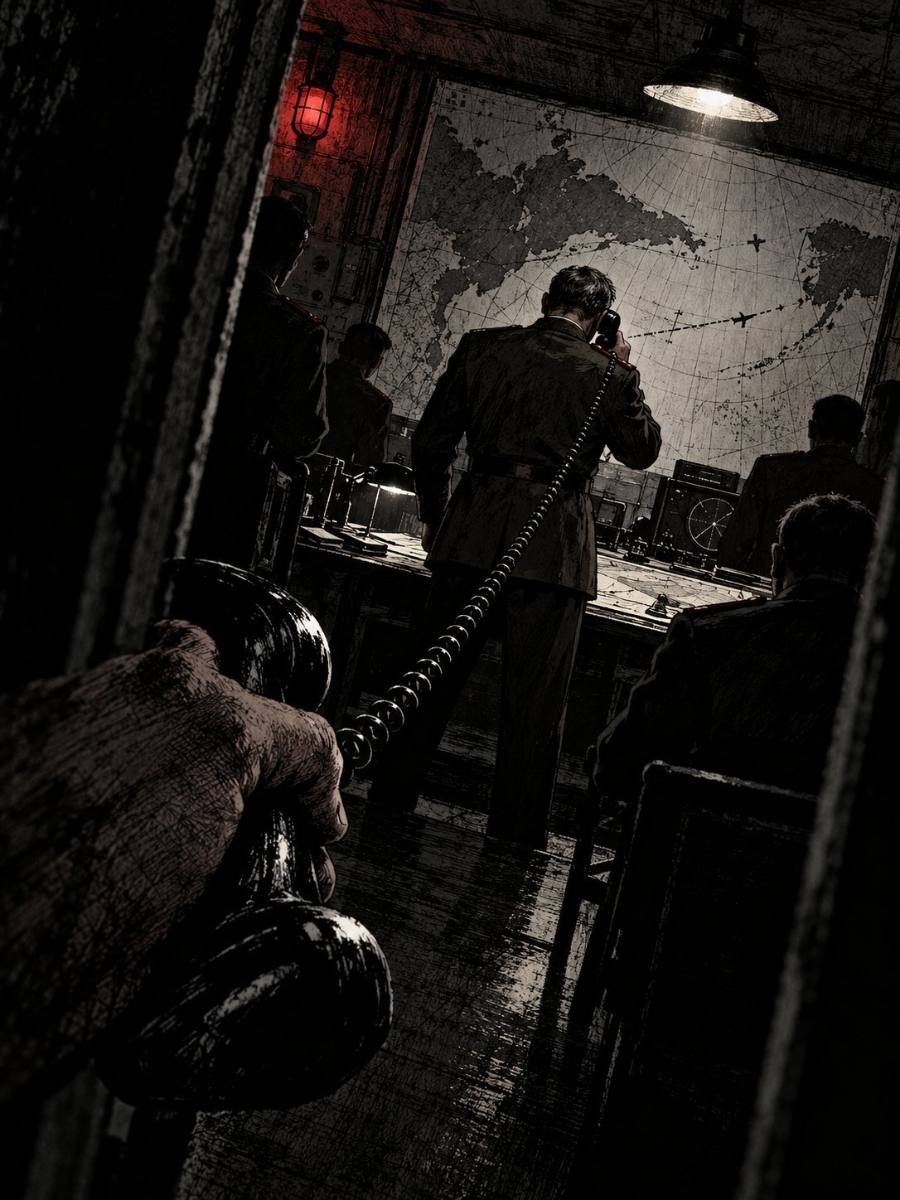
In the command post, at 18:17 UTC, one officer raised the possibility that it was a passenger plane. Then he talked himself out of it: if it had no lights, he reasoned, it could not be one.
A minute later the pilot reported in. The target’s navigation lights were on, and so was a flashing light.
Nobody called the airliner. Not on 121.5 MHz, the emergency frequency, and not on any other channel, ICAO found. The pilot later said he did not bother because the Koreans would not have understood Russian.
Instead ground control told him to flash his own lights and fire his cannon to get the crew’s attention. ICAO could not work out where he was when he fired, or how far away.
His shells carried no tracers. In 1996 he put it plainly. They “were not visible in the dark.” (SEOULSHINMUN-1993) (CLOUDBERG-2024) (ICAO93-FIND-A) (CSM-1996) (ICAO93-FIND-C) (CSM-1991)
A climb to save fuel
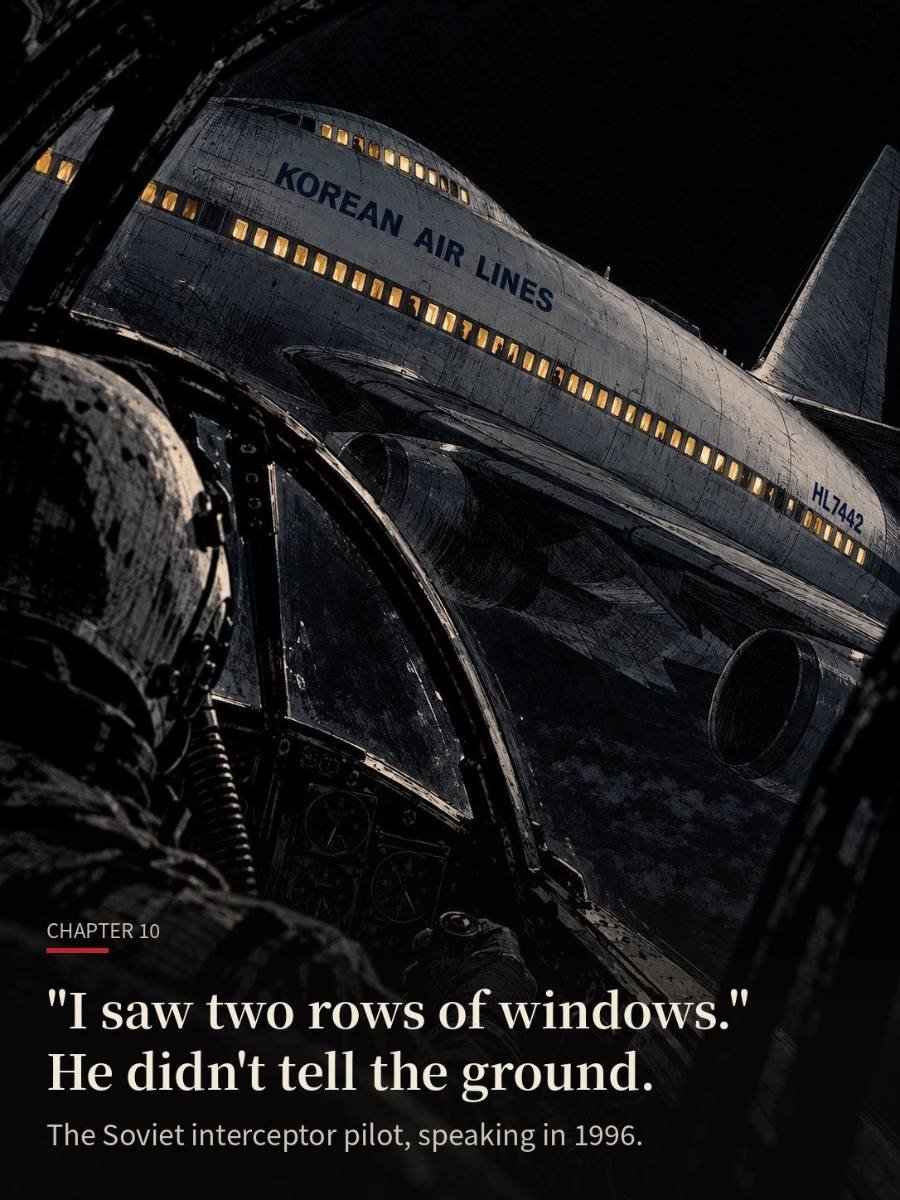
At almost that moment the Korean crew asked Tokyo for permission to climb from 33,000 to 35,000 feet. They wanted to save fuel.
The climb slowed the jet. The fighter overshot and slid past it.
On the ground, Soviet commanders read the climb as evasive action, which strengthened their belief that this was an RC-135.
The pilot gave his own account in 1996. “I saw two rows of windows and knew that this was a Boeing,” he told The New York Times. “I did not tell the ground that it was a Boeing-type plane.”
“I knew this was a civilian plane,” he said in another 1996 account. “But for me that meant nothing.” He argued that a civilian airframe was easy to convert for military use. ICAO noted that the interceptors never followed its standard procedures for intercepting civil aircraft. (ICAO93-FIND-A) (CSM-1992) (AFMAG-2013) (NYT-1996) (CSM-1996) (ICAO93-FIND-C)
Behind the cockpit door
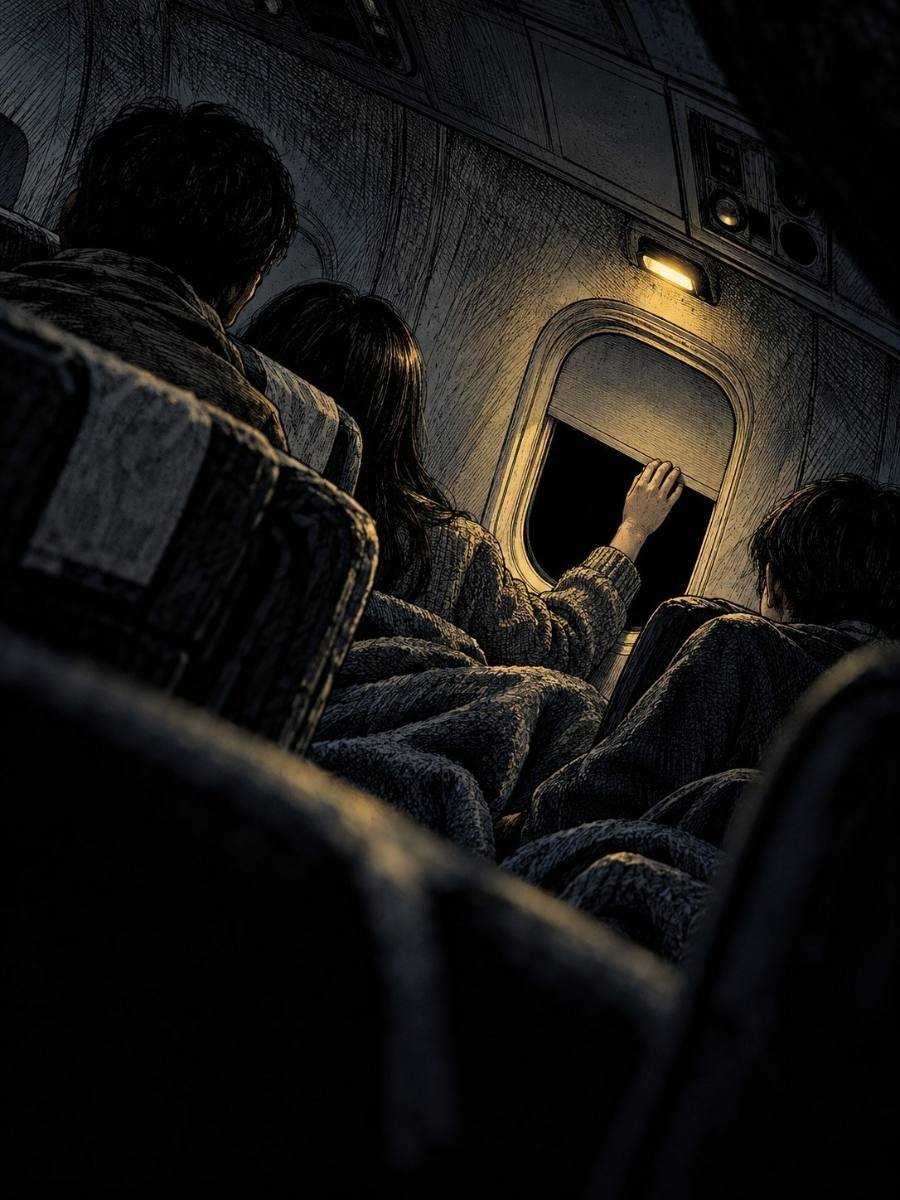
In Tokyo it was past three in the morning.
Among the passengers was a Korean army colonel, 38, flying home to Seoul with his wife and their two teenage children. There were more than 20 children under 12 on board. The colonel’s mother later gave her compensation, more than 100 million won, to Kangwon National University for a scholarship in his name.
On the ground, the clock had become the problem. The jet was about to leave Sakhalin and cross back over the sea. “The time factor became paramount in the USSR command centres,” ICAO wrote. At 18:22 UTC the order to shoot it down was repeated.
Some doubt about the plane’s identity remained, ICAO found. “Exhaustive efforts to identify the intruder aircraft were not made.” (JOONGANG-2003) (MILITARY-COM) (SEOULSHINMUN-1993) (OBERG-SPECTATOR-1993) (ICAO93-FIND-C)
18:26 UTC, 03:26 in Tokyo
That is why the story has two dates. In UTC, which ICAO used, it was still 31 August. On Sakhalin and in Tokyo it was already the early morning of 1 September.
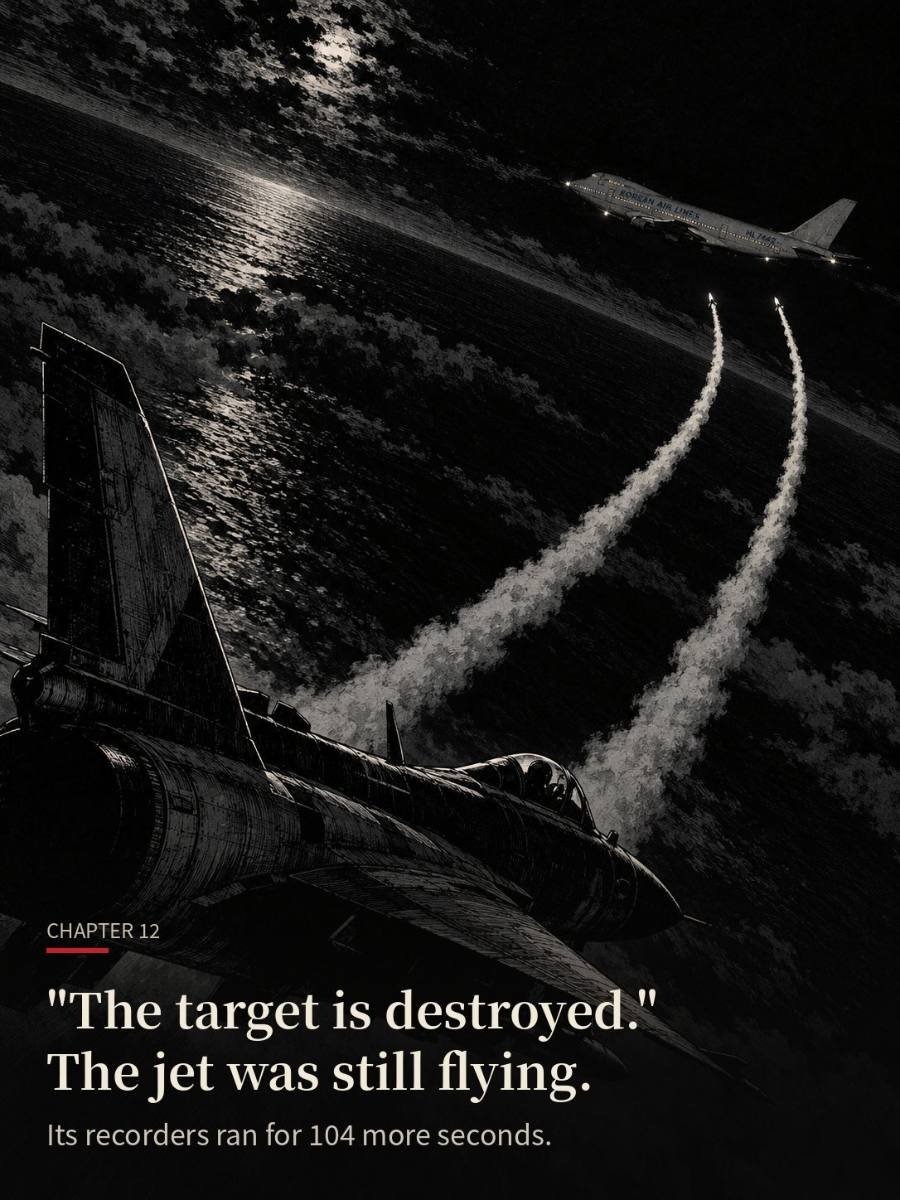
The pilot complained on the tape that the order was late. “It should have been earlier,” he said. “I’m already abeam of the target.” Then he fired two air-to-air missiles.
At 18:26 UTC they reached the jet. ICAO records a detonation at 18:26:02.
“The target is destroyed,” he radioed.
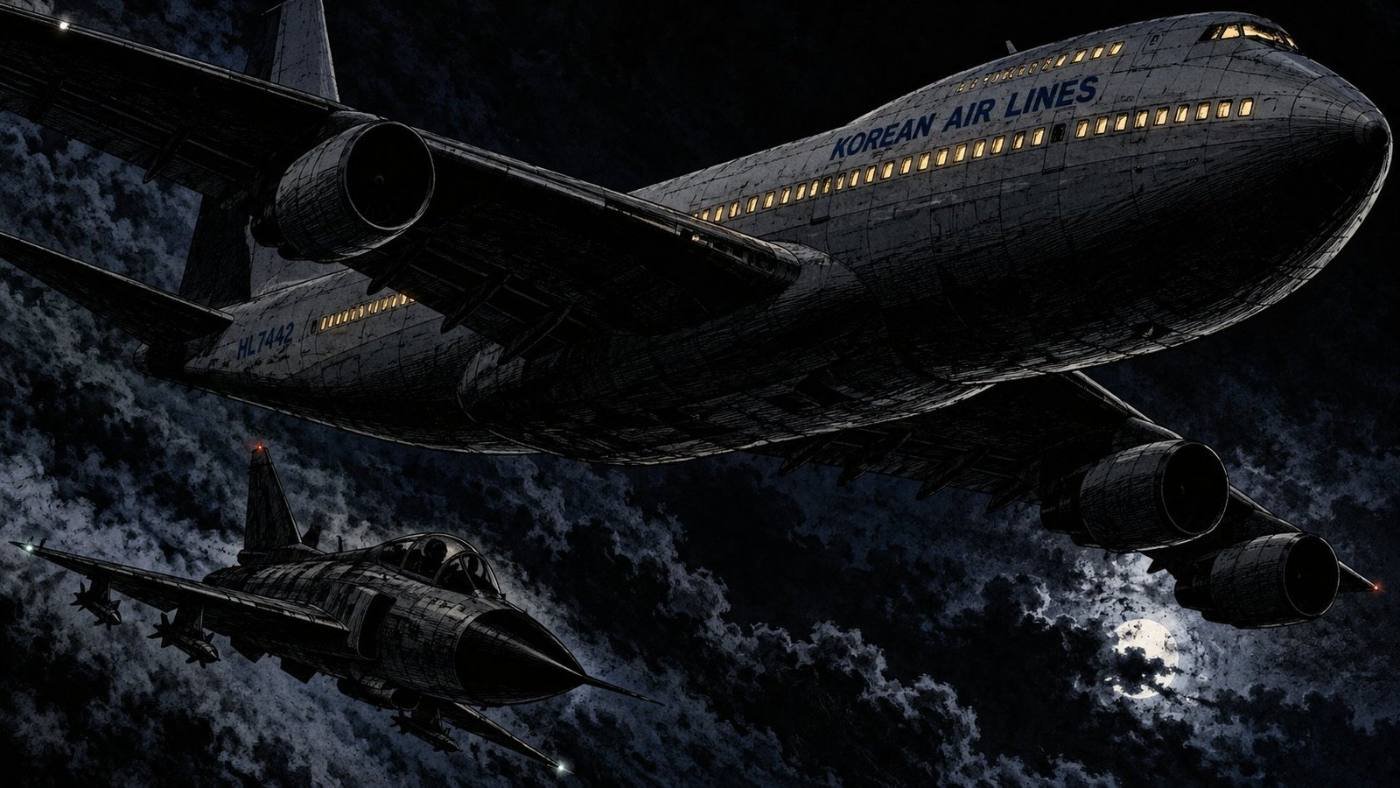
It was not. One missile exploded behind the airliner, Air & Space Forces Magazine reported, and the effect of the second is unclear. The cabin lost pressure. On the cockpit recording an alarm sounds and the crew call to each other. A cabin announcement starts: “This is an emergency descent.” The first officer tried to tell Tokyo, and Tokyo could not read him.
After 104 seconds, both recorders stopped. Radar tracked the jet for several minutes more. (ICAO93-SUM) (AFMAG-2013) (CLOUDBERG-2024) (CSM-1992) (WIKI)
A flash off Moneron Island
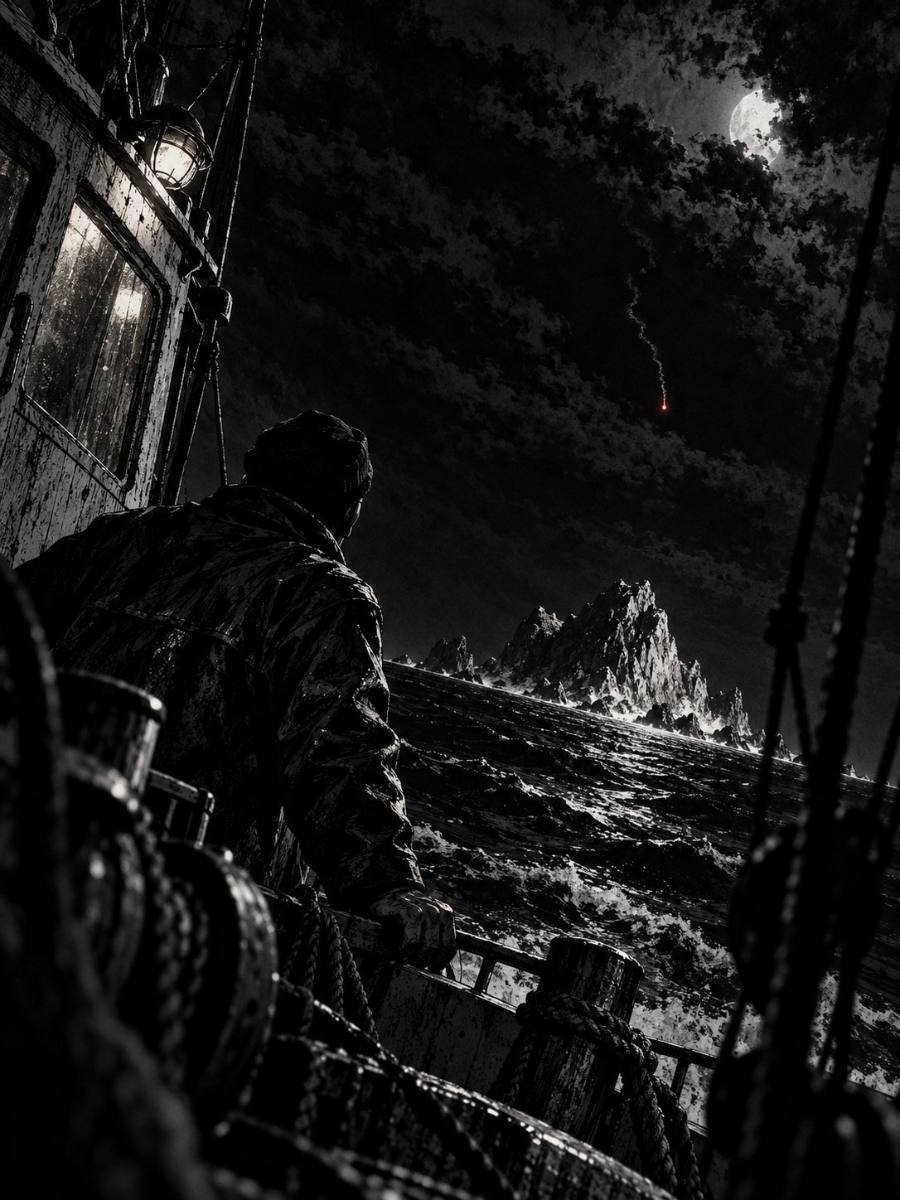
Moneron is a small island, about four and a half miles long, off the southwest coast of Sakhalin.
According to Admiral Cloudberg’s account, a Japanese fishing boat nearby heard a low-flying aircraft, then a boom, and saw a flash. The crew smelled jet fuel.
The 747 came down in the sea near Moneron. The last radar contact was at 18:35 UTC. No one survived. Accounts of how long it stayed in the air run from 90 seconds to 12 minutes.
Where exactly was it when it was hit? ICAO could not say. “It was not possible to determine the position of KAL 007 at the time of the missile attack.” A supplementary Russian report released in 1993 put the attack in international airspace, about half a minute after the jet had crossed back out of Soviet territory. (CLOUDBERG-2024) (WIKI) (AFMAG-2013) (BRITANNICA) (ICAO93-SUM) (OBERG-SPECTATOR-1993) (CSM-1993)
What washed ashore at Wakkanai
At first the Soviet news agency TASS said only that an unidentified aircraft had been intercepted. Accounts differ on how long Moscow took to admit more, from five days to more than a week.
Japan had the pilot’s radio exchanges. On 4 September it handed the recording to the United States, and “The target is destroyed” was played at the United Nations and on news broadcasts around the world.
On 5 September, in a television address from the Oval Office, President Ronald Reagan called it “the Korean airline massacre.”
Four days later, the Soviet chief of the general staff held an unprecedented news conference. He said the jet had taken evasive action and had been called by radio, and that visibility was poor. ICAO later found that no one had called it.
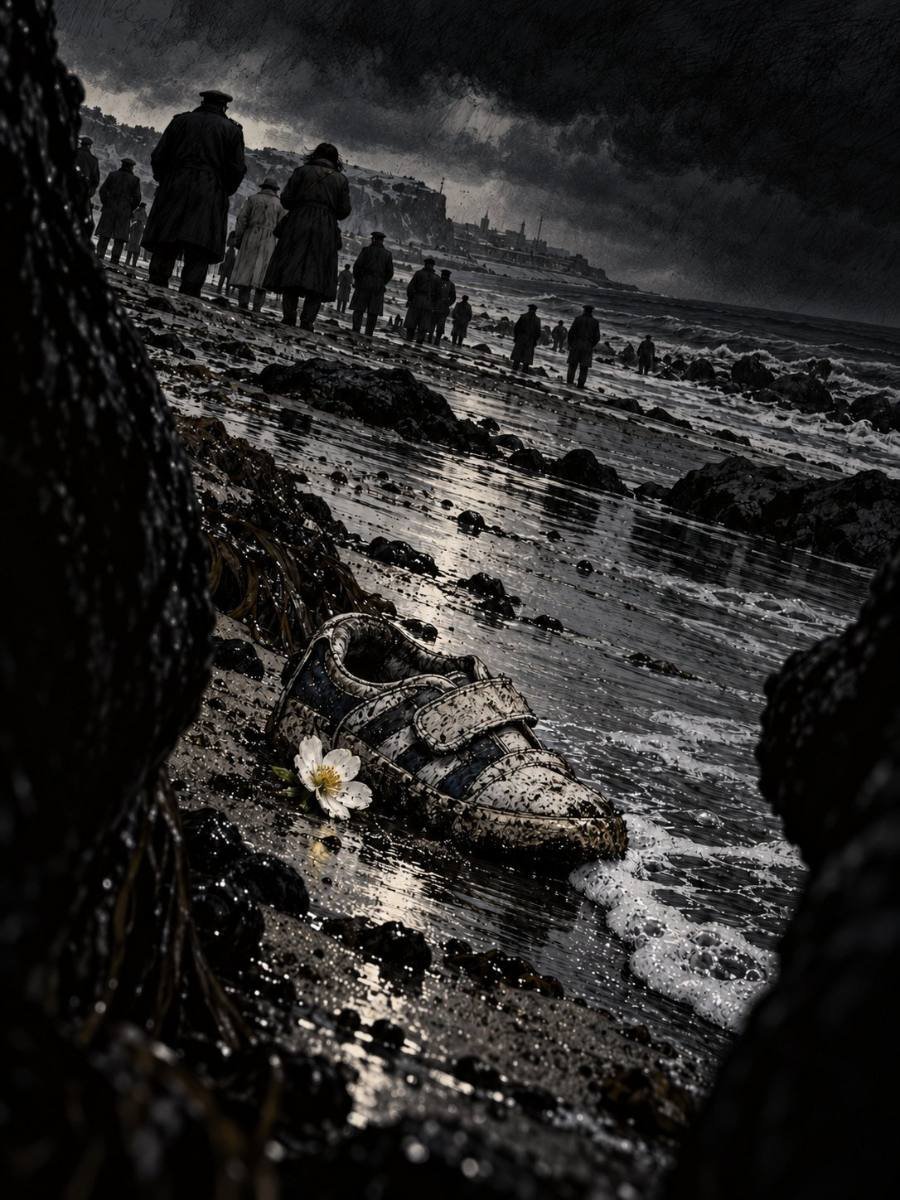
Meanwhile, at Wakkanai, on the northern tip of Hokkaido, things from the flight began drifting ashore. Officials gave daily briefings at city hall. Families scattered flowers on the sea from a patrol boat.
On 26 September a Japanese patrol ship, its guns removed at Soviet request, collected crates of debris and personal effects at a Sakhalin port. The Soviets said they had found no remains of anyone aboard. The “documents” they had mentioned turned out to be Korean newspapers and magazines. (WIKI) (KOREAHERALD-2023) (MT-2013) (FRUS-94) (REAGAN-0905) (CSM-1983-09-12) (ICAO93-FIND-A) (JOONGANG-2003) (CSM-1983-09-27)
Two bright yellow boxes
A US Navy-led search found no wreckage. Soviet vessels got in its way.
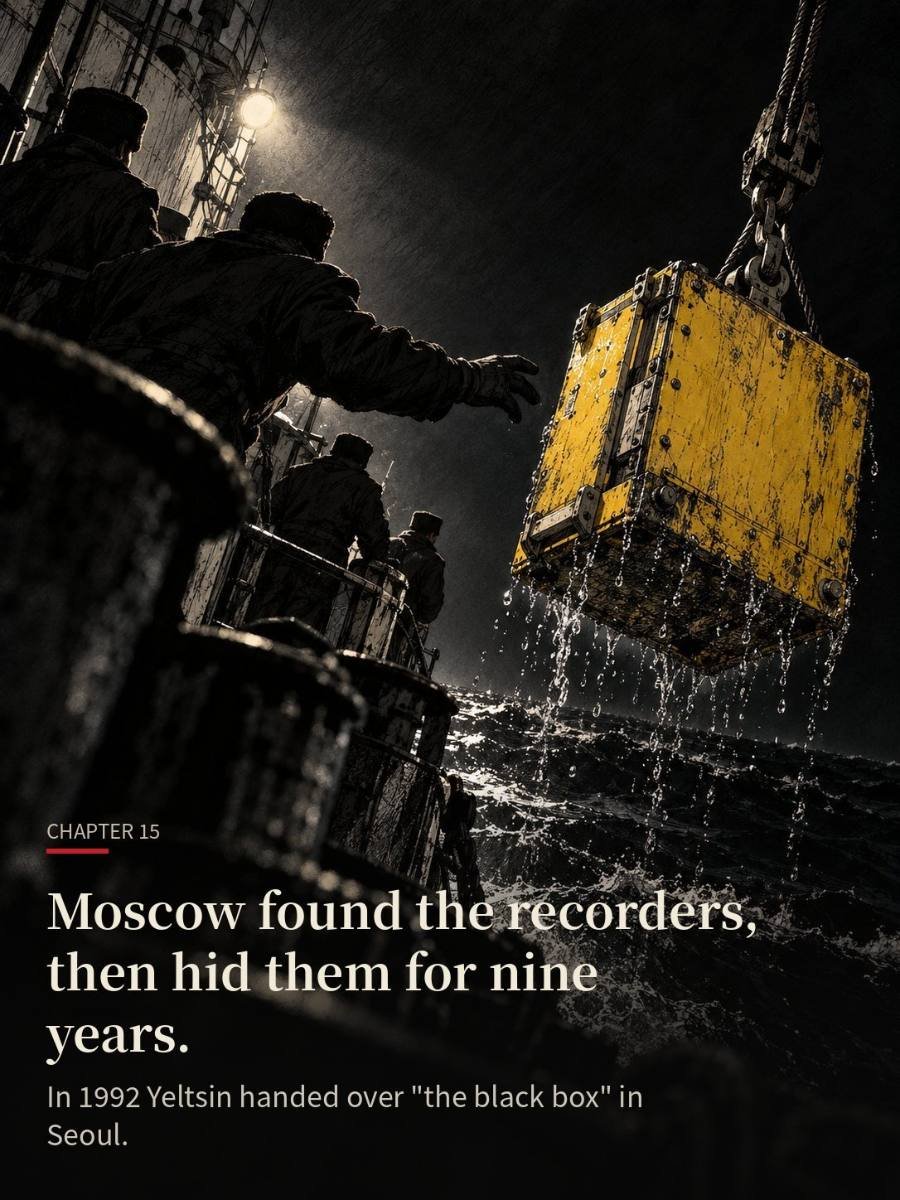
Soviet divers found the wreck near Moneron. In October 1983 they found the two flight recorders, which Oberg describes as bright yellow, and told no one.
The KGB chief advised the Soviet leader, Yuri Andropov, not to release what was on them. The tapes, he said, were too ambiguous to support the Soviet case. A KGB document even conceded that the jet had held its course “for more than five hours”, which undercut Moscow’s claim that it had zigzagged. One military memo boasted, “We have hidden them away where even our children won’t be able to find them.”
Then came glasnost. In 1990 the newspaper Izvestia reported that military divers had long ago “climbed all over” the wreck. In 1991 the pilot told Izvestia that he had fired no tracers and made no radio contact. Divers had found no espionage equipment.
In November 1992, in Seoul, President Boris Yeltsin handed over “the black box” as a “show of friendship and apology.” The original tapes reached ICAO in January 1993. (AFMAG-2013) (CLOUDBERG-2024) (WIKI) (BRITANNICA) (OBERG-KAL007) (CSM-1992) (OBERG-SPECTATOR-1993) (DESERET-1991) (CSM-1991) (MT-1992) (ICAO93-SUM)
The verdict nobody fully signed
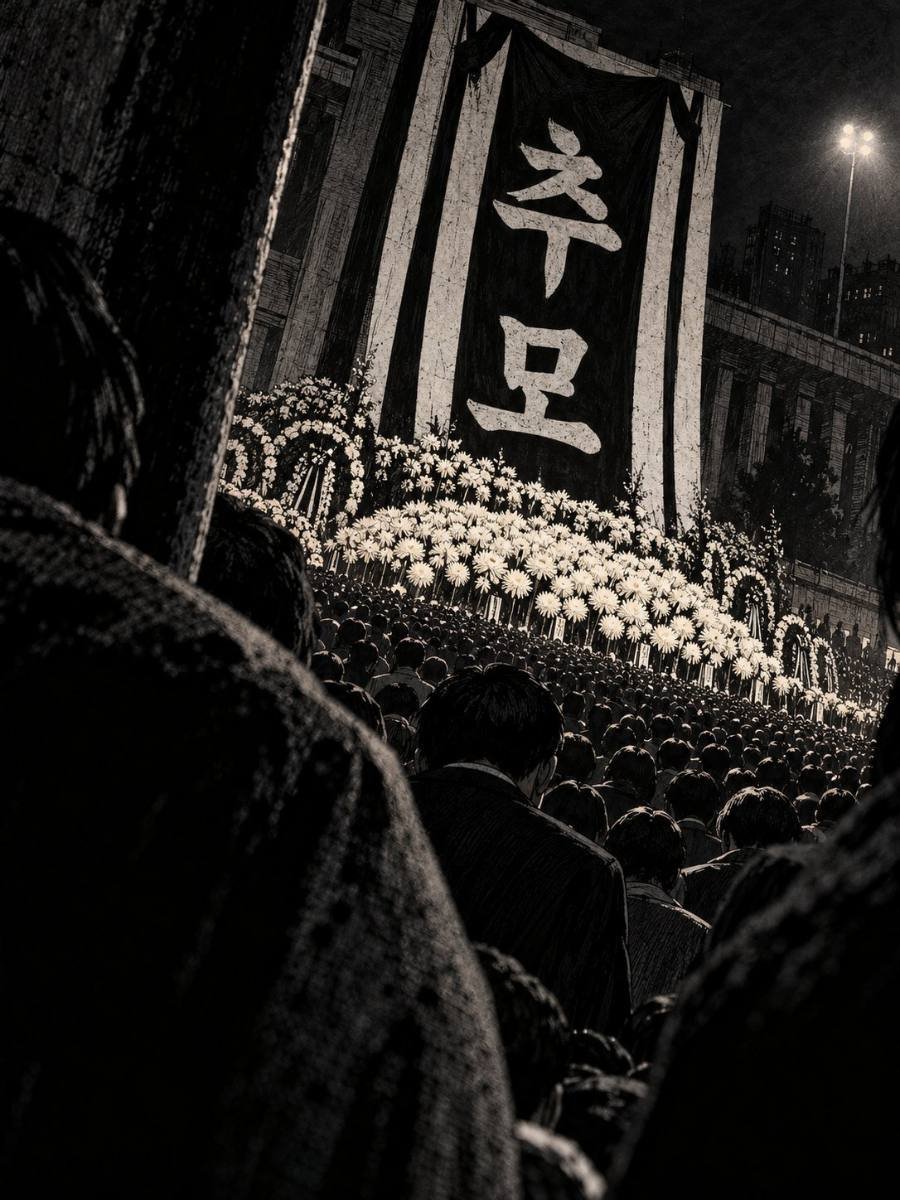
Back in September 1983, about 100,000 people had filled a memorial service in Seoul, broadcast live across the country. South Korea then had no diplomatic ties with Moscow.
Nearly ten years later ICAO delivered its answer. The tapes were authentic. There was no evidence the crew had known where they were. The drift came from the autopilot mode, missed for more than five hours. And the Soviet side had not made exhaustive efforts to identify the plane before destroying it.
Britannica’s summary is that the investigation found nothing in the recordings to suggest intelligence gathering. That was the Soviet accusation in 1983, and the pilot still insisted in 1996 that it had been a spy flight.
Readers took different lessons. Korean newspapers read the report as blaming the Korean crew. Oberg, writing in the Christian Science Monitor, read it the other way, as deliberate Soviet action. ICAO’s Council declared the investigation complete on 14 June 1993 without endorsing the conclusions, because Russia and Korea each disputed parts of them.
On the 20th anniversary, 371 unclaimed items that had drifted ashore were burned on the beach at Wakkanai. Toyoko Ito, who lost her sister, said it was “heartbreaking to think that they may have been among” them. (KOREAHERALD-2023) (ICAO93-FIND-A) (ICAO93-FIND-B) (ICAO93-FIND-C) (BRITANNICA) (NYT-1996) (SEOULSHINMUN-1993) (CSM-1993) (UKREP-1993) (ICAO-COUNCIL-1993) (JAPANTIMES-2003)
The blue dot on your dashboard
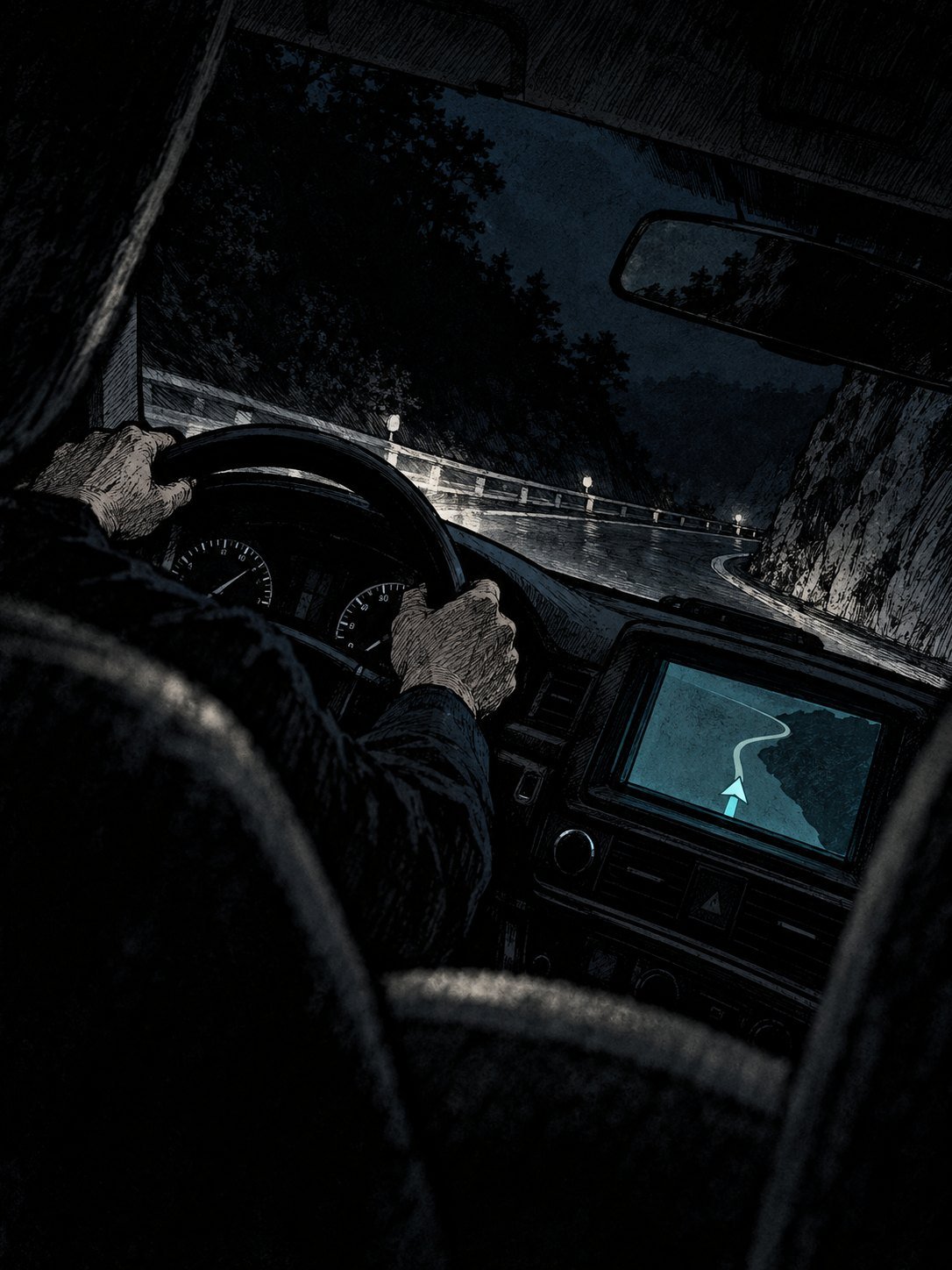
On 16 September 1983, two weeks after the shootdown, the White House made an announcement. The United States would make its Global Positioning System available to civilian aircraft once it became operational, then expected in 1988.
It took longer than that. The system cost more than $10 billion. Consumers got partial access in 1995, with the most precise signal kept for the military, and President Bill Clinton switched that restriction off in 2000.
Other changes were quieter. In 1984 ICAO adopted a new article for the Chicago Convention on intercepting civil aircraft, which came into force in 1998. Autopilot displays were redesigned to make the mode clearer, and Korean Air retired the flight number 007.
The pilot received a bonus of 200 rubles, minus a postage fee. Thirty years on, Russia still defended what he did as tragic but necessary.
The three navigation systems on HL7442 had no failure that night. As far as ICAO could tell, the autopilot was simply never handed the route. (REAGAN-GPS) (NEXTGOV-2014) (CAMBRIDGE-ILM) (BRITANNICA) (WIKI) (NYT-1996) (MT-2013) (ICAO93-FIND-A)
Case notes: Korean Air Lines Flight 007
On 31 August 1983 (1 September in Japan), Korean Air Lines Flight 007, a Boeing 747 flying from Anchorage to Seoul, strayed into Soviet airspace and was shot down by a Soviet Su-15 interceptor near Sakhalin. All 269 people aboard were killed. ICAO later found the jet had held one autopilot heading for more than five hours without the crew noticing (ICAO93-SUM) (ICAO93-FIND-B) (AFMAG-2013).
Where the case stands (as of November 2026)
ICAO’s 1993 report found that the crew failed to notice the autopilot had stayed in heading mode or was switched to the navigation system too late, that there was no evidence the crew knew they were off course or being intercepted, and that the Soviet side made no exhaustive effort to identify the aircraft before destroying it (ICAO93-FIND-A) (ICAO93-FIND-B) (ICAO93-FIND-C).
The ICAO Council declared the investigation complete on 14 June 1993 but did not endorse the conclusions, because Russia and Korea each disputed parts of them (ICAO-COUNCIL-1993) (UKREP-1993). In 2013 Russia still defended the pilots’ actions as tragic but necessary (MT-2013).
Timeline
| When | What happened |
|---|---|
| 1978 | Soviet fighters attack Korean Air Lines Flight 902 after it strays into Soviet airspace; two people die (BRITANNICA) |
| 31 Aug 1983, 13:00 UTC | KE 007 takes off from Anchorage (about 04:00 local) with 269 aboard (ICAO93-FACT) (ICAO93-SUM) |
| About 13:03 UTC | Settles on a magnetic heading of about 245° and holds it until the attack (ICAO93-FIND-B) |
| 15:51 UTC | Appears on Soviet radar as track 6065 (CLOUDBERG-2024) (ICAO93-2.12) |
| 16:40–17:08 UTC | Failed Soviet interception over Kamchatka (ICAO93-SUM) (ICAO93-FIND-C) |
| 17:42 UTC | Su-15 interceptor takes off from Sokol, Sakhalin (CLOUDBERG-2024) (AFMAG-2013) |
| 18:26 UTC (03:26 Tokyo, 1 Sept) | Missiles strike the airliner; recorders stop 104 seconds later (ICAO93-SUM) (CLOUDBERG-2024) |
| 18:35 UTC | Last radar contact; the jet comes down in the sea near Moneron Island (CLOUDBERG-2024) (ASN) |
| 5 Sept 1983 | Reagan’s Oval Office address (REAGAN-0905) |
| 7 Sept 1983 | About 100,000 attend a memorial in Seoul (KOREAHERALD-2023) |
| 16 Sept 1983 | US says GPS will be made available to civilian aircraft once operational (REAGAN-GPS) |
| Oct 1983 | Soviet forces recover the flight recorders and keep them secret (BRITANNICA) (CSM-1992) |
| 6 Mar 1984 | ICAO Council condemns the destruction of the aircraft, 20 to 2 with 9 abstentions (CAMBRIDGE-ILM) |
| Oct–Nov 1992 | Yeltsin hands over Soviet documents in Moscow, then “the black box” in Seoul (BUSH-1992) (MT-1992) |
| 14 June 1993 | ICAO Council declares the investigation complete and lifts the report’s restricted status (ICAO-COUNCIL-1993) (UKREP-1993) |
| 1 Sept 2003 | 371 unclaimed items burned on the shore at Wakkanai (JAPANTIMES-2003) |
Evidence locker
Real records only. Illustrations elsewhere in this file are AI-generated.
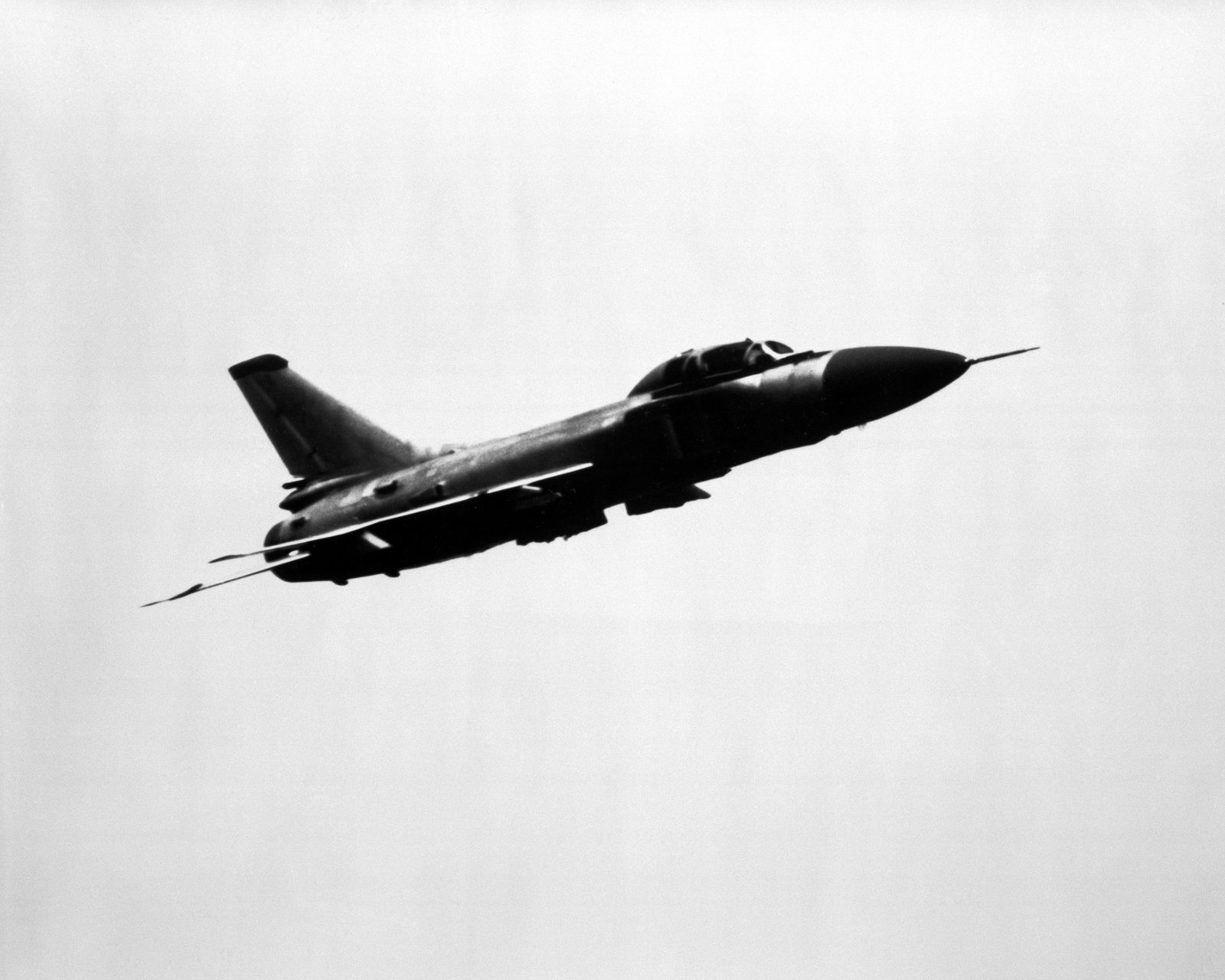 EXHIBIT A
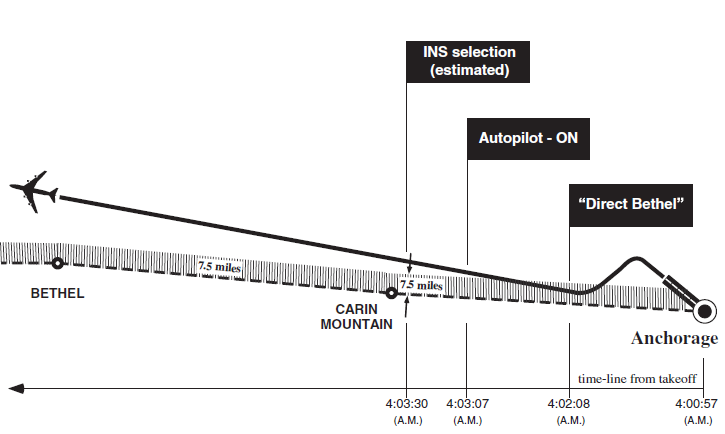 EXHIBIT B · TAP TO ENLARGE
Where the records disagree
| Detail | What sources say |
|---|---|
| Date | 31 August in UTC (ICAO); 1 September in Japan and on Sakhalin, where most media date it (ICAO93-SUM) (AFMAG-2013) |
| Distance off course at the first ocean waypoint | About 60 nautical miles, or “about 100 miles” (MILITARY-COM) (AFMAG-2013) |
| Countries represented aboard | 13 (Reagan, 1983) or 16 (REAGAN-0905) (CLOUDBERG-2024) |
| Americans killed | 63, 62 or 61 (BUSH-1992) (KOREAHERALD-2023) (OBERG-KAL007) |
| Children under 12 | 22 or 23 (MILITARY-COM) (JOONGANG-2003) |
| Cannon rounds fired | 520 shells in three bursts (pilot, 1996); “more than 200” or 243 in other accounts (CSM-1996) (WIKI) |
| Time in the air after the hit | From 90 seconds to at least 12 minutes; the recorders stopped after 104 seconds (BRITANNICA) (AFMAG-2013) (CLOUDBERG-2024) |
| When Moscow admitted the shootdown | Five days, eight days or “more than a week” (CSM-1991) (KOREAHERALD-2023) (MT-2013) |
| Depth of the wreck | About 174 m, about 200 m, or “several dozen yards” (WIKI) (OBERG-KAL007) (DESERET-1991) |
| Who got the recorders in 1992–93 | “The black box” to Seoul in November 1992; the original tapes to ICAO in January 1993 (MT-1992) (ICAO93-SUM) |
What we still don’t know
- Exactly where the airliner was at the moment of the attack.
- Why the crew never caught the autopilot mode in more than five hours.
- How long the jet stayed in the air after the recorders stopped.
- How close the fighter was when it fired its cannon, and how many rounds it fired.
What happened after
In 1984 the Chicago Convention was amended with a new article on the interception of civil aircraft; it came into force in 1998 (CAMBRIDGE-ILM) (BRITANNICA). Consumer GPS arrived in stages: partial access in 1995, and full precision after selective availability was switched off in 2000 (NEXTGOV-2014). Korean Air retired the flight number 007 (WIKI).
Editor’s note
What frightens me most about Flight 007 is that nobody in the cockpit seems to have known. ICAO found no evidence that the crew realised they were off course, and none that they knew Soviet fighters were near them. They made their position reports as if everything were normal. For more than five hours, 269 people sat inside an aircraft that believed it was on its way to Seoul, while it slid a little further north with every hour. A disaster that size, and as far as anyone can tell it began with a mode that was never switched.
I was also surprised by how advanced the aircraft already was. Before I read the reports, I assumed a 1983 airliner was flown mostly by hand. In fact the 747 carried three inertial navigation systems, all working normally, and an autopilot that could fly the whole route on its own. The technology was there. What failed was the moment of handing control to it, and nobody noticing that the handover had not happened.
Whatever went wrong in the cockpit, I believe the first responsibility lies with the side that fired. ICAO’s own finding is blunt: exhaustive efforts to identify the aircraft were not made. The pilot himself later said he could see two rows of windows. A navigation mistake should never have become a death sentence. When there was still any doubt about whether a plane full of passengers was a civilian airliner, the Soviet side should have been far more careful before giving that order.
I was a child when it happened, so I don’t remember the news. I know this story from documentaries, from the footage of the memorial crowds in Seoul and the families waiting for word that never came. Even at that distance, it is one of the saddest stories I know. They were ordinary passengers on an overnight flight home, and they had no idea where they were.
— Strange World Files
Case file summary
- What: A Korean Air Lines Boeing 747 drifted off course for more than five hours and was shot down by a Soviet interceptor
- Where: Anchorage to Seoul; brought down over the sea off Sakhalin, near Moneron Island
- When: 31 August 1983, 18:26 UTC (1 September, 03:26 Tokyo time)
- Toll: All 269 people aboard
- Status: ICAO investigation completed June 1993; the Council did not endorse its conclusions
Illustrations are AI-generated artistic interpretations, not photos. No real person is depicted with a recognizable face. Read how we research and illustrate these files.
Sources
- ICAO, C-WP/9781 (28 May 1993), “Summary of Findings and Conclusions,” scanned page in UK FCO 40/4109 file, hkintexts.histsyn.com
- ICAO, C-WP/9781, “Factual Information” §1.1.1–1.1.6, scanned page
- ICAO, C-WP/9781, p. 40, §1.16.3.2–2.1.4, scanned page
- ICAO, C-WP/9781, p. 47, §2.12–2.13 (position reporting; RC-135), scanned page
- ICAO, C-WP/9781, Findings (page 2 of summary), scanned page
- ICAO, C-WP/9781, p. 59, findings 3.6–3.20, scanned page
- ICAO, C-WP/9781, p. 60, findings 3.21–3.35, scanned page
- ICAO Council resolution, 139th Session, 14 June 1993 (Attachment 26)
- UKREP ICAO Montreal to FCO, telegram, 14 June 1993
- Admiral Cloudberg, “A Shot in the Dark: The Untold Story of Korean Air Lines flight 007,” Medium, 21 May 2024 (archived copy)
- Peter Grier, “The Death of Korean Air Lines Flight 007,” *Air & Space Forces Magazine*, 1 Jan 2013
- Ned Temko, “Soviets differ with themselves on airline downing,” *Christian Science Monitor*, 12 Sept 1983
- “Material from Flight 7 turned over to Japan,” *Christian Science Monitor* (wire dispatches), 27 Sept 1983
- John Hughes, “A Lingering Blot on Glasnost,” *Christian Science Monitor*, 6 June 1991
- Lawrence J. Goodrich, “Soviet Story on KAL Shootdown Unravels With Transcripts’ Release,” *Christian Science Monitor*, 23 Oct 1992
- James Oberg, “More Facts on Flight 007,” *Christian Science Monitor*, 8 Sept 1993
- John Hughes, “Revisiting Korean Airlines Flight 007: The Attacker Talks at Last,” *Christian Science Monitor*, 24 Dec 1996
- *The New York Times*, Osipovich interview, reprinted as “Pilot defends shooting Korean jet, insists Boeing…,” *The Spokesman-Review*, 9 Dec 1996
- B. J. Lee, “For Korea, Black Box Apology,” *The Moscow Times*, 20 Nov 1992
- Ronan Thomas, “30 years after the Cold War tragedy of Flight 007,” *The Moscow Times*, 5 Sept 2013
- Ronald Reagan, “Address to the Nation on the Soviet Attack on a Korean Civilian Airliner,” 5 Sept 1983, American Presidency Project (UCSB)
- “Statement by Deputy Press Secretary Speakes on the Soviet Attack on a Korean Civilian Airliner,” 16 Sept 1983, Reagan Library
- US Department of State, Office of the Historian, *FRUS 1981–1988, Vol. IV*, Document 94, “Editorial Note”
- “Statement by Press Secretary Fitzwater on Russian Action…” (KAL 007), 14 Oct 1992, *Public Papers of the Presidents: George H. W. Bush, 1992–93, Book II*
- “Korean Air Lines flight 007,” *Encyclopaedia Britannica*
- “소 전투기 조종사 ‘항공기 점등비행’ 보고” (Soviet fighter pilot reported aircraft flying with lights on), *Seoul Shinmun*, 16 June 1993, p. 5 (Korean; summarised in translation)
- James Oberg, “KAL 007: The Real Story,” *The American Spectator*, Oct 1993 (author’s site)
- James Oberg, KAL 007 article and correspondence page (author’s site)
- “KAL 007 wreckage found, Soviet paper says,” *Deseret News*, 6 Jan 1991
- Toby Smith, “Sorrow From the Sky (Part 1),” *Korea JoongAng Daily*, 16 June 2003
- “Crash victims’ effects burned on beach,” *The Japan Times*, 3 Sept 2003
- Kim So-hyun, “[Korean History] How KAL007 tragedy gave civilians access to GPS,” *The Korea Herald*, 6 July 2023
- “In 1983, the Soviets Shot Down a Passenger Plane and Killed a US Congressman,” Military.com (no byline shown; URL dated 26 Jan 2026)
- Sarah Laskow (The Atlantic), “How a 1983 Plane Crash Helped Speed Up Civilian Use of GPS,” *Nextgov*, 3 Nov 2014
- “International Civil Aviation Organization: Action with Regard to the Downing of the Korean Air Lines Aircraft,” *International Legal Materials* (abstract page)
- Aviation Safety Network, “Unlawful Interference Boeing 747-230B HL7442, Thursday 1 September 1983”
- Wikipedia, “Korean Air Lines Flight 007”