Brothers Home: The Busan ‘Welfare Center’ Where Police Earned Points for Every Person
🎧 Narrated Mystery: press play and hear the whole case read aloud, like an audiobook (about 25 minutes).
Five points a person: the police quota that fed Brothers Home
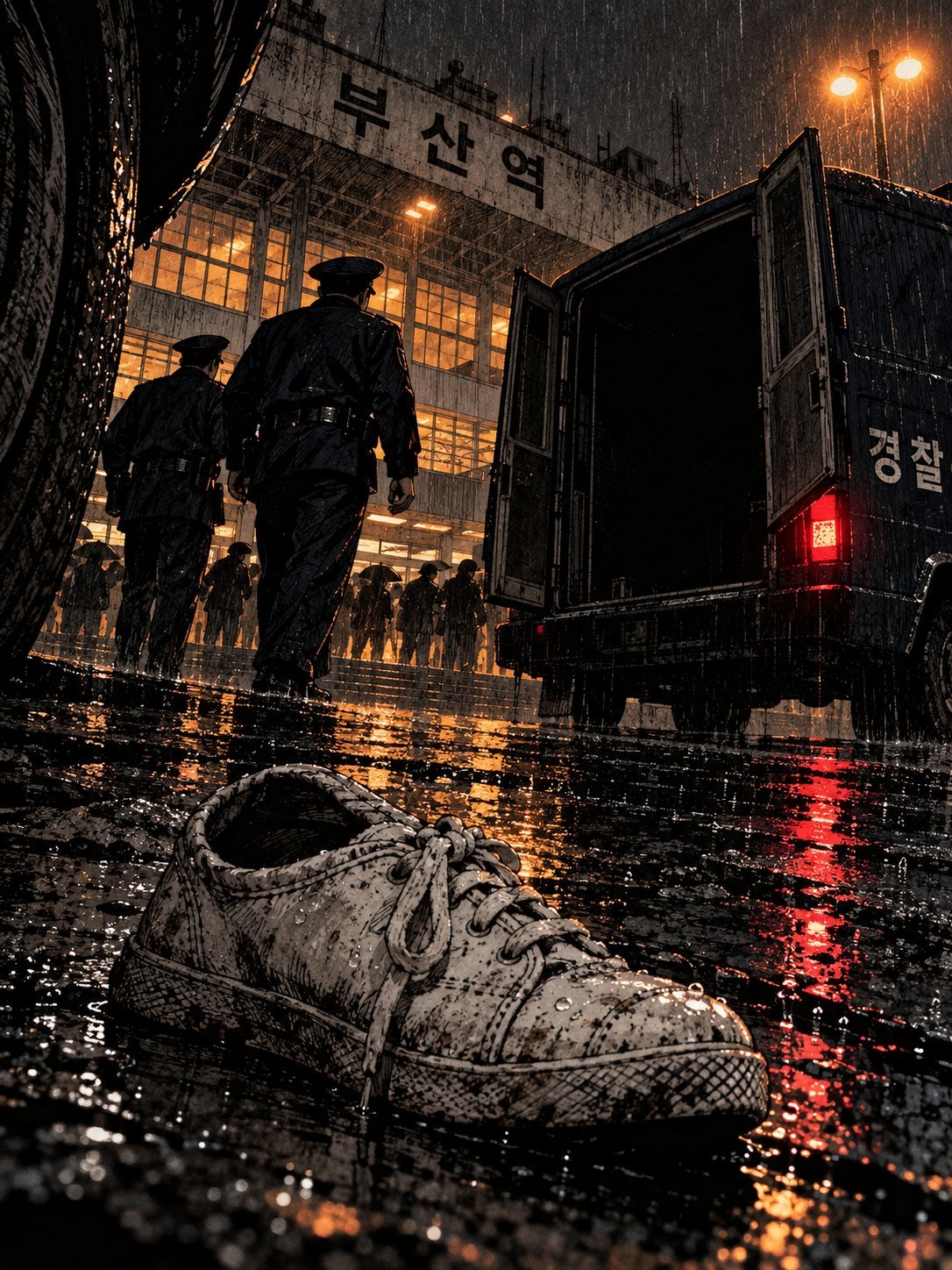
In Busan, a police officer could earn five points for bringing in one “vagrant.”
A petty offender was worth two.
Picture a city street. A police van at the kerb, its back doors open. A small shoe left behind on the wet paving.
Nobody checks an address. Nobody calls a family.
A former Busan police officer later testified that officers sent people in on their own judgment, without checking addresses or guardians.
Police were paid for each person they delivered.
The place they delivered them to was paid by the head too. The state funded its owner by headcount.
The owner’s own son later admitted that his father had bribed police to send people there.
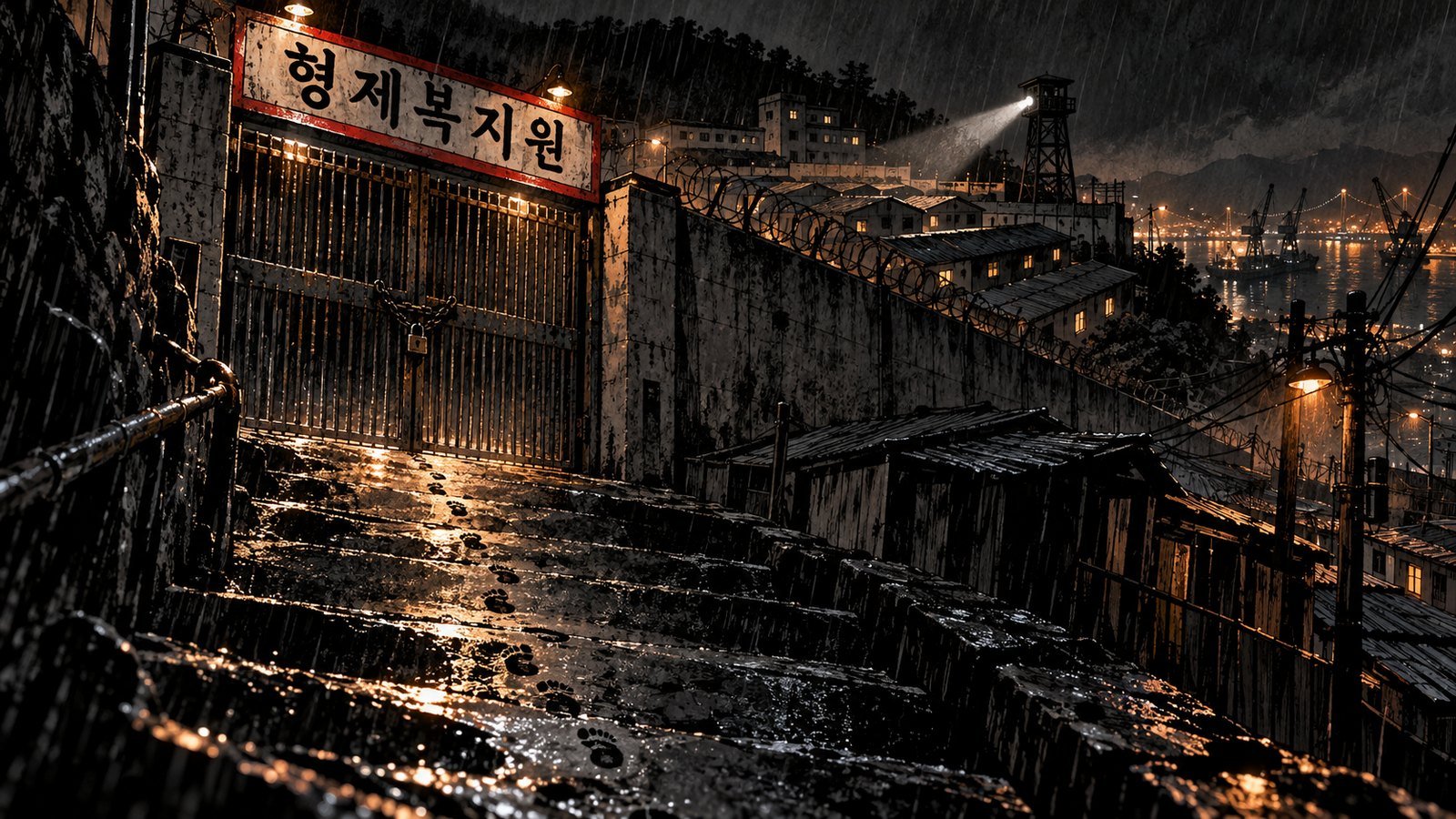
The place was called Brothers Home. On paper, it was a welfare center.
So how did anyone outside ever find out what it really was? (TRC-NL7) (AJ-2025)
A pheasant hunt and a line of prisoners: how Brothers Home was found
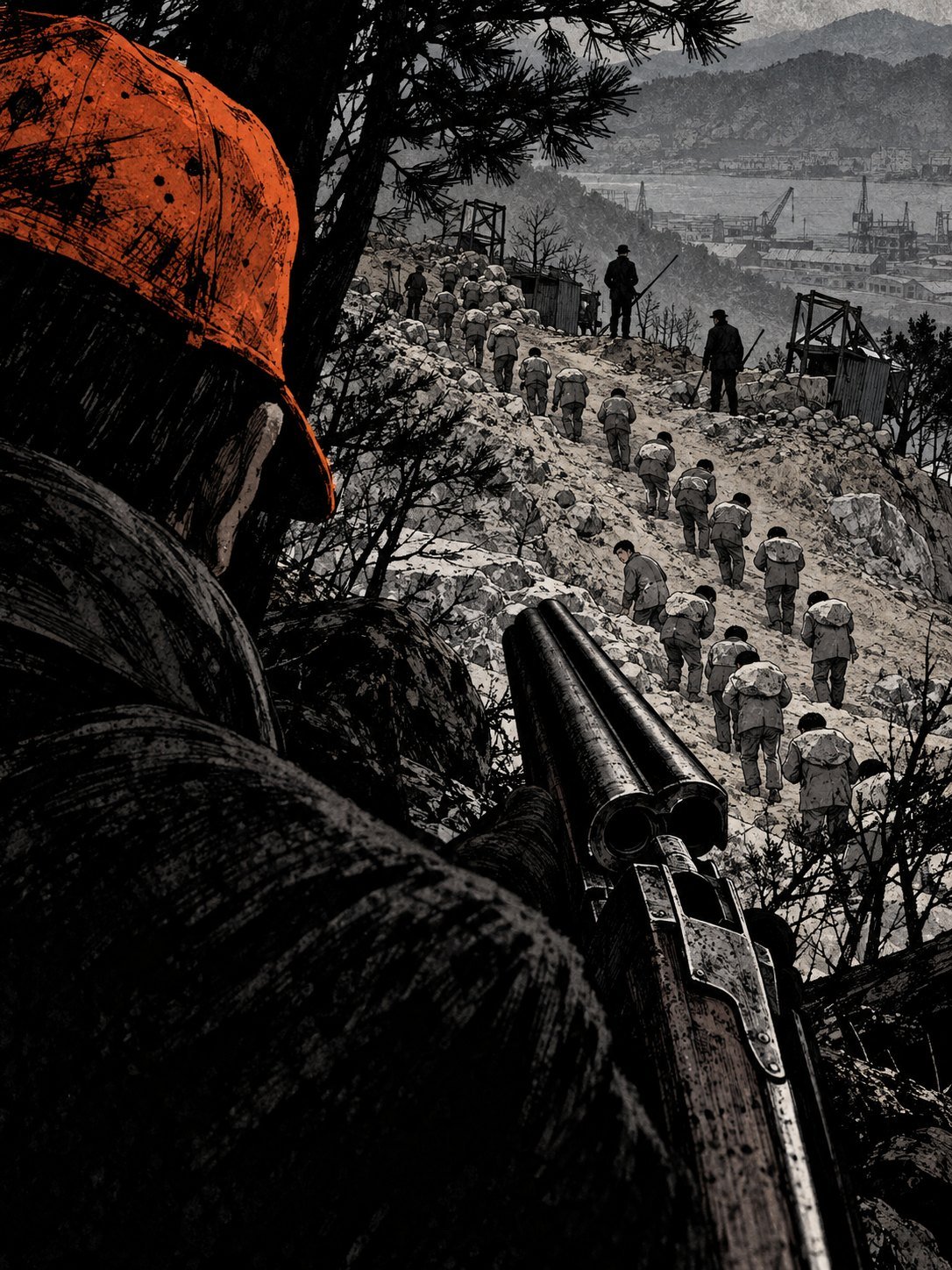
The answer starts with a man carrying a shotgun.
Kim Yong-won was a newly appointed prosecutor in Ulsan. He had gone out pheasant hunting.
On a mountainside, he came on prisoners at work, watched by guards.
He asked what was going on.
The guards told him they were building a ranch for the owner of Brothers Home.
Prisoners. Guards. A private ranch. None of it fit a welfare center.
Kim started asking questions. One account dates the start of his inquiry to December 1986.
Not every source tells it this way. Al Jazeera says rumours and a tip-off led to the raid.
Either way, a door had been pushed open.
It would take decades to count what was behind it. (AP-2016) (WIKI-BH) (AJ-2021-AUS)
At least 657 dead: the Brothers Home toll the state finally admitted
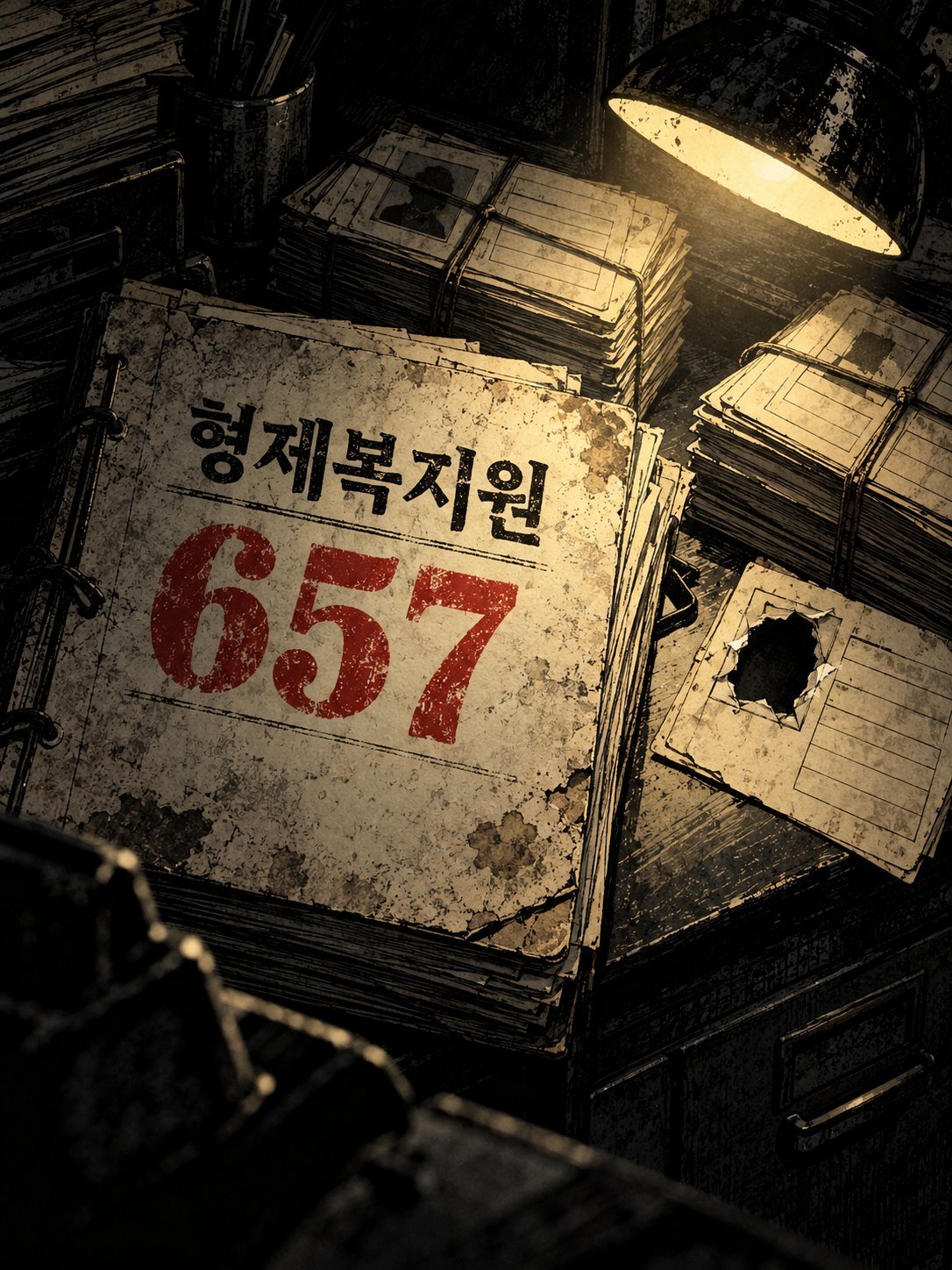
In 2022, a state commission put a number on the dead: 657.
That was the finding of South Korea’s Truth and Reconciliation Commission, announced on 24 August 2022.
It was 105 more deaths than the 552 previously known. The commission pieced them together from 14 sets of records.
The facility’s own records had admitted to 513 deaths from 1975 to 1986.
So the honest way to write it is “at least 657.”
The commission counted the living too. Nearly 38,000 people had been confined there from 1975 to 1986.
And it named who was responsible. Not just one owner.
It called the case “a serious human rights violation caused by the state’s unjust exercise of public power.”
It was the first time in 35 years that a state agency had classed it that way.
To see how the state got hold of all those people, go back to a single sheet of paper. (TRC-NL7) (KH-2022) (ASIAE-2022-657) (AP-2016)
Directive No. 410: the stamp behind Brothers Home
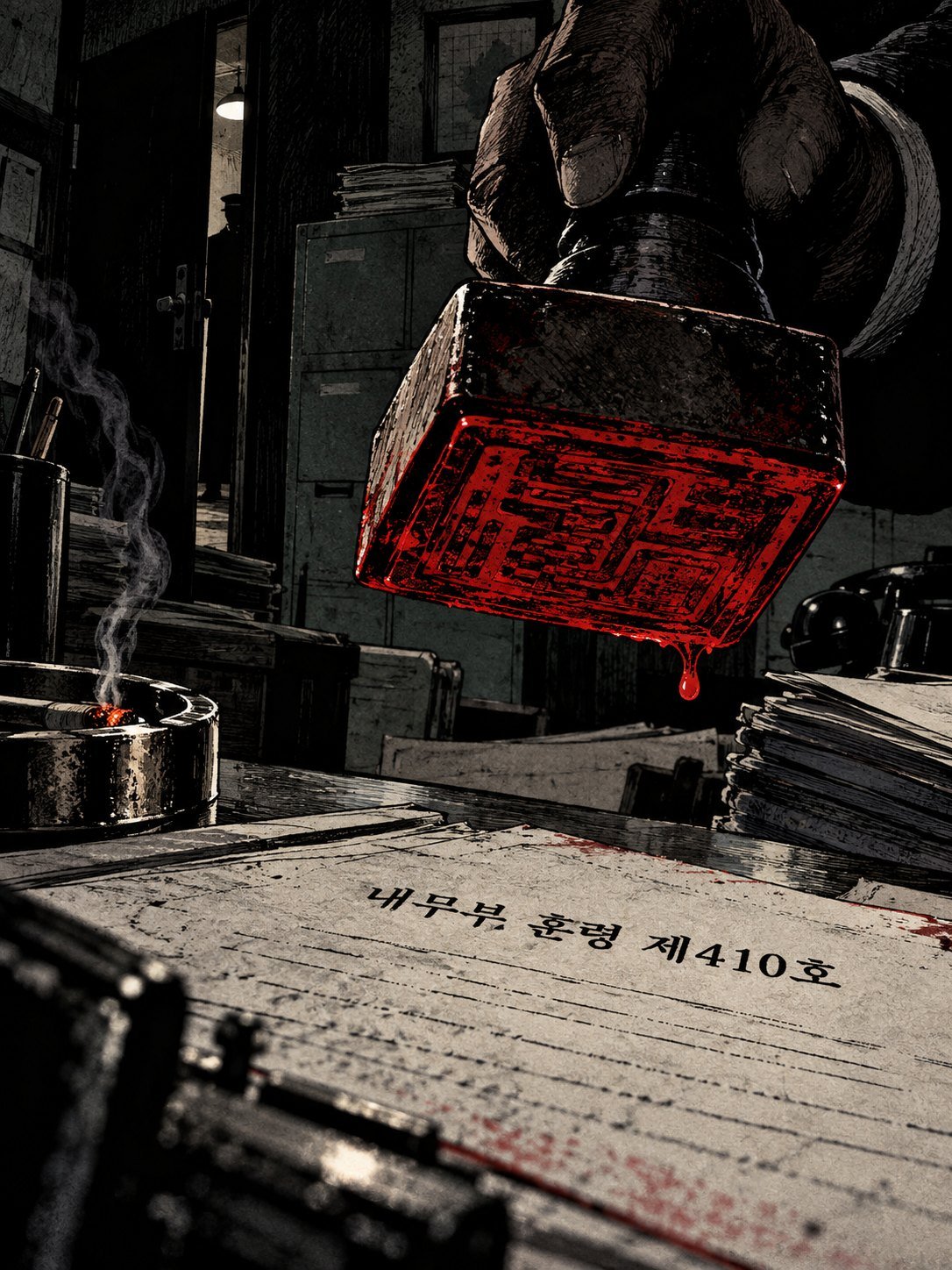
15 December 1975. The Ministry of Home Affairs issues Directive No. 410.
It covered how “vagrants” were to be reported, rounded up, confined and handled.
In practice, it let crackdown squads lock up anyone labelled a vagrant. Indefinitely.
No fixed term. No warrant. No criminal procedure.
It was not even a law. It was an administrative directive.
Busan had already moved. On 25 July 1975, months before the directive, the city signed a custody contract with a private facility to hold and “protect” vagrants.
That facility had opened in 1960 as Brothers Nursery Home. It became Brothers Home in 1969, and in 1979 a social welfare corporation.
After the contract, it moved to Jurye-dong in Busan.
Now it had a city contract and a government order behind it.
All it needed was people. (TRC-NL7) (TF-2026) (WIKI-BH) (NEWSIS-2026) (ASIAE-2022-657)
The patrol-car notebook: who really ended up in Brothers Home

The people came from patrol cars.
Under the police points system, a “beggar” or “vagrant” was worth five points. A petty offender was worth two.
Points add up. Every person picked up was another mark in the book.
Officers decided on their own who counted as a vagrant.
So who was really inside?
Prosecutor Kim Yong-won later estimated that about 90 percent did not meet the government’s own definition of a vagrant.
A 1987 prosecutors’ report went further. Up to 95 percent had been delivered by police. As few as 10 percent were actually vagrants.
Most of the people inside were not who the system said they were.
They were all taken to one address.
And it was enormous. (AJ-2025) (TRC-NL7) (AP-2016) (AJ-2021)
Behind the Brothers Home gate
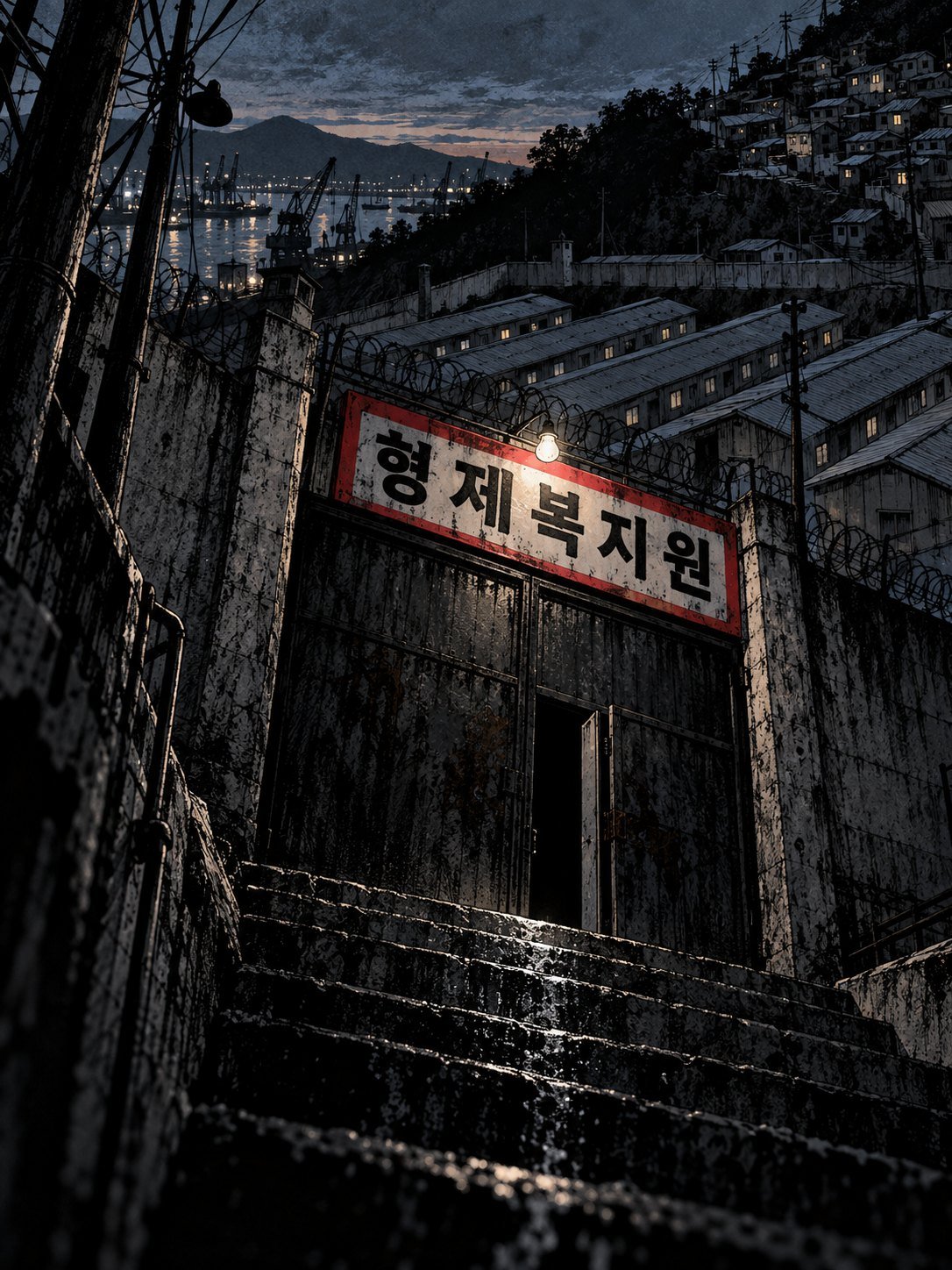
Brothers Home was the largest facility of its kind in South Korea.
By 1986, about 16,000 people were held in 36 such facilities nationwide. Nearly 4,000 of them were at Brothers.
From 1975 to 1986, nearly 38,000 people went through its gate.
The peak came in 1984, with 4,355 people inside.
Its church alone could seat 3,500.
The man in charge was Park In-keun, a former military man and boxer.
He ran the place with an army-style chain of command.
From the outside, it was a welfare center under city contract.
From the inside, it was something else.
And not everyone inside was an adult. (KT-2017) (AP-2016) (TRC-NL7) (KH-2022) (AJ-2021) (AJ-2021-AUS)
The children of Brothers Home

Children were taken in too.
The commission found they were admitted on officials’ subjective judgment.
They were kept out of school.
They were given changed identities.
Their families were kept from contacting them.
A new name on the books, and no way for a parent to get through.
One of those children was a boy of about nine. He was taken in with his older sister, after their father left them at a police station.
His name is Han Jong-sun.
Decades later, he would become one of the loudest voices for the truth.
But first, the round-ups were about to speed up. South Korea had a world stage coming. (TRC-NL7) (AJ-2021)
‘Purify’ the streets: the Olympics behind the Brothers Home round-ups
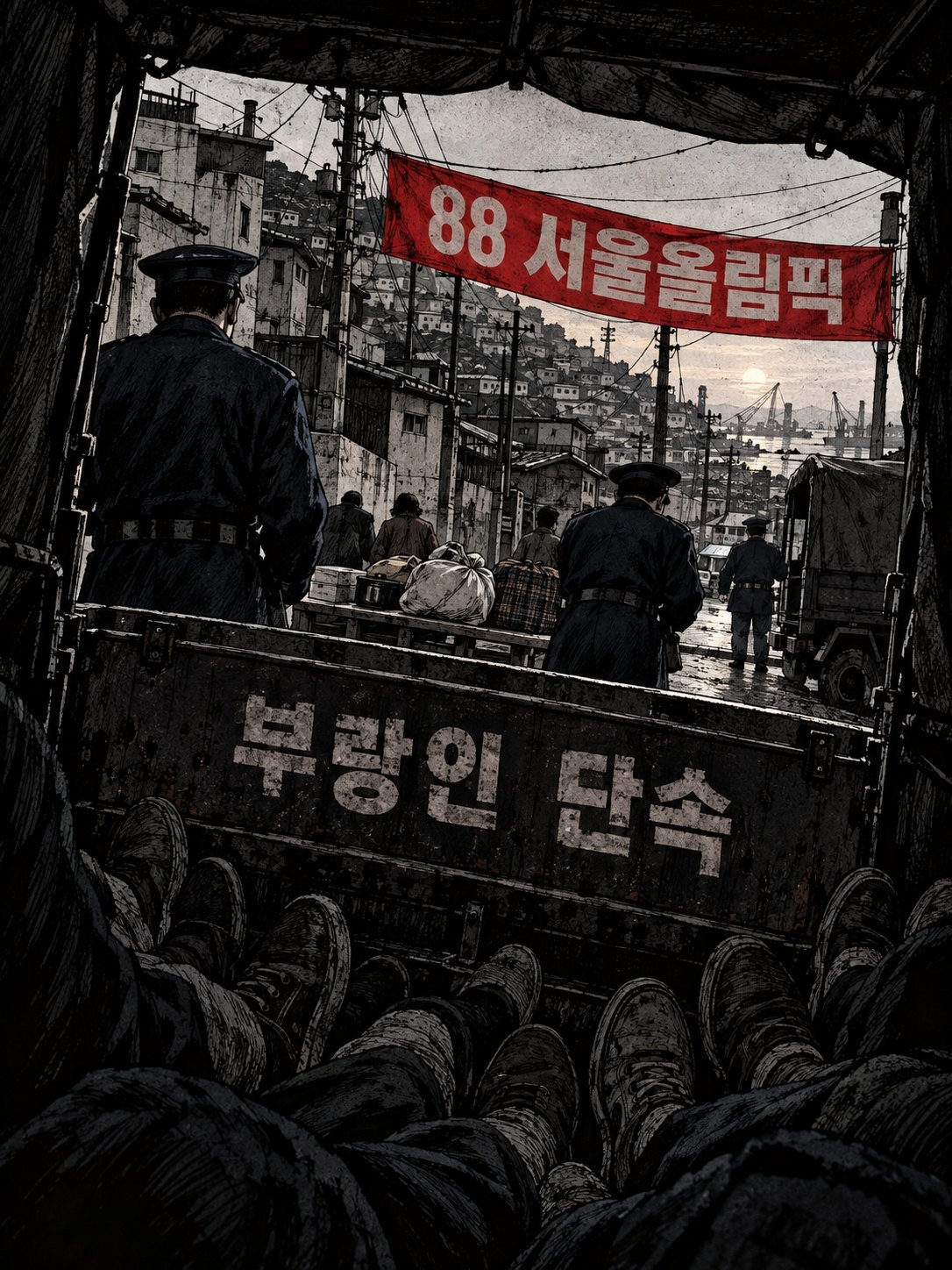
Round-ups were not new. In 1970 alone, authorities rounded up 5,200 “vagrants.”
But in 1981, a presidential directive under Chun Doo-hwan expanded the crackdown on beggars.
More facilities were modelled on Brothers Home.
Then came the big events. Seoul prepared to bid for, and then host, the 1988 Summer Olympics. Al Jazeera also ties the drive to the 1986 Asian Games.
Police and officials were ordered to “purify” the streets.
Han Jong-sun put it plainly years later.
“We were victims of the government’s bid to ‘purify’ the streets ahead of the 1988 Olympics.”
Now the round-ups had a deadline.
And once people were behind the walls, they were put to work. (JAD-2025-SC) (TRC-NL7) (AP-2016) (KT-2022-AP) (AJ-2021)
Unpaid labor in the Brothers Home factories
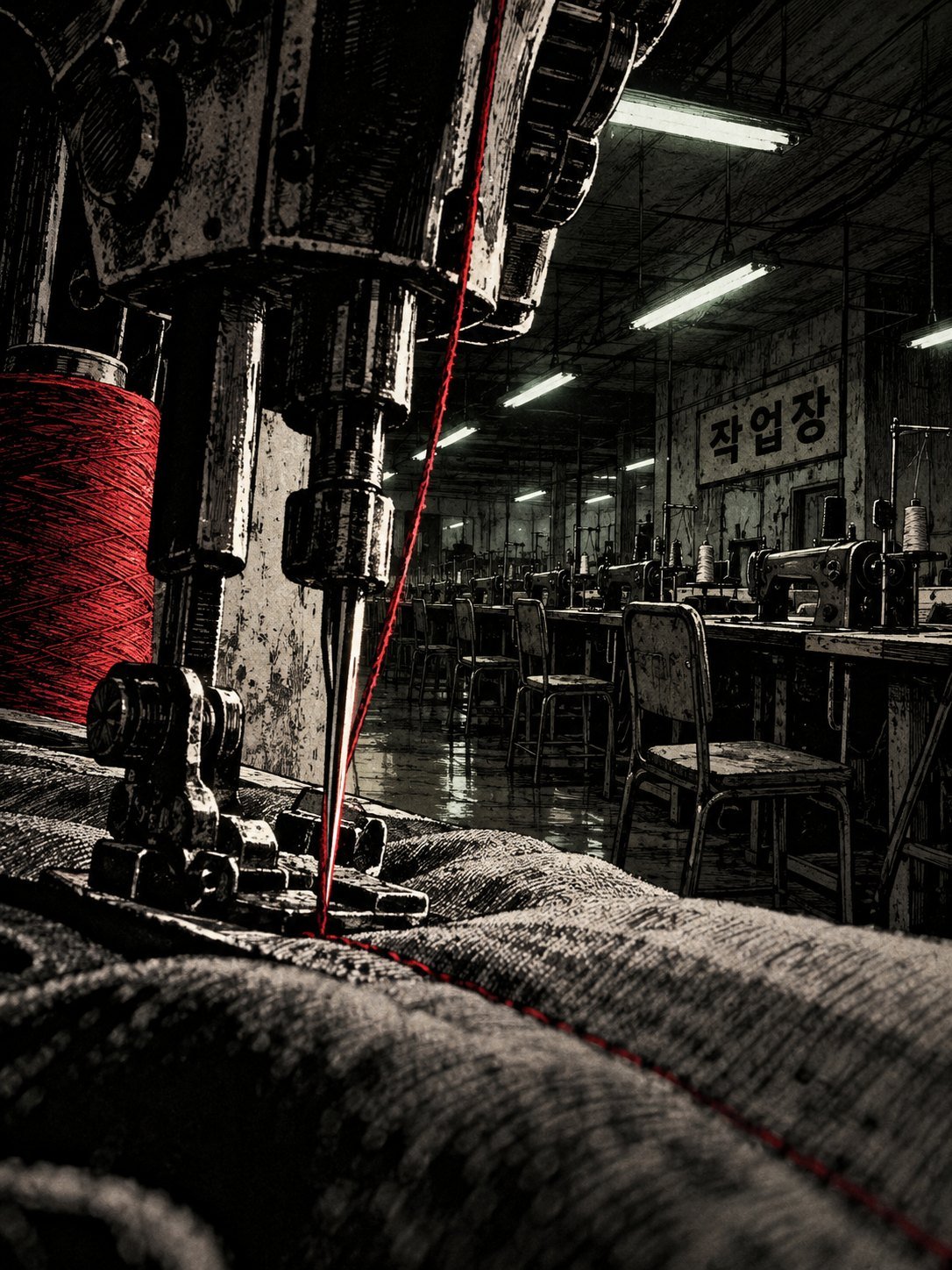
Inside the walls, Brothers ran its own factories.
The workforce was the inmates. Mostly unpaid.
By the end of 1986, eleven of its factories were turning a profit. Wikipedia mentions as many as 20 in all.
The work did not stop at the walls. The prisoners Kim Yong-won saw on that mountainside were building a ranch for the owner.
The commission later listed forced labour among its findings.
Documents indicate Brothers should have paid the equivalent of about US$1.7 million to more than 1,000 inmates.
It did not.
Inmates’ wages were supposed to be set aside for them as savings.
That is where the numbers start to go missing. (AP-2016) (WIKI-BH) (TRC-NL7)
The Brothers Home ledger: where the wages went
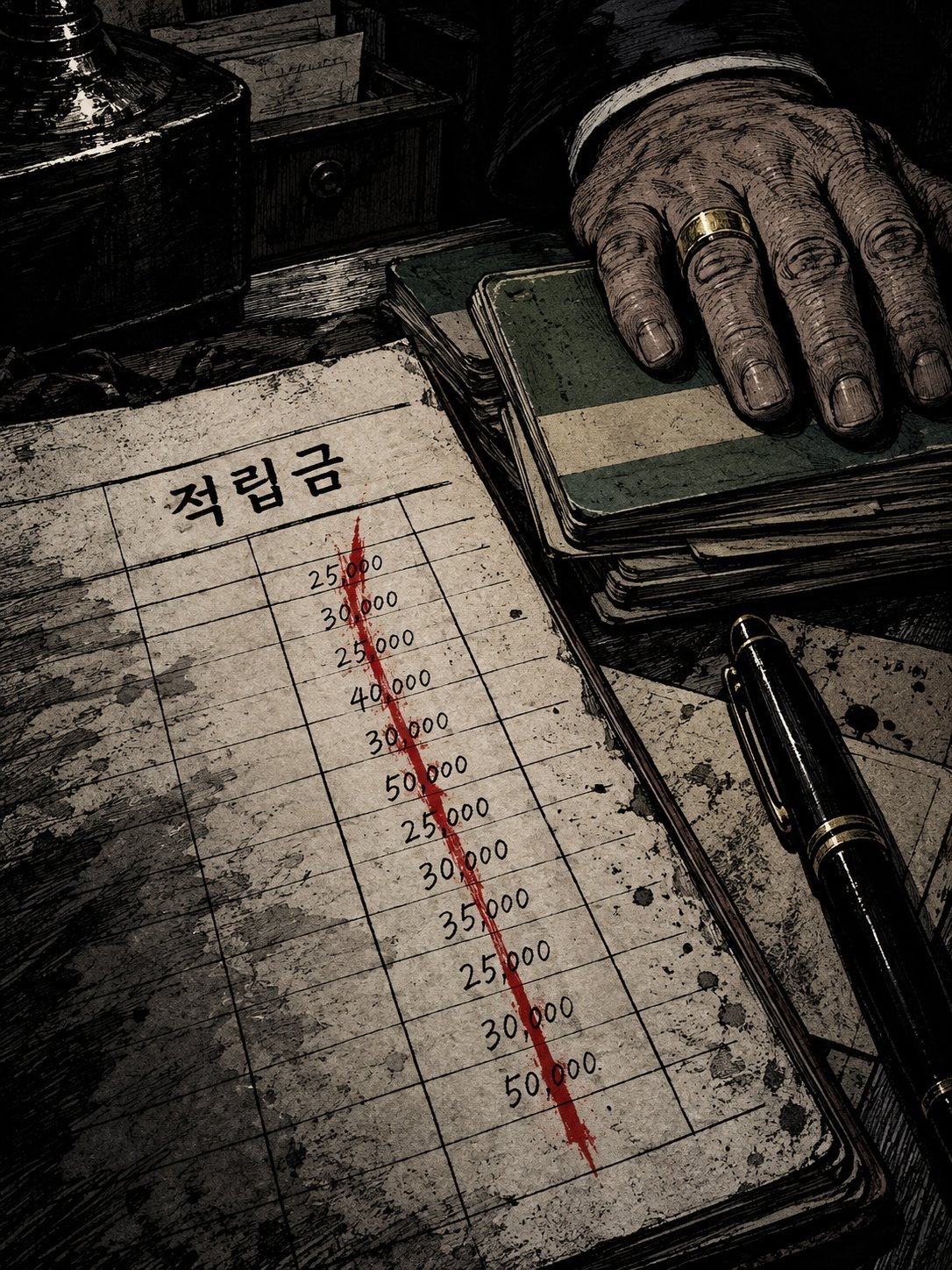
Look at the books for 1986.
The average wage deposit per person: 550,819 won.
The average amount paid out: 204,729 won.
The gap: 346,090 won per person.
The Truth and Reconciliation Commission found the wage savings had been embezzled.
Public money was going missing too. The state funded Park by headcount, and in 1985 and 1986 alone he embezzled millions from government subsidies.
Every new inmate meant more money coming in.
Very little of it went back out.
But wages were not the only thing the facility handled in bulk.
Its drug order was stranger still. (TRC-NL7) (ASIAE-2022-657) (AP-2016) (AJ-2025)
250,000 tablets: ‘chemical restraint’ at Brothers Home
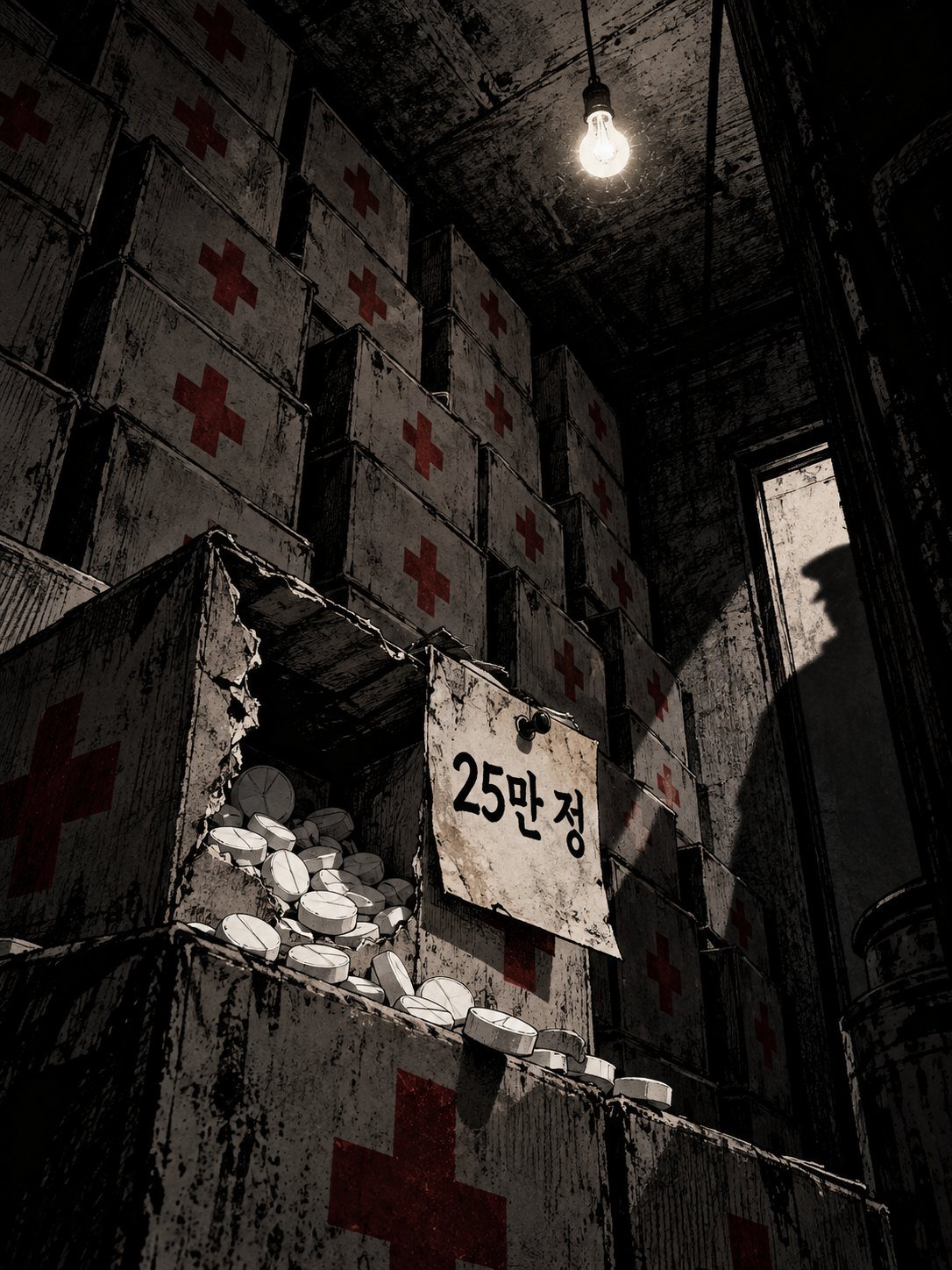
In 1986, the facility bought 250,000 tablets of chlorpromazine.
That was enough for 342 people to take twice a day for a whole year.
The commission had a name for it: “chemical restraint.”
Its findings did not stop there. Forced labour. Assault. Sexual violence. Deaths. Disappearances.
Those are short words. Behind each one are real people, many of them still alive.
The facility also had a psychiatric ward. It kept running until August 1992.
A building full of people who should never have been there.
A drug order big enough for hundreds of them.
And some of them did not leave alive. (TRC-NL7) (ASIAE-2022-657) (KH-2022) (KT-2025-ADOPT)
Death certificates and a death rate 13 times higher
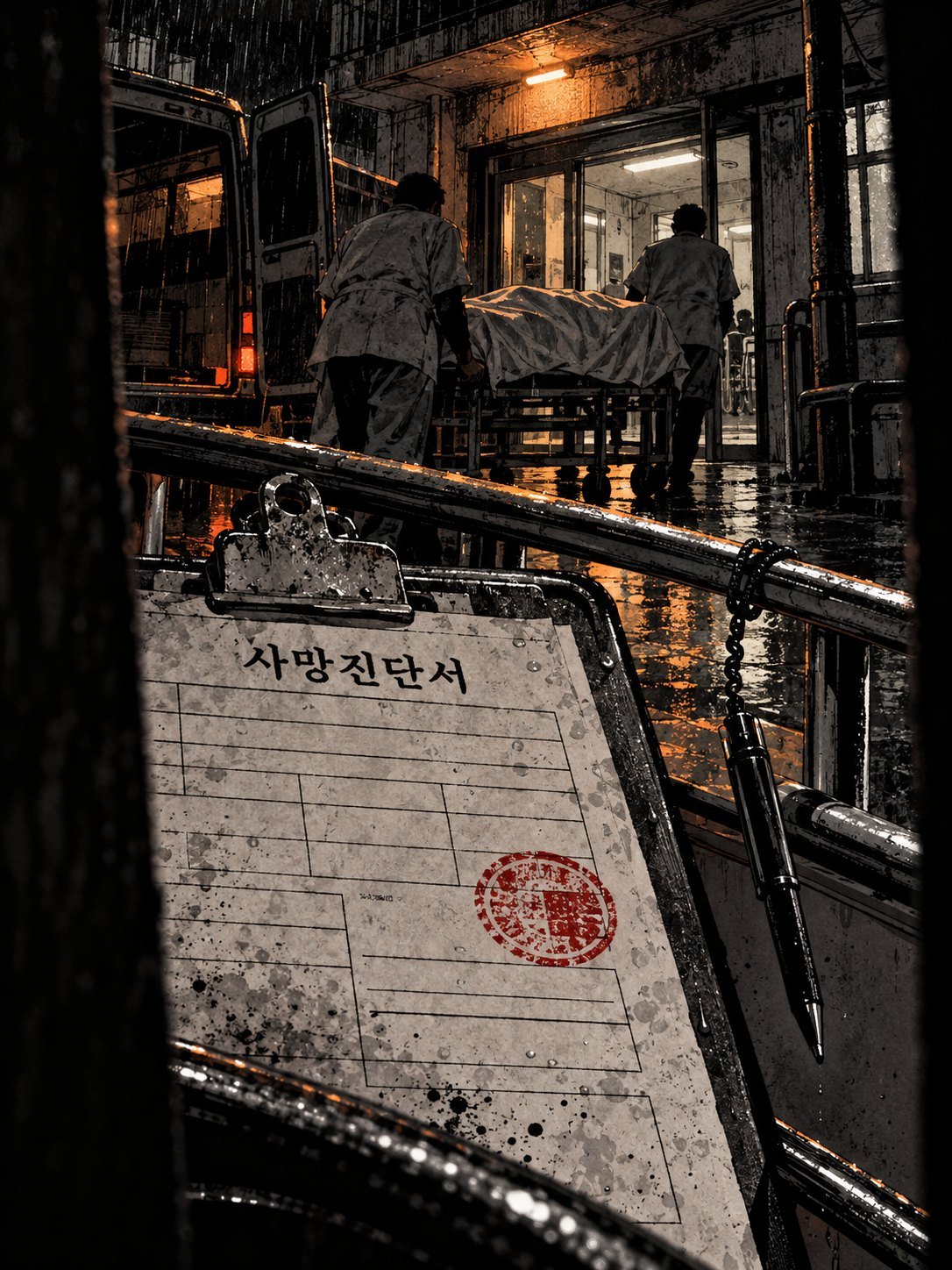
In 1986, 135 inmates died.
That was a death rate of 4.30 percent, about 13.5 times the general rate of 0.318 percent.
For tuberculosis, the gap was 29.2 times.
The commission found the handling of the dead suspicious.
Some inmates were “dead on arrival” at hospitals.
Some death certificates were fabricated.
A form. A stamp. A file closed.
From the outside, the paperwork looked in order.
But one man had already tried to tell the outside world.
It did not go the way he hoped. (TRC-NL7) (ASIAE-2022-657)
The Brothers Home petition that sent its writer to prison
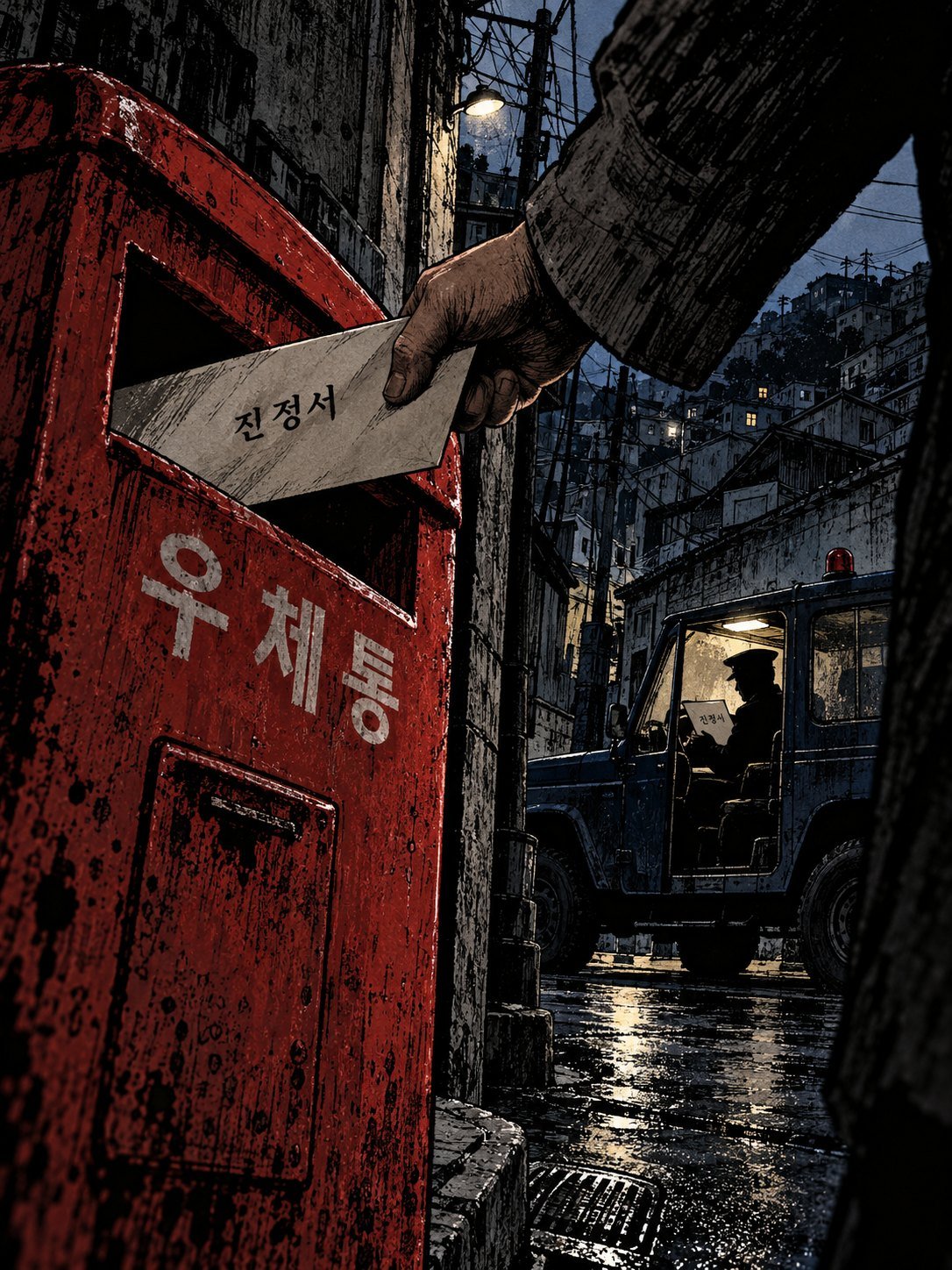
In 1982, a petitioner reported abuse at Brothers Home.
He was the one who got arrested.
He was sentenced to prison.
The state was not in the dark about the place. It used it.
On 8 May 1986, the Defense Security Command approved “Operation Applause” to monitor a 29-year-old repatriated fisherman held at the Home.
The government also kept 15 public-security offenders there under the Social Safety Act.
Years later, the head of the Truth and Reconciliation Commission, Jung Geun-sik, said the state had “ignored pleas” from inmates.
For years, nothing changed.
Then the prosecutor from the hunting trip came back.
This time he brought police. (TRC-NL7) (ASIAE-2022-657) (KT-2022-AP)
The raid on Brothers Home and the cash in the safe
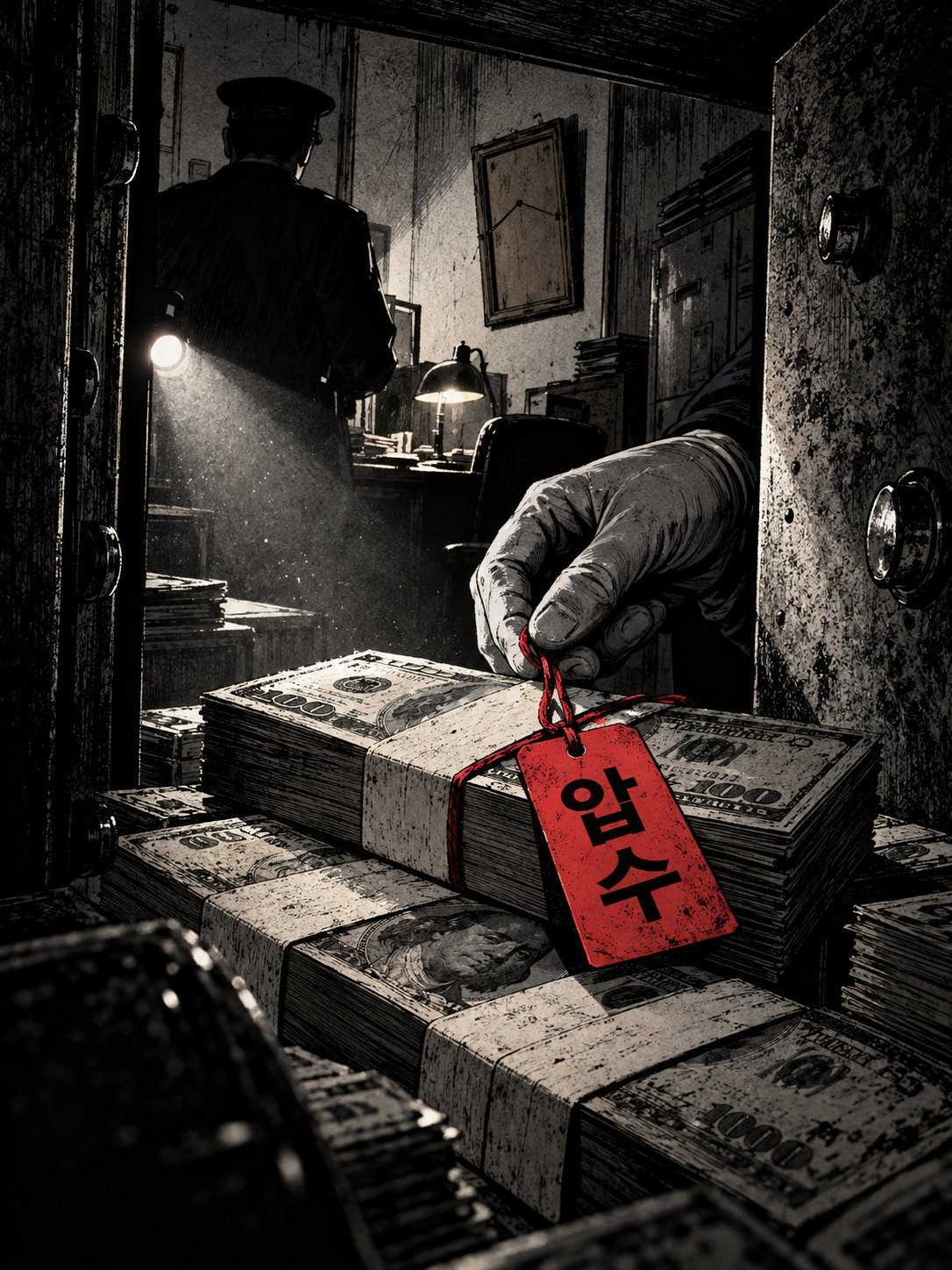
January 1987. Kim Yong-won and 10 police officers raided Brothers Home.
Wikipedia dates the start of the search and seizure to 16 January.
Foreign currency was seized, including US and Australian dollars, worth about $5.5 million in today’s money.
Wikipedia also reports a bank receipt for 2 billion won in Park’s safe.
Park In-keun was arrested that month.
It should have been the start of a full investigation.
It was not. Kim later said senior officials blocked his probe.
He said the orders came from Chun Doo-hwan’s office, which feared an international incident before the Olympics.
The case was being kept small.
Then the inmates made their own move. (AP-2016) (AJ-2021-AUS) (WIKI-BH) (TRC-NL7) (KT-2022-AP)
Through the wire: the 1987 Brothers Home escape
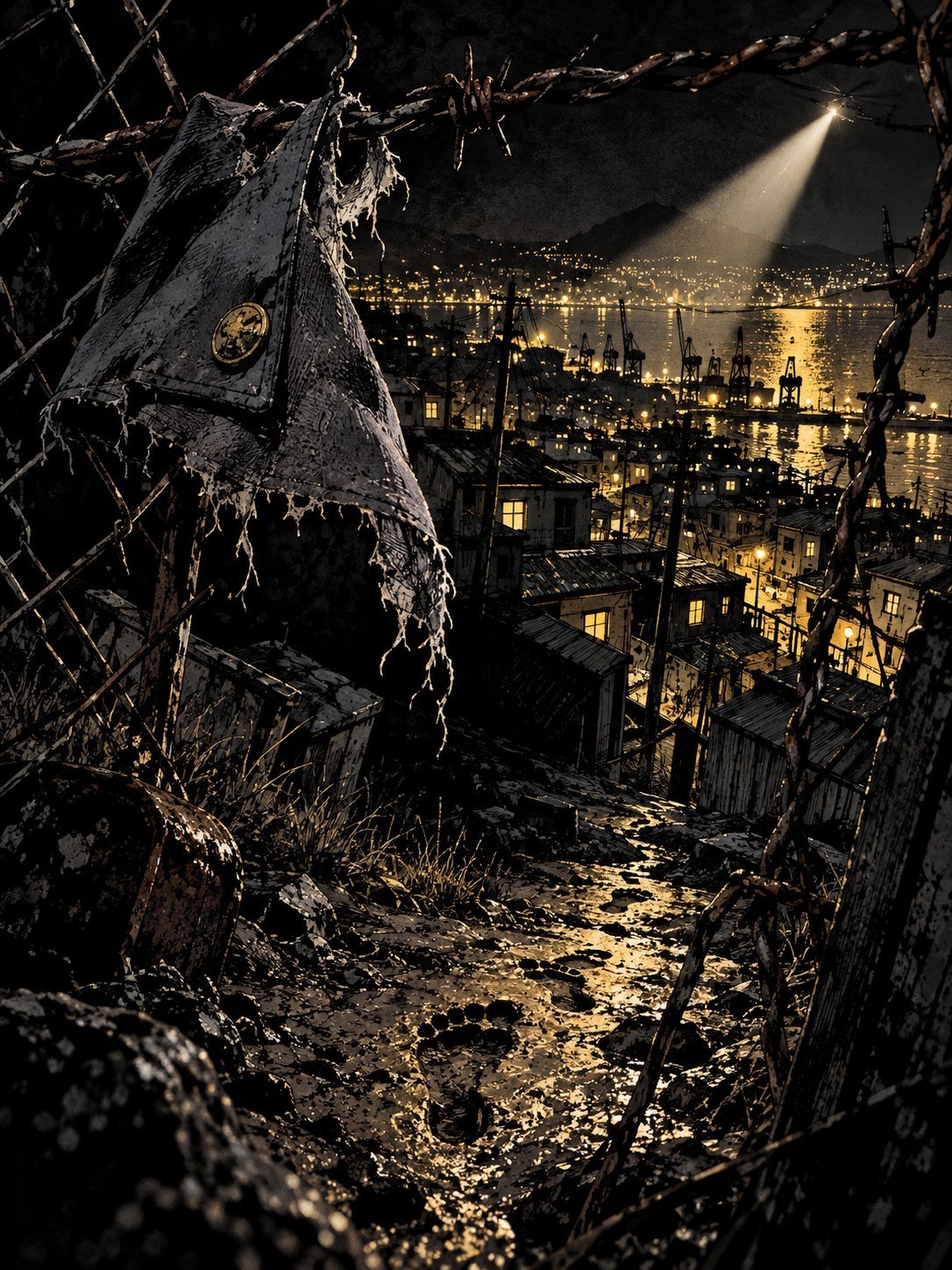
March 1987. A group of inmates broke out together.
The commission’s main text says about 30. Its timeline says 35.
They did not just run. They went to the press.
Two days later, senior officials met to discuss reforming the Home.
But reform was not the same as the truth.
The commission later found that Busan city agencies, the police and the state security agency all downplayed and concealed the case.
The main facility closed in 1987 or 1988, depending on the source.
The people who escaped had told their story.
Now a court had to decide what Park was guilty of.
It would take seven rulings to get an answer. (TRC-NL7) (ASIAE-2022-657) (KH-2022) (KT-2023) (KT-2025-ADOPT)
From 10 years to 2½: the Brothers Home sentence that shrank

On 23 June 1987, the Ulsan District Court convicted Park on all charges.
Prosecutors had sought 15 years. He got 10, plus a fine of 681 million won.
Then the case went back and forth between courts. Seven rulings in all.
On 8 March 1988, the Supreme Court cleared him of illegal confinement. Its reasoning: he had acted under Directive 410.
The same order that let squads lock people up now protected the man who held them.
On 15 March 1989, the Daegu High Court cleared him of all confinement charges.
His sentence: two and a half years, for embezzlement and related offences. The Supreme Court made it final in July 1989.
His convictions were for embezzlement and for breaking construction, grassland-management and foreign-currency laws.
Not one was for locking people up.
And after prison, Park went back into the welfare business. (WIKI-BH) (TRC-NL7) (AJ-2021-AUS) (AJ-2021) (AP-2016)
A golf range in Sydney: following the Brothers Home money
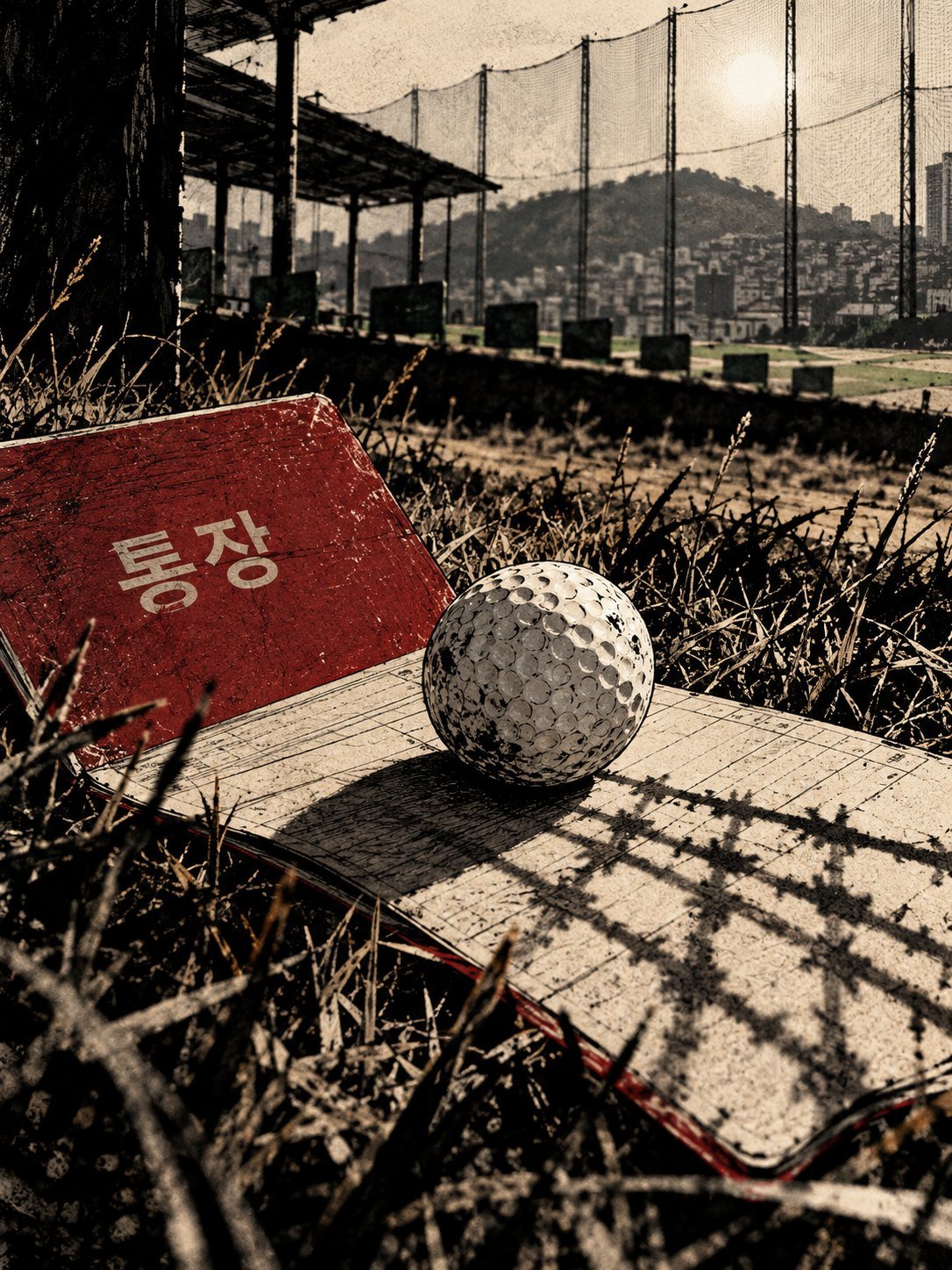
On 21 December 1992, Park returned as the facility’s CEO.
In 1995 he registered a company in Australia called Job’s Town.
Months later, it bought a golf driving range and sports complex in Milperra, Sydney, for A$1.4 million.
A survivor says the money came from Brothers Home.
From 2019, the property was listed for sale at A$11 million.
In 2014, Park and his son were charged over embezzlement at a later facility, Siloam. The son got three years. Park’s case was suspended because of his dementia.
Park died in 2016, never convicted of confining anyone. Survivors are seeking US$40 million from his family.
In 2025, in a Netflix documentary, his son Park Cheong-gwang apologised. Al Jazeera called it the first formal apology from the Park family.
Long before that apology, one survivor had started standing outside parliament.
Alone. (TRC-NL7) (AJ-2021-AUS) (KT-2022-AP) (KT-2025-NETFLIX) (AJ-2025)
One man, one placard: Han Jong-sun’s Brothers Home protest

2012. A man stands in front of the National Assembly in Seoul, holding a placard.
It is Han Jong-sun, the boy who was taken in at about nine.
He kept up his one-person protest for about a year.
That same year, his story became a book, Surviving Child, co-written with Jeon Gyu-chan and Park Rae-gun.
Special-act bills came and died in committee. One in 2014, with 53 sponsors. Another in 2016, with 72.
Survivors shaved their heads in April 2015. That December, Han began a hunger strike.
In April 2016, an AP investigation took the story to an international audience.
In September 2017, survivors walked about 500 km from Busan to Seoul. On 6 November they began a sit-in at the National Assembly.
A year later, the institution that had let Park slip finally spoke.
In tears. (AJ-2021) (KT-2017) (WIKI-BH) (PRESSIAN-2018) (AP-2016)
The prosecutor general’s tears: an apology for Brothers Home
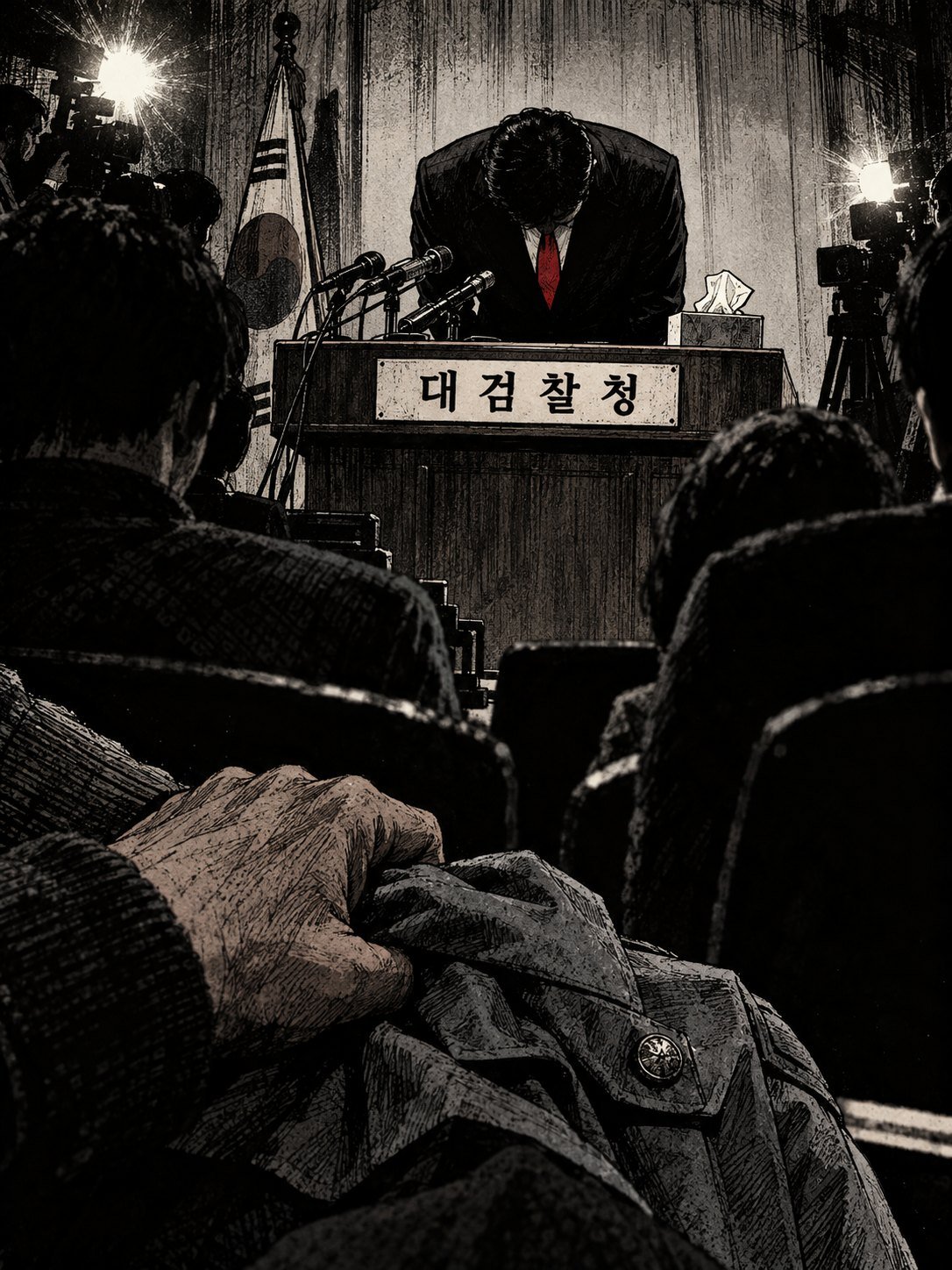
27 November 2018. Prosecutor General Moon Moo-il stands before the survivors.
He apologises, in tears, for the botched 1987 investigation.
“This was a process that cannot be described as democracy,” he said.
He asked the Supreme Court to reopen Park’s acquittal through an extraordinary appeal.
On 11 March 2021, the Supreme Court said no. It found no legal error.
But it said inmates had been deprived of the “highest constitutional value, which is their dignity as humans.”
By then a new Truth and Reconciliation Commission had launched. Brothers Home was its very first case.
Its 2022 findings called Directive 410 unconstitutional and illegal, and recommended a formal state apology.
Survivor Lee Chae-sik said: “Our country has been waiting for us to die.”
And one part of the story was still hidden in the files. (TRC-NL7) (SCMP-2018) (WT-2021) (KH-2022) (KT-2022-AP)
Sent abroad: the Brothers Home adoption files
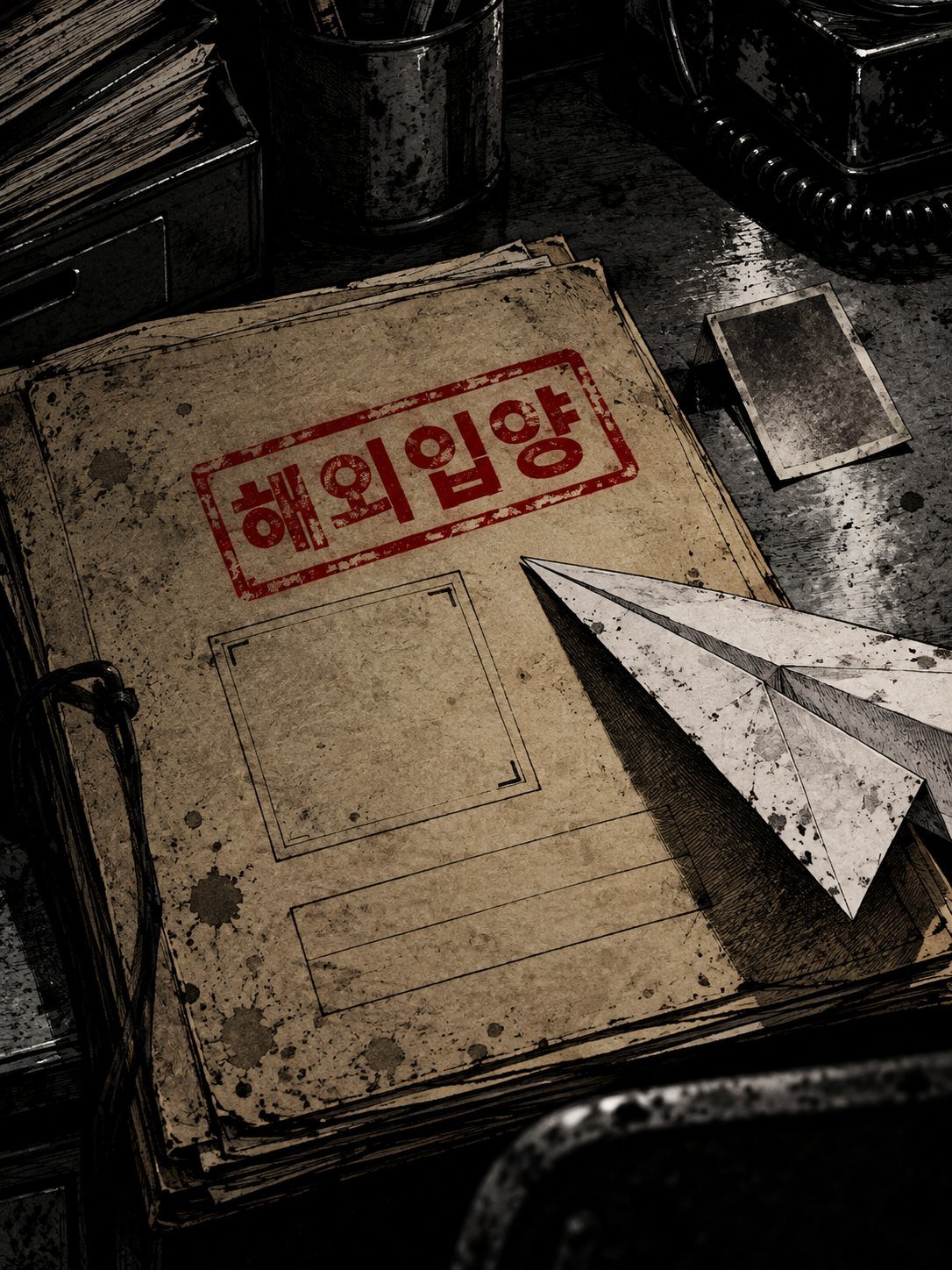
January 2025. The commission confirmed that at least 31 children had been improperly sent overseas for adoption through Brothers Home.
It identified 17 of their birth mothers, and found 130 more people who had been admitted.
Adoption consent notices were posted by a Seoul district office, not in Busan. Often after the adoption had already begun.
A 2019 AP investigation had found 19 cases with direct evidence and at least 51 more with indirect evidence.
One adoptee, Ju-rye Hwang, was named after the Jurye-dong neighbourhood by Park himself.
In January 2025 she was told she had suffered “gross human rights violations.”
A DNA test matched her to a brother adopted to Belgium in 1986.
In October 2025, President Lee Jae Myung apologised for the overseas adoption programme, calling it a “shameful chapter.”
Apologies were piling up.
But in the courts, the state was still fighting the survivors. (KT-2025-ADOPT) (AJ-2025) (KT-2022-AP)
Appeals withdrawn: where the Brothers Home case stands now

On 21 December 2023, a Seoul court held the state liable for the first time. It set 80 million won for every year of detention.
The state kept appealing.
From March to July 2025, the Supreme Court dismissed its appeals in seven Brothers Home cases without a full hearing. The first final award came in March 2025.
On 5 August 2025, Justice Minister Jung Sung-ho ordered the appeals withdrawn. At that point, 652 victims had 111 suits pending.
By 12 September, 49 Brothers Home cases covering 417 victims had been dropped. Jung called it “the government’s way of acknowledging the human rights violations.”
In November 2025, the Supreme Court ruled that the state is liable even for confinement before Directive 410.
In July 2026, a court held Busan city jointly liable for the first time. On 7 August 2026, President Lee apologised to victims in person and named Brothers Home.
By September 2026, courts had ordered about 214.8 billion won. Some survivors have already lost their payouts to fraud or pressure. A special act still has not passed.
A third Truth and Reconciliation Commission began work in July 2026. It will investigate Brothers Home again.
The official count still says “at least 657.” The files are open again. (KT-2023) (NEWSSEOUL-2025) (WIKI-BH) (LAWTIMES-2025) (ASIAE-2025-AUG) (ASIAE-2025-SEP) (JAD-2025-SC) (NEWSIS-2026) (KH-2026-LEE) (KT-2026-LEE) (TF-2026) (JAD-2026-LOST)
Case notes: Brothers Home, Busan
Brothers Home (형제복지원) was a privately run facility in Busan, South Korea, funded by the state to hold people labelled “vagrants.” South Korea’s Truth and Reconciliation Commission found that nearly 38,000 people were confined there between 1975 and 1986 and that at least 657 died (TRC-NL7) (KH-2022). Its owner, Park In-keun, served two and a half years (TRC-NL7) (AP-2016).
Timeline
| When | What happened |
|---|---|
| 20 Jul 1960 | Facility founded (TRC-NL7) |
| 25 Jul 1975 | Busan signs a custody contract for “vagrants” (TRC-NL7) |
| 15 Dec 1975 | Home Ministry Directive No. 410 issued (TRC-NL7) |
| 1984 | Population peaks at 4,355 (TRC-NL7) (KH-2022) |
| Jan 1987 | Prosecutors raid the facility (AP-2016) (WIKI-BH) |
| June 1987 | Park sentenced to 10 years at first instance (WIKI-BH) (TRC-NL7) |
| 1989 | Final sentence: two and a half years (TRC-NL7) (AP-2016) |
| 27 Nov 2018 | Prosecutor General apologises in tears (TRC-NL7) (SCMP-2018) |
| 11 Mar 2021 | Supreme Court rejects the extraordinary appeal (WT-2021) |
| 2022 | Truth and Reconciliation Commission finds state responsibility, 657 deaths (TRC-NL7) (KH-2022) |
| 21 Dec 2023 | First court ruling holding the state liable (KT-2023) |
| 5 Aug 2025 | Justice Ministry orders appeals withdrawn (ASIAE-2025-AUG) (NEWSSEOUL-2025) |
| 7 Aug 2026 | President Lee apologises personally to victims (KH-2026-LEE) (KT-2026-LEE) |
| Sept 2026 | Courts have ordered about 214.8bn won for 858 victims; no special act yet (TF-2026) |
Where the records disagree
| Detail | What sources say |
|---|---|
| Death toll | 657 (Truth and Reconciliation Commission, 2022); 513 in the facility’s own records; 551 or 552 in earlier counts (TRC-NL7) (AP-2016) (KT-2017) |
| Years covered | 1975–1986, 1975–1987 or 1976–1987, depending on the source (TRC-NL7) (JAD-2025-SC) (AJ-2025) |
| How it was found | A prosecutor saw labourers while hunting, or a tip-off and rumours led to the raid (AP-2016) (AJ-2021-AUS) |
| Closure | 1987 or 1988 for the main facility; a psychiatric ward ran until 1992 (KT-2023) (KT-2025-ADOPT) (TRC-NL7) |
| March 1987 escape | About 30, or 35 in the commission’s timeline (TRC-NL7) |
| Compensation | About 122.8bn won paid (March 2026) vs 214.8bn won ordered (Sept 2026); these measure different things (ASIAE-2026-APR) (TF-2026) |
What we still don’t know
- How many of the dead have never been identified, or where all of them were buried.
- How much of the facility’s money ended up overseas.
- Whether a special act will ever pass, and whether Busan city or the police will formally apologise.
- What the third Truth and Reconciliation Commission will find.
Case file summary
- What: State-funded detention of people labelled “vagrants” in a private facility, with forced labour, abuse and deaths
- Where: Busan, South Korea
- When: Mainly 1975–1987
- Toll: Nearly 38,000 confined; at least 657 dead (Truth and Reconciliation Commission)
- Status: Owner served 2½ years and died in 2016; state found responsible; compensation cases ongoing; no special act as of September 2026
Illustrations are artistic interpretations, not photos. No real person has a recognizable face.
Sources
- TRCK Newsletter Vol. 7 (Brothers Home findings)
- State panel confirms massive rights violations at Busan confinement facility – Korea Herald/Yonhap (24 Aug 2022)
- Past Korean governments blamed for abuses, deaths at facility – Korea Times/AP (24 Aug 2022)
- ‘Korean Auschwitz’ death toll 657… – Asia Economy (24 Aug 2022)
- AP: South Korea covered up mass abuse, killing of “vagrants” – CBS/AP (19 Apr 2016)
- S. Korean court upholds acquittal in abusive facility case – Washington Times/AP (11 Mar 2021)
- South Korea’s top prosecutor makes tearful apology – SCMP (Nov 2018)
- Surviving South Korea’s house of horrors – Al Jazeera (22 Dec 2021)
- Secrets of South Korea’s house of horrors hidden in Australia – Al Jazeera (10 Dec 2021)
- A woman’s search for a lost childhood in South Korea – Al Jazeera (15 Nov 2025)
- Victims of S. Korea’s dark history still searching for justice – Korea Times (28 Jun 2017)
- Brothers Home: Prosecutor General considering apology – Pressian (20 Nov 2018, Korean)
- Court orders state compensation for Brothers Welfare Center victims – Korea Times (21 Dec 2023)
- TRC confirms 31 children sent overseas for adoption through infamous Brothers Home – Korea Times (22 Feb 2025)
- 법무부, 형제복지원·선감학원 국가배상소송 상소취하 – NewsSeoul (5 Aug 2025, Korean)
- State to Withdraw Appeals in Brothers Home Compensation Lawsuits – Asia Economy (5 Aug 2025)
- All 52 State Compensation Cases Withdrawn – Asia Economy (14 Sep 2025)
- Netflix’s ‘The Echoes of Survivors’ spurs global outrage – Korea Times (1 Sep 2025)
- 형제복지원 사건과 불법 해외재산환수에 관한 단상 – Law Times (25 Oct 2025, Korean)
- Top court rules that victims of pre-1975 ‘vagrant’ crackdowns should also be compensated – Korea JoongAng Daily (13 Nov 2025)
- 형제복지원 대법원 판결 – YTN (13 Nov 2025, Korean)
- 형제복지원 대법원 파기환송 – Insight (Nov 2025, Korean)
- Busan City to start accepting applications for support funds – Asia Economy (29 Jan 2024)
- Incheon court dismisses Brothers Home claim – Insight (8 Mar 2026, Korean)
- State compensation paid in historical cases – Asia Economy (29 Apr 2026)
- 형제복지원 피해자들, 국가·부산시 상대 손배소 일부 승소 – Newsis (31 Jul 2026, Korean)
- Lee becomes first president to personally apologize to victims of individual cases – Korea Herald (7 Aug 2026)
- Lee pledges to remedy damage caused by state violence – Korea Times/Yonhap (7 Aug 2026)
- Constitutional Court refers Brothers Home ‘mental damages only’ case to full bench – Asia Economy (11 Aug 2026)
- 국가폭력 인정됐지만 배상은 각자 소송…형제복지원 특별법 ‘제자리’ – The Fact (11 Sep 2026, Korean)
- They survived state abuse and won compensation. Then they lost it all. – Korea JoongAng Daily (12 Sep 2026)
- Brothers Home – Wikipedia via Wikiwand (cross-check only)