Lights Over Tehran: The 2026 UFO Video and the 1976 Jet Chase Fifty Years Before
| 2026 sighting | September 20, 2026, about 7:30 p.m., near Tehran’s Azadegan Expressway; videos from Mashhad reported by one outlet |
| Footage | 14-second phone clip of low, multicolored lights; distributed by Reuters Connect but not verified; quality too poor to identify the object |
| Official response | No public statement from Iranian authorities |
| 1976 incident | September 19, 1976; two F-4 Phantom intercepts; instrument, radio and weapons-panel failures reported; no missile fired |
| Key documents (1976) | U.S. message to the Joint Chiefs and DIA evaluation (1976), Mooy memo (1976), Shields MIJI article (1978) |
| Key witnesses (1976) | Air traffic controller Hossein Pirouzi; pilots Yadollah Nazeri and Parviz Jafari |
Fourteen seconds of lights hanging over Tehran
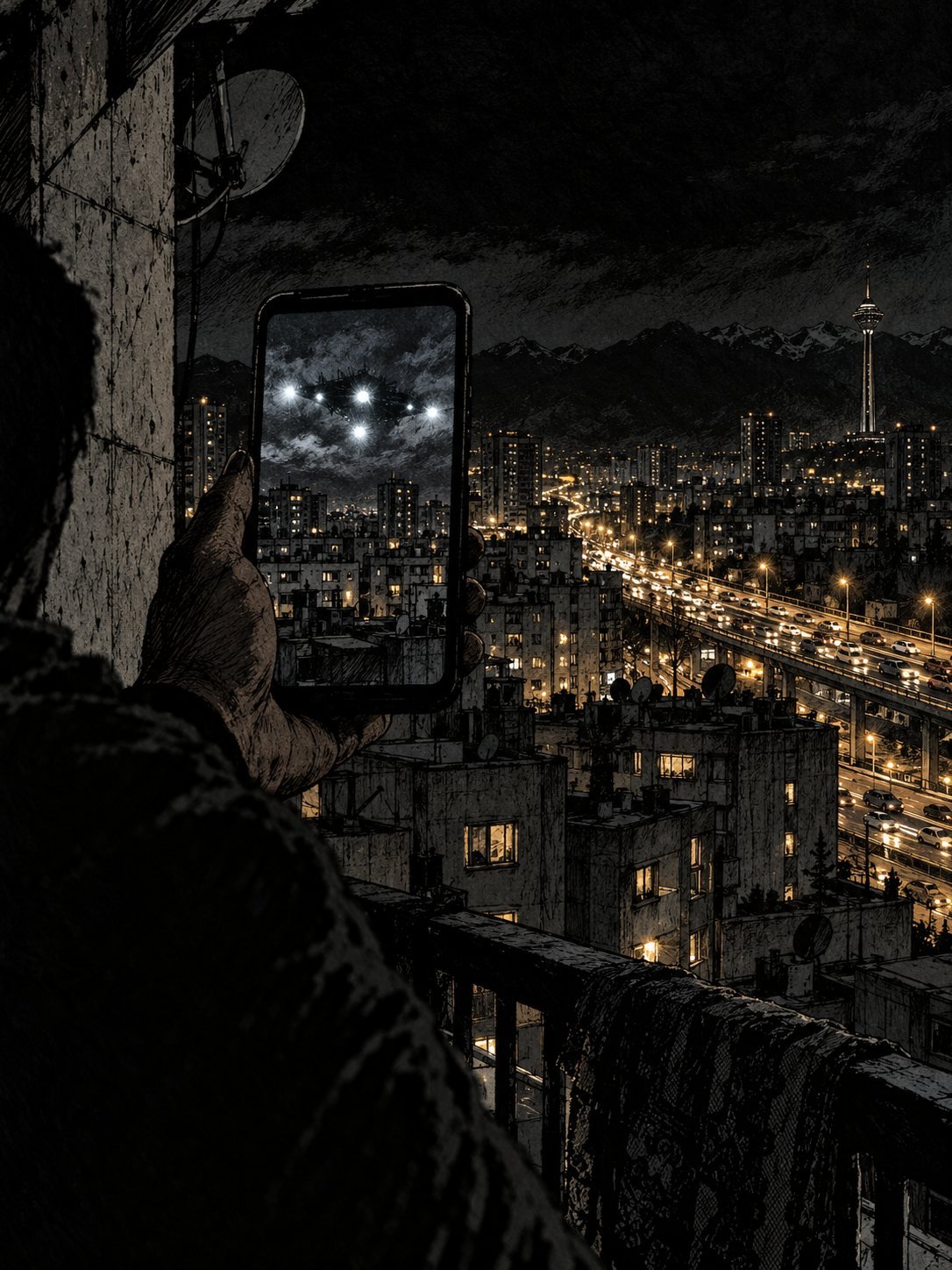
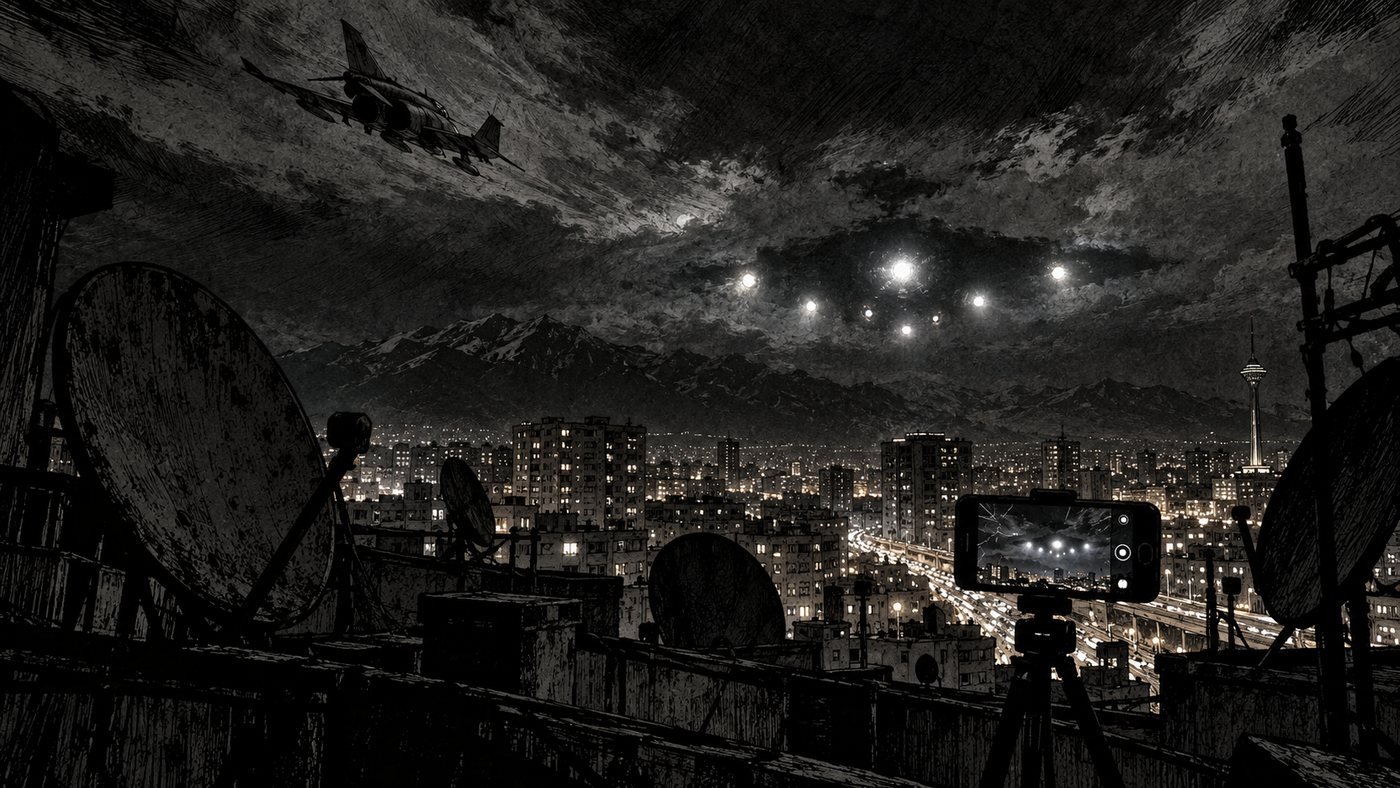
September 20, 2026, around 7:30 in the evening. Someone near Tehran’s Azadegan Expressway held up a phone and started recording.
In the sky was a cluster of multicolored lights, low over the city. The clip runs 14 seconds.
The person filming later said they left, came back about 10 minutes later, and the lights were gone.
That could have been the end of it. Strange lights get filmed all the time.
But this clip was picked up and passed around, and eventually distributed by Reuters Connect, a service that supplies footage to news outlets. The clip had been supplied by an agency called StringersHub. It came with an unusual warning. Reuters said it had not verified the video. The object’s size, altitude, distance and speed were all unconfirmed.
In other words, a major news agency was sharing a video while admitting it could not say what was in it.
And Tehran was not the only city filming the sky that night. (Cybernews)
The same night, more videos from a city far away
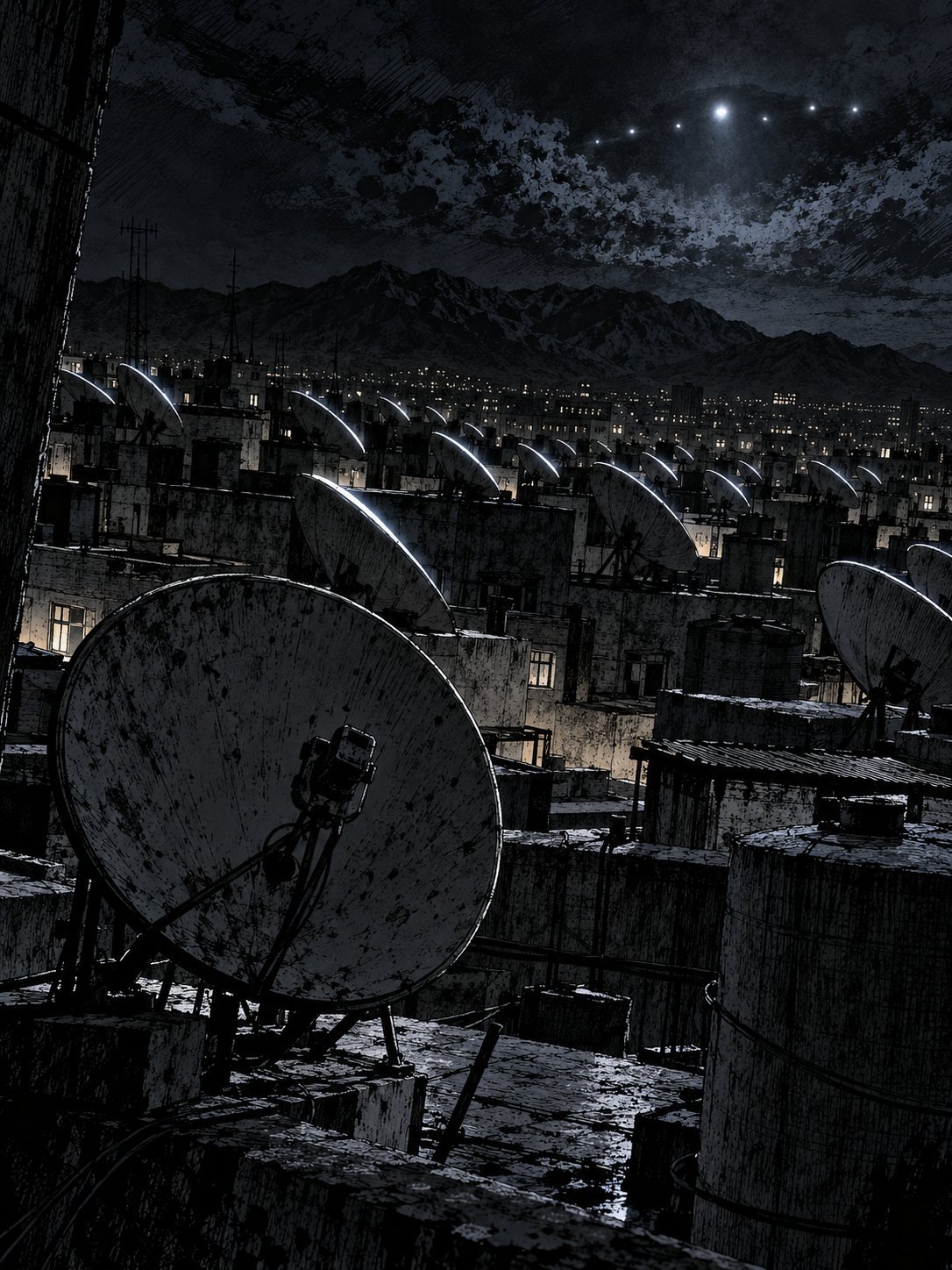
The same night, more videos appeared. According to the news site bne IntelliNews, they came from Mashhad.
Mashhad is Iran’s second-largest city, in the far northeast of the country, hundreds of miles from Tehran.
If the same lights had been seen in both cities, that would be a big deal. It would mean either something very high and very large, or several things at once.
But here the reporting gets thin. Most outlets covered Tehran only. ThePrint, for example, did not mention Mashhad at all.
No one has shown that the Mashhad videos showed the same thing. No one has even confirmed they were filmed that night.
Whether Mashhad saw anything at all is still on the list of things nobody can answer.
Two cities, maybe. One clip, definitely. And very quickly, a lot of noise. (bne IntelliNews)
The clips spread fast. The government said nothing
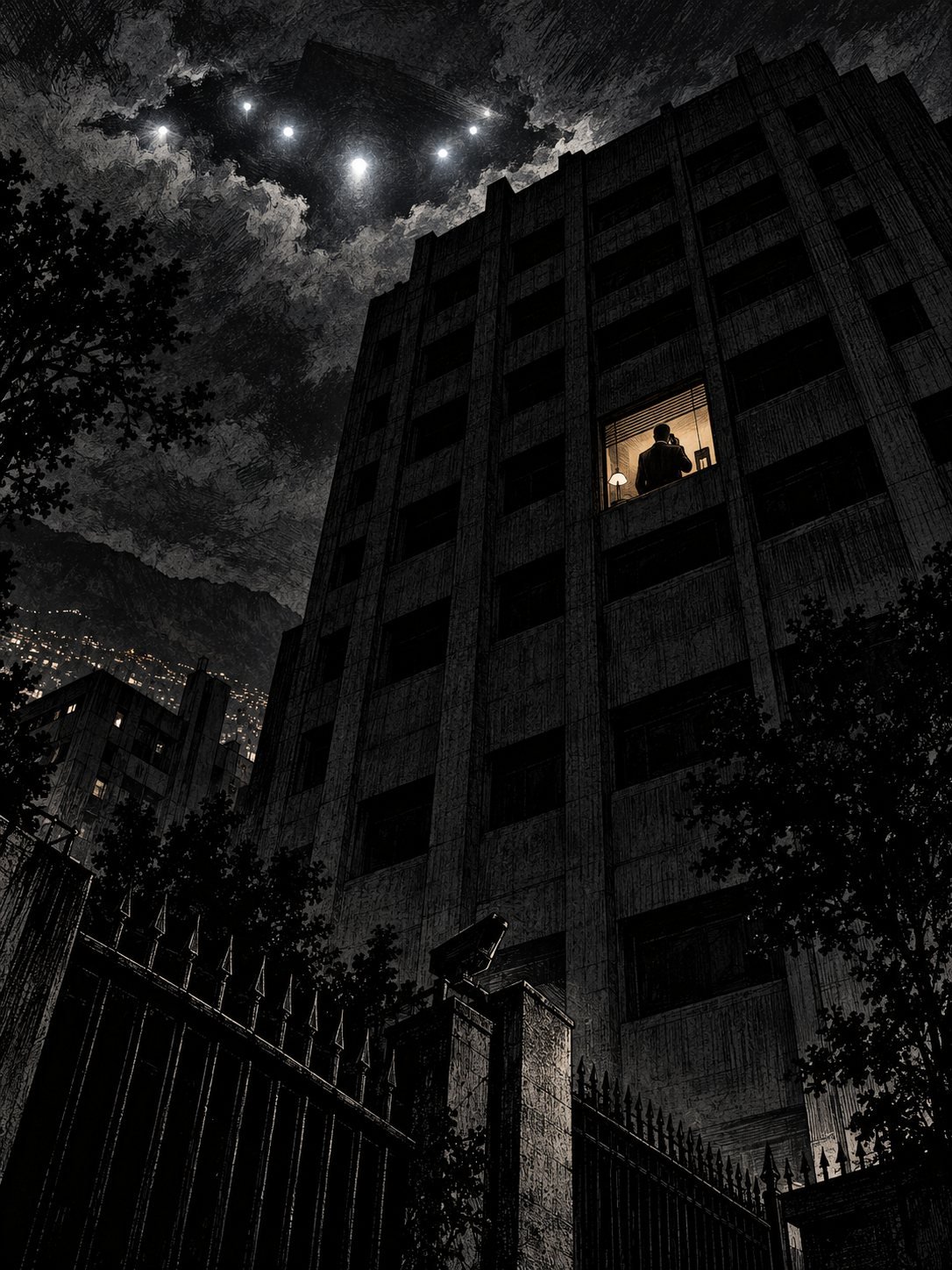
Within hours, the clips were all over social media.
Coverage in the international press began on September 21, the next day. Headlines asked whether a UFO had appeared over Tehran.
Iranian authorities said nothing.
No air force spokesperson explained it. No airport said what had been on its radar. No ministry commented.
Here, there was silence, in a year when the skies over Iran were already a source of worry. By September 24, reporting noted that Iranian authorities still had not identified the object.
There was no radar data made public. No flight-tracking data. No statement about whether anything had been in the air at that time.
For the people who had filmed the lights, and the many more who watched the clips, there was no official answer to compare against.
So the internet filled the gap on its own. (Israel Hayom)
Drones, a kite, or a secret aircraft?
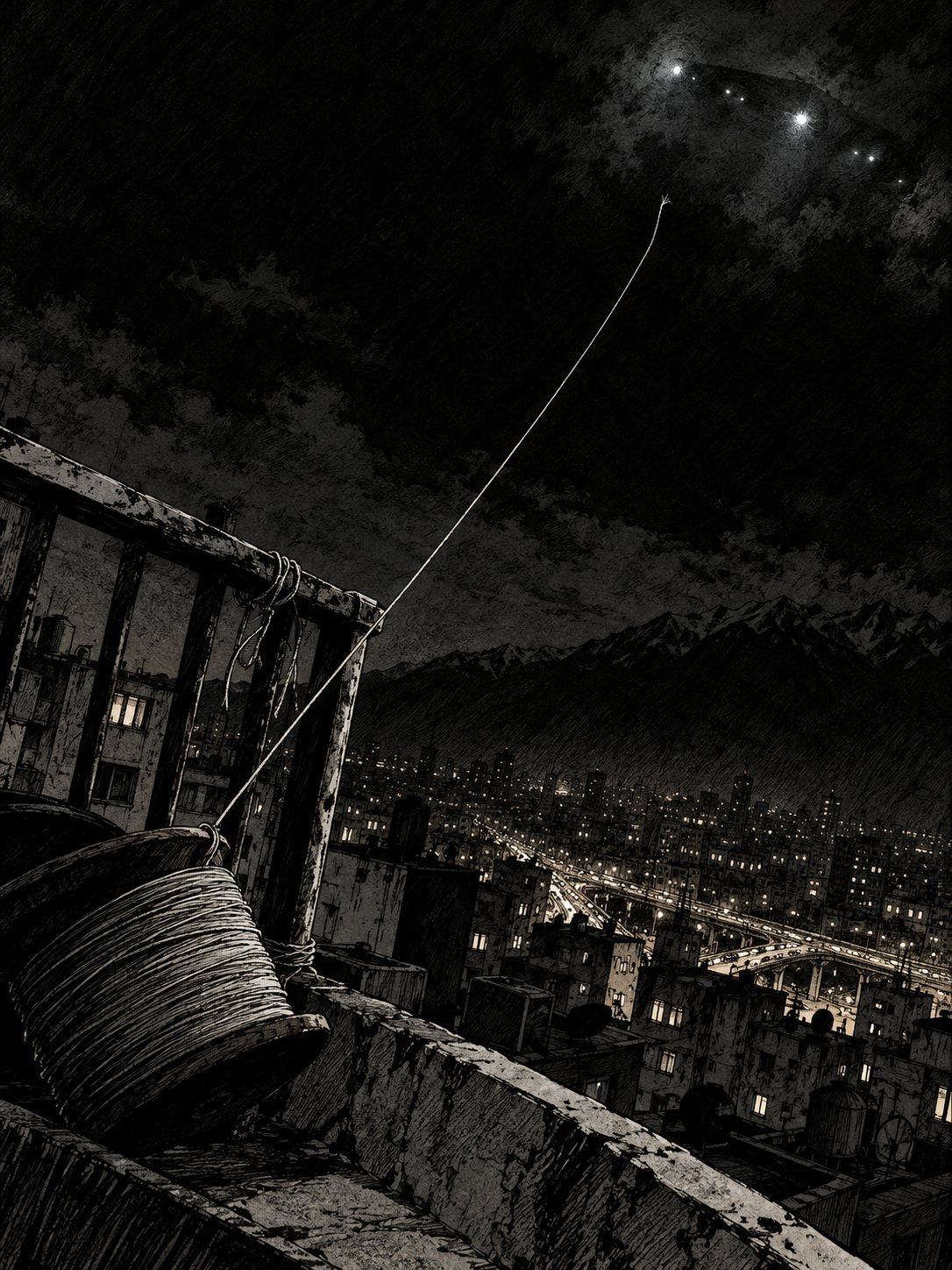
Online, everyone had a theory.
Some said it was drones flying in formation. Light shows using hundreds of small drones are now common at big events, and they can hold a shape in the sky for a long time.
Others said it was an LED kite, a kite fitted with small lights, flown at night from a rooftop or park.
Some suggested balloons. Others went bigger, and suggested a secret American aircraft.
One outlet, IBTimes UK, noted that the lights resembled consumer drones.
Each theory has its own logic. Each has its own problem. A kite needs wind and someone holding the string. A drone formation needs an operator and usually a reason.
None of these theories was confirmed. But one of them made people far more nervous than the others. (Cybernews)
In a tense year, a light in the sky was not a joke
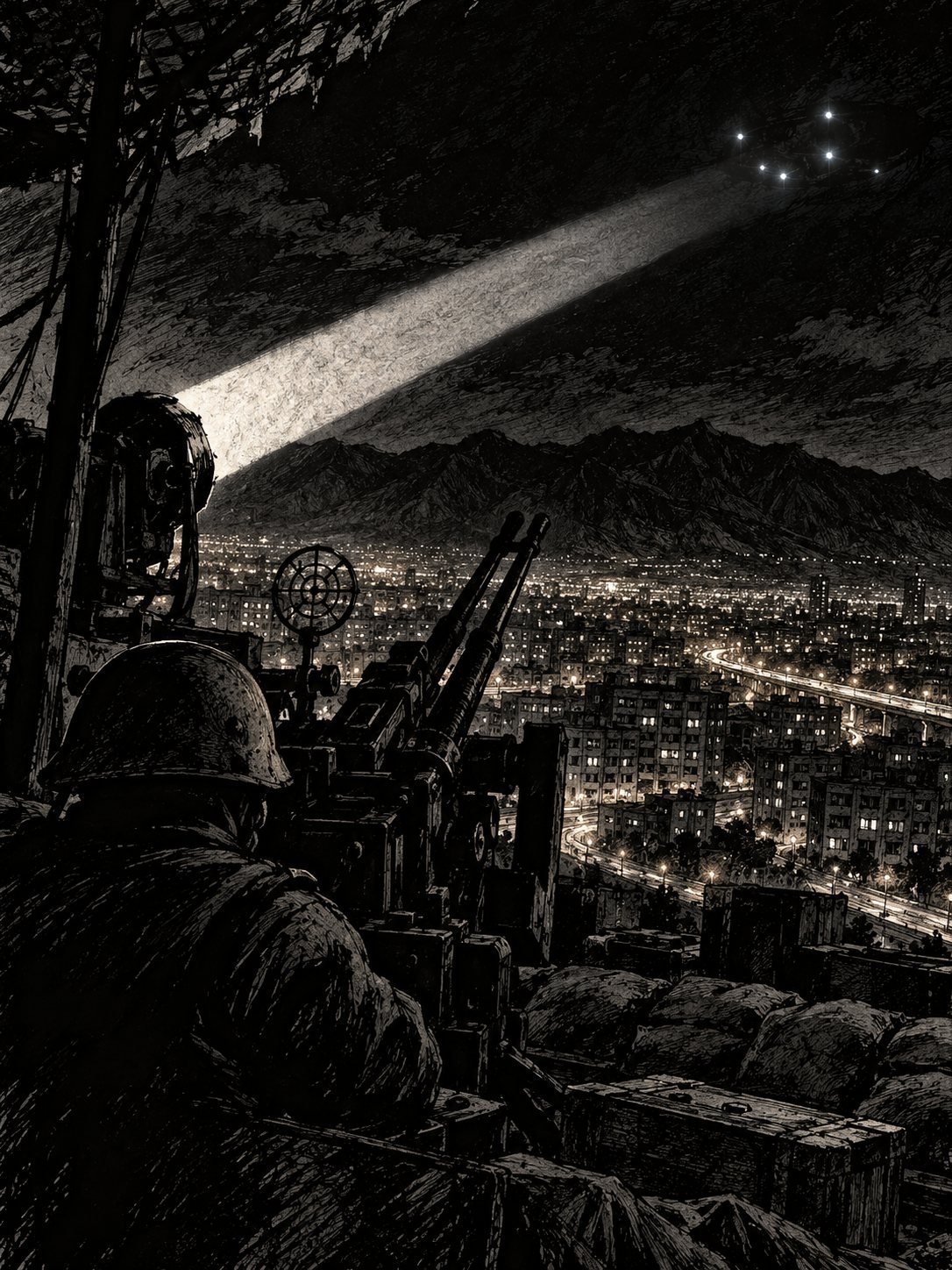
To understand the reaction, you have to know what 2026 was like in Iran.
It was a tense year. Iran and the United States were trading threats. Tehran had already seen explosions earlier in 2026.
In that atmosphere, a strange light over the capital was not just a curiosity. It raised an uncomfortable question. Was this a drone? A spy aircraft? The start of something?
There was another bit of timing, too. About four months earlier, the U.S. Department of War had released dozens of files on unidentified objects seen around the Middle East between 2013 and 2024. Many were listed as unresolved for lack of data. That release did not cover Iran in 2026.
So the clip landed in a country already looking at the sky with worry.
And then people looked closer at the footage. (Israel Hayom)
The footage was too blurry to tell anything
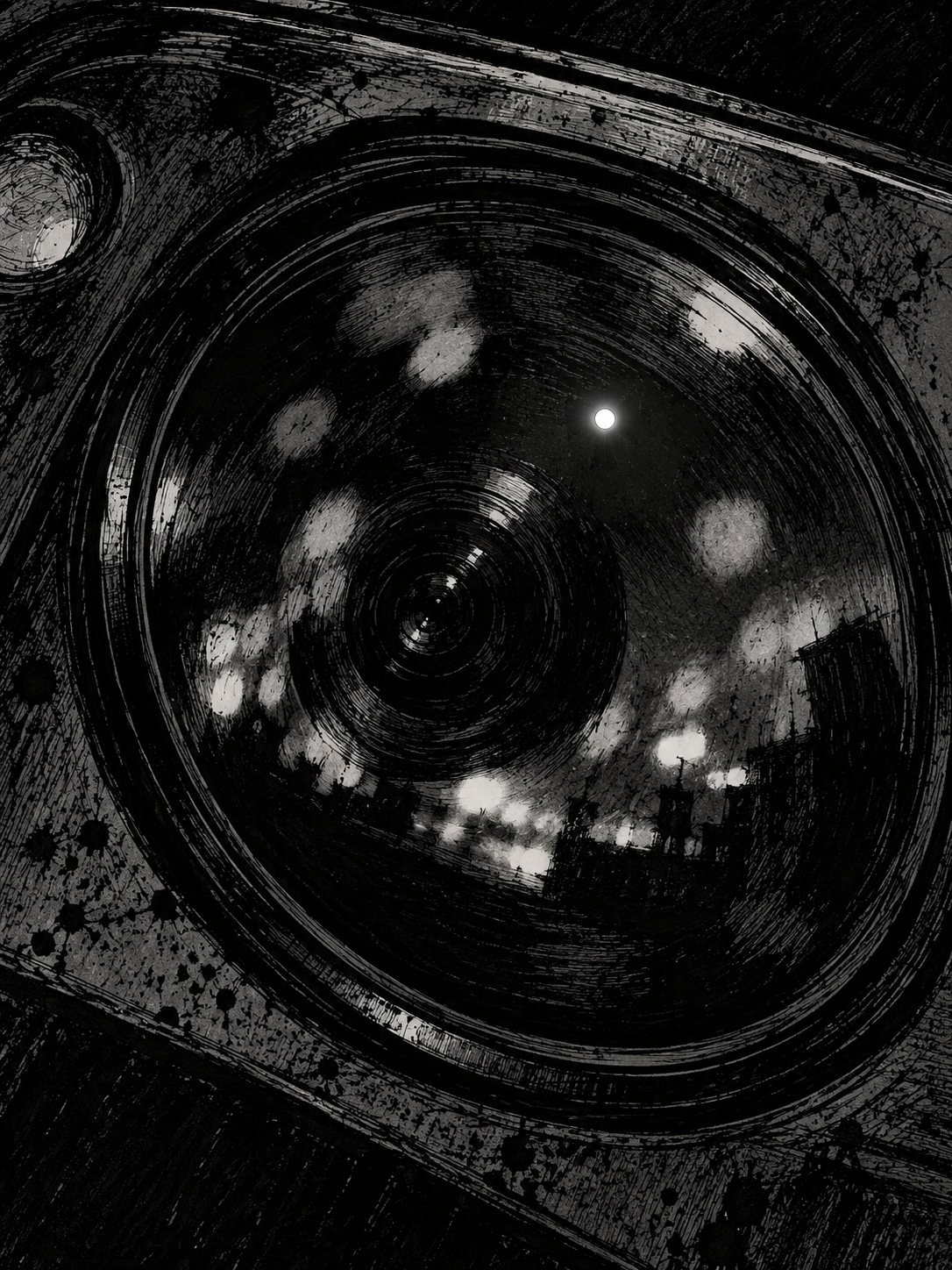
No one released the object’s size, height, speed or distance. And the video itself could not answer those questions.
Phone cameras are very good in daylight and not so good at night. When you film a distant light in the dark, the camera struggles. It boosts sensitivity, the image gets grainy, and bright points smear into blobs or halos.
Distance is the biggest problem. A small light 300 feet away and a huge light 3 miles away can look exactly the same on a phone screen. Without something to compare it to, there is no way to tell.
That is why Reuters could not confirm the size or altitude. The footage did not contain that information.
In plain terms, the footage was simply too poor to say what it was.
But while the experts shrugged at the video, other people were looking at the calendar. (Israel Hayom)
Then people noticed the date
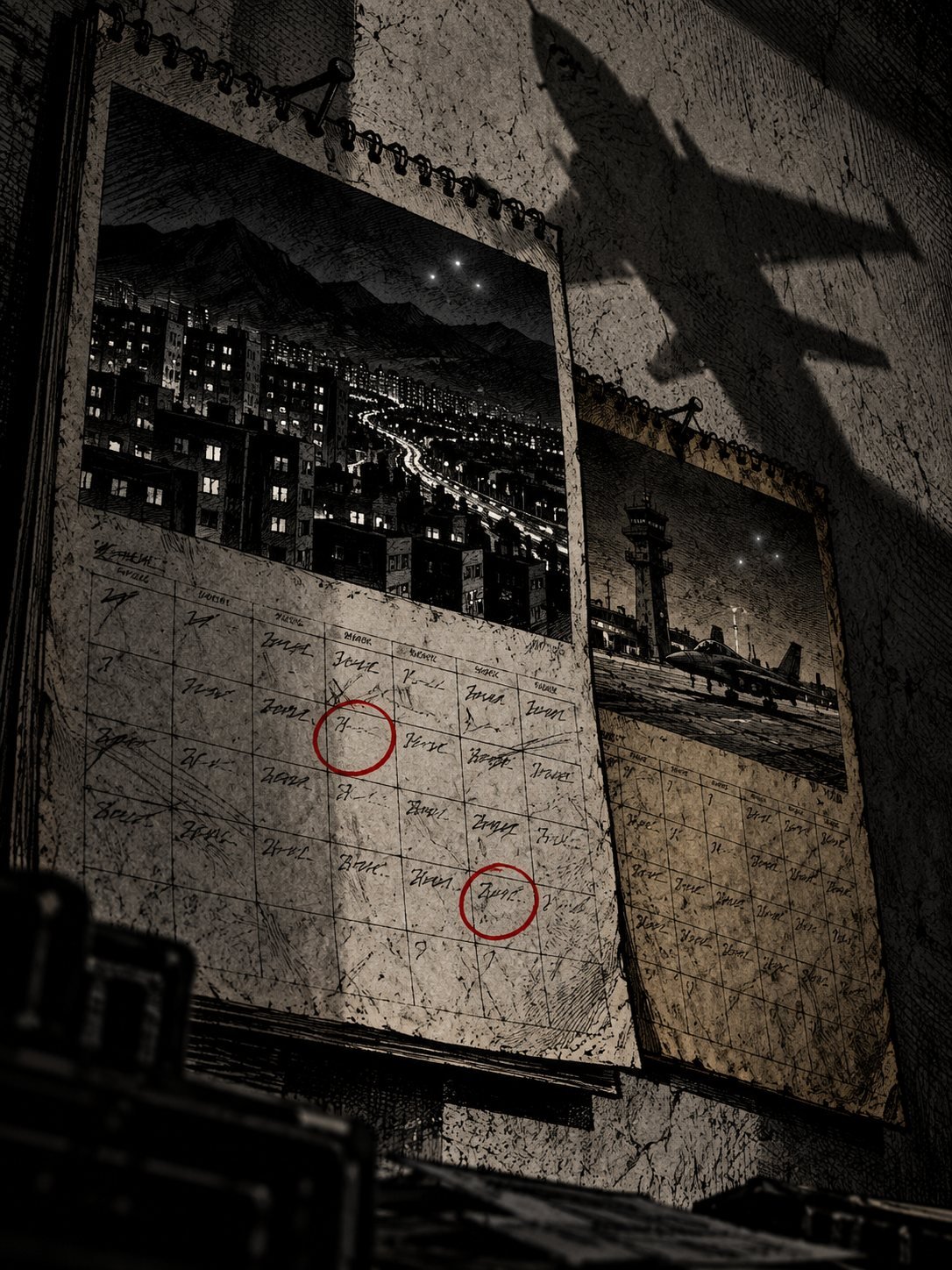
The video appeared on September 20, 2026.
Almost exactly fifty years earlier, on the night of September 19, 1976, Tehran had seen another light in the sky.
That 1976 case is the most famous UFO story in Iran’s history. It is not just a story told by witnesses. It involved Iranian air force fighter jets, a missile that would not fire, and a report that went all the way to the top of the U.S. military.
It is easy to see why people linked the two events. Same city. Same time of year. Lights nobody could explain.
But on paper, the two cases are very different. The 1976 event produced official military documents, now public. The 2026 sighting has produced phone video and social media posts, and nothing official.
To see why 1976 still matters, you have to go back to an airport after midnight. (Israel Hayom)
After midnight, the phones started ringing
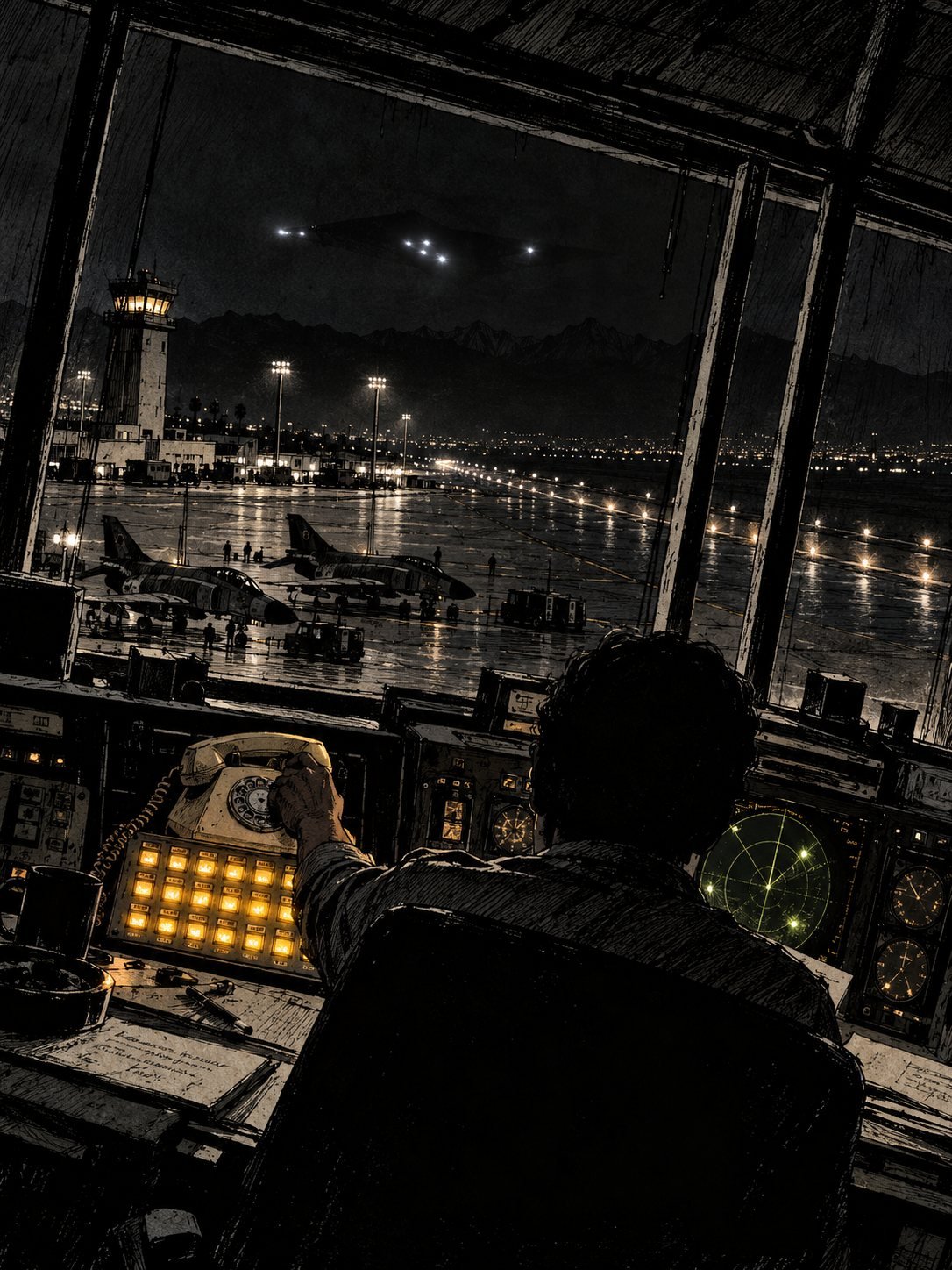
Just after midnight on September 19, 1976, the phones at Tehran’s Mehrabad airport started ringing.
People in the north of the city were calling in about a bright light in the sky.
The documents do not agree on the details. A U.S. military message says four calls came in around 12:30 a.m., from residents of the Shemiran area, and went to the Iranian air force command post. The skeptic podcast Skeptoid places the first calls sometime before midnight, to Mehrabad airport.
Shemiran is a district in the north of Tehran, near the foot of the mountains.
In 1976, Iran’s air force flew American-built F-4 Phantom fighter jets.
Whatever the exact time, someone at the airport decided this was worth a look.
The man on duty that night was about to see it for himself. (Wikipedia)
A rectangle in the sky, with a red light circling
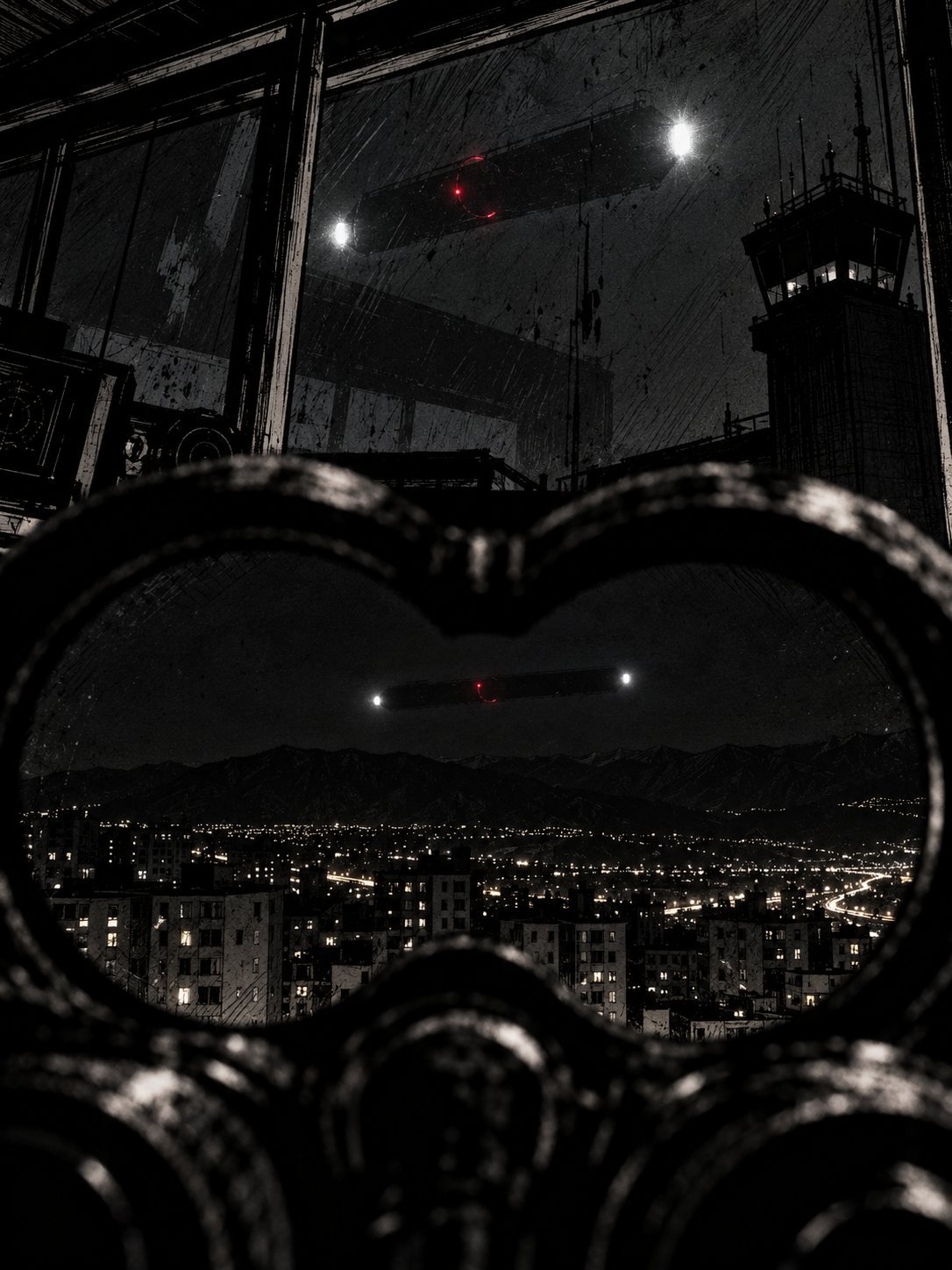
The air traffic controller on duty was Hossein Pirouzi.
After the calls came in, he looked for himself. What he saw, by his own description, was strange.
He described a rectangle. There was a large light at each end. And around its middle, a small red light was circling.
An air traffic controller is not a casual witness. His job is to look at the sky and know what is in it: which planes are landing, which are taking off, which lights belong to what.
That does not mean he could not be mistaken. At night, judging the shape and distance of a light with no reference points is very hard, even for professionals.
But it does mean the sighting was taken seriously from the start.
Pirouzi did not keep it to himself. He called the air force. (Wikipedia)
A general stepped onto his balcony and saw it too
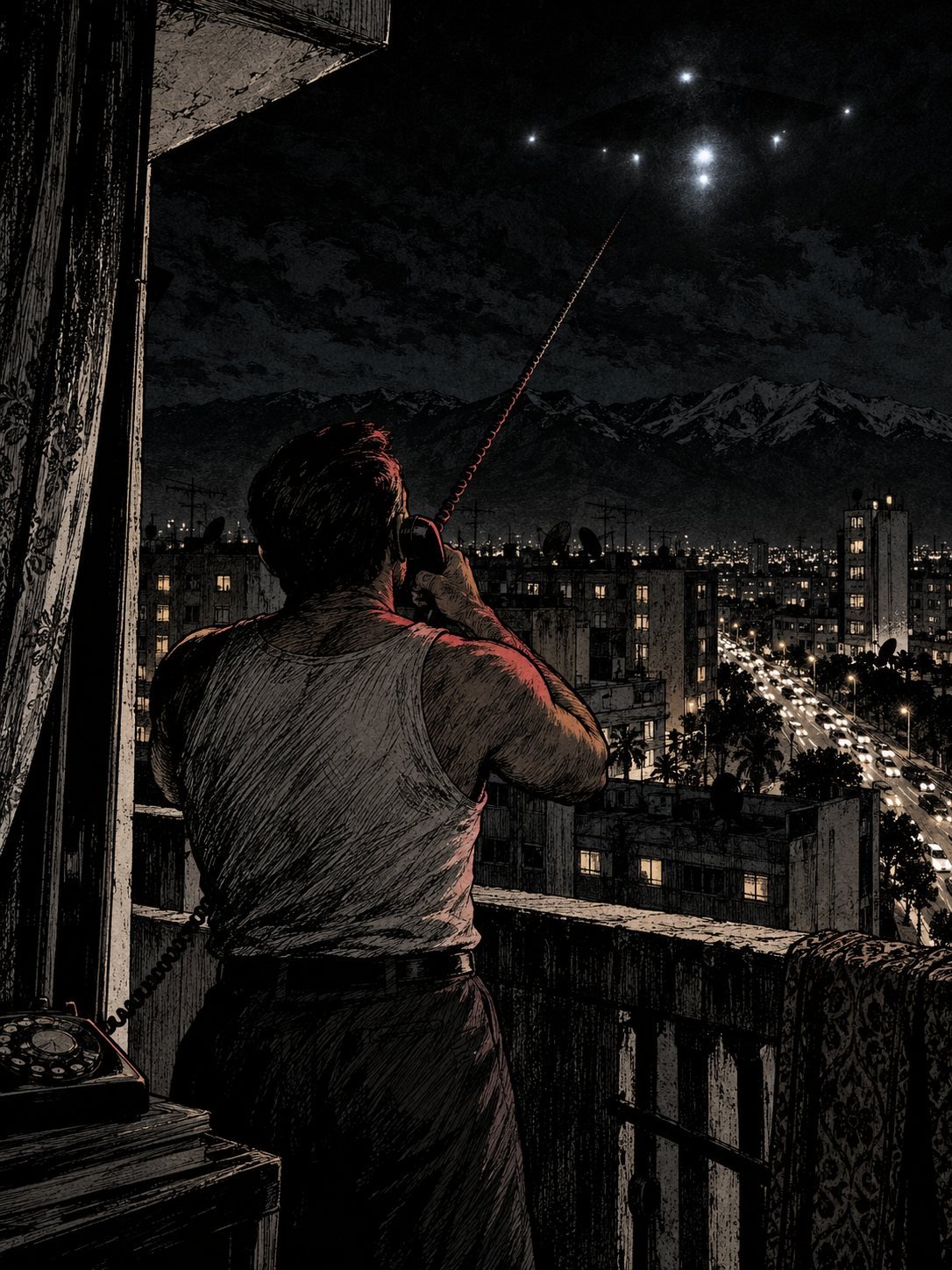
Pirouzi’s call reached the Iranian air force. The officer who took charge was General Youssefi.
He did not just take the controller’s word for it. He stepped out onto his balcony, looked up, and saw the light himself.
The general’s own sighting mattered. It meant the light was no longer just one controller’s report.
Then he made a decision that turned a strange sighting into a military incident. He ordered jets into the air.
Scrambling fighter jets at night is a big step. It means aircraft prepared, pilots in the air, and real risk taken to find out what something is.
It also means that what happened next would be recorded. Pilots report to their commanders. Commanders report up the chain.
In 1976, that chain led all the way to Washington.
At 1:30 a.m., the first fighter took off. (Wikipedia)
The jet lost its instruments and radio
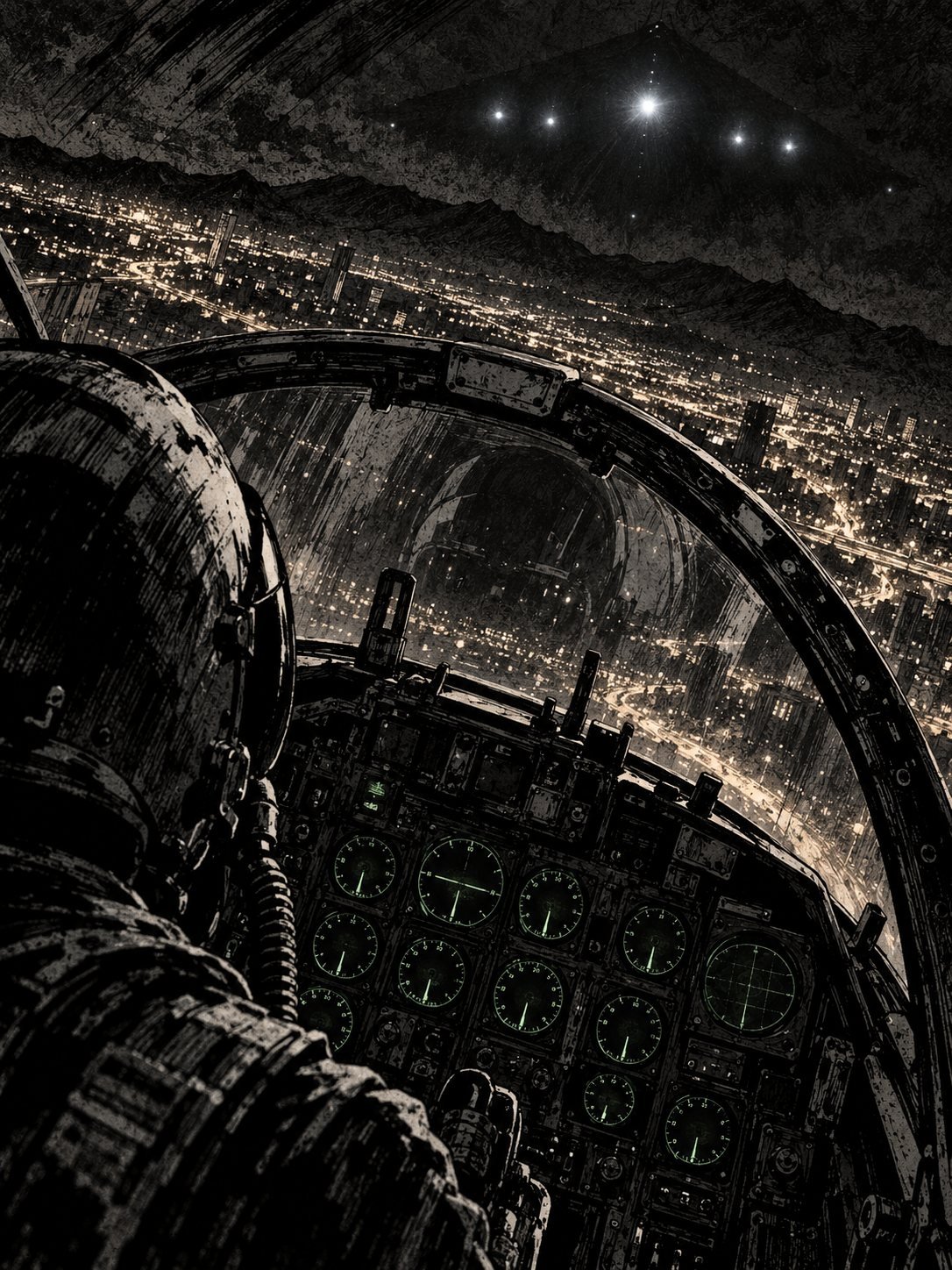
At 1:30 a.m., an F-4 Phantom took off from Shahrokhi Air Force Base. The F-4 was an American-built, two-seat fighter.
Its pilot was Yadollah Nazeri.
Nazeri’s own account of the flight would come much later, and only after he moved abroad.
He headed toward the light. At about 25 nautical miles from it, roughly 29 ordinary miles, something went wrong. According to the U.S. message, he lost his instruments and his radio and intercom.
For a pilot flying at night, that is serious. Instruments tell you your speed, height and direction. Radio is your link to the ground.
He turned back. And as he turned away, everything came back on.
Technicians at the base later said its pilots never flew at night. If so, these were the only known night sorties from the base.
Ten minutes later, a second Phantom went up. (Wikipedia)
The second pilot’s radar locked on at 27 miles
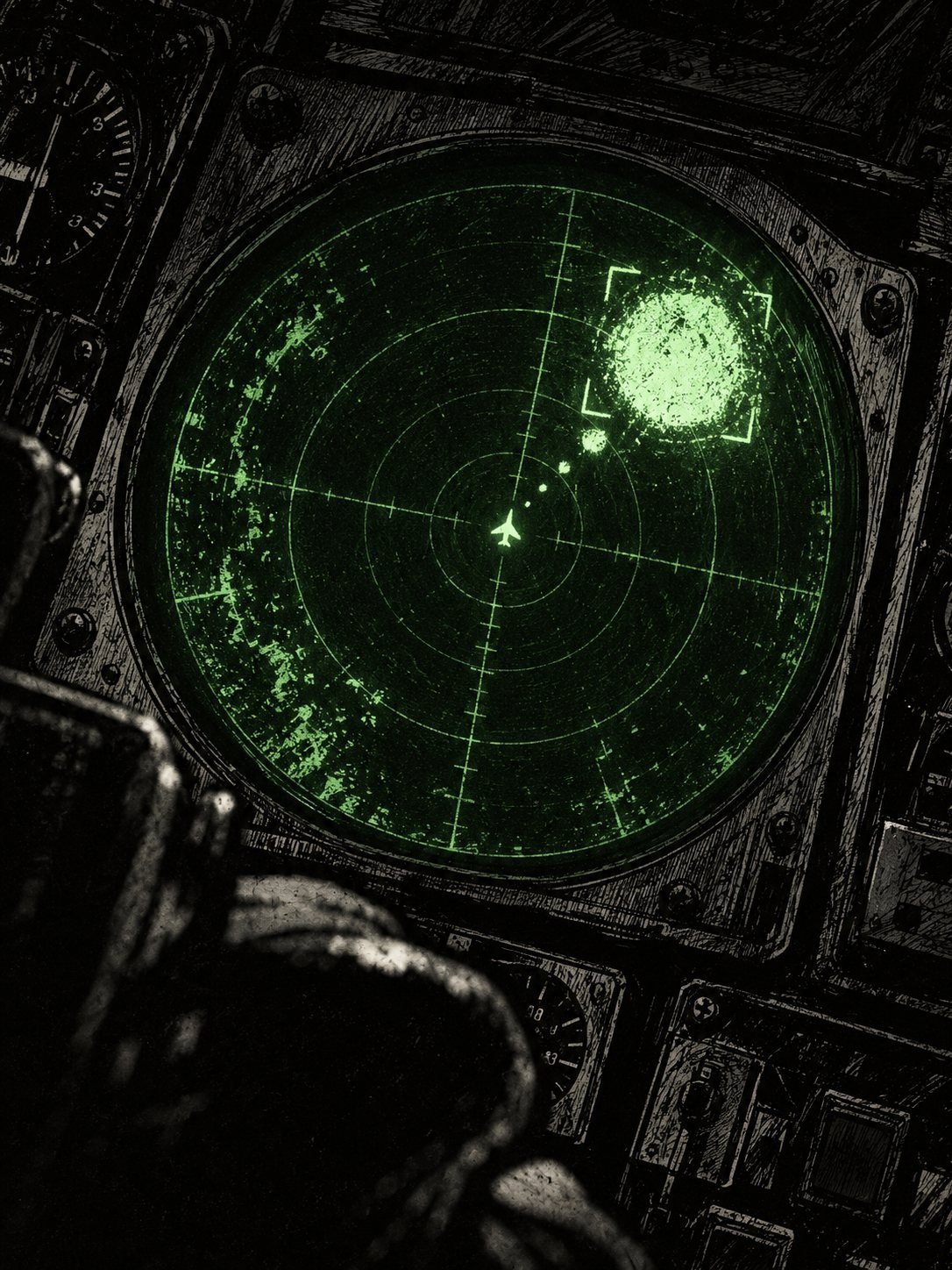
At 1:40 a.m., the second F-4 Phantom took off. It was flown by Parviz Jafari. Wikipedia describes him as a major and squadron commander. Skeptoid calls him a lieutenant.
His radar found the object and locked onto it at 27 nautical miles. He was closing the gap at 150 knots, about 170 miles per hour.
According to the U.S. message, the radar return was “comparable to that of a 707 tanker,” a large four-engine jet used for refueling other aircraft.
That sounds like it tells you the object’s size. Skeptoid points out that it does not. Radar signatures “do not indicate an object’s size at all.” A small object can reflect a lot of radar energy, and a large one very little.
Still, Jafari had a solid lock. Something was out there.
And then something came toward him. (Wikipedia)
He tried to fire. The weapons panel went dead
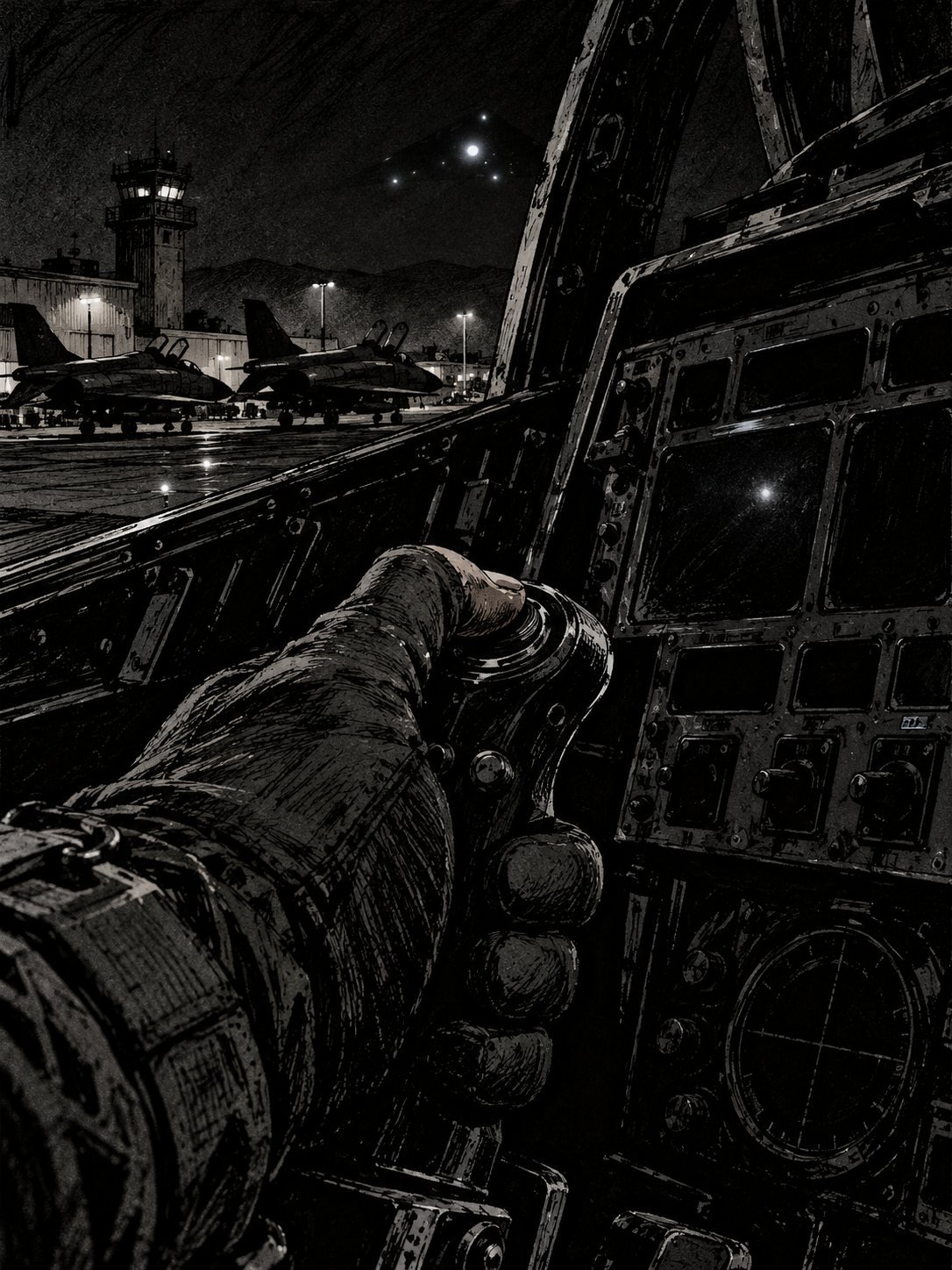
According to the 1976 U.S. message, a smaller lit object came out of the first one and headed toward Jafari’s F-4.
Jafari tried to fire an AIM-9 Sidewinder, a heat-seeking air-to-air missile. The target was that smaller object, not the main light.
At that moment, his weapons control panel went dead. So did his radio.
Every account we read agrees on the result. No missile left the jet.
Whatever had come out of the main light was still out there.
Think about what that means in a fighter. The weapons panel is how the pilot arms and fires. Without it, the jet is just a fast airplane with no defense.
A 1978 retelling of the case agrees that the missile was aimed at the second, smaller object.
Jafari had no weapons, no radio, and something heading his way. (Wikipedia)
A smaller object followed his jet, then turned back
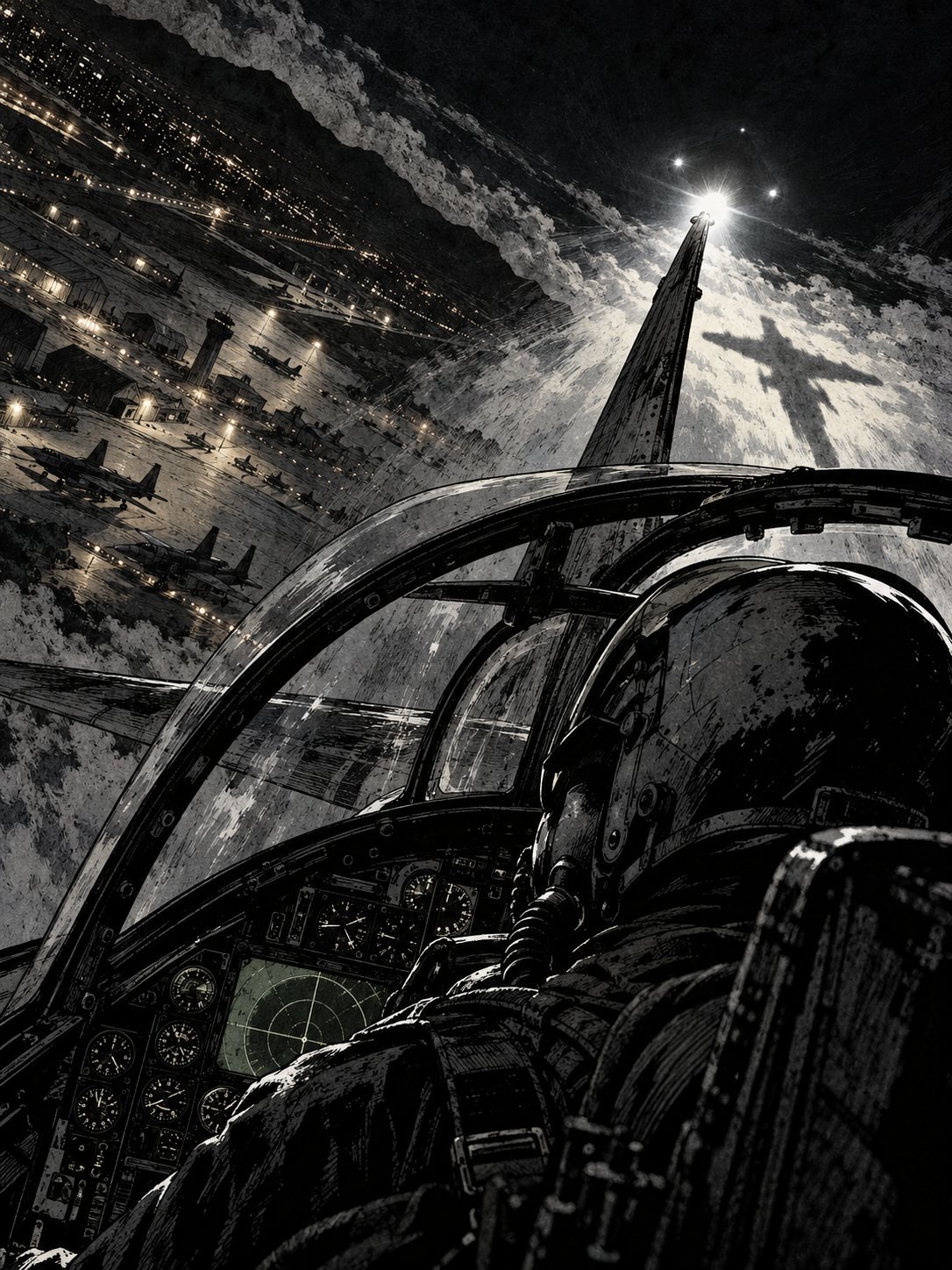
Jafari threw the jet into a dive, a hard turn away from the object.
According to the accounts, the smaller object came after him. It stayed behind him for a while.
Then it broke off. It went back and rejoined the big one.
This is the part of the story that gets retold most dramatically. In a 1978 article in a classified military newsletter, written by Capt. Henry S. Shields, the systems are described as coming back “as if the strange object no longer regarded the aircraft as a threat.”
That line is famous. But it is not from an investigation. Skeptoid notes that Shields’ article was an editorial that dramatized an earlier memo. The phrase is a writer’s interpretation.
Shields also wrote that an airliner approaching the area had a similar communications failure but reported seeing nothing unusual.
And Jafari’s night was not over yet. (Wikipedia)
A glowing light seemed to land on the ground
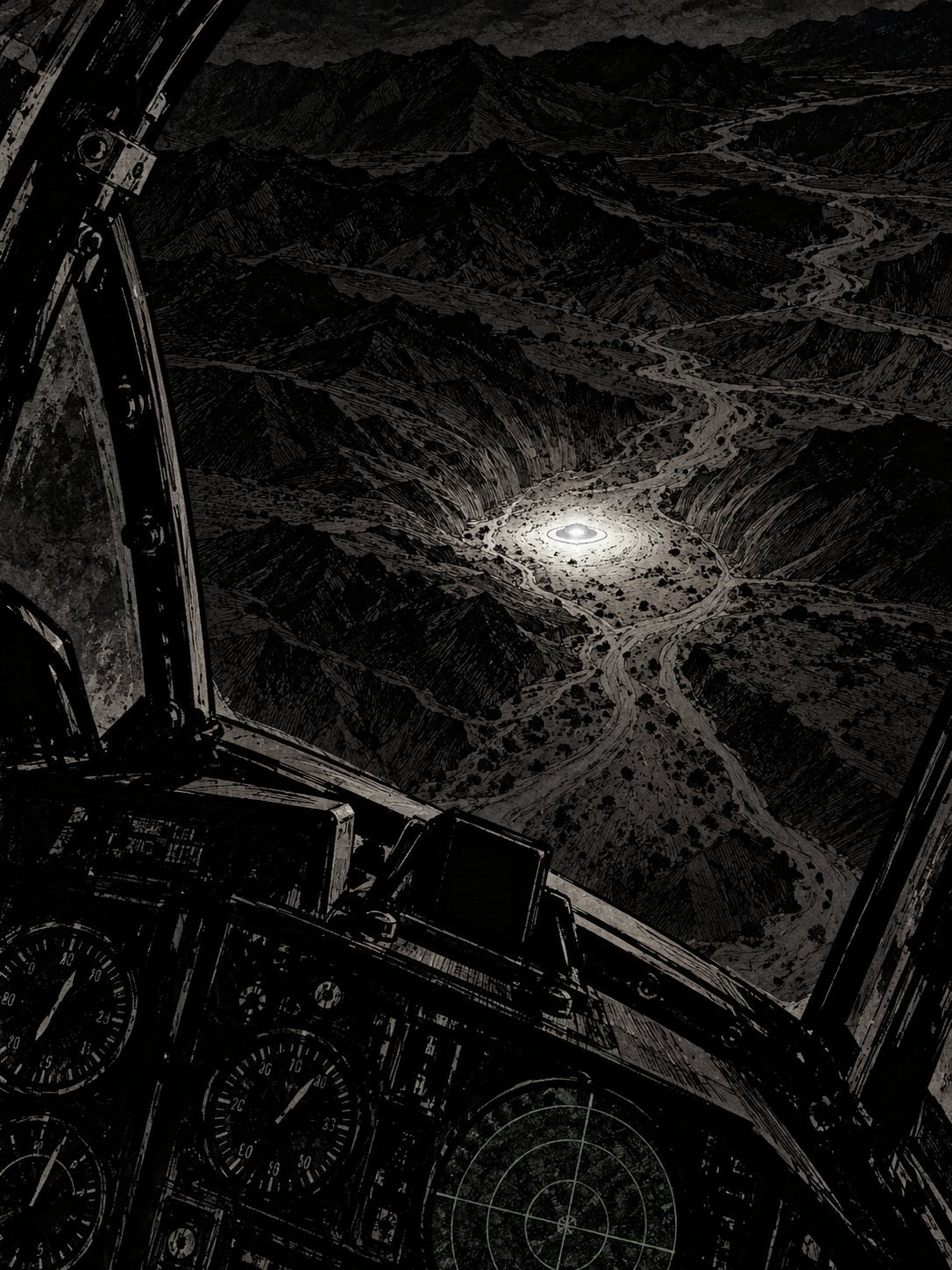
Then Jafari saw another bright object drop away from the main light.
It seemed to come down gently, and land on the ground below.
From a fighter jet at night, the ground is mostly black. A light that settles onto it would stand out sharply, like a single lamp in a dark field.
This is one of the details that made the case so famous. A light in the sky can be a planet, a star or a balloon. A light that seems to come down and sit on the ground suggests something physical, something you could go and find.
Shields later wrote that radiation checks were done at the landing site.
But Shields also says the results of those checks were never reported.
The next morning, a helicopter went to look. (Wikipedia)
A beeping signal, and a family who saw a flash
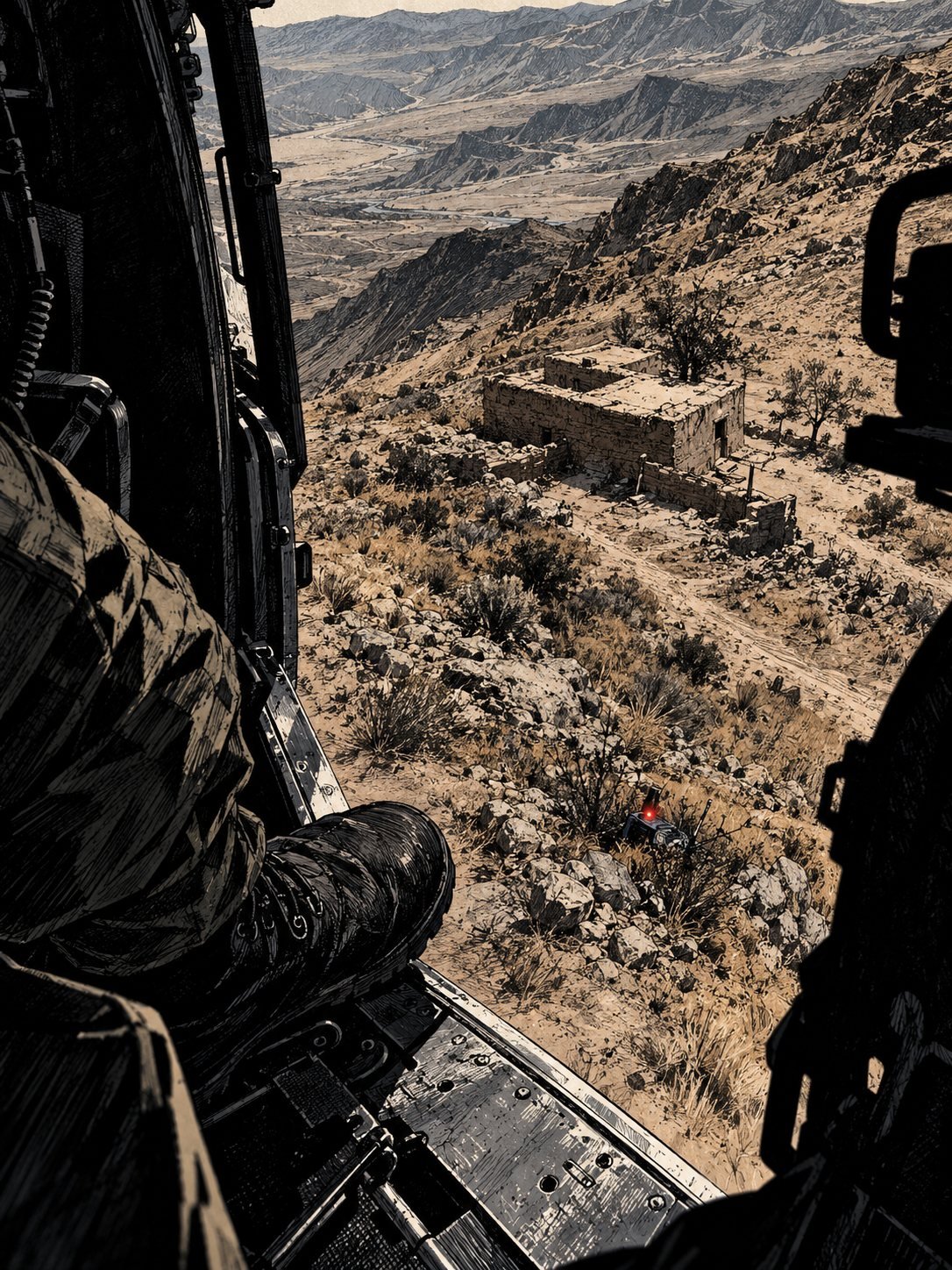
The next day, in daylight, the crew was flown by helicopter to the area. It was a dry lake bed.
They found nothing. No object. No wreckage. No marks that anyone reported.
But there was one strange thing. A beeping signal nearby.
The searchers followed the signal. It led them to a house. The people there said that during the night, they had heard a loud noise and seen a bright flash.
That is a real lead, and also a frustrating one. A noise and a flash could fit many things. A meteor. A falling object. Something mechanical.
And a beeping signal is not mysterious in itself. Many aircraft carry emergency beacons that send out a signal to help rescuers find them if they crash.
Where that signal came from would become one of the skeptics’ best clues. (Wikipedia)
The report went to the top of the U.S. military
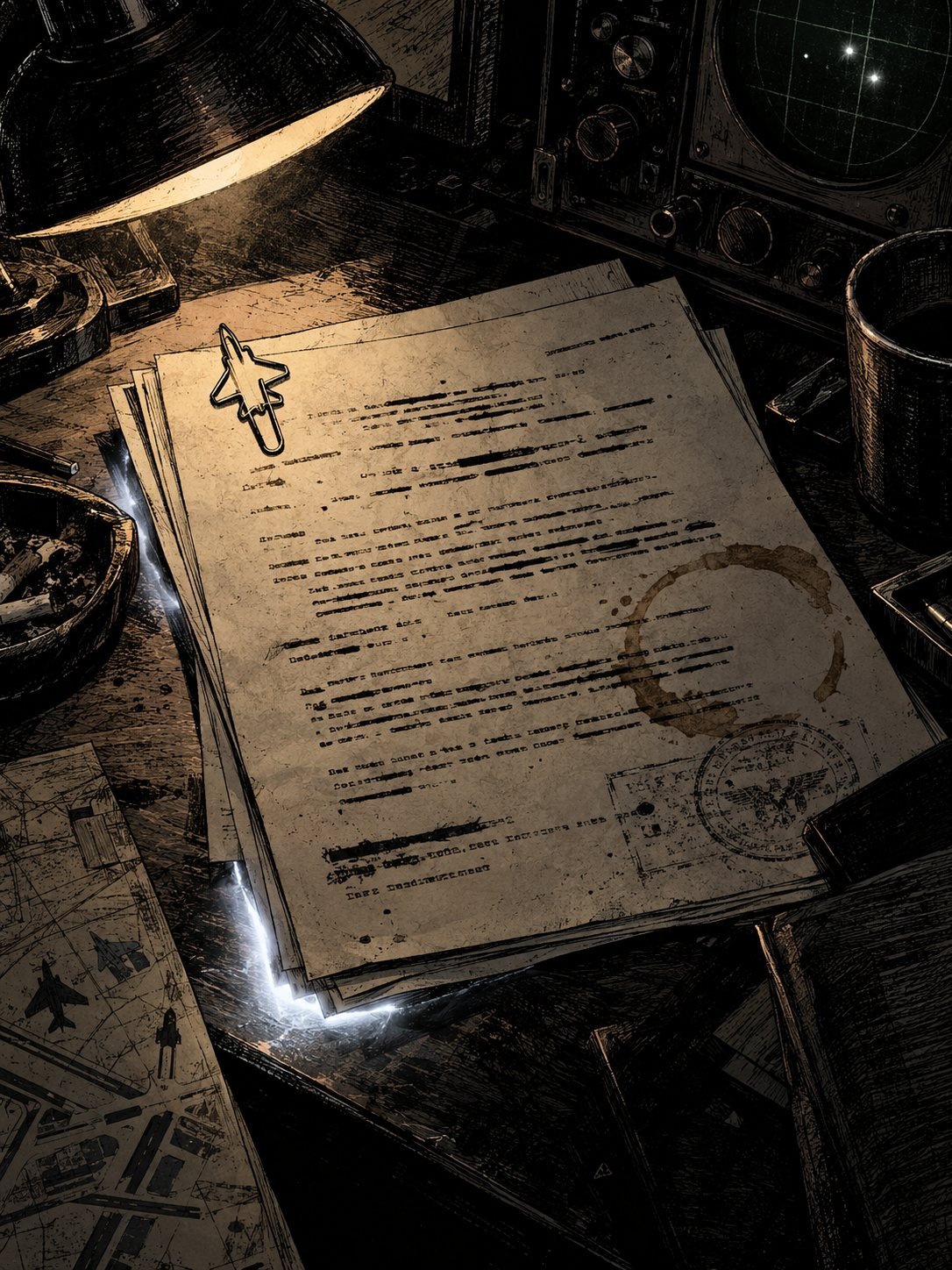
The story did not stay in Iran.
A message about the incident went to the U.S. Joint Chiefs of Staff, the top military leaders in the United States. Copies also went to the White House, the State Department, the CIA and the Defense Intelligence Agency, or DIA.
The DIA filled out an evaluation form. It called it “an outstanding report.” U.S. intelligence also called the case a classic.
In November 1976, a debriefing memo by Lt. Col. Olin Mooy was published in NICAP’s UFO Investigator, a civilian UFO magazine. In 1977, a researcher named Charles Huffer obtained the U.S. message through the Freedom of Information Act.
A DIA routing slip mentions electromagnetic effects on “three separate aircraft.” But a base technician later said only the second F-4 was reported to have electrical problems.
The paper trail was real. The details inside it did not always agree. (Wikipedia)
Decades later, the pilot told his story in Washington
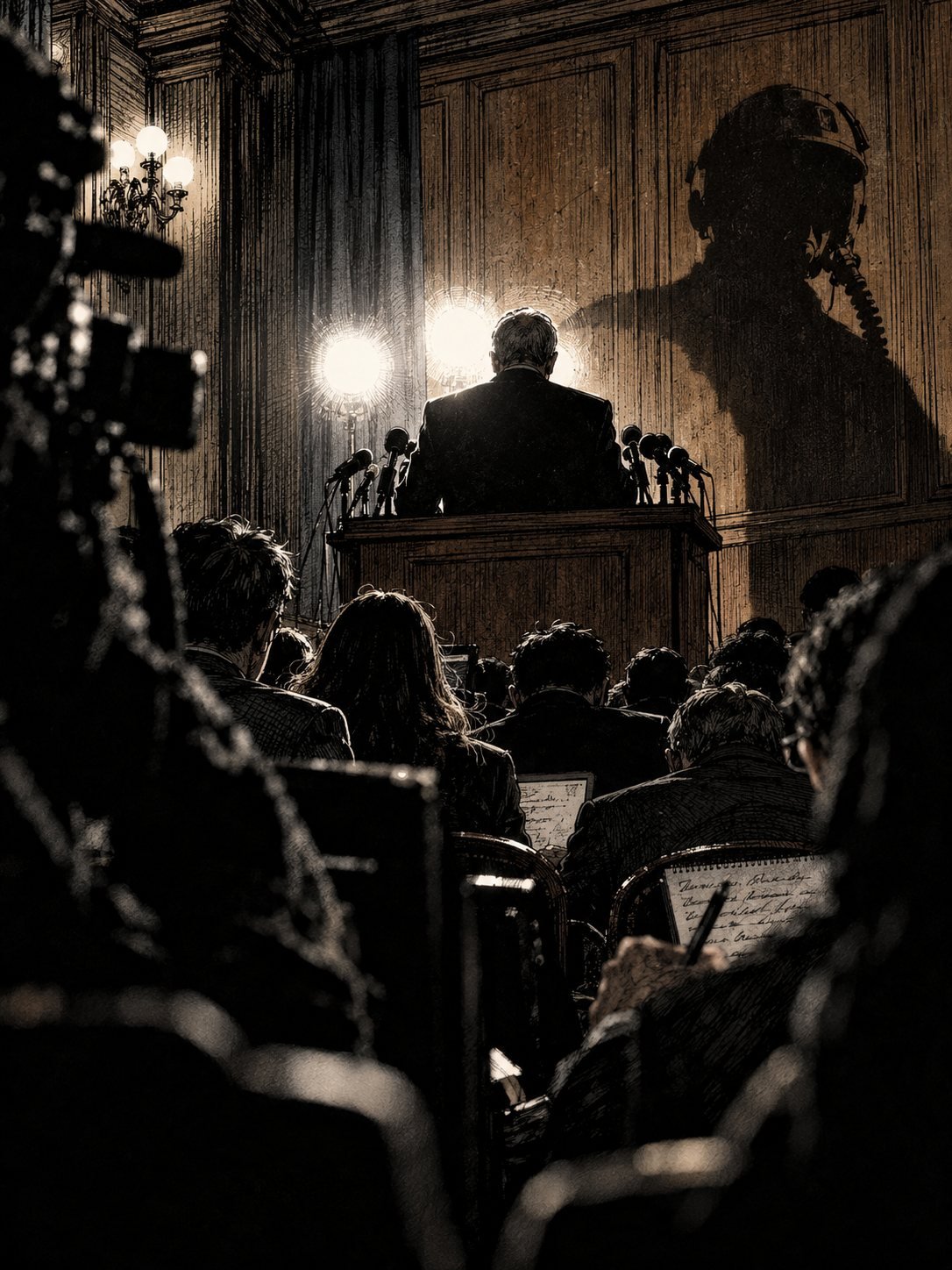
In November 2007, more than thirty years later, Parviz Jafari stood up in Washington, D.C.
By then he was a retired general. He spoke at a panel convened by a group called the Coalition for Freedom of Information.
He told his story of that night in public, decades after the fact.
Hearing it from the pilot himself gave the case new life. This was not a rumor. It was a fighter pilot, on the record, describing what he said he saw.
The other pilot, Yadollah Nazeri, is a different story. Skeptoid notes that only Jafari attended the official debriefing. Nazeri made no known official report until after he moved to the United States.
So the best-known account comes from one man, retold decades later.
Not everyone was convinced by it. (Wikipedia)
Skeptics point to Jupiter and falling stars
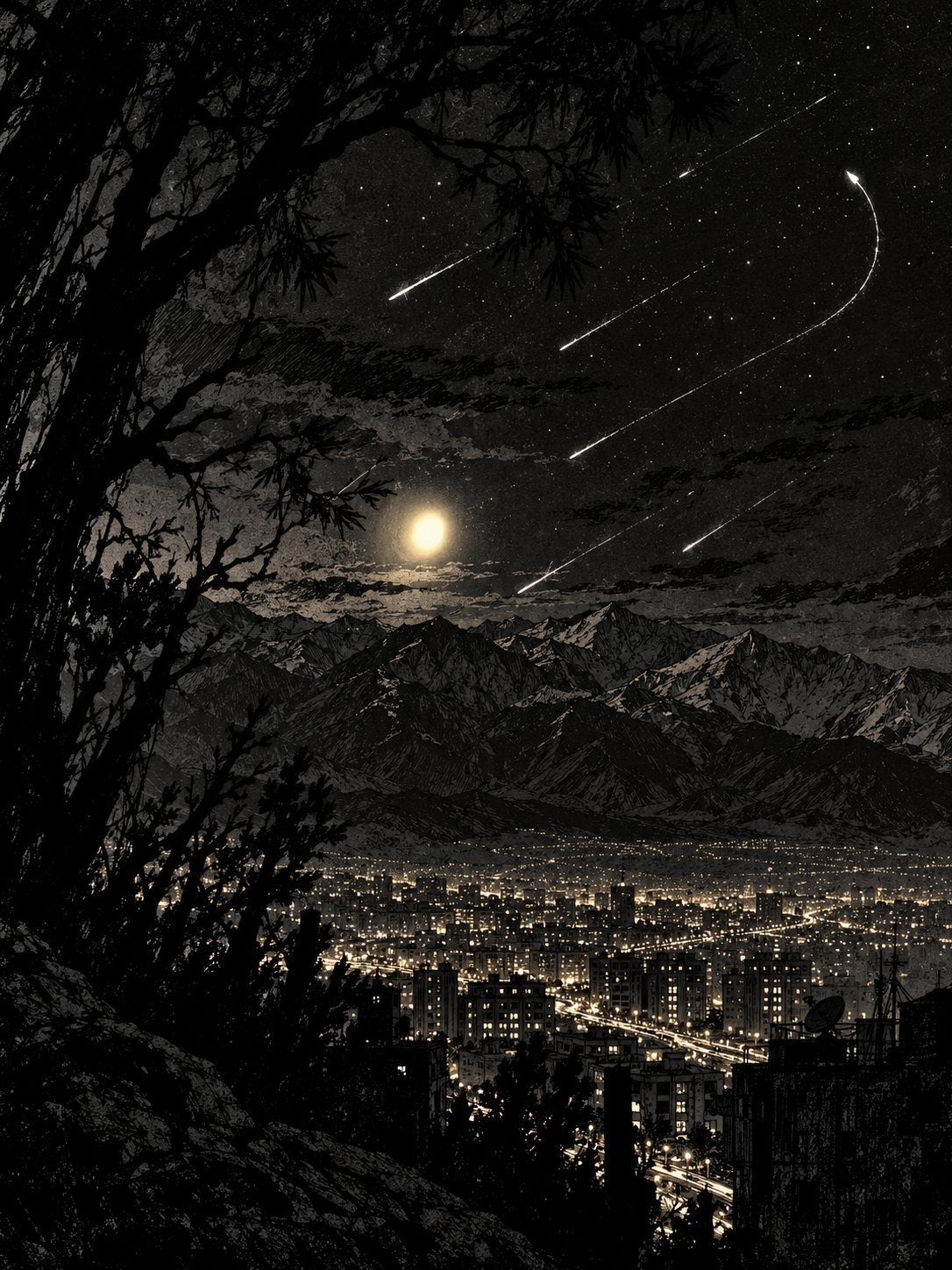
Skeptics have their own answer to 1976.
Skeptoid, a long-running skeptic podcast, points out that the jets found the light right where Jupiter was in the sky that night.
Jupiter is one of the brightest objects in the night sky. Low near the horizon, its light can shimmer and seem to change color.
Skeptoid also notes that several meteor showers were near their peak. Meteors are small pieces of space rock burning up in the atmosphere. A bright meteor can look a lot like a light dropping toward the ground.
Neither explanation requires anything from outer space. Meteor showers happen every year, and Jupiter is in the sky for months at a time.
It is a neat explanation for the lights. It does not explain why the jets kept failing.
For that, skeptics look at the wiring. (Skeptoid)
Bad wiring, a lost beacon, and too many coincidences
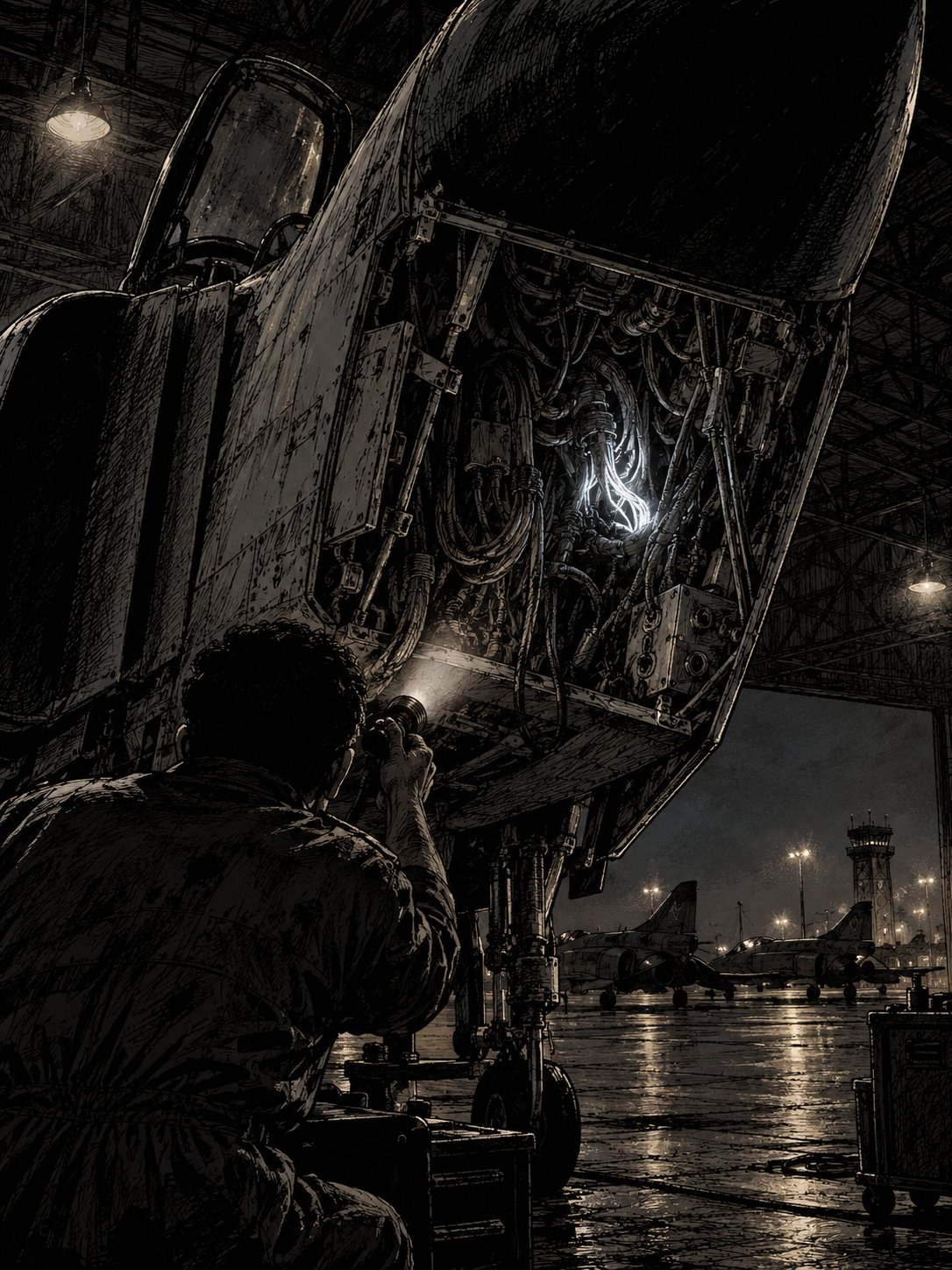
According to Skeptoid, Jafari’s Phantom had a long history of electrical faults. A jet like that could lose its radio or weapons panel on any night, with no UFO involved.
The beeping signal also has a possible ordinary source. It may have come from a beacon that fell off an American transport plane.
So the skeptic version goes like this. A bright planet. Meteors. A jet with known electrical problems. A lost beacon. Pilots flying at night from a base where, technicians said, they never did. Each failure has an ordinary explanation.
But there is a catch, and even Skeptoid acknowledges it. All of them in one night is harder to explain.
Some questions also remain open. Did both F-4s really fail, or only Jafari’s jet with its fault history? What did the radiation checks find?
There is no firm answer to either. (Skeptoid)
Fifty years apart, and neither one is solved
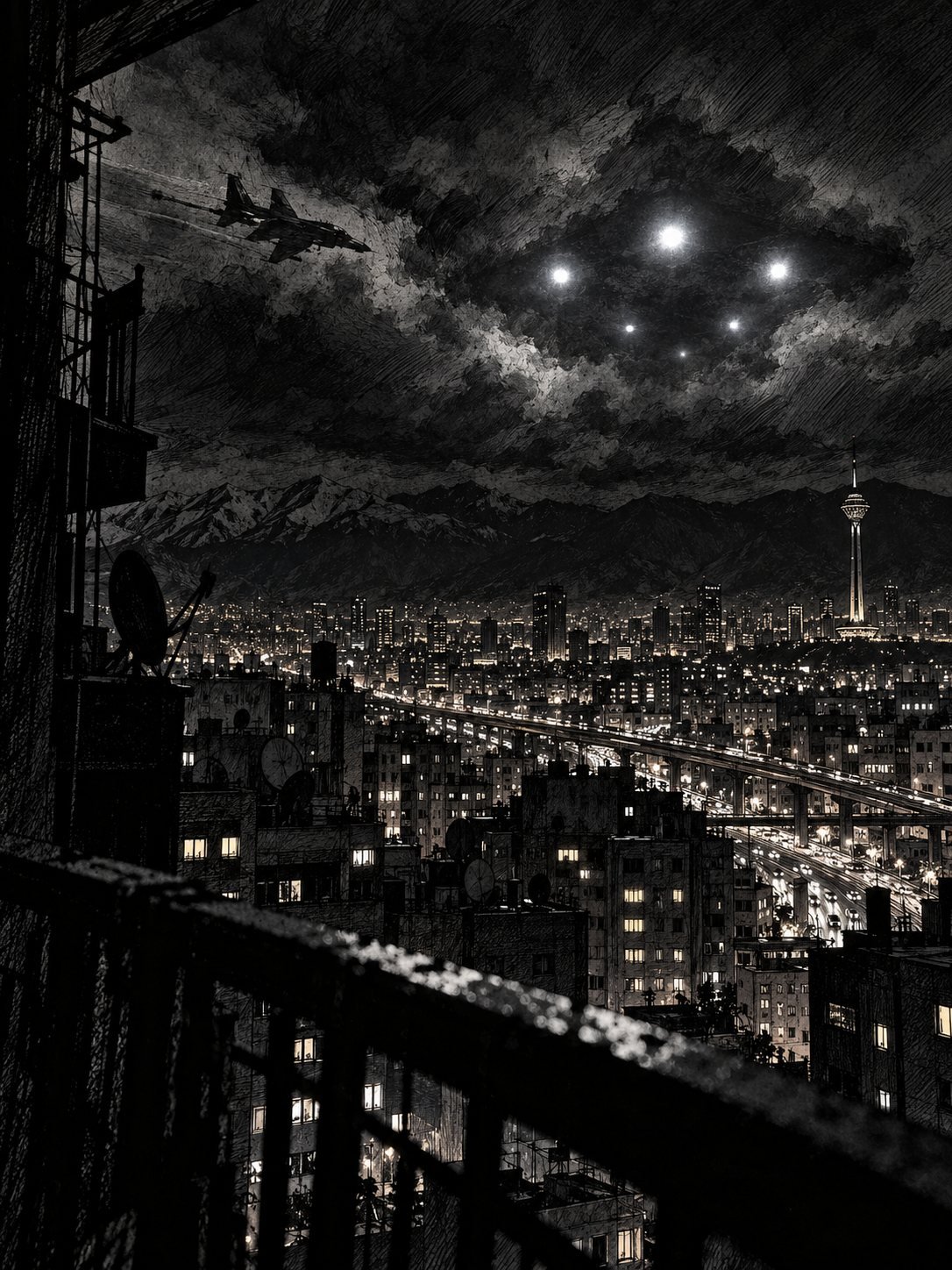
Fifty years apart. The same city. Lights in the sky that nobody could explain.
In 1976, the case produced fighter jets, radar locks, a missile that did not fire, and a paper trail that reached the White House. Skeptics have offered ordinary explanations, but the documents still describe a night nobody fully accounts for.
In 2026, the case produced a 14-second phone clip, possible videos from Mashhad, a lot of theories and no official word at all. Reuters did not verify the footage. Iranian authorities did not identify the object. No radar or flight-tracking data has been made public.
There is no evidence that the two events are connected. The date is a coincidence, as far as anyone can show.
The 2026 lights are still unexplained.
So, depending on who you ask, is 1976.
Case notes: two Tehran lights, fifty years and one paper trail apart
The 2026 clips and the 1976 intercept are often told as one story. On paper they are very different cases. The 1976 event produced a U.S. military message, an evaluation form and a later Air Force newsletter article, all now public through FOIA releases (NSA FOIA). The 2026 sighting has produced phone video and social media posts, and nothing official.
Even the 2026 footage that reached a major wire service came with a warning. Reuters Connect distributed a clip supplied by StringersHub but said it had not verified the material, and that the object’s size, altitude, distance and speed were unconfirmed (IBTimes UK). The person filming said they left, came back about 10 minutes later, and the lights were gone.
The clips also arrived four months after the U.S. Department of War released dozens of Middle East UAP files from 2013 to 2024, many listed as unresolved for lack of data (Ahram Online). That release did not cover Iran in 2026.
Timeline
| Date | What happened |
|---|---|
| Sept. 19, 1976, about 12:30 a.m. | Four calls from residents of the Shemiran area reach the Iranian air force command post, per the U.S. message (NSA FOIA). |
| Sept. 19, 1976, 1:30 a.m. | First F-4 takes off. At 25 nautical miles it loses instruments and UHF/intercom, then recovers after turning away (NSA FOIA). |
| Sept. 19, 1976, 1:40 a.m. | Second F-4 launches and gets a radar lock at 27 nautical miles, closing at 150 knots (NSA FOIA). |
| Next daylight | The crew is flown by helicopter to a dry lake bed. Nothing is seen, but a beeper signal leads to a house where residents report a loud noise and a bright flash (Patrick Gross archive). |
| Sept. 1976 | The message goes to the Joint Chiefs, White House, State Department, CIA and DIA. A DIA evaluation calls it “an outstanding report” (The Black Vault). |
| Nov. 1976 | Lt. Col. Olin Mooy’s unclassified debriefing memo is published in NICAP’s UFO Investigator (Skeptoid). |
| 1977 | Researcher Charles Huffer obtains the message through FOIA (The Black Vault). |
| Oct. 1978 | Capt. Henry S. Shields retells the case in the classified MIJI newsletter as “Now You See It, Now You Don’t” (Skeptoid). |
| Nov. 2007 | Retired general Parviz Jafari speaks at a Washington panel convened by the Coalition for Freedom of Information (ThePrint). |
| Sept. 20, 2026, about 7:30 p.m. | Multicolored lights are filmed near Tehran’s Azadegan Expressway (IBTimes UK). |
| Sept. 21, 2026 | Coverage begins. One outlet reports videos from both Tehran and Mashhad (bne IntelliNews). |
| Sept. 24, 2026 | Reporting notes Reuters has not verified the footage and Iranian authorities have not identified the object (IBTimes UK). |
What the sources agree on, and where they don’t
| Detail | Source A says | Source B says |
|---|---|---|
| First calls, 1976 | About 12:30 a.m., to the air force command post (NSA FOIA) | “Sometime before midnight,” to Mehrabad airport (Skeptoid) |
| Which aircraft failed | DIA routing slip cites electromagnetic effects on “three separate aircraft” (The Black Vault) | A base technician said only the second F-4 was reported to have electrical problems (Skeptoid) |
| Radar return | “Comparable to that of a 707 tanker” (NSA FOIA) | Radar signatures “do not indicate an object’s size at all” (Skeptoid) |
| Jafari’s rank in 1976 | Major and squadron commander (Wikipedia) | “Lt. Parviz Jafari” (Skeptoid) |
| 2026 locations | Tehran and Mashhad (bne IntelliNews) | Tehran only; Mashhad not mentioned (ThePrint) |
On the missile, every account we read agrees: the pilot tried to fire an AIM-9, and no missile left the jet (NSA FOIA).
Details most coverage missed
- The target was the second object. In the 1976 message, the pilot tried to fire at a smaller lit object that came out of the first one and headed toward the F-4, not at the main light (NSA FOIA). Shields’ 1978 retelling agrees (NSA FOIA).
- The famous version is a retelling. The widely quoted MIJI article was an editorial that dramatized Mooy’s memo. It was not an investigation (Skeptoid). It adds lines such as systems returning “as if the strange object no longer regarded the aircraft as a threat” (NSA FOIA).
- An airliner lost its radio too. Shields writes that an approaching airliner had a similar communications failure but reported seeing nothing unusual (NSA FOIA).
- The first pilot’s account came much later. Only Jafari attended the official debriefing. Nazeri made no known official report until after he moved to the United States (Skeptoid).
- Night flying was rare at that base. Technicians said Shahrokhi pilots never flew at night, making these the only known night sorties from the base (Skeptoid).
What we still don’t know
- What the 2026 lights were. Drones, kites, balloons and military aircraft were all suggested, and none was confirmed (IBTimes UK).
- Whether the Mashhad videos showed the same thing, or were filmed that night at all. Most outlets covered Tehran only (Cybernews).
- Whether radar or flight-tracking data exists for September 20, 2026. None is public (ThePrint).
- What the 1976 radiation checks at the landing site found. Shields says results were never reported (NSA FOIA).
- Whether both F-4s really failed, or only Jafari’s jet with its fault history (Skeptoid).
Case file summary
- 2026 sighting: September 20, 2026, about 7:30 p.m., near Tehran’s Azadegan Expressway; videos from Mashhad reported by one outlet
- Footage: 14-second phone clip of low, multicolored lights; distributed by Reuters Connect but not verified; quality too poor to identify the object
- Official response: No public statement from Iranian authorities
- 1976 incident: September 19, 1976; two F-4 Phantom intercepts; instrument, radio and weapons-panel failures reported; no missile fired
- Key documents (1976): U.S. message to the Joint Chiefs and DIA evaluation (1976), Mooy memo (1976), Shields MIJI article (1978)
- Key witnesses (1976): Air traffic controller Hossein Pirouzi; pilots Yadollah Nazeri and Parviz Jafari
- Status: Both unexplained; no link between them established
Illustrations are artistic interpretations, not the original footage and not evidence. No real person has a recognizable face.
Related files
- The Silent Black Triangle: What the Pentagon’s New UFO Files Actually Say (2026)
- The Juarez Valley Creature: A Pale, Hairless “Predator” Caught on Camera Near the US Border
- The Hole in the Roof: The Unsolved Death of Rey Rivera (2006)
Illustrations are AI-generated artistic interpretations, not photos. No real person is depicted with a recognizable face. Read how we research and illustrate these files.
Sources
- Cybernews: UFO over Tehran? Viral Iran video shows mysterious lights
- Israel Hayom: Mysterious object hovering over Tehran ignites UFO debate
- bne IntelliNews: Unidentified UFO over Tehran and Mashhad
- ThePrint: Mystery lights over Tehran revive memories of Iran’s 1976 ‘UFO’ encounter
- IBTimes UK: Viral Tehran UFO lights resemble consumer drones
- Ahram Online: New US UFO files highlight unexplained Middle East encounters
- NSA FOIA: The U.S. Government and the Iran Case
- NSA FOIA: Shields, “Now You See It, Now You Don’t”
- The Black Vault: The 1976 Iran incident
- The Black Vault: DIA and NSA documents on the 1976 Iran incident
- Patrick Gross archive: Tehran, Iran, September 19, 1976
- Wikipedia: 1976 Tehran UFO incident
- Skeptoid #315: The Tehran UFO