Costa Concordia: The Cruise Ship Tilted During Dinner. Two Hours Later, the Captain Left With Hundreds Still Aboard
What the record shows
- When: Friday 13 January 2012, 21:45
- Toll: 32 dead of 4,229 aboard; 4,197 rescued
- Status: Captain convicted, 16 years (final, 2017)
Still uncertain
- Who first decided the ship should sail so close to Giglio that night.
- Exactly how and when the captain ended up in a lifeboat.
- Why the abandon-ship order took 69 minutes.
Narrated Mystery: press play and hear the whole case read aloud, like a true crime podcast episode, or an audiobook for a long drive (about 13 minutes). The narrator is an AI voice.
Listen to the narration above first, then read along. The key words are underlined in the story.
- unauthoriseddone without official permission
- hazardousdangerous and likely to cause harm
- blackouta sudden loss of all electric power
- bulkheada wall that divides the inside of a ship
- helmsmanthe person who steers a ship
- salvagethe work of saving or raising a damaged ship
- refloatedmade to float again
- upheldconfirmed by a higher court
1. At what time did the hull strike the rock off Le Scole?
At 21:45:07, on the port side.
2. When did the abandon-ship order go out?
At 22:54:10, over the public address system.
3. What sentence did the captain receive, and when was it finally upheld?
Sixteen years, upheld by Italy’s highest court on 12 May 2017.
On 13 January 2012 the ship sailed close to an Italian island to salute it and hit a rock. The order to abandon ship came more than an hour later.


Friday the 13th, 19:18
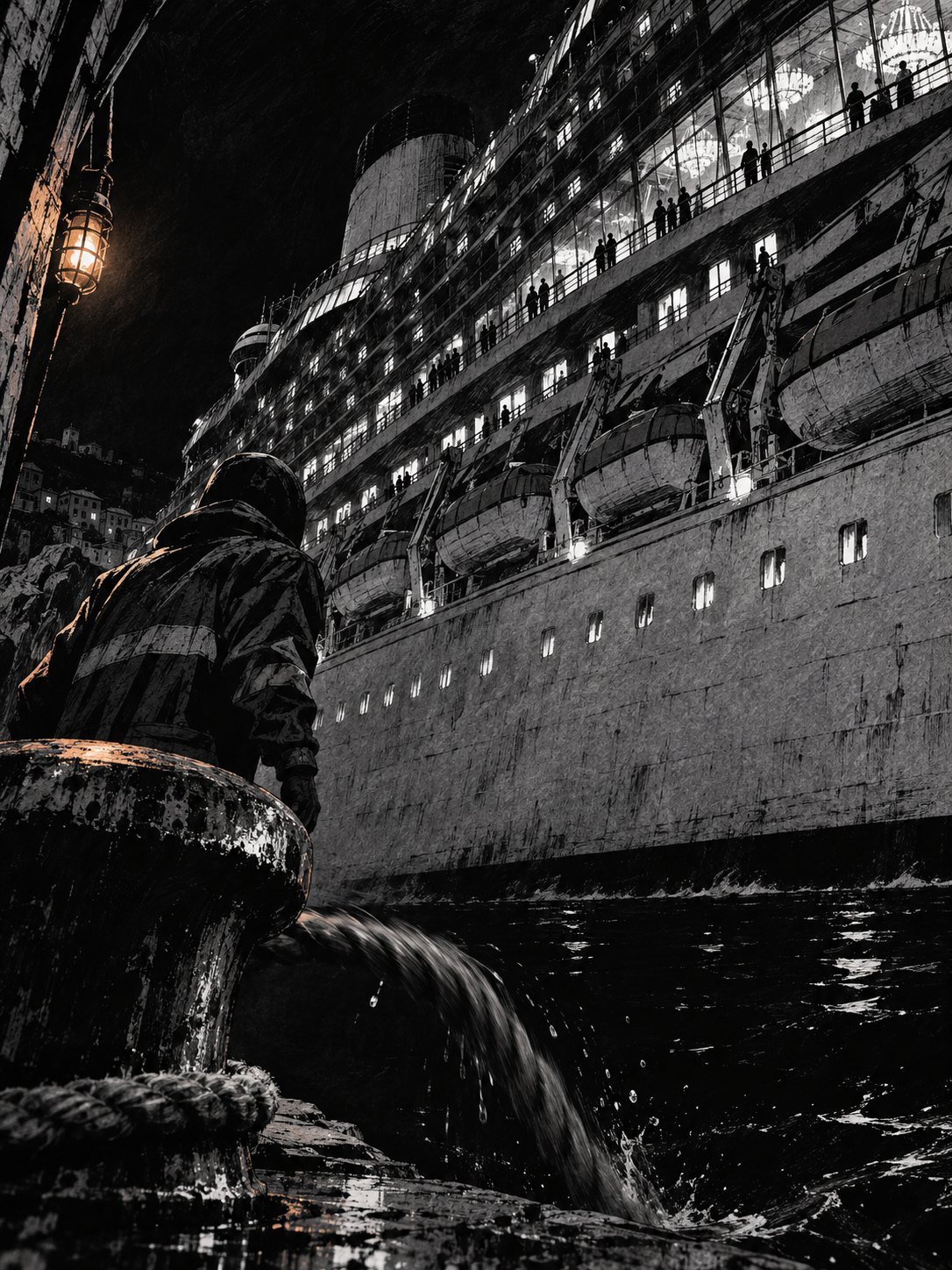
Friday 13 January 2012, 19:18. The Costa Concordia pulls away from Civitavecchia, the port of Rome, on a week-long Mediterranean cruise. Next stop: Savona.
Aboard are 3,206 passengers and 1,023 crew. 4,229 people in all.
Many had come aboard at Civitavecchia that afternoon. Investigators later found that those passengers had received no emergency instruction at all. Those who boarded earlier in Barcelona had been shown a video.
In the restaurants, dinner was being served.
Less than two and a half hours later the ship would be lying on its side off a small island, and the man in command would be off it. (MIT) (BRIT) (SEATRADE)
The salute
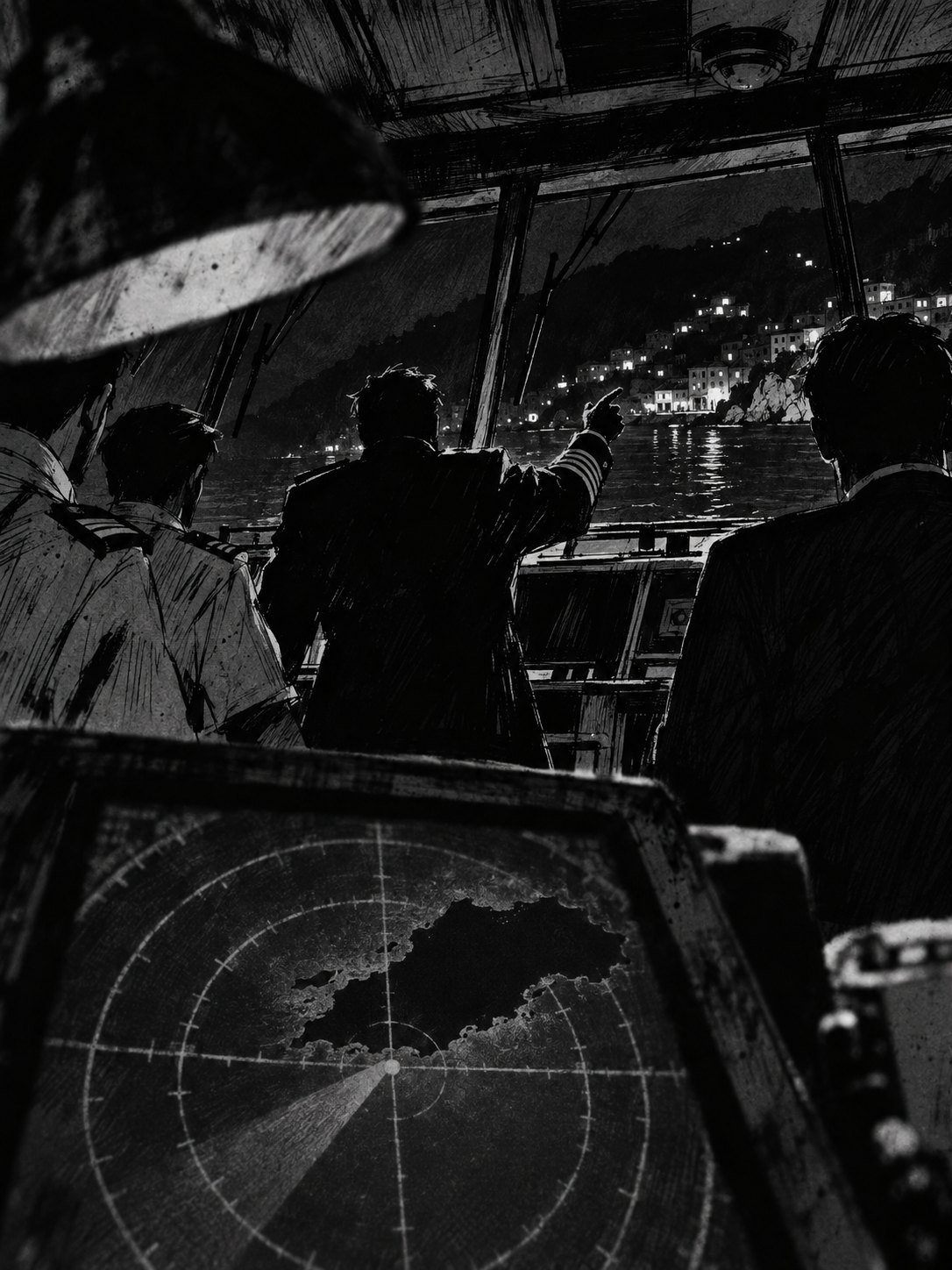
The course that night took the ship close past Isola del Giglio, a small island off the Tuscan coast. Sailing by a port to greet it is called an inchino in Italian, a bow, or a salute.
The ship’s maître d’hôtel came from Giglio. He was on the bridge at the captain’s invitation, to see his island go by. The chief purser and the catering manager were there too.
At 21:39:14 Captain Francesco Schettino took command of the watch himself. Ahead were the lights of Giglio Porto.
Who wanted the salute was argued over later. Schettino told a judge it “was planned and wanted by Costa before the departure.” Costa’s chief executive called the close approach “unapproved, unauthorised and unknown to Costa.” The investigators called it a “hazardous passage in shallow waters.” (MIT) (WIKI) (MG)
A building at the harbour mouth
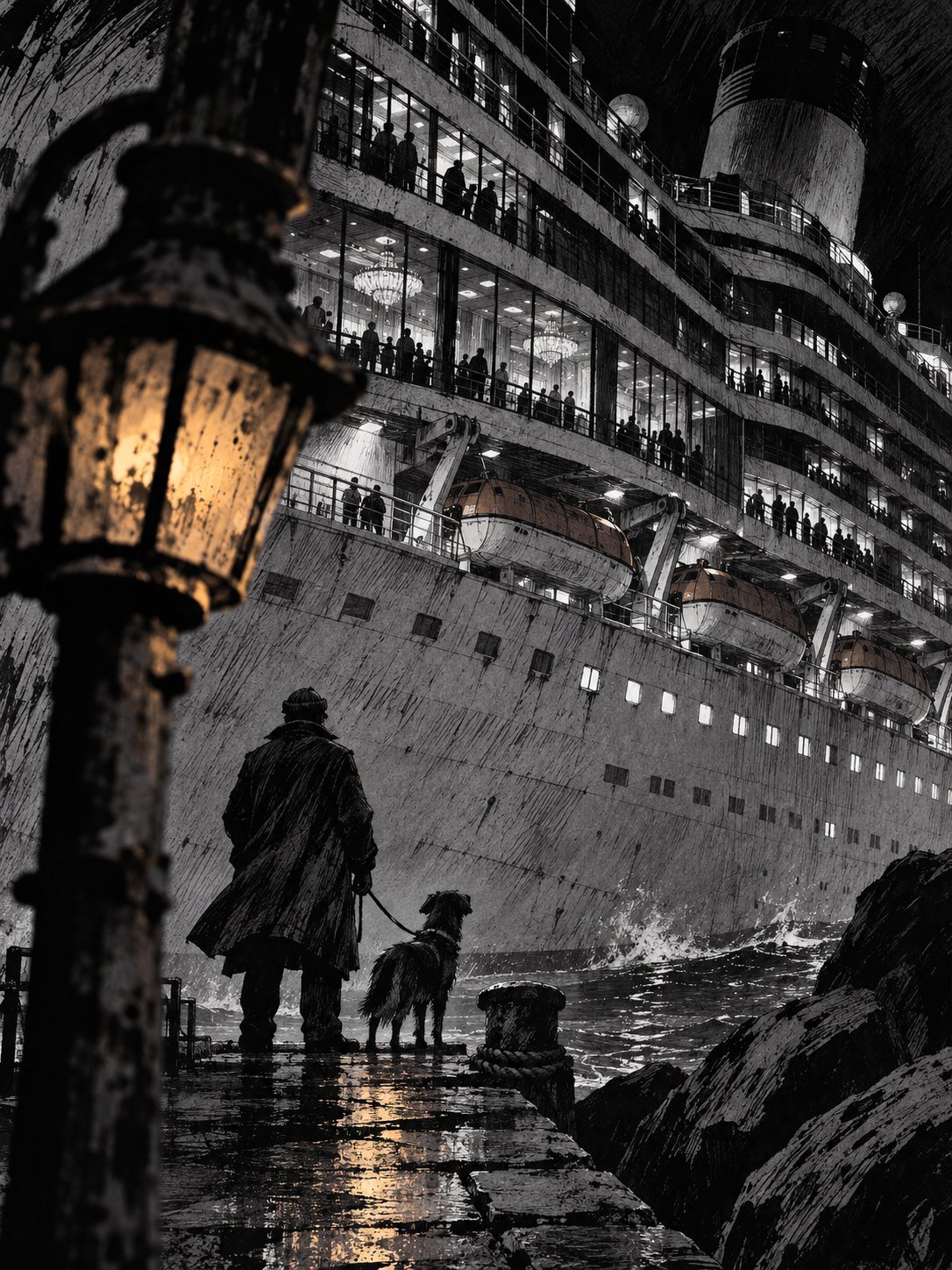
From the island, a cruise ship passing at night looks like a lit tower block sliding along the coast.
That night it came within about half a nautical mile of the shore.
At 21:44:05 the bow was about 0.3 nautical miles from a cluster of rocks called Le Scole. The ship was turning, at about 16 knots.
Sixty-two seconds later it was too late. (MIT)
21:45:07
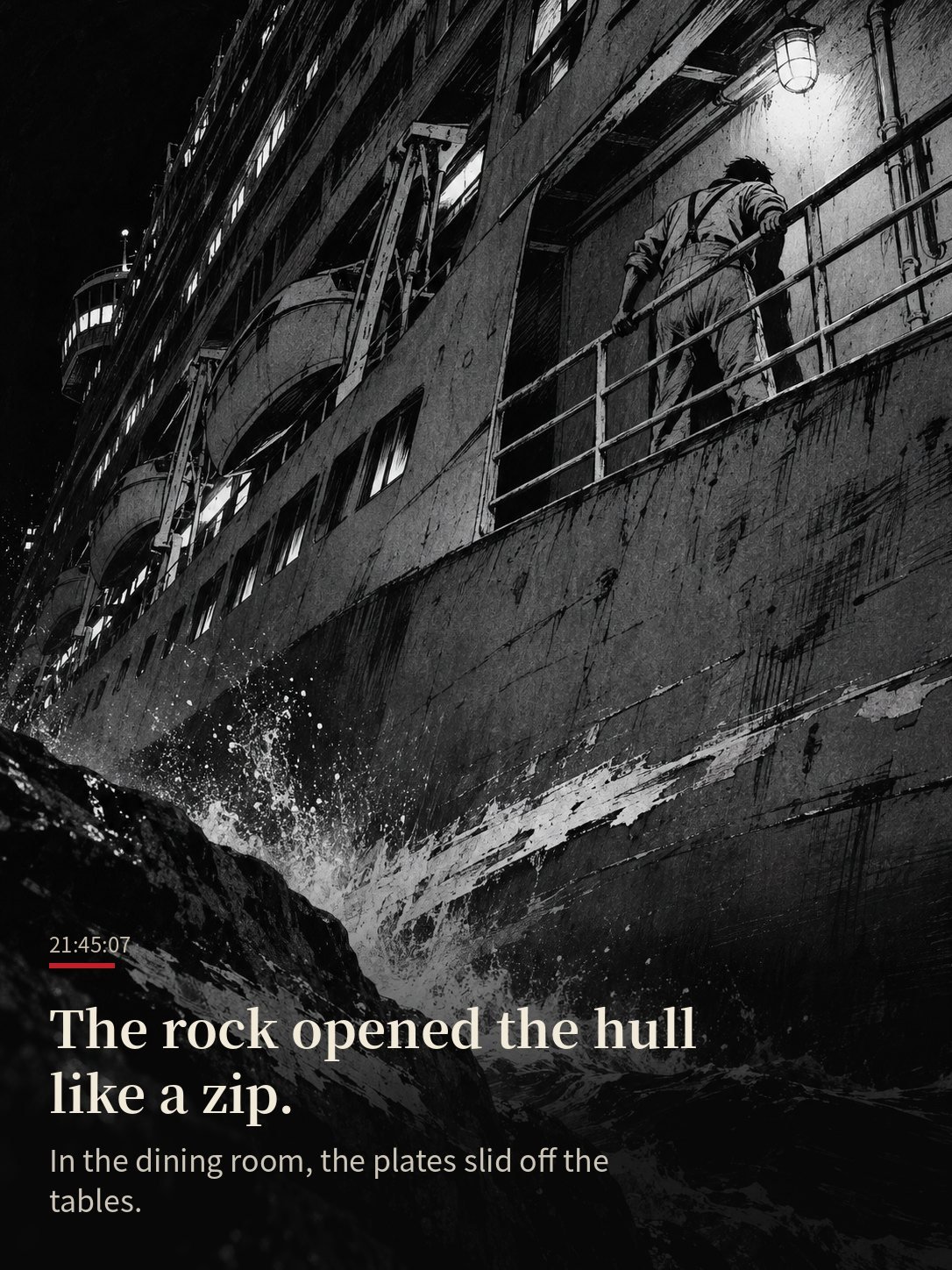
At 21:45:07 the port side of the hull struck a rock off Le Scole.
Speed dropped to 8.3 knots. The engines stopped. The ship, in the investigators’ words, “violently heeled.”
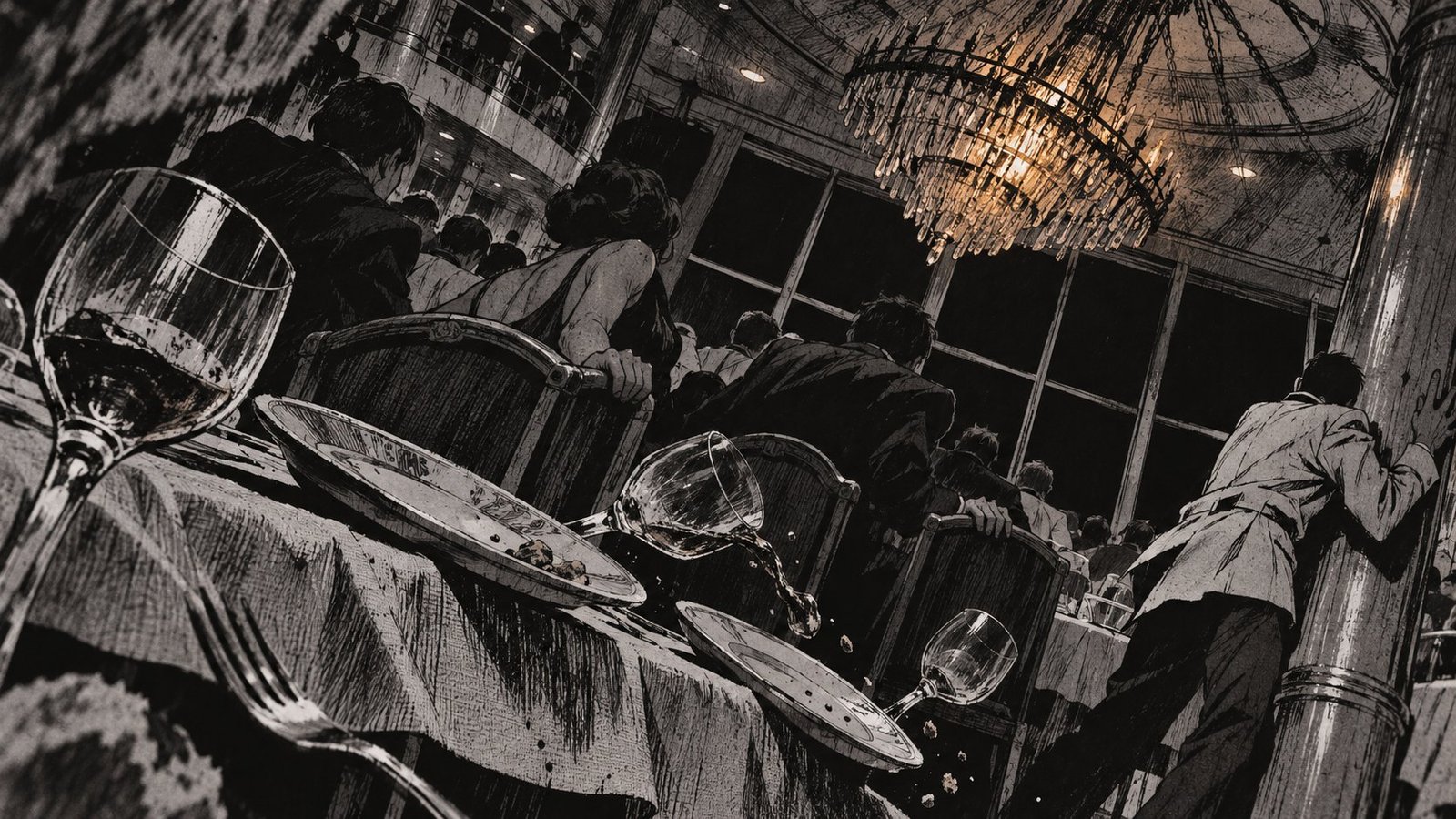
A woman who was at dinner said the impact felt “like an earthquake.” Another survivor said, “We heard a loud rumble, the glasses and plates fell from the tables, the ship tilted and the lights went off.”
The rock tore open the hull below the waterline. The Italian report measured the gash at 53 metres. (MIT) (AP-2022) (SCOT) (BRIT)
Lights out
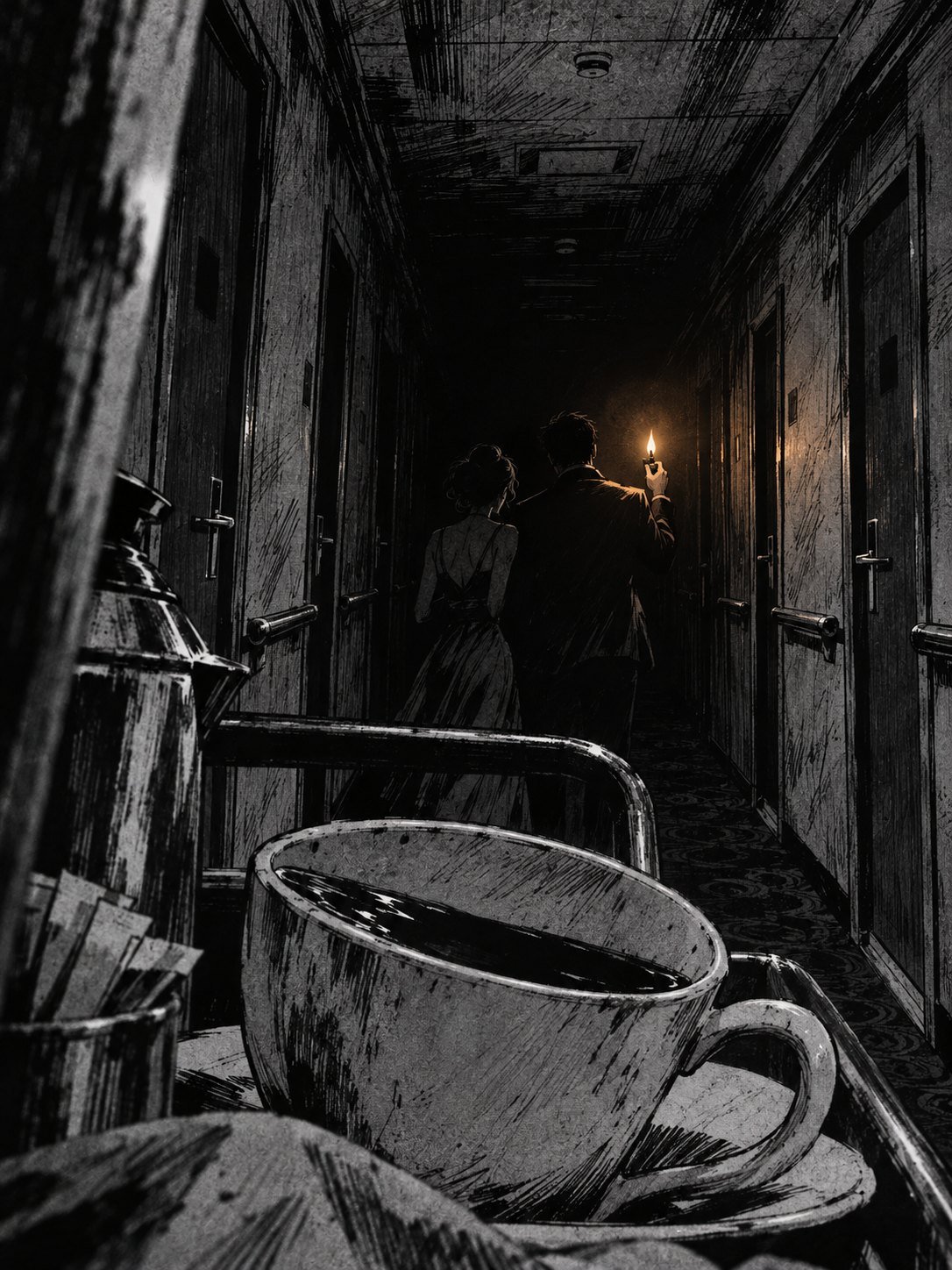
At 21:45:58, less than a minute after the impact, the ship’s voyage data recorder logged a blackout.
The emergency generator started at 21:46:05. It ran for 41 seconds.
Corridors, staircases and cabins went dark. (MIT)
“An electrical failure”
A crew announcement blamed an “electrical failure.”
At 21:54:47, nine minutes after the impact, the announcement about the blackout went out. (WIKI) (MIT)
Three compartments
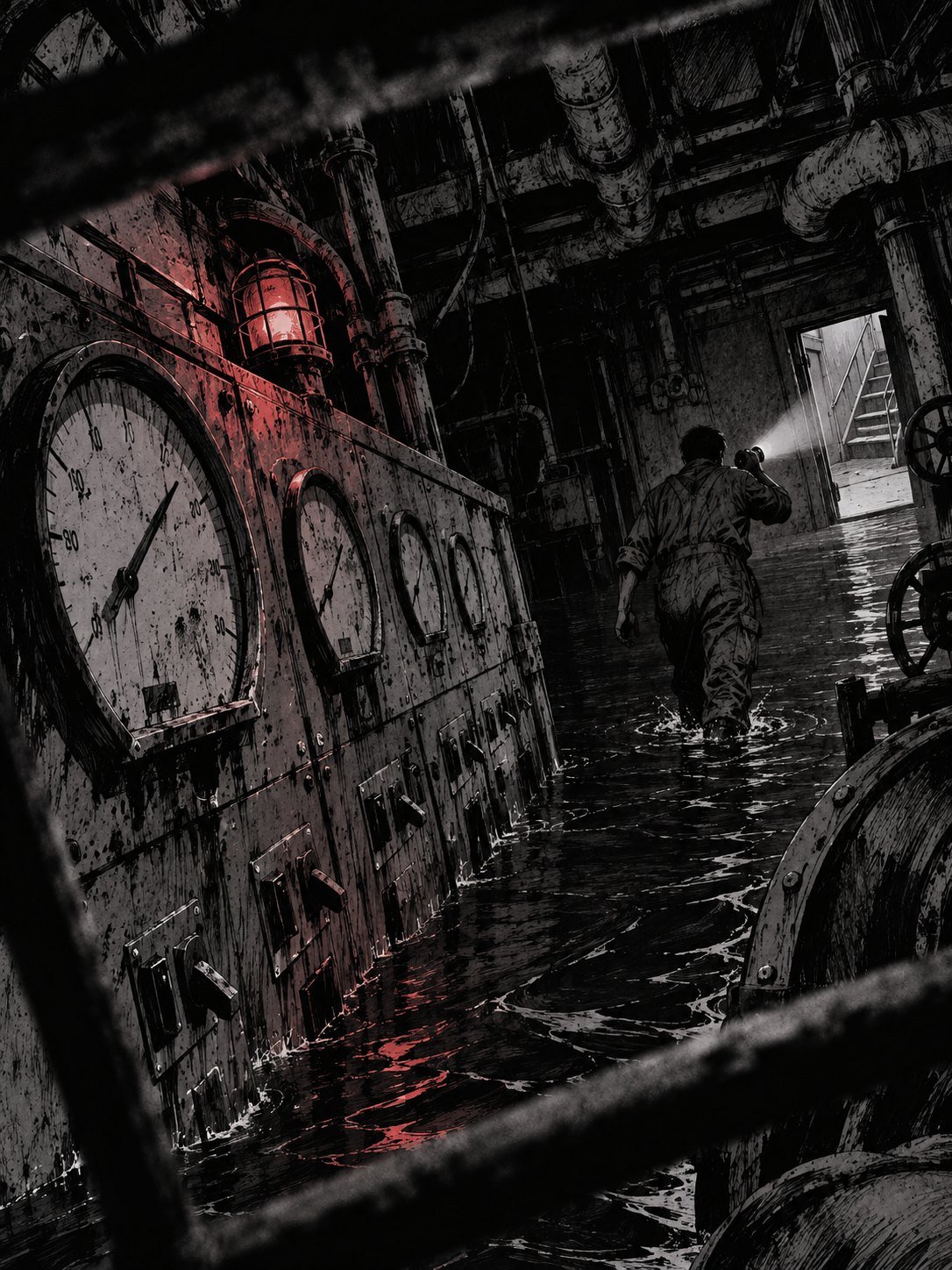
Below deck, water was pouring into the engine spaces.
At 22:00:57 the captain reported three flooded compartments: numbers 5, 6 and 7.
The coast guard at Livorno first heard that something was wrong at 22:06. Not from the ship. A call had come in through the Carabinieri, the Italian police, in Prato. A ship does not need open sea to roll over: the Eastland capsized in the Chicago River in 1915 while still tied to its dock, and 844 people died.
By about 22:27 the water had reached the bulkhead deck at the stern. (MIT)
Alarm, no order
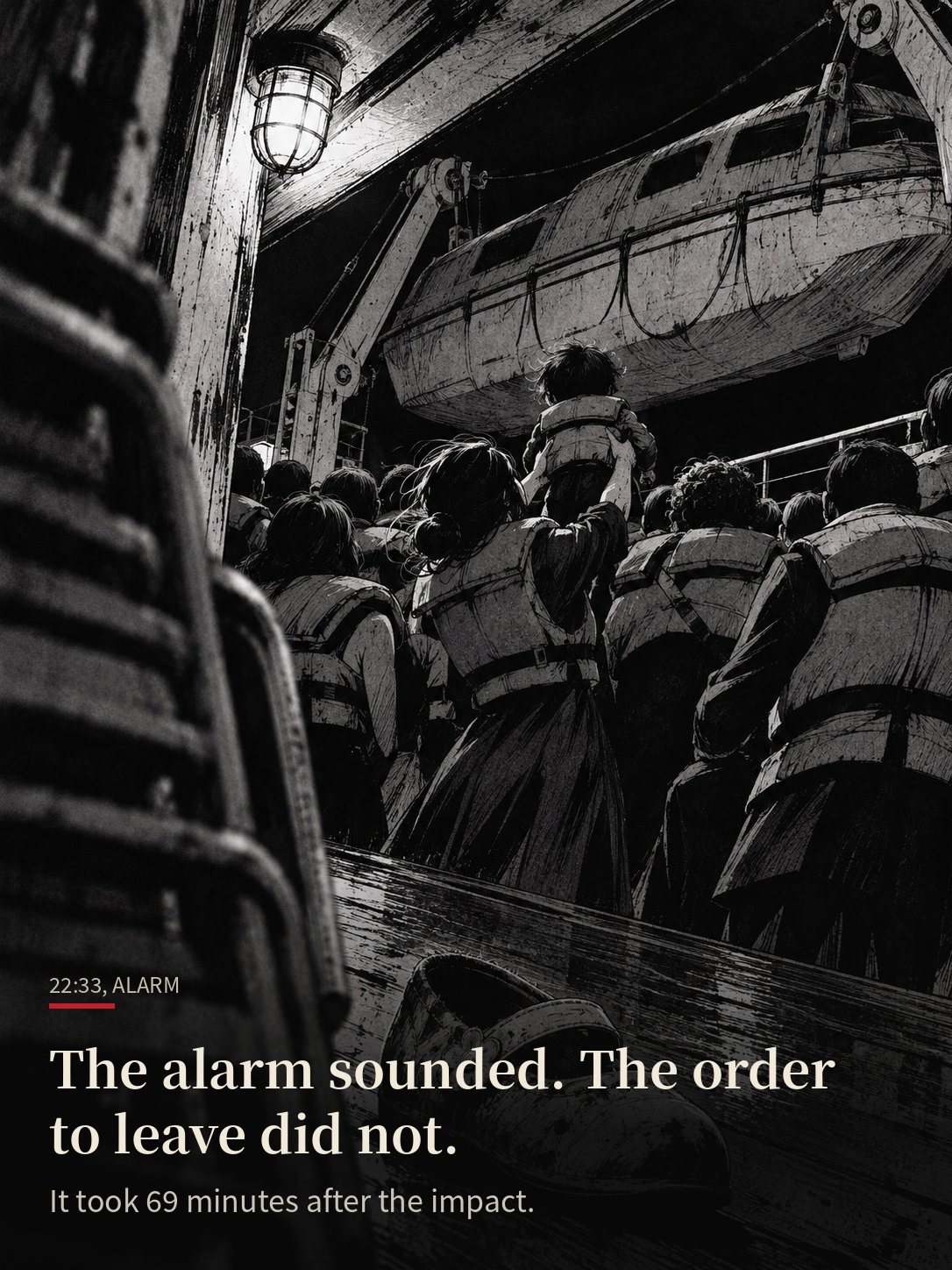
At 22:33:26, forty-eight minutes after the impact, the general emergency alarm sounded.
Two minutes later, at 22:35:53, the captain decided to abandon ship. The list was about 5 degrees.
The order to leave was still not given.
By 22:48 the ship was leaning 11 degrees to starboard, and still no order had come.
Crew members did what they could without one. A Hungarian musician who played on board helped frightened children into lifejackets, a colleague said, and was last seen heading for his lifeboat station. He did not survive. (MIT) (PDN)
22:54
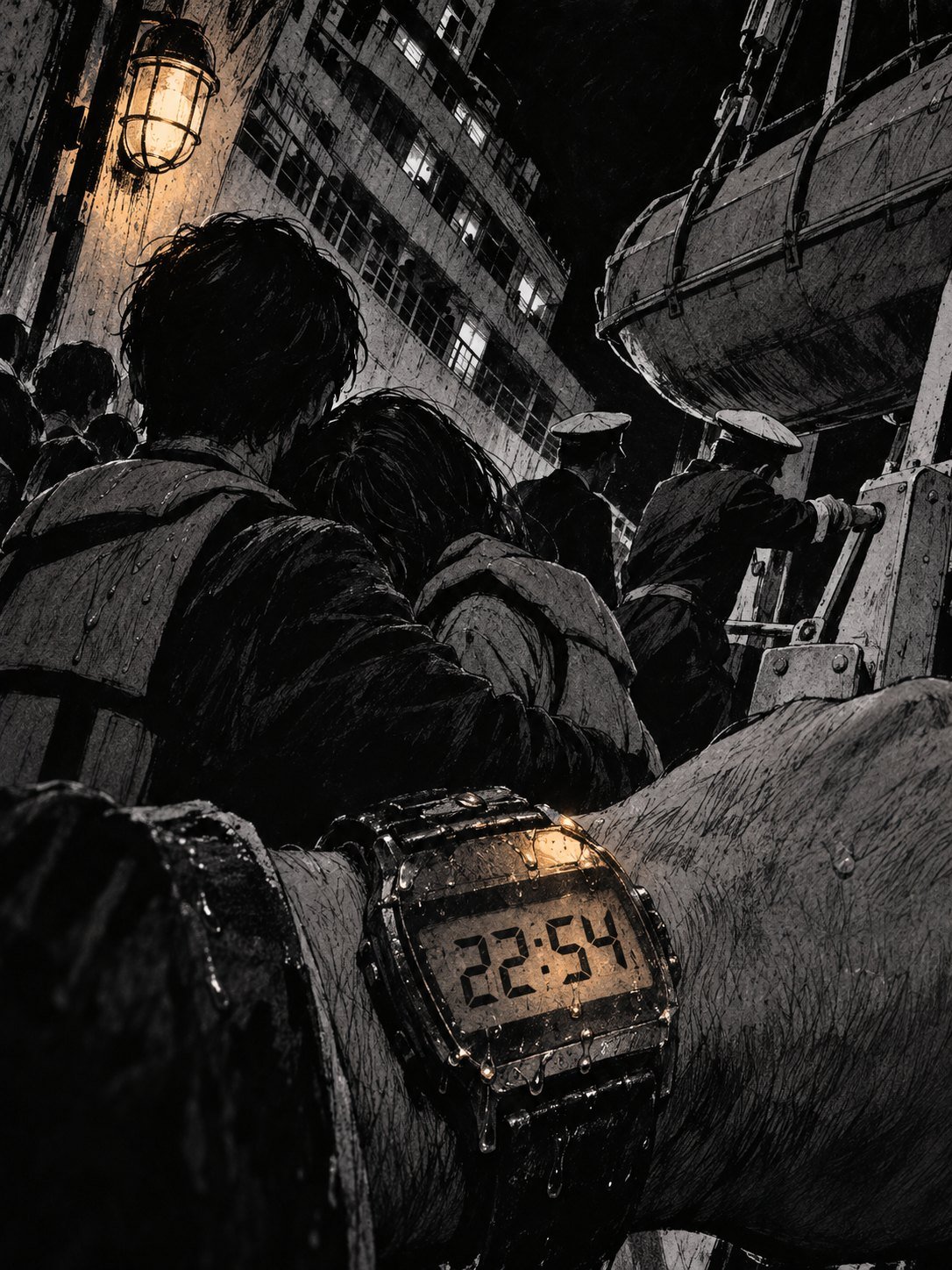
At 22:54:10 the abandon-ship order went out over the public address system. Sixty-nine minutes after the rock.
Lifeboats began lowering at 22:55.
At 22:57:41 the captain told Livorno that abandon ship had been ordered.
On deck, there was no order of any other kind. A survivor remembered people grabbing life vests out of each other’s hands. “There was no law. Just survival and that is it.” Investigators later found that nobody took a roll call or counted the passengers getting into the boats, and officers and passengers reported confusion over language.
A patrol boat had already seen it at 22:44, resting on the bottom near the shore of Giglio, still tilting. (MIT) (AP-2022) (SEATRADE)
Lifeboats on a leaning ship
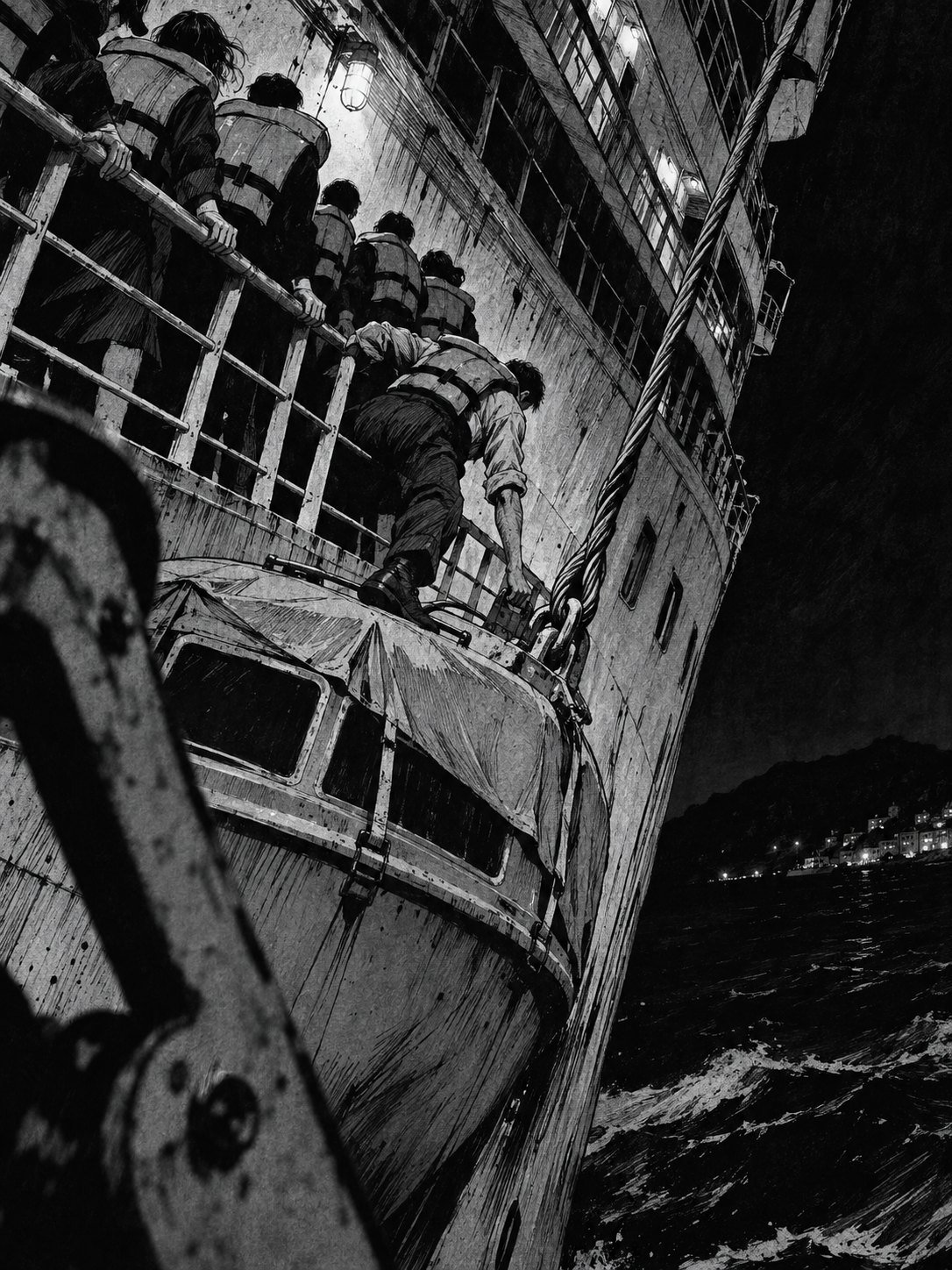
Lifeboats hang from davits and are lowered on cables. The more a ship leans, the harder that gets.
By 23:11 the list was over 25 to 30 degrees. Costa’s own president later said normal evacuation by lifeboat had become “almost impossible.”
Some passengers jumped and tried to swim for the rocks. The island’s fire chief said his men pulled about a hundred people out of the water. Others came ashore after sliding down the side of the ship.
Giglio’s deputy mayor went aboard to help. He told investigators it took him 20 minutes to find a senior officer. (MIT) (WIKI) (AP-2022) (BLOOM)
23:20, the bridge
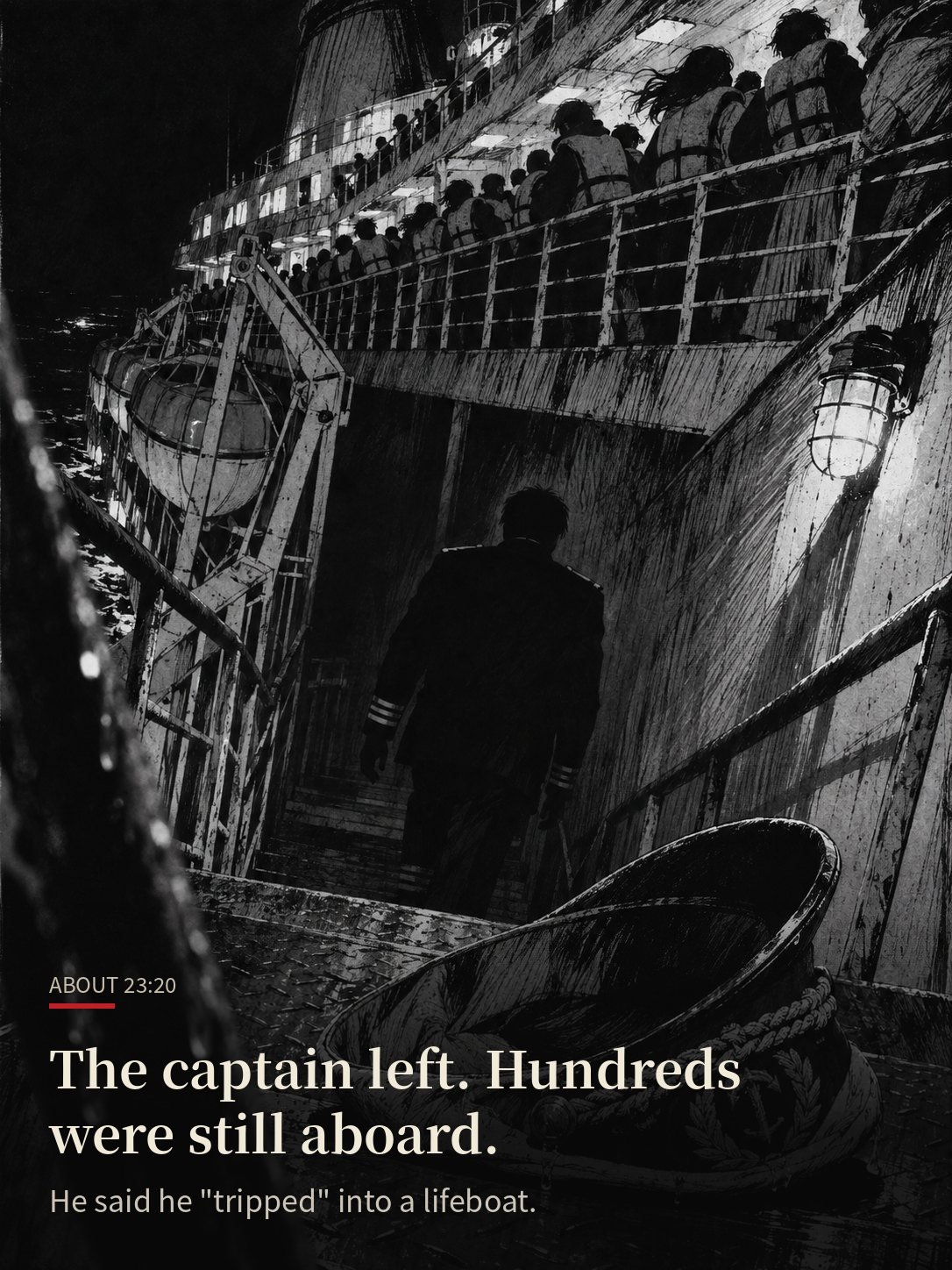
At about 23:19 the captain ordered the bridge team out to the external bridge wing. Investigators wrote that the crew, “Master included, abandoned the bridge at about 23 20.”
Investigators said Schettino had left the ship by 23:30.
A French couple told the Associated Press they saw the captain in a lifeboat, under a blanket, well before everyone was off. Passengers waiting for guidance also died in the Daegu subway fire of 2003, where a second train stopped beside the burning one and its doors stayed shut.
At 23:38 Livorno called him. He estimated that 200 to 300 people were still aboard. (MIT) (WIKI) (WT)
From the rocks
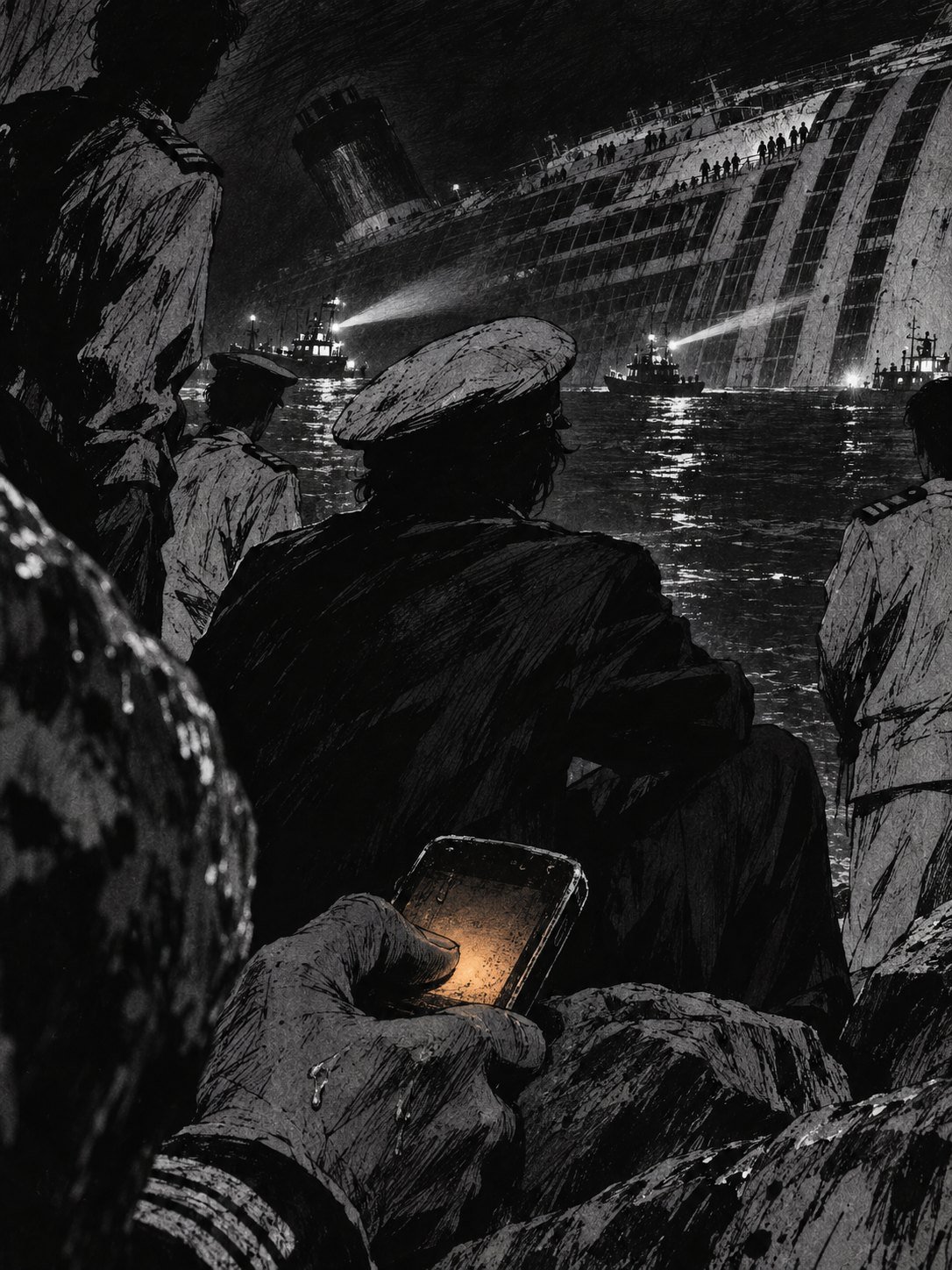
At his first hearing, Schettino gave his own account of how he left: “Suddenly the system unblocked itself and I tripped and I found myself inside the life boat with a number of passengers.”
At 00:34 the coast guard reached him by mobile phone. He said he was in a lifeboat. “I am here with the rescue boats, I am here, I am not going anywhere.”
A Giglio police officer said he found the captain on shore, offered him a dinghy to go back, and noticed that his clothes were dry.
By midnight the ship was leaning 40 degrees. Later in the rescue it reached about 80. (ABC) (MIT) (AJ) (WIKI-FS)
01:46, Livorno
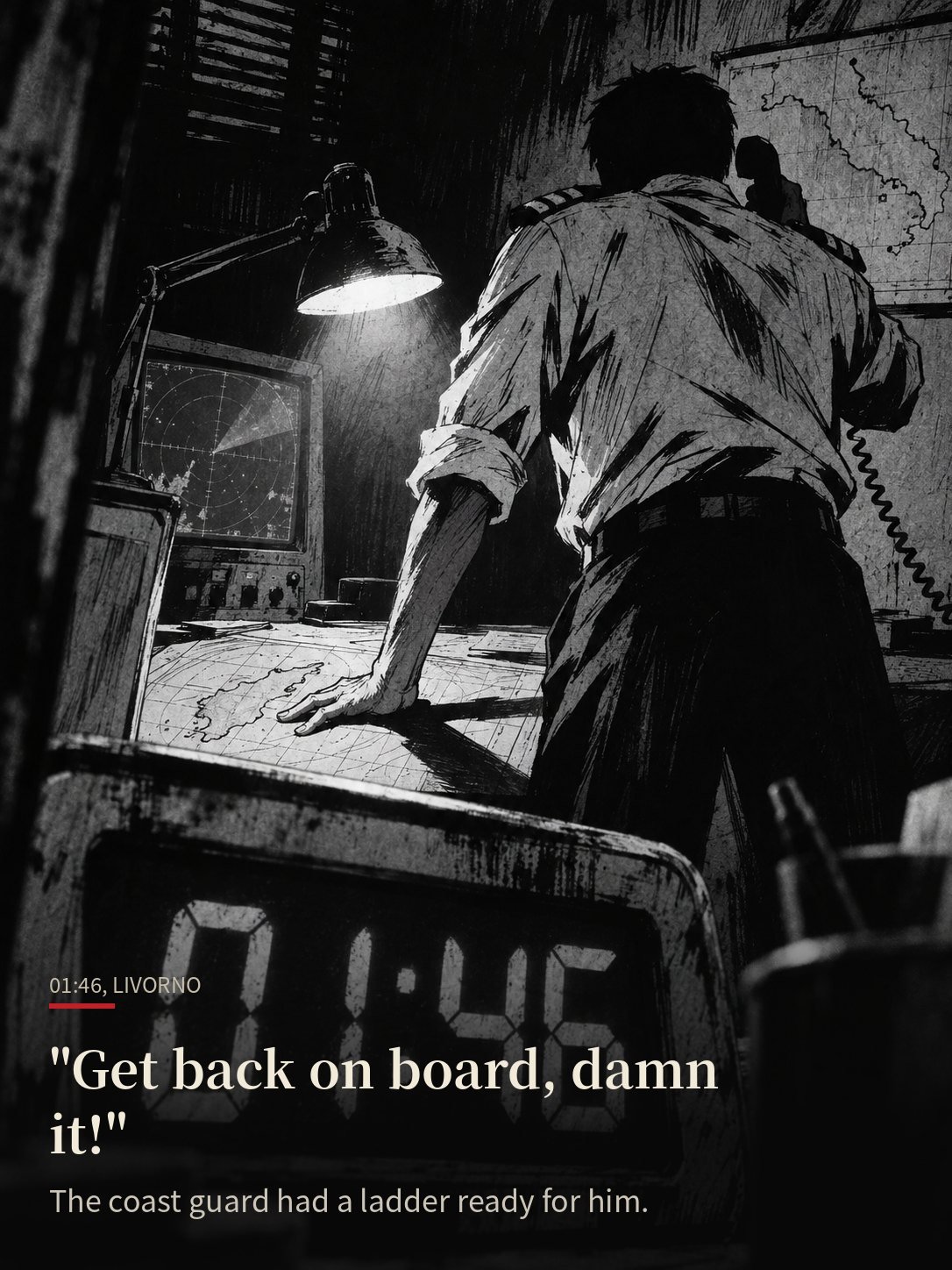
At 01:46 the commander on duty at Livorno, Gregorio De Falco, called again.
He told the captain to take his boat to the bow on the starboard side, where there was a pilot ladder, climb back aboard and report how many people were still there. “Listen Schettino, there are people trapped on board.”
The captain said he was not going because the other lifeboat had stopped.
“You go back on board! That is an order!” Then the line that went around the world: “Vada a bordo, cazzo!” Get back on board, damn it.
The ship’s chaplain said he met Schettino on shore at about 2:30 a.m., and that the captain “cried like a child for about a quarter of an hour.” (US) (CBS) (AJ) (WBUR) (GMA)
Ladders down the hull
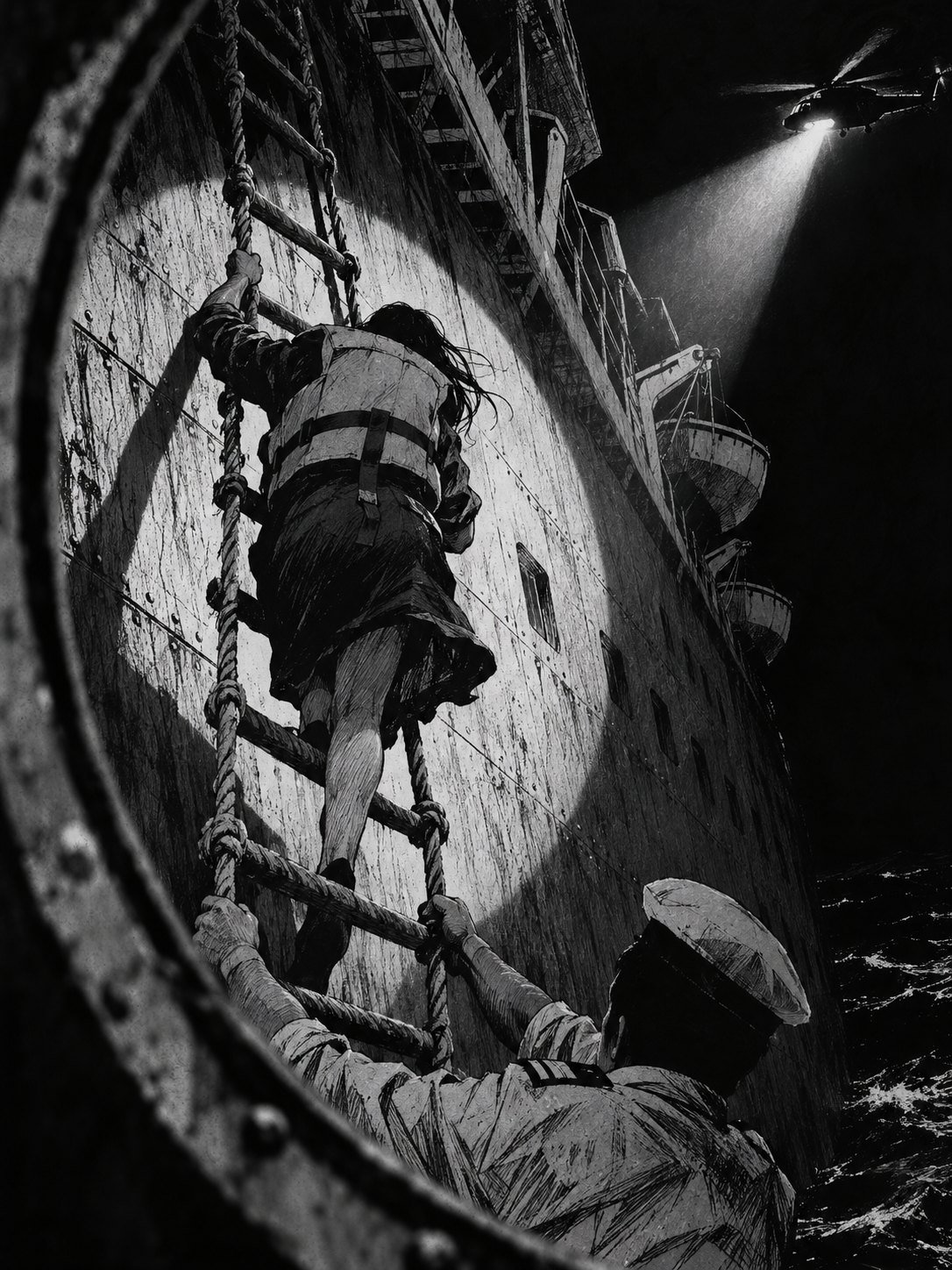
The people still aboard did not wait for the captain.
Rescue boats and helicopters worked through the night. Helicopters lifted off dozens of people who were still aboard hours after the captain left.
On shore, Giglio’s church opened its doors. Islanders brought food and blankets and found places for hundreds of strangers to rest.
At 06:17 on 14 January the rescue on board was declared complete. In all, 4,197 people were brought to safety. (CBS) (AP-2022) (MIT)
Nearly a day later
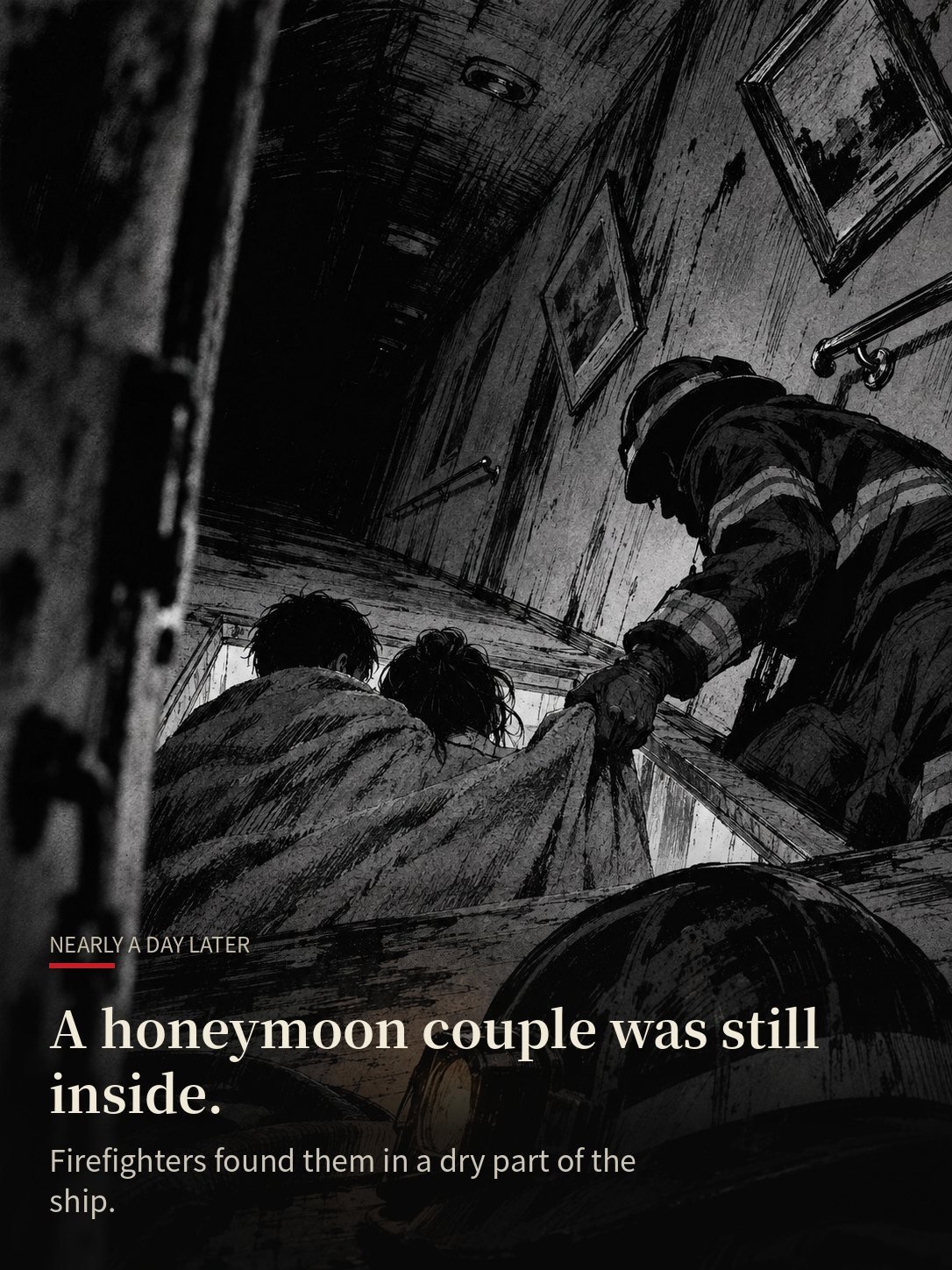
Searchers went on through the wreck.
Nearly a day after the ship rolled over, firefighters found a South Korean couple on their honeymoon, both about 29, trapped in a dry part of the ship.
They were in good condition.
Thirty-two people did not come home: 27 passengers and 5 crew. The youngest was a five-year-old girl travelling with her father. Divers found her on Deck 4 in February, more than five weeks after the wreck. Her father was among the dead too. (NBC) (WIKI) (RTR-2015) (JOURNAL) (PDN)
Nineteen hours
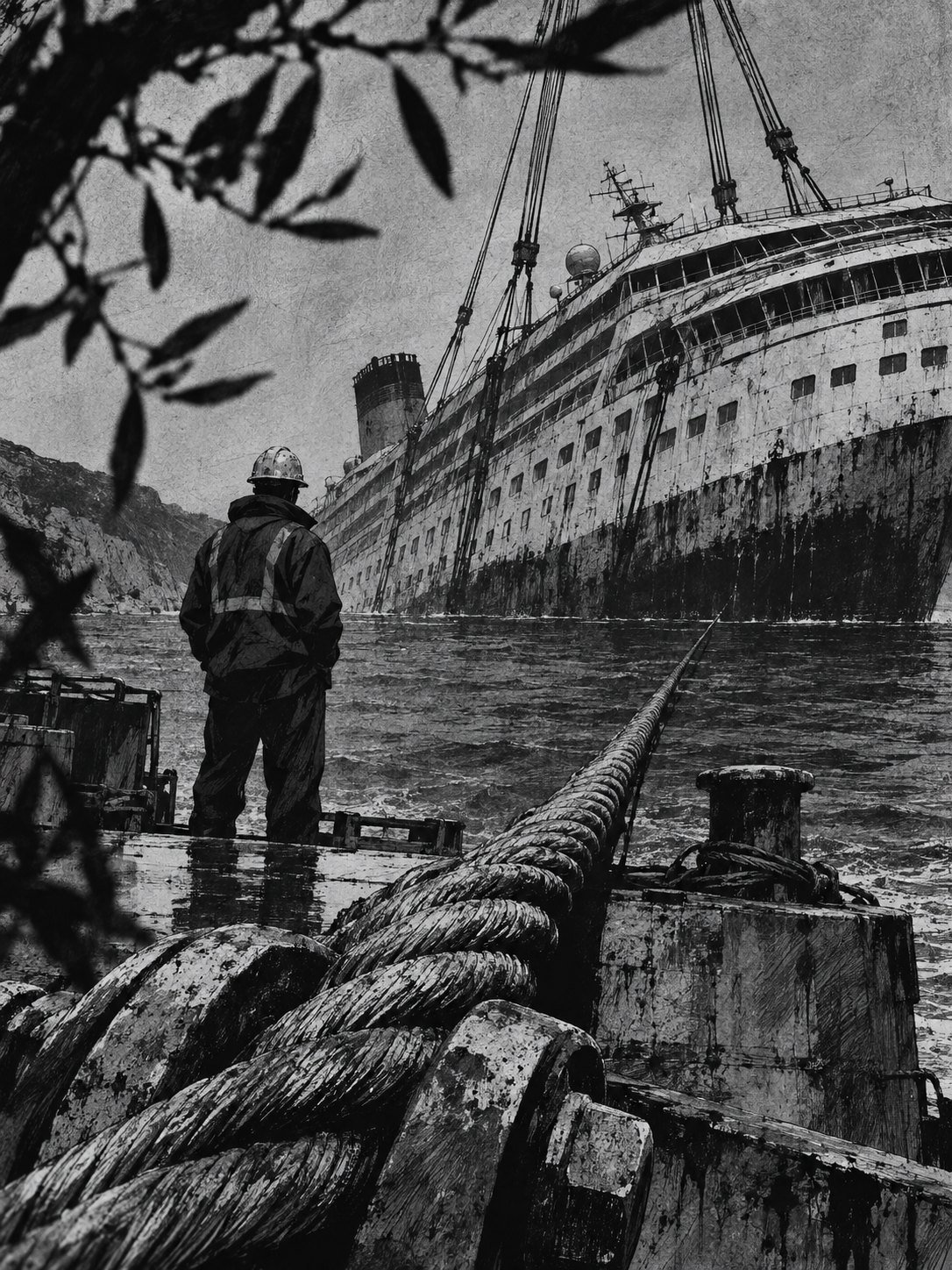
For more than a year and a half the wreck lay on its side off Giglio Porto.
On 16 September 2013 salvage crews began to roll it upright, a method called parbuckling. Shortly before 3 a.m. on 17 September, about 19 hours later, the Costa Concordia stood upright again.
In February 2014 a Spanish salvage diver cut his leg on a metal sheet and later died. He was the only person to die in the salvage, bringing the toll to 33.
The salvage eventually cost about $1.2 billion. The hull was refloated in July 2014 and towed to Genoa for scrapping. There, on 3 November 2014, the remains of the last missing victim, a crew waiter from India, were recovered. (WIKI) (BRIT) (GC-LAST)
Rebibbia, 2017
In April 2013 Costa Cruises avoided trial by agreeing to a €1 million fine. Five employees, including the helmsman, took plea deals. None went to prison.
Schettino was tried alone. On 11 February 2015 the court in Grosseto, sitting in a theatre to fit everyone in, convicted him and sentenced him to 16 years. Prosecutors had asked for 26.
In its written reasons the court said he had boarded a lifeboat knowing people were still aboard, “to save himself with the precise intention of not getting back on the ship.”
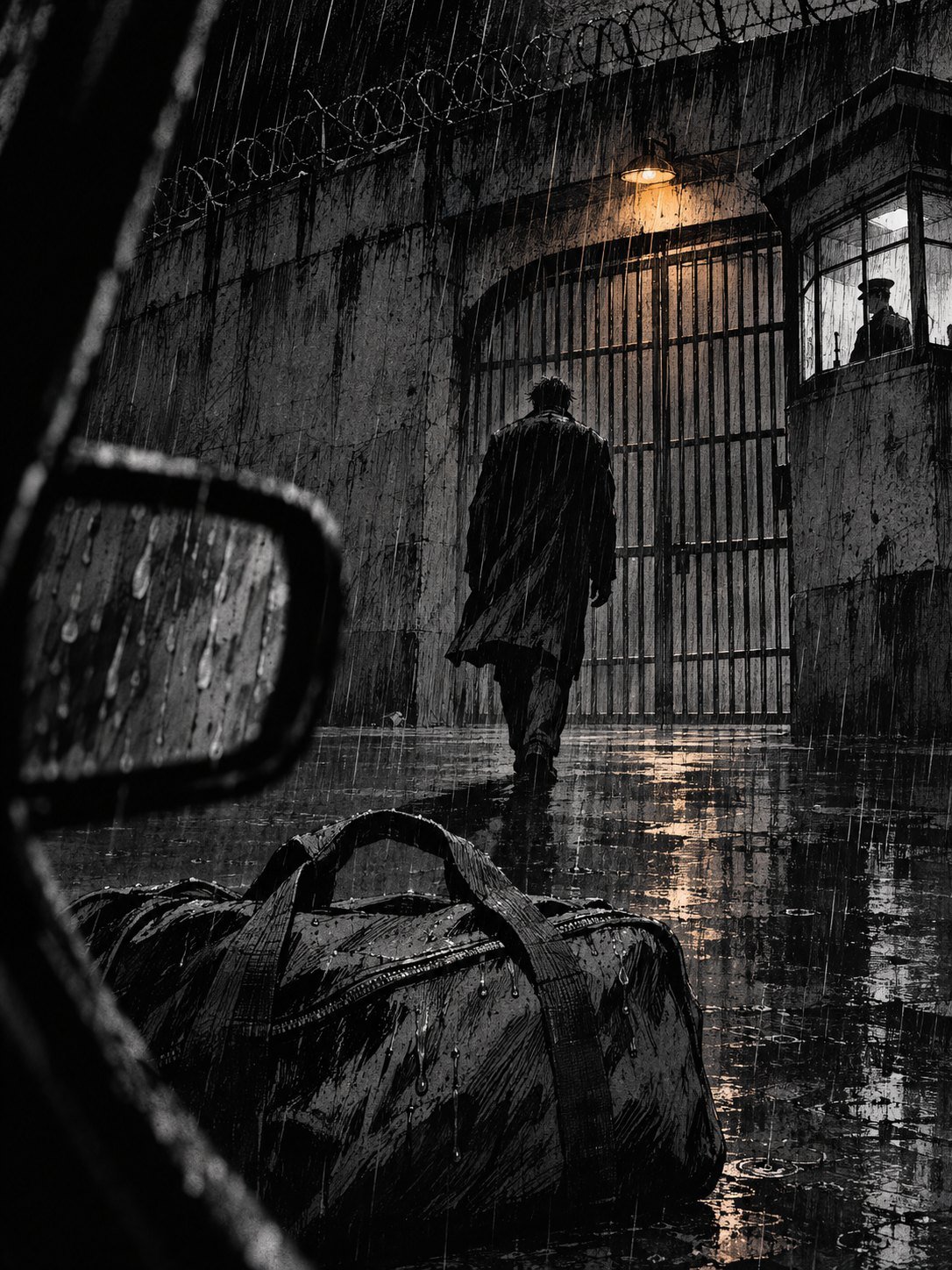
The sentence was upheld on appeal in 2016 and by Italy’s highest court on 12 May 2017. That evening he surrendered at Rebibbia prison in Rome. (WIKI) (RTR-2015) (ABA) (ANSA-2015) (TIME) (RTR-2017) (MLOG)
Case notes: a salute, a rock and 69 minutes
In 2012 a cruise ship carrying 4,229 people sailed close to an Italian island to salute it, hit a rock and rolled onto its side. Its captain left before everyone else was off (MIT) (ANSA-2015).
Where the case stands (as of November 2026)
The case is closed in court. Francesco Schettino is the only person sent to prison; his 16-year sentence became final in May 2017 (RTR-2017) (MLOG).
Costa Cruises paid a €1 million fine to avoid trial, and five employees took plea deals without prison time (WIKI).
Timeline

The captain left the ship while hundreds of people were still aboard.
PROVENEXAMINED
| When | What happened |
|---|---|
| 13 Jan 2012, 19:18 | Costa Concordia leaves Civitavecchia with 4,229 people aboard (MIT) |
| 21:39 | Captain Schettino takes command of the watch for the sail-past of Giglio (MIT) |
| 21:45:07 | Port side strikes a rock off Le Scole; propulsion lost (MIT) |
| 21:45:58 | Blackout; emergency generator runs 41 seconds (MIT) |
| 22:06 | Livorno coast guard learns of the emergency via the Carabinieri, not the ship (MIT) |
| 22:33 | General emergency alarm (MIT) |
| 22:54 | Abandon-ship order, 69 minutes after impact (MIT) |
| About 23:20 | Bridge abandoned; captain off the ship by about 23:30 (MIT) (WIKI) |
| 01:46, 14 Jan | De Falco orders Schettino back aboard (US) (CBS) |
| 06:17, 14 Jan | Rescue on board declared complete; 4,197 rescued (MIT) |
| 16–17 Sept 2013 | Parbuckling rights the wreck in about 19 hours (WIKI) (BRIT) |
| 27 July 2014 | Hull moored in Genoa for scrapping (BRIT) |
| 11 Feb 2015 | Schettino sentenced to 16 years in Grosseto (RTR-2015) (ABA) |
| 12 May 2017 | Sentence final; he surrenders at Rebibbia prison (RTR-2017) (MLOG) |
Evidence locker
Real photographs only. Illustrations elsewhere in this file are AI-generated.
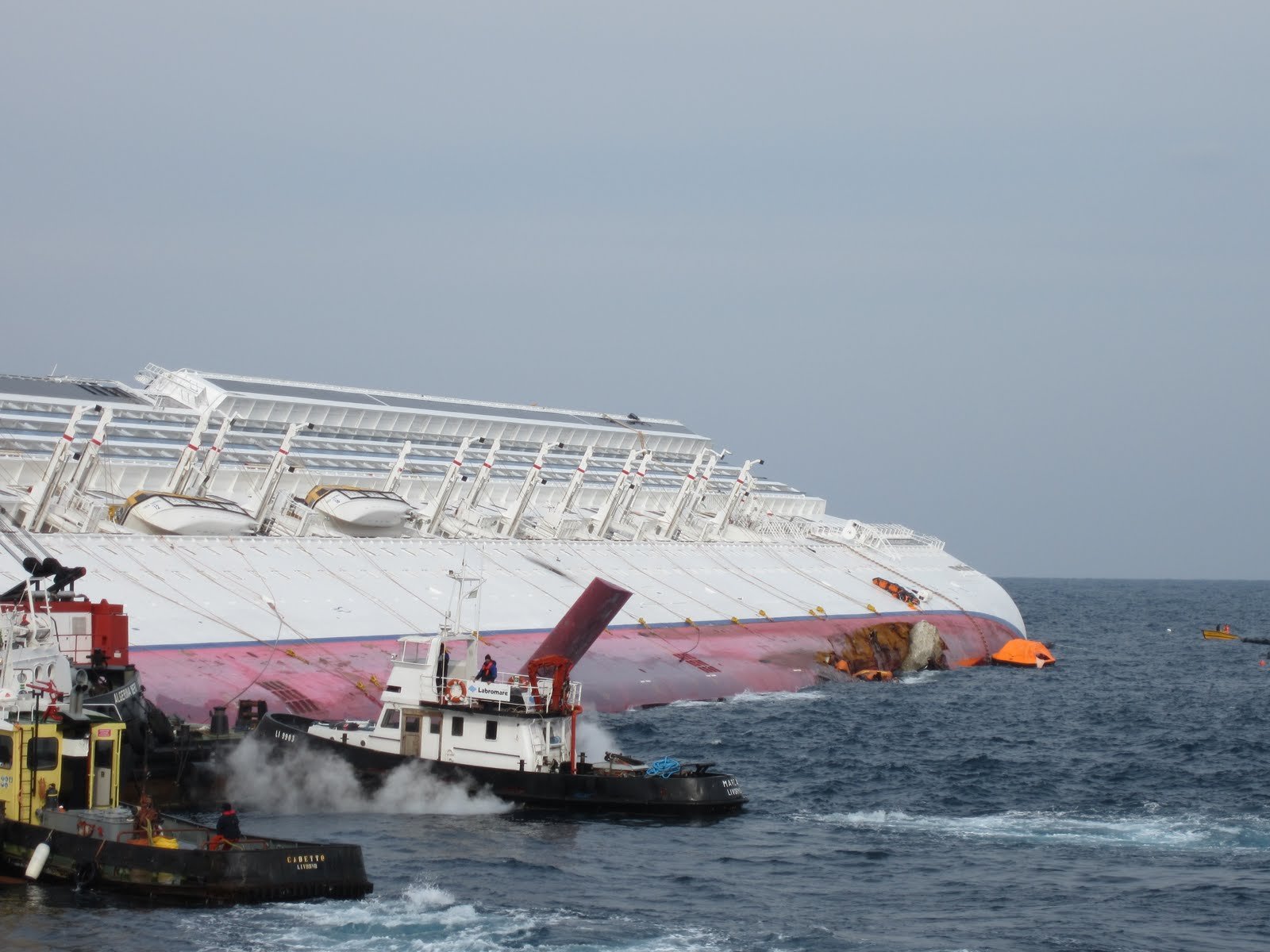 EXHIBIT A
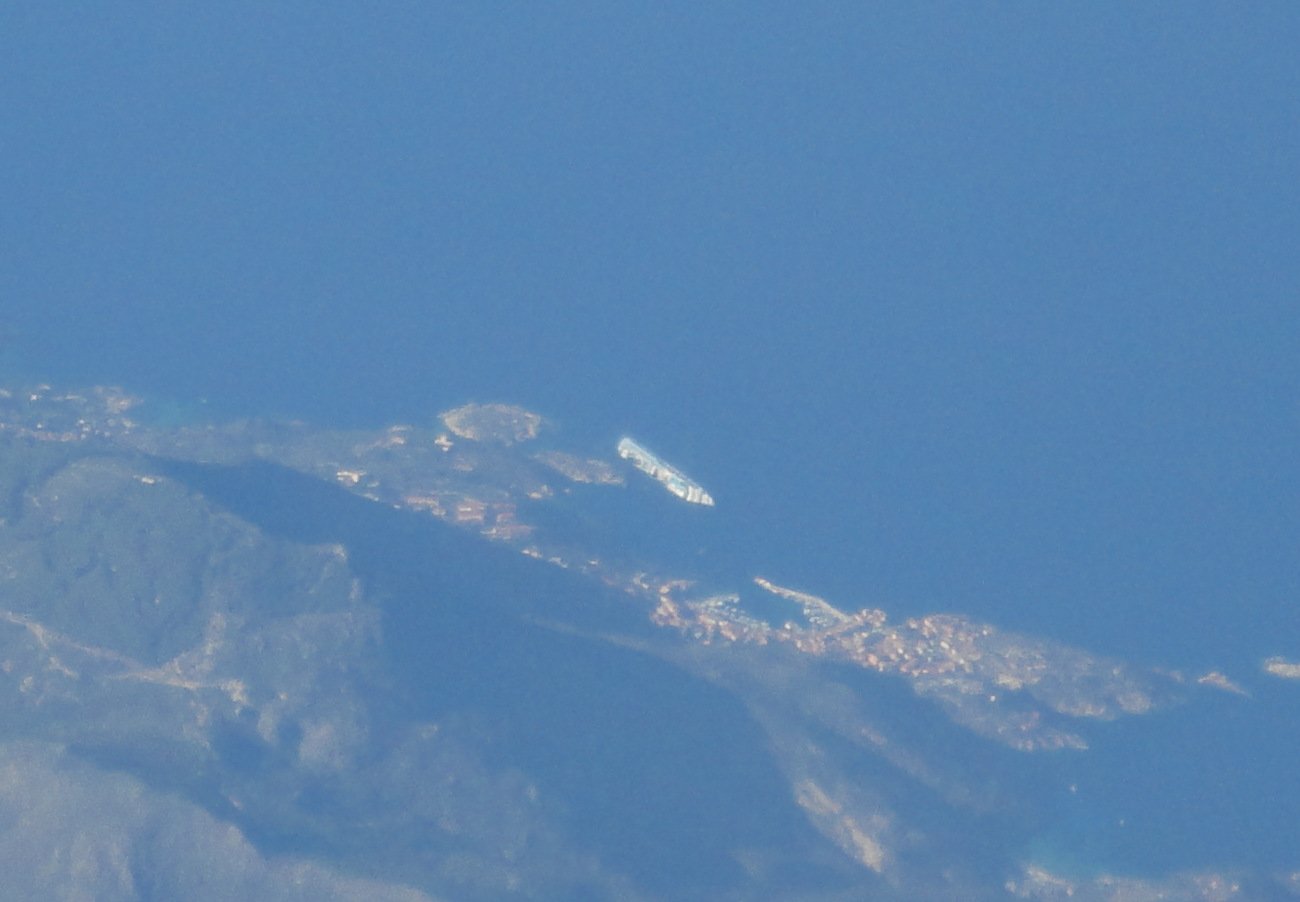 EXHIBIT B
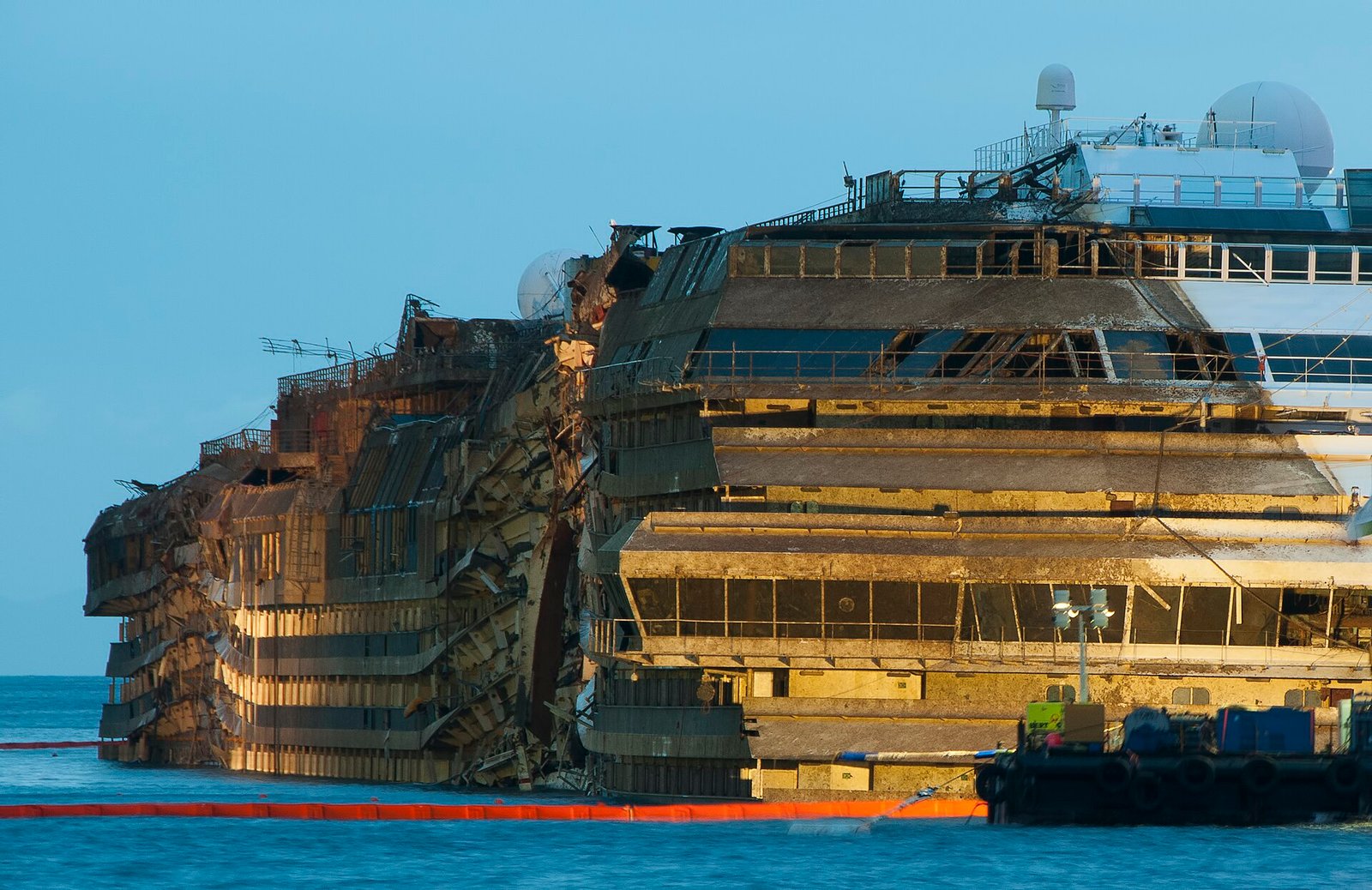 EXHIBIT C
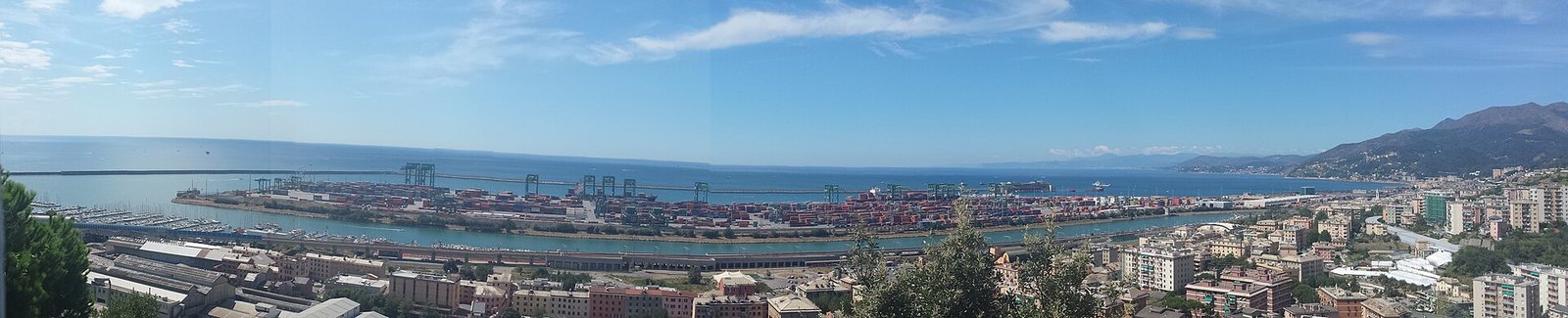 EXHIBIT D
Where the records disagree
| Detail | What sources say |
|---|---|
| Who wanted the salute | Schettino said Costa planned it; Costa’s chief executive called it unauthorised (MG) |
| How he left the ship | He said he “tripped” into a lifeboat; the court found he boarded it to save himself (ABC) (ANSA-2015) |
| The fire-service video | Prosecutors said it showed him by a lifeboat while others scrambled on deck; this was not confirmed (GC-VID) |
| When the bridge was abandoned | About 23:20 in the report’s summary; 23:32 in its chronology (MIT) |
| The death toll | 32 died in the wreck; 33 counting a salvage diver in 2014 (RTR-2015) (WIKI) |
What we still don’t know
- Who first decided the ship should sail so close to Giglio that night.
- Exactly how and when the captain ended up in a lifeboat.
- Why the abandon-ship order took 69 minutes.
- Whether an earlier order would have saved some of the 32.
What happened after
The wreck was raised, towed to Genoa and scrapped. The last missing victim was recovered there in November 2014 (BRIT) (GC-LAST).
Editor’s note
The detail in this case that makes me angriest is the announcement. The ship had hit a rock, it was leaning, and the lights had gone out. In that moment most people look to the crew for an explanation. They are frightened, but they tell themselves that the people who run this ship are saying it’s fine. What they heard was that there had been an “electrical failure.” When passengers are not told the real danger, they lose the chance to prepare for it. I keep thinking about the people who believed that announcement and waited. And the captain leaving before them feels like the person in charge walking away from the very trust he had asked everyone else to keep.
I also want to push back on a question that comes easily in hindsight: why didn’t people get out sooner? Once we know how it ended, it sounds simple. But many of these passengers had boarded that afternoon and had never been told what to do in an emergency. On a ship you have never been on before, how could a passenger judge the situation better than the officers in charge of it? These people bought tickets to travel safely. It troubles me that, in an emergency, they were apparently expected to know whose word to doubt.
I have no argument with the captain carrying a heavy share of the blame. But looking only at the outcome, I am not sure the company’s responsibility was fully dealt with. Passengers did not board because they trusted one man. They paid because they trusted the company to run the ship safely and to be ready to get them off it if something went wrong. I haven’t read every finding against the employees or the full reasoning behind each sentence, so I won’t say whether the penalties were fair. Still, punishing the captain does not answer every question for the company. Were there checks to stop a dangerous course? Did the emergency drills and the chain of reporting actually work that night? Those are the questions I would want answered before I could accept how this ended.
— Strange World Files
Case file summary
- What: A cruise ship struck a rock during a sail-past salute and capsized off an island
- Where: Isola del Giglio, Tuscany, Italy
- When: Friday 13 January 2012, 21:45
- Toll: 32 dead of 4,229 aboard; 4,197 rescued
- Status: Captain convicted, 16 years (final, 2017)
Illustrations are AI-generated artistic interpretations, not photos. No real person is depicted with a recognizable face. Read how we research and illustrate these files.
Sources
- Ministry of Infrastructure and Transport, Marine Casualties Investigative Body — Cruise ship Costa Concordia, Marine casualty on January 13, 2012: Report on the safety technical investigation (2013)
- Reuters (via gCaptain) — Costa Concordia captain found guilty, sentenced to 16 years
- Reuters (via gCaptain) — Costa Concordia captain heads to prison as Italy upholds conviction
- ANSA — Court explains Concordia captain Schettino’s 16-yr sentence
- ABA Journal — Captain guilty in Costa Concordia shipwreck that killed 32; gets 16 years
- Marine Log — Costa Concordia: Schettino starts serving prison term
- CBS News / AP — Coast guard to captain: go back on board
- Al Jazeera — Costa Concordia audio transcript
- L’Unione Sarda — La telefonata tra De Falco e Schettino (Italian transcript)
- WBUR Here & Now — Coast Guard to cruise captain: ‘Get back on board’
- ABC News — Cruise captain says he ‘tripped’ into lifeboat, couldn’t get out
- ABC News / GMA — Cruise ship captain “cried like a baby” after reaching shore
- gCaptain — Last victim of Costa Concordia wreck believed found
- NBC News / AP — 2 survivors on honeymoon rescued after found trapped in capsized cruise ship
- The Scotsman — Cruise disaster: ‘We heard a rumble, the ship tilted, the lights went off’
- Mail & Guardian — Under fire Costa Concordia captain ‘ordered to salute island’
- Encyclopaedia Britannica — Costa Concordia disaster
- TIME — Costa Concordia captain’s 16-year sentence upheld on appeal (2016)
- Wikipedia — Costa Concordia disaster
- Wikipedia — Francesco Schettino (citing Irish Times for the police officer’s account)
- AP via KSTP — Italy marks 10 years since deadly Costa Concordia shipwreck (13 Jan 2022)
- Seatrade Cruise News — Costa Concordia casualty probe pinpoints series of human failures
- Bloomberg — Concordia rescue lacked officers’ leadership, witness says (19 Jan 2012)
- AP via Peninsula Daily News — Tales emerge of missing and dead in ship disaster (19 Jan 2012)
- TheJournal.ie — Child’s body recovered from Costa Concordia (22 Feb 2012)
- AP via Washington Times — Third survivor rescued from stricken cruise ship (15 Jan 2012)