The Eastland Disaster: 844 People Died on a Ship That Never Left the Dock
Narrated Mystery: press play and hear the whole case read aloud, like a true crime podcast episode, or an audiobook for a long drive (about 13 minutes). The narrator is an AI voice.
Listen to the narration above first, then read along. The key words are underlined in the story.
- wharfa place where boats tie up to load and unload
- hullthe main body of a ship
- portholessmall round windows in the side of a ship
- charteredhired for a special trip
- gangwaya board or bridge for walking onto a ship
- capsizedturned over in the water
- ballastheavy material kept low in a ship to keep it steady
- top-heavyheavier at the top than at the bottom, so it tips easily
1. Where was the Eastland when it rolled over?
Still tied to its dock on the Chicago River, between Clark and LaSalle streets.
2. How might the new lifeboat law have made the ship less safe?
The extra lifeboats sat high on the top deck and may have made her more top-heavy.
3. What happened to the people who were charged?
No one was ever convicted; a court found "barely a scintilla of proof."
It rolled over still tied to the dock
Saturday, 24 July 1915. 7:28 in the morning.
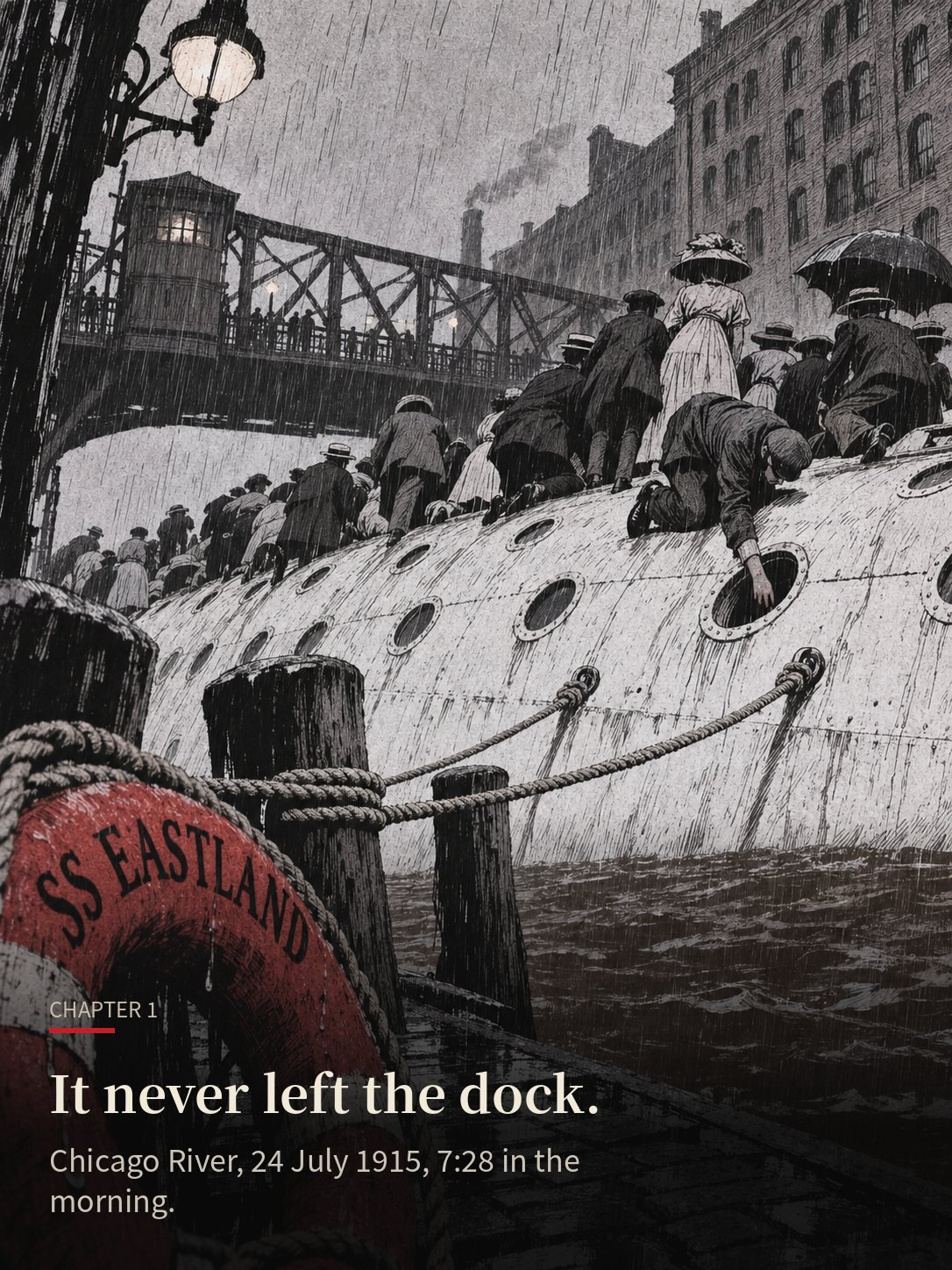
The SS Eastland was still tied to its dock on the Chicago River, between Clark and LaSalle streets. Its mooring lines were still on the posts. It had not gone anywhere.
Then it rolled over onto its side, in about 20 feet of water, roughly 20 feet from the wharf.
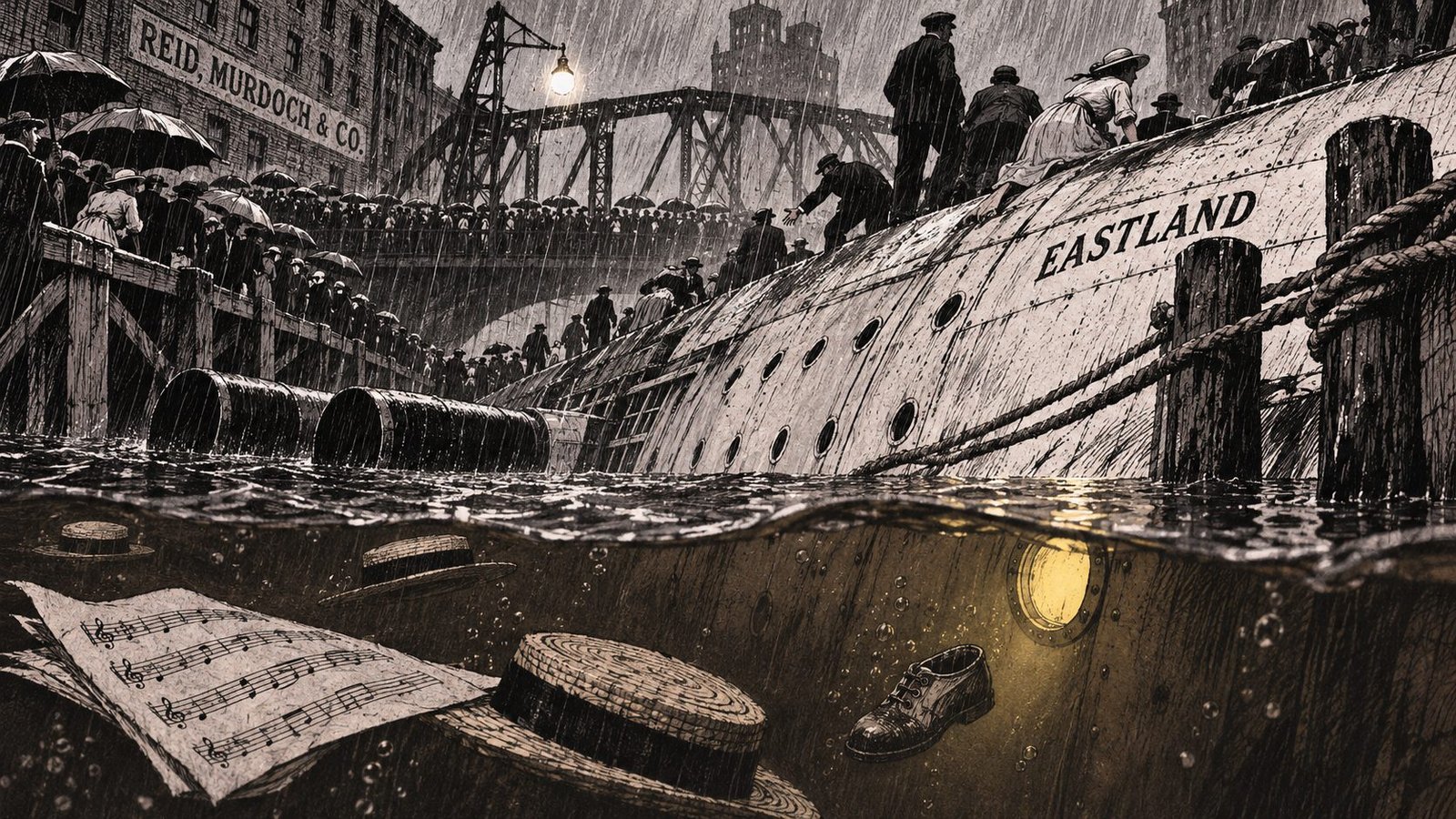
People who had been standing on the deck a moment earlier were now standing on the side of the hull, like a small white island in a brown river. Some reached down through the portholes. Below them, in cabins that were now under water, hundreds of people were trapped.
844 people died. That is more passengers than were lost on the Titanic.
And the ship had never left the dock. (WIKI) (SMITH)
A picnic in the rain
It was supposed to be the best day of the summer.
Western Electric’s Hawthorne Works was a giant telephone factory in Cicero, just west of Chicago. Every year the company held a picnic for its workers. That year it was across Lake Michigan, in Michigan City, Indiana.
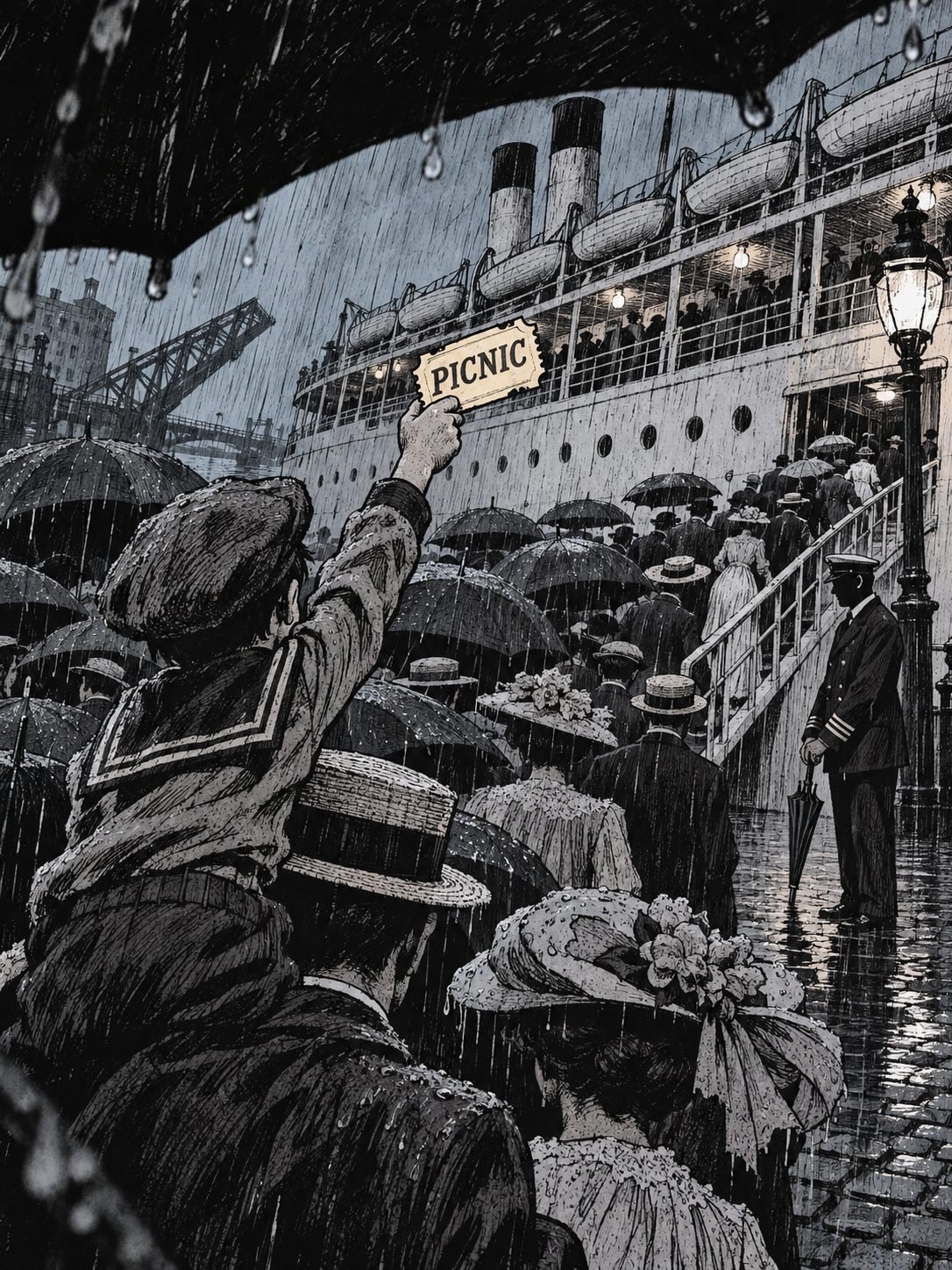
The company chartered several lake steamers to carry everyone across. More than 7,000 people came to the river that morning: workers, wives, husbands, children, sweethearts. Many were young immigrants, including hundreds from Chicago’s Czech neighbourhoods.
They wore their best clothes. Straw hats, white summer dresses, children in sailor collars.
It was raining. (WIKI) (CAC) (HIST)
By 7:10, the gate was closed
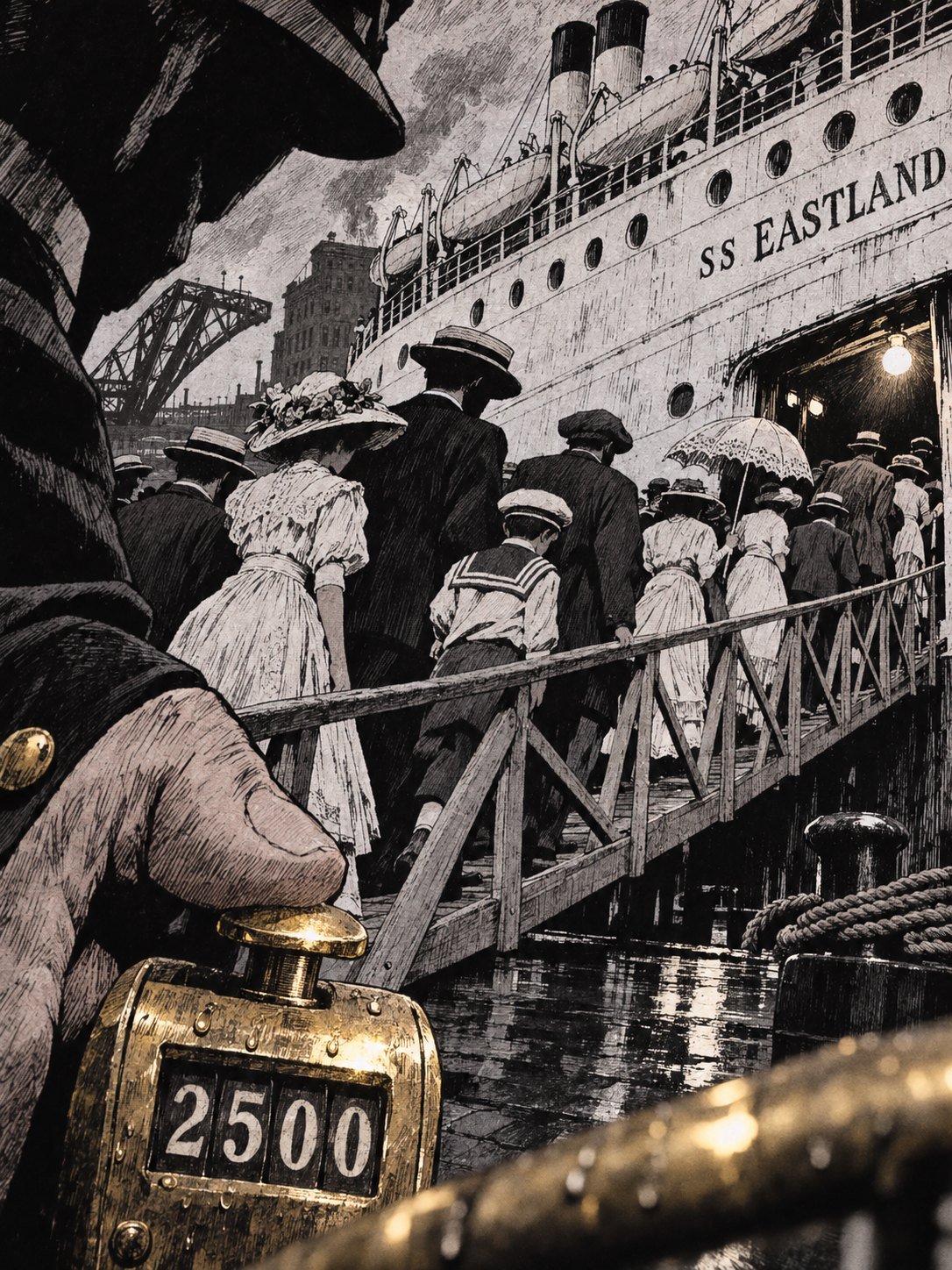
Boarding began at about 6:30.
The Eastland was the first ship on the list, and people wanted to get on early so they would have a good place for the trip. They came up the gangway in a steady line.
By 7:10, the Eastland had reached its limit of about 2,500 passengers. The gate was closed.
Thousands more were still waiting on the dock for the other ships.
Think about what 2,500 people means on a narrow lake steamer. Every deck, every railing, every cabin. On paper, the ship was allowed to carry them. That number had been raised only months earlier, and we will come back to why. (WIKI) (HIST)
The band was playing below deck
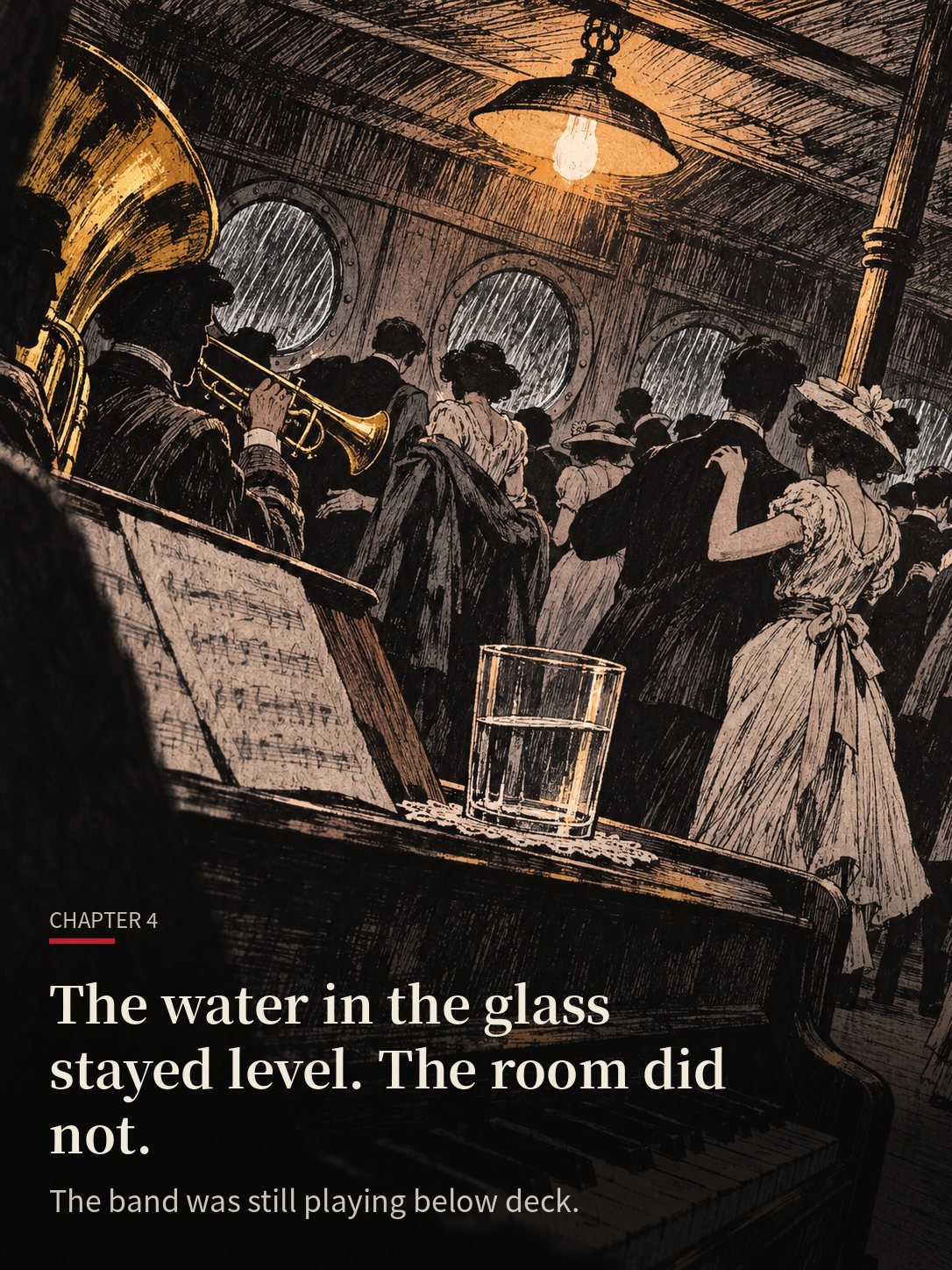
Out of the drizzle, many passengers went below to the cabins. It was warmer down there, and their best clothes would stay dry.
A band was playing in the main cabin. People started to dance.
Most of them were young. About 70 percent of the people who would die that morning were under 25.
Imagine a glass of water standing on top of the piano. The surface of the water stays level. The room around it does not.
That is the detail almost nobody inside noticed. The floor under their feet had already started to tilt. (SMITH) (MICH)
The Greyhound of the Lakes
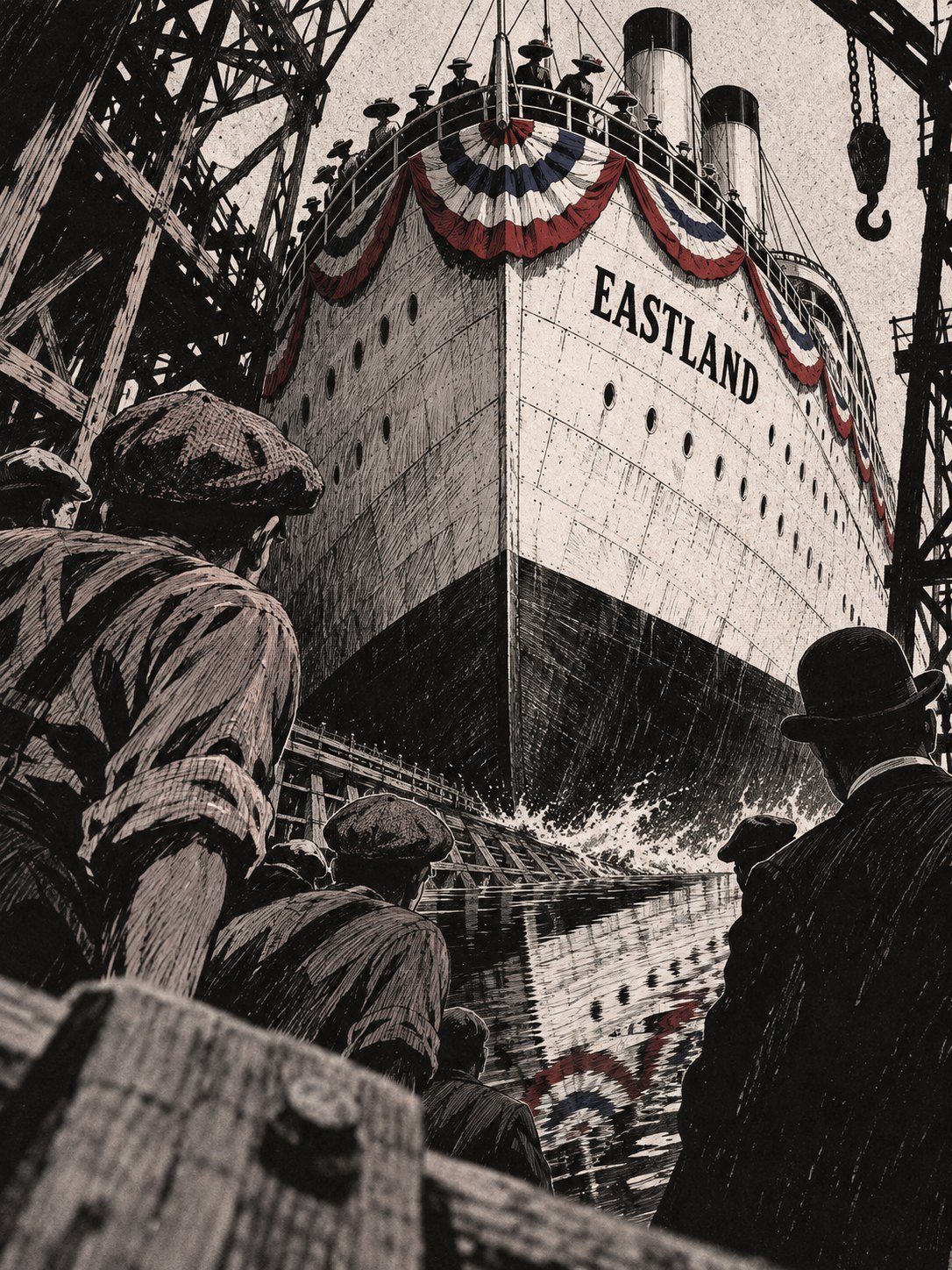
To understand how this happened, you have to go back twelve years.
The Eastland was launched on 6 May 1903 at Port Huron, Michigan, by the Jenks Ship Building Company. She was long, narrow and built for speed. People called her the “Greyhound of the Lakes.”
But her first season did not go to plan. She was not as fast as hoped, and she sat too deep in the water for the river she was meant to use. So that same year her machinery was moved around and new equipment was added.
Historians say those changes made her less stable. In plain words, she became easier to tip over. (WIKI)
It had happened before
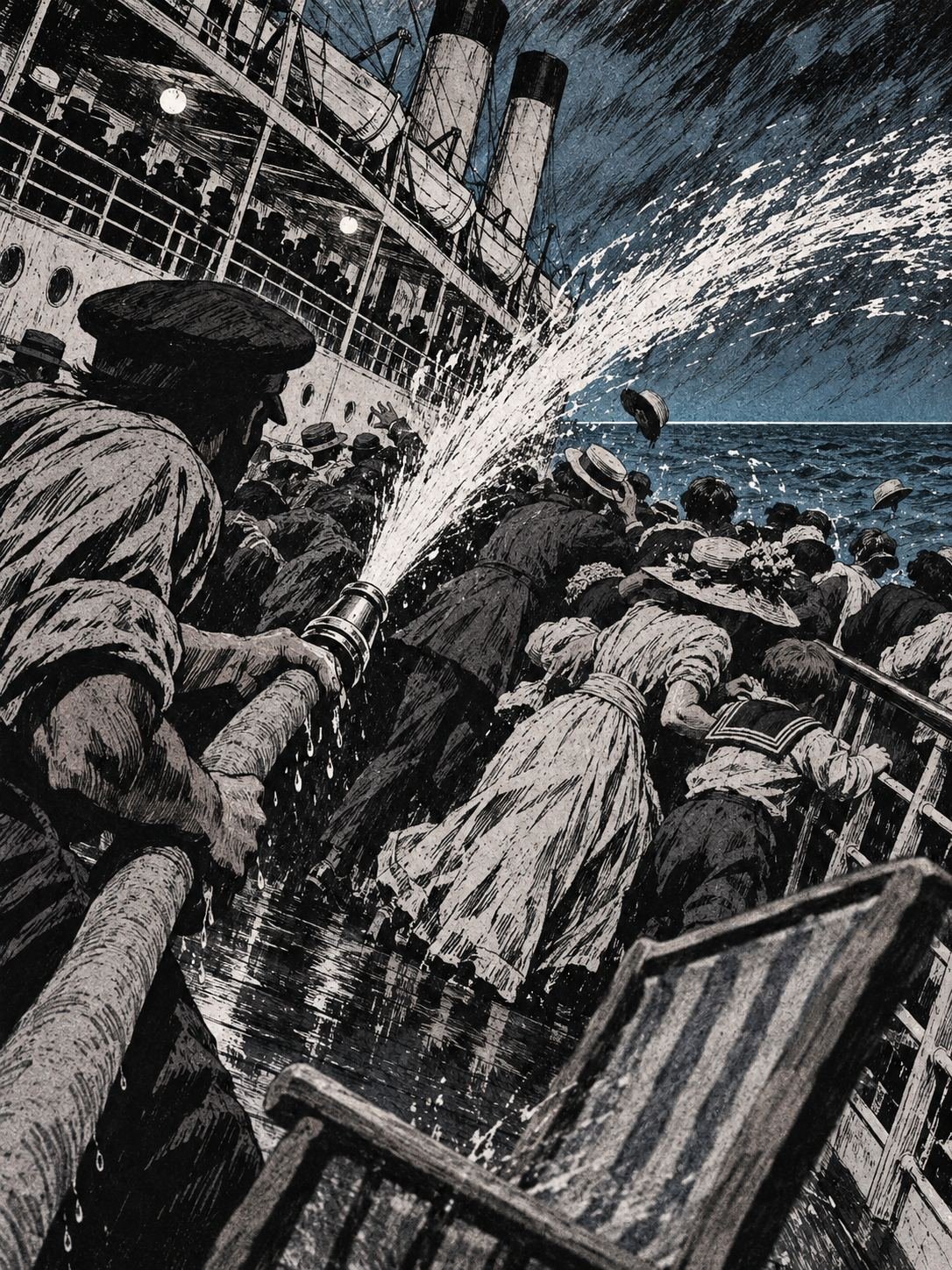
The Eastland had given warnings. More than once.
On 17 July 1904, leaving South Haven, Michigan, with about 3,000 people aboard, she nearly capsized. After that, her passenger limit was lowered.
On 1 July 1912, she listed about 25 degrees while loading in Cleveland.
In 1914, the wooden floor of one dining room was replaced with about two inches of concrete. That added 15 to 20 tons, high up in the ship.
And in 1913, according to HISTORY.com, a naval architect warned that unless her problems were fixed, there “may be a serious accident.” (WIKI) (HIST)
A law to save lives
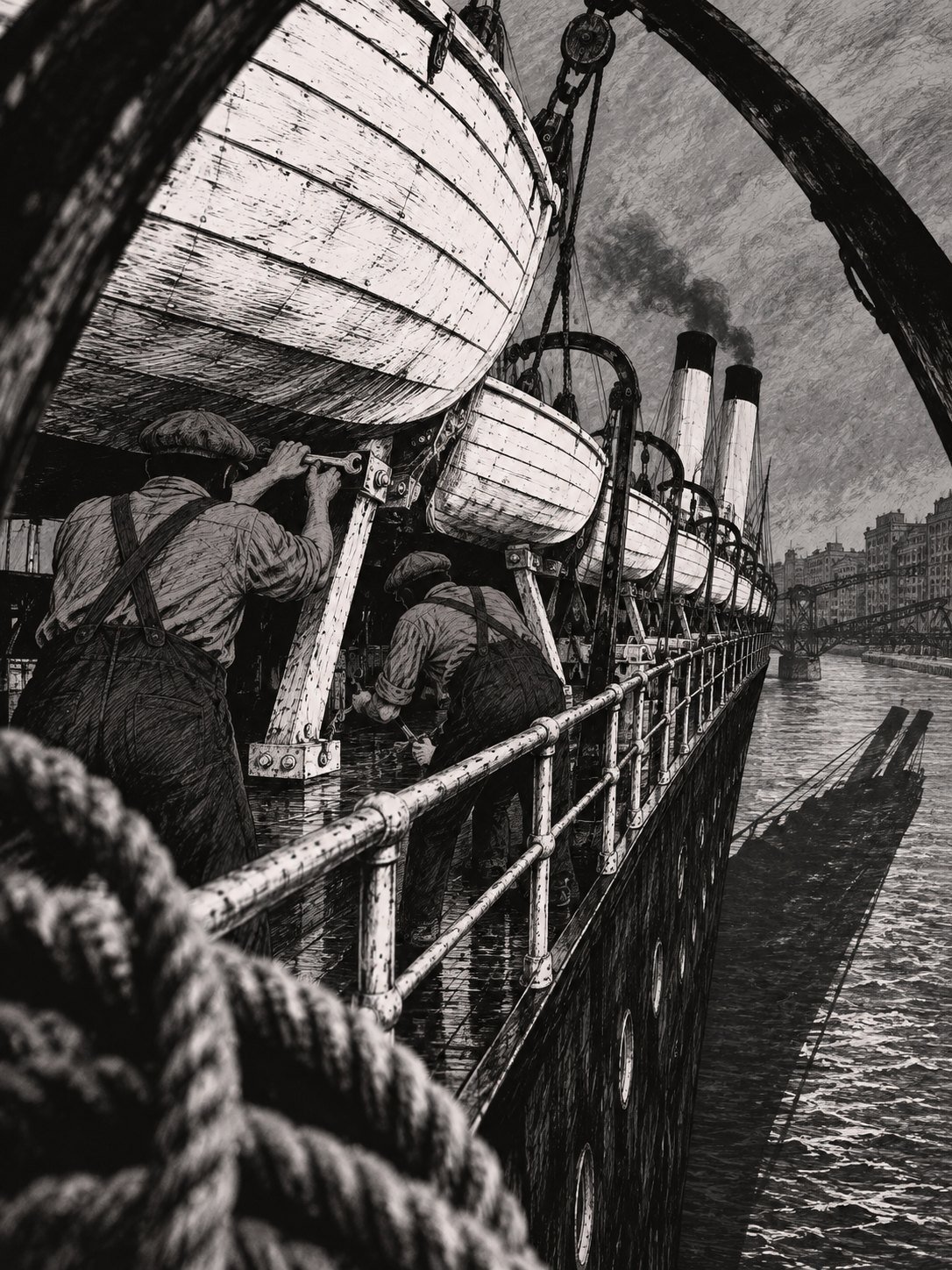
Then came a law that was meant to make ships safer.
After the Titanic sank in 1912 with too few lifeboats, the United States passed the Seamen’s Act in March 1915. Ships had to carry a full set of lifeboats.
The Eastland had been designed for six. On the morning of 24 July 1915 she carried 11, all of them up on the top deck. The new boats helped her owners get a license for about 2,570 passengers.
Lifeboats are heavy. And every one of them sat at the highest point of a ship that was already easy to tip.
The law that was supposed to save lives may have made her more top-heavy. (WIKI) (MICH)
In the engine room
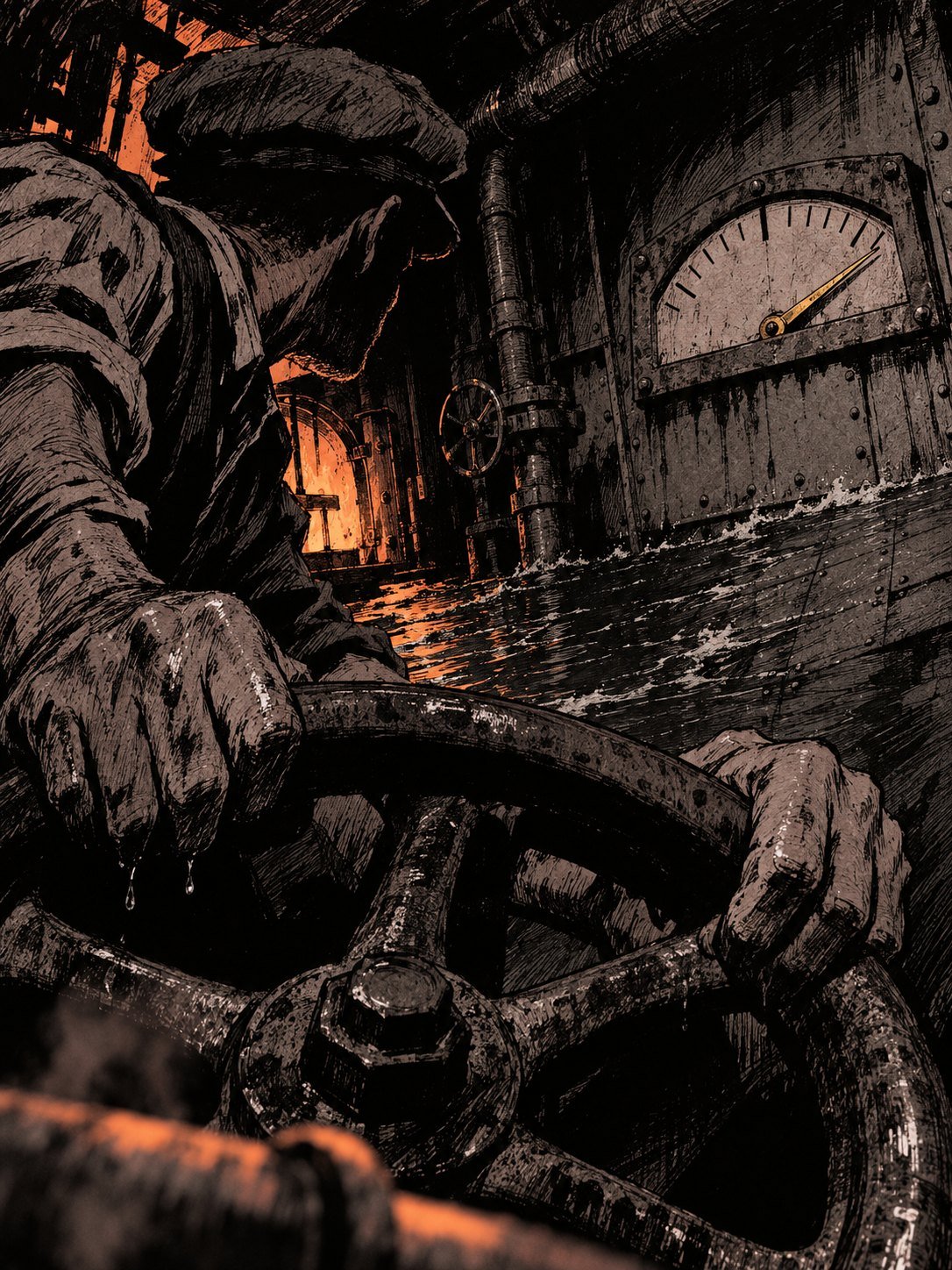
At about 7:10, just as the gate closed, the Eastland began to lean slightly toward the river side.
Down in the engine room, the engineer worked the ballast tanks. Ballast is water a ship takes into tanks low in its hull to keep it steady. Accounts disagree on exactly what was done with the tanks that morning. In the words of Wikipedia’s summary of the record, it was done “to little avail.”
For a moment, some accounts say, she came back up.
Then she leaned again. A little more each time. (WIKI) (CAC)
Everyone moved to one side
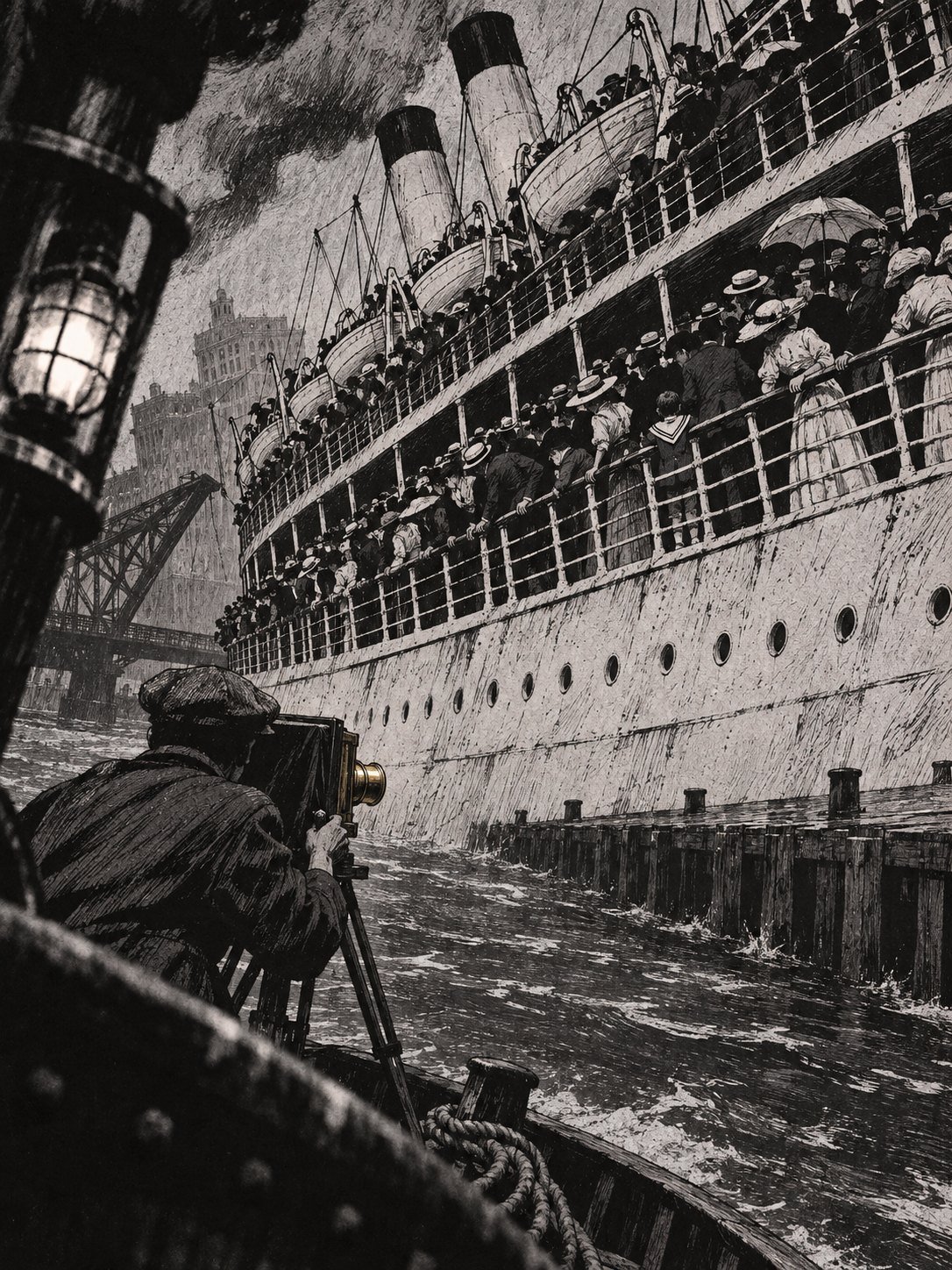
Up on deck, something was drawing people toward the river side of the ship.
Some reports say a boat was passing. Some say a photographer was taking pictures, and people moved to the rail to be in them. Nobody can say for sure.
But crowds move like water. When hundreds of people stand on one side of a narrow ship, the ship follows them.
The dock side of the deck emptied. The Eastland leaned further toward the river. On the dock, people began to notice. (HIST) (CAC)
Two minutes
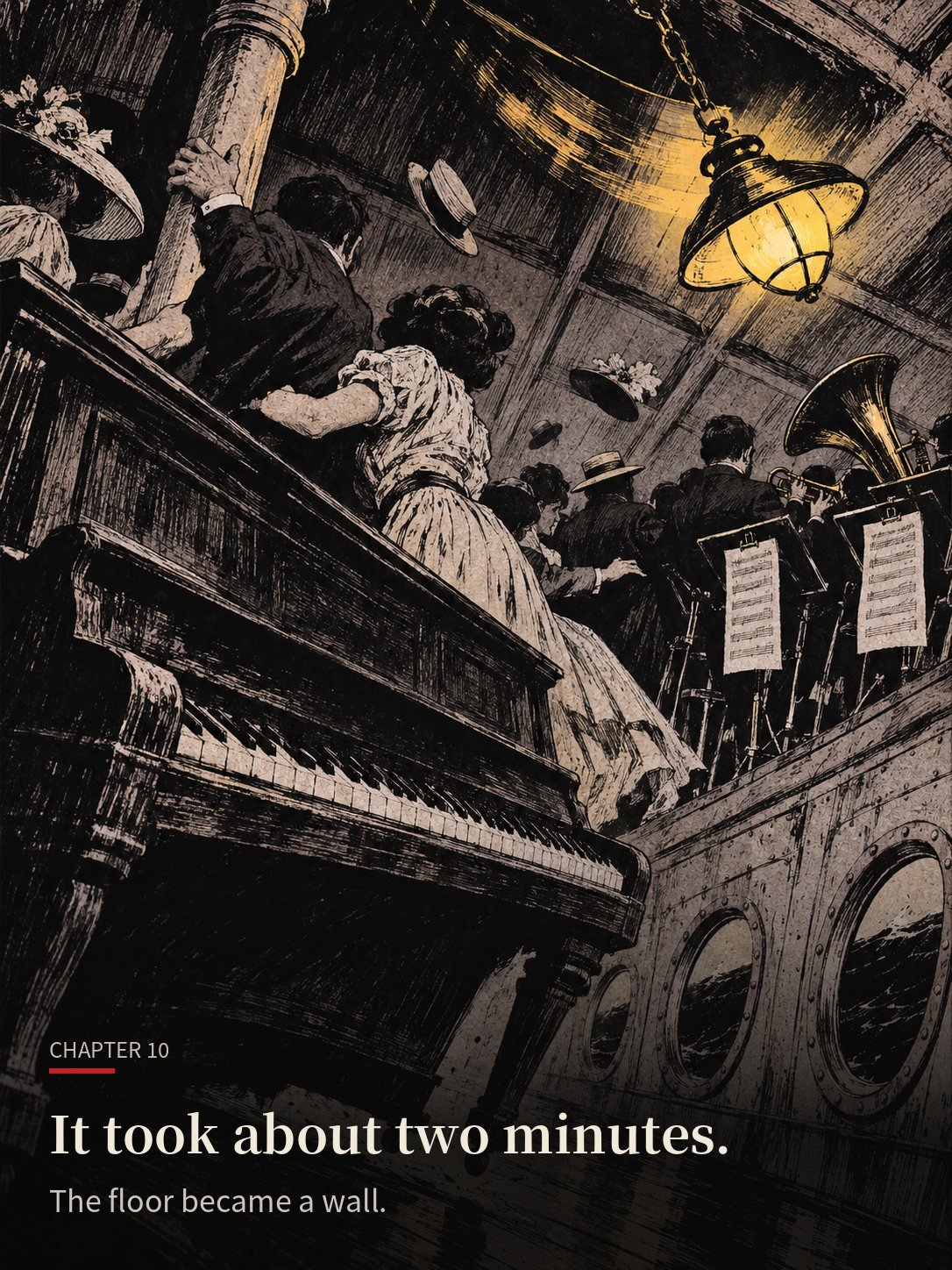
At 7:28, the Eastland rolled over onto its side.
It took about two minutes.
Below deck, there was nowhere to go. People were thrown against the walls, and heavy furniture slid with them: pianos, bookcases, tables. The river side of the ship was now the bottom, and river water came in through the portholes.
The floor had become a wall.
Up on deck, people were thrown into the river, or climbed onto the side of the hull as it came down. (WIKI) (SMITH)
Anything that floats
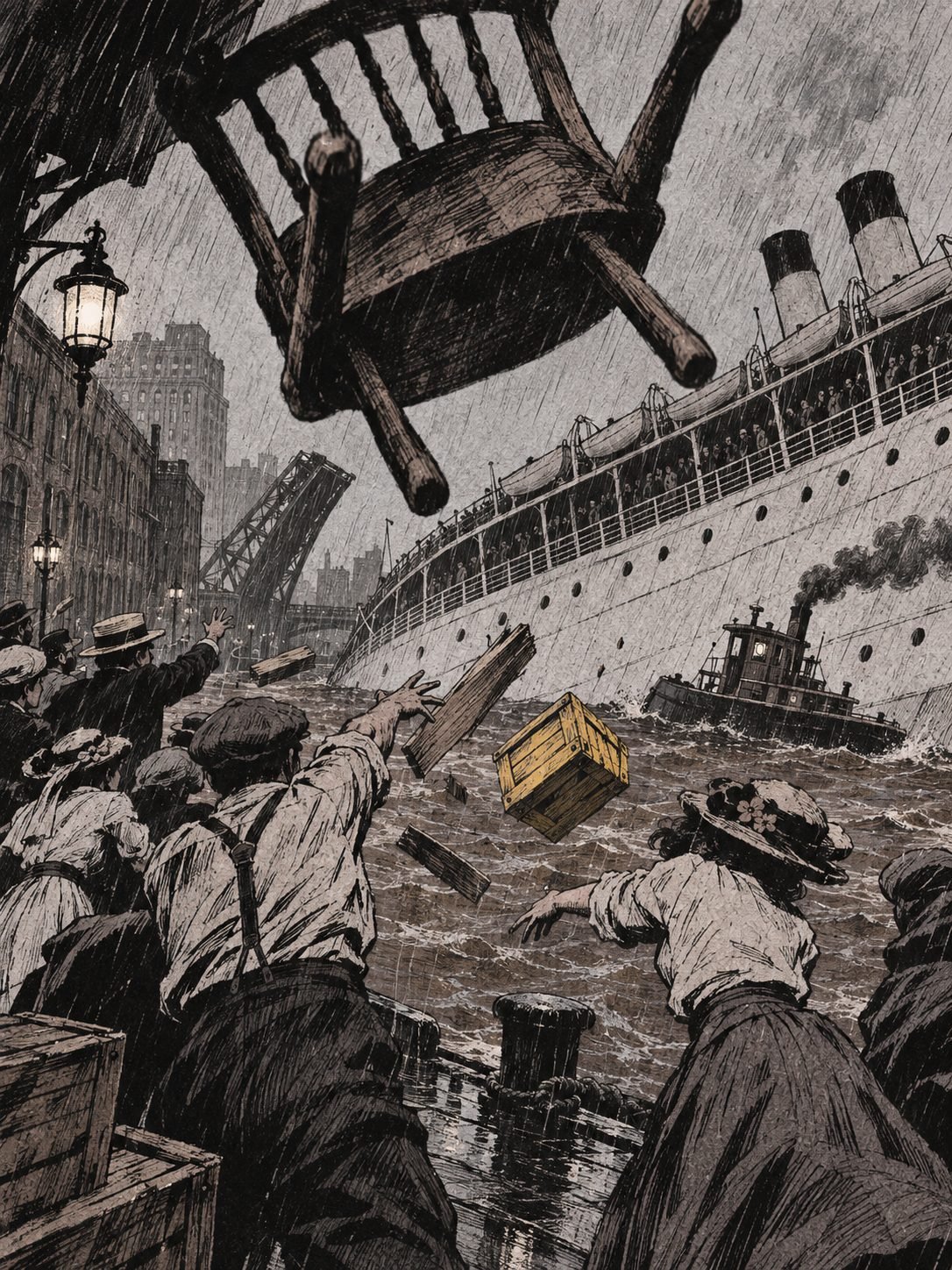
On the dock, thousands of people saw it happen. Many of them were waiting for the other ships, with their own families.
They did what they could. According to WTTW, they threw in “chairs, boards, anything they could” for people in the water to hold on to.
Captain John O’Meara brought the nearby boat Kenosha alongside the overturned hull, so people standing on it could jump across to safety. Tugboats lined up to make a bridge to the dock.
A deckhand from another ship, Peter Boyle, drowned while saving passengers.
For the people on top of the hull, help was close. For the people inside, it was not. (WIKI) (WTTW) (MICH)
Cutting through the hull
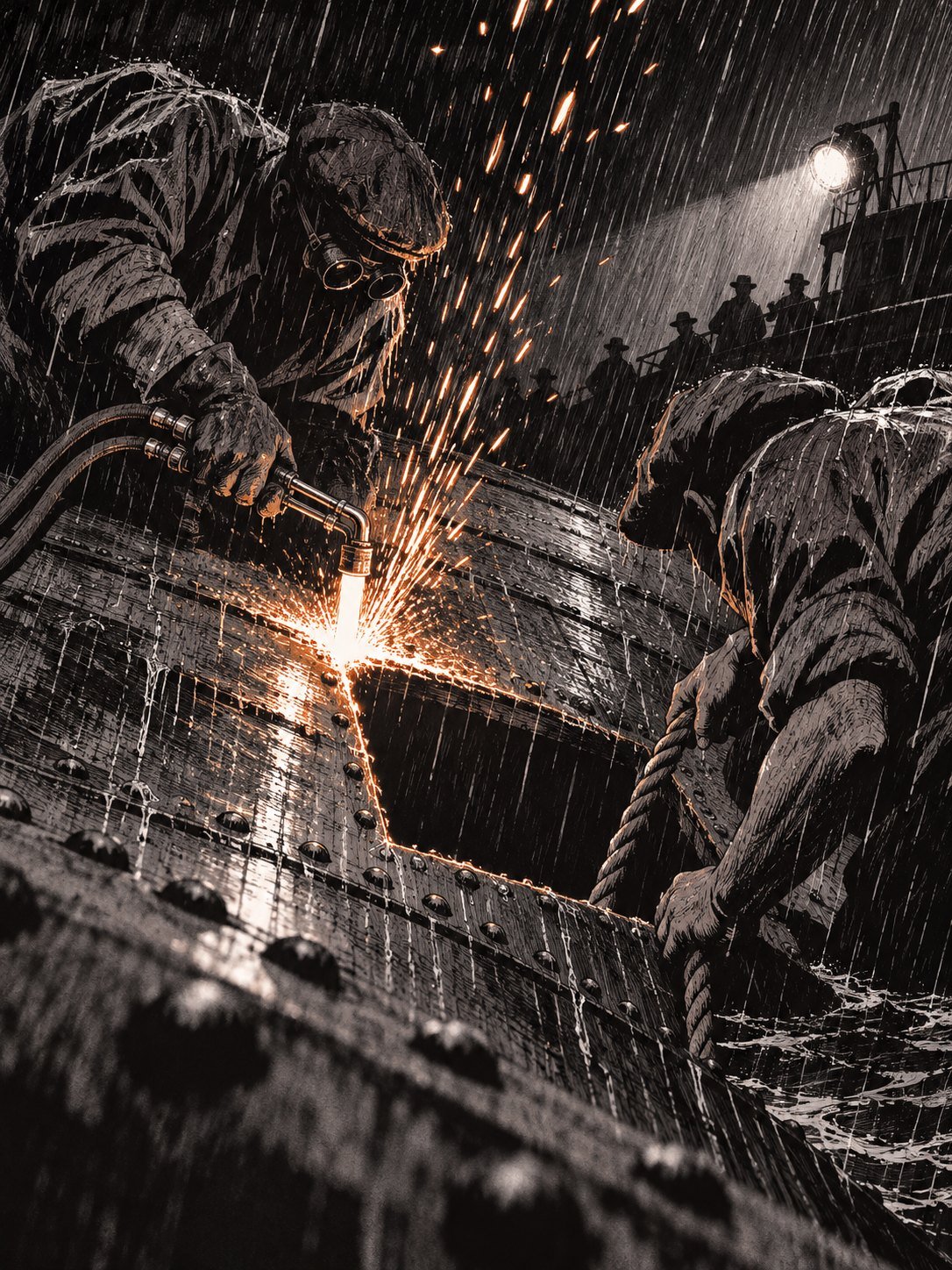
Hundreds of people were trapped inside the hull, in cabins that were now under the river.
Rescuers climbed onto the side of the ship and cut through the steel with torches.
According to HISTORY.com, about 40 people were pulled out alive.
Every hole they cut was a race against time. The cabins had filled in minutes. The cutting took much longer. (HIST)
The nurse who took charge
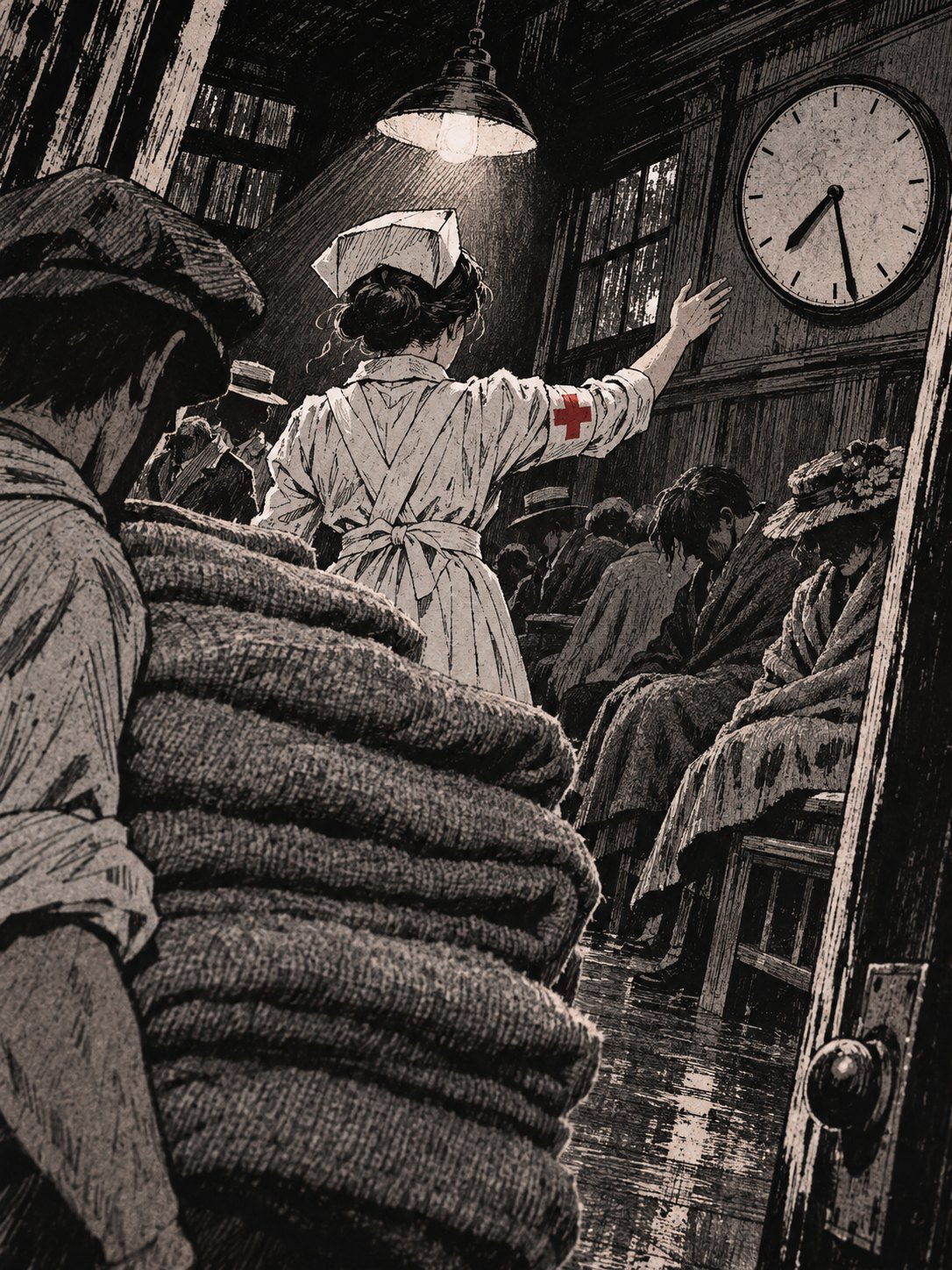
Helen Repa was a nurse at Western Electric. She was at the river that morning for the picnic.
She ended up directing much of the rescue and first aid.
Later she wrote about what she remembered most. “The screaming was the most horrible of all,” she wrote.
The Marshall Field’s department store sent 500 blankets. Strangers drove survivors home in their own cars. (WIKI) (SMITH)
Rows of 85
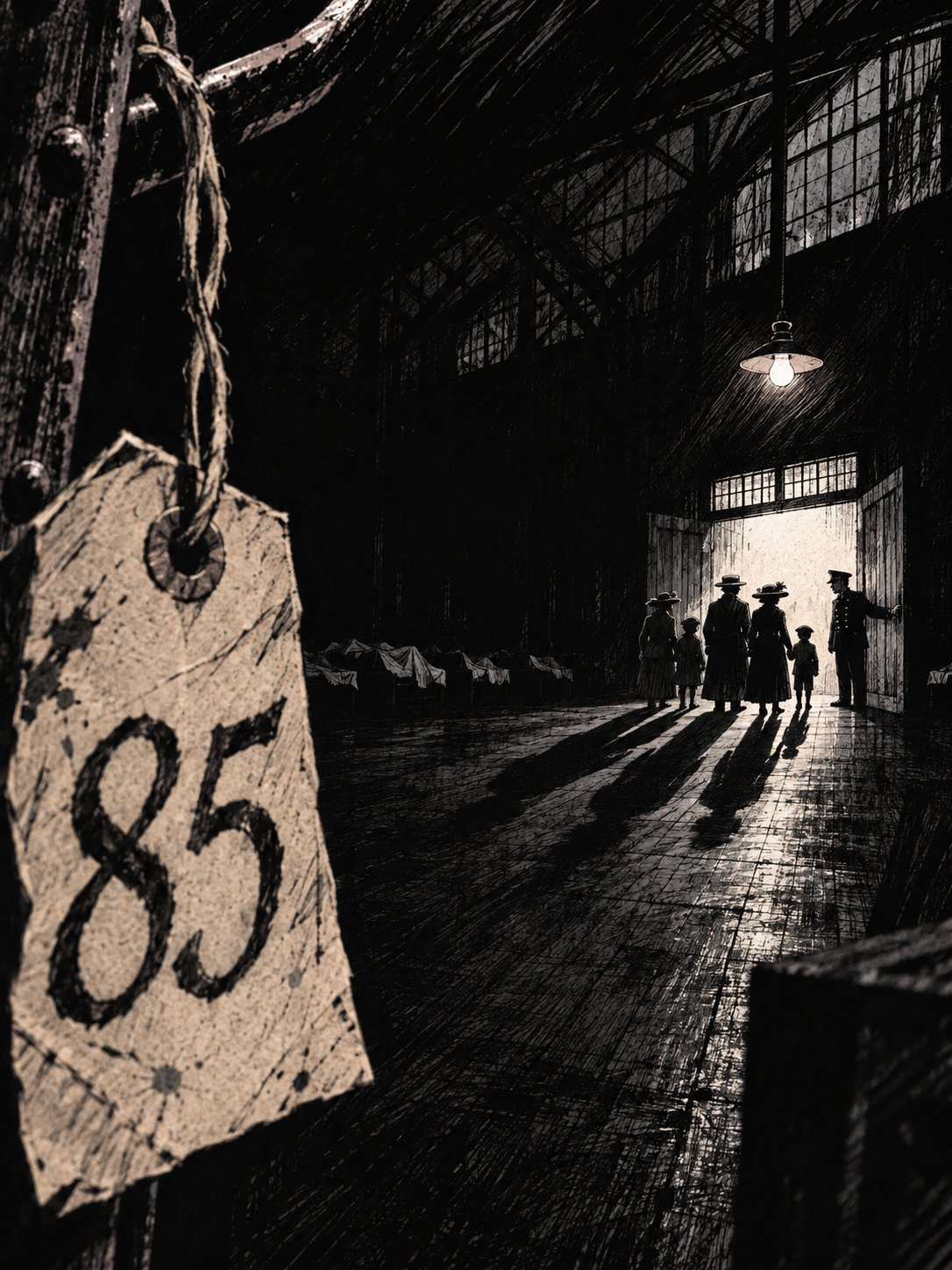
By the afternoon, the city had run out of places to take the dead.
The Reid, Murdoch & Co. building beside the river became a temporary morgue. Then the unidentified victims were moved to the Second Regiment Armory, a big drill hall on the Near West Side.
They were laid out in long rows of 85.
Just before midnight, families were let in, 20 at a time, to search for the people they had lost.
Twenty-two entire families had died. The Sindelar family lost all seven of its members. (WIKI) (SMITH) (HIST)
No. 396
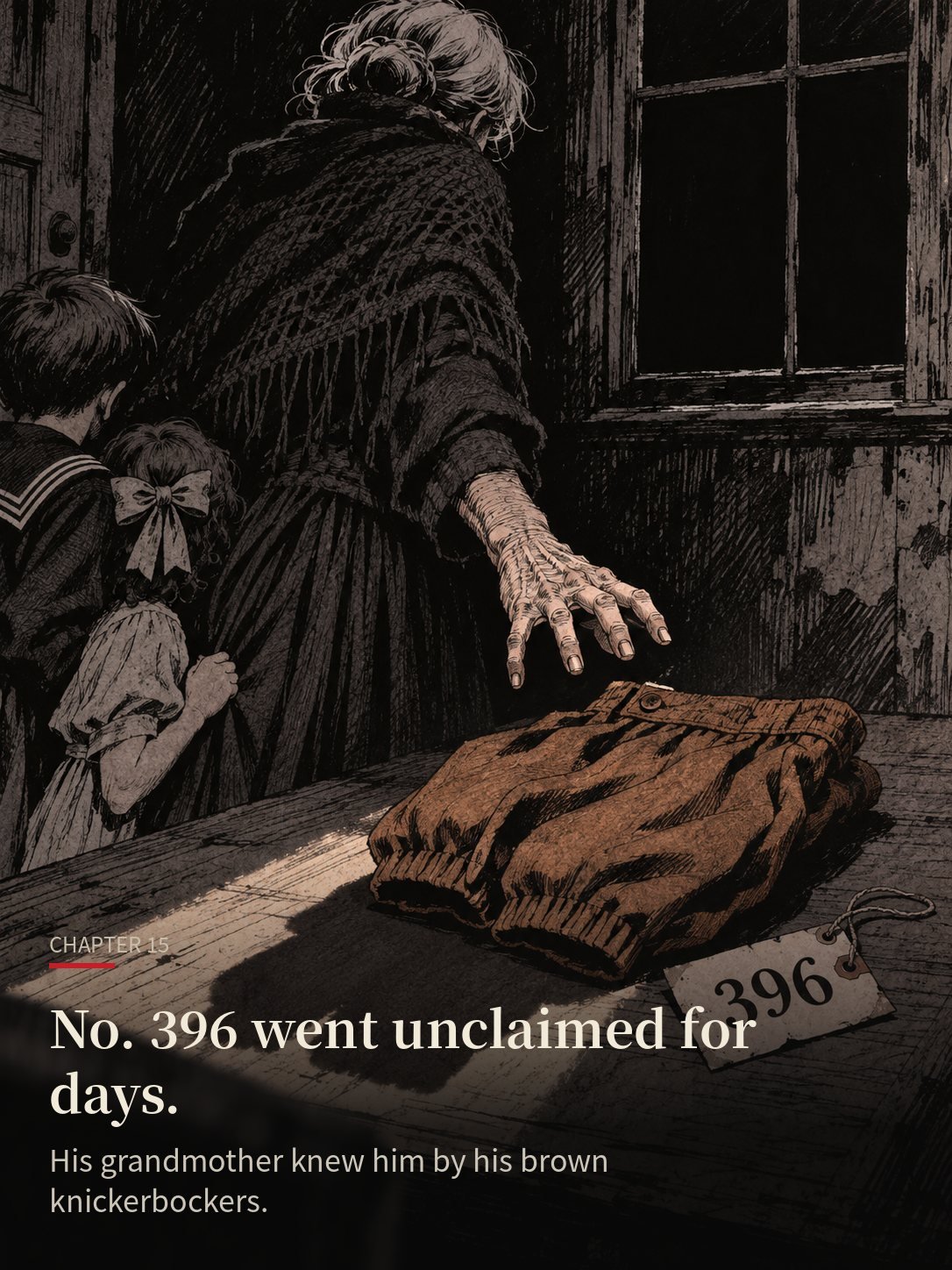
One small boy, No. 396, went unclaimed for days.
The newspapers called him the “Little Feller.”
Then two children recognised him. He was Willie Novotny, seven years old. His grandmother confirmed it by the brown knickerbockers he had been wearing that morning.
His family had lost four people.
The picnic had been meant for families like his: factory workers on a day off, children in their best clothes. As one historian later told Smithsonian Magazine, “there wasn’t anyone rich or famous onboard.” (SMITH)
“No, I did not worry about the Eastland”
So who was to blame?
A grand jury pointed to “conditions of instability” caused by overloading, mishandled ballast and faulty construction. The company president and three other officers were charged with manslaughter. The captain and the engineer were charged with criminal carelessness.
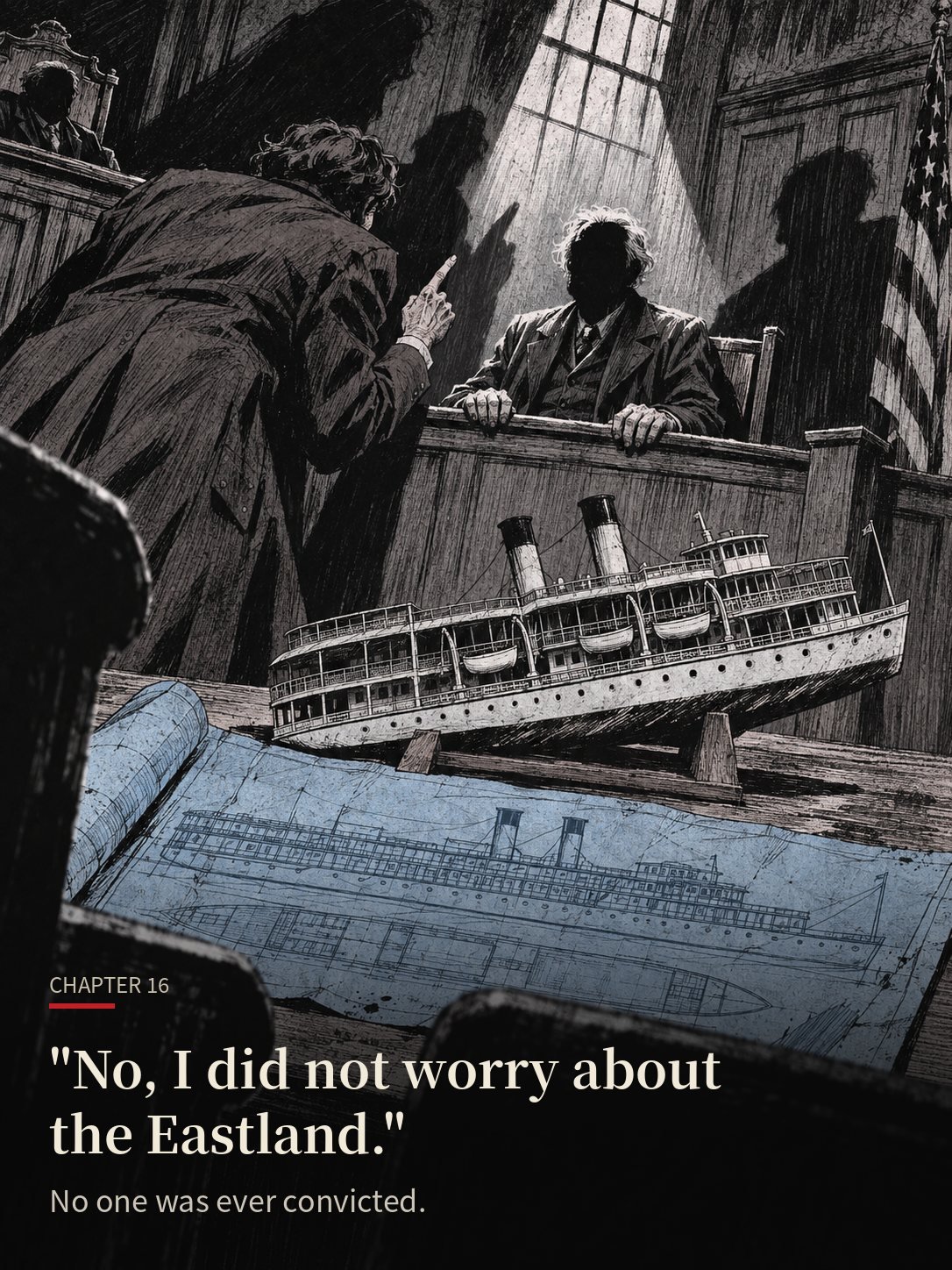
Sidney Jenks, president of the company that built the ship, testified that she had been designed to reach 20 miles per hour and carry 500 passengers. The famous lawyer Clarence Darrow asked him about her carrying 2,500 or more.
“No, I did not worry about the Eastland,” he said. He also said no stability test had ever been done.
When prosecutors tried to bring the accused from Michigan to Illinois for trial, the court refused. It found “barely a scintilla of proof” against them.
No one was ever convicted. (WIKI)
The ship that came back
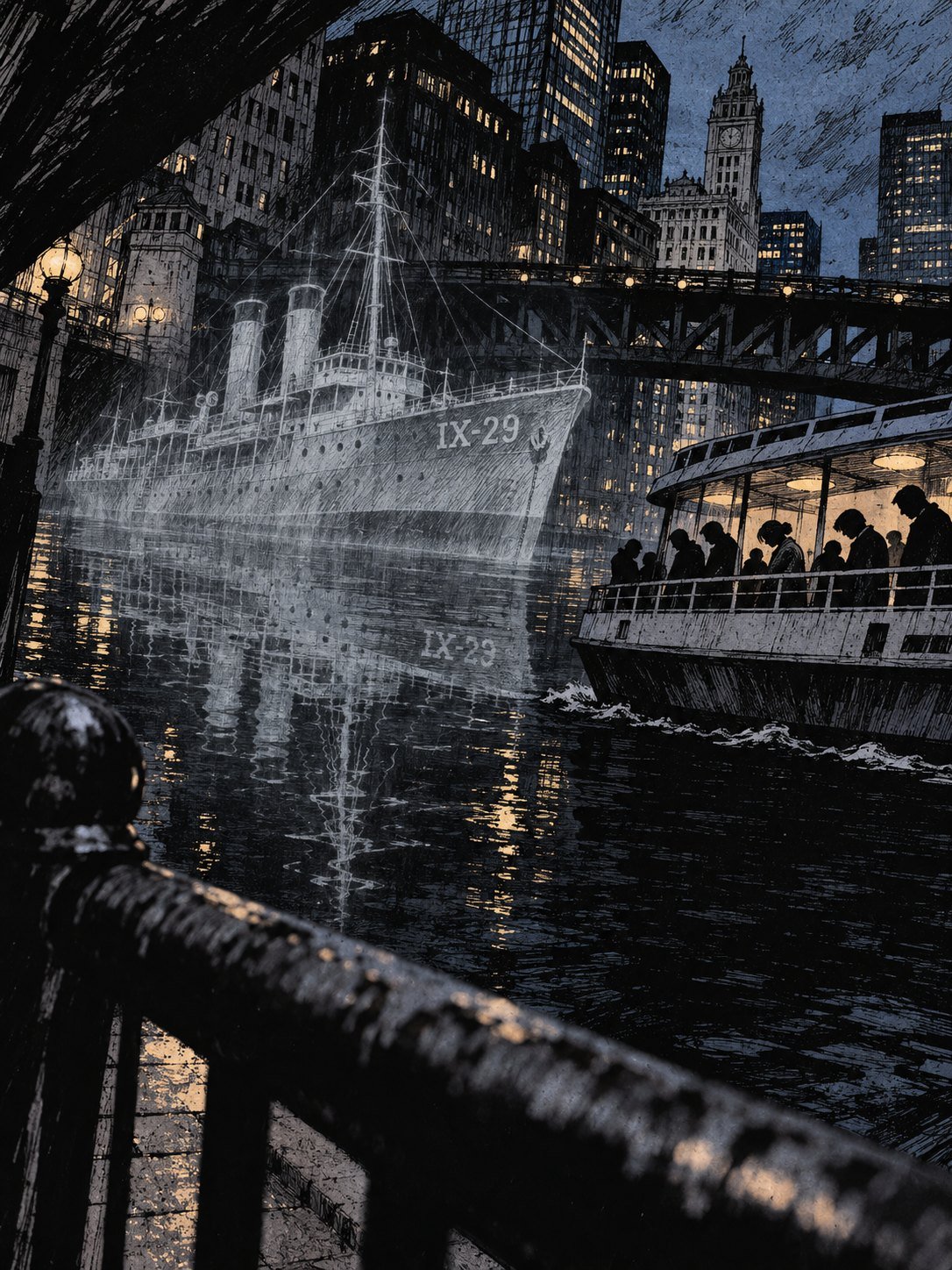
The Eastland was raised from the river on 14 August 1915, three weeks after it rolled over.
She was sold at auction, and later taken over by the Navy. In 1918 she was renamed USS Wilmette. For years she trained sailors on the Great Lakes. She was scrapped in 1947.
The families of the dead got little or nothing, after about two decades of lawsuits.
Today, tour boats on the Chicago River still pass the spot between Clark and LaSalle. Some guides stop and ask for a moment of silence.
Most people on board have never heard the name Eastland. (WIKI) (SMITH) (CAC)
Case notes: how a ship sinks at the dock
On 24 July 1915 the SS Eastland rolled over in the Chicago River while still tied to its dock, and 844 people died. It did not hit anything. A long line of small changes had made a narrow ship heavier at the top, and the warnings were already on the record (WIKI) (SMITH).
Where the case stands (as of November 2026)
Closed. A grand jury blamed overloading, mishandled ballast and faulty construction, and charged company officers, the captain and the engineer (WIKI).
No one was ever convicted. A federal court refused to send the accused to Illinois, finding “barely a scintilla of proof” (WIKI). Families received little or nothing after about two decades of lawsuits (SMITH).
Timeline
| When | What happened |
|---|---|
| 6 May 1903 | The Eastland is launched at Port Huron, Michigan; machinery changes that year reduce her stability (WIKI) |
| 17 Jul 1904 | She nearly capsizes leaving South Haven, Michigan, with about 3,000 aboard (WIKI) |
| 1 Jul 1912 | She lists about 25 degrees while loading in Cleveland (WIKI) |
| 1913 | A naval architect warns there “may be a serious accident” (HIST) |
| 1914 | About two inches of concrete are added to a dining-room floor, 15 to 20 tons (WIKI) |
| Mar 1915 | The Seamen’s Act requires a full set of lifeboats; capacity rises to about 2,570 (WIKI) |
| Sat 24 Jul 1915, 6:30 | Boarding begins on the south bank between Clark and LaSalle (WIKI) |
| 7:10 | About 2,500 aboard; the ship starts to lean toward the river (WIKI) (CAC) |
| 7:28 | She rolls onto her side in about 20 feet of water; 844 die (WIKI) (SMITH) |
| 14 Aug 1915 | The Eastland is raised from the river (WIKI) |
| 1918 | Renamed USS Wilmette and used to train sailors (WIKI) |
| 1947 | Scrapping is completed (WIKI) |
Where the records disagree
| Detail | What sources say |
|---|---|
| Number of dead | 844 is the figure most often cited; Wikipedia’s breakdown gives 841 passengers and 2 crew (SMITH) (WIKI) |
| Ships chartered | Five steamers in some accounts, six in others (WIKI) (CAC) |
| Licensed capacity | Given as about 2,500, 2,570 or 2,575 (WIKI) |
| The ballast tanks | Some accounts say tanks were emptied during loading, others that water was let in; we only say the engineer worked the tanks (WTTW) (CAC) |
| Why the crowd moved | “Some reports” mention a passing boat or a photographer; neither is confirmed (HIST) |
What we still don’t know
- Exactly what was done with the ballast tanks between 7:10 and 7:28.
- Why so many passengers gathered on the river side of the deck.
- Why the 1904 and 1912 warnings did not lead to a stability test.
- The exact number of people aboard that morning.
What happened after
The Second Regiment Armory later became part of the former Harpo Studios site, where a plaque now marks what happened (WTTW). River-cruise guides pause at the spot between Clark and LaSalle (CAC).
Editor’s note
What stopped me was the mooring lines. Every other shipwreck I have read about happened somewhere far away: open sea, a storm, an iceberg in the dark. The Eastland never left. It rolled over in calm water, in the middle of a city, still tied to the posts, with thousands of people standing close enough to throw it a chair.
I don’t think there was one villain here. I think there was a long line of people who each made one change that seemed reasonable on its own: move the machinery, pour the concrete, add the lifeboats, raise the limit. Nobody added it all up. “No, I did not worry about the Eastland” is the most honest sentence in the whole case, and that is what makes it so hard to read.
The part that hurt most was No. 396. A seven-year-old in his best brown knickerbockers, on his way to a company picnic, and for days nobody came for him because nobody was left to come. As a parent, I keep thinking about his grandmother walking down those rows of 85, looking at the clothes before she let herself look at anything else.
— Strange World Files
Case file summary
- What: A crowded excursion steamer rolled over while still tied to its dock
- Where: Chicago River, south bank between Clark and LaSalle streets
- When: Saturday 24 July 1915, 7:28 a.m.
- Who: About 2,500 passengers, most of them Western Electric workers and their families; 844 died
- Status: Charges filed; no one was ever convicted
Illustrations are AI-generated artistic interpretations, not photos. No real person is depicted with a recognizable face. Read how we research and illustrate these files.