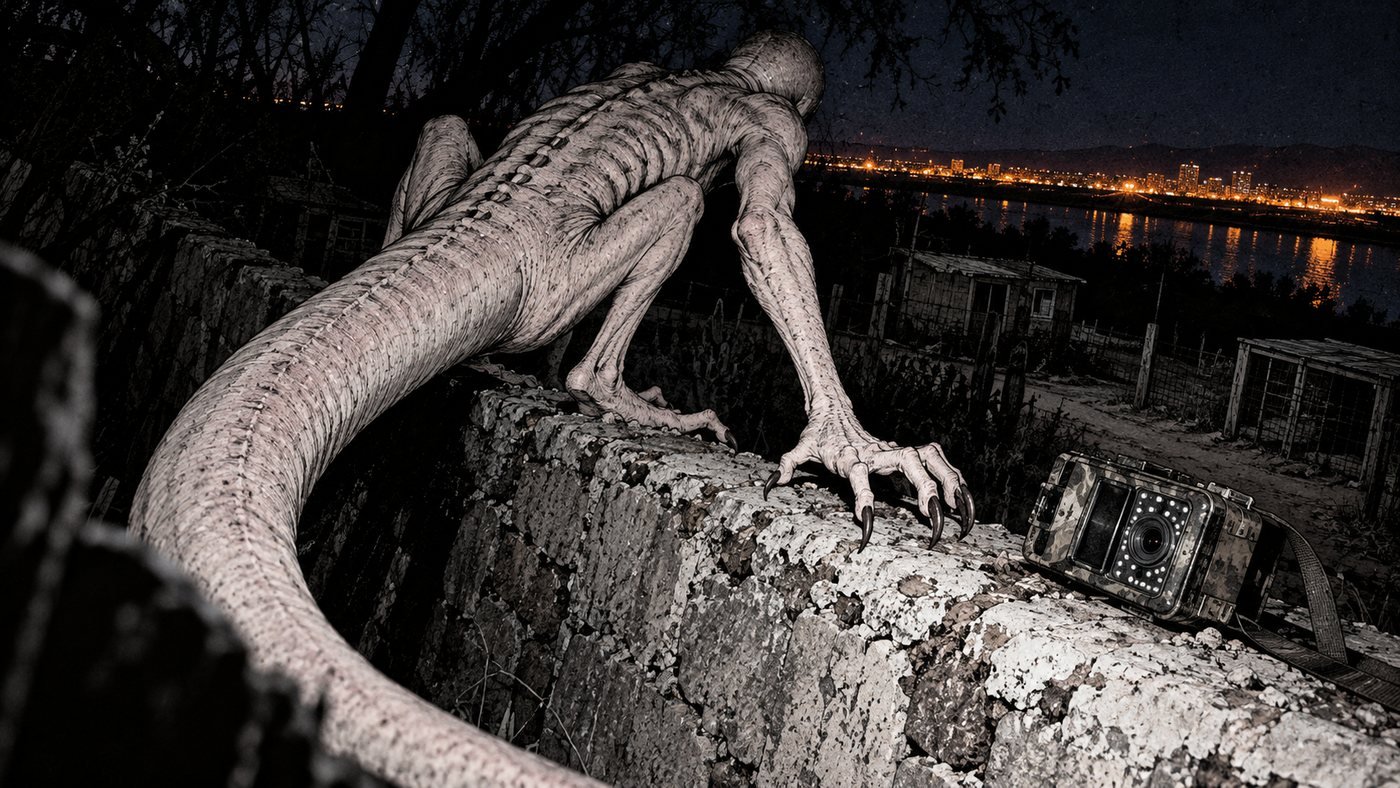
The Juarez Valley Creature: A Pale, Hairless “Predator” Caught on Camera Near the US Border
Something pale was climbing over the wall at night
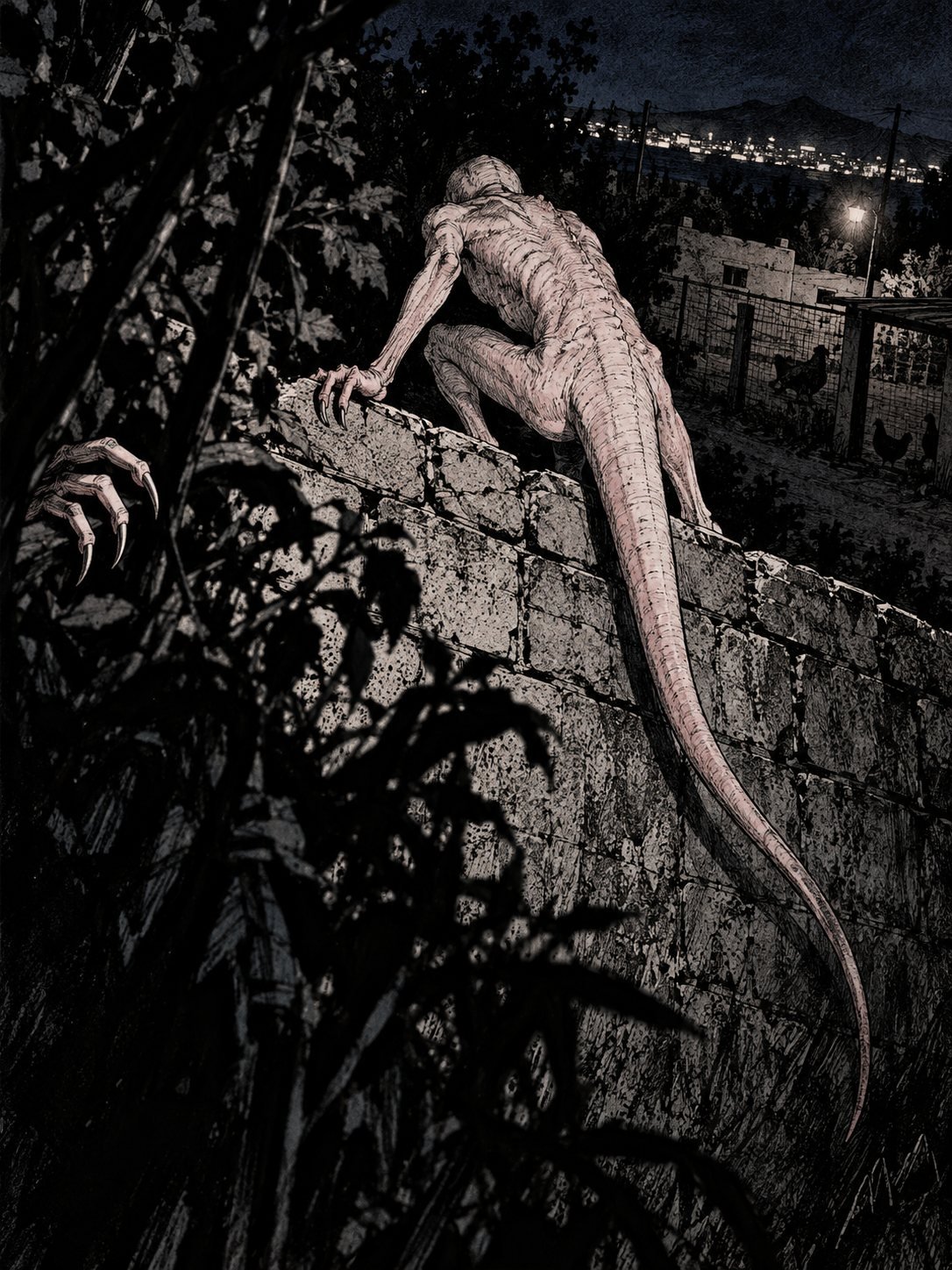
In October 2026, a camera on a farm in Mexico took a picture in the dark. Nobody pressed a button. The camera did it on its own.
This kind of camera is called a camera trap, or trail camera. Hunters and wildlife researchers strap them to posts and trees. When something moves in front of the lens, the camera wakes up and fires. Most of the time it catches a fox, a cat, or a branch blowing in the wind.
This time it caught something on top of a wall.
The farm is in the Juarez Valley, in the Mexican state of Chihuahua. It is flat farmland right on the border with the United States. The people who later showed the pictures to the world said they had set up the camera because an animal had been reported there.
What the camera saw did not look like a fox. It did not look like a cat. Something was climbing over the wall. (UNILAD)
Long fingers, long claws, and a tail like a rope
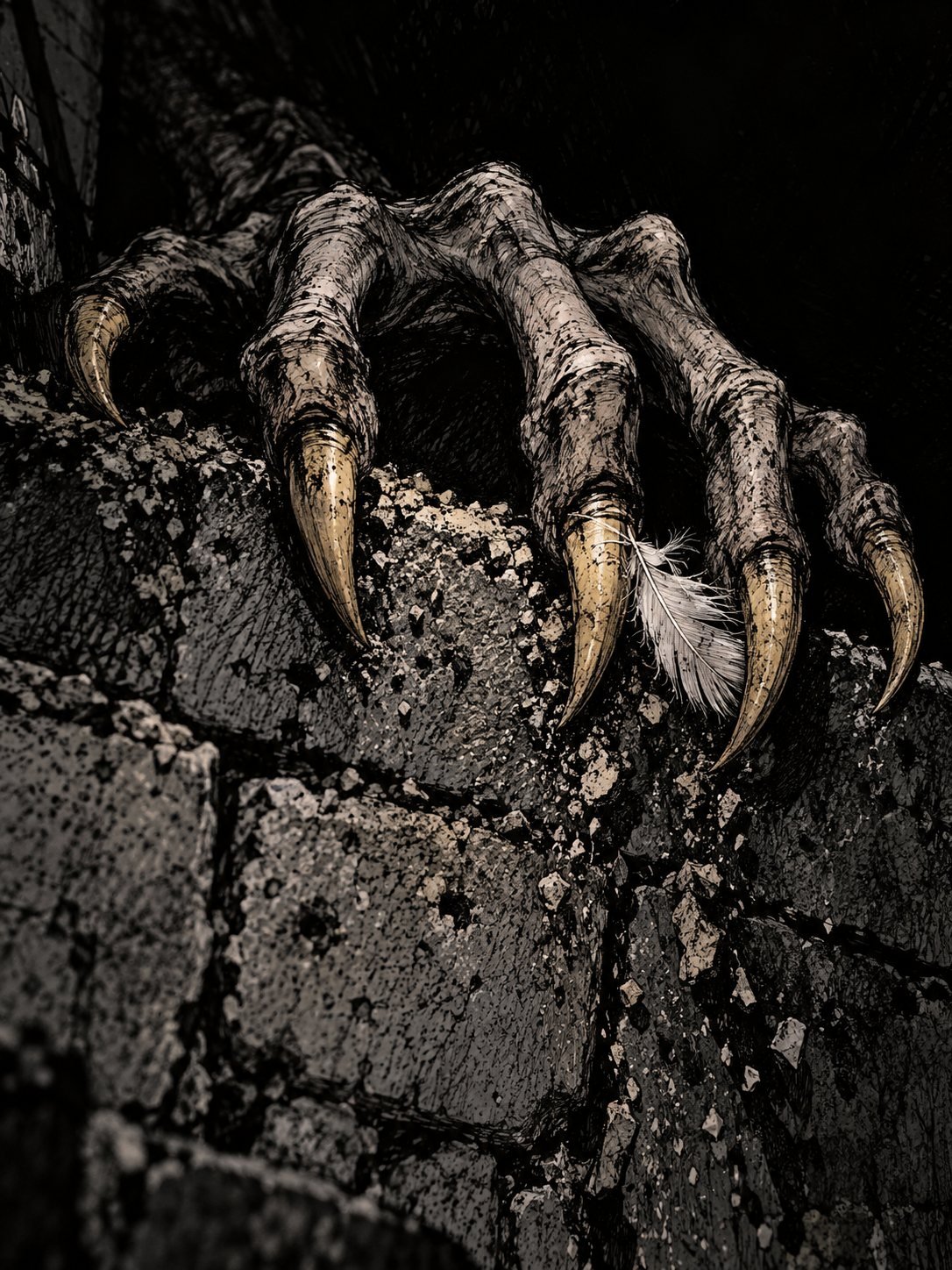
The animal in the pictures was pale. It had no visible hair at all. Its limbs were long, its claws were long, and behind it trailed a long tail.
The people who released the photos said it was about six feet from its snout to the tip of its tail. That is roughly the height of a tall man lying down. They said the tail alone was about three feet, or 90 centimeters.
Those numbers matter, so here is the first thing to know about them. Nobody measured the animal. Nobody caught it. The size was worked out later, by comparing its body with the bricks in the wall it was climbing.
That is an estimate, not a measurement. One fact-check later pointed out that the bricks are not an object of known size, so they cannot tell you for sure how big the animal was.
Still, the pictures did their job. Pale skin, long claws, a body as long as a man. Once people saw it, they could not unsee it. (UNILAD)
Across the river, the lights of El Paso
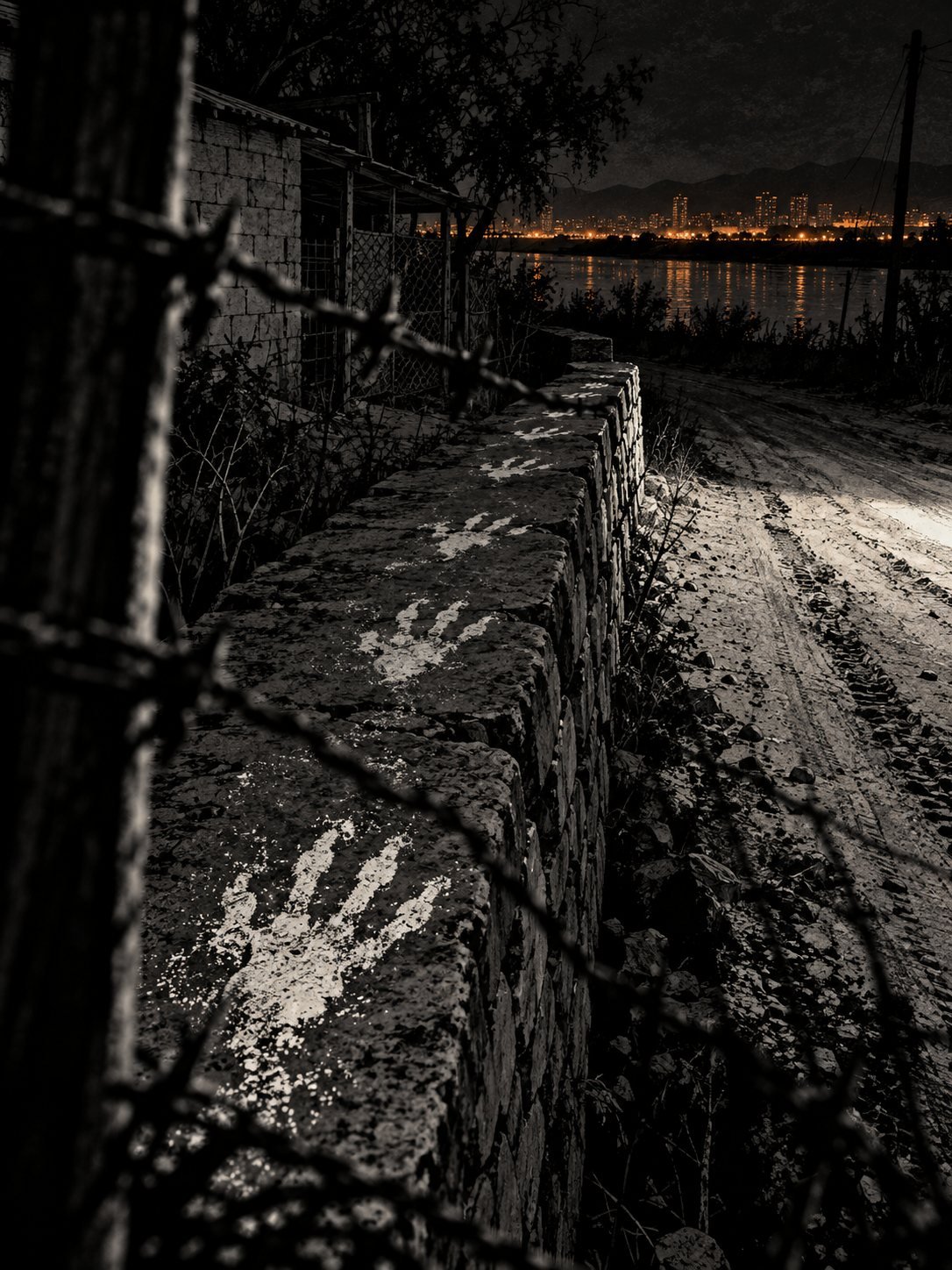
The Juarez Valley sits along the Rio Grande. On one side of the river is Mexico. On the other side is El Paso, Texas.
So this was not a story from some remote jungle. The farm where the camera stood is just across the river from an American city. If something strange was really living in those fields, it was living in sight of the lights of the United States.
That closeness is part of why the story moved so fast. A mystery animal in the middle of nowhere is easy to ignore. A mystery animal next to a major border city is a headline on two countries’ news at once.
Within days, the picture was everywhere. Shared, reposted, cropped, zoomed in.
And under every copy, people were asking the same thing. What is it?
To answer that, you have to go back to what the people behind the photos said had been happening on these farms. (UNILAD)
Something was taking the hens, the reports said
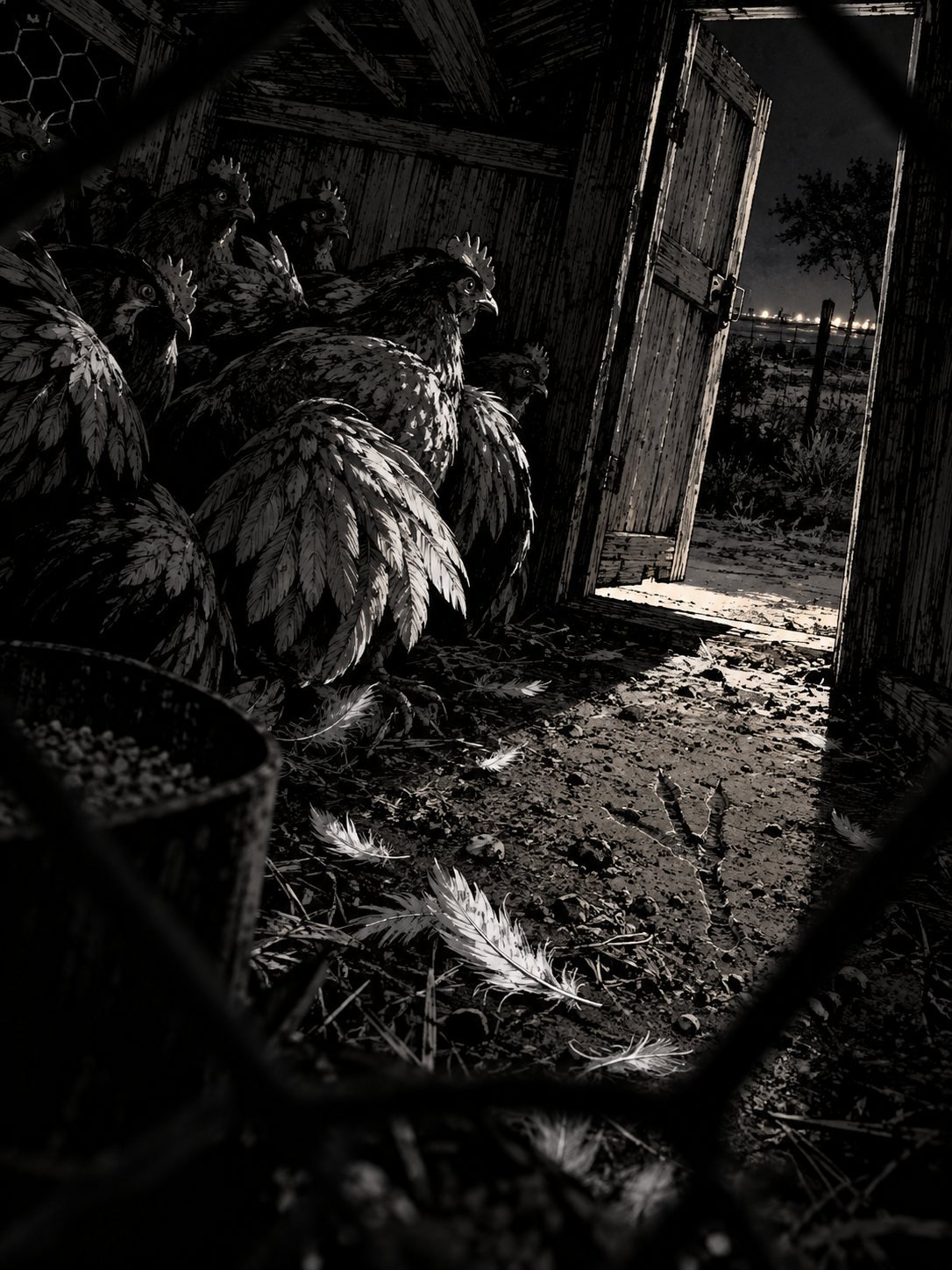
According to the claims that came with the photos, something had been taking farm animals in the valley.
The lists change depending on which report you read. One outlet said chickens, turkeys and rabbits. Another listed hens, pigeons, fighting roosters and rabbits. Fighting roosters are birds bred for cockfighting.
Either way, these are small animals kept in coops and pens. The kind of animals a family keeps close to the house.
There is also no clear answer to when it all started. One fact-check reported three sightings in the valley going back to July 2026. We found no other source for that date. Police on the Texas side dated the claims to October 5.
So by the time the photos came out, there was already a story wrapped around them. Missing birds. Missing rabbits. Something in the fields at night.
What there was not, as we will see, was a single official complaint. (IBTimes UK)
Nobody has said whose farm this is
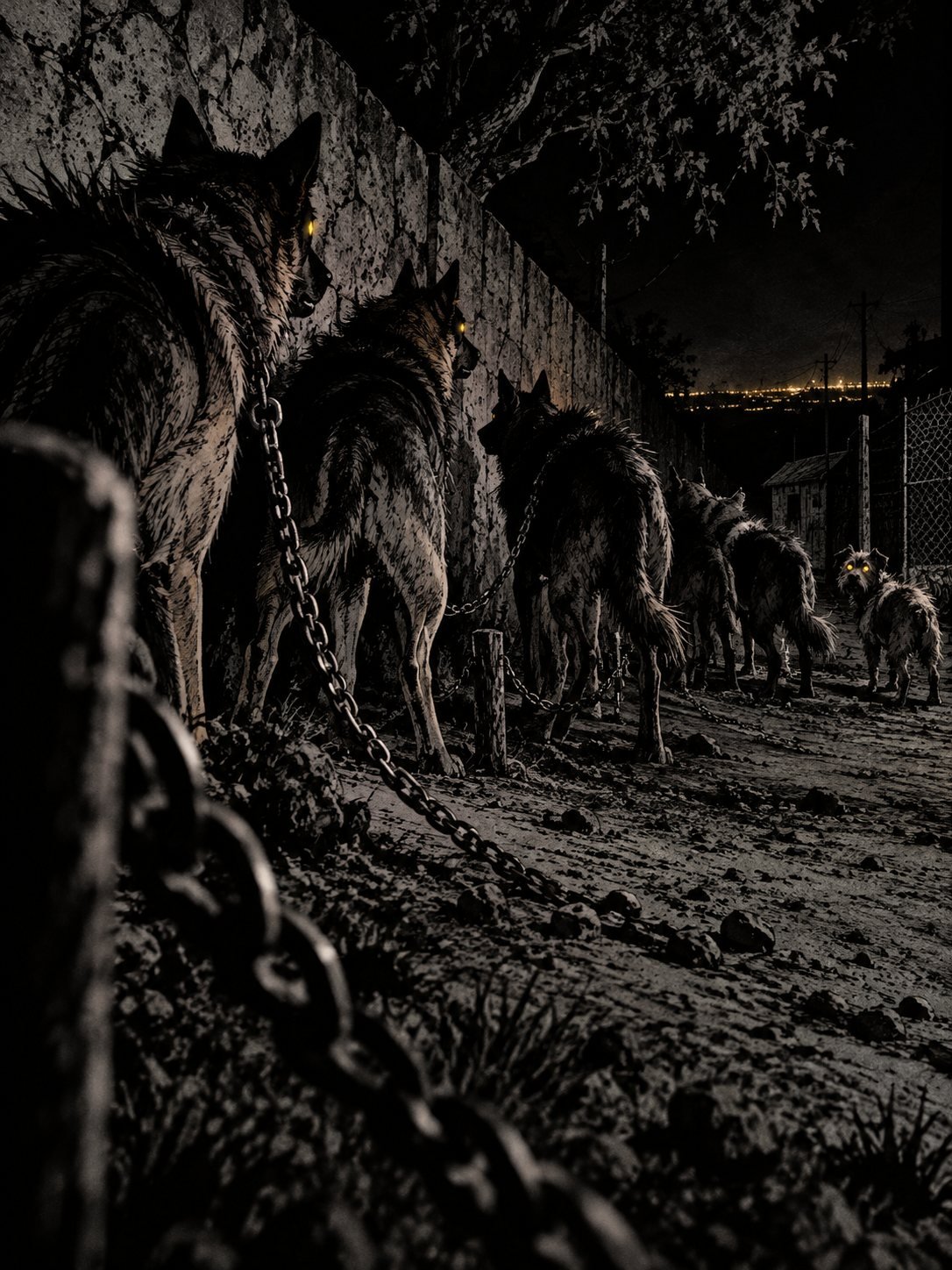
Here is something strange about this case that most coverage skipped over.
No one has said whose farm it is. No report we found names the owner of the land where the camera stood. No report names the person who put the camera there, beyond saying it was the team that later released the photos.
That matters. In most animal mysteries, there is a farmer you can talk to. Someone who lost animals, who can show you the coop, who can say when it happened. Here, that person has no name and no voice.
And the losses? None of it was ever officially reported. Not the missing hens, not the missing rabbits, not the sightings.
In other words, everything we know about what happened on this farm comes from one source: the team that took the pictures.
Keep that in mind. It will matter a lot by the end of this story. (Sunday Guardian)
A boy said it grabbed a chicken and ran up a tree

One of the most vivid parts of the story involves a child.
According to the team behind the photos, a boy said he saw the creature grab a chicken and run up a tree with it.
It is the kind of detail that sticks. A chicken being carried off is something anyone can picture. A creature that can climb a tree while holding one sounds fast, strong and agile. It fits the photos of something going up and over a wall.
But look closely at where the detail comes from. The boy has not been named. He has not been interviewed by any outlet we found. His account reaches us only through the team that released the photos.
No one else has confirmed his story.
That does not mean the boy was lying. It means there is no way, from the outside, to check what he saw, when he saw it, or how clearly. And in a case built on a few night photos, that gap is a big one. (Sunday Guardian)
Farmers checked their coops in the dark
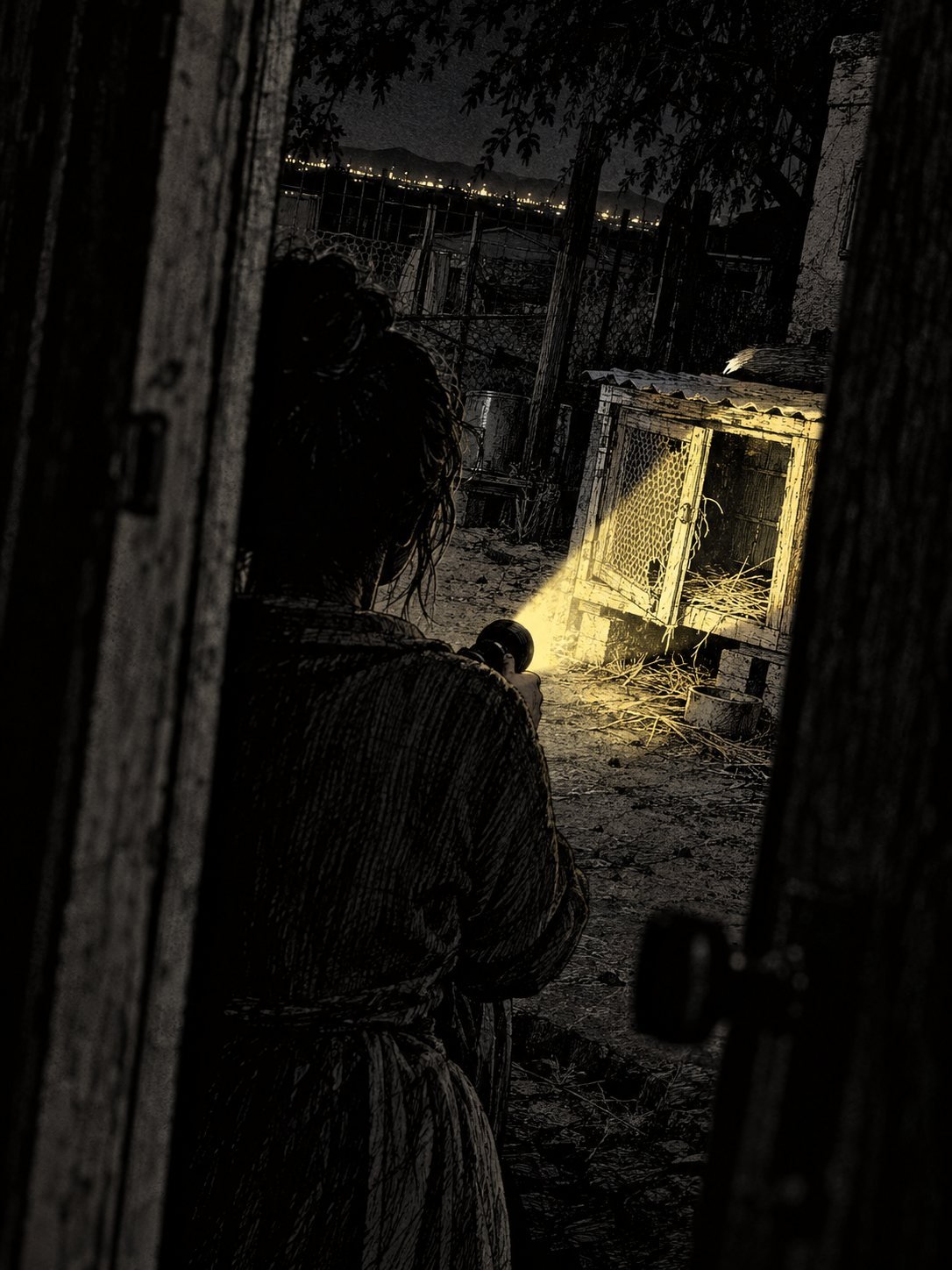
The story told along with the photos was of a valley on edge.
Farmers, it was said, began checking their coops at night. Some said they heard something on the roofs.
On a small farm, a coop is often just a few steps from the house. If something is moving across the roof at night, you would hear it from your bed. That is part of what makes a story like this so unsettling. It is not happening in a forest. It is happening right next to where people sleep.
But once again, these accounts have no names attached. We do not know how many farmers, which farms, or which nights. We only know that the team behind the photos described it this way, and that the reports were repeated in the press.
Fear spreads easily in a small place. A missing bird, a sound on the roof, a story about a boy and a tree.
Then the photos were taken to a press conference, and the story stopped being local. (Sunday Guardian)
October 17: the photos go in front of the cameras
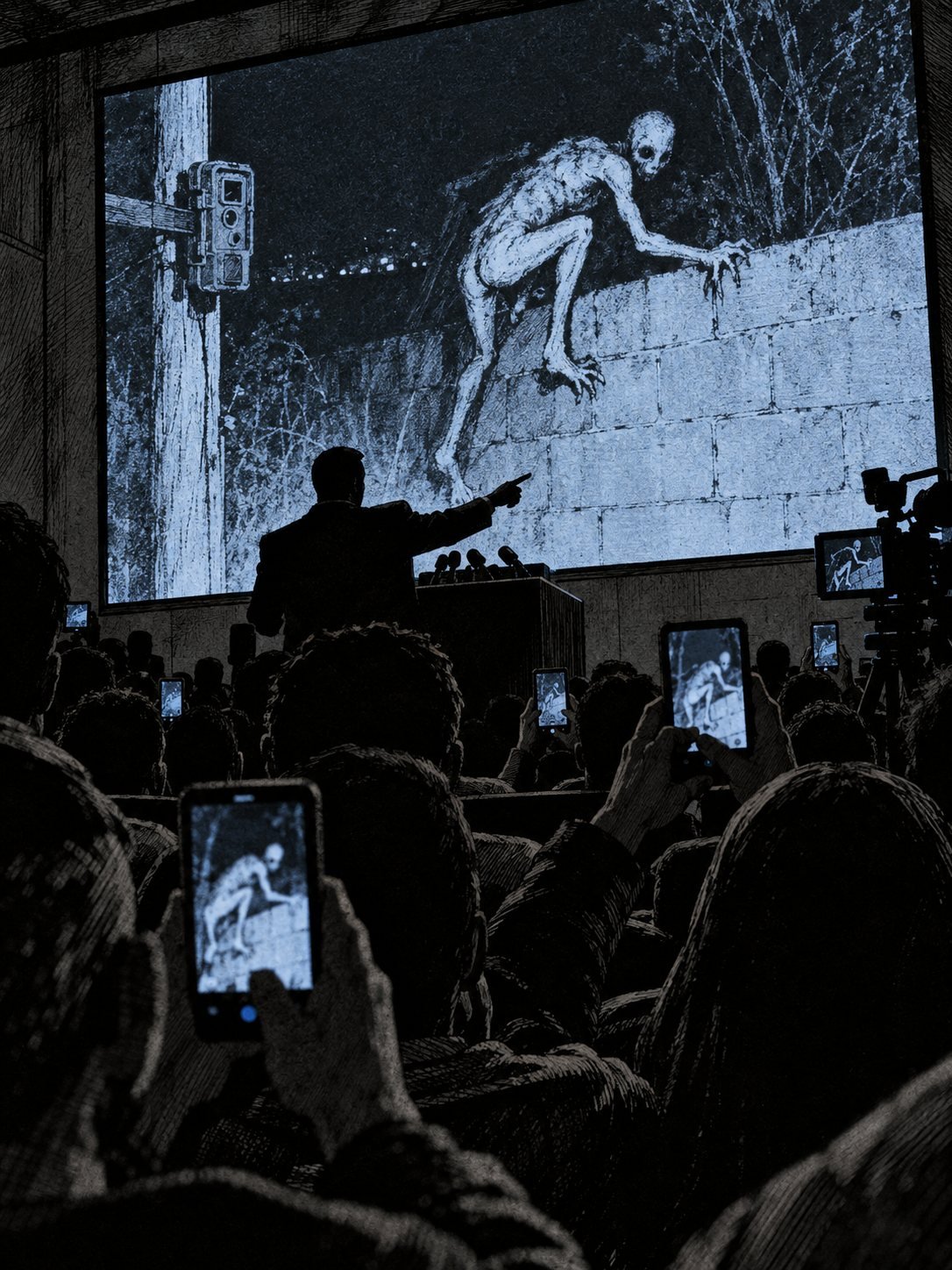
On October 17, 2026, the images were shown at a press conference in Mexico.
They were presented by Jaime Maussan. In Mexico, he is the most famous UFO investigator in the country. Four of his research assistants were there with him.
According to the reports, it was Maussan’s associates who had set up the surveillance cameras where the animal had reportedly been seen. Then the team published the images and brought them to the press.
That chain is important. The same group placed the cameras, collected the pictures, described the animal, estimated its size, and presented it to reporters. There was no outside lab, no wildlife agency and no university involved at this stage.
For Maussan, this was familiar ground. He has spent his career presenting strange evidence in front of microphones and cameras.
And this time, the evidence was a pale, clawed animal from a farm on the US border. The reporters in the room had their story. (Arab Times)
Within days, the photos were on screens worldwide

The photos spread across the world within days.
News sites in Britain, the US and India ran them. The list of outlets includes UNILAD, IBTimes UK, Arab Times, Sunday Guardian, LatiNation and the French site Demotivateur.
But many of those stories did not show the original camera images at all. They often used stock photos, or images credited only to “Social Media.” That means a lot of readers may never have seen the real pictures. They saw something that looked close enough, under a dramatic headline.
This is how a viral animal story usually travels. One press conference becomes one article. That article is rewritten by another site, and then another, each copy a little further from the source.
By the time it reaches your phone, the question is no longer “Is this real?” It is “What is it?” The first question gets skipped.
So let us go back and ask it. Starting with the most repeated number in the whole story. (UNILAD)
Six feet long, measured against a pile of bricks
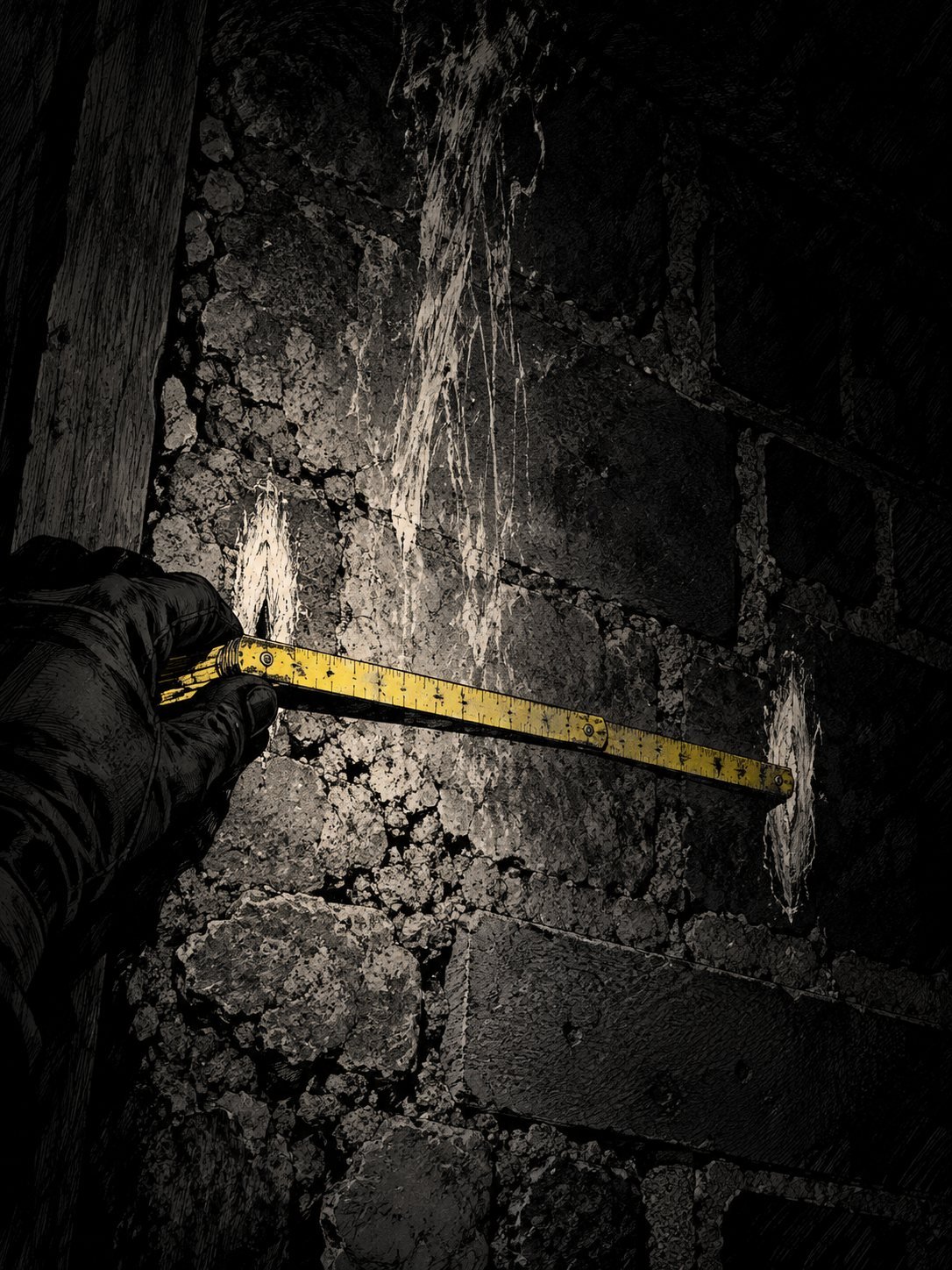
Maussan’s team said they estimated the animal’s size by comparing it with the bricks in the wall.
Their result: nearly six feet, or about 1.8 meters, from snout to tail tip. The tail alone, about three feet, or 90 centimeters.
But that is not the only size in circulation. In another report, Maussan is quoted describing the animal as more than 70 centimeters tall. That is about the height of a kitchen table. Length and height are different things, but the two numbers paint very different pictures.
There is another mismatch. Maussan described the animal as walking on two legs and looking human-like. The footage, according to one outlet, shows it on all fours, climbing a wall.
And the bricks themselves are a problem. Bricks are not all the same size, and nobody has published the size of these ones. A fact-check noted that they are not a known reference object.
So the most famous detail in the story is a guess, made by the same team that made the claim. (Arab Times)
“It’s a predator,” Maussan told the room

At the press conference, Maussan did not hold back. “It’s a predator,” he said. “I’m not saying it’s extraterrestrial, but it is something scary.”
He went further. He suggested the animal might come from another dimension. And he connected it to one of his own earlier cases. He called the Juarez animal an adult version of the so-called “Being of Metepec,” a small creature he had promoted years before.
He also made a promise. More cameras and traps would go out, he said, and results could come “in the coming months.”
That is a big set of claims for one set of night photos. A predator. Possibly from another dimension. A grown-up version of an earlier mystery creature.
None of these claims came with a body, a bone or a sample. They came with pictures and a story.
And while the world was sharing the pictures, the people whose job it is to respond to dangerous animals had started to answer. (UNILAD)
The emergency office had no reports. None.

Then the authorities spoke. In Ciudad Juarez, the city government has an office called Civil Protection. It handles emergencies and public safety, the kind of office you would call if a dangerous animal were loose near homes.
Civil Protection said it had received no reports of a dangerous creature. And no reports of animals being taken.
Its director, Sergio Rodríguez, told the El Paso Times that his department had received no reports of anything unusual in the valley. The office also said its recent work in the area had involved weather-related problems, not animals.
UNILAD later said it had asked both Maussan and Juarez Civil Protection for comment and had received no reply.
Think about what that means. A creature supposedly taking hens, roosters and rabbits from farms. A boy who saw it run up a tree. Farmers hearing it on their roofs.
And not one call to the office that handles exactly that kind of thing. (Arab Times)
On the Texas side, the patrols saw nothing either

The farm sits across the river from El Paso. So if something was roaming the valley, the American side would have been a natural place to look too.
The El Paso County Sheriff’s Office has a patrol station covering the Rio Grande corridor, the strip of land along the river. According to reports, the sheriff’s office said it had logged no strange encounters and no mysterious livestock deaths.
Police on the Texas side gave a date for when Maussan’s claims began: October 5. Since then, they said, there had been no such reports.
So on both sides of the border, the answer was the same. Nothing on file. No sightings. No dead animals. No calls.
That does not prove the camera saw nothing. A camera can catch something nobody reported. But it does mean the bigger story, a predator raiding farms in the valley, has no official record behind it.
Only the photos. And the people who presented them. (Arab Times)
No body, no bones, no sample, no names
Maussan’s team said animal specialists had looked at the images and could not identify the animal. But who were those specialists? None have been named.
And beyond that statement, there is very little. No analysis has been published. No body. No bones. No sample of hair, skin or blood. A fact-check published on October 25, 2026 found no DNA testing, no scientific examination and no independent verification.
Even the photos themselves are incomplete. Trail cameras usually save digital files that record the time and date of each shot. The original, unedited image files, with their timestamps and camera data, have not been released.
In science, a new animal is usually confirmed with a physical specimen, something that can be measured, tested and compared. That is the gold standard.
Here, there is nothing to test. Only the pictures, and the word of the team that took them.
Which raises the next question. How much is that word worth? (Lokshahi)
The man behind the photos has a long track record

Jaime Maussan has spent decades promoting UFO and alien stories on Mexican television. He is a familiar face, known for presenting evidence of the strange and unexplained.
That is not a crime, and it is not proof that these photos are fake. Many people who chase mysteries are sincere.
But when one person is the only source for a claim, their past claims matter. Investigators call this track record. If someone has been right before, you give them more trust. If their earlier evidence fell apart under examination, you are more careful.
Maussan also has a record.
Twice in particular, he presented strange bodies to the public as something unknown to science. In both cases, later examinations did not support what he said.
The first happened in front of Mexico’s lawmakers. The second goes back almost two decades, and Maussan himself linked it to the Juarez animal. Here is what happened. (Arab Times)
In 2023, he showed Congress two tiny “non-human” bodies

In September 2023, Maussan stood in front of Mexico’s Congress. He showed lawmakers two tiny bodies. He called them non-human beings.
It was a striking moment. A national legislature, a formal hearing, and two small figures presented as evidence of life that was not human. Three years later, the same man would be standing behind the Juarez photos.
Scientists were not convinced. They said his conclusions were not backed by evidence.
The bodies were small and strange-looking. To many people, that was enough. But looking strange is not the same as being unknown. Scientists wanted what they always want: independent testing, published results, and specimens other experts could examine.
Maussan said the bodies were something new. Others said the evidence did not show that.
A few months later, experts in Peru would look closely at similar figures, the kind of examination that the Juarez creature has never had. (Arab Times)
Under the skin: bones, glue, and a doll

In January 2024, forensic experts in Peru examined figures seized by customs. These were similar to the bodies Maussan had shown Congress.
Forensic experts are the specialists who examine remains for police and courts. They know how to tell what a body is made of. Their conclusion was clear. The figures were dolls. They had been made from animal and human bones, and modern glue.
In other words, the figures were assembled, not born. Real bones, put together into a shape that looked like a new kind of creature.
That finding was about the figures seized in Peru, not every figure Maussan had shown. But it shows what can happen when strange remains are examined by people outside the team that presented them.
It also shows the difference between the 2023 case and the Juarez photos. In 2023, there were at least physical objects that could be tested.
In Juarez, there is not even that. And there is one more case from Maussan’s past that fits the pattern even more closely. (CBS News)
The “Being of Metepec” was a monkey all along
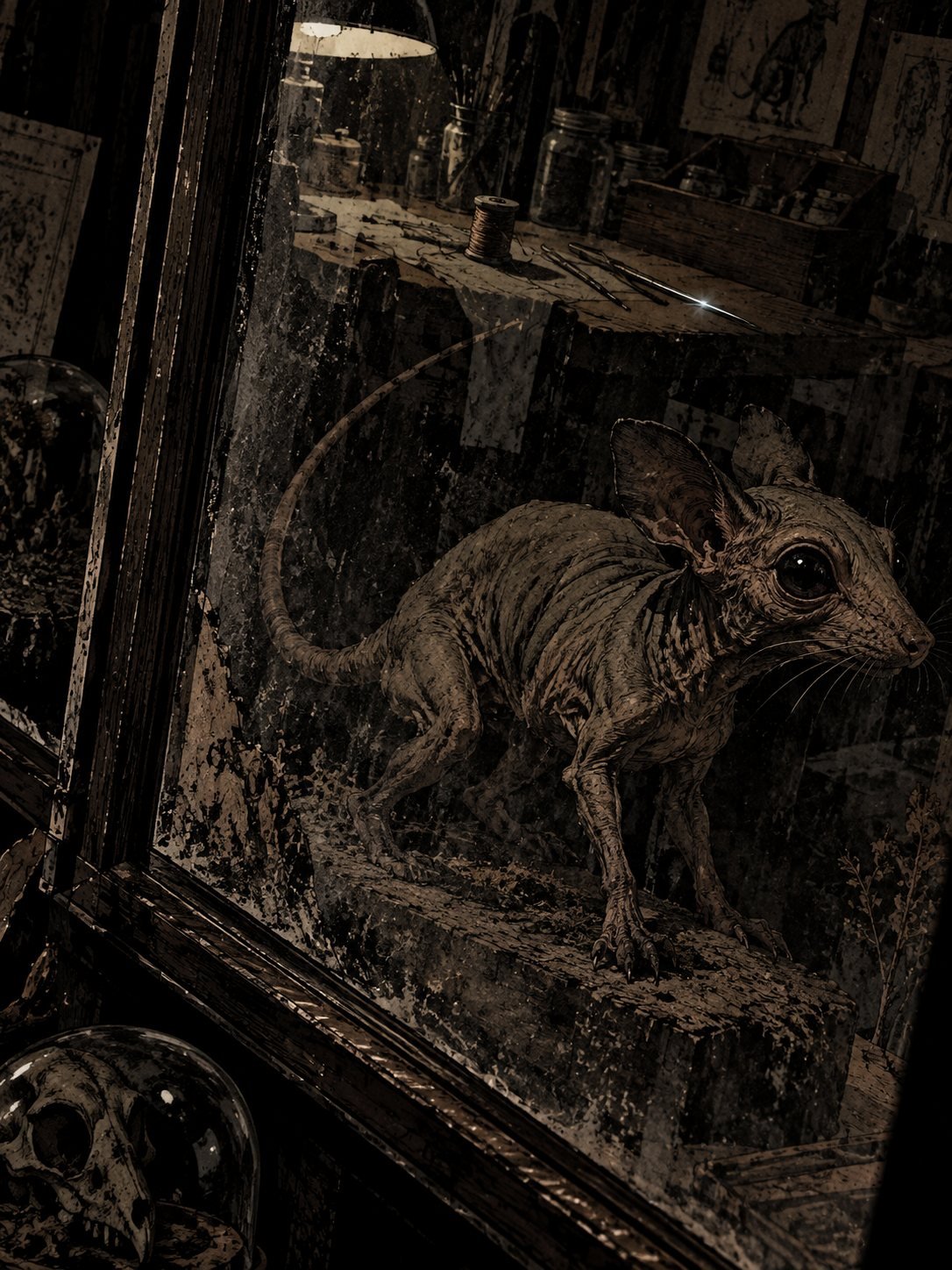
In 2007, Maussan presented his study of a small creature at the World UFO Summit in Mexico. It became known as the “Being of Metepec,” after a town in the State of Mexico. The case went back to a report from 1994.
It was said to be unknown to science.
It turned out to be a squirrel monkey, altered by a taxidermist. A taxidermist is someone who preserves and mounts dead animals. One Mexican broadcaster, N+, instead linked the figure to a preserved hairless marmoset, another small monkey. Either way, it was a known animal made to look unknown.
A Mexican outlet later went further. It called the case “probably” one of Maussan’s own productions.
Now remember what Maussan said at the Juarez press conference. He called the new animal an adult version of the Metepec creature.
He drew that line himself. And the creature at the other end of it turned out to be a monkey. (Arab Times)
So what did the camera actually catch?

From the photos alone, no one can say what the animal is.
Could it be a known animal that just looks strange in a night photo? A sick animal, or one that has lost its hair? Something staged for the camera? None of these has been ruled out. And none of them has been proven.
That is the honest answer, and it is less exciting than “predator from another dimension.” But it is where the evidence stands.
There is also a lot we still do not know. Who owns the land where the camera stood, and who placed it. Whether the original image files will ever be released. Who the unnamed animal specialists were. Whether any farmer actually lost animals, since no complaint was ever filed.
Maussan promised cameras, traps and results in the coming months. If a body or a sample ever appears, it could finally be tested.
Until then, there is one explanation that has fooled people again and again before. (Arab Times)
A hairless coyote can look like a monster
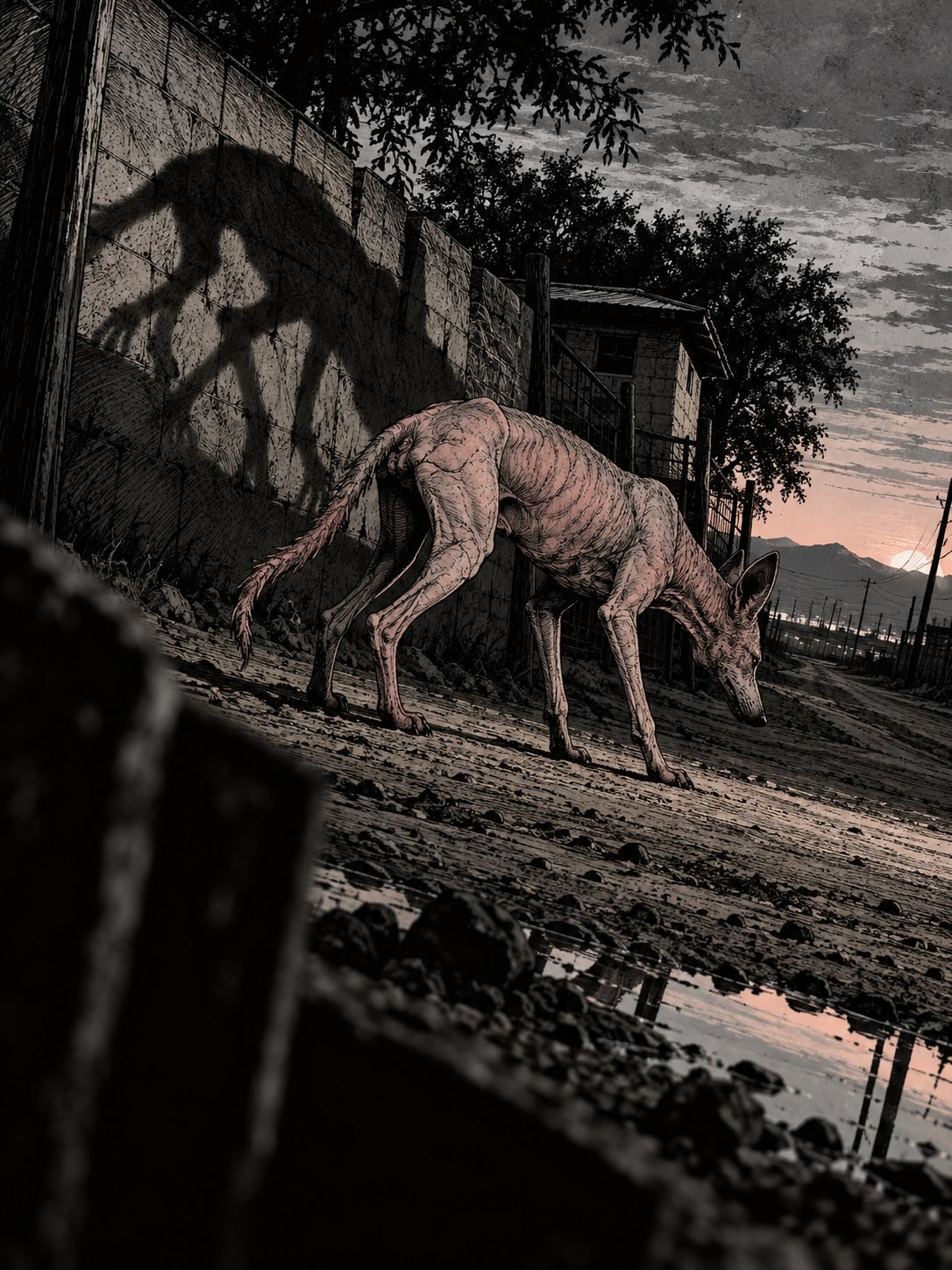
Animals with severe skin disease can lose all their fur. The most common cause is mange, a skin disease caused by tiny mites.
Without fur, even a common animal can look like nothing you have ever seen. Legs, tail and face that are normally hidden under hair are suddenly bare.
This has happened before, very close to the Juarez Valley. In Texas, people found hairless animals they called chupacabras, a legendary creature said to attack farm animals. In 2007, Texas State University biologists tested DNA from one found in Cuero, Texas. It was a “virtually identical match” to a coyote. DNA tests showed that supposed chupacabras were coyotes with severe mange.
Hoaxes have happened too. In 1953, three men in Georgia shaved a monkey and said it was a space alien. University anatomists identified it as a capuchin monkey with its tail cut off.
Strange-looking does not mean unknown. (Lokshahi)
The camera is still waiting by the wall

So here is where the story stands.
There are night photos of a pale, hairless animal with long limbs and a long tail, climbing a wall in the Juarez Valley. They were shown to the press on October 17, 2026, by Jaime Maussan and his team.
There are claims of missing hens, roosters and rabbits. A boy’s story about a chicken and a tree. Farmers hearing something on their roofs. None of it was officially reported on either side of the border.
There is no body, no sample, no DNA test and no named expert. And the man presenting it has a history of strange bodies that did not hold up: figures like his 2023 ones that experts in Peru found to be dolls, and a creature that turned out to be a monkey.
That does not tell us what the camera saw. It tells us that we do not know yet, and that the burden of proof is still on the people making the claim.
The camera is still out there, on its post, facing the wall. Waiting for whatever climbs over next.
Case notes: the Juarez Valley “predator,” claim by claim
Everything known about this animal comes from one place: Jaime Maussan and the team working with him. His associates say they set up surveillance cameras where the animal was reportedly seen. They then published the images and showed them at a press conference on October 17, 2026 (Arab Times). No outlet we found names the person who owns the property or who placed the cameras.
Most coverage repeats the same few lines. Read side by side, the reports disagree on the animal’s size, on which animals it is said to take, and on when the story began. One detail also gets little attention: the footage shows the animal moving on all fours and climbing a wall, even though Maussan described it as walking on two legs (IBTimes UK).
Timeline
| Date | What happened |
|---|---|
| August 1995 | Puerto Rican eyewitness Madelyne Tolentino’s sketch of the “chupacabra” is published. Researcher Benjamin Radford later links it to the film Species, which she had seen weeks earlier (Christian Science Monitor). |
| November 1, 2007 | Texas State University biologists report that DNA from a hairless “chupacabra” found in Cuero, Texas, is a “virtually identical match” to a coyote (Texas State University). |
| 2007 | Maussan presents his study of the “Ser de Metepec” at the World UFO Summit in Mexico (Cultura Colectiva). |
| September 2023 | Maussan shows two small bodies to Mexico’s Congress and calls them “non-human beings.” Scientists say his conclusions are not backed by evidence (Smithsonian). |
| January 12, 2024 | Peruvian forensic experts say similar figures seized by customs are dolls made of animal and human bones and modern glue (CBS News). |
| July 2026 | Start of three reported sightings in the valley, according to one report. We found no other source for this date (Lokshahi). |
| October 5, 2026 | The date Texas police give for when Maussan’s claims began. They say no strange encounters or farm-animal deaths have been reported since then (UNILAD). |
| October 17, 2026 | The camera-trap images are shown at a press conference, with four of Maussan’s research assistants present (UNILAD). |
| October 21, 2026 | The story spreads through UNILAD, IBTimes UK, Arab Times, Sunday Guardian, LatiNation and France’s Demotivateur, often with stock photos or images credited to “Social Media” (Sunday Guardian). |
| October 23, 2026 | UNILAD updates its story. It says it asked Maussan and Juarez Civil Protection for comment and reports no reply (UNILAD). |
| October 25, 2026 | A fact-check finds no DNA testing, no scientific examination and no independent verification (Lokshahi). |
What the sources agree on, and where they don’t
| Detail | Source A says | Source B says |
|---|---|---|
| Size | Nearly 1.8 m (about six feet) from snout to tail tip, with a tail of about 90 cm, estimated from the bricks (Arab Times) | Maussan is quoted describing it as more than 70 cm tall (IBTimes UK) |
| Animals taken | Chickens, turkeys and rabbits (Arab Times) | Hens, pigeons, fighting roosters and rabbits (IBTimes UK) |
| How it moves | Maussan says it walks on two legs and looks human-like | The footage shows it on all fours, climbing a wall (IBTimes UK) |
| When it started | Maussan’s claims began October 5 (UNILAD) | Three sightings reported since July 2026 (Lokshahi) |
| Who said “no reports” in Texas | The El Paso County Sheriff’s Office patrol station covering the Rio Grande corridor (IBTimes UK) | “Police on the Texas side,” speaking to the El Paso Times (UNILAD) |
| What the “Ser de Metepec” was | A squirrel monkey altered by a local taxidermist (IBTimes UK) | Mexican broadcaster N+ linked it to a preserved hairless marmoset (Sunday Guardian) |
The sources agree on the main points. The images came from Maussan’s team. The animal is pale, hairless and long-tailed. No carcass, sample or published analysis exists. Authorities on both sides of the border say they received no reports.
Details most coverage missed
- The official on the record. Ciudad Juarez Civil Protection director Sergio Rodríguez told the El Paso Times that his department had received no reports of anything unusual in the valley (IBTimes UK). Civil Protection also said its recent work in the area involved weather-related problems (Sunday Guardian).
- The size is an estimate. The six-foot figure comes from comparing the animal’s body with bricks in the wall. It is not a direct measurement (Arab Times). One fact-check notes that the bricks are not a known reference object, and that the photos alone cannot identify the animal (Lokshahi).
- Hairless animals have fooled people before. In Texas, DNA tests showed that supposed chupacabras were coyotes with severe mange (Christian Science Monitor). In 1953, three men in Georgia shaved a monkey and said it was a space alien. University anatomists identified it as a capuchin monkey with its tail cut off (Museum of Hoaxes).
- Maussan made the link himself. He called the Juarez animal an adult version of the Metepec creature (IBTimes UK). That case goes back to a 1994 report from Metepec, State of Mexico. A Mexican outlet later called it “probably” one of Maussan’s own productions (Cultura Colectiva).
What we still don’t know
- Who owns the property where the cameras stood, and who placed them? The reports only say that Maussan’s associates placed them (Arab Times).
- Will the original, unedited image files, with their timestamps and camera data, ever be released? None have been published so far (Lokshahi).
- Who are the “animal specialists” who could not identify it? None have been named (UNILAD).
- Did any farmer actually lose animals? No complaint has been filed with authorities (IBTimes UK).
- Will the cameras and traps Maussan promised produce a body or a sample? He said results could come “in the coming months” (IBTimes UK).
Case file summary
- Where: Juarez Valley, Chihuahua, Mexico, across the Rio Grande from El Paso, Texas
- When: Photos presented October 17, 2026; claims dated to October 5 by Texas police, with one report citing sightings since July
- Claim: A pale, hairless animal estimated at about six feet long, said to be taking poultry and rabbits
- Presented by: Jaime Maussan, Mexican UFO investigator, and four research assistants
- Official response: No reports received by Ciudad Juarez Civil Protection or by the El Paso County Sheriff’s Office
- Evidence: Camera-trap images only; no body, sample, DNA test or named expert
- Status: Unidentified and unverified
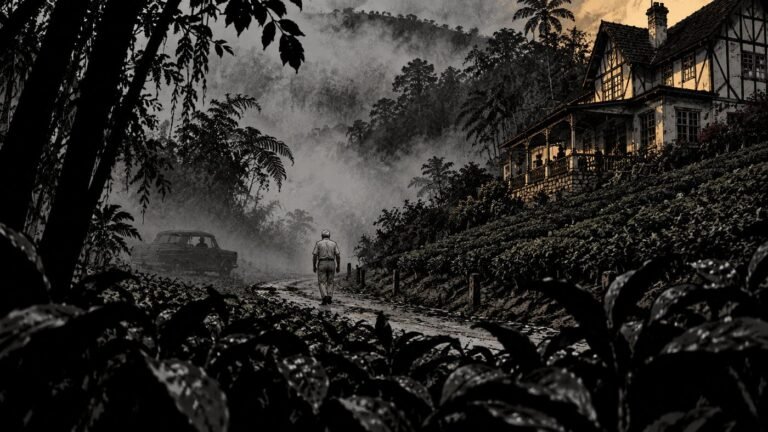
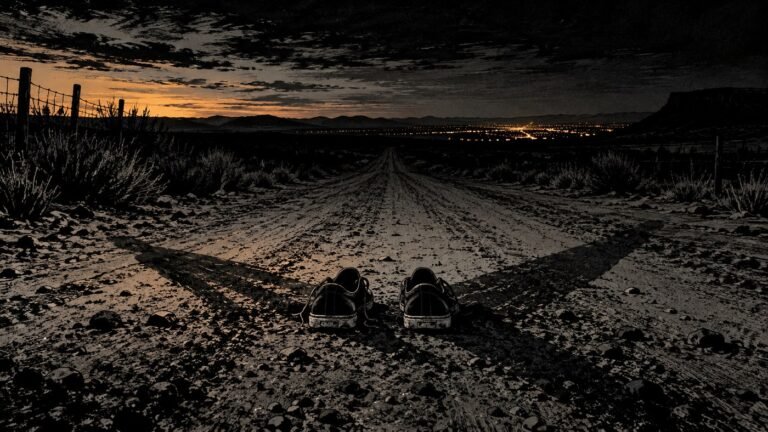
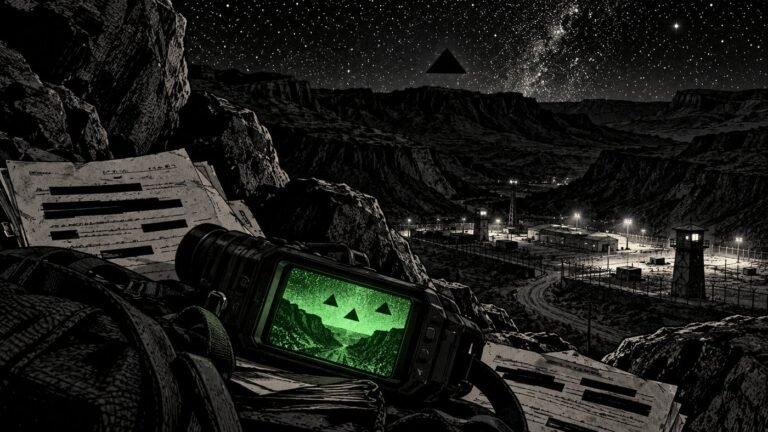
Illustrations are artistic interpretations, not the original photographs and not evidence. No real person has a recognizable face, and no violence is shown.
Sources
- UNILAD: Truth behind unknown ‘predator’ spotted near US border
- Arab Times: White creature filmed near US–Mexico border fuels claims and skepticism
- Lokshahi: Mexico mysterious creature fact check
- Sunday Guardian: Alien or ‘Unknown Predator’?
- CBS News: Peru doll-like figures are not aliens, forensic experts say
- IBTimes UK: Mexico’s mysterious hairless beast and ‘Chupacabra’ fears
- IBTimes UK: UFO investigator’s “another dimension” predator claims
- Smithsonian: Alleged alien corpses displayed to Mexican Congress did not convince scientists
- Texas State University: Researchers solve mystery of Cuero chupacabra
- Christian Science Monitor: El Chupacabra mystery origins traced to 1995 sci-fi film
- Museum of Hoaxes: The Great Monkey Hoax (1953)
- Cultura Colectiva: Alien de Metepec (in Spanish)