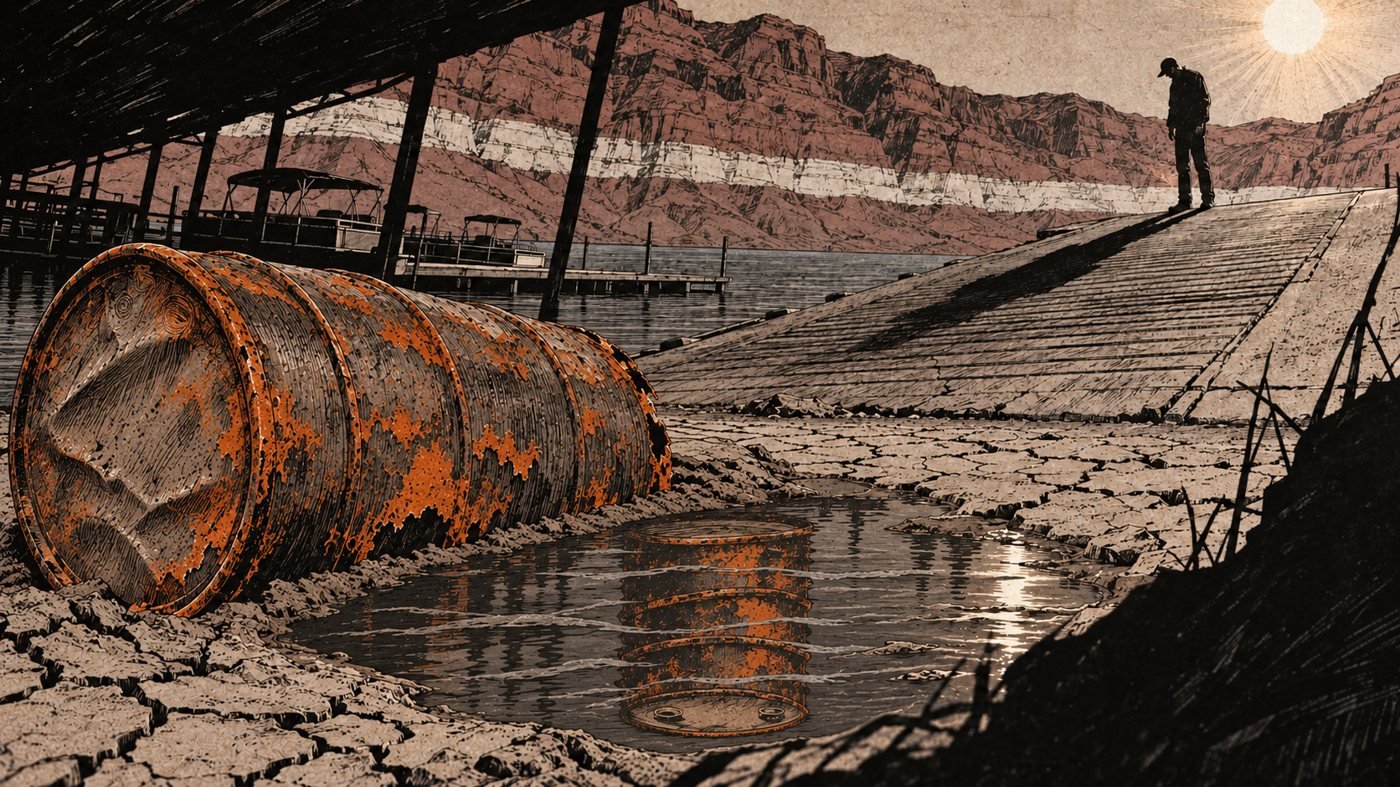
Lake Mead Barrel Body: The Man Inside Was Finally Named. Nobody Had Ever Reported Him Missing
Narrated Mystery: press play and hear the whole case read aloud, like a true crime podcast episode, or an audiobook for a long drive (about 14 minutes). The narrator is an AI voice.
Listen to the narration above first, then read along. The key words are underlined in the story.
- boat rampa slope where boats go into the water
- reservoira large lake made by people to store water
- droughta long time with very little rain
- mineralsnatural substances found in rock and water
- homicidethe crime of killing a person
- rangerspeople who look after a park
- skeletonall the bones of a body
- wristwatcha watch worn on the wrist
1. Why did the barrel become visible in 2022?
Years of drought made Lake Mead's water level drop.
2. Why did police say someone had to have a boat?
The barrel was left far out in the lake, not dumped from a road or bank.
3. What did the man's shoes help investigators learn?
They came from Kmart and helped date when he was put in the lake.
The woman by the boat ramp screamed first
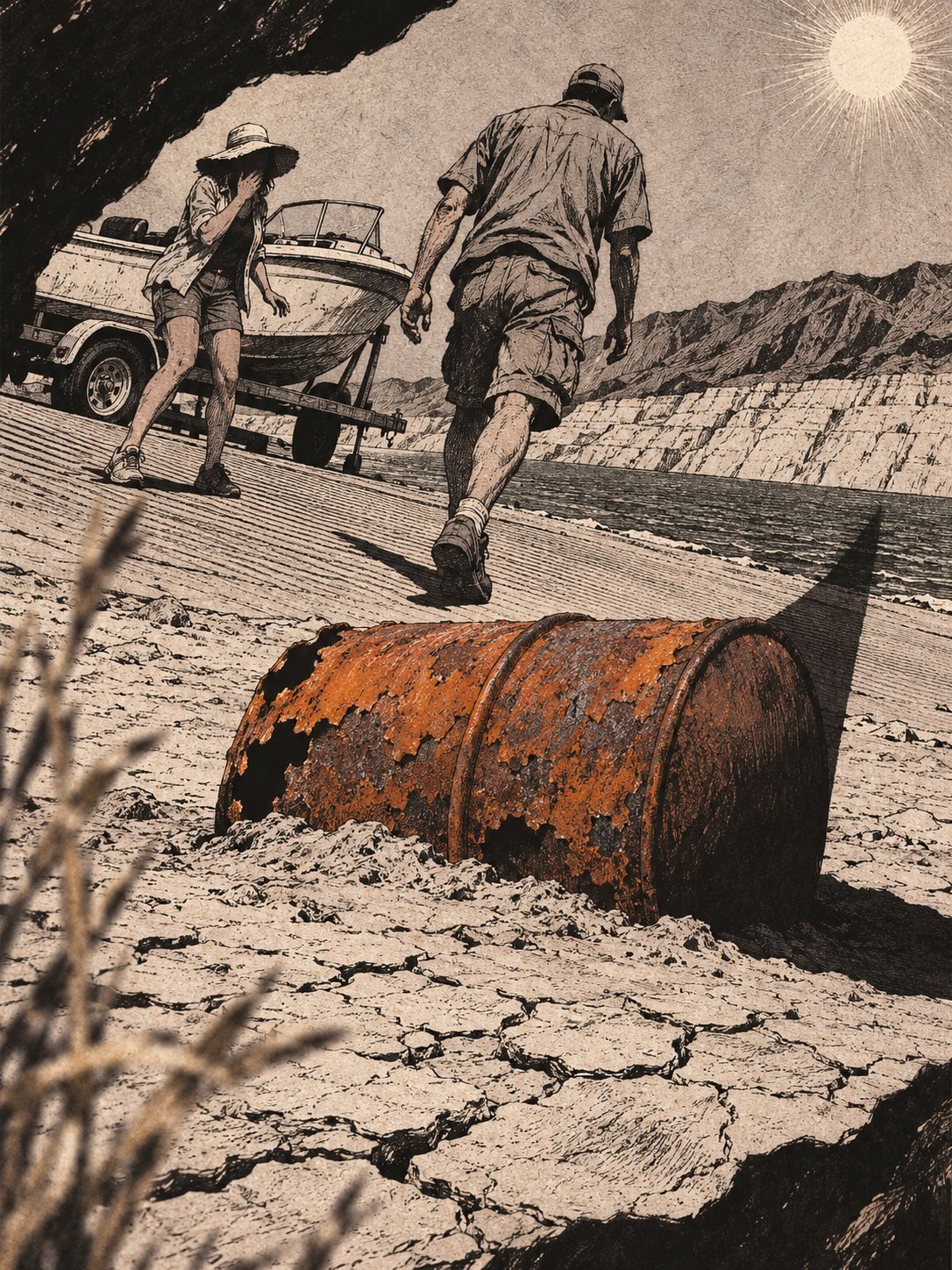
Sunday, 1 May 2022. About three in the afternoon. Hemenway Harbor, on the Nevada shore of Lake Mead, half an hour from the Las Vegas Strip.
It was hot, the kind of early-summer heat that makes the mud flats shimmer. A couple were hauling their boat out at the ramp, the end of an ordinary weekend on the water.
“We were loading up the boat and a woman actually saw it first and screamed,” one of them later told the Boulder City Review.
Her husband walked over to look. A few steps from the concrete, half sunk in the drying mud, lay a steel barrel on its side. The metal was rusted through in places.
Through the holes, he could see bones.
Somebody had put a man in that barrel. And for a very long time, nobody had known he was there. (BCR-2022) (NPS-2022) (OUTSIDE)
The lake was giving things back
To understand how a barrel ends up on a beach, you have to understand what was happening to the lake.
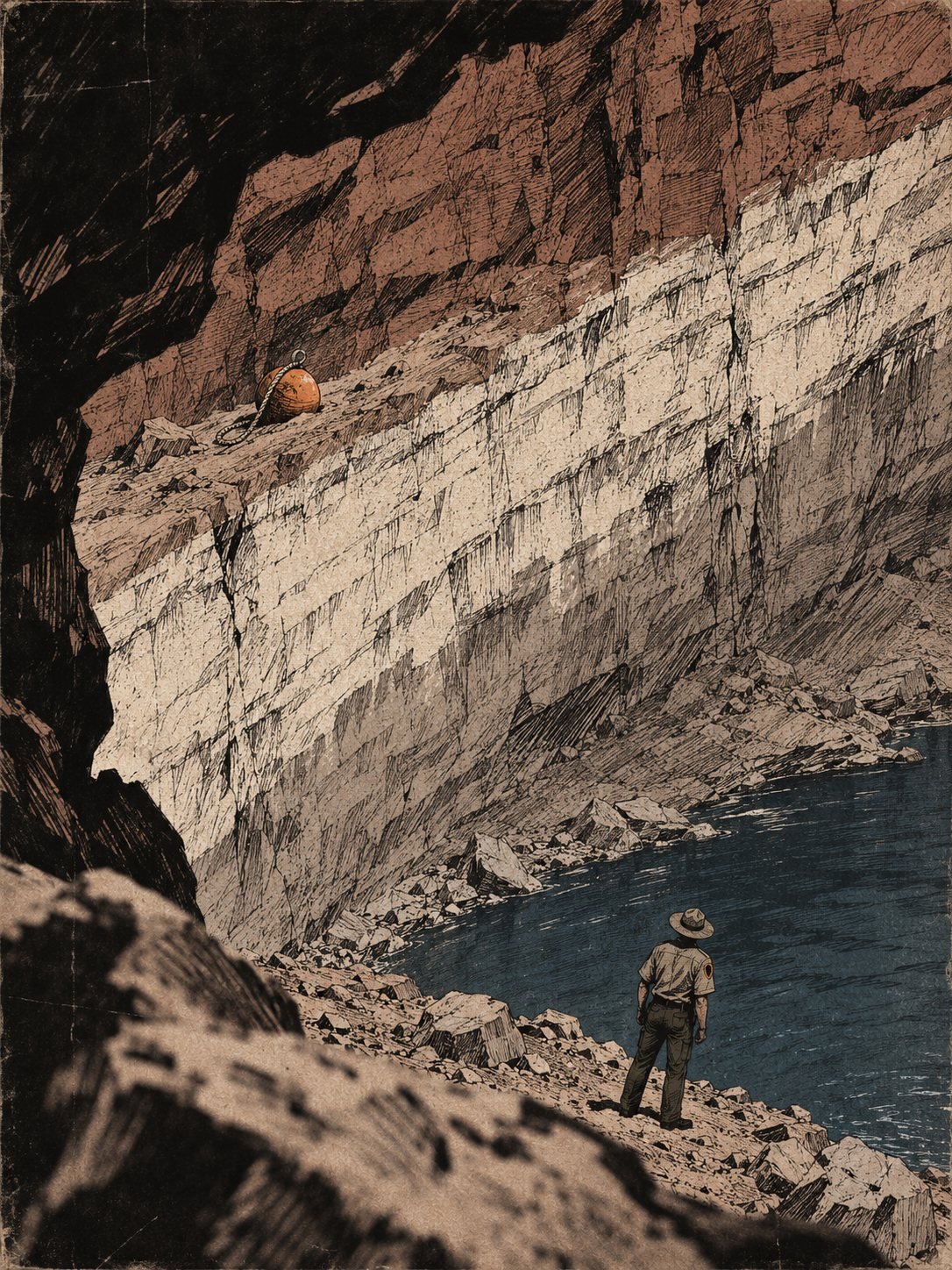
Lake Mead is the largest reservoir in the United States, the water behind Hoover Dam. In July 1983 it stood at about 1,225 feet above sea level, nearly full.
Then came two decades of drought on the Colorado River. By the last week of April 2022 the surface had fallen to just under 1,056 feet. The lake was about 30 percent full.
Along the red canyon walls, a band of white minerals about 170 feet tall marked where the water used to be. Locals call it the bathtub ring.
Concrete boat ramps that once dipped into deep water now stopped short over dry ground and had to be extended, again and again.
In the 1980s, the spot where the barrel lay would have been under several dozen feet of water. Now people were walking on it. (BCR-2022) (8NN-2022) (OUTSIDE)
“We believe this is a homicide”
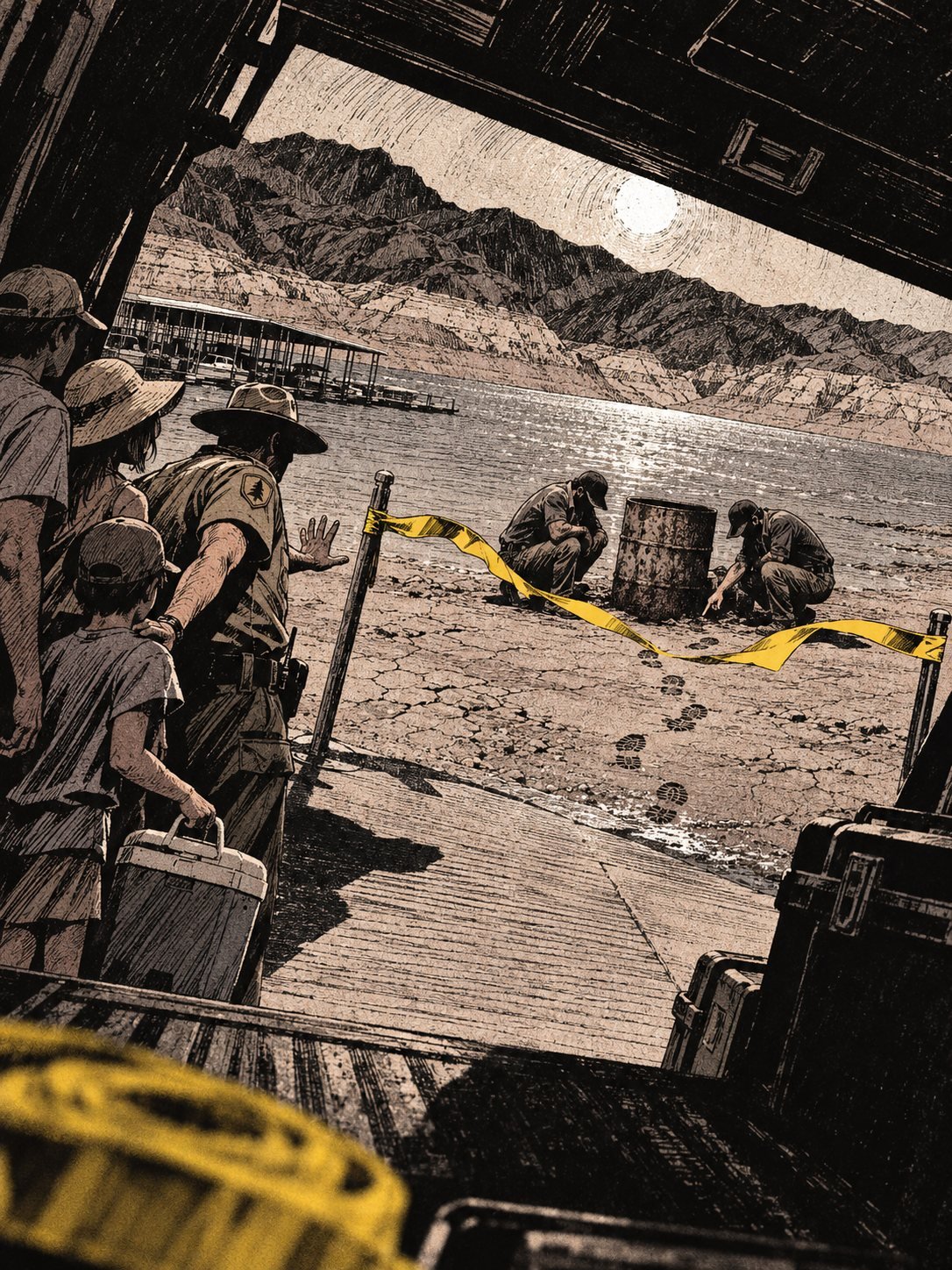
Park rangers closed off the shore. Detectives from the Las Vegas Metropolitan Police Department drove out from the city, and crime scene investigators worked the mud around the barrel.
It did not take long to learn the worst of it. The man inside had been shot once in the head.
“We believe this is a homicide as a result of a gunshot wound,” Lieutenant Ray Spencer of the homicide section told reporters.
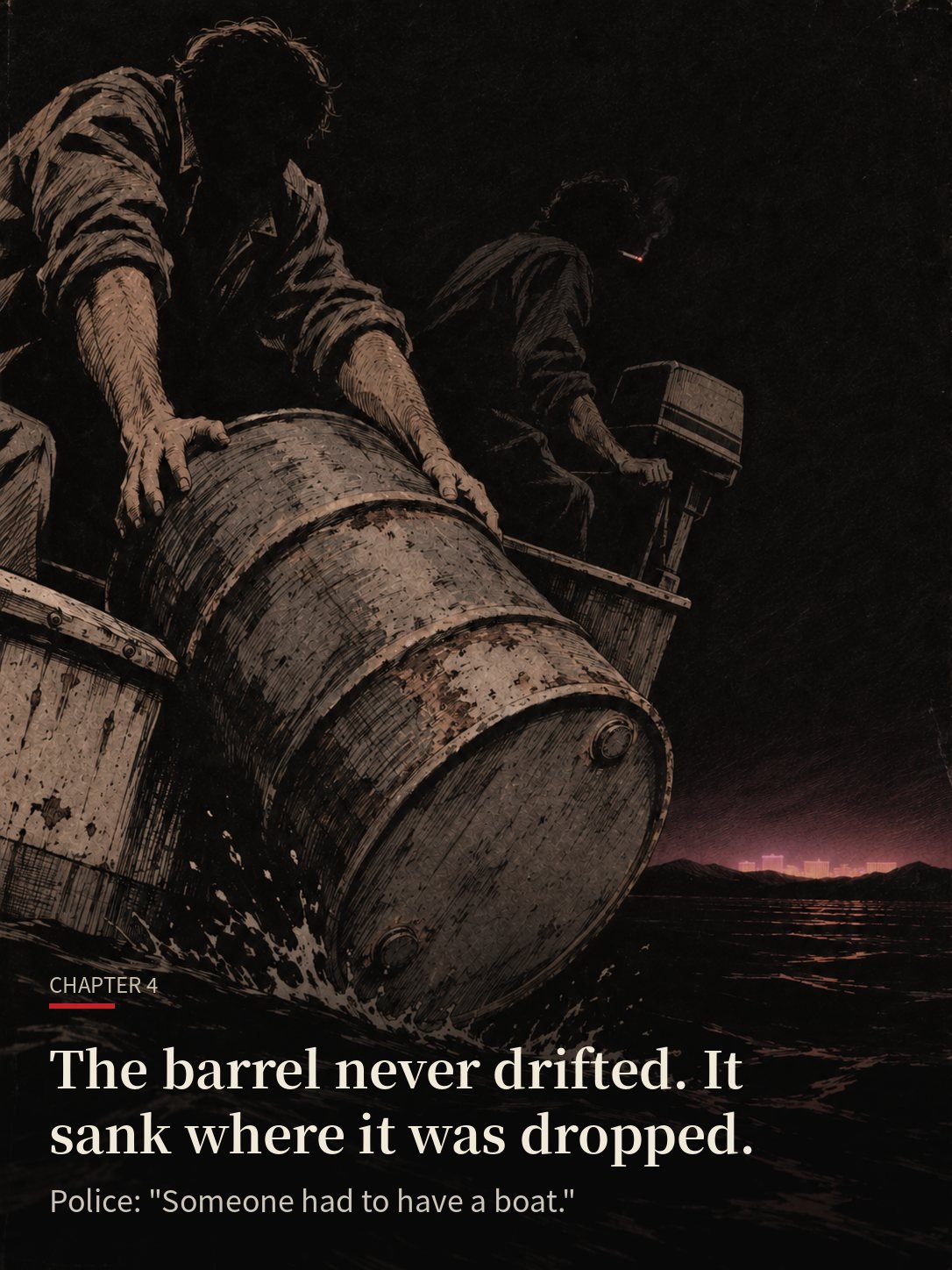
Then came the detail that made it stranger. Police said the barrel had not drifted in from somewhere else. It was intact when it went into the water, and it had stayed where it sank.
“The water level has dropped and made the barrel visible,” Spencer said. The lake had not delivered the man to the shore. The shore had come down to meet him. (BCR-2022) (8NN-2022) (NPS-2022)
Someone had to have a boat
Think about what that means.
The barrel was not dumped from a roadside or rolled down a bank. When it went in, that part of Lake Mead was open water, far out from where anyone could stand.
“Someone had to have a boat,” Spencer said.
Whoever did it carried a heavy steel drum out onto a lake that thousands of people visit, chose a spot, and let it go over the side. They would have expected it to stay on the bottom forever.
For roughly 40 years, it did. (OUTSIDE) (BCR-2022)
A pair of shoes from Kmart
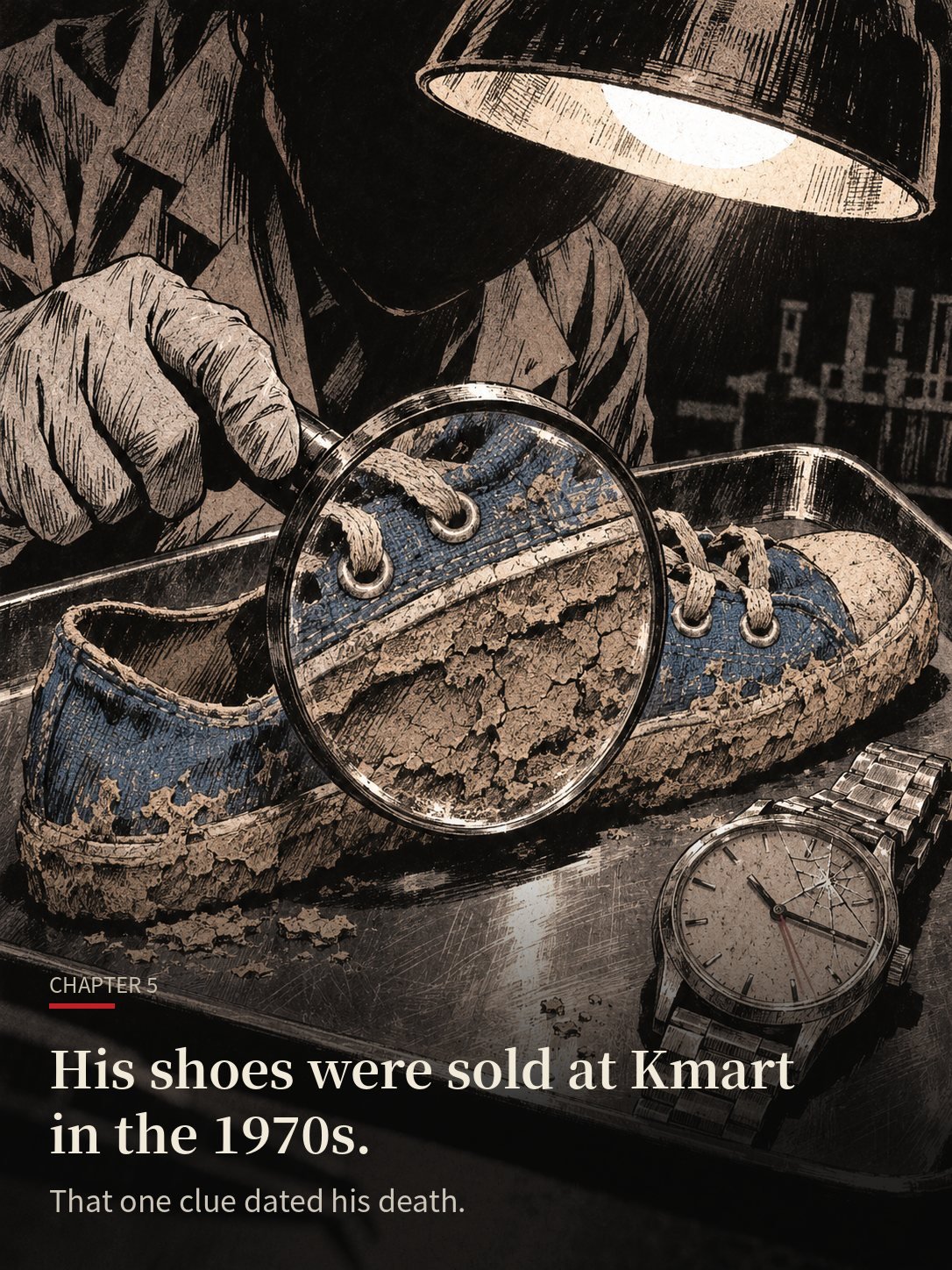
A skeleton can tell you a lot, but it cannot tell you a name. So detectives looked at what he was wearing.
He had on a short-sleeved button-down shirt and light blue jeans, a silver wristwatch and a pair of blue-and-white tennis shoes.
The clothes were ordinary, which turned out to be the useful part. Spencer said the clothes and shoes were sold at Kmart in the mid-to-late 1970s.
That one clue gave the case its timeline. Police said the man was probably killed sometime between the mid-1970s and the early 1980s.
Years later, those same clothes would help prove who he was. (BCR-2022) (AP-2026) (8NN-2022)
Six days later, the lake gave up another
Lieutenant Spencer had made a prediction on the day the barrel was found.
“I would say there is a very good chance as the water level drops that we are going to find additional human remains,” he said.
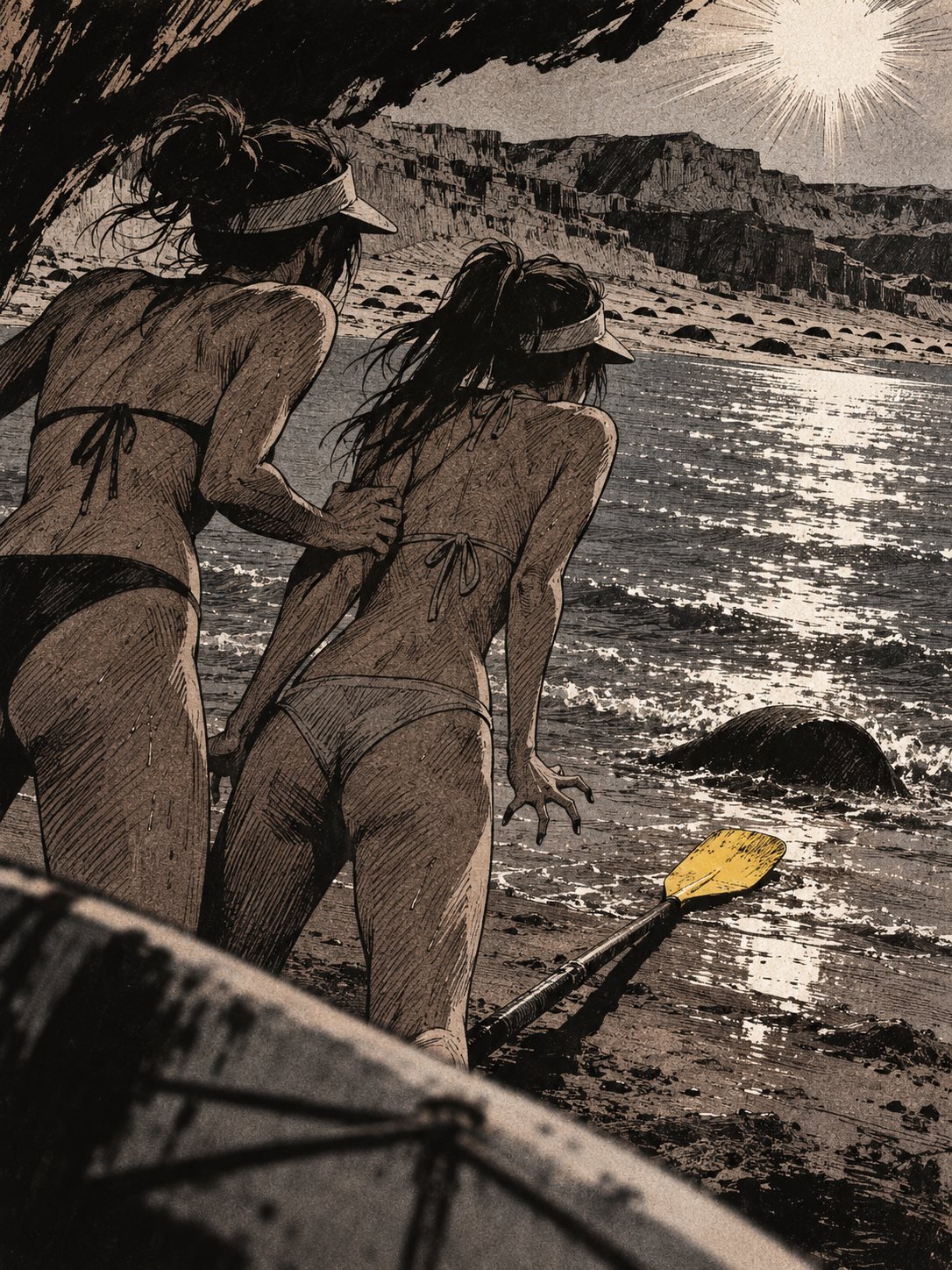
Six days later, on Saturday 7 May, two sisters paddleboarding near Callville Bay, on another arm of the lake, spotted bones in the sand at the waterline.
They belonged to Thomas Erndt, a 42-year-old man from Las Vegas. He had drowned at the lake in August 2002.
There was no crime in his case. But the message was the same. The falling water was starting to give people back. (8NN-2022) (FOX5-2022) (OUTSIDE)
The boat that kept going in circles
Through the summer of 2022, more remains appeared.
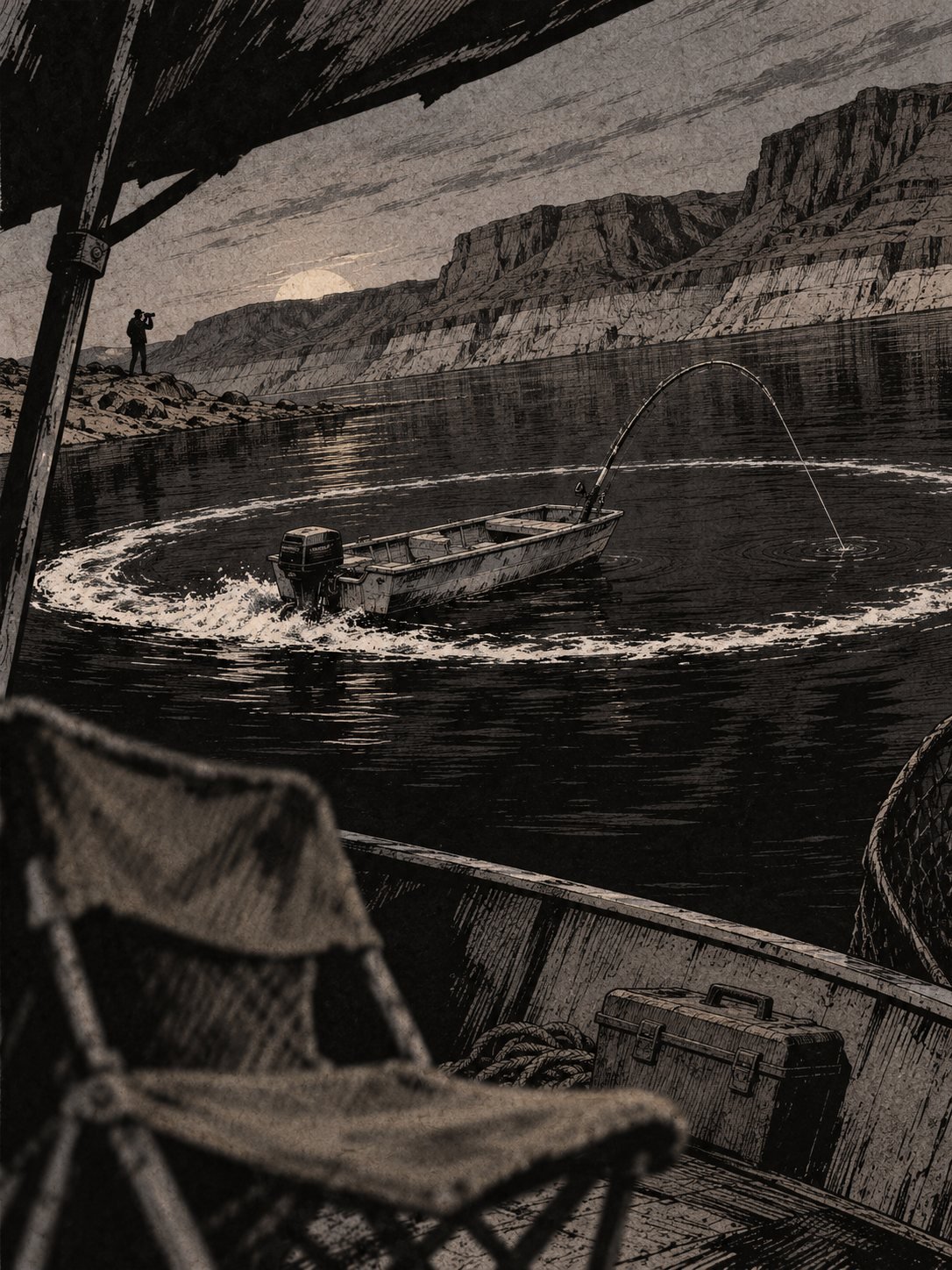
In late July and August, bones surfaced at Boulder Beach. They were identified as Claude Russell Pensinger, 52, who vanished while fishing on 14 July 1998. His boat had been found on the water, still running in circles, with no one aboard.
In October, contractors near the Callville Bay marina found the remains of Donald Smith, 39, of North Las Vegas. He had drowned in April 1974.
Every one of them was eventually identified through DNA.
Every one, that is, except the man in the barrel. (APR-2023) (FOX5-2023) (FOX5-2026)
In this city, everyone thought the same thing
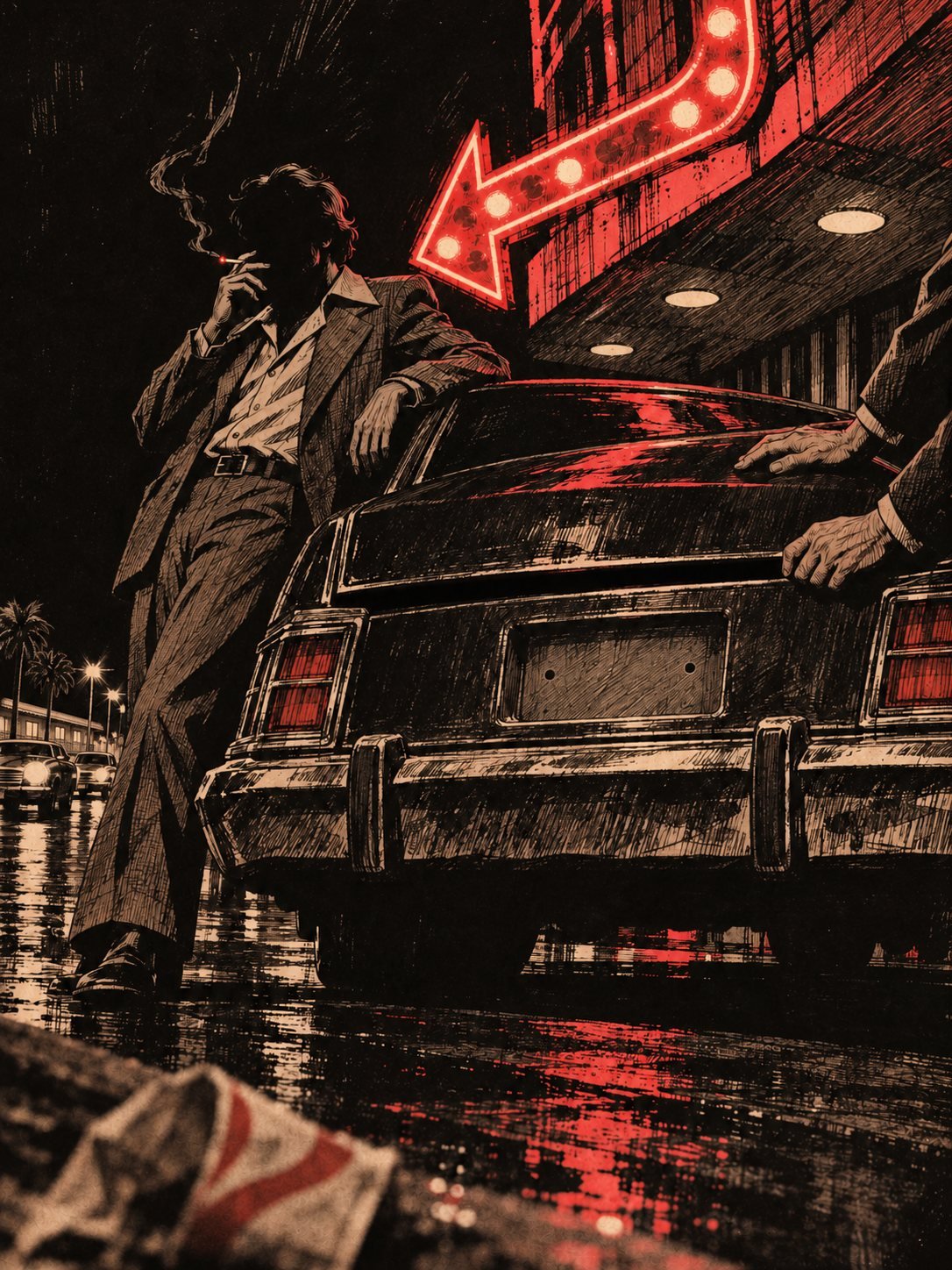
This was Las Vegas. A barrel, a bullet, a lake in the desert. People did not need to be told what it looked like.
For decades organised crime had a hand in the city’s casinos, from the 1940s to the mid-1980s, according to The Mob Museum. Stories of bodies left in the desert, or in Lake Mead, are part of local folklore.
Within days, commentators were floating the names of men who had disappeared in the 1970s, a casino slot supervisor among them, as possible victims.
None of them turned out to be the man in the barrel. Detectives later said none of those theories matched the physical evidence. (AP-2026) (CASINO) (OUTSIDE)
“I think this story is not over”
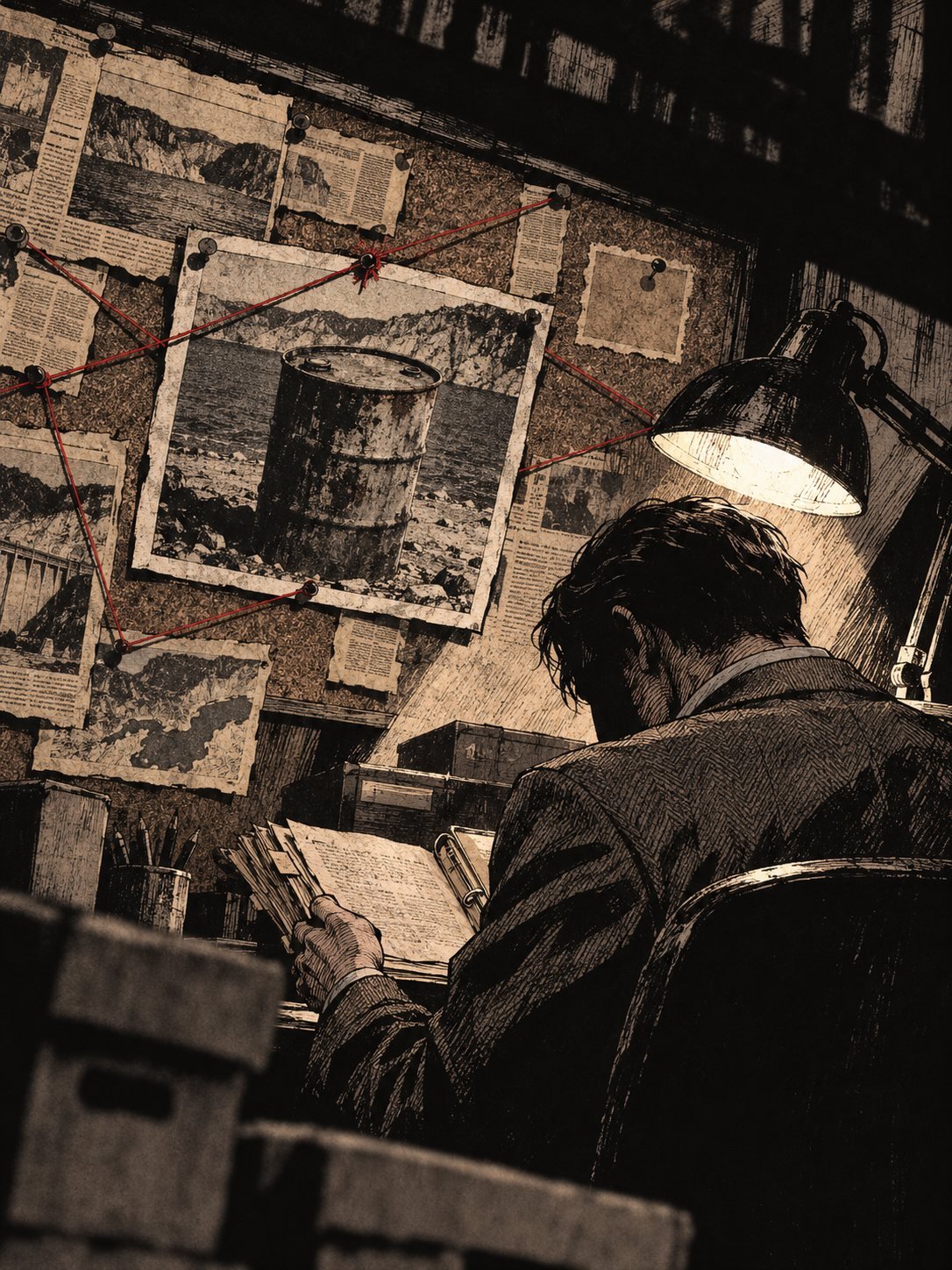
The mob theory did not go away. In October 2026, Geoff Schumacher, a vice president at The Mob Museum, told the Associated Press the case had the “earmarks of a mob hit.”
He pointed to a 1976 killing near Miami, in which a mob figure’s body was found in a steel drum in the water.
The police were more careful. Lieutenant Robert Price of the homicide section said investigators “don’t have any information to support those theories.” They have not ruled them out, either.
Schumacher said the museum would search its own records. “I think this story is not over.” (AP-2026) (KTNV-2026) (FOX5-2026)
Three faces, and no one who knew him
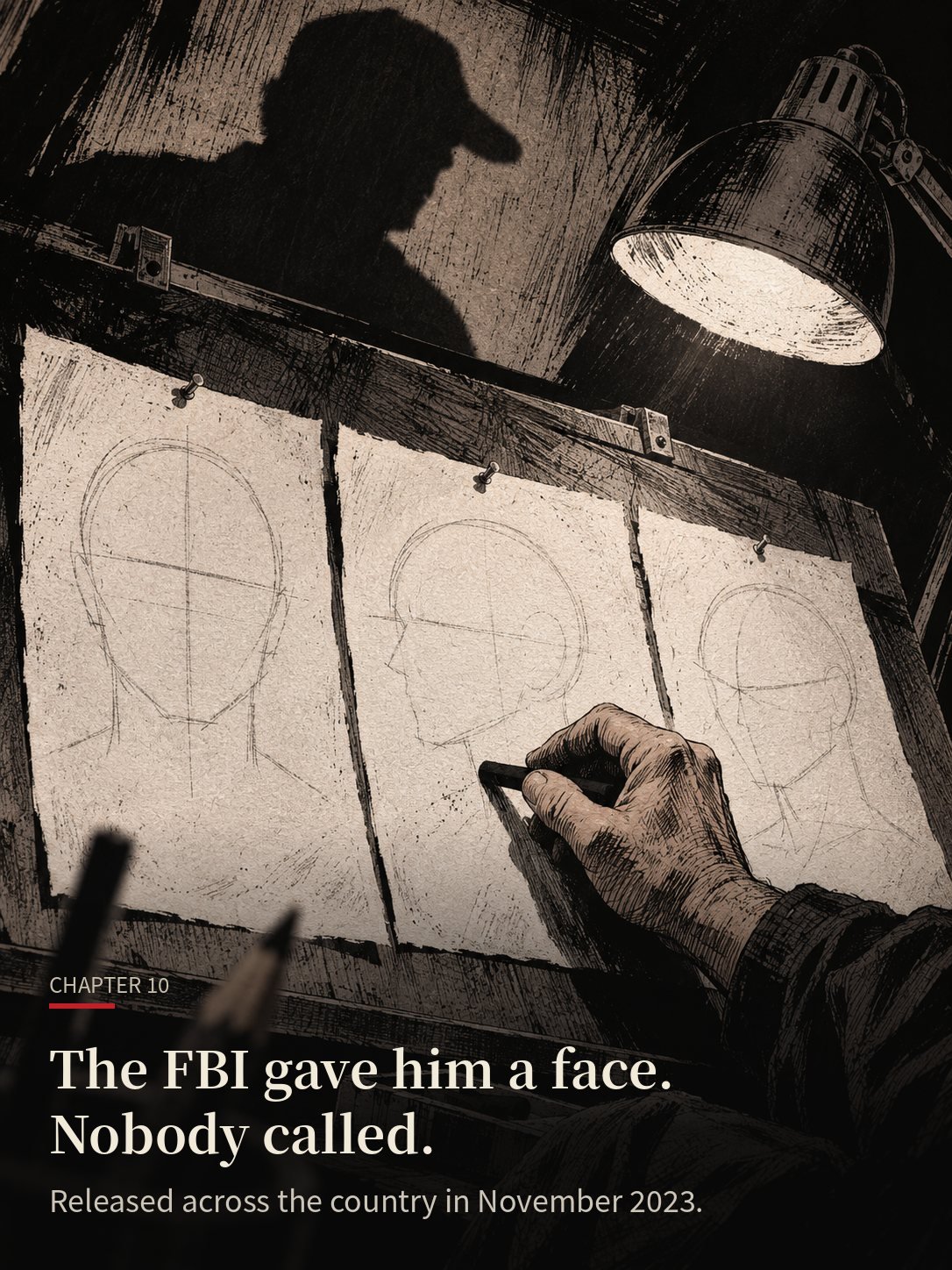
The first DNA test, run in 2022, matched no one in any database. Whoever he was, no relative had ever been tested, and no one had reported him missing in a way that left a sample behind.
So investigators tried to give him a face. On 29 November 2023, the Clark County coroner’s office released images made by the FBI laboratory in Quantico, Virginia: an approximation of how the man may have looked, shown from three angles.
“Our hope is to put the composite out there and see if we can get any good matches,” coroner Melanie Rouse said.
The images went out across the country. Nobody called to say, that is my brother, my uncle, my father. (WMN-2023) (IFL) (NEWS3)
Family, but not close enough
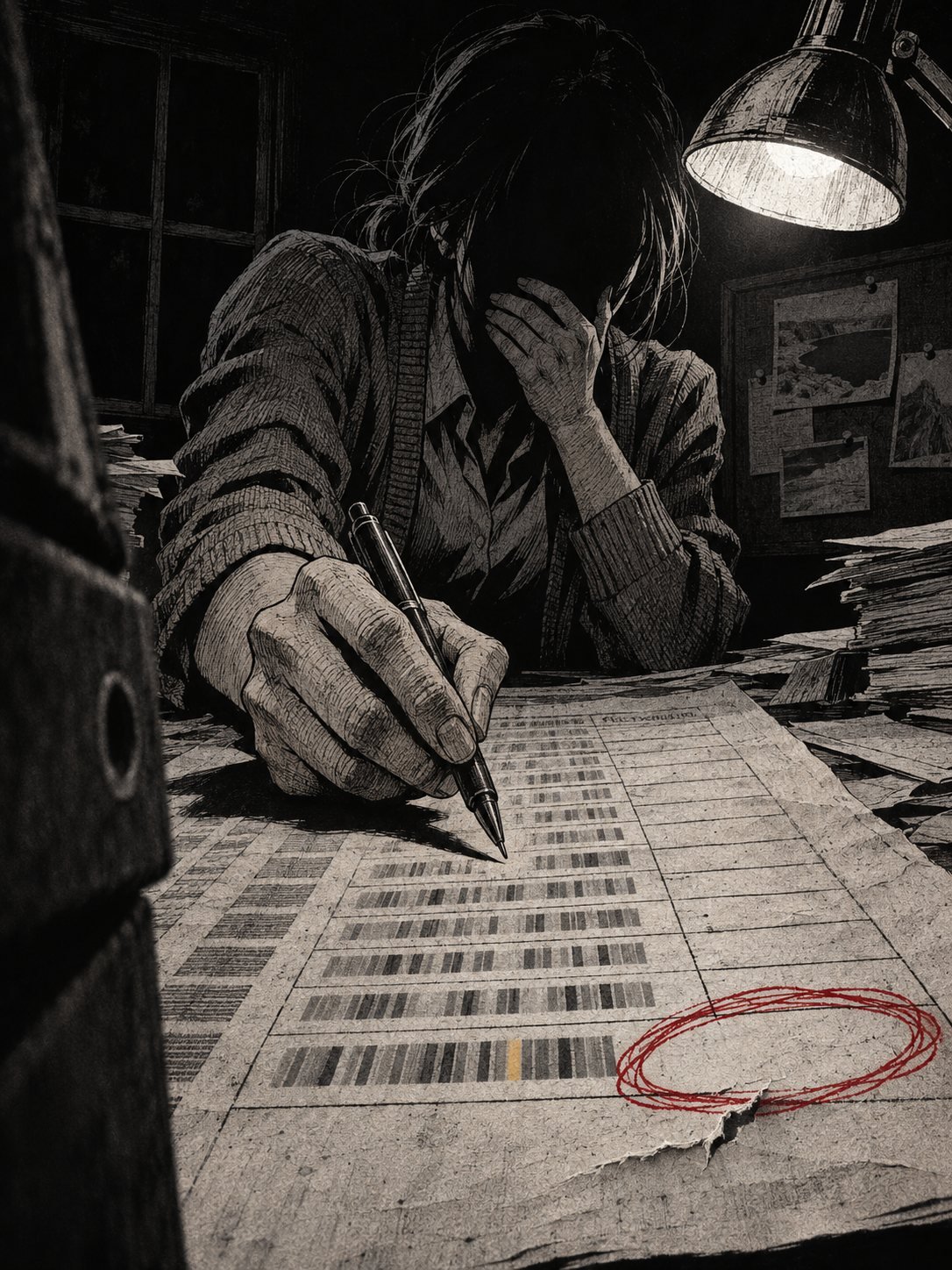
In early 2024, a bone sample was sent for genetic genealogy, the method that finds strangers through the DNA their distant cousins upload to family-history sites.
It found a relative. It was not enough.
The match was “close and within the same family, but not close enough for us to consider it a compelling match,” Rouse said.
Somewhere out there was his family. They just did not know that one of their own was lying in a morgue in Las Vegas, and the science could not yet prove it. (IFL) (AP-2026)
A sample marked 2022
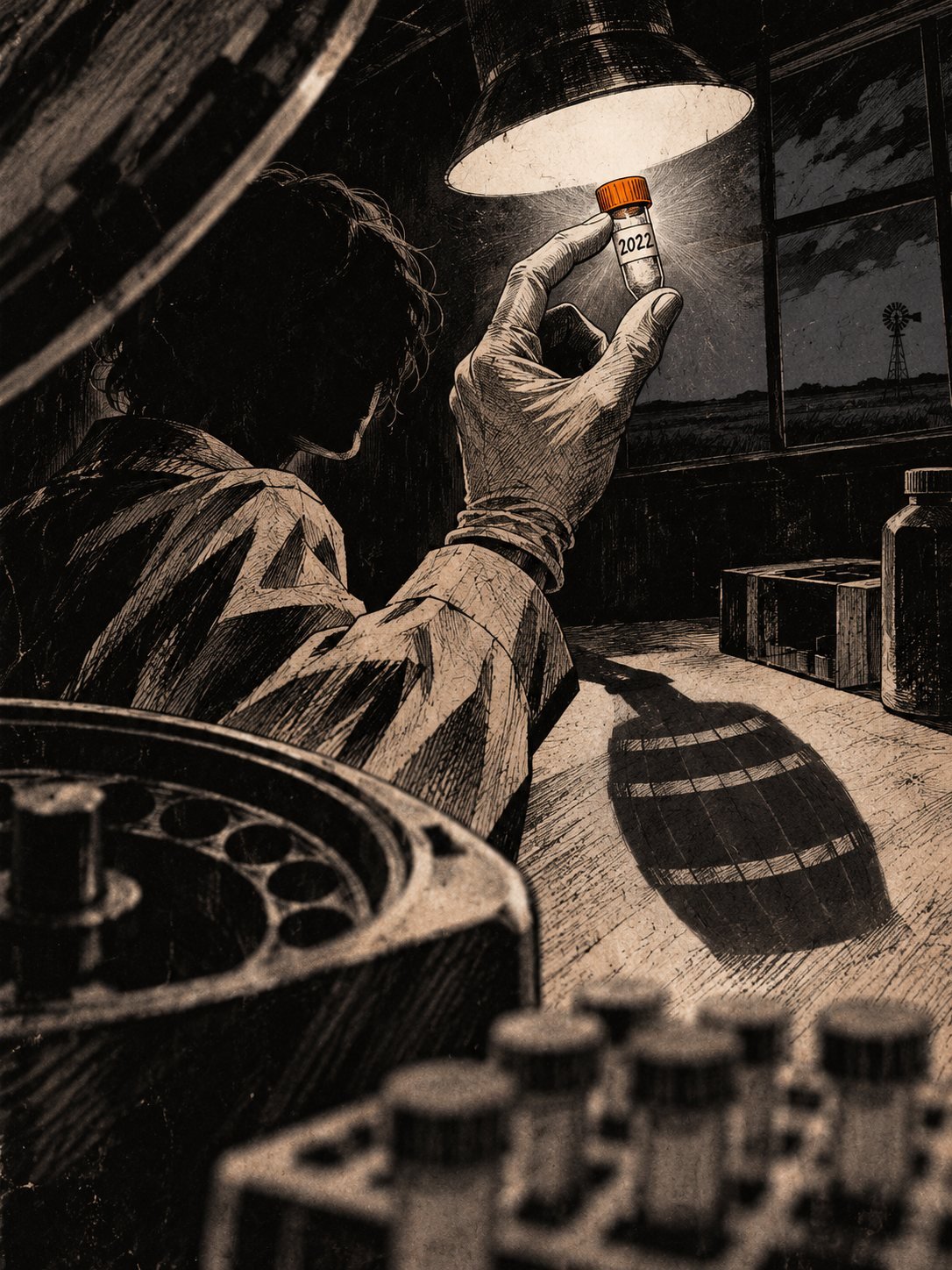
In 2025 a fresh sample went to Oklahoma State University, to the School of Forensic Sciences and a team led by Dr. Jason Beaman.
Early in 2026 the lab came back with a strong lead. Las Vegas detectives tracked down a possible relative and had that person’s DNA sent to Oklahoma for comparison.
It matched.
In the end, three things confirmed it together: the DNA, the FBI’s three faces and the Kmart clothes he had been wearing when he went into the water.
“As good as a DNA profile is, it’s only as good as what you have to compare it to,” Rouse said. (IFL) (NEWS3) (AP-2026)
Four and a half years to say his name
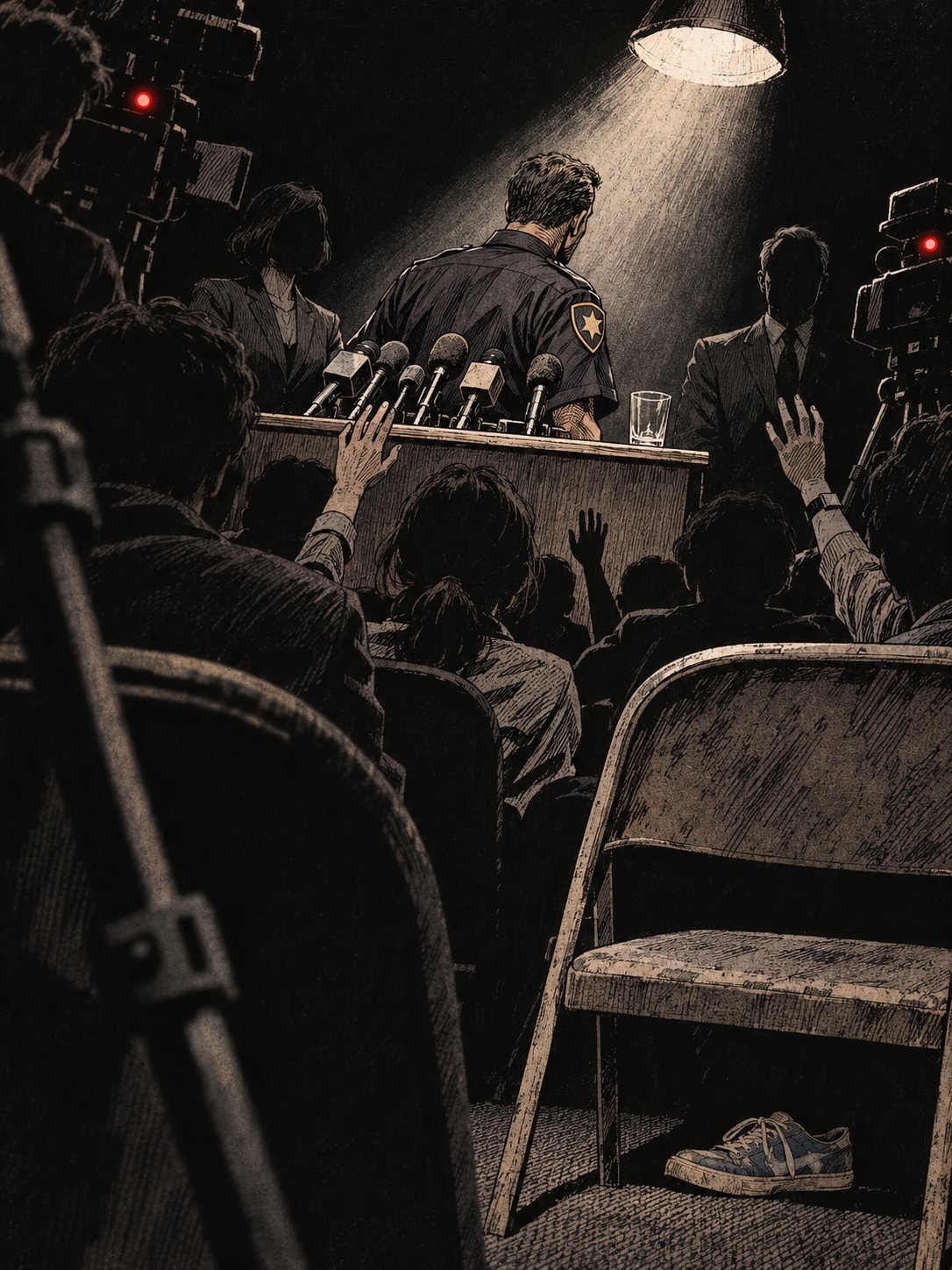
On Thursday, 15 October 2026, officials gathered at Las Vegas police headquarters. It had been four years and five months since the woman at the boat ramp screamed.
“We were able to confirm that the remains were in fact Edward Jackson,” Rouse said.
His full name was Edward “Buddy” Lelburian Jackson. He came from Arkansas. The coroner said he was probably in his mid-to-late fifties when he died.
His nieces and nephews had called him Uncle Buddy. (AP-2026) (CASINO) (FOX5-2026)
The family never reported him missing
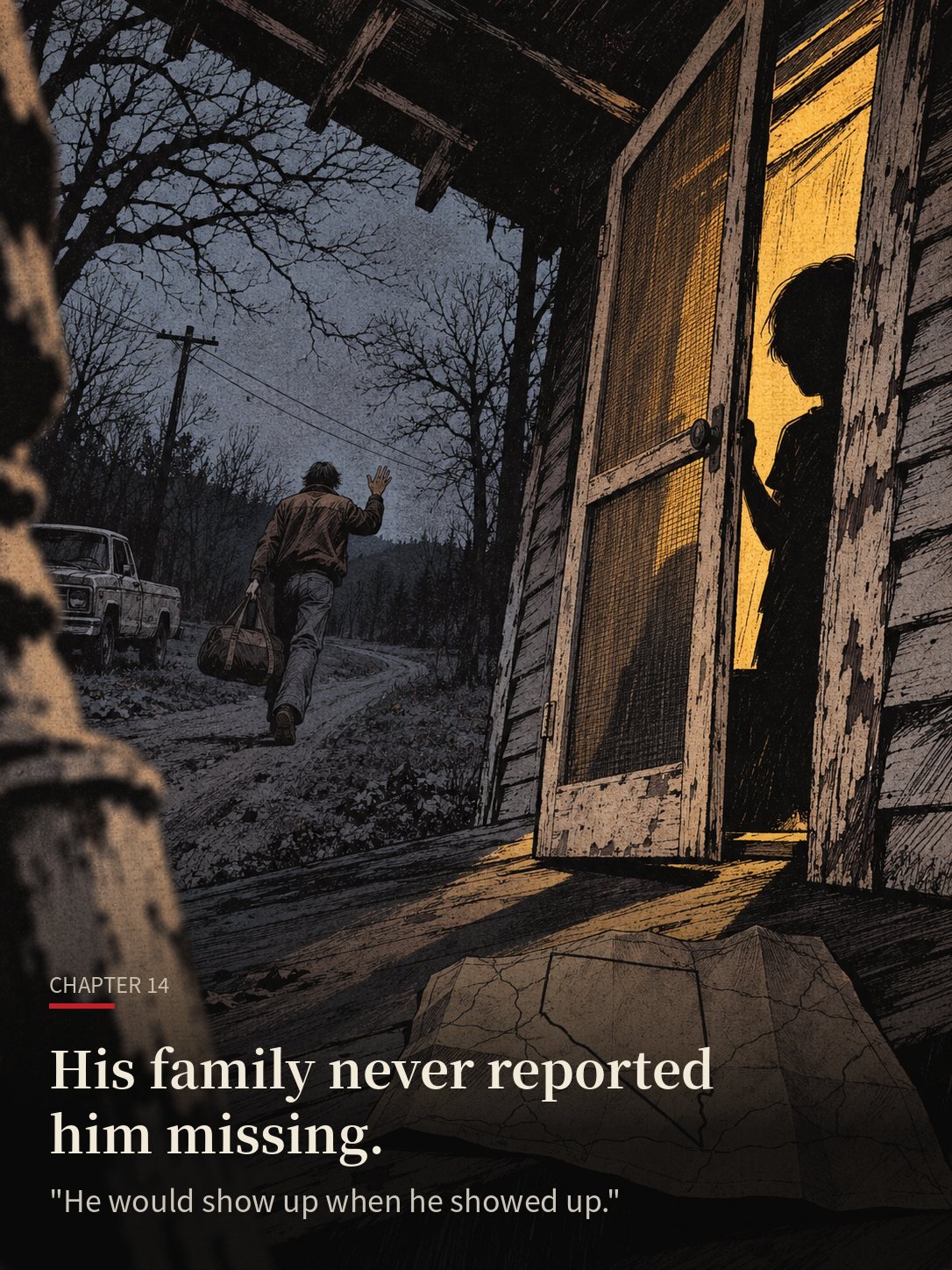
This was the part that explained the silence.
Jackson’s last known home before California was Hot Springs, Arkansas. In the early 1970s he lived for a short time in the Los Angeles area with his wife. In the early 1980s he was charged in Salt Lake City, Utah, with aggravated arson and conspiracy to commit fraud.
The last time his family saw him, police said, he was visiting them in Arkansas in the early 1980s.
After that, nothing. And nobody filed a report.
“They knew that he had traveled the country,” Price said, “would show up when he showed up, just to say hi.” So they waited. About 40 years went by. (AP-AJC) (KTNV-2026) (FOXWX)
Nobody knows why he went to Las Vegas
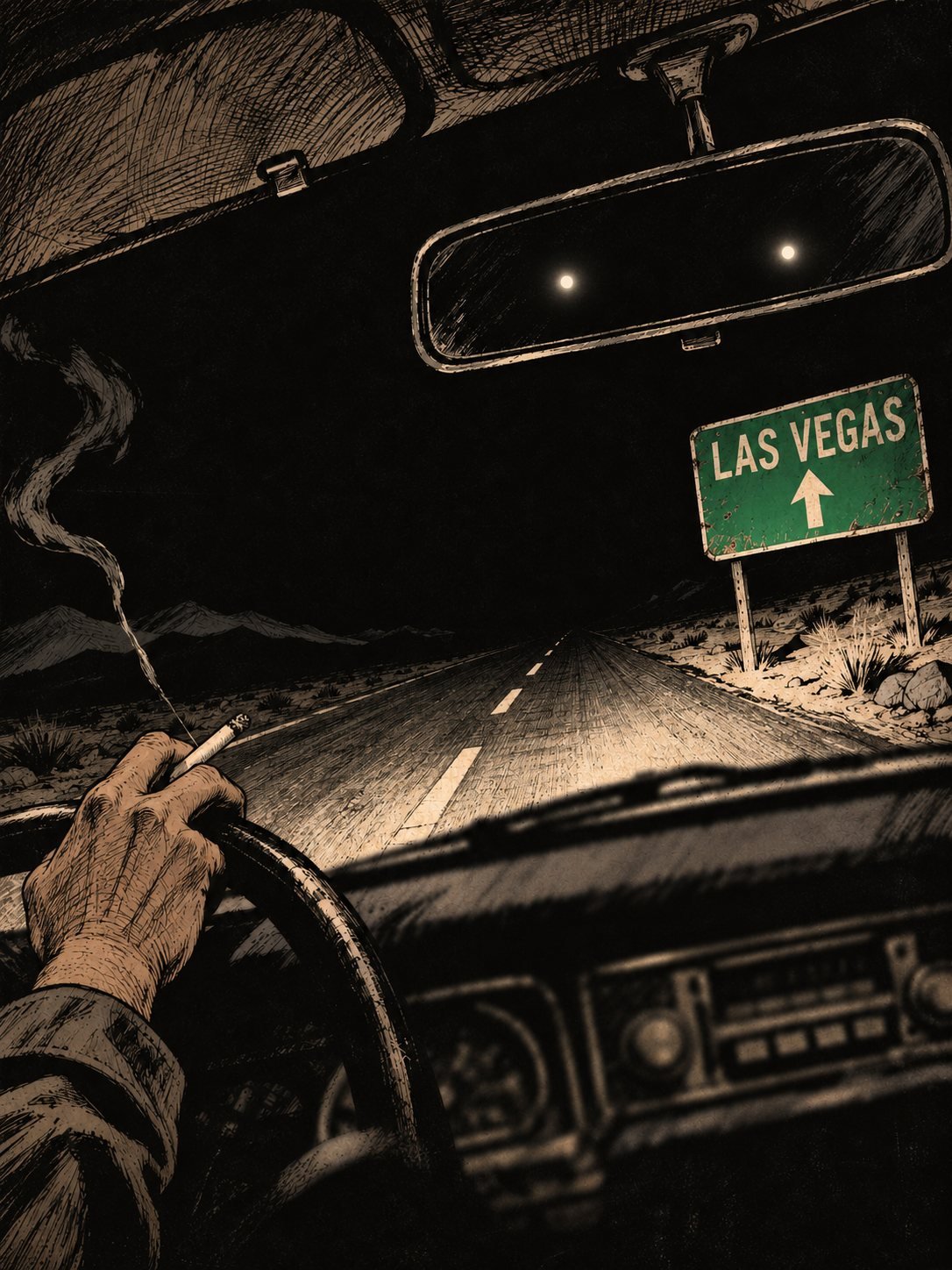
Detectives could trace him to Arkansas, to Los Angeles, to a courthouse in Utah. They could not find a single thread tying him to Las Vegas.
No job. No address. No known friends. “Once he moved to California, we lose track of him,” Price said.
Somewhere on the road between those places, a man who always turned up again stopped turning up.
Someone shot him, sealed him in a steel drum and carried it out onto the lake by boat. Why him, and why there, is still the question at the centre of the case. (FOX5-2026) (KTNV-2026) (CASINO)
The water is still going down
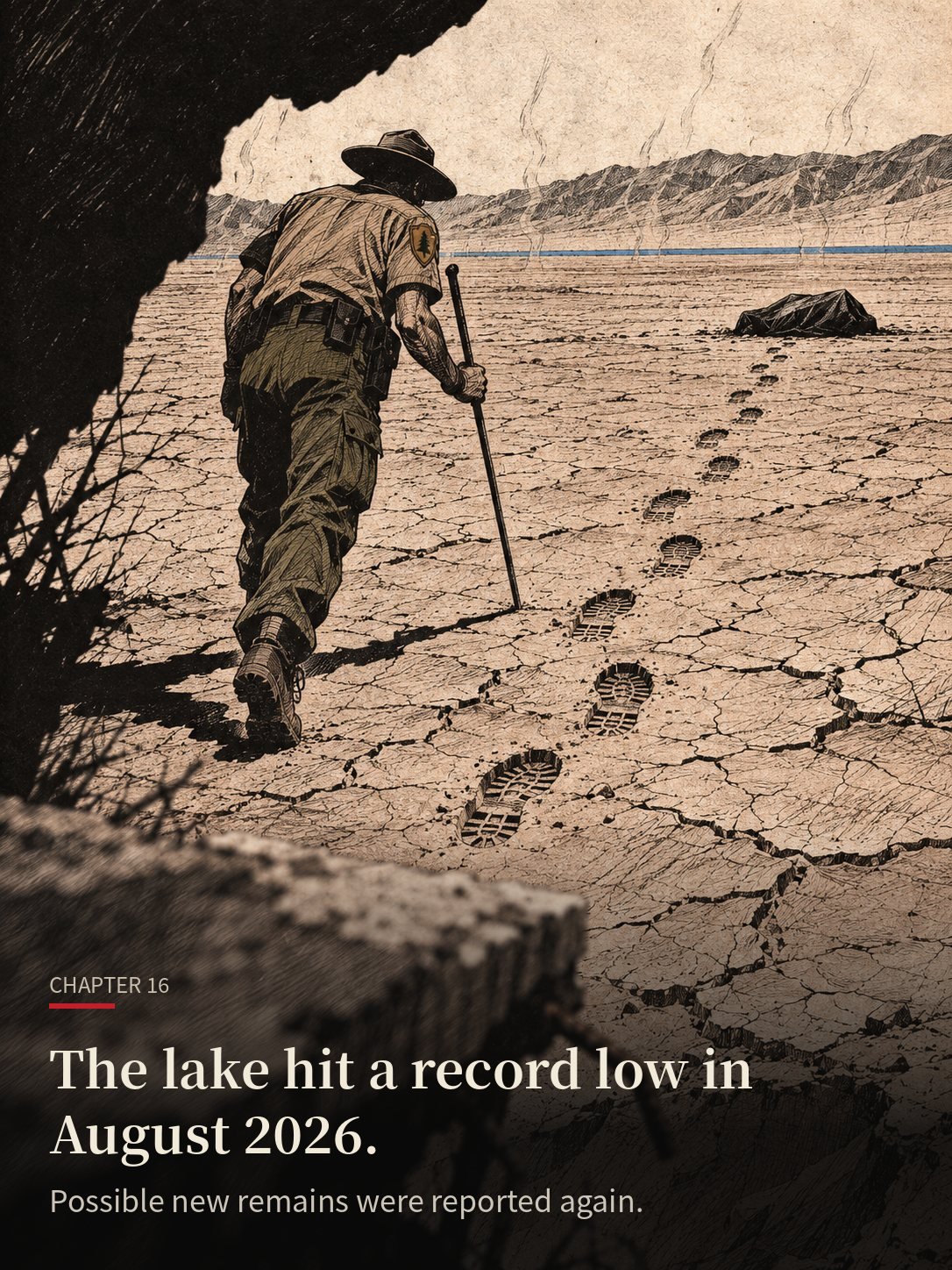
The drought did not end when the barrel was found.
In August 2026, Lake Mead fell to about 1,040 feet, lower than at any time since the reservoir was filled.
On 16 August 2026, two months before Jackson was named, possible human remains were reported again at Boulder Beach. They are still under investigation.
Each foot the lake drops uncovers ground that has been underwater for decades. Nobody knows what else is still down there. (KTNV-LOW) (GMA-2026)
A name, but no killer
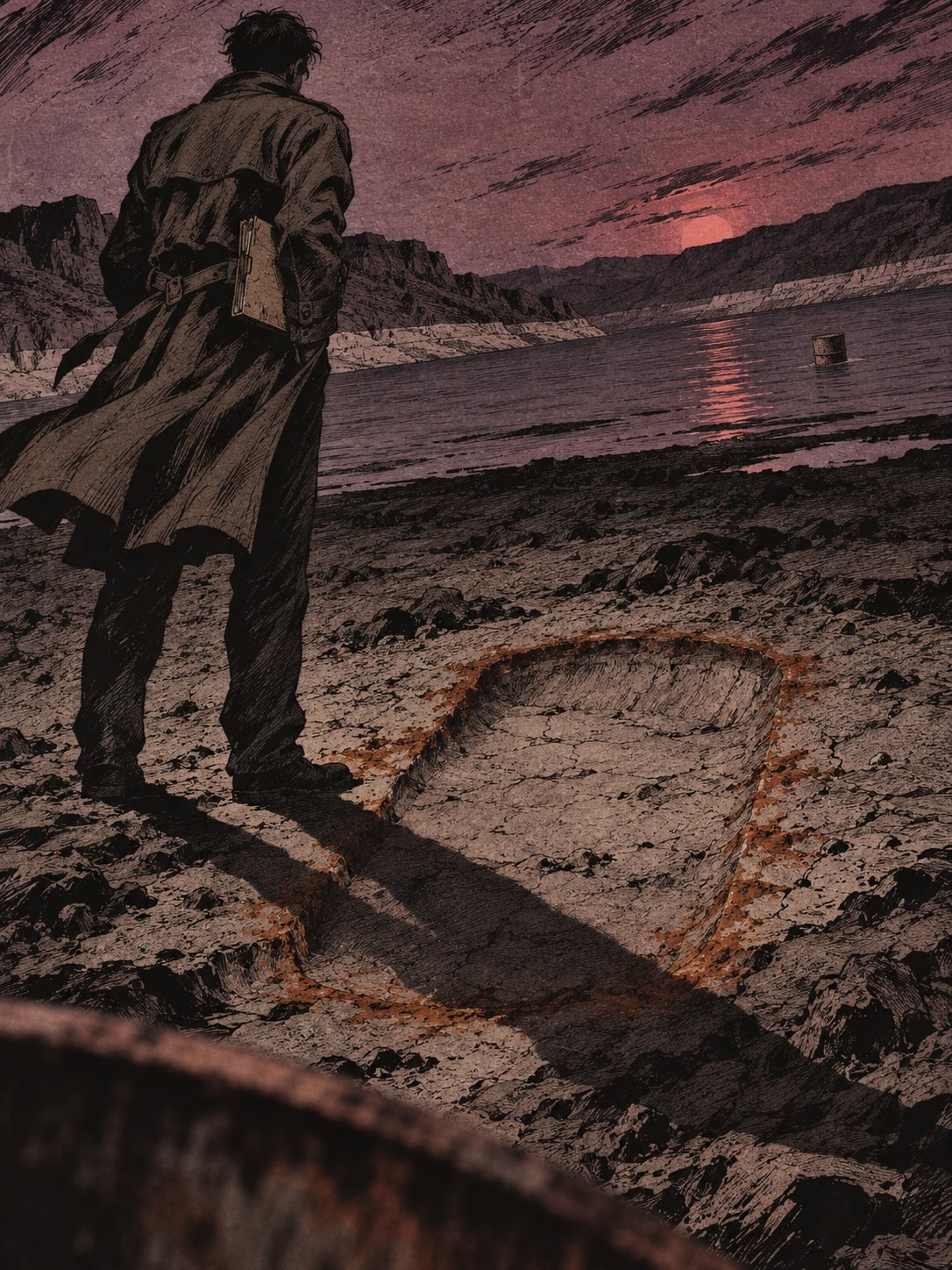
Edward Jackson has his name back. The person who put him in the barrel does not have one yet.
“It’s an unsolved case,” Price said. “It will never be closed until we solve it.”
Anyone with information can contact Las Vegas police homicide detectives, or call Crime Stoppers of Nevada anonymously at 702-385-5555.
Out on the lake, the boats still come and go over water that hides more than anyone can see from the surface. (IFL) (NEWS3)
Case notes: the Lake Mead barrel
On 1 May 2022, boaters at Hemenway Harbor found a rusted barrel in mud exposed by Lake Mead’s falling water. Inside were the remains of a man shot decades earlier. After four and a half years of DNA work he was named as Edward “Buddy” Lelburian Jackson, a man his family had never reported missing (NPS-2022) (AP-2026).
Where the case stands (as of November 2026)
Open homicide. The victim was identified on 15 October 2026 as Edward “Buddy” Lelburian Jackson, an Arkansas native in his mid-to-late fifties. No suspect has been named (AP-2026) (KTNV-2026).
Detectives are reviewing archival records. Police say they have no information supporting a mob connection, though it has not been ruled out (CASINO) (KTNV-2026).
Timeline
| When | What happened |
|---|---|
| Early 1970s | Edward “Buddy” Jackson lives briefly in the Los Angeles area with his wife (KTNV-2026) (AP-AJC) |
| Early 1980s | Charged in Salt Lake City, Utah, with aggravated arson and conspiracy to commit fraud; last seen by family on a visit to Arkansas (AP-AJC) (FOXWX) |
| Mid-1970s to early 1980s | Shot once in the head; his body is sealed in a steel barrel and dropped into Lake Mead from a boat (police estimate) (NEWS3) (BCR-2022) |
| July 1983 | Lake Mead peaks at about 1,225 feet (BCR-2022) |
| Late April 2022 | After two decades of drought the lake is just under 1,056 feet, about 30 percent full (8NN-2022) (BCR-2022) |
| Sun 1 May 2022, ~3 p.m. | Boaters find the barrel in the mud at Hemenway Harbor (NPS-2022) (BCR-2022) |
| 7 May 2022 | Second set of remains found at Callville Bay (Thomas Erndt, drowned 2002) (FOX5-2022) |
| Jul–Oct 2022 | More remains surface; later identified as Claude Pensinger (missing 1998) and Donald Smith (drowned 1974) (APR-2023) (FOX5-2023) |
| 29 Nov 2023 | FBI facial approximation images released (WMN-2023) |
| Early 2024 | Genealogy finds a relative, but not a close enough match (IFL) |
| 2025 – early 2026 | Oklahoma State University analysis and a relative’s DNA confirm the match (IFL) (NEWS3) |
| Aug 2026 | Lake Mead hits a new record low near 1,040 feet; possible new remains at Boulder Beach (16 Aug) (KTNV-LOW) (GMA-2026) |
| Thu 15 Oct 2026 | Victim publicly named as Edward “Buddy” Lelburian Jackson (AP-2026) (CASINO) |
Evidence locker
Press reports and official records only. No photographs of the victim are shown; illustrations elsewhere in this file are AI-generated.
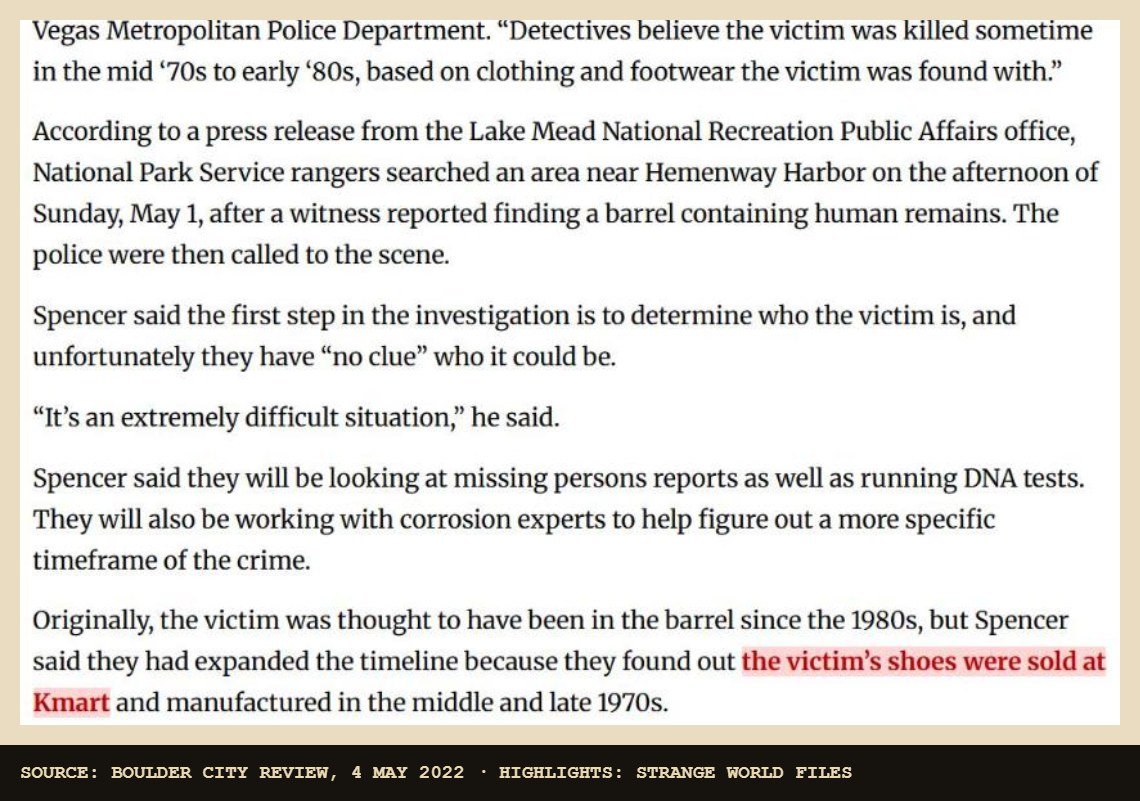 EXHIBIT A · TAP TO ENLARGE
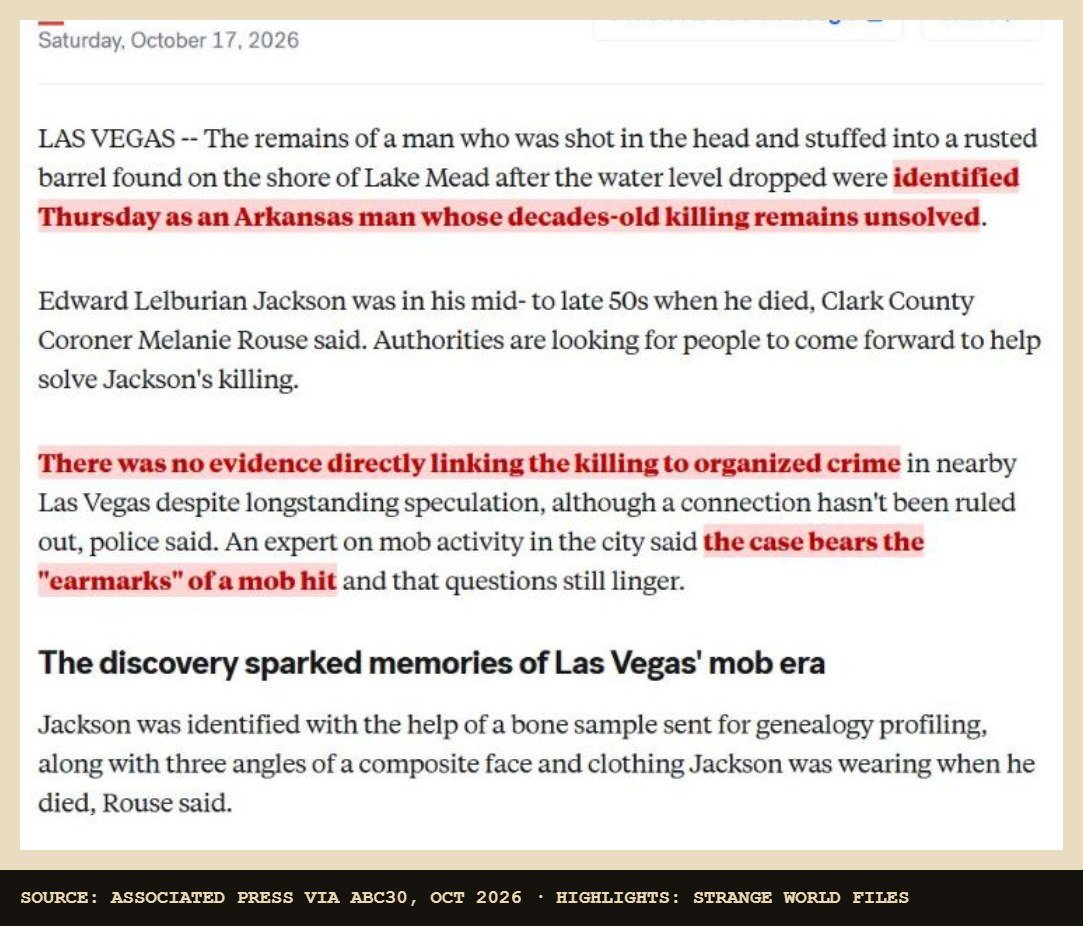 EXHIBIT B · TAP TO ENLARGE
Where the records disagree
| Detail | What sources say |
|---|---|
| When he was killed | “Mid-to-late 1970s” clothing in 2022; “mid-1970s to early 1980s” in 2022 briefings; “early 1980s” in 2026 (BCR-2022) (NEWS3) (CASINO) |
| When he was named | Some reports are dated 14 October 2026; the name was released at a briefing on 15 October (FOX5-2026) (AP-2026) (CASINO) |
| How long it took | One headline says “3 years”; the gap from May 2022 to October 2026 is about four and a half years (FOX5-2026) |
| Where he came from | “From Arkansas” (AP); “originally from Hot Springs” (IFLScience); Hot Springs as his last address before California (KTNV) (AP-2026) (IFL) (KTNV-2026) |
| A mob killing? | The Mob Museum sees “earmarks of a mob hit”; police say they have no information to support it, but have not ruled it out (AP-2026) (KTNV-2026) |
| Record low | Outlets give the 2022 low as about 1,040.5 to 1,040.6 feet and the August 2026 low as about 1,040.5 feet (KTNV-LOW) |
What we still don’t know
- Who shot Edward Jackson, and who had the boat that carried the barrel out onto the lake.
- Why he was in the Las Vegas area at all; police found no job, address or friends there.
- Exactly when he died, beyond the window of the mid-1970s to early 1980s.
- How his 1980s Utah charges ended; reports describe charges, not a conviction.
- Whether the lake, still falling, is hiding other barrels.
What happened after
Three other people found as Lake Mead dropped in 2022, Thomas Erndt, Claude Pensinger and Donald Smith, were all identified by DNA and returned to their families (FOX5-2022) (APR-2023) (FOX5-2023). The National Park Service keeps extending boat ramps as the lake falls; Hemenway Harbor’s ramp now reaches down toward 1,030 feet (NPS-LEVELS).
Editor’s note
The older I get, the easier it is to understand the family. You tell yourself you’ll call someone this week, and then a season has gone by. Edward Jackson was a man who drifted across the country and turned up when he turned up, “just to say hi,” as Lieutenant Robert Price put it. If that is the person you know, then a long silence is not alarming. It is just Buddy being Buddy. What gets me is how quietly that ordinary patience turned into forty years. Nobody did anything wrong by waiting. And yet he was gone the whole time.
I’ll admit the first thing I thought of was the mob. A barrel, a bullet, Lake Mead, Las Vegas: the picture almost paints itself, and The Mob Museum’s own researcher said it has the earmarks of a hit. But I find myself closer to the police on this one. They found no tie between Jackson and the city at all, no job, no address, no known associates, and they say none of the old mob theories fit the physical evidence. A scene that strong makes a good story feel like a true one. That is exactly when it is worth slowing down.
The part I can’t shake is the water above him. For decades that spot was under dozens of feet of lake, and people almost certainly boated right over it: families with coolers, fishermen, someone’s ordinary Sunday. Down below lay a man who had lost even his name. It took a drought, a rusted barrel and four and a half years of lab work to give it back. Someone still knows how he got there.
— Strange World Files
Case file summary
- What: A man shot and sealed in a steel barrel, uncovered when drought lowered Lake Mead
- Where: Hemenway Harbor, Lake Mead National Recreation Area, Nevada
- When: Killed mid-1970s to early 1980s; found 1 May 2022; named 15 October 2026
- Who: Edward “Buddy” Lelburian Jackson, from Arkansas, mid-to-late fifties
- Status: Unsolved homicide; no suspect named
If you have information
Contact the Las Vegas Metropolitan Police Department homicide section, or Crime Stoppers of Nevada anonymously at 702-385-5555.
Illustrations are AI-generated artistic interpretations, not photos. No real person is depicted with a recognizable face. Read how we research and illustrate these files.
Sources
- National Park Service, “Human remains found at Lake Mead National Recreation Area” (May 2022)
- Boulder City Review, “Body found in barrel at Lake Mead” (4 May 2022)
- 8 News Now I-Team, “Body found in barrel in Lake Mead may date back to 1980s” (May 2022)
- Outside, “Man in a Can” (29 Nov 2022)
- Fox5 Vegas, remains identified as man who drowned in 2002 (25 Aug 2022)
- Arkansas Public Radio / NPR, fisherman missing since 1998 identified (27 Apr 2023)
- Fox5 Vegas, remains identified as North Las Vegas man (28 Mar 2023)
- Western Mass News, FBI releases rendered images of man found in barrel (30 Nov 2023)
- AP via ABC30, Lake Mead barrel victim identified (Oct 2026)
- AP via AJC, Las Vegas officials release the ID of a man found in a barrel (Oct 2026)
- KTNV, investigators identify man found in barrel at Lake Mead (Oct 2026)
- IFLScience, identity of man found in barrel solved using DNA and forensics (Oct 2026)
- Fox5 Vegas, body in barrel identified (Oct 2026)
- News 3 Las Vegas, investigators believe he was killed in the early 1980s (Oct 2026)
- Fox Weather, Las Vegas officials identify homicide victim in Lake Mead barrel (Oct 2026)
- Casino.org, officials identify body found in barrel on drying Lake Mead shore (Oct 2026)
- KTNV, Lake Mead water levels hit record low (Aug 2026)
- Good Morning America, new set of human remains found at Lake Mead (Aug 2026)
- National Park Service, Lake Mead changing lake levels