438 Days Adrift: The Fisherman a Container Ship Waved At and Left Behind
| What | A Salvadoran fisherman survived about 14 months adrift in an open boat across the Pacific |
| Where | From Costa Azul, Chiapas, Mexico, to Ebon Atoll, Marshall Islands |
| When | November 2012 to 30 January 2014 |
| Survivor | José Salvador Alvarenga; his crewmate Ezequiel Córdoba died at sea |
| Status | Account backed by drift modelling; a 2015 civil allegation by Córdoba’s family is denied, with no outcome reported |
Narrated Mystery: press play and hear the whole story read aloud, like a true crime podcast episode, or an audiobook for a long drive (about 15 minutes). The narrator is an AI voice.
Listen to the narration above first, then read along. The key words are underlined in the story.
- atolla ring-shaped island made of coral
- fishermana person who catches fish as a job
- skiffa small open boat
- flarea bright light fired to ask for help
- bailto throw water out of a boat
- offshorein the sea, away from the coast
- starter corda rope pulled to start an engine
- overboardover the side of a boat into the water
1. Where did Alvarenga finally reach land?
On Ebon Atoll in the Marshall Islands, in January 2014.
2. How long was the trip supposed to last?
Only a day or two of shark fishing.
3. What happened to the engine at dawn?
It died, and the starter cord snapped in his hand.
A wild man with a knife walked out of the sea
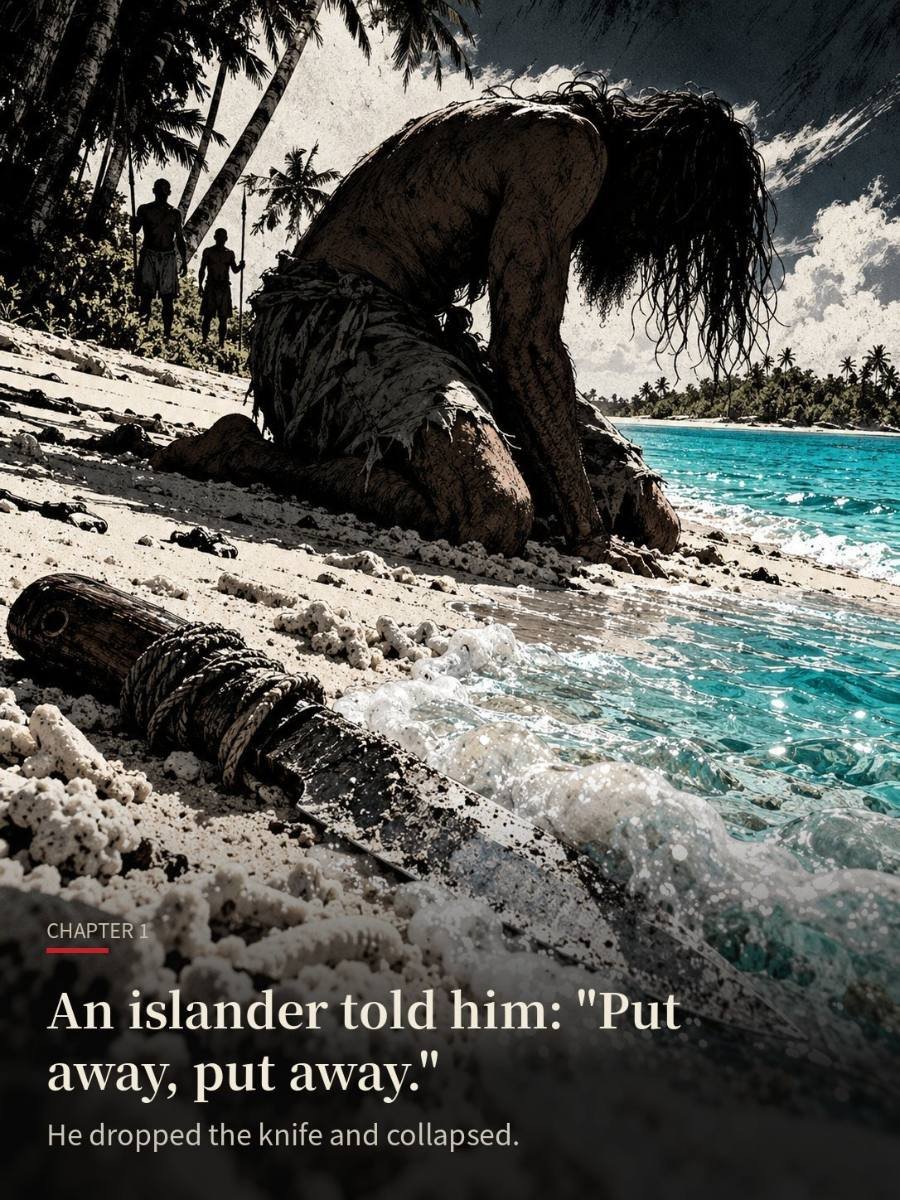
Ebon Atoll, the southern tip of the Marshall Islands, at the end of January 2014.
On a tiny islet across the water from their home, a local couple heard shouting. A man was on the beach, waving his arms and yelling in a language they did not know.
He had long hair and a bushy beard. He wore only shredded underwear. And he was holding a knife.
“We weren’t scared, just surprised,” Emi Libokmeto said later. In broken English she told him: “Put away, put away.”
He dropped the knife and collapsed on the sand.
He was a fisherman from the other side of the Pacific. By his account, he had been drifting in an open boat for 438 days. (AFP-TICO-2014) (CNN-2014-02-09) (AJ-2014) (RD-FRANKLIN-2016) (KIRKUS-2015)
A two-day trip and a $50 crewmate
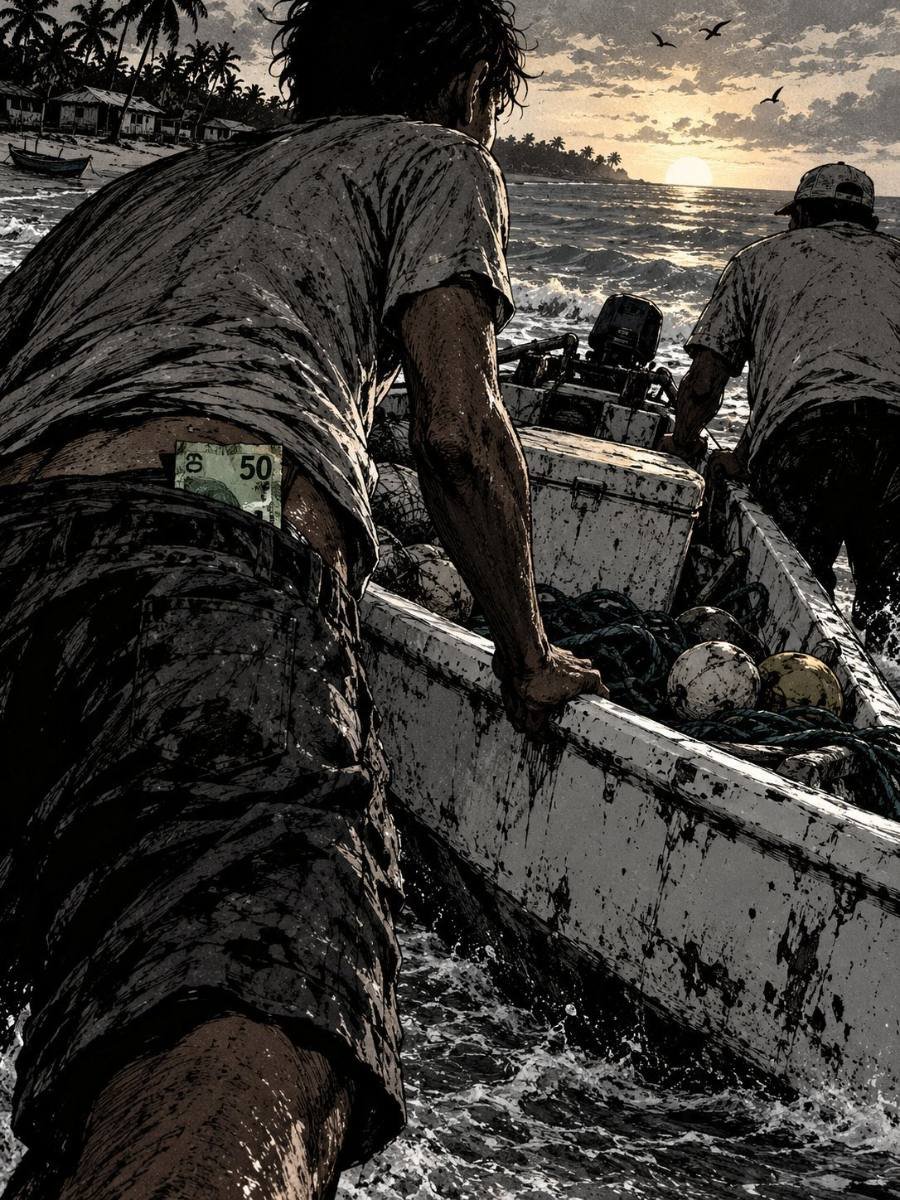
Go back to November 2012, on the Pacific coast of Chiapas, in southern Mexico.
José Salvador Alvarenga was a Salvadoran fisherman who had been working the Mexican coast for years. He fished sharks for a boss he knew as Willie, for 25 pesos, about $1.90, a pound.
He came from Garita Palmera, a fishing village in El Salvador. “The sea was his thing,” his father said. He had first gone out on the water at 14.
He had not seen his family in about eight years. Back home, they had come to believe he was in prison, or dead.
From the village of Costa Azul, he set out on what was meant to be a short shark-fishing trip, a day or two at most.
His usual partner, a friend named Ray Pérez, could not go. So at the last minute, a young man named Ezequiel Córdoba took his place. Córdoba was 22, by most accounts, and had never worked with Alvarenga before. He signed on for $50.
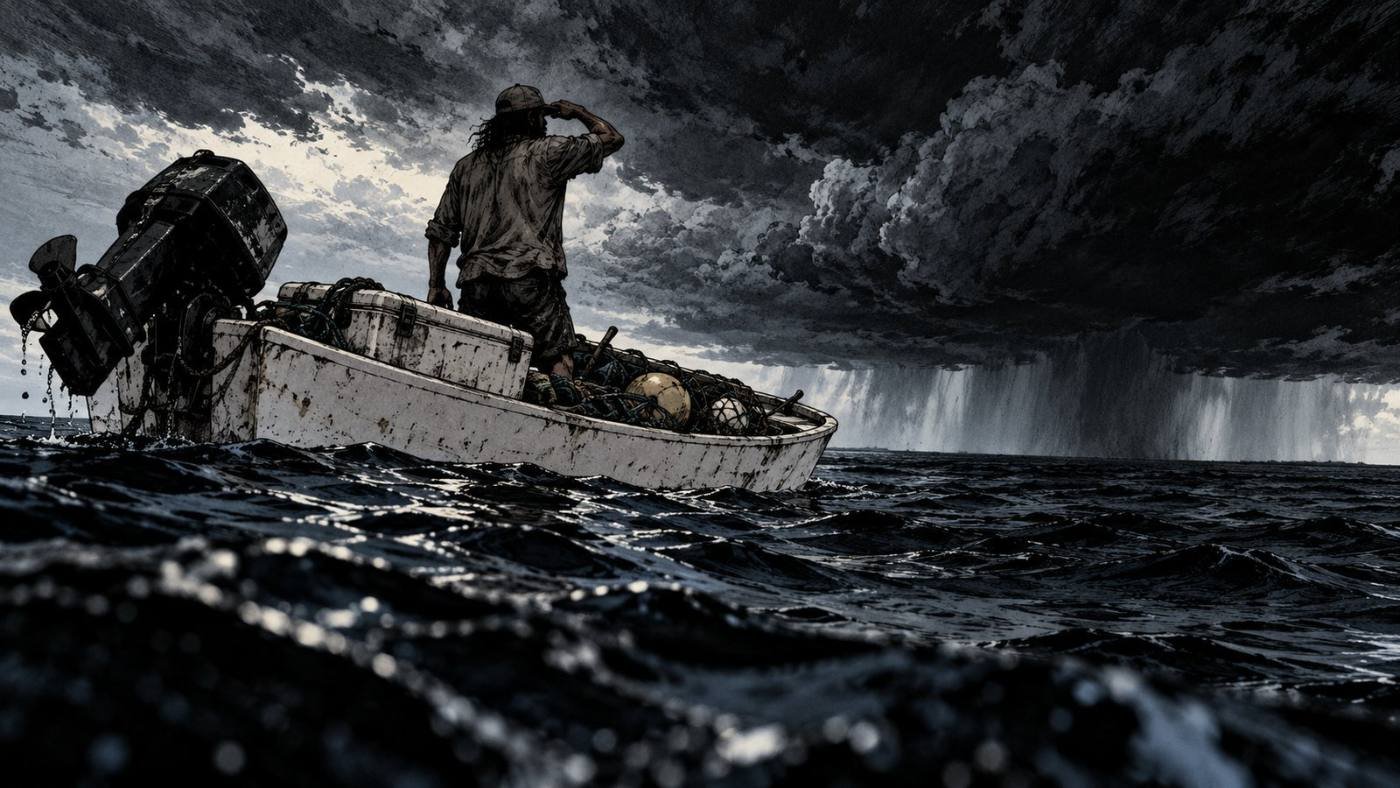
Their boat was an open fibreglass skiff about 25 feet (7.5 m) long. No cabin. No roof. One outboard motor, a big fish icebox, and about two miles of fishing line.
There was no flare gun. (AP-PERRY-2014) (CNN-REWIND-2016) (KIRKUS-2015) (MMM-2015) (UPI-2015) (RD-FRANKLIN-2016)
He cut the line and ran for shore
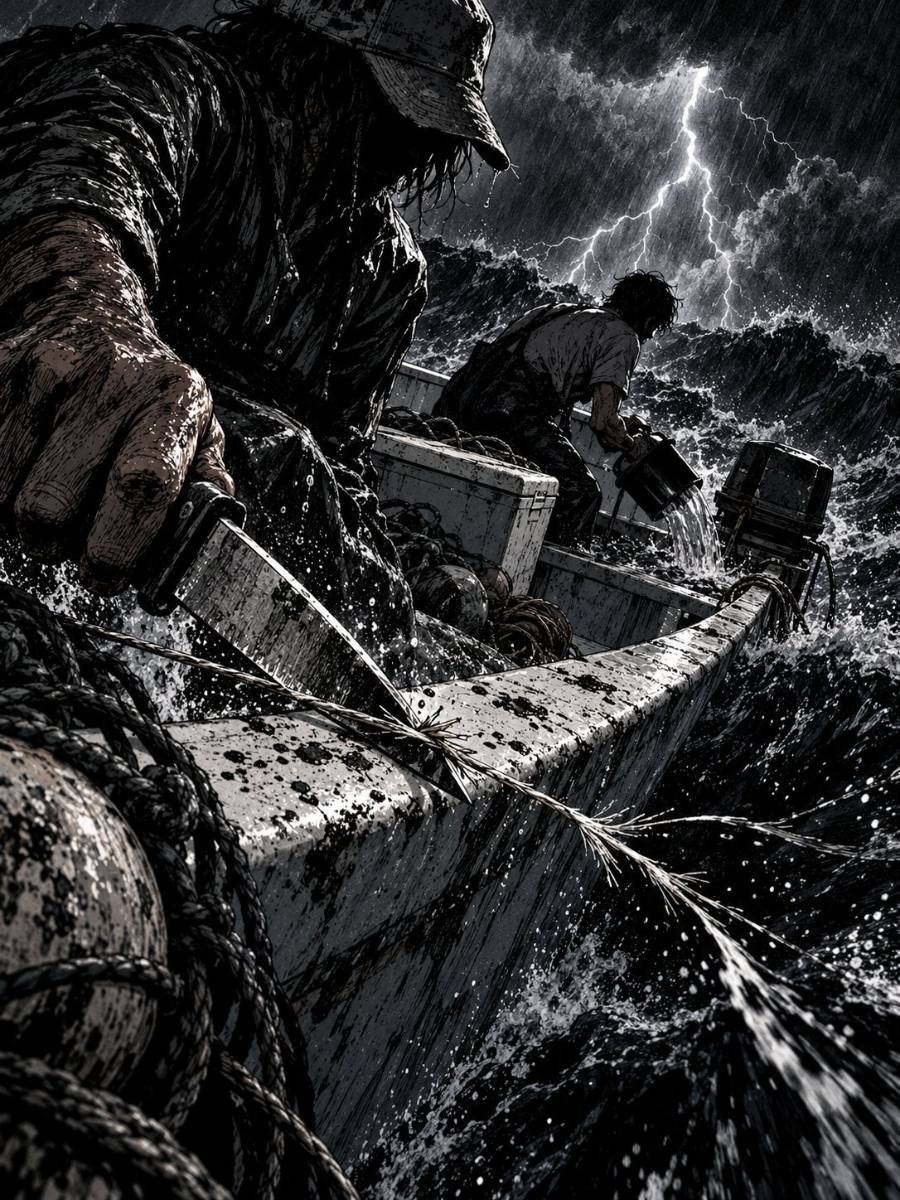
Around 1 a.m., according to Alvarenga’s account in Jonathan Franklin’s book, the storm hit.
Waves filled the boat faster than the two men could bail. One wave swept Córdoba overboard, and Alvarenga hauled him back in by his hair.
Alvarenga made a fisherman’s hardest choice. He cut the line, letting go of the gear and the catch, and turned for the coast, about six hours away.
Waves of about 10 feet (3 m) kept coming. The two men bailed with whatever they had. It was the first night. There would be more than four hundred more. (RD-FRANKLIN-2016) (NYDN-2015) (CNN-REWIND-2016)
“If you are coming to get me, come now!”
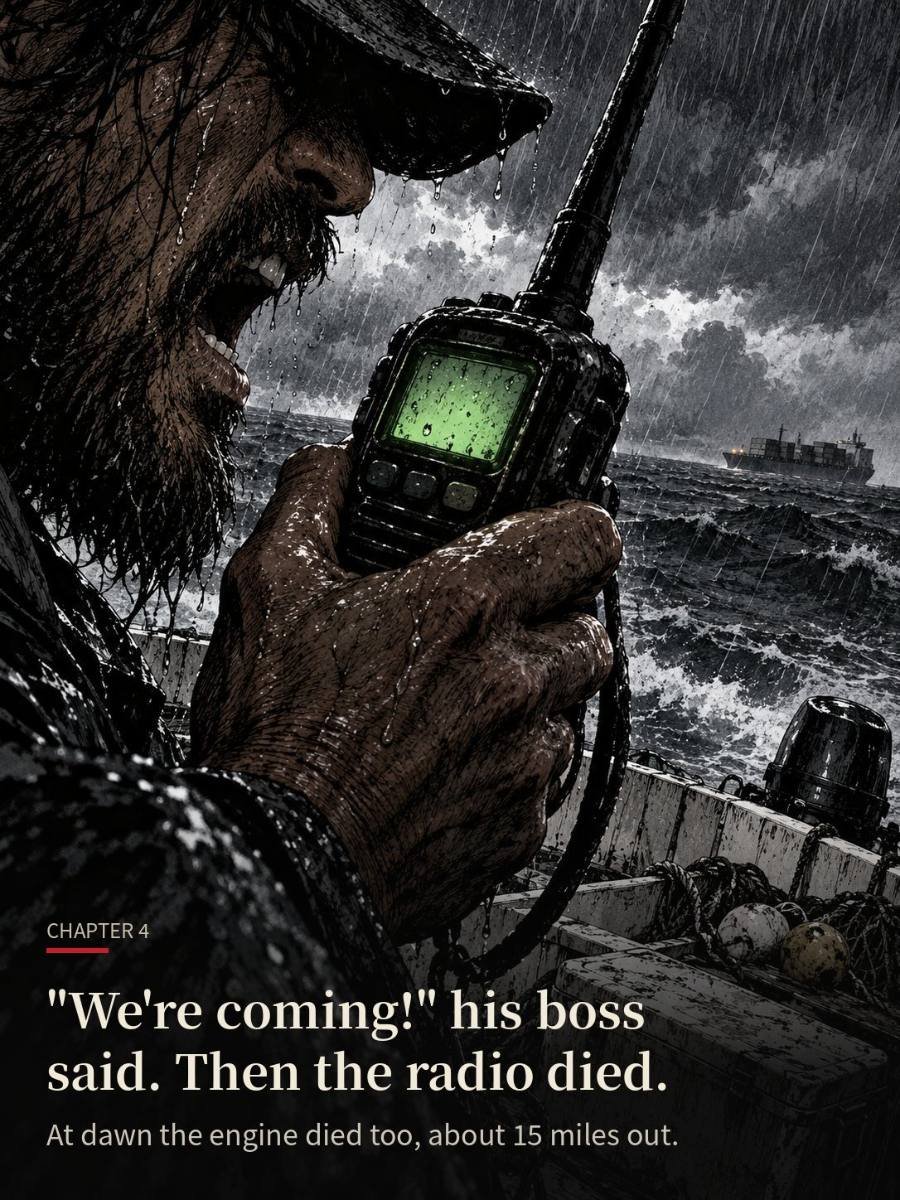
He got Willie on the radio and gave his position.
Later, by his account, he shouted into it again: “Willie, Willie! If you are coming to get me, come now!”
“We’re coming!” Willie answered.
Then the radio died. (RD-FRANKLIN-2016)
The starter cord snapped
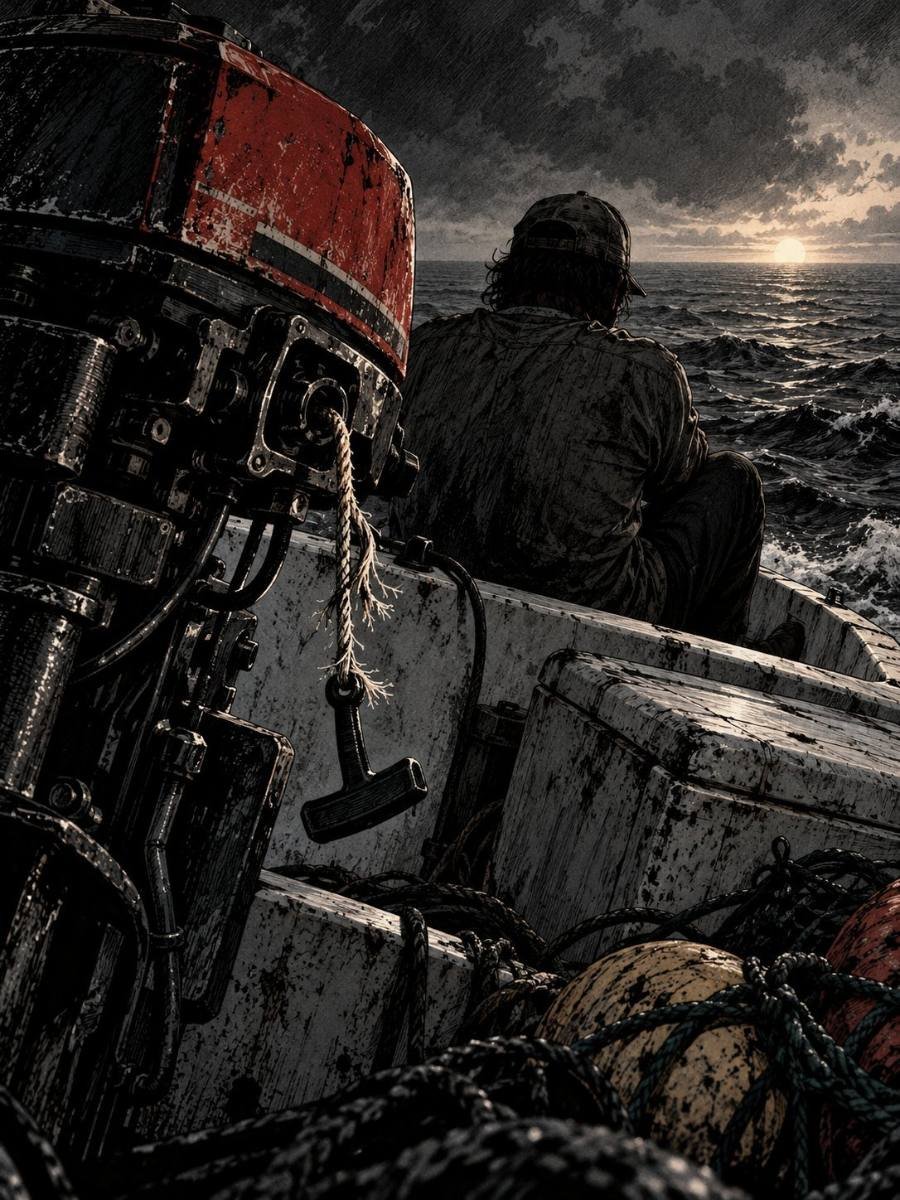
At dawn, about 15 miles offshore, the motor died.
Alvarenga pulled the starter cord again and again, until it snapped in his hand.
“My engine gave out,” he said years later.
In a rage, Franklin says, Alvarenga threw the useless radio and GPS overboard. The two men dumped what was left of the catch and the ice, and strung about 50 buoys together as a makeshift sea anchor to keep the boat from flipping.
The wind kept pushing them west. When it finally eased, by Franklin’s account after about five days, they were some 280 miles out to sea. (RD-FRANKLIN-2016) (NYDN-2015) (CNN-REWIND-2016)
They drank the rain
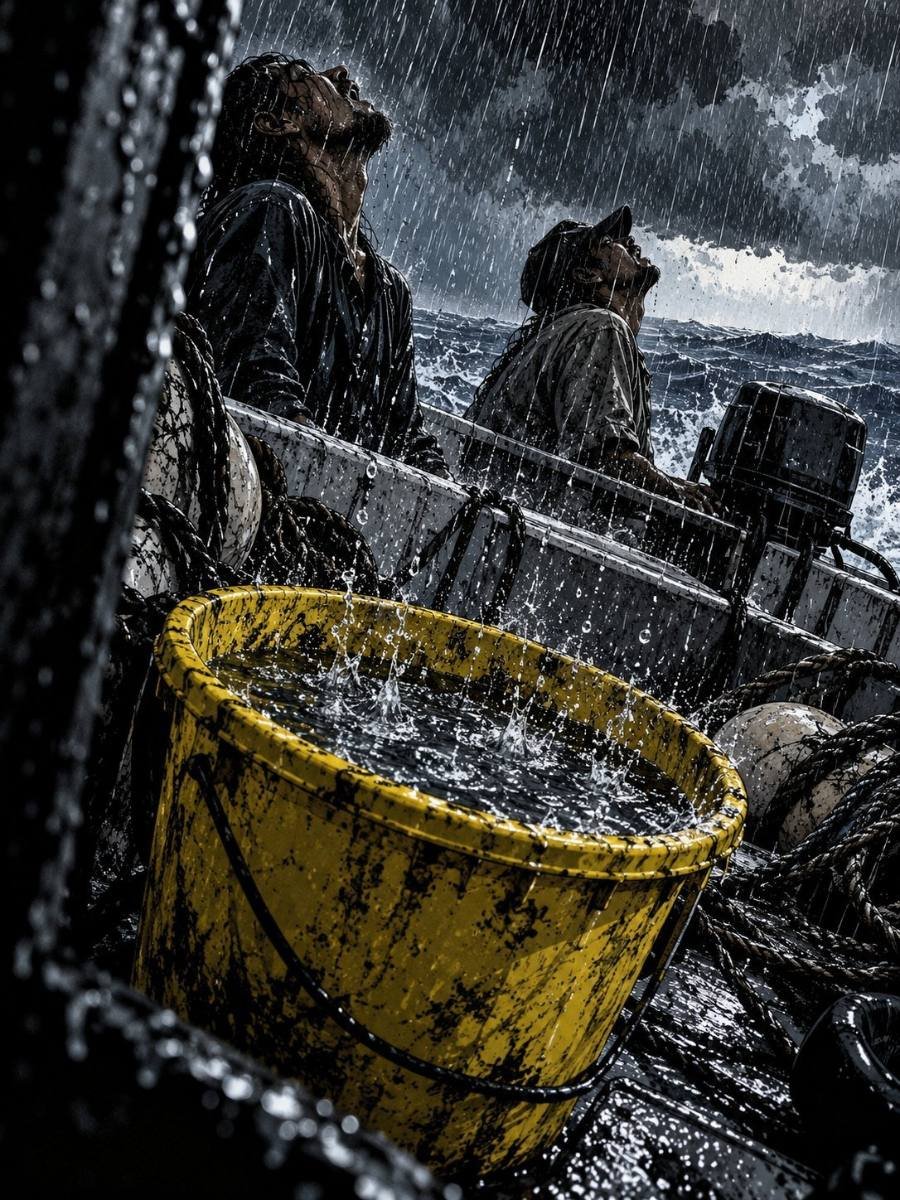
They had food for about a day.
Water was worse. At first, by Alvarenga’s account, they drank their own urine.
Then the rain came, and they caught it in every container they had. Accounts differ on how long they waited for that first rain, from days to about a month.
From then on, rainwater was the line between living and dying.
When the sky stayed clear for too long, he drank turtle blood or bird blood. That, by his account, was all there was. (INFOBAE-2024) (MMM-2015) (RD-FRANKLIN-2016) (CNN-REWIND-2016)
A turtle came alongside
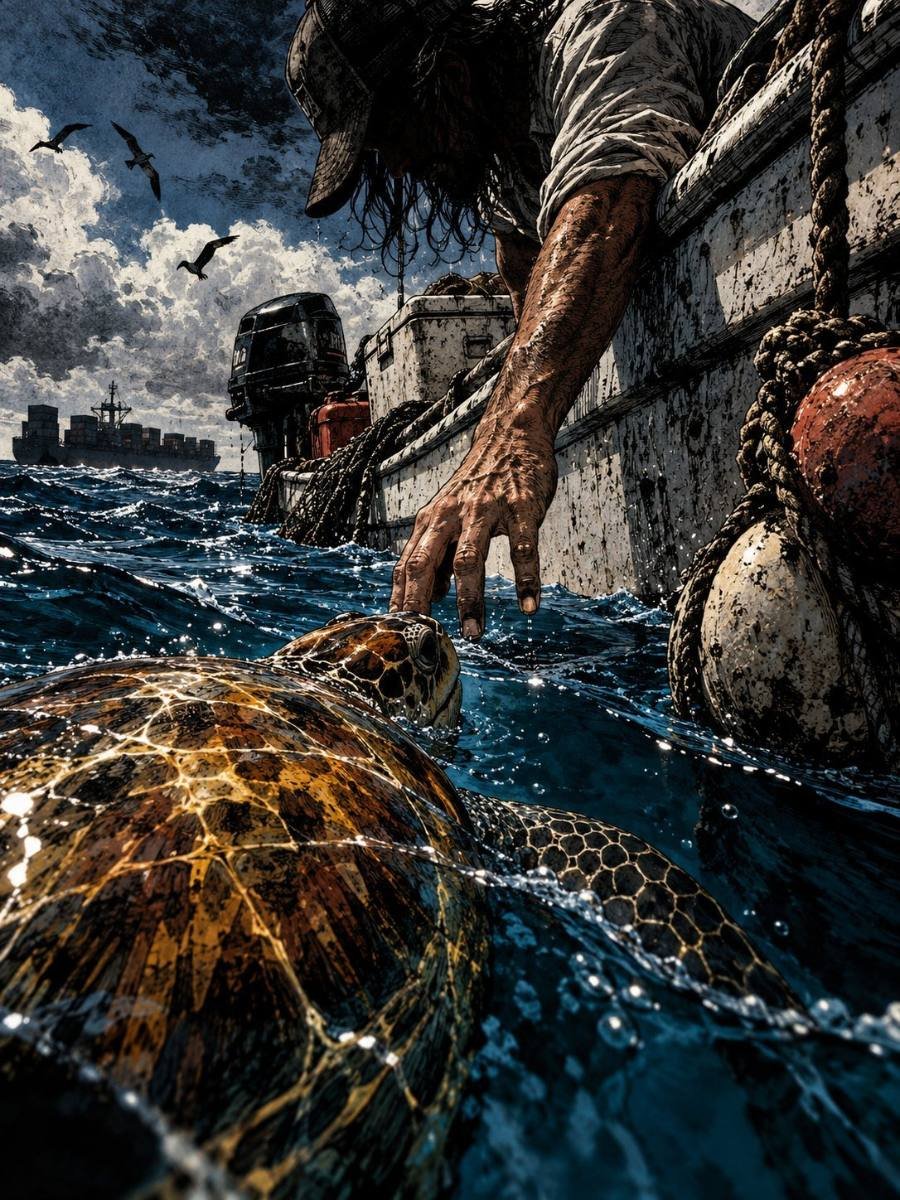
About 11 days after the engine failed, Alvarenga says, a sea turtle surfaced beside the boat. He grabbed it.
It gave them meat, and blood to drink.
He later kept a small turtle shell and used it as a cup.
Raw meat may also have saved them in another way. Fresh turtle and bird contain vitamin C, which, one Duke University expert noted, could have kept off scurvy, the disease that kills sailors on long voyages. (RD-FRANKLIN-2016) (AFP-TICO-2014)
Birds landed, and he caught them
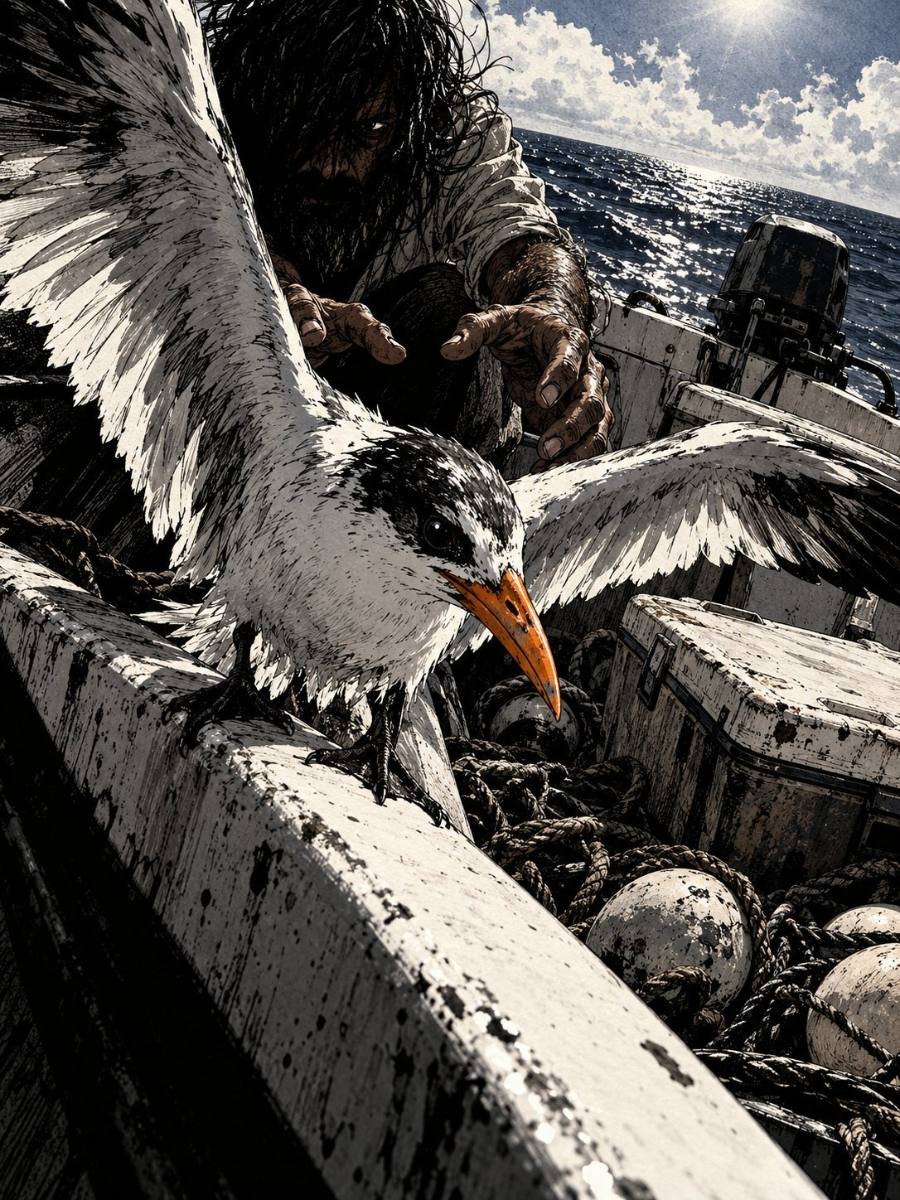
He learned to fish with his bare hands. He ate triggerfish, small sharks, seaweed and jellyfish.
Seabirds landed on the boat to rest. He waited, still, and grabbed them.
They picked floating plastic and scraps of food out of the water. Anything that drifted past was looked at as a meal.
“I was so hungry that I was eating my own fingernails,” Franklin quotes him as saying. (NYDN-2015) (CNN-REWIND-2016) (RD-FRANKLIN-2016) (MMM-2015)
The icebox became their shelter
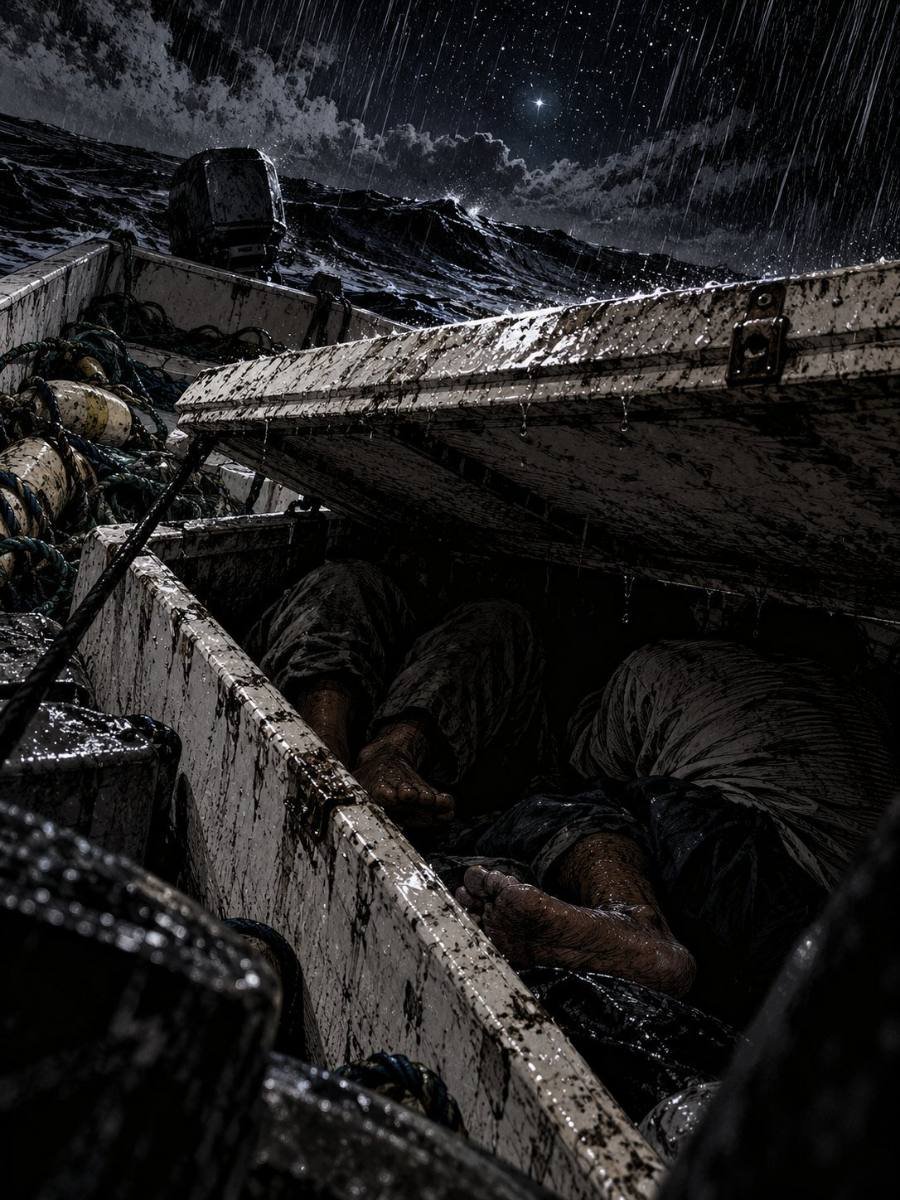
There was no roof on the boat and no shade.
So the big fish icebox became their house. By Franklin’s measurement it was about five feet long and four feet high. When the rain came down, the two men crawled in or under it, side by side.
In the heat of the day it was the only shade they had. (CNN-REWIND-2016) (AJC-CNN)
Córdoba stopped eating
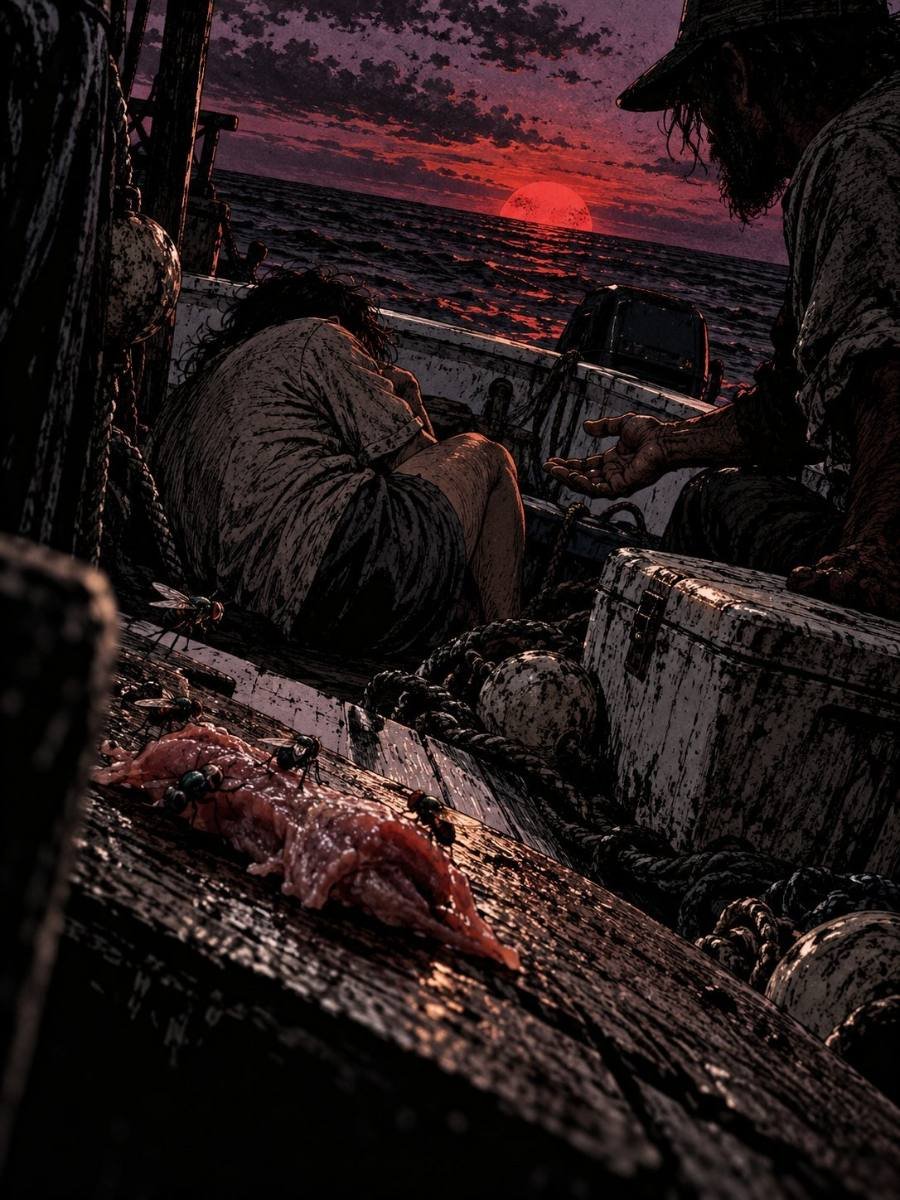
Córdoba fell ill after eating raw seabird, by Alvarenga’s account. After that he refused to eat.
He cried often. He talked about his mother.
He was 22, on what was supposed to be a two-day job for $50.
In Franklin’s telling, he grew weaker over about two months and sank into despair. Other reports put it at one month, or four. Alvarenga is the only one who knows, and even his own accounts have shifted over the years. (NEWSER-2015) (INFOBAE-2024) (AJC-CNN) (RD-FRANKLIN-2016)
They prayed, and said goodbye
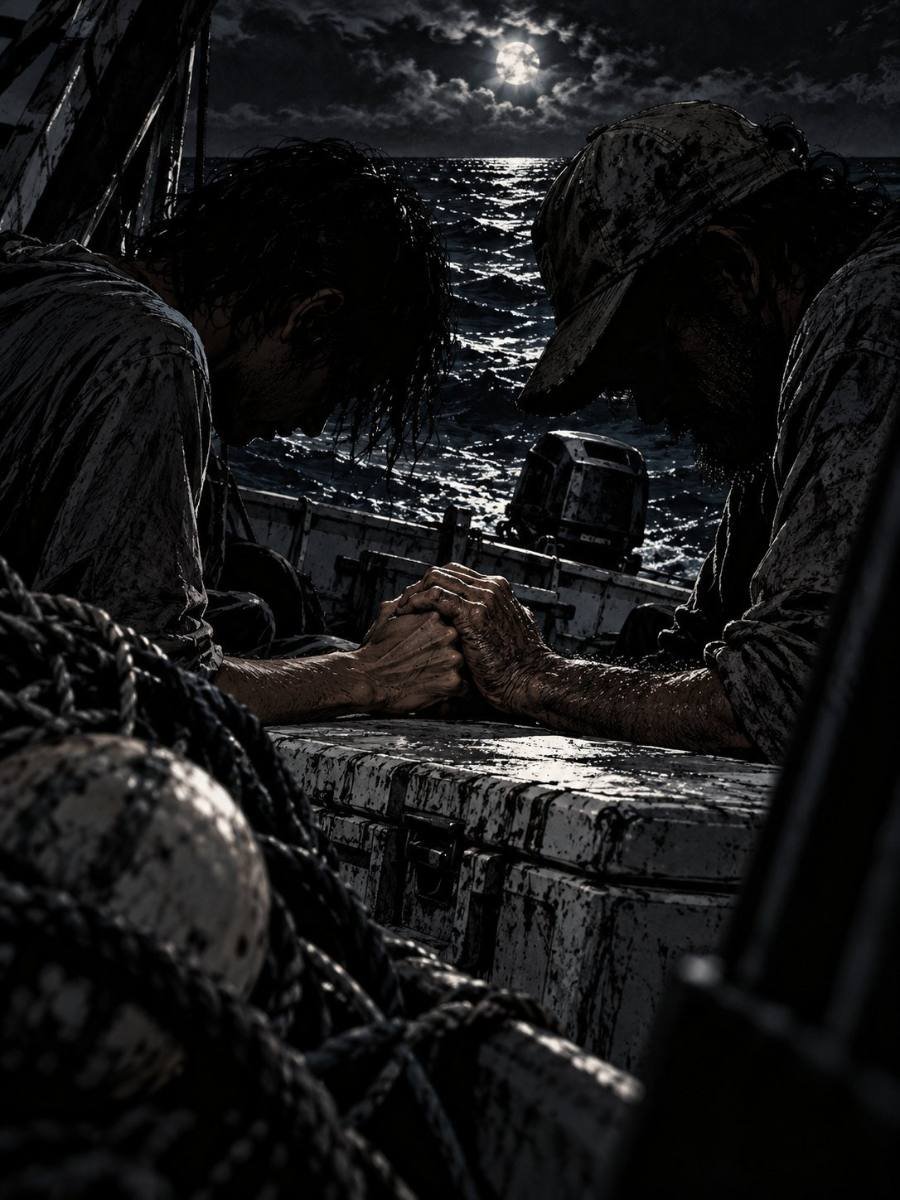
One night, as Alvarenga tells it, they sheltered together at the icebox and prayed.
Córdoba told him, “I am dying.” He asked Alvarenga to tell his mother what had happened to him.
“We said our goodbyes,” Alvarenga said later. “He wasn’t in pain. He was calm. He didn’t suffer.” (CNN-REWIND-2016) (RD-FRANKLIN-2016) (UPI-2015) (AJC-CNN)
Six days talking to an empty bench
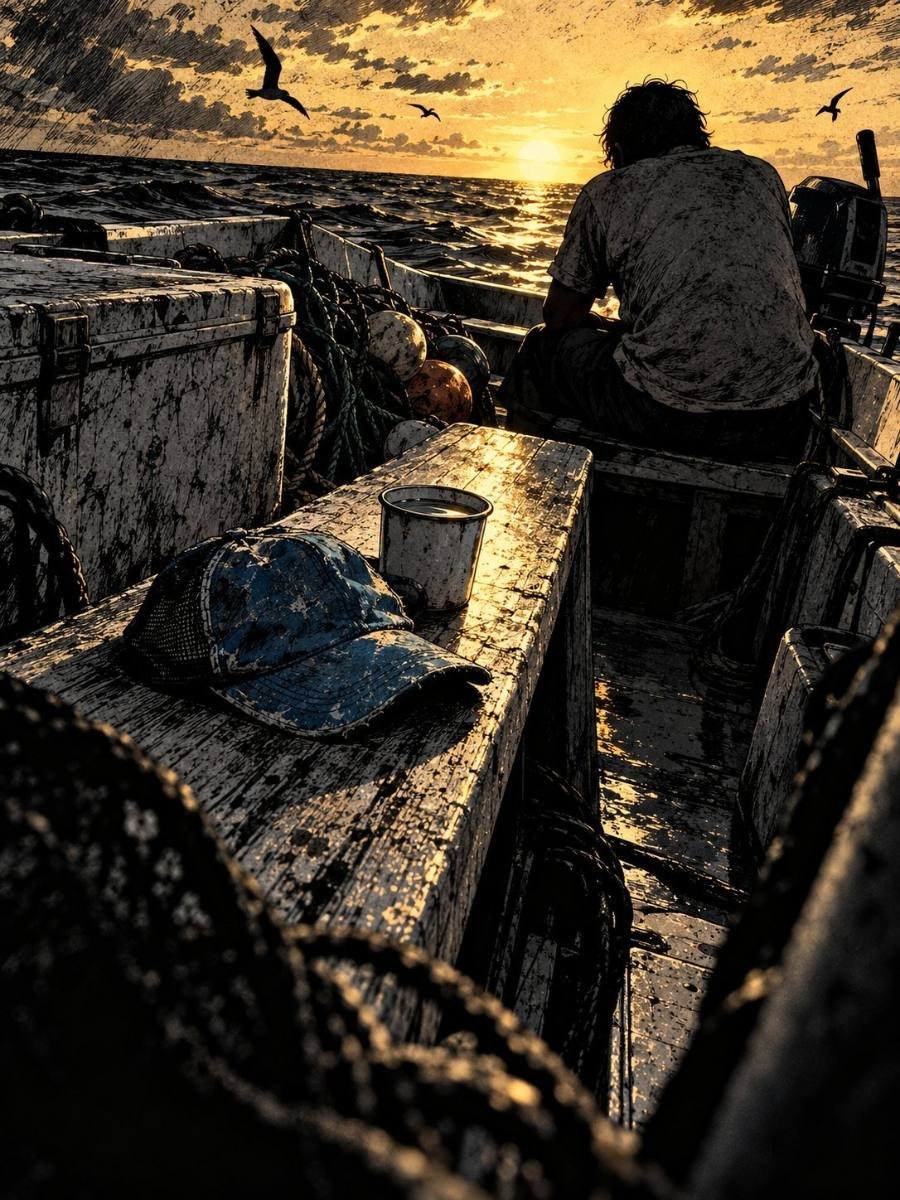
Alvarenga could not let him go.
By his account, he sat his friend on the bench and kept talking to him, as if Córdoba were still there. “I was afraid a wave might wash him out of the boat,” he said.
After six days, he slid him into the sea.
For four days afterwards, he told the Guardian, he thought about ending his own life. He could not do it. “I had my mind on God.” (RD-FRANKLIN-2016) (FOX-2015) (UPI-2015) (CNN-REWIND-2016) (GUARDIAN-2014-NS)
A white boat in the middle of nothing
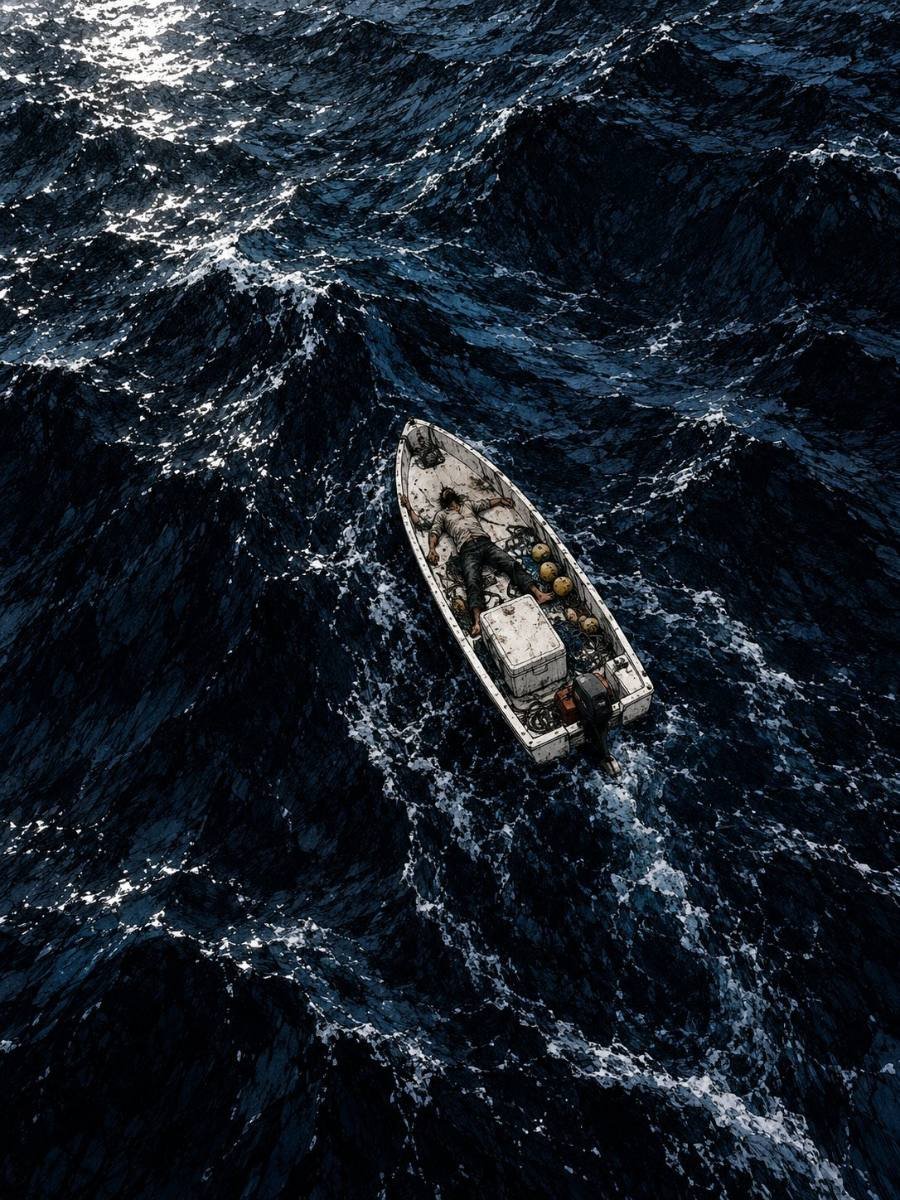
Now he was alone in a 25-foot boat in the largest ocean on Earth.
No engine and no radio. Just the current, carrying him west across the Pacific, month after month.
He fished, he slept, he talked to himself. The days ran together.
Had he missed the Marshall Islands, Franklin notes, the next likely landfall on that drift was the Philippines, about 3,000 miles further on. (RD-FRANKLIN-2016) (MMM-2015)
A container ship passed 50 yards away
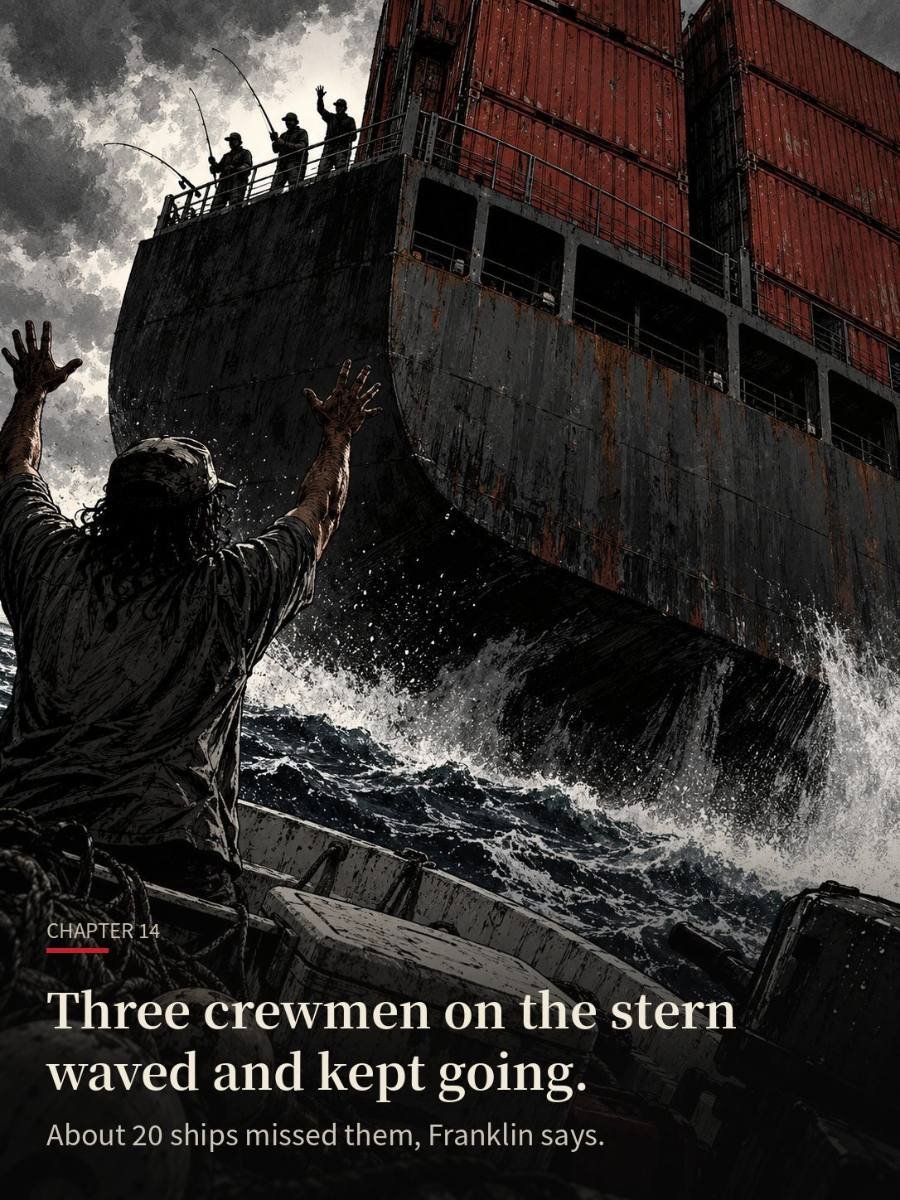
Ships came. They did not stop.
Franklin says about 20 container ships passed without picking him up.
One, by Alvarenga’s account, passed about 50 yards behind him. Three crewmen were fishing off the stern. They waved. The ship did not slow down.
“I would signal them and nothing would happen,” he said. (MMM-2015) (RD-FRANKLIN-2016) (CNN-REWIND-2016)
He counted the moons
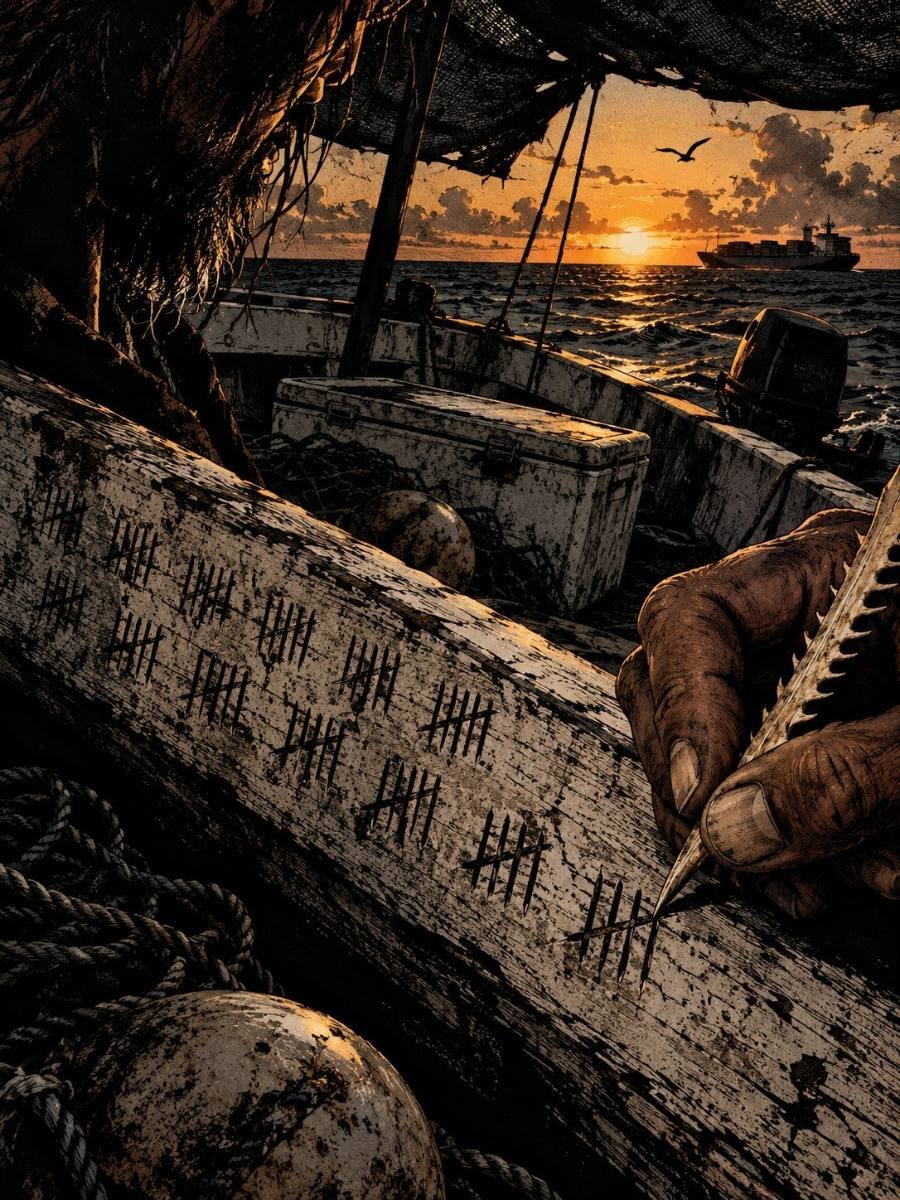
To keep track of time, by one account, he counted the moon’s cycles.
Thirteen months, fourteen. He kept going. He swam briefly when he dared, after checking the water for sharks.
He had been more than a year at sea when he finally saw land. (WIKI) (RD-FRANKLIN-2016)
A handful of sand like treasure
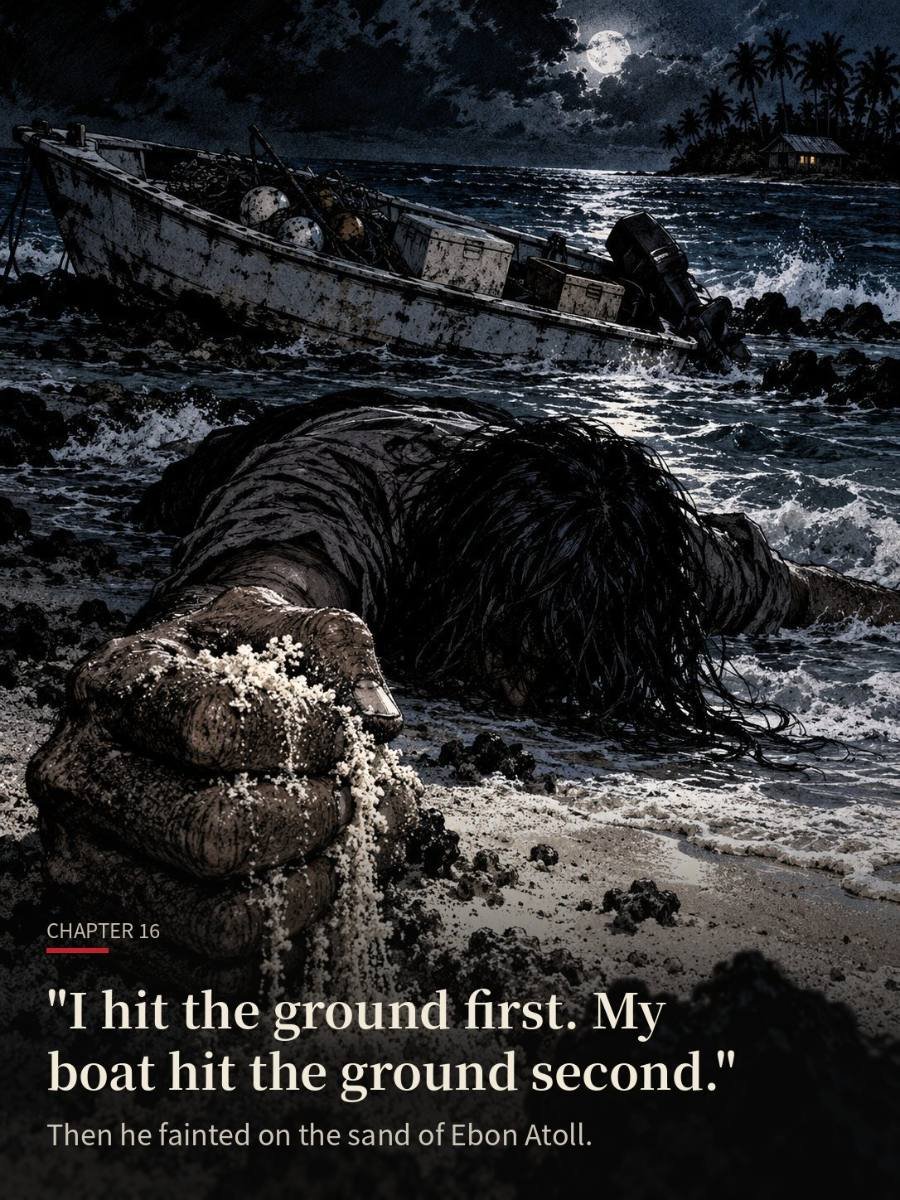
On 30 January 2014, by most accounts, the drift ended on a reef at Ebon Atoll.
Alvarenga swam ashore. “I hit the ground first,” he said. “My boat hit the ground second.”
He fainted on the sand. “I held a handful of sand like it was a treasure.”
When he came to, he started shouting. That was the voice the couple heard from across the water. (RD-FRANKLIN-2016) (AJC-CNN) (NEWSER-2015) (AP-PERRY-2014)
Pancakes and a black marker
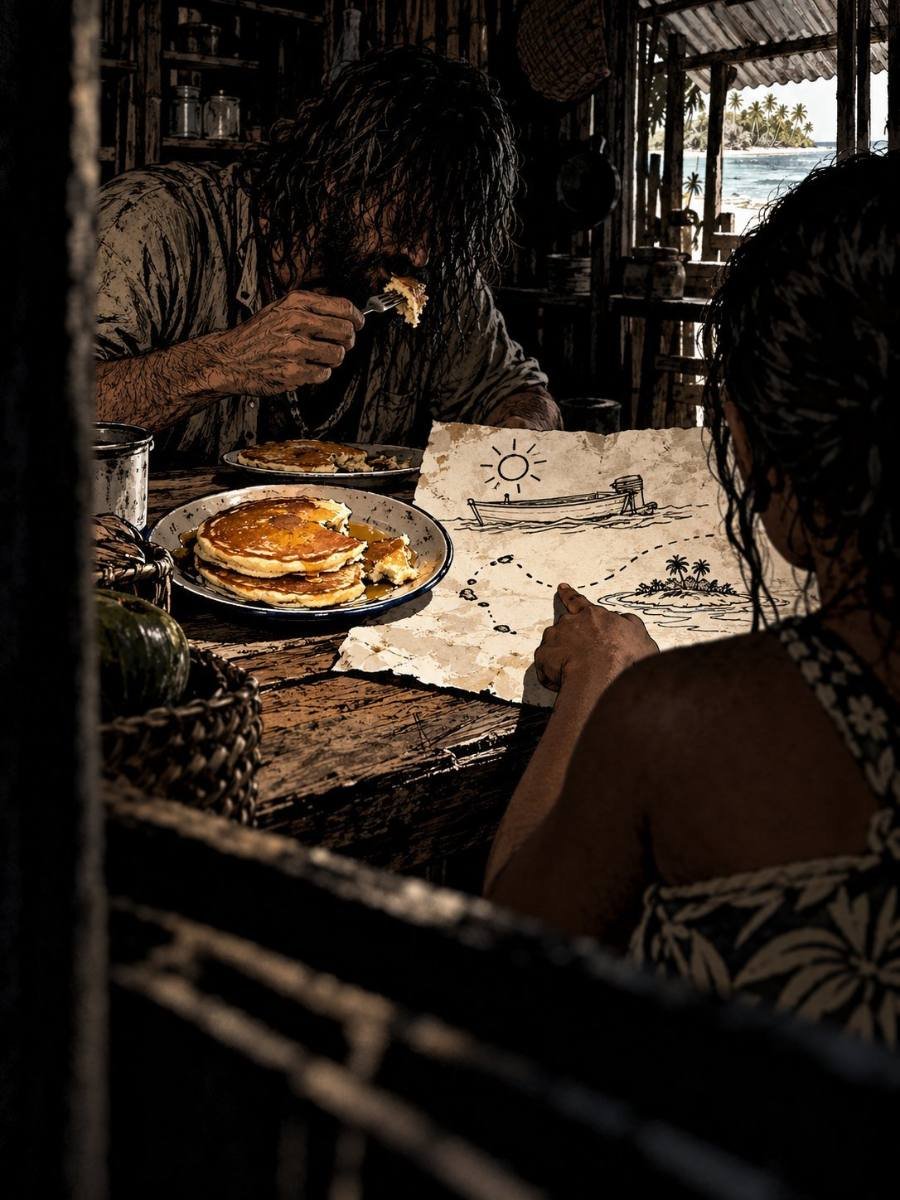
Emi Libokmeto and Russel Laikidrik took him home. They drew a bucket of fresh water for his first wash in more than a year and gave him clothes.
Libokmeto made pancakes. He ate them eagerly.
They had no shared language. So they talked with paper and a black marker, drawing boats, the sun and the sea.
Laikidrik went back for the boat. The motor was dead. Inside, AFP reported, were a live bird tied by one leg, feathers and bones, and the small turtle shell he had used as a cup. (AFP-TICO-2014) (CNN-2014-02-09)
A word from a children’s cartoon
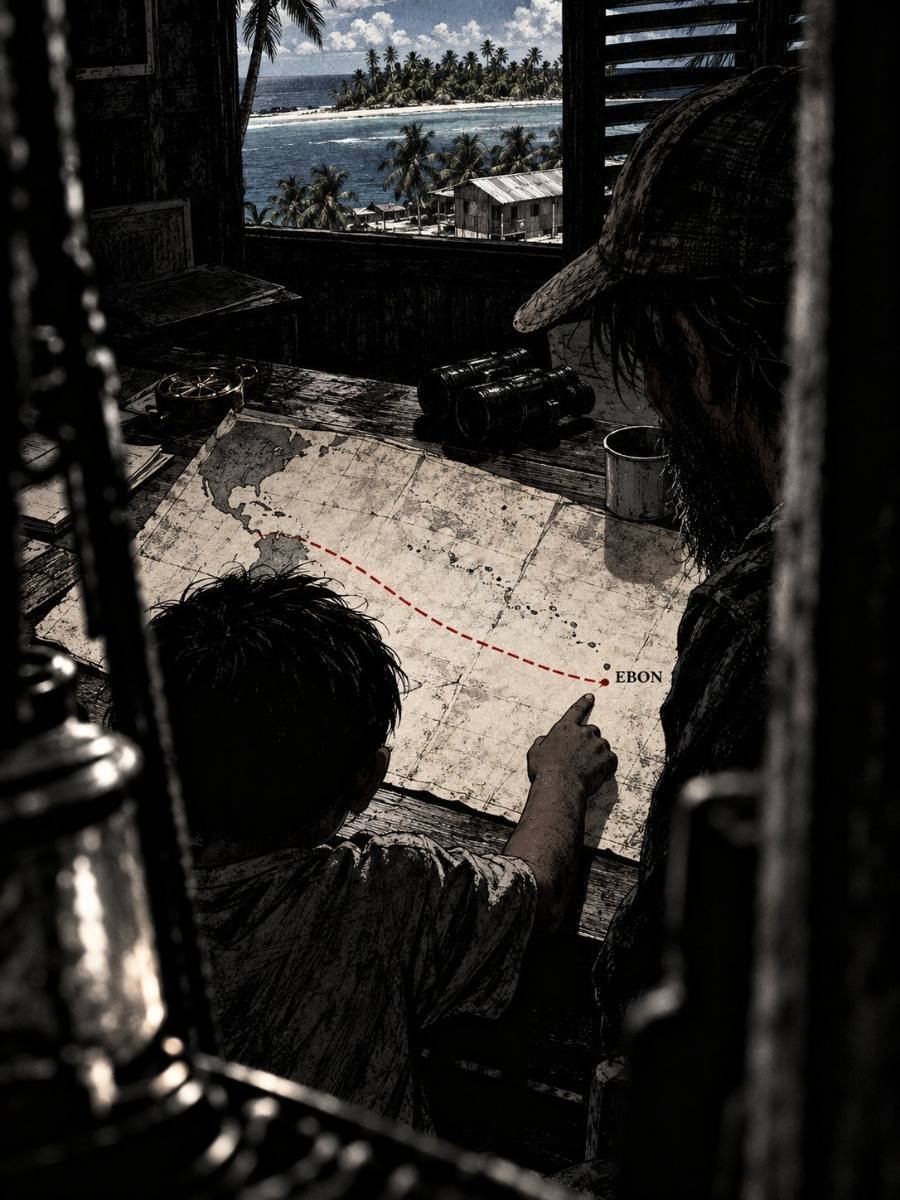
The island’s mayor, Ione de Brum, came with the police chief and a health worker.
It was her son who helped crack it. He knew a few Spanish words from the cartoon Dora the Explorer, and bit by bit they worked out where this man had come from.
Mexico. On the far side of the Pacific.
At first the mayor would not let the stranger use the island’s only phone. She called the police and the foreign ministry in Majuro instead. Ebon has fewer than 700 people. Nobody there had ever seen anything like him. (AFP-TICO-2014) (CNN-2014-02-09) (AJ-2014)
“I’m not sure if I believe his story”
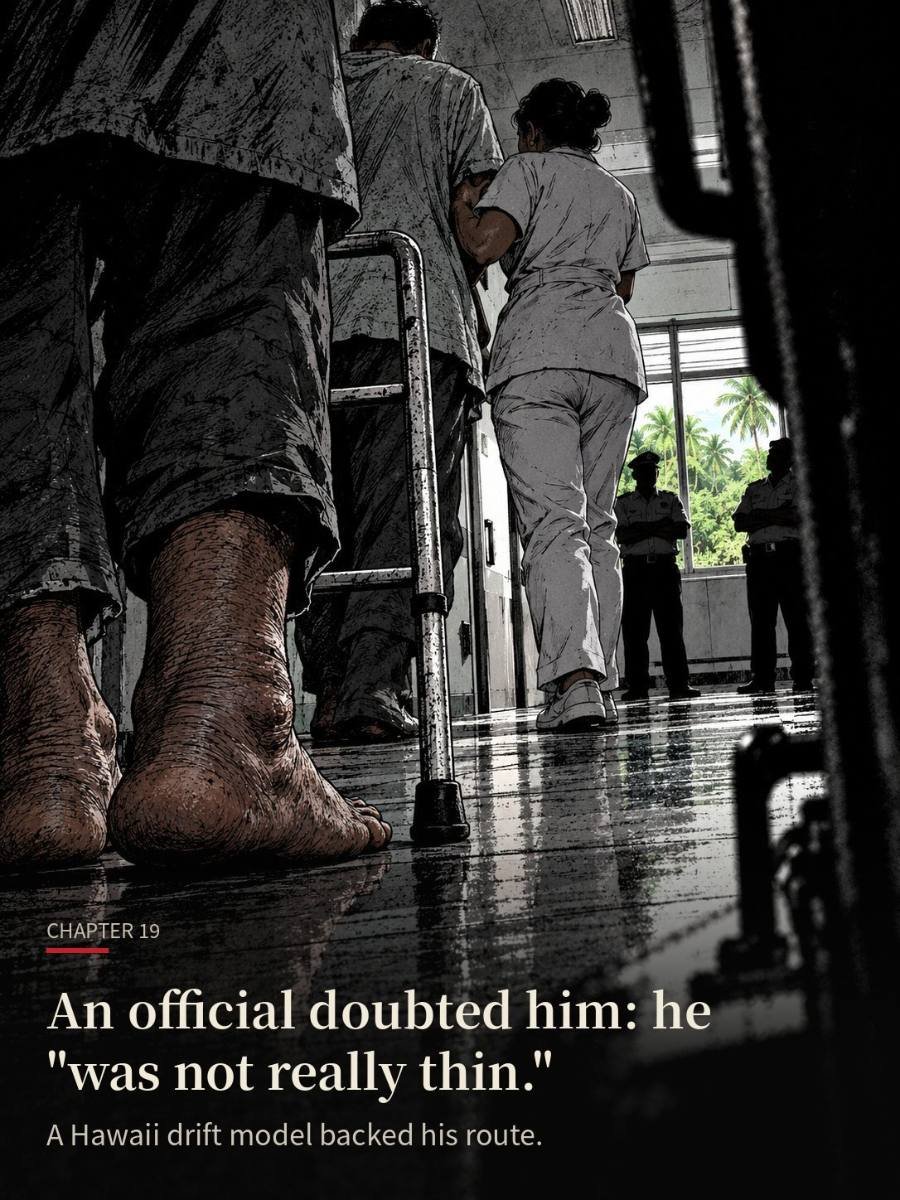
A patrol boat took him to the capital, Majuro. Doctors found swollen feet and legs and anaemia, and kept him in hospital for 11 days.
Not everyone believed him. “I’m not sure if I believe his story,” the acting foreign secretary said. He noted the man was not really thin compared with other castaways.
Then the scientists checked. A University of Hawaii drift model found that a boat leaving his part of the Mexican coast could plausibly reach Ebon in about 13 months. His claim, they said, “falls well within the model’s limits.”
In 2006, three Mexican shark fishermen had survived a nine-month drift to the same part of the Pacific.
Franklin, the journalist who later spent months with him, admits he doubted it too. “Who survives 14 months at sea?” He says he checked the story against dozens of witnesses, the boat’s registration, medical records and US embassy officials. His lawyer said Alvarenga had passed lie-detector tests. (AFP-TICO-2014) (MMM-2015) (AP-PERRY-2014) (GUARDIAN-2014-NS) (UH-IPRC-2014) (CNN-2014-02-06)
A palm arch and a ‘Welcome’ sign
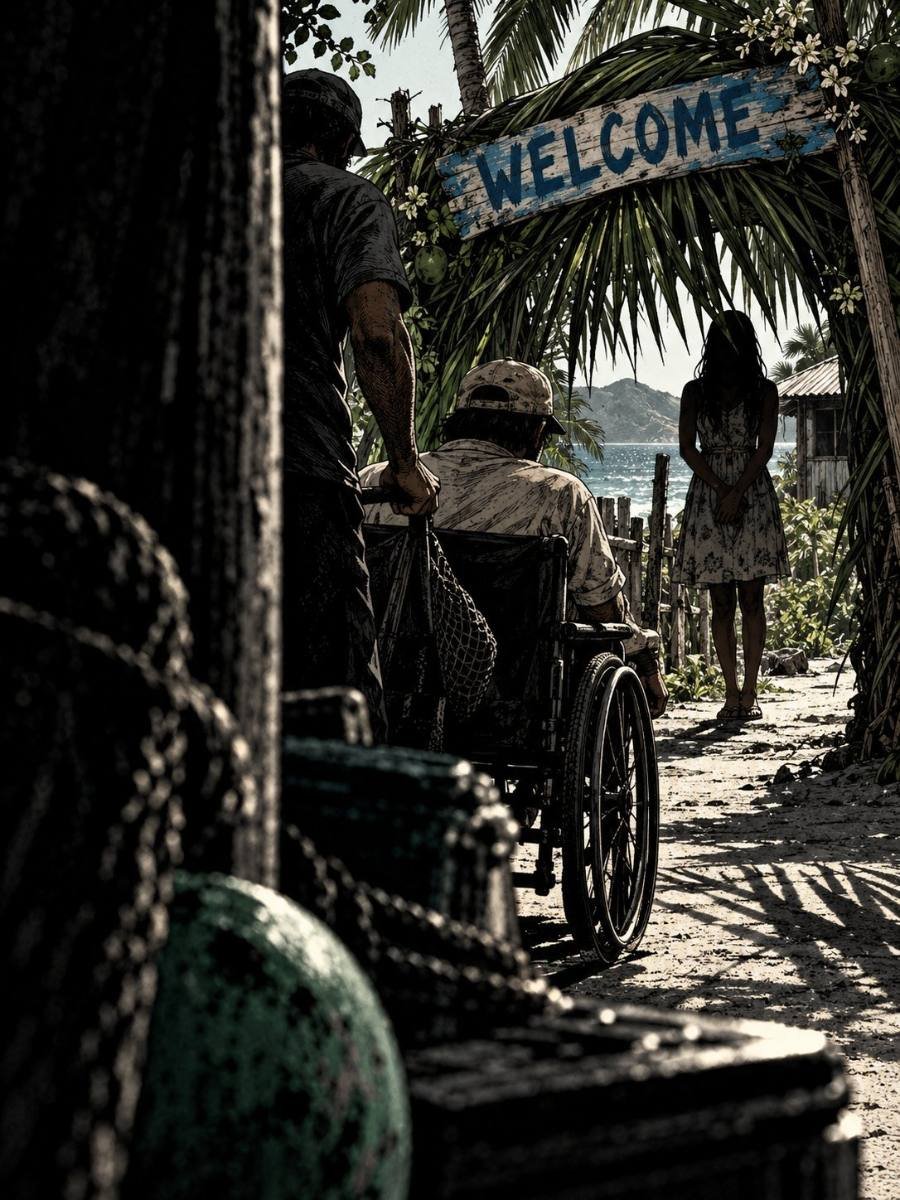
On 11 February 2014, he arrived in San Salvador in a wheelchair, in front of more than 100 reporters. He took the microphone and could not speak.
His mother had believed he was dead. His daughter Fátima, 14, did not remember him. He had left when she was just over a year old.
In the family’s fishing village, Fátima built an archway of palm fronds and a sign that said “Welcome.”
“I thank God for watching over him and returning him to us,” his mother said. At the hospital in San Salvador, a doctor said his prognosis was very good. (AP-FOX-2014-02-11) (AP-ALEMAN-2014) (NBC-2014-02)
The ocean keeps haunting him
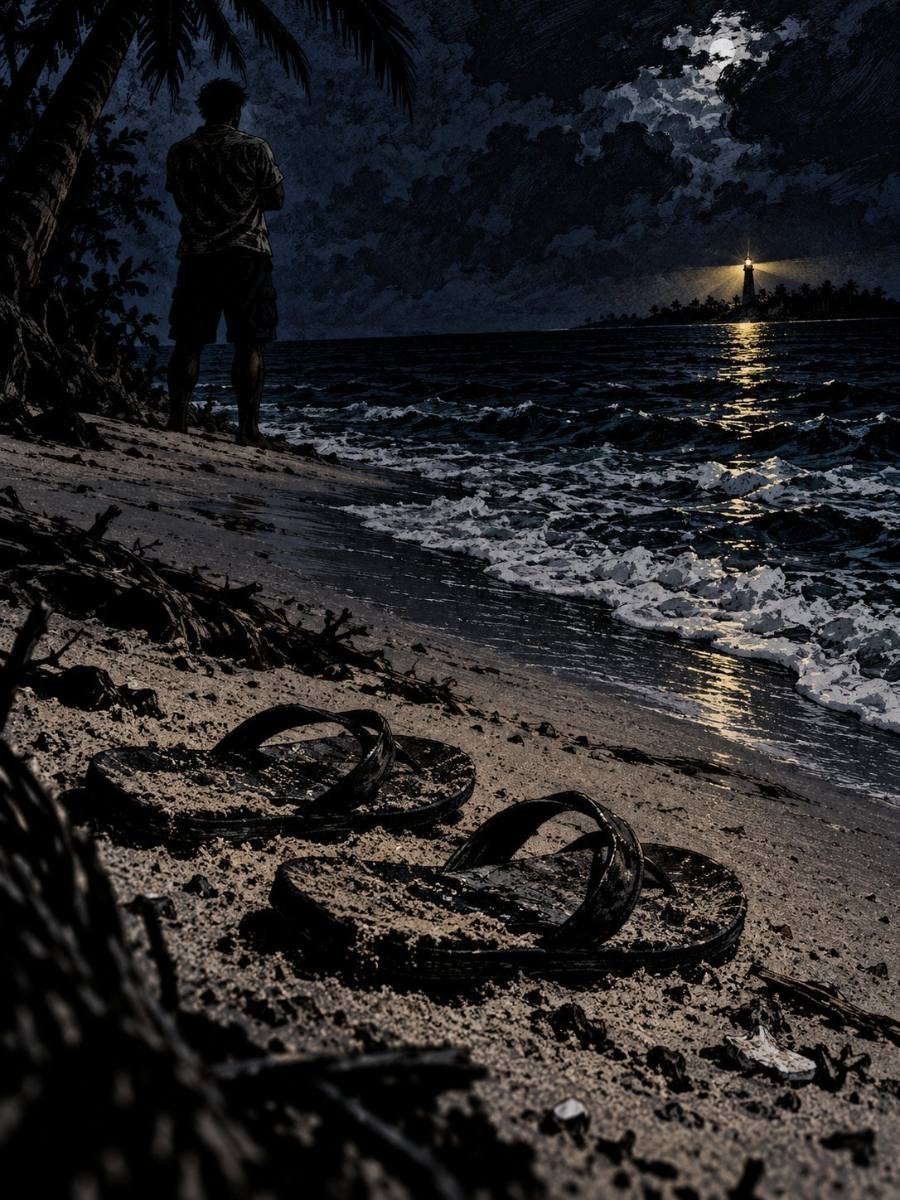
Doctors judged him sane, but diagnosed a fear of the sea. For months, Franklin says, he slept with the lights on.
He kept his promise. He met Córdoba’s mother and answered her questions. In 2015 she said she did not blame him for her son’s death.
That December, Córdoba’s family filed a $1 million civil suit alleging that Alvarenga had eaten their son’s body to survive. Through his lawyer, he denied it. No outcome has been publicly reported.
“There are still nights when I can’t sleep,” he told CNN in 2016. “The ocean keeps haunting me.” (NBC-POLY) (MMM-2015) (NEWSER-2015) (TIME-PEOPLE-2015) (FOX-2015) (UPI-2015) (CNN-REWIND-2016)
Case notes: José Salvador Alvarenga, 438 days adrift
In November 2012, Salvadoran fisherman José Salvador Alvarenga and his young crewmate Ezequiel Córdoba left the coast of Chiapas, Mexico, on a short shark-fishing trip. A storm killed their engine and radio. By Alvarenga’s account Córdoba died at sea after about two months. Alvarenga drifted on alone until he washed ashore on Ebon Atoll in the Marshall Islands on 30 January 2014, about 438 days after leaving (RD-FRANKLIN-2016) (MMM-2015) (KIRKUS-2015).
Where the case stands (as of November 2026)
Solved as a survival story: the landing, the hospital stay and the homecoming are documented, and a University of Hawaii drift model found his route plausible (UH-IPRC-2014) (AP-FOX-2014-02-11). Almost everything that happened at sea, however, rests on one witness, because the only other man aboard died.
The December 2015 civil suit by Córdoba’s family remains an allegation. Alvarenga denies it through his lawyer, and no ruling, settlement or dismissal has been publicly reported (UPI-2015) (TIME-PEOPLE-2015) (INFOBAE-2024).
Timeline
| When | What happened |
|---|---|
| 17–18 Nov 2012 | Leaves Costa Azul, Chiapas, on a short shark-fishing trip with Ezequiel Córdoba (CNN-REWIND-2016) (RD-FRANKLIN-2016) |
| First night | Storm hits; line cut; radio call to his boss; radio dies (RD-FRANKLIN-2016) |
| Next dawn | Motor dies about 15 miles offshore (RD-FRANKLIN-2016) |
| ~11 days later | First turtle caught, by his account (RD-FRANKLIN-2016) |
| Early 2013 | Córdoba dies at sea, after about two months by Franklin’s account (RD-FRANKLIN-2016) (MMM-2015) |
| 30 Jan 2014 | Washes ashore on Ebon Atoll, Marshall Islands (RD-FRANKLIN-2016) (NBC-2014-02) |
| Early Feb 2014 | Taken to Majuro; hospital; doubts and drift modelling (AP-PERRY-2014) (UH-IPRC-2014) |
| 11 Feb 2014 | Arrives in San Salvador in a wheelchair (AP-FOX-2014-02-11) |
| 17 Nov 2015 | Jonathan Franklin’s book 438 Days published (KIRKUS-2015) |
| Dec 2015 | Córdoba’s family files a $1 million civil suit; he denies the allegation (FOX-2015) (UPI-2015) |
Evidence locker
Real places and records only. Illustrations elsewhere in this file are AI-generated.
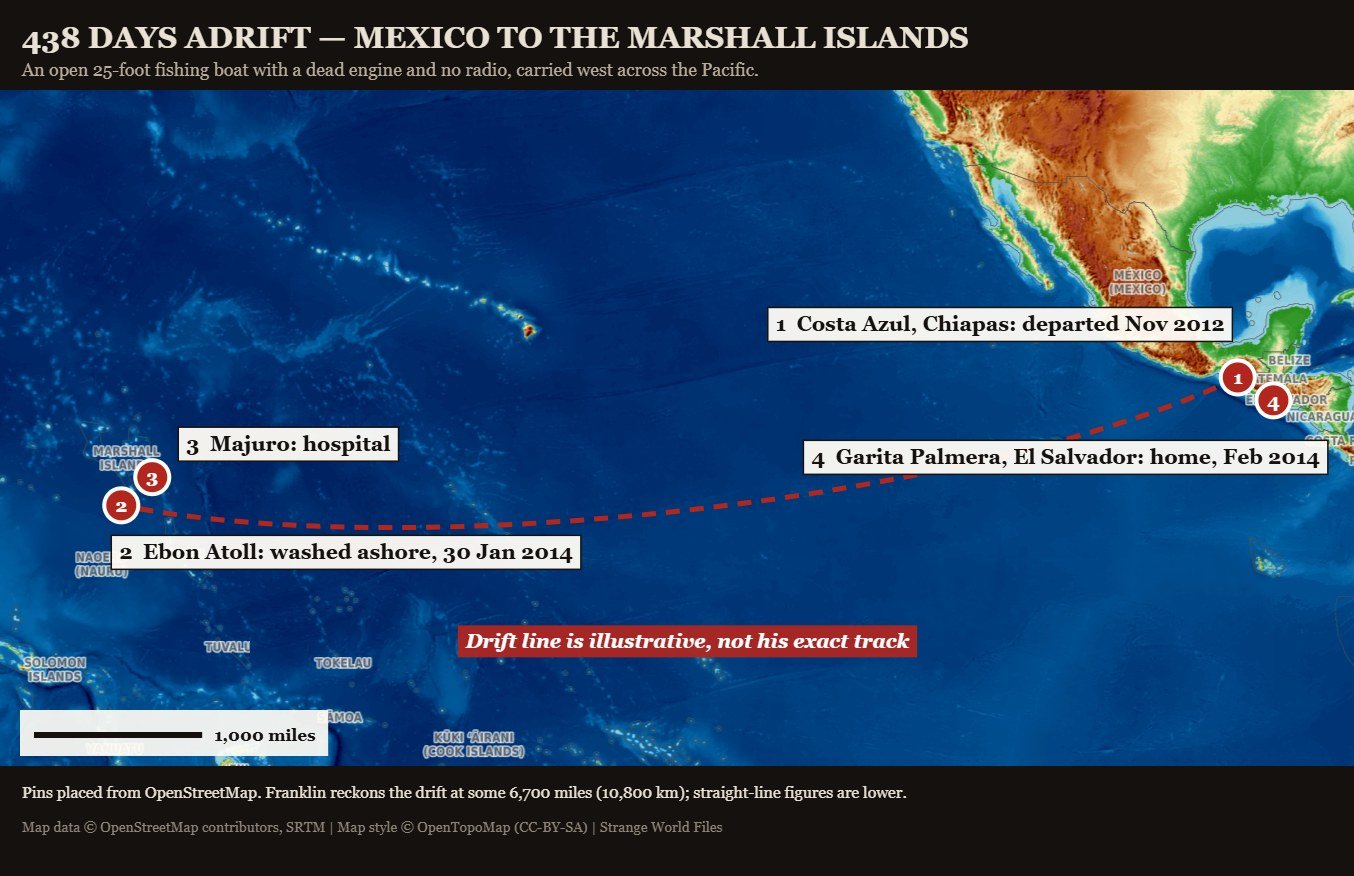 EXHIBIT A · TAP TO ENLARGE
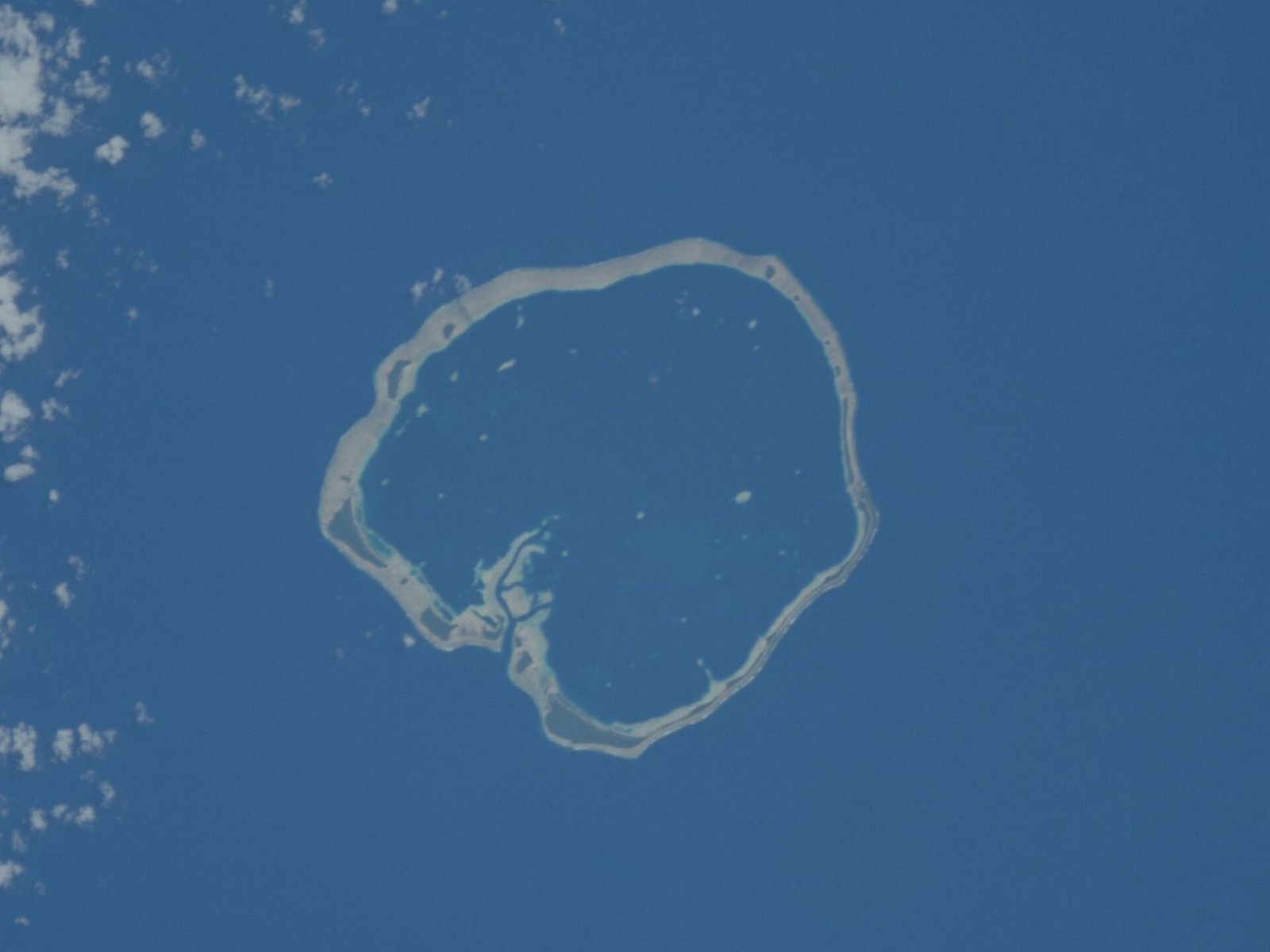 EXHIBIT B
Where the records disagree
| Detail | What sources say |
|---|---|
| Days at sea | 438 (Franklin), 436 (Guardian extract), “13 months” (first reports), “14 months” (2015 coverage) (KIRKUS-2015) (NEWSER-2015) (AP-PERRY-2014) (TIME-PEOPLE-2015) |
| Departure date | 17 Nov 2012 (Mexican officials), 18 Nov (Franklin), 21 Dec (his first account in the Marshalls) (AP-FOX-2014-02-11) (RD-FRANKLIN-2016) (AP-PERRY-2014) |
| Distance | From about 5,000 to 8,000 miles; lower figures are roughly straight-line, higher ones the drift path (RD-FRANKLIN-2016) (AP-PERRY-2014) (MMM-2015) (AFP-TICO-2014) |
| Córdoba’s age | 22 (Franklin) or 24 (NBC, Infobae) (RD-FRANKLIN-2016) (NBC-2014-02) (INFOBAE-2024) |
| When Córdoba died | About one month, two months or four months after the drift began (AP-PERRY-2014) (RD-FRANKLIN-2016) (GUARDIAN-2014-NS) |
| First rain | Days, about two weeks, or about a month after the storm (RD-FRANKLIN-2016) (MMM-2015) (CNN-REWIND-2016) |
| Who found him | Emi Libokmeto and Russel Laikidrik (Franklin’s spelling); CNN and AFP spell the names differently, and his early account spoke of two women (MMM-2015) (CNN-2014-02-09) (AFP-TICO-2014) (GUARDIAN-2014-NS) |
What we still don’t know
- Exactly how many days he spent at sea, since the departure date is disputed.
- When, and exactly how, Ezequiel Córdoba died; only Alvarenga was there.
- Which container ship passed him at close range, and whether its crew understood what they saw.
- How the 2015 lawsuit by Córdoba’s family ended.
What happened after
Doctors judged him sane but diagnosed a fear of the sea. In 2016 he was living in El Salvador, rebuilding his relationship with his daughter, not drinking, praying daily and staying out of the water (NBC-POLY) (CNN-REWIND-2016). Jonathan Franklin’s book 438 Days, based on more than 40 interviews, was published in 2015 (KIRKUS-2015) (MMM-2015).
Editor’s note
Reading this story, I kept thinking about the next morning. The sea was there when he fell asleep, and it was still there when he opened his eyes. I don’t think I really know what it is to wait again today for a ship that did not come yesterday. I can read the number fourteen months, but I can’t claim to know the heart that endured that time.
I stopped for a long while at the part where he went to see Córdoba’s mother. Coming home alive must have been almost more than he could bear, and yet he had to stand in front of a mother who had lost her son. What were his last words? How much did he suffer? She must have wanted to know, and barely been able to listen. Alvarenga, too, must have had no idea where to begin. Still, the fact that he went stays with me. Someone who knew her son’s final days came and told her about them. Perhaps that meeting was something she needed.
The scene where the crewmen on the passing ship waved still leaves me uneasy. How glad he must have been to see them waving. He may have thought he was saved. And when the ship did not stop, and slowly pulled away, how long did he keep watching it?
We can’t know what those crewmen saw or what they thought. But since reading this, I’ve felt that I shouldn’t assume too easily that I understand the signals other people send. There are moments when waving back to someone who waves is enough, and there are moments when we need to look again.
— Strange World Files
Case file summary
- What: A Salvadoran fisherman survived about 14 months adrift in an open boat across the Pacific
- Where: From Costa Azul, Chiapas, Mexico, to Ebon Atoll, Marshall Islands
- When: November 2012 to 30 January 2014
- Survivor: José Salvador Alvarenga; his crewmate Ezequiel Córdoba died at sea
- Status: Account backed by drift modelling; a 2015 civil allegation by Córdoba’s family is denied, with no outcome reported
Illustrations are AI-generated artistic interpretations, not photos. No real person is depicted with a recognizable face. Read how we research and illustrate these files.
Sources
- “This Man Was Stranded at Sea for 438 Days…” (Jonathan Franklin, excerpt from *438 Days*) – Reader’s Digest (10 Aug 2016, upd. 2023)
- Interview: Jonathan Franklin’s Extraordinary Survival Tale of a Castaway Lost at Sea for 438 Days – My Modern Met (7 Dec 2015)
- 438 Days by Jonathan Franklin – Kirkus Reviews (release 17 Nov 2015)
- How This Man Survived 436 Days Lost at Sea (summarises the Guardian’s 2015 extract) – Newser (10 Nov 2015)
- “Survival Miracle!” – New York Daily News via PressReader (15 Nov 2015)
- Marshall Islands castaway? Man says he survived 13 months adrift in Pacific (Nick Perry, AP) – Christian Science Monitor (3 Feb 2014)
- Pacific castaway recounts his 13-month odyssey – The Guardian (c. 3 Feb 2014), via NewsSniffer archive copy
- Castaway: five things (CNN, c. 6 Feb 2014)
- Marshall Islands castaway (Sarah Aarthun; reporting by Suzanne Chutaro, Miguel Marquez) – CNN (c. 9 Feb 2014)
- Details of Salvadoran castaway’s Marshalls arrival emerge (AFP) – Tico Times (16 Feb 2014)
- Castaway’s arrival ‘surprised’ islanders – Al Jazeera (16 Feb 2014)
- Castaway fisherman’s drift matches currents and winds – University of Hawaiʻi News (14 Feb 2014)
- Long journey ends at home for man drifting at sea (Marcos Aleman, AP) – Global News (12 Feb 2014)
- Fisherman who drifted more than a year on Pacific in small boat returns to native El Salvador (AP) – Fox News (11 Feb 2014)
- Castaway Crosses Pacific Ocean Again on Way to Homeland – NBC News (Feb 2014)
- Pacific Castaway Passed Lie Detector Test, Lawyer Says (Reuters) – NBC News (2014)
- Longest-surviving castaway sued for $1M over cannibalism accusations – UPI (16 Dec 2015)
- Salvadoran castaway hit with cannibalism suit denies he ate his shipmate (AP contributed) – Fox News (15 Dec 2015)
- Castaway sued over cannibalism allegations (Tiare Dunlap, People) – Time (18 Dec 2015)
- Rewind: real-life castaway (CNN “Where are they now?”, c. Jan 2016)
- Castaway details how he survived 438 days lost at sea (CNN material) – Atlanta Journal-Constitution (c. Jan 2016)
- La historia de Salvador Alvarenga, el náufrago que sobrevivió 438 días… (Juan Manuel Godoy) – Infobae (5 Dec 2024)
- José Salvador Alvarenga – Wikipedia (accessed 31 Oct 2026; cross-check only)